



Cephalexin monohydrate
Based on 10 publication(s) in Google Scholar
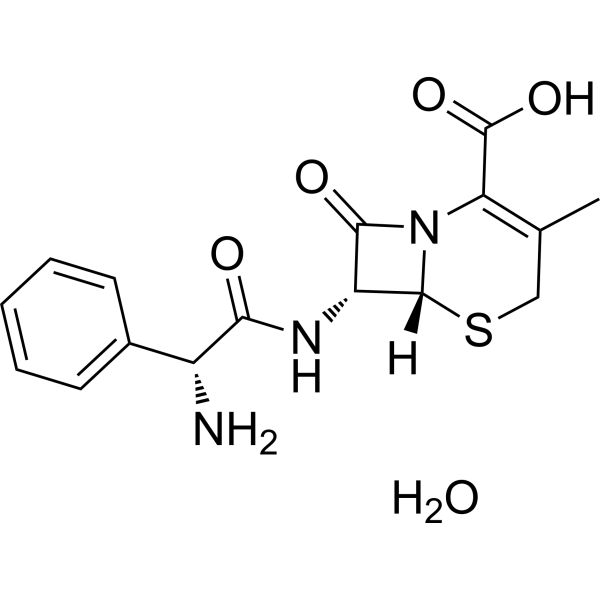
Cephalexin (Cefalexin) monohydrate is a potent, orally active new semisynthetic cephalosporin antibiotic with a broad antibacterial spectrum. Cephalexin (Cefalexin) monohydrate has antibacterial activity against a wide variety of gram-positive and gram-negative bacteria. Cephalexin (Cefalexin) monohydrate targets penicillin-binding proteins (PBPs) to inhibit bacterial cell wall assembly. Cephalexin (Cefalexin) monohydrate is used for the research of pneumonia, strep throat, and bacterial endocarditis, et al.
Nur für Forschungszwecke. Wir verkaufen nicht an Patienten.
- Reinheit : 99.31%
- CAS. Nr.: 23325-78-2
- Formel: C16H19N3O5S
- Molecular Weight:365.40
-
Speicherung:Powder -20°C, 3 years , 4°C, 2 years ; In solvent -80°C, 2 years , -20°C, 1 year

To place orders, for customer services and technical support, please contact: MedChemExpress USA
Tel: 609-228-6898 E-mail: [email protected] [email protected]


-
 Biologische Aktivität
-
Chemical Information
-
Lösungsmittel & Löslichkeit
- Protokoll
- Reinheit & Dokumentation
- Verweise
-
 Help & FAQs


-
HY-B0510
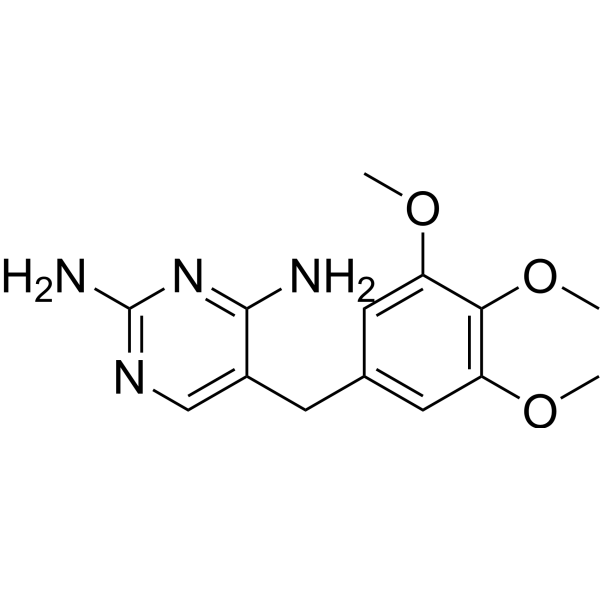
TrimethoprimBacteriostatic Antibiotic -
HY-B0356
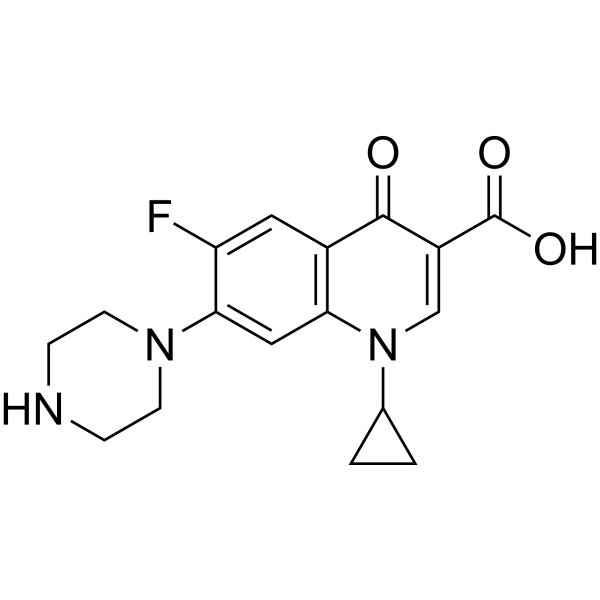
CiprofloxacinTopoisomerase IV Inhibitor -
HY-B0712B
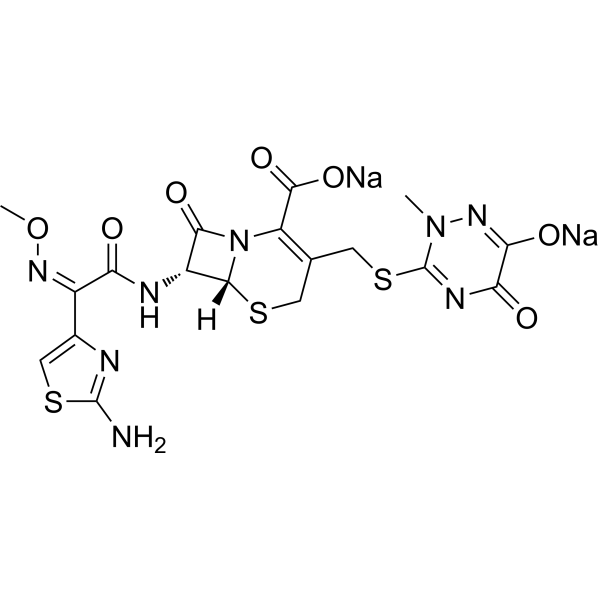
Ceftriaxone sodium saltAurora B inhibitor -

HY-B0200BR
Cephalexin monohydrate (Standard)Cephalosporin Antibiotic -
HY-A0088
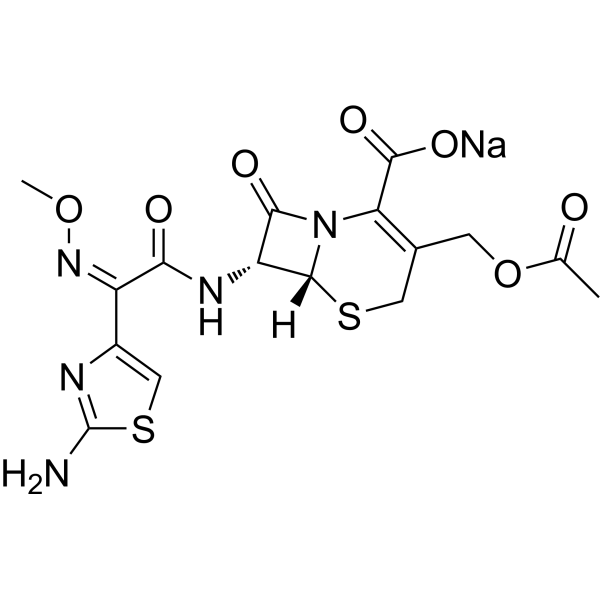
Cefotaxime sodiumBacterial Inhibitor -
HY-18982
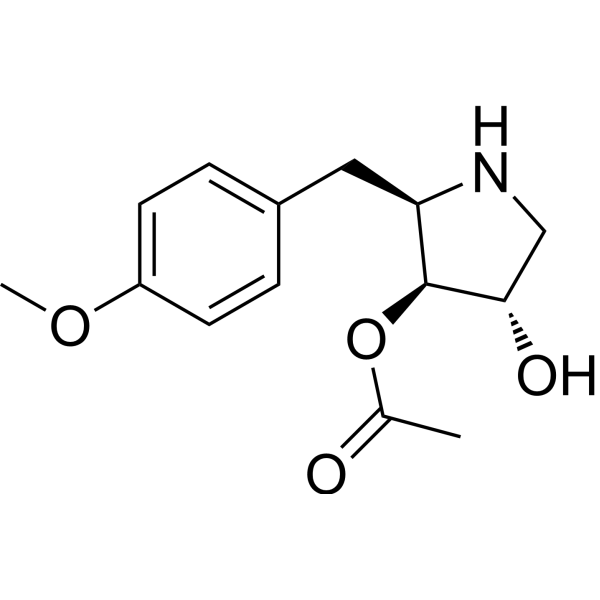
AnisomycinProtein Synthesis Inhibitor -

HY-18982R
Anisomycin (Standard)Protein Synthesis Inhibitor -

HY-A0088R
Cefotaxime sodium (Standard)Bacterial Inhibitor
Publications Citing Use of MedChemExpress (MCE) Cephalexin monohydrate
More- Theranostics. 2022 Jan 1;12(3):1187-1203. [Abstract]
- J Exp Med. 2026 Mar 2;223(3):e20241287. [Abstract]
- J Med Chem. 2021 Oct 14;64(19):14344-14357. [Abstract]
- PLoS Pathog. 2026 Jul 16;22(7):e1014242.
- Infect Immun. 2018 May 22;86(6):e00090-18. [Abstract]
- Biomed Res Int. 2018 Jul 2:2018:3579832. [Abstract]
- University of Texas. 2025.
- bioRxiv. 2024 May 10.
- Chemosphere. 2021 Dec:285:131417. [Abstract]
- Chemosphere. 2019 Jun:225:378-387. [Abstract]
Alle Antibiotic Isoform-spezifische Produkte anzeigen
More

Biologische Aktivität
Beschreibung
IC50 & Target
|
β-lactam |
In Vitro
Cephalexin (Cefalexin) monohydrate (10 μg/mL) disrupts polymer peptidoglycan (PG) biogenesis by inactivating enzymes called penicillin-binding proteins (PBPs)[1]. Cephalexin (Cefalexin) monohydrate inhibits a broad spectrum of grampositive and gram-negative organisms with MIC values of 2, 2, 2, 2, 4, 4.4 and 5.7 μg/mL for Bacillus anthracis, Edwardsiella taFda, Vibrio cholera, Pasteurella multocida, Edwardsiella tarda, Alcaligenes sp and Proteus rettgeri, respectively[2].
MedChemExpress (MCE) has not independently confirmed the accuracy of these methods. They are for reference only.
In Vivo
MedChemExpress (MCE) has not independently confirmed the accuracy of these methods. They are for reference only.
-
Animal Model:Male Swiss-Webster mice with infected bacterial[2]
-
Dosage:0-50 mg/kg
-
Administration:Oral administration; for 3.5 hours
-
Result:Had antibacterial activity against Streptococcus pyogenes, Streptococcus pneumoniae, Staphylococcus aureus and several gram-negative species mice.


Chemical Information
-
CAS. Nr. 23325-78-2
-
Appearance Solid
-
Molecular Weight 365.40
-
Formel C16H19N3O5S
-
Color White to off-white
-
SMILES
O=C(C(N12)=C(C)CS[C@]2([H])[C@H](NC([C@H](N)C3=CC=CC=C3)=O)C1=O)O.O
-
Synonyms
Cefalexin hydrate; Cephacillin hydrate
-
Versand
Room temperature in continental US; may vary elsewhere.
-
Speicherung
Powder -20°C 3 years 4°C 2 years In solvent -80°C 2 years -20°C 1 year


Publications (10)
-
Journal Impact Factor
-
Most Recent
-
Theranostics
Antibiotic Azithromycin inhibits brown/beige fat functionality and promotes obesity in human and rodents. [Abstract]2022 Jan 1;12(3):1187-1203. PMID: 35154482 -
J Exp Med
2026 Mar 2;223(3):e20241287. PMID: 41400657 -
J Med Chem
Repositioning of the Anthelmintic Drugs Bithionol and Triclabendazole as Transthyretin Amyloidogenesis Inhibitors. [Abstract]2021 Oct 14;64(19):14344-14357. PMID: 34547896 -
-
Infect Immun
Identification and Characterization of the Neisseria gonorrhoeae MscS-Like Mechanosensitive Channel. [Abstract]2018 May 22;86(6):e00090-18. PMID: 29581189 -
Biomed Res Int
In Vitro Activity of β-Lactams in Combination with β-Lactamase Inhibitors against Mycobacterium tuberculosis Clinical Isolates. [Abstract]2018 Jul 2:2018:3579832. PMID: 30065936 -
-
-
Chemosphere
Insights into the degradation mechanisms and pathways of cephalexin during homogeneous and heterogeneous photo-Fenton processes. [Abstract]2021 Dec:285:131417. PMID: 34246101 -
Chemosphere
Mass-balance-model-based evaluation of sewage treatment plant contribution to residual pharmaceuticals in environmental waters. [Abstract]2019 Jun:225:378-387. PMID: 30884299


Lösungsmittel & Löslichkeit
In Vitro:
DMSO : 6.67 mg/mL (18.25 mM; Need ultrasonic; Hygroscopic DMSO has a significant impact on the solubility of product, please use newly opened DMSO)
H2O : 2 mg/mL (5.47 mM; Need ultrasonic)
Please refer to the solubility information to select the appropriate solvent. Once prepared, please aliquot and store the solution to prevent product inactivation from repeated freeze-thaw cycles.
Storage method and period of stock solution: -80°C, 2 years; -20°C, 1 year. When stored at -80°C, please use it within 2 years. When stored at -20°C, please use it within 1 year.
* Note: If you choose water as the stock solution, please dilute it to the working solution, then filter and sterilize it with a 0.22 μm filter before use.
Please refer to the solubility information to select the appropriate solvent. Once prepared, please aliquot and store the solution to prevent product inactivation from repeated freeze-thaw cycles.
Storage method and period of stock solution: -80°C, 2 years; -20°C, 1 year. When stored at -80°C, please use it within 2 years. When stored at -20°C, please use it within 1 year.
* Note: If you choose water as the stock solution, please dilute it to the working solution, then filter and sterilize it with a 0.22 μm filter before use.
Konzentration (Stammlösung) × Volumen (Stammlösung) = Konzentration (Ziellösung) × Volumen (Ziellösung)
In Vivo:
Select the appropriate dissolution method based on your experimental animal and administration route.
- For the following dissolution methods, please ensure to first prepare a clear stock solution using an In Vitro approach and then sequentially add co-solvents:
- To ensure reliable experimental results, the clarified stock solution can be appropriately stored based on storage conditions. As for the working solution for In Vivo experiments, it is recommended to prepare freshly and use it on the same day.
- The percentages shown for the solvents indicate their volumetric ratio in the final prepared solution. If precipitation or phase separation occurs during preparation, heat and/or sonication can be used to aid dissolution.
Add each solvent one by one: 10% DMSO 40% PEG300 5% Tween-80 45% Saline
Solubility: ≥ 0.67 mg/mL (1.83 mM); Clear solution
This protocol yields a clear solution of ≥ 0.67 mg/mL (saturation unknown).
Taking 1 mL working solution as an example, add 100 μL DMSO stock solution (6.7 mg/mL) to 400 μL PEG300, and mix evenly; then add 50 μL Tween-80 and mix evenly; then add 450 μL Saline to adjust the volume to 1 mL.
Preparation of Saline: Dissolve 0.9 g sodium chloride in ddH₂O and dilute to 100 mL to obtain a clear Saline solution.
Add each solvent one by one: 10% DMSO 90% (20% SBE-β-CD in Saline)
Solubility: ≥ 0.67 mg/mL (1.83 mM); Clear solution
This protocol yields a clear solution of ≥ 0.67 mg/mL (saturation unknown).
Taking 1 mL working solution as an example, add 100 μL DMSO stock solution (6.7 mg/mL) to 900 μL 20% SBE-β-CD in Saline, and mix evenly.
Preparation of 20% SBE-β-CD in Saline (4°C, storage for one week): 2 g SBE-β-CD powder is dissolved in 10 mL Saline, completely dissolve until clear.
For the following dissolution methods, please prepare the working solution directly:
It is recommended to prepare fresh solutions and use them promptly within a short period of time.
The percentages shown for the solvents indicate their volumetric ratio in the final prepared solution. If precipitation or phase separation occurs during preparation, heat and/or sonication can be used to aid dissolution.
Add each solvent one by one: PBS
Solubility: 8.33 mg/mL (22.80 mM); Clear solution; Need ultrasonic and warming and heat to 60°C
In Vivo Dissolution Calculator
Please enter the basic information of animal experiments:
-
-
-
-
Recommended: Prepare an additional quantity of animals to account for potential losses during experiments.
Please enter your animal formula composition:
-
%DMSO +
Recommended: Keep the proportion of DMSO in working solution below 2% if your animal is weak.
-
%+
-
+%Tween-80 + +
-
%Saline +
The co-solvents required include: DMSO, . All of co-solvents are available by MedChemExpress (MCE). , Tween 80. All of co-solvents are available by MedChemExpress (MCE).
Working solution concentration: 0.22 mg/mL
Method for preparing stock solution: mg drug dissolved in μL DMSO. Stock solution concentration: mg/mL.
1. Take μL DMSO stock solution;
2. Add μL .
μL , mix evenly;
3. Then add μL Tween 80, mix evenly;
4. Then add μL
Please ensure that the stock solution in the first step is dissolved to a clear state, and add co-solvents in sequence. You can use ultrasonic heating (ultrasonic cleaner, recommended frequency 20-40 kHz), vortexing, etc. to assist dissolution.


Reinheit & Dokumentation
-
Data Sheet (281 KB)
-
SDS (393 KB)
- English - EN (393 KB)
- Français - FR (393 KB)
- Deutsch - DE (393 KB)
- Norwegian - NO (393 KB)
- Español - ES (393 KB)
- Swedish - SV (393 KB)
- Italian - IT (393 KB)
- Korean - KR (393 KB)
- Portuguese - PT (393 KB)
-
Handling Instructions (2659 KB)
Verweise
[1]. Cho H, et, al. Beta-lactam antibiotics induce a lethal malfunctioning of the bacterial cell wall synthesis machinery. Cell. 2014 Dec 4;159(6):1300-11. [Content Brief]
[2]. Buck RE, et, al. Cefadroxil, a new broad-spectrum cephalosporin. Antimicrob Agents Chemother. 1977 Feb;11(2):324-30. [Content Brief]


Complete Stock Solution Preparation Table
Please refer to the solubility information to select the appropriate solvent. Once prepared, please aliquot and store the solution to prevent product inactivation from repeated freeze-thaw cycles.
Storage method and period of stock solution: -80°C, 2 years; -20°C, 1 year. When stored at -80°C, please use it within 2 years. When stored at -20°C, please use it within 1 year.
| Optional Solvent | Concentration Solvent Mass | 1 mg | 5 mg | 10 mg | 25 mg |
|---|---|---|---|---|---|
| H2O / DMSO | 1 mM | 2.7367 mL | 13.6836 mL | 27.3673 mL | 68.4182 mL |
| 5 mM | 0.5473 mL | 2.7367 mL | 5.4735 mL | 13.6836 mL | |
| DMSO | 10 mM | 0.2737 mL | 1.3684 mL | 2.7367 mL | 6.8418 mL |
| 15 mM | 0.1824 mL | 0.9122 mL | 1.8245 mL | 4.5612 mL |
* Note: If you choose water as the stock solution, please dilute it to the working solution, then filter and sterilize it with a 0.22 μm filter before use.


Cephalexin monohydrate Related Classifications
HY-B0200B Related Classifications
 Powered by Bioz