



Scabies Infection
Scabies is a highly contagious skin infestation caused by the human itch mite *Sarcoptes scabiei* var. *hominis*, characterized by intense pruritus and skin lesions due to mite burrowing, commonly affecting the hands, wrists, and buttocks. It affects approximately 300 million people annually worldwide, with higher prevalence in tropical and resource-poor regions, where it can reach up to 10% in the general population and 65% among children. Transmission occurs through close personal contact or via fomites such as clothing and bedding. The disease is particularly prevalent in overcrowded and impoverished communities, as well as in immunocompromised individuals, including those with HIV. Scabies outbreaks are common in institutional settings like nursing homes, prisons, and schools. Secondary bacterial infections, especially by Group A Streptococcus and *Staphylococcus aureus*, contribute significantly to morbidity, leading to complications such as cellulitis, lymphangitis, lymphadenopathy, and post-streptococcal glomerulonephritis. A severe form known as Norwegian (crusted) scabies may present with widespread papular and nodular lesions, particularly on the genitalia, and is associated with poor immune control. Importantly, cross-reactivity between *S. scabiei* and house dust mites (HDM) can complicate the diagnosis of HDM hypersensitivity, posing a challenge for allergists and dermatologists, especially in endemic areas.
References:
-
Scabies Infection (1)

Crotamiton
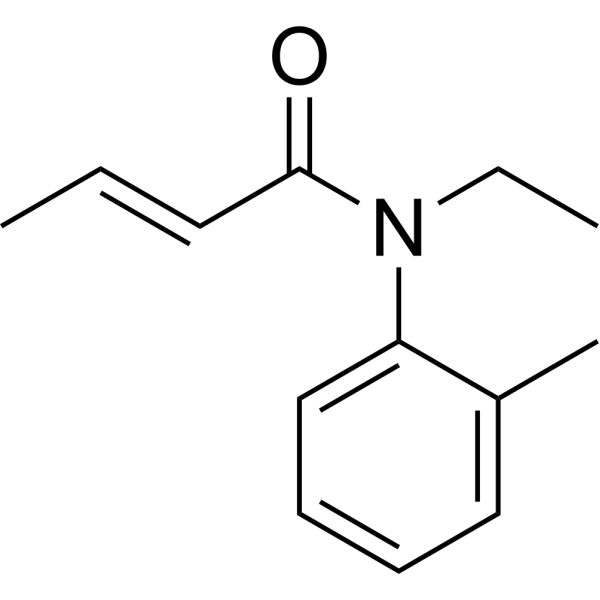
- Formula: C13H17NO
- Molecular Weight: 203.28
Crotamiton is a TRPV4 inhibitor. Crotamiton inhibits TRPV4 currents. Crotamiton inhibits TRPV4 selective agonist-induced pruritus-related behaviors in mice. Crotamiton inhibits Histamine- and Chloroquine-induced calcium influx via the H1R/TRPV1, MRGPRA3/TRPA1 pathways, and also suppresses calcium influx in primary mouse dorsal root ganglion neurons. Crotamiton is applicable to research related to pruritus, scabies, and non-scabietic pruritus.



