



CPI-203
Based on 6 publication(s) in Google Scholar
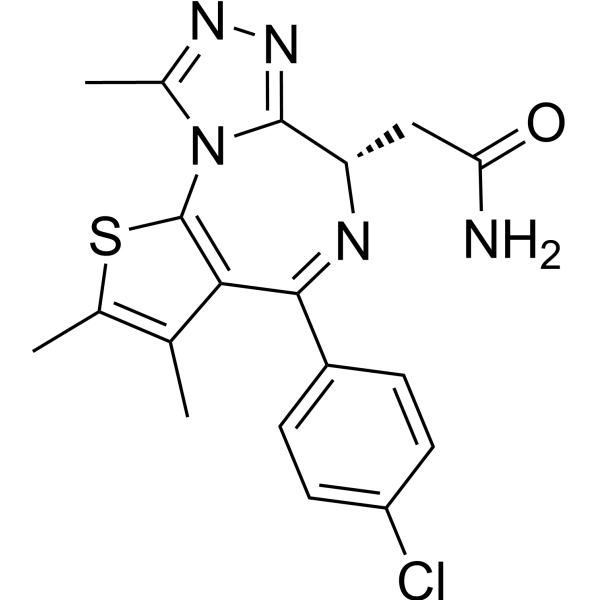
CPI-203 is a novel potent, selective and cell permeable inhibitor of BET bromodomain, with an IC50 value of appr 37 nM (BRD4 α-screen assay).
Para uso exclusivo en investigación. No vendemos a pacientes.
- Pureza : 99.52%
- No. CAS: 1446144-04-2
- Fòrmula: C19H18ClN5OS
- Peso molecular:399.90
-
Almacenamiento:Powder -20°C, 3 years , 4°C, 2 years ; In solvent -80°C, 2 years , -20°C, 1 year

To place orders, for customer services and technical support, please contact: MedChemExpress USA
Tel: 609-228-6898 E-mail: [email protected] [email protected]


-
 Actividad biológica
-
Chemical Information
-
Solvente y solubilidad
- Protocolo
- Pureza y Documentación
- Referencias
-
 Help & FAQs


-
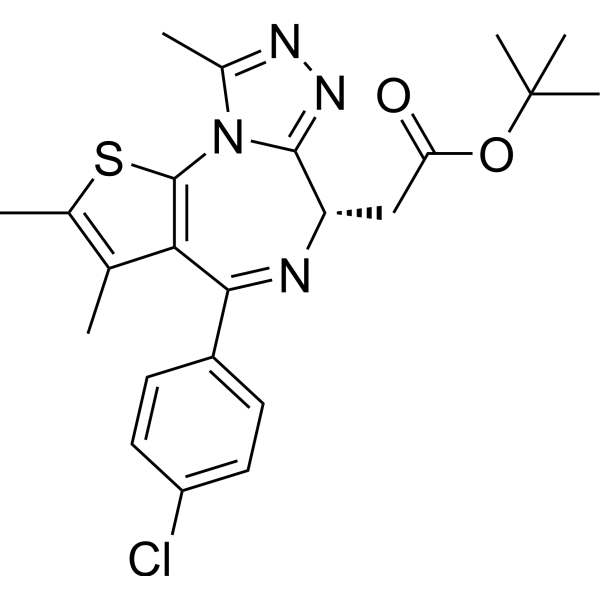
HY-13030
(+)-JQ-1BET Inhibitor -
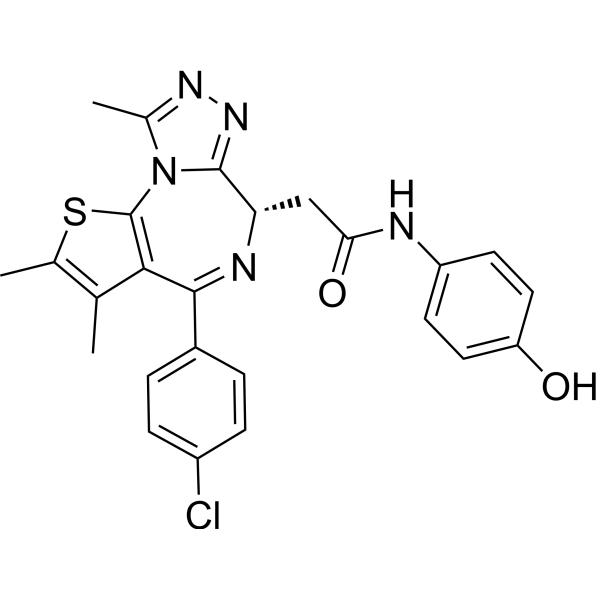
HY-15743
BirabresibBRD2/3/4 Inhibitor -
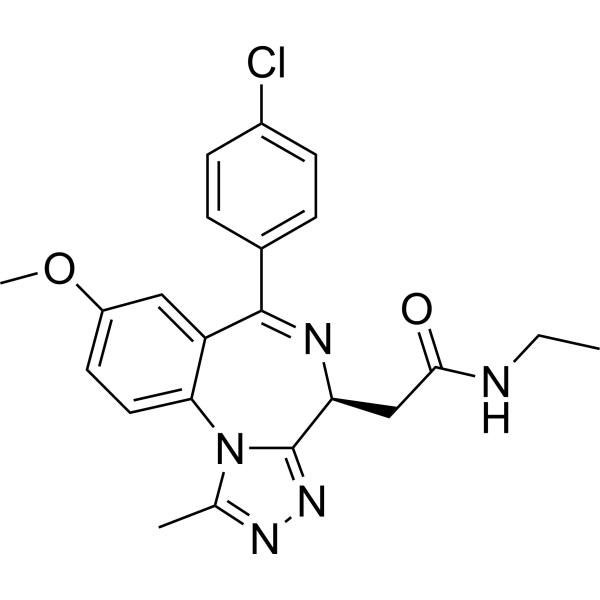
HY-13032
MolibresibBET Inhibitor -
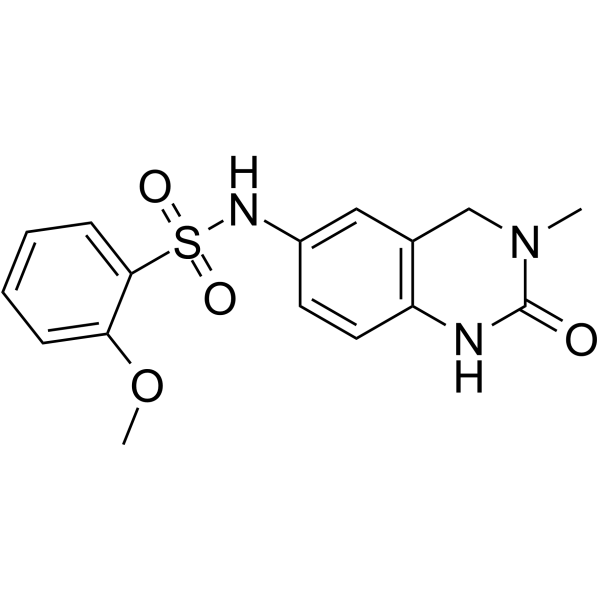
HY-16586
PFI-1BET Inhibitor -
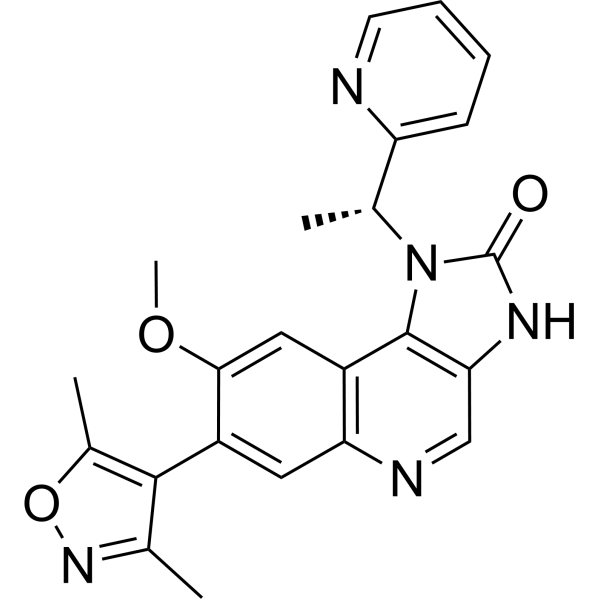
HY-13235
I-BET151BRD2/3/4 Inhibitor -
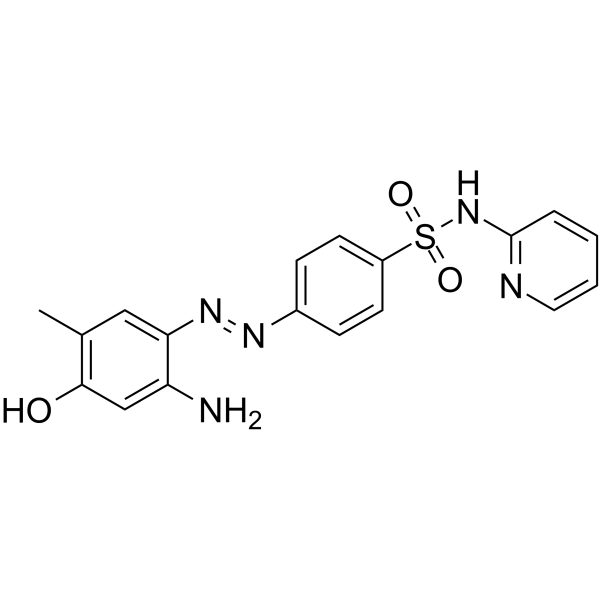
HY-13959
MS436Bromodomain Inhibitor -
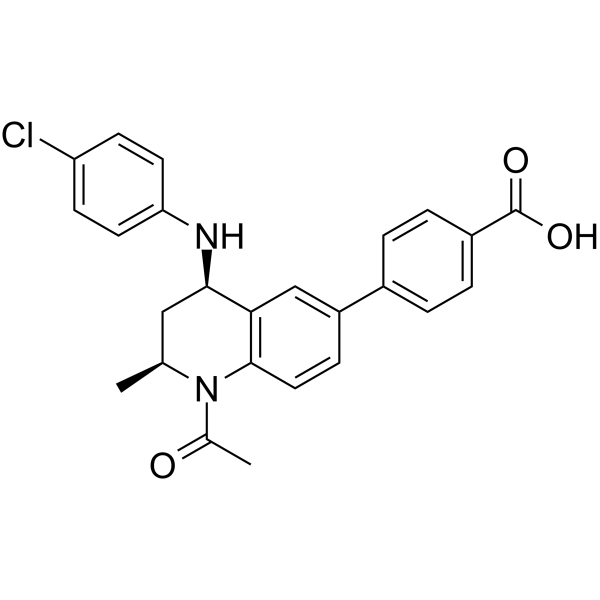
HY-13960
GSK1324726ABET Inhibitor -
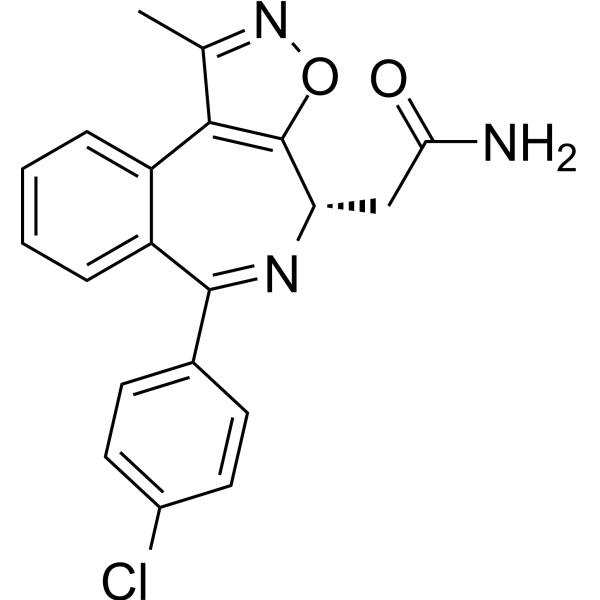
HY-12863
PelabresibBET Inhibitor -
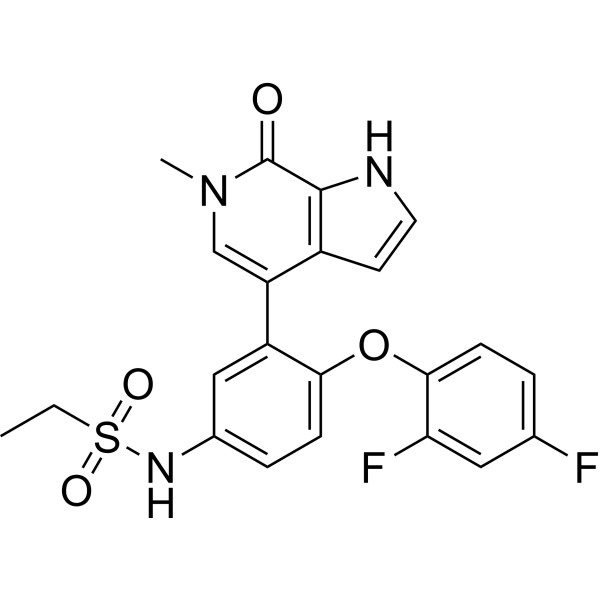
HY-100015
MivebresibBET Inhibitor -
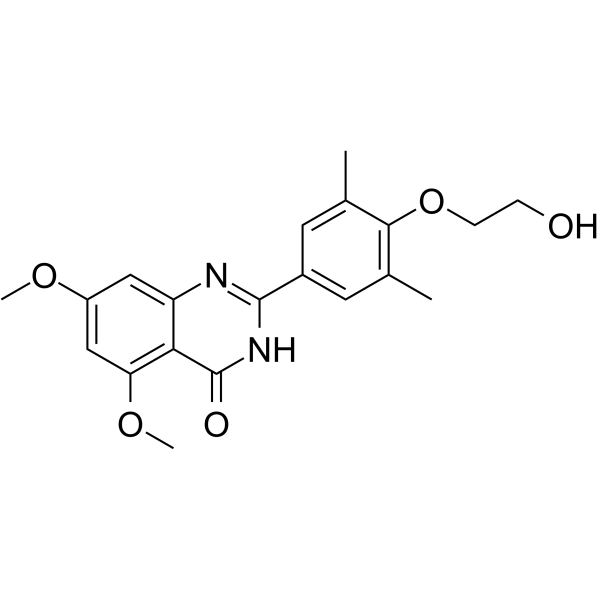
HY-16652
ApabetaloneBET Inhibitor -
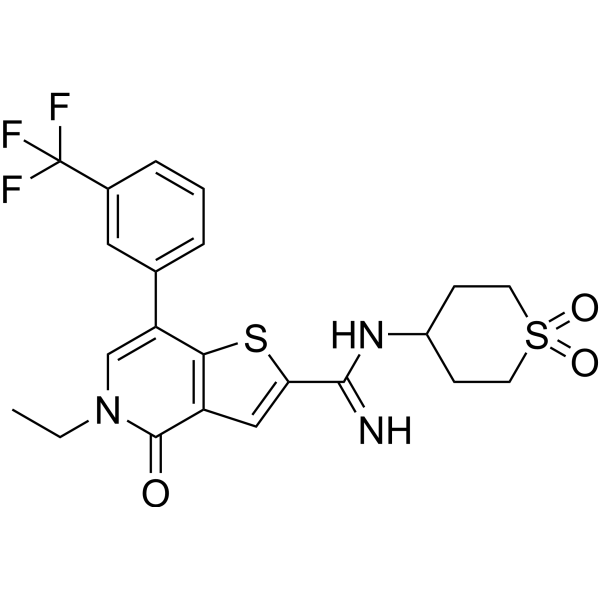
HY-18975
I-BRD9Chemical Probe -
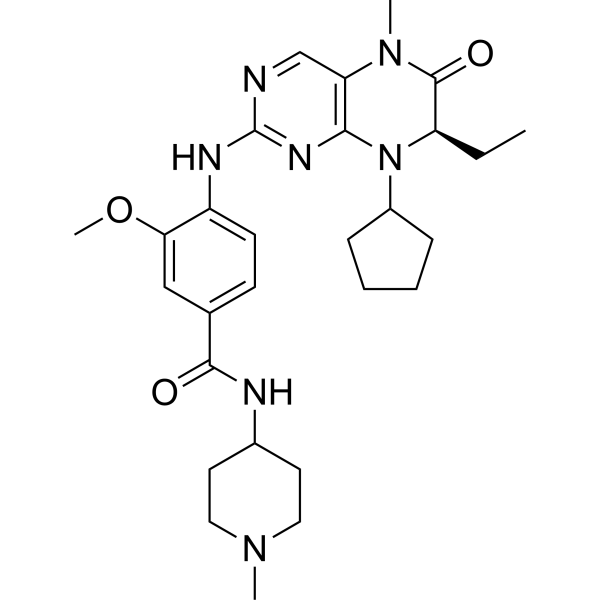
HY-50698
BI 2536PLK1 Inhibitor
Publications Citing Use of MedChemExpress (MCE) CPI-203
More

Actividad biológica
Descripciòn
IC50 & Target
IC50: 37 nM (BRD4)
In Vitro
CPI-203 inhibits BRD4 in vitro and in cells, but does not affect BRD4 kinase activity in vitro[1]. CPI-203 exerts a cytostatic effect in all the 9 MCL cell lines analyzed with GI50 ranging from 0.06 to 0.71 μM, with low cytotoxicity in normal PBMCs from healthy donors. Furthermore, CPI-203 efficiently activates the cell death program in MCL cells[2].
MedChemExpress (MCE) has not independently confirmed the accuracy of these methods. They are for reference only. Further protocols information, click here.
In Vivo
MedChemExpress (MCE) has not independently confirmed the accuracy of these methods. They are for reference only.


Chemical Information
-
No. CAS 1446144-04-2
-
Appearance Solid
-
Peso molecular 399.90
-
Fòrmula C19H18ClN5OS
-
Color Light yellow to yellow
-
SMILES
ClC1=CC=C(C(C2=C(N3C4=NN=C3C)SC(C)=C2C)=N[C@H]4CC(N)=O)C=C1
-
Envío
Room temperature in continental US; may vary elsewhere.
-
Almacenamiento
Powder -20°C 3 years 4°C 2 years In solvent -80°C 2 years -20°C 1 year


Publications (6)
-
Journal Impact Factor
-
Most Recent
-
PLoS Pathog
YAP Inhibits HIV-1 transcription and promotes HIV-1 latency by regulating E3 ubiquitin ligase UHRF1 mediated tat degradation. [Abstract]2026 Jan 30;22(1):e1013906. PMID: 41616025 -
Sci Rep
BCL2A1 regulates Canady Helios Cold Plasma-induced cell death in triple-negative breast cancer. [Abstract]2022 Mar 8;12(1):4038. PMID: 35260587 -
Cancer Sci
CPI-203 improves the efficacy of anti-PD-1 therapy by inhibiting the induced PD-L1 overexpression in liver cancer. [Abstract]2022 Jan;113(1):28-40. PMID: 34727389 -
bioRxiv
2025 Sep 3:2025.08.30.673282. PMID: 40949948 -
-


Solvente y solubilidad
In Vitro:
DMSO : ≥ 47 mg/mL (117.53 mM; Hygroscopic DMSO has a significant impact on the solubility of product, please use newly opened DMSO)
* "≥" means soluble, but saturation unknown.
Please refer to the solubility information to select the appropriate solvent. Once prepared, please aliquot and store the solution to prevent product inactivation from repeated freeze-thaw cycles.
Storage method and period of stock solution: -80°C, 2 years; -20°C, 1 year. When stored at -80°C, please use it within 2 years. When stored at -20°C, please use it within 1 year.
Please refer to the solubility information to select the appropriate solvent. Once prepared, please aliquot and store the solution to prevent product inactivation from repeated freeze-thaw cycles.
Storage method and period of stock solution: -80°C, 2 years; -20°C, 1 year. When stored at -80°C, please use it within 2 years. When stored at -20°C, please use it within 1 year.
Concentration (start) × Volume (start) = Concentration (final) × Volume (final)
In Vivo:
Select the appropriate dissolution method based on your experimental animal and administration route.
- For the following dissolution methods, please ensure to first prepare a clear stock solution using an In Vitro approach and then sequentially add co-solvents:
- To ensure reliable experimental results, the clarified stock solution can be appropriately stored based on storage conditions. As for the working solution for In Vivo experiments, it is recommended to prepare freshly and use it on the same day.
- The percentages shown for the solvents indicate their volumetric ratio in the final prepared solution. If precipitation or phase separation occurs during preparation, heat and/or sonication can be used to aid dissolution.
Add each solvent one by one: 10% DMSO 40% PEG300 5% Tween-80 45% Saline
Solubility: ≥ 2.5 mg/mL (6.25 mM); Clear solution
This protocol yields a clear solution of ≥ 2.5 mg/mL (saturation unknown).
Taking 1 mL working solution as an example, add 100 μL DMSO stock solution (25.0 mg/mL) to 400 μL PEG300, and mix evenly; then add 50 μL Tween-80 and mix evenly; then add 450 μL Saline to adjust the volume to 1 mL.
Preparation of Saline: Dissolve 0.9 g sodium chloride in ddH₂O and dilute to 100 mL to obtain a clear Saline solution.
Add each solvent one by one: 10% DMSO 90% (20% SBE-β-CD in Saline)
Solubility: ≥ 2.5 mg/mL (6.25 mM); Clear solution
This protocol yields a clear solution of ≥ 2.5 mg/mL (saturation unknown).
Taking 1 mL working solution as an example, add 100 μL DMSO stock solution (25.0 mg/mL) to 900 μL 20% SBE-β-CD in Saline, and mix evenly.
Preparation of 20% SBE-β-CD in Saline (4°C, storage for one week): 2 g SBE-β-CD powder is dissolved in 10 mL Saline, completely dissolve until clear.
In Vivo Dissolution Calculator
Please enter the basic information of animal experiments:
-
-
-
-
Recommended: Prepare an additional quantity of animals to account for potential losses during experiments.
Please enter your animal formula composition:
-
%DMSO +
Recommended: Keep the proportion of DMSO in working solution below 2% if your animal is weak.
-
%+
-
+%Tween-80 + +
-
%Saline +
The co-solvents required include: DMSO, . All of co-solvents are available by MedChemExpress (MCE). , Tween 80. All of co-solvents are available by MedChemExpress (MCE).
Working solution concentration: 0.22 mg/mL
Method for preparing stock solution: mg drug dissolved in μL DMSO. Stock solution concentration: mg/mL.
1. Take μL DMSO stock solution;
2. Add μL .
μL , mix evenly;
3. Then add μL Tween 80, mix evenly;
4. Then add μL
Please ensure that the stock solution in the first step is dissolved to a clear state, and add co-solvents in sequence. You can use ultrasonic heating (ultrasonic cleaner, recommended frequency 20-40 kHz), vortexing, etc. to assist dissolution.

Protocolo
-
Cell Cytotoxicity Assay
Cytotoxicity assays are usually based on the assessment of cell membrane damage, which can also be indirectly detected by measuring cell viability. Detection methods include MTT assay, CKK-8 assay, LDH assay and ATP assay, etc.


Pureza y Documentación
-
Ficha de datos (284 KB)
-
SDS (393 KB)
- English - EN (393 KB)
- Français - FR (393 KB)
- Deutsch - DE (393 KB)
- Norwegian - NO (393 KB)
- Español - ES (393 KB)
- Swedish - SV (393 KB)
- Italian - IT (393 KB)
- Korean - KR (393 KB)
- Portuguese - PT (393 KB)
-
Instrucciones de manejo (2659 KB)
Referencias
[1]. Devaiah BN, et al. BRD4 is an atypical kinase that phosphorylates serine2 of the RNA polymerase II carboxy-terminal domain. Proc Natl Acad Sci U S A. 2012 May 1;109(18):6927-32. [Content Brief]
[2]. Moros A, et al. Synergistic antitumor activity of lenalidomide with the BET bromodomain inhibitor CPI203 in bortezomib-resistant mantle cell lymphoma. Leukemia. 2014 Oct;28(10):2049-59 [Content Brief]


Complete Stock Solution Preparation Table
Please refer to the solubility information to select the appropriate solvent. Once prepared, please aliquot and store the solution to prevent product inactivation from repeated freeze-thaw cycles.
Storage method and period of stock solution: -80°C, 2 years; -20°C, 1 year. When stored at -80°C, please use it within 2 years. When stored at -20°C, please use it within 1 year.
| Optional Solvent | Concentration Solvent Mass | 1 mg | 5 mg | 10 mg | 25 mg |
|---|---|---|---|---|---|
| DMSO | 1 mM | 2.5006 mL | 12.5031 mL | 25.0063 mL | 62.5156 mL |
| 5 mM | 0.5001 mL | 2.5006 mL | 5.0013 mL | 12.5031 mL | |
| 10 mM | 0.2501 mL | 1.2503 mL | 2.5006 mL | 6.2516 mL | |
| 15 mM | 0.1667 mL | 0.8335 mL | 1.6671 mL | 4.1677 mL | |
| 20 mM | 0.1250 mL | 0.6252 mL | 1.2503 mL | 3.1258 mL | |
| 25 mM | 0.1000 mL | 0.5001 mL | 1.0003 mL | 2.5006 mL | |
| 30 mM | 0.0834 mL | 0.4168 mL | 0.8335 mL | 2.0839 mL | |
| 40 mM | 0.0625 mL | 0.3126 mL | 0.6252 mL | 1.5629 mL | |
| 50 mM | 0.0500 mL | 0.2501 mL | 0.5001 mL | 1.2503 mL | |
| 60 mM | 0.0417 mL | 0.2084 mL | 0.4168 mL | 1.0419 mL | |
| 80 mM | 0.0313 mL | 0.1563 mL | 0.3126 mL | 0.7814 mL | |
| 100 mM | 0.0250 mL | 0.1250 mL | 0.2501 mL | 0.6252 mL |


CPI-203 Related Classifications
HY-15846 Related Classifications
 Powered by Bioz