



iMDK
Based on 7 publication(s) in Google Scholar
iMDK is a potent PI3K inhibitor and inhibits the growth factor MDK (also known as midkine or MK). iMDK suppresses non-small cell lung cancer (NSCLC) cooperatively with A MEK inhibitor without harming normal cells and mice.
For research use only. We do not sell to patients.
- Purity : 99.35%
- CAS No.: 881970-80-5
- Formula: C21H13FN2O2S
- Molecular Weight:376.40
-
Storage:Powder -20°C, 3 years , 4°C, 2 years ; In solvent -80°C, 6 months , -20°C, 1 month

To place orders, for customer services and technical support, please contact: MedChemExpress USA
Tel: 609-228-6898 E-mail: [email protected] [email protected]


-
 Biological Activity
-
Chemical Information
-
Solvent & Solubility
- Purity & Documentation
- References
-
 Help & FAQs


-

HY-P79419
MDK/Midkine Protein, Mouse -
HY-16692
ISO-1MIF Antagonist -
HY-13530
CAY10505 -
HY-66005
AcetaminophenCOX-2 Inhibitor -
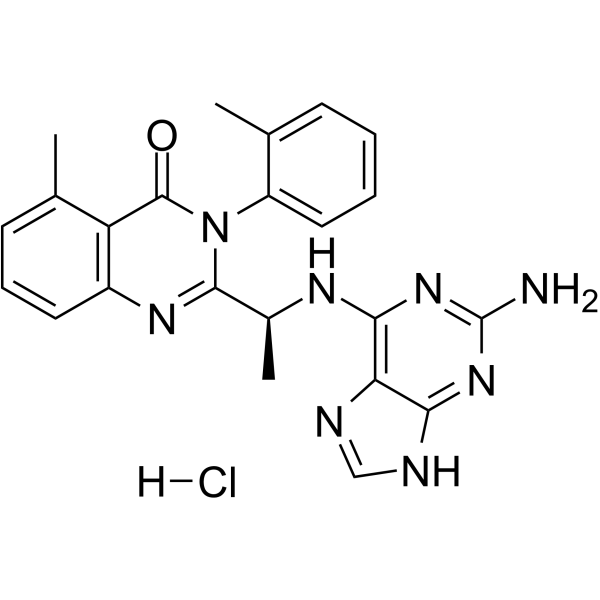
HY-16122B
CAL-130 HydrochloridePI3Kδ/γ Inhibitor -
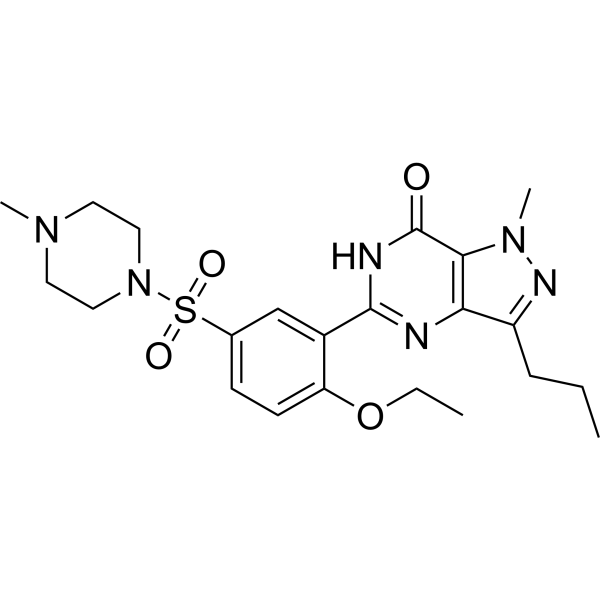
HY-15025
SildenafilPDE5 Inhibitor -
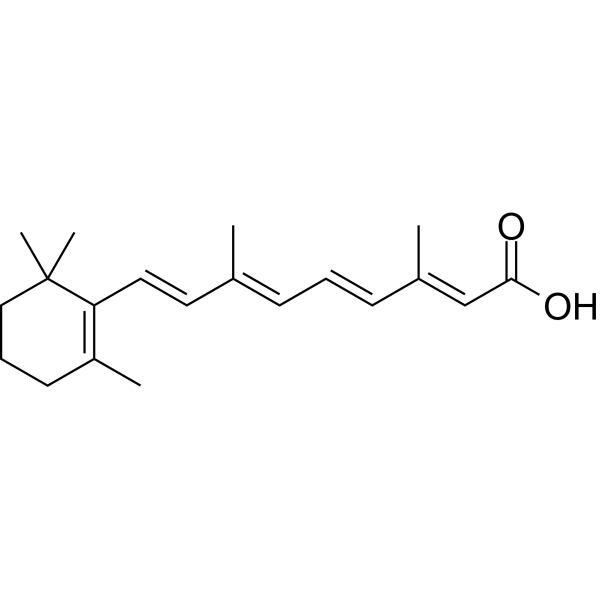
HY-14649
Retinoic acidRAR Agonist -
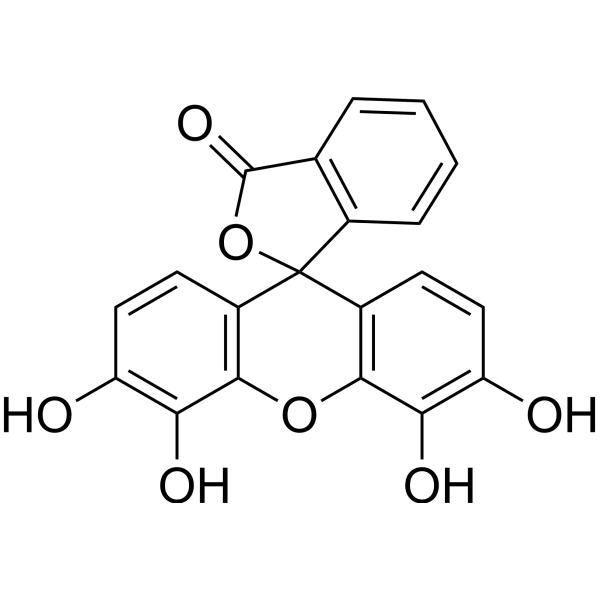
HY-D0254
GalleinGβγ Subunit Inhibitor -

HY-108841
RaleukinIL-1R Antagonist -
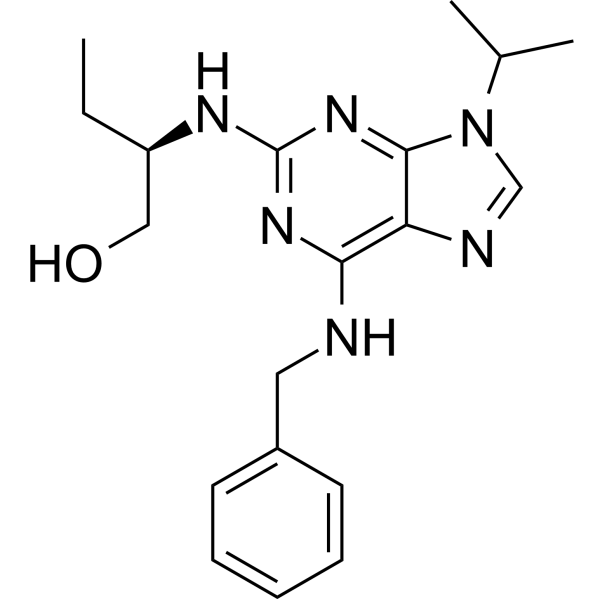
HY-30237
(R)-RoscovitineCDKs Inhibitor -
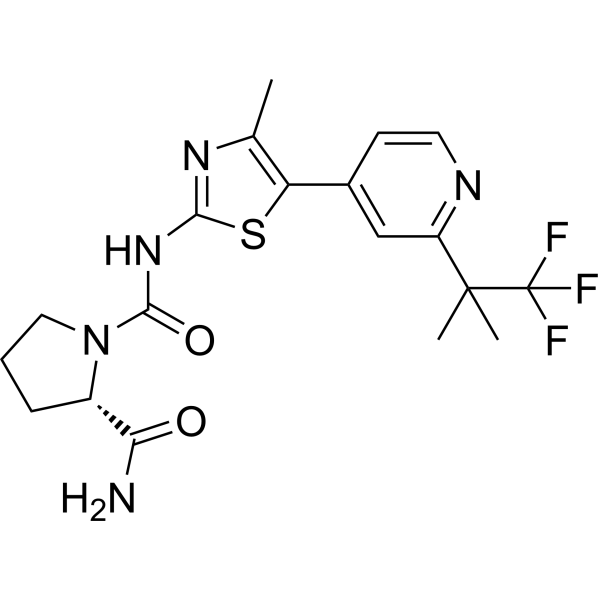
HY-15244
AlpelisibPI3Kα Inhibitor -
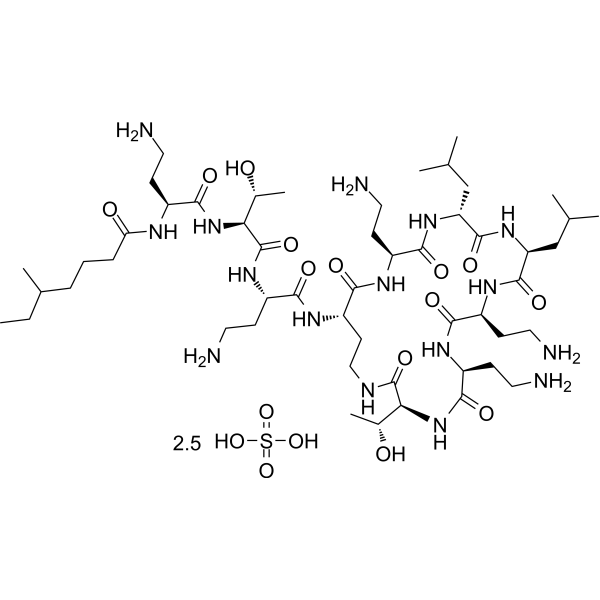
HY-A0089
Colistin sulfateAntibiotic
Publications Citing Use of MedChemExpress (MCE) iMDK
More- Nat Commun. 2023 Jul 31;14(1):4600. [Abstract]
- Cell Discov. 2024 Oct 22;10(1):110. [Abstract]
- Adv Sci (Weinh). 2026 Apr;13(19):e08588. [Abstract]
- J Transl Med. 2026 Apr 14;24(1):535. [Abstract]
- Cell Regen. 2025 Dec 4;14(1):50. [Abstract]
- IUBMB Life. 2025 May;77(5):e70014. [Abstract]
- bioRxiv. 2026 May 27.
 Customer Validation & Images

-
In Vivo Efficacy Study
-
In Vivo Efficacy Study
-
Histological Imaging/Staining
-
RT-PCR
-
Cell Proliferation/Viability Assay


Biological Activity
Description
In Vitro
iMDK (50–500 nM) suppressed AKT phosphorylation in a dose-dependent manner in H441 lung adenocarcinoma cells after treatment for 72 h. In contrast, iMDK robustly increases p-ERK[1].
MedChemExpress (MCE) has not independently confirmed the accuracy of these methods. They are for reference only. .
-
Cell Line:H441 (lung adenocarcinoma; KRASG12V), H2009 (non-small cell carcinoma; KRASG12A), A549 (lung carcinoma; KRASG12S) and H520 (lung squamous cell carcinoma; KRASWT)
-
Concentration:iMDK (2.5 μM) and PD0325901 (0.5 μM) for H441 and H2009 cells
iMDK (0.125 μM) and PD0325901 (0.25 μM) for H520 cells
iMDK (0.25 μM) and PD0325901 (0.125 μM) for A549 cells -
Incubation Time:72 hours
-
Result:iMDK alone did not inhibit cell viability of A549 cells, the combinatorial treatment of iMDK with PD0325901 significantly inhibited that of A549 cells compared to the single treatment of PD0325901.
-
Cell Line:H441 lung adenocarcinoma cells
-
Concentration:0-500 nM
-
Incubation Time:72 hours
-
Result:Suppressed AKT phosphorylation in a dose-dependent manner.
ERK1/2 phosphorylation was increased.
In Vivo
MedChemExpress (MCE) has not independently confirmed the accuracy of these methods. They are for reference only.
-
Animal Model:female BALB/c nude mice (6 week old) bearing H441 human lung cancer xenografts[1]
-
Dosage:iMDK (9 mg/kg) and PD0325901 (5 mg/kg)
-
Administration:Intraperitoneally injected with 100 μL iMDK everyday and/or orally administered PD0325901 five times per week (on days 1, 2, 3, 4, 5, 7, 8, 9, 10, 11)
-
Result:Reduced significantly volume of the tumors derived from H441 lung adenocarcinoma cells after the combination treatment with iMDK and PD0325901 compared to that of single compound in a xenograft mouse model.


Chemical Information
-
CAS No. 881970-80-5
-
Appearance Solid
-
Molecular Weight 376.40
-
Formula C21H13FN2O2S
-
Color Off-white to yellow
-
SMILES
O=C1C(C2=CN3C(SC(CC4=CC=C(F)C=C4)=C3)=N2)=CC5=CC=CC=C5O1
-
Shipping
Room temperature in continental US; may vary elsewhere.
-
Storage
Powder -20°C 3 years 4°C 2 years In solvent -80°C 6 months -20°C 1 month


Publications (7)
-
Journal Impact Factor
-
Most Recent
-
Nat Commun
Schwann cells regulate tumor cells and cancer-associated fibroblasts in the pancreatic ductal adenocarcinoma microenvironment. [Abstract]2023 Jul 31;14(1):4600. PMID: 37524695 -
Cell Discov
2024 Oct 22;10(1):110. PMID: 39438452
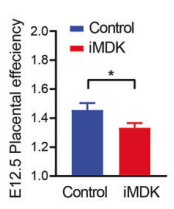
iMDK purchased from MedChemExpress. Usage Cited in: Cell Discov. 2024 Oct 22;10(1):110. [Abstract]
iMDK (9 mg/kg, intraperitoneally injected, once a day from E7.5 to E12.5.). Placental efficiency as expressed by the ratio of fetal weight to placental weight (n = 24 for control, n = 41 for iMDK).
iMDK purchased from MedChemExpress. Usage Cited in: Cell Discov. 2024 Oct 22;10(1):110. [Abstract]
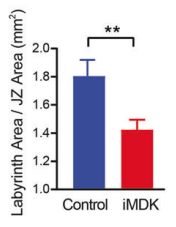
iMDK (9 mg/kg, intraperitoneally injected, once a day from E7.5 to E12.5.). Measurements of the labyrinth area and JZ area and the ratio of the labyrinth area to the JZ area (n = 8 control, n = 14 iMDK).
iMDK purchased from MedChemExpress. Usage Cited in: Cell Discov. 2024 Oct 22;10(1):110. [Abstract]
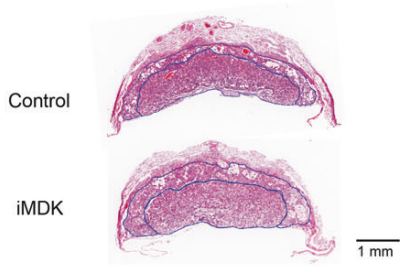
iMDK (9 mg/kg, intraperitoneally injected, once a day from E7.5 to E12.5.). Representative image of a cross-section through the labyrinth and JZ in a mid-section of a mouse placenta. The blue solid line outlines the labyrinth and JZ that was measured.
iMDK purchased from MedChemExpress. Usage Cited in: Cell Discov. 2024 Oct 22;10(1):110. [Abstract]
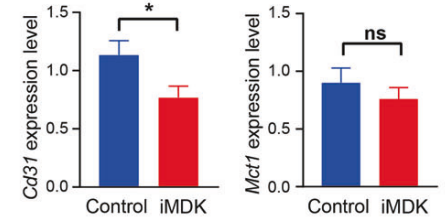
iMDK (9 mg/kg, intraperitoneally injected, once a day from E7.5 to E12.5.). Real-time quantitative polymerase chain reaction (RT-qPCR) analysis of the expression of markers of SynT-I (Mct1) and endothelial cells (Cd31). RT-qPCR data were normalized to the reference gene Hprt.
iMDK purchased from MedChemExpress. Usage Cited in: Cell Discov. 2024 Oct 22;10(1):110. [Abstract]
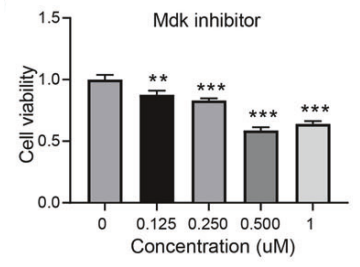
The CCK-8 assay was used to evaluate the proliferation of endothelial cells treated with iMDK (0.125-1 μM).
-
Adv Sci (Weinh)
Cancer Cell-Intrinsic Cholesterol Induces Lipid-Associated Macrophage Differentiation via SP1 Palmitoylation to Promote Prostate Cancer Progression. [Abstract]2026 Apr;13(19):e08588. PMID: 41603134 -
J Transl Med
Midkine as a novel prognostic and therapeutic target in meningioma: insights from single-cell analysis and organoid-based drug validation. [Abstract]2026 Apr 14;24(1):535. PMID: 41981656 -
Cell Regen
A single-cell hematopoietic microenvironmental atlas reveals progressive maturation of bone marrow vascular niche. [Abstract]2025 Dec 4;14(1):50. PMID: 41339619 -
IUBMB Life
The combination of midkine inhibitor with Lenvatinib amplifies the suppression of hepatocellular carcinoma. [Abstract]2025 May;77(5):e70014. PMID: 40321061 -


Solvent & Solubility
In Vitro:
DMSO : 2 mg/mL (5.31 mM; ultrasonic and warming and heat to 60°C; Hygroscopic DMSO has a significant impact on the solubility of product, please use newly opened DMSO)
H2O : < 0.1 mg/mL (insoluble)
Please refer to the solubility information to select the appropriate solvent. Once prepared, please aliquot and store the solution to prevent product inactivation from repeated freeze-thaw cycles.
Storage method and period of stock solution: -80°C, 6 months; -20°C, 1 month. When stored at -80°C, please use it within 6 months. When stored at -20°C, please use it within 1 month.
Please refer to the solubility information to select the appropriate solvent. Once prepared, please aliquot and store the solution to prevent product inactivation from repeated freeze-thaw cycles.
Storage method and period of stock solution: -80°C, 6 months; -20°C, 1 month. When stored at -80°C, please use it within 6 months. When stored at -20°C, please use it within 1 month.
Concentration (start) × Volume (start) = Concentration (final) × Volume (final)


Purity & Documentation
-
Data Sheet (276 KB)
-
SDS (396 KB)
- English - EN (396 KB)
- Français - FR (396 KB)
- Deutsch - DE (396 KB)
- Norwegian - NO (396 KB)
- Español - ES (396 KB)
- Swedish - SV (396 KB)
- Italian - IT (396 KB)
- Korean - KR (396 KB)
- Portuguese - PT (396 KB)
-
Handling Instructions (2659 KB)
References


Complete Stock Solution Preparation Table
Please refer to the solubility information to select the appropriate solvent. Once prepared, please aliquot and store the solution to prevent product inactivation from repeated freeze-thaw cycles.
Storage method and period of stock solution: -80°C, 6 months; -20°C, 1 month. When stored at -80°C, please use it within 6 months. When stored at -20°C, please use it within 1 month.
| Optional Solvent | Concentration Solvent Mass | 1 mg | 5 mg | 10 mg | 25 mg |
|---|---|---|---|---|---|
| DMSO | 1 mM | 2.6567 mL | 13.2837 mL | 26.5675 mL | 66.4187 mL |
| 5 mM | 0.5313 mL | 2.6567 mL | 5.3135 mL | 13.2837 mL |


iMDK Related Classifications
HY-110171 Related Classifications
 Powered by Bioz