

1. Search Result
Search Result
Results for "

1200

" in MedChemExpress (MCE) Product Catalog:

37

Inhibitors & Agonists

3

Fluorescent Dyes

3

Biochemical Assay Reagents

5

Peptides

3

Natural
Products

2

Recombinant Proteins

4

Antibodies

2

Oligonucleotides

Cat. No. Product Name Target Research Areas Chemical Structure
  • HY-N1200

    5 alpha Reductase Inflammation/Immunology Cancer
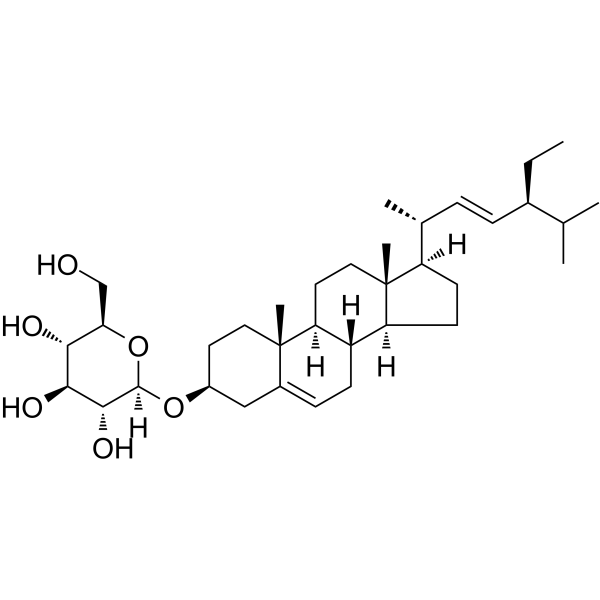
    Stigmasterol glucoside is a sterol compound and a 5α-reductase inhibitor with an IC50 value of 27.2 µM. Stigmasterol glucoside has certain anti-inflammatory, antioxidant, and anti-tumor activities .
    Stigmasterol glucoside
  • HY-B1200
    Pralidoxime chloride
    2 Publications Verification

    2-PAM chloride

    Cholinesterase (ChE) Neurological Disease
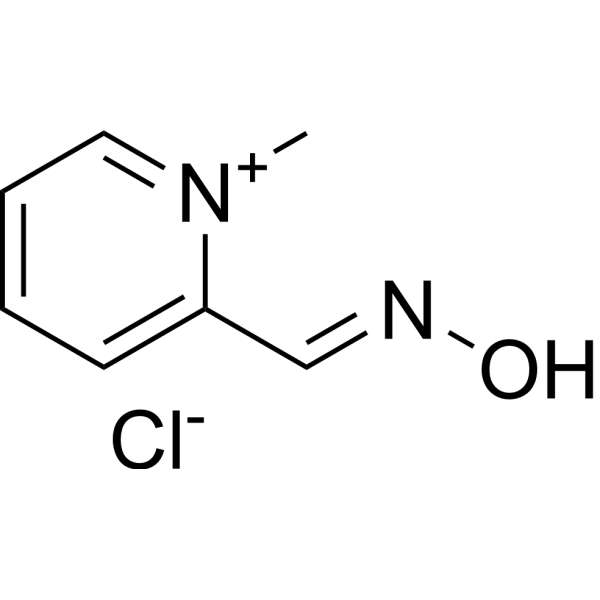
    Pralidoxime chloride is a potent reactivator of acetylcholinesterase (AChE). Pralidoxime chloride reactivates nerve agent-inhibited AChE via direct nucleophilic attack by the oxime moiety on the phosphorus center of the bound nerve agent. Pralidoxime chloride is an antidote for organophosphate poisoning .
    Pralidoxime chloride
  • HY-P1200A

    Src Cancer
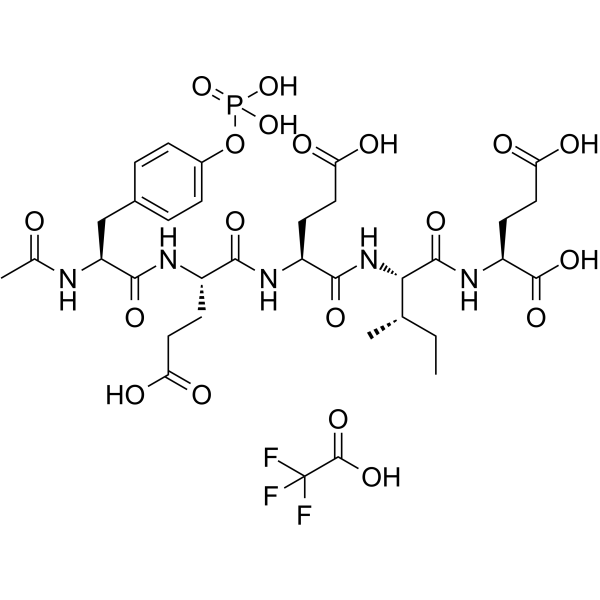
    Ac-Tyr(PO3H2)-Glu-Glu-Ile-Glu-OH TFA (compound 1) is a high-affinity pentapeptide to bind to the src SH2 domain (IC50≈1 µM). Ac-Tyr(PO3H2)-Glu-Glu-Ile-Glu-OH TFA is an inhibitor for src SH3-SH2:phosphoprotein interactions .
    Ac-Tyr(PO3H2)-Glu-Glu-Ile-Glu-OH TFA
  • HY-P1200

    Src Cancer
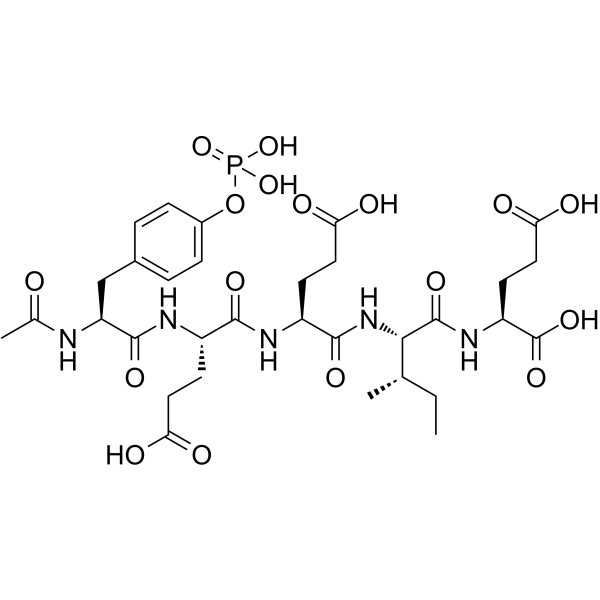
    Ac-Tyr(PO3H2)-Glu-Glu-Ile-Glu-OH (compound 1) is a high-affinity pentapeptide to bind to the src SH2 domain (IC50≈1 µM). Ac-Tyr(PO3H2)-Glu-Glu-Ile-Glu-OH is an inhibitor for src SH3-SH2:phosphoprotein interactions .
    Ac-Tyr(PO3H2)-Glu-Glu-Ile-Glu-OH
  • HY-B1200R

    2-PAM chloride (Standard)

    Reference Standards Cholinesterase (ChE) Neurological Disease
    Pralidoxime (chloride) (Standard) is the analytical standard of Pralidoxime (chloride). This product is intended for research and analytical applications. Pralidoxime chloride is a potent reactivator of acetylcholinesterase (AChE). Pralidoxime chloride reactivates nerve agent-inhibited AChE via direct nucleophilic attack by the oxime moiety on the phosphorus center of the bound nerve agent. Pralidoxime chloride is an antidote for organophosphate poisoning .
    Pralidoxime chloride (Standard)
  • HY-Y0703

    CMC-Na (Viscosity:800-1200 mPa.s)

    Environmental Pollutants Biochemical Assay Reagents Others
    Sodium carboxymethyl cellulose (Viscosity:800-1200 mPa.s) is the sodium salt of cellulose arboxymethyl and frequently used as viscous agent, paste and barrier agent.
    Sodium carboxymethyl cellulose (Viscosity:800-1200 mPa.s)
  • HY-114153
    PLX5622
    Maximum Cited Publications
    89 Publications Verification

    c-Fms Neurological Disease
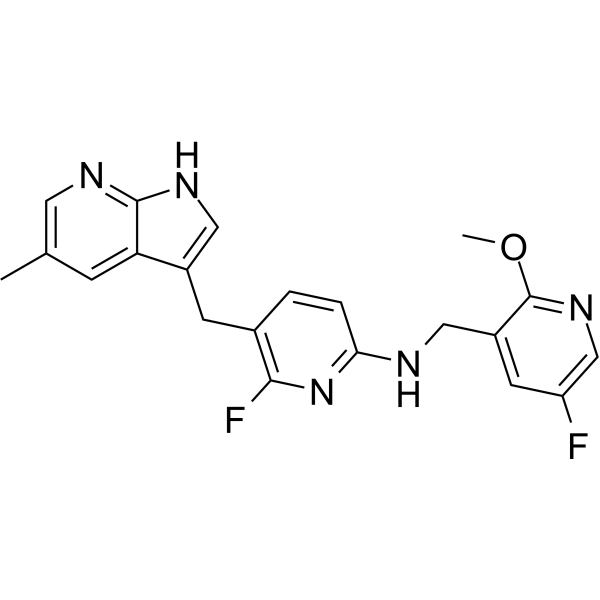
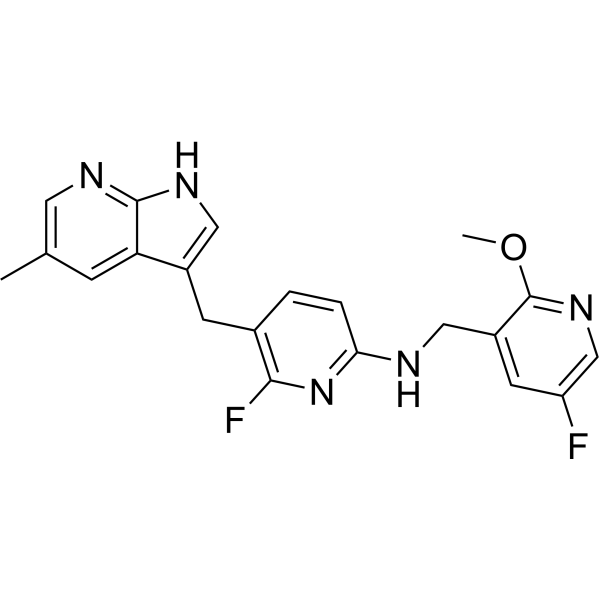
    PLX5622 is a highly selective brain penetrant and orally active CSF1R inhibitor (IC50=0.016 μM; Ki=5.9 nM). PLX5622 allows for extended and specific microglial cells elimination, preceding and during pathology development. PLX5622 demonstrates desirable PK properties in varies animals. PLX5622 is predominantly administered via ad libitum diets with a dose of 1200 ppm .
    PLX5622
  • HY-114153C
    PLX5622 in AIN-76A Diet (1200 ppm)
    5 Publications Verification

    c-Fms Neurological Disease
    PLX5622 in AIN-76A Diet (1200 ppm) contains 1200 mg of PLX5622 (HY-114153) per Kg of AIN-76 diet and it can be used for microglia clearance. PLX5622 in AIN-76A Diet (1200 ppm) is ideal choose for microglia function research in healthy/diseased states. PLX5622 in AIN-76A Diet (1200 ppm) has been verified by MedChemExpress (MCE).The color of PLX5622 in AIN-76A Diet (1200 ppm) provided by MCE is blue. Meanwhile, MCE will provide an equal amount of PLX5622-Free AIN-76A Diet (no added pigments) as a complimentary offering, which is used for the control group.
    PLX5622 in AIN-76A Diet (1200 ppm)
  • HY-Y0703A

    CMC-Na (Viscosity:1200-1400 mPa.s)

    Environmental Pollutants Biochemical Assay Reagents Others
    Sodium carboxymethyl cellulose (Viscosity:1200-1400 mPa.s) is the sodium salt of cellulose arboxymethyl and frequently used as viscous agent, paste and barrier agent.
    Sodium carboxymethyl cellulose (Viscosity:1200-1400 mPa.s)
  • HY-112624A

    Dextran 1; Dextran D1; Dextran T1(MW 800-1200)

    Biochemical Assay Reagents Others
    Dextran T1 (Dextran 1; Dextran D1) (with a molecular weight of 1,000) is a dehydrated glucose polymer with an average molecular weight of 1,000. Dextran T1 (MW 1,000) has excellent biodegradability and biocompatibility, and can be used as a nanobody carrier scaffold and a freeze-drying protectant. Dextran T1 (MW 1,000) promotes the retention of circulating tumor cells in the capillary bed .
    Dextran T1 (MW 1,000)
  • HY-101925
    CM-272
    3 Publications Verification

    Histone Methyltransferase DNA Methyltransferase Apoptosis Cancer
    CM-272 is a first-in-class, potent, selective, substrate-competitive and reversible dual G9a/DNA methyltransferases (DNMTs) inhibitor with antitumor activities. CM-272 inhibits G9a, DNMT1, DNMT3A, DNMT3B and GLP with IC50s of 8 nM, 382 nM, 85 nM, 1200 nM and 2 nM, respectively. CM-272 inhibits cell proliferation and promotes apoptosis, inducing IFN-stimulated genes and immunogenic cell death .
    CM-272
  • HY-P1335
    CTAP
    2 Publications Verification

    Opioid Receptor Neurological Disease
    CTAP is a potent, highly selective, and BBB penetrant μ opioid receptor antagonist, with an IC50 of 3.5 nM. CTAP displays over 1200-fold selectivity over δ opioid (IC50=4500 nM) and somatostatin receptors. CTAP can be used for the study of L-DOPA-induced dyskinesia (LID) and opiate overdose or addiction .
    CTAP
  • HY-18351

    LMP-400; NSC-724998

    Topoisomerase Infection Cancer
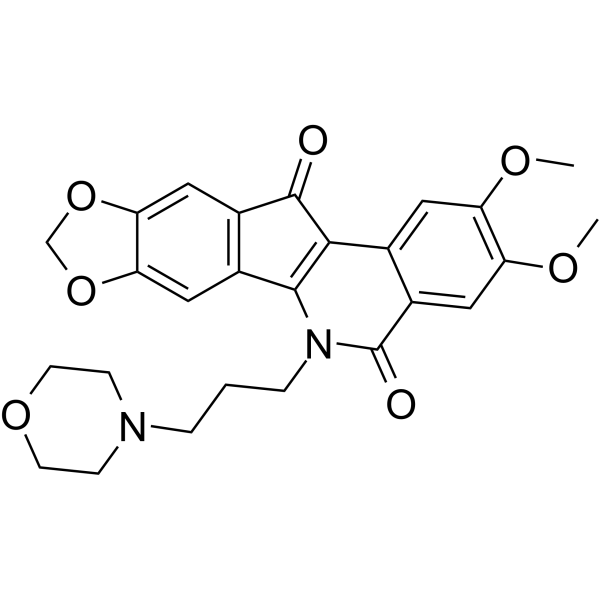
    Indotecan (LMP-400), an indenoisoquinoline derivative, is a potent Topoisomerase I inhibitor, with IC50s of 300, 1200, 560 nM for P388, HCT116, MCF-7 cell lines, respectively. Indotecan prevents the relaxation of supercoiled DNA and can be used for the research of visceral leishmaniasis .
    Indotecan
  • HY-107639

    MMP Inflammation/Immunology
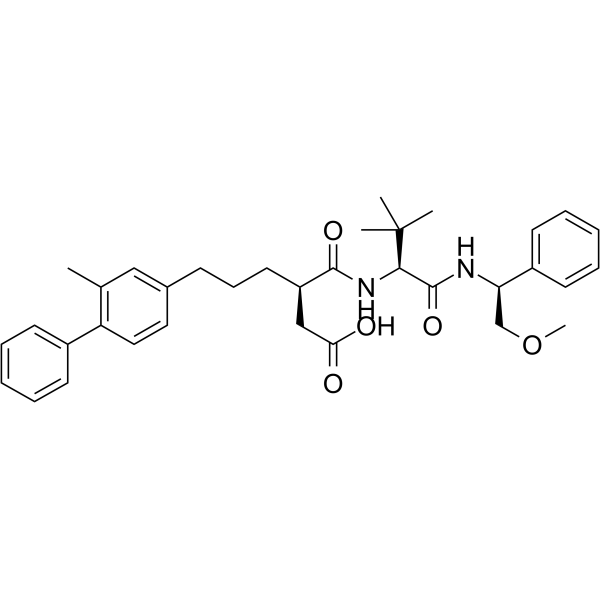
    UK-370106 is a potent and highly selective MMP-3 (IC50 of 23 nM) and MMP-12 (IC50 of 42 nM) inhibitor with >1200-fold higher potency than MMP-1, MMP-2, MMP-9, and MMP-14, and about 100-fold than MMP-13 and MMP-8. UK-370106 potently inhibits cleavage of [ 3H]-fibronectin by MMP-3 (IC50 of 320 nM) and has little effect on keratinocyte migration in vitro .
    UK-370106
  • HY-14234
    Glucocorticoid receptor agonist
    1 Publications Verification

    Glucocorticoid Receptor Metabolic Disease Inflammation/Immunology Endocrinology
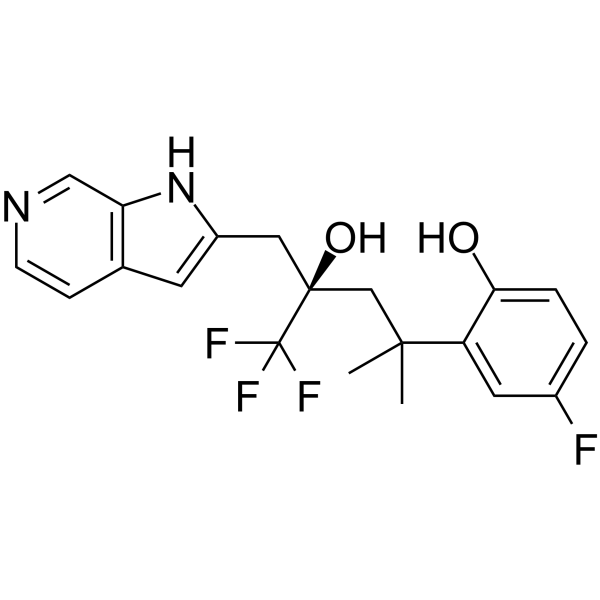
    Glucocorticoid receptor agonist is a Glucocorticoid receptor agonist that acts on Glucocorticoid receptor (GR), progesterone receptor (PR) and mineralocorticoid receptor (MR) with the IC50 values of 2.1 , 1200 and 210 nM, respectively. Glucocorticoid receptor agonist has steroid-like anti-inflammatory properties and may be used to improve metabolism and reduce increased levels of body fat and serum insulin .
    Glucocorticoid receptor agonist
  • HY-15244R

    BYL-719 (Standard)

    Reference Standards PI3K Apoptosis Cancer
    Alpelisib (Standard) is the analytical standard of Alpelisib. This product is intended for research and analytical applications. Alpelisib (BYL-719) is a potent, selective, and orally active PI3Kα inhibitor. Alpelisib (BYL-719) shows efficacy in targeting PIK3CA-mutated cancer. Alpelisib (BYL-719) also inhibits p110α/p110γ/p110δ/p110β with IC50s of 5/250/290/1200 nM, respectively. Antineoplastic activity .
    Alpelisib (Standard)
  • HY-P1335A
    CTAP TFA
    2 Publications Verification

    Opioid Receptor Neurological Disease
    CTAP TFA is a potent, highly selective, and BBB penetrant μ opioid receptor antagonist, with an IC50 of 3.5 nM. CTAP TFA displays over 1200-fold selectivity over δ opioid (IC50=4500 nM) and somatostatin receptors. CTAP TFA can be used for the study of L-DOPA-induced dyskinesia (LID) and opiate overdose or addiction .
    CTAP TFA
  • HY-18351A

    LMP-400 hydrochloride; NSC-724998 hydrochloride

    Topoisomerase Infection Cancer
    Indotecan hydrochloride, an indenoisoquinoline derivative, is a potent Topoisomerase I inhibitor, with IC50s of 300, 1200, 560 nM for P388, HCT116, MCF-7 cell lines, respectively. Indotecan hydrochloride prevents the relaxation of supercoiled DNA and can be used for the research of visceral leishmaniasis .
    Indotecan hydrochloride
  • HY-123370

    Proton Pump Metabolic Disease Cancer
    FR-167356 is a potent, orally active and selective vacuolar ATPase inhibitor with IC50 values of 170, 220, 370, and 1200 nM for osteoclast plasma membranes, macrophage microsomes, renal brush border membranes, and liver lysosomal membranes, respectively. FR-167356 inhibits bone resorption and ovariectomy-induced bone loss .
    FR-167356
  • HY-19283

    5-HT Receptor Neurological Disease
    DU125530 is a potent and selective5-HT1A receptor antagonist with Ki values of 0.7, 890, 1200, 240, 750, 1100 nM for 5-HT1A, 5-HT1B, 5-HT1D, 5-HT2A, 5-HT2C, 5-HT3, respectively. DU125530 shows antidepressant effects .
    DU125530
  • HY-13706

    TM30089 Racemate

    Prostaglandin Receptor Endocrinology Cancer
    CAY10471 Racemate (TM30089 Racemate) is a potent and highly selective prostaglandin D2 receptor CRTH2 antagonist, with a Ki of 0.6 nM for hCRTH2, selective over human thromboxane A2 receptor TP (Ki, >10000 nM) or PGD2 receptor DP (Ki, 1200 nM). CAY10471 Racemate also has effect on mouse and rat orthologs of CRTH2 .
    CAY10471 Racemate
  • HY-111918

    Cholecystokinin Receptor Metabolic Disease
    A71378 is a selectivity CCK-A receptor agonist the IC50 values of 0.4 nM, 300 nM, and 1,200 nM for the pancreatic CCK-A, cortical CCK-B, and gastrin receptor, respectively. A71378 elicits pancreatic amylase secretion (EC50 = 0.16 nM) and ileal muscle contraction (EC50 = 3.7 nM) .
    A71378
  • HY-P4555

    Somatostatin Receptor Neurological Disease
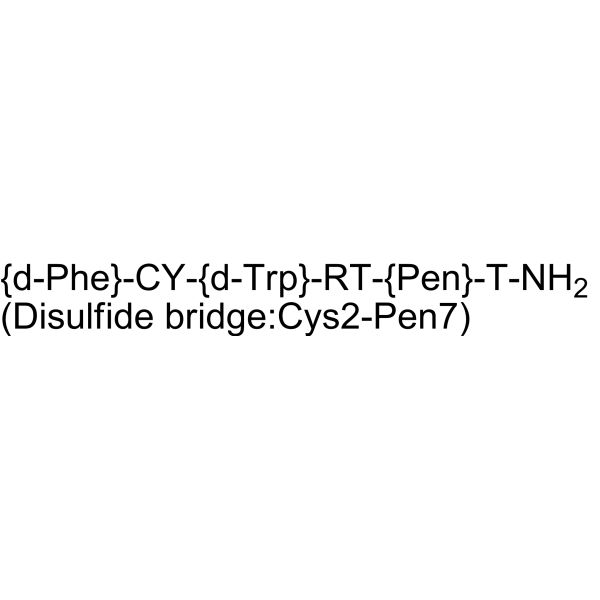
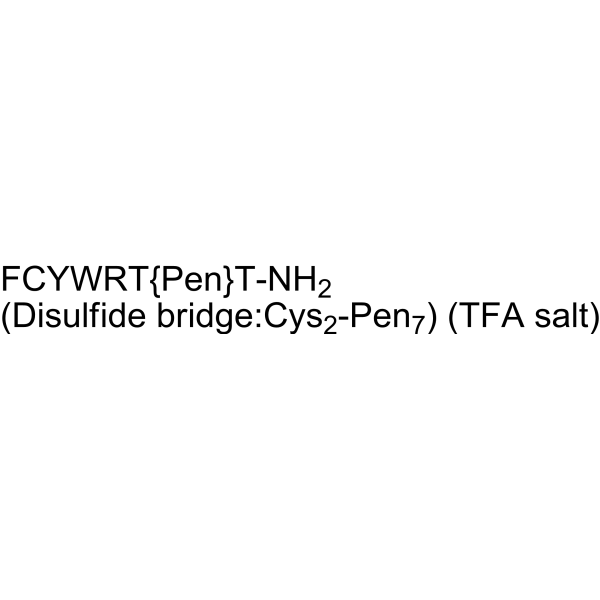
    (D-Phe5,Cys6,11,N-Me-D-Trp8)-Somatostatin-14 (5-12) amide (Compound 4) is a somatostatin analog with Kds of 0.61, 11.05, 23.5, 1200 and >1000 nM for SSTR5, SSTR3, SSTR2, SSTR1 and SSTR4, respectively .
    (D-Phe5,Cys6,11,N-Me-D-Trp8)-Somatostatin-14 (5-12) amide
  • HY-112663

    Antibiotic Infection
    Monazomycin is a polyene-like antibiotic produced by Streptomyces. Monazomycin molecular weight is about 1200 .
    Monazomycin
  • HY-D2191

    Fluorescent Dye Others
    Ag2S-COOH (1200 nm) is a fluorescent dyes.
    Ag2S-COOH (1200 nm)
  • HY-D2190

    Fluorescent Dye Others
    Ag2S Oil phase (1200 nm) is a fluorescent dyes.
    Ag2S Oil phase (1200 nm)
  • HY-D2192

    Fluorescent Dye Others
    Ag2S-PEG-NH2 (1200 nm) is a fluorescent dyes.
    Ag2S-PEG-NH2 (1200 nm)
  • HY-100159A

    MLV-6976 hydrochloride; NC-1200 hydrochloride

    iGluR Neurological Disease
    Ipenoxazone (MLV-6976) hydrochloride is a potent and centrally acting muscle relaxant.
    Ipenoxazone hydrochloride
  • HY-100159

    MLV-6976; NC-1200

    Phosphodiesterase (PDE) Neurological Disease
    Ipenoxazone is a potent and centrally acting muscle relaxant.
    Ipenoxazone
  • HY-RS14942

    Small Interfering RNA (siRNA) Others

    TPP1 Human Pre-designed siRNA Set A contains three designed siRNAs for TPP1 gene (Human), as well as a negative control, a positive control, and a FAM-labeled negative control.

    TPP1 Human Pre-designed siRNA Set A
    TPP1 Human Pre-designed siRNA Set A
  • HY-171290

    Casein Kinase p38 MAPK Inflammation/Immunology
    Casein kinase 1δ-IN-31 (Compound 16) is the inhibitor for casein kinase (CK) that inhibits CK1α, CK1δ, and p38α with IC50s of 196, 17, and 18 nM, respectively. Casein kinase 1δ-IN-31 inhibits Double Homeobox 4 (DUX4) with IC50 of 1200 nM .
    Casein kinase 1δ-IN-31
  • HY-U00346A

    Dipeptidyl Peptidase Metabolic Disease
    TS-021 is a selective,orally active,reversible and long-acting DPP-IV inhibitor,and exhibits significant inhibition selectivity against DPP-8 (> 600 fold),DPP-9 (> 1200 fold) and other peptidases (> 15,000 fold). TS-021 inhibits DPP-IV activity in human plasma with an IC50 value of 5.34 nM. TS-021 has long-term persistent plasma drug concentration and potent antihyperglycemic activity,and increases in the active form of GLP-1 .
    TS-021
  • HY-E70750

    c-Met/HGFR Cancer
    Mesenchymal-to-epithelial transition (MET) is a receptor tyrosine kinase for hepatocyte growth factor (HGF). MET overactivation is strongly associated with angiogenesis, cellular motility, growth, and invasion. Aberrant MET signaling can drive tumorigenesis in several cancer types through various molecular mechanisms, including MET amplification, MET exon 14 skipping mutation, MET overexpression, and MET fusions. MET F1200I is a mutant of MET. MET F1200I Recombinant Human Active Protein Kinase is a recombinant MET F1200I protein that can be used to study MET F1200I-related functions .
    MET F1200I Recombinant Human Active Protein Kinase
  • HY-44667

    Adrenergic Receptor Drug Metabolite Others
    Deacetylmoxisylyte is an orally active metabolite in plasma of the prodrug Moxisylyte. Deacetylmoxisylyte exhibits similar affinity and selectivity for rabbit corpus cavernosum and urethra. Deacetylmoxisylyte has IC50 values of 400 and 1200 nM for alpha-1 and alpha-2 adrenoceptors .
    Deacetylmoxisylyte
  • HY-N16985

    Others Inflammation/Immunology
    Taraxasteryl palmitate is a taraxasterol-type triterpene ester compound with antiemetic activity. Intralymphatic injection of 30 mg/kg and 100 mg/kg Taraxasteryl palmitate significantly inhibited vomiting in a copper sulfate-induced frog vomiting model, with vomiting latency extension rates of 116.9% and 120.0%, respectively. Taraxasteryl palmitate exerts its anti-reflex vomiting activity by prolonging the vomiting latency. Taraxasteryl palmitate can be used in the study of vomiting-related diseases (especially reflex vomiting). Taraxasteryl palmitate can be naturally extracted from the flowers of Inula linariaefolia .
    Taraxasteryl palmitate
  • HY-101925R

    Reference Standards Histone Methyltransferase DNA Methyltransferase Apoptosis Cancer
    CM-272 (Standard) is the analytical standard of CM-272 (HY-101925). This product is intended for research and analytical applications. CM-272 is a first-in-class, potent, selective, substrate-competitive and reversible dual G9a/DNA methyltransferases (DNMTs) inhibitor with antitumor activities. CM-272 inhibits G9a, DNMT1, DNMT3A, DNMT3B and GLP with IC50s of 8 nM, 382 nM, 85 nM, 1200 nM and 2 nM, respectively. CM-272 inhibits cell proliferation and promotes apoptosis, inducing IFN-stimulated genes and immunogenic cell death .
    CM-272 (Standard)
  • HY-183826

    Autophagy Infection Cancer
    ATG5 PPI-IN-4 is an autophagy inhibitor targeting ATG5, with an IC50 of 12.78 μM against ATG5-ATG16L1 and an IC50 of 12.00 μM against ATG5-TECAIR. ATG5 PPI-IN-4 blocks the protein interactions between ATG5 and ATG16L1, as well as between ATG5 and TECAIR, disrupts the assembly of the ATG12-ATG5-ATG16L1 ternary complex, inhibits the lipidation modification of LC3/ATG8, and ultimately downregulates cellular autophagy levels. ATG5 PPI-IN-4 can be used in autophagy-related research, such as studies on infection and cancer .
    ATG5 PPI-IN-4

Inquiry Online

Your information is safe with us. * Required Fields.

Salutation


Country or Region *

Applicant Name *


Organization Name *

Department *


Email Address *


Product Name *

Cat. No.


Requested quantity *

Phone Number *


Remarks

Inquiry Online

Inquiry Information

Product Name:
Cat. No.:
Quantity:
MCE Japan Authorized Agent:

