1. Search Result
Search Result
Results for "

4 T1

" in MedChemExpress (MCE) Product Catalog:

185

Inhibitors & Agonists

1

Screening Libraries

3

Fluorescent Dyes

1

Biochemical Assay Reagents

9

Peptides

3

Inhibitory Antibodies

13

Natural
Products

32

Recombinant Proteins

1

Isotope-Labeled Compounds

19

Antibodies

2

Click Chemistry

9

Oligonucleotides

Cat. No. Product Name Target Research Areas Chemical Structure
  • HY-112624A

    Dextran 1; Dextran D1; Dextran T1(MW 800-1200)

    Biochemical Assay Reagents Others
    Dextran T1 (Dextran 1; Dextran D1) (with a molecular weight of 1,000) is a dehydrated glucose polymer with an average molecular weight of 1,000. Dextran T1 (MW 1,000) has excellent biodegradability and biocompatibility, and can be used as a nanobody carrier scaffold and a freeze-drying protectant. Dextran T1 (MW 1,000) promotes the retention of circulating tumor cells in the capillary bed [1] .
    Dextran T1 (MW 1,000)
  • HY-130665
    TL12-186
    1 Publications Verification

    PROTACs CDK Cancer
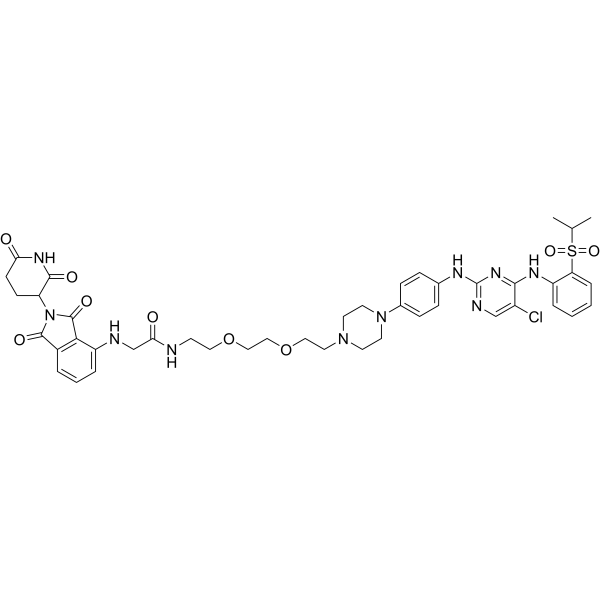
    TL12-186 is a Cereblon-dependent multi-kinase PROTAC degrader. Multi-kinases include CDK, BTK, FLT3, Aurora kinases, TEC, ULK, ITK, et al. TL12-186 inhibits CDK2/cyclin A (IC50=73 nM) and CDK9/cyclin T1 (IC50=55 nM) [1].
    TL12-186
  • HY-137478
    KB-0742
    3 Publications Verification

    CDK Cancer
    KB-0742 is a potent, selective and orally active CDK9 inhibitor with an IC50 of 6 nM for CDK9/cyclin T1. KB-0742 is selective for CDK9/cyclin T1 with >50-fold selectivity over other CDK kinases. KB-0742 has potent anti-tumor activity [1] .
    KB-0742
  • HY-15504A
    RGB-286638 free base
    3 Publications Verification

    CDK GSK-3 MEK JAK Cancer
    RGB-286638 is a CDK inhibitor that inhibits the kinase activity of cyclin T1-CDK9, cyclin B1-CDK1, cyclin E-CDK2, cyclin D1-CDK4, cyclin E-CDK3, and p35-CDK5 with IC50s of 1, 2, 3, 4, 5 and 5 nM, respectively; also inhibits GSK-3β, TAK1, Jak2 and MEK1, with IC50s of 3, 5, 50, and 54 nM.
    RGB-286638 free base
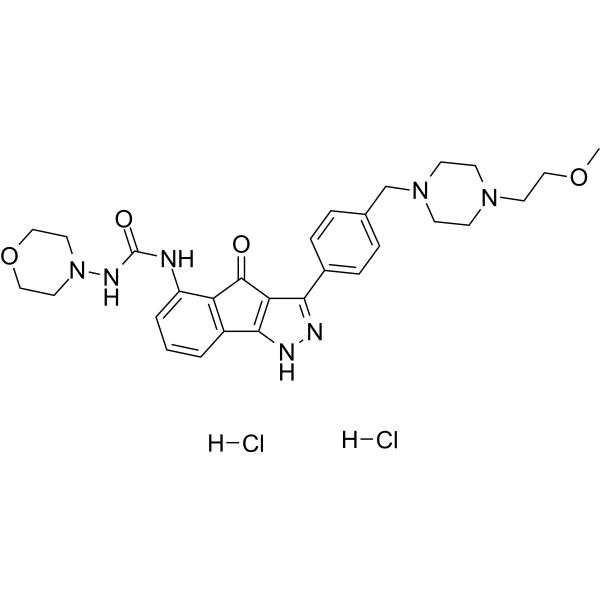
  • HY-112615

    Drug-Linker Conjugates for ADC Cancer
    NAMPT inhibitor-linker 1 is a agent-linker conjugates for ADC, composed of an NAMPT inhibitor as a payload, and a linker. ADC-3 consists of an NAMPT inhibitor-linker 1 and an anti-c-Kit monoclonal antibody, exihibits potent activity against c-Kit expressing cell lines such as GIST-T1 and NCI-H526 cells, with IC50s of <3 pM and 9 pM, respectively.
    NAMPT inhibitor-linker 1
  • HY-15504
    RGB-286638
    3 Publications Verification

    CDK GSK-3 MEK JAK Cancer
    RGB-286638 is a CDK inhibitor that inhibits the kinase activity of cyclin T1-CDK9, cyclin B1-CDK1, cyclin E-CDK2, cyclin D1-CDK4, cyclin E-CDK3, and p35-CDK5 with IC50s of 1, 2, 3, 4, 5 and 5 nM, respectively; also inhibits GSK-3β, TAK1, Jak2 and MEK1, with IC50s of 3, 5, 50, and 54 nM.
    RGB-286638
  • HY-P0229

    Rnase T1

    DNA/RNA Synthesis Others
    Ribonulease T1, Aspergillus oryzae (Rnase T1), is commonly used in biochemical research. Ribonuclease T1 is an endonuclease that can specifically degrade single stranded RNA. Ribonuclease T1 can form nucleoside 2 ', 3 '-cyclic phosphoric acid intermediates to cut the phosphodiester bond between 3' -guanosine residues and adjacent nucleoside 5 '-OH groups to produce 3' -GMP terminal oligonucleotides [1].
    Ribonuclease T1, Aspergillus oryzae
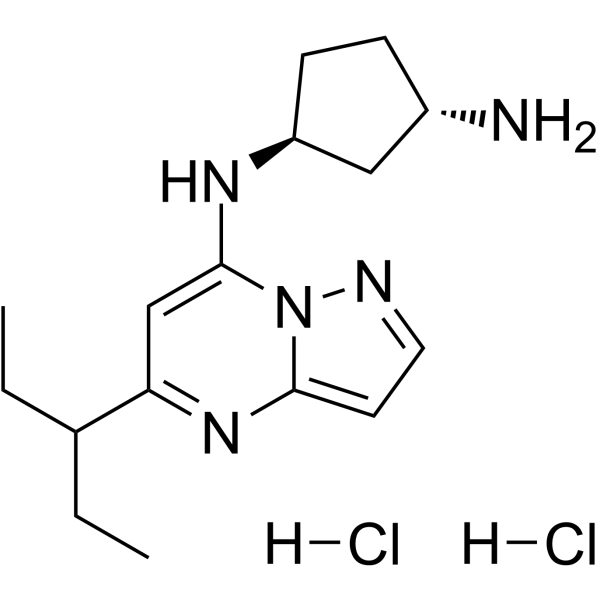
  • HY-137478A
    KB-0742 dihydrochloride
    3 Publications Verification

    CDK Cancer
    KB-0742 dihydrochloride is a potent, selective and orally active CDK9 inhibitor with an IC50 of 6 nM for CDK9/cyclin T1. KB-0742 dihydrochloride is selective for CDK9/cyclin T1 with >50-fold selectivity over other CDK kinases. KB-0742 dihydrochloride has potent anti-tumor activity [1] .
    KB-0742 dihydrochloride
  • HY-175357

    YAP Cancer
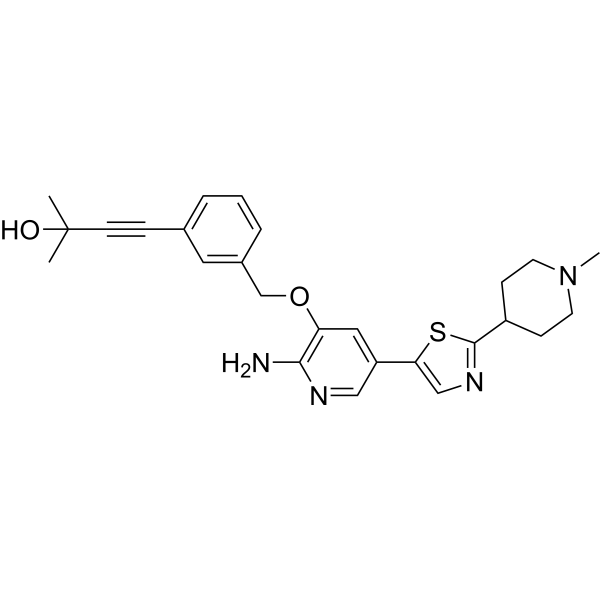
    YAP/TEAD-IN-2 (Compound T-1) is a YAP/TEAD inhibitor. YAP/TEAD-IN-2 inhibits the luciferase activity driven by YAP/TEAD in 293T cells. YAP/TEAD-IN-2 exhibits strong anti-proliferative activity against human pleural mesothelioma NCI-H226 cells. YAP/TEAD-IN-2 can be used for the study of diseases associated with Hippo pathway dysregulation, particularly cancers [1].
    YAP/TEAD-IN-2
  • HY-119940
    MC180295
    1 Publications Verification

    (rel)-MC180295

    CDK Cancer
    MC180295 ((rel)-MC180295) is a potent and selective CDK9-Cyclin T1 inhibitor, with an IC50 of 5 nM, at least 22-fold more selective for CDK9 over other CDKs. MC180295 also inhibits GSK-3α and GSK-3β. MC180295 ((rel)-MC180295) has potent anti-tumor effect [1].
    MC180295
  • HY-167856

    GPR88 Neurological Disease
    RTI-122 is a selective, blood-brain barrier-permeable GPR88 agonist (cAMP EC50=11 nM), with EC50 values of 11.5 nM and 155 nM for human and mouse GPR88, respectively ([ 35S]GTPγS assay). By activating the GPR88 receptor to regulate the cAMP signaling pathway and G protein activity, RTI-122 significantly attenuates Binge-like drinking, reduces alcohol intake, and decreases alcohol-seeking motivation. RTI-122 blocks the reinstatement of alcohol-seeking behavior without affecting water or sucrose intake. RTI-122 exhibits metabolic stability in mice (T1/2=5.8 h) and can be used to investigate alcohol use disorder [1] .
    RTI-122
  • HY-128900

    Endogenous Metabolite Others
    11-cis-Vaccenyl acetate is male-specific lipid that mediates aggregation behavior in both male and female flies, which activates a few dozen olfactory neurons located in T1 sensilla on the antenna of both male and female flies [1].
    11-cis-Vaccenyl acetate
  • HY-100429
    CAN508
    1 Publications Verification

    CDK Cancer
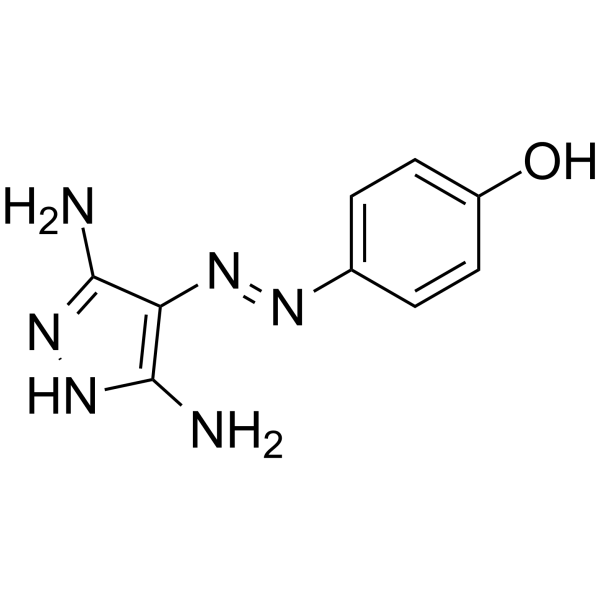
    CAN508 is a potent, ATP-competitive CDK9/cyclin T1 inhibitor with an IC50 of 0.35 μM. CAN508 exhibits a 38-fold selectivity for CDK9/cyclin T over other CDK/cyclin complexes. Antitumor activity [1] .
    CAN508
  • HY-112616

    NAMPT Drug-Linker Conjugates for ADC Cancer
    NAMPT inhibitor-linker 2 is a agent-linker conjugates for ADC, composed of an NAMPT inhibitor as a payload, and a linker. ADC-4 consists of an NAMPT inhibitor-linker 2 and an anti-c-Kit monoclonal antibody, exihibits potent activity against c-Kit expressing cell lines such as GIST-T1 and NCI-H526, with IC50s of <7 pM and 40 pM, respectively.
    NAMPT inhibitor-linker 2
  • HY-139329

    CDK Cancer
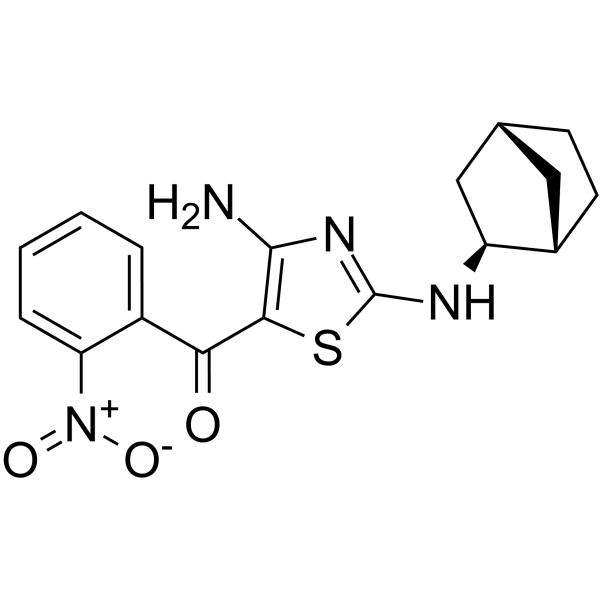
    CDK12-IN-6, a pyrazolotriazine, is a potent CDK12 inhibitor with an IC50 of 1.19 μM at high ATP (2 mM). CDK12-IN-6 has no effect on CDK2/Cyclin E (IC50>20 μM) and CDK9/Cyclin T1 (IC50>20 μM) at high ATP (2 mM) (WO2021116178A1) [1].
    CDK12-IN-6
  • HY-18944

    CDK HSV CMV DNA/RNA Synthesis Infection
    FIT-039 is a selective, ATP-competitive and orally active CDK9 inhibitor with an IC50 of 5.8 μM for CKD9/cyclin T1. FIT-039 does not inhibit other CDKs and other kinases. FIT-039 inhibits replication of HSV-1 (IC50 of 0.69 μM), HSV-2, human adenovirus, and human CMV. FIT-039 is a promising antiviral agent for inhibiting drug-resistant HSVs and other DNA viruses.
    FIT-039
  • HY-111595

    Biochemical Assay Reagents Cancer
    SAHA chloroalkane T1 is a chloroalkane capture tag by tethering Vorinostat (SAHA) and a chloroalkane tag T1 [1].
    SAHA chloroalkane T1
  • HY-162655
    SLF80821178
    1 Publications Verification

    LPL Receptor Neurological Disease
    SLF80821178 is a potent and orally active inhibitor of Sphingosine-1-Phosphate Transporter (Spns2). SLF80821178 inhibits S1P release with an IC50 of 51 nM in HeLa cells and a T1/2 of 2.4 h in mouse [1].
    SLF80821178
  • HY-139328

    CDK Cancer
    CDK12-IN-5, a pyrazolotriazine, is a potent CDK12 inhibitor with an IC50 of 23.9 nM at high ATP (2 mM). CDK12-IN-5 has no effect on CDK2/Cyclin E (IC50=173 μM) and CDK9/Cyclin T1 (IC50=127 μM) at high ATP (2 mM) (WO2021116178A1) [1].
    CDK12-IN-5
  • HY-156084

    CDK PROTACs Apoptosis c-Myc Cancer
    LL-K9-3 is a potent small-molecule degrader of CDK9-cyclin T1. LL-K9-3 has anti-proliferative and pro-apoptotic activities and suppresses downstream signaling of CDK9 and AR. Moreover, LL-K9-3 inhibits AR and Myc-driven oncogenic transcriptional programs [1].
    LL-K9-3
  • HY-160287

    Epigenetic Reader Domain Cancer
    NVS MLLT-1 (compound 3), a chemical probe, is a potent and selective MLLT1 inhibitor with Kd values of 0.18 μM, 0.24 μM, and 0.22 μM for wild-type, T1 mutants, and T3 mutants, respectively [1] .
    NVS MLLT-1
  • HY-125290

    CDK DYRK Cancer
    MU1210 (compound 12f), a chemical probe, is an inhibitor of CDC-like kinases Clk1, Clk2, and Clk4 (with IC50 values of 8, 20, and 12 nM respectively), with IC50 for HIPK1 and DYRK2 are 187 and 1309 nM. MU1210 also has favorable pharmacokinetic characteristics (in mice, 10 mg/kg, intraperitoneal injection: Cmax=1.24 μM, T1/2=58 minutes; no acute toxicity observed) [1].
    MU1210
  • HY-175533

    Toll-like Receptor (TLR) Neurological Disease Inflammation/Immunology
    TLR2 antagonist-1 is a selective Toll-like receptor 2 (TLR2) antagonist. TLR2 antagonist-1 can effectively inhibit excessive TLR2 activation (IC50 = 11.41 μM) and the production of inflammatory factors. TLR2 antagonist-1 has metabolic stability with a half-life (T1/2) of 16.67 min in mouse liver microsomes. TLR2 antagonist-1 can be used for the researches of inflammation, immunology, and neurological disease [1].
    TLR2 antagonist-1
  • HY-146034

    NOD-like Receptor (NLR) Inflammation/Immunology Cancer
    NOD1/2 antagonist-1 (compound 36b) is a potent NOD1/2 (nucleotide-binding oligomerization domain-like receptor 1/2) dual antagonist, with IC50 values of 1.13 (NOD1) and 0.77 μM (NOD2), respectively. NOD1/2 antagonist-1 has a acceptable T1/2 (67.6 min). NOD1/2 antagonist-1 (compound 36b) can improve the antitumor efficacy of Paclitaxel (PTX) [1].
    NOD1/2 antagonist-1
  • HY-100950

    GSK-3 CDK Inflammation/Immunology Cancer
    ABC1183 is an orally active selective dual GSK3 and CDK9 inhibitor. ABC1183 inhibits GSK3β, GSK3α and CDK9/cyclin T1 with the IC50 values of 657 nM, 327 nM and 321 nM, respectively. ABC1183 has anti-inflammatory and anti-tumor activities [1].
    ABC1183
  • HY-16309

    Phosphatase Metabolic Disease
    MB07803 is an orally available prodrug of a potent, noncompetitive inhibitor (MB07729) of fructose 1,6-bisphosphatase (FBPase), with EC50 of 140 nM and t1/2 of 7.6±2.9 h.
    MB-07803
  • HY-156296

    CDK Apoptosis Cancer
    CDK9-Cyclin T1 PPI-IN-1 (Compound B19) is a selective CDK9-Cyclin T1 protein-protein interaction (PPI) inhibitor. CDK9-Cyclin T1 PPI-IN-1 inhibits cell proliferation in TNBC MDA-MB-231 cells (IC50: 0.044 μM), and induces apoptosis. CDK9-Cyclin T1 PPI-IN-1 inhibits CDK9 transcription activity, reduces the phosphorylation of RNA Pol II CTD ser2. CDK9-Cyclin T1 PPI-IN-1 inhibits tumor growth in a TNBC 4T1 mouse model [1].
    CDK9-Cyclin T1 PPI-IN-1
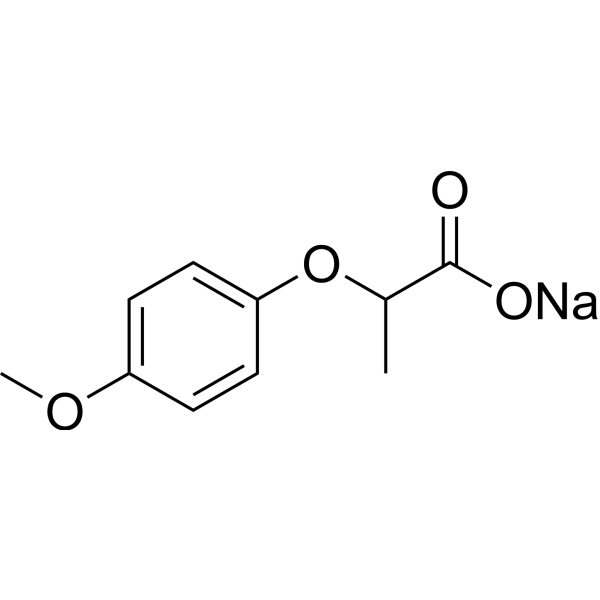
  • HY-128947

    ADC Linker Cancer
    CL2 Linker is a cleavableADC linker. CL2-SN-38 and CL2A-SN-38 are equivalent in agent substitution (~6), cell binding (Kd ~1.2 nM), cytotoxicity (IC50 ~2.2 nM), and serum stability in vitro (t1/2 ~20 hours) [1] .
    CL2 Linker
  • HY-118717

    mTOR Cancer
    mTOR inhibitor WYE-28 (compound 28) is a selective inhibitor of mTOR>/b< (IC50)=0.08 nM. mTOR inhibitor WYE-28 inhibits PI3Kα with an IC50 value of 6 nM. mTOR inhibitor WYE-28 shows a metabolic time (T1/2) in nude mouse microsomes of 13 min [1].
    mTOR inhibitor WYE-28
  • HY-146594

    NOD-like Receptor (NLR) Inflammation/Immunology
    NLRP3-IN-8 (compound 27) is an orally active, directly binding NLRP3 inflammasome inhibitor with an IC50 value of 1.23 μM against IL-1 β. NLRP3-IN-8 has good metabolic stability to liver microsomes (t1/2 = 138.63 min), and has almost no toxicity (against L02: IC50 > 100 μM) [1].
    NLRP3-IN-8
  • HY-149916

    Adenosine Receptor Cancer
    A2AR-antagonist-1 (compound 38) is an orally active adenosine A2A receptor (A2AR) antagonist (IC50=29 nM). A2AR-antagonist-1 exhibits anti-tumor activity and mouse liver microsomal metabolic stability (t1/2=86.1 min). A2AR-antagonist-1 is also a T cells activator, via inhibiting immunosuppressive molecules (LAG-3 and TIM-3) and enhancing effector molecules (GZMB, IFNG, and IL-2) [1].
    A2AR-antagonist-1
  • HY-162484

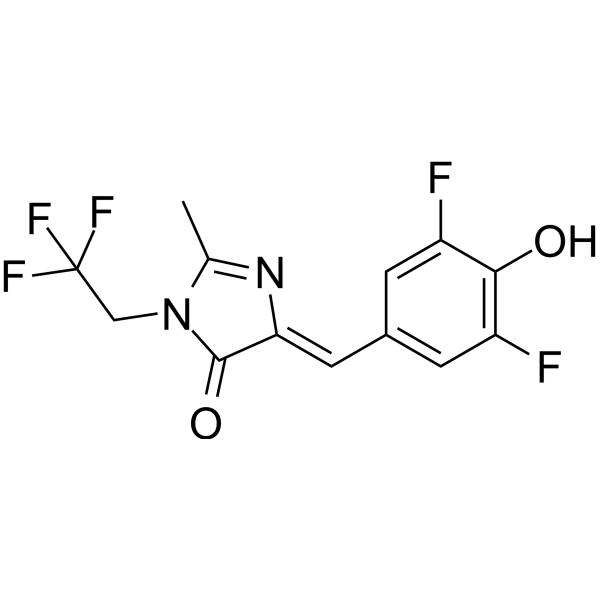
    SARS-CoV Virus Protease Infection
    GZNL-P36 is an orally active inhibitor for SARS-CoV-2 papain-like protease (PL pro), with an IC50 of 6.45 nM. GZNL-P36 inhibits SARS-CoV and its variants with EC50 range from 58.2 nM to 2.66 μM. GZNL-P36 exhibits a peak plasma concentration Cmax of 549 ng/mL, a half-life T1/2 of 1.45 h and a bioavailability of 74.7% in CD-1 mouse. GZNL-P36 exhibits antiviral activity in SARS-CoV-2 XXB.1 infection in mouse [1].
    GZNL-P36
  • HY-174368

    Pro-BA

    PROTACs Apoptosis Anaplastic lymphoma kinase (ALK) Cancer
    PROTAC EML4-ALK Degrader-2 (Pro-BA) is a selective and orally active linker-free EML4-ALK PROTAC degrader with the DC50 of 74 nM in H1322 cells (T1/2 = 8 h). PROTAC EML4-ALK Degrader-2 relies on GID4 and proteasome pathways to promote ubiquitination of target proteins, leading to cell apoptosis. PROTAC EML4-ALK Degrader-2 can be used for research on cancer. (Pink: EML4-ALK Ligand (HY-40114); Blue: GID4 Ligand (HY-150908)) [1]
    PROTAC EML4-ALK Degrader-1
  • HY-158149

    EGFR Apoptosis Cancer
    T-1-PMPA is a potent EGFR inhibitor with apoptotic properties. T-1-PMPA effectively inhibits EGFR WT and EGFR 790m, with IC50 values of 86 nM and 561.73 nM, respectively [1].
    T-1-PMPA
  • HY-RS12350

    Small Interfering RNA (siRNA) Others

    RUNX1T1 Human Pre-designed siRNA Set A contains three designed siRNAs for RUNX1T1 gene (Human), as well as a negative control, a positive control, and a FAM-labeled negative control.

    RUNX1T1 Human Pre-designed siRNA Set A
    RUNX1T1 Human Pre-designed siRNA Set A
  • HY-N11648

    Apoptosis Caspase Inflammation/Immunology Cancer
    Ganoderic acid T1 is a deacetylated derivative of Ganoderic acid T. Ganoderic acid T1 attenuates antioxidant defense system and induces apoptosis of cancer cells. Ganoderic acid T1 decreases mitochondrial membrane potential and activates caspase-9 and caspase-3, to trigger apoptosis. Ganoderic acid T1 also increases the generation of intracellular ROS to produce pro-oxidant activities and cytotoxicity [1].
    Ganoderic acid T1
  • HY-111356

    CDK Cancer
    IIIM-290 is a potent and oral CDK inhibitor with IC50s of 90 and 94 nM for CDK2/A and CDK9/T1.
    IIIM-290
  • HY-N15120

    Antibiotic Bacterial Infection
    Polymyxin T1 is an antibiotic found in Bacillus polymyxa E-12. Polymyxin T1 has an effect against Gram-negative bacteria and a weak effect against Gram-positive bacteria [1].
    Polymyxin T1
  • HY-P0229A

    Rnase T1 (animal free)

    DNA/RNA Synthesis Others
    Ribonuclease T1 (animal free) (Rnase T1 (animal free)) (EC 4.6.1.24) is an endonuclease that specifically degrades single-stranded RNA. Ribonuclease T1 forms a nucleoside 2′, 3′-cyclic phosphate intermediate to cleave the phosphodiester bond between the 3′-guanosine residue and the 5′-OH group of the adjacent nucleoside to produce a 3′-GMP-terminated oligonucleotide. This product does not contain ingredients of animal origin [1].
    Ribonuclease T1 (animal free)
  • HY-12843
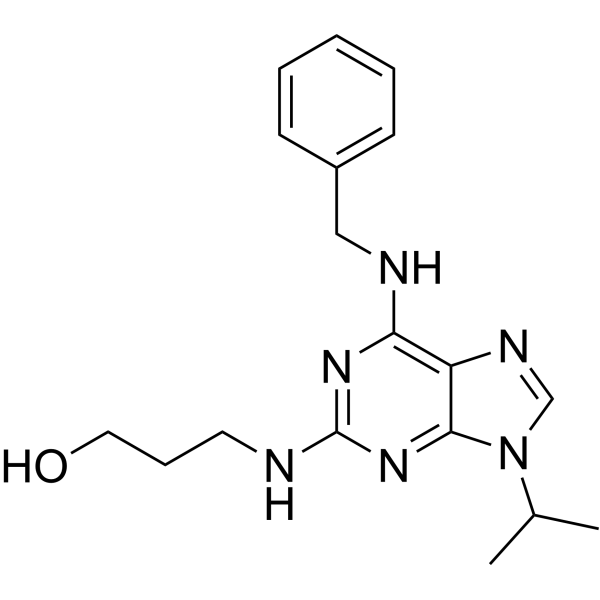
    Bohemine
    1 Publications Verification

    CDK ERK Cancer
    Bohemine is a purine analogue and is a synthetic and selective CDK inhibitor with IC50s of 4.6 μM, 83 μM, and 2.7 μM for Cdk2/cyclin E, Cdk2/cyclin A, and Cdk9/cyclin T1, respectively. Bohemine also inhibits ERK2 with an IC50 of 52 μM and has less inhibitory effect on CDK1, CDK4 and CDK6. Bohemine has a broad spectrum anti-cancer activities [1] .
    Bohemine
  • HY-178849

    Biochemical Assay Reagents Others
    Desferrioxamine T1 is an agent that binds iron and aluminium [1].
    Desferrioxamine T1
  • HY-149920

    Microtubule/Tubulin Cancer
    Anticancer agent 98 (compound 12k) is a microtubule/tubulin-polymerization inhibitor (Kd=16.9 μM). Anticancer agent 98 exerts antiproliferative potency against tumor cells, exhibits anti-angiogenesis effect in vitro. Anticancer agent 98 exhibits good human and mouse liver microsomes stability with both t1/2>300 min [1].
    Anticancer agent 98
  • HY-P11255

    MDM-2/p53 Cancer
    SPDI-48-T1 is a lysine-stapled peptide. SPDI-48-T1 exhibits discernible binding affinities for MDM2 and MDMX, with Kd values of 396 nM and 456 nM, respectively. SPDI-48-T1 exhibits anticancer activity against breast cancer, colorectal cancer, non-small cell lung cancer, cervical cancer, and malignant melanoma [1].
    SPDI-48-T1
  • HY-155050

    Apoptosis Histone Methyltransferase Cancer
    PRMT5-IN-31 (Compound 3m) is a selective PRMT5 inhibitor (IC50: 0.31 μM). PRMT5-IN-31 up-regulates hnRNP E1 protein level. PRMT5-IN-31 occupies the substrate site of PRMT5 and forms essential interactions with amino acid residues. PRMT5-IN-31 has antiproliferative effects against A549 cells by inducing apoptosis and inhibiting cell migration. PRMT5-IN-31 has high metabolic stability on human liver microsomes (T1/2: 132.4 min) [1].
    PRMT5-IN-31
  • HY-176451

    CDK Cancer
    CDK9 degrader-1 (Compound AZ-9) is a selective CDK9 degrader (DC50: 0.4073 µM). CDK9 degrader-1 recruits ATG101 to initiate the autophagy-lysosome pathway and forms autophagosomes by recruiting LC3, which then fuses with lysosomes to degrade CDK9 and its partner protein Cyclin T1 (DC50: 1.215 µM). CDK9 degrader-1 induces caspase 3-mediated apoptosis. CDK9 degrader-1 has antitumor activity in a mouse HCT116 xenograft model [1].
    CDK9 degrader-1
  • HY-137478B

    CDK Cancer
    KB-0742 hydrochloride is a potent, selective and orally active CDK9 inhibitor with an IC50 of 6 nM for CDK9/cyclin T1. KB-0742 hydrochloride is selective for CDK9/cyclin T1 with >50-fold selectivity over other CDK kinases. KB-0742 hydrochloride has potent anti-tumor activity [1].
    KB-0742 hydrochloride
  • HY-145362

    LPL Receptor Others
    S1P1 agonist 4 has a better profile in both potency (EC50 < 0.05 mg/kg) and predicted human half-life (t1/2 ∼ 5 days).
    S1P1 agonist 4
  • HY-148571

    MMP Inflammation/Immunology Cancer
    TP0597850 is a selective inhibitor of MMP2 (IC50=0.22 nM). TP0597850 has a long MMP2 dissociation half-life (t1/2=265 min) [1].
    TP0597850
  • HY-153822

    Tau Protein Neurological Disease
    JG-23 is a 4-chloro modified analog with ability to promote t-tau degradation. JG-23 exhibits good metabolic stability with a long T1/2 value (36 min) in mouse liver microsome assays [1].
    JG-23
  • HY-113567

    FXR Metabolic Disease
    GSK2324 (Compd 1c) is a FXR agonist for diabetes study, with an EC50 of 120 nM. GSK2324 exhibits t1/2 values of 84 min (mouse), 170 min (rat), 110 min (beagle) and 120 min (cyno), respectively [1].
    GSK2324

Inquiry Online

Your information is safe with us. * Required Fields.

Salutation


Country or Region *

Applicant Name *


Organization Name *

Department *


Email Address *


Product Name *

Cat. No.


Requested quantity *

Phone Number *


Remarks

Inquiry Online

Inquiry Information

Product Name:
Cat. No.:
Quantity:
MCE Japan Authorized Agent:

