24 Results for "

ATP-binding domain

" in MedChemExpress (MCE) Product Catalog:
Products (24)

24 Results for "ATP-binding domain" in MCE Product Catalog:

51
51 Publications Verification
Cat. No.: HY-103666
CAS No.: 1073612-91-5
Purity:  99.58%
Research Areas:  

Inflammation/Immunology

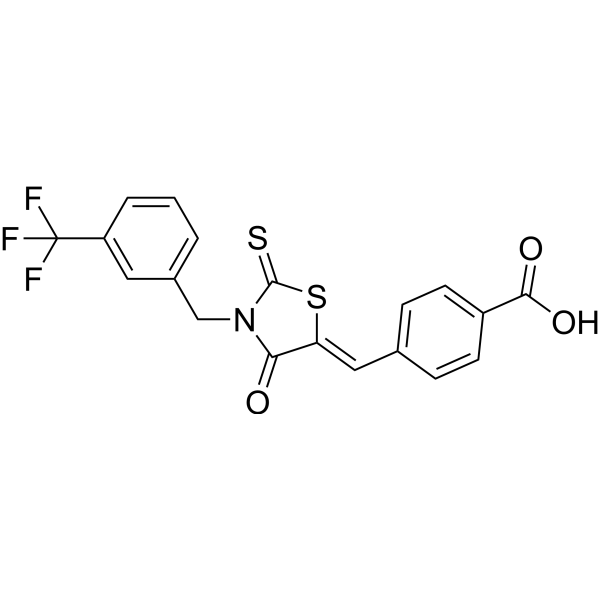
CY-09 is a selective and direct NLRP3 inhibitor. CY-09 directly binds to the ATP-binding motif of NLRP3 NACHT domain and inhibits NLRP3 ATPase activity, resulting in the suppression of NLRP3 inflammasome assembly and activation .
loading...
    loading...
11
11 Cited Publications
Cat. No.: HY-17537
CAS No.: 1216665-49-4
Target:  

IRE1

Research Areas:  

Cancer

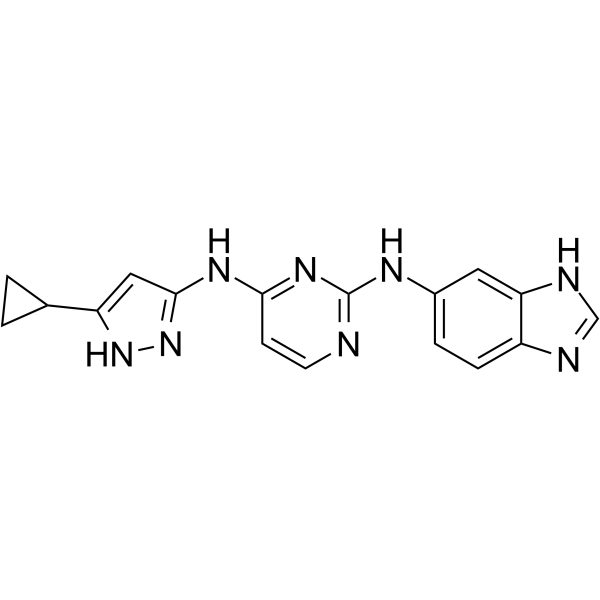
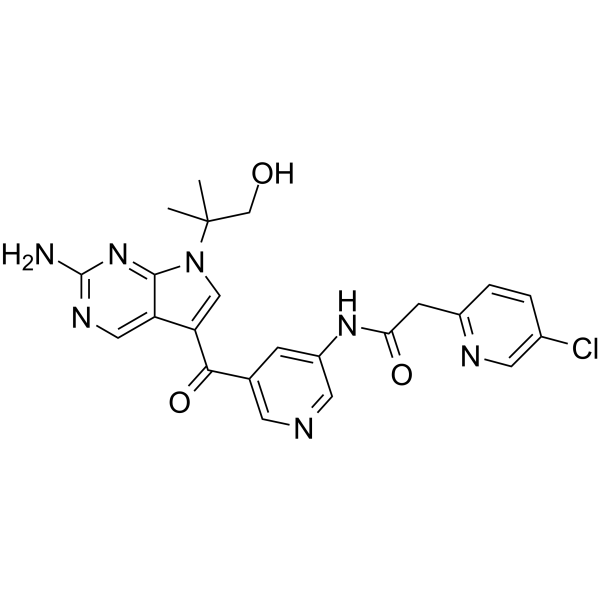
APY29, an ATP-competitive inhibitor, is an allosteric modulator of IRE1α which inhibits IRE1α autophosphorylation by binding to the ATP-binding pocket with IC50 of 280 nM. APY29 acts as a ligand that allosterically activates IRE1α adjacent RNase domain .
loading...
    loading...
7
7 Cited Publications
Cat. No.: HY-80002
CAS No.: 1431525-23-3
Synonyms: BMX kinase inhibitor
Target:  

Btk BMX Kinase

Research Areas:  

Cancer

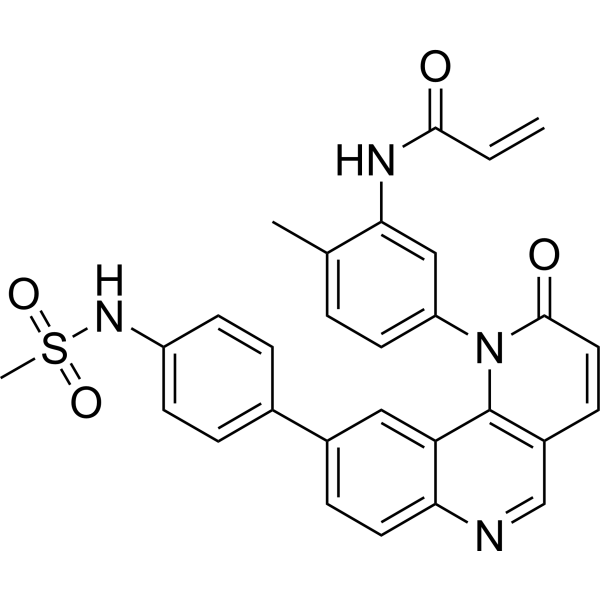
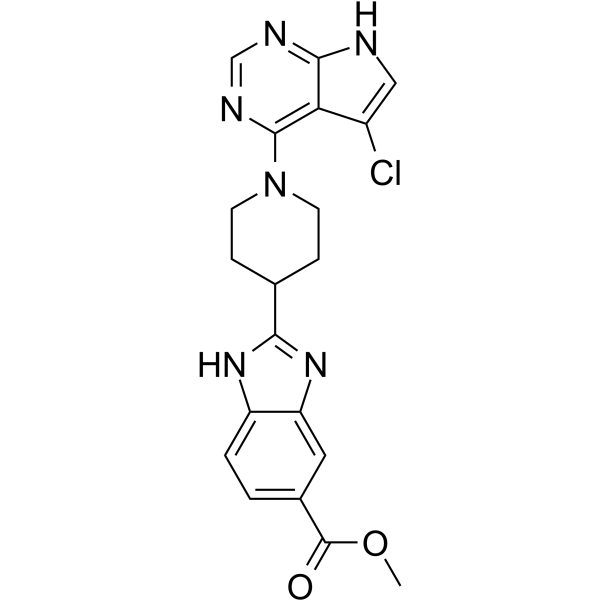
BMX-IN-1 is a selective, irreversible inhibitor of bone marrow tyrosine kinase on chromosome X (BMX) that targets Cys 496 in the BMX ATP binding domain with an IC50 of 8 nM, also targets the related Bruton’s tyrosine kinase (BTK) with an IC50 value of 10.4 nM, but is more than 47-656-fold less potent against Blk, JAK3, EGFR, Itk, or Tec activity.
loading...
    loading...
4
4 Cited Publications
Cat. No.: HY-50867
CAS No.: 111358-88-4
Synonyms: CEP-701; KT-5555
Research Areas:  

Cancer

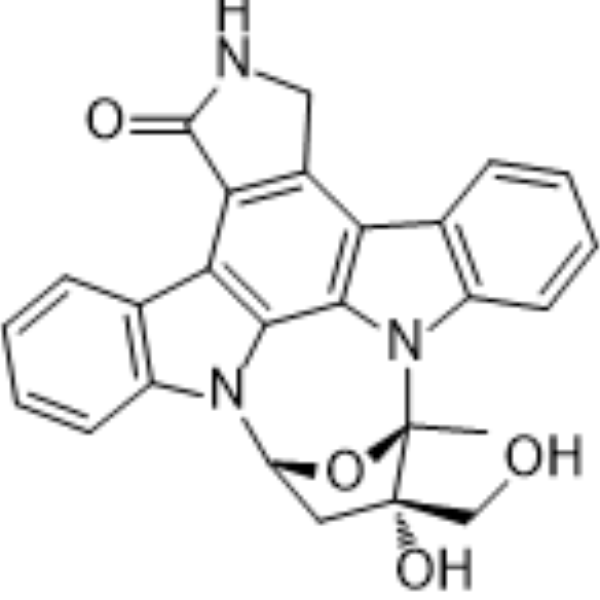
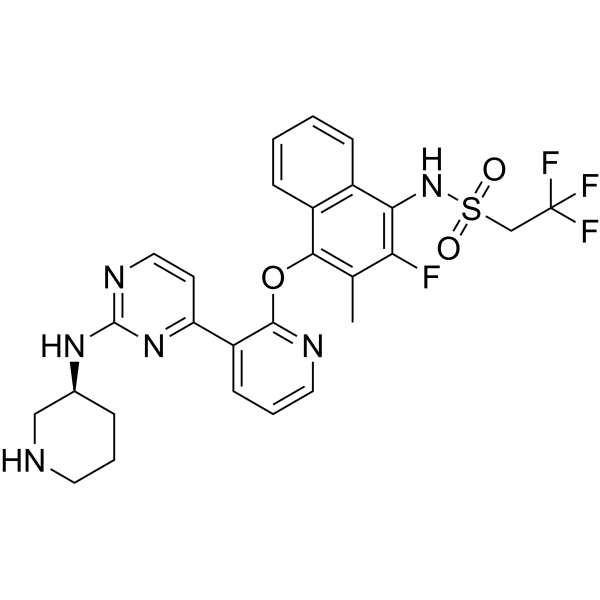
Lestaurtinib (CEP-701) is an orally active and selective RPTKs (receptor protein tyrosine kinase) inhibitor, competitively inhibits ATP binding to the TrkA/B/C domain. Lestaurtinib inhibits RPTKs phosphorylation, with IC50s of 2, 25 and 0.9 nM for FLT3, TrkA and JAK2, respectively. Lestaurtinib induces apoptosis and cycle arrest, also can inhibit growth of tumor .
loading...
    loading...
Cat. No.: HY-122616
CAS No.: 1402438-74-7
Purity:  98.8%
Target:  

Trk Receptor

Research Areas:  

Neurological Disease

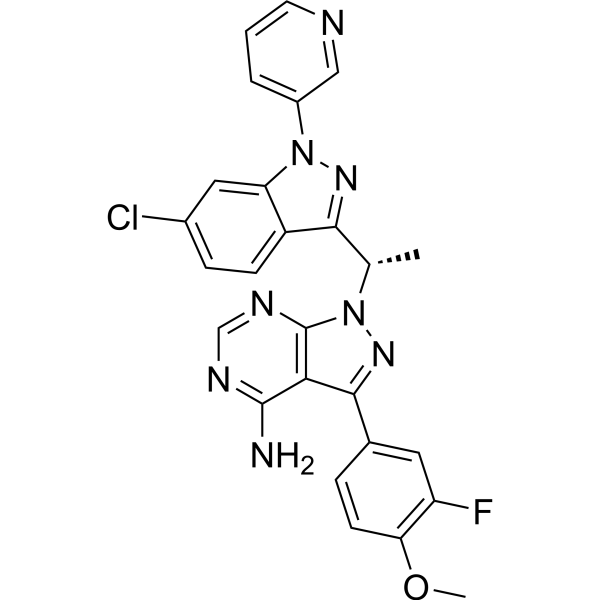
PF-06273340 is a peripherally restricted pan-Trk inhibitor with IC50 values of 6, 4, 3 nM for TrkA, TrkB, and TrkC receptors. PF-06273340 binds in a DFG-out conformation, targeting less conserved kinase ligand binding domain regions outside the ATP binding pocket. PF-06273340 exhibits anti-hyperalgesic and analgesic effects. PF-06273340 can be used for the research of pain .
loading...
    loading...
Cat. No.: HY-120097
CAS No.: 2097938-51-5
Purity:  99.72%
Research Areas:  

Infection

R-10015, a broad-spectrum antiviral compound for HIV infection, acts as a potent and selective inhibitor of LIM domain kinase (LIMK) and binds to the ATP-binding pocket, with an IC50 of 38 nM for human LIMK1 .
loading...
    loading...
Cat. No.: HY-114977
CAS No.: 108605-70-5
Purity:  99.20%
Avenanthramide A is an orally active phytoalexin that targets the RNA helicase DDX3 with a KD of 8.8 μM. Avenanthramide A induces mitochondrial swelling and increased ROS production, and triggers apoptosis in CRC cells. Avenanthramide A inhibits smooth muscle cell proliferation and enhances nitric oxide production. Avenanthramide A can be used in research on colorectal cancer and atherosclerosis .
loading...
    loading...
Cat. No.: HY-145425
CAS No.: 2771006-54-1
Target:  

IRE1 Apoptosis FGFR

Research Areas:  

Inflammation/Immunology

PAIR2 is a highly selective inhibitor targeting the kinase domain of human IRE1α, with a Ki value of 8.8 nM against human IRE1α. PAIR2 fully occupies the ATP-binding site of the IRE1α kinase domain, partially antagonizes the ribonuclease activity of IRE1α, specifically inhibits regulated IRE1α-dependent decay (RIDD) and its mediated substrate cleavage, while preserving the splicing function of Xbp1 mRNA. PAIR2 also promotes the differentiation of B cells into plasma cells, blocks IRE1α-induced cell apoptosis, and restores the expression of Fgfr2 mRNA in AT2 cells. PAIR2 effectively reaches a steady-state concentration in the lung tissues of Mus musculus, and serves as an important tool for investigating the function of the IRE1α signaling pathway in diseases such as pulmonary fibrosis .
loading...
    loading...
Cat. No.: HY-177936
CAS No.: 951950-33-7
Research Areas:  

Cancer

NAE-IN-3 (compound 1) is a potent, selective and non-covalent competitive NEDD8-activating enzyme (NAE) inhibitor (IC50 = 0.8 μM). NAE-IN-3 inhibits NAE by blocking the ATP-binding domain. NAE-IN-3 exhibits selectivity over analogous E1 enzymes UAE and SAE. NAE-IN-3 can be used for cancer research .
loading...
    loading...
Cat. No.: HY-P11053
CAS No.: 1140483-31-3
Target:  

HSP

Research Areas:  

Cancer

A17 peptide is a Hsp70-targeting peptide. A17 peptide binds to the ATP-binding domains of Hsp70. A17 peptide specifically inhibits the chaperone activity, thereby increasing the cells' sensitivity to apoptosis induced by chemotherapeutic agents, such as Cisplatin (HY-17394). A17 peptide can be used for anticancer chemotherapy research, such multiple myeloma .
loading...
    loading...
Cat. No.: HY-122735
CAS No.: 690216-38-7
Research Areas:  

Infection

Inh2-B1 is a Ser/Thr protein kinase (STK1) inhibitor. Inh2-B1 specifically inhibits STK1 activity by directly binding to its ATP-binding catalytic domain. Inh2-B1 down-regulates cell wall hydrolase genes and disrupts the biofilm formation of Methicillin-resistant Staphylococcus aureus (MRSA) clearly .
loading...
    loading...
Cat. No.: HY-13752
CAS No.: 1118915-78-8
Research Areas:  

Cancer

STA-1474 is an orally active and highly selective HSP90 inhibitor, as well as a phosphate prodrug of the HSP90 inhibitor STA-9090 (HY-15205). STA-1474 disrupts the chaperone function of HSP90 and promotes the degradation of client proteins. STA-1474 inhibits the phosphorylation of Met, Akt and STAT3, thereby blocking related signaling pathways. STA-1474 induces apoptosis and inhibits proliferation of osteosarcoma cells, and triggers the up-regulation of HSP70 and HSP90. STA-1474 induces tumor regression and caspase-3 activation in mouse osteosarcoma xenograft models. STA-1474 can be used in the research of osteosarcoma .
loading...
    loading...
Cat. No.: HY-W286614
CAS No.: 62001-32-5
Research Areas:  

Inflammation/Immunology Cancer

RSK2-IN-4 (Compound 10) is a RSK2 inhibitor, with an inhibition rate of 13.73% on RSK2 activity at 10 μM. RSK2-IN-4 binds to the ATP-binding site of RSK2 in the NTKD (N-terminal kinase domain), with the electron-donating group at the 4-position of the phenyl ring being the key determinant for its inhibitory activity .
loading...
    loading...
Cat. No.: HY-155975
CAS No.: 3038119-14-8
Target:  

PI3K

Research Areas:  

Inflammation/Immunology

PI3Kδ-IN-14 (Compound (S)-29) is a selective PI3Kδ inhibitor (IC50: 0.8 nM, Kd: 84.8 nM). PI3Kδ-IN-14 binds to the ATP-binding site of the kinase domain of PI3Kδ. PI3Kδ-IN-14 has anti-inflammatory activity by inhibiting the PI3K/AKT pathway. PI3Kδ-IN-14 ameliorates acute lung injury (ALI) .
loading...
    loading...
Cat. No.: HY-182936
Research Areas:  

Infection

Antibacterial agent 338 (Compound 65) is an antibacterial agent and GyrB inhibitor, with an IC50 of 12.60 nM against GyrB from E. coli. Antibacterial agent 338 binds to the ATP-binding domain of E. coli GyrB, thereby inhibiting the ATPase activity of GyrB. Antibacterial agent 338 exhibits broad-spectrum antibacterial activity against multidrug-resistant Gram-negative bacteria. Antibacterial agent 338 reduces bacterial load in a neutropenic mouse thigh infection model. Antibacterial agent 338 can be used for the research of Acinetobacter baumannii infection .
loading...
    loading...
Cat. No.: HY-123925
CAS No.: 2244988-80-3
CSLP43 is a selective RIPK2 and XIAP inhibitor with an IC50 of 19.9 nM against human RIPK2. CSLP43 binds to the ATP-binding pocket of RIPK2 and disrupts the interaction between RIPK2 and the BIR2 domain of XIAP or cIAP1. CSLP43 inhibits RIPK2 ubiquitination, NOD1-dependent inflammatory signaling pathways, NOD2-dependent inflammatory signaling pathways, as well as NF-κB activation associated with NOD agonists. CSLP43 is selective for the NOD1/NOD2 signaling pathway and does not inhibit the kinase activity of RIPK1 or RIPK3. CSLP43 is applicable to research related to Crohn's disease, Blau syndrome, early-onset sarcoidosis and early-onset inflammatory bowel disease .
loading...
    loading...
Cat. No.: HY-103666R
CAS No.: 1073612-91-5
CY-09 (Standard) is the analytical standard of CY-09 (HY-103666). This product is intended for research and analytical applications. CY-09 is a selective and direct NLRP3 inhibitor. CY-09 directly binds to the ATP-binding motif of NLRP3 NACHT domain and inhibits NLRP3 ATPase activity, resulting in the suppression of NLRP3 inflammasome assembly and activation .
loading...
    loading...
Cat. No.: HY-10654
CAS No.: 1192216-03-7
Target:  

Ephrin Receptor

Research Areas:  

Cancer

EphB4-IN-2 is a tyrosine kinase inhibitor targeting the Eph family and Src family. EphB4-IN-2 binds to the ATP-binding site of the kinase domain of EphB4, and exhibits high affinity for tyrosine kinases with threonine as the gatekeeper residue, such as Abl, Lck and Src. EphB4-IN-2 can be used in research related to tumor-associated angiogenesis .
loading...
    loading...
Cat. No.: HY-112783
CAS No.: 1258295-27-0
Target:  

JAK

Research Areas:  

Inflammation/Immunology

TYK2 ligand 4 (Compound 2) is a TYK2 ligand. TYK2 ligand 4 binds to both the kinase domain and pseudokinase domain, and induces an inactive conformation of the kinase domain, thereby preventing ATP binding. TYK2 ligand 4 serves as a tool compound for the development of Deucravacitinib (HY-117287) .
loading...
    loading...
Cat. No.: HY-183373
Target:  

EGFR PARP

Research Areas:  

Cancer

EGFR/PARP-1-IN-1 is a dual EGFR and PARP-1 inhibitor with IC50 values of 64 nM and 12 nM, respectively. EGFR/PARP-1-IN-1 binds to the ATP-binding pocket of EGFR and interacts with the catalytic domain of PARP-1, inhibiting kinase and enzymatic activity via hydrogen bond formation with key residues in both targets. EGFR/PARP-1-IN-1 induces apoptosis through the endogenous mitochondrial pathway, arrests the cell cycle at the G2 phase, and inhibits cell proliferation. EGFR/PARP-1-IN-1 can be used for research on triple-negative breast cancer .
loading...
    loading...

