



1. Search Result
Search Result
Results for "

Amidases

" in MedChemExpress (MCE) Product Catalog:

36

Inhibitors & Agonists

1

Fluorescent Dye

4

Peptides

2

Natural
Products

1

Click Chemistry

Cat. No. Product Name Target Research Areas Chemical Structure
  • HY-P2329
    Lysostaphin
    1 Publications Verification

    Bacterial Antibiotic Infection Inflammation/Immunology
    Lysostaphin is an antistaphylococcal agent. Lysostaphin has activities of three enzymes namely, glycylglycine endopeptidase, endo-β-N-acetyl glucosamidase and N-acteyl muramyl-L-alanine amidase .
    Lysostaphin
  • HY-B0182
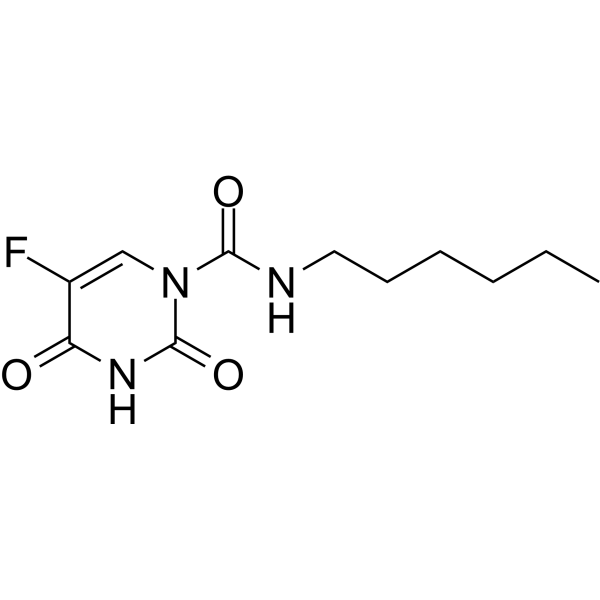
    Carmofur
    Maximum Cited Publications
    6 Publications Verification

    HCFU

    Nucleoside Antimetabolite/Analog SARS-CoV Virus Protease FAAH Ceramidase Glutathione Peroxidase Infection Inflammation/Immunology Cancer
    Carmofur (HCFU) is a rat recombinant acid ceramidase inhibitor with an IC50 of 29 nM. Carmofur is also a protease inhibitor of SARS-CoV-2 main protease (Mpro), fatty acid amide hydrolase (FAAH) and N-acylethanolamine acid amidase (NAAA). Carmofur has anti-cancer, anti-inflammatory and anti-virus activities, and can be used for the study of COVID-19 and acute lung injury (ALI) .
    Carmofur
  • HY-103334
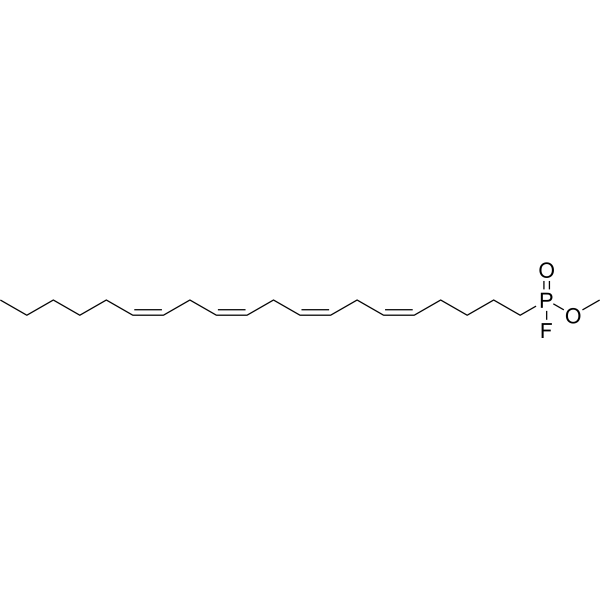
    MAFP
    5 Publications Verification

    Methyl Arachidonyl Fluorophosphonate

    Phospholipase Cardiovascular Disease Neurological Disease Metabolic Disease
    MAFP (Methyl Arachidonyl Fluorophosphonate) is an selective, active-site directed and irreversible inhibitor of cPLA2 and iPLA2. MAFP is also a potent irreversible inhibitor of anandamide amidase.
    MAFP
  • HY-W587486

    Endogenous Metabolite Bacterial Neurological Disease
    N‑acetyltaurine is an orally active endogenous sulfonate that is synthesized from taurine and acetate in the renal cortex. N‑acetyltaurine supports bacterial growth as a sole fixed nitrogen or carbon source. N‑acetyltaurine buffers acetyl moieties of mitochondrial acetyl‑CoA in skeletal muscle. N‑acetyltaurine reduces food intake and body weight in obese and lean wild‑type mice in a GFRAL‑dependent manner. N‑acetyltaurine can be used for the research of diet‑induced obesity, hyperacetatemia and diabetes .
    N-Acetyltaurine
  • HY-P2834

    PGA

    Biochemical Assay Reagents Others
    Penicillin amidase, E. coli (Immobilized) (PGA) is an amidohydrolase commonly used in industrial biocatalysis. Penicillin amidase, E. coli (Immobilized) serves as a starting material in the synthesis of semi-synthetic penicillins. Penicillin amidase, E. coli (Immobilized) promotes the production of semi-synthetic β-lactam antibiotics, participates in peptide synthesis, and catalyzes the formation of chiral compounds. Penicillin amidase, E. coli (Immobilized) is regulated by temperature and phenylacetic acid in E. coli. In free E. coli, it participates in the assimilation of aromatic compounds as a carbon source. Penicillin amidase, E. coli (Immobilized) is hypothesized to act as a scavenging enzyme for phenylacetyl-containing compounds in microbial metabolism and is associated with bacterial quorum sensing .
    Penicillin amidase, E. coli (Immobilized)
  • HY-18522

    Phospholipase Metabolic Disease
    AA26-9 is a potent and broad spectrum serine hydrolase inhibitor. AA26-9 targets included serine peptidases, lipases, amidases, esterases, and thioesterases. AA26-9 shows inhibitory activity against approximately 1/3 of the 40+ serine hydrolases detected in immortalized T cell lines .
    AA26-9
  • HY-145339

    Ceramidase Neurological Disease Inflammation/Immunology
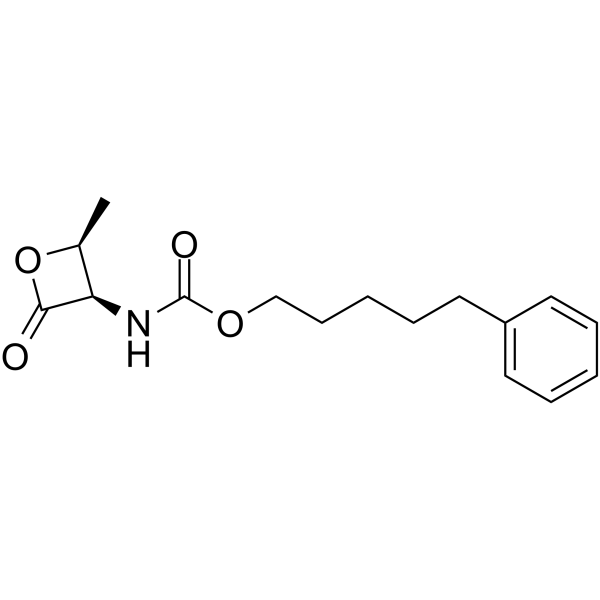
    ARN19702 is a selective, orally active, reversible, and brain-penetrant N-acylethanolamine acid amidase (NAAA) inhibitor with an IC50 of 230 nM for human NAAA. ARN19702 has pain relief effects .
    ARN19702
  • HY-P2895

    Clostridiopeptidase B

    Endogenous Metabolite Others
    Clostripain (Clostridiopeptidase B) is a thiol protease isolated from Clostridium histolyticum. Clostripain exhibits proteolytic activity as well as amidase-esterase activity. The specificity of Clostripain is primarily restricted to arginine residues, but it also shows minor hydrolytic activity toward most lysine-containing substrates. Clostripain catalyzes the ammonolysis of Carbobenzoxyarginyl methyl ester to generate various dipeptides .
    Clostripain
  • HY-125967

    FAAH Neurological Disease
    AM 374 is an fatty acid amide hydrolase (FAAH) inhibitor. AM 374 inhibits amidase activity with an IC50 value of 13 nM. AM 374 can be used for the research of neurological disease .
    AM 374
  • HY-P3023

    Bacterial TNF Receptor Infection Metabolic Disease Inflammation/Immunology
    Mutanolysin is a bacteriolytic agent. Mutanolysin is a muralytic enzyme that can prevent hepatic injury. Mutanolysin can digest the cell wall of S. mutans BHT and shows antibacterial activity. Mutanolysin reduces TNF-α production in isolated Kupffer cells stimulated with peptidoglycan-polysaccharide (PG-APS). Mutanolysin can be used for the researches of infection, inflammation and hepatic injury .
    Mutanolysin
  • HY-120813

    URB913

    Ceramidase Inflammation/Immunology
    ARN 077 is a potent and selective N-acylethanolamine acid amidase (NAAA) inhibitor with an IC50 of 7 nM for human NAAA . ARN 077 significantly increases palmitoyl ethanolamine (PEA) levels within the CNS and has broad antinociceptive activity in mice and rats .
    ARN 077
  • HY-147773

    Ceramidase Inflammation/Immunology
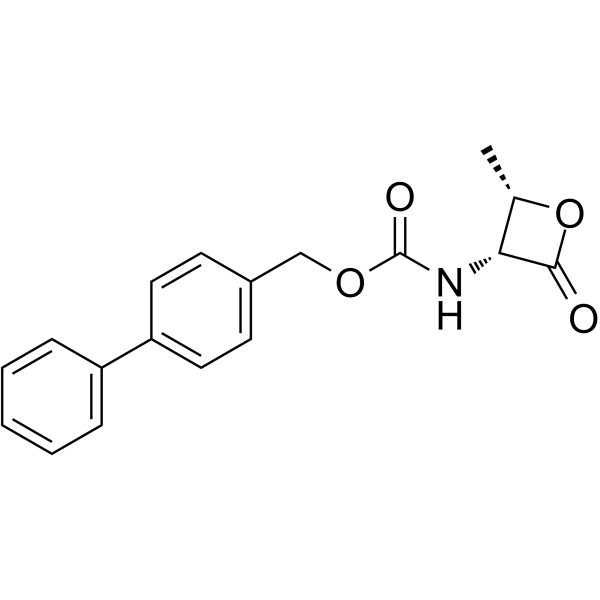
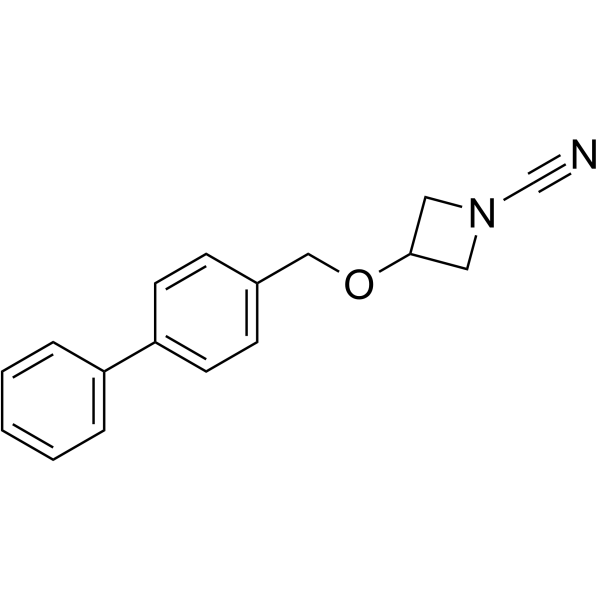
    NAAA-IN-1 (Compound 1) is a potent and selective inhibitor of NAAA with an IC50 of 7 nM. NAAA is a cysteine amidase which preferentially hydrolyzes the endogenous biolipids palmitoylethanolamide (PEA) and oleoylethanolamide (OEA). NAAA-IN-1 has the potential for the research of inflammation and pain .
    NAAA-IN-1
  • HY-147775

    Ceramidase Inflammation/Immunology
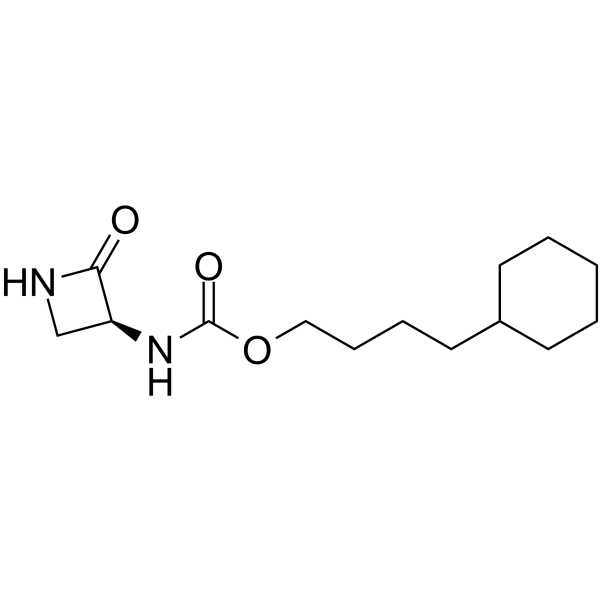
    NAAA-IN-3 (Compound 17a) is a potent and selective inhibitor of NAAA with an IC50 of 50 nM. NAAA is a cysteine amidase which preferentially hydrolyzes the endogenous biolipids palmitoylethanolamide (PEA) and oleoylethanolamide (OEA). NAAA-IN-3 has the potential for the research of inflammation and pain .
    NAAA-IN-3
  • HY-P2736

    Endogenous Metabolite Metabolic Disease
    Amidases, a member of nitrilase superfamily, catalyzes the hydrolysis of an amide, leading to the formation of carboxylic acid and ammonia. Amidases contain a conserved stretch of approximately 130 amino acids known as the AS sequence, and play a role in important metabolic processes .
    Amidase
  • HY-P4455

    Bacterial Infection
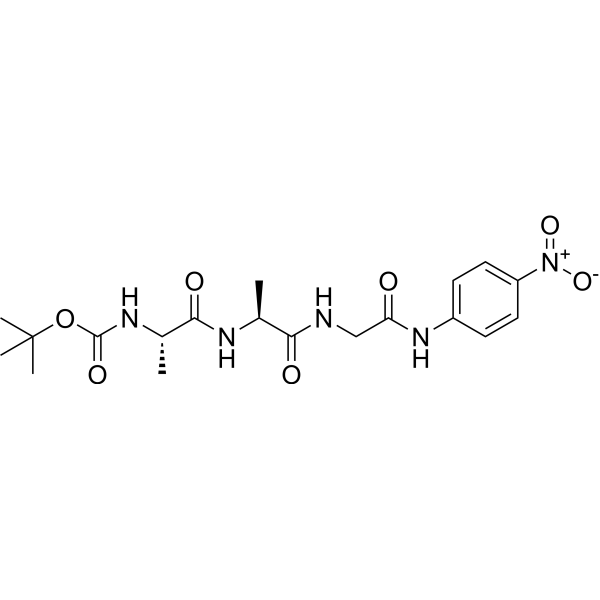
    Boc-AAG-pNA is a glycine endopeptidase substrate. Boc-AAG-pNA can be used to test the amidase activity glycine endopeptidase .
    Boc-AAG-pNA
  • HY-124597

    Ceramidase Inflammation/Immunology
    ARN726 is a potent NAAA (N-acylethanolamine acid amidase) inhibitor with an IC50 of 0.073 µM. ARN726 decreases alcohol self-administration in a dose-dependent manner .
    ARN726
  • HY-E70564

    Biochemical Assay Reagents Others
    Endoproteinase Arg-C is a serine endoproteinase that hydrolyzes peptide bonds on the carboxyl side of arginyl residues and has esterase and amidase activities. Endoproteinase Arg-C can be isolated from Clostridium histolyticum. Endoproteinase Arg-C is of mass spectrometry grade and can be used for peptide mapping, sequence analysis, cell separation .
    Endoproteinase Arg-C
  • HY-P2648

    N-Succinyl-AAPL-p-nitroanilide

    Aminopeptidase Endocrinology
    Suc-Ala-Ala-Pro-Leu-pNA (N-Succinyl-AAPL-p-nitroanilide) is a tripeptidyl p-nitroanilide substrate that can be catalytically hydrolyzed by acyl amidase-like leucine aminopeptidase in seminal plasma. Amastatin (HY-129298) and Actinonin (HY-113952) exert potent inhibitory effects on this hydrolytic activity. Suc-Ala-Ala-Pro-Leu-pNA can be used for the research of diseases such as azoospermia .
    Suc-Ala-Ala-Pro-Leu-pNA
  • HY-126031A

    Endogenous Metabolite Others
    (S)-KT109 is an inhibitor of diacylglycerol lipase β (DAGLβ) with low inhibitory activity (IC50 = 39.81 nM). (S)-KT109 has relatively low inhibitory activity against DAGLα-mediated hydrolysis of 1-stearoyl-2-arachidonoyl-sn-glycerol (IC50 = 794.3 nM). (S)-KT109 also has relatively low inhibitory activity against α/β-amidase domain-containing 6 (ABHD6) (IC50 = 630.9 nM) .
    (S)-KT109
  • HY-P4582

    Suc-FAAF-pNA

    Ser/Thr Protease Others
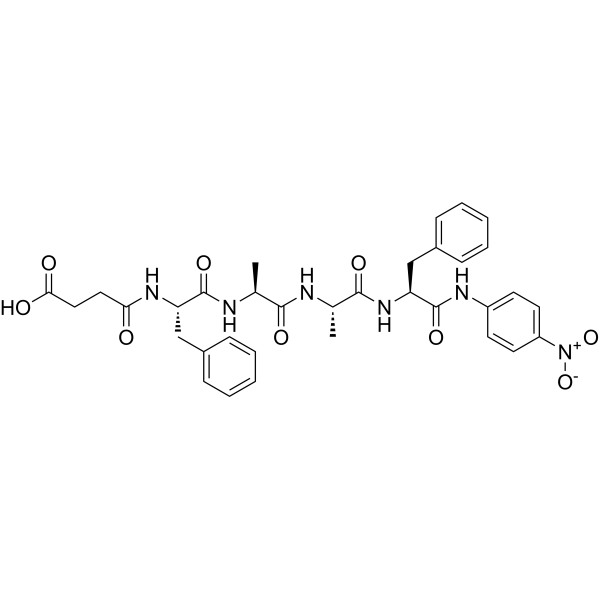
    Suc-Phe-Ala-Ala-Phe-pNA (Suc-FAAF-pNA) is a chromogenic polypeptide substrate that can be used for the quantitative activity assay of intracellular subtilisin (ISP) and neutral metalloprotease (NPS) derived from Saccharomonospora canescens. Suc-Phe-Ala-Ala-Phe-pNA is hydrolyzed by the catalytic triad of mature proteases to release the chromophore pNA. Suc-Phe-Ala-Ala-Phe-pNA is applicable to enzymological studies .
    Suc-Phe-Ala-Ala-Phe-pNA
  • HY-121975

    Ceramidase Inflammation/Immunology
    N-Cyclohexanecarbonylpentadecylamine (Compound 1) is an inhibitor of N-Acylethanolamine hydrolyzing acid amidase (NAAA) with an IC50 of 4.5 μM. N-Cyclohexanecarbonylpentadecylamine can be used in the research of inflammation and pain .
    N-Cyclohexanecarbonylpentadecylamine
  • HY-P10473

    Neuromedin U Receptor (NMUR) Inflammation/Immunology
    CPN-351 (compound 9a), a pentapeptide, is a selective antagonist of human NMUR1 with a pA2 of 7.35. The antagonistic effect of CPN-351 on human NMUR1 is 10 times higher than that on NMUR2. CPN-351 can be used in the study of inflammation .
    CPN-351
  • HY-N15826

    Fluorescent Dye Ceramidase Cancer
    RBM1-151, a 1-deoxy derivative and vinilog of RBM14-C12 (HY-150163), as a fluorogenic substrate of Amidases (HY-P2736) (Ex/Em). RBM1-151 is hydrolyzed by acid ceramidase (AC) (( appKm = 7.0 μM; appVmax = 99.3 nM/min), N-acylethanolamine-hydrolyzing acid amidase ( appKm = 0.73 μM; appVmax = 0.24 nM/min), and fatty Acid amide hydrolase (FAAH) ( appKm = 3.6 μM; appVmax = 7.6 nM/min) but not by other ceramidases. RBM1-151 is applicable for basic biological studies of lipid amidase function, as well as potential diagnostic/prognostic evaluations of diseases involving dysregulated AC, NAAA, or FAAH (Farber disease, cancer) .
    RBM1-151
  • HY-D2338

    Fluorescent Dye Others
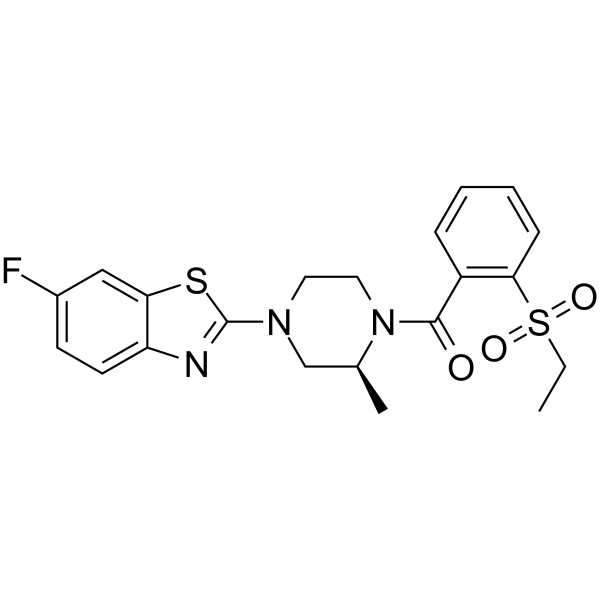
    PMBD is a lysosome (Lyso)-targeting fluorescent probe. PMBD selectively and sensitively detects endogenous N-acylethanolamine amidase (NAAA), allowing real-time visual monitoring of endogenous NAAA in living cells. PMBD has a maximum absorption peak at 350 nm. After the metabolism of NAAA, the maximum absorption peak of the product AMBD shifts red to 450 nm, and a significant fluorescence emission signal appears at 550 nm .
    PMBD
  • HY-B0182R

    HCFU (Standard)

    Reference Standards Nucleoside Antimetabolite/Analog SARS-CoV Virus Protease FAAH Ceramidase Glutathione Peroxidase Infection Inflammation/Immunology Cancer
    Carmofur (Standard) is the analytical standard of Carmofur. This product is intended for research and analytical applications. Carmofur (HCFU) is a rat recombinant acid ceramidase inhibitor with an IC50 of 29 nM. Carmofur is also a protease inhibitor of SARS-CoV-2 main protease (Mpro), fatty acid amide hydrolase (FAAH) and N-acylethanolamine acid amidase (NAAA). Carmofur has anti-cancer, anti-inflammatory and anti-virus activities, and can be used for the study of COVID-19 and acute lung injury (ALI) .
    Carmofur (Standard)
  • HY-131842

    N6-Benzyladenosine-3',5'-cyclic monophosphate

    PKA Cancer
    6-Bn-cAMP is a site-selective activator of cAMP-dependent protein kinase (PKA) which does not activate Epac. 6-Bn-cAMP increases hydrolytic stability against PDE, esterases, amidases and considerably higher membrane permeability compared to cAMP .
    6-Bn-cAMP
  • HY-E70572

    Biochemical Assay Reagents Metabolic Disease
    Urethanase is an intracellular enzyme that can reduce ethyl carbamate. Urethanase exhibits amidase activity .
    Urethanase
  • HY-132882

    Ceramidase Inflammation/Immunology
    ARN19689 is a potent, selective, orally active and non-covalent inhibitor of N Acylethanolamine-Hydrolyzing Acid Amidase (NAAA), with an IC50 of 42 nM. ARN19689 is a promising pharmacological tool to be further investigated in the field of inflammatory conditions .
    ARN19689
  • HY-125384

    Fluorescent Dye Inflammation/Immunology
    ARN14686 is an activity-based protein profiling (ABPP) probe. ARN14686 inhibits hNAAA with high potency (IC50=0.006 μM). ARN14686 interacts with NAAA via covalent binding to the N-terminal cysteine. ARN14686 binds only to the catalytically active form of NAAA, and may serve therefore as an efficient activity-based probe .
    ARN14686
  • HY-W130303

    N-Acetylacetamide; Diacetylamine; Diacetimide

    Biochemical Assay Reagents Others
    Diacetamide is shown to form a variety of new compounds with a general formula [M(C4H7O2N) 3](ClO4)2, where M = Mn(II), Fe(II), Co(II), Ni(II), or Zn(II). Diacetamide ligands can be used in uranium extraction from wastewater. Diacetamide can be used for amidase synthesis .
    Diacetamide
  • HY-157223

    Ceramidase Inflammation/Immunology
    ARN16186;ARN 16186;ARN-16186
    ARN16186
  • HY-173550

    MLnFP

    Drug Derivative Others
    Methyl α-Linolenyl Fluorophosphonate (MLnFP) is an analog of Methyl arachidonyl fluorophosphonate (HY-103334). Methyl arachidonyl fluorophosphonate is an anandamide amidase inhibitor .
    Methyl α-Linolenyl Fluorophosphonate
  • HY-W612175

    Leukotriene Receptor Others
    H-Ala-pNA is an L-amino acid p-nitroaniline (pNA) derivative and a specific substrate for leukotriene A4 hydrolase. The D-enantiomer of H-Ala-pNA shows no activity toward leukotriene A4 hydrolase. H-Ala-pNA can be catalytically hydrolyzed by leukotriene A4 hydrolase, and the p-nitroaniline produced during the reaction is monitored spectrophotometrically at 405 nm to enable quantitative detection of enzyme activity. H-Ala-pNA is used to evaluate the potency of inhibitors targeting the amidase activity of leukotriene A4 hydrolase .
    H-Ala-pNA
  • HY-E71352

    Biochemical Assay Reagents Others
    ω-Amidase (EC 3.5.1.3) acts on glutaramate, succinamate and their 2-oxo derivatives.
    ω-Amidase
  • HY-E71011

    Biochemical Assay Reagents Metabolic Disease
    N-Carbamoylsarcosine Amidase, E. coli, belongs to the hydrolase family. This family of enzymes acts on carbon-nitrogen bonds other than peptide bonds, particularly the carbon-nitrogen bonds in linear amides, and participates in the metabolism of arginine and proline. The two substrates of N-Carbamoylsarcosine Amidase, E. coli, are N-carbamoylsarcosine and H2O, while its three products are sarcosine, CO2, and NH3.ions to the healing immune response.
    N-Carbamoylsarcosine Amidase, E.coli
  • HY-103334R

    Methyl Arachidonyl Fluorophosphonate (Standard)

    Reference Standards Phospholipase Cardiovascular Disease Neurological Disease Metabolic Disease
    MAFP (Standard) is the analytical standard of MAFP (HY-103334). This product is intended for research and analytical applications. MAFP (Methyl Arachidonyl Fluorophosphonate) is an selective, active-site directed and irreversible inhibitor of cPLA2 and iPLA2. MAFP is also a potent irreversible inhibitor of anandamide amidase.
    MAFP (Standard)

Inquiry Online

Your information is safe with us. * Required Fields.

Salutation


Country or Region *

Applicant Name *


Organization Name *

Department *


Email Address *


Product Name *

Cat. No.


Requested quantity *

Phone Number *


Remarks

Inquiry Online

Inquiry Information

Product Name:
Cat. No.:
Quantity:
MCE Japan Authorized Agent:

