27 Results for "

Anesthetized dogs

" in MedChemExpress (MCE) Product Catalog:
Products (27)

27 Results for "Anesthetized dogs" in MCE Product Catalog:

2
2 Cited Publications
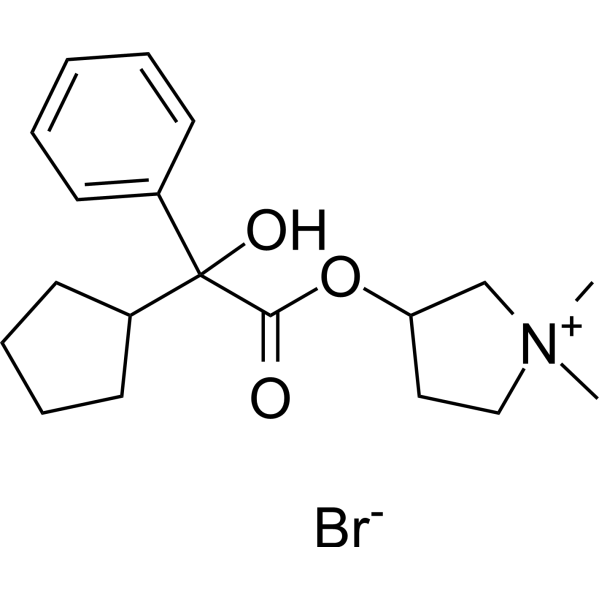
Cat. No.: HY-17465
CAS No.: 596-51-0
Synonyms: Glycopyrronium bromide; Glycopyrrolate bromide
Target:  

mAChR

Glycopyrrolate (Glycopyrronium bromide), a quaternary ammonium derivative, is a muscarinic receptor antagonist. Glycopyrrolate has bronchoprotective effect and produces a beneficial effect on blood pressure. Glycopyrrolate can be used for the research of bronchial diseases .
loading...
    loading...
2
2 Cited Publications
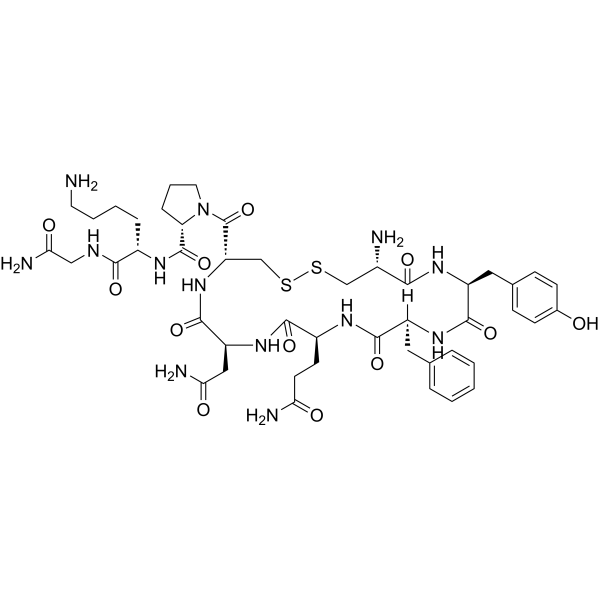
Cat. No.: HY-P0004
CAS No.: 50-57-7
Synonyms: Lysine vasopressin; [Lys8]-Vasopressin
Lysipressin (Lysine vasopressin ; [Lys8]-Vasopressin ) is a neurohypophyseal nonapeptide with dual cardiovascular regulatory activities of peripheral pressor action and central hypotensive action, and it also regulates pain perception in the body. Lysipressin is an Oxytocin Receptor agonist, with a Ki value of 10.2 nM for porcine OT receptor. Lysipressin stimulates contraction of rabbit bladder smooth muscle via V1-vasopressin receptor. The central hypotensive effect of Lysipressin depends on the sympathetic tone pathway. Lysipressin dose-dependently prolongs tail-flick latency in rats, producing a stable central antinociceptive effect. Lysipressin can be used in studies related to cardiovascular regulation, hypertension and pain .
loading...
    loading...
2
2 Cited Publications
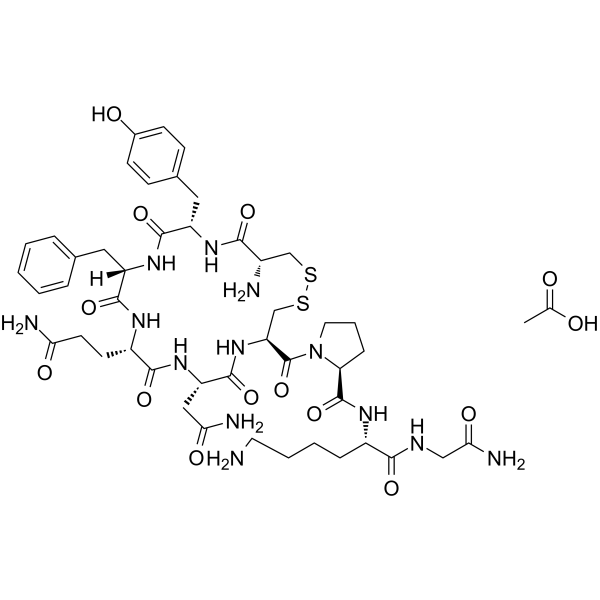
Cat. No.: HY-P0004A
CAS No.: 83968-49-4
Synonyms: Lysine vasopressin acetate; [Lys8]-Vasopressin acetate
Lysipressin acetate (Lysine vasopressin acetate; [Lys8]-Vasopressin acetate) is a neurohypophyseal nonapeptide with dual cardiovascular regulatory activities of peripheral pressor action and central hypotensive action, and it also regulates pain perception in the body. Lysipressin acetate is an Oxytocin Receptor agonist, with a Ki value of 10.2 nM for porcine OT receptor. Lysipressin acetate stimulates contraction of rabbit bladder smooth muscle via V1-vasopressin receptor. The central hypotensive effect of Lysipressin acetate depends on the sympathetic tone pathway. Lysipressin acetate dose-dependently prolongs tail-flick latency in rats, producing a stable central antinociceptive effect. Lysipressin acetate can be used in studies related to cardiovascular regulation, hypertension and pain .
loading...
    loading...
Cat. No.: HY-B1440
CAS No.: 985-13-7
Ethaverine hydrochloride is a Papaverine derivative and vasodilator. Ethaverine hydrochloride inhibits Phosphodiesterase, Tyrosine hydroxylase, and MAO-B. Ethaverine hydrochloride blocks L-type Ca 2+ channels, reduces intracellular Ca 2+ levels, inhibits platelet adhesion and aggregation, regulates cardiac conduction and heart rate, and increases peripheral and cerebral blood flow. Ethaverine hydrochloride alters cochlear microcirculation, intracochlear Po2, CM potential, and EP in guinea pigs, and induces transient hypotension. Ethaverine hydrochloride is used in the research of peripheral vascular diseases .
loading...
    loading...
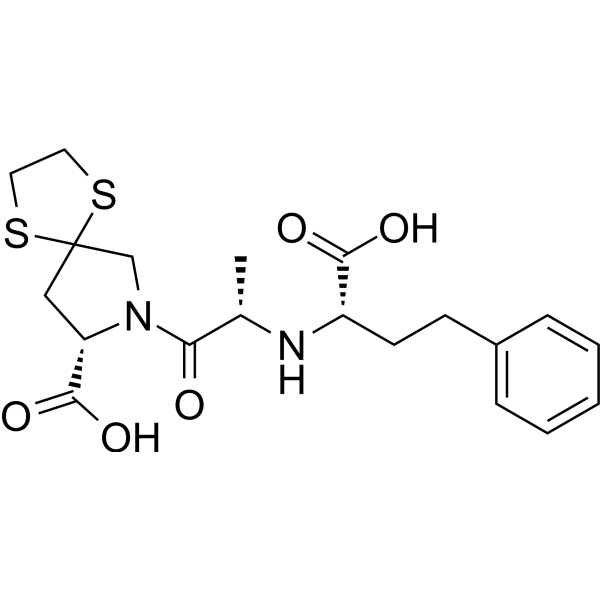
Cat. No.: HY-121460
CAS No.: 83602-05-5
Spiraprilat is a potent angiotensin-converting enzyme (ACE) inhibitor. Spiraprilat has ability to improve left ventricular (LV) function and metabolism in anesthetized open-chest dogs with acute ventricular failure (ALVF) .
loading...
    loading...
Cat. No.: HY-170406
CAS No.: 1949840-87-2
Target:  

Bcl-2 Family

Research Areas:  

Cancer

BCL-XL-IN-3 is a cell-impermeable BCL-XL inhibitor with a Ki of 16 pM. BCL-XL-IN-3 disrupts the critical hydrogen bond network via methylation of the nitrogen atom on the P2-binding amide bond, resulting in complete loss of cellular activity against BCL-XL. BCL-XL-IN-3 can be used in non-small cell lung cancer and cancer-related research .
loading...
    loading...
Cat. No.: HY-105925
CAS No.: 58261-91-9
Synonyms: MCN 2378
Target:  

Adrenergic Receptor

Research Areas:  

Cardiovascular Disease

Mefenidil (MCN 2378) is a selective cerebral vasodilator that is not affected by beta-adrenergic blockade. Mefenidil can be used in the study of cardiovascular disease. In monkey models, mefenidil preferentially increases cerebral blood flow over systemic (femoral) blood flow. Mefenidil is also able to reduce systemic arterial pressure in anesthetized dogs.
loading...
    loading...
Cat. No.: HY-129445
CAS No.: 83440-03-3
Target:  

Potassium Channel

Research Areas:  

Cardiovascular Disease

SG-209 is a Nicorandil (HY-B0341) derivative that produces relaxation through potassium channel activation, while this action contributes to the vasodilating action of Nicorandil (HY-B0341) at higher concentrations. SG-209 dilates tracheal smooth muscle and increases tracheal blood flow in anesthetized dogs .
loading...
    loading...
Cat. No.: HY-17465R
CAS No.: 596-51-0
Synonyms: Glycopyrronium bromide (Standard); Glycopyrrolate bromide (Standard)
Research Areas:  

Neurological Disease Cancer

Glycopyrrolate (Standard) is the analytical standard of Glycopyrrolate. This product is intended for research and analytical applications. Glycopyrrolate (Glycopyrronium bromide), a quaternary ammonium derivative, is a muscarinic receptor antagonist. Glycopyrrolate has bronchoprotective effect and produces a beneficial effect on blood pressure. Glycopyrrolate can be used for the research of bronchial diseases .
loading...
    loading...
Cat. No.: HY-118233
CAS No.: 114417-20-8
Synonyms: M 17055
Target:  

Chloride Channel

Research Areas:  

Neurological Disease

Alilusem potassium is a diuretic. In anesthetized dogs undergoing water diuresis, Alilusem potassium effectively decreased free water clearance and increased Na+ and Cl- levels in excreted urine. When combined with Furosemide (HY-B0135) or Hydrochlorothiazid, Alilusem potassium further inhibited free water clearance. Alilusem potassium inhibited the lumen-positive transepithelial voltage and lumen-to-cistern Cl- flux in isolated rabbit cortical thick ascending limbs of Henle .
loading...
    loading...
Cat. No.: HY-107063
CAS No.: 22584-04-9
Synonyms: 10-Undecen-1-yl-thiopseudourea iodide
Target:  

Histamine Receptor

Research Areas:  

Cancer

AHR-1911 (10-Undecen-1-yl-Thiopseudourea Iodide;Isothiuronium) is a thiourea-based anti-inflammatory and anti-tumor agent that has an improving effect on burned skin. AHR-1911 produces histamine-like effects when injected intradermally and may reduce arterial pressure in anesthetized dogs. AHR-1911 inhibits tumor growth and reduces microsomal and C-polysome protein synthesis .
loading...
    loading...
Cat. No.: HY-121670
CAS No.: 2455-84-7
Target:  

Others

Research Areas:  

Neurological Disease

Ambenoxan is a central nervous system-acting skeletal muscle relaxant that is effective in mice, rats, rabbits, dogs, and monkeys without loss of the righting reflex. It has no peripheral neuromuscular blocking effects and significantly reduces or eliminates decerebrate rigidity in rabbits, but does not antagonize the effects of strychnine, leptazol, or tremorine. Like other central nervous system depressants, ambenoxan prolongs sleep duration with hexobarbitone, but it has no local anesthetic effects. In anesthetized cats, the agent lowers blood pressure and reduces the pressor response to epinephrine, but has no effect on norepinephrine.
loading...
    loading...
Cat. No.: HY-121670A
CAS No.: 1617-99-8
Target:  

Adrenergic Receptor

Research Areas:  

Neurological Disease

Ambenoxan hydrochloride is a central nervous system-acting skeletal muscle relaxant that is effective in mice, rats, rabbits, dogs, and monkeys without loss of the righting reflex. It has no peripheral neuromuscular blocking effects and significantly reduces or eliminates decerebrate rigidity in rabbits, but does not antagonize the effects of strychnine, leptazol, or tremorine. Like other central nervous system depressants, ambenoxan prolongs sleep duration with hexobarbitone, but it has no local anesthetic effects. In anesthetized cats, the agent lowers blood pressure and reduces the pressor response to epinephrine, but has no effect on norepinephrine.
loading...
    loading...
Cat. No.: HY-B1440R
CAS No.: 985-13-7
Ethaverine hydrochloride (Standard) is the analytical standard of Ethaverine hydrochloride (HY-B1440). This product is intended for research and analytical applications. Ethaverine hydrochloride is a Papaverine derivative and vasodilator. Ethaverine hydrochloride inhibits Phosphodiesterase, Tyrosine hydroxylase, and MAO-B. Ethaverine hydrochloride blocks L-type Ca 2+ channels, reduces intracellular Ca 2+ levels, inhibits platelet adhesion and aggregation, regulates cardiac conduction and heart rate, and increases peripheral and cerebral blood flow. Ethaverine hydrochloride alters cochlear microcirculation, intracochlear Po2, CM potential, and EP in guinea pigs, and induces transient hypotension. Ethaverine hydrochloride is used in the research of peripheral vascular diseases .
loading...
    loading...
Cat. No.: HY-137055
CAS No.: 1171824-96-6
Target:  

Others

Research Areas:  

Others

PF-3774076 is a highly central nervous system (CNS) penetrant, potent, and selective human α1A-adrenoceptor partial agonist. It exhibits good potency and selectivity in multiple binding and functional assays. PF-3774076 increases peak urethral pressure in anesthetized female dogs in a dose-dependent manner via a central mechanism. PF-3774076 affects both the proximal and distal portions of the urethra in vivo. These properties suggest that PF-3774076 may have significant benefit in the treatment of stress urinary incontinence (SUI) as a CNS-penetrant α1A receptor partial agonist. However, despite its partial agonism and selectivity for α1A receptors, PF-3774076 failed to provide adequate safety differences in in vivo models of cardiovascular function. This may be due to the simultaneous activation of both peripheral and central α1A receptors. These data suggest that while central α1A partial agonists may have significant benefit in the treatment of SUI, this class of agents may have difficulty achieving the desired urethral selectivity without affecting cardiovascular function.
loading...
    loading...
Cat. No.: HY-P0004R
CAS No.: 50-57-7
Synonyms: Lysine vasopressin (Standard); [Lys8]-Vasopressin (Standard)
Lysipressin (Standard) is the analytical standard of Lysipressin (HY-P0004). This product is intended for research and analytical applications. Lysipressin (Lysine vasopressin ; [Lys8]-Vasopressin ) is a neurohypophyseal nonapeptide with dual cardiovascular regulatory activities of peripheral pressor action and central hypotensive action, and it also regulates pain perception in the body. Lysipressin is an Oxytocin Receptor agonist, with a Ki value of 10.2 nM for porcine OT receptor. Lysipressin stimulates contraction of rabbit bladder smooth muscle via V1-vasopressin receptor. The central hypotensive effect of Lysipressin depends on the sympathetic tone pathway. Lysipressin dose-dependently prolongs tail-flick latency in rats, producing a stable central antinociceptive effect. Lysipressin can be used in studies related to cardiovascular regulation, hypertension and pain .
loading...
    loading...
Cat. No.: HY-118991
CAS No.: 47487-05-8
Target:  

Adenosine Receptor

Research Areas:  

Cardiovascular Disease

KT-1 is a vasodilator. KT 1 can decrease aortic pressure, renal blood flow, left ventricular enddiastolic pressure and resistances of total peripheral, vertebral, coronary and renal vasculatures and increase aortic blood flow, vertebral blood flow, coronary blood flow, peak positive left ventricular dP/dt and heart rate in anesthetized open-chest dogs. KT-1 can be used for the research of cardiovascular disease .
loading...
    loading...
Cat. No.: HY-114833
CAS No.: 27591-01-1
Synonyms: (Rac)-Bunolol; dl-Bunolol
Bunolol ((Rac)-Bunolol) is a β-adrenergic receptor blocker. Bunolol antagonizes the β-receptor agonist activity induced by Isoproterenol (HY-B0468) and Dichloroisoproterenol. Bunolol reduces the heart rate and mean blood pressure of anesthetized dogs. Bunolol decreases spontaneous motor activity and Amphetamine-induced hyperactivity in rats, potentiates Pentobarbital-induced hypnosis in mice, and protects rats from extensor tonic convulsions induced by maximal electroshock .
loading...
    loading...
Cat. No.: HY-182301
CAS No.: 112227-15-3
Target:  

Renin

Research Areas:  

Cardiovascular Disease

CP 71362 is a renin inhibitor, a highly potent substrate-analog transition state mimic with antihypertensive properties. CP 71362 exhibits significant inhibitory activity against plasma renin from rats, dogs, and humans (IC50 values are 3 nM, 0.0033 nM, and 20 nM, respectively). CP 71362 reduces the mean arterial pressure of anesthetized and conscious sodium-depleted animals in a dose-dependent manner, and has pharmacokinetic characteristics of rapid elimination and short duration of action. CP 71362 can be used in research related to hypertension and congestive heart failure .
loading...
    loading...
Cat. No.: HY-167848
CAS No.: 153345-74-5
Synonyms: XL-118
Target:  

Others

Research Areas:  

Cardiovascular Disease

DMP-728 free base (XL-118) is a highly potent and selective GPIIb/IIIa antagonist with antiplatelet and antithrombotic activities. DMP-728 free base can inhibit ADP-induced human platelet aggregation in vitro, with an IC50 of 46 nmol/L, and can significantly reduce the interaction between fibrinogen and human platelets or Binding of purified human GPIIb/IIIa receptors. DMP-728 free base exhibits dose-dependent antiplatelet effects in anesthetized mongrel dogs, effectively inhibiting ADP-induced platelet aggregation and prolonging template bleeding time .
loading...
    loading...

