



Ethaverine hydrochloride

Based on 1 Customer Validation
Ethaverine hydrochloride is a Papaverine derivative and vasodilator. Ethaverine hydrochloride inhibits Phosphodiesterase, Tyrosine hydroxylase, and MAO-B. Ethaverine hydrochloride blocks L-type Ca2+ channels, reduces intracellular Ca2+ levels, inhibits platelet adhesion and aggregation, regulates cardiac conduction and heart rate, and increases peripheral and cerebral blood flow. Ethaverine hydrochloride alters cochlear microcirculation, intracochlear Po2, CM potential, and EP in guinea pigs, and induces transient hypotension. Ethaverine hydrochloride is used in the research of peripheral vascular diseases.
For research use only. We do not sell to patients.
- Purity : 99.72%
- CAS No.: 985-13-7
- Formula: C24H30ClNO4
- Molecular Weight:431.95
-
Storage:
4°C, sealed storage, away from moisture and light
* In solvent : -80°C, 6 months; -20°C, 1 month (sealed storage, away from moisture and light)


To place orders, for customer services and technical support, please contact: MedChemExpress USA
Tel: 609-228-6898 E-mail: [email protected] [email protected]


-
 Biological Activity
-
Chemical Information
-
Solvent & Solubility
- Protocols
- Purity & Documentation
- References
-
 Help & FAQs


-
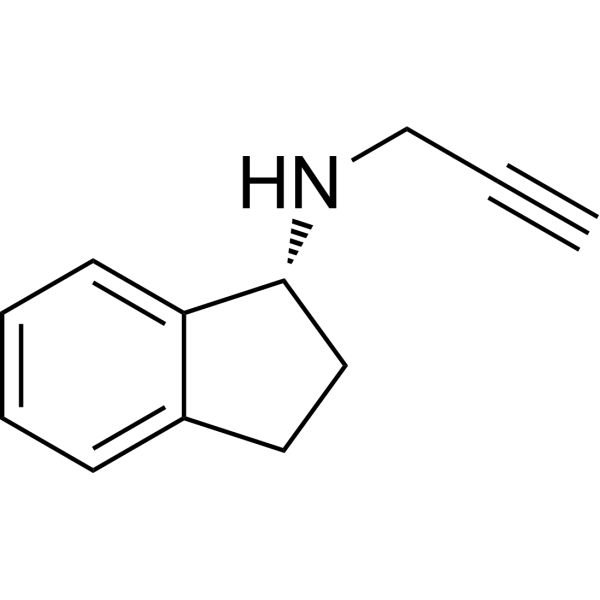
HY-14605A
RasagilineMAO Inhibitor -
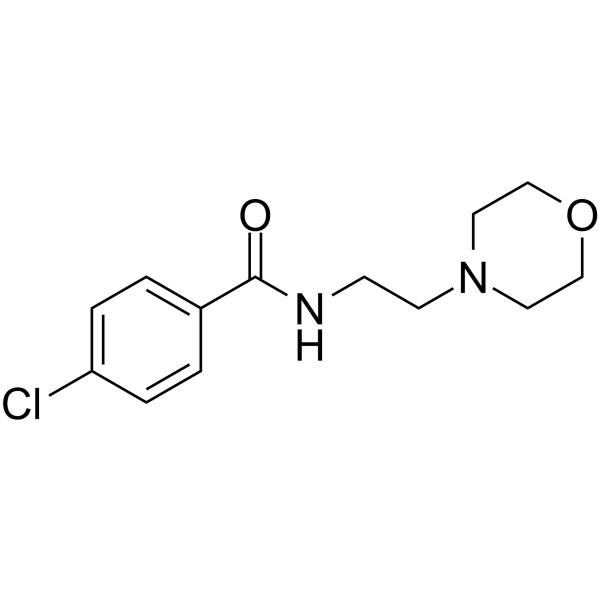
HY-B0534
MoclobemideMAOI Antidepressant -
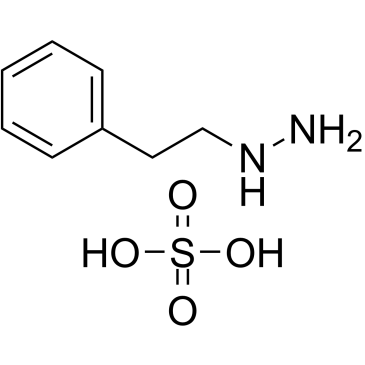
HY-B1018A
Phenelzine sulfateMAO Inhibitor -
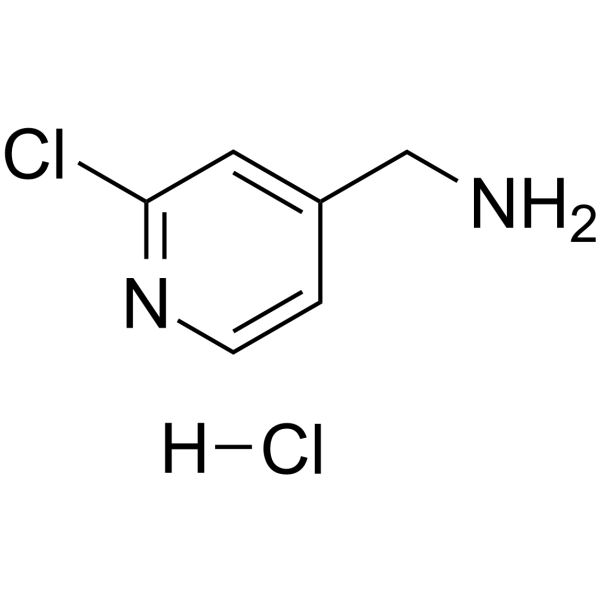
HY-101771A
(2-Chloropyridin-4-yl)methanamine hydrochlorideLOXL2 Inhibitor -
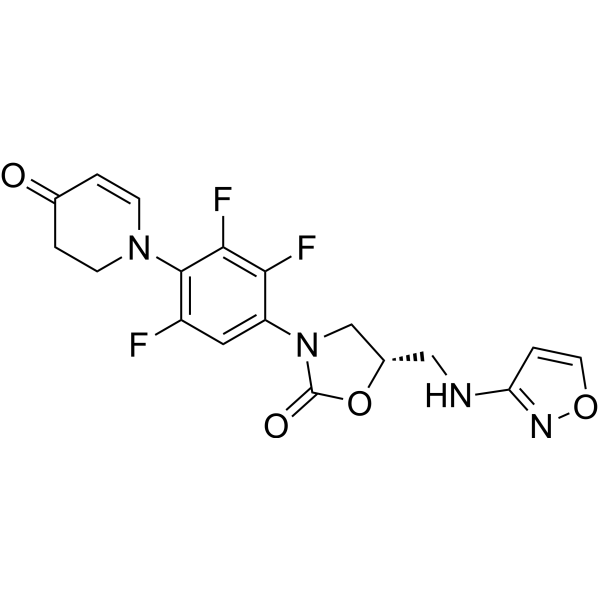
HY-19915
ContezolidAntibiotic -
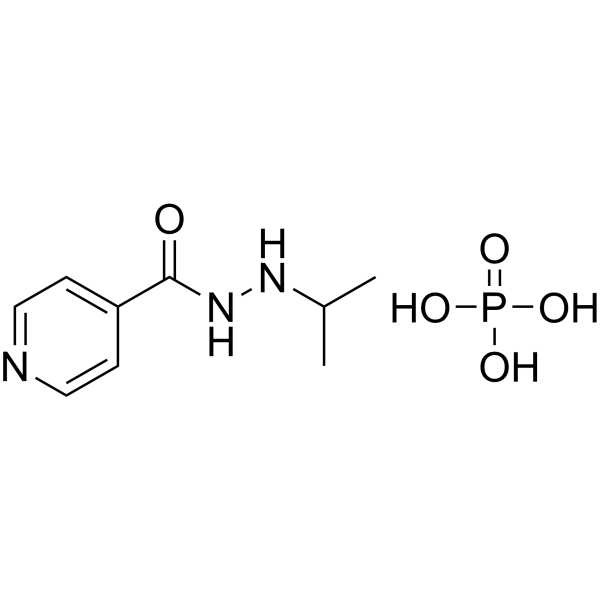
HY-B0886
Iproniazid phosphateMAO Inhibitor -
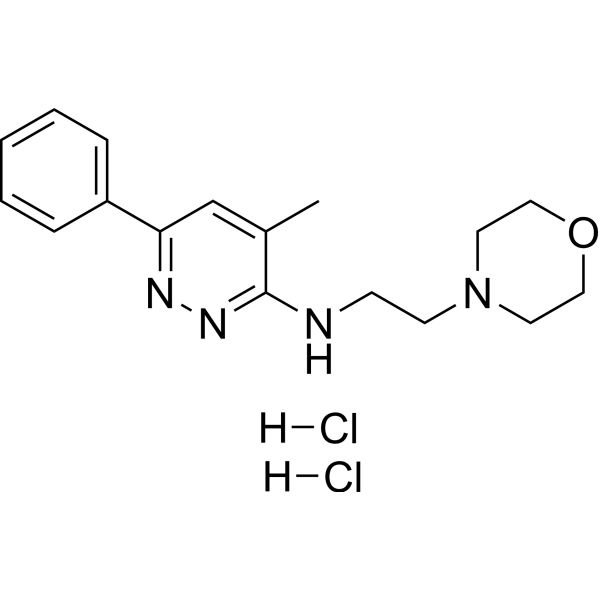
HY-B0884A
Minaprine dihydrochlorideMonoamine Oxidase Inhibitor -
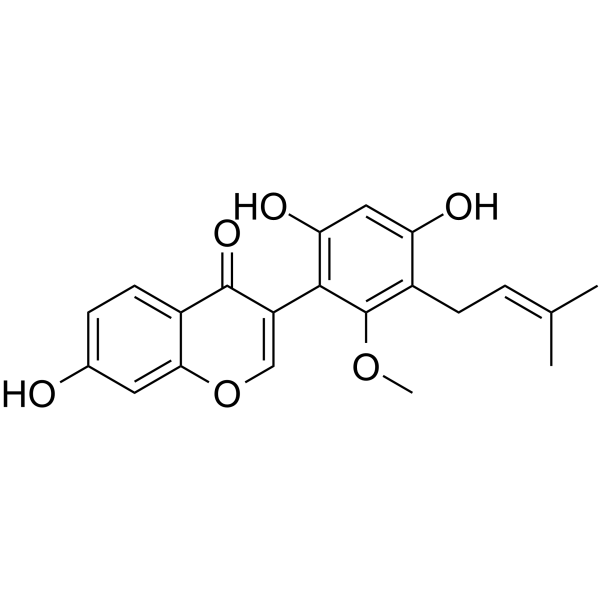
HY-N9329
Glicoricone -
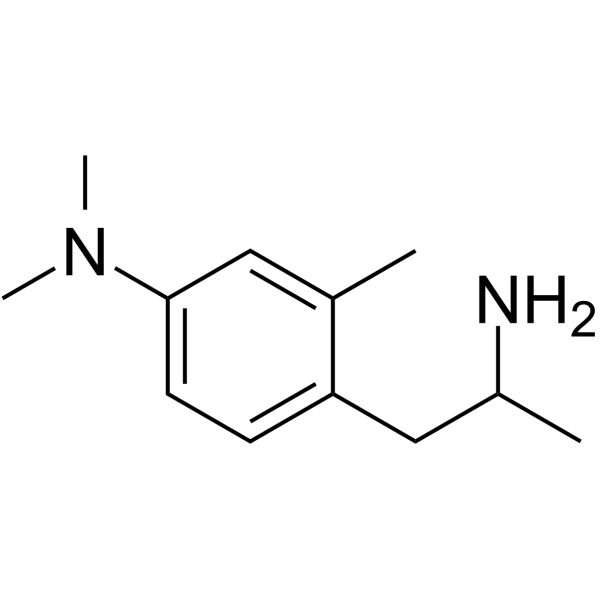
HY-119885A
(±)-AmiflamineMAO-A Inhibitor -
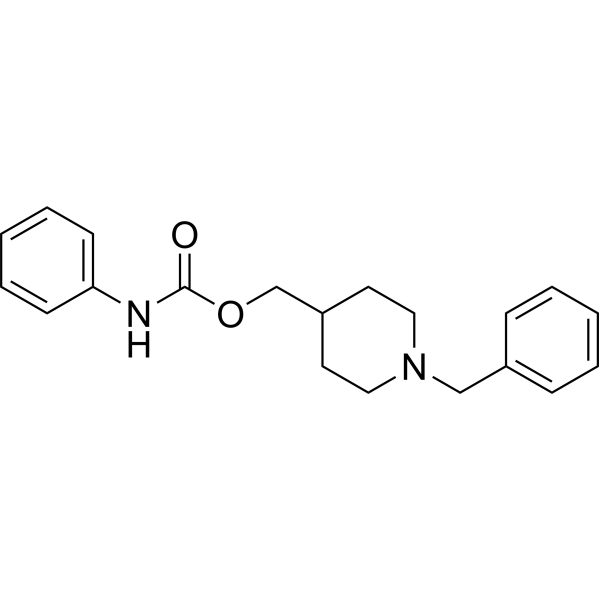
HY-146312
AChE/BChE/MAO-B-IN-1AChE/BChE/MAO-B Inhibitor -

HY-B1440R
Ethaverine hydrochloride (Standard)Reference Standard -

HY-B0534R
Moclobemide (Standard)MAOI Antidepressant
All Calcium Channel Isoforms
More

Biological Activity
Description
IC50 & Target
|
L-type calcium channel |
MAO-B |
Cellular Effect
|
Cell Line

|
Type | Value | Description | References |
|---|---|---|---|---|
| Caco-2 | CC50 |
11.04 μM
Compound: ETHAVERINE
|
Toxicity against Caco-2 cells determined at 48 hours by intracellular ATP concentration using the CellTiter-Glo Luminescent Cell Viability Assay
Toxicity against Caco-2 cells determined at 48 hours by intracellular ATP concentration using the CellTiter-Glo Luminescent Cell Viability Assay
|
10.21203/rs.3.rs-23951/v1 |
| Caco-2 | IC50 |
0.64 μM
Compound: ETHAVERINE
|
Determination of IC50 values for inhibition of SARS-CoV-2 induced cytotoxicity of Caco-2 cells after 48 hours by high content imaging
Determination of IC50 values for inhibition of SARS-CoV-2 induced cytotoxicity of Caco-2 cells after 48 hours by high content imaging
|
10.21203/rs.3.rs-23951/v1 |
In Vitro
Ethaverine (0.3-30 μM) hydrochloride reduces open probability (EC50 ≈ 1 μM) and unitary current amplitude by ~20% in dihydropyridine-sensitive L-type calcium channels from porcine cardiac muscle incorporated into planar lipid bilayers, with near-complete inhibition at 30 μM[4].
Ethaverine hydrochloride inhibits binding of [3H]nitrendipine (Ki ≈ 8.5 μM), [3H]diltiazem (Ki = 1-2 μM), and [3H]verapamil (Ki = 1-2 μM) to porcine cardiac sarcolemma membranes[4].
Ethaverine (1-10 μM) hydrochloride concentration-dependently inhibits K+-induced catecholamine secretion in PC12 cells with an IC50 of ~2 μM, has maximal inhibitory activity at 10 μM, and does not affect bradykinin-induced secretion[5].
MedChemExpress (MCE) has not independently confirmed the accuracy of these methods. They are for reference only.
In Vivo
MedChemExpress (MCE) has not independently confirmed the accuracy of these methods. They are for reference only.
-
Animal Model:anesthetized[6]
-
Dosage:1 mg/kg
-
Administration:i.v.
-
Result:Inhibited atrioventricular conduction and heart rate.
Showed partial persistence of inhibitory action, especially at the atrioventricular level, after total cardiac denervation.


Chemical Information
-
CAS No. 985-13-7
-
Appearance Solid
-
Molecular Weight 431.95
-
Formula C24H30ClNO4
-
Color Light yellow to yellow
-
SMILES
CCOC1=CC2=C(C=C1OCC)C=CN=C2CC3=CC=C(OCC)C(OCC)=C3.[H]Cl
-
Shipping
Room temperature in continental US; may vary elsewhere.
-
Storage
4°C, sealed storage, away from moisture and light
* In solvent : -80°C, 6 months; -20°C, 1 month (sealed storage, away from moisture and light)


Solvent & Solubility
In Vitro:
DMSO : 12.5 mg/mL (28.94 mM; ultrasonic and warming and heat to 60°C; Hygroscopic DMSO has a significant impact on the solubility of product, please use newly opened DMSO)
Please refer to the solubility information to select the appropriate solvent. Once prepared, please aliquot and store the solution to prevent product inactivation from repeated freeze-thaw cycles.
Storage method and period of stock solution: -80°C, 6 months; -20°C, 1 month (sealed storage, away from moisture and light). When stored at -80°C, please use it within 6 months. When stored at -20°C, please use it within 1 month.
Please refer to the solubility information to select the appropriate solvent. Once prepared, please aliquot and store the solution to prevent product inactivation from repeated freeze-thaw cycles.
Storage method and period of stock solution: -80°C, 6 months; -20°C, 1 month (sealed storage, away from moisture and light). When stored at -80°C, please use it within 6 months. When stored at -20°C, please use it within 1 month.
Concentration (start) × Volume (start) = Concentration (final) × Volume (final)


Purity & Documentation
-
Data Sheet (286 KB)
-
SDS (421 KB)
- English - EN (421 KB)
- Français - FR (421 KB)
- Deutsch - DE (421 KB)
- Norwegian - NO (421 KB)
- Español - ES (421 KB)
- Swedish - SV (421 KB)
- Italian - IT (421 KB)
- Korean - KR (421 KB)
- Portuguese - PT (421 KB)
-
Handling Instructions (2659 KB)
References
[1]. Lee SS, et al. Inhibitory effects of ethaverine, a homologue of papaverine, on monoamine oxidase activity in mouse brain. Biological & pharmaceutical bulletin. 2001 Jul;24(7):838-40. [Content Brief]
[2]. Shin JS, et al. Inhibitory effects of ethaverine, a homologue of papaverine, on dopamine content in PC12 cells. Biological & pharmaceutical bulletin. 2001 Jan;24(1):103-5. [Content Brief]
[3]. Prazma J, et al. Effect of ethaverine hydrochloride on cochlear microcirculation. Archives of otolaryngology (Chicago, Ill. : 1960). 1981 Apr;107(4):227-9. [Content Brief]
[4]. Wang Y, et al. Ethaverine, a derivative of papaverine, inhibits cardiac L-type calcium channels. Molecular pharmacology. 1991 Nov;40(5):750-5. [Content Brief]
[5]. Suh BC, et al. Inhibition by ethaverine of catecholamine secretion through blocking L-type Ca2+ channels in PC12 cells. Biochemical pharmacology. 1994 Mar 29;47(7):1262-6. [Content Brief]
[6]. Lacroix P, et al. Activit comparée de l'ethavérine et de la papavérine sur les fonctions cardiaques chronotrope et dromotrope chez le chien anesthésié [Comparative activity of ethaverine and papaverine on chronotropic and dromotropic cardiac functions in the anesthetized dog]. Arch Int Pharmacodyn Ther. 1976 May;221(1):163-76. French. [Content Brief]


Complete Stock Solution Preparation Table
Please refer to the solubility information to select the appropriate solvent. Once prepared, please aliquot and store the solution to prevent product inactivation from repeated freeze-thaw cycles.
Storage method and period of stock solution: -80°C, 6 months; -20°C, 1 month (sealed storage, away from moisture and light). When stored at -80°C, please use it within 6 months. When stored at -20°C, please use it within 1 month.
| Optional Solvent | Concentration Solvent Mass | 1 mg | 5 mg | 10 mg | 25 mg |
|---|---|---|---|---|---|
| DMSO | 1 mM | 2.3151 mL | 11.5754 mL | 23.1508 mL | 57.8771 mL |
| 5 mM | 0.4630 mL | 2.3151 mL | 4.6302 mL | 11.5754 mL | |
| 10 mM | 0.2315 mL | 1.1575 mL | 2.3151 mL | 5.7877 mL | |
| 15 mM | 0.1543 mL | 0.7717 mL | 1.5434 mL | 3.8585 mL | |
| 20 mM | 0.1158 mL | 0.5788 mL | 1.1575 mL | 2.8939 mL | |
| 25 mM | 0.0926 mL | 0.4630 mL | 0.9260 mL | 2.3151 mL |


Ethaverine hydrochloride Related Classifications
HY-B1440 Related Classifications
 Powered by Bioz
Keywords