
1. Search Result
Search Result
Results for "

Ang1

" in MedChemExpress (MCE) Product Catalog:

21

Inhibitors & Agonists

5

Peptides

3

Inhibitory Antibodies

4

Natural
Products

6

Recombinant Proteins

1

Antibodies

7

Oligonucleotides

Cat. No. Product Name Target Research Areas Chemical Structure
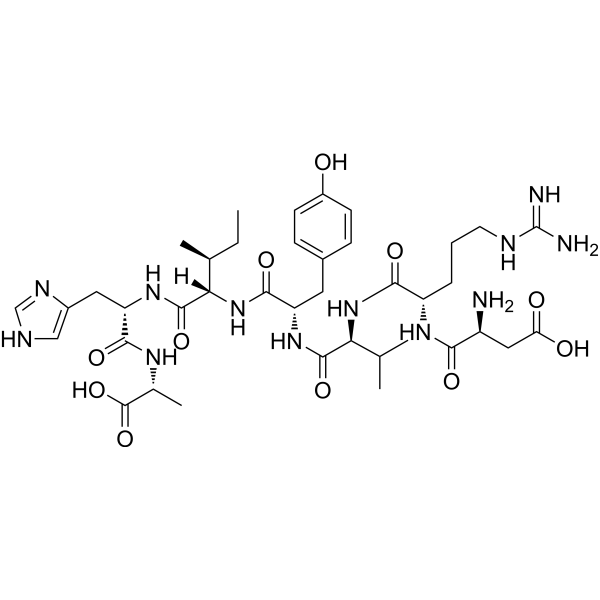
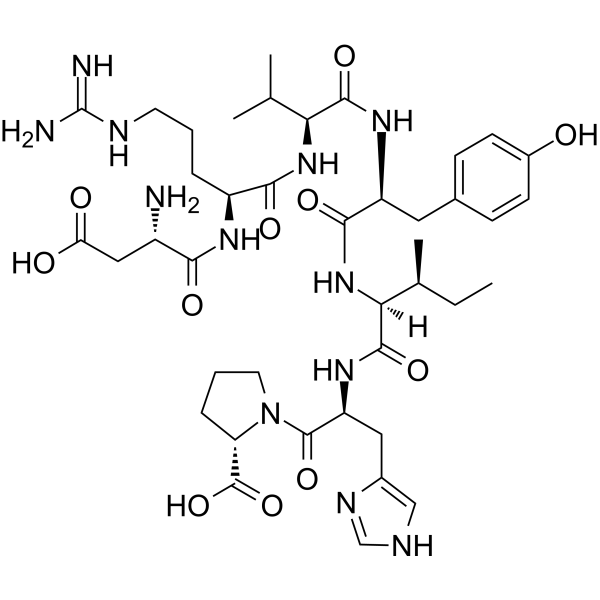
  • HY-12403
    Talfirastide
    15+ Cited Publications

    TXA127; Angiotensin (1-7); Ang-(1-7)

    Angiotensin Receptor Angiotensin-converting Enzyme (ACE) Endogenous Metabolite Cardiovascular Disease Inflammation/Immunology Endocrinology Cancer
    Angiotensin 1-7 (Ang-(1-7)) is an endogenous heptapeptide from the renin-angiotensin system (RAS) with a cardioprotective role due to its anti-inflammatory and anti-fibrotic activities in cardiac cells. Angiotensin 1-7 inhibits purified canine ACE activity (IC50=0.65 μM). Angiotensin 1-7 acts as a local synergistic modulator of kinin-induced vasodilation by inhibiting ACE and releasing nitric oxide. Angiotensin 1-7 blocks Ang II-induced smooth muscle cell proliferation and hypertrophy and shows antiangiogenic and growth-inhibitory effects on the endothelium. Angiotensin 1-7 shows anti-inflammatory activity [1] .
    Talfirastide
  • HY-109041
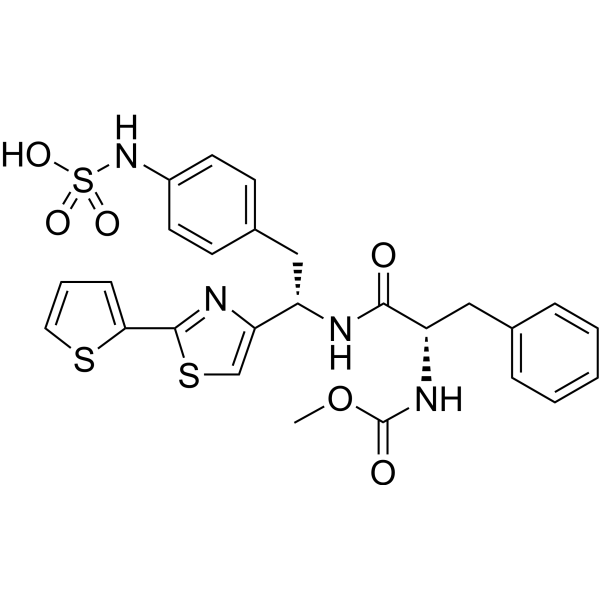
    Razuprotafib
    4 Publications Verification

    AKB-9778

    Phosphatase Tie Inflammation/Immunology
    Razuprotafib (AKB-9778) is a potent and selective inhibitor of the catalytic activity of VE-PTP (vascular endothelial protein tyrosine phosphatase) with an IC50of 17 pM. Razuprotafib promotes TIE2 activation, enhances ANG1-induced TIE2 activation, and stimulates phosphorylation of signaling molecules in the TIE2 pathway, including AKT, eNOS, and ERK. Razuprotafib inhibits the structurally related phosphatase PTP1B with an IC50 of 780 nM. Razuprotafib shows excellent selectivity for VE-PTP versus a variety of phosphatases, with the exception of HPTPη (IC50=36 pM) and HPTPγ (100 pM) [1].
    Razuprotafib
  • HY-P0216
    A 779
    Maximum Cited Publications
    19 Publications Verification

    Angiotensin Receptor Cardiovascular Disease Endocrinology
    A 779 is a specific antagonist of G-protein coupled receptor (Mas receptor), which is an Ang1-7 receptor distinct from the classical AngII.
    A 779
  • HY-P99036

    Tie Cardiovascular Disease Inflammation/Immunology Cancer
    Nesvacumab is a fully human immunoglobulin G1 (IgG1) monoclonal antibody that specifically binds and inactivates the Tie2 receptor ligand Angiopoietin-2 (Ang2) with high affinity, but shows no binding to Ang1. Nesvacumab can be used in vascular researches [1] .
    Nesvacumab
  • HY-P99546

    2xCon4C; AMG 386

    Tie Cardiovascular Disease Cancer
    Trebananib (2xCon4C) is an Fc fusion peptibody. Trebananib exerts its effects by blocking the binding of angiopoietin 1 (Ang1) and angiopoietin 2 (Ang2) to the TIE2 receptor. Trebananib has anti-angiogenic and anti-tumor activities [1] .
    Trebananib
  • HY-N2445
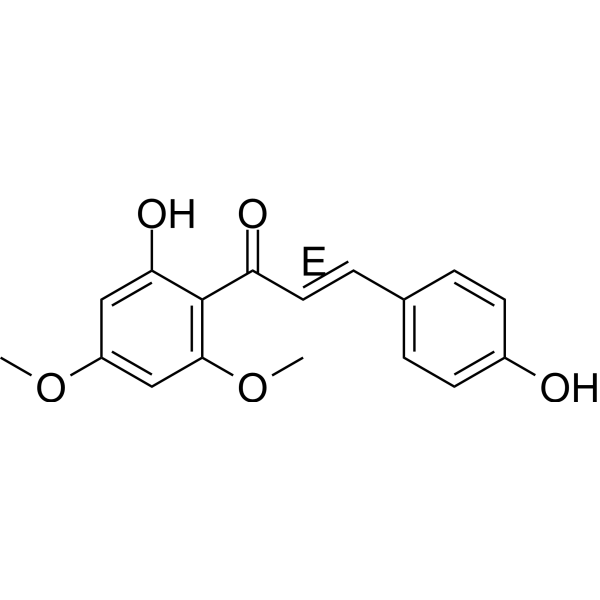
    Flavokawain C
    4 Publications Verification

    Apoptosis Akt JNK PERK Caspase PARP MDM-2/p53 IAP Reactive Oxygen Species (ROS) SOD FABP Autophagy AMPK mTOR GLUT EGFR PI3K HSP VEGFR FAK Cancer
    Flavokawain C is an orally active natural chalcone. Flavokawain C inhibits the proliferation of various cancer cells. Flavokawain C upregulates GADD153 in cancer cells, inhibits the phosphorylation of Akt and JNK, suppresses early ERK phosphorylation, activates late ERK phosphorylation, activates caspase related subtypes, induces PARP-1 cleavage, causes upregulation of p21 and p27, downregulation of mutant p53 and anti-apoptotic IAP proteins, elevates intracellular ROS levels, reduces SOD activity, and induces apoptosis. Flavokawain C downregulates FABP4, induces autophagy in cancer cells, and activates the AMPK/mTOR pathway . Flavokawain C decreases the expression of glycolysis-related proteins GLUT1 and HK2, and inhibits glycolysis in nasopharyngeal carcinoma cells. Flavokawain C inhibits the activation of the EGFR/PI3K/Akt/mTOR signaling pathway and reduces the expression of HSP90B1. Flavokawain C inhibits angiogenesis by decreasing the expression of angiogenic proteins Ang-1 and VEGF in human umbilical vein endothelial cells. Flavokawain C increases γ-H2AX levels in cells, inhibits the phosphorylation of FAK, PI3K and AKT in cells, and induces DNA damage in cells. Flavokawain C exerts anti-tumor activity in multiple tumor xenograft mouse models. Flavokawain C is applicable to research related to colorectal cancer, colon adenocarcinoma, nephroblastoma, nasopharyngeal carcinoma and liver cancer [1] .
    Flavokawain C
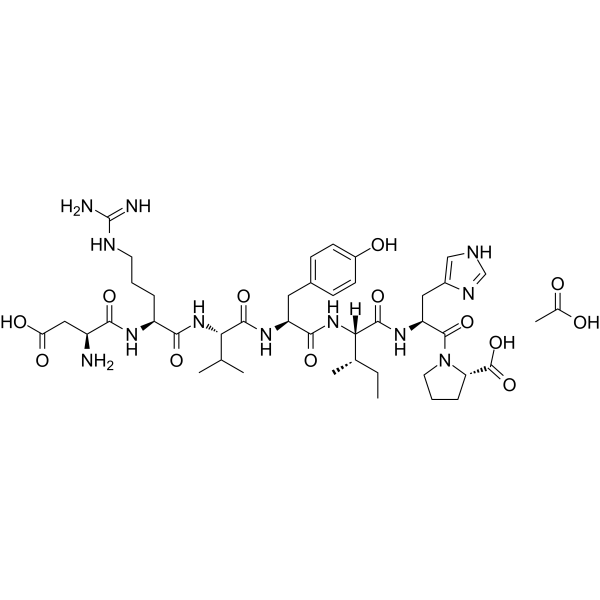
  • HY-12403A
    Talfirastide acetate
    15+ Cited Publications

    TXA127 acetate; Angiotensin (1-7) acetate; Ang-(1-7) acetate

    Angiotensin Receptor Angiotensin-converting Enzyme (ACE) Endogenous Metabolite Cardiovascular Disease Inflammation/Immunology Endocrinology Cancer
    Angiotensin 1-7 (Ang-(1-7)) acetate is an endogenous heptapeptide from the renin-angiotensin system (RAS) with a cardioprotective role due to its anti-inflammatory and anti-fibrotic activities in cardiac cells. Angiotensin 1-7 acetate inhibits purified canine ACE activity (IC50=0.65 μM). Angiotensin 1-7 acetate acts as a local synergistic modulator of kinin-induced vasodilation by inhibiting ACE and releasing nitric oxide. Angiotensin 1-7 acetate blocks Ang II-induced smooth muscle cell proliferation and hypertrophy and shows antiangiogenic and growth-inhibitory effects on the endothelium [1] .
    Talfirastide acetate
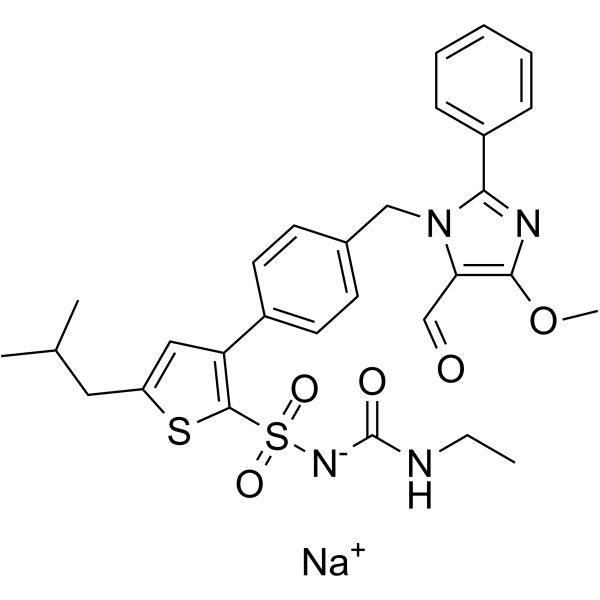
  • HY-15778A
    AVE 0991 sodium salt
    10+ Cited Publications

    Angiotensin Receptor Cardiovascular Disease Endocrinology
    AVE 0991 sodium salt is a nonpeptide and orally active Ang-(1-7) receptor Mas agonist. AVE 0991 competes for high-affinity binding of [ 125I]-Ang-(1-7) to bovine aortic endothelial cell membranes with IC50 of 21 nM [1].
    AVE 0991 sodium salt
  • HY-P991663

    Tie Cancer
    AMG-780 is a fully human IgG2 antibody that targets angiopoietin 1 (Ang1) (IC50 = 4.5 nM) and angiopoietin 2 (Ang2) (IC50 = 0.06 nM). AMG-780 inhibits tumor growth in the Colo205 xenograft mouse model by inhibiting both Ang1 and Ang2. AMG-780 is indicated for the research of cancers such as colon cancer [1] .
    AMG-780
  • HY-W342283

    Parasite Angiotensin-converting Enzyme (ACE) Angiotensin Receptor p38 MAPK STAT NF-κB TNF Receptor 5-HT Receptor Cardiovascular Disease Infection Inflammation/Immunology
    Diminazene is an antiparasitic agent widely used to treat parasitic diseases caused by hemoparasites (such as trypanosomes and babesia). Diminazene acts as an ACE2 activator and exerts cardiovascular protective effects by activating the ACE2/Ang-(1-7)/Mas receptor axis. By regulating gut microbiota-tryptophan metabolism, Diminazene inhibits the activation of core inflammatory signaling pathways including MAPK, STAT and NF-κB, increases central 5-HT levels, and suppresses splenic TNF-α production, thereby alleviating systemic inflammation [1] .
    Diminazene
  • HY-12403R

    TXA127 (Standard); Angiotensin (1-7) (Standard); Ang-(1-7) (Standard)

    Angiotensin Receptor Angiotensin-converting Enzyme (ACE) Endogenous Metabolite Reference Standards Cardiovascular Disease Inflammation/Immunology Endocrinology Cancer
    Talfirastide (Standard) is the analytical standard of Talfirastide. This product is intended for research and analytical applications. Angiotensin 1-7 (Ang-(1-7)) is an endogenous heptapeptide from the renin-angiotensin system (RAS) with a cardioprotective role due to its anti-inflammatory and anti-fibrotic activities in cardiac cells. Angiotensin 1-7 inhibits purified canine ACE activity (IC50=0.65 μM). Angiotensin 1-7 acts as a local synergistic modulator of kinin-induced vasodilation by inhibiting ACE and releasing nitric oxide. Angiotensin 1-7 blocks Ang II-induced smooth muscle cell proliferation and hypertrophy and shows antiangiogenic and growth-inhibitory effects on the endothelium. Angiotensin 1-7 shows anti-inflammatory activity [1] .
    Talfirastide (Standard)
  • HY-RS14612

    Small Interfering RNA (siRNA) Others

    TM7SF2 Human Pre-designed siRNA Set A contains three designed siRNAs for TM7SF2 gene (Human), as well as a negative control, a positive control, and a FAM-labeled negative control.

    TM7SF2 Human Pre-designed siRNA Set A
    TM7SF2 Human Pre-designed siRNA Set A
  • HY-RS00687

    Small Interfering RNA (siRNA) Others

    ANGPT1 Human Pre-designed siRNA Set A contains three designed siRNAs for ANGPT1 gene (Human), as well as a negative control, a positive control, and a FAM-labeled negative control.

    ANGPT1 Human Pre-designed siRNA Set A
    ANGPT1 Human Pre-designed siRNA Set A
  • HY-109041A

    AKB-9778 sodium

    Phosphatase Tie Inflammation/Immunology
    Razuprotafib (AKB-9778) sodium is a potent and selective inhibitor of the catalytic activity of VE-PTP (vascular endothelial protein tyrosine phosphatase) with an IC50of 17 pM. Razuprotafib sodium promotes TIE2 activation, enhances ANG1-induced TIE2 activation, and stimulates phosphorylation of signaling molecules in the TIE2 pathway, including AKT, eNOS, and ERK. Razuprotafib sodium inhibits the structurally related phosphatase PTP1B with an IC50 of 780 nM. Razuprotafib sodium shows excellent selectivity for VE-PTP versus a variety of phosphatases, with the exception of HPTPη (IC50=36 pM) and HPTPγ (100 pM) [1].
    Razuprotafib sodium
  • HY-109041R

    AKB-9778 (Standard)

    Reference Standards Phosphatase Tie Inflammation/Immunology
    Razuprotafib (Standard) is the analytical standard of Razuprotafib (HY-109041). This product is intended for research and analytical applications. Razuprotafib (AKB-9778) is a potent and selective inhibitor of the catalytic activity of VE-PTP (vascular endothelial protein tyrosine phosphatase) with an IC50of 17 pM. Razuprotafib promotes TIE2 activation, enhances ANG1-induced TIE2 activation, and stimulates phosphorylation of signaling molecules in the TIE2 pathway, including AKT, eNOS, and ERK. Razuprotafib inhibits the structurally related phosphatase PTP1B with an IC50 of 780 nM. Razuprotafib shows excellent selectivity for VE-PTP versus a variety of phosphatases, with the exception of HPTPη (IC50=36 pM) and HPTPγ (100 pM) [1].
    Razuprotafib (Standard)
  • HY-160043

    Biochemical Assay Reagents Cancer
    AL6 aptamer sodium is a short-chain nucleic acid aptamer chemically synthesized in vitro. AL6 aptamer sodium specifically targets Angiopoietin (Ang) for the specific detection of Ang. The AL6 aptamer binds to Ang, causing the rotational motion of the fluorophore on the AL6 aptamer to become slower. The concentration of Ang in the test solution can be quantified by detecting the anisotropy of AL6 aptamer/Ang .
    AL6 aptamer sodium
  • HY-RS17668

    Small Interfering RNA (siRNA) Others

    Angpt1 Mouse Pre-designed siRNA Set A contains three designed siRNAs for Angpt1 gene (Mouse), as well as a negative control, a positive control, and a FAM-labeled negative control.

    Angpt1 Mouse Pre-designed siRNA Set A
    Angpt1 Mouse Pre-designed siRNA Set A
  • HY-RS23274

    Small Interfering RNA (siRNA) Others

    Ang Rat Pre-designed siRNA Set A contains three designed siRNAs for Ang gene (Rat), as well as a negative control, a positive control, and a FAM-labeled negative control.

    Ang Rat Pre-designed siRNA Set A
    Ang Rat Pre-designed siRNA Set A
  • HY-RS16832

    Small Interfering RNA (siRNA) Others

    Ang Mouse Pre-designed siRNA Set A contains three designed siRNAs for Ang gene (Mouse), as well as a negative control, a positive control, and a FAM-labeled negative control.

    Ang Mouse Pre-designed siRNA Set A
    Ang Mouse Pre-designed siRNA Set A
  • HY-RS24129

    Small Interfering RNA (siRNA) Others

    Angpt1 Rat Pre-designed siRNA Set A contains three designed siRNAs for Angpt1 gene (Rat), as well as a negative control, a positive control, and a FAM-labeled negative control.

    Angpt1 Rat Pre-designed siRNA Set A
    Angpt1 Rat Pre-designed siRNA Set A
  • HY-P0216A

    Angiotensin Receptor Cardiovascular Disease
    A-779 TFA is a selective angiotensin-(1-7) (Ang-(1-7)) antagonist. A-779 TFA blocks Arachidonic acid release, bradykinin potentiation effects and hypotensive action. A-779 TFA exerts diuretic effects in non-pregnant rats, antidiuretic effects in late-pregnant rats, and also inhibits feed intake and water consumption in late-pregnant rats. A-779 TFA attenuates the regulatory effects of prostacyclin, nitric oxide and thromboxane A2 associated with angiotensin-(1-7). A-779 TFA can be used in studies related to hypertension [1] .
    A-779 TFA

Inquiry Online

Your information is safe with us. * Required Fields.

Salutation


Country or Region *

Applicant Name *


Organization Name *

Department *


Email Address *


Product Name *

Cat. No.


Requested quantity *

Phone Number *


Remarks

Inquiry Online

Inquiry Information

Product Name:
Cat. No.:
Quantity:
MCE Japan Authorized Agent:

