From 11:00 pm to 12:00 pm EST ( 8:00 pm to 9:00 pm PST ) on January 6th, the website will be under maintenance. We are sorry for the inconvenience. Please arrange your schedule properly.
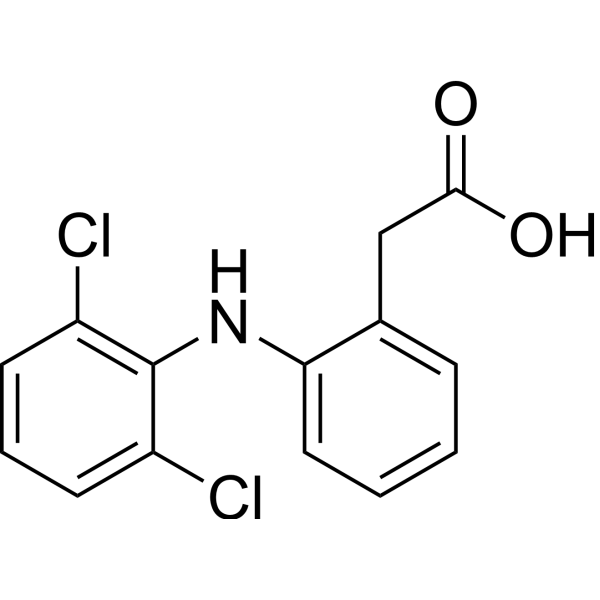
Diclofenac is a potent and nonselective anti-inflammatory agent, acts as a COX inhibitor, with IC50s of 4 and 1.3 nM for human COX-1 and COX-2 in CHOcells , and 5.1 and 0.84 μM for ovine COX-1 and COX-2, respectively . Diclofenac induces apoptosis of neural stem cells (NSCs) via the activation of the caspase cascade .
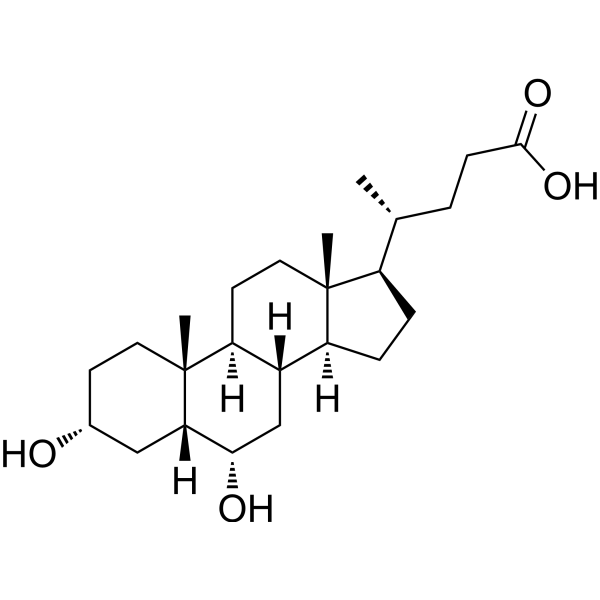
Hyodeoxycholic acid is a secondary bile acid formed in the small intestine by the gut flora, and acts as a TGR5 (GPCR19) agonist, with an EC50 of 31.6 µM in CHOcells.
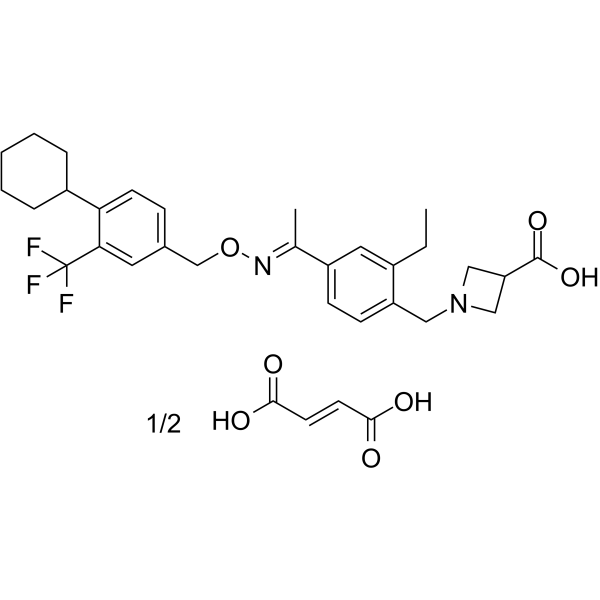
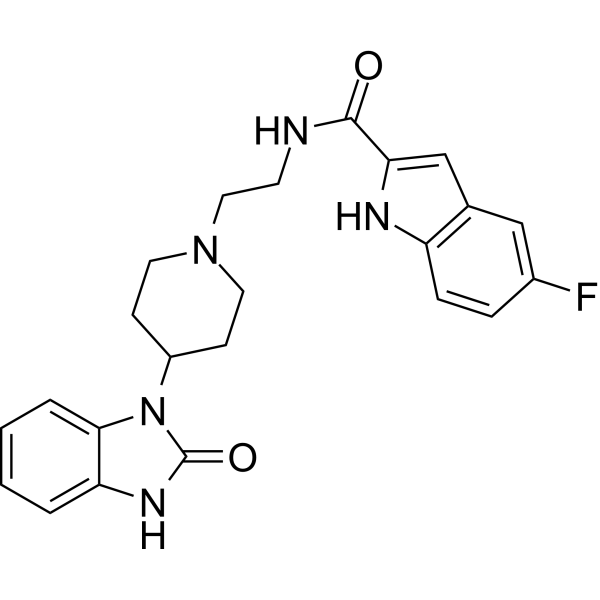
Etrasimod (APD334) is a potent, selective and orally available antagonist of the sphingosine-1-phosphate-1 (S1P1) receptor with an IC50 value of 1.88 nM in CHOcells.
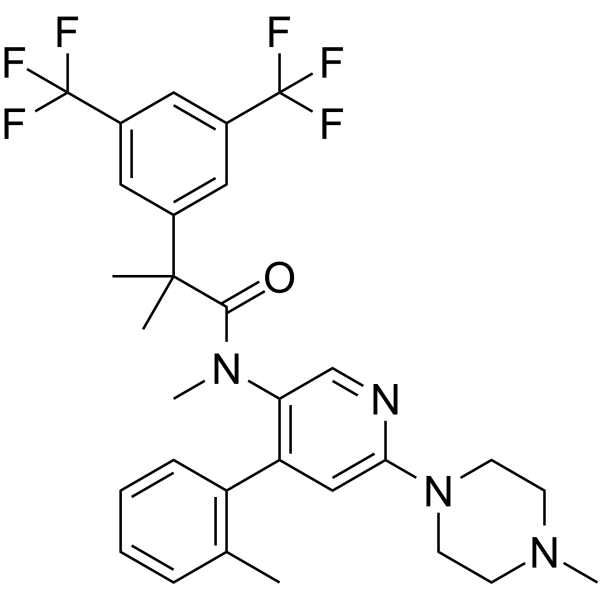
Netupitant (CID-6451149) is a highly potent, selective and orally active neurokinin-1 (NK1) receptor antagonist with a Ki of 0.95 nM for hNK1 in CHOcells. Netupitant has antiemetic affect .
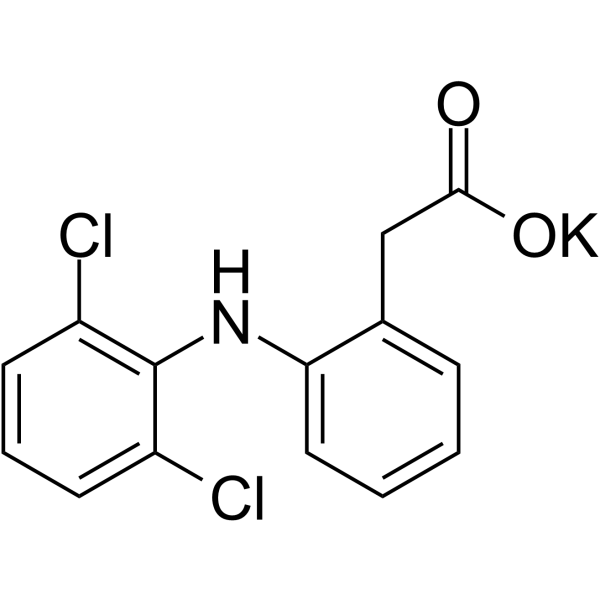
Diclofenac potassium is a potent and nonselective anti-inflammatory agent, acts as a COX inhibitor, with IC50s of 4 and 1.3 nM for human COX-1 and COX-2 in CHOcells , and 5.1 and 0.84 μM for ovine COX-1 and COX-2, respectively . Diclofenac potassium induces apoptosis of neural stem cells (NSCs) via the activation of the caspase cascade .
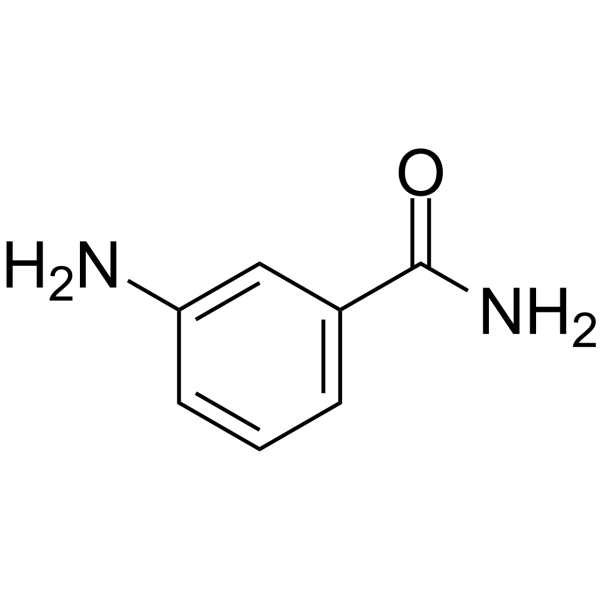
3-Aminobenzamide (PARP-IN-1) is a potent inhibitor of PARP with IC50 of appr 50 nM in CHOcells, and acts as a mediator of oxidant-induced myocyte dysfunction during reperfusion.
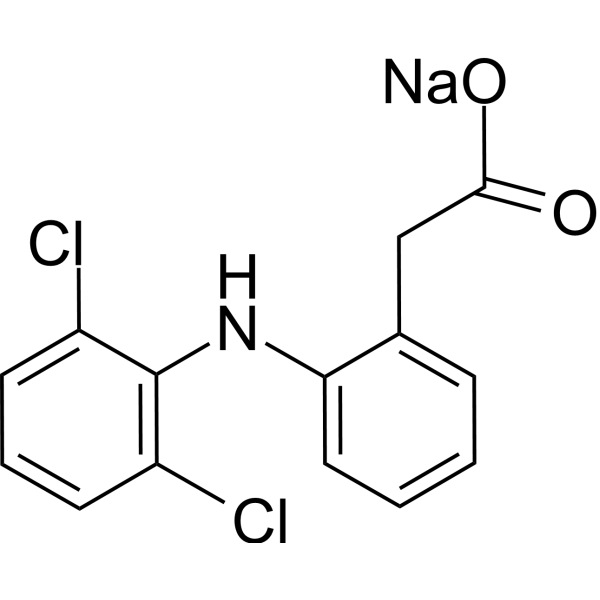
Diclofenac Sodium (GP 45840) is a potent and nonselective anti-inflammatory agent, acts as a COX inhibitor, with IC50s of 4 and 1.3 nM for human COX-1 and COX-2 in CHOcells , and 5.1 and 0.84 μM for ovine COX-1 and COX-2, respectively . Diclofenac Sodium induces apoptosis of neural stem cells (NSCs) via the activation of the caspase cascade .
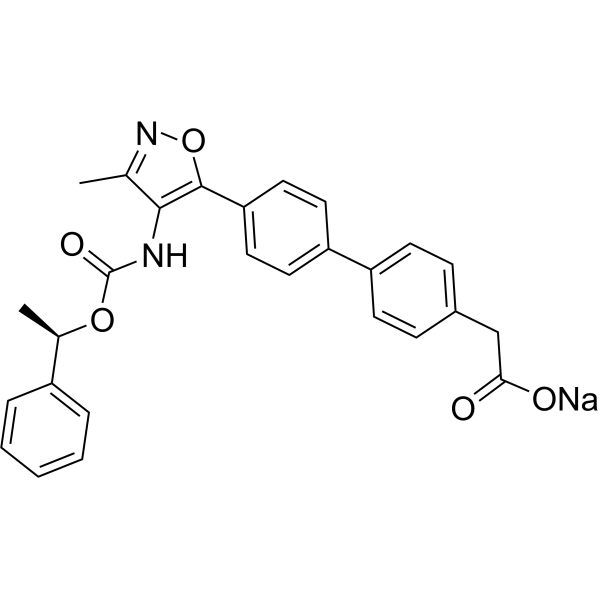
AM095 is a selective LPA1 receptor antagonist. The IC50 for AM095 antagonism of LPA-induced calcium flux of human or mouse LPA1-transfected CHOcells is 0.025 and 0.023 μM, respectively.
SR 142948 is an orally active and selective non-peptide neurotensin receptor (NT) antagonist with IC50s of 1.19 nM, 0.32 nM, 3.96 nM in h-NTR1-CHOcells, HT-29 cells, and adult rat brain, respectively. SR 142948 antagonizes NT-induced inositol monophosphate formation in HT-29 cells with an IC50 of 3.9 nM. SR 142948 blocks hypothermia, analgesia and steering behavior induced by NT in vivo. SR 142948 shows blood-brain permeability and can be used in study of psychiatric disorders .
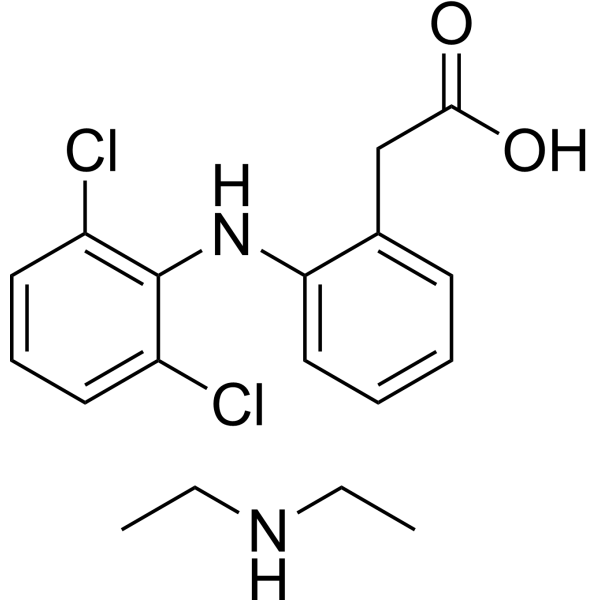
Diclofenac diethylamine is a potent and nonselective anti-inflammatory agent, acts as a COX inhibitor, with IC50s of 4 and 1.3 nM for human COX-1 and COX-2 in CHOcells , and 5.1 and 0.84 μM for ovine COX-1 and COX-2, respectively . Diclofenac diethylamine induces apoptosis of neural stem cells (NSCs) via the activation of the caspase cascade .
MK-7622 (M1 receptor modulator) is an orally active positive allosteric modulator of muscarinic M1 acetylcholine receptors (mAChRs). MK-7622 enhances ACh-induced calcium flux in CHOcells expressing human M1 receptors (EC50 = 21 nM) and shows robust agonist activity in rat M1-expressing CHOcells, increasing intracellular calcium. MK-7622 reverses Scopolamine (HY-N0296)-induced cognitive deficits in rhesus macaques in an object retrieval detour task. MK-7622 can be used for the study of Alzheimer's disease (AD) .
Talnetant (SB 223412) is a selective, competitive, brain-permeable NK3 receptor antagonist with a Ki of 1.4 nM in hNK-3-CHOcells. Talnetant is 100-fold more selective for hNK-3 relative to the hNK-2 receptor and has no affinity for hNK-1. Talnetant can be used in schizophrenia-related studies .
Atrosab is a humanized IgG1 antagonistic anti-TNFR1 antibody. Atrosab inhibits TNF-mediated Apoptosis induction and IL-6 and IL-8 production. Atrosab reduces neurological deficits. Atrosab can be used for research of inflammatory disease. The recommend isotype control is Human IgG1 kappa, Isotype Control (HY-P99001) .
EDP-305 is an orally active, potent and selective farnesoid X receptor (FXR) agonist, with EC50 values of 34 nM (chimeric FXR in CHOcells) and 8 nM (full-length FXR in HEK cells). EDP-305 shows a potent and consistent antifibrotic effect. EDP-305 can be used for primary biliary cholangitis (PBC) and non-alcoholic steatohepatitis (NASH) research .
Diclofenac (Standard) is the analytical standard of Diclofenac. This product is intended for research and analytical applications. Diclofenac is a potent and nonselective anti-inflammatory agent, acts as a COX inhibitor, with IC50s of 4 and 1.3 nM for human COX-1 and COX-2 in CHOcells , and 5.1 and 0.84 μM for ovine COX-1 and COX-2, respectively . Diclofenac induces apoptosis of neural stem cells (NSCs) via the activation of the caspase cascade .
GR 159897 is a highly potent, selective, competitive, brain-penetrated non-peptide neurokinin 2 (NK2) receptor antagonist. GR 159897 has little or no affinity for NK1 and NK3 receptors. GR 159897 inhibits binding of [ 3H]GR100679 to human NK2(hNK2)-CHO cells and rat colon membranes with pKis of 9.51 and 10, respectively. Antagonizes bronchoconstriction. Anxiolytic-like and anti-tumor effects .
Arachidonylcyclopropylamide (ACPA) is a potent and selective CB1 receptors agonist. Arachidonylcyclopropylamide inhibits forskolin-stimulated cAMP production in CHOcells transfected with human cannabinoid CB1 receptors (IC50=2 nM) .
AB-MECA is a high affinity A3 adenosine receptor agonist with a binding Ki of 430.5 nM for human A3 receptors in CHOcells. AB-MECA can enhance plasma histamine level .
BAN ORL 24 is a nociceptin/orphanin FQ (N/OFQ) peptide receptor (NOP) antagonist. BAN ORL 24 has antagonistic effect for nociceptin (NOP) receptor with KI value of 0.24 nM in CHOcell. BAN ORL 24 can be used for the research of cancer and analgesic .
Ac- IETD- CHO is a potent, reversible inhibitor of granzyme B and caspase-8. Ac- IETD- CHO inhibits Fas-mediated apoptotic cell death, hemorrhage, and liver failure. Ac- IETD- CHO also inhibits cytotoxic T lymphocytes induced cell death .
PSB-1901 is a potent A2B adenosine receptor (A2BAR) antagonist with Kis of 0.0835 nM and 0.131 nM for human and mouse A2BARs respectively. PSB-1901 can be used for the research of cancer .
Zimberelimab (GLS-010) is a fully human IgG4 anti-PD-1 monoclonal antibody with an EC50 of 210 pM for human PD-1. Zimberelimab effectively blocks the binding of PD-L1 and PD-L2 to cell-surface PD-1 in CHO-Scells, with IC50 values of 580 pM and 670 pM, respectively. Zimberelimab shows antitumor activities, and can be used for various cancers research, including cervical cancer, non-small cell lung cancer and classical Hodgkin’s lymphoma .
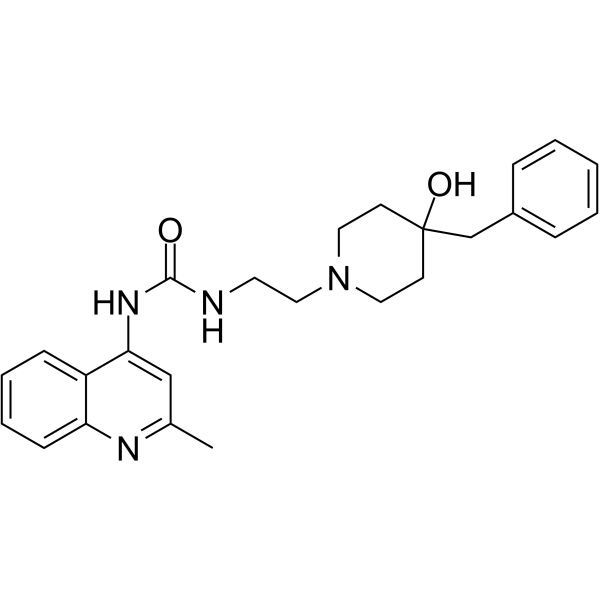
NPFF1-R antagonist 1 (compound 8b), a piperidine analogue, is a potent neuropeptide FF (NPFF) receptor antagonist. NPFF1-R antagonist 1 is 15-fold selective for the NPFF1-R subtype, with Ki values of 211 nM and 3270 nM for NPFF1-R and NPFF2-R, respectively .
Hyodeoxycholic acid (Standard) is the analytical standard of Hyodeoxycholic acid. This product is intended for research and analytical applications. Hyodeoxycholic acid is a secondary bile acid formed in the small intestine by the gut flora, and acts as a TGR5 (GPCR19) agonist, with an EC50 of 31.6 µM in CHOcells.
S-22153 is a potent melatonin receptor antagonist with EC50 values of 19 nM, 4.6 nM for hMT1 and hMT2 melatonin receptor, respectively. S-22153 has Ki values of 8.6 nM (CHOcells) and 16.3 nM (HEK cells) for hMT1, and 6.0 nM (CHOcells) and 8.2 nM (HEK cells) for hMT2. S-22153 is a specific ligand of MT1 and MT2 melatonin receptors subtypes .
A1899 is a potent and highly selective blocker of the K2P channel TASK-1. A1899 has IC50 values of 35.1 nM and 7 nM for TASK-1 channels expressed in oocytes and CHOcells, respectively. A1899 is also an IKur blocker that can be used for the research of cardiovascular diseases .
L-748328 is a potent and selective human β3-adrenergic receptor antagonist. L-748328 has a Ki of 3.7 nM against human cloned β3-AR expressed in Chinese hamster ovary (CHO) cells. In addition, L-748328 inhibits the lipolytic response induced by the β3-AR agonist L-742791 in isolated non-human primate adipocytes .
CB-25 is a ligand of CB1cannabinoid receptors, acting as a partial agonist. CB-25 enhances Forskolin (HY-15371)-induced cAMP formation in cancer cells but not hCB1-CHOcells .
Z-Pro-Pro-CHO is a potent inhibitor of prolyl oligopeptidase (POP), with extremely high affinity for human prolyl oligopeptidase (HsPOP) (IC50=0.012 μM), and it also effectively inhibits the activity of Schistosoma mansoni prolyl oligopeptidase (SmPOP) (IC50=0.16 μM). Z-Pro-Pro-CHO does not block the phosphorylation of ERK or the production of TNF-α or IFN-γ in immune cells from presensitized mice, nor does it induce harmful phenotypes in cultured Schistosoma mansoni schistosomula. Z-Pro-Pro-CHO only partially inhibits epithelial cell wound healing at extremely high concentrations. Z-Pro-Pro-CHO finds wide application in studies related to schistosomiasis .
Antifolate agent 1 is a 6-substituted pyrrolopyrimidine antifolate with a 1-carbon bridge. Antifolate agent 1 shows no activity against cells expressing FRα and FRβ, and has no GARFTase inhibitory activity. Antifolate agent 1 can be used as a negative control in the development of folate receptor-targeted antifolates .
SP3CHO is an active metabolite generated by the metabolism of SP3N in cell culture by the action of amine oxidase. SP3CHO can induce polyubiquitination of specific proteins by recruiting the SCFFBXO22 E3 ligase complex. SP3CHO can be used in cancer therapy research .
STX-100 (Biotinylated) is a biotin-labeled STX-100 (HY-P990667). STX-100 is a humanized antibody expressed in HEK293 cells, targeting Integrin aVb6 (ITGAV & ITGB6) .
Turoctocog alfa pegol is a recombinant coagulation factor VIII (FVIII) from chinese hamster ovary (CHO) cells. Turoctocog alfa pegol can be used for researching haemophilia A .
SR 142948 dihydrochloride is an orally active and selective non-peptide neurotensin receptor (NT) antagonist with IC50s of 1.19 nM, 0.32 nM, 3.96 nM in h-NTR1-CHOcells, HT-29 cells, and adult rat brain, respectively. SR 142948 dihydrochloride antagonizes NT-induced inositol monophosphate formation in HT-29 cells with an IC50 of 3.9 nM. SR 142948 dihydrochloride blocks hypothermia, analgesia and steering behavior induced by NT in vivo. SR 142948 dihydrochloride shows blood-brain permeability and can be used in study of psychiatric disorders .
BLT2 antagonist-1 (compound 15b) is a selective BLT2 antagonist that inhibits the chemotaxis of CHO-BLT2 cells with an IC50 of 224 nM. BLT2 antagonist-1 does not inhibits the chemotaxis of CHO-BLT1 cells. BLT2 antagonist-1 also inhibits the binding of LTB4 and BLT2 with a Ki value of 132 nM. BLT2 antagonist-1 can be used for the research of the inflammatory airway diseases such as asthma and chronic obstructive pulmonary disease .
(Rac)-MGV354 is the racemate of MGV354. MGV354 is a soluble guanylate cyclase (sGC) activator with EC50s of <0.5 nM, and 5 nM in CHO and GTM-3 E cells, respectively .
Imgatuzumab (FUT8-KO) is a humanized monoclonal antibody against EGFR expressed in CHOcells with the fucosyltransferase 8 gene (FUT8) knocked out. Imgatuzumab is an immunomodulator. Imgatuzumab may be used in cancer research.
Mianserin-d3 is the deuterium labeled Mianserin (HY-B0188). Mianserin (Mianserine) is an orally active H1 receptor antagonist. Mianserin can activate κ-opioid receptor and octopamine receptor. Mianserin increases ERK1/2 and CREB phosphorylation, and antagonizes full κ-opioid agonist and Dynorphin A (HY-P1333)-induced MAPK phosphorylation. Mianserin modulates social and exploratory behaviour, raises electroconvulsive thresholds. Mianserin can be used for the research of neurological disease, such as depression and epilepsy .
SR 142948 TFA is an orally active and selective non-peptide neurotensin receptor (NT) antagonist with IC50s of 1.19 nM, 0.32 nM, 3.96 nM in h-NTR1-CHOcells, HT-29 cells, and adult rat brain, respectively. SR 142948 TFA antagonizes NT-induced inositol monophosphate formation in HT-29 cells with an IC50 of 3.9 nM. SR 142948 TFA blocks hypothermia, analgesia and steering behavior induced by NT in vivo. SR 142948 TFA shows blood-brain permeability and can be used in study of psychiatric disorders .
Diclofenac (potassium) (Standard) is the analytical standard of Diclofenac (potassium). This product is intended for research and analytical applications. Diclofenac potassium is a potent and nonselective anti-inflammatory agent, acts as a COX inhibitor, with IC50s of 4 and 1.3 nM for human COX-1 and COX-2 in CHOcells , and 5.1 and 0.84 μM for ovine COX-1 and COX-2, respectively . Diclofenac potassium induces apoptosis of neural stem cells (NSCs) via the activation of the caspase cascade .
Diclofenac (diethylamine) (Standard) is the analytical standard of Diclofenac (diethylamine). This product is intended for research and analytical applications. Diclofenac diethylamine is a potent and nonselective anti-inflammatory agent, acts as a COX inhibitor, with IC50s of 4 and 1.3 nM for human COX-1 and COX-2 in CHOcells , and 5.1 and 0.84 μM for ovine COX-1 and COX-2, respectively . Diclofenac diethylamine induces apoptosis of neural stem cells (NSCs) via the activation of the caspase cascade .
Talnetant (SB 223412) hydrochloride is a selective, competitive, brain-permeable NK3 receptor antagonist with a Ki of 1.4 nM in hNK-3-CHOcells. Talnetant hydrochloride is 100-fold more selective for hNK-3 relative to the hNK-2 receptor and has no affinity for hNK-1. Talnetant hydrochloride can be used in schizophrenia-related studies .
Trihexyl phosphate is an organophosphate flame retardant. Trihexyl phosphate causes mitochondrial impairment and induces cellapoptosis in CHOcells. Trihexyl phosphate promotes the proliferation of human breast cancer cells (MCF-7) in a dose-dependent manner and exerts estrogenicity via ERα-independent pathways .
CFMTI inhibits L-glutamate-induced intracellular Ca 2+ mobilization in CHOcells expressing human and rat mGluR1a, with IC50s of 2.6 and 2.3 nM, respectively .
AM-4668 is a GPR40 agonist for type 2 diabetes. EC50s of 3.6 nM and 36 nM for GPR40 in A9 cells (GPR40 IP3 assay) and CHOcells (GPR40 aequorin assay), respectively .
Hyodeoxycholic acid-d5 is the deuterium labeled Hyodeoxycholic acid. Hyodeoxycholic acid is a secondary bile acid formed in the small intestine by the gut flora, and acts as a TGR5 (GPCR19) agonist, with an EC50 of 31.6 µM in CHOcells.
BCTP is a TRPV1 antagonist. BCTP activated at low pH showed functional antagonist activity against human TRPV1 in CHOcells (IC50=18 nM). BCTP can be used in the study of chronic pain .
3-Hydroxy darifenacin is a metabolite of Darifenacin (HY-A0033). 3-Hydroxy darifenacin is an antagonist of M1-5 muscarinic receptors with Kis values of 17.78, 79.43, 2.24, 36.31 and 6.17 nM, respectively in CHOcells .
TRPV1 antagonist 9 (compound 13c) is an orally active transient receptor potential vanilloid 1 (TRPV1) channel antagonist. TRPV1 antagonist 9 blocks Ca 2+ uptake by CHOcells expressing TRPV1 receptors with IC50 values are 0.6 and 0.8 nM for Capsaicin (HY-10448) and acid-induced Ca 2+ uptake, respectively. TRPV1 antagonist 9 blocks Capsaicin (HY-10448)-induced flinch response and causes hyperthermia in rats .
Ac-RYYRIK-NH2 is a potent and partial agonist on ORL1 transfected in CHOcells (Kd=1.5 nM) and behaves as a endogenous ligand of ORL1. Ac-RYYRIK-NH2 is a specific antagonist for the activation of G protein and competitively antagonizes the stimulation of [ 35S]-GTPgS binding to G proteins by nociceptin/orphanin FQ (noc/OFQ) in membranes and sections of rat brain .
Ac-RYYRIK-NH2 TFA is a potent and partial agonist on ORL1 transfected in CHOcells (Kd=1.5 nM) and behaves as a endogenous ligand of ORL1. Ac-RYYRIK-NH2 is a specific antagonist for the activation of G protein and competitively antagonizes the stimulation of [ 35S]-GTPgS binding to G proteins by nociceptin/orphanin FQ (noc/OFQ) in membranes and sections of rat brain .
A2AAR antagonist 5 is a selective A2AAR antagonist. A2AAR antagonist 5 inhibits NECA-stimulated adenylyl cyclase activity in hA2AAR-expressing CHOcells with an IC50 value of 1863 nM. A2AAR antagonist 5 possesses strong free radical scavenging activity, with an EC50 value of 22.21 μM in the DPPH assay. A2AAR antagonist 5 exerts notable neuroprotective effects in in vitro cerebral ischemia models. A2AAR antagonist 5 can be used for the study of cerebral ischemia .
GABAA receptor modulator-9 is and positive allosteric modulator of a1β2y2 subtype GABAA that can cross the blood-brain barrier. GABAA receptor modulator-9 exhibits comparable activity on α1β2γ2 (EC50: 0.9 μM in oocytes, 0.2 μM in CHOcells) and on α1β2, α3β2γ2 and α1β3γ2 (EC50s of 1.3, 3.4 and 1.1 μM). GABAA receptor modulator-9 significantly suppresses seizure progression and reduces delayed mortality. GABAA receptor modulator-9 can be used for the study of status epilepticus (SE) .
Ac-AAVALLPAVLLALLAPVAD-CHO (TFA) is a composite of Ac-VAD-CHO. Ac-AAVALLPAVLLALLAPVAD-CHO (TFA) is a non-selective caspase inhibitor as well as a cell permeable hydrophobic sequence derived from K-FGF .
Ac-AAVALLPAVLLALLAP-LEHD-CHO is an inhibitor of caspases 4, 5 and 9. Ac-AAVALLPAVLLALLAP-LEHD-CHO shows protective effects upon Neocarzinostatin (HY-111183)-treated MCF-7 cells .
Ac-LEVD-CHO (TFA) is an inhibitor of caspase-4. Ac-LEVD-CHO (TFA) can inhibit the expression and secretion of IL-1α expression as well as the activation of caspase-4 induced by the T. denticola periodontal pathogen surface protein Td92 in human gingival fibroblasts. Ac-LEVD-CHO (TFA) can also reduce the apoptosis due to the expression of the dominant negative adenoviral RNA-dependent protein kinase in A549 and PC3 cancer cell lines .
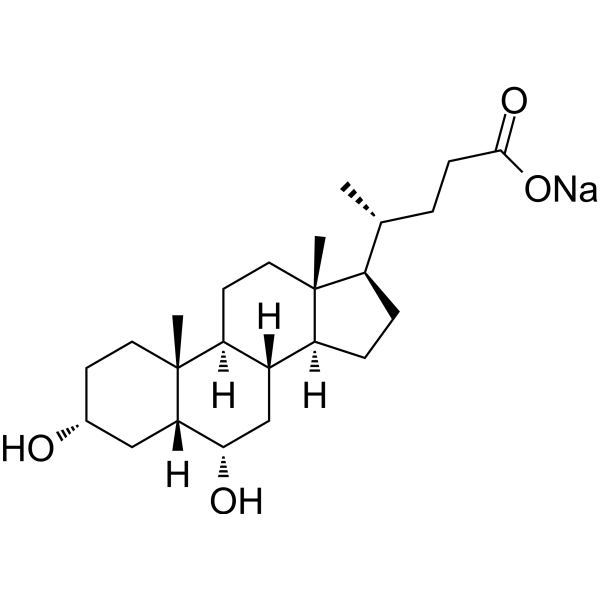
Hyodeoxycholic acid sodium is a secondary bile acid formed in the small intestine by the gut flora, and acts as a TGR5 (GPCR19) agonist, with an EC50 of 31.6 µM in CHOcells .
Coprelotamab (GB-221) is an IgG-κ monoclonal antibody targeting EGFR2. The commonly used expression system for Coprelotamab is CHO DG44 (Chinese Hamster Ovary) cells .
Anti-Dysadherin Antibody is a human antibody expressed in CHOcells, targeting dysadherin. Anti-Dysadherin Antibody can be referenced as Human IgG1 kappa, Isotype Control (HY-P99001).
(E)-PHCCC is a positive allosteric modulator (PAM) for mGluR4, that enhances the activity of the receptor's endogenous ligand (glutamate), and exhibits activity in the calcium mobilization assay in CHOcells with an EC50 of 3.2 μM .
Aldicarb sulfoxide is a metabolite of Aldicarb. Aldicarb sulfoxide affects the glutathione-linked enzymes in CHO-K1 cells. Aldicarb sulfoxide inhibits cholinesterase (ChE) and carboxylesterase (CaE) with IC50 of 10 μM for both in zebrafish .
AG 99 (Tyrphostin 46), a tyrphostin derivative, is a tyrosine kinase inhibitor that increases sister chromatid exchange frequency in transformed CHO-K1 and primary CHE cells. AG 99 is promising for research of proliferative diseases .
Anti-MUC17 Antibody is a human antibody expressed in CHOcells, targeting MUC17. Anti-MUC17 Antibody can be referenced as Human IgG1 kappa, Isotype Control (HY-P99001).
SR 142948 (Standard) is the analytical standard of SR 142948 (HY-107664). This product is intended for research and analytical applications. SR 142948 is an orally active and selective non-peptide neurotensin receptor (NT) antagonist with IC50s of 1.19 nM, 0.32 nM, 3.96 nM in h-NTR1-CHOcells, HT-29 cells, and adult rat brain, respectively. SR 142948 antagonizes NT-induced inositol monophosphate formation in HT-29 cells with an IC50 of 3.9 nM. SR 142948 blocks hypothermia, analgesia and steering behavior induced by NT in vivo. SR 142948 shows blood-brain permeability and can be used in study of psychiatric disorders .
Org 214444-0 is an orally active, nanomolar-potent and selective FSHR agonist, with EC50 values of 2.0 nM and 1.2 nM in human and rat (measured in CHOcells). Org 214444-0 activates human granulosa cells in vitro, supports rat follicular development and induces ovulation in vivo. Org 214444-0 can be used for the research of infertility .
Ac-IETD-CHO TFA is a potent, reversible inhibitor of granzyme B and caspase-8. Ac-IETD-CHO TFA inhibits Fas-mediated apoptotic cell death, hemorrhage, and liver failure. Ac-IETD-CHO TFA also inhibits cytotoxic T lymphocytes induced cell death .
AH22921 is an EP4 prostaglandin receptor antagonist with the activity of antagonizing the activation of adenylate cyclase by prostaglandins in CHOcells. AH22921 can shift the PGE2 concentration-response curve to the right in CHOcells. It is a non-competitive antagonist that is selective for EP4 receptors and has an antagonistic effect on EP4 receptors in CHOcells, but does not affect the PGE2 concentration-response curve in NPE cells containing EP2 receptors.
Boc-AEVD-CHO TFA is a Caspase 8 inhibitor. Boc-AEVD-CHO TFA significantly increases the frequencies of Nocodazole (HY-13520) or methyl methane sulfonate (MMS) induced micronuclei (MN) and micronucleated binucleates (MNCB) in PBMC by inhibiting cellapoptosis. Boc-AEVD-CHO TFA can be used for immune and inflammatory diseases research .
FR191413 is a selective bradykinin B2 receptor agonist that stimulates prostaglandin E2 production in WI-38 cells and activates BK B2 receptor-mediated pathways such as vasodilation and organ protection. FR191413 competitively binds to [ 3H]-BK in guinea pig ileum (GPI) membranes and CHOcells transfected with the human BK B2 receptor, with IC50 values of 20.0 nM and 2.60 nM, respectively. FR191413 can be used in research related to cardiovascular diseases and diabetes, including hypertension, myocardial hypertrophy, myocardial infarction, arrhythmias, and diabetic nephropathy .
APC-Cy5.5 is a tandem dye widely used in flow cytometry. It consists of the energy donor allophycocyanin (APC) and the energy acceptor Cy5.5, and operates via the fluorescence resonance energy transfer mechanism (Ex/Em = 650 nm/690 nm) .
Fasobegron is a β3-adrenergic receptor agonist with a human EC50 of 4.8 nM. Fasobegron shows an EC50 of 250 nM for human β1-adrenergic receptors. Fasobegron can be used for the research of overactive bladder .
Pamvatamig (FUT8-KO) is an anti-EGFR/MET monoclonal antibody expressed by CHOcells with the fucosyltransferase 8 gene (FUT8) knocked out. Fucose deficiency enhances the ADCC effect of the antibody.
20-Hydroxy-N-arachidonoyl taurine (Compound C20:4 NAT) acts as an activator of TRPV1 and TRPV4, with EC50 values of 28 µM and 21 µM, respectively. 20-Hydroxy-N-arachidonoyl taurine serves as a substrate for fatty acid amide hydrolase (FAAH) .
Dehydrohaloperidol, Haloperidol (HY-14538) analogue, is a selective human dopamineD2 receptor antagonist with a pKd of 8 and a pki of 8. Dehydrohaloperidol can be used for the research of schizophrenia .
Anti-Clathrin Heavy Chain Antibody is a human antibody expressed in CHOcells, targeting Clathrin Heavy Chain. Anti-Clathrin Heavy Chain Antibody can be referenced as Human IgG1 kappa, Isotype Control (HY-P99001).
Anti-TrkB/NTRK2 Antibody is a human antibody expressed in CHOcells, targeting TrkB. Anti-TrkB/NTRK2 Antibody can be referenced as Human IgG2 kappa, Isotype Control (HY-P99002).
Anti-EMMPRIN/CD147 Antibody is a human antibody expressed in CHOcells, targeting Basigin. Anti-EMMPRIN/CD147 Antibody can be referenced as Human IgG1 kappa, Isotype Control (HY-P99001).
Anti-Spike-RBD mAb is a CHOcell derived human monoclonal IgG1 antibody. Blocking the interaction of Spike protein and ACE2. Anti-Spike-RBD mAb is a potential therapeutic approach for SARS-CoV-2 treatment .
Anti-IL-25 Antibody is a human antibody expressed in CHOcells, targeting IL-25. Anti-IL-25 Antibody can be referenced as Human IgG1 kappa, Isotype Control (HY-P99001).
Anti-SARS-80R mAb (SARS-80R) is a human monoclonal IgG1 antibody produced in CHOcells. Anti-SARS-80R mAb can specifically bind to Spike (S1) protein to prevent SARS virus infection of susceptible cells .
Ezabenlimab (BI-754091) is an anti-PD-1 mAb with binding constant Kd value of 6 nM (CHOcells). Ezabenlimab blocks the interaction of PD-1 with PD-L1 and PD-L2. Ezabenlimab increases interferon-γ secretion in T cells, and inhibits tumor growth in vivo .
Lanicemine (AZD6765) is a low-trapping NMDA channel blocker (Ki of 0.56-2.1 μM for NMDA receptor; IC50s of 4-7 μM and 6.4 μM in CHO and Xenopus oocyte cells, respectively). Antidepressant effects .
Palosuran hydrochloride (ACT-058362 hydrochloride) is a potent, selective, and orally active antagonist of urotensin II receptor, with an IC50 of 3.6 nM for CHOcell membranes expressing human recombinant receptors. Palosuran hydrochloride can improves pancreatic and renal function in diabetic rats .
Palosuran (ACT-058362) is a potent, selective, and orally active antagonist of urotensin II receptor, with an IC50 of 3.6 nM for CHOcell membranes expressing human recombinant receptors. Palosuran can improves pancreatic and renal function in diabetic rats .
AR ligand-50 (Compound 4) is an adrenergic receptor ligand (pKi: 7.14 for human α2-adrenergic receptor on CHOcells). AR Ligand-50 can be used in the research of neurological disorders .
Lanicemine (AZD6765) dihydrochloride is a low-trapping NMDA channel blocker (Ki of 0.56-2.1 μM for NMDA receptor; IC50s of 4-7 μM and 6.4 μM in CHO and Xenopus oocyte cells, respectively). Antidepressant effects .
Anti-Amyloid Beta Antibody (scFv59) is a human antibody expressed in CHOcells, targeting Amyloid-β. Anti-Amyloid Beta Antibody (scFv59) can be referenced as Human IgG1 kappa, Isotype Control (HY-P99001).
Daxdilimab (FUT8-KO) is an anti-ILT7 monoclonal antibody expressed by CHOcells with the fucosyltransferase 8 gene (FUT8) knocked out. Fucose deficiency enhances the antibody-dependent cellular cytotoxicity (ADCC) effect of the antibody.
Anti-SARS-CoV-2 Spike mAb (CR3022) is a a CHOcell derived human monoclonal IgG1 antibody. It binds to both S1 domain of SARS-CoV/SARS-CoV-2 Spike protein .
CAY10669 (compound 6d) is an anacardic acid (HY-N2020) derivative that inhibits histone acetyltransferase PCAF with an IC50 of 662 μM . CAY10669 enhances the SAHA-induced acetylation in HEPG2 cells, exhibits cytotoxicity in zebrafish embryo, promotes transgene expression in CHO-K1 cells .
SKF89976A is a selective GABA transporter (GAT-1) inhibitor with IC50s of 0.28 μM, 137.34 μM and 202.8 μM for GAT-1, GAT-2 and GAT-3 in CHOcells, respectively.
SKF89976A hydrochloride is a selective GABA transporter (GAT-1) inhibitor with IC50s of 0.28 μM, 137.34 μM and 202.8 μM for GAT-1, GAT-2 and GAT-3 in CHOcells, respectively.
Anti-EFNA4 Antibody (PF-06647263 antibody) is a human antibody expressed in CHOcells, targeting EFNA4. Anti-EFNA4 Antibody can be referenced as Human IgG1 kappa, Isotype Control (HY-P99001).
Etrasimod (Standard) is the analytical standard of Etrasimod. This product is intended for research and analytical applications. Etrasimod (APD334) is a potent, selective and orally available antagonist of the sphingosine-1-phosphate-1 (S1P1) receptor with an IC50 value of 1.88 nM in CHOcells.
CGS 15943 is an orally bioavailable non-xanthine Adenosine Receptor antagonist. Its Ki for human A1, A2A, A2B, and A3 Adenosine Receptors are 3.5, 4.2, 16, and 50 nM in transfected CHOcells, respectively. .
L-796778 is an agonist of the hsst3 receptor. In CHO-K1 cells expressing the hsst3 receptor, L-796778 is a partial agonist that inhibits forskolin (HY-15371)-stimulated cAMP production with an IC50 value of 18 nM .
GLP-1R agonist 33 (Compound 224) is a GLP-1 receptor agonist. GLP-1R agonist 33 has the potential to study diabetes, obesity and non-alcoholic fatty liver disease (NAFLD) .
des-Gln14-Ghrelin is a second endogenous ligand for the growth hormone secretagogue receptor. a). des-Gln14-ghrelin potently induces increases in [Ca 2+]i in CHO-GHSR62 cells, with an EC50 of 2.4 nM .
Anti-GLP1R Antibody is a human antibody expressed in CHOcells, targeting GLP1R. Anti-GLP1R Antibody can be referenced as Human IgG1 kappa, Isotype Control (HY-P99001).
Jingzhaotoxin XI (JZTX-XI) is a sodium conductance inhibitor with an IC50 of 124 nM. Jingzhaotoxin XI slows the fast inactivation (EC50=1.18±0.2 μM) of Nav1.5 expressed in Chinese hamster ovary (CHO-K1) cells .
AZ12672857 is an orally active inhibitor of EphB4 (IC50=1.3 nM) and Src kinases. AZ12672857 shows good inhibition of proliferation of c-Src transfected 3T3 cells (IC50=2 nM) as well as autophosphorylation of EphB4 in transfected CHO-K1 cells (IC50=9 nM) .
des-Gln14-Ghrelin TFA is a second endogenous ligand for the growth hormone secretagogue receptor. a). des-Gln14-ghrelin potently induces increases in [Ca 2+]i in CHO-GHSR62 cells, with an EC50 of 2.4 nM .
3-Aminobenzamide (Standard) is the analytical standard of 3-Aminobenzamide. This product is intended for research and analytical applications. 3-Aminobenzamide (PARP-IN-1) is a potent inhibitor of PARP with IC50 of appr 50 nM in CHOcells, and acts as a mediator of oxidant-induced myocyte dysfunction during reperfusion.
[DPro10] Dynorphin A (1-11), porcine, a N-Alkylated derivative, is a potent κ-opioid receptor agonist with a Ki value of 0.13 nM. [DPro10] Dynorphin A (1-11), porcine has analgesic property .
M1145 TFA, a chimeric peptide, is a selective galanin receptor type 2 (GAL2) agonist, with a Ki of 6.55 nM. M1145 TFA shows more than 90-fold higher affinity for GAL2 over GAL1 (Ki=587 nM) and a 76-fold higher affinity over GalR3 (Ki=497 nM). M1145 TFA has an additive effect on the signal transduction of galanin .
M1145, a chimeric peptide, is a selective galanin receptor type 2 (GAL2) agonist, with a Ki of 6.55 nM. M1145 shows more than 90-fold higher affinity for GAL2 over GAL1 (Ki=587 nM) and a 76-fold higher affinity over GalR3 (Ki=497 nM). M1145 has an additive effect on the signal transduction of galanin .
AC-42 is a poent M1 muscarinic selective allosteric agonist with EC50s of 805 nM and 220 nM for human wild-type and Y381A mutated M1 receptors, respectively. AC-42 stimulates the IP-accumulation and calcium mobilization in CHOcells .
CFMTI (Standard) is the analytical standard of CFMTI (HY-100402). This product is intended for research and analytical applications. CFMTI inhibits L-glutamate-induced intracellular Ca2+ mobilization in CHOcells expressing human and rat mGluR1a, with IC50s of 2.6 and 2.3 nM, respectively .
ARN25657 is a dual-acting D3R/GSK-3β modulator. ARN25657 has both partial D3R agonist activity (EC50 = 15.2 nM, Ki=1.5 nM) and potent GSK-3β inhibitor activity (IC50 = 19.3 nM). ARN25657 exhibits excellent GSK-3β selectivity over FYN, PKA, and CDK5/p35. ARN25657 inhibits P-glycoprotein (P-gP)-mediated acetoxymethyl calcein efflux and improves in vitro ADME properties while maintaining a balanced dual-target profile. ARN25657 is useful for studying bipolar disorder and related neuropsychiatric disorders .
ERβ agonist-1 (Compound 8) is a dual-active selective ERβ agonist (EC50: 46.8 nM) and AR antagonist (IC50: 1555 nM). ERβ agonist-1 activates ERβ signaling by binding to ERβ and inhibits AR activity. ERβ agonist-1 retains selective ERβ agonist activity in mouse models and can be used to study prostate cancer .
(Rac)-Lanicemine ((Rac)-AZD6765) is the racemate of Lanicemine. Lanicemine (AZD6765) is a low-trapping NMDA channel blocker (Ki of 0.56-2.1 μM for NMDA receptor; IC50s of 4-7 μM and 6.4 μM in CHO and Xenopus oocyte cells, respectively). Antidepressant effects .
DCBY02 is a monoclonal antibody targeting CD93 expressed in CHOcells. DCBY02 has a heavy chain of the mlgG type and a light chain of the mkappa type, with a predicted molecular weight (MW) of 150 kDa. The isotype control for DCBY02 can be referenced as Mouse IgG1 kappa, Isotype Control.
Netupitant (Standard) is the analytical standard of Netupitant. This product is intended for research and analytical applications. Netupitant (CID-6451149) is a highly potent, selective and orally active neurokinin-1 (NK1) receptor antagonist with a Ki of 0.95 nM for hNK1 in CHOcells. Netupitant has antiemetic affect .
SSR240612 is a potent, and orally active specific non-peptide bradykinin B1 receptor antagonist, with Kis of 0.48 nM and 0.73 nM for B1 kinin receptors of human fibroblast MRC5 and HEK cells expressing human B1 receptors, 481 nM and 358 nM for B2 receptors of guinea pig ileum membranes and CHOcells expressing human B1 receptor, respectively.
hCYP3A4-IN-1 (compound C6) is a potent, orally active hCYP3A4 inhibitor. hCYP3A4-IN-1 shows the IC50 values of 43.93 nM and 153.00 nM against hCYP3A4 in human liver microsomes (HLMs) and CHO-3A4 stably transfected cell line, respectively. hCYP3A4-IN-1 potently inhibits CYP3A4-catalyzed N-ethyl-1,8-naphthalimide (NEN) hydroxylation in a competitive manner (Ki = 30.00 nM) .
L-796778 acetate is a selective agonist of the sst3 receptor. In CHO-K1 cells expressing the hsst3 receptor, L-796778 acetate is a partial agonist that inhibits Forskolin (HY-15371)-stimulated cAMP production with an IC50 value of 18 nM. L-796778 acetate has anticonvulsant effect .
Aldicarb sulfoxide-d3 is the deuterium labled Aldicarb sulfoxide (HY-124104). Aldicarb sulfoxide is a metabolite of Aldicarb. Aldicarb sulfoxide affects the glutathione-linked enzymes in CHO-K1 cells. Aldicarb sulfoxide inhibits cholinesterase (ChE) and carboxylesterase (CaE) with IC50 of 10 μM for both in zebrafish .
BAN ORL 24 free base is a nociceptin/orphanin FQ (N/OFQ) peptide receptor (NOP) antagonist. BAN ORL 24 free base has antagonistic effect for nociceptin (NOP) receptor with KI value of 0.24 nM in CHOcell. BAN ORL 24 free base can be used for the research of cancer and analgesic .
Anti-MERS-3A1 mAb (MERS-3A1) is a human monoclonal IgG1 antibody with the high binding affinity produced in CHOcells.
Anti-MERS-3A1 mAb bocks the binding of MERS-CoV spike protein to DPP4 receptor .
Inebilizumab (FUT8-KO) is an anti-CD19 monoclonal antibody expressed by CHOcells with the fucosyltransferase 8 gene (FUT8) knocked out. Fucose deficiency enhances the antibody-dependent cellular cytotoxicity (ADCC) effect of the antibody.Inebilizumab (FUT8-KO) exhibits enhanced ADCC against B cells and can be used for research on multiple sclerosis and neuromyelitis optica .
Etrasimod-d9 (APD334-d9) is a deuterium labeled Etrasimod (HY-12789). Etrasimod (APD334) is a potent, selective and orally available antagonist of the sphingosine-1-phosphate-1 (S1P1) receptor with an IC50 value of 1.88 nM in CHOcells. .
(R)-Lanicemine ((R)-AZD6765) is the less active R-enantiomer of Lanicemine. Lanicemine (AZD6765) is a low-trapping NMDA channel blocker (Ki of 0.56-2.1 μM for NMDA receptor; IC50s of 4-7 μM and 6.4 μM in CHO and Xenopus oocyte cells, respectively). Antidepressant effects .
Palosuran (hydrochloride) (Standard) is the analytical standard of Palosuran (hydrochloride). This product is intended for research and analytical applications. Palosuran hydrochloride (ACT-058362 hydrochloride) is a potent, selective, and orally active antagonist of urotensin II receptor, with an IC50 of 3.6 nM for CHOcell membranes expressing human recombinant receptors. Palosuran hydrochloride can improves pancreatic and renal function in diabetic rats .
2,6-Dichlorodiphenylamine is an analogue of Diclofenac Sodium (HY-15037) and has anti-Candida albicans activity. Diclofenac Sodium is a potent and nonselective anti-inflammatory agent, acts as a COX inhibitor, with IC50s of 4 and 1.3 nM for human COX-1 and COX-2 in CHOcells.
Indomethacin farnesil is an orally active proagent of Indomethacin. Indomethacin (Indometacin) is a potent, blood-brain permeable and nonselective inhibitor of COX1 and COX2, with IC50s of 18 nM and 26 nM for human COX-1 and COX-2, respectively, in CHOcells. Indomethacin disrupts autophagic flux by disturbing the normal functioning of lysosomes .
FR104 is a humanized antibody expressed in CHOcells that targets CD28. FR104 comprises a huIgG2 heavy chain and a huκ light chain, with a predicted molecular weight (MW) of 145 kDa. The isotype control for FR104 can be referenced as Human IgG2 kappa, Isotype Control (HY-P99002).
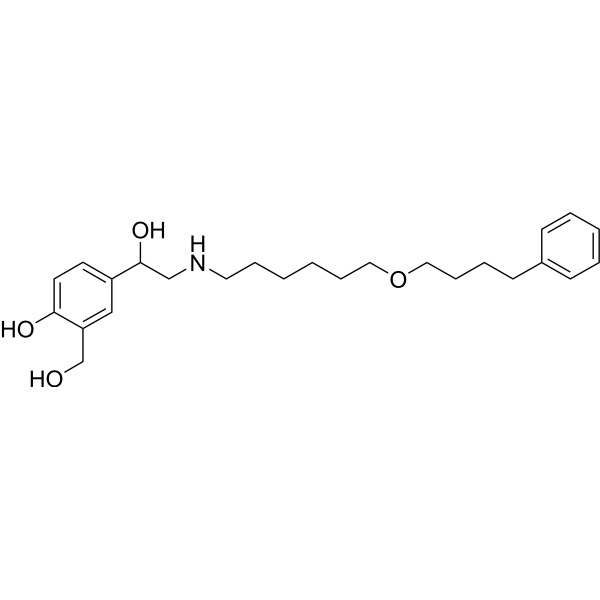
Salmeterol (GR33343X) is a potent and selective human β2 adrenoceptor agonist. Salmeterol shows potent stimulation of cAMP accumulation in CHOcells expressing human β2, β1 and β3 adrenoceptors with pEC50s of 9.6, 6.1, and 5.9, respectively .
CMKLR1 antagonist 1 (compound S-26d) is a potent and orally active chemokine-like receptor 1 (CMKLR1) antagonist, with a pIC50 value of 7.44 in hCMKLR1-transfected CHOcells. CMKLR1 antagonist 1 can be used for psoriasis and metabolic diseases research .
Anti-CD326/EPCAM Antibody (3622W94) is a humanized antibody expressed in CHOcells, targeting EpCAM/TROP1/CD326. Anti-CD326/EPCAM Antibody (3622W94) can be used for epithelial cancers research, such as pancreatic, prostate and breast cancer.
Palosuran (Standard) is the analytical standard of Palosuran. This product is intended for research and analytical applications. Palosuran (ACT-058362) is a potent, selective, and orally active antagonist of urotensin II receptor, with an IC50 of 3.6 nM for CHOcell membranes expressing human recombinant receptors. Palosuran can improves pancreatic and renal function in diabetic rats .
Anti-CDH6/K-Cadherin Antibody (HKT288 antibody) is a human antibody expressed in CHOcells, targeting CDH6. Anti-CDH6/K-Cadherin Antibody (HKT288 antibody) can be referenced as Human IgG1 kappa, Isotype Control (HY-P99001).
Muscarinic M4 modulator-1 is a Muscarinic M4 receptor positive allosteric modulator. Muscarinic M4 modulator-1 activates the muscarinic M4 receptor with allosteric potency EC50 s of 14 and 3 Nm in CHO-K1 cells and HEK293 cells. Muscarinic M4 modulator-1 has an antipsychotic-like activity, promising for psychiatric and/or neurological disorders research .
Amivantamab (FUT8-KO) is an anti-EGFR-MET monoclonal antibody expressed by CHOcells with the fucosyltransferase 8 gene (FUT8) knocked out. Fucose deficiency enhances the ADCC effect of the antibody. Amivantamab (FUT8-KO) inhibits ligand binding, promotes endocytosis and degradation of receptor-antibody complexes, and induces Fc-dependent cytokinesis in macrophages and antibody-dependent cytotoxicity in natural killer cells .
V1a/V2 antagonist 1 (Compound 18j) is an orally active dual V1a and V2 receptor antagonist with high binding affinity for both receptors (Ki: 0.13 nM for hV1a, 0.53 nM for hV2 and 0.5 nM for mV1a; IC50: 2.2 nM for hV1a). V1a/V2 antagonist 1 inhibits Oxytocin (HY-17571)-induced scratching behavior in mice .
Pro8-Oxytocin is a a modified oxytocin (OXT) ligand. Pro8-Oxytocin produces more potent and efficacious responses at primate OXTR and stronger behavioral effects than the consensus mammalian OXT ligand (Leu8-Oxytocin). Pro8-Oxytocin produce a less efficacious response than Vasopressin (HY-B1811) (AVP) at human AVPR1a and higher efficacious response than AVP at marmoset AVPR1a .
5-HT7R antagonist 3 (Compound 6.4) is a selective 5-HT7R antagonist (Ki: 8 nM), with Ki of 511 nM (D2), 8930 nM (5-HT1A) and 5786 nM (5-HT2A), respectively. 5-HT7R antagonist 3 possesses antidepressant and anxiolytic effects in mice .
TRPM8 antagonist 4 prodrug (Compound 8b) is an orally active CB2R agonist (EC50: 51.2 nM) and a weak TRPM8 antagonist. TRPM8 antagonist 4 prodrug is a prodrug of TRPM8 antagonist 4 (HY-174825). TRPM8 antagonist 4 prodrug exhibits anti-inflammatory and analgesic activities and can be used in the research of inflammation-related pain disorders .
Lanicemine dihydrochloride (Standard) is the analytical standard of Lanicemine (dihydrochloride) (HY-108235A). This product is intended for research and analytical applications. Lanicemine (AZD6765) dihydrochloride is a low-trapping NMDA channel blocker (Ki of 0.56-2.1 μM for NMDA receptor; IC50s of 4-7 μM and 6.4 μM in CHO and Xenopus oocyte cells, respectively). Antidepressant effects .
Belantamab (FUT8-KO) is an anti-BCMA (TNFRSF17) monoclonal antibody expressed by CHOcells with the fucosyltransferase 8 gene (FUT8) knocked out. Fucose deficiency enhances the ADCC effect of the antibody. Belantamab (FUT8-KO) can be used to synthesize antibody-active molecule conjugate (ADC), Belantamab mafodotin .
The Anti-oxLDL Antibody is a humanized antibody expressed in CHOcells that targets oxLDL. The Anti-oxLDL Antibody has a huIgG1 heavy chain and a huκ light chain, with a predicted molecular weight (MW) of 150 kDa. The isotype control for the Anti-oxLDL Antibody can be referenced as Human IgG1 kappa, Isotype Control (HY-P99001).
Indomethacin-d4 Methyl Ester is the deuterium labeled Indomethacin. Indomethacin (Indometacin) is a potent, blood-brain permeable and nonselective inhibitor of COX1 and COX2, with IC50s of 18 nM and 26 nM for human COX-1 and COX-2, respectively, in CHOcells . Indomethacin disrupts autophagic flux by disturbing the normal functioning of lysosomes .
PTAC oxalate is a selective muscarinic receptor ligand. PTAC oxalate is an partial agonist of M2 and M4 but antagonist of M1, M3, and M5 (Ki values of 0.2-2.8 nM for hM1-5 in CHOcells). PTAC oxalate alleviates the mechanical allodynia on the neuropathic pain and has antidepression effects .
Osavampator (TAK-653) is a AMPA receptor positive allosteric modulator. Osavampator selectively binds to AMPA-R in a glutamate-dependent manner and induces Ca2+ influx in hGluA1i CHOcells (EC50 = 3.3 μM). Osavampator improves learning and memory in many models. Osavampator is can be used for the research of depressive disorders .
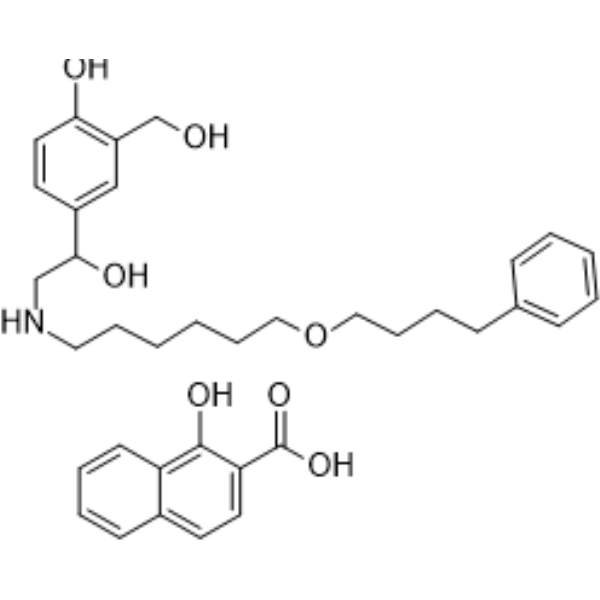
Salmeterol (GR 33343X) xinafoate is a potent and selective human β2 adrenoceptor agonist. Salmeterol shows potent stimulation of cAMP accumulation in CHOcells expressing human β2, β1 and β3 adrenoceptors with pEC50s of 9.6, 6.1, and 5.9, respectively .
Anti-HGFA Antibody is a humanized antibody expressed in CHOcells, targeting HGFA. The Anti-HGFA Antibody contains huIgG1 heavy chain and huκ light chain, with a predicted molecular weight (MW) of 150 kDa. The isotype control for Anti-HGFA Antibody can refer to Human IgG1 kappa, Isotype Control (HY-P99001).
Senlizumab is a humanized antibody expressed in CHOcells that targets TNFSF2/TNFa. Senlizumab is composed of huIgG4SP heavy chains and huκ light chains, with a predicted molecular weight (MW) of 146.9 kDa. The isotype control for Senlizumab can refer to Human IgG4 kappa, Isotype Control (HY-P99003).
SGLT2-IN-1 (Compound 5) is an inhibitor for sodium-dependent glucose cotransporter (SGLT2), with IC50 of 33 nM in CHOcells transfected with human SGLT2. SGLT2-IN-1 is selective for SGLT2 over SGLT1. SGLT2-IN-1 is an active metabolite of dapagliflozinactive metabolite of dapagliflozin .
Antimycobacterial agent-2 (compound 58) is a potent antimycobacterial agent. Antimycobacterial agent-2 shows anti-mycobacterial activities with an MIC99 of 0.8 µM for Mycobacterium tuberculosis (M.tb) H37Rv. Antimycobacterial agent-2 shows cytotoxic activities with an IC50 of48.1 µM for CHOcells .
Diclofenac- 13C6 (Sodium) is the 13C6 labeled Diclofenac (Sodium). Diclofenac Sodium (GP 45840) is a potent and nonselective anti-inflammatory agent, acts as a COX inhibitor, with IC50s of 4 and 1.3 nM for human COX-1 and COX-2 in CHOcells, and 5.1 and 0.84 μM for ovine COX-1 and COX-2, respectively. Diclofenac Sodium induces apoptosis of neural stem cells (NSCs) via the activation of the caspase cascade.
Diclofenac- 13C6 is the 13C6 labeled Diclofenac. Diclofenac is a potent and nonselective anti-inflammatory agent, acts as a COX inhibitor, with IC50s of 4 and 1.3 nM for human COX-1 and COX-2 in CHOcells, and 5.1 and 0.84 μM for ovine COX-1 and COX-2, respectively. Diclofenac induces apoptosis of neural stem cells (NSCs) via the activation of the caspase cascade.
CRF1 receptor antagonist-2 is an orally active, blood-brain barrier permeable CRF1 receptor antagonist, with an IC50 of 4 nM in CHO-K1 cell membranes and an IC50 of 7 nM in rat brain cell membranes. CRF1 receptor antagonist-2 exerts anxiolytic effects in swim stress-loaded rats. CRF1 receptor antagonist-2 can be used in studies related to stress-induced anxiety .
Diclofenac-d4 is the deuterium labeled Diclofenac. Diclofenac is a potent and nonselective anti-inflammatory agent, acts as a COX inhibitor, with IC50s of 4 and 1.3 nM for human COX-1 and COX-2 in CHOcells , and 5.1 and 0.84 μM for ovine COX-1 and COX-2, respectively . Diclofenac induces apoptosis of neural stem cells (NSCs) via the activation of the caspase cascade .
VGX-100 is a humanized antibody expressed in CHOcells, targeting VEGFC. VGX-100 is composed of huIgG1 heavy chains and huλ light chains, with a predicted molecular weight (MW) of 143.6 kDa. The isotype control for VGX-100 can refer to Human IgG1 kappa, Isotype Control (HY-P99001).
MB-311 is a humanized antibody expressed in CHOcells, targeting Lewis Y. MB-311 has a huIgG1 heavy chain and a huλ light chain, with a predicted molecular weight (MW) of 150 kDa. The isotype control for MB-311 can refer to Human IgG1 kappa, Isotype Control (HY-P99001).
Anti-TPBG Antibody is a humanized antibody expressed in CHOcells, targeting TPBG. The Anti-TPBG Antibody is composed of a huIgG1 heavy chain and a huκ light chain, with a predicted molecular weight (MW) of 145.8 kDa. The isotype control for Anti-TPBG Antibody can refer to Human IgG1 kappa, Isotype Control (HY-P99001).
AC-42 hydrochloride is the hydrochloride salt form of AC-42 (HY-118806). AC-42 hydrochloride is an allosteric agonist for muscarinic M1 receptor with EC50s of 805 nM and 220 nM for human wild-type and Y381A mutated M1 receptors, respectively. AC-42 hydrochloride stimulates the inositol phosphate (IP)-accumulation and calcium mobilization in CHOcells .
Salmeterol-d3 is a deuterium labeled Salmeterol. Salmeterol is a potent and selective human β2 adrenoceptor agonist. Salmeterol shows potent stimulation of cAMP accumulation in CHOcells expressing human β2, β1 and β3 adrenoceptors with pEC50s of 9.6, 6.1, and 5.9, respectively .
Davoceticept (ALPN-202; CD80 vIgD-Fc) is a variant CD80 vIgD-Fc fusion protein targeting CTLA-4 and PD-L1. Davoceticept consists of the (1-107) fragment of CD80 linked to IGHG1 Fc via a peptidyl linker. The expression system of Davoceticept is usually CHO (Chinese Hamster Ovary) cells .
Anti-LAP Antibody is a humanized antibody expressed in CHOcells, targeting LAP. The Anti-LAP Antibody features a huIgG2 heavy chain and a huκ light chain, with a predicted molecular weight (MW) of 150 kDa. For isotype control of the Anti-LAP Antibody, you can refer to Human IgG2 kappa, Isotype Control (HY-P99002).
Anti-vWF Antibody is a humanized antibody expressed in CHOcells that targets vWF. The Anti-vWF Antibody is equipped with huIgG1 heavy chain and huκ light chain, with a predicted molecular weight (MW) of 145.62 kDa. The isotype control for Anti-vWF Antibody can be referenced as Human IgG1 kappa, Isotype Control (HY-P99001).
Indomethacin-d4 (Indometacin-d4) is a deuterium labeled Indomethacin. Indomethacin is a potent, blood-brain permeable and nonselective inhibitor of COX1 and COX2, with IC50s of 18 nM and 26 nM for human COX-1 and COX-2, respectively, in CHOcells . Indomethacin disrupts autophagic flux by disturbing the normal functioning of lysosomes .
Anti-MERS-2E6 mAb (MERS-2E6; MERS Antibody-2E6), a human neutralizing antibody IgG1 (CHO expressed) that can compete for the binding of the virus Spike protein to the receptor (CD26), thereby inhibiting virus invasion into host cells.
mP6 (Myr-FEEERA-OH) is a myristoylated peptide. mP6 inhibits the interaction of Gα13 with integrin β3 without disrupting talin-dependent integrin function. mP6 can block the GTP usage of Rac1, Rap1, and Rab7, effectively inhibiting the infection of CHO-A24 cells .
Topoisomerase IIα-IN-9 (NSC85582) is a bisphenol compound that has a moderate inhibitory effect on DNA topoisomerase Topoisomerase II (IC50: 571 μM). Topoisomerase IIα-IN-9 also exhibits a certain cell growth inhibitory effect, with IC50s of 117 μM and 218 μM for K562 and CHO, respectively .
Anti-TSLP Antibody is a human-derived antibody expressed in CHOcells, targeting TSLP. The Anti-TSLP Antibody contains the huIgG1 heavy chain and huκ light chain, with a predicted molecular weight (MW) of 150 kDa. The isotype control for Anti-TSLP Antibody can refer to Human IgG1 kappa, Isotype Control (HY-P99001).
CGS 15943 (Standard) is the analytical standard of CGS 15943. This product is intended for research and analytical applications. CGS 15943 is an orally bioavailable non-xanthine Adenosine Receptor antagonist. Its Ki for human A1, A2A, A2B, and A3 Adenosine Receptors are 3.5, 4.2, 16, and 50 nM in transfected CHOcells, respectively. .
KRN-330 is a humanized antibody expressed in CHOcells, targeting GPA33. KRN-330 has a huIgG1 heavy chain and a huκ light chain, with a predicted molecular weight (MW) of 150 kDa. The isotype control for KRN-330 can be referenced as Human IgG1 kappa, Isotype Control (HY-P99001).
Anti-CLEC7A Antibody is a humanized antibody expressed in CHOcells, targeting CLEC7A. The predicted molecular weight (MW) of Anti-CLEC7A Antibody is 150 kDa. The isotype control for Anti-CLEC7A Antibody can refer to Human IgG4 kappa, Isotype Control (HY-P99003).
The Anti-MICB Antibody is a humanized antibody expressed in CHOcells, targeting MICB. The Anti-MICB Antibody contains a huIgG2 heavy chain and a huκ light chain, with a predicted molecular weight (MW) of 143.66 kDa. The isotype control for the Anti-MICB Antibody can be referenced as Human IgG2 kappa, Isotype Control (HY-P99002).
MRS-1191 is a potent and selective A3 adenosine receptor antagonist with a KB value of 92 nM, a Ki value of 31.4 nM for human A3 receptor and an IC50 of 120 nM for CHOcells . MRS-1191 is a click chemistry reagent, it contains an Alkyne group and can undergo copper-catalyzed azide-alkyne cycloaddition (CuAAc) with molecules containing Azide groups.
Petosemtamab (FUT8-KO) is an anti-EGFR and anti-LGR5 monoclonal antibody expressed in CHOcells with the fucosyltransferase 8 gene (FUT8) knocked out. Fucosyl loss enhances the ADCC effect of the antibody. Petosemtamab (FUT8-KO) leads to EGFR signaling blockade and receptor degradation in LGR5+ cancer cells. Petosemtamab (FUT8-KO) can be used for research on solid tumors such as head and neck squamous cell carcinoma (HNSCC) and metastatic colorectal cancer (CRC) .
Cofetuzumab (PF-06523435) is a humanized IgG1-κ monoclonal antibody targeting PTK7. The expression system of Cofetuzumab is typically CHO (Chinese hamster ovary) cells. Cofetuzumab downregulates PTK7 expression, modulates its downstream signaling pathways, and inhibits tumor sphere formation of ovarian cancer cells. Cofetuzumab can be used to synthesize the ADC molecule Cofetuzumab pelidotin (HY-P99829). Cofetuzumab is applicable to the research of tumors such as ovarian cancer .
Diclofenac- 13C6 (sodium heminonahydrate) is the 13C-labeled Diclofenac Sodium. Diclofenac Sodium (GP 45840) is a potent and nonselective anti-inflammatory agent, acts as a COX inhibitor, with IC50s of 4 and 1.3 nM for human COX-1 and COX-2 in CHOcells , and 5.1 and 0.84 μM for ovine COX-1 and COX-2, respectively . Diclofenac Sodium induces apoptosis of neural stem cells (NSCs) via the activation of the caspase cascade .
Diclofenac (Sodium) (Standard) is the analytical standard of Diclofenac (Sodium). This product is intended for research and analytical applications. Diclofenac Sodium (GP 45840) is a potent and nonselective anti-inflammatory agent, acts as a COX inhibitor, with IC50s of 4 and 1.3 nM for human COX-1 and COX-2 in CHOcells , and 5.1 and 0.84 μM for ovine COX-1 and COX-2, respectively . Diclofenac Sodium induces apoptosis of neural stem cells (NSCs) via the activation of the caspase cascade .
Diclofenac-d4 (sodium) is the deuterium labeled Diclofenac sodium. Diclofenac Sodium (GP 45840) is a potent and nonselective anti-inflammatory agent, acts as a COX inhibitor, with IC50s of 4 and 1.3 nM for human COX-1 and COX-2 in CHOcells , and 5.1 and 0.84 μM for ovine COX-1 and COX-2, respectively . Diclofenac Sodium induces apoptosis of neural stem cells (NSCs) via the activation of the caspase cascade .
VLST-002 is a humanized antibody expressed in CHOcells, targeting CCL5/RANTES. VLST-002 has a huIgG1 heavy chain and a huκ light chain, with a predicted molecular weight (MW) of 150 kDa. The isotype control for VLST-002 can refer to Human IgG1 kappa, Isotype Control (HY-P99001).
mP6 (Myr-FEEERA-OH) TFA is a myristoylated peptide. mP6 TFA inhibits the interaction of Gα13 with integrin β3 without disrupting talin-dependent integrin function. mP6 TFA can block the GTP usage of Rac1, Rap1, and Rab7, effectively inhibiting the infection of CHO-A24 cells .
L-759656 is a selective cannabinoid CB2 receptor agonist, with the Ki of 11.8 nM for the human CB2 receptor. L-759656 potently inhibits Forskolin (HY-15371)-stimulated cyclic AMP production in Chinese Hamster Ovary (CHO) cells, with an EC50 of 3.1 nM. L-759656 can be used for the study of immune-related diseases and inflammatory diseases .
(±)-J-113397 is a potent and selective non-peptidyl ORL1 receptor antagonist with a Ki of 1.8 nM for cloned human ORL1. J-113397 inhibited nociceptin/orphanin FQ-stimulated GTPγS binding to CHOcells expressing ORL1 with an IC50 value of 5.3 nM. J-113397 can be used for researching the physiological roles of nociceptin/orphanin FQ .
5HT2A antagonist 2 is an orally active, selective antagonist for 5HT2A with IC50 of 14 nM. 5-HT2A antagonist 2 exhibits good chemical, hepatocyte, and plasma stability, without significant cytotoxicity in cell lines VERO, HFL-1, L929, NIH3T3, CHO-K1 .
Adezkibart is a human monoclonal antibody immunosuppressant targeting the human FMS-like tyrosine kinase 3 ligand (FLT3LG). Adezkibart is found in the Chinese hamster ovary cell line CHO-K1, which binds to FLT3LG to block the relevant signaling pathway, inhibits the immune response, and exerts immunosuppressive activity. Adezkibart is promising for research of immune-related diseases .
BT-063 is a humanized antibody expressed in CHOcells, targeting IL-10. BT-063 contains huIgG1 heavy chain and huκ light chain, with a predicted molecular weight (MW) of 145.74 kDa. The isotype control for BT-063 can refer to Human IgG1 kappa, Isotype Control (HY-P99001).
IMA-026 is a humanized antibody expressed in CHOcells that targets IL-13. IMA-026 has a huIgG1 heavy chain and a huκ light chain, with a predicted molecular weight (MW) of 146.88 kDa. The isotype control for IMA-026 can be referenced as Human IgG1 kappa, Isotype Control (HY-P99001).
ZL-1218 (FUT8-KO) is an anti-CCR8 monoclonal antibody expressed by CHOcells with the fucosyltransferase 8 gene (FUT8) knocked out. Fucose deficiency enhances the antibody-dependent cellular cytotoxicity (ADCC) effect of the antibody. ZL-1218 (FUT8-KO) can be used for the research of solid tumour .
S-531011 (FUT8-KO) is an anti-CCR8 monoclonal antibody expressed by CHOcells with the fucosyltransferase 8 gene (FUT8) knocked out. Fucose deficiency enhances the antibody-dependent cellular cytotoxicity (ADCC) effect of the antibody. S-531011 (FUT8-KO) can be used for the research of cancer immunity .
NI-0701 is a humanized antibody expressed in CHOcells that targets CCL5/RANTES. NI-0701 has a huIgG2 heavy chain and a huλ light chain, with a predicted molecular weight (MW) of 145 kDa. The isotype control for NI-0701 can be referenced as Human IgG2 lambda, Isotype Control (HY-P991206).
Osemitamab (FUT8-KO) is an anti-claudin-18.2 monoclonal antibody expressed by CHOcells with the fucosyltransferase 8 gene (FUT8) knocked out. Fucose deficiency enhances the ADCC effect of the antibody. Osemitamab in combination with Capecitabine (HY-B0016) and Oxaliplatin (HY-17371), can be used for G/GEJ cancer study .
LE 300 is a potent and selective dopamine D1-like receptor antagonist with Kis of 1.9 nM and 7.5 nM in CHOcell membranes expressing human dopamine D1 and D5 receptors, respectively. LE 300 is an antagonist of the 5-HT2A receptor with a pA2 of 8.32 in a rat tail artery assay .
SKF89976A (hydrochloride) (Standard) is the analytical standard of SKF89976A (hydrochloride) (HY-100228A). This product is intended for research and analytical applications. SKF89976A hydrochloride is a selective GABA transporter (GAT-1) inhibitor with IC50s of 0.28 μM, 137.34 μM and 202.8 μM for GAT-1, GAT-2 and GAT-3 in CHOcells, respectively.
R707 is a human antibody expressed in CHOcells that targets CCR7/CD197. R707 contains huIgG1 heavy chain and huκ light chain, with a predicted molecular weight (MW) of 145.36 kDa. The isotype control for R707 can be referenced as Human IgG1 kappa, Isotype Control (HY-P99001).
AAK1-IN-10 (Compound 1-2) is an AAK1 inhibitor. AAK1-IN-10 has significant AAK1 enzyme inhibitory activity (IC50: 9.62 nM). AAK1-IN-10 mainly exerts its effects by inhibiting the activity of connexin-associated kinase 1 (AAK1). AAK1-IN-10 has low cardiotoxicity (IC50 = 13.7 μM). AAK1-IN-10 can be used in the study of diabetic neuropathy and postherpetic pain .
LPLRF-NH2 is a member of RFamide peptide with anorexigenic effect. LPLRF-NH2 increases arterial blood pressure and modulates the electrical activity of brainstem neurons .
MOR antagonist 2 hydrochloride is a blood-brain barrier-permeable μ-opioid receptor (MOR) antagonist, with an IC50 of 28.37 nM, an EC50 of 4.25 nM, and a Ki of 0.18 nM against MOR. MOR antagonist 2 hydrochloride stabilizes the inactive conformation of MOR to reduce receptor activation levels. MOR antagonist 2 hydrochloride antagonizes analgesic effects in the mouse warm-water tail-flick test. MOR antagonist 2 hydrochloride induces fewer opioid withdrawal symptoms (wet dog shakes, paw tremors) in mice with opioid withdrawal symptoms. MOR antagonist 2 hydrochloride can be used for the research of opioid use disorder .
PA-9 is a pituitary adenylate cyclase-activating polypeptide (PACAP) type I (PAC1) receptor antagonist. PA-9 dose dependently inhibits PACAP-induced cAMP elevation with an IC50 of 5.6 nM. PA-9 can be used for the research of neuropathic and/or inflammatory pain .
6ECA is a selective TGR5 receptor activator with an EC50 of 3.44 μM. 6ECA shows no significant activity at FXR. 6ECA can be used for the study of diabesity .
HuGAL-F2 is a human-derived antibody expressed in CHOcells, targeting FGF2. HuGAL-F2 contains a huIgG2 heavy chain and a huκ light chain, with a predicted molecular weight (MW) of 150 kDa. The isotype control for HuGAL-F2 can refer to Human IgG1 kappa, Isotype Control (HY-P99001).
(Rac)-Lanicemine (Standard) is the analytical standard of (Rac)-Lanicemine. This product is intended for research and analytical applications. (Rac)-Lanicemine ((Rac)-AZD6765) is the racemate of Lanicemine. Lanicemine (AZD6765) is a low-trapping NMDA channel blocker (Ki of 0.56-2.1 μM for NMDA receptor; IC50s of 4-7 μM and 6.4 μM in CHO and Xenopus oocyte cells, respectively). Antidepressant effects .
Bemarituzumab (FUT8-KO) is an anti-FGFR2b monoclonal antibody expressed by CHOcells with the fucosyltransferase 8 gene (FUT8) knocked out. Fucose deficiency enhances the ADCC effect of the antibody. Bemarituzumab (FUT8-KO) lacks a core fucose in the polysaccharide portion of the Fc domain of the antibody, and results in a high affinity to human FcγRIIIa .
[D-Trp8]-γ-MSH is a potent and selective agonist of melanocortin 3 (MC3) receptor, with IC50s of 6.7 nM, 600 nM and 340 nM for hMC3, hMC4 and hMC5, respectively in CHOcells. [D-Trp8]-γ-MSH could provide protection against multiple inflammatory disorders such as rheumatoid arthritis and colitis .
VB1-050 is a human antibody expressed in CHOcells, targeting SLC2A8. VB1-050 is composed of huIgG1 heavy chains and huκ light chains, with a predicted molecular weight (MW) of 150 kDa. The isotype control for VB1-050 can refer to Human IgG1 kappa, Isotype Control (HY-P99001).
Salmeterol-d5 is a deuterated labeled Salmeterol . Salmeterol (GR33343X) is a potent and selective human β2 adrenoceptor agonist. Salmeterol shows potent stimulation of cAMP accumulation in CHOcells expressing human β2, β1 and β3 adrenoceptors with pEC50s of 9.6, 6.1, and 5.9, respectively .
FIPI is a phospholipase D (PLD) inhibitor with an IC50 for PLD1 and PLD2 of about 25 nM. FIPI regulates cytoskeletal recombination, cell diffusion and chemotaxis. FIPI can be used in cancer research. In addition, FIPI can enhance the secretion and aggregation of platelet dense particles, inhibit thrombosis, reduce ischemic stroke infarct volume and improve nerve function .
DEDN6526A (RG-7636) is a humanized antibody expressed in CHOcells, targeting ETBR. DEDN6526A (RG-7636) has a huIgG1 type heavy chain and a huκ type light chain, with a predicted molecular weight (MW) of 145 kDa. The isotype control for DEDN6526A (RG-7636) can be referenced as Human IgG1 kappa, Isotype Control (HY-P99001).
Enzelkitug (RO-7502175; RG-6411) (FUT8-KO) is an anti-CCR8 monoclonal antibody expressed by CHOcells with the fucosyltransferase 8 gene (FUT8) knocked out. Fucose deficiency enhances the antibody-dependent cellular cytotoxicity (ADCC) effect of the antibody. Enzelkitug (FUT8-KO) can be used for the research of various solid tumors and hematological malignancies .
Urotensin I (Catostomus urotensin I), a CRF-like neuropeptide, acts as an agonist of CRF receptor with pEC50s of 11.46, 9.36 and 9.85 for human CRF1, human CRF2 and rat CRF2α receptors in CHOcells, and Kis of 0.4, 1.8, and 5.7 nM for hCRF1, rCRF2α and mCRF2β receptors, respectively .
Anti-TMEFF2 Antibody is a humanized antibody expressed in CHOcells, targeting TMEFF2. The Anti-TMEFF2 Antibody features a huIgG1 heavy chain and a huκ light chain, with a predicted molecular weight (MW) of 150 kDa. The isotype control for the Anti-TMEFF2 Antibody can be referenced as Human IgG1 kappa, Isotype Control (HY-P99001).
The Anti-CD19 Antibody is a humanized antibody expressed in CHOcells, targeting CD19. The Anti-CD19 Antibody contains a huIgG1 heavy chain and a huκ light chain, with a predicted molecular weight (MW) of 145 kDa. The isotype control for Anti-CD19 Antibody can be referenced as Human IgG1 kappa, Isotype Control (HY-P99001).
The Anti-STOP1 Antibody is a human antibody expressed in CHOcells that targets STOP1. The Anti-STOP1 Antibody contains a huIgG1 heavy chain and a huκ light chain, with a predicted molecular weight (MW) of 150 kDa. The isotype control for the Anti-STOP1 Antibody can refer to Human IgG1 kappa, Isotype Control (HY-P99001).
[D-Trp8]-γ-MSH TFA is a potent and selective agonist of melanocortin 3 (MC3) receptor, with IC50s of 6.7 nM, 600 nM and 340 nM for hMC3, hMC4 and hMC5, respectively in CHOcells. [D-Trp8]-γ-MSH TFA could provide protection against multiple inflammatory disorders such as rheumatoid arthritis and colitis .
Salmeterol-d3 (xinafoate) is the deuterium labeled Salmeterol xinafoate. Salmeterol (GR 33343X) xinafoate is a potent and selective human β2 adrenoceptor agonist. Salmeterol shows potent stimulation of cAMP accumulation in CHOcells expressing human β2, β1 and β3 adrenoceptors with pEC50s of 9.6, 6.1, and 5.9, respectively .
Anti-GAD65 Antibody is a humanized antibody expressed in CHOcells that targets GAD65. The Anti-GAD65 Antibody has a huIgG1 heavy chain and a huλ light chain, with a predicted molecular weight (MW) of 146.48 kDa. The isotype control for Anti-GAD65 Antibody can refer to Human IgG1 kappa, Isotype Control (HY-P99001).
Glucagon receptor antagonist-7 (Compound 1) is an antagonist for hGCGR, that inhibits the binding of 125I-labeled glucagon to the human glucagon receptor (hGCGR) with IC50 of 181 nM. Glucagon receptor antagonist-7 activates glucagon-stimulated adenylyl cyclase with a KDB of 81 nM in CHOcell. Glucagon receptor antagonist-7 inhibits glucagon-mediated glycogenolysis in human hepatocytes, and lowers blood glucose levels .
Anti-Orai1 Antibody is a humanized antibody expressed in CHOcells that targets Orai1. The Anti-Orai1 Antibody has a huIgG2 heavy chain and a huλ light chain, with an predicted molecular weight (MW) of 150 kDa. The isotype control for Anti-Orai1 Antibody can refer to Human IgG2 kappa, Isotype Control (HY-P99002).
The Anti-IFNAR1 Antibody is a humanized antibody expressed in CHOcells, targeting IFNAR1. The Anti-IFNAR1 Antibody has a huIgG1 heavy chain and a huκ light chain, with a predicted molecular weight (MW) of 144.92 kDa. The isotype control for the Anti-IFNAR1 Antibody can refer to Human IgG1 kappa, Isotype Control (HY-P99001).
AMG-628 is an orally active inhibitor for TRPV1, that inhibits Capsaicin (HY-10448) or acid (pH 5)-induced Ca 2+ influx into TRPV1- expressing CHOcell with IC50 of 4.9 and 3.1 nM. AMG-628 exhibits analgesic activity in Capsaicin (HY-10448)-induced rat model, and exhibits a half-life of 2.4 h in rats .
Salmeterol (Standard) is the analytical standard of Salmeterol. This product is intended for research and analytical applications. Salmeterol (GR33343X) is a potent and selective human β2 adrenoceptor agonist. Salmeterol shows potent stimulation of cAMP accumulation in CHOcells expressing human β2, β1 and β3 adrenoceptors with pEC50s of 9.6, 6.1, and 5.9, respectively .
(D-Trp32)-Neuropeptide Y (porcine) is a highly selective neuropeptide Y (NPY) Y5 receptor agonist. (D-Trp32)-Neuropeptide Y (porcine) has orexigenic activity and inhibits Forskolin (HY-15371)-stimulated cAMP formation .
Cirazoline (hydrochloride) (Standard) is the analytical standard of Cirazoline (hydrochloride). This product is intended for research and analytical applications. Cirazoline hydrochloride (LD 3098 hydrochloride) is a potent competitive full?α1A-adrenergic receptor (α1A-AR) agonist (Ki=120 nM) and only a partial agonist at α1B-AR (Ki= 960 nM) and α1D-AR (Ki=660 nM) .
SB-334867 (Standard) is the analytical standard of SB-334867. This product is intended for research and analytical applications. SB-334867 (SB 334867A) is an excellent,selective and blood-brain barrier permeable orexin-1 (OX1) receptor antagonist, shows selectivity over OX2 (pKb=7.4), 100-fold over 5-HT2B, 5-HT2C with pKi values of 5.4 and 5.3, respectively . SB-334867 reduces ethanol consumption and inhibits the acquisition of morphine-induced sensitization to locomotor activity in vivo .
Cirazoline hydrochloride (LD 3098 hydrochloride) is a potent competitive full α1A-adrenergic receptor (α1A-AR) agonist (Ki=120 nM) and only a partial agonist at α1B-AR (Ki= 960 nM) and α1D-AR (Ki=660 nM) .
NVP-QBE170 is a selective Epithelial sodium channel (ENaC) inhibitor with an IC50 of 57.5 nM. NVP-QBE170 potently inhibits ENaC function in HBECs and shows a longer duration of action. NVP-QBE170 significantly attenuates ENaC activity in the airways of guinea pig models. NVP-QBE170 can be used for hyperkalaemia research .
SB-334867 (SB 334867A) is an excellent,selective and blood-brain barrier permeable orexin-1 (OX1) receptor antagonist, shows selectivity over OX2 (pKb=7.4), 100-fold over 5-HT2B, 5-HT2C with pKi values of 5.4 and 5.3, respectively . SB-334867 reduces ethanol consumption and inhibits the acquisition of morphine-induced sensitization to locomotor activity in vivo .
Fenarimol (EL 222) is a potent and orally active fungicide. Fenarimol also is a androgen receptor inhibitor with an IC50 value of 19 µM. Fenarimol decreases the mRNA expression of PBP C3, ODC, IGF-1 .
SB-334867 free base (SB334867A free base) is an excellent, selective and blood–brain barrier permeable orexin-1 (OX1) receptor antagonist, shows selectivity over OX2 (pKb=7.4), 100-fold over 5-HT2B, 5-HT2C with pKi values of 5.4 and 5.3, respectively . SB-334867 reduces ethanol consumption and inhibits the acquisition of morphine-induced sensitization to locomotor activity in vivo .
GPR61 Inverse agonist 2 is a selective GPR61 inverse agonist with human IC50 of 6.2 nM and mouse IC50 of 20 nM, human Ki of 0.21 nM, and mouse Ki of 0.72 nM. GPR61 Inverse agonist 2 binds to an induced intracellular allosteric pocket of GPR61, disrupts receptor-Gαs interactions, and abolishes GPR61 constitutive activity. GPR61 Inverse agonist 2 does not alter food intake or body weight in healthy mice. GPR61 Inverse agonist 2 can be used for the research of cachexia/sarcopenia .
VIB-9600 is a humanized antibody expressed in CHOcells, targeting FcgR2a/CD32a. VIB-9600 has a huIgG1 type heavy chain and huκ type light chain, with a predicted molecular weight (MW) of 150 kDa. The isotype control for VIB-9600 can be referenced as Human IgG1 kappa, Isotype Control (HY-P99001).
Anti-TGFb1 Antibody is a humanized antibody expressed in CHOcells that targets TGFb1. The Anti-TGFb1 Antibody has a huIgG1 type heavy chain and a huκ type light chain, with a predicted molecular weight (MW) of 145 kDa. The isotype control for Anti-TGFb1 Antibody can refer to Human IgG1 kappa, Isotype Control (HY-P99001).
The Anti-CLEC14A Antibody is a humanized antibody expressed in CHOcells, targeting CLEC14A. The Anti-CLEC14A Antibody contains an IgG1 heavy chain and a huκ light chain, with a predicted molecular weight (MW) of 150 kDa. The isotype control for the Anti-CLEC14A Antibody can refer to Human IgG1 kappa, Isotype Control (HY-P99001).
Urotensin I (Catostomus urotensin I) TFA, a CRF-like neuropeptide, acts as an agonist of CRF receptor with pEC50s of 11.46, 9.36 and 9.85 for human CRF1, human CRF2 and rat CRF2α receptors in CHOcells, and Kis of 0.4, 1.8, and 5.7 nM for hCRF1, rCRF2α and mCRF2β receptors, respectively .
Anti-PACAP38 Antibody is a human antibody expressed in CHOcells, targeting PACAP38. The Anti-PACAP38 Antibody has a huIgG4SP type heavy chain and a huκ type light chain, with a predicted molecular weight (MW) of 150 kDa. The isotype control for Anti-PACAP38 Antibody can refer to Human IgG4 kappa, Isotype Control (HY-P99003).
Salmeterol- 13C6 (xinafoate) is the 13C6 labeled Salmeterol (xinafoate). Salmeterol (GR 33343X) xinafoate is a potent and selective human β2 adrenoceptor agonist. Salmeterol shows potent stimulation of cAMP accumulation in CHOcells expressing human β2, β1 and β3 adrenoceptors with pEC50s of 9.6, 6.1, and 5.9, respectively.
The Anti-Bcl-2 Antibody is a humanized antibody expressed in CHOcells, targeting Bcl-2. The Anti-Bcl-2 Antibody has a huIgG1 heavy chain and a huκ light chain, with a predicted molecular weight (MW) of 145.74 kDa. The isotype control for Anti-Bcl-2 Antibody can be referenced as Human IgG1 kappa, Isotype Control (HY-P99001).
Ianalumab (VAY-736) (FUT8-KO) is an anti-BAFF-R monoclonal antibody expressed in CHOcells with the fucosyltransferase 8 gene (FUT8) knocked out. Fucose depletion enhances its B cell clearance capacity. Ianalumab (FUT8-KO) competitively blocks the binding of BAFF to BAFF-R, inhibits the BAFF-mediated alternative NF-κB pro-survival signaling pathway, and abrogates the apoptotic (apoptosis) protective effect of BAFF on cancer cells. Ianalumab (FUT8-KO) can be used in research related to primary Sjögren's syndrome and chronic lymphocytic leukemia .
RG-7212 (RO5458640) is a human-derived antibody expressed in CHOcells, targeting TNFSF12/TWEAK. RG-7212 (RO5458640) has a huIgG1 type heavy chain and a huκ type light chain, with a predicted molecular weight (MW) of 146.02 kDa. The isotype control for RG-7212 (RO5458640) can be referenced as Human IgG1 kappa, Isotype Control (HY-P99001).
OS-2966 is a humanized antibody expressed in CHOcells, targeting Integrin b1/ITGB1/CD29. OS-2966 carries a huIgG1 type heavy chain and a huκ type light chain, with a predicted molecular weight (MW) of 145.5 kDa. The isotype control for OS-2966 can be referenced as Human IgG1 kappa, Isotype Control (HY-P99001).
LIV-1205 (CBA-1205) is a humanized antibody expressed in CHOcells that targets DLK1. LIV-1205 (CBA-1205) contains a huIgG1 type heavy chain and a huκ type light chain, with a predicted molecular weight (MW) of 150 kDa. The isotype control for LIV-1205 (CBA-1205) can be referenced as Human IgG1 kappa, Isotype Control (HY-P99001).
MANT-dADP (trisodium) (2'-Deoxy-3'-MANT-ADP (trisodium)) is a fluorescent nucleotide derivative, with an emission maximum of 453 nm upon excitation at 350 nm. MANT-dADP (trisodium) can decrease inositol phoshate formation in CHO-K1 cells that express human purinergic P2Y12 receptor. MANT-dADP (trisodium) can be studied in research on the interaction between cardiac troponin I and myofibrils .
Salmeterol (xinafoate) (Standard) is the analytical standard of Salmeterol (xinafoate). This product is intended for research and analytical applications. Salmeterol (GR 33343X) xinafoate is a potent and selective human β2 adrenoceptor agonist. Salmeterol shows potent stimulation of cAMP accumulation in CHOcells expressing human β2, β1 and β3 adrenoceptors with pEC50s of 9.6, 6.1, and 5.9, respectively .
Anti-Amyloid Beta Antibody (CNTO 2125) is a humanized antibody expressed in CHOcells, targeting Amyloid Beta/Aβ. Anti-Amyloid Beta Antibody (CNTO 2125) features a huIgG1 heavy chain and a huκ light chain, with a predicted molecular weight (MW) of 145 kDa. The isotype control for Anti-Amyloid Beta Antibody (CNTO 2125) can be referenced as Human IgG1 kappa, Isotype Control (HY-P99001).
Survodutide (BI 456906) is a potent, selective glucagon receptor/GLP-1 receptor (GCGR/GLP-1R) dual agonist with EC50s of 0.52 nM and 0.33 nM in CHO-K1 cells, respectively. Survodutide, a 29-amino-acid peptide, is a potent acylated peptide containing a C18 fatty acid. Survodutide has robust anti-obesity efficacy achieved by increasing energy expenditure and decreasing food intake .
Survodutide (BI 456906) sodium is a potent, selective glucagon receptor/GLP-1 receptor (GCGR/GLP-1R) dual agonist with EC50s of 0.52 nM and 0.33 nM in CHO-K1 cells, respectively. Survodutide sodium, a 29-amino-acid peptide, is a potent acylated peptide containing a C18 fatty acid. Survodutide sodium has robust anti-obesity efficacy achieved by increasing energy expenditure and decreasing food intake .
PDDHV is a calcium absorption inducer and may achieve 45Ca 2+ influx by stimulating vanillic acid receptor VR1. PDDHV induces 45Ca 2+ uptake (EC50: 70 nM) in rat dorsal root ganglion neurons (expressing native vanilloid receptors) and calcium mobilization (EC50: 125 nM) in VR1-transfected CHOcells. PDDHV also inhibits [3H]-resiniferatoxin (RTX) binding to the dorsal root ganglion membrane in rats .
Anti-CD4 Antibody (TRX1) is a humanized antibody expressed in CHOcells that targets CD4. Anti-CD4 Antibody (TRX1) has a huIgG1 heavy chain and a huκ light chain, with a predicted molecular weight (MW) of 145 kDa. The isotype control for Anti-CD4 Antibody (TRX1) can be referenced as Human IgG1 kappa, Isotype Control (HY-P99001).
The Anti-DSG3 Antibody is a humanized antibody expressed in CHOcells, targeting DSG3. The Anti-DSG3 Antibody has a huIgG1 type heavy chain and a huκ type light chain, and its predicted molecular weight (MW) is 146.54 kDa. The isotype control for the Anti-DSG3 Antibody can be referenced as Human IgG1 kappa, Isotype Control (HY-P99001).
MGS0039 is a type II group mGluR antagonist. MGS0039 has a high affinity for mGluR2 and mGluR3, with Ki values of 2.2 nM and 4.5 nM, respectively. MGS0039 can attenuate the inhibitory effect of glutamate-induced cyclic AMP formation triggered by Forskolin (HY-15371) in CHOcells expressing mGluR2/mGluR3. MGS0039 shows antidepressant-like activity in rats .
AMG-108 is a humanized antibody expressed in CHOcells, targeting IL-1R1/CD121a. AMG-108 is composed of a huIgG2 heavy chain and a huκ light chain, with a predicted molecular weight (MW) of 144.62 kDa. The isotype control for AMG-108 can refer to Human IgG2 kappa, Isotype Control (HY-P99002).
2,6-Dichlorodiphenylamine (Standard) is the analytical standard of 2,6-Dichlorodiphenylamine. This product is intended for research and analytical applications. 2,6-Dichlorodiphenylamine is an analogue of Diclofenac Sodium (HY-15037) and has anti-Candida albicans activity. Diclofenac Sodium is a potent and nonselective anti-inflammatory agent, acts as a COX inhibitor, with IC50s of 4 and 1.3 nM for human COX-1 and COX-2 in CHOcells.
ABX-IL8 is a human-derived antibody expressed in CHOcells, targeting CXCL8/IL-8. ABX-IL8 contains a huIgG2 heavy chain and a huκ light chain, with a predicted molecular weight (MW) of 143.94 kDa. The isotype control for ABX-IL8 can refer to Human IgG2 kappa, Isotype Control (HY-P99002).
Tec-IN-14 blocks the interaction between Tec kinase and FGF2 with an IC50 of 7.0 μM. Tec-IN-14 inhibits the non-classical secretion of FGF2 in cells. Tec-IN-14 suppresses the tyrosine phosphorylation of FGF2 in a cellular environment. Tec-IN-14 is applicable to research related to cancer .
Vilanterol (GW642444) acetate is a long-acting β2 adrenergic receptor agonist. Vilanterol acetate has pEC50 values for β2-AR, β1-AR, and β3-AR of 9.4, 6.4, and 6.1, respectively. Vilanterol acetate selectively activates airway β2 adrenergic receptors, increases cAMP and thus relaxes bronchial smooth muscle. Vilanterol acetate can be used in asthma research [1][2].
J-113397 is the first potent and selective nonpeptidyl ORL1 receptor antagonist (Ki: cloned human ORL1=1.8 nM) without any agonistic effects on other opioid receptors .
BU72 is a highly potent and long-acting agonist of μ and κ opioid receptors, and also has a partial agonist effect on δ opioid receptors (EC50 values are 0.054, 0.033, and 0.58 nM, respectively). BU72 has a strong and long-lasting analgesic effect, which is mainly mediated by μ opioid receptors. BU72 has a long-lasting activity and can partially reverse the analgesic effect of morphine. BU72 can be used in the study of opioid dependence .
Anti-AGER/RAGE Antibody (XT-M4) is a humanized antibody expressed in CHOcells, targeting AGER/RAGE. Anti-AGER/RAGE Antibody (XT-M4) contains a huIgG1 heavy chain and a huκ light chain, with a predicted molecular weight (MW) of 150 kDa. The isotype control for Anti-AGER/RAGE Antibody (XT-M4) can be referenced as Human IgG1 kappa, Isotype Control (HY-P99001).
SGLT2-IN-1 (standard) is the analytical standard for SGLT2-IN-1. This product is used for research and analytical applications. SGLT2-IN-1 (Compound 5) is an inhibitor for sodium-dependent glucose cotransporter (SGLT2), with IC50 of 33 nM in CHOcells transfected with human SGLT2. SGLT2-IN-1 is selective for SGLT2 over SGLT1. SGLT2-IN-1 is an active metabolite of dapagliflozinactive metabolite of dapagliflozin.
MRS-1191 (Standard) is the analytical standard of MRS-1191. This product is intended for research and analytical applications. MRS-1191 is a potent and selective A3 adenosine receptor antagonist with a KB value of 92 nM, a Ki value of 31.4 nM for human A3 receptor and an IC50 of 120 nM for CHOcells . MRS-1191 is a click chemistry reagent, it contains an Alkyne group and can undergo copper-catalyzed azide-alkyne cycloaddition (CuAAc) with molecules containing Azide groups.
Anti-CLDN6 Antibody (DS-9606A antibody) is a humanized antibody expressed in CHOcells, targeting CLDN6. Anti-CLDN6 Antibody features an IgG1 type heavy chain and a huκ type light chain, with a predicted molecular weight (MW) of 145.84 kDa. The isotype control for Anti-CLDN6 Antibody can refer to Human IgG1 kappa, Isotype Control (HY-P99001).
Anti-FOLR1/FRA Antibody is a humanized antibody expressed in CHOcells, targeting FOLR1/FRA. The Anti-FOLR1/FRA Antibody contains a huIgG1 heavy chain and a huκ light chain, with a predicted molecular weight (MW) of 146.46 kDa. The isotype control for the Anti-FOLR1/FRA Antibody can be referenced as Human IgG1 kappa, Isotype Control (HY-P99001).
(S)-AMG-628 (Compound 16q) is the S-isomer of AMG-628 (HY-123374). (S)-AMG-628 is the orally active antagonist for TRPV1, that inhibits the Capsaicin (HY-10448)- and acid-induced Ca 2+-influx with IC50 of 7 nM and 5 nM in CHOcell. (S)-AMG-628 ameliorates Capsaicin-induced rats flinching, and reverses the thermal hypersensitivity in CFA-(HY-153808) induced inflammatory pain models .
Leoidin is an OATP1B1 and OATP1B3 inhibitor with Ki values of 0.08 and 1.84 μM,respectively. Leoidin inhibits sodium fluorescein uptake in CHOcells expressing the human OATP1B1 and OATP1B3. Leoidin is an antibacterial agent against both Gram-positive and Gram-negative pathogens. Leoidin inhibits phenylalanyl-tRNA synthetase (PheRS) (IC50= 42 μM) and inhibits protein synthesis in bacterial. Leoidin can be isolated from L. gangaleoides .
Anti-Melanotransferrin/CD228 Antibody (SC-005 antibody) is a humanized antibody expressed in CHOcells, targeting Melanotransferrin/CD228. Anti-Melanotransferrin/CD228 Antibody carries a huIgG1 heavy chain and a huκ light chain, with a predicted molecular weight (MW) of 145.16 kDa. The isotype control for Anti-Melanotransferrin/CD228 Antibody can refer to Human IgG1 kappa, Isotype Control (HY-P99001).
The Anti-ACVR2B Antibody is a human antibody expressed in CHOcells, targeting ACVR2B. The Anti-ACVR2B Antibody has huIgG1 heavy chain and huκ light chain, with a predicted molecular weight (MW) of 144.42 kDa. The isotype control for the Anti-ACVR2B Antibody can refer to Human IgG1 kappa, Isotype Control (HY-P99001).
Survodutide (BI 456906) TFA is a potent, selective glucagon receptor/GLP-1 receptor (GCGR/GLP-1R) dual agonist with EC50s of 0.52 nM and 0.33 nM in CHO-K1 cells, respectively. Survodutide TFA, a 29-amino-acid peptide, is a potent acylated peptide containing a C18 fatty acid. Survodutide TFA has robust anti-obesity efficacy achieved by increasing energy expenditure and decreasing food intake .
AQ-RA 721 is a muscarinic receptor antagonist with differential affinity for the m4 and M2 sites, which can be used to characterize muscarinic receptor subtypes. Other muscarinic receptor antagonists have differential affinity for the M1 (rat cerebral cortex), M2 (rat heart), M3 (rat submandibular gland), m4 (receptor expressed in Chinese hamster ovary cells transfected with CHO), and guinea pig uterine smooth muscle at the muscarinic binding site .
RG-15 is the orally active antagonist for dopamine receptor that exhibits goof affinity to human D2 receptor and human D3 receptor with pKi of 8.23 and 10.49. RG-15 inhibits dopamine-stimulated [ 35S]GTPγS binding with IC50 of 21.2 nM (rat striatal membranes), 36.7 nM (mouse A9 cells expressing human D2L receptors) and 7.2 nM (CHOcells expressing human D3 receptors). RG-15 increases the turnover and biosynthesis of dopamine in mouse striatum and olfactory bulb, exhibiting antipsychotic activity .
azo-Q2a is a photoswitchable NaV1.5 inhibitor. azo-Q2a exists as the trans isomer with low activity in the dark or under 480 nm illumination, and exists as the cis isomer with higher inhibitory potency under 365 nm illumination. azo-Q2a reduces the heart rate of living zebrafish larvae in a light-dependent manner. azo-Q2a can be used for the study of arrhythmias .
KOR agonist 6 is a KOR agonist (Ki = 0.25 pM). KOR agonist 6 shows agonistic activity at MOR and DOR in CHOcells and inhibits Forskolin (HY-15371)-stimulated cAMP accumulation. KOR agonist 6 stimulates KOR-mediated [ 35S]GTPγS binding and inhibits cAMP accumulation in KOR-expressing HEK293 cells with potent agonistic activity, while showing lower β-arrestin recruitment potency. KOR agonist 6 demonstrates anti-nociceptive efficacy in mice. KOR agonist 6 can be used for the study of analgesics with reduced central nervous system (CNS) side effects .
YM-202074 is a selective, allosteric metabotropic glutamate receptor type 1 (mGluR1) antagonist with high affinity. YM-202074 binds to the allosteric site of rat mGluR1 with a Ki of 4.8 nM. YM-202074 fumarate also inhibits mGluR1-mediated inositol phosphate production in rat cerebellar granule cells with an IC50 of 8.6 nM. YM-202074 has potent neuroprotective effects in transient MCA (tMCA) occlusion rat models .
YM-202074 fumarate is a selective, allosteric metabotropic glutamate receptor type 1 (mGluR1) antagonist with high affinity. YM-202074 fumarate binds to the allosteric site of rat mGluR1 with a Ki of 4.8 nM. YM-202074 fumarate also inhibits mGluR1-mediated inositol phosphate production in rat cerebellar granule cells with an IC50 of 8.6 nM. YM-202074 fumarate has potent neuroprotective effects in transient MCA (tMCA) occlusion rat models .
Mitochondrial penetrating peptide is a peptide sequence (FrFKFrFK-CONH2) that selectively transports cargo into mitochondria. Mitochondrial penetrating peptide possesses special physicochemical properties, enabling it to selectively translocate dinuclear Ru (II) polypyridine complexes into mitochondria of living mammalian cells without the aid of solvents or membrane permeabilization treatments, thus achieving precise mitochondrial localization and enrichment of the complexes while excluding their distribution in the nucleus. Mitochondrial penetrating peptide enables dynamic monitoring of mitochondrial oxygen concentration and ROS production in living mammalian cells via changes in the luminescence lifetime of the coupled Ru (II) complex .
The Anti-CTSS/Cathepsin S Antibody (Fsn0503h) is a humanized antibody expressed in CHOcells, targeting CTSS/Cathepsin S. The Anti-CTSS/Cathepsin S Antibody (Fsn0503h) has a huIgG1 type heavy chain and a huκ type light chain, with a predicted molecular weight (MW) of 150 kDa. The isotype control for Anti-CTSS/Cathepsin S Antibody (Fsn0503h) can be referenced as Human IgG1 kappa, Isotype Control (HY-P99001).
Anti-CDH17/Cadherin-17 Antibody (10C12) is a human antibody expressed in CHOcells, targeting CDH17/Cadherin-17. Anti-CDH17/Cadherin-17 Antibody (10C12) can be referenced as Human IgG1 kappa, Isotype Control (HY-P99001). Anti-CDH17/Cadherin-17 Antibody (10C12) can be used in the study of cancer .
Lanerkitug (FUT8-KO) (BAY3375968 (FUT8-KO)) is an anti-CCR8 monoclonal antibody expressed by CHOcells with the fucosyltransferase 8 gene (FUT8) knocked out. Fucose deficiency enhances the ADCC effect of the antibody. Lanerkitug (HY-P991942) selectively depletes human CCR8+Tregs via antibody dependent cellular cytotoxicity (ADCC) and antibody dependent cellular phagocytosis (ADCP). Lanerkitug can be used in the research of solid tumors .
Antimalarial agent 41 (Compound 17) exhibits antimalarial activity, which inhibits Plasmodium falciparum with an IC50 of 40 nM (NF54 strain) and 76 nM (K1 strain). Antimalarial agent 41 is an inhibitor for P. falciparum phosphatidylinositol-4-kinase β (Pf PI4K) and hERG channel, with an IC50 of 53 nM and 3 μM. Antimalarial agent 41 exhibits cytotoxicity to CHOcells with an IC50 of 34 μM. Antimalarial agent 41 ameliorates the malaria infection and exhibits good pharmacokinetic characters in mouse models .
ARC 239 dihydrochloride is a selective α2B/2C adrenoceptor antagonist (pKd values are 5.95, 7.41 and 7.56 at α2A, α2B, and α2C receptors respectively). ARC 239 dihydrochloride binds to CHOcell membranes expressing human recombinant a2A-, a2B- or a2C-adrenoceptor subtypes with pKis of 5.6, 8.4, and 7.08, respectively .
C2 L-threo Ceramide (d18:1/2:0) (L-threo Cer(d18:1/2:0); L-threo Ceramide (d18:1/2:0)) is a bioactive sphingolipid and cell-permeable analog of naturally occurring ceramides. It stimulates cholesterol efflux in CHOcells expressing the human ABCA1 receptor when used at a concentration of 10 μM, however, this efflux is 50% less than that stimulated by C2 ceramide. C2 L-threo Ceramide inhibits IL-4 production by 17% in EL4 T cells stimulated with phorbol 12-myristate 13-acetate when used at a concentration of 10 μM. It also induces cell cycle arrest in the G0/G1 phase and a 7-fold increase in sphingosine accumulation as well as inhibits growth of HL-60 leukemia cells.
RG100204 is a selective, orally available inhibitor of the aquaporin AQP9. RG100204 directly inhibits AQP9 channel function, preventing the transmembrane transport of water, glycerol, and H 2O 2. RG100204 reduces the activation of the NLRP3 inflammasome and p38 MAPK signaling pathways, thereby alleviating inflammation and pyroptosis. RG100204 reduces multi-organ dysfunction in a mouse sepsis model and shows glucose-regulating effects in diabetic db/db mice .
NSC-134754 is a dehydroemetine derivative and heat shock protein induction inhibitor. NSC-134754 acts at the post-transcriptional level, targets Hsp72 and Hsp27, and does not alter general protein synthesis, HSF-1 transcriptional activity, or Hsp mRNA levels. NSC-134754 shows no significant toxicity in preclinical models and sensitizes cancer cells to proteasome and Hsp90 inhibitors. NSC-134754 can be used for the research of multiple myeloma, prostate carcinoma, colon carcinoma .
5(S)-HEPE is an active metabolite of eicosapentaenoic acid. It is formed from EPA by 5-lipoxygenase (5-LO). 5(S)-HEPE is an agonist of G protein-coupled receptor 119 (GPR119). It increases cAMP accumulation in CHO-K1 cells expressing human GPR119 when used at a concentration of 10 μM. 5(S)-HEPE increases glucose-induced insulin secretion from MING6 insulinoma pancreatic islets and glucagon-like peptide 1 (GLP-1) secretion from HuTu 80 adenocarcinoma cells when used at a concentration of 10 μM. Serum levels of 5(S)-HEPE are elevated in patients with hyperlipidemia.
Anti-Mouse/Rat/Bovine VLDL-R Antibody (IgG-6A6) is an anti-mouse/rat/bovine VLDL-R IgG1 monoclonal antibody. Anti-Mouse/Rat/Bovine VLDL-R Antibody (IgG-6A6) can specifically recognize VLDLR type-I and type-II expressed in CHOcells. Anti-Mouse/Rat/Bovine VLDL-R Antibody (IgG-6A6) can be used to detect the expression of VLDLR in different cells and tissues. Anti-Mouse/Rat/Bovine VLDL-R Antibody (IgG-6A6) often used in western blot experiments .
Nav1.8-IN-16 (Compound (R)-40) is an orally active and selective hNaV 1.8 inhibitor (IC50: 5.9 nM). Nav1.8-IN-16 exerts analgesic effects by blocking NaV1.8 channels without significantly affecting other NaV subtypes or hERG channels. Nav1.8-IN-16 exhibits dose-dependent analgesic effects in postoperative pain and inflammatory pain models and can be used in pain-related research .
5'-Deoxyadenosine is a 5'-methylthioadenosine phosphorylase substrate and deoxyadenosine. 5'-Deoxyadenosine serves as a non-metabolizable substrate for nucleoside transport assays only in cells lacking 5'-methylthioadenosine phosphorylase .
The Anti-FGFR1/CD331 Antibody is a humanized antibody expressed in CHOcells, targeting FGFR1/CD331. The Anti-FGFR1/CD331 Antibody is equipped with huIgG1 heavy chain and huκ light chain, with a predicted molecular weight (MW) of 150 kDa. The isotype control for the Anti-FGFR1/CD331 Antibody can be referenced as Human IgG1 kappa, Isotype Control (HY-P99001).
SB-583355 (Compound 56) is a potent G2A antagonist. SB-583355 can be prepared by a Suzuki reaction between 4-methoxyphenyl boronic acid and 3-bromo-4-hydroxybenzoic acid following the conditions followed by an amide coupling reaction. SB-583355 blocks the activation of G2A mediated either by 9-HOPE or T-10148 in human G2A expressing CHO-K1 cells. SB-583355 can be studied in research for inflammation, myeloid leukemia, and neuropathic pain .
2,6-Dichlorodiphenylamine- 13C6 (2,6-Dichloro-N-phenylaniline- 13C6) is the 13C-labeled 2,6-Dichlorodiphenylamine (HY-W012126). 2,6-Dichlorodiphenylamine is an analogue of Diclofenac Sodium (HY-15037) and has anti-Candida albicans activity. Diclofenac Sodium is a potent and nonselective anti-inflammatory agent, acts as a?COX?inhibitor, with?IC50s of 4 and 1.3 nM for human COX-1 and COX-2 in CHOcells.
GSK190937 is a type II platelet-derived growth factor receptor alpha (PDGFRA) human kinase inhibitor with antimalarial activity. GSK190937 can inhibit the formation of hemozoin in the malaria parasite, resulting in the accumulation of free hemoglobin within the malaria parasite. GSK190937 shows IC50 values of 0.22, 0.59 and 0.25 μM against P. falciparum NF54, K1 and Dd2 parasite. GSK190937 shows an IC50 of 25 μM for CHOcells. GSK190937 can be used for research of malaria .
Anti-TNFSF2/TNFa Antibody (hMAK195) is a human antibody expressed in CHOcells that targets TNFSF2/TNFa. Anti-TNFSF2/TNFa Antibody (hMAK195) has a huIgG1 heavy chain and a huκ light chain, with a predicted molecular weight (MW) of 145.06 kDa. The isotype control for Anti-TNFSF2/TNFa Antibody (hMAK195) can be referenced as Human IgG1 kappa, Isotype Control (HY-P99001).
Taspoglutide (R1583) acetate is an agonist of the glucagon-like peptide 1 receptor (GLP-1R) with an Ki value of 1.1 nM. Taspoglutide acetate induces cAMP accumulation in CHO-K1 cells expressing human GLP-1R (EC50 = 0.06 nM). Taspoglutide acetate decreases blood levels of glucose and increases blood levels of insulin in a glucose tolerance test in Zucker diabetic obese rats. Taspoglutide acetate reduces blood levels of gastric inhibitory polypeptide (GIP), plasma levels of triglycerides, and body weight in the same model .
Anti-CXCL8/IL-8 Antibody is a human antibody expressed in CHOcells that targets CXCL8/IL-8. The Anti-CXCL8/IL-8 Antibody is composed of a huIgG1 heavy chain and a huκ light chain, with a predicted molecular weight (MW) of 145 kDa. The isotype control for Anti-CXCL8/IL-8 Antibody can be referenced as Human IgG1 kappa, Isotype Control (HY-P99001).
Dezaguanine is a purine analog. Dezaguanine exhibits antitumor activity in leukemia and breast cancer cells. Dezaguanine can be used in cancer-related research .
MCH (human, mouse, rat) TFA is a cyclic neuropeptide mainly synthesized by neurons in the lateral hypothalamic area. MCH (human, mouse, rat) TFA also serves as an endogenous ligand for the melanin-concentrating hormone receptor (MHC receptor), with a binding IC50 of 0.3 nM and 1.5 nM for human MCH-1R and MCH-2R, respectively; its functional EC50 values are 3.9 nM and 88.7 nM. MCH (human, mouse, rat) TFA acts not only as an orexigenic signal but also as a key integrating and regulatory hormone for energy homeostasis and sleep-wake cycles. MCH (human, mouse, rat) TFA can be used in studies related to obesity, sleep disorders, and other associated conditions .
Edonentan (BMS 207940) is an antagonist for endothelin receptor (ETA receptor), with a Ki of 10 pM. Edonentan is metabolic stable, exhibits good pharmakokinetic characters in rats. Edonentan regulates the endothelin system, blocks the big Endothelin-induced pressor response in rats model .
ZL-1211 is an anti-CLDN18.2 monoclonal antibody. ZL-1211 exhibits enhanced binding affinity to CD16A. ZL-1211 induces ADCC-mediated cell lysis and triggers the production of IFNγ, TNFα and IL6. ZL-1211 promotes antibody-dependent cellular cytotoxicity. ZL-1211 exerts anti-tumor activity in a mouse xenograft model of gastric cancer. ZL-1211 can be used for the research of gastric cancer .
Ac4-5SGlcNAc is an O-GlcNAc transferase (OGT) inhibitor. Ac4-5SGlcNAc converts intracellularly to UDP-5SGlcNAc, which competes with native UDP-GlcNAc (HY-148596) to block OGT catalytic activity, reduces cellular UDP-GlcNAc pools, and limits global protein O-GlcNAcylation. Ac4-5SGlcNAc reduces OGA levels via feedback, alters lectin signal intensities and glycan-related band masses. Ac4-5SGlcNAc can be used for the research of breast cancer .
GNUV201 is a PD-1 inhibitor with cross-reactivity in humans, mice and monkeys, which effectively blocks the PD-1/PD-L1 interaction. GNUV201 activates T cells and restores their anti-tumor activity, effectively inducing tumor regression. GNUV201 can be used in the research of related diseases such as colorectal cancer, melanoma, pancreatic cancer and colon cancer .
Dth (DFHBI-thalidomide) is an RNA aptamer-based PROTAC degrader. Dth can degrade a variety of endogenous proteins (such as mCherry, p50, p65 and E2F1) by replacing the 3′ module on the RNA scaffold with the RNA aptamer corresponding to the target protein. Dth upregulates IκB-α and Bax, and downregulates Bcl-2 and VEGF. Dth generates green fluorescence upon binding to the Broccoli RNA aptamer, enabling the tracing of RNA scaffolds. Dth can be used in cancer-related research .
The Anti-CXCL4/PF4 Antibody is a human antibody expressed in CHOcells that targets CXCL4/PF4. The Anti-CXCL4/PF4 Antibody has a huIgG4SP type heavy chain and a huκ type light chain, with a predicted molecular weight (MW) of 144.5 kDa. The isotype control for Anti-CXCL4/PF4 Antibody can be referenced as Human IgG4 kappa, Isotype Control (HY-P99003).
Anti-CEACAM1/CD66a Antibody is a human antibody expressed in CHOcells that targets CEACAM1/CD66a. The Anti-CEACAM1/CD66a Antibody is equipped with huIgG1 heavy chain and huκ light chain, with a predicted molecular weight (MW) of 144.98 kDa. The isotype control for the Anti-CEACAM1/CD66a Antibody can refer to Human IgG1 kappa, Isotype Control (HY-P99001).
The Anti-DCBLD2/ESDN Antibody (FA19-1) is a humanized antibody expressed in CHOcells that targets DCBLD2/ESDN. The Anti-DCBLD2/ESDN Antibody (FA19-1) contains a huIgG1 heavy chain and a huκ light chain, with a predicted molecular weight (MW) of 150 kDa. The isotype control for the Anti-DCBLD2/ESDN Antibody (FA19-1) can be referenced as Human IgG1 kappa, Isotype Control (HY-P99001).
The Anti-TEM7R/PLXDC2 Antibody is a human-derived antibody expressed in CHOcells, targeting TEM7R/PLXDC2. The Anti-TEM7R/PLXDC2 Antibody contains a huIgG1 heavy chain and a huκ light chain, with a predicted molecular weight (MW) of 145 kDa. The isotype control for the Anti-TEM7R/PLXDC2 Antibody can be referenced as Human IgG1 kappa, Isotype Control (HY-P99001).
Anti-MSPR/RON/CD136 Antibody (H5B14) is a humanized antibody expressed in CHOcells, targeting MSPR/RON/CD136. Anti-MSPR/RON/CD136 Antibody (H5B14) has a huIgG1 heavy chain and a huκ light chain, with a predicted molecular weight (MW) of 156.7 kDa. The isotype control for Anti-MSPR/RON/CD136 Antibody (H5B14) can be referenced as Human IgG1 kappa, Isotype Control (HY-P99001).
A3AR antagonist-7 is a conjugable human A3 adenosine receptor (A3AR) antagonist with a Ki value of 31.8 nM. A3AR antagonist-7 is applicable to the research of melanoma, breast cancer and colorectal cancer .
RNA polymerase II-IN-2 is a RNA polymerase II inhibitor with a Ki value of 74.1 nM. RNA polymerase II-IN-2 inhibits Pol II-mediated transcription and induces cytotoxicity in mammalian cells. RNA polymerase II-IN-2 serves as a payload for antibody-drug conjugates (ADC) and is applicable for cancer research .
5-Taurinomethyluridine is a taurine-containing modified uridine and translation regulator that exists in Trp and Leu (UUR) tRNAs of mammalian mitochondria. 5-Taurinomethyluridine is located at the first position of the anticodon of these mitochondrial tRNAs. 5-Taurinomethyluridine is synthesized from taurine and one-carbon metabolites by GTPBP3/MTO1, and its deficiency directly causes abnormal mitochondrial translation and various human mitochondrial diseases .
PI3K/AKT/ERK/CREB activator 1 is an orally active PI3K/AKT/ERK/CREB pathway activator. PI3K/AKT/ERK/CREB activator 1 maintains neuronal survival and function, promotes neuronal proliferation, restores the viability of damaged neurons, and facilitates synapse formation. PI3K/AKT/ERK/CREB activator 1 alleviates neuroinflammation by reducing the levels of pro-inflammatory cytokines, preserves synaptic ultrastructure and restores spatial memory in Alzheimer's disease models. PI3K/AKT/ERK/CREB activator 1 can be used in research related to Alzheimer's disease .
Fluchloralin is a dinitroaniline herbicide that effectively controls annual gramineous and broadleaf weeds primarily by inhibiting tubulin synthesis and cell division . Fluchloralin exhibits cytotoxicity and genotoxicity, and promotes cell apoptosis by activating apoptotic signaling proteins, forming DNA ladder bands, inducing cell shrinkage and nuclear fragmentation .
The Anti-Siglec-15/CD33L3 Antibody is a human-derived antibody expressed in CHOcells, targeting Siglec-15/CD33L3. The Anti-Siglec-15/CD33L3 Antibody contains a huIgG1 heavy chain and a huλ light chain, with a predicted molecular weight (MW) of 146.02 kDa. The isotype control for the Anti-Siglec-15/CD33L3 Antibody can be referenced as Human IgG1 kappa, Isotype Control (HY-P99001).
Tanruprubart (ANX005) is a C1q inhibitor and C1q depleter. Tanruprubart is a human antibody expressed in CHOcells, with huIgG1 heavy chains and huκ light chains, and its predicted molecular weight (MW) is 145 kDa. For the isotype control of Tanruprubart, refer to Human IgG1 kappa, Isotype Control (HY-P99001). The IC50 of Tanruprubart is 346 ng/mL for humans and 259 ng/mL for rats; its EC50 is 3.8 ng/mL for humans, 5.2 ng/mL for rats, and 9.9 ng/mL for mice. Tanruprubart is applicable to the research of Guillain-Barré syndrome and Alzheimer's disease .
D-myo-Inositol-1,2,4,5-tetraphosphate (DL-Ins-(1,2,4,5)P4) tetrasodium is raracemic regioisomer of myo-inositol tetrakisphosphates (IP4s). D-myo-Inositol-1,2,4,5-tetraphosphate tetrasodium is an Ins(1,4,5)P3 receptor agonist with a Ki of 11 nM. D-myo-Inositol-1,2,4,5-tetraphosphate tetrasodium induces Ca 2+ mobilization with an EC50 value of 0.22 μM in CHOcells .
The Anti-VEGFR2/KDR/CD309 Antibody (AT001) is a humanized antibody expressed in CHOcells that targets VEGFR2/KDR/CD309. The Anti-VEGFR2/KDR/CD309 Antibody (AT001) contains a huIgG1 heavy chain and a huκ light chain, with a predicted molecular weight (MW) of 145 kDa. The isotype control for the Anti-VEGFR2/KDR/CD309 Antibody (AT001) can be referenced as Human IgG4 kappa, Isotype Control (HY-P99003).
DA-6886 is a 5-Hydroxytryptamine receptor 4 (5-HT4) agonist. DA-6886 induces relaxation of the rat oesophagus preparation in a 5-HT4 receptor antagonist-sensitive manner. The evaluation of DA-6886 in CHOcells expressing hERG channels reveals that it inhibits hERG channel current with an pIC50 value of 4.3, indicating that the compound is 1000-fold more selective for the 5-HT4 receptor over hERG channels. DA-6886 can be used in the study of constipated irritable bowel syndrome .
Nivasorexant (ACT-539313) is an orally active, blood-brain barrier penetrant, selective orexin OX1R inhibitor. Nivasorexant specifically blocks central OX1Rs without affecting OX2Rs, and exhibits competitive inhibitory activity against CYP2C8, CYP2C9, CYP2C19 and CYP3A4 (IC50 values are 25 μM, 8.6 μM, 1.6 μM, 19 μM/44 μM, respectively). Nivasorexant significantly reduces binge-like eating behavior of highly palatable food in rat models and has long-acting properties. Nivasorexant shows no relevant off-target activity against over 130 selected proteins, exhibits favorable safety profiles, and can be used for studies related to binge eating disorder .
GLP-1R agonist 30 is a selective and orally active GLP-1R agonist with an EC50 of 0.048 nM. GLP-1R has excellent selectivity, with EC50 greater than 20 μM for GLP-2R, GIPR, and GCPR. GLP-1R agonist significantly increases cAMP-stimulating activity while markedly reducing hERG inhibitory activities. GLP-1R agonist has preferable absorption and excellent β-arrestin pathway selectivity. GLP-1R agonist effectively improves glucose tolerance and promoted insulin secretion in B-hGLP1R knock-in mice .
Tat-ASIC1a (1-20) (mouse, rat) is a competitive ASIC1a membrane-penetrating peptide. Tat-ASIC1a (1-20) (mouse, rat) has significantly neuroprotection effects, and reduces neuronal damage against acidotoxicity by targeting the ASIC1a-RIPK1 pathway and auto-inhibitory mechanism. Tat-ASIC1a (1-20) (mouse, rat) effectively protects brains from ischemic injury in ischemic stroke mice model. Tat-ASIC1a (1-20) (mouse, rat) can be used for neurodegenerative diseases research, such as Huntington disease and Parkinson’s disease .
BRL-44408 maleate is a selective, blood-brain barrier-permeable α2A-adrenergic receptor antagonist with a Ki value of 8.56 nM against human targets. BRL-44408 maleate exhibits activities such as antidepressant, analgesic effects and attenuation of sepsis-induced acute lung injury by regulating the release of neurotransmitters such as norepinephrine and dopamine, or inhibiting signaling pathways including ERK1/2, p38MAPK and p65. BRL-44408 maleate can be used in studies related to acute respiratory distress syndrome, depression and visceral pain .
BRL-44408 is a selective, blood-brain barrier-permeable α2A-adrenergic receptor antagonist with a Ki value of 8.56 nM against human targets. BRL-44408 exhibits activities such as antidepressant, analgesic effects and attenuation of sepsis-induced acute lung injury by regulating the release of neurotransmitters such as norepinephrine and dopamine, or inhibiting signaling pathways including ERK1/2, p38MAPK and p65. BRL-44408 can be used in studies related to acute respiratory distress syndrome, depression and visceral pain .
2-Mercaptobenzothiazole is an activator of the aryl hydrocarbon receptor (AhR) , inhibiting thyroid hormone synthesis and dopamine beta-hydroxylase activity . 2-Mercaptobenzothiazole promotes bladder cancer cell invasion by altering the conformation of the AhR ligand binding domain (LBD), activating AhR transcription, and upregulating the mRNA and protein expression of target genes CYP1A1 and CYP1B1 . 2-Mercaptobenzothiazole inhibits thyroid peroxidase (TPO) with an IC50 value of 11.5 μM, induces histological changes such as follicular cell hypertrophy in Xenopus laevis tadpoles, delaying metamorphosis . 2-Mercaptobenzothiazole increases chromosomal aberrations and sister chromatid exchanges (SCEs) in Chinese hamster ovary (CHO) cells, and enhances carcinogenicity in F344/N rats . 2-Mercaptobenzothiazole inhibits norepinephrine synthesis in mice and completely blocks the conversion of exogenous dopamine to norepinephrine in rat cardiomyocytes .
Ancriviroc (SCH-351125) is an orally active CCR5 antagonist with an IC50 value of 13 nM against hCCR5. Ancriviroc specifically binds to hCCR5, blocks ligand-induced signal transduction, calcium influx, GTPγS binding, chemotaxis, ligand binding, and HIV-1 entry, induces conformational changes in CCR5, and inhibits infection and replication of R5-tropic HIV-1 .
ISR activator-5 is an eIF2B modulator and integrated stress response (ISR) activator. ISR activator-5 stabilises the inactive I-state of eIF2B, inhibits protein synthesis, and activates canonical ISR pathways without inducing eIF2α phosphorylation. ISR activator-5 can be used for the research of cancer, neurologic and metabolic disorders .
NK3R-IN-2 is an orally active NK3R inhibitor with an IC50 of 330.50 nM for human NK3R. NK3R-IN-2 can pass through the blood-brain barrier. NK3R-IN-2 has excellent NK3R binding affinity (IC50 = 87.31 nM) in CHO-K1 cells. NK3R-IN-2 effectively inhibits the level of luteinizing hormone (LH). NK3R-IN-2 can be used for research on hormone related conditions .
[Nphe1]Nociceptin(1-13)NH2, a novel nociceptin/orphanin FQ (NC) endogenous ligand, is a selective and competitive ociceptin receptor antagonist without any residual agonist activity. [Nphe1]nociceptin(1-13)NH2?binds selectively to recombinant nociceptin receptors (pKi=8.4) and antagonizes the inhibitory effects of nociceptin on cyclic AMP accumulation in CHOcells (pA2=6.0). [Nphe1]Nociceptin(1-13)NH2 has the potential to act as an analgesic agent .
[Nphe1]Nociceptin(1-13)NH2, a novel nociceptin/orphanin FQ (NC) endogenous ligand, is a selective and competitive ociceptin receptor antagonist without any residual agonist activity. [Nphe1]nociceptin(1-13)NH2 binds selectively to recombinant nociceptin receptors (pKi=8.4) and antagonizes the inhibitory effects of nociceptin on cyclic AMP accumulation in CHOcells (pA2=6.0). [Nphe1]Nociceptin(1-13)NH2 has the potential to act as an analgesic agent .
SB 206553 is a 5-HT2C inverse agonist. SB 206553 can attenuate methamphetamine-seeking in rats. SB 206553 has activity for 5-HT2 receptor ligands in HEK-293 or CHO-K1 cells expressing human recombinant 5-HT2 receptors with pKi values of 5.6 nM (5-HT2A), 7.7 nM (5-HT2B) and 7.8 nM (5-HT2C), respectively. SB 206553 can be used for the research of psychostimulant abuse disorders .
GPR6 inverse agonist 2 (Compound 575) is a selective GPR6 inverse agonist, with IC50 values of < 0.1 μM and 1~30 μM against GPR6 and GPR3, respectively. GPR6 inverse agonist 2 exhibits preliminary cardiac safety, with an IC50 of 21.71 μM for hERG. GPR6 inverse agonist 2 can be used in the research of movement disorders such as Parkinson's disease .
TYY-31 is an orally active, selective S1PR1 agonist with an EC50 of 1.13 pM. TYY-31 promotes the phosphorylation of ERK1/2. TYY-31 exerts anti-inflammatory and immunosuppressive effects, ameliorates DSS-induced colitis in mice, and reduces peripheral blood lymphocyte counts in mice in a dose-dependent manner. TYY-31 can be used for the research of ulcerative colitis .
SERT-IN-5 is a potent, selective, and CNS-penetrant serotonin transporter (SERT) inhibitor with a Ki of 0.3 nM. SERT-IN-5 blocks serotonin reuptake to increase synaptic serotonin levels. SERT-IN-5 exhibits anti-anxiety effects in mice. SERT-IN-5 can be used for the research of anxiety, depression .
Cinrebafusp alfa (PRS 343) is a high affinity CD137/HER2 bispecfic anticalin-based drug. Cinrebafusp alfa binds to recombinant human HER2 (Kd=0.3 nM) and human monomeric CD137 (4-1BB; Kd=5 nM). Cinrebafusp alfa facilitates T-cell costimulation by tumor-localized, HER2-dependent 4-1BB clustering and activation, further enhancing T-cell receptor-mediated activity and leading to tumor destruction. Cinrebafusp alfa has the potential for HER2+ solid tumors research .
FFA2 agonist-2 is a potent agonist of the FFA2 (GPR43) receptor, with a pEC50 of 7.9 for human FFA2, and a pEC50 of 7.3 for murine FFA2. FFA2 agonist-2 acts as an orthosteric agonist and shows no obvious cross‑activity against FFA1, FFA3 and FFA4. FFA2 agonist-2 can be used for FFA2 receptor research in type 2 diabetes and metabolic disorders .
PSB-16671 is an allosteric agonist of GPR84. PSB-16671 recruits β-arrestins and couples to Gi, enhances the Gi activation potency of orthosteric agonists, and exerts a synergistic effect with orthosteric agonists. PSB-16671 promotes G protein activation and partial chemotaxis independent of GPR84 in mouse neutrophils, maintains the phagocytic function of macrophages against cancer cells without inducing receptor desensitization. PSB-16671 can be used in cancer-related research .
NB-533 is an orally active and brain-penetrant BACE-1 inhibitor with a human IC50 of 0.002 μM. NB-533 also inhibits human cathepsin D with an IC50 of 0.001 μM. NB-533 inhibits amyloidogenic amyloid precursor protein (APP) processing and reduces Aβ40 release. NB-533 reduces brain levels of APP metabolite C99 and Aβ40 in transgenic mice. NB-533 can be used for the research of Alzheimer’s disease .
huAA98 is a humanized monoclonal antibody and also a CD146 inhibitor. huAA98 binds to human CD146, regulates its activity and inhibits cancer-related angiogenesis, as well as tube formation, motility, proliferation and migration of endothelial cells. huAA98 inhibits angiogenesis in the chick chorioallantoic membrane assay and reduces microvessel density in human tumor xenograft models. huAA98 shows immunoreactivity only to neovascular vessels within tumors and inhibits the growth of tumor xenograft models. huAA98 can be used in studies related to cancer-related angiogenesis, liver cancer, leiomyosarcoma and pancreatic cancer .
AV-DL055 is a conjugate of the toxin molecule Exatecan (HY-13631) and the linker AV-L03 (HY-183678). AV-DL055 can be used to construct ADCs, such as T-DL055 .
The Anti-CDH17/Cadherin-17 Antibody (PTA001_A4) is a humanized antibody expressed in CHOcells, targeting CDH17/Cadherin-17. The Anti-CDH17/Cadherin-17 Antibody (PTA001_A4) features an IgG1 heavy chain and a huκ light chain, with a predicted molecular weight (MW) of 149.12 kDa. The isotype control for the Anti-CDH17/Cadherin-17 Antibody (PTA001_A4) can be referenced as Human IgG1 kappa, Isotype Control (HY-P99001).
Triallate is a selective thiocarbamate herbicide. Triallate regulates the biosynthesis of very-long-chain fatty acids and inhibits the elongation and division of plant cells. Triallate is used to control wild oats in barley, spring wheat, durum wheat, winter wheat and sugar beets .
Steroid sulfatase-IN-10 (Example 216) is a Steroid sulfatase inhibitor with an IC50 of 0.03-0.27 µM . Steroid sulfatase-IN-10 can be used for inflammatory diseases such as rheumatoid arthritis, type 1 and 2 diabetes and systemic lupus erythematosus research .
Talaglumetad (LY-544344) is an orally active prodrug of Eglumegad (HY-18941) and a metabotropic glutamate receptor 2/3 (mGluR2/3) agonist. Talaglumetad undergoes transmembrane transport via the intestinal peptide transporter hPepT1, and is enzymatically hydrolyzed to produce L-alanine and the parent drug Eglumegad after entering the body. Talaglumetad can be used in research related to metabotropic glutamate receptor 2-associated neurological systems .
LY3358966 is an orally active sodium-dependent phosphate cotransporter 2b (NPT2b) inhibitor with a human IC50 of 32.4 nM, mouse IC50 of 43.9 nM, and rat of IC50 26.8 nM. LY3358966 inhibits NPT2b-mediated intestinal phosphate transport, decreases acute phosphate uptake into plasma, and increases fecal phosphate excretion. LY3358966 can be used for the research of renal disease .
Org 24461 is a selective and brain-penetrant GlyT-1 inhibitor. Org 24461 blocks glycine uptake, reuptake, reverse operation, [ 3H]glycine efflux and release. Org 24461 enhances NMDA receptor function, modulates striatal monoamine/glutamate levels, and reverses PCP-induced behavioral and electrographic abnormalities. Org 24461 can be used for the research of retinal hypoxia/ischemia, and schizophrenia .
Anti-Canine PD-L1/B7-H1 Antibody (JC071) is an anti-canine PD-L1/B7-H1 IgG1 monoclonal antibody. Anti-Canine PD-L1/B7-H1 Antibody (JC071) can specifically bind to CHO-PDL1 cells and K562-cCD20-cPD-L1 cells. Anti-Canine PD-L1/B7-H1 Antibody (JC071) can enhance the level of IFN-γ. Anti-Canine PD-L1/B7-H1 Antibody (JC071) is often used in western blot experiments .
Demethylsalvicanol ((+)-Demethylsalvicanol), a diterpene, is a anticancer agent with an IC50 of 0.71 μg/mL against P388 murine leukemia cells. Demethylsalvicanol induces cytotoxic activity against leukemia cells and insect Sf9cells. Demethylsalvicanol acts as an antifeedant against Leptinotarsa decemlineata. Demethylsalvicanol can be used for the research of leukemia .
BTT-3033 is an orally active conformation-selective inhibitor of α2β1 (EC50: 130 nM) by binding to the α2I domain. BTT-3033 inhibits platelet binding to collagen I and cell proliferation, and induces cellapoptosis. BTT-3033 can be used in the research of prostate cancer, inflammation and cardiovascular disease .
N 0840 is a neutral antagonist of adenosine A1 receptor (A1AR), with a Ki value of 279 nM in rats and 1185 nM in humans. N 0840 modulates adenosine A1 receptor to increase forskolin-induced cyclic 3′,5′-adenosine monophosphate production, with a GTP shift value close to 1. N 0840 can be used in studies of neuroprotection, cardiovascular/renal function[1].
AMG 837 is an orally active, selective GPR40/FFA1 agonist with an EC50 of 1.5 nM against human GPR40. AMG 837 stimulates insulin secretion in a glucose-dependent manner, and effectively improves glycemic control in both normal and diabetic rodent models . AMG 837 binds to the BacA protein and impairs the survival and replication of Brucella. AMG 837 can be used in research related to type 2 diabetes and brucellosis .
KOR agonist 8 (Compound 8a) is a κ-opioid receptor (KOR) agonist and an analgesic agent, with a Ki value of 5.3 nM for human KOR, and EC50 values of 43.1 nM and 9236 nM for human KOR. It exhibits subtype selectivity for MOR/KOR and DOR/KOR. KOR agonist 8 is applicable for pain-related research .
Aminogenistein is a p56 lck inhibitor with a 1.2 μM IC50. Aminogenistein inhibits production of Aβ1-40 and Aβ1-42 peptides. Aminogenistein induces accumulation of APP-CTFα and APP-CTFβ, indicating γ-secretase cleavage inhibition. Aminogenistein can be used for the research of alzheimer's disease .
XAX-162 is a highly selective sphingosine 1-phosphate receptor 2 (S1PR2) agonist with a human EC50 of 0.55 μM. XAX-162 does not activate other S1P receptors. XAX-162 exhibits noncompetitive inhibition of activity by S1PR2 antagonist JTE-013 (HY-100675) .
SU015 (DOTA-RGDfK dimer) is a Integrin αvβ5 and αvβ3 antagonist. SU015 exhibits comparable affinity for αvβ5 and αvβ3, with relatively higher potency and specificity compared to other integrins. SU015 inhibits αvβ3-mediated cell adhesion to fibrinogen, αvβ3-mediated adhesion of activated platelets to osteopontin, and αvβ5-mediated cell adhesion to vitronectin. SU015 shows potent inhibitory effects on FGF2-induced angiogenesis in the CAM model. SU015 carries a linker arm available for radioisotope conjugation, and acts as a target-specific radioreagent when labeled with 90Y (i.e., RP697) or 177Lu (i.e., RP688). SU015 can be used in studies related to tumor metastasis and tumors .
S1R agonist 3 is a potent, selective and brain-penetrant sigma-1 receptor (S1R) agonist with a Ki of 1.5 nM. S1R agonist 3 reduces hyperlocomotion in wfs1abKO zebrafish larvae without affecting locomotion in wildtype wfs1abWT zebrafish larvae. S1R agonist 3 reverses Aβ25-35 (HY-P0128)-induced learning and memory impairments. S1R ligand 1 can be used for the research of Alzheimer’s disease .
Lerimazoline is a selective 5-HT1D receptor agonist with Kivalues of 72 and 3480 nM for h5-HT1D and h5-HT1B. Lerimazoline inhibits Forskolin (HY-15371)-stimulated cAMP production and induces contractions in rabbit saphenous vein preparations. Lerimazoline can be used for the research of migraine .
(S)-(-)-Anatabine is an NFκB/BACE-1 inhibitor with blood-brain barrier penetration. (S)-(-)-Anatabine inhibits NFκB activation via phosphorylation of its p65 subunit. (S)-(-)-Anatabine inhibits BACE-1 transcription and reduces BACE-1 protein levels. (S)-(-)-Anatabine lowers production of Aβ1-40 and Aβ1-42 by reducing β-cleavage of amyloid precursor protein without affecting α-cleavage. (S)-(-)-Anatabine can be used for the research of Alzheimer's disease .
AMG2504 is a TRPA1 antagonist with an IC50 value of 35 nM against human TRPA1. AMG2504 inhibits human TRPA1 activation induced by AITC and noxious cold stimulation. AMG2504 is applicable to research related to chronic pain .
CLE-030 is a KCNQ2 agonist with non-gating-dependent current-modulating activity . CLE-030 modulates neuronal network activity. CLE-030 can be used in studies related to pain, epilepsy and benign familial neonatal convulsions .
pacFA is a bifunctional fatty acid with both photocrosslinking and click chemistry properties. pacFA can be metabolically incorporated into phospholipids by cells, enabling in-situ capture, identification and imaging of protein-lipid interactions in live cells and living organisms via ultraviolet crosslinking and click reactions .
S 32212 hydrochloride is an inverse agonist of 5-HT receptors5-HT2(CINI) and 5-HT2(CVSV) (Kis=6.6, 8.9 nM) and an antagonist of 5-HT2A and α2β-adrenergic receptors (Ki=5.8, 5.8 nM). S 32212 hydrochloride can reduce the binding of GTPγS to Gαq, and reduce the activity of phospholipase C (PLC) in HEK293 cells expressing 5-HT2(CINI) receptor and CHOcells expressing 5-HT2(CVSV) receptor (EC50=38 and 18.6 nM, respectively). S 32212 hydrochloride (2.5 mg/kg) reduces 5-HT receptor agonist-induced head twitches and penile erections in mice and rats. S 32212 hydrochloride (10, 40 mg/kg) reduces immobility time in the forced swim test and marble burying behavior in mice and rats, exerting antidepressant and anxiolytic activities.
Anti-AA2AR/Adenosine A2aR Antibody (3F6-9G5) is a humanized antibody expressed in CHOcells, targeting AA2AR/Adenosine A2aR. Anti-AA2AR/Adenosine A2aR Antibody (3F6-9G5) contains huIgG1 heavy chain and huκ light chain, with a predicted molecular weight (MW) of 146.66 kDa. The isotype control for Anti-AA2AR/Adenosine A2aR Antibody (3F6-9G5) can be referenced as Human IgG1 kappa, Isotype Control (HY-P99001).
CP-432 (CP-734432) is a EP4 receptor agonist with an IC50 of 2 nM for human sources, 8 nM for canine sources, and an EC50 of 1 nM for human sources. CP-432 stimulates cAMP production and activates β-lactamase (β-lactamase) activity via the cAMP response element signaling pathway. CP-432 is applicable to research related to glaucoma .
Onradivir (ZSP1273) monohydrate is an orally active antiviral agent targeting influenza A virus RNA polymerase PB2 subunit with an IC50 of 0.562 nM. Onradivir monohydrate inhibits cap binding to influenza A virus RNA polymerase PB2 subunit, suppresses viral replication, reduces viral titres and RNA loads, and inhibits influenza A virus infection. Onradivir monohydrate maintains high survival rates in influenza A virus-infected mice, and reduces influenza A virus titers in a murine model. Onradivir monohydrate can be used for the research of influenza A virus infection .
Onradivir (ZSP1273) is an orally active antiviral agent targeting influenza A virus RNA polymerase PB2 subunit with an IC50 of 0.562 nM. Onradivir inhibits cap binding to influenza A virus RNA polymerase PB2 subunit, suppresses viral replication, reduces viral titres and RNA loads, and inhibits influenza A virus infection.Onradivir maintains high survival rates in influenza A virus-infected mice, and reduces influenza A virus titers in a murine model. Onradivir can be used for the research of influenza A virus infection .
Loperamide (ADL 2-1294) is selective and orally active μ opioid receptor agonist with Ki valuess of 3, 48 and 1156 nM against μ, δ and κ opioid receptor, respectively. Loperamide produces antinociception and antihyperalgesia. Loperamide exhibits peripheral selectivity, enhancing fluid, electrolyte, and glucose absorption, reversing PGE2 (HY-101952)- and Cholera toxin (HY-P1446)-induced intestinal secretion, and reducing intestinal motility. Loperamide can be used for the researches of inflammatory pain and protracted diarrhoea .
AZD3783 is an orally active, blood-brain barrier-penetrant 5-HT1B receptor antagonist. AZD3783 reverses agonist-induced hypothermia, inhibits separation-induced vocalizations in guinea pig pups, and acts as a moderately permeable glycoprotein substrate with moderate clearance. AZD3783 inhibits hERG channel activity. AZD3783 is applicable for research on depression, anxiety disorders, and other psychiatric diseases associated with serotonergic neurotransmission .
MK-1088 is an orally active A2A/A2B adenosine receptor antagonist with human A2AKi of 0.31 nM, human A2BKi 5.3 nM. MK-1088 blocks receptor downstream signaling, inhibits CREB phosphorylation and reverses adenosine-mediated immunosuppression. MK-1088 restores TNF−α release and enhances tumor immune surveillance. MK-1088 can be used for the research of cancer[1].
ISR activator-4 is an eIF2B modulator and integrated stress response (ISR) activator with a human eIF2B EC50 of 2.2 μM. ISR activator-4 stabilises the inactive I-state of eIF2B, favours formation of the inhibitory eIF2B-eIF2(αP) complex, and attenuates eIF2B's guanine nucleotide exchange factor activity. ISR activator-4 can be used for the research of cancer, neurologic and metabolic disorders .
MK-2305 is an orally active GPR40 partial agonist with an EC50 of 6 nM in rats. MK-2305 mediates glucose-stimulated insulin secretion and inhibits endogenous glucose production by reducing gluconeogenesis from tricarboxylic acid (TCA) cycle substrates. MK-2305 increases plasma insulin levels under hyperglycemic and glucose-stimulated conditions, reduces fasting blood glucose, and improves glucose homeostasis. MK-2305 can be used in studies related to type 2 diabetes .
RPR-200765A methanesulfonate is an orally active p38MAPK inhibitor with an IC50 of 0.050 μM. RPR-200765A methanesulfonate shows weak activity against Lck, and exhibits no significant activity against ERK, ZAP70 or SYK. It inhibits the production of TNFα and can be used in the research of inflammatory diseases .
KOR agonist-9 is a selective kappa opioid receptor (KOR) agonist with an EC50 of 1.41 nM. KOR agonist-9 exhibits >125-fold selectivity over μ/δ-opioid receptors. KOR agonist-9 antinociceptive and antipruritic effects in mice. KOR agonist-9 can be used for the research of pain, pruritus .
A-779 TFA is a selective angiotensin-(1-7) (Ang-(1-7)) antagonist. A-779 TFA blocks Arachidonic acid release, bradykinin potentiation effects and hypotensive action. A-779 TFA exerts diuretic effects in non-pregnant rats, antidiuretic effects in late-pregnant rats, and also inhibits feed intake and water consumption in late-pregnant rats. A-779 TFA attenuates the regulatory effects of prostacyclin, nitric oxide and thromboxane A2 associated with angiotensin-(1-7). A-779 TFA can be used in studies related to hypertension .
Cyclazocine is a μ, δ, and κopioid receptor modulator with Ki values of 0.32, 1.1, and 0.18 nM, respectively. Cyclazocine exhibits "mixed" pharmacological activities, acting as a μ-partial antagonist, κ-agonist, and low-affinity δ ligand. Cyclazocine shows antinociceptive activity in mice. Cyclazocine can be used in studies on psychoactive substance addiction .
SM-11044 is a β-adrenoceptor agonist with Ki values of 18.1 μM (β1), 4.1 μM (β2) and 1.3 μM (β3), showing higher binding selectivity for the β3-adrenoceptor. SM-11044 stimulates cAMP accumulation in cells expressing this receptor. SM-11044 mediates ileal relaxation, tracheal relaxation, pulmonary parenchymal relaxation, increased right atrial heart rate and adipocyte lipolysis .
GPR54 antagonist‑1 is a GPR54 antagonist with IC50 values of 3.6 nM and 15 nM against human and rat GPR54, respectively. GPR54 antagonist‑1 shows blood‑brain barrier penetration. GPR54 antagonist‑1 blocks the function of human and rat GPR54 receptors. GPR54 antagonist‑1 suppresses plasma luteinizing hormone levels in castrated male rats. GPR54 antagonist‑1 can be used for the study of prostate cancer and endometriosis .
2-Hydrazinyl-adenosine is a synthetic intermediate. Derivatives of 2-Hydrazinyl-adenosine act as A2A adenosine receptor agonists. 2-Hydrazinyl-adenosine is used in the research of neurodegenerative diseases .
Elfritatug (UCB4594) is a humanized monoclonal antibody targeting human leukocyte antigen-G (HLA-G). By binding to HLA-G on the surface of tumor cells, Elfritatug blocks its immunosuppressive effect, thereby enhancing the body's immune response against tumors .
Convolamine hydrochloride is a tropane alkaloid and a potent Sigma-1 receptor positive allosteric modulator with an IC50 value of 289 nM. Convolamine hydrochloride can be extracted from Convolvulus plauricalis. Convolamine hydrochloride exhibits cognitive-improving and neuroprotective properties. Convolamine hydrochloride can be used in research related to Wolfram syndrome and Alzheimer's disease .
GPR61 Inverse agonist 3 is a selective and brain-penetrant GPR61 inverse agonist with human IC50 of 4.0 nM, mouse IC50 of 8.8 nM, human Ki of 0.34 nM, mouse Ki of 1.1 nM. GPR61 Inverse agonist 3 disrupts GPR61-Gαs protein interactions to abolish GPR61 constitutive activity. GPR61 Inverse agonist 3 moderately inhibits GABAA chloride channel and PDE3A1 with IC50 values of 4.6 and 8.9 μM. GPR61 Inverse agonist 3 shows no functional effect on food intake in adult mice co-administered with a pan-CYP inhibitor. GPR61 Inverse agonist 3 can be used for the research of cachexia/sarcopenia .
Escholtzine perchlorate is an Alkaloid. Escholtzine perchlorate can be isolated from Eschscholzia californica. Escholtzine perchlorate is a CYP3A4 inhibitor, 5-HT1A receptor inhibitor with a CYP3A4 IC50 of 13.4 μM, 5-HT1AEC50 of 11 μM. Escholtzine perchlorate can be used for the research of anxiety, depression .
MEDI-4166 is an antibody-peptide gene fusion molecule of a PCSK9 antibody and a GLP-1 analog. MEDI-4166 is applicable to research related to type 2 diabetes .
LXRβ agonist-2 is an orally active and selective LXRβ agonist. LXRβ agonist-2 increases high-density lipoprotein cholesterol levels without elevating plasma triglyceride levels. LXRβ agonist-2 decreases lipid accumulation area in the aortic arch. LXRβ agonist-2 can be used for the research of atherosclerosis .
SYK-1106 is a potent delta-opioid receptor (DOR) agonist with an EC50 of 89 pM and a Ki of 848 pM. SYK-1106 is selective for μ and κ opioid receptors, with Ki values of 9.54 nM and 2.45 nM, respectively. SYK-1106 induces dose-dependent antidepressant-like effects. SYK-1106 can be used for the research of depression .
PF-4455242 hydrochloride is an orally bioavailable, blood-brain barrier-permeable κ-opioid receptor (KOR) inhibitor. PF-4455242 hydrochloride blocks in vivo effects induced by KOR and MOR agonists, and elicits KOR-independent outward currents in ventral tegmental area neurons. PF-4455242 hydrochloride promotes energy expenditure and activates the hypothalamic mTOR pathway. PF-4455242 hydrochloride attenuates stress-induced behavioral effects and produces antidepressant-like effects. PF-4455242 hydrochloride can be used in studies related to pain, depression, addictive disorders, and obesity induced by estrogen withdrawal .
PF-04455242 is an orally bioavailable, blood-brain barrier-permeable κ-opioid receptor (KOR) inhibitor. PF-04455242 blocks in vivo effects induced by KOR and MOR agonists, and elicits KOR-independent outward currents in ventral tegmental area neurons. PF-04455242 promotes energy expenditure and activates the hypothalamic mTOR pathway. PF-04455242 attenuates stress-induced behavioral effects and produces antidepressant-like effects. PF-04455242 can be used in studies related to pain, depression, addictive disorders, and obesity induced by estrogen withdrawal .
Dextran T5 (MW 5,000) is a sulfated polysaccharide anti-apoptotic and autophagic agent. Dextran T5 (MW 5,000) has sulfated groups and interacts with cell membranes by mimicking endogenous glycosaminoglycans, inhibiting the mitochondrial apoptotic pathway and delaying DNA fragmentation to exert anti-apoptotic activity. Dextran T5 (MW 5,000) also promotes the conversion of LC3-I to LC3-II and the formation of autophagosomes to activate the autophagic pathway. Dextran T5 (MW 5,000) can prolong the survival cycle of CHOcells and increase the production of recombinant erythropoietin (EPO). The Dextran series of compounds are also natural polysaccharide drug carriers that can be connected to drugs through covalent bonding methods such as ester bonds, amide bonds or click chemistry, or self-assembled to form carriers such as nanoparticles and hydrogels. Dextran is biodegradable and biocompatible, and can achieve targeted delivery and controlled release of drugs. Dextran derivatives can prolong drug half-life, increase local concentration and reduce immune clearance activity. The Dextran series of compounds are also natural polysaccharide drug carriers that can be connected to drugs through covalent bonding methods such as ester bonds, amide bonds or click chemistry, or self-assembled to form carriers such as nanoparticles and hydrogels. Dextran is biodegradable and biocompatible, and can achieve targeted delivery and controlled release of drugs. Dextran derivatives can prolong the half-life of drugs, increase local concentrations, and reduce the activity of immune clearance .
SSTR5 antagonist 7 (Compound 3p) is an orally active SSTR5 antagonist, with an IC50 of 6.2 nM against hSSTR5 and an IC50 of 25 nM against mouse-derived SSTR5. SSTR5 antagonist 7 exerts a sustained hypoglycemic effect. SSTR5 antagonist 7 can be used for the research of diabetes .
PPARα/δ antagonist-1 is an orally active, highly selective dual antagonist of PPARα/δ, with IC50 values of 0.113 μM and 0.025 μM against human PPARα and PPARδ, respectively. PPARα/δ antagonist-1 exhibits an excellent in vitro activity profile and preliminary efficacy in mouse tumor models. PPARα/δ antagonist-1 can be used in studies related to cancers (melanoma metastasis, ovarian cancer) .
ASP5854 is an orally active, blood-brain barrier permeable adenosine A1/A2a dual receptor antagonist. ASP5854 blocks receptor activity and agonist-induced intracellular calcium elevation, and exhibits the characteristic of slow dissociation from striatal A2a receptors in primates. ASP5854 reverses catalepsy, enhances cognitive ability, improves motor function and exerts neuroprotective effects, while also alleviating dyskinesia and increasing contralateral turning behavior. ASP5854 is mainly used in studies related to ischemic stroke and Parkinson's disease .
SAR296968 is a Na +/Ca 2+ exchanger (NCX) subtype inhibitor with an IC50 value of 74 nM against hNCX1. SAR296968 inhibits both forward and reverse modes of NCX current. SAR296968 enhances cardiac contractility and stroke volume. SAR296968 exerts antiarrhythmic effects. SAR296968 is applicable to research related to heart failure .
KBP-066A is a long-acting dual amylin and calcitonin receptor agonist. KBP-066A can activate the CTR and AMY-R potently, with no off-target activity. KBP-066A reduces fasting blood glucose levels, fasting insulin levels, and body weight in diabetic rat models. KBP-066A can be used for the research of type 2 diabetes mellitus, obesity .
SB-674042 (Standard) is the analytical standard of SB-674042 (HY-10898). This product is intended for research and analytical applications. SB-674042 is a potent and selective non-peptide orexin OX1 receptor antagonist (Kd=5.03 nM), exhibits 100-fold selectivity for OX1 over OX2 receptors with IC50 values of 3.76 nM and 531 nM, respectively .
SB-674042 is a potent and selective non-peptide orexin OX1 receptor antagonist (Kd=5.03 nM), exhibits 100-fold selectivity for OX1 over OX2 receptors with IC50 values of 3.76 nM and 531 nM, respectively .
VU6007678 (compound 18g) is a central nervous system-penetrant muscarinic acetylcholine receptor(mAChR) potentiator. VU6007678 potentiates acetylcholine-mediated signaling at human M1, M3, M5 and rat M1, M3, M4, M5 muscarinic acetylcholine receptors. VU6007678 is applicable to research related to Alzheimer's disease, schizophrenia, and ischemic stroke .
VU6008055 (AF98943) is a brain-penetrant, orally active and selective muscarinic acetylcholine receptor subtype 4 (mAChR4) activator with human EC50 values of 73.4 nM. VU6008055 potentiates mAChR4 receptor activity in the presence of acetylcholine, and exhibits no activity at mAChR1, mAChR3, or mAChR5. VU6008055 can be used for the research of schizophrenia, parkinson’s disease, alzheimer’s disease .
R-138727, the major active metabolite of Prasugrel (HY-15284), is a highly potent and selective irreversible antagonist of the P2Y12 receptor, with an IC50 of 2.5 μM. R-138727 covalently binds to the P2Y12 receptor on the platelet surface, blocking adenosine diphosphate-mediated platelet activation and aggregation. R-138727 can be used to study stroke, cerebral infarction and neurological deficits.
RTI-122 is a selective, blood-brain barrier-permeable GPR88 agonist (cAMP EC50=11 nM), with EC50 values of 11.5 nM and 155 nM for human and mouse GPR88, respectively ([ 35S]GTPγS assay). By activating the GPR88 receptor to regulate the cAMP signaling pathway and G protein activity, RTI-122 significantly attenuates Binge-like drinking, reduces alcohol intake, and decreases alcohol-seeking motivation. RTI-122 blocks the reinstatement of alcohol-seeking behavior without affecting water or sucrose intake. RTI-122 exhibits metabolic stability in mice (T1/2=5.8 h) and can be used to investigate alcohol use disorder .
CHDI-340246 is an orally active kynurenine monooxygenase (KMO) inhibitor. CHDI-340246 blocks KMO activity, alters the metabolic flux of the kynurenine pathway, inhibits the production of 3-hydroxykynurenine and quinolinic acid, elevates the levels of kynurenine and kynurenic acid, and restores electrophysiological abnormalities in transgenic mouse models of Huntington's disease. CHDI-340246 can be used in studies related to Huntington's disease .
NKP608 is a non-peptidic derivative of 4-aminopiperidine, a highly selective, orally active, neurokinin-1 (NK1) receptor antagonist with IC50 of 2.6 nM. NKP608 is active both in vitro and in vivo, showing extremely low affinity for NK2, NK3 receptors. NKP608 exerts its effects by blocking the NK₁ receptor, regulate cell proliferation and apoptosis, affect neurotransmitter functions and gastric mucosal repair mechanisms, and suppress the Wnt/β-catenin pathway in antitumor research. NKP608 is applicable to research related to various diseases, including cough, anxiety disorders, depression, gastric mucosal injury, and colorectal cancer .
APC-Cy5.5 is a tandem dye widely used in flow cytometry. It consists of the energy donor allophycocyanin (APC) and the energy acceptor Cy5.5, and operates via the fluorescence resonance energy transfer mechanism (Ex/Em = 650 nm/690 nm) .
Dextran T5 (MW 5,000) is a sulfated polysaccharide anti-apoptotic and autophagic agent. Dextran T5 (MW 5,000) has sulfated groups and interacts with cell membranes by mimicking endogenous glycosaminoglycans, inhibiting the mitochondrial apoptotic pathway and delaying DNA fragmentation to exert anti-apoptotic activity. Dextran T5 (MW 5,000) also promotes the conversion of LC3-I to LC3-II and the formation of autophagosomes to activate the autophagic pathway. Dextran T5 (MW 5,000) can prolong the survival cycle of CHOcells and increase the production of recombinant erythropoietin (EPO). The Dextran series of compounds are also natural polysaccharide drug carriers that can be connected to drugs through covalent bonding methods such as ester bonds, amide bonds or click chemistry, or self-assembled to form carriers such as nanoparticles and hydrogels. Dextran is biodegradable and biocompatible, and can achieve targeted delivery and controlled release of drugs. Dextran derivatives can prolong drug half-life, increase local concentration and reduce immune clearance activity. The Dextran series of compounds are also natural polysaccharide drug carriers that can be connected to drugs through covalent bonding methods such as ester bonds, amide bonds or click chemistry, or self-assembled to form carriers such as nanoparticles and hydrogels. Dextran is biodegradable and biocompatible, and can achieve targeted delivery and controlled release of drugs. Dextran derivatives can prolong the half-life of drugs, increase local concentrations, and reduce the activity of immune clearance .
Hyodeoxycholic acid sodium is a secondary bile acid formed in the small intestine by the gut flora, and acts as a TGR5 (GPCR19) agonist, with an EC50 of 31.6 µM in CHOcells .
Survodutide (BI 456906) is a potent, selective glucagon receptor/GLP-1 receptor (GCGR/GLP-1R) dual agonist with EC50s of 0.52 nM and 0.33 nM in CHO-K1 cells, respectively. Survodutide, a 29-amino-acid peptide, is a potent acylated peptide containing a C18 fatty acid. Survodutide has robust anti-obesity efficacy achieved by increasing energy expenditure and decreasing food intake .
MCH (human, mouse, rat) TFA is a cyclic neuropeptide mainly synthesized by neurons in the lateral hypothalamic area. MCH (human, mouse, rat) TFA also serves as an endogenous ligand for the melanin-concentrating hormone receptor (MHC receptor), with a binding IC50 of 0.3 nM and 1.5 nM for human MCH-1R and MCH-2R, respectively; its functional EC50 values are 3.9 nM and 88.7 nM. MCH (human, mouse, rat) TFA acts not only as an orexigenic signal but also as a key integrating and regulatory hormone for energy homeostasis and sleep-wake cycles. MCH (human, mouse, rat) TFA can be used in studies related to obesity, sleep disorders, and other associated conditions .
des-Gln14-Ghrelin is a second endogenous ligand for the growth hormone secretagogue receptor. a). des-Gln14-ghrelin potently induces increases in [Ca 2+]i in CHO-GHSR62 cells, with an EC50 of 2.4 nM .
Ac- IETD- CHO is a potent, reversible inhibitor of granzyme B and caspase-8. Ac- IETD- CHO inhibits Fas-mediated apoptotic cell death, hemorrhage, and liver failure. Ac- IETD- CHO also inhibits cytotoxic T lymphocytes induced cell death .
Pro8-Oxytocin is a a modified oxytocin (OXT) ligand. Pro8-Oxytocin produces more potent and efficacious responses at primate OXTR and stronger behavioral effects than the consensus mammalian OXT ligand (Leu8-Oxytocin). Pro8-Oxytocin produce a less efficacious response than Vasopressin (HY-B1811) (AVP) at human AVPR1a and higher efficacious response than AVP at marmoset AVPR1a .
[D-Trp8]-γ-MSH is a potent and selective agonist of melanocortin 3 (MC3) receptor, with IC50s of 6.7 nM, 600 nM and 340 nM for hMC3, hMC4 and hMC5, respectively in CHOcells. [D-Trp8]-γ-MSH could provide protection against multiple inflammatory disorders such as rheumatoid arthritis and colitis .
Z-Pro-Pro-CHO is a potent inhibitor of prolyl oligopeptidase (POP), with extremely high affinity for human prolyl oligopeptidase (HsPOP) (IC50=0.012 μM), and it also effectively inhibits the activity of Schistosoma mansoni prolyl oligopeptidase (SmPOP) (IC50=0.16 μM). Z-Pro-Pro-CHO does not block the phosphorylation of ERK or the production of TNF-α or IFN-γ in immune cells from presensitized mice, nor does it induce harmful phenotypes in cultured Schistosoma mansoni schistosomula. Z-Pro-Pro-CHO only partially inhibits epithelial cell wound healing at extremely high concentrations. Z-Pro-Pro-CHO finds wide application in studies related to schistosomiasis .
mP6 (Myr-FEEERA-OH) TFA is a myristoylated peptide. mP6 TFA inhibits the interaction of Gα13 with integrin β3 without disrupting talin-dependent integrin function. mP6 TFA can block the GTP usage of Rac1, Rap1, and Rab7, effectively inhibiting the infection of CHO-A24 cells .
Survodutide (BI 456906) TFA is a potent, selective glucagon receptor/GLP-1 receptor (GCGR/GLP-1R) dual agonist with EC50s of 0.52 nM and 0.33 nM in CHO-K1 cells, respectively. Survodutide TFA, a 29-amino-acid peptide, is a potent acylated peptide containing a C18 fatty acid. Survodutide TFA has robust anti-obesity efficacy achieved by increasing energy expenditure and decreasing food intake .
[Nphe1]Nociceptin(1-13)NH2, a novel nociceptin/orphanin FQ (NC) endogenous ligand, is a selective and competitive ociceptin receptor antagonist without any residual agonist activity. [Nphe1]nociceptin(1-13)NH2 binds selectively to recombinant nociceptin receptors (pKi=8.4) and antagonizes the inhibitory effects of nociceptin on cyclic AMP accumulation in CHOcells (pA2=6.0). [Nphe1]Nociceptin(1-13)NH2 has the potential to act as an analgesic agent .
Urotensin I (Catostomus urotensin I), a CRF-like neuropeptide, acts as an agonist of CRF receptor with pEC50s of 11.46, 9.36 and 9.85 for human CRF1, human CRF2 and rat CRF2α receptors in CHOcells, and Kis of 0.4, 1.8, and 5.7 nM for hCRF1, rCRF2α and mCRF2β receptors, respectively .
(D-Trp32)-Neuropeptide Y (porcine) is a highly selective neuropeptide Y (NPY) Y5 receptor agonist. (D-Trp32)-Neuropeptide Y (porcine) has orexigenic activity and inhibits Forskolin (HY-15371)-stimulated cAMP formation .
Urotensin I (Catostomus urotensin I) TFA, a CRF-like neuropeptide, acts as an agonist of CRF receptor with pEC50s of 11.46, 9.36 and 9.85 for human CRF1, human CRF2 and rat CRF2α receptors in CHOcells, and Kis of 0.4, 1.8, and 5.7 nM for hCRF1, rCRF2α and mCRF2β receptors, respectively .
Survodutide (BI 456906) sodium is a potent, selective glucagon receptor/GLP-1 receptor (GCGR/GLP-1R) dual agonist with EC50s of 0.52 nM and 0.33 nM in CHO-K1 cells, respectively. Survodutide sodium, a 29-amino-acid peptide, is a potent acylated peptide containing a C18 fatty acid. Survodutide sodium has robust anti-obesity efficacy achieved by increasing energy expenditure and decreasing food intake .
Ac-RYYRIK-NH2 is a potent and partial agonist on ORL1 transfected in CHOcells (Kd=1.5 nM) and behaves as a endogenous ligand of ORL1. Ac-RYYRIK-NH2 is a specific antagonist for the activation of G protein and competitively antagonizes the stimulation of [ 35S]-GTPgS binding to G proteins by nociceptin/orphanin FQ (noc/OFQ) in membranes and sections of rat brain .
Ac-RYYRIK-NH2 TFA is a potent and partial agonist on ORL1 transfected in CHOcells (Kd=1.5 nM) and behaves as a endogenous ligand of ORL1. Ac-RYYRIK-NH2 is a specific antagonist for the activation of G protein and competitively antagonizes the stimulation of [ 35S]-GTPgS binding to G proteins by nociceptin/orphanin FQ (noc/OFQ) in membranes and sections of rat brain .
Ac-AAVALLPAVLLALLAPVAD-CHO (TFA) is a composite of Ac-VAD-CHO. Ac-AAVALLPAVLLALLAPVAD-CHO (TFA) is a non-selective caspase inhibitor as well as a cell permeable hydrophobic sequence derived from K-FGF .
Ac-AAVALLPAVLLALLAP-LEHD-CHO is an inhibitor of caspases 4, 5 and 9. Ac-AAVALLPAVLLALLAP-LEHD-CHO shows protective effects upon Neocarzinostatin (HY-111183)-treated MCF-7 cells .
Ac-LEVD-CHO (TFA) is an inhibitor of caspase-4. Ac-LEVD-CHO (TFA) can inhibit the expression and secretion of IL-1α expression as well as the activation of caspase-4 induced by the T. denticola periodontal pathogen surface protein Td92 in human gingival fibroblasts. Ac-LEVD-CHO (TFA) can also reduce the apoptosis due to the expression of the dominant negative adenoviral RNA-dependent protein kinase in A549 and PC3 cancer cell lines .
Jingzhaotoxin XI (JZTX-XI) is a sodium conductance inhibitor with an IC50 of 124 nM. Jingzhaotoxin XI slows the fast inactivation (EC50=1.18±0.2 μM) of Nav1.5 expressed in Chinese hamster ovary (CHO-K1) cells .
des-Gln14-Ghrelin TFA is a second endogenous ligand for the growth hormone secretagogue receptor. a). des-Gln14-ghrelin potently induces increases in [Ca 2+]i in CHO-GHSR62 cells, with an EC50 of 2.4 nM .
[DPro10] Dynorphin A (1-11), porcine, a N-Alkylated derivative, is a potent κ-opioid receptor agonist with a Ki value of 0.13 nM. [DPro10] Dynorphin A (1-11), porcine has analgesic property .
M1145 TFA, a chimeric peptide, is a selective galanin receptor type 2 (GAL2) agonist, with a Ki of 6.55 nM. M1145 TFA shows more than 90-fold higher affinity for GAL2 over GAL1 (Ki=587 nM) and a 76-fold higher affinity over GalR3 (Ki=497 nM). M1145 TFA has an additive effect on the signal transduction of galanin .
mP6 (Myr-FEEERA-OH) is a myristoylated peptide. mP6 inhibits the interaction of Gα13 with integrin β3 without disrupting talin-dependent integrin function. mP6 can block the GTP usage of Rac1, Rap1, and Rab7, effectively inhibiting the infection of CHO-A24 cells .
LPLRF-NH2 is a member of RFamide peptide with anorexigenic effect. LPLRF-NH2 increases arterial blood pressure and modulates the electrical activity of brainstem neurons .
[D-Trp8]-γ-MSH TFA is a potent and selective agonist of melanocortin 3 (MC3) receptor, with IC50s of 6.7 nM, 600 nM and 340 nM for hMC3, hMC4 and hMC5, respectively in CHOcells. [D-Trp8]-γ-MSH TFA could provide protection against multiple inflammatory disorders such as rheumatoid arthritis and colitis .
Taspoglutide (R1583) acetate is an agonist of the glucagon-like peptide 1 receptor (GLP-1R) with an Ki value of 1.1 nM. Taspoglutide acetate induces cAMP accumulation in CHO-K1 cells expressing human GLP-1R (EC50 = 0.06 nM). Taspoglutide acetate decreases blood levels of glucose and increases blood levels of insulin in a glucose tolerance test in Zucker diabetic obese rats. Taspoglutide acetate reduces blood levels of gastric inhibitory polypeptide (GIP), plasma levels of triglycerides, and body weight in the same model .
Tat-ASIC1a (1-20) (mouse, rat) is a competitive ASIC1a membrane-penetrating peptide. Tat-ASIC1a (1-20) (mouse, rat) has significantly neuroprotection effects, and reduces neuronal damage against acidotoxicity by targeting the ASIC1a-RIPK1 pathway and auto-inhibitory mechanism. Tat-ASIC1a (1-20) (mouse, rat) effectively protects brains from ischemic injury in ischemic stroke mice model. Tat-ASIC1a (1-20) (mouse, rat) can be used for neurodegenerative diseases research, such as Huntington disease and Parkinson’s disease .
[Nphe1]Nociceptin(1-13)NH2, a novel nociceptin/orphanin FQ (NC) endogenous ligand, is a selective and competitive ociceptin receptor antagonist without any residual agonist activity. [Nphe1]nociceptin(1-13)NH2?binds selectively to recombinant nociceptin receptors (pKi=8.4) and antagonizes the inhibitory effects of nociceptin on cyclic AMP accumulation in CHOcells (pA2=6.0). [Nphe1]Nociceptin(1-13)NH2 has the potential to act as an analgesic agent .
Ac-IETD-CHO TFA is a potent, reversible inhibitor of granzyme B and caspase-8. Ac-IETD-CHO TFA inhibits Fas-mediated apoptotic cell death, hemorrhage, and liver failure. Ac-IETD-CHO TFA also inhibits cytotoxic T lymphocytes induced cell death .
Boc-AEVD-CHO TFA is a Caspase 8 inhibitor. Boc-AEVD-CHO TFA significantly increases the frequencies of Nocodazole (HY-13520) or methyl methane sulfonate (MMS) induced micronuclei (MN) and micronucleated binucleates (MNCB) in PBMC by inhibiting cellapoptosis. Boc-AEVD-CHO TFA can be used for immune and inflammatory diseases research .
Mitochondrial penetrating peptide is a peptide sequence (FrFKFrFK-CONH2) that selectively transports cargo into mitochondria. Mitochondrial penetrating peptide possesses special physicochemical properties, enabling it to selectively translocate dinuclear Ru (II) polypyridine complexes into mitochondria of living mammalian cells without the aid of solvents or membrane permeabilization treatments, thus achieving precise mitochondrial localization and enrichment of the complexes while excluding their distribution in the nucleus. Mitochondrial penetrating peptide enables dynamic monitoring of mitochondrial oxygen concentration and ROS production in living mammalian cells via changes in the luminescence lifetime of the coupled Ru (II) complex .
SU015 (DOTA-RGDfK dimer) is a Integrin αvβ5 and αvβ3 antagonist. SU015 exhibits comparable affinity for αvβ5 and αvβ3, with relatively higher potency and specificity compared to other integrins. SU015 inhibits αvβ3-mediated cell adhesion to fibrinogen, αvβ3-mediated adhesion of activated platelets to osteopontin, and αvβ5-mediated cell adhesion to vitronectin. SU015 shows potent inhibitory effects on FGF2-induced angiogenesis in the CAM model. SU015 carries a linker arm available for radioisotope conjugation, and acts as a target-specific radioreagent when labeled with 90Y (i.e., RP697) or 177Lu (i.e., RP688). SU015 can be used in studies related to tumor metastasis and tumors .
A-779 TFA is a selective angiotensin-(1-7) (Ang-(1-7)) antagonist. A-779 TFA blocks Arachidonic acid release, bradykinin potentiation effects and hypotensive action. A-779 TFA exerts diuretic effects in non-pregnant rats, antidiuretic effects in late-pregnant rats, and also inhibits feed intake and water consumption in late-pregnant rats. A-779 TFA attenuates the regulatory effects of prostacyclin, nitric oxide and thromboxane A2 associated with angiotensin-(1-7). A-779 TFA can be used in studies related to hypertension .
KBP-066A is a long-acting dual amylin and calcitonin receptor agonist. KBP-066A can activate the CTR and AMY-R potently, with no off-target activity. KBP-066A reduces fasting blood glucose levels, fasting insulin levels, and body weight in diabetic rat models. KBP-066A can be used for the research of type 2 diabetes mellitus, obesity .
Ham’s F-12K Medium was originally designed for the culture of primary human hepatocytes and differentiated rat and chicken cells. It is particularly suitable for single-cell cloning of Chinese hamster ovary (CHO) cells under serum-free conditions. When supplemented with serum, it can also be used for the culture of various other mammalian cell types, including chondrocytes and rat prostate epithelial cells.
MCE PEI Transfection Reagent is designed based on 25 kDa PEI. It has high-efficiency, low-toxicity, strong-stability, and is suitable for many cell types, such as HEK-293、HEK-293T、CHO-K1、COS-1、COS-7、NIH/3T3、Sf9、HepG2 and HeLa et, even some hard-to-transfect cells. It can also be applied to large-scale recombinant protein expression and virus production. The 1 mL is defined as the base specification. All larger sizes correspond to incremental volumes of this base.
Inebilizumab (FUT8-KO) is an anti-CD19 monoclonal antibody expressed by CHOcells with the fucosyltransferase 8 gene (FUT8) knocked out. Fucose deficiency enhances the antibody-dependent cellular cytotoxicity (ADCC) effect of the antibody.Inebilizumab (FUT8-KO) exhibits enhanced ADCC against B cells and can be used for research on multiple sclerosis and neuromyelitis optica .
Cofetuzumab (PF-06523435) is a humanized IgG1-κ monoclonal antibody targeting PTK7. The expression system of Cofetuzumab is typically CHO (Chinese hamster ovary) cells. Cofetuzumab downregulates PTK7 expression, modulates its downstream signaling pathways, and inhibits tumor sphere formation of ovarian cancer cells. Cofetuzumab can be used to synthesize the ADC molecule Cofetuzumab pelidotin (HY-P99829). Cofetuzumab is applicable to the research of tumors such as ovarian cancer .
Atrosab is a humanized IgG1 antagonistic anti-TNFR1 antibody. Atrosab inhibits TNF-mediated Apoptosis induction and IL-6 and IL-8 production. Atrosab reduces neurological deficits. Atrosab can be used for research of inflammatory disease. The recommend isotype control is Human IgG1 kappa, Isotype Control (HY-P99001) .
Bemarituzumab (FUT8-KO) is an anti-FGFR2b monoclonal antibody expressed by CHOcells with the fucosyltransferase 8 gene (FUT8) knocked out. Fucose deficiency enhances the ADCC effect of the antibody. Bemarituzumab (FUT8-KO) lacks a core fucose in the polysaccharide portion of the Fc domain of the antibody, and results in a high affinity to human FcγRIIIa .
Lacutamab (IPH4102) is a humanizedized monoclonal antibody (mAb) directed against the immune receptor molecule KIR3DL2, produced by recombinant technology in CHOcells. Lacutamab can be used in research of cutaneous T-cell lymphoma .
Amivantamab (FUT8-KO) is an anti-EGFR-MET monoclonal antibody expressed by CHOcells with the fucosyltransferase 8 gene (FUT8) knocked out. Fucose deficiency enhances the ADCC effect of the antibody. Amivantamab (FUT8-KO) inhibits ligand binding, promotes endocytosis and degradation of receptor-antibody complexes, and induces Fc-dependent cytokinesis in macrophages and antibody-dependent cytotoxicity in natural killer cells .
Petosemtamab (FUT8-KO) is an anti-EGFR and anti-LGR5 monoclonal antibody expressed in CHOcells with the fucosyltransferase 8 gene (FUT8) knocked out. Fucosyl loss enhances the ADCC effect of the antibody. Petosemtamab (FUT8-KO) leads to EGFR signaling blockade and receptor degradation in LGR5+ cancer cells. Petosemtamab (FUT8-KO) can be used for research on solid tumors such as head and neck squamous cell carcinoma (HNSCC) and metastatic colorectal cancer (CRC) .
Anti-EMMPRIN/CD147 Antibody is a human antibody expressed in CHOcells, targeting Basigin. Anti-EMMPRIN/CD147 Antibody can be referenced as Human IgG1 kappa, Isotype Control (HY-P99001).
Ezabenlimab (BI-754091) is an anti-PD-1 mAb with binding constant Kd value of 6 nM (CHOcells). Ezabenlimab blocks the interaction of PD-1 with PD-L1 and PD-L2. Ezabenlimab increases interferon-γ secretion in T cells, and inhibits tumor growth in vivo .
Belantamab (FUT8-KO) is an anti-BCMA (TNFRSF17) monoclonal antibody expressed by CHOcells with the fucosyltransferase 8 gene (FUT8) knocked out. Fucose deficiency enhances the ADCC effect of the antibody. Belantamab (FUT8-KO) can be used to synthesize antibody-active molecule conjugate (ADC), Belantamab mafodotin .
Zimberelimab (GLS-010) is a fully human IgG4 anti-PD-1 monoclonal antibody with an EC50 of 210 pM for human PD-1. Zimberelimab effectively blocks the binding of PD-L1 and PD-L2 to cell-surface PD-1 in CHO-Scells, with IC50 values of 580 pM and 670 pM, respectively. Zimberelimab shows antitumor activities, and can be used for various cancers research, including cervical cancer, non-small cell lung cancer and classical Hodgkin’s lymphoma .
FR104 is a humanized antibody expressed in CHOcells that targets CD28. FR104 comprises a huIgG2 heavy chain and a huκ light chain, with a predicted molecular weight (MW) of 145 kDa. The isotype control for FR104 can be referenced as Human IgG2 kappa, Isotype Control (HY-P99002).
CM-24 is a humanized antibody expressed in CHOcells, targeting CEACAM1/CD66a. The predicted molecular weight (MW) of CM-24 is 145 kDa. The isotype control for CM-24 can refer to Human IgG1 kappa, Isotype Control (HY-P99001).
Anti-CDH6/K-Cadherin Antibody (HKT288 antibody) is a human antibody expressed in CHOcells, targeting CDH6. Anti-CDH6/K-Cadherin Antibody (HKT288 antibody) can be referenced as Human IgG1 kappa, Isotype Control (HY-P99001).
The Anti-oxLDL Antibody is a humanized antibody expressed in CHOcells that targets oxLDL. The Anti-oxLDL Antibody has a huIgG1 heavy chain and a huκ light chain, with a predicted molecular weight (MW) of 150 kDa. The isotype control for the Anti-oxLDL Antibody can be referenced as Human IgG1 kappa, Isotype Control (HY-P99001).
VGX-100 is a humanized antibody expressed in CHOcells, targeting VEGFC. VGX-100 is composed of huIgG1 heavy chains and huλ light chains, with a predicted molecular weight (MW) of 143.6 kDa. The isotype control for VGX-100 can refer to Human IgG1 kappa, Isotype Control (HY-P99001).
PY159 is a humanized antibody expressed in CHOcells, targeting TREM1/CD354. PY159 carries a huIgG1 heavy chain and a huκ light chain, with a predicted molecular weight (MW) of 143.66 kDa. The isotype control for PY159 can be referenced as Human IgG1 kappa, Isotype Control (HY-P99001).
BT-063 is a humanized antibody expressed in CHOcells, targeting IL-10. BT-063 contains huIgG1 heavy chain and huκ light chain, with a predicted molecular weight (MW) of 145.74 kDa. The isotype control for BT-063 can refer to Human IgG1 kappa, Isotype Control (HY-P99001).
TTX-030 is a humanized antibody expressed in CHOcells, targeting ENTPD1/CD39. TTX-030 contains huIgG4SP heavy chain and huκ light chain, with a predicted molecular weight (MW) of 150 kDa. The isotype control for TTX-030 can refer to Human IgG4 kappa, Isotype Control (HY-P99003).
Anti-IL-25 Antibody is a human antibody expressed in CHOcells, targeting IL-25. Anti-IL-25 Antibody can be referenced as Human IgG1 kappa, Isotype Control (HY-P99001).
Anti-EFNA4 Antibody (PF-06647263 antibody) is a human antibody expressed in CHOcells, targeting EFNA4. Anti-EFNA4 Antibody can be referenced as Human IgG1 kappa, Isotype Control (HY-P99001).
Anti-GLP1R Antibody is a human antibody expressed in CHOcells, targeting GLP1R. Anti-GLP1R Antibody can be referenced as Human IgG1 kappa, Isotype Control (HY-P99001).
BHQ-880 is a humanized antibody expressed in CHOcells, targeting DKK1. The predicted molecular weight (MW) of BHQ-880 is 142.96 kDa. The isotype control for BHQ-880 can refer to Human IgG1 kappa, Isotype Control (HY-P99001).
DCBY02 is a monoclonal antibody targeting CD93 expressed in CHOcells. DCBY02 has a heavy chain of the mlgG type and a light chain of the mkappa type, with a predicted molecular weight (MW) of 150 kDa. The isotype control for DCBY02 can be referenced as Mouse IgG1 kappa, Isotype Control.
Adezkibart is a human monoclonal antibody immunosuppressant targeting the human FMS-like tyrosine kinase 3 ligand (FLT3LG). Adezkibart is found in the Chinese hamster ovary cell line CHO-K1, which binds to FLT3LG to block the relevant signaling pathway, inhibits the immune response, and exerts immunosuppressive activity. Adezkibart is promising for research of immune-related diseases .
ATN-658 is a mouse-derived IgG antibody expressed in CHOcells that targets PLAUR/uPAR/CD87. ATN-658 contains muIgG1 heavy chain and mκ light chain, with a predicted molecular weight (MW) of 145 kDa. The isotype control for ATN-658 can be referenced as Mouse IgG1 kappa, Isotype Control (HY-P99977).
FG-3246 (FOR46) is a humanized antibody expressed in CHOcells that targets CD46. FG-3246 (FOR46) has a huIgG1 heavy chain and a huλ light chain, with a predicted molecular weight (MW) of 143.6 kDa. The isotype control for FG-3246 (FOR46) can be referenced as Human IgG1 kappa, Isotype Control (HY-P99001).
The Anti-CD19 Antibody is a humanized antibody expressed in CHOcells, targeting CD19. The Anti-CD19 Antibody contains a huIgG1 heavy chain and a huκ light chain, with a predicted molecular weight (MW) of 145 kDa. The isotype control for Anti-CD19 Antibody can be referenced as Human IgG1 kappa, Isotype Control (HY-P99001).
STX-100 (Biotinylated) is a biotin-labeled STX-100 (HY-P990667). STX-100 is a humanized antibody expressed in HEK293 cells, targeting Integrin aVb6 (ITGAV & ITGB6) .
Turoctocog alfa pegol is a recombinant coagulation factor VIII (FVIII) from chinese hamster ovary (CHO) cells. Turoctocog alfa pegol can be used for researching haemophilia A .
Imgatuzumab (FUT8-KO) is a humanized monoclonal antibody against EGFR expressed in CHOcells with the fucosyltransferase 8 gene (FUT8) knocked out. Imgatuzumab is an immunomodulator. Imgatuzumab may be used in cancer research.
Anti-Spike-RBD mAb is a CHOcell derived human monoclonal IgG1 antibody. Blocking the interaction of Spike protein and ACE2. Anti-Spike-RBD mAb is a potential therapeutic approach for SARS-CoV-2 treatment .
BNC-101 is a human-derived antibody expressed in CHOcells that targets GPR49/LGR5. The predicted molecular weight (MW) of BNC-101 is 145.34 kDa. The isotype control for BNC-101 can refer to Human IgG1 kappa, Isotype Control (HY-P99001).
Davoceticept (ALPN-202; CD80 vIgD-Fc) is a variant CD80 vIgD-Fc fusion protein targeting CTLA-4 and PD-L1. Davoceticept consists of the (1-107) fragment of CD80 linked to IGHG1 Fc via a peptidyl linker. The expression system of Davoceticept is usually CHO (Chinese Hamster Ovary) cells .
MVT-5873 is a humanized antibody expressed in CHOcells, targeting Sialyl-Lewis A. MVT-5873 has a huIgG1 heavy chain and a huλ light chain, with a predicted molecular weight (MW) of 145.66 kDa. The isotype control for MVT-5873 can refer to Human IgG1 kappa, Isotype Control (HY-P99001).
Anti-TPBG Antibody is a humanized antibody expressed in CHOcells, targeting TPBG. The Anti-TPBG Antibody is composed of a huIgG1 heavy chain and a huκ light chain, with a predicted molecular weight (MW) of 145.8 kDa. The isotype control for Anti-TPBG Antibody can refer to Human IgG1 kappa, Isotype Control (HY-P99001).
Anti-Albumin Antibody is a human-derived antibody expressed in CHOcells, targeting Albumin. The Anti-Albumin Antibody features huIgG1 heavy chain and huλ light chain, with a predicted molecular weight (MW) of 144.24 kDa. The isotype control for Anti-Albumin Antibody can refer to Human IgG1 lambda2, Isotype Control (HY-P990096).
NI-0701 is a humanized antibody expressed in CHOcells that targets CCL5/RANTES. NI-0701 has a huIgG2 heavy chain and a huλ light chain, with a predicted molecular weight (MW) of 145 kDa. The isotype control for NI-0701 can be referenced as Human IgG2 lambda, Isotype Control (HY-P991206).
The Anti-TPBG Antibody (PF-06263507) is a humanized antibody expressed in CHOcells that targets TPBG. PF-06263507 has a huIgG1 type heavy chain and a huκ type light chain, with a predicted molecular weight (MW) of 145.8 kDa. The isotype control for PF-06263507 can refer to Human IgG1 kappa, Isotype Control (HY-P99001).
Anti-SARS-CoV-2 Spike mAb (CR3022) is a a CHOcell derived human monoclonal IgG1 antibody. It binds to both S1 domain of SARS-CoV/SARS-CoV-2 Spike protein .
Anti-CD326/EPCAM Antibody (3622W94) is a humanized antibody expressed in CHOcells, targeting EpCAM/TROP1/CD326. Anti-CD326/EPCAM Antibody (3622W94) can be used for epithelial cancers research, such as pancreatic, prostate and breast cancer.
The Anti-Meflin Antibody is a humanized antibody expressed in CHOcells, targeting Meflin. The Anti-Meflin Antibody is equipped with huIgG1 heavy chain and huκ light chain, with a predicted molecular weight (MW) of 150 kDa. For the isotype control of Anti-Meflin Antibody, you can refer to Human IgG1 kappa, Isotype Control (HY-P99001).
The Anti-MICB Antibody is a humanized antibody expressed in CHOcells, targeting MICB. The Anti-MICB Antibody contains a huIgG2 heavy chain and a huκ light chain, with a predicted molecular weight (MW) of 143.66 kDa. The isotype control for the Anti-MICB Antibody can be referenced as Human IgG2 kappa, Isotype Control (HY-P99002).
The Anti-CD48 Antibody is a humanized antibody expressed in CHOcells that targets CD48. The Anti-CD48 Antibody features a huIgG1 heavy chain and a huκ light chain, with a predicted molecular weight (MW) of 150 kDa. For the isotype control of the Anti-CD48 Antibody, you can refer to Human IgG4 kappa, Isotype Control (HY-P99003).
Anti-CD83 Antibody is a humanized antibody expressed in CHOcells that targets CD83. Anti-CD83 Antibody has a huIgG1 heavy chain and a huκ light chain, with a predicted molecular weight (MW) of 144.8 kDa. The isotype control for Anti-CD83 Antibody can refer to Human IgG2 lambda, Isotype Control (HY-P991206).
Anti-GAD65 Antibody is a humanized antibody expressed in CHOcells that targets GAD65. The Anti-GAD65 Antibody has a huIgG1 heavy chain and a huλ light chain, with a predicted molecular weight (MW) of 146.48 kDa. The isotype control for Anti-GAD65 Antibody can refer to Human IgG1 kappa, Isotype Control (HY-P99001).
Coprelotamab (GB-221) is an IgG-κ monoclonal antibody targeting EGFR2. The commonly used expression system for Coprelotamab is CHO DG44 (Chinese Hamster Ovary) cells .
Anti-Dysadherin Antibody is a human antibody expressed in CHOcells, targeting dysadherin. Anti-Dysadherin Antibody can be referenced as Human IgG1 kappa, Isotype Control (HY-P99001).
Anti-MUC17 Antibody is a human antibody expressed in CHOcells, targeting MUC17. Anti-MUC17 Antibody can be referenced as Human IgG1 kappa, Isotype Control (HY-P99001).
Anti-Clathrin Heavy Chain Antibody is a human antibody expressed in CHOcells, targeting Clathrin Heavy Chain. Anti-Clathrin Heavy Chain Antibody can be referenced as Human IgG1 kappa, Isotype Control (HY-P99001).
Anti-TrkB/NTRK2 Antibody is a human antibody expressed in CHOcells, targeting TrkB. Anti-TrkB/NTRK2 Antibody can be referenced as Human IgG2 kappa, Isotype Control (HY-P99002).
Anti-SARS-80R mAb (SARS-80R) is a human monoclonal IgG1 antibody produced in CHOcells. Anti-SARS-80R mAb can specifically bind to Spike (S1) protein to prevent SARS virus infection of susceptible cells .
Anti-Amyloid Beta Antibody (scFv59) is a human antibody expressed in CHOcells, targeting Amyloid-β. Anti-Amyloid Beta Antibody (scFv59) can be referenced as Human IgG1 kappa, Isotype Control (HY-P99001).
Anti-MERS-3A1 mAb (MERS-3A1) is a human monoclonal IgG1 antibody with the high binding affinity produced in CHOcells.
Anti-MERS-3A1 mAb bocks the binding of MERS-CoV spike protein to DPP4 receptor .
Senlizumab is a humanized antibody expressed in CHOcells that targets TNFSF2/TNFa. Senlizumab is composed of huIgG4SP heavy chains and huκ light chains, with a predicted molecular weight (MW) of 146.9 kDa. The isotype control for Senlizumab can refer to Human IgG4 kappa, Isotype Control (HY-P99003).
Anti-HGFA Antibody is a humanized antibody expressed in CHOcells, targeting HGFA. The Anti-HGFA Antibody contains huIgG1 heavy chain and huκ light chain, with a predicted molecular weight (MW) of 150 kDa. The isotype control for Anti-HGFA Antibody can refer to Human IgG1 kappa, Isotype Control (HY-P99001).
Anti-vWF Antibody is a humanized antibody expressed in CHOcells that targets vWF. The Anti-vWF Antibody is equipped with huIgG1 heavy chain and huκ light chain, with a predicted molecular weight (MW) of 145.62 kDa. The isotype control for Anti-vWF Antibody can be referenced as Human IgG1 kappa, Isotype Control (HY-P99001).
MB-311 is a humanized antibody expressed in CHOcells, targeting Lewis Y. MB-311 has a huIgG1 heavy chain and a huλ light chain, with a predicted molecular weight (MW) of 150 kDa. The isotype control for MB-311 can refer to Human IgG1 kappa, Isotype Control (HY-P99001).
Anti-LAP Antibody is a humanized antibody expressed in CHOcells, targeting LAP. The Anti-LAP Antibody features a huIgG2 heavy chain and a huκ light chain, with a predicted molecular weight (MW) of 150 kDa. For isotype control of the Anti-LAP Antibody, you can refer to Human IgG2 kappa, Isotype Control (HY-P99002).
Anti-MERS-2E6 mAb (MERS-2E6; MERS Antibody-2E6), a human neutralizing antibody IgG1 (CHO expressed) that can compete for the binding of the virus Spike protein to the receptor (CD26), thereby inhibiting virus invasion into host cells.
Anti-TSLP Antibody is a human-derived antibody expressed in CHOcells, targeting TSLP. The Anti-TSLP Antibody contains the huIgG1 heavy chain and huκ light chain, with a predicted molecular weight (MW) of 150 kDa. The isotype control for Anti-TSLP Antibody can refer to Human IgG1 kappa, Isotype Control (HY-P99001).
KRN-330 is a humanized antibody expressed in CHOcells, targeting GPA33. KRN-330 has a huIgG1 heavy chain and a huκ light chain, with a predicted molecular weight (MW) of 150 kDa. The isotype control for KRN-330 can be referenced as Human IgG1 kappa, Isotype Control (HY-P99001).
Anti-CLEC7A Antibody is a humanized antibody expressed in CHOcells, targeting CLEC7A. The predicted molecular weight (MW) of Anti-CLEC7A Antibody is 150 kDa. The isotype control for Anti-CLEC7A Antibody can refer to Human IgG4 kappa, Isotype Control (HY-P99003).
RGX-019 is a humanized antibody expressed in CHOcells, targeting MER/MERTK. RGX-019 has a huIgG1 heavy chain and a huκ light chain, with a predicted molecular weight (MW) of 150 kDa. The isotype control for RGX-019 can refer to Human IgG1 kappa, Isotype Control (HY-P99001).
VLST-002 is a humanized antibody expressed in CHOcells, targeting CCL5/RANTES. VLST-002 has a huIgG1 heavy chain and a huκ light chain, with a predicted molecular weight (MW) of 150 kDa. The isotype control for VLST-002 can refer to Human IgG1 kappa, Isotype Control (HY-P99001).
IMA-026 is a humanized antibody expressed in CHOcells that targets IL-13. IMA-026 has a huIgG1 heavy chain and a huκ light chain, with a predicted molecular weight (MW) of 146.88 kDa. The isotype control for IMA-026 can be referenced as Human IgG1 kappa, Isotype Control (HY-P99001).
Osemitamab (FUT8-KO) is an anti-claudin-18.2 monoclonal antibody expressed by CHOcells with the fucosyltransferase 8 gene (FUT8) knocked out. Fucose deficiency enhances the ADCC effect of the antibody. Osemitamab in combination with Capecitabine (HY-B0016) and Oxaliplatin (HY-17371), can be used for G/GEJ cancer study .
R707 is a human antibody expressed in CHOcells that targets CCR7/CD197. R707 contains huIgG1 heavy chain and huκ light chain, with a predicted molecular weight (MW) of 145.36 kDa. The isotype control for R707 can be referenced as Human IgG1 kappa, Isotype Control (HY-P99001).
HuGAL-F2 is a human-derived antibody expressed in CHOcells, targeting FGF2. HuGAL-F2 contains a huIgG2 heavy chain and a huκ light chain, with a predicted molecular weight (MW) of 150 kDa. The isotype control for HuGAL-F2 can refer to Human IgG1 kappa, Isotype Control (HY-P99001).
VB1-050 is a human antibody expressed in CHOcells, targeting SLC2A8. VB1-050 is composed of huIgG1 heavy chains and huκ light chains, with a predicted molecular weight (MW) of 150 kDa. The isotype control for VB1-050 can refer to Human IgG1 kappa, Isotype Control (HY-P99001).
Anti-TSPAN8 Antibody is a human source antibody expressed in CHOcells, targeting TSPAN8. The Anti-TSPAN8 Antibody has a huIgG1 heavy chain and a huκ light chain, with a predicted molecular weight (MW) of 150 kDa. The isotype control for the Anti-TSPAN8 Antibody can refer to Human IgG1 kappa, Isotype Control (HY-P99001).
DEDN6526A (RG-7636) is a humanized antibody expressed in CHOcells, targeting ETBR. DEDN6526A (RG-7636) has a huIgG1 type heavy chain and a huκ type light chain, with a predicted molecular weight (MW) of 145 kDa. The isotype control for DEDN6526A (RG-7636) can be referenced as Human IgG1 kappa, Isotype Control (HY-P99001).
Anti-TMEFF2 Antibody is a humanized antibody expressed in CHOcells, targeting TMEFF2. The Anti-TMEFF2 Antibody features a huIgG1 heavy chain and a huκ light chain, with a predicted molecular weight (MW) of 150 kDa. The isotype control for the Anti-TMEFF2 Antibody can be referenced as Human IgG1 kappa, Isotype Control (HY-P99001).
The Anti-STOP1 Antibody is a human antibody expressed in CHOcells that targets STOP1. The Anti-STOP1 Antibody contains a huIgG1 heavy chain and a huκ light chain, with a predicted molecular weight (MW) of 150 kDa. The isotype control for the Anti-STOP1 Antibody can refer to Human IgG1 kappa, Isotype Control (HY-P99001).
Anti-Orai1 Antibody is a humanized antibody expressed in CHOcells that targets Orai1. The Anti-Orai1 Antibody has a huIgG2 heavy chain and a huλ light chain, with an predicted molecular weight (MW) of 150 kDa. The isotype control for Anti-Orai1 Antibody can refer to Human IgG2 kappa, Isotype Control (HY-P99002).
Pamvatamig (FUT8-KO) is an anti-EGFR/MET monoclonal antibody expressed by CHOcells with the fucosyltransferase 8 gene (FUT8) knocked out. Fucose deficiency enhances the ADCC effect of the antibody.
Daxdilimab (FUT8-KO) is an anti-ILT7 monoclonal antibody expressed by CHOcells with the fucosyltransferase 8 gene (FUT8) knocked out. Fucose deficiency enhances the antibody-dependent cellular cytotoxicity (ADCC) effect of the antibody.
Atigotatug (FUT8-KO) is an anti-fuc-GM1 monoclonal antibody expressed by CHOcells with the fucosyltransferase 8 gene (FUT8) knocked out, and fucose deficiency enhances the ADCC effect of the antibody. Atigotatug (HY-P990902) is a Fucosyl ganglioside GM1 (fuc-GM1)-targeting IgG1κ type humanized antibody. Atigotatug can induce immune-mediated tumor cell death, such as small cell lung cancer .
The Anti-EphA2 Antibody is a human-derived antibody expressed in CHOcells, targeting EphA2. The predicted molecular weight (MW) of the Anti-EphA2 Antibody is 150 kDa. The isotype control for the Anti-EphA2 Antibody can be referred to as Human IgG1 kappa, Isotype Control (HY-P99001).
Anti-Haptoglobin Antibody is a humanized antibody expressed in CHOcells that targets Haptoglobin. The Anti-Haptoglobin Antibody is equipped with a huIgG1 heavy chain and a huκ light chain, with a predicted molecular weight (MW) of 150 kDa. The isotype control for Anti-Haptoglobin Antibody can refer to Human IgG1 kappa, Isotype Control (HY-P99001).
RG-7652 is a humanized antibody expressed in CHOcells, targeting PCSK9. RG-7652 contains huIgG1 heavy chain and huκ light chain, with a predicted molecular weight (MW) of 145.88 kDa. The isotype control for RG-7652 can be referenced as Human IgG1 kappa, Isotype Control (HY-P99001).
CMAB008 is a humanized antibody expressed in CHOcells that targets TNFSF2/TNFa. CMAB008 contains huIgG1 heavy chain and huκ light chain, with a predicted molecular weight (MW) of 145 kDa. The isotype control for CMAB008 can refer to Human IgG1 kappa, Isotype Control (HY-P99001).
The Anti-PCLA Antibody is a recombinant human antibody expressed in CHOcells, targeting PCLA. The Anti-PCLA Antibody is equipped with huIgG1 heavy chain and huκ light chain, with a predicted molecular weight (MW) of 150 kDa. The isotype control for the Anti-PCLA Antibody can be referred to as Human IgG1 kappa, Isotype Control (HY-P99001).
The Anti-PMEL Antibody is a human-derived antibody expressed in CHOcells, targeting PMEL. The Anti-PMEL Antibody contains a huIgG1 heavy chain and a huκ light chain, with a predicted molecular weight (MW) of 145.54 kDa. The isotype control for the Anti-PMEL Antibody can be referenced as Human IgG1 kappa, Isotype Control (HY-P99001).
TOL-101 is a humanized antibody expressed in CHOcells that targets TCR. TOL-101 is composed of huIgG2 heavy chains and huκ light chains, with a predicted molecular weight (MW) of 125.6 kDa. The isotype control for TOL-101 can be referenced as Human IgG2 kappa, Isotype Control (HY-P99002).
ZL-1218 (FUT8-KO) is an anti-CCR8 monoclonal antibody expressed by CHOcells with the fucosyltransferase 8 gene (FUT8) knocked out. Fucose deficiency enhances the antibody-dependent cellular cytotoxicity (ADCC) effect of the antibody. ZL-1218 (FUT8-KO) can be used for the research of solid tumour .
S-531011 (FUT8-KO) is an anti-CCR8 monoclonal antibody expressed by CHOcells with the fucosyltransferase 8 gene (FUT8) knocked out. Fucose deficiency enhances the antibody-dependent cellular cytotoxicity (ADCC) effect of the antibody. S-531011 (FUT8-KO) can be used for the research of cancer immunity .
ESBA-105 is a humanized antibody expressed in CHOcells, targeting TNFSF2/TNFa. ESBA-105 carries a huIgG1 heavy chain and a huκ light chain, with an anticipated molecular weight (MW) of 145.14 kDa. The isotype control for ESBA-105 can be referenced as Human IgG1 kappa, Isotype Control (HY-P99001).
The Anti-PAR2 Antibody is a human-derived antibody expressed in CHOcells, targeting PAR2. The Anti-PAR2 Antibody contains a huIgG2 heavy chain and a huλ light chain, with a predicted molecular weight (MW) of 150 kDa. The isotype control for the Anti-PAR2 Antibody can be referred to as Human IgG2 kappa, Isotype Control (HY-P99002).
The Anti-MAGEA3 Antibody is a humanized antibody expressed in CHOcells that targets MAGEA3. The Anti-MAGEA3 Antibody features a huIgG1 heavy chain and a huκ light chain, with a predicted molecular weight (MW) of 150 kDa. The isotype control for the Anti-MAGEA3 Antibody can be referenced as Human IgG1 kappa, Isotype Control (HY-P99001).
Enzelkitug (RO-7502175; RG-6411) (FUT8-KO) is an anti-CCR8 monoclonal antibody expressed by CHOcells with the fucosyltransferase 8 gene (FUT8) knocked out. Fucose deficiency enhances the antibody-dependent cellular cytotoxicity (ADCC) effect of the antibody. Enzelkitug (FUT8-KO) can be used for the research of various solid tumors and hematological malignancies .
Anti-ASIC1 Antibody is a humanized antibody expressed in CHOcells that targets ASIC1. The Anti-ASIC1 Antibody contains a huIgG1 heavy chain and a huκ light chain, with a predicted molecular weight (MW) of 145.22 kDa. The isotype control for Anti-ASIC1 Antibody can be referenced as Human IgG1 kappa, Isotype Control (HY-P99001).
The Anti-IFNAR1 Antibody is a humanized antibody expressed in CHOcells, targeting IFNAR1. The Anti-IFNAR1 Antibody has a huIgG1 heavy chain and a huκ light chain, with a predicted molecular weight (MW) of 144.92 kDa. The isotype control for the Anti-IFNAR1 Antibody can refer to Human IgG1 kappa, Isotype Control (HY-P99001).
The Anti-IFNa1 Antibody is a humanized antibody expressed in CHOcells that targets IFNa1. The Anti-IFNa1 Antibody contains a huIgG1 heavy chain and a huκ light chain, with a predicted molecular weight (MW) of 144.82 kDa. The isotype control for the Anti-IFNa1 Antibody can be referenced as Human IgG1 kappa, Isotype Control (HY-P99001).
MEDI-2045 is a humanized antibody expressed in CHOcells that targets IL-4Ra/CD124. MEDI-2045 has a huIgG1 heavy chain and a huλ light chain, with a predicted molecular weight (MW) of 150 kDa. The isotype control for MEDI-2045 can be referenced as Human IgG1 kappa, Isotype Control (HY-P99001).
VIB-9600 is a humanized antibody expressed in CHOcells, targeting FcgR2a/CD32a. VIB-9600 has a huIgG1 type heavy chain and huκ type light chain, with a predicted molecular weight (MW) of 150 kDa. The isotype control for VIB-9600 can be referenced as Human IgG1 kappa, Isotype Control (HY-P99001).
Anti-TGFb1 Antibody is a humanized antibody expressed in CHOcells that targets TGFb1. The Anti-TGFb1 Antibody has a huIgG1 type heavy chain and a huκ type light chain, with a predicted molecular weight (MW) of 145 kDa. The isotype control for Anti-TGFb1 Antibody can refer to Human IgG1 kappa, Isotype Control (HY-P99001).
The Anti-CLEC14A Antibody is a humanized antibody expressed in CHOcells, targeting CLEC14A. The Anti-CLEC14A Antibody contains an IgG1 heavy chain and a huκ light chain, with a predicted molecular weight (MW) of 150 kDa. The isotype control for the Anti-CLEC14A Antibody can refer to Human IgG1 kappa, Isotype Control (HY-P99001).
MEDI-3617 is a humanized antibody expressed in CHOcells, targeting Ang2/ANGPT2/Angiopoietin2. MEDI-3617 has a huIgG2 heavy chain and huκ light chain, with a predicted molecular weight (MW) of 145 kDa. The isotype control for MEDI-3617 can refer to Human IgG2 kappa, Isotype Control (HY-P99002).
Anti-IL-21 Antibody is a humanized antibody expressed in CHOcells that targets IL-21. The Anti-IL-21 Antibody contains huIgG1 heavy chain and huκ light chain, with a predicted molecular weight (MW) of 145.32 kDa. The isotype control for Anti-IL-21 Antibody can be referenced as Human IgG1 kappa, Isotype Control (HY-P99001).
NEO-201 is a humanized antibody expressed in CHOcells that targets CEACAM6/CD66c. NEO-201 features a huIgG1 heavy chain and a huκ light chain, with a predicted molecular weight (MW) of 145.48 kDa. The isotype control for NEO-201 can refer to Human IgG1 kappa, Isotype Control (HY-P99001).
Anti-PACAP38 Antibody is a human antibody expressed in CHOcells, targeting PACAP38. The Anti-PACAP38 Antibody has a huIgG4SP type heavy chain and a huκ type light chain, with a predicted molecular weight (MW) of 150 kDa. The isotype control for Anti-PACAP38 Antibody can refer to Human IgG4 kappa, Isotype Control (HY-P99003).
The Anti-Bcl-2 Antibody is a humanized antibody expressed in CHOcells, targeting Bcl-2. The Anti-Bcl-2 Antibody has a huIgG1 heavy chain and a huκ light chain, with a predicted molecular weight (MW) of 145.74 kDa. The isotype control for Anti-Bcl-2 Antibody can be referenced as Human IgG1 kappa, Isotype Control (HY-P99001).
Ianalumab (VAY-736) (FUT8-KO) is an anti-BAFF-R monoclonal antibody expressed in CHOcells with the fucosyltransferase 8 gene (FUT8) knocked out. Fucose depletion enhances its B cell clearance capacity. Ianalumab (FUT8-KO) competitively blocks the binding of BAFF to BAFF-R, inhibits the BAFF-mediated alternative NF-κB pro-survival signaling pathway, and abrogates the apoptotic (apoptosis) protective effect of BAFF on cancer cells. Ianalumab (FUT8-KO) can be used in research related to primary Sjögren's syndrome and chronic lymphocytic leukemia .
Anti-AXL/UFO Antibody (ORY012) is a humanized antibody expressed in CHOcells, targeting AXL/UFO. Anti-AXL/UFO Antibody (ORY012) has a huIgG1 heavy chain and a huκ light chain, with a predicted molecular weight (MW) of 144.78 kDa. The isotype control for Anti-AXL/UFO Antibody (ORY012) can be referenced as Human IgG1 kappa, Isotype Control (HY-P99001).
RG-7212 (RO5458640) is a human-derived antibody expressed in CHOcells, targeting TNFSF12/TWEAK. RG-7212 (RO5458640) has a huIgG1 type heavy chain and a huκ type light chain, with a predicted molecular weight (MW) of 146.02 kDa. The isotype control for RG-7212 (RO5458640) can be referenced as Human IgG1 kappa, Isotype Control (HY-P99001).
OS-2966 is a humanized antibody expressed in CHOcells, targeting Integrin b1/ITGB1/CD29. OS-2966 carries a huIgG1 type heavy chain and a huκ type light chain, with a predicted molecular weight (MW) of 145.5 kDa. The isotype control for OS-2966 can be referenced as Human IgG1 kappa, Isotype Control (HY-P99001).
LIV-1205 (CBA-1205) is a humanized antibody expressed in CHOcells that targets DLK1. LIV-1205 (CBA-1205) contains a huIgG1 type heavy chain and a huκ type light chain, with a predicted molecular weight (MW) of 150 kDa. The isotype control for LIV-1205 (CBA-1205) can be referenced as Human IgG1 kappa, Isotype Control (HY-P99001).
Anti-Amyloid Beta Antibody (CNTO 2125) is a humanized antibody expressed in CHOcells, targeting Amyloid Beta/Aβ. Anti-Amyloid Beta Antibody (CNTO 2125) features a huIgG1 heavy chain and a huκ light chain, with a predicted molecular weight (MW) of 145 kDa. The isotype control for Anti-Amyloid Beta Antibody (CNTO 2125) can be referenced as Human IgG1 kappa, Isotype Control (HY-P99001).
Anti-Sphingosine-1-phosphate Antibody is a humanized antibody expressed in CHOcells that targets Sphingosine-1-phosphate. Anti-Sphingosine-1-phosphate Antibody is equipped with a huIgG1 heavy chain and a huκ light chain, with a predicted molecular weight (MW) of 150 kDa. The isotype control for Anti-Sphingosine-1-phosphate Antibody can refer to Human IgG1 kappa, Isotype Control (HY-P99001).
Anti-CD4 Antibody (TRX1) is a humanized antibody expressed in CHOcells that targets CD4. Anti-CD4 Antibody (TRX1) has a huIgG1 heavy chain and a huκ light chain, with a predicted molecular weight (MW) of 145 kDa. The isotype control for Anti-CD4 Antibody (TRX1) can be referenced as Human IgG1 kappa, Isotype Control (HY-P99001).
Anti-CRTAM/CD355 Antibody is a humanized antibody expressed in CHOcells, targeting CRTAM/CD355. The Anti-CRTAM/CD355 Antibody features a huIgG1 heavy chain and a huκ light chain, with a predicted molecular weight (MW) of 150 kDa. The isotype control for Anti-CRTAM/CD355 Antibody can be referenced as Human IgG1 kappa, Isotype Control (HY-P99001).
IMC-C103C is a human antibody expressed in CHOcells, targeting MAGE-A4. IMC-C103C contains huIgG1 heavy chain and huκ light chain, with a predicted molecular weight (MW) of 150 kDa. The isotype control for IMC-C103C can be referenced as Human IgG1 kappa, Isotype Control (HY-P99001).
The Anti-DSG3 Antibody is a humanized antibody expressed in CHOcells, targeting DSG3. The Anti-DSG3 Antibody has a huIgG1 type heavy chain and a huκ type light chain, and its predicted molecular weight (MW) is 146.54 kDa. The isotype control for the Anti-DSG3 Antibody can be referenced as Human IgG1 kappa, Isotype Control (HY-P99001).
AMG-108 is a humanized antibody expressed in CHOcells, targeting IL-1R1/CD121a. AMG-108 is composed of a huIgG2 heavy chain and a huκ light chain, with a predicted molecular weight (MW) of 144.62 kDa. The isotype control for AMG-108 can refer to Human IgG2 kappa, Isotype Control (HY-P99002).
ABX-IL8 is a human-derived antibody expressed in CHOcells, targeting CXCL8/IL-8. ABX-IL8 contains a huIgG2 heavy chain and a huκ light chain, with a predicted molecular weight (MW) of 143.94 kDa. The isotype control for ABX-IL8 can refer to Human IgG2 kappa, Isotype Control (HY-P99002).
Anti-AGER/RAGE Antibody (XT-M4) is a humanized antibody expressed in CHOcells, targeting AGER/RAGE. Anti-AGER/RAGE Antibody (XT-M4) contains a huIgG1 heavy chain and a huκ light chain, with a predicted molecular weight (MW) of 150 kDa. The isotype control for Anti-AGER/RAGE Antibody (XT-M4) can be referenced as Human IgG1 kappa, Isotype Control (HY-P99001).
Anti-IL-13 Antibody (H2L6) is a humanized antibody expressed in CHOcells that targets IL-13. Anti-IL-13 Antibody (H2L6) has a huIgG1 heavy chain and a huκ light chain, with a predicted molecular weight (MW) of 146.16 kDa. The isotype control for Anti-IL-13 Antibody (H2L6) can be referenced as Human IgG1 kappa, Isotype Control (HY-P99001).
Anti-CLDN6 Antibody (DS-9606A antibody) is a humanized antibody expressed in CHOcells, targeting CLDN6. Anti-CLDN6 Antibody features an IgG1 type heavy chain and a huκ type light chain, with a predicted molecular weight (MW) of 145.84 kDa. The isotype control for Anti-CLDN6 Antibody can refer to Human IgG1 kappa, Isotype Control (HY-P99001).
Anti-FOLR1/FRA Antibody is a humanized antibody expressed in CHOcells, targeting FOLR1/FRA. The Anti-FOLR1/FRA Antibody contains a huIgG1 heavy chain and a huκ light chain, with a predicted molecular weight (MW) of 146.46 kDa. The isotype control for the Anti-FOLR1/FRA Antibody can be referenced as Human IgG1 kappa, Isotype Control (HY-P99001).
Anti-Melanotransferrin/CD228 Antibody (SC-005 antibody) is a humanized antibody expressed in CHOcells, targeting Melanotransferrin/CD228. Anti-Melanotransferrin/CD228 Antibody carries a huIgG1 heavy chain and a huκ light chain, with a predicted molecular weight (MW) of 145.16 kDa. The isotype control for Anti-Melanotransferrin/CD228 Antibody can refer to Human IgG1 kappa, Isotype Control (HY-P99001).
The Anti-ACVR2B Antibody is a human antibody expressed in CHOcells, targeting ACVR2B. The Anti-ACVR2B Antibody has huIgG1 heavy chain and huκ light chain, with a predicted molecular weight (MW) of 144.42 kDa. The isotype control for the Anti-ACVR2B Antibody can refer to Human IgG1 kappa, Isotype Control (HY-P99001).
The Anti-CTSS/Cathepsin S Antibody (Fsn0503h) is a humanized antibody expressed in CHOcells, targeting CTSS/Cathepsin S. The Anti-CTSS/Cathepsin S Antibody (Fsn0503h) has a huIgG1 type heavy chain and a huκ type light chain, with a predicted molecular weight (MW) of 150 kDa. The isotype control for Anti-CTSS/Cathepsin S Antibody (Fsn0503h) can be referenced as Human IgG1 kappa, Isotype Control (HY-P99001).
Anti-CDH17/Cadherin-17 Antibody (10C12) is a human antibody expressed in CHOcells, targeting CDH17/Cadherin-17. Anti-CDH17/Cadherin-17 Antibody (10C12) can be referenced as Human IgG1 kappa, Isotype Control (HY-P99001). Anti-CDH17/Cadherin-17 Antibody (10C12) can be used in the study of cancer .
Lanerkitug (FUT8-KO) (BAY3375968 (FUT8-KO)) is an anti-CCR8 monoclonal antibody expressed by CHOcells with the fucosyltransferase 8 gene (FUT8) knocked out. Fucose deficiency enhances the ADCC effect of the antibody. Lanerkitug (HY-P991942) selectively depletes human CCR8+Tregs via antibody dependent cellular cytotoxicity (ADCC) and antibody dependent cellular phagocytosis (ADCP). Lanerkitug can be used in the research of solid tumors .
Anti-RHD/CD240d Antibody is a humanized antibody expressed in CHOcells that targets RHD/CD240d. The Anti-RHD/CD240d Antibody has a huIgG1 heavy chain and a huκ light chain, with a predicted molecular weight (MW) of 146.4 kDa. The isotype control for Anti-RHD/CD240d Antibody can be referenced as Human IgG1 kappa, Isotype Control (HY-P99001).
Anti-Mouse/Rat/Bovine VLDL-R Antibody (IgG-6A6) is an anti-mouse/rat/bovine VLDL-R IgG1 monoclonal antibody. Anti-Mouse/Rat/Bovine VLDL-R Antibody (IgG-6A6) can specifically recognize VLDLR type-I and type-II expressed in CHOcells. Anti-Mouse/Rat/Bovine VLDL-R Antibody (IgG-6A6) can be used to detect the expression of VLDLR in different cells and tissues. Anti-Mouse/Rat/Bovine VLDL-R Antibody (IgG-6A6) often used in western blot experiments .
The Anti-MRC2/CD280 Antibody is a humanized antibody expressed in CHOcells, targeting MRC2/CD280. The Anti-MRC2/CD280 Antibody has a huIgG1 heavy chain and a huκ light chain, with a predicted molecular weight (MW) of 145.42 kDa. The isotype control for the Anti-MRC2/CD280 Antibody can be referenced as Human IgG1 kappa, Isotype Control (HY-P99001).
The Anti-FGFR1/CD331 Antibody is a humanized antibody expressed in CHOcells, targeting FGFR1/CD331. The Anti-FGFR1/CD331 Antibody is equipped with huIgG1 heavy chain and huκ light chain, with a predicted molecular weight (MW) of 150 kDa. The isotype control for the Anti-FGFR1/CD331 Antibody can be referenced as Human IgG1 kappa, Isotype Control (HY-P99001).
The Anti-VCAM1/CD106 Antibody is a humanized antibody expressed in CHOcells, targeting VCAM1/CD106. The Anti-VCAM1/CD106 Antibody has a huIgG2 heavy chain and a huλ light chain, with a predicted molecular weight (MW) of 143.4 kDa. For the isotype control of the Anti-VCAM1/CD106 Antibody, please refer to Human IgG2 kappa, Isotype Control (HY-P99002).
Anti-TNFSF2/TNFa Antibody (hMAK195) is a human antibody expressed in CHOcells that targets TNFSF2/TNFa. Anti-TNFSF2/TNFa Antibody (hMAK195) has a huIgG1 heavy chain and a huκ light chain, with a predicted molecular weight (MW) of 145.06 kDa. The isotype control for Anti-TNFSF2/TNFa Antibody (hMAK195) can be referenced as Human IgG1 kappa, Isotype Control (HY-P99001).
ALT-836 (TNX-832) is a humanized antibody expressed in CHOcells, targeting F3/Factor III/Tissue Factor/CD142. ALT-836 (TNX-832) has a huIgG4SP type heavy chain and a huκ type light chain, with a predicted molecular weight (MW) of 144.34 kDa. The isotype control for ALT-836 (TNX-832) can be referenced as Human IgG4 kappa, Isotype Control (HY-P99003).
Anti-CXCL8/IL-8 Antibody is a human antibody expressed in CHOcells that targets CXCL8/IL-8. The Anti-CXCL8/IL-8 Antibody is composed of a huIgG1 heavy chain and a huκ light chain, with a predicted molecular weight (MW) of 145 kDa. The isotype control for Anti-CXCL8/IL-8 Antibody can be referenced as Human IgG1 kappa, Isotype Control (HY-P99001).
ZL-1211 is an anti-CLDN18.2 monoclonal antibody. ZL-1211 exhibits enhanced binding affinity to CD16A. ZL-1211 induces ADCC-mediated cell lysis and triggers the production of IFNγ, TNFα and IL6. ZL-1211 promotes antibody-dependent cellular cytotoxicity. ZL-1211 exerts anti-tumor activity in a mouse xenograft model of gastric cancer. ZL-1211 can be used for the research of gastric cancer .
GNUV201 is a PD-1 inhibitor with cross-reactivity in humans, mice and monkeys, which effectively blocks the PD-1/PD-L1 interaction. GNUV201 activates T cells and restores their anti-tumor activity, effectively inducing tumor regression. GNUV201 can be used in the research of related diseases such as colorectal cancer, melanoma, pancreatic cancer and colon cancer .
The Anti-CXCL4/PF4 Antibody is a human antibody expressed in CHOcells that targets CXCL4/PF4. The Anti-CXCL4/PF4 Antibody has a huIgG4SP type heavy chain and a huκ type light chain, with a predicted molecular weight (MW) of 144.5 kDa. The isotype control for Anti-CXCL4/PF4 Antibody can be referenced as Human IgG4 kappa, Isotype Control (HY-P99003).
Anti-CEACAM1/CD66a Antibody is a human antibody expressed in CHOcells that targets CEACAM1/CD66a. The Anti-CEACAM1/CD66a Antibody is equipped with huIgG1 heavy chain and huκ light chain, with a predicted molecular weight (MW) of 144.98 kDa. The isotype control for the Anti-CEACAM1/CD66a Antibody can refer to Human IgG1 kappa, Isotype Control (HY-P99001).
The Anti-DCBLD2/ESDN Antibody (FA19-1) is a humanized antibody expressed in CHOcells that targets DCBLD2/ESDN. The Anti-DCBLD2/ESDN Antibody (FA19-1) contains a huIgG1 heavy chain and a huκ light chain, with a predicted molecular weight (MW) of 150 kDa. The isotype control for the Anti-DCBLD2/ESDN Antibody (FA19-1) can be referenced as Human IgG1 kappa, Isotype Control (HY-P99001).
Anti-CEACAM5 Antibody (A5B7) is a humanized antibody expressed in CHOcells, targeting CEACAM5/CEA/CD66e. Anti-CEACAM5 Antibody (A5B7) consists of a huIgG1 heavy chain and a huκ light chain, with a predicted molecular weight (MW) of 145 kDa. The isotype control for the Anti-CEACAM5 Antibody (A5B7) can be referenced as Human IgG1 kappa, Isotype Control (HY-P99001).
The Anti-TEM7R/PLXDC2 Antibody is a human-derived antibody expressed in CHOcells, targeting TEM7R/PLXDC2. The Anti-TEM7R/PLXDC2 Antibody contains a huIgG1 heavy chain and a huκ light chain, with a predicted molecular weight (MW) of 145 kDa. The isotype control for the Anti-TEM7R/PLXDC2 Antibody can be referenced as Human IgG1 kappa, Isotype Control (HY-P99001).
Anti-MSPR/RON/CD136 Antibody (H5B14) is a humanized antibody expressed in CHOcells, targeting MSPR/RON/CD136. Anti-MSPR/RON/CD136 Antibody (H5B14) has a huIgG1 heavy chain and a huκ light chain, with a predicted molecular weight (MW) of 156.7 kDa. The isotype control for Anti-MSPR/RON/CD136 Antibody (H5B14) can be referenced as Human IgG1 kappa, Isotype Control (HY-P99001).
Anti-CTLA-4/CD152 Antibody is a humanized antibody expressed in CHOcells that targets CTLA-4/CD152. The Anti-CTLA-4/CD152 Antibody has a huIgG4SP type heavy chain and a huκ type light chain, with a predicted molecular weight (MW) of 145 kDa. The isotype control for the Anti-CTLA-4/CD152 Antibody can be referenced as Human IgG1 kappa, Isotype Control (HY-P99001).
The Anti-Siglec-15/CD33L3 Antibody is a human-derived antibody expressed in CHOcells, targeting Siglec-15/CD33L3. The Anti-Siglec-15/CD33L3 Antibody contains a huIgG1 heavy chain and a huλ light chain, with a predicted molecular weight (MW) of 146.02 kDa. The isotype control for the Anti-Siglec-15/CD33L3 Antibody can be referenced as Human IgG1 kappa, Isotype Control (HY-P99001).
Anti-Complement C5aR1 Antibody is a human recombinant antibody expressed in CHOcells, targeting C5AR/C5AR1 /C5R1. Anti-Complement C5aR1 Antibody has a huIgG4SP type heavy chain and a huκ type light chain, with a predicted molecular weight (MW) of 146.4 kDa. The isotype control for Anti-Complement C5aR1 Antibody can be referenced as Human IgG1 kappa, Isotype Control (HY-P99001).
The Anti-158P1D7 Antibody is a human-derived antibody expressed in CHOcells, targeting 158P1D7. The Anti-158P1D7 Antibody contains a huIgG2 heavy chain and a huκ light chain, with a predicted molecular weight (MW) of 150 kDa. The isotype control for the Anti-158P1D7 Antibody can be referenced as Human IgG2 kappa, Isotype Control (HY-P99002).
Tanruprubart (ANX005) is a C1q inhibitor and C1q depleter. Tanruprubart is a human antibody expressed in CHOcells, with huIgG1 heavy chains and huκ light chains, and its predicted molecular weight (MW) is 145 kDa. For the isotype control of Tanruprubart, refer to Human IgG1 kappa, Isotype Control (HY-P99001). The IC50 of Tanruprubart is 346 ng/mL for humans and 259 ng/mL for rats; its EC50 is 3.8 ng/mL for humans, 5.2 ng/mL for rats, and 9.9 ng/mL for mice. Tanruprubart is applicable to the research of Guillain-Barré syndrome and Alzheimer's disease .
The Anti-VEGFR2/KDR/CD309 Antibody (AT001) is a humanized antibody expressed in CHOcells that targets VEGFR2/KDR/CD309. The Anti-VEGFR2/KDR/CD309 Antibody (AT001) contains a huIgG1 heavy chain and a huκ light chain, with a predicted molecular weight (MW) of 145 kDa. The isotype control for the Anti-VEGFR2/KDR/CD309 Antibody (AT001) can be referenced as Human IgG4 kappa, Isotype Control (HY-P99003).
The Anti-CEACAM5/CEA/CD66e Antibody is a humanized antibody expressed in CHOcells, targeting CEACAM5/CEA/CD66e. The Anti-CEACAM5/CEA/CD66e Antibody has a huIgG1 heavy chain and a huκ light chain, with a predicted molecular weight (MW) of 145 kDa. The isotype control for the Anti-CEACAM5/CEA/CD66e Antibody can be referenced as Human IgG1 kappa, Isotype Control (HY-P99001).
Anti-Siglec-2/CD22 Antibody (NCI m971) is a humanized antibody expressed in CHOcells that targets Siglec-2/CD22. Anti-Siglec-2/CD22 Antibody (NCI m971) features a huIgG1 type heavy chain and a huκ type light chain, with a predicted molecular weight (MW) of 146.64 kDa. The isotype control for Anti-Siglec-2/CD22 Antibody (NCI m971) can refer to Human IgG1 kappa, Isotype Control (HY-P99001).
Anti-ERBB1/EGFR/HER1 Antibody (7A7) is a human-derived antibody expressed in CHOcells, targeting ERBB1/EGFR/HER1. Anti-ERBB1/EGFR/HER1 Antibody (7A7) has a muIgG1 heavy chain and an mκ light chain, with a predicted molecular weight (MW) of 150 kDa. The isotype control for Anti-ERBB1/EGFR/HER1 Antibody (7A7) can be referenced as Human IgG1 kappa, Isotype Control (HY-P99001).
Cinrebafusp alfa (PRS 343) is a high affinity CD137/HER2 bispecfic anticalin-based drug. Cinrebafusp alfa binds to recombinant human HER2 (Kd=0.3 nM) and human monomeric CD137 (4-1BB; Kd=5 nM). Cinrebafusp alfa facilitates T-cell costimulation by tumor-localized, HER2-dependent 4-1BB clustering and activation, further enhancing T-cell receptor-mediated activity and leading to tumor destruction. Cinrebafusp alfa has the potential for HER2+ solid tumors research .
Anti-PDGFRB/CD140b Antibody (IMC-2C5) is a humanized antibody expressed in CHOcells that targets PDGFRB/CD140b. Anti-PDGFRB/CD140b Antibody (IMC-2C5) contains huIgG1 heavy chain and huκ light chain, with a predicted molecular weight (MW) of 145.54 kDa. The isotype control for Anti-PDGFRB/CD140b Antibody (IMC-2C5) can be referenced as Human IgG1 kappa, Isotype Control (HY-P99001).
The Anti-GPR44/PTGDR2/CD294 Antibody is a human antibody expressed in CHOcells that targets GPR44/PTGDR2/CD294. The Anti-GPR44/PTGDR2/CD294 Antibody is equipped with an huIgG1 heavy chain and an huκ light chain, with a predicted molecular weight (MW) of 150 kDa. The isotype control for the Anti-GPR44/PTGDR2/CD294 Antibody can be referenced as Human IgG1 kappa, Isotype Control (HY-P99001).
huAA98 is a humanized monoclonal antibody and also a CD146 inhibitor. huAA98 binds to human CD146, regulates its activity and inhibits cancer-related angiogenesis, as well as tube formation, motility, proliferation and migration of endothelial cells. huAA98 inhibits angiogenesis in the chick chorioallantoic membrane assay and reduces microvessel density in human tumor xenograft models. huAA98 shows immunoreactivity only to neovascular vessels within tumors and inhibits the growth of tumor xenograft models. huAA98 can be used in studies related to cancer-related angiogenesis, liver cancer, leiomyosarcoma and pancreatic cancer .
The Anti-CDH17/Cadherin-17 Antibody (PTA001_A4) is a humanized antibody expressed in CHOcells, targeting CDH17/Cadherin-17. The Anti-CDH17/Cadherin-17 Antibody (PTA001_A4) features an IgG1 heavy chain and a huκ light chain, with a predicted molecular weight (MW) of 149.12 kDa. The isotype control for the Anti-CDH17/Cadherin-17 Antibody (PTA001_A4) can be referenced as Human IgG1 kappa, Isotype Control (HY-P99001).
Anti-ENPP3/CD203c Antibody (AGS-16C3F antibody) is a humanized antibody expressed in CHOcells, targeting ENPP3/CD203c. Anti-ENPP3/CD203c Antibody contains a huIgG2 heavy chain and a huκ light chain, with a predicted molecular weight (MW) of 154.04 kDa. The isotype control for Anti-ENPP3/CD203c Antibody can refer to Human IgG2 kappa, Isotype Control (HY-P99002).
Anti-Canine PD-L1/B7-H1 Antibody (JC071) is an anti-canine PD-L1/B7-H1 IgG1 monoclonal antibody. Anti-Canine PD-L1/B7-H1 Antibody (JC071) can specifically bind to CHO-PDL1 cells and K562-cCD20-cPD-L1 cells. Anti-Canine PD-L1/B7-H1 Antibody (JC071) can enhance the level of IFN-γ. Anti-Canine PD-L1/B7-H1 Antibody (JC071) is often used in western blot experiments .
Anti-AA2AR/Adenosine A2aR Antibody (3F6-9G5) is a humanized antibody expressed in CHOcells, targeting AA2AR/Adenosine A2aR. Anti-AA2AR/Adenosine A2aR Antibody (3F6-9G5) contains huIgG1 heavy chain and huκ light chain, with a predicted molecular weight (MW) of 146.66 kDa. The isotype control for Anti-AA2AR/Adenosine A2aR Antibody (3F6-9G5) can be referenced as Human IgG1 kappa, Isotype Control (HY-P99001).
Mouse IgG1 (D265A) kappa, Isotype Control is a mouse IgG1(D265A)κ isotype control with a D265A mutation and inactivity against mouse Fc gamma receptors (FcγR1, FcγR2, FcγR3, FcγR4) .
Elfritatug (UCB4594) is a humanized monoclonal antibody targeting human leukocyte antigen-G (HLA-G). By binding to HLA-G on the surface of tumor cells, Elfritatug blocks its immunosuppressive effect, thereby enhancing the body's immune response against tumors .
MEDI-4166 is an antibody-peptide gene fusion molecule of a PCSK9 antibody and a GLP-1 analog. MEDI-4166 is applicable to research related to type 2 diabetes .
Hyodeoxycholic acid is a secondary bile acid formed in the small intestine by the gut flora, and acts as a TGR5 (GPCR19) agonist, with an EC50 of 31.6 µM in CHOcells.
2-Mercaptobenzothiazole is an activator of the aryl hydrocarbon receptor (AhR) , inhibiting thyroid hormone synthesis and dopamine beta-hydroxylase activity . 2-Mercaptobenzothiazole promotes bladder cancer cell invasion by altering the conformation of the AhR ligand binding domain (LBD), activating AhR transcription, and upregulating the mRNA and protein expression of target genes CYP1A1 and CYP1B1 . 2-Mercaptobenzothiazole inhibits thyroid peroxidase (TPO) with an IC50 value of 11.5 μM, induces histological changes such as follicular cell hypertrophy in Xenopus laevis tadpoles, delaying metamorphosis . 2-Mercaptobenzothiazole increases chromosomal aberrations and sister chromatid exchanges (SCEs) in Chinese hamster ovary (CHO) cells, and enhances carcinogenicity in F344/N rats . 2-Mercaptobenzothiazole inhibits norepinephrine synthesis in mice and completely blocks the conversion of exogenous dopamine to norepinephrine in rat cardiomyocytes .
5'-Deoxyadenosine is a 5'-methylthioadenosine phosphorylase substrate and deoxyadenosine. 5'-Deoxyadenosine serves as a non-metabolizable substrate for nucleoside transport assays only in cells lacking 5'-methylthioadenosine phosphorylase .
Hyodeoxycholic acid (Standard) is the analytical standard of Hyodeoxycholic acid. This product is intended for research and analytical applications. Hyodeoxycholic acid is a secondary bile acid formed in the small intestine by the gut flora, and acts as a TGR5 (GPCR19) agonist, with an EC50 of 31.6 µM in CHOcells.
Leoidin is an OATP1B1 and OATP1B3 inhibitor with Ki values of 0.08 and 1.84 μM,respectively. Leoidin inhibits sodium fluorescein uptake in CHOcells expressing the human OATP1B1 and OATP1B3. Leoidin is an antibacterial agent against both Gram-positive and Gram-negative pathogens. Leoidin inhibits phenylalanyl-tRNA synthetase (PheRS) (IC50= 42 μM) and inhibits protein synthesis in bacterial. Leoidin can be isolated from L. gangaleoides .
5(S)-HEPE is an active metabolite of eicosapentaenoic acid. It is formed from EPA by 5-lipoxygenase (5-LO). 5(S)-HEPE is an agonist of G protein-coupled receptor 119 (GPR119). It increases cAMP accumulation in CHO-K1 cells expressing human GPR119 when used at a concentration of 10 μM. 5(S)-HEPE increases glucose-induced insulin secretion from MING6 insulinoma pancreatic islets and glucagon-like peptide 1 (GLP-1) secretion from HuTu 80 adenocarcinoma cells when used at a concentration of 10 μM. Serum levels of 5(S)-HEPE are elevated in patients with hyperlipidemia.
Demethylsalvicanol ((+)-Demethylsalvicanol), a diterpene, is a anticancer agent with an IC50 of 0.71 μg/mL against P388 murine leukemia cells. Demethylsalvicanol induces cytotoxic activity against leukemia cells and insect Sf9cells. Demethylsalvicanol acts as an antifeedant against Leptinotarsa decemlineata. Demethylsalvicanol can be used for the research of leukemia .
Convolamine hydrochloride is a tropane alkaloid and a potent Sigma-1 receptor positive allosteric modulator with an IC50 value of 289 nM. Convolamine hydrochloride can be extracted from Convolvulus plauricalis. Convolamine hydrochloride exhibits cognitive-improving and neuroprotective properties. Convolamine hydrochloride can be used in research related to Wolfram syndrome and Alzheimer's disease .
IL-7 Protein, Mouse (CHO, His) is constitutively produced by stromal cells from the bone marrow and thymus, plays a crucial role in B cell lymphopoiesis and in T cell homeostasis.
IL-3 Protein, Human (CHO) is a multilineage hematopoietic cytokine with promising effects on platelet and neutrophil counts and special usefulness in patients with secondary hematopoietic failure.
IL-9 Protein, Mouse (CHO), derived from CHO cell, is a member of the TH2 cytokine family.IL-9 Protein, Mouse (CHO, His) has recently been implicated as an essential factor in determining mucosal immunity and susceptibility to atopic asthma.
CD8 alpha Protein is expressed on the surface of cytotoxic T cells. It plays a crucial role in immune responses by binding to major histocompatibility complex class I molecules on target cells, enhancing T cell activation and cytotoxicity. CD8 alpha Protein is also involved in immune regulation and tolerance. Understanding its functions can aid in developing immunotherapies and vaccines. CD8 alpha Protein, Human (CHO, His) is the recombinant human-derived CD8 alpha protein, expressed by CHO , with C-His labeled tag.
CD19 Protein, Human (CHO, Fc) is a polypeptide chain with the C-terminal human IgG1 Fc fragment produced in CHO cells. CD19 is a biomarker for normal and neoplastic B cells.
CD8 alpha Protein is expressed on the surface of cytotoxic T cells. It plays a crucial role in immune responses by binding to major histocompatibility complex class I molecules on target cells, enhancing T cell activation and cytotoxicity. CD8 alpha Protein is also involved in immune regulation and tolerance. Understanding its functions can aid in developing immunotherapies and vaccines. CD8 alpha Protein, Human (Biotinylated, CHO, His) is the recombinant human-derived CD8 alpha protein, expressed by HEK293 , with C-His labeled tag.
The NKG2D/CD314 protein serves as a key activating and costimulatory receptor in immune surveillance, binding to multiple stress-inducing ligands on tumor and virus-infected cells. It plays a dual role by stimulating NK cells and enhancing T cell activation in CD8(+) T cell-mediated adaptive responses. NKG2D/CD314 Protein, Human (CHO, Fc) is the recombinant human-derived NKG2D/CD314 protein, expressed by CHO , with N-hFc labeled tag.
KIR3DS1/CD158e2, located on NK cells, serves as a receptor for MHC class I molecules. Its crucial role includes triggering NK cell degranulation and inducing the production of anti-viral cytokines upon interaction with the peptide-free HLA-F open conformer. This direct engagement highlights KIR3DS1/CD158e2 as a key modulator of NK cell responses, particularly in anti-viral immune reactions. KIR3DS1/CD158e2 Protein, Human (CHO, His) is the recombinant human-derived KIR3DS1/CD158e2 protein, expressed by CHO , with tag free.
Diclofenac-d4 is the deuterium labeled Diclofenac. Diclofenac is a potent and nonselective anti-inflammatory agent, acts as a COX inhibitor, with IC50s of 4 and 1.3 nM for human COX-1 and COX-2 in CHOcells , and 5.1 and 0.84 μM for ovine COX-1 and COX-2, respectively . Diclofenac induces apoptosis of neural stem cells (NSCs) via the activation of the caspase cascade .
Diclofenac- 13C6 is the 13C6 labeled Diclofenac. Diclofenac is a potent and nonselective anti-inflammatory agent, acts as a COX inhibitor, with IC50s of 4 and 1.3 nM for human COX-1 and COX-2 in CHOcells, and 5.1 and 0.84 μM for ovine COX-1 and COX-2, respectively. Diclofenac induces apoptosis of neural stem cells (NSCs) via the activation of the caspase cascade.
Diclofenac- 13C6 (Sodium) is the 13C6 labeled Diclofenac (Sodium). Diclofenac Sodium (GP 45840) is a potent and nonselective anti-inflammatory agent, acts as a COX inhibitor, with IC50s of 4 and 1.3 nM for human COX-1 and COX-2 in CHOcells, and 5.1 and 0.84 μM for ovine COX-1 and COX-2, respectively. Diclofenac Sodium induces apoptosis of neural stem cells (NSCs) via the activation of the caspase cascade.
Salmeterol-d3 is a deuterium labeled Salmeterol. Salmeterol is a potent and selective human β2 adrenoceptor agonist. Salmeterol shows potent stimulation of cAMP accumulation in CHOcells expressing human β2, β1 and β3 adrenoceptors with pEC50s of 9.6, 6.1, and 5.9, respectively .
Diclofenac-d4 (sodium) is the deuterium labeled Diclofenac sodium. Diclofenac Sodium (GP 45840) is a potent and nonselective anti-inflammatory agent, acts as a COX inhibitor, with IC50s of 4 and 1.3 nM for human COX-1 and COX-2 in CHOcells , and 5.1 and 0.84 μM for ovine COX-1 and COX-2, respectively . Diclofenac Sodium induces apoptosis of neural stem cells (NSCs) via the activation of the caspase cascade .
Mianserin-d3 is the deuterium labeled Mianserin (HY-B0188). Mianserin (Mianserine) is an orally active H1 receptor antagonist. Mianserin can activate κ-opioid receptor and octopamine receptor. Mianserin increases ERK1/2 and CREB phosphorylation, and antagonizes full κ-opioid agonist and Dynorphin A (HY-P1333)-induced MAPK phosphorylation. Mianserin modulates social and exploratory behaviour, raises electroconvulsive thresholds. Mianserin can be used for the research of neurological disease, such as depression and epilepsy .
Etrasimod-d9 (APD334-d9) is a deuterium labeled Etrasimod (HY-12789). Etrasimod (APD334) is a potent, selective and orally available antagonist of the sphingosine-1-phosphate-1 (S1P1) receptor with an IC50 value of 1.88 nM in CHOcells. .
Indomethacin-d4 (Indometacin-d4) is a deuterium labeled Indomethacin. Indomethacin is a potent, blood-brain permeable and nonselective inhibitor of COX1 and COX2, with IC50s of 18 nM and 26 nM for human COX-1 and COX-2, respectively, in CHOcells . Indomethacin disrupts autophagic flux by disturbing the normal functioning of lysosomes .
Hyodeoxycholic acid-d5 is the deuterium labeled Hyodeoxycholic acid. Hyodeoxycholic acid is a secondary bile acid formed in the small intestine by the gut flora, and acts as a TGR5 (GPCR19) agonist, with an EC50 of 31.6 µM in CHOcells.
Indomethacin-d4 Methyl Ester is the deuterium labeled Indomethacin. Indomethacin (Indometacin) is a potent, blood-brain permeable and nonselective inhibitor of COX1 and COX2, with IC50s of 18 nM and 26 nM for human COX-1 and COX-2, respectively, in CHOcells . Indomethacin disrupts autophagic flux by disturbing the normal functioning of lysosomes .
Aldicarb sulfoxide-d3 is the deuterium labled Aldicarb sulfoxide (HY-124104). Aldicarb sulfoxide is a metabolite of Aldicarb. Aldicarb sulfoxide affects the glutathione-linked enzymes in CHO-K1 cells. Aldicarb sulfoxide inhibits cholinesterase (ChE) and carboxylesterase (CaE) with IC50 of 10 μM for both in zebrafish .
Diclofenac- 13C6 (sodium heminonahydrate) is the 13C-labeled Diclofenac Sodium. Diclofenac Sodium (GP 45840) is a potent and nonselective anti-inflammatory agent, acts as a COX inhibitor, with IC50s of 4 and 1.3 nM for human COX-1 and COX-2 in CHOcells , and 5.1 and 0.84 μM for ovine COX-1 and COX-2, respectively . Diclofenac Sodium induces apoptosis of neural stem cells (NSCs) via the activation of the caspase cascade .
Salmeterol-d5 is a deuterated labeled Salmeterol . Salmeterol (GR33343X) is a potent and selective human β2 adrenoceptor agonist. Salmeterol shows potent stimulation of cAMP accumulation in CHOcells expressing human β2, β1 and β3 adrenoceptors with pEC50s of 9.6, 6.1, and 5.9, respectively .
Salmeterol-d3 (xinafoate) is the deuterium labeled Salmeterol xinafoate. Salmeterol (GR 33343X) xinafoate is a potent and selective human β2 adrenoceptor agonist. Salmeterol shows potent stimulation of cAMP accumulation in CHOcells expressing human β2, β1 and β3 adrenoceptors with pEC50s of 9.6, 6.1, and 5.9, respectively .
Salmeterol- 13C6 (xinafoate) is the 13C6 labeled Salmeterol (xinafoate). Salmeterol (GR 33343X) xinafoate is a potent and selective human β2 adrenoceptor agonist. Salmeterol shows potent stimulation of cAMP accumulation in CHOcells expressing human β2, β1 and β3 adrenoceptors with pEC50s of 9.6, 6.1, and 5.9, respectively.
2,6-Dichlorodiphenylamine- 13C6 (2,6-Dichloro-N-phenylaniline- 13C6) is the 13C-labeled 2,6-Dichlorodiphenylamine (HY-W012126). 2,6-Dichlorodiphenylamine is an analogue of Diclofenac Sodium (HY-15037) and has anti-Candida albicans activity. Diclofenac Sodium is a potent and nonselective anti-inflammatory agent, acts as a?COX?inhibitor, with?IC50s of 4 and 1.3 nM for human COX-1 and COX-2 in CHOcells.
pacFA is a bifunctional fatty acid with both photocrosslinking and click chemistry properties. pacFA can be metabolically incorporated into phospholipids by cells, enabling in-situ capture, identification and imaging of protein-lipid interactions in live cells and living organisms via ultraviolet crosslinking and click reactions .
2-Hydrazinyl-adenosine is a synthetic intermediate. Derivatives of 2-Hydrazinyl-adenosine act as A2A adenosine receptor agonists. 2-Hydrazinyl-adenosine is used in the research of neurodegenerative diseases .
Inquiry Online
Your information is safe with us. * Required Fields.
Western blot analysis of extracts from THP-1(lane 2(20μg), Jurkat (lane 3(20μg) and NIH3T3(lane 4(20μg) using FOXO1A (HY-P80132) Rabbit mAb. Proteins were transferred
to a PVDF membrane and blocked with 5% non-fat milk in TBST for 2 hour at room temperature. The primary antibody (1/1000) and Loading control antibody (Beta Actin, HY-P80438, 1/10000) was
used in 5% non-fat milk in TBST at 4°C overnight. Goat Anti-Mouse/Rabbit IgG-HRP Secondary Antibody (1/10000) was used for 1 hour at room temperature.
Western blot analysis of extracts from THP-1(lane 2(20μg), Jurkat (lane 3(20μg) and NIH3T3(lane 4(20μg) using FOXO1A (HY-P80132) Rabbit mAb. Proteins were transferred
to a PVDF membrane and blocked with 5% non-fat milk in TBST for 2 hour at room temperature. The primary antibody (1/1000) and Loading control antibody (Beta Actin, HY-P80438, 1/10000) was
used in 5% non-fat milk in TBST at 4°C overnight. Goat Anti-Mouse/Rabbit IgG-HRP Secondary Antibody (1/10000) was used for 1 hour at room temperature.
Western blot analysis of extracts from THP-1(lane 2(20μg), Jurkat (lane 3(20μg) and NIH3T3(lane 4(20μg) using FOXO1A (HY-P80132) Rabbit mAb. Proteins were transferred
to a PVDF membrane and blocked with 5% non-fat milk in TBST for 2 hour at room temperature. The primary antibody (1/1000) and Loading control antibody (Beta Actin, HY-P80438, 1/10000) was
used in 5% non-fat milk in TBST at 4°C overnight. Goat Anti-Mouse/Rabbit IgG-HRP Secondary Antibody (1/10000) was used for 1 hour at room temperature.
Western blot analysis of extracts from THP-1(lane 2(20μg), Jurkat (lane 3(20μg) and NIH3T3(lane 4(20μg) using FOXO1A (HY-P80132) Rabbit mAb. Proteins were transferred
to a PVDF membrane and blocked with 5% non-fat milk in TBST for 2 hour at room temperature. The primary antibody (1/1000) and Loading control antibody (Beta Actin, HY-P80438, 1/10000) was
MedchemExpress Validation 03
Western blot analysis of extracts from THP-1(lane 2(20μg), Jurkat (lane 3(20μg) and NIH3T3(lane 4(20μg) using FOXO1A (HY-P80132) Rabbit mAb. Proteins were transferred
MedchemExpress Validation 04
Western blot analysis of extracts from THP-1(lane 2(20μg), Jurkat (lane 3(20μg) and NIH3T3(lane 4(20μg) using FOXO1A (HY-P80132) Rabbit mAb. Proteins were transferred
to a PVDF membrane and blocked with 5% non-fat milk in TBST for 2 hour at room temperature. The primary antibody (1/1000) and Loading control antibody (Beta Actin, HY-P80438, 1/10000) was
used in 5% non-fat milk in TBST at 4°C overnight. Goat Anti-Mouse/Rabbit IgG-HRP Secondary Antibody (1/10000) was used for 1 hour at room temperature.
MedchemExpress Validation
Western blot analysis of extracts from THP-1(lane 2(20μg), Jurkat (lane 3(20μg) and NIH3T3(lane 4(20μg) using FOXO1A (HY-P80132) Rabbit mAb. Proteins were transferred
to a PVDF membrane and blocked with 5% non-fat milk in TBST for 2 hour at room temperature. The primary antibody (1/1000) and Loading control antibody (Beta Actin, HY-P80438, 1/10000) was
used in 5% non-fat milk in TBST at 4°C overnight. Goat Anti-Mouse/Rabbit IgG-HRP Secondary Antibody (1/10000) was used for 1 hour at room temperature.
Western blot analysis of extracts from THP-1(lane 2(20μg), Jurkat (lane 3(20μg) and NIH3T3(lane 4(20μg) using FOXO1A (HY-P80132) Rabbit mAb. Proteins were transferred
to a PVDF membrane and blocked with 5% non-fat milk in TBST for 2 hour at room temperature. The primary antibody (1/1000) and Loading control antibody (Beta Actin, HY-P80438, 1/10000) was
used in 5% non-fat milk in TBST at 4°C overnight. Goat Anti-Mouse/Rabbit IgG-HRP Secondary Antibody (1/10000) was used for 1 hour at room temperature.
MedchemExpress Validation
Western blot analysis of extracts from THP-1(lane 2(20μg), Jurkat (lane 3(20μg) and NIH3T3(lane 4(20μg) using FOXO1A (HY-P80132) Rabbit mAb. Proteins were transferred
to a PVDF membrane and blocked with 5% non-fat milk in TBST for 2 hour at room temperature. The primary antibody (1/1000) and Loading control antibody (Beta Actin, HY-P80438, 1/10000) was
used in 5% non-fat milk in TBST at 4°C overnight. Goat Anti-Mouse/Rabbit IgG-HRP Secondary Antibody (1/10000) was used for 1 hour at room temperature.
MedchemExpress Validation
Western blot analysis of extracts from THP-1(lane 2(20μg), Jurkat (lane 3(20μg) and NIH3T3(lane 4(20μg) using FOXO1A (HY-P80132) Rabbit mAb. Proteins were transferred
to a PVDF membrane and blocked with 5% non-fat milk in TBST for 2 hour at room temperature. The primary antibody (1/1000) and Loading control antibody (Beta Actin, HY-P80438, 1/10000) was
used in 5% non-fat milk in TBST at 4°C overnight. Goat Anti-Mouse/Rabbit IgG-HRP Secondary Antibody (1/10000) was used for 1 hour at room temperature.
MedchemExpress Validation
Western blot analysis of extracts from THP-1(lane 2(20μg), Jurkat (lane 3(20μg) and NIH3T3(lane 4(20μg) using FOXO1A (HY-P80132) Rabbit mAb. Proteins were transferred
to a PVDF membrane and blocked with 5% non-fat milk in TBST for 2 hour at room temperature. The primary antibody (1/1000) and Loading control antibody (Beta Actin, HY-P80438, 1/10000) was
used in 5% non-fat milk in TBST at 4°C overnight. Goat Anti-Mouse/Rabbit IgG-HRP Secondary Antibody (1/10000) was used for 1 hour at room temperature.
MedchemExpress Validation
Western blot analysis of extracts from THP-1(lane 2(20μg), Jurkat (lane 3(20μg) and NIH3T3(lane 4(20μg) using FOXO1A (HY-P80132) Rabbit mAb. Proteins were transferred
to a PVDF membrane and blocked with 5% non-fat milk in TBST for 2 hour at room temperature. The primary antibody (1/1000) and Loading control antibody (Beta Actin, HY-P80438, 1/10000) was
used in 5% non-fat milk in TBST at 4°C overnight. Goat Anti-Mouse/Rabbit IgG-HRP Secondary Antibody (1/10000) was used for 1 hour at room temperature.
MedchemExpress Validation
Western blot analysis of extracts from THP-1(lane 2(20μg), Jurkat (lane 3(20μg) and NIH3T3(lane 4(20μg) using FOXO1A (HY-P80132) Rabbit mAb. Proteins were transferred
to a PVDF membrane and blocked with 5% non-fat milk in TBST for 2 hour at room temperature. The primary antibody (1/1000) and Loading control antibody (Beta Actin, HY-P80438, 1/10000) was
used in 5% non-fat milk in TBST at 4°C overnight. Goat Anti-Mouse/Rabbit IgG-HRP Secondary Antibody (1/10000) was used for 1 hour at room temperature.
MedchemExpress Validation
Western blot analysis of extracts from THP-1(lane 2(20μg), Jurkat (lane 3(20μg) and NIH3T3(lane 4(20μg) using FOXO1A (HY-P80132) Rabbit mAb. Proteins were transferred
to a PVDF membrane and blocked with 5% non-fat milk in TBST for 2 hour at room temperature. The primary antibody (1/1000) and Loading control antibody (Beta Actin, HY-P80438, 1/10000) was
used in 5% non-fat milk in TBST at 4°C overnight. Goat Anti-Mouse/Rabbit IgG-HRP Secondary Antibody (1/10000) was used for 1 hour at room temperature.
MedChemExpress values your privacy and your trust is important to us. We use cookies to enhance your website experience. Some cookies are necessary to run the website.
Privacy and Cookie Policy

