1. Search Result
Search Result
Results for "

CNS targets

" in MedChemExpress (MCE) Product Catalog:

21

Inhibitors & Agonists

5

Screening Libraries

1

Fluorescent Dyes

1

Peptides

2

Natural
Products

Cat. No. Product Name Target Research Areas Chemical Structure
  • HY-16561
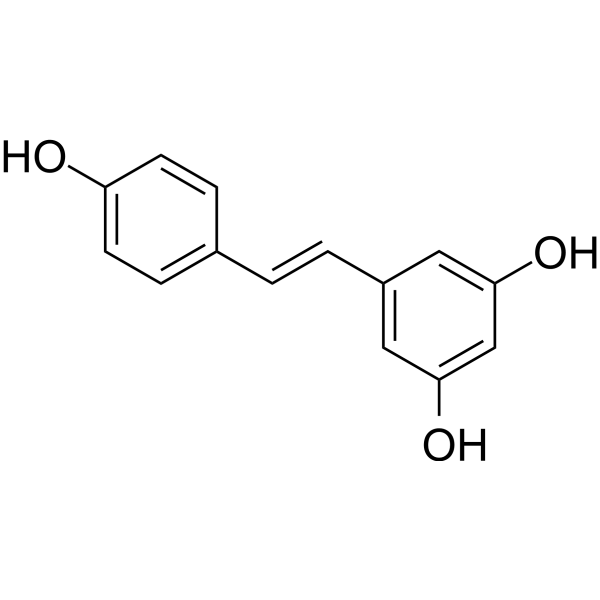
    Resveratrol
    155+ Cited Publications

    trans-Resveratrol; SRT501

    DNA/RNA Synthesis IKK Autophagy Mitophagy Sirtuin Apoptosis Bacterial Fungal Antibiotic Keap1-Nrf2 Infection Neurological Disease Metabolic Disease Inflammation/Immunology Cancer
    Resveratrol (trans-Resveratrol; SRT501) is a CNS-penetrant natural polyphenolic phytoalexin that possesses anti-oxidant, anti-inflammatory, cardioprotective, and anti-cancer properties. Resveratrol (SRT 501) has a wide spectrum of targets including mTOR, JAK, β-amyloid, Adenylyl cyclase, IKKβ, DNA polymerase. Resveratrol also is a specific SIRT1 activator . Resveratrol is a potent pregnane X receptor (PXR) inhibitor . Resveratrol is an Nrf2 activator, ameliorates aging-related progressive renal injury in mice model . Resveratrol increases production of NO in endothelial cells .
    Resveratrol
  • HY-170554

    Antibody-Drug Conjugates (ADCs) Topoisomerase DNA/RNA Synthesis Inflammation/Immunology Cancer
    ABBV-706 is a SEZ6-targeted topoisomerase 1 inhibitor Antibody-Drug Conjugates (ADCs), which is composed of the Linker-Payload conjugation (HY-148820) and the Anti-SEZ6 Antibody (SC17) (HY-P991041). ABBV-706 can inhibit cancer cells proliferation and induce DNA damage and G2/M arrest. ABBV-706 exhibits high efficacy against small cell lung cancer (SCLC), neuroendocrine tumors (NENs) and central nervous system (CNS) tumors .
    ABBV-706
  • HY-N8441

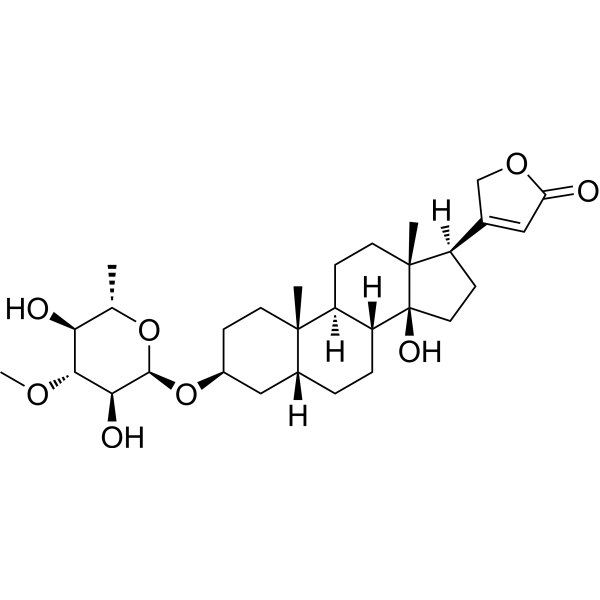
    17β-Neriifolin

    Atg8/LC3 Na+/K+ ATPase Apoptosis Beclin1 Cardiovascular Disease Inflammation/Immunology Cancer
    Neriifolin, a CNS-penetrating cardiac glycoside, is an inhibitor of the Na +, K +-ATPase. Neriifolin can target beclin 1, inhibits the formation of LC3-associated phagosomes and ameliorates experimental autoimmune encephalomyelitis (EAE) development. Neriifolin induces cell cycle arrest and apoptosis in human hepatocellular carcinoma HepG2 cells [2.
    Neriifolin
  • HY-172429

    ORIC-114

    EGFR Neurological Disease Cancer
    Enozertinib (ORIC-114) is an orally active, CNS-penetrant, highly selective and irreversible dual EGFR/HER2 inhibitor that exhibits potent and targeted inhibition of exon 20 insertion mutations. Enozertinib exhibits high kinome selectivity for the EGFR family of receptors to reduce off-target kinase liabilities. Enozertinib induces tumor regression and demonstrates antitumor activity in central nervous system and non-small cell lung cancer (NSCLC) tumor models. Enozertinib can be used for the research of solid tumors and NSCLC .
    Enozertinib
  • HY-132806

    RG-7816; RO-7017773

    GABA Receptor Neurological Disease
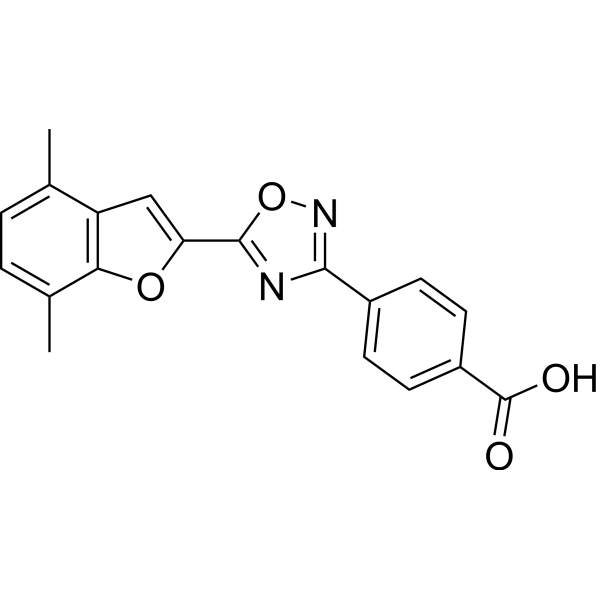
    Alogabat is a positive allosteric modulator (PAM) and agonist (Ki <100 nM) of the GABAA α5 receptor, targeting the α5β3γ2 subunit with a Ki of 8.7 nM. Alogabat increases the expression level of α5β3γ2 in oocytes (1.97-fold). GABAA has been implicated in cognitive impairment associated with central nervous system (CNS) disorders, brain cancer (including brain tumors such as medulloblastoma), and can be used in the study of mild cognitive impairment (MCI), amnestic MCI (aMCI), age-associated memory impairment (AAMI), age-related cognitive decline (ARCD), dementia, Alzheimer's disease (AD), prodromal AD, post-traumatic stress disorder (PTSD), schizophrenia, bipolar disorder, amyotrophic lateral sclerosis (ALS), cognitive impairment associated with cancer treatment, mental retardation, Parkinson's disease (PD), autism spectrum disorder, fragile X, Rett syndrome, obsessive-compulsive behavior, and substance addiction .
    Alogabat
  • HY-172429A

    ORIC-114 hemihydrate

    EGFR Neurological Disease Cancer
    Enozertinib (ORIC-114) hemihydrate is an orally active, CNS-penetrant, highly selective and irreversible dual EGFR/HER2 inhibitor that exhibits potent and targeted inhibition of exon 20 insertion mutations. Enozertinib hemihydrate exhibits high kinome selectivity for the EGFR family of receptors to reduce off-target kinase liabilities. Enozertinib hemihydrate induces tumor regression and demonstrates antitumor activity in central nervous system and non-small cell lung cancer (NSCLC) tumor models. Enozertinib hemihydrate can be used for the research of solid tumors and NSCLC .
    Enozertinib hemihydrate
  • HY-111573

    C286

    RAR/RXR Others Neurological Disease Inflammation/Immunology
    KCL-286 (C286) is an orally active and brain-penetrant retinoic acid receptor (RAR) β2 agonist (EC50 = 1.9 nM). KCL-286 targets RARβ2 with good selectivity over RAR α (EC50 = 26 nM) and RAR γ (EC50 = 11 nM). KCL-286 activates RARβ2 in the injured neurons. KCL-286 induces axonal regeneration of both spinal and sensory nerves through the inhibitory environment of the CNS, modulates neuroinflammation and extracellular matrix molecules. KCL-286 can modulate the expression of CSPGs by neuronal secretion of decorin which promotes myelination and aids axonal growth. KCL-286 can be studied in research for area such as spinal cord injury and traumatic nerve injury .
    KCL-286
  • HY-W074537

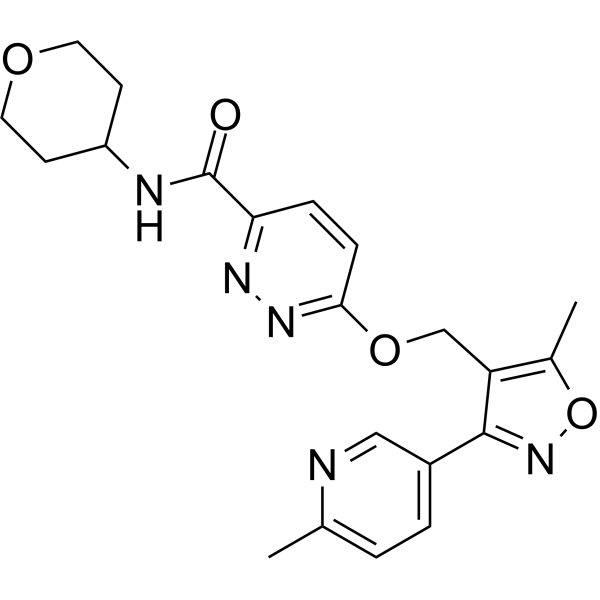
    Phosphodiesterase (PDE) Neurological Disease
    P7-2104 is a selective CNS-penetrant PDE7A inhibitor with an IC50 of of 31 nM. P7-2104 exhibits selectivity over hERG channels and most CYP450 isoforms. P7-2104 can be used for PDE7-targeted PET neuroimaging, and for the research of neurodegenerative disorders .
    P7-2104
  • HY-W007524
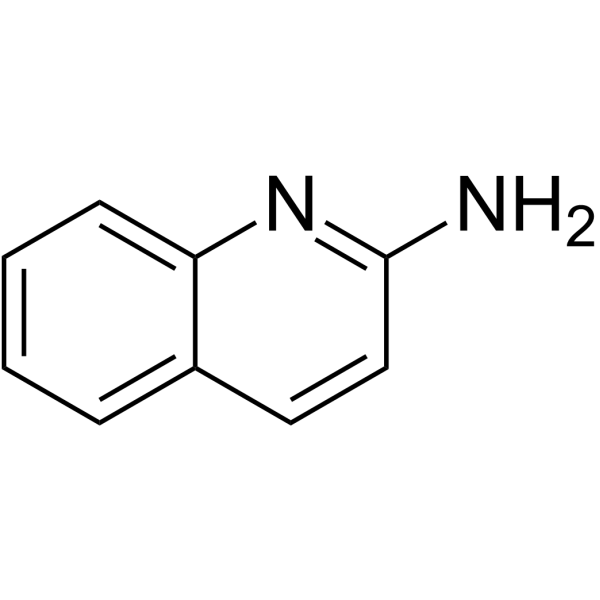
    2-Aminoquinoline
    1 Publications Verification

    2-Quinolinamine

    NO Synthase Orthopoxvirus Infection Neurological Disease
    2-Aminoquinoline (2-Quinolinamine) is a promising compound as bioavailable nNOS inhibitor but suffers from low human nNOS inhibition, low selectivity versus human eNOS, and significant binding to other CNS targets. 2-Aminoquinoline exhibits antiviral activity against the vaccinia virus. 2-Aminoquinoline has the potential for the research of antineurodegenerative agents .
    2-Aminoquinoline
  • HY-P2548

    EGFR Others
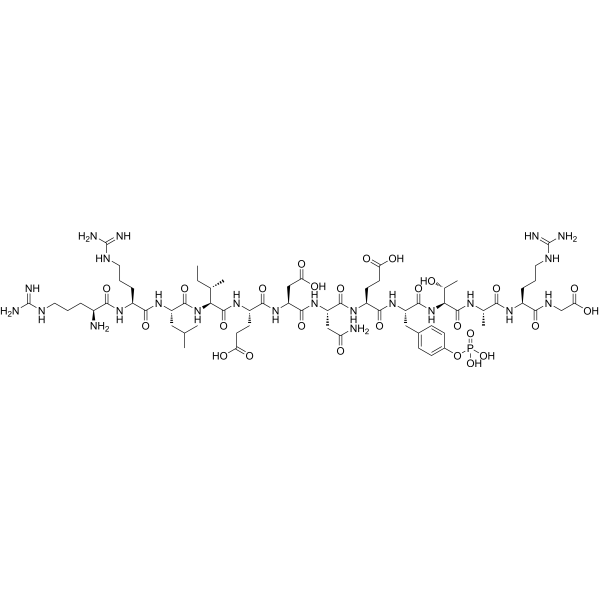
    pp60 (v-SRC) Autophosphorylation Site, Phosphorylated is the phosphorylated peptide of an EGFR substrate. pp60 (v-SRC) Autophosphorylation Site, Phosphorylated can be used for the screening of EGFR Kinase inhibitors via phosphorylated-substrate quantification .
    pp60 (v-SRC) Autophosphorylation Site, Phosphorylated
  • HY-W007524R

    2-Quinolinamine (Standard)

    Reference Standards NO Synthase Orthopoxvirus Infection Neurological Disease
    2-Aminoquinoline (2-Quinolinamine) is a promising compound as bioavailable nNOS inhibitor but suffers from low human nNOS inhibition, low selectivity versus human eNOS, and significant binding to other CNS targets. 2-Aminoquinoline exhibits antiviral activity against the vaccinia virus. 2-Aminoquinoline has the potential for the research of antineurodegenerative agents .
    2-Aminoquinoline (Standard)
  • HY-168997

    Cannabinoid Receptor Neurological Disease Inflammation/Immunology
    CB1R agonist 1 is a potent, CNS-penetrant, and selective Cannabinoid-1 receptor (CB1R) agonist with a Ki of 0.95 nM, modulating Gi/o signaling. CB1R agonist 1 exhibits high selectivity over CB2R and other off-target GPCRs, including GPR55, GPR18, and GPR119. CB1R agonist 1 induces analgesia and hypothermia, and potentiates opioid analgesia in mice. CB1R agonist 1 can be used for the research of pain .
    CB1R agonist 1
  • HY-101653

    Cholinesterase (ChE) mAChR 5-HT Receptor Neurological Disease
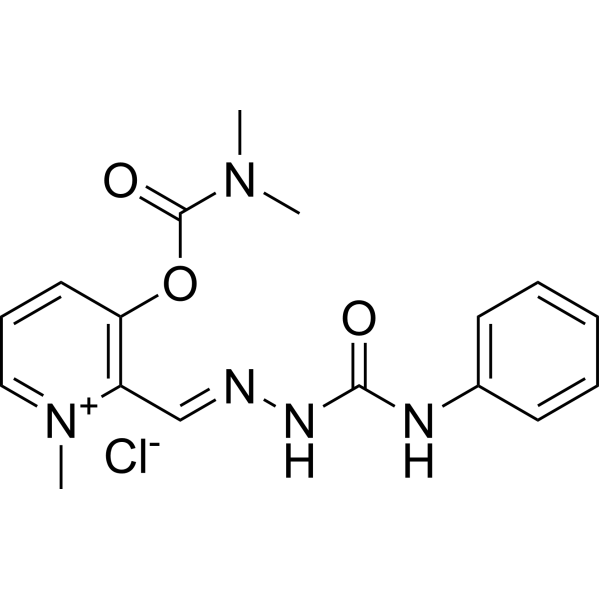
    MHP 133 is a agent with multiple CNS targets, and inhibits acetylcholinesterase (AChE) with Ki of 69 μM; also active against muscarinic M1 and M2 receptors, serotonin 5HT4 receptors, and imidazole I2 receptors.
    MHP 133
  • HY-170771

    GABA Receptor Neurological Disease
    α5-GABAA receptor modulator 1 (Compound A-4) is a silencing allosteric modulator (SAM) specifically targeting the a5 subunit of the GABAA receptor, suitable for research into central nervous system (CNS) disorders .
    α5-GABAA receptor modulator 1
  • HY-163855

    Sodium Channel GABA Receptor Neurological Disease
    KGP-25 is an inhibitor of voltage-gated sodium channel 1.8 (Nav1.8), which can be used for analgesia by targeting Nav1.8 in the peripheral nervous system (PNS). KGP-25 can also target γ-aminobutyric acid subtype A receptor (GABAA) in the central nervous system (CNS) for general anesthesia .
    KGP-25
  • HY-167893

    5-HT Receptor Neurological Disease
    AGH-107 is a high selective and brain-penetrant agonist of 5-HT7 receptor, with a Ki of 6 nM and EC50 of 19 nM. AGH-107 exhibits high selectivity over related CNS targets, high metabolic stability and low toxicity in HEK-293 and HepG2 cell cultures .
    AGH-107
  • HY-155055

    Reactive Oxygen Species (ROS) Cancer
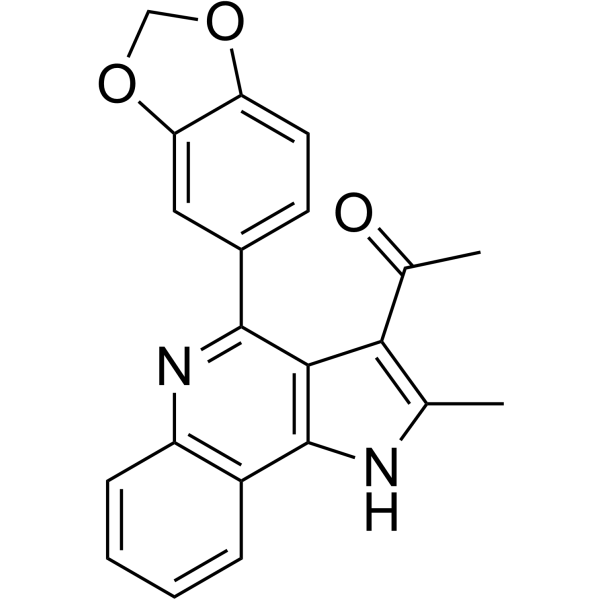
    Antiproliferative agent-26 (compound 4g) is an antiproliferative agent with much broad range of activity targeting Leukemia, CNS, Melanoma, Renal and Breast (at the concentration of 10 μM). Antiproliferative agent-26 inhibits colony forming and arrests cell cycle at G1 phase/S phase at 5 μM and 25 μM, respectively .
    Antiproliferative agent-26
  • HY-161846

    Tyrosinase Neurological Disease
    Tyrosinase-IN-31 (compound 2-06) is a central-targeting tyrosinase inhibitor (tyrosinase: monophenolase IC50=70.44 μM, diphenolase IC50=1.89 μM). Tyrosinase-IN-31 can inhibit the tyrosinase and melanogenesis. Tyrosinase-IN-31 can penetrate the BBB and enter the central nervous system (CNS). Tyrosinase-IN-31 shows neuroprotective effects and Parkinsonism behavior improving function .
    Tyrosinase-IN-31
  • HY-175367

    Histamine Receptor Sigma Receptor Neurological Disease
    H3R antagonist 6 (Compounds 3) (H3-2406) is a Histamine receptor 3 (H3R) antagonist with an IC50 of 5.6 nM. H3R antagonist 6 labeled with 18F has high radiochemical yield, molar activity and moderate brain uptake, but with an off-target binding to the Sigma-1 receptor. H3R antagonist 6 can be used as a PET radioligand for positron emission tomography imaging for central nervous system (CNS) disorders research .
    H3R antagonist 6
  • HY-180474

    Liposome Neurological Disease
    LP293-p is a lipid with activated ester groups, which can be used for the synthesis of ATXN2 RNAi. LP293-p can be utilized to enhance the targeting of the central nervous system (CNS) .
    LP293-p
  • HY-131288

    mGluR Neurological Disease
    LY2934747 is a selective and blood-brain barrier-permeable dual mGlu2/mGlu3 receptor agonist, with Ki values of 260 nM and 177 nM, and EC50 values of 8.4 nM and 62.4 nM against human receptors, respectively. LY2934747 exhibits antipsychotic and analgesic activities in in vivo animal models. LY2934747 can be used in studies related to psychosis and pain .
    LY2934747

Inquiry Online

Your information is safe with us. * Required Fields.

Salutation


Country or Region *

Applicant Name *


Organization Name *

Department *


Email Address *


Product Name *

Cat. No.


Requested quantity *

Phone Number *


Remarks

Inquiry Online

Inquiry Information

Product Name:
Cat. No.:
Quantity:
MCE Japan Authorized Agent:

