Search Result
| Isoforms Recommended: |
CYP2
|
Results for "
CYP2C8
" in MedChemExpress (MCE) Product Catalog:
1
Biochemical Assay Reagents
14
Isotope-Labeled Compounds
| Cat. No. |
Product Name |
Target |
Research Areas |
Chemical Structure |
-
- HY-17356
-
Fenofibrate
Maximum Cited Publications
33 Publications Verification
|
PPAR
Cytochrome P450
Autophagy
|
Cardiovascular Disease
Cancer
|
|
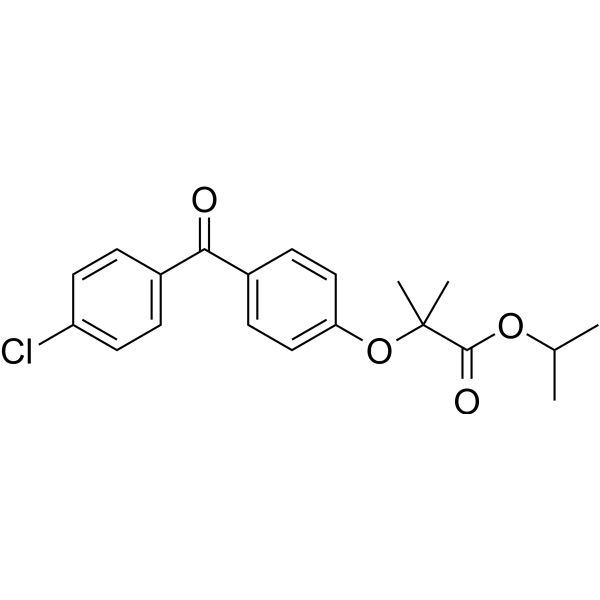
Fenofibrate is a selective PPARα agonist with an EC50 of 30 μM. Fenofibrate also inhibits human cytochrome P450 isoforms, with IC50s of 0.2, 0.7, 9.7, 4.8 and 142.1 μM for CYP2C19, CYP2B6, CYP2C9, CYP2C8, and CYP3A4, respectively.
|
-
-
- HY-129993
-
-
-
- HY-N0319
-
|
|
Cytochrome P450
|
Cancer
|
|
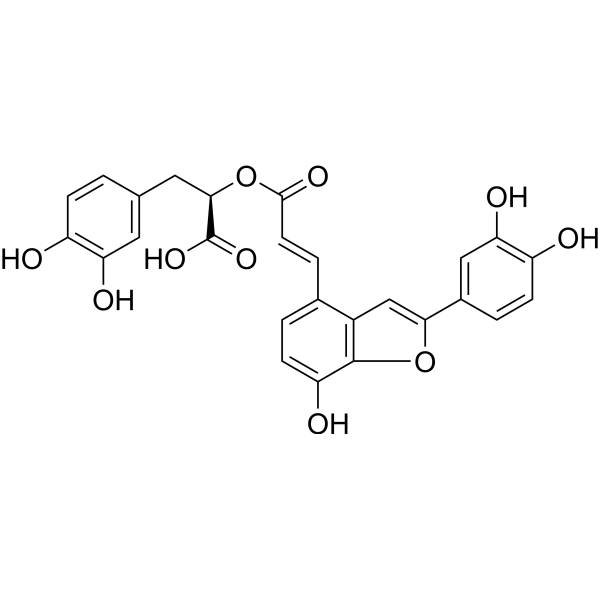
Salvianolic acid C is a noncompetitive Cytochrome P4502C8 (CYP2C8) inhibitor and a moderate mixed inhibitor of Cytochrome P45022J2 (CYP2J2), with Kis of 4.82 μM and 5.75 μM for CYP2C8 and CYP2J2, respectively.
|
-
-
- HY-125348
-
|
|
Drug Metabolite
|
Cancer
|
|
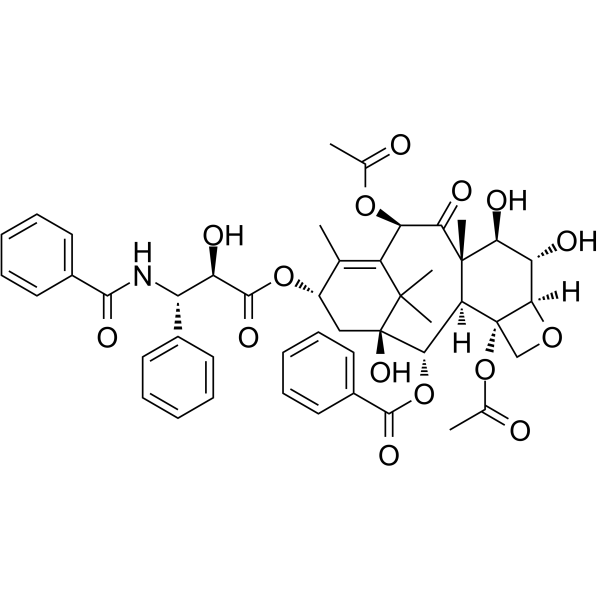
6α-Hydroxy paclitaxel is one of the main metabolites of Paclitaxel (PTX) (HY-B0015), and it is generated by the liver cytochrome P450 enzyme CYP2C8. 6α-Hydroxy paclitaxel has bone marrow toxicity, but it can enhance the cytotoxicity of PTX against leukemia cells without causing cell toxicity. 6α-Hydroxy paclitaxel can be used in leukemia research .
|
-
-
- HY-135334
-
|
|
Drug Metabolite
Btk
Cytochrome P450
|
Cancer
|
|
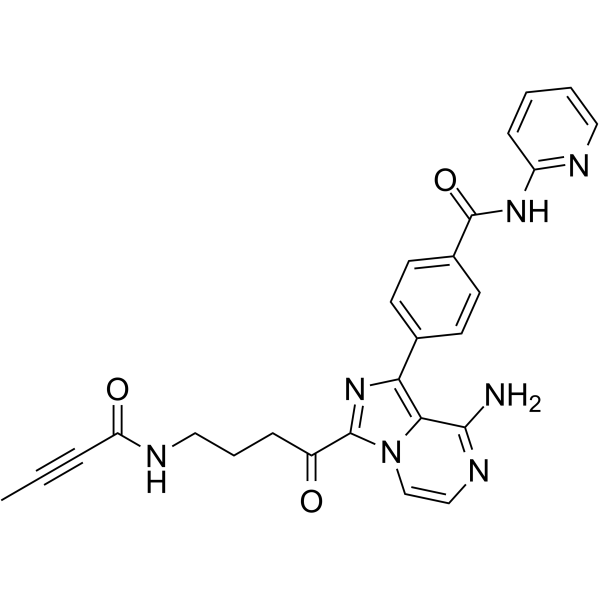
ACP-5862 is a major active, circulating, pyrrolidine ring-opened metabolite of Acalabrutinib with an IC50 of 5.0 nM for Bruton tyrosine kinase (BTK). ACP‐5862 is a weak time‐dependent inactivator of CYP3A4 and CYP2C8. Acalabrutinib is an orally active, irreversible, and highly selective BTK inhibitor, with an IC50 of 3 nM and EC50 of 8 nM .
|
-
-
- HY-N5132
-
|
|
Cytochrome P450
|
Others
|
|
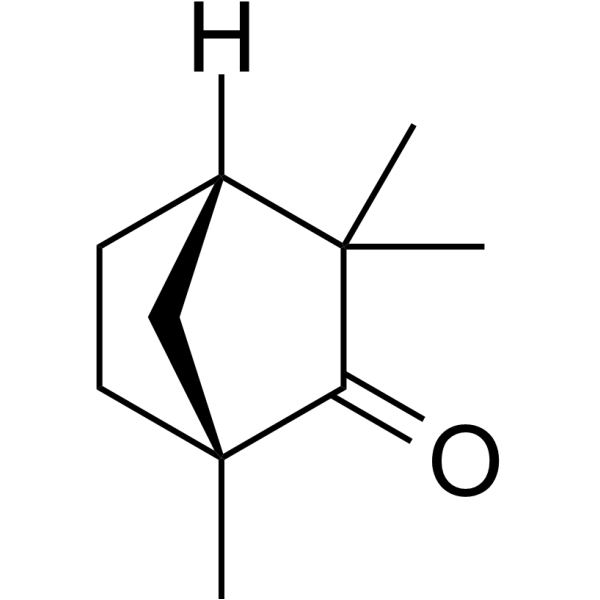
(-)-Fenchone is a bicyclic monoterpene and serves as a substrate for human liver microsomal cytochrome P450 enzymes CYP2A6 and CYP2B6. (-)-Fenchone is not metabolized by human CYP1A1, CYP1A2, CYP1B1, CYP2C8, CYP2C9, CYP2C19, CYP2D6, CYP2E1, or CYP3A4 enzymes. (-)-Fenchone undergoes hydroxylation to produce 6-exo-hydroxyfenchone, 6-endo-hydroxyfenchone, and 10-hydroxyfenchone. During the metabolism of (-)-Fenchone, CYP2A6 may play a more important role than CYP2B6 .
|
-
-
- HY-135335
-
|
|
Drug Metabolite
|
Metabolic Disease
|
|
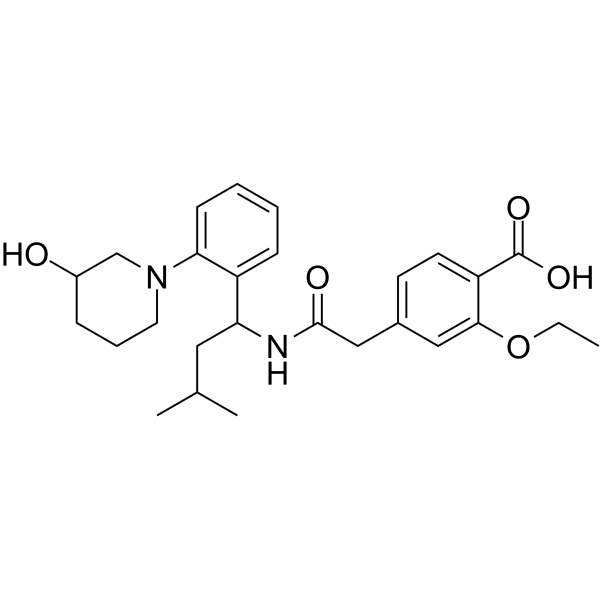
3'-Hydroxy Repaglinide is the major CYP2C8 metabolite of Repaglinide (HY-15209). Repaglinide is a carbamoylmethylbenzoic acid (CMBA) derivative that acts on type 2 diabetes .
|
-
-
- HY-100641
-
|
Hydroxytolbutamide
|
Potassium Channel
Autophagy
|
Metabolic Disease
Cancer
|
|
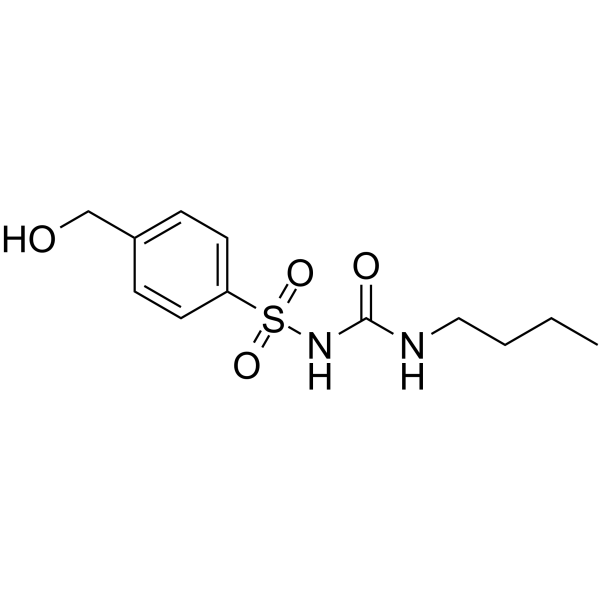
4-Hydroxytolbutamide (Hydroxytolbutamide) is a metabolite of Tolbutamide. 4-Hydroxytolbutamide is metabolized by CYP2C8 and CYP2C9. Tolbutamide is a first generation potassium channel blocker and a sulfonylurea oral antidiabetic .
|
-
-
- HY-147294
-
|
ACT-539313
|
Orexin Receptor (OX Receptor)
Cytochrome P450
|
Neurological Disease
|
|
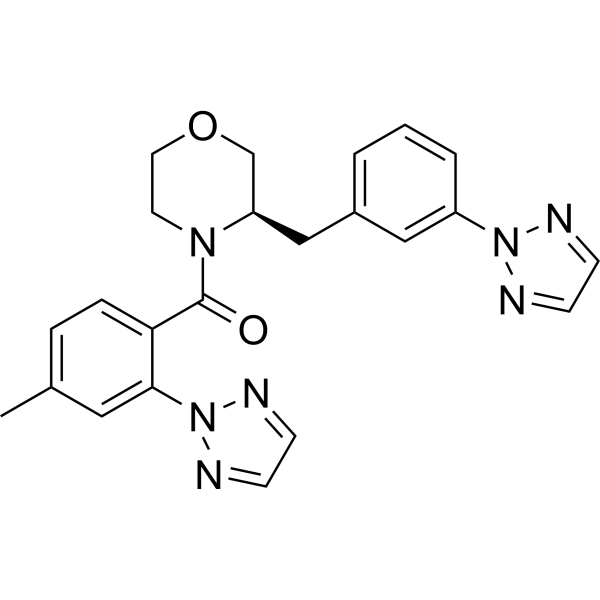
Nivasorexant (ACT-539313) is an orally active, blood-brain barrier penetrant, selective orexin OX1R inhibitor. Nivasorexant specifically blocks central OX1Rs without affecting OX2Rs, and exhibits competitive inhibitory activity against CYP2C8, CYP2C9, CYP2C19 and CYP3A4 (IC50 values are 25 μM, 8.6 μM, 1.6 μM, 19 μM/44 μM, respectively). Nivasorexant significantly reduces binge-like eating behavior of highly palatable food in rat models and has long-acting properties. Nivasorexant shows no relevant off-target activity against over 130 selected proteins, exhibits favorable safety profiles, and can be used for studies related to binge eating disorder .
|
-
-
- HY-135331
-
|
|
Androgen Receptor
Cytochrome P450
|
Cancer
|
|
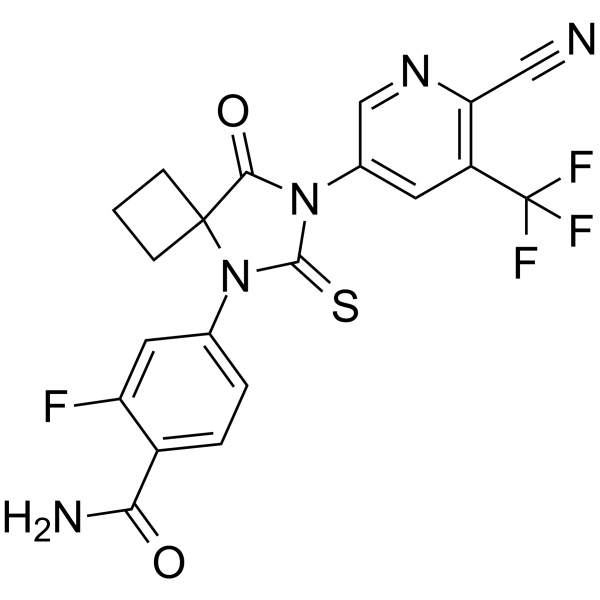
N-Desmethyl Apalutamide is an active metabolite of Apalutamide. N-Desmethyl Apalutamide is a less potent antagonist of the androgen receptor and is responsible for one-third of the activity of Apalutamide. The formation of N-Desmethyl Apalutamide mediated predominantly by CYP2C8 and CYP3A4. N-Desmethyl Apalutamide is moderate to strong CYP3A4 and CYP2B6 inducer and has an excellent plasma-proteins bound concentration .
|
-
-
- HY-W013268
-
|
(+)-N-3-Benzylnirvanol
|
Cytochrome P450
|
Metabolic Disease
|
|
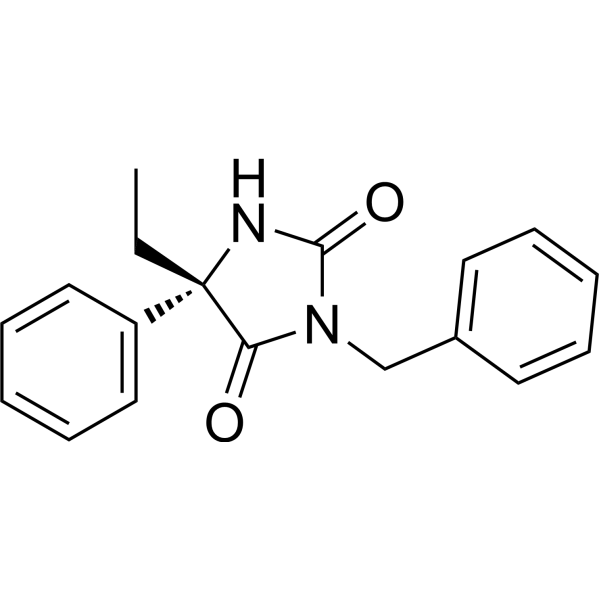
(S)-(+)-N-3-Benzylnirvanol ((+)-N-3-Benzylnirvanol) is a selective and competitive cytochrome P450 (CYP) isoform CYP2C19 inhibitor with a Ki of 250 nM. (S)-(+)-N-3-Benzylnirvanol has low activity against CYP1A2, CYP2A6, CYP2C8, CYP2C9, CYP2D6, CYP2E1, and CYP3A4 .
|
-
-
- HY-116862
-
|
DBF
|
Cytochrome P450
Fluorescent Dye
|
Others
|
|
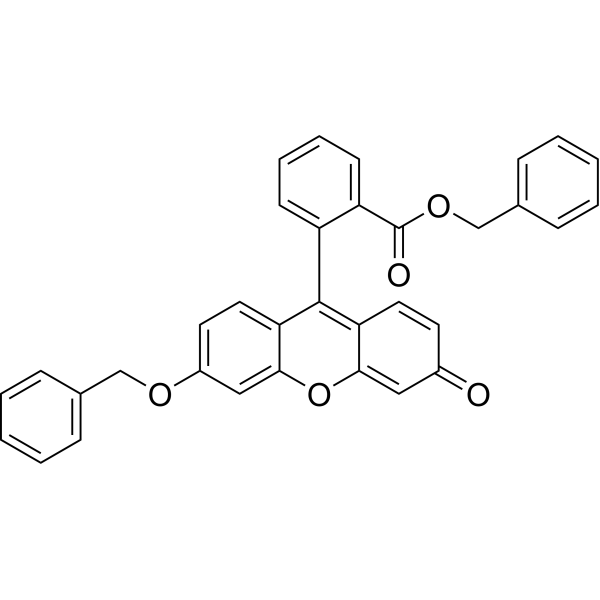
Dibenzylfluorescein (DBF) is a fluorogenic probe (Fluoresecent dye) that acts as a substrate for specific cytochrome P450 (CYP) isoforms, including CYP3A4, CYP2C8, CYP2C9, CYP2C19, and aromatase (CYP19). Dibenzylfluorescein is typically used near its Km value of 0.87-1.9 μM (Ex=485 nm,Em=535 nm). Dibenzylfluorescein is used to detect changes in CYP catalytic activity caused by drugs or disease .
|
-
-
- HY-124542
-
|
|
Drug Metabolite
Apoptosis
|
Cancer
|
|
5-Hydroxydiclofenac is a major metabolite of Diclofenac (HY-15036). 5-Hydroxydiclofenac is formed by the cytochrome P450 (CYP) isoforms CYP3A4, CYP2C189, CYP2C19, and CYP2C8. 5-Hydroxydiclofenac shows apoptotic effects in hepatocytes .
|
-
-
- HY-17356S
-
-
-
- HY-125348S
-
|
|
Isotope-Labeled Compounds
|
Cancer
|
|
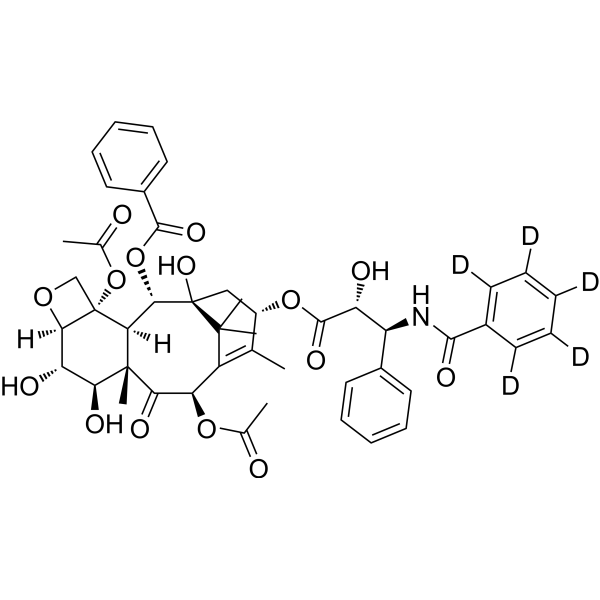
6α-Hydroxy Paclitaxel-d5 is the deuterium labeled 6α-Hydroxy paclitaxel. 6α-Hydroxy paclitaxel is one of the main metabolites of Paclitaxel (PTX) (HY-B0015), and it is generated by the liver cytochrome P450 enzyme CYP2C8. 6α-Hydroxy paclitaxel has bone marrow toxicity, but it can enhance the cytotoxicity of PTX against leukemia cells without causing cell toxicity. 6α-Hydroxy paclitaxel can be used in leukemia research.
|
-
-
- HY-147422
-
|
XNW3009
|
URAT1
|
Metabolic Disease
Inflammation/Immunology
|
|
Xininurad is a potent orally active URAT1 inhibitor with an IC50 of 7.17 nM. Xininurad inhibits URAT1 activity to reduce serum uric acid levels and increase urinary uric acid excretion. Xininurad can be used for the research of hyperuricemia and gout .
|
-
-
- HY-163438
-
-
-
- HY-135810
-
|
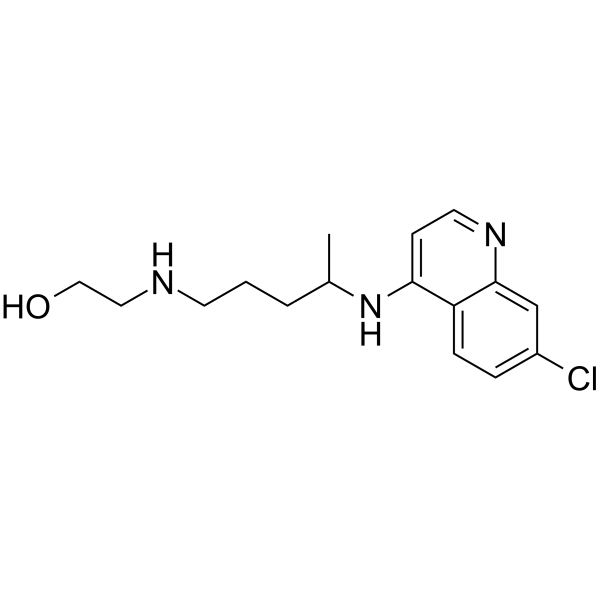
Desethylhydroxychloroquine
|
CHIKV
Influenza Virus
Parasite
|
Infection
Inflammation/Immunology
|
|
Cletoquine (Desethylhydroxychloroquine) is a major active metabolite of Hydroxychloroquine. Cletoquine is produced in the liver by CYP2D6, CYP3A4, CYP3A5, and CYP2C8 isoenzymes. Cletoquine is also a Chloroquine derivative and has the ability to against the chikungunya virus (CHIKV). Cletoquine has antimalarial effects and has the potential for autoimmune diseases treatment .
|
-
-
- HY-100641S
-
|
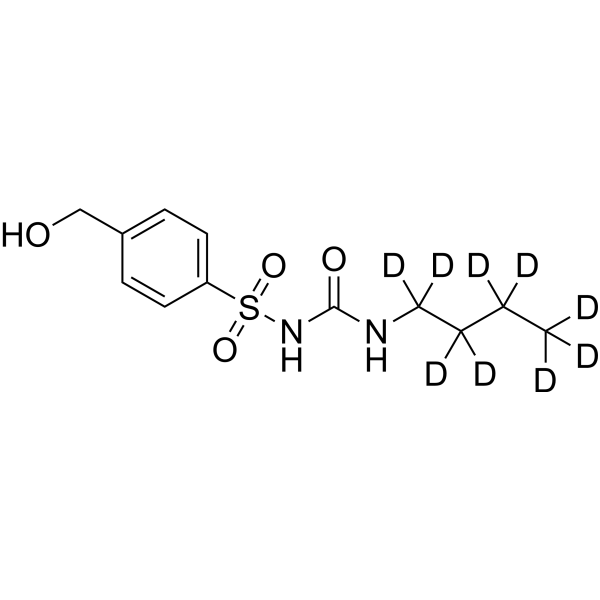
Hydroxytolbutamide-d9
|
Potassium Channel
Autophagy
|
Metabolic Disease
Cancer
|
|
4-Hydroxytolbutamide-d9 is the deuterium labeled 4-Hydroxytolbutamide. 4-Hydroxytolbutamide (Hydroxytolbutamide) is a metabolite of Tolbutamide. 4-Hydroxytolbutamide is metabolized by CYP2C8 and CYP2C9. Tolbutamide is a first generation potassium channel blocker and a sulfonylurea oral antidiabetic .
|
-
-
- HY-148352
-
|
|
PPAR
|
Cancer
|
|
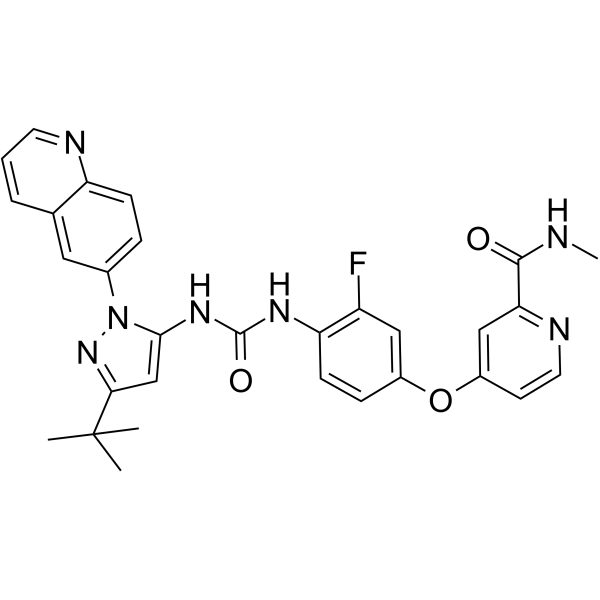
BAY-4931 is a potent, covalent and selective PPARγ inverse-agonist with an IC50 of 0.17 nM .
|
-
-
- HY-114759
-
MS-PPOH
1 Publications Verification
|
Cytochrome P450
|
Neurological Disease
Metabolic Disease
Cancer
|
|
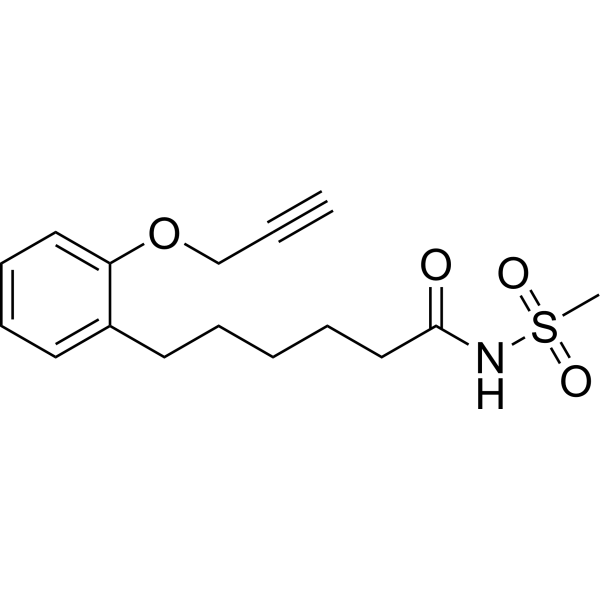
MS-PPOH is a potent and selective cytochrome P450 (CYP) epoxygenase inhibitor . MS-PPOH inhibits CYP2C8 and CYP2C9 with IC50s of 15 and 11 μM, respectively . MS-PPOH is a click chemistry reagent, it contains an Alkyne group and can undergo copper-catalyzed azide-alkyne cycloaddition (CuAAc) with molecules containing Azide groups.
|
-
-
- HY-17356R
-
|
|
Reference Standards
PPAR
Cytochrome P450
Autophagy
|
Cardiovascular Disease
Cancer
|
|
Fenofibrate (Standard) is the analytical standard of Fenofibrate. This product is intended for research and analytical applications. Fenofibrate is a selective PPARα agonist with an EC50 of 30 μM. Fenofibrate also inhibits human cytochrome P450 isoforms, with IC50s of 0.2, 0.7, 9.7, 4.8 and 142.1 μM for CYP2C19, CYP2B6, CYP2C9, CYP2C8, and CYP3A4, respectively.
|
-
-
- HY-163996
-
|
|
GLP Receptor
Potassium Channel
Cytochrome P450
|
Metabolic Disease
|
|
DD202-114 is a potent and selective GLP1R agonist. DD202-114 inhibits hERG with an IC50 of 15.9 μM. DD202-114 exhibits strong CYP2C8 inhibition with an IC50 of 0.22 μM. DD202-114 promotes cAMP accumulation. DD202-114 reduces blood glucose levels and food intake. DD202-114 has the potential to be used in the study of type 2 diabetes mellitus (T2DM) and obesity .
|
-
-
- HY-RS03459
-
|
|
Small Interfering RNA (siRNA)
|
Others
|
|
CYP2C8 Human Pre-designed siRNA Set A contains three designed siRNAs for CYP2C8 gene (Human), as well as a negative control, a positive control, and a FAM-labeled negative control.
|
-
CYP2C8 Human Pre-designed siRNA Set A
-
- HY-W587878
-
|
|
Cytochrome P450
Pyruvate Kinase
Fungal
Apoptosis
Insecticide
|
Infection
Cancer
|
|
Thujopsene is the inhibitor for cytochrome P450, that inhibits CYP2B6, CYP3A4, CYP2C19, CYP2C8, CYP2C9 with IC50s of 1.3, 12.6, 13.6, 29.8, and 44.9 μM, respectively. Thujopsene binds to PKM2, inhibits the metabolism pathway of cancer cell, induces apoptosis in MKN45, thereby exhibiting antitumor efficacy. Thujopsene exhibits anti-termite and antifungal activities through autoxidation .
|
-
-
- HY-W754151
-
|
|
Isotope-Labeled Compounds
|
Others
|
|
N-Desmethyl apalutamide-d4 is the deuterium-labeled N-Desmethyl-Apalutamide (HY-135331). N-Desmethyl Apalutamide is an active metabolite of Apalutamide. N-Desmethyl Apalutamide is a less potent antagonist of the androgen receptor and is responsible for one-third of the activity of Apalutamide. The formation of N-Desmethyl Apalutamide mediated predominantly by CYP2C8 and CYP3A4. N-Desmethyl Apalutamide is moderate to strong CYP3A4 and CYP2B6 inducer and has an excellent plasma-proteins bound concentration .
|
-
-
- HY-70002AS
-
|
N-Desmethyl MDV 3100-d6
|
Androgen Receptor
|
Cancer
|
|
N-desmethyl Enzalutamide-d6 is a deuterium labeled N-desmethyl Enzalutamide. N-desmethyl Enzalutamide is an active metabolite of Enzalutamide. N-desmethyl Enzalutamide is the active metabolite of Enzalutamide. N-desmethyl Enzalutamide demonstrates primary and secondary pharmacodynamics of similar potency to Enzalutamide and circulates at approximately the same plasma concentrations as enzalutamide .
|
-
-
- HY-117160
-
|
4-trans-hydroxycyclohexyl Glyburide; 4-trans-hydroxy Glibenclamide
|
Potassium Channel
|
Neurological Disease
|
|
rac-trans-4-hydroxy Glyburide is an active metabolite of the SUR1/Kir6.2 sulfonylurea inhibitor glyburide (HY-15206). It is formed from glyburide by the cytochrome P450 (CYP) isoforms CYP2C8 and CYP2C9. rac-trans-4-hydroxy Glyburide inhibits glyburide binding to rat brain synaptosomes at the high and low affinity sites of SUR1/Kir6.2 with IC50 values of 0.95 and 100 nM, respectively.
|
-
-
- HY-135335S
-
|
|
Drug Metabolite
|
Metabolic Disease
|
|
3'-Hydroxy Repaglinide-d5 is the deuterium labeled 3'-Hydroxy Repaglinide. 3'-Hydroxy Repaglinide is a main CYP2C8 metabolite of Repaglinide .
|
-
-
- HY-119311
-
|
|
PPAR
|
Metabolic Disease
|
|
Pioglitazone ketone is an active metabolite of the PPARγ agonist Pioglitazone (HY-13956). Formation of pioglitazone ketone occurs primarly through cytochrome P450 (CYP) isoform CYP2C8-mediated metabolism of pioglitazone. Pioglitazone ketone (100 mg/kg in the diet) reduces blood glucose levels in a KKAy mouse model of type 2 diabetes.
|
-
-
- HY-141530
-
-
-
- HY-17356G
-
|
|
Cytochrome P450
PPAR
Autophagy
|
Cardiovascular Disease
|
|
Fenofibrate (GMP) is Fenofibrate (HY-17356) produced by using GMP guidelines. GMP small molecules work appropriately as an auxiliary reagent for cell therapy manufacture. Fenofibrate is a selective PPARα agonist with an EC50 of 30 μM. Fenofibrate also inhibits human cytochrome P450 isoforms, with IC50s of 0.2, 0.7, 9.7, 4.8 and 142.1 μM for CYP2C19, CYP2B6, CYP2C9, CYP2C8, and CYP3A4, respectively.
|
-
-
- HY-N0319R
-
|
|
Reference Standards
Cytochrome P450
|
Cancer
|
|
Salvianolic acid C (Standard) is the analytical standard of Salvianolic acid C. This product is intended for research and analytical applications. Salvianolic acid C is a noncompetitive Cytochrome P4502C8 (CYP2C8) inhibitor and a moderate mixed inhibitor of Cytochrome P45022J2 (CYP2J2), with Kis of 4.82 μM and 5.75 μM for CYP2C8 and CYP2J2, respectively.
|
-
-
- HY-135810A
-
|
Desethylhydroxychloroquine oxalate
|
CHIKV
Influenza Virus
Parasite
|
Infection
Inflammation/Immunology
|
|
Cletoquine oxalate (Desethylhydroxychloroquine oxalate) is a major active metabolite of Hydroxychloroquine. Cletoquine oxalate is produced in the liver by CYP2D6, CYP3A4, CYP3A5, and CYP2C8 isoenzymes. Cletoquine oxalate is also a Chloroquine derivative and has the ability to against the chikungunya virus (CHIKV). Cletoquine oxalate has antimalarial effects and has the potential for autoimmune diseases treatment .
|
-
-
- HY-155376
-
|
|
mTOR
|
Cancer
|
|
mTOR inhibitor-14 (compound 14c) is a potent mTOR inhibitor. mTOR inhibitor-14 also shows minimal CYP2C8 inhibition. mTOR inhibitor-14 can inhibit tumor growth .
|
-
-
- HY-135810S
-
|
Desethylhydroxychloroquine-d4
|
Isotope-Labeled Compounds
CHIKV
Influenza Virus
Parasite
|
Infection
Inflammation/Immunology
|
|
Cletoquine-d4 is deuterium labeled Cletoquine. Cletoquine (Desethylhydroxychloroquine) is a major active metabolite of Hydroxychloroquine. Cletoquine is produced in the liver by CYP2D6, CYP3A4, CYP3A5, and CYP2C8 isoenzymes. Cletoquine is also a Chloroquine derivative and has the ability to against the chikungunya virus (CHIKV). Cletoquine has antimalarial effects and has the potential for autoimmune diseases treatment .
|
-
-
- HY-W699866
-
-
-
- HY-135810S1
-
|
Desethylhydroxychloroquine-d4-1
|
Isotope-Labeled Compounds
CHIKV
Influenza Virus
Parasite
|
Infection
Inflammation/Immunology
|
|
Cletoquine-d4-1 is the deuterium labeled Cletoquine. Cletoquine (Desethylhydroxychloroquine) is a major active metabolite of Hydroxychloroquine. Cletoquine is produced in the liver by CYP2D6, CYP3A4, CYP3A5, and CYP2C8 isoenzymes. Cletoquine is also a Chloroquine derivative and has the ability to against the chikungunya virus (CHIKV). Cletoquine has antimalarial effects and has the potential for autoimmune diseases treatment .
|
-
-
- HY-135334S
-
|
|
Isotope-Labeled Compounds
Drug Metabolite
Btk
Cytochrome P450
|
Cancer
|
|
ACP-5862-d4 is deuterium labeled ACP-5862. ACP-5862 is a major active, circulating, pyrrolidine ring-opened metabolite of Acalabrutinib with an IC50 of 5.0 nM for Bruton tyrosine kinase (BTK). ACP‐5862 is a weak time‐dependent inactivator of CYP3A4 and CYP2C8. Acalabrutinib is an orally active, irreversible, and highly selective BTK inhibitor, with an IC50 of 3 nM and EC50 of 8 nM .
|
-
-
- HY-17356S2
-
-
-
- HY-17356S1
-
|
|
PPAR
Autophagy
Cytochrome P450
|
Cardiovascular Disease
|
|
Fenofibrate-d4 is the deuterium labeled Fenofibrate . Fenofibrate is a selective PPARα agonist with an EC50 of 30 μM. Fenofibrate also inhibits human cytochrome P450 isoforms, with IC50s of 0.2, 0.7, 9.7, 4.8 and 142.1 μM for CYP2C19, CYP2B6, CYP2C9, CYP2C8, and CYP3A4, respectively .
|
-
-
- HY-W777442
-
|
|
Isotope-Labeled Compounds
Influenza Virus
Parasite
CHIKV
|
Infection
|
|
Cletoquine-d4 Oxalate is the deuterium labeled Cletoquine (oxalate) (HY-135810A). Cletoquine oxalate (Desethylhydroxychloroquine oxalate) is a major active metabolite of Hydroxychloroquine. Cletoquine oxalate is produced in the liver by CYP2D6, CYP3A4, CYP3A5, and CYP2C8 isoenzymes. Cletoquine oxalate is also a Chloroquine derivative and has the ability to against the chikungunya virus (CHIKV). Cletoquine oxalate has antimalarial effects and has the potential for autoimmune diseases treatment .
|
-
-
- HY-135331S
-
|
|
Isotope-Labeled Compounds
Androgen Receptor
Cytochrome P450
|
Cancer
|
|
N-Desmethyl-Apalutamide-15N,d4 is the 15N and deuterium labeled isotope of N-Desmethyl-Apalutamide (HY-135331). N-Desmethyl Apalutamide is an active metabolite of Apalutamide. N-Desmethyl Apalutamide is a less potent antagonist of the androgen receptor and is responsible for one-third of the activity of Apalutamide. The formation of N-Desmethyl Apalutamide mediated predominantly by CYP2C8 and CYP3A4. N-Desmethyl Apalutamide is moderate to strong CYP3A4 and CYP2B6 inducer and has an excellent plasma-proteins bound concentration .
|
-
-
- HY-10575
-
|
|
Cannabinoid Receptor
Cytochrome P450
|
Metabolic Disease
|
|
MK-5596 is an efficient, selective and orally active CB1R (IC50 = 1.0 nM, EC50 = 5.8 nM) inverse agonist. MK-5596 has weak hERG inhibitory activity. MK-5596 has strong weight loss and appetite suppression effects. MK-5596 has a certain inhibitory effect on CYP enzymes (CYP3A4: IC50 = 3.3 μM, CYP2C8: IC50 = 11 μM, CYP2C9: IC50 = 18 μM, CYP2D6: IC50 = 6 μM). MK-5596 can be used for research on conditions such as obesity .
|
-
-
- HY-W067374
-
|
|
Cytochrome P450
|
Others
|
|
5-Hydroxy-3,4-dihydroquinolin-2 (1H)-one (Compound OPC-1606) is a compound related to Carteolol (HY-17495). 5-Hydroxy-3,4-dihydroquinolin-2 (1H)-one is not produced by any tested cytochrome P450 isoform .
|
-
-
- HY-181798
-
|
|
Kallikrein
|
Metabolic Disease
|
|
pKal-IN-1 (compound 13) is a plasma kallikrein (pKal) inhibitor. pKal-IN-1 can be used for the research of diabetic macular edema, diabetic retinopathy .
|
-
-
- HY-183268
-
|
|
TRP Channel
|
Cancer
|
|
TRPM4-IN-4 (Compound 118) is a selective TRPM4 inhibitor with an IC50 value of 0.339 μM against hTRPM4. TRPM4-IN-4 inhibits hTRPM4 and mTRPM4. TRPM4-IN-4 can be used for the research of colorectal cancer .
|
-
-
- HY-183149
-
|
|
Prostaglandin Receptor
Interleukin Related
COX
|
Neurological Disease
|
|
BPN-37440 is a blood-brain barrier-permeable, selective, and orally active EP2 receptor inhibitor with an IC50 of 53-60 nM. BPN-37440 inhibits the expression of inflammatory mediators IL-1β and COX-2, with an IC50 of 21 nM for IL-1β and 42 nM for COX-2. BPN-37440 reduces microgliosis in key brain regions of mice with pilocarpine (HY-B0726A)-induced status epilepticus and reverses their working memory and recognition memory deficits. BPN-37440 can be used for research on status epilepticus .
|
-
| Cat. No. |
Product Name |
Type |
-
- HY-116862
-
|
DBF
|
Fluorescent Dye
|
|
Dibenzylfluorescein (DBF) is a fluorogenic probe (Fluoresecent dye) that acts as a substrate for specific cytochrome P450 (CYP) isoforms, including CYP3A4, CYP2C8, CYP2C9, CYP2C19, and aromatase (CYP19). Dibenzylfluorescein is typically used near its Km value of 0.87-1.9 μM (Ex=485 nm,Em=535 nm). Dibenzylfluorescein is used to detect changes in CYP catalytic activity caused by drugs or disease .
|
-
- HY-17356G
-
|
|
Fluorescent Dye
|
|
Fenofibrate (GMP) is Fenofibrate (HY-17356) produced by using GMP guidelines. GMP small molecules work appropriately as an auxiliary reagent for cell therapy manufacture. Fenofibrate is a selective PPARα agonist with an EC50 of 30 μM. Fenofibrate also inhibits human cytochrome P450 isoforms, with IC50s of 0.2, 0.7, 9.7, 4.8 and 142.1 μM for CYP2C19, CYP2B6, CYP2C9, CYP2C8, and CYP3A4, respectively.
|
| Cat. No. |
Product Name |
Type |
-
- HY-17356G
-
|
|
Biochemical Assay Reagents
|
|
Fenofibrate (GMP) is Fenofibrate (HY-17356) produced by using GMP guidelines. GMP small molecules work appropriately as an auxiliary reagent for cell therapy manufacture. Fenofibrate is a selective PPARα agonist with an EC50 of 30 μM. Fenofibrate also inhibits human cytochrome P450 isoforms, with IC50s of 0.2, 0.7, 9.7, 4.8 and 142.1 μM for CYP2C19, CYP2B6, CYP2C9, CYP2C8, and CYP3A4, respectively.
|
| Cat. No. |
Product Name |
Category |
Target |
Chemical Structure |
-
- HY-N0319
-
-
-
- HY-N5132
-
|
|
Structural Classification
Other Monoterpenes
Classification of Application Fields
Terpenoids
Other Diseases
Umbelliferae
Plants
Vernonia Schreb.
Disease Research Fields
Source Classification
|
Cytochrome P450
|
|
(-)-Fenchone is a bicyclic monoterpene and serves as a substrate for human liver microsomal cytochrome P450 enzymes CYP2A6 and CYP2B6. (-)-Fenchone is not metabolized by human CYP1A1, CYP1A2, CYP1B1, CYP2C8, CYP2C9, CYP2C19, CYP2D6, CYP2E1, or CYP3A4 enzymes. (-)-Fenchone undergoes hydroxylation to produce 6-exo-hydroxyfenchone, 6-endo-hydroxyfenchone, and 10-hydroxyfenchone. During the metabolism of (-)-Fenchone, CYP2A6 may play a more important role than CYP2B6 .
|
-
-
- HY-N0319R
-
-
| Cat. No. |
Product Name |
Chemical Structure |
-
- HY-17356S
-
|
|
|
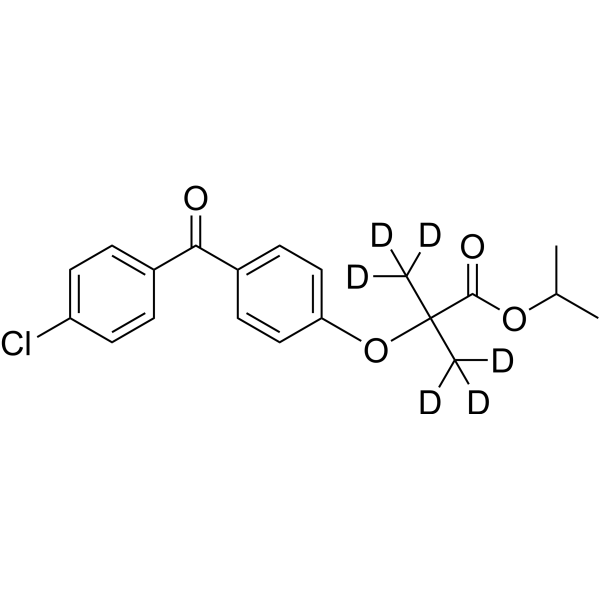
Fenofibrate-d6 is the deuterium labeled Fenofibrate. Fenofibrate is a selective PPARα agonist with an EC50 of 30 μM. Fenofibrate also inhibits human cytochrome P450 isoforms, with IC50s of 0.2, 0.7, 9.7, 4.8 and 142.1 μM for CYP2C19, CYP2B6, CYP2C9, CYP2C8, and CYP3A4, respectively.
|
-
-
- HY-125348S
-
|
|
|
6α-Hydroxy Paclitaxel-d5 is the deuterium labeled 6α-Hydroxy paclitaxel. 6α-Hydroxy paclitaxel is one of the main metabolites of Paclitaxel (PTX) (HY-B0015), and it is generated by the liver cytochrome P450 enzyme CYP2C8. 6α-Hydroxy paclitaxel has bone marrow toxicity, but it can enhance the cytotoxicity of PTX against leukemia cells without causing cell toxicity. 6α-Hydroxy paclitaxel can be used in leukemia research.
|
-
-
- HY-100641S
-
|
|
|
4-Hydroxytolbutamide-d9 is the deuterium labeled 4-Hydroxytolbutamide. 4-Hydroxytolbutamide (Hydroxytolbutamide) is a metabolite of Tolbutamide. 4-Hydroxytolbutamide is metabolized by CYP2C8 and CYP2C9. Tolbutamide is a first generation potassium channel blocker and a sulfonylurea oral antidiabetic .
|
-
-
- HY-W754151
-
|
|
|
N-Desmethyl apalutamide-d4 is the deuterium-labeled N-Desmethyl-Apalutamide (HY-135331). N-Desmethyl Apalutamide is an active metabolite of Apalutamide. N-Desmethyl Apalutamide is a less potent antagonist of the androgen receptor and is responsible for one-third of the activity of Apalutamide. The formation of N-Desmethyl Apalutamide mediated predominantly by CYP2C8 and CYP3A4. N-Desmethyl Apalutamide is moderate to strong CYP3A4 and CYP2B6 inducer and has an excellent plasma-proteins bound concentration .
|
-
-
- HY-70002AS
-
|
|
|
N-desmethyl Enzalutamide-d6 is a deuterium labeled N-desmethyl Enzalutamide. N-desmethyl Enzalutamide is an active metabolite of Enzalutamide. N-desmethyl Enzalutamide is the active metabolite of Enzalutamide. N-desmethyl Enzalutamide demonstrates primary and secondary pharmacodynamics of similar potency to Enzalutamide and circulates at approximately the same plasma concentrations as enzalutamide .
|
-
-
- HY-135335S
-
|
|
|
3'-Hydroxy Repaglinide-d5 is the deuterium labeled 3'-Hydroxy Repaglinide. 3'-Hydroxy Repaglinide is a main CYP2C8 metabolite of Repaglinide .
|
-
-
- HY-135810S
-
|
|
|
Cletoquine-d4 is deuterium labeled Cletoquine. Cletoquine (Desethylhydroxychloroquine) is a major active metabolite of Hydroxychloroquine. Cletoquine is produced in the liver by CYP2D6, CYP3A4, CYP3A5, and CYP2C8 isoenzymes. Cletoquine is also a Chloroquine derivative and has the ability to against the chikungunya virus (CHIKV). Cletoquine has antimalarial effects and has the potential for autoimmune diseases treatment .
|
-
-
- HY-W699866
-
|
|
|
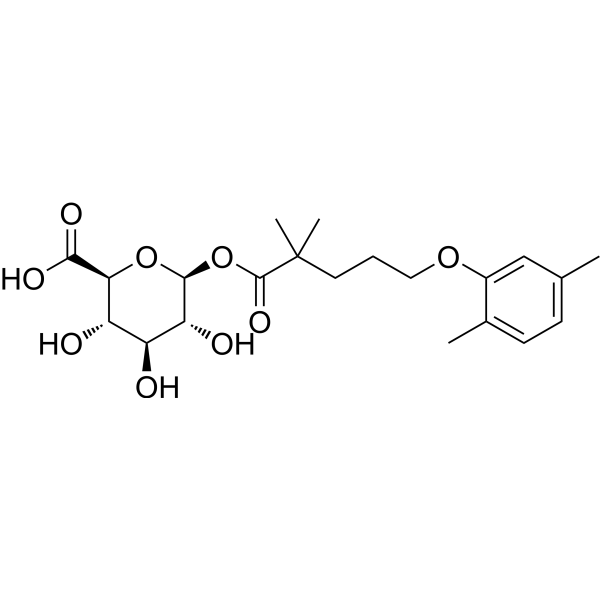
Gemfibrozil 1-O-β-glucuronide-d6 is the deuterium labeled Gemfibrozil 1-O-β-glucuronide (HY-129993). Gemfibrozil 1-O-β-Glucuronide, a metabolite of Gemfibrozil (CI-719; HY-B0258), is a potent and competitive P450 (CYP) isoform CYP2C8 inhibitor with an IC50 of 4.07 μM .
|
-
-
- HY-135810S1
-
|
|
|
Cletoquine-d4-1 is the deuterium labeled Cletoquine. Cletoquine (Desethylhydroxychloroquine) is a major active metabolite of Hydroxychloroquine. Cletoquine is produced in the liver by CYP2D6, CYP3A4, CYP3A5, and CYP2C8 isoenzymes. Cletoquine is also a Chloroquine derivative and has the ability to against the chikungunya virus (CHIKV). Cletoquine has antimalarial effects and has the potential for autoimmune diseases treatment .
|
-
-
- HY-135334S
-
|
|
|
ACP-5862-d4 is deuterium labeled ACP-5862. ACP-5862 is a major active, circulating, pyrrolidine ring-opened metabolite of Acalabrutinib with an IC50 of 5.0 nM for Bruton tyrosine kinase (BTK). ACP‐5862 is a weak time‐dependent inactivator of CYP3A4 and CYP2C8. Acalabrutinib is an orally active, irreversible, and highly selective BTK inhibitor, with an IC50 of 3 nM and EC50 of 8 nM .
|
-
-
- HY-17356S2
-
|
|
|
Fenofibrate-13C6 is a deuterated labeled Fenofibrate . Fenofibrate is a selective PPARα agonist with an EC50 of 30 μM. Fenofibrate also inhibits human cytochrome P450 isoforms, with IC50s of 0.2, 0.7, 9.7, 4.8 and 142.1 μM for CYP2C19, CYP2B6, CYP2C9, CYP2C8, and CYP3A4, respectively.
|
-
-
- HY-17356S1
-
|
|
|
Fenofibrate-d4 is the deuterium labeled Fenofibrate . Fenofibrate is a selective PPARα agonist with an EC50 of 30 μM. Fenofibrate also inhibits human cytochrome P450 isoforms, with IC50s of 0.2, 0.7, 9.7, 4.8 and 142.1 μM for CYP2C19, CYP2B6, CYP2C9, CYP2C8, and CYP3A4, respectively .
|
-
-
- HY-W777442
-
|
|
|
Cletoquine-d4 Oxalate is the deuterium labeled Cletoquine (oxalate) (HY-135810A). Cletoquine oxalate (Desethylhydroxychloroquine oxalate) is a major active metabolite of Hydroxychloroquine. Cletoquine oxalate is produced in the liver by CYP2D6, CYP3A4, CYP3A5, and CYP2C8 isoenzymes. Cletoquine oxalate is also a Chloroquine derivative and has the ability to against the chikungunya virus (CHIKV). Cletoquine oxalate has antimalarial effects and has the potential for autoimmune diseases treatment .
|
-
-
- HY-135331S
-
|
|
|
N-Desmethyl-Apalutamide-15N,d4 is the 15N and deuterium labeled isotope of N-Desmethyl-Apalutamide (HY-135331). N-Desmethyl Apalutamide is an active metabolite of Apalutamide. N-Desmethyl Apalutamide is a less potent antagonist of the androgen receptor and is responsible for one-third of the activity of Apalutamide. The formation of N-Desmethyl Apalutamide mediated predominantly by CYP2C8 and CYP3A4. N-Desmethyl Apalutamide is moderate to strong CYP3A4 and CYP2B6 inducer and has an excellent plasma-proteins bound concentration .
|
-
| Cat. No. |
Product Name |
|
Classification |
-
- HY-114759
-
MS-PPOH
1 Publications Verification
|
|
Alkynes
|
|
MS-PPOH is a potent and selective cytochrome P450 (CYP) epoxygenase inhibitor . MS-PPOH inhibits CYP2C8 and CYP2C9 with IC50s of 15 and 11 μM, respectively . MS-PPOH is a click chemistry reagent, it contains an Alkyne group and can undergo copper-catalyzed azide-alkyne cycloaddition (CuAAc) with molecules containing Azide groups.
|
-
- HY-183268
-
|
|
|
Alkynes
|
|
TRPM4-IN-4 (Compound 118) is a selective TRPM4 inhibitor with an IC50 value of 0.339 μM against hTRPM4. TRPM4-IN-4 inhibits hTRPM4 and mTRPM4. TRPM4-IN-4 can be used for the research of colorectal cancer .
|
| Cat. No. |
Product Name |
|
Classification |
-
- HY-RS03459
-
|
|
|
siRNAs
Human Pre-designed siRNA Sets
|
|
CYP2C8 Human Pre-designed siRNA Set A contains three designed siRNAs for CYP2C8 gene (Human), as well as a negative control, a positive control, and a FAM-labeled negative control.
|
| Cat. No. |
Product Name |
Target |
Research Areas |
Chemical Structure |
-
- HY-17356G
-
|
|
Cytochrome P450
PPAR
Autophagy
|
Cardiovascular Disease
|
|
Fenofibrate (GMP) is Fenofibrate (HY-17356) produced by using GMP guidelines. GMP small molecules work appropriately as an auxiliary reagent for cell therapy manufacture. Fenofibrate is a selective PPARα agonist with an EC50 of 30 μM. Fenofibrate also inhibits human cytochrome P450 isoforms, with IC50s of 0.2, 0.7, 9.7, 4.8 and 142.1 μM for CYP2C19, CYP2B6, CYP2C9, CYP2C8, and CYP3A4, respectively.
|
-
Your information is safe with us. * Required Fields.
Inquiry Information
- Product Name:
- Cat. No.:
- Quantity:
- MCE Japan Authorized Agent:

