1. Search Result
Search Result
Results for "

DNA-crosslinking

" in MedChemExpress (MCE) Product Catalog:

43

Inhibitors & Agonists

2

Biochemical Assay Reagents

1

Peptides

2

Natural
Products

5

Isotope-Labeled Compounds

Cat. No. Product Name Target Research Areas Chemical Structure
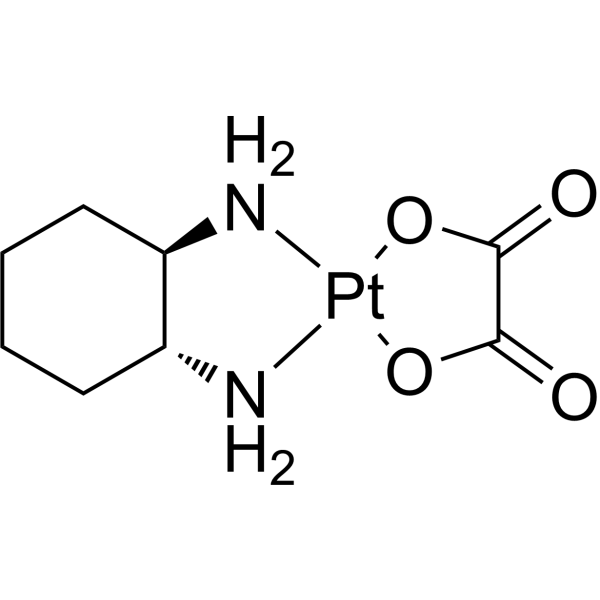
  • HY-17371
    Oxaliplatin
    Maximum Cited Publications
    216 Publications Verification

    DNA/RNA Synthesis Apoptosis Inflammation/Immunology Cancer
    Oxaliplatin is a DNA synthesis inhibitor. Oxaliplatin causes DNA crosslinking damage, prevents DNA replication and transcription and induces apoptosis. Oxaliplatin can be used for cancer research .
    Oxaliplatin
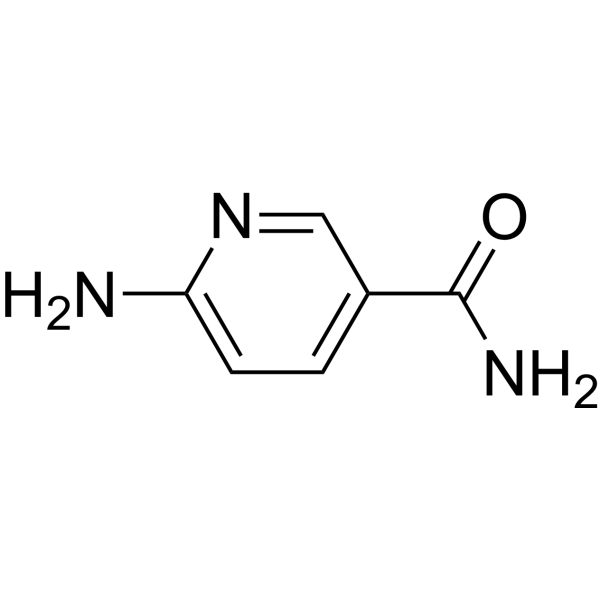
  • HY-W010342
    6-Aminonicotinamide
    15+ Cited Publications

    NADPH Oxidase Cancer
    6-Aminonicotinamide, a potent antimetabolite of nicotinamide, is competitive NADP +-dependent enzyme glucose-6-phosphate dehydrogenase (G6PD) inhibitor (Ki=0.46 μM). 6-Aminonicotinamide resultis ATP depletion and synergizes with DNA-crosslinking chemotherapy agents, such as Cisplatin (HY-17394), in killing cancer cells .
    6-Aminonicotinamide
  • HY-101162

    Drug-Linker Conjugates for ADC Cancer
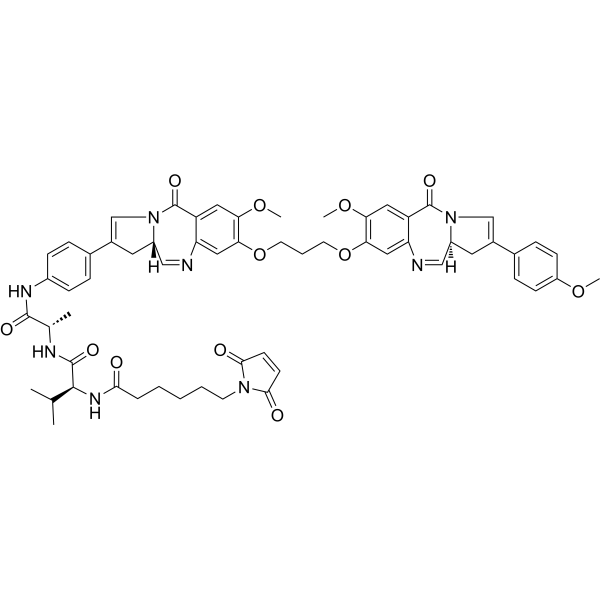
    SGD-1910 is a agent-linker conjugate for ADC by using the antitumor antibiotic, pyrrolobenzodiazepine (PBD, a cytotoxic DNA crosslinking), linked via the cleavable linker MC-Val-Ala .
    SGD-1910
  • HY-13424
    RITA
    3 Publications Verification

    NSC 652287

    MDM-2/p53 Autophagy DNA Alkylator/Crosslinker Cancer
    RITA is an inhibitor of p53-HDM-2 interaction, binds to p53dN, with a Kd of 1.5 nM, and also induces DNA-DNA cross-links.
    RITA
  • HY-17371R

    Reference Standards DNA/RNA Synthesis Apoptosis Cancer
    Oxaliplatin (Standard) is the analytical standard of Oxaliplatin. This product is intended for research and analytical applications. Oxaliplatin is a DNA synthesis inhibitor. Oxaliplatin causes DNA crosslinking damage, prevents DNA replication and transcription and induces apoptosis. Oxaliplatin can be used for cancer research .
    Oxaliplatin (Standard)
  • HY-14573
    SJG-136
    3 Publications Verification

    NSC-694501

    DNA Alkylator/Crosslinker ADC Payload Cancer
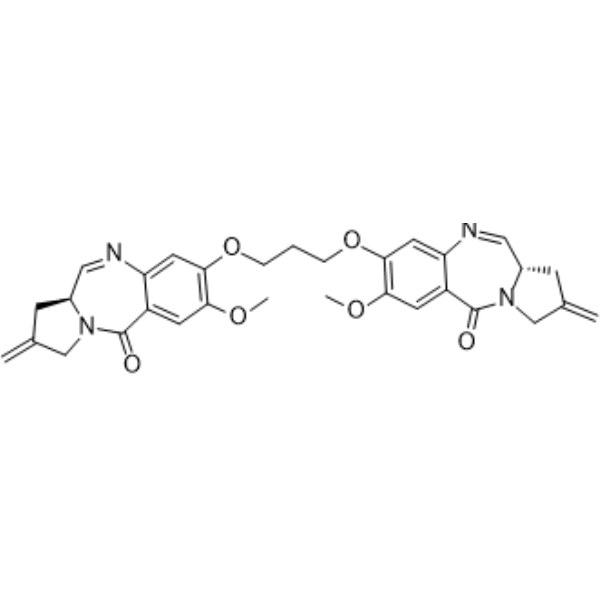
    SJG-136 is a DNA cross-linking agent, with an XL50 of 45 nM for pBR322 DNA. SJG-136 has potent antitumor activity.
    SJG-136
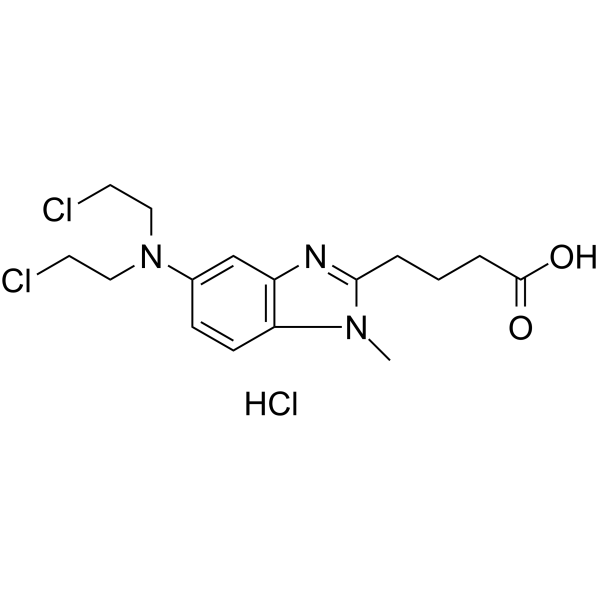
  • HY-B0077
    Bendamustine hydrochloride
    5+ Cited Publications

    SDX-105

    DNA Alkylator/Crosslinker Apoptosis Neurological Disease Inflammation/Immunology Cancer
    Bendamustine hydrochloride (SDX-105), a purine analogue, is a DNA cross-linking agent. Bendamustine hydrochloride activats DNA-damage stress response and apoptosis. Bendamustine hydrochloride has potent alkylating, anticancer and antimetabolite properties .
    Bendamustine hydrochloride
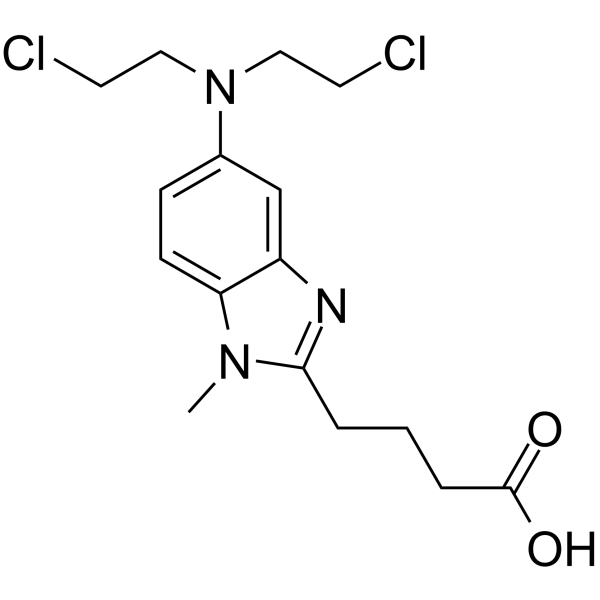
  • HY-13567
    Bendamustine
    5+ Cited Publications

    SDX-105 free base

    DNA Alkylator/Crosslinker Apoptosis Neurological Disease Inflammation/Immunology Cancer
    Bendamustine (SDX-105 free base), a purine analogue, is a DNA cross-linking agent. Bendamustine activates DNA-damage stress response and apoptosis. Bendamustine has potent alkylating, anticancer and antimetabolite properties .
    Bendamustine
  • HY-126539
    UBE2T/FANCL-IN-1
    1 Publications Verification

    E1/E2/E3 Enzyme Cancer
    UBE2T/FANCL-IN-1 is a potent inhibitor of UBE2T/FANCL-mediated FANCD2 monoubiquitylation that sensitizes cells to the DNA cross-linking agent, Carboplatin .
    UBE2T/FANCL-IN-1
  • HY-124325

    DNA Alkylator/Crosslinker Cancer
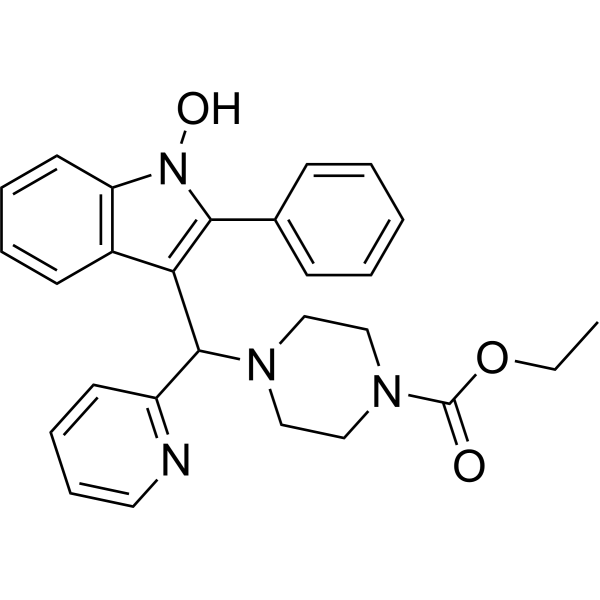
    PIP-199 is a selective inhibitor of RMI (RecQ-mediated genome instability protein) core complex/MM2 interaction, with an IC50 of 36 μM. PIP-199 can be used for the research of sensitizing resistant tumors to DNA crosslinking chemotherapeutics .
    PIP-199
  • HY-16405

    DNA Alkylator/Crosslinker Cancer
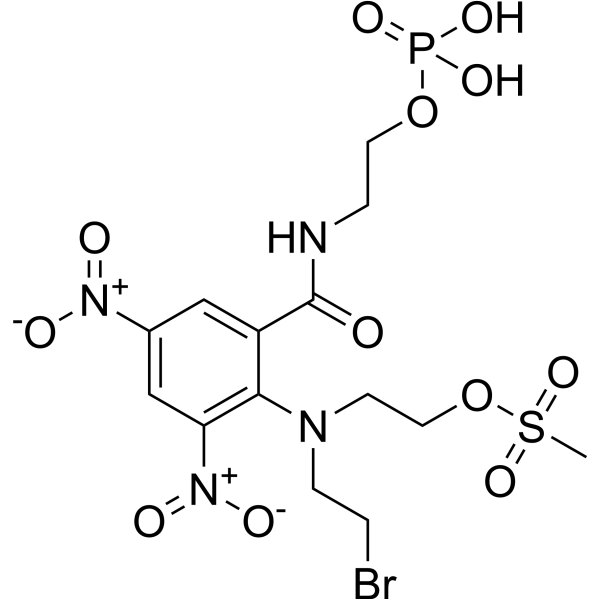
    PR-104 is a selective hypoxia-activated DNA cross-linking agent and can be used for the research of multiple tumor xenograft models. PR-104, as a nitrogen mustard pre-proagent, is converted efficiently to the more lipophilic dinitrobenzamide mustards alcohol PR-104A .
    PR-104
  • HY-W781133

    cis-[Pt(NH3)2N1-pyridineCl]Cl

    DNA Alkylator/Crosslinker Cancer
    cDPCP (cis-[Pt(NH3)2(N1-pyridine)Cl]Cl) is a DNA crosslinking agent and also a substrate for OCT1 and OCT2. DPCP exhibits anticancer activity and can improve the survival rate of sarcoma-180 mice. cDPCP is suitable for the research of colorectal cancer and cancers with appropriate cation transporters .
    cDPCP
  • HY-W075885

    trans-platinumdiamminedichloride

    DNA Alkylator/Crosslinker Others
    trans-Platinum(II)diammine dichloride (trans-platinumdiamminedichloride) is a geometric isomer of Cisplatin (HY-17394). Trans-Platinum(II)diammine dichloride is a DNA cross-linking agent that induces significant DNA cross-link damage while exhibiting low cytotoxicity. Trans-Platinum(II)diammine dichloride is useful for studying DNA-protein cross-links .
    trans-Platinum(II)diammine dichloride
  • HY-W100491

    Drug Derivative Cancer
    Trimethylbenzoquinone (Compound 5) is a methylated benzoquinone. Trimethylbenzoquinone exhibits moderate cytotoxicity against K562 cells, with its IC50 being 0.75 μM. Trimethylbenzoquinone is completely unable to cause inter-strand DNA cross-linking and cannot alkylate DNA guanines. Trimethylbenzoquinone can be used to study the relationship between the nitrogen heterocyclic group and DNA cross-linking .
    Trimethylbenzoquinone
  • HY-14572

    SN 27858

    DNA Alkylator/Crosslinker Drug Metabolite Cancer
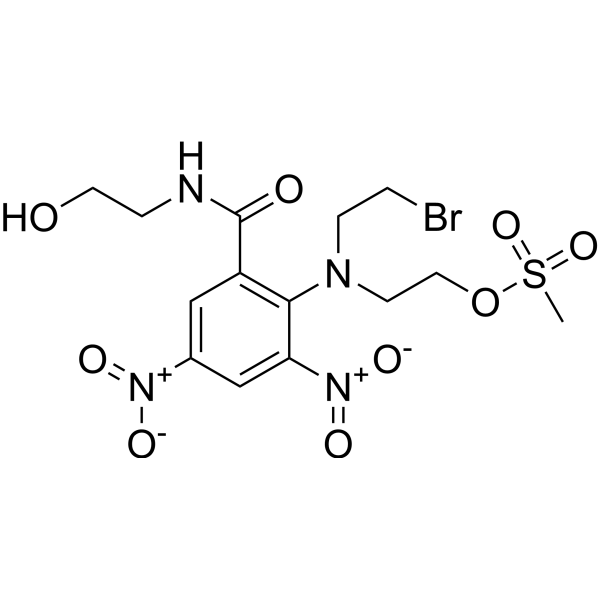
    PR-104A (SN 27858) is the alcohol metabolite of phosphate proagent PR-104. PR-104A is a hypoxia-selective DNA cross-linking agent/DNA-damaging agent and cytotoxin. Antitumor Activity . PR-104A is metabolized under hypoxia by the 1-electron NADPH:cytochrome P450 oxidoreductase. PR-104A can be used for the research of relapsed/refractory T-lineage acute lymphoblastic leukemia (T-ALL) .
    PR-104A
  • HY-W111005

    DNA Alkylator/Crosslinker Cancer
    1-Chloromethylpyrene is an alkylating agent that enters the DNA double helix structure through intercalation, forms covalent bonds with electrophilic groups, resulting in DNA cross-linking, thereby inhibiting the proliferation of tumor cells .
    1-Chloromethylpyrene
  • HY-402091

    ADC Payload Others
    SJG-136 intermediate-1 (compound 19) is an intermediate for synthesizing SJG-136. SJG-136 is a DNA cross-linking agent, with an XL50 of 45 nM for pBR322 DNA .
    SJG-136 intermediate-1
  • HY-17371A

    DNA/RNA Synthesis Apoptosis Cancer
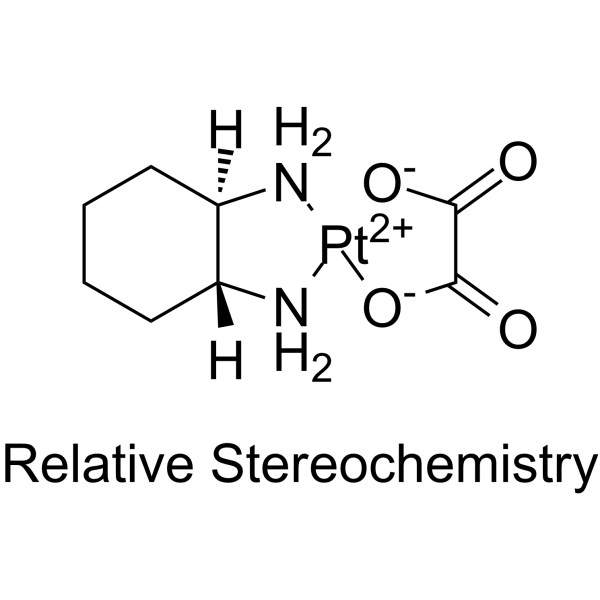
    (rel)-Oxaliplatin is a DNA synthesis inhibitor. (rel)-Oxaliplatin causes DNA crosslinking damage, prevents DNA replication and transcription and induces apoptosis. (rel)-Oxaliplatin can be used for cancer research .
    (rel)-Oxaliplatin
  • HY-N16420

    DNA/RNA Synthesis Apoptosis Cancer
    Illudin B is a DNA-targeting cytotoxin that forms interstrand DNA crosslinks via covalent binding, disrupting DNA replication and transcription. Illudin B induces cell cycle arrest and apoptosis, showing toxicity against multiple tumor cells (e.g., leukemia, breast, lung cancer) .
    Illudin B
  • HY-P3350

    Bacterial Infection
    LS-BF1 is a stable and low toxic cationic antimicrobial peptide. LS-BF1 displays broad spectrum of antibacterial activity, including the challenging ESKAPE pathogens, by cell membrane disruptive mechanism. LS-BF1 shows good in vivo efficacy for elimination of bacteria in a mouse infection model[1].
    LS-BF1
  • HY-W010342R

    NADPH Oxidase Reference Standards Cancer
    6-Aminonicotinamide, a potent antimetabolite of nicotinamide, is competitive NADP+-dependent enzyme glucose-6-phosphate dehydrogenase (G6PD) inhibitor (Ki=0.46 μM). 6-Aminonicotinamide resultis ATP depletion and synergizes with DNA-crosslinking chemotherapy agents, such as Cisplatin (HY-17394), in killing cancer cells .
    6-Aminonicotinamide (Standard)
  • HY-175004

    ADC Payload DNA Alkylator/Crosslinker Cancer
    PBD dimer-4 (Compound 7) is a C1-subsitituted PBD dimer. PBD dimer-4 has high DNA-binding affinity, DNA cross-linking ability and potent cytotoxicity against MDA-MB-231 cells (IC50: 236 nM). PBD dimer-4 can be used as a payload of ADC Loncastuximab tesirine (HY-P99349) to treat several different cancer types .
    PBD dimer-4
  • HY-179392

    Apoptosis DNA Alkylator/Crosslinker VEGFR PDGFR Cancer
    Sunitinib-platinum(IV) prodrug-1 (Complex A) is a Pt(IV) prodrug based on Cisplatin (HY-17394), and this design aims to enable Pt(IV) to be reduced to active Pt(II) under intracellular reducing conditions, while simultaneously releasing a derivative of Sunitinib (HY-10255A) with tyrosine kinase inhibitor (TKI) activity. Sunitinib-platinum(IV) prodrug-1 exhibits excellent cytotoxicity against renal cell carcinoma (RCC), causing DNA crosslinking and apoptosis. Sunitinib-platinum(IV) prodrug-1 inhibits the VEGFR/PDGFR signaling pathway, suppressing tumor growth and angiogenesis. Sunitinib-platinum(IV) prodrug-1 can be used for research on renal cell carcinoma .
    Sunitinib-platinum(IV) prodrug-1
  • HY-U00265

    3-Carbethoxypsoralen; 3-Ethoxycarbonylpsoralen

    Bacterial Infection
    3-CPs is a monofunctional furanocoumarin and a photoprotective agent targeting Staphylococcus aureus DNA, possessesing anti-UVB lethal activity. 3-CPs competitively intercalates into DNA, forming exclusively 4',5'-furan-side mono-adducts upon UVB irradiation, and irreversibly inhibits the formation of cyclobutane pyrimidine dimers. 3-CPs prevents UVB-induced DNA damage by preferentially binding to strong (AT)n sites within the DNA, without inducing lethal interstrand DNA cross-links; the limited number of mono-adducts it induces can be efficiently repaired by bacteria. 3-CPs holds potential for use in the development of photoprotective formulations for skin diseases, as well as in studies investigating bacterial DNA photodamage repair mechanisms and the optimization of photochemotherapy safety .
    3-CPs
  • HY-N16478

    Cytochrome P450 Metabolic Disease
    Echihumiline is an alkaloid targeting hepatic cytochrome P450 enzymes (CYP450). Echihumiline induces DNA cross-linking and oxidative stress in hepatocytes, leading to liver necrosis and fibrosis. Echihumiline is promising for research of liver diseases .
    Echihumiline
  • HY-17371S

    Isotope-Labeled Compounds Apoptosis DNA/RNA Synthesis Cancer
    Oxaliplatin-d10 is a deuterium labeled Oxaliplatin (HY-17371). Oxaliplatin is a DNA synthesis inhibitor. Oxaliplatin causes DNA crosslinking damage, prevents DNA replication and transcription and induces apoptosis. Oxaliplatin can be used for cancer research .
    Oxaliplatin-d10
  • HY-139635

    DNA Alkylator/Crosslinker Cancer
    Anticancer agent 11 is a broad-spectrum anticancer agent that inhibits angiogenesis and induces DNA cross-links.
    Anticancer agent 11
  • HY-13567S

    SDX-105-d4 free base

    Isotope-Labeled Compounds DNA Alkylator/Crosslinker Cancer
    Bendamustine-d4 is the deuterium labeled Bendamustine. Bendamustine is a DNA cross-linking agent that causes DNA breaks, with alkylating and antimetabolite properties.
    Bendamustine-d4
  • HY-402090

    ADC Payload Others
    SJG-136 intermediate-2 (compound 141) is an intermediate for synthesizing SJG-136. SJG-136 is a DNA cross-linking agent, with an XL50 of 45 nM for pBR322 DNA .
    SJG-136 intermediate-2
  • HY-B0077S1

    SDX-105-d8

    Isotope-Labeled Compounds DNA Alkylator/Crosslinker Apoptosis Cancer
    Bendamustine-d8 (hydrochloride) is deuterium labeled Bendamustine (hydrochloride). Bendamustine hydrochloride (SDX-105), a purine analogue, is a DNA cross-linking agent. Bendamustine hydrochloride activats DNA-damage stress response and apoptosis. Bendamustine hydrochloride has potent alkylating, anticancer and antimetabolite properties .
    Bendamustine-d8 hydrochloride
  • HY-13567S1

    SDX-105-d8 free base

    DNA Alkylator/Crosslinker Apoptosis Cancer
    Bendamustine-d8 is the deuterium labeled Bendamustine . Bendamustine (SDX-105 free base), a purine analogue, is a DNA cross-linking agent. Bendamustine activates DNA-damage stress response and apoptosis. Bendamustine has potent alkylating, anticancer and antimetabolite properties .
    Bendamustine-d8
  • HY-B0077R

    SDX-105 (Standard)

    Reference Standards DNA Alkylator/Crosslinker Apoptosis Cancer
    Bendamustine (hydrochloride) (Standard) is the analytical standard of Bendamustine (hydrochloride). This product is intended for research and analytical applications. Bendamustine hydrochloride (SDX-105), a purine analogue, is a DNA cross-linking agent. Bendamustine hydrochloride activats DNA-damage stress response and apoptosis. Bendamustine hydrochloride has potent alkylating, anticancer and antimetabolite properties .
    Bendamustine hydrochloride (Standard)
  • HY-16406

    DNA Alkylator/Crosslinker Cancer
    PR-104 (sodium) is a selective hypoxia-activated DNA cross-linking agent and can be used for the research of multiple tumor xenograft models. PR-104 (sodium), as a nitrogen mustard pre-proagent, is converted efficiently to the more lipophilic dinitrobenzamide mustards alcohol PR-104A .
    PR-104 sodium
  • HY-13567R

    SDX-105 free base (Standard)

    DNA Alkylator/Crosslinker Apoptosis Reference Standards Cancer
    Bendamustine (Standard) is the analytical standard of Bendamustine. This product is intended for research and analytical applications. Bendamustine (SDX-105 free base), a purine analogue, is a DNA cross-linking agent. Bendamustine activates DNA-damage stress response and apoptosis. Bendamustine has potent alkylating, anticancer and antimetabolite properties .
    Bendamustine (Standard)
  • HY-117909

    RXDX-107

    Apoptosis Cancer
    CEP-40125 (RXDX-107) is a modified form of Bendamustine (HY-13567), a DNA cross-linking agent that may cause DNA damage and cell apoptosis. CEP-40125 (RXDX-107) is formed by encapsulating the alkyl ester form of Bendamustine in human serum albumin .
    CEP-40125
  • HY-W738282

    SDX-105-d7

    Isotope-Labeled Compounds DNA Alkylator/Crosslinker Apoptosis Cancer
    Bendamustine-d7 hydrochloride (SDX-105-d7) is the deuterium labeled Bendamustine hydrochloride (HY-B0077). Bendamustine hydrochloride (SDX-105), a purine analogue, is a DNA cross-linking agent. Bendamustine hydrochloride activats DNA-damage stress response and apoptosis. Bendamustine hydrochloride has potent alkylating, anticancer and antimetabolite properties .
    Bendamustine-d7 hydrochloride
  • HY-106109

    DNA Alkylator/Crosslinker DNA/RNA Synthesis Cancer
    FK 973 is a dihydrobenzoxazine anticancer agent. FK 973 selectively inhibits DNA synthesis and can form DNA cross-links through cytoplasmic activation. FK 973 exhibits significant antitumor activity in various animal tumor models and human tumor xenografts, with relatively weak myelosuppressive effects. FK 973 is sensitive to neural tumor cells. FK 973 can be used for DNA-targeted antitumor research .
    FK 973
  • HY-106435

    DNA/RNA Synthesis DNA Alkylator/Crosslinker Cancer
    Cystemustine is a DNA inhibitor (a chloroethyl nitrosourea, CENU). Cystemustine can cause DNA cross-linking, thereby inhibiting the proliferation of tumor cells. Cystemustine can also exert cytotoxic effects by interfering with the cell cycle, inducing cell re-differentiation, and altering phospholipid metabolism. Cystemustine exhibits high anti-tumor activity and a relatively short plasma half-life in mice. Cystemustine can be used for the study of various malignant tumors, including melanoma, glioma, renal cancer, head and neck cancer, and colorectal cancer, etc .
    Cystemustine
  • HY-18774

    DNA Alkylator/Crosslinker Cancer
    Cycloplatam is a DNA crosslinking agent. Cycloplatam inhibits tumor cell DNA replication and transcription. Cycloplatam is promising for research of ovarian cancer, lung cancer, and other solid tumors .
    Cycloplatam
  • HY-W075885R

    trans-platinumdiamminedichloride (Standard)

    Biochemical Assay Reagents Reference Standards Others
    trans-Platinum(II)diammine dichloride (trans-platinumdiamminedichloride) (Standard) is an analytical standard for trans-Platinum(II)diammine dichloride (HY-W075885). This product is intended for research and analytical applications. trans-Platinum(II)diammine dichloride is a geometric isomer of Cisplatin (HY-17394). trans-Platinum(II)diammine dichloride is a DNA cross-linking agent that induces significant DNA cross-link damage but exhibits low cytotoxicity. trans-Platinum(II)diammine dichloride can be used to study DNA-protein cross-links.
    trans-Platinum(II)diammine dichloride (Standard)
  • HY-13567A

    SDX-105 hydrate

    DNA Alkylator/Crosslinker Apoptosis Metabolic Disease
    Bendamustine hydrochloride hydrate (SDX-105 hydrate), a purine analogue, is a DNA cross-linking agent. Bendamustine hydrochloride hydrate activates DNA-damage stress response and apoptosis. Bendamustine hydrochloride hydrate has potent alkylating, anticancer and antimetabolite properties .
    Bendamustine hydrochloride hydrate
  • HY-182760

    DNA Alkylator/Crosslinker Bcl-2 Family Caspase Apoptosis Topoisomerase Cancer
    MN33-63 is a Bcl-2 inhibitor, caspase-3 activator and DNA crosslinker with broad-spectrum anticancer activity. MN33-63 improves the water solubility of SN-38 (HY-13704), inhibits tumor growth and proliferation in a dose-dependent manner, and causes no obvious toxicity. MN33-63 relieves the inhibition of the mitochondrial apoptotic pathway, initiates the apoptosis program, inhibits Topo I activity, and promotes its degradation via the ubiquitin-proteasome and autophagy-lysosome pathways. MN33-63 induces DNA crosslinking, G2/M cell cycle arrest, inhibition of cancer cell migration, and cancer cell apoptosis through the mitochondrial pathway. MN33-63 can be used in the research of colorectal cancer, cervical cancer, hepatocellular carcinoma, lung adenocarcinoma and gastric cancer .
    MN33-63
  • HY-182759

    DNA Alkylator/Crosslinker Topoisomerase Caspase Bcl-2 Family Apoptosis Cancer
    MN33-47 is a multi-target anti-tumor compound with broad-spectrum anti-proliferative activity. MN33-47 relieves the inhibition of the mitochondrial apoptosis pathway by downregulating the anti-apoptotic protein Bcl-2, while activating caspase-3 and inhibiting Topoisomerase I activity, thereby promoting its degradation through the ubiquitin-proteasome and autophagy-lysosome pathways. MN33-47 can also induce DNA cross-linking and G2/M cell cycle arrest, inhibit cancer cell migration and activate the mitochondrial apoptosis pathway, thus exerting potent anti-tumor effects. MN33-47 can improve the water solubility of SN-38 (HY-13704), and exhibits dose-dependent tumor growth inhibition effects in CT26 tumor-bearing mouse models without obvious toxic and side effects. MN33-47 can be used in related studies on colorectal adenocarcinoma, cervical adenocarcinoma, hepatocellular carcinoma, alveolar basal epithelial adenocarcinoma, gastric cancer and colon cancer .
    MN33-47

Inquiry Online

Your information is safe with us. * Required Fields.

Salutation


Country or Region *

Applicant Name *


Organization Name *

Department *


Email Address *


Product Name *

Cat. No.


Requested quantity *

Phone Number *


Remarks

Inquiry Online

Inquiry Information

Product Name:
Cat. No.:
Quantity:
MCE Japan Authorized Agent:

