1. Search Result
Search Result
Results for "

Ginger

" in MedChemExpress (MCE) Product Catalog:

40

Inhibitors & Agonists

32

Natural
Products

2

Isotope-Labeled Compounds

Cat. No. Product Name Target Research Areas Chemical Structure
  • HY-14615
    [6]-Gingerol
    Maximum Cited Publications
    13 Publications Verification

    (S)-(+)-[6]Gingerol

    AMPK Apoptosis Cancer
    [6]-Gingerol is an active compound isolated from Ginger (Zingiber officinale), exhibits a variety of biological activities including anticancer, anti-inflammation, and anti-oxidation.
    [6]-Gingerol
  • HY-14616
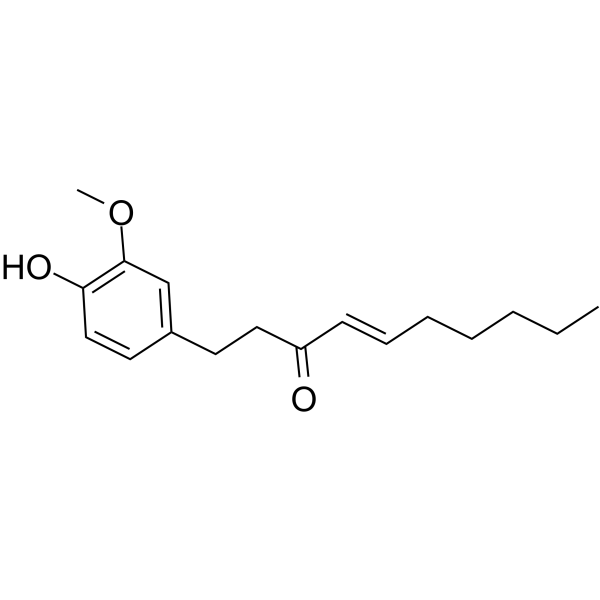
    Shogaol
    10+ Cited Publications

    [6]-Shogaol; 6-Shogaol

    Autophagy Cancer
    Shogaol ([6]-Shogaol), an active compound isolated from Ginger (Zingiber officinale Rosc), exhibits a variety of biological activities including anticancer, anti-inflammation, and anti-oxidation.
    Shogaol
  • HY-N0448
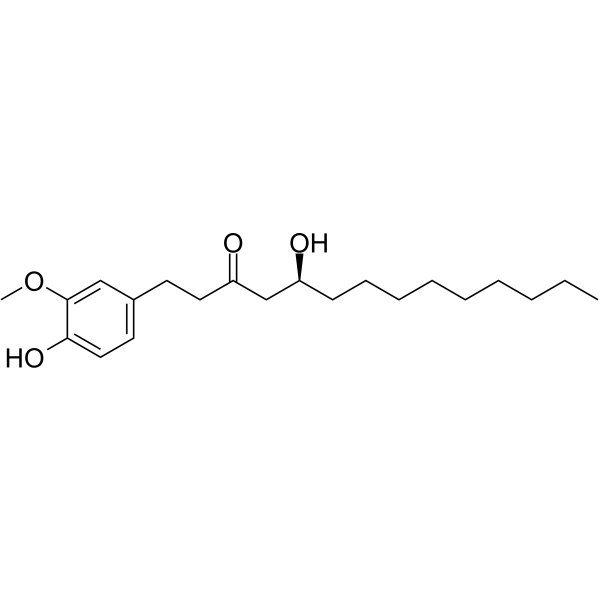
    10-Gingerol
    4 Publications Verification

    AMPK Reactive Oxygen Species (ROS) Akt PI3K Interleukin Related TNF Receptor Apoptosis Neurological Disease Inflammation/Immunology Cancer
    10-Gingerol is an AMPK agonist, which is found in the ginger oleoresin from fresh rhizome with anti-inflammatory, antioxidant and anti-proliferative activities. 10-Gingerol suppresses neointimal hyperplasia and inhibits vascular smooth muscle cell proliferation. 10-Gingerol exhibits substantial scavenging activities with an IC50 value of 10.47 μM against DPPH radical, an IC50 value of 1.68 μM against superoxide radical and an IC50 value of 1.35 μM against hydroxyl radical. 10-Gingerol inhibits the proliferation of MDA-MB-231 tumor cell line with an IC50 of 12.1 μM. 10-Gingerol suppresses the proliferation, migration, invasion, and induced apoptosis through targeting the PI3K/Akt signaling pathway in MDA-MB-231/IR cells. 10-Gingerol can be used in research on various common cancers such as ovarian cancer and colon cancer, as well as colitis and neurodegenerative diseases .
    10-Gingerol
  • HY-N0447
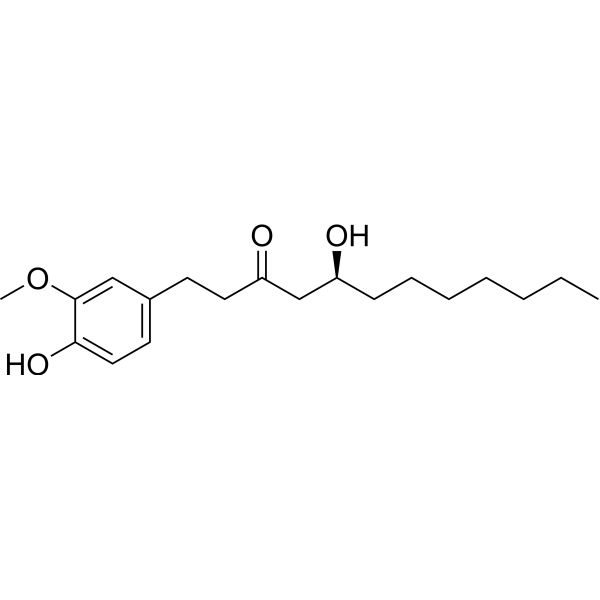
    8-Gingerol
    5 Publications Verification

    TRP Channel Bacterial Apoptosis Autophagy STAT PERK EGFR PI3K Akt mTOR Caspase MMP Infection Cardiovascular Disease Inflammation/Immunology Cancer
    8-Gingerol can be found in the rhizome of ginger (Z. officinale) and has oral bioactivity. It activates TRPV1, with an EC50 value of 5.0 µM. 8-Gingerol inhibits COX-2 and also suppresses the growth of H. pylori in vitro. Additionally, 8-Gingerol exhibits anticancer, antioxidant, and anti-inflammatory properties by inhibiting the epidermal growth factor receptor (EGFR) and modulating its downstream STAT3/ERK pathway to suppress the proliferation, migration, and invasion of colorectal cancer cells. 8-Gingerol also exerts immunosuppressive effects by inhibiting oxidative stress, inducing cell cycle arrest, promoting apoptosis, and regulating autophagy. Furthermore, 8-Gingerol has cardioprotective effects. 8-Gingerol is promising for research in the fields of cancer, infection, immunosuppression, and cardiovascular diseases.
    8-Gingerol
  • HY-14617
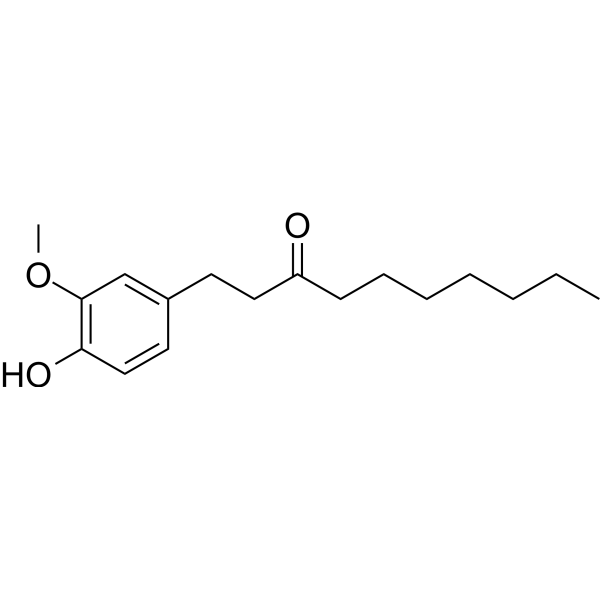
    Paradol
    4 Publications Verification

    [6]-Gingerone; [6]-Paradol

    COX Cancer
    Paradol is a pungent phenolic substance found in ginger and other Zingiberaceae plants. Paradol is an effective inhibitor of tumor promotion in mouse skin carcinogenesis, binds to cyclooxygenase (COX)-2 active site.
    Paradol
  • HY-N2435
    [8]-Shogaol
    4 Publications Verification

    COX Apoptosis Cancer
    [8]-Shogaol, a kind of stimulating compound in ginger, has antiplatelet (IC50=5 μM), anti-cancer and anti-inflammatory activity. [8]-Shogaol inhibited COX-2 (IC50=17.5 μM), which led to the decline of human leukemia cells. 8-Shogaol Selective direction TAK1 sum TAK1-TAB1 (IC50=5 μM), suppress IKK, Akt sum MAPK signal pathway, and reverse synovitis synovial sum Air dampness (RA).
    [8]-Shogaol
  • HY-14615R
    [6]-Gingerol (Standard)
    1 Publications Verification

    (S)-(+)-[6]Gingerol (Standard)

    Reference Standards AMPK Apoptosis Cancer
    -Gingerol (Standard) is the analytical standard of -Gingerol. This product is intended for research and analytical applications. -Gingerol is an active compound isolated from Ginger (Zingiber officinale), exhibits a variety of biological activities including anticancer, anti-inflammation, and anti-oxidation.
    [6]-Gingerol (Standard)
  • HY-N1096

    Environmental Pollutants Bacterial Parasite Infection
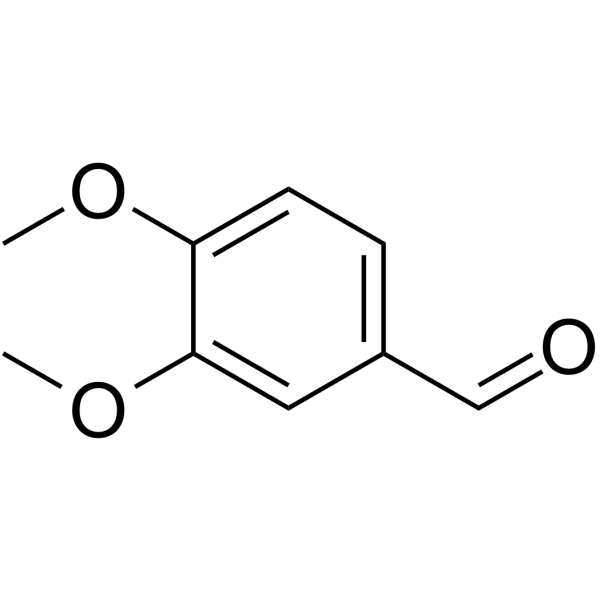
    Veratraldehyde is an orally active aromatic compound and antibacterial agent. Veratraldehyde can be isolated from essential oils of plants such as peppermint and ginger. Veratraldehyde targets the PilY1 protein. Veratraldehyde has antibacterial activity against Pseudomonas aeruginosa. Veratraldehyde has a repellent effect against mosquitoes and ticks. Veratraldehyde can be used as a flavoring agent .
    Veratraldehyde
  • HY-134635

    Bacterial Fungal HIV CDK Infection Cancer
    Dehydrozingerone is a ginger-derived component and cyclin D1 inhibitor that downregulates cyclin D1 expression and induces cell cycle G1 phase arrest. Dehydrozingerone reduces the proliferative capacity of castration-resistant prostate cancer cells under in vitro conditions. Dehydrozingerone reduces subcutaneous tumor growth by inhibiting cell proliferation and angiogenesis. Dehydrozingerone exerts antibacterial and antifungal activities via its α,β-unsaturated carbonyl conjugated system. Dehydrozingerone can be used in studies related to castration-resistant prostate cancer, bacterial infections, and food spoilage fungal infections .
    Dehydrozingerone
  • HY-N2434
    [10]-Shogaol
    5 Publications Verification

    COX Interleukin Related NF-κB Parasite Infection Inflammation/Immunology Cancer
    [10]-Shogaol is an orally active antioxidant. [10]-Shogaol can be extracted from ginger (Zingiber officinale). [10]-Shogaol1 inhibits COX-2 with an IC50 value of 7.5 μM. [10]-Shogaol inhibits the production of proinflammatory cytokines (IL-1β, IL-6). [10]-Shogaol inhibits NF-κB phosphorylation. [10]-Shogaol has anti-inflammatory effects. [10]-Shogaol has anticancer effects against Docetaxel (HY-B0011)-resistant prostate cancer. [10]-Shogaol exhibits larvicidal activity against L5 larvae of Angiostrongylus cantonensis .
    [10]-Shogaol
  • HY-133865
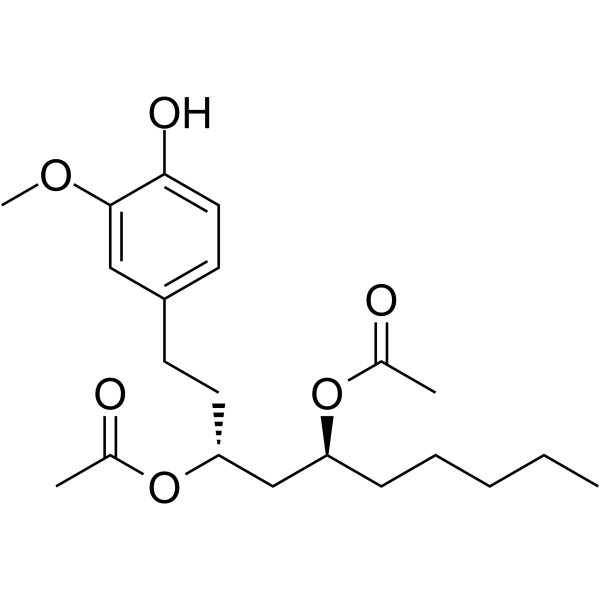
    Diacetoxy-6-gingerdiol
    1 Publications Verification

    Interleukin Related Metabolic Disease Inflammation/Immunology
    Diacetoxy-6-gingerdiol is a gingerol isolated with anti-inflammatory and antioxidant effects, which is found in the dichloromethane extract of rhizomes of ginger (Zingiber officinale Roscoe). Diacetoxy-6-gingerdiol protects the extracellular matrix of nucleus pulposus cells and ameliorates intervertebral disc degeneration by inhibiting the IL-1β-mediated NLRP3 pathway .
    Diacetoxy-6-gingerdiol
  • HY-W1000105

    (E)-3,7-Dimethylocta-2,6-dienal

    TNF Receptor Interleukin Related ERK JNK IKK COX NO Synthase Reactive Oxygen Species (ROS) Inflammation/Immunology
    Geranial is an aromatic compound. It can be isolated from the fruits of Litsea cubeba Lour and the rhizomes of ginger (Zingiber officinale). Geranial inhibits LPS-induced phosphorylation of ERK1/2, JNK1/3 and IκB in macrophages. It suppresses the secretion of IL-1β, TNF-α and IL-6, as well as the expression of pro-IL-1β, iNOS and COX-2. Geranial increases ROS. It can be used in the research of inflammatory diseases .
    Geranial
  • HY-N9451

    NF-κB Cardiovascular Disease Inflammation/Immunology Cancer
    Ginger extract exhibits anti-cancer, anti-inflammatory and chemotherapeutic effects in vivo .
    Ginger extract
  • HY-14616R
    Shogaol (Standard)
    1 Publications Verification

    [6]-Shogaol (Standard); 6-Shogaol (Standard)

    Reference Standards Autophagy Cancer
    Shogaol (Standard) is the analytical standard of Shogaol. This product is intended for research and analytical applications. Shogaol ( -Shogaol), an active compound isolated from Ginger (Zingiber officinale Rosc), exhibits a variety of biological activities including anticancer, anti-inflammation, and anti-oxidation.
    Shogaol (Standard)
  • HY-115507

    AMPK mTOR ERK Oxidative Phosphorylation Reactive Oxygen Species (ROS) Ras Cancer
    NMac1 is an orally active Nm23/NDPK activator. NMac1 directly binds to Nm23-H1 and activates the NDPK activity of recombinant Nm23-H1 with an EC50 of 10.7 uM. NMac1 induces AMPK activation and inhibits mTOR and ERK, leading to mitochondrial OXPHOS dysregulation and suppressing mitochondrial ROS production, which in turn induces mitochondrial dysfunction in MDA-MB-231 cells. NMac1 inhibits Complex I activity and suppresses changes in morphology and actin cytoskeleton organization following Rac1 activation in MDA-MB-231 cells. NMac1 inhibits tumor invasion, migration and metastasis. NMac1 is useful for studying metastatic tumors, such as breast cancer. NMac1 can be isolated from the ginger cassumunar Roxb .
    NMac1
  • HY-N12643

    [6]-Gingerdione

    PGE synthase Others
    [6]-Gingerdione is a prostaglandin synthesis inhibitor that can be isolated from ginger rhizomes.
    Gingerdione
  • HY-N16612

    Parasite Infection
    (3S,5S)-[6]-Gingerdiol is a cestocidal agent. (3S,5S)-[6]-Gingerdiol can be isolate from the roots of ginger. (3S,5S)-[6]-Gingerdiol shows cestocidal activity against H. nana .
    (3S,5S)-[6]-Gingerdiol
  • HY-N1096S1

    Isotope-Labeled Compounds Bacterial Parasite Infection
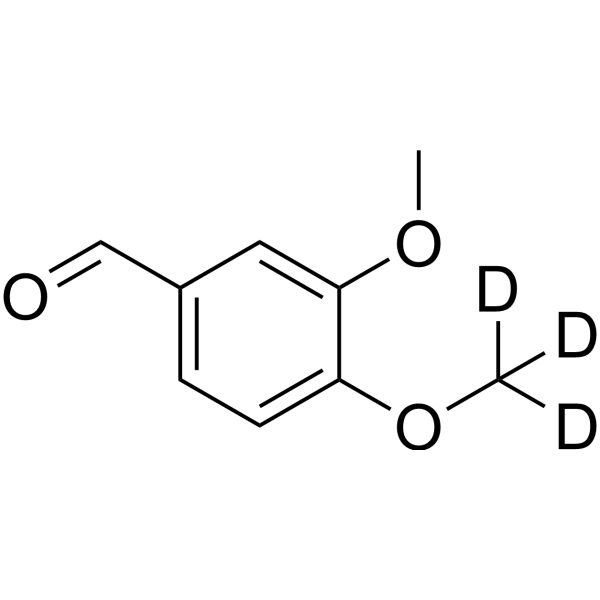
    Veratraldehyde-d3 is the deuterium labeled Veratraldehyde (HY-N1096). Veratraldehyde is an orally active aromatic compound and antibacterial agent. Veratraldehyde can be isolated from essential oils of plants such as peppermint and ginger. Veratraldehyde targets the PilY1 protein. Veratraldehyde has antibacterial activity against Pseudomonas aeruginosa. Veratraldehyde has a repellent effect against mosquitoes and ticks. Veratraldehyde can be used as a flavoring agent .
    Veratraldehyde-d3
  • HY-N15732

    Others Others
    Methyl-8-gingerol is a compound that can be isolated from ginger .
    Methyl-8-gingerol
  • HY-N0448R

    Reference Standards Others Neurological Disease Inflammation/Immunology Cancer
    10-Gingerol (Standard) is the analytical standard of 10-Gingerol (HY-N0448). This product is intended for research and analytical applications. 10-Gingerol is an AMPK agonist, which is found in the ginger oleoresin from fresh rhizome with anti-inflammatory, antioxidant and anti-proliferative activities. 10-Gingerol suppresses neointimal hyperplasia and inhibits vascular smooth muscle cell proliferation. 10-Gingerol exhibits substantial scavenging activities with an IC50 value of 10.47 μM against DPPH radical, an IC50 value of 1.68 μM against superoxide radical and an IC50 value of 1.35 μM against hydroxyl radical. 10-Gingerol inhibits the proliferation of MDA-MB-231 tumor cell line with an IC50 of 12.1 μM. 10-Gingerol suppresses the proliferation, migration, invasion, and induced apoptosis through targeting the PI3K/Akt signaling pathway in MDA-MB-231/IR cells. 10-Gingerol is promising for research of ulcerative colitis .
    10-Gingerol (Standard)
  • HY-W109299

    Methyl cedryl ether

    Environmental Pollutants Inflammation/Immunology
    Cedrol methyl ether is an active ingredient that can be extracted from ginger. Cedrol methyl ether has anti-inflammatory activity. Cedrol methyl ether can be used for research on hyperhidrosis and abnormal vaginal discharge .
    Cedrol methyl ether
  • HY-109088

    trans-6-Shogaol; (E)-[6]-Shogaol

    Drug Derivative Cancer
    Enexasogaol (trans-6-Shogaol; (E)-[6]-Shogaol) is the derivative of Shogaol (HY-14616) found in Ginger (Zingiber officinale Rosc). Enexasogaol can be used for the research of cancer .
    Enexasogaol
  • HY-N16557

    Apoptosis EGFR STAT PERK Cancer
    (Rac)-8-Gingerol is a non-volatile component. (Rac)-8-Gingerol can be extracted from ginger. (Rac)-8-Gingerol enhances Apoptosis. (Rac)-8-Gingerol decreases the level of phosphorylated EGFR and, accordingly, the phosphorylation levels of its downstream effectors, STAT3 and ERK. (Rac)-8-Gingerol exhibits anticancer activity against colorectal cancer .
    (Rac)-8-Gingerol
  • HY-N15734

    Parasite Infection
    6-Dehydro-10-gingerol is an antiparasitic compound that can be isolated from ginger roots .
    6-Dehydro-10-gingerol
  • HY-N18798

    Others Others
    Ginger Oil is extracted from the ginger rhizome.
    Ginger oil
  • HY-N9675

    NO Synthase Inflammation/Immunology
    (+)-Hannokinol can be isolated from AMOMUM TSAO-KO (ginger family) fruit. (+)-Hannokinol inhibits lipopolysaccharide-induced nitric oxide production in BV2 microglia .
    (+)-Hannokinol
  • HY-N13114

    Others Others
    8-Gingerdione can be isolated from ginger (Zingiber officinale). 8-Gingerdione has no significant inhibitory effect on the production of inflammatory factors NO, TNF-α, and IL-6.
    8-Gingerdione
  • HY-14617R

    [6]-Gingerone (Standard); [6]-Paradol (Standard)

    Reference Standards COX Cancer
    Paradol (Standard) is the analytical standard of Paradol. This product is intended for research and analytical applications. Paradol is a pungent phenolic substance found in ginger and other Zingiberaceae plants. Paradol is an effective inhibitor of tumor promotion in mouse skin carcinogenesis, binds to cyclooxygenase (COX)-2 active site.
    Paradol (Standard)
  • HY-N0447R

    Reference Standards TRP Channel Bacterial Infection Inflammation/Immunology Cancer
    8-Gingerol (Standard) is the analytical standard of 8-Gingerol. This product is intended for research and analytical applications. 8-Gingerol, found in the rhizomes of ginger (Z. officinale) with oral bioavailability, activates TRPV1, with an EC50 of 5.0 μM. 8-Gingerol inhibits COX-2, and inhibits the growth of H. pylori in vitro .
    8-Gingerol (Standard)
  • HY-134635R

    Bacterial Fungal HIV Infection Neurological Disease Cancer
    Dehydrozingerone (Standard) is the analytical standard of Dehydrozingerone. This product is intended for research and analytical applications. Dehydrozingerone (Compound 10), a structural half analogue of Curcumin (HY-N0005), is a phenolic compound with antibacterial, anticancer, antioxidant, anti-Alzheimer’s and antifungal activity, which is isolated from ginger (Zingiber officinale) rhizomes. Dehydrozingerone shows moderate inhibitory activities on the secretion of HBsAg in HepG 2 cells with an IC50 value of 0.50 mM .
    Dehydrozingerone (Standard)
  • HY-W738270

    3,4-Dimethoxy[7-13C]-benzaldehyde

    Isotope-Labeled Compounds Bacterial Parasite Infection
    Veratraldehyde- 13C (3,4-Dimethoxy[7- 13C]-benzaldehyde) is the 13C-labeled Veratraldehyde (HY-N1096). Veratraldehyde is an orally active aromatic compound and antibacterial agent. Veratraldehyde can be isolated from essential oils of plants such as peppermint and ginger. Veratraldehyde targets the PilY1 protein. Veratraldehyde has antibacterial activity against Pseudomonas aeruginosa. Veratraldehyde has a repellent effect against mosquitoes and ticks. Veratraldehyde can be used as a flavoring agent .
    Veratraldehyde-13C
  • HY-N2435R

    Reference Standards COX Apoptosis Cancer
    -Shogaol (Standard) is the analytical standard of -Shogaol. This product is intended for research and analytical applications. -Shogaol, a kind of stimulating compound in ginger, has antiplatelet (IC50=5 μM), anti-cancer and anti-inflammatory activity. -Shogaol inhibited COX-2 (IC50=17.5 μM), which led to the decline of human leukemia cells. 8-Shogaol Selective direction TAK1 sum TAK1-TAB1 (IC50=5 μM), suppress IKK, Akt sum MAPK signal pathway, and reverse synovitis synovial sum Air dampness (RA) .
    [8]-Shogaol (Standard)
  • HY-N2434R

    Reference Standards COX Interleukin Related NF-κB Parasite Infection Inflammation/Immunology Cancer
    -Shogaol (Standard) is the analytical standard of -Shogaol (HY-N2434). This product is intended for research and analytical applications. [10]-Shogaol is an orally active antioxidant. [10]-Shogaol can be extracted from ginger (Zingiber officinale). [10]-Shogaol1 inhibits COX-2 with an IC50 value of 7.5 μM. [10]-Shogaol inhibits the production of proinflammatory cytokines (IL-1β, IL-6). [10]-Shogaol inhibits NF-κB phosphorylation. [10]-Shogaol has anti-inflammatory effects. [10]-Shogaol has anticancer effects against Docetaxel (HY-B0011)-resistant prostate cancer. [10]-Shogaol exhibits larvicidal activity against L5 larvae of Angiostrongylus cantonensis .
    [10]-Shogaol (Standard)
  • HY-N18375

    Drug Derivative Others
    7-Gingerdiol is a ginger phenol found in Zingiber officinale rhizomes .
    7-Gingerdiol
  • HY-N15733

    Others Others
    5-Methoxy-[8]-gingerol is a compound that can be isolated from ginger (Zingiber officinale) .
    5-Methoxy-[8]-gingerol
  • HY-N19052

    Others Neurological Disease Inflammation/Immunology
    Alpinia galangal extract is derived from the rhizome of Alpinia galanga, a perennial herb of the ginger family. It is rich in bioactive compounds such as diarylheptanes and flavonoids, which are known for their antioxidant, anti-inflammatory and neuroprotective properties.
    Alpinia galangal extract
  • HY-E71226

    Biochemical Assay Reagents Others
    α-Eudesmol synthase (EC 4.2.3.85) from ginger (Zingiber zerumbet) gives β-eudesmol, 10-epi-γ-Eudesmol, α-Eudesmol, and aristolene.
    α-Eudesmol synthase
  • HY-E71176

    Biochemical Assay Reagents Others
    10-epi-γ-Eudesmol synthase (EC 4.2.3.84) from ginger (Zingiber zerumbet) gives β-eudesmol, 10-epi-γ-Eudesmol, α-Eudesmol, and aristolene.
    10-epi-γ-Eudesmol synthase
  • HY-N13073

    Others Others
    6-Gingediol (compound 13) is a pungent component of ginger with potential anti-serotonin and gastric mucosal protective effects. 6-Gingediol has no pungent effect at concentrations below 10 μM, but the pungent effect is significant at concentrations above 100 μM or even 1000 μM .
    6-Gingediol
  • HY-N18225

    Sirtuin NF-κB Inflammation/Immunology
    β-Curcumene is a sesquiterpene compound. β-Curcumene has the potential to act as a SIRT1 activator and a NF-κB inhibitor. β-Curcumene possesses a spicy and ginger-like aroma, and can serve as a raw material for flavors, fragrances and cosmetics. β-Curcumene can be used in the research of type 2 diabetes .
    β-Curcumene

Inquiry Online

Your information is safe with us. * Required Fields.

Salutation


Country or Region *

Applicant Name *


Organization Name *

Department *


Email Address *


Product Name *

Cat. No.


Requested quantity *

Phone Number *


Remarks

Inquiry Online

Inquiry Information

Product Name:
Cat. No.:
Quantity:
MCE Japan Authorized Agent: