15 Results for "

Gram-negative microorganisms

" in MedChemExpress (MCE) Product Catalog:
Products (15)

15 Results for "Gram-negative microorganisms" in MCE Product Catalog:

Cat. No.: HY-100584
CAS No.: 55224-05-0
Purity:  ≥98.0%
Synonyms: Erythromycin Cyclocarbonate
Target:  

Bacterial Antibiotic

Research Areas:  

Infection

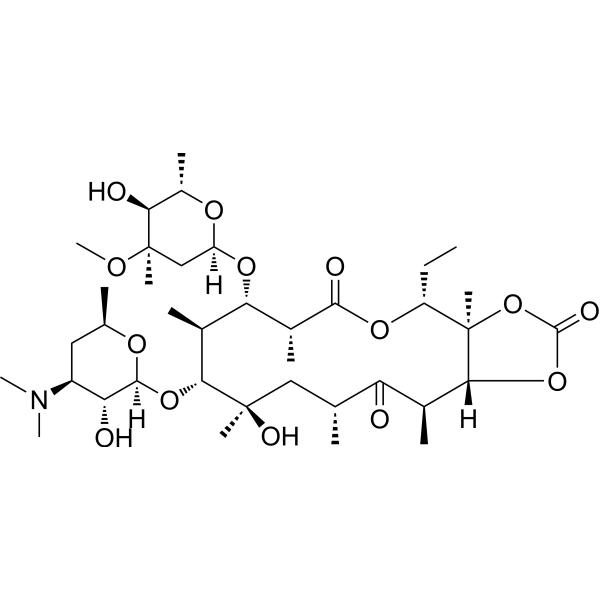
Davercin (Erythromycin Cyclocarbonate), derivative of Erythromycin, which is active against Gram-positive and some Gram-negative microorganisms.
loading...
    loading...
Cat. No.: HY-B0712S
CAS No.: 1132650-38-4
Synonyms: Ro 13-9904-d3 disodium
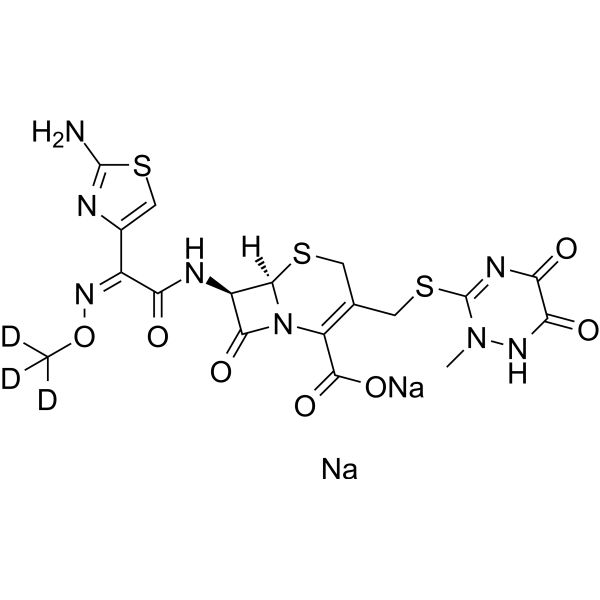
Ceftriaxone-d3 (disodium) is the deuterium labeled Ceftriaxone. Ceftriaxone is a third-generation cephalosporin antibiotic with excellent activity against many gram-negative, and reasonable activity against most gram-positive microorganisms. Anti-inflammatory and antioxidant characteristics .
loading...
    loading...
Cat. No.: HY-W016473
CAS No.: 828-51-3
Adamantane-carboxylic acid is a compound with inhibitory activity against microorganisms. Although its specific target has not been clearly defined, it can inhibit Gram-positive bacteria and some Gram-negative bacteria. It forms a 1-monoacylglycerol derivative through a direct reaction with glycidol, and exerts its antibacterial effect by mechanisms such as altering the permeability of the bacterial cell membrane. This compound can be used in the research of antibacterial agents in the food and cosmetic industries to reduce harmful microbial flora and extend the shelf life of products .
loading...
    loading...
Cat. No.: HY-P1791
CAS No.: 146897-68-9
Synonyms: Lactoferricin B; Lfcin B
Target:  

Bacterial Fungal Apoptosis

Research Areas:  

Infection Cancer

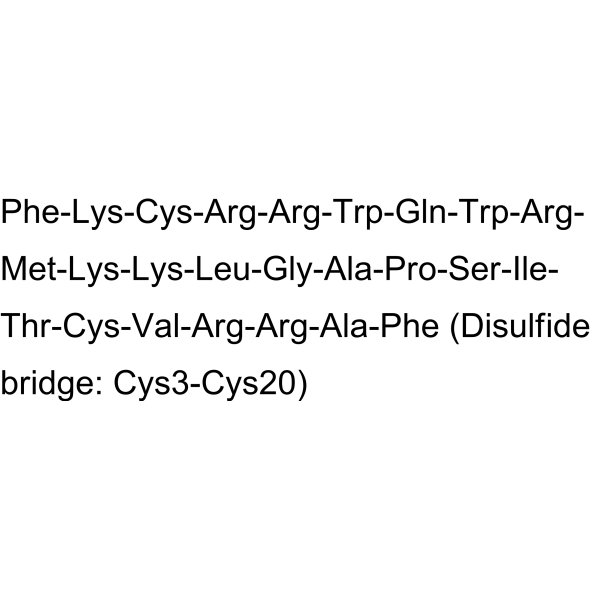
Lactoferrin 17-41 (Lactoferricin B), a peptide corresponding to residues 17-41 of bovine lactoferrin, has antimicrobial activity against a wide range of microorganisms, including Gram-positive and Gramnegative bacteria, viruses, protozoa, and fungi. Lactoferrin 17-41 has antitumor activities .
loading...
    loading...
Cat. No.: HY-P5726
CAS No.: 302343-01-7
Target:  

Bacterial Antibiotic

Research Areas:  

Infection Cancer

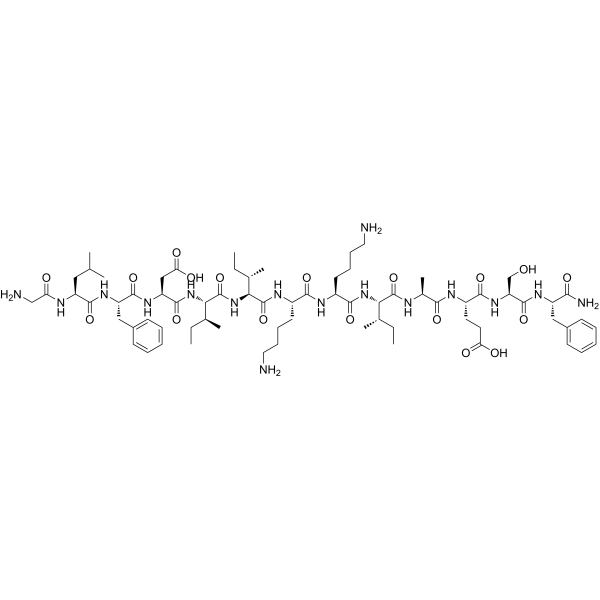
Aurein 1.2 is a C-terminally amidated antimicrobial peptide found in Litoria raniformis. Aurein 1.2 exhibits moderate, broad-spectrum antimicrobial activity against a variety of bacteria, with a MIC of 12-100 μg/mL. Aurein 1.2 forms an amphipathic α-helix with distinct hydrophilic and hydrophobic faces, and may exert antimicrobial and cytotoxic effects on tumor cells by disrupting cell membranes. Aurein 1.2 can be used in studies related to antimicrobial peptides, membrane-active peptides, and tumor cytotoxicity .
loading...
    loading...
Cat. No.: HY-P1791B
CAS No.: 2828433-30-1
Synonyms: Lactoferricin B acetate; Lfcin B acetate
Target:  

Bacterial Fungal Apoptosis

Research Areas:  

Infection Cancer

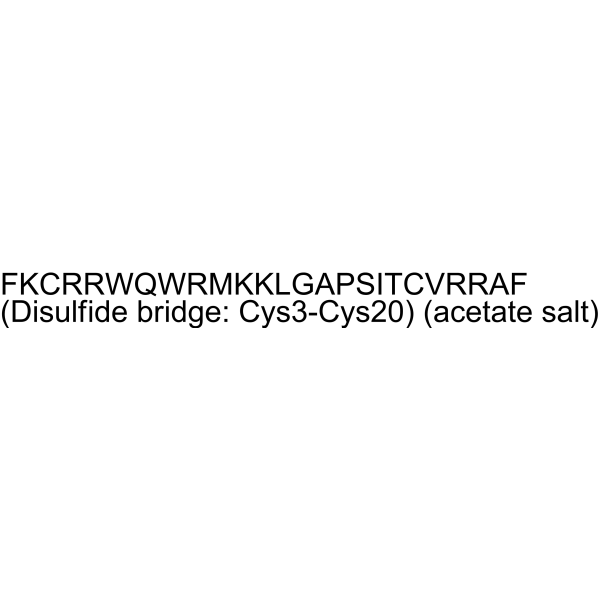
Lactoferrin 17-41 (Lactoferricin B) acetate, a peptide corresponding to residues 17-41 of bovine lactoferrin, has antimicrobial activity against a wide range of microorganisms, including Gram-positive and Gramnegative bacteria, viruses, protozoa, and fungi. Lactoferrin 17-41 acetate has antitumor activities .
loading...
    loading...
Cat. No.: HY-108988
CAS No.: 1622253-00-2
Albicidin is a peptide antibiotic with phytotoxic activity. Albicidin potently inhibits bacterial and plant DNA gyrase at nanomolar concentrations, blocks DNA replication, and exhibits excellent antibacterial efficacy against multidrug-resistant bacteria. Albicidin possesses bactericidal activity against Gram-positive and Gram-negative microorganisms, and acts as a virulence factor for the systemic plant infection by Xanthomonas albilineans. Albicidin can be used in studies related to bacterial infections and sugarcane leaf blight .
loading...
    loading...
Cat. No.: HY-123436
CAS No.: 84745-01-7
Sarubicin B is an active product that can be isolated from the culture filtrate of a Streptomyces strain JA 2861. Sarubicin B is a quinone antibiotic that inhibit Gram-positive bacteria and not active against Gram-negative microorganisms .
loading...
    loading...
Cat. No.: HY-113703
CAS No.: 99734-97-1
Target:  

Antibiotic

Research Areas:  

Cancer

PD117588 is a quinolone antibacterial agent with a broad range of antibacterial activity. PD117588 exhibits excellent activity against a variety of Gram-positive and Gram-negative bacteria from cancer patients, especially against all Gram-positive strains, including methicillin-resistant Staphylococcus aureus, coagulase-negative Staphylococci, and Enterococci. PD117588 is also very effective against most Gram-negative bacilli, although ciprofloxacin shows stronger activity against Pseudomonas aeruginosa. Compared with other quinolone antibiotics, the minimum inhibitory concentration of PD117588 outperforms most of the tested microorganisms, including imipenem and ceftazidime .
loading...
    loading...
Cat. No.: HY-120733
CAS No.: 1205538-83-5
Synonyms: FKI-4905
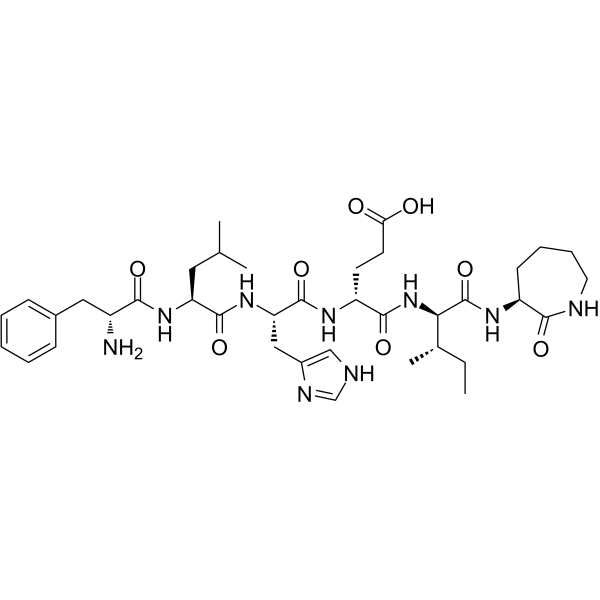
Calpinactam (FKI-4905), a fungal metabolite, is a new anti-mycobacterial agent.Calpinactam is active only against Mycobacteria among various microorganisms, including Gram-positive and Gram-negative bacteria, fungi and yeasts. Calpinactam inhibits the growth of Mycobacterium smegmatis and Mycobacterium tuberculosis with MIC values of 0.78 and 12.5 μg/ml, respectively .
loading...
    loading...
Cat. No.: HY-147505
CAS No.: 2412142-93-7
Target:  

Bacterial Fungal

Research Areas:  

Infection

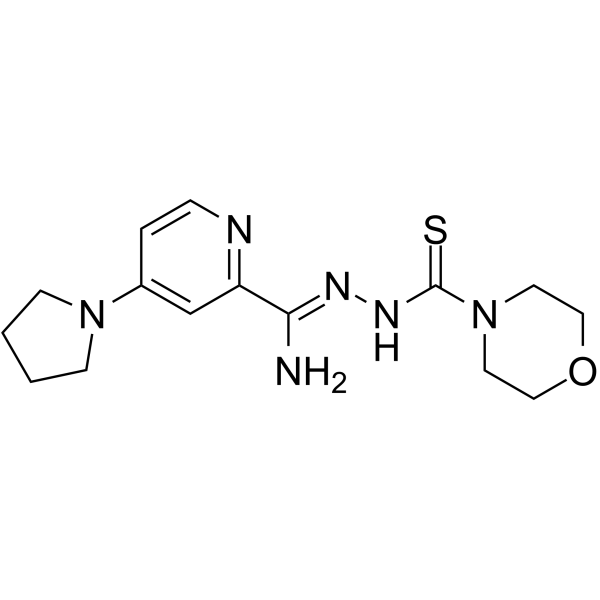
Antitubercular agent-21 (Compound 15) is an antitubercular agent with an MIC of o.4 µg/mL against M. tuberculosis H37Rv. Antitubercular agent-21 exhibits lower activity against other microorganism such as bacteria gram-positive, gram-negative or fungi. Antitubercular agent-21 shows low cytotoxicity .
loading...
    loading...
Cat. No.: HY-106946
CAS No.: 147293-55-8
Target:  

Bacterial

E 5065 is an orally active antibacterial agent. E 5065 exhibits potent in vitro activity against Gram-negative microorganisms, Gram-positive cocci, and anaerobes. E 5065 exhibits an MIC90 of 0.5 μg/mL against Clostridium spp. E 5065 provides protection against experimental infections caused by P. aeruginosa .
loading...
    loading...
Cat. No.: HY-100584S
Synonyms: Erythromycin Cyclocarbonate-13C,d3
Davercin- 13C,d3 (Erythromycin Cyclocarbonate- 13C,d3) is the 13C-labeled Davercin (HY-100584). Davercin (Erythromycin Cyclocarbonate), derivative of Erythromycin, which is active against Gram-positive and some Gram-negative microorganisms.
loading...
    loading...
Cat. No.: HY-W923278
CAS No.: 73547-70-3
Synonyms: GR20263 dihydrochloride
Target:  

Antibiotic Bacterial

Research Areas:  

Infection

Ceftazidime (GR20263) dihydrochloride is a cephalosporin β-lactam antibiotic. Ceftazidime dihydrochloride exhibits activity against susceptible Enterobacteriaceae, multidrug-resistant Gram-negative bacteria, Pseudomonas aeruginosa, and bacteria producing Ambler class A, C, and some class D β-lactamases, but shows no activity against microorganisms producing metallo-β-lactamases. Ceftazidime dihydrochloride reduces bacterial loads in mouse models of splenic, hepatic, and thigh infections, but has low efficacy against ESBL- and KPC-producing Enterobacteriaceae. Ceftazidime dihydrochloride can be used in research related to complicated urinary tract infections, complicated intra-abdominal infections, hospital-acquired pneumonia, carbapenemase-producing Klebsiella pneumoniae infections, carbapenem-resistant Enterobacterales infections, and severe Gram-negative bacterial infections .
loading...
    loading...
Cat. No.: HY-W676530
CAS No.: 5852-92-6
Carnegine hydrochloride is a fungicide with broad-spectrum antibacterial activity, as well as a stereoselective inhibitor of MAO-A/MAO-B. Carnegine hydrochloride has no antioxidant activity and does not affect cerebral PDE, but it antagonizes the chronotropic effects of adrenaline and noradrenaline at low concentrations and induces tolerance in *Drosophila melanogaster*. Carnegine hydrochloride stimulates respiration, exerts mild spasmolytic and hypotensive effects, inhibits cancer cell respiration, and exhibits central nervous system excitatory toxicity and negative chronotropic effects on the cardiovascular system .
loading...
    loading...
  • 1

