1. Search Result
Search Result
Results for "

HCT15

" in MedChemExpress (MCE) Product Catalog:

29

Inhibitors & Agonists

1

Peptides

11

Natural
Products

1

Isotope-Labeled Compounds

Cat. No. Product Name Target Research Areas Chemical Structure
  • HY-101055
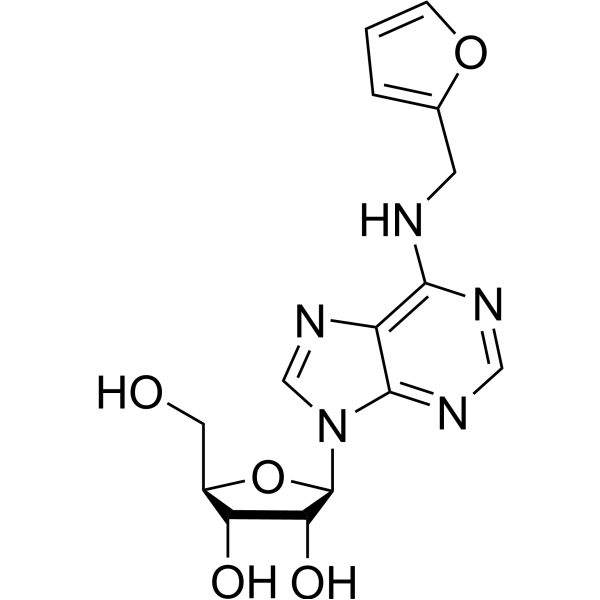
    Kinetin riboside
    3 Publications Verification

    N6-Furfuryladenosine

    Apoptosis Cancer
    Kinetin riboside, a cytokinin analog, can induce apoptosis in cancer cells. It inhibits the proliferation of HCT-15 cells with an IC50 of 2.5 μM.
    Kinetin riboside
  • HY-N2693

    Apoptosis Reactive Oxygen Species (ROS) Caspase Akt ERK JNK p38 MAPK Bcl-2 Family Cancer
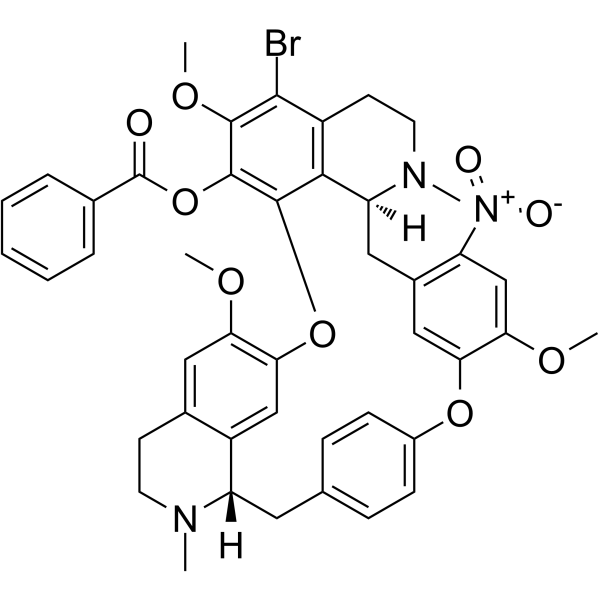
    6,8-Diprenylorobol, a prenylated isoflavone, is a nature product that could be isolated from the leaves of Cudrania tricuspidata. 6,8-Diprenylorobol antiproliferative effect and induces apoptosis through activation of p53 and generation of ROS .
    6,8-Diprenylorobol
  • HY-P10436

    Raf Cancer
    Braftide is an allosteric inhibitor for BRAF kinase by targeting the dimer interface of BRAF kinase and inhibiting the formation of BRAF dimers. Braftide inhibits wild-type BRAF and oncogenic BRAF G469A with IC50 of 364 nM and 172 nM, respectively. Braftide inhibits MAPK signaling pathway, inhibits proliferation of KRAS mutant tumor cells (EC50 is 7.1 and 6.6 μM, for HCT116 and HCT-15), in combination of TAT sequence. Braftide can be used for cancer research .
    Braftide
  • HY-19797

    p97 Cancer
    ML241 is a potent, selective and competitive p97 ATPase inhibitor with an IC50 of 0.11 μM. ML241 can be used for the research of cancer .
    ML241
  • HY-170027

    HIF/HIF Prolyl-Hydroxylase AMPK Cancer
    LW1564 is an inhibitor for HIF-1α with an IC50 of 1.2 µM in HepG2. LW1564 inhibits mitochondrial respiration, reduces ATP production, stimulates HIF-1α degradation, and inhibits proliferation of various cancer cells with GI50 of 0.4-4.6 μM. LW1564 activates AMPK signaling pathway and inhibits lipid synthesis. LW1564 exhibits antitumor in HepG2 xenograft mouse model .
    LW1564
  • HY-179257

    p97 Cancer
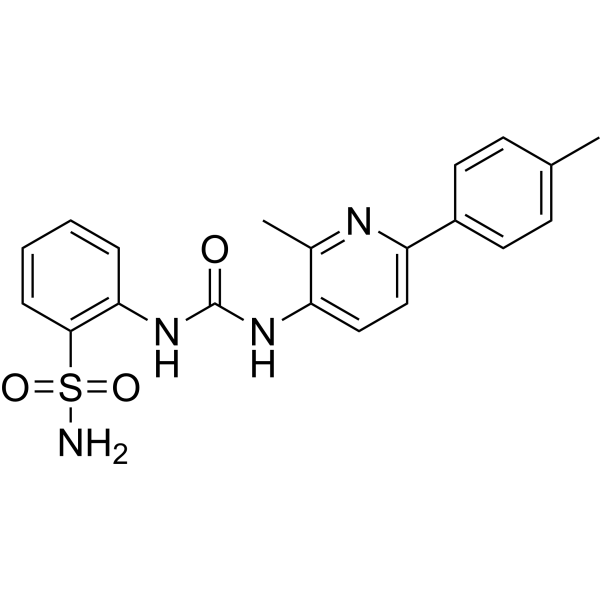
    p97-IN-2 (Compound 14) is a p97 ATPase (IC50 = 0.6 μM) inhibitor. p97-IN-2 can inhibit cell proliferation, such as HCT15 (IC50 = 1.1 μM) and SW403 (IC50 = 0.8 μM) cells. p97-IN-2 can be used for cancer research .
    p97-IN-2
  • HY-W278944

    Drug Derivative Cancer
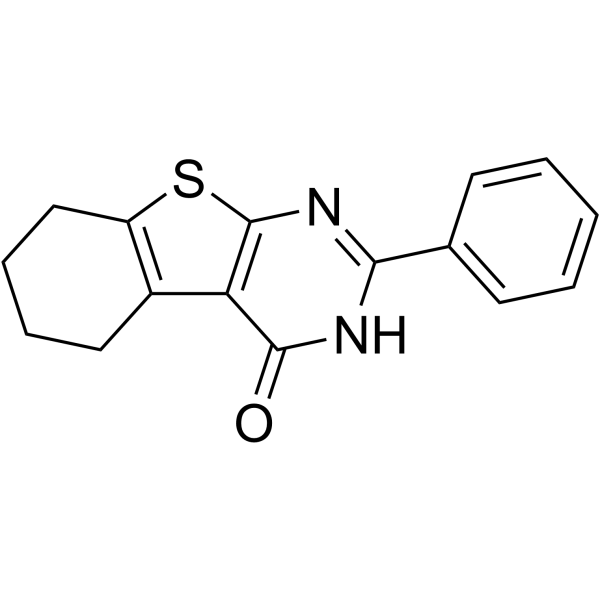
    Antiproliferative agent-15 is an thienopyrimidine derivated anticancer agent. Antiproliferative agent-15 shows antiproliferative activity against human colon (HCT116 and HCT15) and brain (LN-229 and GBM-10) cancer cell lines .
    Antiproliferative agent-15
  • HY-N6578

    Others Cancer
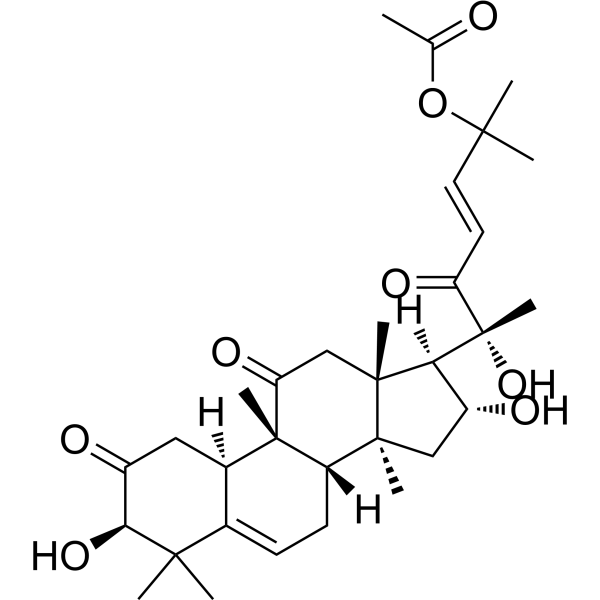
    3-epi-Isocucurbitacin B (Compound 5) is a cucurbitane triterpene derived from Trichosanthes kirilowii. 3-epi-Isocucurbitacin B shows significant cytotoxicity to human tumor cells A-549, SK-OV-3, SK-MEL-2, XF-498 and HCT15 .
    3-epi-Isocucurbitacin B
  • HY-101741

    A-289099

    Microtubule/Tubulin Apoptosis Cancer
    A-259745 is an orally active antimitotic agent that binds to the colchicine-binding site of tubulin. A-259745 exhibits potent in vitro cytotoxic activity against both multi-drug-resistant and non-multi-drug-resistant cancer cell lines, with ED50 values of 0.018 μM against HCT-15 and 0.028 μM against NCI-H460 cell lines. A-259745 inhibits tubulin polymerization, disrupts the dynamic equilibrium of the mitotic spindle, arrests dividing cells in metaphase, and subsequently induces apoptosis. A-259745 shows dose-dependent antitumor efficacy in murine tumor models. A-259745 can be used for the study of cancer .
    A-259745
  • HY-179452

    Ras CDK Mitochondrial Metabolism Cancer
    KRAS G13D-IN-2 (compound 8B) is a potent orally active KRAS G13D inhibitor with IC50 values of 1.95 μM (HCT-116 G13D) and 2.16 μM (HCT-15 G13D). KRAS G13D-IN-2 induces G1-phase arrest and mitochondrial membrane depolarization. KRAS G13D-IN-2 induces senescence through CDK6/TWIST1 inhibition. KRAS G13D-IN-2 inhibits tumor growth in murine models. KRAS G13D-IN-2 can be used for KRAS G13D-mutant colorectal cancer research .
    KRAS G13D-IN-2
  • HY-147891

    Apoptosis Cancer
    Angiogenesis inhibitor 3 (compound 8) is a potent angiogenesis inhibitor. Angiogenesis inhibitor 3 inhibits the proliferation of HUVEC and HCT-15 cells, with IC50 values of 1.00 and 0.71 μM. Angiogenesis inhibitor 3 induces the apoptosis of HUVEC and HCT-15 cells. Angiogenesis inhibitor 3 shows anticancer activity, and suppresses the invasion of cancer cells. Angiogenesis inhibitor 3 inhibits the angiogenesis in zebrafish embryos .
    Angiogenesis inhibitor 3
  • HY-147890

    Apoptosis Cancer
    Angiogenesis inhibitor 2 (compound 72) is a potent angiogenesis inhibitor. Angiogenesis inhibitor 2 inhibits the proliferation of HUVEC and HCT-15 cells, with IC50 values of 1.93 and 0.21 μM. Angiogenesis inhibitor 2 induces the apoptosis of HUVEC and HCT-15 cells. Angiogenesis inhibitor 2 shows anticancer activity, and suppresses the invasion of cancer cells. Angiogenesis inhibitor 2 inhibits the angiogenesis in zebrafish embryos .
    Angiogenesis inhibitor 2
  • HY-101055R

    N6-Furfuryladenosine (Standard)

    Reference Standards Apoptosis Cancer
    Kinetin riboside (Standard) is the analytical standard of Kinetin riboside. This product is intended for research and analytical applications. Kinetin riboside, a cytokinin analog, can induce apoptosis in cancer cells. It inhibits the proliferation of HCT-15 cells with an IC50 of 2.5 μM.
    Kinetin riboside (Standard)
  • HY-144872

    Drug Derivative Cancer
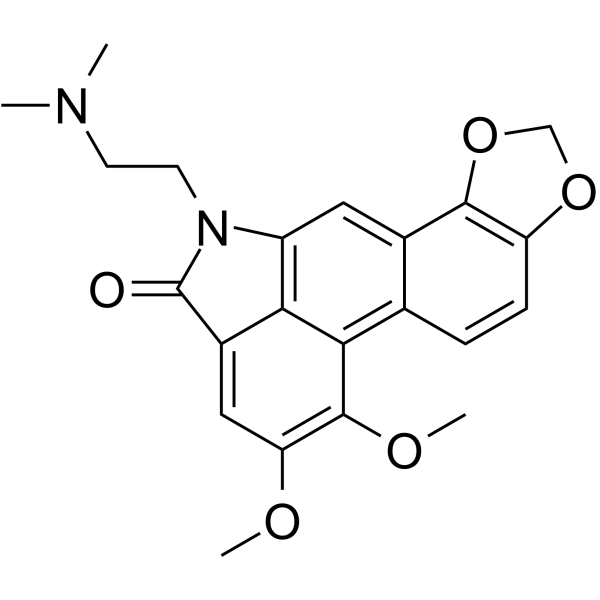
    RJ-34, an aristolactam analogue, exhibits potent antitumor activities against a broad array of cancer cell lines with GI50 values in the subnanomolar range (GI50 <0.1 nM for A431, MES-SA, MES-SA/DX5, HCT-15, and HCT-15/CLO2 cells) .
    RJ-34
  • HY-101055S

    N6-Furfuryladenosine-d5

    Isotope-Labeled Compounds Apoptosis Cancer
    Kinetin riboside-d5 (N6-Furfuryladenosine-d5) is the deuterium labeled Kinetin riboside (HY-101055). Kinetin riboside, a cytokinin analog, can induce apoptosis in cancer cells. It inhibits the proliferation of HCT-15 cells with an IC50 of 2.5 μM .
    Kinetin riboside-d5
  • HY-123898

    Tyrosinase Endogenous Metabolite Cancer
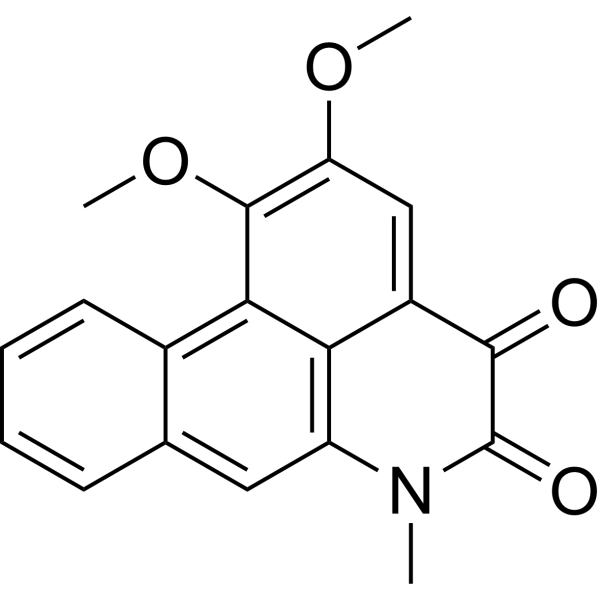
    Cepharadione B (compound 22) is a natural compound isolated from the leaves of Piper sanctum. Cepharadione B is a tyrosinase inhibitor with an IC50 value of 170 μM, and inhibits cell growth in A-549, SK-OV-3, SK-MEL-2, XF-498 and HCT-15 cells .
    Cepharadione B
  • HY-N9101

    Others Cancer
    4,4'-Dihydroxy-3,3',9-trimethoxy-9,9'-epoxylignan is a lignans that can be isolated from the Viburnum foetidum. 4,4'-Dihydroxy-3,3',9-trimethoxy-9,9'-epoxylignan has cytotoxicity against A549, SK-OV-3, SKMEL-2 and HCT15 cell line with IC50s of 67.14, 67.38, 64.11 and 76.31 μg/mL, respectively .
    4,4'-Dihydroxy-3,3',9-trimethoxy-9,9'-epoxylignan
  • HY-N3179

    Others Others
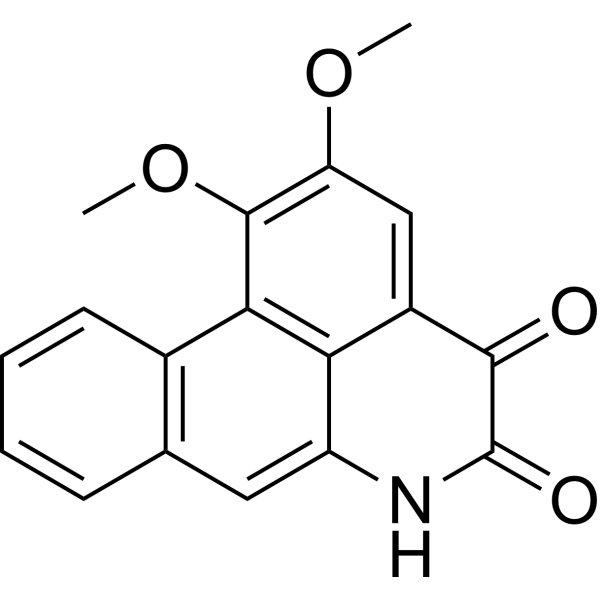
    Norcepharadione B is an alkaloid that can be isolated from Houttuynia cordata. Norcepharadione B exhibits moderate cytotoxicity against A-549, SK-OV-3, SK-MEL-2, XF-498 and HCT-15 cell line with ED50s of 40, 26.4, 40, 14.2 and 38.2 μg/mL, respectively .
    Norcepharadione B
  • HY-155522

    Carbonic Anhydrase Cancer
    WES-1 (Compound 8g) is an inhibitor of carbonic anhydrase IX (Ki: 55.9 μM). WES-1 has broad spectrum anti-proliferative activity against the cancer cells, such as leukemia (K-562 and MOLT-4), non-small cell lung cancer (NCI–H460), colon cancer (HCT 116 and HCT-15) and melanoma (LOX IMVI) cell lines .
    WES-1
  • HY-159149

    Reactive Oxygen Species (ROS) Apoptosis Cancer
    Antitumor agent-182 (Compound 12a) decreases mitochondrial membrane potential (MMP) and enhances ROS levels. Antitumor agent-182 arrests the cell cycle at G0/G1 phase, induces apoptosis in HeLa. Antitumor agent-182 inhibits the proliferation of HeLa, PC-3 and HCT-15 with IC50s of 8.83, 10.07 and 7.84 μM, respectively .
    Antitumor agent-182
  • HY-N15636

    (-)-Coccinine

    Serotonin Transporter P-glycoprotein Neurological Disease Cancer
    Coccinine ((-)-Coccinine) is a weak inhibitor of SERT (IC50: 196.3 μM; Ki: 106.8 μM) and P-gp (IC50: 0.96 mM). Coccinine exhibits significant anti-tumor activity against various cancer cell lines, such as breast cancer (MCF7, Hs578T, MDA-MB-231), colon cancer (HCT-15), and lung cancer (A549). Coccinine can be used in the research of tumors and neurological diseases .
    Coccinine
  • HY-N1614

    Others Others
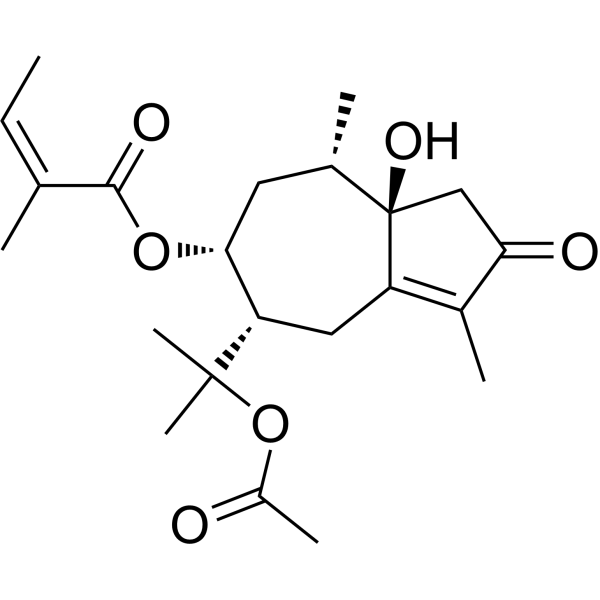
    1 α-hydroxytorilin (compound 3) is a sesquiterpenoid. 1 α-hydroxytorilin can be isolated from Torilis japonica. 1α-hydroxytorilin has cytotoxicity against human A549, SK-OV-3, SK-MEL-2, and HCT15 tumor cells with ED50 values of 20.52, 18.24, 17.48, 42.54 μg/mL, respectively .
    1α-Hydroxytorilin
  • HY-N12349

    Others Others
    Glucozaluzanin C is a lignan isolated from the MeOH extract of the roots of Ainsliaea acerifolia (Compositae). Glucozaluzanin C has ED50 value of 2.45 μg/mL, 1.37μg/mL, 0.40 μg/mL, 1.41 μg/mL, 1.43 μg/mL for A549 cells, SK-OV-3 cells, SK-MEL-2 cells, XF498 cells, HCT15 cells, respectively .
    Glucozaluzanin C
  • HY-N12589

    Others Cancer
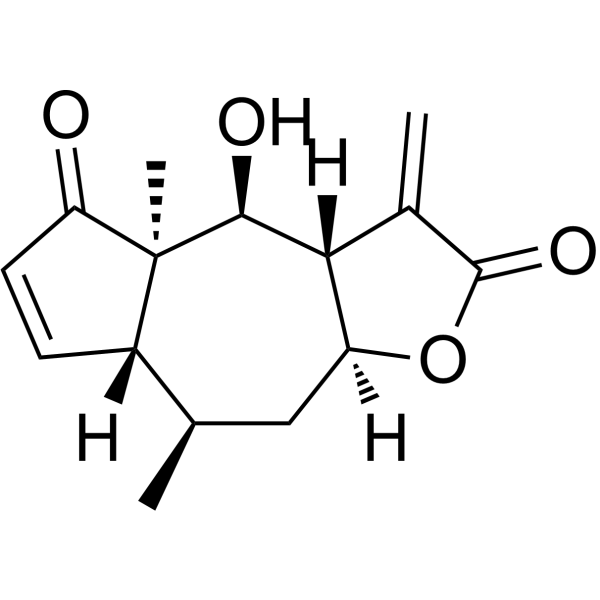
    8-epi-Helenalin is a semitterpene lactone with anti-tumor activity that can be isolated from Inula britannicaL. var. chinensis (Rupr.) Reg. and the ED50 values of 8-epi-Helenalin for HL-60, A549, MCF7, HCT-15, SK-OV-3 and Malme-3M are 12.2 μM, 53.8 μM, 9.1 μM, 8.7 μM, 18.7 μM and 8.3 μM, respectively. 8-epi-Helenalin can be used for anti-tumor studies .
    8-epi-Helenalin
  • HY-N11082

    Others Cancer
    Isocucurbitacin D is an antitumor agent .
    Isocucurbitacin D
  • HY-162714

    P-glycoprotein Cancer
    C3N-Dbn-Trp2 is an inhibitor for ATP-binding cassette transporter ABCB1. C3N-Dbn-Trp2 inhibits the ABCB1-mediated Rhodamine 123 (HY-D0816) efflux in cells HEK293T and HCT-15 with IC50 of 5.9 µM and 2.2 µM. C3N-Dbn-Trp2 inhibits the Doxorubicin (HY-15142A) efflux, enhances the cytotoxicity of Doxorubicin in ABCB1-expressing cells .
    C3N-Dbn-Trp2
  • HY-144744

    NF-κB Cancer
    NF-κB-IN-3 (Compound 2) is a NF-κB inhibitor with an IC50 of 0.70 µM. NF-κB-IN-3 can be used as an antitumor agent .
    NF-κB-IN-3
  • HY-100187

    (±)-[6]-Gingerol

    Drug Isomer Cancer
    (Rac)-[6]-Gingerol is a natural product. (Rac)-[6]-Gingerol can be isolated from rhizomes of Z. officinale. (Rac)-[6]-Gingerol shows moderate anticancer activity against lung cancer, ovarian cancer, melanoma, and colon cancer .
    (Rac)-[6]-Gingerol
  • HY-N17311

    Others Cancer
    (22E,24R)-5α,6α-Epoxyergosta-8,22-diene-3β,7β-diol (Compound 3) is an ergosterol. (22E,24R)-5α,6α-Epoxyergosta-8,22-diene-3β,7β-diol can be isolated from A. subjunquillea. (22E,24R)-5α,6α-Epoxyergosta-8,22-diene-3β,7β-diol can be used in the research of non-small cell lung cancer, ovarian cancer, melanoma, and colon cancer .
    (22E,24R)-5α,6α-Epoxyergosta-8,22-diene-3β,7β-diol

Inquiry Online

Your information is safe with us. * Required Fields.

Salutation


Country or Region *

Applicant Name *


Organization Name *

Department *


Email Address *


Product Name *

Cat. No.


Requested quantity *

Phone Number *


Remarks

Inquiry Online

Inquiry Information

Product Name:
Cat. No.:
Quantity:
MCE Japan Authorized Agent:

