
1. Search Result
Search Result
Results for "

HZ

" in MedChemExpress (MCE) Product Catalog:

26

Inhibitors & Agonists

5

Biochemical Assay Reagents

2

Inhibitory Antibodies

1

Natural
Products

1

Isotope-Labeled Compounds

1

Click Chemistry

Cat. No. Product Name Target Research Areas Chemical Structure
  • HY-137441
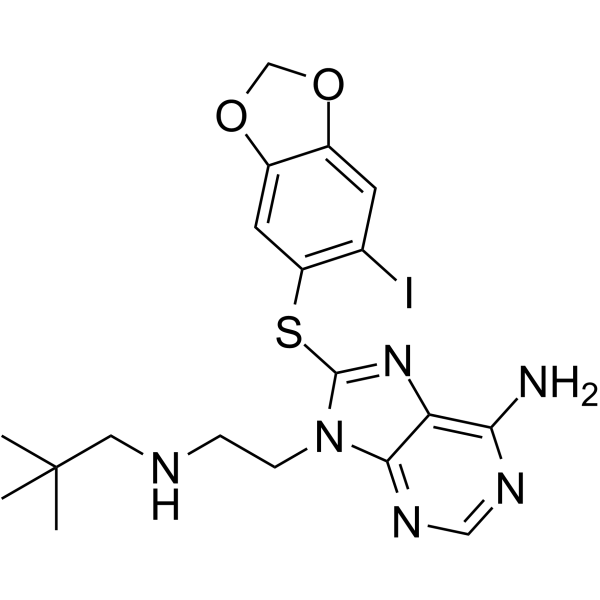
    Icapamespib
    1 Publications Verification

    PU-HZ151

    HSP Neurological Disease Cancer
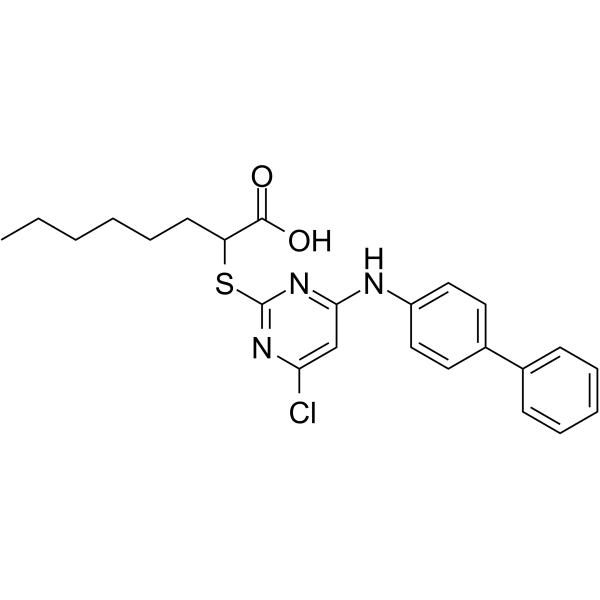
    Icapamespib (PU-HZ151; PU-AD) is a selective, orally active inhibitor of Epichaperomes assembled by HSP90 with slow dissociation kinetics. Icapamespib can cross the blood-brain barrier (BBB) ??and induce epichaperome disassembly by non-covalently binding to HSP90, restoring the normal protein-protein interaction network. Icapamespib can specifically disrupt disease-related abnormal protein interaction networks, reduce neurotoxic protein aggregation and tumor cell survival signals. Icapamespib can be used in the research of neurodegenerative diseases such as Alzheimer's disease, as well as cancers such as glioblastoma and metastatic breast cancer .
    Icapamespib
  • HY-18600A
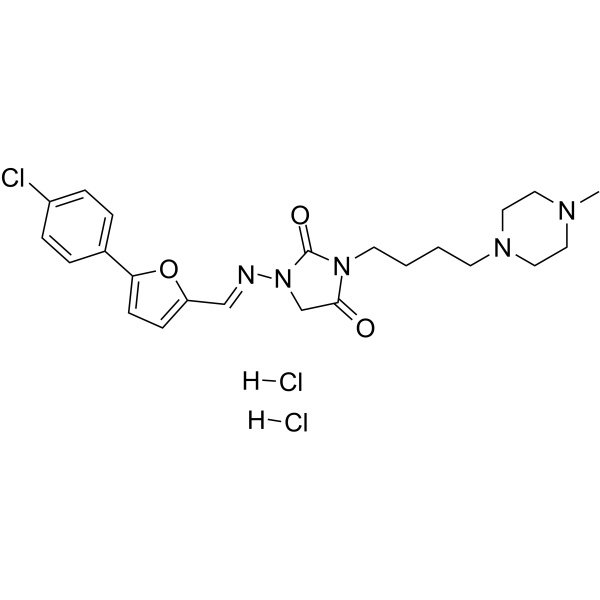
    Azimilide dihydrochloride
    2 Publications Verification

    NE-10064 dihydrochloride

    Potassium Channel Calcium Channel Sodium Channel Cardiovascular Disease
    Azimilide (NE-10064) dihydrochloride is a class III antiarrhythmic agent, which works by blocking potassium channels in the heart. Azimilide dihydrochloride is a dual blocker of IKs (IC50 = 2.6 μM (2mM [K⁺]ₑ)) and IKr (IC50 = 1 μM (4 mM [K⁺])). Azimilide dihydrochloride blocked HERG channel at 0.1 and 1 Hz with IC50s of 1.4 μM and 5.2 μM respectively. Azimilide dihydrochloride also inhibits L-type calcium current (ICa) (IC50 = 17.8 μM) and sodium current (INa) (IC50 = 19 μM). Azimilide dihydrochloride can be used for the study of atrial fibrillation and ventricular fibrillation .
    Azimilide dihydrochloride
  • HY-P99712

    HZ208F2-4

    IGF-1R Apoptosis ADC Antibody Cancer
    Lonigutamab (hz208F2-4) is a humanized anti-IGF-1R monoclonal antibody, serveing as a targeting vector for antibody-drug conjugates (ADCs). Lonigutamab causes G2-M phase cell cycle arrest and increases apoptosis in IGF-1R-overexpressing tumor cells. Lonigutamab demonstrates potent antitumor efficacy in IGF-1R-overexpressing xenograft models. Lonigutamab can be used for the study of Solid tumors with overexpression of IGF-1R and thyroid eye diseases .
    Lonigutamab
  • HY-137441A
    Icapamespib hydrochloride
    1 Publications Verification

    PU-HZ151 hydrochloride

    HSP Neurological Disease Cancer
    Icapamespib (PU-HZ151; PU-AD) hydrochloride is a selective, orally active inhibitor of Epichaperomes assembled by HSP90 with slow dissociation kinetics. Icapamespib hydrochloride can cross the blood-brain barrier (BBB) ??and induce epichaperome disassembly by non-covalently binding to HSP90, restoring the normal protein-protein interaction network. Icapamespib hydrochloride can specifically disrupt disease-related abnormal protein interaction networks, reduce neurotoxic protein aggregation and tumor cell survival signals. Icapamespib hydrochloride can be used in the research of neurodegenerative diseases such as Alzheimer's disease, as well as cancers such as glioblastoma and metastatic breast cancer .
    Icapamespib hydrochloride
  • HY-18600
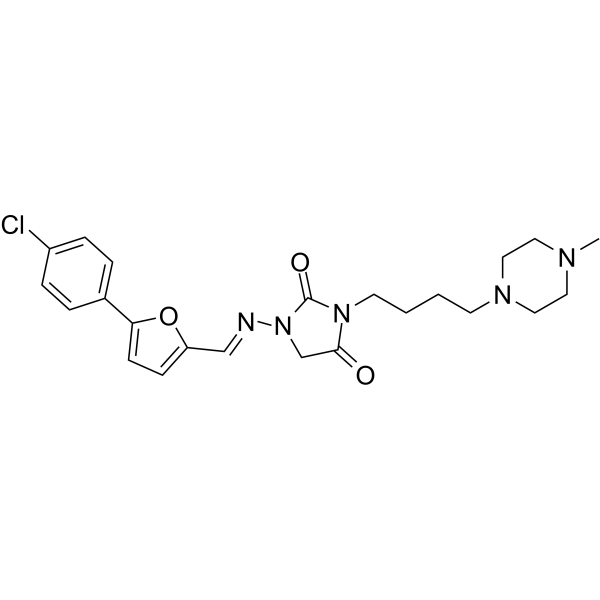
    Azimilide
    2 Publications Verification

    NE-10064

    Potassium Channel Calcium Channel Sodium Channel Cardiovascular Disease
    Azimilide (NE-10064) is a class III antiarrhythmic agent, which works by blocking potassium channels in the heart. Azimilide is a dual blocker of IKs (IC50 = 2.6 μM (2mM [K⁺]ₑ)) and IKr (IC50 = 1 μM (4 mM [K⁺])). Azimilide blocked HERG channel at 0.1 and 1 Hz with IC50s of 1.4 μM and 5.2 μM respectively. Azimilide also inhibits L-type calcium current (ICa) (IC50 = 17.8 μM) and sodium current (INa) (IC50 = 19 μM). Azimilide can be used for the study of atrial fibrillation and ventricular fibrillation .
    Azimilide
  • HY-160113E

    Biochemical Assay Reagents Others
    Sodium phosphate buffer 0.1M, pH 8.0 is an aqueous sodium phosphate buffer with a concentration of 0.1M and a pH value of 8.0. Sodium phosphate buffer 0.1M, pH 8.0 can be used for the preparation of hydrated micellar membranes, the construction of pH-sensitive nanocarriers, and the maintenance of stable environmental conditions for pH-cleavable PEG-Hz-PE micelles. Sodium phosphate buffer 0.1M, pH 8.0 can also serve as a universal solvent, reaction medium and eluent, and is widely applied in experimental processes such as antibody thiolation, nanoparticle purification and cross-linking reactions .
    Sodium phosphate buffer 0.1M, pH 8.0
  • HY-109571

    Flavivirus Dengue Virus HCV Protease Infection Inflammation/Immunology
    HZ-1157 inhibits HCV NS3/4A protease with an IC50 of 1.0 μmol/L. HZ-1157 (4a) has a high dengue virus inhibitory activity (EC50 = 0.15 μM) and is a relatively nontoxic (CC50 > 10 μM) dengue antiviral agent .
    HZ-1157
  • HY-109016

    FV-100 free base

    VZV Antibiotic Bacterial Infection
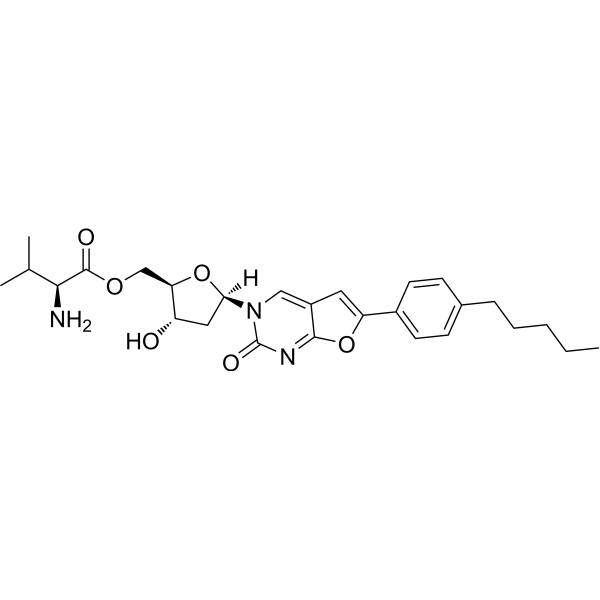
    Valnivudine (FV-100 free base), a proagent of CF-1743, is an orally active anti-herpes zoster (HZ) nucleoside analogue. CF-1743, a bicyclic nucleoside analog (BCNA), has highly specific antiviral activity against varicella-zoster virus (VZV). Valnivudine is rapidly and extensively converted to CF-1743 in vivo .
    Valnivudine
  • HY-123249

    GABA Receptor Neurological Disease
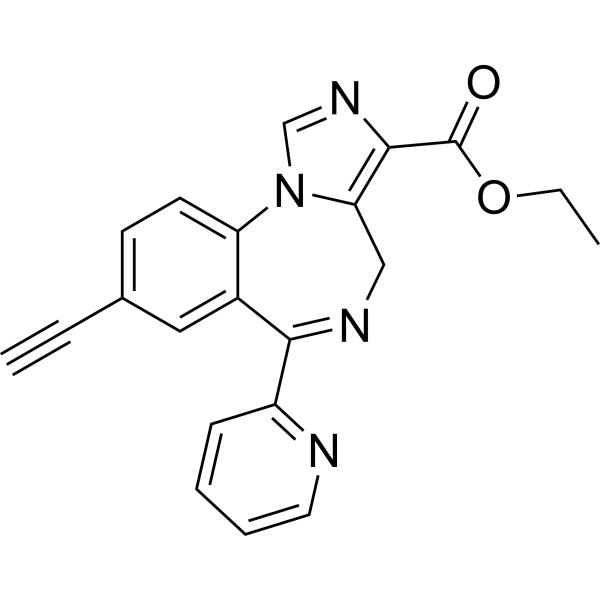
    HZ166 is a GABAA receptor subtype-selective benzodiazepine site agonist with preferential activity at α2- and α3-GABAA receptors. HZ166 shows anti-hyperalgesic effects . HZ166 is a click chemistry reagent, it contains an Alkyne group and can undergo copper-catalyzed azide-alkyne cycloaddition (CuAAc) with molecules containing Azide groups.
    HZ166
  • HY-155238

    GABA Receptor Neurological Disease
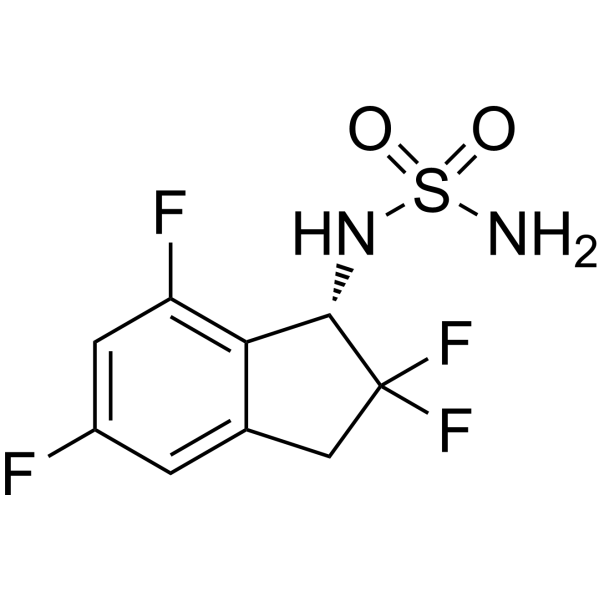
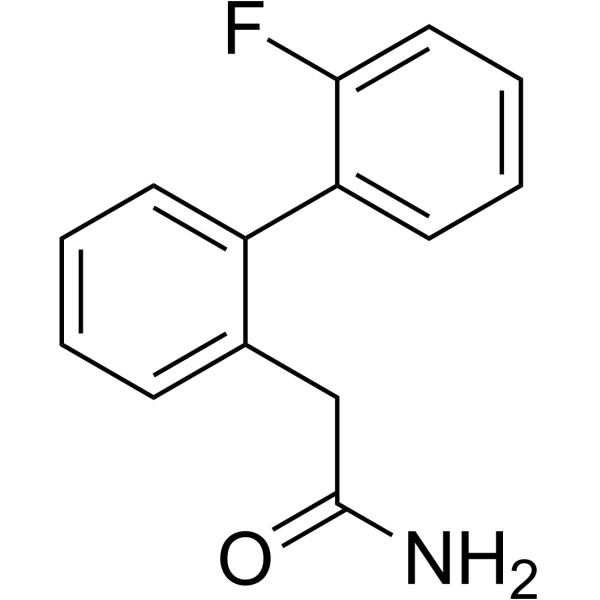
    E2730 is a noncompetitive but selective inhibitor of gamma-aminobutyric acid (GABA) transporter 1 (GAT1) with orally available and antiepileptic activity. E2730-mediated GAT1 inhibition is positively correlated with environmental GABA levels and selectively inhibits GAT1-mediated GABA uptake. E2730 (5-50 mg/kg; po) in rat amygdala ignition model, and in mouse cornea ignition (5-50 mg/kg), drug resistance 6Hz-44mA has demonstrated in vivo efficacy in models of psychomotor epilepsy (5-50 mg/kg), fragile X syndrome (2.5-300 mg/kg), and Dravet syndrome (10 mg/kg, 20 mg/kg) .
    E2730
  • HY-147784

    Btk Cancer
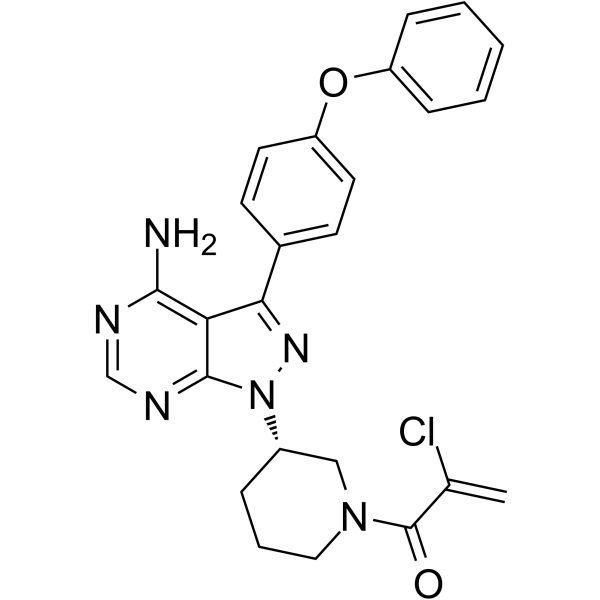
    HZ-A-005 is a potent, selective, and covalent Bruton’s tyrosine kinase (BTK) inhibitor. HZ-A-005 markedly decreases tumor growth in xenograft mouse models .
    HZ-A-005
  • HY-161847

    Ser/Thr Protease Cancer
    HZ1 is an orally active first-in-class cyclin-dependent kinase like 3 (CDKL3)-specific inhibitor. HZ1 shows a strong tumor-suppressing effect, and has the potential to overcome the resistance of CDK4/6 inhibitor .
    HZ1
  • HY-112553

    Lipoxygenase Inflammation/Immunology
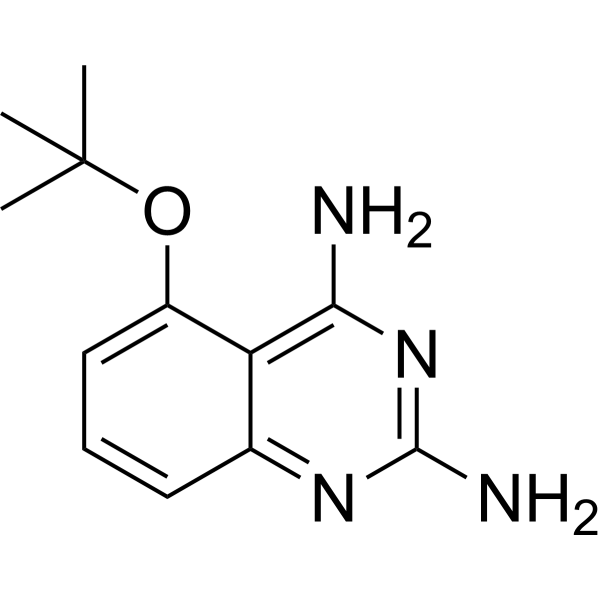
    HZ52 is a potent, reversible 5-lipoxygenase inhibitor, blocking leukotriene synthesis with an IC50 of 0.7 μM in intact human polymorphonuclear leukocytes .
    HZ52
  • HY-114300

    GABA Receptor Neurological Disease
    DSP-0565 (compound 17a) is a strong, broad-spectrum anti-epileptic agent (AED) candidate with unique GABAergic function. DSP-0565 shows anti-convulsant activity in various models (scPTZ, MES, 6 Hz and amygdala kindling) with good safety margin .
    DSP-0565
  • HY-P992378

    CCR STAT Inflammation/Immunology Cancer
    HZ-1127 is a thymic stromal lymphopoietin (TSLP) inhibitor. HZ-1127 selectively binds to TSLP, blocks receptor complex interaction, inhibits STAT5 activation, downstream inflammatory signaling, and TSLP-induced CCL17 and CCL22 secretion. HZ-1127 can be used for the research of allergic diseases and cancer .
    HZ-1127
  • HY-177302

    mGluR Neurological Disease
    mGluR2 modulator 6 (Compound 25-a) is a mGluR2 modulator. mGluR2 modulator 6 has anticonvulsant activity in the 6Hz epilepsy model, and the effect is better when combined with Levetiracetam (HY-B0106). mGluR2 modulator 6 can be used in the research of epilepsy .
    mGluR2 modulator 6
  • HY-144096

    Histone Methyltransferase Cancer
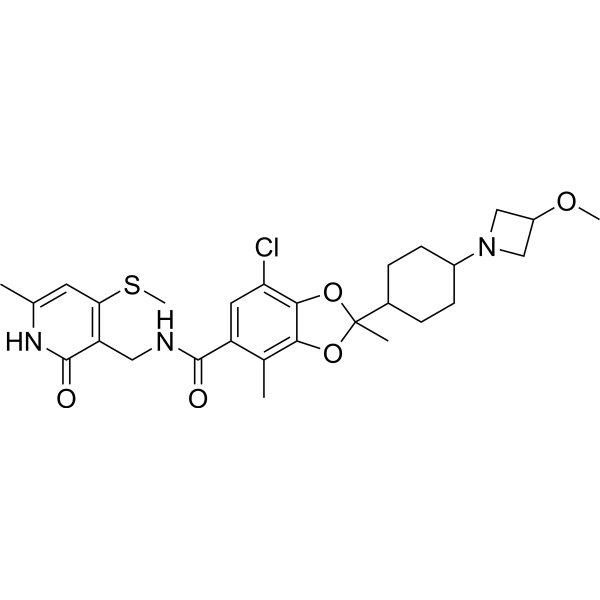
    EZH2-IN-11 is a potent inhibitor of E2HZ. The oncogenic activities of EZH2 have been shown by a number of studies in various different cancer types. EZH2-IN-11 has the potential for the research of cancer diseases (extracted from patent WO2019204490A1, compound 17) .
    EZH2-IN-11
  • HY-18600AS

    NE-10064-d8 dihydrochloride

    Isotope-Labeled Compounds Potassium Channel Calcium Channel Sodium Channel Cardiovascular Disease
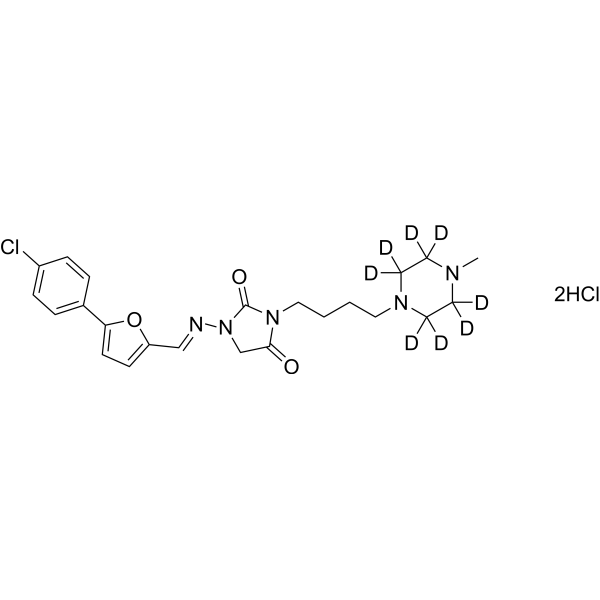
    Azimilide-d8 (NE-10064-d8) dihydrochloride is the deuterium labeled Azimilide dihydrochloride (HY-18600A). Azimilide dihydrochloride is a class III antiarrhythmic agent, which works by blocking potassium channels in the heart. Azimilide dihydrochloride is a dual blocker of IKs (IC50 = 2.6 μM (2mM [K⁺]ₑ)) and IKr (IC50 = 1 μM (4 mM [K⁺])). Azimilide dihydrochloride blocked HERG channel at 0.1 and 1 Hz with IC50s of 1.4 μM and 5.2 μM respectively. Azimilide dihydrochloride also inhibits L-type calcium current (ICa) (IC50 = 17.8 μM) and sodium current (INa) (IC50 = 19 μM). Azimilide dihydrochloride can be used for the study of atrial fibrillation and ventricular fibrillation .
    Azimilide-d8 dihydrochloride
  • HY-W1048872C

    4-Arm-PEG20000-HZ

    Biochemical Assay Reagents Others
    4-Arm-PEG20000-Hydrazide (4-Arm-PEG20000-HZ) is a four-arm PEG derivative. The core structure of 4-Arm-PEG20000-Hydrazide consists of four PEG chains, each modified at the end with a hydrazide group. 4-Arm-PEG20000-Hydrazide can be used for bioconjugation and drug delivery.
    4-Arm-PEG20000-Hydrazide
  • HY-W1048872A

    4-Arm-PEG5000-HZ

    Biochemical Assay Reagents Others
    4-Arm-PEG5000-Hydrazide (4-Arm-PEG5000-HZ) is a four-arm PEG derivative. The core structure of 4-Arm-PEG5000-Hydrazide consists of four PEG chains, each modified at the end with a hydrazide group. 4-Arm-PEG5000-Hydrazide can be used for bioconjugation and drug delivery.
    4-Arm-PEG5000-Hydrazide
  • HY-W1048872E

    4-Arm-PEG2000-HZ

    Biochemical Assay Reagents Others
    4-Arm-PEG2000-Hydrazide (4-Arm-PEG2000-HZ) is a four-arm PEG derivative. The core structure of 4-Arm-PEG2000-Hydrazide consists of four PEG chains, each modified at the end with a hydrazide group. 4-Arm-PEG2000-Hydrazide can be used for bioconjugation and drug delivery.
    4-Arm-PEG2000-Hydrazide
  • HY-W1048872B

    4-Arm-PEG10000-HZ

    Biochemical Assay Reagents Others
    4-Arm-PEG10000-Hydrazide (4-Arm-PEG10000-HZ) is a four-arm PEG derivative. The core structure of 4-Arm-PEG10000-Hydrazide consists of four PEG chains, each modified at the end with a hydrazide group. 4-Arm-PEG10000-Hydrazide can be used for bioconjugation and drug delivery.
    4-Arm-PEG10000-Hydrazide
  • HY-W190720

    Biochemical Assay Reagents Others
    Fmoc-NH-PEG4-HZ-BOC is a PEG reagent containing an Fmoc-protected amine and a Boc-protected hydrazide. The Fmoc group can be deprotected under basic condition to obtain the free amine which can be used for further conjugations. The hydrophilic PEG spacer increases solubility in aqueous media. The Boc can be deprotected under mild acidic conditions to form a reactive hydrazide, which can then be coupled with various carbonyl groups.
    Fmoc-NH-PEG4-HZ-BOC
  • HY-N18014

    Drug Derivative Neurological Disease
    Naringenin 4',7-dimethyl ether, Naringenin (HY-N0100) derivative is an anti-seizure agent. Naringenin 4',7-dimethyl ether attenuates pentylenetetrazole-induced seizures in larval zebrafish and reduces seizures in the mouse 6-Hz psychomotor seizure model. Naringenin 4',7-dimethyl ether can be used for the research of epilepsy .
    Naringenin 4',7-dimethyl ether
  • HY-170801

    Drug Derivative Neurological Disease
    Anticonvulsant agent 7 (Compound 19) is an orally active broad-spectrum anticonvulsant that demonstrates excellent anticonvulsive activity in both the MES (maximal electroshock seizure) and 6 Hz epilepsy modelsmouse .
    Anticonvulsant agent 7
  • HY-182055

    G-quadruplex Keap1-Nrf2 Ferroptosis Apoptosis Cancer
    Anticancer agent 309 (Compound HZ-1) is an anticancer agent and G-quadruplex binder, with Kd values of 2.46 μM and 1.61 μM for c-Myc G4 and KRAS G4, respectively. Anticancer agent 309 promotes the formation of intranuclear G4. Anticancer agent 309 shows higher selectivity for parallel G4 than for non-parallel G4. Anticancer agent 309 inhibits the NRF2 signaling pathway and reduces the expression of XCT and GPX4. Anticancer agent 309 induces Ferroptosis, Apoptosis and immunogenic cell death in cells. Anticancer agent 309 exerts antitumor efficacy against breast cancer. Anticancer agent 309 is applicable for the research of breast cancer .
    Anticancer agent 309

Inquiry Online

Your information is safe with us. * Required Fields.

Salutation


Country or Region *

Applicant Name *


Organization Name *

Department *


Email Address *


Product Name *

Cat. No.


Requested quantity *

Phone Number *


Remarks

Inquiry Online

Inquiry Information

Product Name:
Cat. No.:
Quantity:
MCE Japan Authorized Agent:

