Search Result
Results for "
IAA
" in MedChemExpress (MCE) Product Catalog:
8
Biochemical Assay Reagents
11
Isotope-Labeled Compounds
| Cat. No. |
Product Name |
Target |
Research Areas |
Chemical Structure |
-
- HY-134653
-
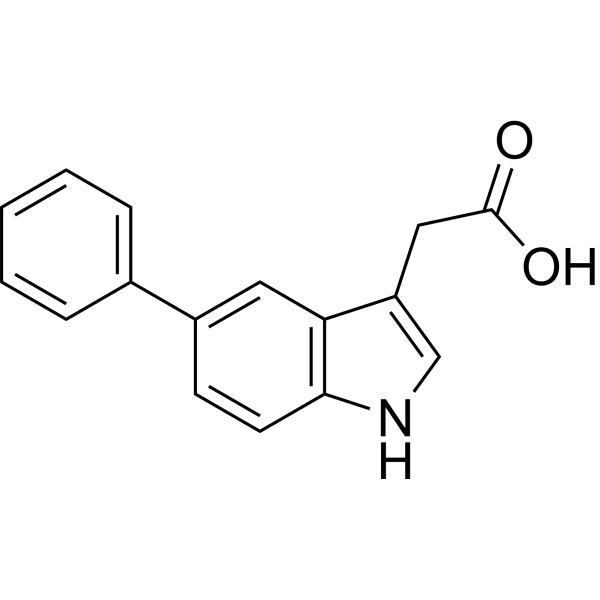
5-Ph-IAA
Maximum Cited Publications
52 Publications Verification
|
Epigenetic Reader Domain
|
Cancer
|
|
5-Ph-IAA is a derivative of IAA. 5-Ph-IAA, a ligand, establishes the auxin-inducible degron 2 (AID2) system together with an OsTIR1 (F74G) mutant. AID2 induces rapid and efficient depletion of mAID-fused proteins to study protein function in living cells, causing tumor suppression .
|
-
-
- HY-18569
-
-
-
- HY-W007376
-
|
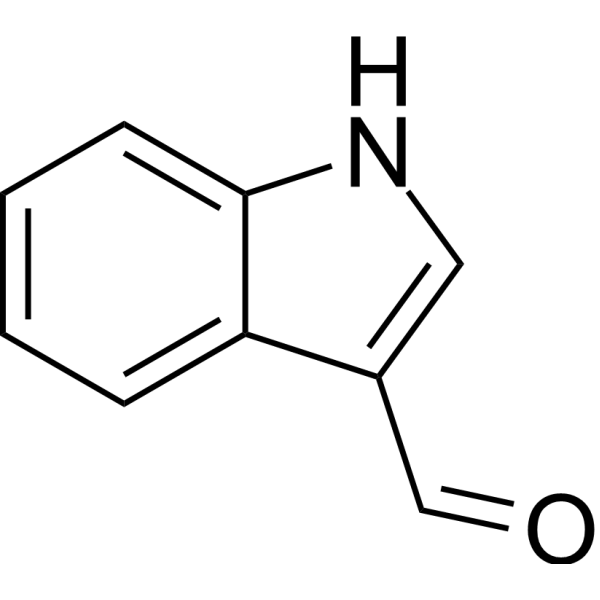
3-Formylindole
|
Endogenous Metabolite
|
Others
|
|
Indole-3-carboxaldehyde (3-Formylindole), a banlangen extract, is the product of the oxidative degradation of indole-3-acetic acid (IAA) by crude enzyme preparations from etiolated pea seedlings. Indole-3-carboxaldehyde is a biochemical used to prepare analogs of the indole phytoalexin cyclobrassinin. Indole-3-carboxaldehyde also enhances the epithelial barrier and anti-inflammatory activity in the intestinal tract .
|
-
-
- HY-18569A
-
|
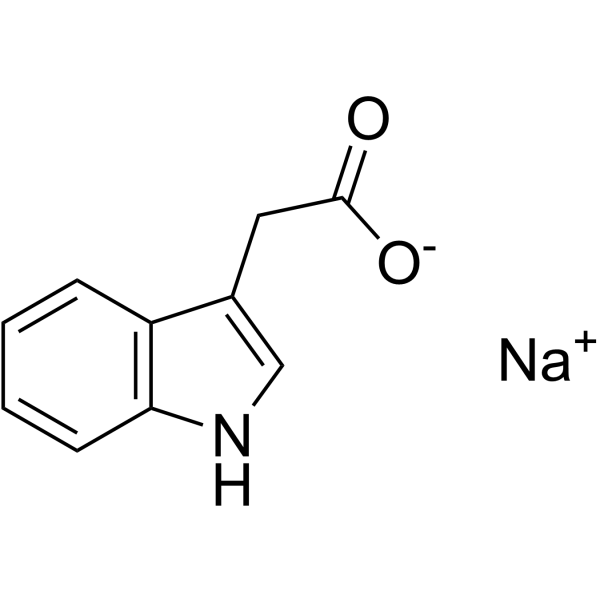
Indole-3-acetic acid sodium; 3-IAA sodium
|
Endogenous Metabolite
|
Metabolic Disease
|
|
3-Indoleacetic acid (Indole-3-acetic acid) sodium is an IAA hormone and growth regulator that can promote plant nutritional growth through processes such as cell expansion, differentiation, morphogenesis, and organogenesis .
|
-
-
- HY-18569S
-
|
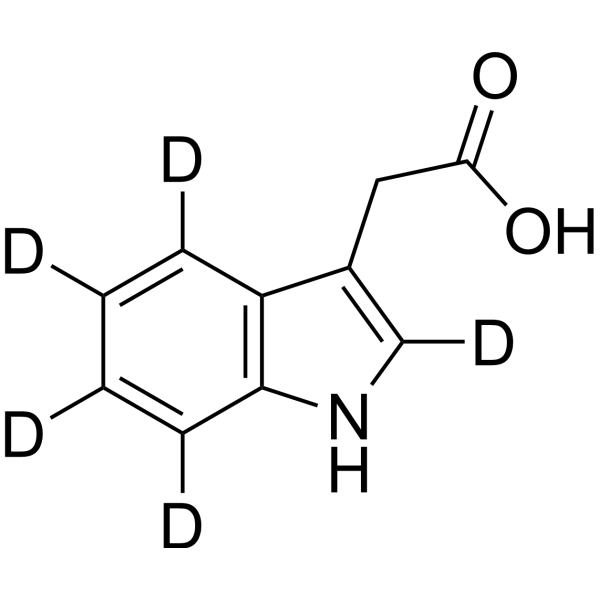
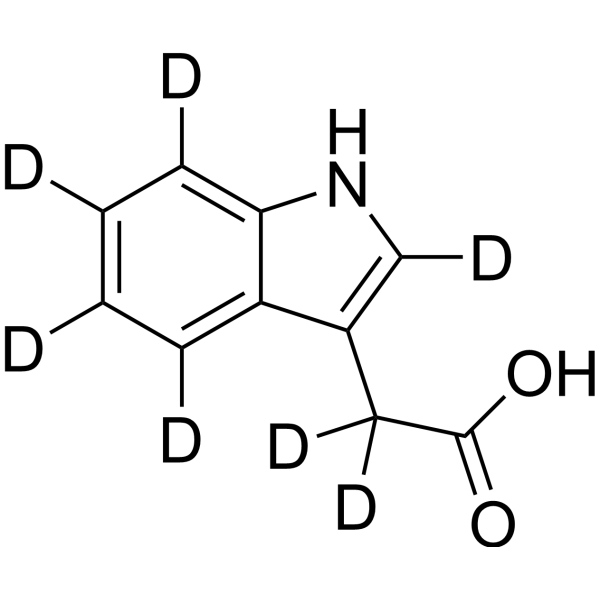
Indole-3-acetic acid-d5; 3-IAA-d5
|
Endogenous Metabolite
Isotope-Labeled Compounds
|
Metabolic Disease
|
|
3-Indoleacetic acid-d5 is the deuterium labeled 3-Indoleacetic acid (HY-18569). 3-Indoleacetic acid-d5 can be used as internal standard for assay of IAA releases by alkaline hydrolysis of ester and amide conjugates .
|
-
-
- HY-12693
-
|
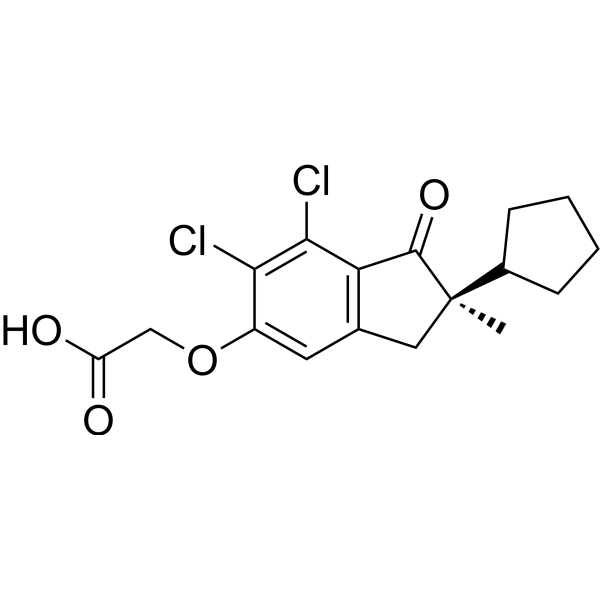
R(+)-IAA-94
|
Chloride Channel
|
Others
|
|
R(+)-Methylindazone (R(+)-IAA-94) is a potent indanyloxyacetic acid blocker of epithelial chloride channels. R(+)-Methylindazone inhibits Nef-sdAb19 (single-domain antibody) interaction and binds to negative factor (Nef) .
|
-
-
- HY-116425
-
|
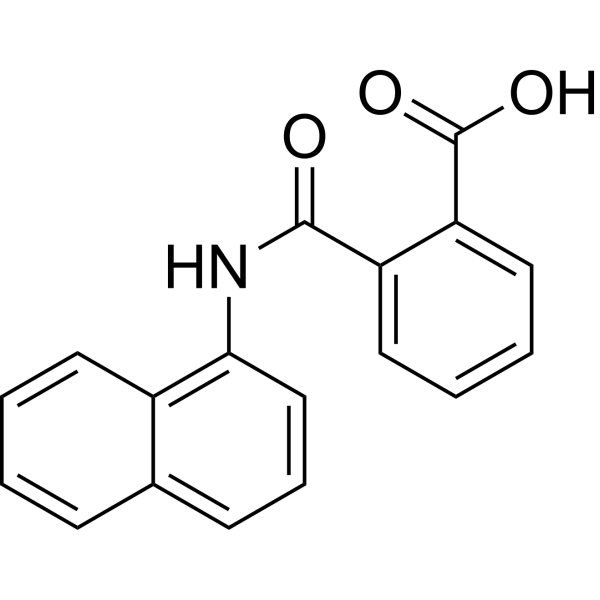
Alanap 1
|
Environmental Pollutants
Herbicide
|
Others
|
|
N-1-Naphthylphthalamic acid (Alanap 1) is a modulator of polar auxin transport that competes with auxin (indole-3-acetic acid, IAA) for membrane binding sites. N-1-Naphthylphthalamic acid also disrupts maize leaf initiation, KNOX protein regulation, and leaf margin formation .
|
-
-
- HY-N0186
-
|
Indolebutyric acid
|
Environmental Pollutants
Endogenous Metabolite
|
Others
|
|
Indole-3-butyric acid (3-indolebutyric acid) is a plant growth auxin and a good rooting agent. It can promote herbs and woody ornamental plant rooting and used for improving fruit rate. Indole 3-butyric acid is an auxin precursor, and is converted to indole 3-acetic acid (IAA) in a peroxisomal β-oxidation process .
|
-
-
- HY-18569B
-
|
IAA
|
Endogenous Metabolite
|
Infection
|
|
3-Indoleacetic acid, suitable for plant cell culture (IAA), is a naturally occurring plant growth hormone that is widely present in plants, bacteria, and fungi. 3-Indoleacetic acid, suitable for plant cell culture, is a plant growth-promoting hormone that not only promotes plant growth but also protects bacteria from the toxic damage to cell membrane potential caused by other indole intermediate products (such as I3P) produced during their own metabolic processes. 3-Indoleacetic acid, suitable for plant cell culture, can be used in plant cell culture .
|
-
-
- HY-112730
-
|
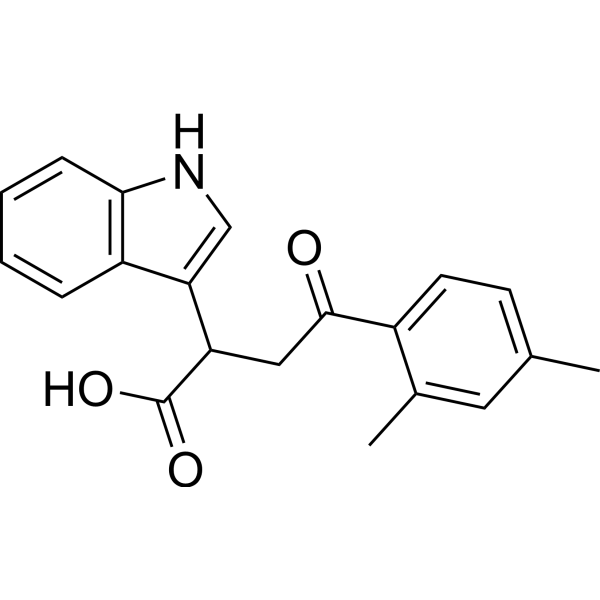
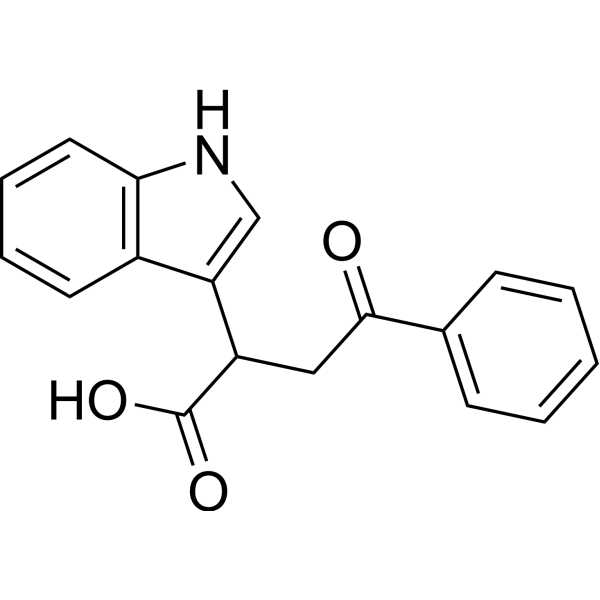
2-(1H-Indol-3-yl)-4-oxo-4-phenyl-butyric acid
|
Phytohormone
|
Others
|
|
PEO-IAA is an indole-3-acetic acid (IAA) antagonist. PEO-IAA is an auxin antagonist that binds to transport inhibitor response 1/auxin signaling F-box proteins (TIR1/AFBs).
|
-
-
- HY-111444
-
|
|
E1/E2/E3 Enzyme
|
Others
|
|
Auxinole is a potent auxin antagonist of TIR1/AFB receptors, binding TIR1 to block the formation of the TIR1-IAA-Aux/IAA complex and so inhibits auxin-responsive gene expression.
|
-
-
- HY-141894
-
|
|
Histone Acetyltransferase
|
Metabolic Disease
|
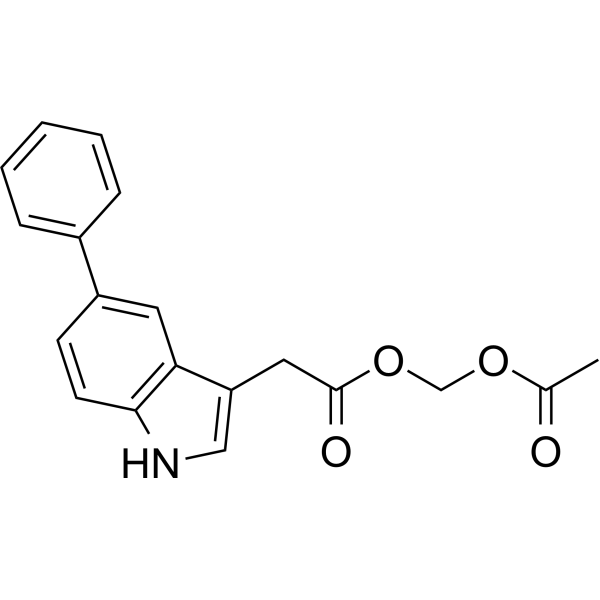
5-Ph-IAA-AM is an eggshell-permeable 5-Ph-IAA (HY-134653) analog which contains an acetoxymethyl (AM) group. 5-Ph-IAA-AM affords an enhanced protein degradation in laid embryos. 5-Ph-IAA-AM can be used to disclosure the roles of proteins in C. elegans, in particular those that are involved in embryogenesis and development, through temporally controlled protein degradation .
|
-
-
- HY-W006267
-
|
4-Cl-IAA
|
Endogenous Metabolite
|
Others
|
|
4-Chloroindole-3-acetic acid (4-Cl-IAA) is a chlorinated analogue of indole-3-acetic acid (IAA) (HY-18569) auxin that functions as a plant hormone, which is found in the seeds of Medicago truncatula、Melilotus indicus and Trifolium .
|
-
-
- HY-18569S3
-
|
Indole-3-acetic acid-d7; 3-IAA-d7
|
Isotope-Labeled Compounds
Endogenous Metabolite
|
Metabolic Disease
|
|
3-Indoleacetic acid-d7 is the deuterium labeled 3-Indoleacetic acid (HY-18569). 3-Indoleacetic acid (Indole-3-acetic acid) is the most common natural plant growth hormone of the auxin class. It can be added to cell culture medium to induce plant cell elongation and division .
|
-
-
- HY-18569S4
-
|
Indole-3-acetic acid-13C6; 3-IAA-13C6
|
Isotope-Labeled Compounds
Endogenous Metabolite
|
Metabolic Disease
|
|
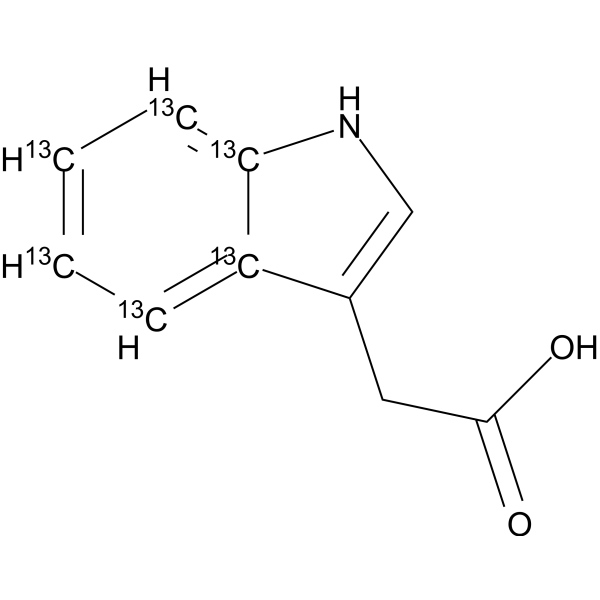
3-Indoleacetic acid- 13C6 is the 13C labeled 3-Indoleacetic acid (HY-18569). 3-Indoleacetic acid (Indole-3-acetic acid) is the most common natural plant growth hormone of the auxin class. It can be added to cell culture medium to induce plant cell elongation and division .
|
-
-
- HY-W588263
-
|
IAGlu
|
Drug Derivative
|
Others
|
|
Indole-3-acetyl glutamate (IAGlu) is a derivative of the plant hormone indole-3-acetic acid (IAA). As a conjugated form of IAA, Indole-3-acetyl glutamate involves in the transport, storage, and homeostatic regulation of IAA within the plant. Indole-3-acetyl glutamate can be used for research into the effects of plant hormones on the growth and development of plants .
|
-
-
- HY-18569R
-
|
Indole-3-acetic acid (standard); 3-IAA (standard)
|
Molecular Glues
Reference Standards
Endogenous Metabolite
|
Others
|
|
3-Indoleacetic acid (Standard) is the analytical standard of 3-Indoleacetic acid. This product is intended for research and analytical applications. 3-Indoleacetic acid is is an IAA hormone and growth regulator that can promote plant nutritional growth through processes such as cell expansion, differentiation, morphogenesis, and organogenesis .
|
-
-
- HY-W141858
-
|
Indoleacetylalanine; IAA-ala
|
Amino Acid Derivatives
|
Others
|
|
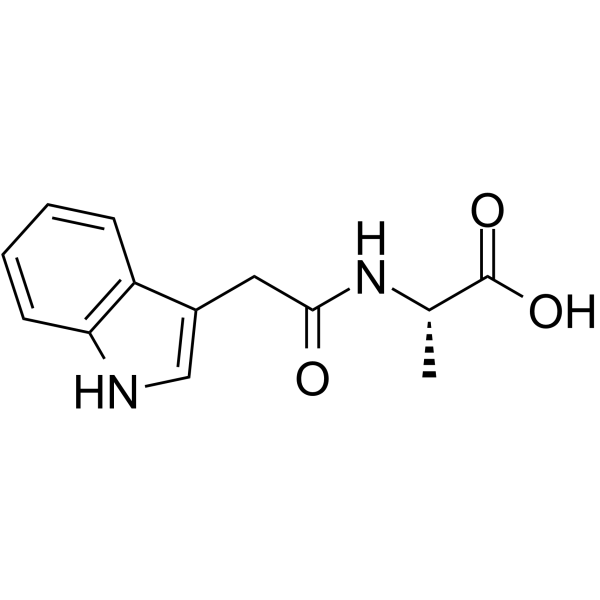
N-(3-Indolylacetyl)-L-alanine (Indoleacetylalanine) is an indoleacetylamino acid. N-(3-Indolylacetyl)-L-alanine appears to increase callus growth and reduces the ability of growths to differentiate into shoots of Phalaenopsis orchids .
|
-
-
- HY-W007376R
-
|
3-Formylindole (Standard)
|
Reference Standards
Endogenous Metabolite
|
Others
|
|
Indole-3-carboxaldehyde (Standard) is the analytical standard of Indole-3-carboxaldehyde. This product is intended for research and analytical applications. Indole-3-carboxaldehyde (3-Formylindole), a banlangen extract, is the product of the oxidative degradation of indole-3-acetic acid (IAA) by crude enzyme preparations from etiolated pea seedlings. Indole-3-carboxaldehyde is a biochemical used to prepare analogs of the indole phytoalexin cyclobrassinin. Indole-3-carboxaldehyde also enhances the epithelial barrier and anti-inflammatory activity in the intestinal tract[1][2].
|
-
-
- HY-18569S2
-
|
Indole-3-acetic acid-2,2-d2; 3-IAA-2,2-d2
|
Isotope-Labeled Compounds
Endogenous Metabolite
|
Metabolic Disease
|
|
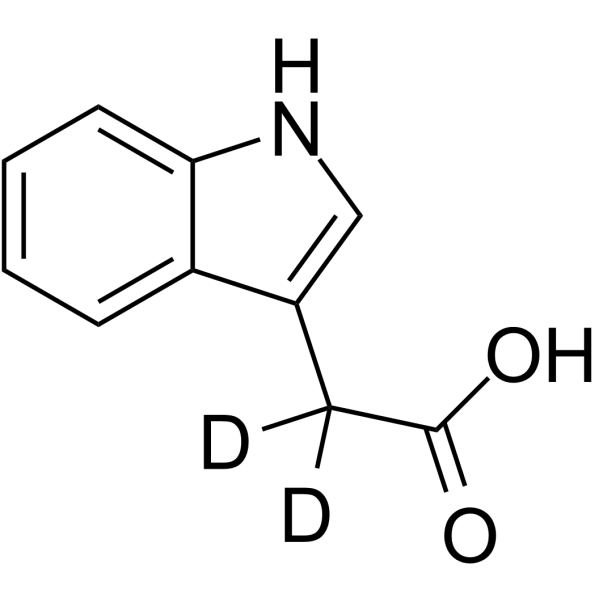
3-Indoleacetic acid-2,2-d2 is the deuterium labeled 3-Indoleacetic acid (HY-18569). 3-Indoleacetic acid (Indole-3-acetic acid) is the most common natural plant growth hormone of the auxin class. It can be added to cell culture medium to induce plant cell elongation and division .
|
-
-
- HY-18569S1
-
|
Indole-3-acetic acid-d4; 3-IAA-d4
|
Isotope-Labeled Compounds
Molecular Glues
Endogenous Metabolite
|
Metabolic Disease
|
|
3-Indoleacetic acid-d4 (Indole-3-acetic acid-d4; 3-IAA-d4) is the deuterium labeled 3-Indoleacetic acid (HY-18569) . 3-Indoleacetic acid (Indole-3-acetic acid) is the most common natural plant growth hormone of the auxin class. It can be added to cell culture medium to induce plant cell elongation and division .
|
-
-
- HY-139351
-
-
-
- HY-N0186A
-
|
Indolebutyric acid potassium
|
Endogenous Metabolite
|
Others
|
|
Indole-3-butyric acid (Indolebutyric acid) potassium is a plant growth auxin and a good rooting agent. It can promote herbs and woody ornamental plant rooting and used for improving fruit rate. Indole 3-butyric acid potassium is an auxin precursor, and is converted to indole 3-acetic acid (IAA) in a peroxisomal β-oxidation process .
|
-
-
- HY-N0186R
-
|
Indolebutyric acid (Standard)
|
Reference Standards
Endogenous Metabolite
|
Others
|
|
Indole-3-butyric acid (Standard) is the analytical standard of Indole-3-butyric acid. This product is intended for research and analytical applications. Indole-3-butyric acid (3-indolebutyric acid) is a plant growth auxin and a good rooting agent. It can promote herbs and woody ornamental plant rooting and used for improving fruit rate. Indole 3-butyric acid is an auxin precursor, and is converted to indole 3-acetic acid (IAA) in a peroxisomal β-oxidation process .
|
-
-
- HY-W007376S
-
|
3-Formylindole-13C3
|
Isotope-Labeled Compounds
Endogenous Metabolite
|
Others
|
|
Indole-3-carboxaldehyde- 13C (3-Formylindole- 13C) is a 13C labeled Indole-3-carboxaldehyde (HY-W007376). Indole-3-carboxaldehyde (3-Formylindole), a banlangen extract, is the product of the oxidative degradation of indole-3-acetic acid (IAA) by crude enzyme preparations from etiolated pea seedlings. Indole-3-carboxaldehyde (3-Formylindole) is a biochemical used to prepare analogs of the indole phytoalexin cyclobrassinin .
|
-
-
- HY-113851
-
|
|
Phytohormone
|
Others
|
|
BH-IAA is a potent auxin antagonist that specifically blocks TIR1-mediated auxin signaling .
|
-
-
- HY-116425R
-
|
Alanap 1 (Standard)
|
Herbicide
Reference Standards
|
Others
|
|
N-1-Naphthylphthalamic acid (Standard) is the analytical standard of N-1-Naphthylphthalamic acid. This product is intended for research and analytical applications. N-1-Naphthylphthalamic acid (Alanap 1) is a modulator of polar auxin transport that competes with auxin (indole-3-acetic acid, IAA) for membrane binding sites. N-1-Naphthylphthalamic acid also disrupts maize leaf initiation, KNOX protein regulation, and leaf margin formation .
|
-
-
- HY-N0186B
-
|
IBA
|
Biochemical Assay Reagents
|
Others
|
|
Indole-3-butyric acid,suitable for plant cell culture (IBA) is a plant auxin and a good rooting agent. Indole-3-butyric acid,suitable for plant cell culture can promote rooting of herbaceous and woody ornamental plants and is used to increase fruiting rate. Indole-3-butyric acid is an auxin precursor that is converted into indole 3-acetic acid (IAA) during peroxisomal β-oxidation. Indole-3-butyric acid,suitable for plant cell culture can be used for cell culture .
|
-
-
- HY-18569AR
-
|
Indole-3-acetic acid sodium (Standard); 3-IAA sodium (Standard)
|
Reference Standards
Endogenous Metabolite
|
Metabolic Disease
|
|
Ginsenoside F1 (Standard) is the analytical standard of Ginsenoside F1. This product is intended for research and analytical applications. Ginsenoside F1, an enzymatically modified derivative of Ginsenoside Rg1, demonstrates competitive inhibition of CYP3A4 activity and weaker inhibition of CYP2D6 activity.
|
-
-
- HY-N13014
-
|
|
Others
|
Others
|
|
Indole-3-acetyl β-D-glucopyranose is a glucose esterified derivative of the plant hormone indole-3-acetic acid (IAA). Indole-3-acetyl β-D-glucopyranose is involved in regulating plant growth and can be used to study the metabolism and regulatory mechanisms of plant hormones .
|
-
-
- HY-150541
-
-
-
- HY-115577
-
-
-
- HY-18573
-
|
|
Phytohormone
|
Others
|
|
Naxillin is a non-auxin-like molecule, which can promote the lateral root branching in the basal meristem of the root, through the conversion of the auxin precursor indole-3-butyric acid (IBA) to the active auxin indole-3-acetic acid (IAA) .
|
-
-
- HY-W750674
-
|
3-Formylindole-C13C8
|
Isotope-Labeled Compounds
|
Inflammation/Immunology
|
|
Indole-3-carboxaldehyde- 13C8 (3-Formylindole- 13C8) is the 13C-labeled Indole-3-carboxaldehyde (HY-W007376). Indole-3-carboxaldehyde, a banlangen extract, is the product of the oxidative degradation of indole-3-acetic acid (IAA) by crude enzyme preparations from etiolated pea seedlings. Indole-3-carboxaldehyde is a biochemical used to prepare analogs of the indole phytoalexin cyclobrassinin. Indole-3-carboxaldehyde also enhances the epithelial barrier and anti-inflammatory activity in the intestinal tract .
|
-
-
- HY-158295
-
-
-
- HY-12693A
-
|
(Rac)-IAA-94
|
Chloride Channel
|
Others
|
|
(Rac)-Methylindazone ((Rac)-IAA-94) is the racemate of Methylindazone. Methylindazone is a potent CLIC1 channel blocker .
|
-
-
- HY-W588263S1
-
|
IAGlu-d4
|
Isotope-Labeled Compounds
Others
|
Others
|
|
Indole-3-acetyl glutamate-d4 (IAGlu-d4) is deuterium labeled Indole-3-acetyl glutamate. Indole-3-acetyl glutamate (IAGlu) is a derivative of the plant hormone indole-3-acetic acid (IAA). As a conjugated form of IAA, Indole-3-acetyl glutamate involves in the transport, storage, and homeostatic regulation of IAA within the plant. Indole-3-acetyl glutamate can be used for research into the effects of plant hormones on the growth and development of plants .
|
-
-
- HY-N8034R
-
|
|
Reference Standards
Apoptosis
Autophagy
|
Cancer
|
|
3-Indoleacetic acid (Standard) is the analytical standard of 3-Indoleacetic acid. This product is intended for research and analytical applications. 3-Indoleacetic acid is is an IAA hormone and growth regulator that can promote plant nutritional growth through processes such as cell expansion, differentiation, morphogenesis, and organogenesis .
|
-
-
- HY-W006267R
-
|
4-Cl-IAA (Standard)
|
Endogenous Metabolite
Reference Standards
|
Others
|
|
4-Chloroindole-3-acetic acid (Standard) is the analytical standard of 4-Chloroindole-3-acetic acid (HY-W006267). This product is intended for research and analytical applications. 4-Chloroindole-3-acetic acid (4-Cl-IAA) is a chlorinated analogue of indole-3-acetic acid (IAA) (HY-18569) auxin that functions as a plant hormone, which is found in the seeds of Medicago truncatula、Melilotus indicus and Trifolium .
|
-
-
- HY-168496
-
|
|
Herbicide
Phytohormone
|
Others
|
|
Herbicidal agent 8 (Compound 9w) targets the auxin indole-3-acetic acid (IAA, IC50=4.389 μM), disrupting the physiological activities of plant cells and eventually causing plant death. Herbicidal agent 8 exhibits herbicidal activity against broadleaf weeds and grass weeds .
|
-
-
- HY-N2021AR
-
-
-
- HY-P990184
-
|
|
MHC
|
Others
|
|
Anti-Mouse MHC Class II (βchain) Antibody (KL277) is a hamster/mouse-derived IgG type antibody inhibitor, targeting to mouse MHC Class II. Anti-Mouse MHC Class II (βchain) Antibody (KL277) reacts with mouse MHC Class II haplotypes I-Ab, I-Ad, I-Ap, I-Aq, I-Abu, and I-Abw. Anti-Mouse MHC Class II (βchain) Antibody (KL277) does not react with I-Aa, I-Ak, I-Af, I-Aj, I-As, or I-Atl haplotypes. Anti-Mouse MHC Class II (βchain) Antibody (KL277) can be used for western blot experiments .
|
-
-
- HY-114921
-
|
|
Phytohormone
|
Endocrinology
|
|
α-(2-Carboxycyclopropyl)glycine is a male sterilant. α-(2-Carboxycyclopropyl)glycine does not affect IAA (HY-18569B)-induced ethylene formation, does not induce ethylene biosynthesis, and resists conversion to ethylene in vitro or in wheat coleoptile segments .
|
-
-
- HY-W052988
-
|
|
Herbicide
|
Others
|
|
Aminocyclopyrachlor-methyl is a herbicide that acts as an indole-3-acetic acid (IAA) mimic. Aminocyclopyrachlor-methyl targets the IAA signaling pathway and is readily absorbed through both the leaves and roots of susceptible plants. Aminocyclopyrachlor-methyl markedly inhibits the growth and biomass of trumpetcreeper (Campsis radicans) and the growth and regrowth of mugwort (Artemisia vulgaris), thereby effectively controlling both weeds .
|
-
-
- HY-18569C
-
|
3-IAA Sterile Solution (1 mg/ml)
|
Biochemical Assay Reagents
|
Others
|
|
3-Indoleacetic acid Sterile Solution (1 mg/mL) is a ready-to-use plant growth regulator stock solution, the main component of which is 3-Indoleacetic acid.
|
-
-
- HY-W141858S
-
|
Indoleacetylalanine-d4; IAA-ala-d4
|
Isotope-Labeled Compounds
|
Others
|
|
N-(3-Indolylacetyl)-L-alanine-d4 (Indoleacetylalanine-d4) is the deuterium labeled N-(3-Indolylacetyl)-L-alanine (HY-W141858). N-(3-Indolylacetyl)-L-alanine is an indoleacetylamino acid. N-(3-Indolylacetyl)-L-alanine appears to increase callus growth and reduces the ability of growths to differentiate into shoots of Phalaenopsis orchids .
|
-
-
- HY-N13014S2
-
|
|
Isotope-Labeled Compounds
|
Others
|
|
Indole-3-acetyl β-D-glucopyranose-d4 is deuterium labeled Indole-3-acetyl β-D-glucopyranose. Indole-3-acetyl β-D-glucopyranose is a glucose esterified derivative of the plant hormone indole-3-acetic acid (IAA). Indole-3-acetyl β-D-glucopyranose is involved in regulating plant growth and can be used to study the metabolism and regulatory mechanisms of plant hormones .
|
-
-
- HY-N0186S3
-
|
Indolebutyric acid-d2
|
Isotope-Labeled Compounds
Endogenous Metabolite
|
Others
|
|
Indole-3-butyric acid-d2 (Indolebutyric acid-d2) is the deuterium labeled Indole-3-butyric acid (HY-N0186). Indole-3-butyric acid (3-indolebutyric acid) is a plant growth auxin and a good rooting agent. It can promote herbs and woody ornamental plant rooting and used for improving fruit rate. Indole 3-butyric acid is an auxin precursor, and is converted to indole 3-acetic acid (IAA) in a peroxisomal β-oxidation process .
|
-
| Cat. No. |
Product Name |
Type |
-
- HY-18569
-
|
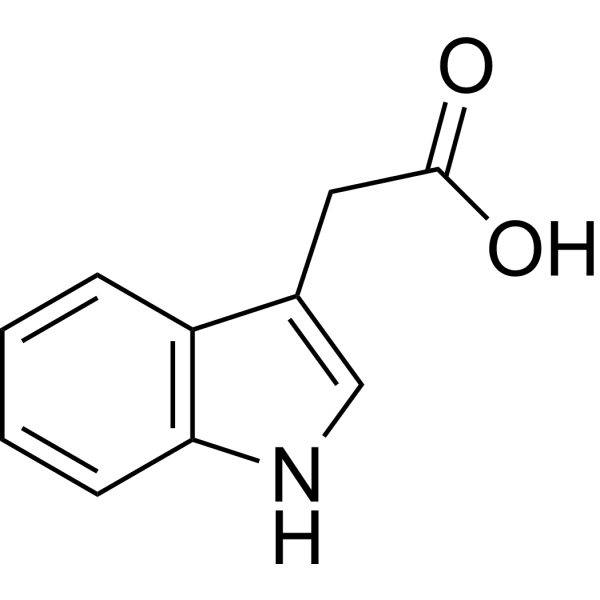
Indole-3-acetic acid; 3-IAA
|
Biochemical Assay Reagents
|
|
3-Indoleacetic acid is is an IAA hormone and growth regulator that can promote plant nutritional growth through processes such as cell expansion, differentiation, morphogenesis, and organogenesis .
|
-
- HY-N0186
-
|
Indolebutyric acid
|
Biochemical Assay Reagents
|
|
Indole-3-butyric acid (3-indolebutyric acid) is a plant growth auxin and a good rooting agent. It can promote herbs and woody ornamental plant rooting and used for improving fruit rate. Indole 3-butyric acid is an auxin precursor, and is converted to indole 3-acetic acid (IAA) in a peroxisomal β-oxidation process .
|
-
- HY-18569B
-
|
IAA
|
Biochemical Assay Reagents
|
|
3-Indoleacetic acid, suitable for plant cell culture (IAA), is a naturally occurring plant growth hormone that is widely present in plants, bacteria, and fungi. 3-Indoleacetic acid, suitable for plant cell culture, is a plant growth-promoting hormone that not only promotes plant growth but also protects bacteria from the toxic damage to cell membrane potential caused by other indole intermediate products (such as I3P) produced during their own metabolic processes. 3-Indoleacetic acid, suitable for plant cell culture, can be used in plant cell culture .
|
-
- HY-18569R
-
|
Indole-3-acetic acid (standard); 3-IAA (standard)
|
Biochemical Assay Reagents
|
|
3-Indoleacetic acid (Standard) is the analytical standard of 3-Indoleacetic acid. This product is intended for research and analytical applications. 3-Indoleacetic acid is is an IAA hormone and growth regulator that can promote plant nutritional growth through processes such as cell expansion, differentiation, morphogenesis, and organogenesis .
|
-
- HY-N0186R
-
|
Indolebutyric acid (Standard)
|
Biochemical Assay Reagents
|
|
Indole-3-butyric acid (Standard) is the analytical standard of Indole-3-butyric acid. This product is intended for research and analytical applications. Indole-3-butyric acid (3-indolebutyric acid) is a plant growth auxin and a good rooting agent. It can promote herbs and woody ornamental plant rooting and used for improving fruit rate. Indole 3-butyric acid is an auxin precursor, and is converted to indole 3-acetic acid (IAA) in a peroxisomal β-oxidation process .
|
-
- HY-N0186B
-
|
IBA
|
Biochemical Assay Reagents
|
|
Indole-3-butyric acid,suitable for plant cell culture (IBA) is a plant auxin and a good rooting agent. Indole-3-butyric acid,suitable for plant cell culture can promote rooting of herbaceous and woody ornamental plants and is used to increase fruiting rate. Indole-3-butyric acid is an auxin precursor that is converted into indole 3-acetic acid (IAA) during peroxisomal β-oxidation. Indole-3-butyric acid,suitable for plant cell culture can be used for cell culture .
|
-
- HY-158295
-
|
|
Biochemical Assay Reagents
|
|
IAA/BSA is a biochemical reagent that can be used as a biological material or organic compound for life science related research .
|
-
- HY-18569C
-
|
3-IAA Sterile Solution (1 mg/ml)
|
Biochemical Assay Reagents
|
|
3-Indoleacetic acid Sterile Solution (1 mg/mL) is a ready-to-use plant growth regulator stock solution, the main component of which is 3-Indoleacetic acid.
|
| Cat. No. |
Product Name |
Target |
Research Area |
-
- HY-W141858
-
|
Indoleacetylalanine; IAA-ala
|
Amino Acid Derivatives
|
Others
|
|
N-(3-Indolylacetyl)-L-alanine (Indoleacetylalanine) is an indoleacetylamino acid. N-(3-Indolylacetyl)-L-alanine appears to increase callus growth and reduces the ability of growths to differentiate into shoots of Phalaenopsis orchids .
|
| Cat. No. |
Product Name |
Target |
Research Area |
Image |
-
- HY-P990184
-
|
|
MHC
|
Others
|
|
Anti-Mouse MHC Class II (βchain) Antibody (KL277) is a hamster/mouse-derived IgG type antibody inhibitor, targeting to mouse MHC Class II. Anti-Mouse MHC Class II (βchain) Antibody (KL277) reacts with mouse MHC Class II haplotypes I-Ab, I-Ad, I-Ap, I-Aq, I-Abu, and I-Abw. Anti-Mouse MHC Class II (βchain) Antibody (KL277) does not react with I-Aa, I-Ak, I-Af, I-Aj, I-As, or I-Atl haplotypes. Anti-Mouse MHC Class II (βchain) Antibody (KL277) can be used for western blot experiments .
|
-
(5)
| Cat. No. |
Product Name |
Category |
Target |
Chemical Structure |
| Cat. No. |
Product Name |
Chemical Structure |
Your information is safe with us. * Required Fields.
Inquiry Information
- Product Name:
- Cat. No.:
- Quantity:
- MCE Japan Authorized Agent:

