



R(+)-Methylindazone
Based on 5 publication(s) in Google Scholar
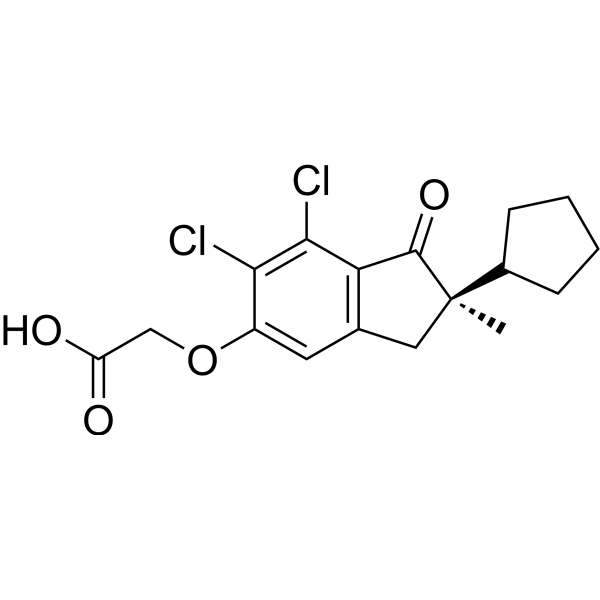
R(+)-Methylindazone (R(+)-IAA-94) is a potent indanyloxyacetic acid blocker of epithelial chloride channels. R(+)-Methylindazone inhibits Nef-sdAb19 (single-domain antibody) interaction and binds to negative factor (Nef).
For research use only. We do not sell to patients.
- Purity : 98.97%
- CAS No.: 54197-31-8
- Formula: C17H18Cl2O4
- Molecular Weight:357.23
-
Storage:Powder -20°C, 3 years , 4°C, 2 years ; In solvent -80°C, 2 years , -20°C, 1 year

To place orders, for customer services and technical support, please contact: MedChemExpress USA
Tel: 609-228-6898 E-mail: [email protected] [email protected]


-
 Biological Activity
-
Chemical Information
-
Solvent & Solubility
- Purity & Documentation
- References
-
 Help & FAQs


-
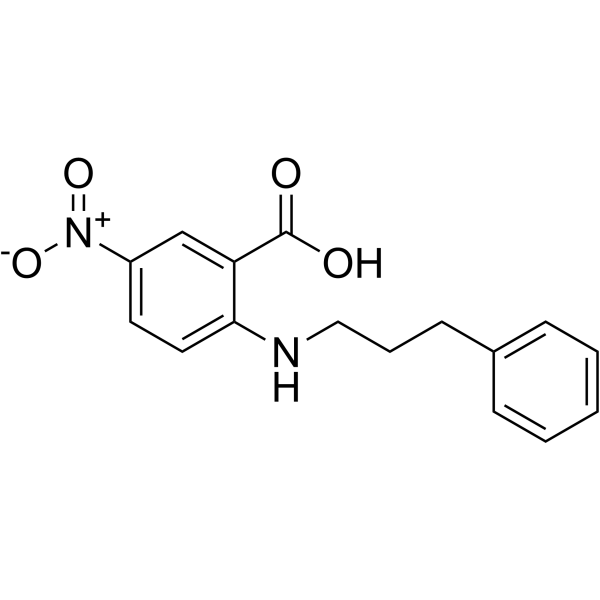
HY-101012
NPPBORCC Blocker -
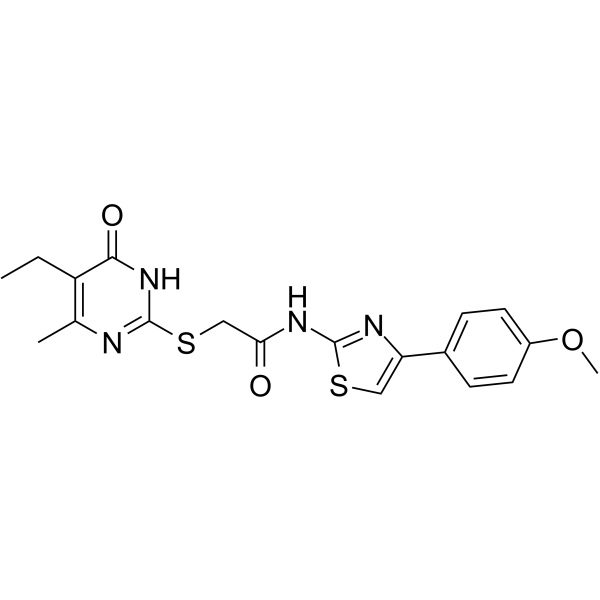
HY-100612
T16Ainh-A01TMEM16A Inhibitor -

HY-Y0320
Dimethyl sulfoxide, meets analytical specification of Ch.P.Aprotic Solvent -
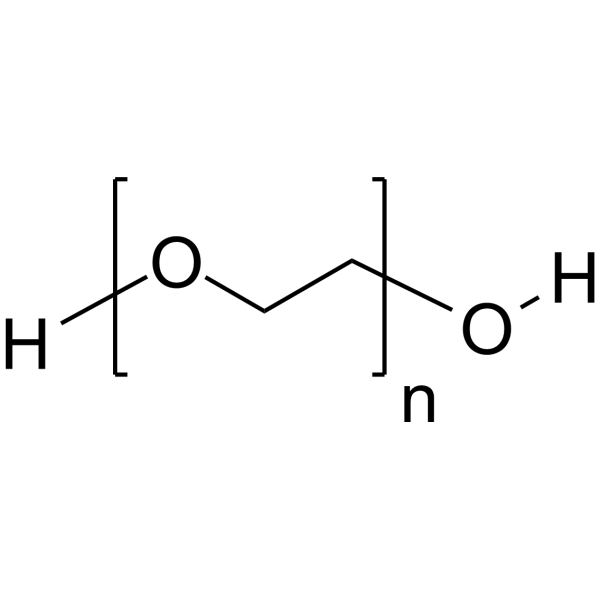
HY-Y0873
PEG300Neutral Polymer -
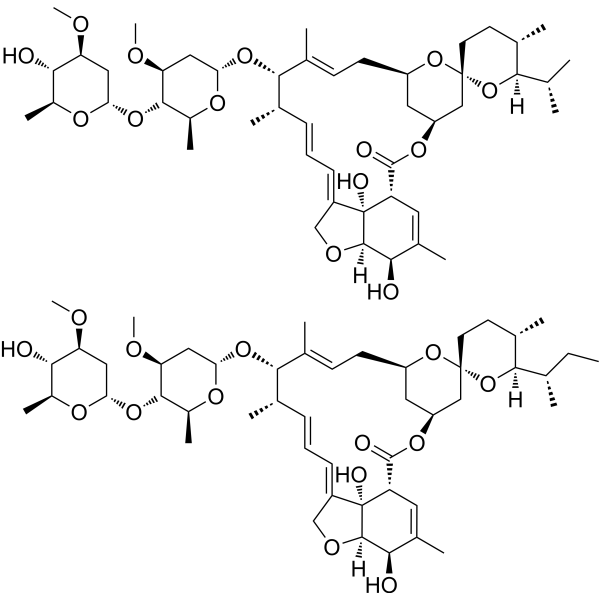
HY-15310
IvermectinAnti-parasite Agent -
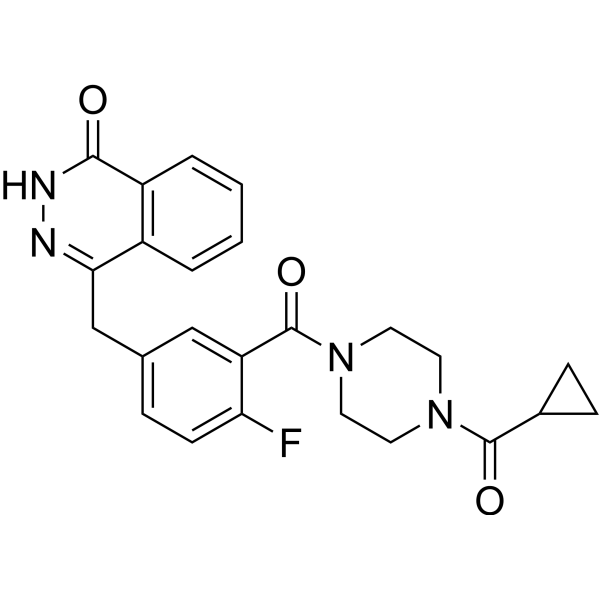
HY-10162
OlaparibPARP Inhibitor -
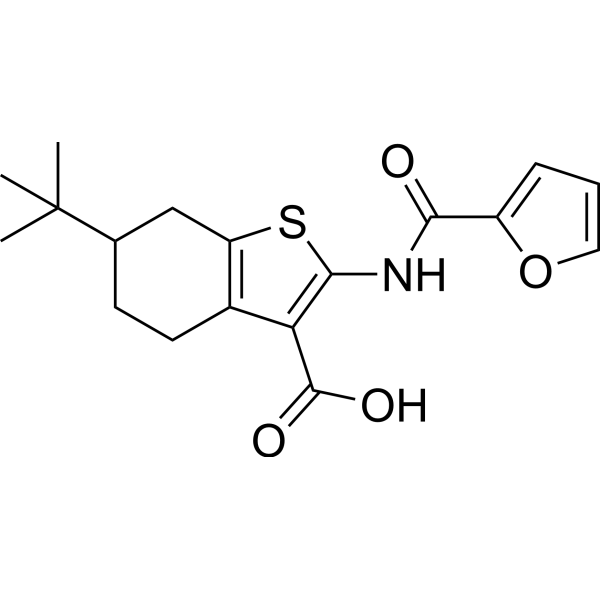
HY-100611
CaCCinh-A01TMEM16A Inhibitor -
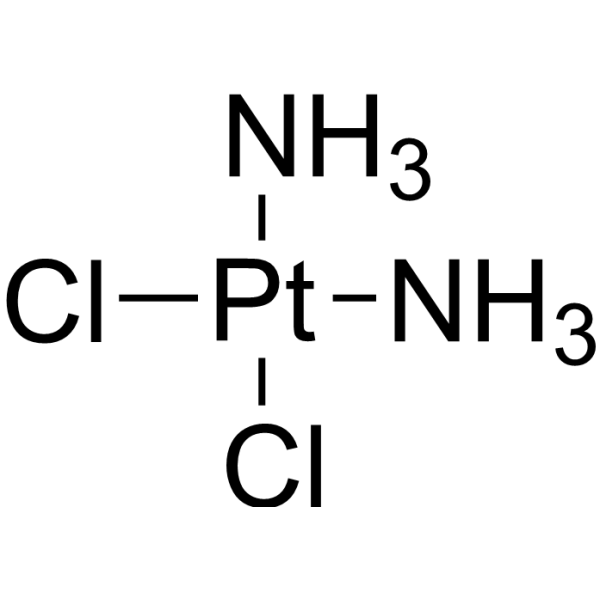
HY-17394
CisplatinDNA Alkylator -
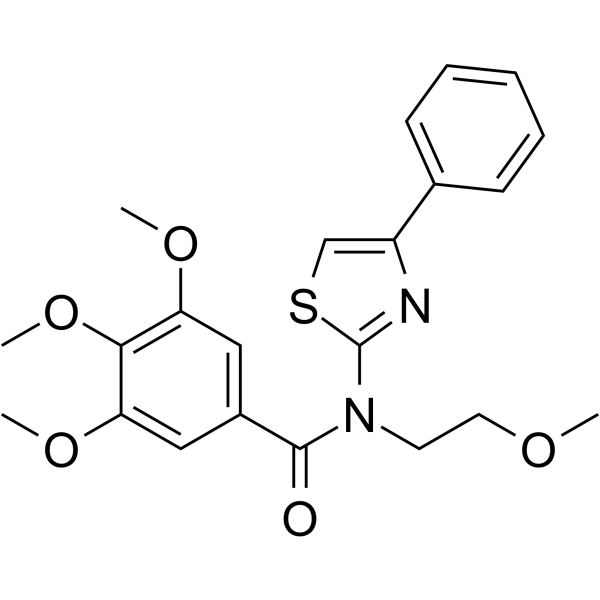
HY-103368
EactTMEM16A Activator -
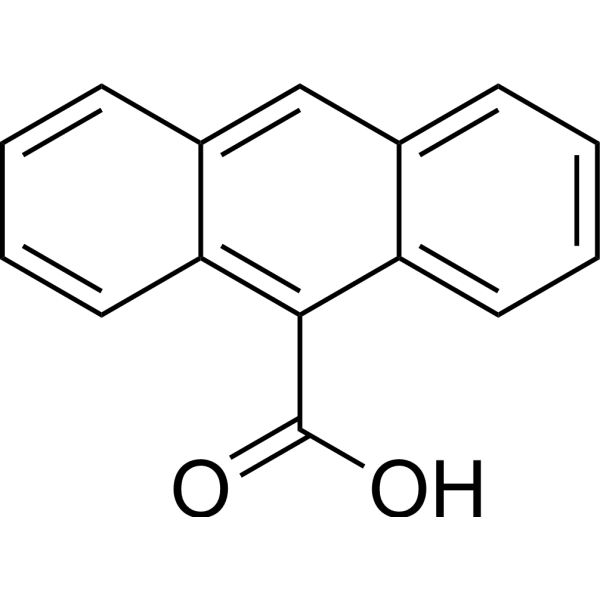
HY-101329
Anthracene-9-carboxylic acidChloride Current Blocker -
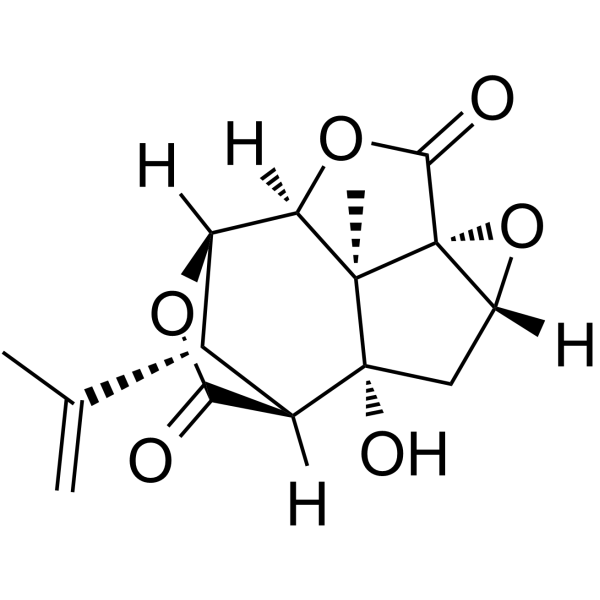
HY-B1494
PicrotoxininGABA Antagonist/Cl Blocker -
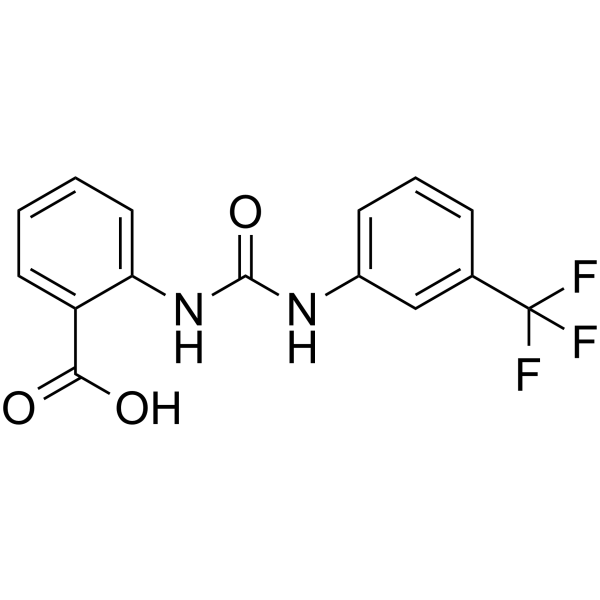
HY-100244
NS1652Anion Conductance Inhibitor
Publications Citing Use of MedChemExpress (MCE) R(+)-Methylindazone
More Customer Validation & Images

-
Bio/Physico-chemical Assay

-
Bio/Physico-chemical Assay

-
In Vivo Efficacy Study

-
In Vivo Efficacy Study

-
Cell Imaging/Staining


Biological Activity
Description
In Vitro
IAA-94 has been employed in modulating chloride channel function to probe the dynamics and function of the channels. The high affinity of IAA-94 for the chloride channel has been exploited for isolation and reconstitution of these proteins[1][2].
MedChemExpress (MCE) has not independently confirmed the accuracy of these methods. They are for reference only. .


Chemical Information
-
CAS No. 54197-31-8
-
Appearance Solid
-
Molecular Weight 357.23
-
Formula C17H18Cl2O4
-
Color White to yellow
-
SMILES
O=C(O)COC1=CC2=C(C([C@@](C)(C3CCCC3)C2)=O)C(Cl)=C1Cl
-
Synonyms
R(+)-IAA-94
-
Shipping
Room temperature in continental US; may vary elsewhere.
-
Storage
Powder -20°C 3 years 4°C 2 years In solvent -80°C 2 years -20°C 1 year


Publications (5)
-
Journal Impact Factor
-
Most Recent
-
Mol Metab
Targeting Clic1 for the treatment of obesity: A novel therapeutic strategy to reduce food intake and body weight. [Abstract]2023 Oct:76:101794. PMID: 37604246
R(+)-Methylindazone purchased from MedChemExpress. Usage Cited in: Mol Metab. 2023 Oct:76:101794. [Abstract]
Clic1, Npy and Agrp expression in non-fasted, 8-h fasted, and 8-h fasted + IAA94 (R(+)-Methylindazone, 500 μM) treated hypothalamic cells.
R(+)-Methylindazone purchased from MedChemExpress. Usage Cited in: Mol Metab. 2023 Oct:76:101794. [Abstract]
AA94 mediated reduction in food intake is mediated via Clic1. Male WT mice and Clic1 KO were fasted for 23 h and then injected once with IAA94 (R(+)-Methylindazone, 10 mg/kg) or vehicle (VEH) before being re-fed with normal chow and then food intake measured 24 h after re-feeding.
R(+)-Methylindazone purchased from MedChemExpress. Usage Cited in: Mol Metab. 2023 Oct:76:101794. [Abstract]
Area under the curve of GTT of HFD-fed obese mice treated with Vehicle (n = 9), IAA94 (R(+)-Methylindazone) 50 mg/kg (n = 8), IAA94 10 mg/kg (n = 7), Lira (n = 6), combo [IAA94 50 mg/kg + Lira] (n = 6) for 21 days. Metabolic chamber analysis was conducted during days 8-15 of treatment.
-
Commun Biol
Measuring pH in insulin secretory granules by phasor-based fluorescence lifetime imaging of a genetically encoded sensor. [Abstract]2025 Feb 25;8(1):304. PMID: 40000885
R(+)-Methylindazone purchased from MedChemExpress. Usage Cited in: Commun Biol. 2025 Feb 25;8(1):304. [Abstract]
C-pep-E1GFP transfected INS-1E cells were treated with 100 nM concanamycin or 100 μM R( + )-IAA-94 (R(+)-Methylindazone) for 1 h at 37℃ and imaged by FLIM. Box plot (min to max) of concanamycin (n = 12) and IAA-94 (n = 17) treated cells compared to control cells (n = 17) from 3 independent experiments.
-
Commun Biol
Chloride intracellular channel CLIC3 mediates fibroblast cellular senescence by interacting with ERK7. [Abstract]2025 Jan 14;8(1):51. PMID: 39809890 -
-
Oxid Med Cell Longev
Attenuation of ROS/Chloride Efflux-Mediated NLRP3 Inflammasome Activation Contributes to Alleviation of Diabetic Cardiomyopathy in Rats after Sleeve Gastrectomy. [Abstract]2022 Apr 19;2022:4608914. PMID: 35498125
R(+)-Methylindazone purchased from MedChemExpress. Usage Cited in: Oxid Med Cell Longev. 2022 Apr 19;2022:4608914. [Abstract]
IAA-94 (R(+)-Methylindazone, 100 μM) was used to block chloride efflux, and the intracellular chloride was measured with MQAE, a chloride-sensitive dye.

R(+)-Methylindazone purchased from MedChemExpress. Usage Cited in: Oxid Med Cell Longev. 2022 Apr 19;2022:4608914. [Abstract]
ROS levels were assessed with DCFH-DA in H9c2 cells with HG or HG+IAA94 (100 μM) treatments.


Solvent & Solubility
In Vitro:
DMSO : 100 mg/mL (279.93 mM; Need ultrasonic; Hygroscopic DMSO has a significant impact on the solubility of product, please use newly opened DMSO)
Please refer to the solubility information to select the appropriate solvent. Once prepared, please aliquot and store the solution to prevent product inactivation from repeated freeze-thaw cycles.
Storage method and period of stock solution: -80°C, 2 years; -20°C, 1 year. When stored at -80°C, please use it within 2 years. When stored at -20°C, please use it within 1 year.
Please refer to the solubility information to select the appropriate solvent. Once prepared, please aliquot and store the solution to prevent product inactivation from repeated freeze-thaw cycles.
Storage method and period of stock solution: -80°C, 2 years; -20°C, 1 year. When stored at -80°C, please use it within 2 years. When stored at -20°C, please use it within 1 year.
Concentration (start) × Volume (start) = Concentration (final) × Volume (final)
In Vivo:
Select the appropriate dissolution method based on your experimental animal and administration route.
- For the following dissolution methods, please ensure to first prepare a clear stock solution using an In Vitro approach and then sequentially add co-solvents:
- To ensure reliable experimental results, the clarified stock solution can be appropriately stored based on storage conditions. As for the working solution for In Vivo experiments, it is recommended to prepare freshly and use it on the same day.
- The percentages shown for the solvents indicate their volumetric ratio in the final prepared solution. If precipitation or phase separation occurs during preparation, heat and/or sonication can be used to aid dissolution.
Add each solvent one by one: 10% DMSO 40% PEG300 5% Tween-80 45% Saline
Solubility: ≥ 2.5 mg/mL (7.00 mM); Clear solution
This protocol yields a clear solution of ≥ 2.5 mg/mL (saturation unknown).
Taking 1 mL working solution as an example, add 100 μL DMSO stock solution (25.0 mg/mL) to 400 μL PEG300, and mix evenly; then add 50 μL Tween-80 and mix evenly; then add 450 μL Saline to adjust the volume to 1 mL.
Preparation of Saline: Dissolve 0.9 g sodium chloride in ddH₂O and dilute to 100 mL to obtain a clear Saline solution.
Add each solvent one by one: 10% DMSO 90% (20% SBE-β-CD in Saline)
Solubility: ≥ 2.5 mg/mL (7.00 mM); Clear solution
This protocol yields a clear solution of ≥ 2.5 mg/mL (saturation unknown).
Taking 1 mL working solution as an example, add 100 μL DMSO stock solution (25.0 mg/mL) to 900 μL 20% SBE-β-CD in Saline, and mix evenly.
Preparation of 20% SBE-β-CD in Saline (4°C, storage for one week): 2 g SBE-β-CD powder is dissolved in 10 mL Saline, completely dissolve until clear.
In Vivo Dissolution Calculator
Please enter the basic information of animal experiments:
-
-
-
-
Recommended: Prepare an additional quantity of animals to account for potential losses during experiments.
Please enter your animal formula composition:
-
%DMSO +
Recommended: Keep the proportion of DMSO in working solution below 2% if your animal is weak.
-
%+
-
+%Tween-80 + +
-
%Saline +
The co-solvents required include: DMSO, . All of co-solvents are available by MedChemExpress (MCE). , Tween 80. All of co-solvents are available by MedChemExpress (MCE).
Working solution concentration: 0.22 mg/mL
Method for preparing stock solution: mg drug dissolved in μL DMSO. Stock solution concentration: mg/mL.
1. Take μL DMSO stock solution;
2. Add μL .
μL , mix evenly;
3. Then add μL Tween 80, mix evenly;
4. Then add μL
Please ensure that the stock solution in the first step is dissolved to a clear state, and add co-solvents in sequence. You can use ultrasonic heating (ultrasonic cleaner, recommended frequency 20-40 kHz), vortexing, etc. to assist dissolution.


Purity & Documentation
-
Data Sheet (275 KB)
-
SDS (396 KB)
- English - EN (396 KB)
- Français - FR (396 KB)
- Deutsch - DE (396 KB)
- Norwegian - NO (396 KB)
- Español - ES (396 KB)
- Swedish - SV (396 KB)
- Italian - IT (396 KB)
- Korean - KR (396 KB)
- Portuguese - PT (396 KB)
-
Handling Instructions (2659 KB)
References
[1]. Landry DW, et al. Epithelial chloride channel. Development of inhibitory ligands. J Gen Physiol. 1987 Dec;90(6):779-98. [Content Brief]
[2]. Landry DW, et al. Purification and reconstitution of chloride channels from kidney and trachea. Science. 1989 Jun 23;244(4911):1469-72. [Content Brief]
[3]. Xiaoqin Fan, et al. A homogeneous time-resolved fluorescence-based high-throughput screening for discovery of inhibitors of Nef-sdAb19 interaction. Int J Oncol. 2015 Oct;47(4):1485-93. [Content Brief]


Complete Stock Solution Preparation Table
Please refer to the solubility information to select the appropriate solvent. Once prepared, please aliquot and store the solution to prevent product inactivation from repeated freeze-thaw cycles.
Storage method and period of stock solution: -80°C, 2 years; -20°C, 1 year. When stored at -80°C, please use it within 2 years. When stored at -20°C, please use it within 1 year.
| Optional Solvent | Concentration Solvent Mass | 1 mg | 5 mg | 10 mg | 25 mg |
|---|---|---|---|---|---|
| DMSO | 1 mM | 2.7993 mL | 13.9966 mL | 27.9932 mL | 69.9829 mL |
| 5 mM | 0.5599 mL | 2.7993 mL | 5.5986 mL | 13.9966 mL | |
| 10 mM | 0.2799 mL | 1.3997 mL | 2.7993 mL | 6.9983 mL | |
| 15 mM | 0.1866 mL | 0.9331 mL | 1.8662 mL | 4.6655 mL | |
| 20 mM | 0.1400 mL | 0.6998 mL | 1.3997 mL | 3.4991 mL | |
| 25 mM | 0.1120 mL | 0.5599 mL | 1.1197 mL | 2.7993 mL | |
| 30 mM | 0.0933 mL | 0.4666 mL | 0.9331 mL | 2.3328 mL | |
| 40 mM | 0.0700 mL | 0.3499 mL | 0.6998 mL | 1.7496 mL | |
| 50 mM | 0.0560 mL | 0.2799 mL | 0.5599 mL | 1.3997 mL | |
| 60 mM | 0.0467 mL | 0.2333 mL | 0.4666 mL | 1.1664 mL | |
| 80 mM | 0.0350 mL | 0.1750 mL | 0.3499 mL | 0.8748 mL | |
| 100 mM | 0.0280 mL | 0.1400 mL | 0.2799 mL | 0.6998 mL |


R(+)-Methylindazone Related Classifications
HY-12693 Related Classifications
 Powered by Bioz