
Search Result
Results for "
Immunogenic Peptide
" in MedChemExpress (MCE) Product Catalog:
-
- HY-P3719
-
|
|
CCR
|
Inflammation/Immunology
|
|
MOG (35-55) amide, mouse, rat the terminal amidation form of the 35-55 fragment of the myelin oligodendrocyte glycoprotein (MOG) immunogenic peptide (MOG (35-55) (HY-P1240)). MOG(35-55) amide, mouse, rat can be used for experimental autoimmune encephalomyelitis (EAE) modeling .
|
-
-
- HY-165613
-
|
Dipalmitoyl-S-glyceryl-cysteine; S-[2,3-Bis(palmitoyloxy)propyl]cysteine
|
Toll-like Receptor (TLR)
Influenza Virus
NF-κB
|
Infection
Inflammation/Immunology
|
|
Pam2Cys (Dipalmitoyl-S-glyceryl-cysteine; S-[2,3-Bis(palmitoyloxy)propyl]cysteine) is a TLR2 agonist and immunostimulant. Pam2Cys binds to TLR2 to activate dendritic cells and trigger the TLR2-dependent NF-κB signaling pathway. Pam2Cys also induces dendritic cell maturation by upregulating the expression of cell surface MHC II molecules. Pam2Cys activates innate immune signaling pathways, drives pro-inflammatory and antimicrobial responses, enhances the expression of macrophage activation markers, increases phagocytic activity, induces the release of IL-12 and pro-inflammatory cytokines, and polarizes macrophages into a pro-inflammatory, antimicrobial phenotype without interfering with IL-10-induced macrophage polarization. Pam2Cys also serves as the lipid moiety in synthetic lipopeptide vaccines and possesses self-adjuvant properties. Pam2Cys enhances the immunogenicity of conjugated peptide segments and induces cellular and humoral immune responses. However, it does not activate CD4 T cells in mouse splenocyte cultures when used alone. Pam2Cys activates pulmonary TLR2 signaling pathways, triggers innate immune responses, recruits neutrophils and macrophages, induces the secretion of various cytokines, alleviates symptoms and damages associated with influenza A virus infection in mice without impairing adaptive immunity. Pam2Cys can be used in studies related to tuberculosis and influenza A virus infection .
|
-
-
- HY-W451406C
-
|
|
PROTAC Linkers
|
Others
|
|
NH2-PEG2000-NH2 is a polyethylene glycol derivative containing two primary amine groups. The amino group can react quickly with activated carboxylic acid or carboxyl groups such as NHS esters to form stable amide bonds. The PEGylation of NH2-PEG-NH2 can increase solubility and stability, and reduce the immunogenicity of peptides and proteins, so it is mostly used to modify proteins, peptides and other substances.
|
-
-
- HY-P2459
-
|
|
MHC
|
Neurological Disease
|
|
MOG (35-55), human is a component of CNS myelin. MOG (35-55), human is different from mMOG (35-55) by a proline for serine substitution at position 42. MOG (35-55), human is also immunogenic via bind to H-2b class II MHC and recognized by T cells, but not encephalitogenic, and is only partially cross-reactive with mMOG35–55. MOG (35-55), human induces minimal clinical signs of EAE relative to the rodent peptide .
|
-
-
- HY-P1778A
-
|
|
HPV
|
Infection
|
|
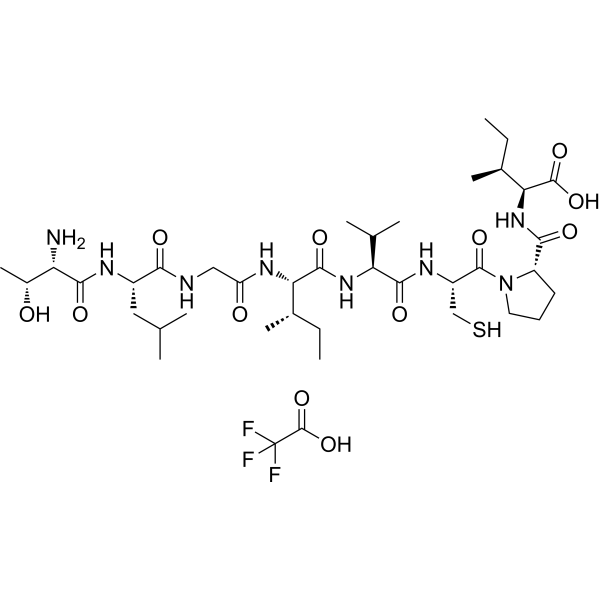
HPV16 E7 (86-93) TFA is a human leukocyte antigen (HLA)-A2.1 restricted HPV16 E7-derived peptide. HPV16 E7 (86-93) TFA is immunogenic in cervical carcinomas .
|
-
-
- HY-W1049092
-
|
|
Biochemical Assay Reagents
|
Others
|
|
mPEG2000-N3 can be used to modify proteins, peptides, and other materials. The azide group can react with alkynes in aqueous solution catalyzed by copper. It can also be easily reduced to an amine group. PEGylation can increase solubility and stability and reduce the immunogenicity of peptides and proteins. mPEG2000-N3 can also inhibit the nonspecific binding of charged molecules to the modified surface .
|
-
-
- HY-P10862
-
|
|
Exosomes
Virus Protease
|
Infection
Cancer
|
AH-D peptide is a brain-penetrant antiviral agent disrupting highly curved lipid membranes. AH-D peptide exhibits broad-spectrum antiviral activity against ZIKV, Dengue virus, Chikungunya virus, yellow fever virus and Japanese encephalitis virus, with IC50 values of 11.9, 12.5, 35.7, 206 and 136 nM, respectively. AH-D peptide reduces the viral load in the brain, suppresses inflammation, protects neurons, and does not damage the blood brain barrier. AH-D peptide restores antitumor immunity by decreasing circulating PD-L1 + exosomes, reducing intratumoral immunosuppressive cells (regulatory T cells, myeloid-derived suppressor cells), and enhancing T cell function. AH-D peptide inhibits membrane-enveloped viruses and cancer cell metastasis in vivo. AH-D peptide exhibits no immunogenicity and has negligible effects on normal tissues. AH-D peptide can be used for research in Zika virus and other mosquito-borne viruses, cancer immunotherapy and metastasis .
|
-
-
- HY-W012166
-
|
NHS-Bromoacetate
|
Biochemical Assay Reagents
|
Infection
|
|
N-Succinimidyl bromoacetate (NHS-Bromoacetate) is a heterobifunctional crosslinking reagent, mainly used to modify the ɛ-amino group of lysine side chains. By covalently linking its bromoacetyl moiety to the ɛ-amino group of lysine in peptidomimetics, N-Succinimidyl bromoacetate enables their conjugation with thiol-modified nanoparticles via thioether bonds. N-Succinimidyl bromoacetate also performs bromoacetylation modification on carrier proteins, which then forms stable thioether bonds with the thiol groups of cysteine in peptides, thus efficiently preparing soluble peptide-protein conjugates with high substitution ratios. N-Succinimidyl bromoacetate can be used to prepare activated Sepharose derivatives for affinity chromatography, protein affinity labeling reagents, and peptide-protein immunogen conjugates with non-immunogenic linkages. N-Succinimidyl bromoacetate is applicable to studies related to HIV-1 infection and glioblastoma multiforme .
|
-
-
- HY-P10701
-
|
|
Biochemical Assay Reagents
|
Inflammation/Immunology
Cancer
|
|
Q11 peptide is a β-sheet-forming peptide that plays an important role in self-assembly and targeted applications. As a scaffold peptide, Q11 peptide can display immunogenic epitopes and is widely used in peptide-based immune vaccine research. Additionally, Q11 peptide can be conjugated with MUC1 glycopeptides for the study of self-assembling, adjuvant-free MUC1 glycopeptide vaccines. Q11 peptide holds great potential for research in the field of cancer immunology .
|
-
-
- HY-P11205A
-
|
Cys-txCD47 TFA
|
CD47
Reactive Oxygen Species (ROS)
Thrombopoietin Receptor
|
Inflammation/Immunology
Cancer
|
|
Cys-PKHB1 (Cys-txCD47) TFA is a peptide conjugated to PKHB1, a CD47 agonist peptide and a thrombospondin-1 peptide mimic with antitumor effects. PKHB1 induces mitochondrial alterations, ROS generation, intracellular Ca + accumulation, and calcium-dependent cell death in breast cancer cells. PKHB1 induces immune system activation in breast cancer cells through immunogenic cell death .
|
-
-
- HY-P1610
-
|
|
PD-1/PD-L1
|
Cancer
|
|
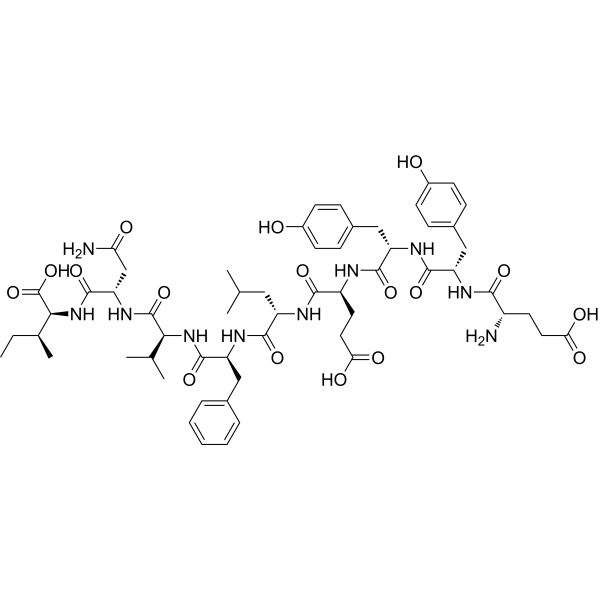
Asudemotide (S-588410) is a peptide of human DEP domain-containing protein 1A. Asudemotide is an immunostimulant. Asudemotide has a sequence of H-Glu-Tyr-Tyr-Glu-Leu-Phe-Val-Asn-Ile-OH. Asudemotide induces a tumor immune response in esophageal cancer. .
|
-
-
- HY-174359C
-
|
|
Biochemical Assay Reagents
|
Others
|
|
Alkyne-PEG5000-NH2 is an alkyne-functionalized bifunctional PEG derivative that can be used to modify proteins, peptides, and other materials. The alkyne group reacts with azides in aqueous solution in a copper-catalyzed manner. PEGylation can increase solubility and stability and reduce the immunogenicity of peptides and proteins .
|
-
-
- HY-W1049105
-
|
|
Biochemical Assay Reagents
|
Others
|
|
mPEG2000-Alkyne is a PEG derivative. The alkynyl group can react with azide in aqueous solution under the catalysis of monovalent copper. Polyethylene glycol derivatives can increase the solubility and stability of drugs, reduce the immunogenicity of peptides, and have good biocompatibility .
|
-
-
- HY-P1778
-
|
|
HPV
|
Infection
|
|
HPV16 E7 (86-93) is a human leukocyte antigen (HLA)-A2.1 restricted HPV16 E7-derived peptide. HPV16 E7 (86-93) is immunogenic in cervical carcinomas .
|
-
-
- HY-W591465
-
|
4-Arm-PEG2000-Mal
|
Biochemical Assay Reagents
|
Others
|
|
4-Arm-PEG2000-Maleimide (4-Arm-PEG2000-Mal) is a PEG derivative modified with Maleimide (HY-W007324), which forms a stable thioether bond with sulfhydryl (-SH). PEG modification can improve solubility and stability and reduce the immunogenicity of proteins and peptides .
|
-
-
- HY-P10593
-
|
|
Transmembrane Glycoprotein
Influenza Virus
|
Cancer
|
|
Influenza A NP (383-391) (HLA-B27) is a peptide sequence derived from tetanus toxin. Influenza A NP (383-391) (HLA-B27) is a broadly immunogenic CD4+ T helper cell epitope that enhances CD8+ cytotoxic T lymphocyte (CTL) responses. Influenza A NP (383-391) (HLA-B27) can be used in breast cancer research .
|
-
-
- HY-P10371
-
|
txCD47
|
Reactive Oxygen Species (ROS)
Thrombopoietin Receptor
Mitochondrial Metabolism
HSP
HSV
CD47
|
Infection
Inflammation/Immunology
Cancer
|
|
PKHB1 (txCD47) is a CD47 agonist and Thrombospondin-1 peptide mimetic. PKHB1 activates CD47 and triggers Caspase-independent, calcium-dependent cell death via mitochondrial alterations, ROS production, endoplasmic reticulum morphological changes, and dissipation of mitochondrial membrane potential. PKHB1 induces the exposure of Calreticulin, HSP70, and HSP90, thereby driving immunogenic cell death. PKHB1 promotes intratumoral CD8 + T cell infiltration and inhibits breast tumorigenesis. PKHB1 reduces HSV-1 levels and alleviates the severity of herpes simplex keratitis. PKHB1 can be used in research related to breast cancer, herpes simplex keratitis, and T-cell acute lymphoblastic leukemia .
|
-
-
- HY-P2853A
-
|
|
Biochemical Assay Reagents
|
Others
|
|
Hemocyanin-SMCC is a hemocyanin that can be used as a carrier protein to couple low molecular weight molecules such as peptides, nucleic acids, drugs or toxins to make them highly immunogenic.
|
-
-
- HY-174359H
-
|
|
Biochemical Assay Reagents
|
Others
|
|
Alkyne-PEG40000-NH2 is an alkyne-functionalized bifunctional PEG derivative that can be used to modify proteins, peptides, and other materials. The alkyne group reacts with azides in aqueous solution in a copper-catalyzed manner. PEGylation can increase solubility and stability and reduce the immunogenicity of peptides and proteins .
|
-
-
- HY-174359A
-
|
|
Biochemical Assay Reagents
|
Others
|
|
Alkyne-PEG2000-NH2 is an alkyne-functionalized bifunctional PEG derivative that can be used to modify proteins, peptides, and other materials. The alkyne group reacts with azides in aqueous solution in a copper-catalyzed manner. PEGylation can increase solubility and stability and reduce the immunogenicity of peptides and proteins .
|
-
-
- HY-W1049091C
-
|
|
Biochemical Assay Reagents
|
Others
|
|
mPEG20000-Alkyne is a PEG derivative. The alkynyl group can react with azide in aqueous solution under the catalysis of monovalent copper. Polyethylene glycol derivatives can increase the solubility and stability of drugs, reduce the immunogenicity of peptides, and have good biocompatibility .
|
-
-
- HY-P11205
-
|
Cys-txCD47
|
CD47
Reactive Oxygen Species (ROS)
Thrombopoietin Receptor
|
Inflammation/Immunology
Cancer
|
|
Cys-PKHB1 (Cys-txCD47) is a peptide conjugated to PKHB1, a CD47 agonist peptide and a thrombospondin-1 peptide mimic with antitumor effects. PKHB1 induces mitochondrial alterations, ROS generation, intracellular Ca + accumulation, and calcium-dependent cell death in breast cancer cells. PKHB1 induces immune system activation in breast cancer cells through immunogenic cell death .
|
-
-
- HY-P10295
-
|
|
MDM-2/p53
|
Cancer
|
|
p53 (232-240) is a peptide segment of the 232-240 amino acid sequence of the human tumor suppressor protein p53. p53 (232-240) enhances its binding affinity to the Major histocompatibility complex (MHC), thereby enhancing the immunogenicity of this peptide to enhance the immune system's response to tumor antigens. p53 (232-240) can be used in the development of cancer vaccines and in the study of tumor cell recognition and clearance by the immune system .
|
-
-
- HY-W1049092E
-
|
|
Biochemical Assay Reagents
|
Others
|
|
mPEG1000-N3 can be used to modify proteins, peptides, and other materials. The azide group can react with alkynes in aqueous solution catalyzed by copper. It can also be easily reduced to an amine group. PEGylation can increase solubility and stability and reduce the immunogenicity of peptides and proteins. mPEG1000-N3 can also inhibit the nonspecific binding of charged molecules to the modified surface .
|
-
-
- HY-W1049092H
-
|
|
Biochemical Assay Reagents
|
Others
|
|
mPEG3400-N3 can be used to modify proteins, peptides, and other materials. The azide group can react with alkynes in aqueous solution catalyzed by copper. It can also be easily reduced to an amine group. PEGylation can increase solubility and stability and reduce the immunogenicity of peptides and proteins. mPEG3400-N3 can also inhibit the nonspecific binding of charged molecules to the modified surface .
|
-
-
- HY-W451406A
-
|
|
PROTAC Linkers
|
Others
|
|
NH2-PEG5000-NH2 is a polyethylene glycol derivative containing two primary amine groups. The amino group can react quickly with activated carboxylic acid or carboxyl groups such as NHS esters to form stable amide bonds. The PEGylation of NH2-PEG-NH2 can increase solubility and stability, and reduce the immunogenicity of peptides and proteins, so it is mostly used to modify proteins, peptides and other substances.
|
-
-
- HY-W451406D
-
|
|
PROTAC Linkers
|
Others
|
|
NH2-PEG10000-NH2 is a polyethylene glycol derivative containing two primary amine groups. The amino group can react quickly with activated carboxylic acid or carboxyl groups such as NHS esters to form stable amide bonds. The PEGylation of NH2-PEG-NH2 can increase solubility and stability, and reduce the immunogenicity of peptides and proteins, so it is mostly used to modify proteins, peptides and other substances.
|
-
-
- HY-W591618D
-
|
4-Arm-PEG3400-Mal
|
Biochemical Assay Reagents
|
Others
|
|
4-Arm-PEG3400-Maleimide (4-Arm-PEG3400-Mal) is a PEG derivative modified with Maleimide (HY-W007324), which forms a stable thioether bond with sulfhydryl (-SH). PEG modification can improve solubility and stability and reduce the immunogenicity of proteins and peptides .
|
-
-
- HY-W591618A
-
|
4-Arm-PEG400-Mal
|
Biochemical Assay Reagents
|
Others
|
|
4-Arm-PEG400-Maleimide (4-Arm-PEG400-Mal) is a PEG derivative modified with Maleimide (HY-W007324), which forms a stable thioether bond with sulfhydryl (-SH). PEG modification can improve solubility and stability and reduce the immunogenicity of proteins and peptides .
|
-
-
- HY-W591618C
-
|
4-Arm-PEG1000-Mal
|
Biochemical Assay Reagents
|
Others
|
|
4-Arm-PEG1000-Maleimide (4-Arm-PEG1000-Mal) is a PEG derivative modified with Maleimide (HY-W007324), which forms a stable thioether bond with sulfhydryl (-SH). PEG modification can improve solubility and stability and reduce the immunogenicity of proteins and peptides .
|
-
-
- HY-P5295
-
|
|
Fluorescent Dye
|
Others
|
|
Cy3-Ova (323-339) is an Cy3 labled OVA Peptide (323-339) (HY-P0286). Cy3 is a fluorescent dye belonging to the Cyanine family and is a fluorescent light product of Cy5. Cyanine is commonly used in fluorescence microscopy, cell imaging, and molecular biology experiments. OVA Peptide (323-339) represents the T and B cell epitopes of ovalbumin (OVA). OVA Peptide (323-339) has limited immunogenic efficacy in activating OVA-sensitized and attacked mouse spleen cells .
|
-
-
- HY-174961
-
|
Fmoc-NH-PEG1000-Mal
|
Biochemical Assay Reagents
|
Others
|
|
Fmoc-PEG1000-Maleimide (Fmoc-NH-PEG1000-Mal) is a PEG derivative with an Fmoc protecting group and a Maleimide (HY-W007324) reactive group. Fmoc is a commonly used amino protecting group that protects the amino group from unwanted reactions until it is removed for a specific coupling reaction. Maleimide forms a stable thioether bond with sulfhydryl (-SH) groups. PEG modification can improve solubility and stability and reduce the immunogenicity of proteins and peptides .
|
-
-
- HY-174961C
-
|
Fmoc-NH-PEG5000-Mal
|
Biochemical Assay Reagents
|
Others
|
|
Fmoc-PEG5000-Maleimide (Fmoc-NH-PEG5000-Mal) is a PEG derivative with an Fmoc protecting group and a Maleimide (HY-W007324) reactive group. Fmoc is a commonly used amino protecting group that protects the amino group from unwanted reactions until it is removed for a specific coupling reaction. Maleimide forms a stable thioether bond with sulfhydryl (-SH) groups. PEG modification can improve solubility and stability and reduce the immunogenicity of proteins and peptides .
|
-
-
- HY-174359D
-
|
|
Biochemical Assay Reagents
|
Others
|
|
Alkyne-PEG10000-NH2 is an alkyne-functionalized bifunctional PEG derivative that can be used to modify proteins, peptides, and other materials. The alkyne group reacts with azides in aqueous solution in a copper-catalyzed manner. PEGylation can increase solubility and stability and reduce the immunogenicity of peptides and proteins .
|
-
-
- HY-174359
-
|
|
Biochemical Assay Reagents
|
Others
|
|
Alkyne-PEG1000-NH2 is an alkyne-functionalized bifunctional PEG derivative that can be used to modify proteins, peptides, and other materials. The alkyne group reacts with azides in aqueous solution in a copper-catalyzed manner. PEGylation can increase solubility and stability and reduce the immunogenicity of peptides and proteins .
|
-
-
- HY-174359B
-
|
|
Biochemical Assay Reagents
|
Others
|
|
Alkyne-PEG3400-NH2 is an alkyne-functionalized bifunctional PEG derivative that can be used to modify proteins, peptides, and other materials. The alkyne group reacts with azides in aqueous solution in a copper-catalyzed manner. PEGylation can increase solubility and stability and reduce the immunogenicity of peptides and proteins .
|
-
-
- HY-174359E
-
|
|
Biochemical Assay Reagents
|
Others
|
|
Alkyne-PEG20000-NH2 is an alkyne-functionalized bifunctional PEG derivative that can be used to modify proteins, peptides, and other materials. The alkyne group reacts with azides in aqueous solution in a copper-catalyzed manner. PEGylation can increase solubility and stability and reduce the immunogenicity of peptides and proteins .
|
-
-
- HY-W1049091D
-
|
|
Biochemical Assay Reagents
|
Others
|
|
mPEG40000-Alkyne is a PEG derivative. The alkynyl group can react with azide in aqueous solution under the catalysis of monovalent copper. Polyethylene glycol derivatives can increase the solubility and stability of drugs, reduce the immunogenicity of peptides, and have good biocompatibility .
|
-
-
- HY-W1049091A
-
|
|
Biochemical Assay Reagents
|
Others
|
|
mPEG5000-Alkyne is a PEG derivative. The alkynyl group can react with azide in aqueous solution under the catalysis of monovalent copper. Polyethylene glycol derivatives can increase the solubility and stability of drugs, reduce the immunogenicity of peptides, and have good biocompatibility .
|
-
-
- HY-W1049091
-
|
|
Biochemical Assay Reagents
|
Others
|
|
mPEG1000-Alkyne is a PEG derivative. The alkynyl group can react with azide in aqueous solution under the catalysis of monovalent copper. Polyethylene glycol derivatives can increase the solubility and stability of drugs, reduce the immunogenicity of peptides, and have good biocompatibility .
|
-
-
- HY-W1049091B
-
|
|
Biochemical Assay Reagents
|
Others
|
|
mPEG10000-Alkyne is a PEG derivative. The alkynyl group can react with azide in aqueous solution under the catalysis of monovalent copper. Polyethylene glycol derivatives can increase the solubility and stability of drugs, reduce the immunogenicity of peptides, and have good biocompatibility .
|
-
-
- HY-W1049091E
-
|
|
Biochemical Assay Reagents
|
Others
|
|
mPEG3400-Alkyne is a PEG derivative. The alkynyl group can react with azide in aqueous solution under the catalysis of monovalent copper. Polyethylene glycol derivatives can increase the solubility and stability of drugs, reduce the immunogenicity of peptides, and have good biocompatibility .
|
-
-
- HY-174809A
-
|
|
Biochemical Assay Reagents
|
Others
|
|
6-Arm-PEG600-Mal is a PEG derivative modified with Maleimide (HY-W007324), which forms a stable thioether bond with sulfhydryl (-SH). PEG modification can improve solubility and stability and reduce the immunogenicity of proteins and peptides .
|
-
-
- HY-174809E
-
|
|
Biochemical Assay Reagents
|
Others
|
|
6-Arm-PEG5000-Mal is a PEG derivative modified with Maleimide (HY-W007324), which forms a stable thioether bond with sulfhydryl (-SH). PEG modification can improve solubility and stability and reduce the immunogenicity of proteins and peptides .
|
-
-
- HY-174809H
-
|
|
Biochemical Assay Reagents
|
Others
|
|
6-Arm-PEG10000-Mal is a PEG derivative modified with Maleimide (HY-W007324), which forms a stable thioether bond with sulfhydryl (-SH). PEG modification can improve solubility and stability and reduce the immunogenicity of proteins and peptides .
|
-
-
- HY-174809
-
|
|
Biochemical Assay Reagents
|
Others
|
|
6-Arm-PEG400-Mal is a PEG derivative modified with Maleimide (HY-W007324), which forms a stable thioether bond with sulfhydryl (-SH). PEG modification can improve solubility and stability and reduce the immunogenicity of proteins and peptides .
|
-
-
- HY-174809C
-
|
|
Biochemical Assay Reagents
|
Others
|
|
6-Arm-PEG2000-Mal is a PEG derivative modified with Maleimide (HY-W007324), which forms a stable thioether bond with sulfhydryl (-SH). PEG modification can improve solubility and stability and reduce the immunogenicity of proteins and peptides .
|
-
-
- HY-174809D
-
|
|
Biochemical Assay Reagents
|
Others
|
|
6-Arm-PEG3400-Mal is a PEG derivative modified with Maleimide (HY-W007324), which forms a stable thioether bond with sulfhydryl (-SH). PEG modification can improve solubility and stability and reduce the immunogenicity of proteins and peptides .
|
-
-
- HY-174809B
-
|
|
Biochemical Assay Reagents
|
Others
|
|
6-Arm-PEG1000-Mal is a PEG derivative modified with Maleimide (HY-W007324), which forms a stable thioether bond with sulfhydryl (-SH). PEG modification can improve solubility and stability and reduce the immunogenicity of proteins and peptides .
|
-
-
- HY-W1049092C
-
|
|
Biochemical Assay Reagents
|
Others
|
|
mPEG20000-N3 can be used to modify proteins, peptides, and other materials. The azide group can react with alkynes in aqueous solution catalyzed by copper. It can also be easily reduced to an amine group. PEGylation can increase solubility and stability and reduce the immunogenicity of peptides and proteins. mPEG20000-N3 can also inhibit the nonspecific binding of charged molecules to the modified surface .
|
-
- HY-W1049092A
-
|
|
Biochemical Assay Reagents
|
Others
|
|
mPEG5000-N3 can be used to modify proteins, peptides, and other materials. The azide group can react with alkynes in aqueous solution catalyzed by copper. It can also be easily reduced to an amine group. PEGylation can increase solubility and stability and reduce the immunogenicity of peptides and proteins. mPEG5000-N3 can also inhibit the nonspecific binding of charged molecules to the modified surface .
|
-
- HY-W1049092D
-
|
|
Biochemical Assay Reagents
|
Others
|
|
mPEG40000-N3 can be used to modify proteins, peptides, and other materials. The azide group can react with alkynes in aqueous solution catalyzed by copper. It can also be easily reduced to an amine group. PEGylation can increase solubility and stability and reduce the immunogenicity of peptides and proteins. mPEG40000-N3 can also inhibit the nonspecific binding of charged molecules to the modified surface .
|
-
- HY-W1049092B
-
|
|
Biochemical Assay Reagents
|
Others
|
|
mPEG10000-N3 can be used to modify proteins, peptides, and other materials. The azide group can react with alkynes in aqueous solution catalyzed by copper. It can also be easily reduced to an amine group. PEGylation can increase solubility and stability and reduce the immunogenicity of peptides and proteins. mPEG10000-N3 can also inhibit the nonspecific binding of charged molecules to the modified surface .
|
-
- HY-W591618B
-
|
4-Arm-PEG600-Mal
|
Biochemical Assay Reagents
|
Others
|
|
4-Arm-PEG600-Maleimide (4-Arm-PEG600-Mal) is a PEG derivative modified with Maleimide (HY-W007324), which forms a stable thioether bond with sulfhydryl (-SH). PEG modification can improve solubility and stability and reduce the immunogenicity of proteins and peptides .
|
-
- HY-174960E
-
|
6-Arm-PEG5000-Folate
|
Biochemical Assay Reagents
|
Others
|
|
6-Arm-PEG5000-FA (6-Arm-PEG5000-Folate) is a PEG derivative modified with Folic acid (HY-16637). Polyethylene glycol can increase solubility and stability and reduce the immunogenicity of peptides and proteins. It can also inhibit the nonspecific binding of charged molecules to modified surfaces. Folic acid (-FA) has a high affinity for folate receptors and can be used for cell membrane receptors for targeted drug delivery .
|
-
- HY-174960B
-
|
6-Arm-PEG1000-Folate
|
Biochemical Assay Reagents
|
Others
|
|
6-Arm-PEG1000-FA (6-Arm-PEG1000-Folate) is a PEG derivative modified with Folic acid (HY-16637). Polyethylene glycol can increase solubility and stability and reduce the immunogenicity of peptides and proteins. It can also inhibit the nonspecific binding of charged molecules to modified surfaces. Folic acid (-FA) has a high affinity for folate receptors and can be used for cell membrane receptors for targeted drug delivery .
|
-
- HY-174960D
-
|
6-Arm-PEG3400-Folate
|
Biochemical Assay Reagents
|
Others
|
|
6-Arm-PEG3400-FA (6-Arm-PEG3400-Folate) is a PEG derivative modified with Folic acid (HY-16637). Polyethylene glycol can increase solubility and stability and reduce the immunogenicity of peptides and proteins. It can also inhibit the nonspecific binding of charged molecules to modified surfaces. Folic acid (-FA) has a high affinity for folate receptors and can be used for cell membrane receptors for targeted drug delivery .
|
-
- HY-174960A
-
|
6-Arm-PEG600-Folate
|
Biochemical Assay Reagents
|
Others
|
|
6-Arm-PEG600-FA (6-Arm-PEG600-Folate) is a PEG derivative modified with Folic acid (HY-16637). Polyethylene glycol can increase solubility and stability and reduce the immunogenicity of peptides and proteins. It can also inhibit the nonspecific binding of charged molecules to modified surfaces. Folic acid (-FA) has a high affinity for folate receptors and can be used for cell membrane receptors for targeted drug delivery .
|
-
- HY-174960C
-
|
6-Arm-PEG2000-Folate
|
Biochemical Assay Reagents
|
Others
|
|
6-Arm-PEG2000-FA (6-Arm-PEG2000-Folate) is a PEG derivative modified with Folic acid (HY-16637). Polyethylene glycol can increase solubility and stability and reduce the immunogenicity of peptides and proteins. It can also inhibit the nonspecific binding of charged molecules to modified surfaces. Folic acid (-FA) has a high affinity for folate receptors and can be used for cell membrane receptors for targeted drug delivery .
|
-
- HY-174960
-
|
6-Arm-PEG400-Folate
|
Biochemical Assay Reagents
|
Others
|
|
6-Arm-PEG400-FA (6-Arm-PEG400-Folate) is a PEG derivative modified with Folic acid (HY-16637). Polyethylene glycol can increase solubility and stability and reduce the immunogenicity of peptides and proteins. It can also inhibit the nonspecific binding of charged molecules to modified surfaces. Folic acid (-FA) has a high affinity for folate receptors and can be used for cell membrane receptors for targeted drug delivery .
|
-
- HY-P11458
-
|
Nlp24
|
Reactive Oxygen Species (ROS)
|
Inflammation/Immunology
|
|
Hanlp24 (Nlp24) is an immunogenic short peptide derived from plant pathogenic microorganisms. Hanlp24 can be recognized by the immune system of the model plant Arabidopsis thaliana and effectively induces the production of reactive oxygen species (ROS) in Arabidopsis thaliana. Hanlp24 is not the key factor that triggers plant defense and leads to the loss of pathogen virulence in the interaction system between cucumber and anthracnose pathogen. Hanlp24 can be used for the study of the plant immune system .
|
-
- HY-174960H
-
|
6-Arm-PEG10000-Folate
|
Biochemical Assay Reagents
|
Others
|
|
6-Arm-PEG10000-FA (6-Arm-PEG10000-Folate) is a PEG derivative modified with Folic acid (HY-16637). Polyethylene glycol can increase solubility and stability and reduce the immunogenicity of peptides and proteins. It can also inhibit the nonspecific binding of charged molecules to modified surfaces. Folic acid (-FA) has a high affinity for folate receptors and can be used for cell membrane receptors for targeted drug delivery .
|
-
- HY-174961B
-
|
Fmoc-NH-PEG3400-Mal
|
Biochemical Assay Reagents
|
Others
|
|
Fmoc-PEG3400-Maleimide (Fmoc-NH-PEG3400-Mal) is a PEG derivative with an Fmoc protecting group and a Maleimide (HY-W007324) reactive group. Fmoc is a commonly used amino protecting group that protects the amino group from unwanted reactions until it is removed for a specific coupling reaction. Maleimide forms a stable thioether bond with sulfhydryl (-SH) groups. PEG modification can improve solubility and stability and reduce the immunogenicity of proteins and peptides .
|
-
- HY-174961A
-
|
Fmoc-NH-PEG2000-Mal
|
Biochemical Assay Reagents
|
Others
|
|
Fmoc-PEG2000-Maleimide (Fmoc-NH-PEG2000-Mal) is a PEG derivative with an Fmoc protecting group and a Maleimide (HY-W007324) reactive group. Fmoc is a commonly used amino protecting group that protects the amino group from unwanted reactions until it is removed for a specific coupling reaction. Maleimide forms a stable thioether bond with sulfhydryl (-SH) groups. PEG modification can improve solubility and stability and reduce the immunogenicity of proteins and peptides .
|
-
-
- HY-L033
-
|
|
370 compounds
|
|
Peptidomimetics are compounds whose essential elements (pharmacophore) mimic a natural peptide or protein in 3D space and which retain the ability to interact with the biological target and produce the same biological effect. Peptidomimetics are designed to circumvent some of the problems associated with a natural peptide: e.g. stability against proteolysis (duration of activity) and poor bioavailability. Certain other properties, such as receptor selectivity or potency, often can be substantially improved. The design and synthesis of peptidomimetics are most important because of the dominant position peptide and protein-protein interactions play in molecular recognition and signaling, especially in living systems. Hence mimics have great potential in drug discovery.
MCE Peptidomimetic Library contains 370 compounds including peptoid, α-helix mimetics, β-turn/sheets mimetics, etc. This library is an indispensable tool of structure-activity relationships in drug discovery.
|
-
- HY-W1049092
-
|
|
生化学アッセイ試薬
|
|
mPEG2000-N3 can be used to modify proteins, peptides, and other materials. The azide group can react with alkynes in aqueous solution catalyzed by copper. It can also be easily reduced to an amine group. PEGylation can increase solubility and stability and reduce the immunogenicity of peptides and proteins. mPEG2000-N3 can also inhibit the nonspecific binding of charged molecules to the modified surface .
|
-
- HY-174359C
-
|
|
生化学アッセイ試薬
|
|
Alkyne-PEG5000-NH2 is an alkyne-functionalized bifunctional PEG derivative that can be used to modify proteins, peptides, and other materials. The alkyne group reacts with azides in aqueous solution in a copper-catalyzed manner. PEGylation can increase solubility and stability and reduce the immunogenicity of peptides and proteins .
|
-
- HY-W1049105
-
|
|
生化学アッセイ試薬
|
|
mPEG2000-Alkyne is a PEG derivative. The alkynyl group can react with azide in aqueous solution under the catalysis of monovalent copper. Polyethylene glycol derivatives can increase the solubility and stability of drugs, reduce the immunogenicity of peptides, and have good biocompatibility .
|
-
- HY-W591465
-
|
4-Arm-PEG2000-Mal
|
生化学アッセイ試薬
|
|
4-Arm-PEG2000-Maleimide (4-Arm-PEG2000-Mal) is a PEG derivative modified with Maleimide (HY-W007324), which forms a stable thioether bond with sulfhydryl (-SH). PEG modification can improve solubility and stability and reduce the immunogenicity of proteins and peptides .
|
-
- HY-P2853A
-
|
|
生化学アッセイ試薬
|
|
Hemocyanin-SMCC is a hemocyanin that can be used as a carrier protein to couple low molecular weight molecules such as peptides, nucleic acids, drugs or toxins to make them highly immunogenic.
|
-
- HY-174359H
-
|
|
生化学アッセイ試薬
|
|
Alkyne-PEG40000-NH2 is an alkyne-functionalized bifunctional PEG derivative that can be used to modify proteins, peptides, and other materials. The alkyne group reacts with azides in aqueous solution in a copper-catalyzed manner. PEGylation can increase solubility and stability and reduce the immunogenicity of peptides and proteins .
|
-
- HY-174359A
-
|
|
生化学アッセイ試薬
|
|
Alkyne-PEG2000-NH2 is an alkyne-functionalized bifunctional PEG derivative that can be used to modify proteins, peptides, and other materials. The alkyne group reacts with azides in aqueous solution in a copper-catalyzed manner. PEGylation can increase solubility and stability and reduce the immunogenicity of peptides and proteins .
|
-
- HY-W1049091C
-
|
|
生化学アッセイ試薬
|
|
mPEG20000-Alkyne is a PEG derivative. The alkynyl group can react with azide in aqueous solution under the catalysis of monovalent copper. Polyethylene glycol derivatives can increase the solubility and stability of drugs, reduce the immunogenicity of peptides, and have good biocompatibility .
|
-
- HY-W1049092E
-
|
|
生化学アッセイ試薬
|
|
mPEG1000-N3 can be used to modify proteins, peptides, and other materials. The azide group can react with alkynes in aqueous solution catalyzed by copper. It can also be easily reduced to an amine group. PEGylation can increase solubility and stability and reduce the immunogenicity of peptides and proteins. mPEG1000-N3 can also inhibit the nonspecific binding of charged molecules to the modified surface .
|
-
- HY-W1049092H
-
|
|
生化学アッセイ試薬
|
|
mPEG3400-N3 can be used to modify proteins, peptides, and other materials. The azide group can react with alkynes in aqueous solution catalyzed by copper. It can also be easily reduced to an amine group. PEGylation can increase solubility and stability and reduce the immunogenicity of peptides and proteins. mPEG3400-N3 can also inhibit the nonspecific binding of charged molecules to the modified surface .
|
-
- HY-W591618D
-
|
4-Arm-PEG3400-Mal
|
生化学アッセイ試薬
|
|
4-Arm-PEG3400-Maleimide (4-Arm-PEG3400-Mal) is a PEG derivative modified with Maleimide (HY-W007324), which forms a stable thioether bond with sulfhydryl (-SH). PEG modification can improve solubility and stability and reduce the immunogenicity of proteins and peptides .
|
-
- HY-W591618A
-
|
4-Arm-PEG400-Mal
|
生化学アッセイ試薬
|
|
4-Arm-PEG400-Maleimide (4-Arm-PEG400-Mal) is a PEG derivative modified with Maleimide (HY-W007324), which forms a stable thioether bond with sulfhydryl (-SH). PEG modification can improve solubility and stability and reduce the immunogenicity of proteins and peptides .
|
-
- HY-W591618C
-
|
4-Arm-PEG1000-Mal
|
生化学アッセイ試薬
|
|
4-Arm-PEG1000-Maleimide (4-Arm-PEG1000-Mal) is a PEG derivative modified with Maleimide (HY-W007324), which forms a stable thioether bond with sulfhydryl (-SH). PEG modification can improve solubility and stability and reduce the immunogenicity of proteins and peptides .
|
-
- HY-174961
-
|
Fmoc-NH-PEG1000-Mal
|
生化学アッセイ試薬
|
|
Fmoc-PEG1000-Maleimide (Fmoc-NH-PEG1000-Mal) is a PEG derivative with an Fmoc protecting group and a Maleimide (HY-W007324) reactive group. Fmoc is a commonly used amino protecting group that protects the amino group from unwanted reactions until it is removed for a specific coupling reaction. Maleimide forms a stable thioether bond with sulfhydryl (-SH) groups. PEG modification can improve solubility and stability and reduce the immunogenicity of proteins and peptides .
|
-
- HY-174961C
-
|
Fmoc-NH-PEG5000-Mal
|
生化学アッセイ試薬
|
|
Fmoc-PEG5000-Maleimide (Fmoc-NH-PEG5000-Mal) is a PEG derivative with an Fmoc protecting group and a Maleimide (HY-W007324) reactive group. Fmoc is a commonly used amino protecting group that protects the amino group from unwanted reactions until it is removed for a specific coupling reaction. Maleimide forms a stable thioether bond with sulfhydryl (-SH) groups. PEG modification can improve solubility and stability and reduce the immunogenicity of proteins and peptides .
|
-
- HY-174359D
-
|
|
生化学アッセイ試薬
|
|
Alkyne-PEG10000-NH2 is an alkyne-functionalized bifunctional PEG derivative that can be used to modify proteins, peptides, and other materials. The alkyne group reacts with azides in aqueous solution in a copper-catalyzed manner. PEGylation can increase solubility and stability and reduce the immunogenicity of peptides and proteins .
|
-
- HY-174359
-
|
|
生化学アッセイ試薬
|
|
Alkyne-PEG1000-NH2 is an alkyne-functionalized bifunctional PEG derivative that can be used to modify proteins, peptides, and other materials. The alkyne group reacts with azides in aqueous solution in a copper-catalyzed manner. PEGylation can increase solubility and stability and reduce the immunogenicity of peptides and proteins .
|
-
- HY-174359B
-
|
|
生化学アッセイ試薬
|
|
Alkyne-PEG3400-NH2 is an alkyne-functionalized bifunctional PEG derivative that can be used to modify proteins, peptides, and other materials. The alkyne group reacts with azides in aqueous solution in a copper-catalyzed manner. PEGylation can increase solubility and stability and reduce the immunogenicity of peptides and proteins .
|
-
- HY-174359E
-
|
|
生化学アッセイ試薬
|
|
Alkyne-PEG20000-NH2 is an alkyne-functionalized bifunctional PEG derivative that can be used to modify proteins, peptides, and other materials. The alkyne group reacts with azides in aqueous solution in a copper-catalyzed manner. PEGylation can increase solubility and stability and reduce the immunogenicity of peptides and proteins .
|
-
- HY-W1049091D
-
|
|
生化学アッセイ試薬
|
|
mPEG40000-Alkyne is a PEG derivative. The alkynyl group can react with azide in aqueous solution under the catalysis of monovalent copper. Polyethylene glycol derivatives can increase the solubility and stability of drugs, reduce the immunogenicity of peptides, and have good biocompatibility .
|
-
- HY-W1049091A
-
|
|
生化学アッセイ試薬
|
|
mPEG5000-Alkyne is a PEG derivative. The alkynyl group can react with azide in aqueous solution under the catalysis of monovalent copper. Polyethylene glycol derivatives can increase the solubility and stability of drugs, reduce the immunogenicity of peptides, and have good biocompatibility .
|
-
- HY-W1049091
-
|
|
生化学アッセイ試薬
|
|
mPEG1000-Alkyne is a PEG derivative. The alkynyl group can react with azide in aqueous solution under the catalysis of monovalent copper. Polyethylene glycol derivatives can increase the solubility and stability of drugs, reduce the immunogenicity of peptides, and have good biocompatibility .
|
-
- HY-W1049091B
-
|
|
生化学アッセイ試薬
|
|
mPEG10000-Alkyne is a PEG derivative. The alkynyl group can react with azide in aqueous solution under the catalysis of monovalent copper. Polyethylene glycol derivatives can increase the solubility and stability of drugs, reduce the immunogenicity of peptides, and have good biocompatibility .
|
-
- HY-W1049091E
-
|
|
生化学アッセイ試薬
|
|
mPEG3400-Alkyne is a PEG derivative. The alkynyl group can react with azide in aqueous solution under the catalysis of monovalent copper. Polyethylene glycol derivatives can increase the solubility and stability of drugs, reduce the immunogenicity of peptides, and have good biocompatibility .
|
-
- HY-174809A
-
|
|
生化学アッセイ試薬
|
|
6-Arm-PEG600-Mal is a PEG derivative modified with Maleimide (HY-W007324), which forms a stable thioether bond with sulfhydryl (-SH). PEG modification can improve solubility and stability and reduce the immunogenicity of proteins and peptides .
|
-
- HY-174809E
-
|
|
生化学アッセイ試薬
|
|
6-Arm-PEG5000-Mal is a PEG derivative modified with Maleimide (HY-W007324), which forms a stable thioether bond with sulfhydryl (-SH). PEG modification can improve solubility and stability and reduce the immunogenicity of proteins and peptides .
|
-
- HY-174809H
-
|
|
生化学アッセイ試薬
|
|
6-Arm-PEG10000-Mal is a PEG derivative modified with Maleimide (HY-W007324), which forms a stable thioether bond with sulfhydryl (-SH). PEG modification can improve solubility and stability and reduce the immunogenicity of proteins and peptides .
|
-
- HY-174809
-
|
|
生化学アッセイ試薬
|
|
6-Arm-PEG400-Mal is a PEG derivative modified with Maleimide (HY-W007324), which forms a stable thioether bond with sulfhydryl (-SH). PEG modification can improve solubility and stability and reduce the immunogenicity of proteins and peptides .
|
-
- HY-174809C
-
|
|
生化学アッセイ試薬
|
|
6-Arm-PEG2000-Mal is a PEG derivative modified with Maleimide (HY-W007324), which forms a stable thioether bond with sulfhydryl (-SH). PEG modification can improve solubility and stability and reduce the immunogenicity of proteins and peptides .
|
-
- HY-174809D
-
|
|
生化学アッセイ試薬
|
|
6-Arm-PEG3400-Mal is a PEG derivative modified with Maleimide (HY-W007324), which forms a stable thioether bond with sulfhydryl (-SH). PEG modification can improve solubility and stability and reduce the immunogenicity of proteins and peptides .
|
-
- HY-174809B
-
|
|
生化学アッセイ試薬
|
|
6-Arm-PEG1000-Mal is a PEG derivative modified with Maleimide (HY-W007324), which forms a stable thioether bond with sulfhydryl (-SH). PEG modification can improve solubility and stability and reduce the immunogenicity of proteins and peptides .
|
-
- HY-W1049092C
-
|
|
生化学アッセイ試薬
|
|
mPEG20000-N3 can be used to modify proteins, peptides, and other materials. The azide group can react with alkynes in aqueous solution catalyzed by copper. It can also be easily reduced to an amine group. PEGylation can increase solubility and stability and reduce the immunogenicity of peptides and proteins. mPEG20000-N3 can also inhibit the nonspecific binding of charged molecules to the modified surface .
|
-
- HY-W1049092A
-
|
|
生化学アッセイ試薬
|
|
mPEG5000-N3 can be used to modify proteins, peptides, and other materials. The azide group can react with alkynes in aqueous solution catalyzed by copper. It can also be easily reduced to an amine group. PEGylation can increase solubility and stability and reduce the immunogenicity of peptides and proteins. mPEG5000-N3 can also inhibit the nonspecific binding of charged molecules to the modified surface .
|
-
- HY-W1049092D
-
|
|
生化学アッセイ試薬
|
|
mPEG40000-N3 can be used to modify proteins, peptides, and other materials. The azide group can react with alkynes in aqueous solution catalyzed by copper. It can also be easily reduced to an amine group. PEGylation can increase solubility and stability and reduce the immunogenicity of peptides and proteins. mPEG40000-N3 can also inhibit the nonspecific binding of charged molecules to the modified surface .
|
-
- HY-W1049092B
-
|
|
生化学アッセイ試薬
|
|
mPEG10000-N3 can be used to modify proteins, peptides, and other materials. The azide group can react with alkynes in aqueous solution catalyzed by copper. It can also be easily reduced to an amine group. PEGylation can increase solubility and stability and reduce the immunogenicity of peptides and proteins. mPEG10000-N3 can also inhibit the nonspecific binding of charged molecules to the modified surface .
|
-
- HY-W591618B
-
|
4-Arm-PEG600-Mal
|
生化学アッセイ試薬
|
|
4-Arm-PEG600-Maleimide (4-Arm-PEG600-Mal) is a PEG derivative modified with Maleimide (HY-W007324), which forms a stable thioether bond with sulfhydryl (-SH). PEG modification can improve solubility and stability and reduce the immunogenicity of proteins and peptides .
|
-
- HY-174960E
-
|
6-Arm-PEG5000-Folate
|
生化学アッセイ試薬
|
|
6-Arm-PEG5000-FA (6-Arm-PEG5000-Folate) is a PEG derivative modified with Folic acid (HY-16637). Polyethylene glycol can increase solubility and stability and reduce the immunogenicity of peptides and proteins. It can also inhibit the nonspecific binding of charged molecules to modified surfaces. Folic acid (-FA) has a high affinity for folate receptors and can be used for cell membrane receptors for targeted drug delivery .
|
-
- HY-174960B
-
|
6-Arm-PEG1000-Folate
|
生化学アッセイ試薬
|
|
6-Arm-PEG1000-FA (6-Arm-PEG1000-Folate) is a PEG derivative modified with Folic acid (HY-16637). Polyethylene glycol can increase solubility and stability and reduce the immunogenicity of peptides and proteins. It can also inhibit the nonspecific binding of charged molecules to modified surfaces. Folic acid (-FA) has a high affinity for folate receptors and can be used for cell membrane receptors for targeted drug delivery .
|
-
- HY-174960D
-
|
6-Arm-PEG3400-Folate
|
生化学アッセイ試薬
|
|
6-Arm-PEG3400-FA (6-Arm-PEG3400-Folate) is a PEG derivative modified with Folic acid (HY-16637). Polyethylene glycol can increase solubility and stability and reduce the immunogenicity of peptides and proteins. It can also inhibit the nonspecific binding of charged molecules to modified surfaces. Folic acid (-FA) has a high affinity for folate receptors and can be used for cell membrane receptors for targeted drug delivery .
|
-
- HY-174960A
-
|
6-Arm-PEG600-Folate
|
生化学アッセイ試薬
|
|
6-Arm-PEG600-FA (6-Arm-PEG600-Folate) is a PEG derivative modified with Folic acid (HY-16637). Polyethylene glycol can increase solubility and stability and reduce the immunogenicity of peptides and proteins. It can also inhibit the nonspecific binding of charged molecules to modified surfaces. Folic acid (-FA) has a high affinity for folate receptors and can be used for cell membrane receptors for targeted drug delivery .
|
-
- HY-174960C
-
|
6-Arm-PEG2000-Folate
|
生化学アッセイ試薬
|
|
6-Arm-PEG2000-FA (6-Arm-PEG2000-Folate) is a PEG derivative modified with Folic acid (HY-16637). Polyethylene glycol can increase solubility and stability and reduce the immunogenicity of peptides and proteins. It can also inhibit the nonspecific binding of charged molecules to modified surfaces. Folic acid (-FA) has a high affinity for folate receptors and can be used for cell membrane receptors for targeted drug delivery .
|
-
- HY-174960
-
|
6-Arm-PEG400-Folate
|
生化学アッセイ試薬
|
|
6-Arm-PEG400-FA (6-Arm-PEG400-Folate) is a PEG derivative modified with Folic acid (HY-16637). Polyethylene glycol can increase solubility and stability and reduce the immunogenicity of peptides and proteins. It can also inhibit the nonspecific binding of charged molecules to modified surfaces. Folic acid (-FA) has a high affinity for folate receptors and can be used for cell membrane receptors for targeted drug delivery .
|
-
- HY-174960H
-
|
6-Arm-PEG10000-Folate
|
生化学アッセイ試薬
|
|
6-Arm-PEG10000-FA (6-Arm-PEG10000-Folate) is a PEG derivative modified with Folic acid (HY-16637). Polyethylene glycol can increase solubility and stability and reduce the immunogenicity of peptides and proteins. It can also inhibit the nonspecific binding of charged molecules to modified surfaces. Folic acid (-FA) has a high affinity for folate receptors and can be used for cell membrane receptors for targeted drug delivery .
|
-
- HY-174961B
-
|
Fmoc-NH-PEG3400-Mal
|
生化学アッセイ試薬
|
|
Fmoc-PEG3400-Maleimide (Fmoc-NH-PEG3400-Mal) is a PEG derivative with an Fmoc protecting group and a Maleimide (HY-W007324) reactive group. Fmoc is a commonly used amino protecting group that protects the amino group from unwanted reactions until it is removed for a specific coupling reaction. Maleimide forms a stable thioether bond with sulfhydryl (-SH) groups. PEG modification can improve solubility and stability and reduce the immunogenicity of proteins and peptides .
|
-
- HY-174961A
-
|
Fmoc-NH-PEG2000-Mal
|
生化学アッセイ試薬
|
|
Fmoc-PEG2000-Maleimide (Fmoc-NH-PEG2000-Mal) is a PEG derivative with an Fmoc protecting group and a Maleimide (HY-W007324) reactive group. Fmoc is a commonly used amino protecting group that protects the amino group from unwanted reactions until it is removed for a specific coupling reaction. Maleimide forms a stable thioether bond with sulfhydryl (-SH) groups. PEG modification can improve solubility and stability and reduce the immunogenicity of proteins and peptides .
|
-
- HY-P3719
-
|
|
CCR
|
Inflammation/Immunology
|
|
MOG (35-55) amide, mouse, rat the terminal amidation form of the 35-55 fragment of the myelin oligodendrocyte glycoprotein (MOG) immunogenic peptide (MOG (35-55) (HY-P1240)). MOG(35-55) amide, mouse, rat can be used for experimental autoimmune encephalomyelitis (EAE) modeling .
|
-
- HY-P2459
-
|
|
MHC
|
Neurological Disease
|
|
MOG (35-55), human is a component of CNS myelin. MOG (35-55), human is different from mMOG (35-55) by a proline for serine substitution at position 42. MOG (35-55), human is also immunogenic via bind to H-2b class II MHC and recognized by T cells, but not encephalitogenic, and is only partially cross-reactive with mMOG35–55. MOG (35-55), human induces minimal clinical signs of EAE relative to the rodent peptide .
|
-
- HY-P3487
-
|
|
ペプチド
|
Inflammation/Immunology
Cancer
|
|
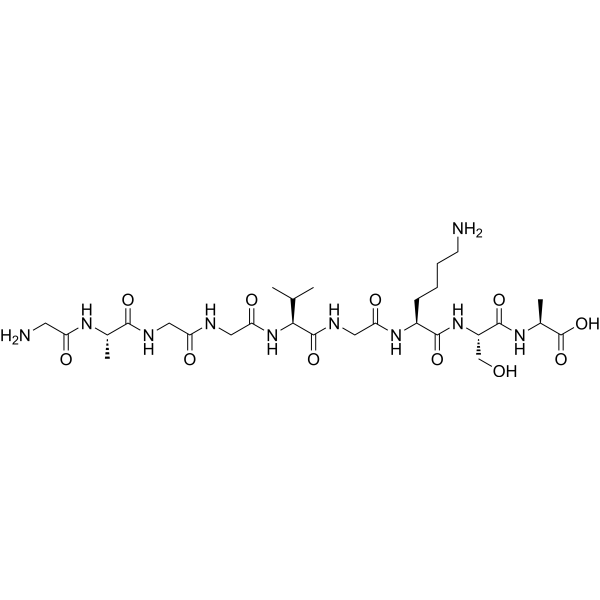
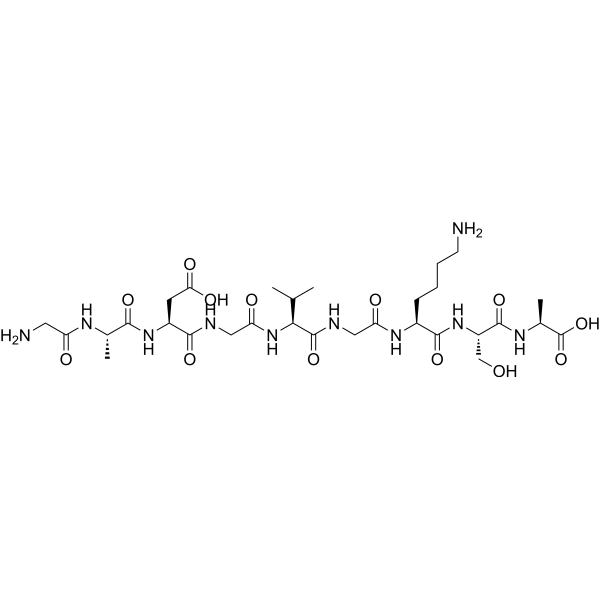
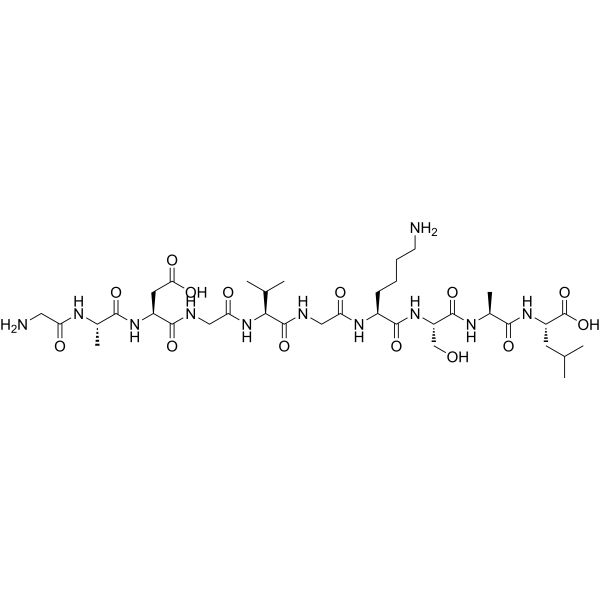
GAGGVGKSA is a wild type KRAS G12D 9mer peptide. GAGGVGKSA can be used as an immunogenic neoantigen for cancer immunotherapy research .
|
-
- HY-P1778A
-
|
|
HPV
|
Infection
|
|
HPV16 E7 (86-93) TFA is a human leukocyte antigen (HLA)-A2.1 restricted HPV16 E7-derived peptide. HPV16 E7 (86-93) TFA is immunogenic in cervical carcinomas .
|
-
- HY-P10862
-
|
|
Exosomes
Virus Protease
|
Infection
Cancer
|
AH-D peptide is a brain-penetrant antiviral agent disrupting highly curved lipid membranes. AH-D peptide exhibits broad-spectrum antiviral activity against ZIKV, Dengue virus, Chikungunya virus, yellow fever virus and Japanese encephalitis virus, with IC50 values of 11.9, 12.5, 35.7, 206 and 136 nM, respectively. AH-D peptide reduces the viral load in the brain, suppresses inflammation, protects neurons, and does not damage the blood brain barrier. AH-D peptide restores antitumor immunity by decreasing circulating PD-L1 + exosomes, reducing intratumoral immunosuppressive cells (regulatory T cells, myeloid-derived suppressor cells), and enhancing T cell function. AH-D peptide inhibits membrane-enveloped viruses and cancer cell metastasis in vivo. AH-D peptide exhibits no immunogenicity and has negligible effects on normal tissues. AH-D peptide can be used for research in Zika virus and other mosquito-borne viruses, cancer immunotherapy and metastasis .
|
-
- HY-P3488
-
|
|
ペプチド
|
Inflammation/Immunology
Cancer
|
|
GADGVGKSA is a mutant KRAS G12D 9mer peptide. GADGVGKSA can be used as an immunogenic neoantigen for cancer immunotherapy research .
|
-
- HY-P6355
-
|
|
ペプチド
|
Inflammation/Immunology
|
|
CAP1-6D is an agonist peptide for cytotoxic T cell (CTL), that enhances the immunogenicity of the CAPI peptide, and stimulates T cell responses .
|
-
- HY-P3486
-
|
|
ペプチド
|
Inflammation/Immunology
Cancer
|
|
GADGVGKSAL is a mutant KRAS G12D 10mer peptide. GADGVGKSAL can be used as an immunogenic neoantigen for cancer immunotherapy research .
|
-
- HY-P10701
-
|
|
Biochemical Assay Reagents
|
Inflammation/Immunology
Cancer
|
|
Q11 peptide is a β-sheet-forming peptide that plays an important role in self-assembly and targeted applications. As a scaffold peptide, Q11 peptide can display immunogenic epitopes and is widely used in peptide-based immune vaccine research. Additionally, Q11 peptide can be conjugated with MUC1 glycopeptides for the study of self-assembling, adjuvant-free MUC1 glycopeptide vaccines. Q11 peptide holds great potential for research in the field of cancer immunology .
|
-
- HY-P11205A
-
|
Cys-txCD47 TFA
|
CD47
Reactive Oxygen Species (ROS)
Thrombopoietin Receptor
|
Inflammation/Immunology
Cancer
|
|
Cys-PKHB1 (Cys-txCD47) TFA is a peptide conjugated to PKHB1, a CD47 agonist peptide and a thrombospondin-1 peptide mimic with antitumor effects. PKHB1 induces mitochondrial alterations, ROS generation, intracellular Ca + accumulation, and calcium-dependent cell death in breast cancer cells. PKHB1 induces immune system activation in breast cancer cells through immunogenic cell death .
|
-
- HY-P1610
-
|
|
PD-1/PD-L1
|
Cancer
|
|
Asudemotide (S-588410) is a peptide of human DEP domain-containing protein 1A. Asudemotide is an immunostimulant. Asudemotide has a sequence of H-Glu-Tyr-Tyr-Glu-Leu-Phe-Val-Asn-Ile-OH. Asudemotide induces a tumor immune response in esophageal cancer. .
|
-
- HY-P1778
-
|
|
HPV
|
Infection
|
|
HPV16 E7 (86-93) is a human leukocyte antigen (HLA)-A2.1 restricted HPV16 E7-derived peptide. HPV16 E7 (86-93) is immunogenic in cervical carcinomas .
|
-
- HY-P10593
-
|
|
Transmembrane Glycoprotein
Influenza Virus
|
Cancer
|
|
Influenza A NP (383-391) (HLA-B27) is a peptide sequence derived from tetanus toxin. Influenza A NP (383-391) (HLA-B27) is a broadly immunogenic CD4+ T helper cell epitope that enhances CD8+ cytotoxic T lymphocyte (CTL) responses. Influenza A NP (383-391) (HLA-B27) can be used in breast cancer research .
|
-
- HY-P10020
-
|
hTERT (660–689)
|
ペプチド
|
Cancer
|
|
Alrefimotide is a hTERT-derived immunogenic peptide. Alrefimotide has a sequence of ALFSVLNYERARRPGLLGASVLGLDDIHRA. Alrefimotide can be used in cancer immunotherapy research .
|
-
- HY-P10371
-
|
txCD47
|
Reactive Oxygen Species (ROS)
Thrombopoietin Receptor
Mitochondrial Metabolism
HSP
HSV
CD47
|
Infection
Inflammation/Immunology
Cancer
|
|
PKHB1 (txCD47) is a CD47 agonist and Thrombospondin-1 peptide mimetic. PKHB1 activates CD47 and triggers Caspase-independent, calcium-dependent cell death via mitochondrial alterations, ROS production, endoplasmic reticulum morphological changes, and dissipation of mitochondrial membrane potential. PKHB1 induces the exposure of Calreticulin, HSP70, and HSP90, thereby driving immunogenic cell death. PKHB1 promotes intratumoral CD8 + T cell infiltration and inhibits breast tumorigenesis. PKHB1 reduces HSV-1 levels and alleviates the severity of herpes simplex keratitis. PKHB1 can be used in research related to breast cancer, herpes simplex keratitis, and T-cell acute lymphoblastic leukemia .
|
-
- HY-P5273
-
-
- HY-P1870
-
|
|
ペプチド
|
Inflammation/Immunology
|
|
OVA sequence (323-336) is a cognate helper T-lymphocyte peptide that is employed to enhance CTL epitope immunogenicity.
|
-
- HY-P11205
-
|
Cys-txCD47
|
CD47
Reactive Oxygen Species (ROS)
Thrombopoietin Receptor
|
Inflammation/Immunology
Cancer
|
|
Cys-PKHB1 (Cys-txCD47) is a peptide conjugated to PKHB1, a CD47 agonist peptide and a thrombospondin-1 peptide mimic with antitumor effects. PKHB1 induces mitochondrial alterations, ROS generation, intracellular Ca + accumulation, and calcium-dependent cell death in breast cancer cells. PKHB1 induces immune system activation in breast cancer cells through immunogenic cell death .
|
-
- HY-P10295
-
|
|
MDM-2/p53
|
Cancer
|
|
p53 (232-240) is a peptide segment of the 232-240 amino acid sequence of the human tumor suppressor protein p53. p53 (232-240) enhances its binding affinity to the Major histocompatibility complex (MHC), thereby enhancing the immunogenicity of this peptide to enhance the immune system's response to tumor antigens. p53 (232-240) can be used in the development of cancer vaccines and in the study of tumor cell recognition and clearance by the immune system .
|
-
- HY-P5295
-
|
|
Fluorescent Dye
|
Others
|
|
Cy3-Ova (323-339) is an Cy3 labled OVA Peptide (323-339) (HY-P0286). Cy3 is a fluorescent dye belonging to the Cyanine family and is a fluorescent light product of Cy5. Cyanine is commonly used in fluorescence microscopy, cell imaging, and molecular biology experiments. OVA Peptide (323-339) represents the T and B cell epitopes of ovalbumin (OVA). OVA Peptide (323-339) has limited immunogenic efficacy in activating OVA-sensitized and attacked mouse spleen cells .
|
-
- HY-P5471
-
|
[Leu27]-Melan-A, MART-1 (26-35)
|
ペプチド
|
Others
|
|
Melan-A/MART-1 analog ([Leu27]-Melan-A, MART-1 (26-35)) is a biological active peptide. (This Melan-A (26-35) analog, Leu substituted for Ala at position 27, shows better HLA-A*0201 binding properties as well as better immunogenicity and antigenicity than the natural Melan-A (26-35).Pyroglutamyl (pGlu) peptides may spontaneously form when either Glutamine (Q) or Glutamic acid (E) is located at the sequence N-terminus. The conversion of Q or E to pGlu is a natural occurrence and in general it is believed that the hydrophobic γ-lactam ring of pGlu may play a role in peptide stability against gastrointestinal proteases. Pyroglutamyl peptides are therefore considered a normal subset of such peptides and are included as part of the peptide purity during HPLC analysis.)
|
-
- HY-P10491
-
|
|
ペプチド
|
Cancer
|
|
MAGE A4 (230-239) is a peptide sequence derived from the MAGE-A4 protein. MAGE A4 (230-239) is an immunogenic epitope that can activate T cells and trigger the killing of tumor cells expressing MAGE-A4. MAGE A4 (230-239) is used in the development of next-generation T cell-based immunotherapies .
|
-
- HY-P11426
-
|
|
ペプチド
|
Cancer
|
|
gp100 (17-25) is an immunogenic peptide. gp100 (17-25) can generate tumor-specific HLA-A3-restricted T lymphocytes. gp100 (17-25) can be used for melanoma research .
|
-
- HY-P11458
-
|
Nlp24
|
Reactive Oxygen Species (ROS)
|
Inflammation/Immunology
|
|
Hanlp24 (Nlp24) is an immunogenic short peptide derived from plant pathogenic microorganisms. Hanlp24 can be recognized by the immune system of the model plant Arabidopsis thaliana and effectively induces the production of reactive oxygen species (ROS) in Arabidopsis thaliana. Hanlp24 is not the key factor that triggers plant defense and leads to the loss of pathogen virulence in the interaction system between cucumber and anthracnose pathogen. Hanlp24 can be used for the study of the plant immune system .
|
-
- HY-W1049092
-
|
|
|
Azide
|
|
mPEG2000-N3 can be used to modify proteins, peptides, and other materials. The azide group can react with alkynes in aqueous solution catalyzed by copper. It can also be easily reduced to an amine group. PEGylation can increase solubility and stability and reduce the immunogenicity of peptides and proteins. mPEG2000-N3 can also inhibit the nonspecific binding of charged molecules to the modified surface .
|
-
- HY-W1049105
-
|
|
|
Alkynes
|
|
mPEG2000-Alkyne is a PEG derivative. The alkynyl group can react with azide in aqueous solution under the catalysis of monovalent copper. Polyethylene glycol derivatives can increase the solubility and stability of drugs, reduce the immunogenicity of peptides, and have good biocompatibility .
|
-
- HY-W1049091C
-
|
|
|
Alkynes
|
|
mPEG20000-Alkyne is a PEG derivative. The alkynyl group can react with azide in aqueous solution under the catalysis of monovalent copper. Polyethylene glycol derivatives can increase the solubility and stability of drugs, reduce the immunogenicity of peptides, and have good biocompatibility .
|
-
- HY-W1049092E
-
|
|
|
Azide
|
|
mPEG1000-N3 can be used to modify proteins, peptides, and other materials. The azide group can react with alkynes in aqueous solution catalyzed by copper. It can also be easily reduced to an amine group. PEGylation can increase solubility and stability and reduce the immunogenicity of peptides and proteins. mPEG1000-N3 can also inhibit the nonspecific binding of charged molecules to the modified surface .
|
-
- HY-W1049092H
-
|
|
|
Azide
|
|
mPEG3400-N3 can be used to modify proteins, peptides, and other materials. The azide group can react with alkynes in aqueous solution catalyzed by copper. It can also be easily reduced to an amine group. PEGylation can increase solubility and stability and reduce the immunogenicity of peptides and proteins. mPEG3400-N3 can also inhibit the nonspecific binding of charged molecules to the modified surface .
|
-
- HY-W1049091D
-
|
|
|
Alkynes
|
|
mPEG40000-Alkyne is a PEG derivative. The alkynyl group can react with azide in aqueous solution under the catalysis of monovalent copper. Polyethylene glycol derivatives can increase the solubility and stability of drugs, reduce the immunogenicity of peptides, and have good biocompatibility .
|
-
- HY-W1049091A
-
|
|
|
Alkynes
|
|
mPEG5000-Alkyne is a PEG derivative. The alkynyl group can react with azide in aqueous solution under the catalysis of monovalent copper. Polyethylene glycol derivatives can increase the solubility and stability of drugs, reduce the immunogenicity of peptides, and have good biocompatibility .
|
-
- HY-W1049091
-
|
|
|
Alkynes
|
|
mPEG1000-Alkyne is a PEG derivative. The alkynyl group can react with azide in aqueous solution under the catalysis of monovalent copper. Polyethylene glycol derivatives can increase the solubility and stability of drugs, reduce the immunogenicity of peptides, and have good biocompatibility .
|
-
- HY-W1049091B
-
|
|
|
Alkynes
|
|
mPEG10000-Alkyne is a PEG derivative. The alkynyl group can react with azide in aqueous solution under the catalysis of monovalent copper. Polyethylene glycol derivatives can increase the solubility and stability of drugs, reduce the immunogenicity of peptides, and have good biocompatibility .
|
-
- HY-W1049091E
-
|
|
|
Alkynes
|
|
mPEG3400-Alkyne is a PEG derivative. The alkynyl group can react with azide in aqueous solution under the catalysis of monovalent copper. Polyethylene glycol derivatives can increase the solubility and stability of drugs, reduce the immunogenicity of peptides, and have good biocompatibility .
|
-
- HY-W1049092C
-
|
|
|
Azide
|
|
mPEG20000-N3 can be used to modify proteins, peptides, and other materials. The azide group can react with alkynes in aqueous solution catalyzed by copper. It can also be easily reduced to an amine group. PEGylation can increase solubility and stability and reduce the immunogenicity of peptides and proteins. mPEG20000-N3 can also inhibit the nonspecific binding of charged molecules to the modified surface .
|
-
- HY-W1049092A
-
|
|
|
Azide
|
|
mPEG5000-N3 can be used to modify proteins, peptides, and other materials. The azide group can react with alkynes in aqueous solution catalyzed by copper. It can also be easily reduced to an amine group. PEGylation can increase solubility and stability and reduce the immunogenicity of peptides and proteins. mPEG5000-N3 can also inhibit the nonspecific binding of charged molecules to the modified surface .
|
-
- HY-W1049092D
-
|
|
|
Azide
|
|
mPEG40000-N3 can be used to modify proteins, peptides, and other materials. The azide group can react with alkynes in aqueous solution catalyzed by copper. It can also be easily reduced to an amine group. PEGylation can increase solubility and stability and reduce the immunogenicity of peptides and proteins. mPEG40000-N3 can also inhibit the nonspecific binding of charged molecules to the modified surface .
|
-
- HY-W1049092B
-
|
|
|
Azide
|
|
mPEG10000-N3 can be used to modify proteins, peptides, and other materials. The azide group can react with alkynes in aqueous solution catalyzed by copper. It can also be easily reduced to an amine group. PEGylation can increase solubility and stability and reduce the immunogenicity of peptides and proteins. mPEG10000-N3 can also inhibit the nonspecific binding of charged molecules to the modified surface .
|
入力情報は安全に管理されます. ※ 必須入力項目.
Inquiry Information
- 製品名:
- 製品番号:
- 数量:
- MCE 日本正規代理店:

