Search Result
Results for "
Inhibitor potency
" in MedChemExpress (MCE) Product Catalog:
12
Isotope-Labeled Compounds
| Cat. No. |
Product Name |
Target |
Research Areas |
Chemical Structure |
-
- HY-50903
-
|
BAY 59-7939
|
Factor Xa
|
Cardiovascular Disease
Cancer
|
|
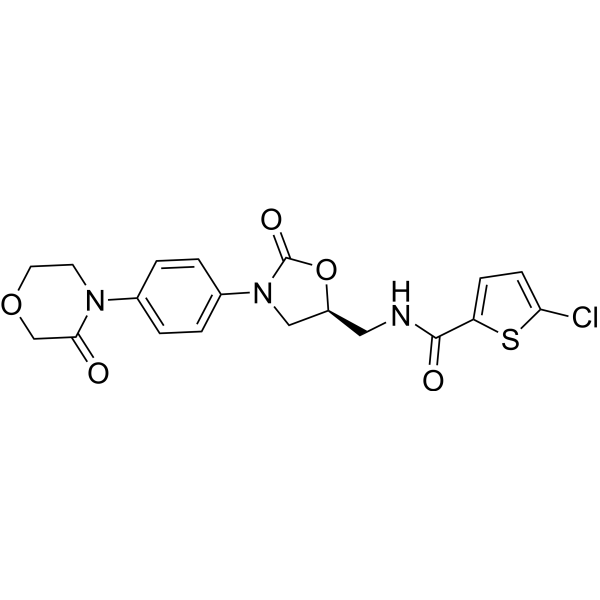
Rivaroxaban (BAY 59-7939) is a highly potent, selective and direct Factor Xa (FXa) inhibitor, achieving a strong gain in anti-FXa potency (IC50 0.7 nM; Ki 0.4 nM) .
|
-
-
- HY-N0804
-
|
|
Bacterial
|
Inflammation/Immunology
|
|
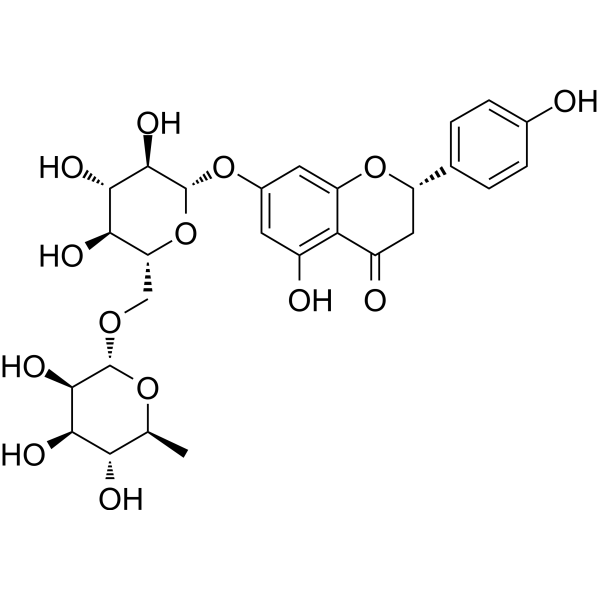
Narirutin, one of the active constituents isolated from citrus fruits, has antioxidant and anti-inflammatory activities. Narirutin is a shikimate kinase inhibitor with anti-tubercular potency .
|
-
-
- HY-151136
-
DY-46-2
1 Publications Verification
|
DNA Methyltransferase
|
Cancer
|
|
DY-46-2 is a high potency and selectivity novel non-nucleoside DNA methyltransferase 3A (DNMT3A) inhibitor with an IC50 value of 0.39 μM .
|
-
-
- HY-10401
-
-
-
- HY-12334
-
|
|
AMPK
|
Cancer
|
|
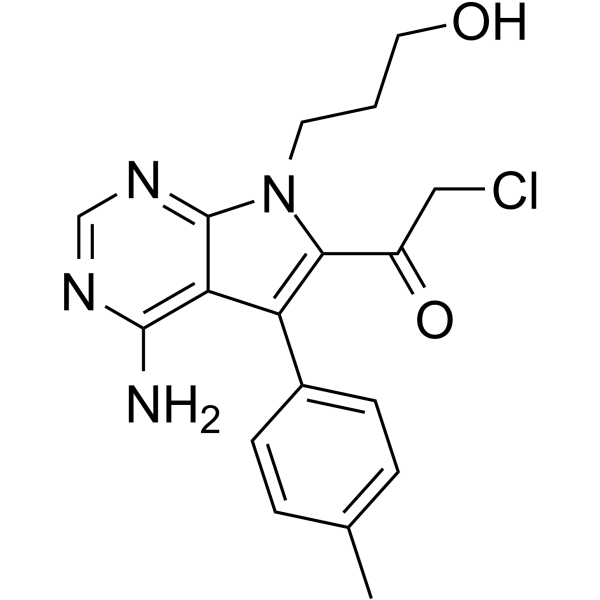
HTH-01-015 is a selective NUAK1/ARK5 inhibitor (IC50 is 100 nM). HTH-01-015 inhibits NUAK1 with >100-fold higher potency than NUAK2 (IC50 of >10 μM).
|
-
-
- HY-111341
-
-
-
- HY-10425
-
|
A-443654
|
Akt
|
Cancer
|
|
A-443654 is a pan-Akt inhibitor and has equal potency against Akt1, Akt2, or Akt3 within cells (Ki=160 pM) .
|
-
-
- HY-12202
-
|
|
MEK
|
Cancer
|
|
MEK inhibitor is a potent MEK inhibitor with antitumor potency.
|
-
-
- HY-14894A
-
|
|
SGLT
|
Metabolic Disease
|
|
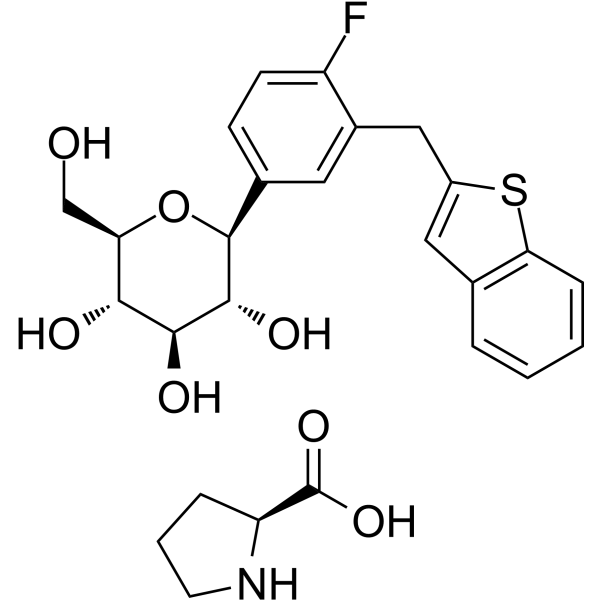
Ipragliflozin (L-Proline) is a highly potent and selective SGLT2 inhibitor with an IC50 of 2.8 nM; little and NO potency for SGLT1/3/4/5/6.
|
-
-
- HY-15874
-
|
GSK2190915; AM-803
|
FLAP
Leukotriene Receptor
|
Inflammation/Immunology
|
|
Fiboflapon (GSK2190915; AM-803) is a potent and orally bioavailable 5-lipoxygenase-activating protein (FLAP) inhibitor with a potency of 2.9 nM in FLAP binding, an IC50 of 76 nM for inhibition of LTB4 in human blood .
|
-
-
- HY-105309
-
|
|
DYRK
|
Cardiovascular Disease
|
|
GSK-626616 is a potent, orally bioavailable inhibitor of DYRK3 (IC50=0.7 nM). GSK-626616 inhibits other members of the DYRK family (e.g., DYRK1A and DYRK2) with similar potency, which is a potential therapy for the treatment of anemia .
|
-
-
- HY-15155
-
MLN0905
5 Publications Verification
|
Polo-like Kinase (PLK)
|
Cancer
|
|
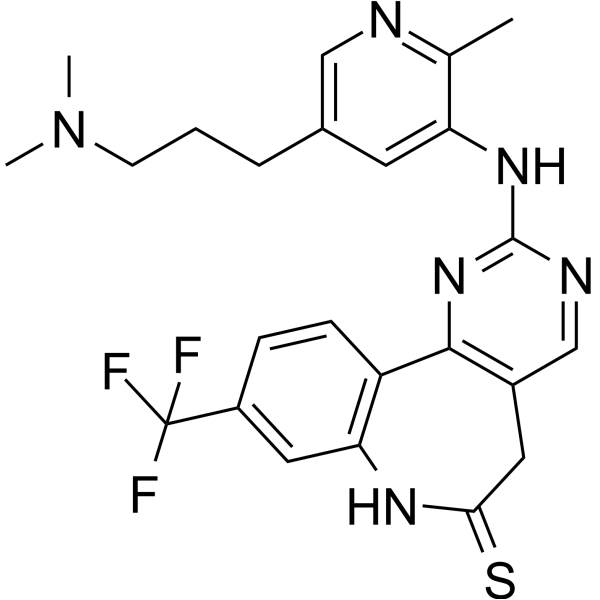
MLN0905 is a potent, orally active Polo-like kinase 1 (PLK1) inhibitor. MLN0905 has inhibitory potency against PLK1 with an IC50 value of 2 nM. MLN0905 can be used for the research of cancer .
|
-
-
- HY-100220
-
GSK6853
2 Publications Verification
|
Epigenetic Reader Domain
|
Cancer
|
|
GSK6853, a chemical probe, is a potent and selective inhibitor of the BRPF1 bromodomain. GSK6853 shows excellent BRPF1 potency (pKd = 9.5) and greater than 1600-fold selectivity over all other bromodomains .
|
-
-
- HY-52101
-
-
-
- HY-B1408
-
|
2-Hydroxybenzanilide
|
Environmental Pollutants
HIV Integrase
HIV
|
Infection
|
|
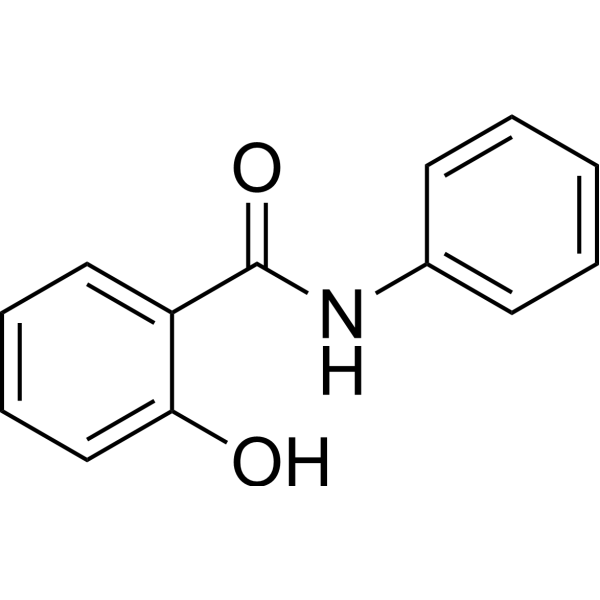
Salicylanilide demonstrates a wide range of biological activities including antiviral potency which can inhibit HIV virus
by targeting HIV-1 integrase or reverse transcriptase.
|
-
-
- HY-114388
-
-
-
- HY-102074
-
|
|
Measles Virus
|
Infection
|
|
ERDRP-0519, an orally bioavailable small-molecule Measles virus (MeV) polymerase inhibitor, prevents measles disease in squirrel monkeys (Saimiri sciureus). ERDRP-0519 inhibits morbilliviruses with nanomolar potency. .
|
-
-
- HY-12504
-
Pyr6
1 Publications Verification
N-[4-[3,5-Bis(trifluoromethyl)-1H-pyrazol-1-yl]phenyl]-3-fluoro-4-pyridinecarboxamide
|
CRAC Channel
|
Others
|
|
Pyr6 is a selective store operated calcium entry (SOCE) inhibitor with an IC50 of 0.49 μM. Pyr6 displays 37-fold higher potency for RBL SOCE than for TRPC3 ROCE .
|
-
-
- HY-10337
-
|
BMS-540215
|
VEGFR
Autophagy
|
Cancer
|
|
Brivanib (BMS-540215) is an ATP-competitive inhibitor against VEGFR2 with an IC50 of 25 nM, and has moderate potency against VEGFR-1 and FGFR-1, but >240-fold against PDGFR-β .
|
-
-
- HY-101124
-
|
KAR5585
|
Tryptophan Hydroxylase
5-HT Receptor
|
Cardiovascular Disease
|
|
Rodatristat ethyl (KAR5585) is a first-in-class oral tryptophan hydroxylase 1 (TPH1) Inhibitor with nanomolar in vitro potency. Rodatristat ethyl reduces the level of 5-HT and significantly reduces pulmonary arterial hypertension (PAH) .
|
-
-
- HY-132894
-
|
|
Influenza Virus
|
Infection
|
|
Pixavir marboxilo is an orally active cap-dependent endonuclease inhibitor with high potency. Pixavir marboxilo can be used for the research of influenza .
|
-
-
- HY-12988
-
C527
1 Publications Verification
|
Deubiquitinase
|
Cancer
|
|
C527 is a is a pan DUB enzyme inhibitor, with a high potency for the USP1/UAF1 complex (IC50=0.88 μM).
|
-
-
- HY-106579
-
|
|
COX
|
Inflammation/Immunology
|
|
Tiaprofenic acid is an orally active nonsteroidal anti-inflammatory agent (NSAID) with anti-inflammatory and analgesic potency. Tiaprofenic acid inhibits prostaglandin synthesis by suppressing cyclo-oxygenase (COX). Tiaprofenic acid can be used in the treatment of rheumatic diseases .
|
-
-
- HY-15958
-
VBY-825
1 Publications Verification
|
Cathepsin
|
Inflammation/Immunology
Cancer
|
|
VBY-825 is an orally available novel reversible cathepsin inhibitor that has high inhibitory potency against cathepsin B, L, S and V, and possesses anti-tumor, anti-inflammatory and analgesic effects .
|
-
-
- HY-10336
-
|
BMS-582664
|
VEGFR
Autophagy
|
Cancer
|
|
Brivanib alaninate (BMS-582664) is an ATP-competitive inhibitor against VEGFR2 with an IC50 of 25 nM; has moderate potency against VEGFR-1 and FGFR-1, but more than 240-fold against PDGFRβ .
|
-
-
- HY-132889
-
-
-
- HY-W022759
-
|
|
Cholinesterase (ChE)
|
Others
|
|
9-Acridinecarboxylic acid is a precursor of a cholinesterase inhibitor, and its derivatives have nanomolar inhibitory potency against AChE and BChE .
|
-
-
- HY-161308
-
|
|
HPPD
|
Others
|
|
HPPD-IN-3 (compound 25) is a potent inhibitor of 4-Hydroxyphenylpyruvate dioxygenase (HPPD), with IC50 of 10 nM, more potency than Mesotrione (HY-12853) .
|
-
-
- HY-160211
-
|
|
Hippo (MST)
|
Cancer
|
|
JA310, a chemical probe, is a highly selective MST3 kinase inhibitor. JA310 has high cellular potency against MST3 with an EC50 value of 106 nM .
|
-
-
- HY-139590
-
|
BOS-172738; DS-5010
|
RET
PDGFR
|
Cancer
|
|
Zeteletinib (BOS-172738; DS-5010) is an orally active, selective RET kinase inhibitor with nanomolar potency against RET and >300-fold selectivity against VEGFR2. Zeteletinib shows exquisite potency for the wild type RET, RET V804M/L gatekeeper mutants, and the most common oncogenic RET mutation M918T. Zeteletinib has potent antitumor activity .
|
-
-
- HY-133554
-
-
-
- HY-120210
-
|
|
ROR
|
Inflammation/Immunology
Cancer
|
|
XY018 is a potent ROR-γ-selective antagonist. XY018 inhibits ROR-γ constitutive activity in 293T cells with high potency (EC50, 190 nM). XY018 binds to the ROR-γ hydrophobic ligand binding domain (LBD) .
|
-
-
- HY-100696
-
|
|
Epigenetic Reader Domain
|
Cancer
|
|
PNZ5 is a potent and isoxazole-based pan-BET inhibitor with high selectivity and potency similar to the well-established (+)-JQ1, with a KD of 5.43 nM for BRD4(1) .
|
-
-
- HY-P4349A
-
|
|
Thrombin
|
Others
|
|
Pyr-Arg-Thr-Lys-Arg-AMC TFA is a AMC peptide. AMC is a decapeptide that is specifically hydrolyzed by proteases such as trypsin and thrombin. The AMC peptide can be used to determine the activity of protease and the potency of enzyme inhibitors .
|
-
-
- HY-117997
-
|
|
Epigenetic Reader Domain
|
Cancer
|
|
UMB-32, a potent, selective BRD4 inhibitor, binds BRD4 with the Kd of 550 nM, and IC50 of 637 nM. UMB-32 also shows potency against TAF1, a bromodomain-containing transcription factor .
|
-
-
- HY-15874A
-
|
GSK2190915 sodium salt; AM-803 sodium
|
FLAP
Leukotriene Receptor
|
Inflammation/Immunology
|
|
Fiboflapon sodium (GSK2190915; AM-803) is a potent and orally bioavailable 5-lipoxygenase-activating protein (FLAP) inhibitor with a potency of 2.9 nM in FLAP binding, an IC50 of 76 nM for inhibition of LTB4 in human blood .
|
-
-
- HY-76948
-
|
|
Factor Xa
|
Cardiovascular Disease
|
|
5-R-Rivaroxaban is (R)-enantiomer of Rivaroxaban. Rivaroxaban (BAY 59-7939) is a highly potent and selective, direct Factor Xa (FXa) inhibitor, achieving a strong gain in anti-FXa potency (IC50 0.7 nM; Ki 0.4 nM).
|
-
-
- HY-136188
-
|
|
Histone Methyltransferase
|
Cancer
|
|
UNC2399, a biotinylated UNC1999, is a selective EZH2 inhibitor, maintaining high in vitro potency for EZH2, with an IC50 of 17 nM .
|
-
-
- HY-133735A
-
|
|
RABV
|
Infection
|
|
GRP-60367 hydrochloride is a first-in-class small-molecule rabies virus (RABV) entry inhibitor with nanomolar potency against some RABV strains. GRP-60367 hydrochloride specifically targets the RABV G protein .
|
-
-
- HY-155813
-
|
|
SARS-CoV
|
Infection
|
|
MPI60 is a potent SARS-CoV-2 M Pro inhibitor with high antiviral potency, low cellular cytotoxicity, and high in vitro metabolic stability. MPI60 can be used for SARS-CoV-2 research .
|
-
-
- HY-115537
-
|
|
Apoptosis
|
Cancer
|
|
NAE-IN-M22 is a potent, selective and reversible inhibitor of NEDD8 activating enzyme (NAE), with potency in micromolar range. NAE-IN-M22 inhibits multiple cancer cell lines and induces apoptosis in A549 cells. NAE-IN-M22 also can inhibit tumor growth in vivo .
|
-
-
- HY-W602640
-
|
|
Nucleoside Antimetabolite/Analog
|
Cancer
|
|
2'-Deoxyisoguanosine is a purine nucleoside analog. 2'-deoxyisoguanosine has low potency and specificity in inhibiting tumor cell growth, similar to other telomerase inhibitors.
|
-
-
- HY-133735
-
|
|
RABV
|
Infection
|
|
GRP-60367 is a first-in-class small-molecule rabies virus (RABV) entry inhibitor with nanomolar potency against some RABV strains .
|
-
-
- HY-117741
-
|
|
Bacterial
|
Others
|
|
GSK951A is a THPP analogue. GSK951A inhibits mycolic acid biosynthesis. GSK951A combines potency in culture with in vivo activity and lack of cytotoxicity .
|
-
-
- HY-131067
-
|
|
EGFR
|
Cancer
|
|
EMI56, the derivative of EMI1, displays greater potency toward mutant EGFR than EMI1. EMI56 inhibits EGFR triple mutants .
|
-
-
- HY-115568
-
|
|
PROTACs
Epigenetic Reader Domain
|
Cancer
|
|
BETd-246 is a second-generation and PROTAC-based BET bromodomain (BRD) inhibitor connected by ligands for Cereblon and BET, exhibiting superior selectivity, potency and antitumor activity .
|
-
-
- HY-132170
-
|
|
Dihydroorotate Dehydrogenase
Parasite
|
Infection
|
|
DSM502 is a pyrrole-based Dihydroorotate Dehydrogenase (DHODH) inhibitor. DSM502 exhibits nanomolar potency againsts Plasmodium DHODH and Plasmodium parasites, with no inhibition of mammalian DHODHs .
|
-
-
- HY-158763
-
|
TG0205221
|
SARS-CoV
Cathepsin
Virus Protease
|
Infection
|
|
MPI8 (TG0205221) is an inhibitor of the major protease of SARS-CoV-2 (MPro) with high antiviral activity. MPI8 exerts its antiviral effect by dual and selective inhibition of SARS-CoV-2 MPro and host cell cysteine protease L (cathepsin L). MPI8 can be used in clinical studies of COVID-19 .
|
-
-
- HY-19604
-
-
-
- HY-155952
-
-
- HY-154839
-
|
|
c-Myc
|
Cancer
|
|
c-Myc inhibitor 10 (compound 17), a c-Myc inhibitor, exhibits increased cellular potency, consistent with an increase in permeability with methylation of the morpholine nitrogen .
|
-
- HY-131066
-
|
|
EGFR
|
Cancer
|
|
EMI48, the derivative of EMI1, displays greater potency toward mutant EGFR than EMI1. EMI48 inhibits EGFR triple mutants .
|
-
- HY-139590A
-
|
BOS-172738 hemiadipate; DS-5010 hemiadipate
|
RET
PDGFR
|
Cancer
|
|
Zeteletinib (BOS-172738; DS-5010) hemiadipate is an orally active, selective RET kinase inhibitor with nanomolar potency against RET and >300-fold selectivity against VEGFR2. Zeteletinib hemiadipate shows exquisite potency for the wild type RET, RET V804M/L gatekeeper mutants, and the most common oncogenic RET mutation M918T. Zeteletinib hemiadipate has potent antitumor activity .
|
-
- HY-P4349
-
|
|
Thrombin
|
Others
|
|
Pyr-Arg-Thr-Lys-Arg-AMC is a AMC peptide. AMC is a decapeptide that is specifically hydrolyzed by proteases such as trypsin and thrombin. The AMC peptide can be used to determine the activity of protease and the potency of enzyme inhibitors .
|
-
- HY-132171
-
|
|
Dihydroorotate Dehydrogenase
Parasite
|
Infection
|
|
DSM705 is a pyrrole-based Dihydroorotate Dehydrogenase (DHODH) inhibitor. DSM705 exhibits nanomolar potency against Plasmodium DHODH and Plasmodium parasites, with no inhibition of mammalian DHODHs. DSM705 is a potent antimalarial compound .
|
-
- HY-152560
-
|
|
HIV
|
Infection
|
|
HIV-1 inhibitor-55 (compound 4d) inhibits WT HIV-1 with an EC50 value of 8.6 nM. HIV-1 inhibitor-55 also shows inhibitory potency against single and double HIV-1 mutants. HIV-1 inhibitor-55 can be used for the research of virus infection .
|
-
- HY-B1408R
-
|
2-Hydroxybenzanilide (Standard)
|
HIV Integrase
HIV
Reference Standards
|
Infection
|
|
Salicylanilide (Standard) is the analytical standard of Salicylanilide. This product is intended for research and analytical applications. Salicylanilide demonstrates a wide range of biological activities including antiviral potency which can inhibit HIV virus
by targeting HIV-1 integrase or reverse transcriptase.
|
-
- HY-N0804R
-
|
|
Reference Standards
Bacterial
|
Inflammation/Immunology
|
|
Narirutin (Standard) is the analytical standard of Narirutin. This product is intended for research and analytical applications. Narirutin, one of the active constituents isolated from citrus fruits, has antioxidant and anti-inflammatory activities. Narirutin is a shikimate kinase inhibitor with anti-tubercular potency .
|
-
- HY-155303
-
|
|
Ser/Thr Protease
|
Cancer
|
|
DCLK1-IN-2 (compound I-5) is a potent DCLK1 inhibitor with an IC50 of 171.3 nM. DCLK1-IN-2 shows remarkable antiproliferative effects on SW1990 cell lines (IC50 of 0.6 μM) and in vivo antitumor potency .
|
-
- HY-119951
-
|
|
Aurora Kinase
|
Cancer
|
|
AKI-001 is an prototype pentacyclic inhibitor of aurora kinase with cellular potency of IC50 of less than 100 nM. AKI-001 shows low nanomolar potency against Aurora A and Aurora B enzymes .
|
-
- HY-144648
-
|
|
SARS-CoV
|
Infection
|
|
Mpro/PLpro-IN-1 (Compound 29) is a potent inhibitor of M pro/PL pro. Mpro/PLpro-IN-1 is a dual acting SARS-CoV-2 proteases inhibitor featuring micromolar inhibitory potency versus M pro (IC50 = 1.72 μM) and submicromolar potency versus PL pro (IC50 = 0.67 μM) .
|
-
- HY-126475
-
|
|
Bacterial
|
Others
|
|
KSK213 is a 1,2,3-triazole-based Chlamydia infectivity inhibitor with high potency (EC50 ≤ 20 nM) against Chlamydia infectivity.
|
-
- HY-N8579
-
|
|
Others
|
Inflammation/Immunology
|
|
Eugenyl benzoate has the potency for scavenging of DPPH radical. Eugenyl Benzoate Derivatives can be used for development of BCL-2 inhibitors .
|
-
- HY-W291165
-
|
D-2,4-Diaminobutyric acid
|
GABA Receptor
|
Neurological Disease
|
|
D-DABA is the enantiomeric form of L-DABA. D-DABA is also a weak inhibitor of GABA-T, but which has only one twentieth of the potency of the
L-isomer in inhibiting GABA uptake.
|
-
- HY-163052
-
|
SL-573
|
Prostaglandin Receptor
|
Others
|
|
Ciproquazone (SL-573) is a compound that inhibits prostaglandin biosynthesis. Its relative inhibitory potency is between that of indomethacin and aspirin, and its inhibition of prostaglandin biosynthesis is reversible.
|
-
- HY-172971
-
|
|
PARP
|
Cancer
|
|
ARCher-142 (compound S8) is a potent tankyrase inhibitor. ARCher-142 selectively binds to ARC4 with potency of 8 µM .
|
-
- HY-149585
-
|
|
Fungal
|
Infection
|
|
Chitin synthase inhibitor 14 (compound 4n) is chitin synthase (CHS) inhibitor. Chitin synthase inhibitor 14 has antifungal activity while possessed the potency against drug-resistant fungal variants .
|
-
- HY-148909
-
|
IDEFP
|
Cannabinoid Receptor
FAAH
|
Neurological Disease
|
|
Isopropyl dodec-11-enylfluorophosphonate (IDEFP) is an organophosphorus ester that antagonizes the central cannabinoid receptor (CB1) and inhibits FAAH with similar potencies (IC50 = 2 nM) .
|
-
- HY-12327
-
-
- HY-120682
-
|
|
mAChR
|
Neurological Disease
|
|
UH-AH 37 is a muscarinic (mAChR) antagonist. UH-AH 37 exhibits a higher potency in inhibiting muscarinic responses in intestinal tissue than cardiac tissue .
|
-
- HY-156414
-
-
- HY-157551
-
|
|
JNK
c-Met/HGFR
|
Cancer
|
|
JNK-IN-16 is a c-Met and JNK inhibitor with nanomolar potency, with IC50 values of 120 nM and 72 nM, respectively. JNK-IN-16 can be used for cancer research .
|
-
- HY-139892
-
|
|
SARS-CoV
|
Infection
|
|
XR8-69 is a SARS-CoV-2 PLpro inhibitor that shows low micromolar antiviral potency in SARS-CoV-2-infected human cells.
|
-
- HY-169199
-
|
|
MAP4K
|
Cancer
|
|
BAY-405 (compund 38) is a MAP4K1 inhibitor that exhibits nanomolar potency in biochemical and cellular assays and achieves in vivo exposure after oral administration .
|
-
- HY-124153
-
|
|
Btk
|
Cardiovascular Disease
Inflammation/Immunology
|
|
GNE-431 is a potent, selective and noncovalent “pan-BTK” inhibitor against C481R, T474I and T474Ms mutants. GNE-431 shows potency against wild-type BTK (IC50= 3.2 nM) and potency against C481S mutant (IC50= 2.5 nM). GNE-431 is proming for rasearch of haematological disorders and autoimmune diseases .
|
-
- HY-108018
-
|
|
HCV Protease
|
Infection
|
|
MK 6325 is a HCV NS3/4a protease inhibitor. MK 6325 displays the broad genotype and mutant potency. MK 6325 can be used for the research of infection .
|
-
- HY-112080A
-
|
|
Histone Methyltransferase
|
Others
|
|
(R)-BAY-6035 is a novel inhibitor that selectively targets the methylation of MAP3K2 by SMYD3, demonstrating nanomolar potency and specificity against kinases and other protein lysine methyltransferases.
|
-
- HY-N9110
-
|
|
Others
|
Others
|
|
7,3′,4′-Tri-O-methyleriodictyol is a flavonoid with an antimutagenic activity. 7,3′,4′-Tri-O-methyleriodictyol inhibits the furylfuramide-induced SOS response and has potency as bioantimutagens .
|
-
- HY-131343
-
|
|
HBV
DNA/RNA Synthesis
|
Infection
|
|
HBV-IN-4, a phthalazinone derivative, is a potent and orally active HBV DNA replication inhibitor with an IC50 of 14 nM. HBV-IN-4 induces the formation of genome-free capsids and has potent anti-HBV potencies .
|
-
- HY-162594
-
|
|
Microtubule/Tubulin
|
Cancer
|
|
Antitumor agent-164 (compound 60c) is a colchicine-binding site inhibitor (CBSI) with potency against taxane-sensitive TNBC. Antitumor agent-164 is a next-generation derivative of VERU-111 .
|
-
- HY-144465
-
-
- HY-146262
-
|
|
EGFR
|
Cancer
|
|
LDC0496 is a potent and selective EGFR inhibitor. LDC0496 possesses intense inhibitory potency toward EGFR and Her2 exon20 insertion mutations, as well as selectivity over wild type EGFR and within the kinome .
|
-
- HY-123637
-
|
|
Phosphodiesterase (PDE)
|
Inflammation/Immunology
|
|
Autotaxin-IN-1 is a potent autotaxin inhibitor, which has favorable potency (IC50=2.2 nM), PK properties, and a robust PK/PD relationship. Autotaxin-IN-1 is used in treatment of osteoarthritis pain .
|
-
- HY-146282
-
|
|
GABA Receptor
|
Neurological Disease
|
|
mGAT-IN-1 (compound 28) is a potent and non-selective GAT inhibitor. mGAT-IN-1 has a high inhibitory potency toward mGAT3, with an IC50 of 2.5 μM and pIC50 of 5.61 .
|
-
- HY-N15323
-
|
|
Cholinesterase (ChE)
|
Infection
Inflammation/Immunology
|
|
Samioside is an effective acetylcholinesterase inhibitor that can be isolated from Phlomis nissolii and P. capitata. Samioside possesses free-radical scavenging and antimicrobial activities. Samioside can be used in research on its anti-Alzheimer’s potency .
|
-
- HY-146073
-
|
|
IRAK
|
Cancer
|
|
IRAK4-IN-12 (compound 37) is a potent IRAK4 inhibitor with an IC50 of 0.015 µM. IRAK4-IN-12 shows cell pIRAK4 potencies with an IC50 of 0.5 µM .
|
-
- HY-146072
-
|
|
IRAK
|
Cancer
|
|
IRAK4-IN-11 (compound 6) is a potent IRAK4 inhibitor with an IC50 of 0.008 µM. IRAK4-IN-11 shows cell pIRAK4 potencies with an IC50 of 0.19 µM .
|
-
- HY-147371
-
|
|
Parasite
|
Infection
Neurological Disease
|
|
Quinoprazine is a potent inhibitor of Vaccinia virus DNA synthesis with an IC50 value of 10 μM. Quinoprazine has antimalarial activity against Plasmodium berghei and also displays antiprion potency, significantly decreases PrP S c levels - .
|
-
- HY-172123
-
|
|
DNA/RNA Synthesis
|
Infection
|
|
PRV-IN-1 (compound c14) shows significant anti-pseudorabies virus (PRV) potency and safety, with an EC50 of 14 pM and a CC50 of 343.7 μM. PRV-IN-1 significantly inhibits the replication of PRV .
|
-
- HY-123649
-
|
|
HCV
|
Others
|
|
MK-4882 is an HCV NS5A inhibitor with activity in reducing viral load in a chimpanzee model of HCV infection, but with issues of viral breakthrough, prompting the development of compounds with greater potency against more genotypes and NS5A resistance mutations.
|
-
- HY-110262
-
|
|
MAP3K
p38 MAPK
|
Inflammation/Immunology
|
|
MSC 2032964A is an orally active, selective inhibitor for apoptosis signal-regulating kinase 1(ASK1) with IC50 of 96 nM. MSC 2032964A preserves the visual responses in EAE mice model and exhibits potency in ameliorating the neuroinflammation .
|
-
- HY-161913
-
|
|
Dopamine Transporter
|
Neurological Disease
|
|
AC-4-248 is an atypical non-competitive dopamine transporter (DAT) inhibitor and reduces the potency of cocaine to inhibit DAT. AC-4-248 is a non-selective inhibitor of SLC6 transporters with IC50 values for hDAT, hSERT, and hNET of 45.5 μM, 96.2 μM, and 250 μM, respectively .
|
-
- HY-155547
-
|
|
HBV
|
Infection
|
|
HBV-IN-34 (compound 17i) is a potent HBsAg production inhibitor. HBV-IN-34 exhibits excellent in vitro anti-HBV potency, with an EC50 of 0.018 μM and 0.044 μM for HBV DNA and HBsAg, respectively .
|
-
- HY-158154
-
|
|
EGFR
|
Cancer
|
|
EGFR-IN-110 (Compound 6) is a covalent EGFR inhibitor, with pIC50 values of 9.2 and 8.7 for EGFR enzyme and EGFR cell, respectively. EGFR-IN-110 shows high EGFR potency and good kinase selectivity .
|
-
- HY-155136
-
|
|
SARS-CoV
|
Infection
|
|
NSC89641 inhibits MERS-CoV M pro, with an IC50 value < 3.5 μM. NSC89641 exhibits the high inhibitory potency against SARS-CoV-2 M pro enzymatic activity, with an IC50 of 3.05 μM .
|
-
- HY-W702070
-
|
Desmethylmianserin
|
Drug Derivative
|
Inflammation/Immunology
|
|
Nor mianserin (Desmethylmianserin) is a compound with similar biological activity to Mianserin (HY-B0188), but with lower potency. Mianserin is a serotonin inhibitor and antihistamine compound .
|
-
- HY-180454
-
|
|
c-Myc
|
Cancer
|
|
NUCC-0201642 is a c-MYC inhibitor with an IC50 value greater than 40 μM. NUCC-0201642 can be used for cancer research .
|
-
- HY-171744
-
|
|
Casein Kinase
|
Cancer
|
|
CX-5279 is an efficient and selective CK2 inhibitor with IC50 values for nCK2 and CK2α of 2.73 and 0.91 nM, respectively. CX-5279 is sensitive to mutations at Val66, Ile174, and V66I174AA, with IC50 values of 13.8, 12.5, and 23.35 nM, respectively. CX-5279's inhibitory activity against PIM1 is very weak, with a IC50 value of 8.52 μM. CX-5279 exhibits anti-proliferative activity in various cancer cell lines. CX-5279 can be used for research on cancers such as pancreatic cancer and leukemia .
|
-
- HY-167717
-
|
(Rac)-F 12511
|
Endogenous Metabolite
|
Metabolic Disease
|
|
(Rac)-Eflucimibe ((Rac)-F 12511) is an ACAT inhibitor with endogenous hypercholesterolemia modulating activity. (Rac)-Eflucimibe has shown high potency and efficacy as an anti-hypercholesterol compound in different hypercholesterolemia animal models .
|
-
- HY-153164
-
|
|
Potassium Channel
Calcium Channel
|
Neurological Disease
|
|
VU0606170 is a selective Slack channel inhibitor with low micromolar potency. VU0606170 can reduce the frequency of neuronal Calcium oscillations in a concentration dependent manner. VU0606170 can be used for research on diseases such as epilepsy .
|
-
- HY-100514
-
-
- HY-161107
-
|
|
GPR84
|
Inflammation/Immunology
|
|
OX04529 (compound 69) is a potent, selective and orally active agonist of GPR84. OX04529 inhibits FSK-induced cAMP production with an EC50 of 0.0185 nM. OX04529 displayed excellent potency, high G-protein signaling bias .
|
-
- HY-125840
-
|
PT2977; MK-6482
|
HIF/HIF Prolyl-Hydroxylase
|
Cancer
|
|
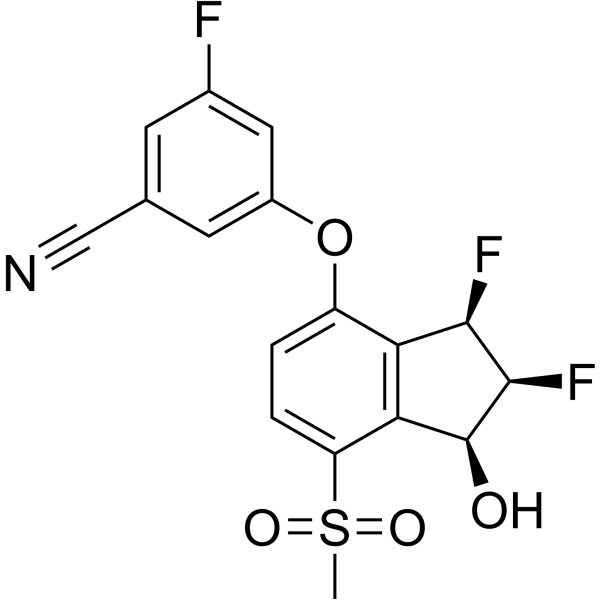
Belzutifan (PT2977) is an orally active and selective HIF-2α inhibitor with an IC50 of 9 nM. Belzutifan, as a second-generation HIF-2α inhibitor, increases potency and improves pharmacokinetic profile. Belzutifan is a potential treatment for clear cell renal cell carcinoma (ccRCC) .
|
-
- HY-107428
-
|
|
MMP
|
Cardiovascular Disease
|
|
PD-166793 is a potent, selective, orally active and wide-broad spectrum inhibitor of MMP, exhibiting nanomolar potency against MMP-2, MMP-3 and MMP-13 (IC50=4, 7, and 8 nM, respectively) and micromolar potency vs MMP-1, -7 and -9 (IC50=6.0, 7.2, and 7.9 μM, respectively). PD-166793 can attenuate left ventricular remodeling and dysfunction in a rat model of progressive heart failure .
|
-
- HY-158039
-
|
|
Deubiquitinase
Apoptosis
|
Cancer
|
|
YCH2823 is an inhibitor of USP7 (IC50 = 49.6 nM; Kd = 0.117 μM). YCH2823 shows significant efficacy in inhibiting TP53 wild-type and mutant tumors, with approximately 5-fold higher potency than FT671. YCH2823 induce apoptosis. YCH2823 synergistic effects with mTOR inhibitors .
|
-
- HY-158256
-
|
|
Fluorescent Dye
|
Others
|
|
Luciferase-IN-3 (compound 5h) is an inhibitor of ATP-dependent luciferase (Firefly luciferase), the major light-emitting enzyme in fireflies and kowtow bugs. Firefly luciferase-IN-2 inhibits P. pyralis luciferase with an IC50 of 3.2 μM, while the inhibitory potency against R. reniformis is not significant .
|
-
- HY-147813
-
-
- HY-137070
-
|
|
Drug Metabolite
|
Cardiovascular Disease
Cancer
|
|
Rivaroxaban diol is a metabolite of Rivaroxaban (HY-50903). Rivaroxaban (BAY 59-7939) is a highly potent, selective and direct Factor Xa (FXa) inhibitor, achieving a strong gain in anti-FXa potency (IC50 0.7 nM; Ki 0.4 nM) .
|
-
- HY-168142
-
|
|
Histone Methyltransferase
|
Cancer
|
|
YD1130 is a PRMT4 inhibitor (0.5 nM, 75% inhibition rate), and its inhibitory potency against other PRMTs is not significant (PRMT5 IC50> 1 μM, PRMT1/3/6/7/8 IC50 > 10 μM). .
|
-
- HY-157802
-
|
|
Sodium Channel
|
Neurological Disease
|
|
LTGO-33 is a potent and selective voltage-gated sodium channel NaV1.8 inhibitor. LTGO-33 inhibits NaV1.8 in the nM potency range and exhibits over 600-fold selectivity against human NaV1.1-NaV1.7 and NaV1.9. LTGO-33 exhibits state-independent inhibition with similar potencies on channels in the closed and inactivated conformations. LTGO-33 inhibits native TTX-R NaV1.8 currents in non-human primate and human DRG neurons, where it reduces action potential firing. LTGO-33 can be used for pain disorders research .
|
-
- HY-162342
-
|
|
Topoisomerase
|
Cancer
|
|
Topoisomerase I inhibitor 14 (Compound 4h) is an inhibitor for Topoisomerase I. Topoisomerase I inhibitor 14 inhibits proliferation of A549 and C6 with IC50s of 4.56 μM and 13.17 μM, without significant toxicity in healthy cells NIH3T3 (IC50 is 74.44 μM), which exhibits anticancer potency .
|
-
- HY-B0590B
-
|
(+)-TBZ; (3R,11bR)-TBZ; (3R,11bR)-Tetrabenazine
|
Monoamine Transporter
|
Cancer
|
|
(+)-Tetrabenazine ((+)-TBZ; (3R,11bR)-TBZ; (3R,11bR)-Tetrabenazine) is a reversible inhibitor of vesicular monoamine transporter 2 (VMAT-2), inhibits transport by VMAT2 with 10-fold greater potency than transport by VMAT1.
|
-
- HY-160869
-
|
|
Fluorescent Dye
|
Others
|
|
Firefly luciferase-IN-2 (compound 5j) is an inhibitor of ATP-dependent luciferase (Firefly luciferase), the major light-emitting enzyme in fireflies and kowtow bugs. Firefly luciferase-IN-2 inhibits P. pyralis luciferase with an IC50 of 0.15 μM, while the inhibitory potency against R. reniformis is not significant .
|
-
- HY-162985
-
|
|
CDK
|
Cancer
|
|
JHD205 is a CDK4/6 inhibitor that induces apoptosis and DNA damage. JHD205 inhibits DNA repair by upregulating Caspase3 and p-H2AX. JHD205 has superior potency to Abemaciclib (HY-16297A) in a xenograft chick embryo breast cancer model. .
|
-
- HY-15656A
-
-
- HY-15656B
-
-
- HY-15656
-
-
- HY-178058A
-
|
|
Potassium Channel
|
Others
|
|
VU6080824 (hydrochloride), a derivative of ML-133 (HY-100230), is an inward-rectifier potassium channel (Kir2.1) inhibitor with an IC50 of 0.35 μM. VU6080824 (hydrochloride) has superior thallium flux and manual patch clamp (MPC) functional potency .
|
-
- HY-113269
-
|
|
Drug Metabolite
|
Others
|
|
alpha-CEHC is a water-soluble metabolite of alpha-tocopherol (α-TOH) with potential antioxidant activity. alpha-CEHC slightly inhibits macrophage-induced low-density lipoprotein (LDL) oxidation, and its inhibitory potency is concentration-dependent .
|
-
- HY-13622B
-
|
BN 80927 TFA
|
Topoisomerase
|
Cancer
|
|
Elomotecan TFA is a potent inhibitor of topoisomerases I and II. Elomotecan TFA is a camptothecin analog belonging to the homocamptothecin family (hCPT). Elomotecan TFA reduces the proliferation of different tumor cells with higher potency than other anticancer agents of reference targeting topoisomerases I and II .
|
-
- HY-136530
-
|
|
KLF
|
Cancer
|
|
SR18662 is a potent inhibitor of Krüppel-like factor five (KLF5) with an IC50 of 4.4 nM and an analogue of ML264 (HY-19994) with improved inhibitory potency against colorectal cancer cells. SR18662 can be used for the study of colorectal cancer .
|
-
- HY-150617
-
|
M4076; ATM Inhibitor-5
|
ATM/ATR
STING
PD-1/PD-L1
|
Cardiovascular Disease
Inflammation/Immunology
Cancer
|
|
Lartesertib (M4076) is an inhibitor of the serine/threonine protein kinase ATM with high potency. Lartesertib can inhibit the growth of multiple hematopoietic cell lines. Additionally, when combined with the ATR inhibitor Tuvusertib (HY-111451), Lartesertib can promote the death of tumor cells, activate the immune signaling pathway, and exhibit anti-tumor activity .
|
-
- HY-144774
-
|
|
Topoisomerase
DNA/RNA Synthesis
Apoptosis
|
Cancer
|
|
Topoisomerase I inhibitor 5 is an effective topoisomerase inhibitor with IC50 value of. Topoisomerase I inhibitor 5 can interfere with DNA and significantly inhibit the activity of Topoisomerase I. Topoisomerase I inhibitor 5 can arrest cell cycle at the G1 phase and induce MCF-7 cells apoptosis. Topoisomerase I inhibitor 5 has potency in reversing P-gp-mediated resistance to Adriamycin .
|
-
- HY-50903R
-
|
BAY 59-7939 (Standard)
|
Reference Standards
Factor Xa
|
Cardiovascular Disease
Cancer
|
|
Rivaroxaban (Standard) is the analytical standard of Rivaroxaban. This product is intended for research and analytical applications. Rivaroxaban (BAY 59-7939) is a highly potent, selective and direct Factor Xa (FXa) inhibitor, achieving a strong gain in anti-FXa potency (IC50 0.7 nM; Ki 0.4 nM) .
|
-
- HY-13622A
-
|
BN 80927 free base
|
Topoisomerase
|
Cancer
|
|
Elomotecan (BN 80927 free base) is a potent inhibitor of topoisomerases I and II. Elomotecan is a camptothecin analog belonging to the homocamptothecin family (hCPT). Elomotecan reduces the proliferation of different tumor cells with higher potency than other anticancer agents of reference targeting topoisomerases I and II .
|
-
- HY-178980
-
|
|
Casein Kinase
|
Cancer
|
|
APL-5125 (Compound 61f) is a potent, selective and orally active ATP-competitive CK2α inhibitor with an IC50 of 0.348 nM and a Ki of 0.095 nM. APL-5125 binds to CK2α in a bivalent manner, simultaneously interacting with the ATP-binding site and the αD pocket. APL-5125 exhibits antitumor activity and can be used for the research of cancer, such as colon cancer .
|
-
- HY-W324391
-
|
Coumarin 478
|
Cholinesterase (ChE)
|
Neurological Disease
|
|
Coumarin 106 (Coumarin 478) is a dipolar laser dye. Coumarin 106 is an inhibitor of AChE and BChE. Coumarin 106 displays mixed-type AChE inhibition with a pIC50=4.97 and Ki=2.36 μM. Coumarin 106 inhibits BChE with slightly lower potency (pIC50=4.56) .
|
-
- HY-124221
-
|
|
Endogenous Metabolite
|
Cancer
|
|
Radamide is an inhibitor of Grp94 with anti-migratory activity. Radamide is used to inhibit Grp94-related diseases such as glaucoma, cancer metastasis, and multiple myeloma. Radamide exhibits selective inhibitory activity by acting on the specific structure of Grp94. Radamide derivatives show better potency and selectivity in improved structure-activity relationship studies .
|
-
- HY-50903S
-
|
BAY 59-7939-d4
|
Factor Xa
|
Cardiovascular Disease
|
|
Rivaroxaban-d4 (BAY 59-7939-d4) is a deuterium labeled Rivaroxaban. Rivaroxaban is a highly potent,selective and direct Factor Xa (FXa) inhibitor, achieving a strong gain in anti-FXa potency (IC50 0.7 nM; Ki 0.4 nM) .
|
-
- HY-10425R
-
|
A-443654 (Standard)
|
Reference Standards
Akt
|
Cancer
|
|
Rizavasertib (Standard) is the analytical standard of Rizavasertib (HY-10425). This product is intended for research and analytical applications. A-443654 is a pan-Akt inhibitor and has equal potency against Akt1, Akt2, or Akt3 within cells (Ki=160 pM) .
|
-
- HY-145884
-
|
|
Btk
|
Inflammation/Immunology
|
|
BTK-IN-8 is a potent and selective peripheral covalent BTK inhibitor (IC50=0.22 nM; Kd=0.91 nM). BTK-IN-8 has good whole blood CD69 cellular potency (IC50=0.029 µM) .
|
-
- HY-50861
-
AZD3988
1 Publications Verification
|
Acyltransferase
|
Metabolic Disease
|
|
AZD3988 is an orally active diacylglycerol acyl transferase-1 (DGAT-1) inhibitor. AZD3988 has excellent DGAT-1 (human) potency with an IC50 value of 0. 6 nM. AZD3988 can be used for the research of metabolic diseases such as diabetes, obesity .
|
-
- HY-19985
-
|
|
EGFR
|
Cancer
|
|
PF-06459988 is an orally activity, irreversible and mutant-selective inhibitor of EGFR mutant forms. PF-06459988 demonstrates high potency and specificity to the T790M-containing double mutant EGFRs. PF-06459988 can be used for the research of cancer .
|
-
- HY-12522
-
|
Aur0101; Auristatin-0101
|
Microtubule/Tubulin
ADC Payload
|
Cancer
|
|
PF-06380101 (Aur0101), an auristatin microtubule inhibitor, is a cytotoxic Dolastatin 10 analogue. PF-06380101 (Aur0101) shows excellent potencies in tumor cell proliferation assays and differential ADME properties when compared to other synthetic auristatin analogues that are used in the preparation of ADCs.
|
-
- HY-116042
-
|
|
Adenosine Receptor
|
Cardiovascular Disease
|
|
FSCPX is a potent and selective irreversible antagonist of A1 adenosine receptor (A1AR), with low nanomolar potency for binding to the A1AR. FSCPX could modify the effect of NBTI, a nucleoside transport inhibitor, by reducing the interstitial adenosine level in the guinea pig atrium .
|
-
- HY-P11320
-
|
|
Amylin Receptor
CGRP Receptor
|
Metabolic Disease
|
|
Davalintide is an Amylin (HY-P1464)-mimetic peptide with greater potency and longer-lasting effects. Davalintide is a potent agonist of amylin receptor (IC50 = 0.04 nM), calcitonin receptor (IC50 = 0.06 nM) and calcitonin related peptide receptor (CGRP receptor) (IC50 = 3.1 nM). Davalintide shows stronger potency to Amylin to activate cyclic AMP production through the calcitonin receptor (EC50 = 1.4 nM). Davalintide regulates blood sugar and weight through various mechanisms such as delaying gastric emptying, inhibiting glucagon secretion, and reducing food intake. Davalintide can be used for the studies of anti-obesity and anti-diabetes .
|
-
- HY-106579R
-
|
|
Reference Standards
COX
|
Inflammation/Immunology
|
|
Tiaprofenic acid (Standard) is the analytical standard of Tiaprofenic acid. This product is intended for research and analytical applications. Tiaprofenic acid is an orally active nonsteroidal anti-inflammatory agent (NSAID) with anti-inflammatory and analgesic potency. Tiaprofenic acid inhibits prostaglandin synthesis by suppressing cyclo-oxygenase (COX). Tiaprofenic acid can be used in the treatment of rheumatic diseases .
|
-
- HY-15046
-
EB-47
5 Publications Verification
|
PARP
|
Cardiovascular Disease
Inflammation/Immunology
|
|
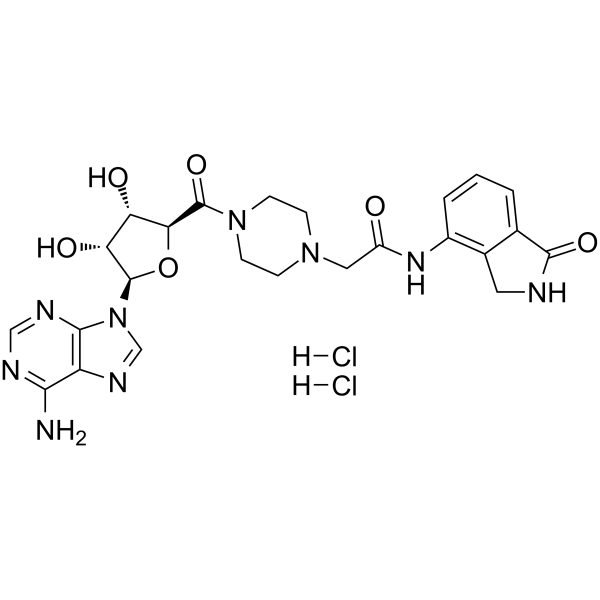
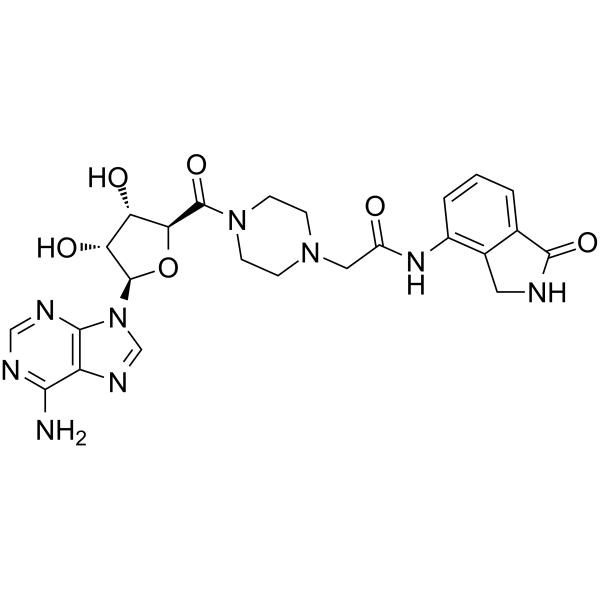
EB-47, a potent and selective PARP-1/ARTD-1 inhibitor with an IC50 value of 45 nM, shows modest potency against ARTD5 with an IC50 value of 410 nM. EB-47 mimics the substrate NAD + and extends from the nicotinamide to the adenosine subsite .
|
-
- HY-108631
-
|
|
PARP
|
Inflammation/Immunology
|
|
EB-47 dihydrochloride, a potent and selective PARP-1/ARTD-1 inhibitor with an IC50 value of 45 nM, shows modest potency against ARTD5 with an IC50 value of 410 nM. EB-47 mimics the substrate NAD +?and extends from the nicotinamide to the adenosine subsite .
|
-
- HY-117292R
-
|
|
Reference Standards
Amino Acid Oxidase
|
Neurological Disease
|
|
DAO-IN-2 (Standard) is the analytical standard of DAO-IN-2 (HY-117292). This product is intended for research and analytical applications. DAO-IN-2 is a novel D-amino acid oxidase (DAO) inhibitor. DAO-IN-2 demonstrates moderate potency for DAO in vitro and ex vivo .
|
-
- HY-P2249
-
|
|
Arrestin
Apelin Receptor (APJ)
|
Cardiovascular Disease
|
|
ELA-21 (human) is an apelin receptor agonist with a pKi of 8.52. ELA-21 (human) completely inhibits Forskolin-induced cAMP production and stimulates β-arrestin recruitment with subnanomolar potencies. ELA-21 (human) is an agonist in G-protein-dependent and -independent pathways .
|
-
- HY-A0259
-
|
|
COX
|
Inflammation/Immunology
|
|
Floctafenine, a nonsteroidal anti-inflammatory agent (NSAID), acts as an effective analgesic agent . Floctafenine is an inhibitor of COX-1 and COX-2 activities in vitro,showing a slightly higher potency towards COX-I. Floctafenine is used for the research of short term pain research .
|
-
- HY-132171A
-
|
|
Dihydroorotate Dehydrogenase
Parasite
|
Infection
|
|
DSM705 hydrochloride, an orally active antimalarial compound, is a pyrrole-based Dihydroorotate Dehydrogenase (DHODH) inhibitor. DSM705 hydrochloride exhibits nanomolar potency against Plasmodium DHODH and Plasmodium parasites (IC50=95, 52 nM for P. falciparum and P. vivax DHODH, respectively), with no inhibition of mammalian DHODHs .
|
-
- HY-13622
-
|
BN 80927
|
Topoisomerase
|
Cancer
|
|
Elomotecan hydrochloride (BN 80927) is a potent inhibitor of topoisomerases I and II. Elomotecan hydrochloride (BN 80927) is a camptothecin analog belonging to the homocamptothecin family (hCPT). Elomotecan hydrochloride (BN 80927) reduces the proliferation of different tumor cells with higher potency than other anticancer agents of reference targeting topoisomerases I and II .
|
-
- HY-178058
-
|
|
Potassium Channel
|
Others
|
|
VU6080824 (Compound 5s), a derivative of ML-133 (HY-100230), is an inward-rectifier potassium channel (Kir2.1) inhibitor with an IC50 of 0.35 μM. VU6080824 has superior thallium flux and manual patch clamp (MPC) functional potency .
|
-
- HY-16750
-
|
GS-9669
|
DNA/RNA Synthesis
HCV
|
Infection
|
|
Radalbuvir (GS-9669) is a non-nucleoside inhibitor of nonstructural protein 5B (NS5B) RNA-dependent RNA polymerase (RdRp). Radalbuvir shows strong anti-HCV potency (GT1a intrinsic EC50 = 2.9 nM, GT1b EC50 = 6 nM) .
|
-
- HY-153612
-
|
|
GLUT
Parasite
|
Infection
Inflammation/Immunology
|
|
MMV009085 is a potent PfHT1 (Plasmodium falciparum hexose transporter)-specific inhibitor and a potential anti-malarial agent . MMV009085 is also a human glucose transporter inhibitor, it has high potency in inhibiting both glucose uptake (IC50: 2.6 μM in glucose uptake assay) and growth of the parasites (EC50: 1.23±0.04 μM against 3D7) .
|
-
- HY-106929B
-
|
CGS 25019C hydrochloride
|
Leukotriene Receptor
|
Inflammation/Immunology
|
|
Moxilubant (CGS 25019C) hydrochloride is an orally active BLT1 antagonist. Moxilubant hydrochloride inhibits LTB4 signaling with a potency of 2-4 nM. Moxilubant hydrochloride blocks LTB4-induced neutrophil functions. Moxilubant hydrochloride inhibits ear edema and neutrophil infiltration in mice. Moxilubant hydrochloride can be used in research related to chronic obstructive pulmonary disease .
|
-
- HY-131904
-
POMHEX
3 Publications Verification
|
Enolase
Apoptosis
|
Metabolic Disease
Cancer
|
|
POMHEX, a racemic mixture and a cell-permeable pivaloyloxymethyl (POM) proagent of HEX, is a potent, ENO2-specific inhibitor of enolase. POMHEX exhibits low-nanomolar potency against ENO1-deleted cells in vitro and is capable of eradicating ENO1-deleted xenografted tumours in vivo. POMHEX is a potent glycolysis inhibitor .
|
-
- HY-180567
-
|
|
HIV Protease
|
Infection
Inflammation/Immunology
|
|
PAC-Phe-Val is a potent HIV-1 protease inhibitor with an IC50 value of 33.10 nM. PAC-Phe-Val forms stable and strong interactions with critical active site residues, contributing to its high inhibitory potency. PAC-Phe-Val can be used for HIV/AIDS research .
|
-
- HY-P3679
-
|
|
Neuropeptide Y Receptor
|
Neurological Disease
|
|
Neuropeptide Y (1-24) (human) is a neuropeptide with potencies in inhibiting the electricity stimulated twitch response of rat vas deferens. Neuropeptide Y (1-24) (human) stimulates N-methyl-D-aspartate (NMDA)-induced neuronal activation in the rat CA3 region of the dorsal hippocampus in vivo .
|
-
- HY-126564
-
|
|
Lipase
MetAP
|
Others
Inflammation/Immunology
|
|
Ebelactone A is a mycolic acid β-lactone, which exhibits inhibitory activity for esterase, lipase, fMet aminopeptidase (fMet AP) and PNBase, with IC50s of 56, 3, 8 and 7.5 μM, respectively . Ebelactone A inhibits cutinase, exhibits plants protective potency against Erysiphe graminis .
|
-
- HY-144303
-
|
|
Xanthine Oxidase
|
Metabolic Disease
|
|
Xanthine oxidase-IN-4 (compound 19a) is an orally active and potent xanthine oxidase (XO) inhibitor, with an IC50 of 0.039 μM. Xanthine oxidase-IN-4 exhibits hypouricemic potency in potassium oxonate induced hyperuricemia rats. Xanthine oxidase-IN-4 can be used for hyperuricemia and gout research .
|
-
- HY-10401R
-
-
- HY-149376
-
|
|
Microtubule/Tubulin
|
Cancer
|
|
Tubulin inhibitor 38 (compound 14) is a tetrazole-based Tubulin inhibitor with antiproliferative potencies. Tubulin inhibitor 38 (100 nM,24 h) mediates mitotic arrest,blocks cell cycle at G2/M phase and induces apoptosis. Tubulin inhibitor 38 exhibits high cytotoxicity with high selectivity index among HeLa,MCF7,and U87 MG cells .
|
-
- HY-179639
-
|
|
Phosphodiesterase (PDE)
|
Inflammation/Immunology
|
|
PDE4-IN-30 is a selective PDE4 inhibitor with an IC50 of 2.7 nM for PED4D2, targeting PDE4 through halogen bonding and metal coordination. PDE4-IN-30 exhibits at least 67-fold selectivity for other PDE subfamilies. PDE4-IN-30 can be used for the research of idiopathic pulmonary fibrosis .
|
-
- HY-149001
-
|
|
PARP
|
Cancer
|
|
PARP1-IN-9 (Compound 5c) is a PARP1 inhibitor with an IC50 of 30.51 nM. PARP1-IN-9 induces cell apoptosis and shows anticancer activity. PARP1-IN-9 has higher potency than Olaparib (HY-10162) .
|
-
- HY-153213
-
|
|
TSH Receptor
|
Metabolic Disease
|
|
Org 274179-0 is a potent and allosteric antagonist of thyroid-stimulating hormone (TSH) receptor, with an IC50 of nanomolar concentration. Org 274179-0 completely inhibits TSH (and TSI)-mediated TSH receptor activation with little effect on the potency of TSH. Org 274179-0 can be used for the research of Graves' disease (GD) .
|
-
- HY-100431A
-
IMR-1A
1 Publications Verification
|
Notch
Drug Metabolite
|
Cancer
|
|
IMR-1A, a acid metabolite of IMR-1, is a Notch inhibitor with an IC50 of 0.5 μM. IMR-1A has a 50-fold increase in potency with respect to IMR-1. IMR-1 can metabolize in vivo to IMR-1A .
|
-
- HY-10337R
-
|
BMS-540215 (Standard)
|
Reference Standards
VEGFR
Autophagy
|
Cancer
|
|
Brivanib (Standard) is the analytical standard of Brivanib. This product is intended for research and analytical applications. Brivanib (BMS-540215) is an ATP-competitive inhibitor against VEGFR2 with an IC50 of 25 nM, and has moderate potency against VEGFR-1 and FGFR-1, but >240-fold against PDGFR-β .
|
-
- HY-120028
-
|
|
Epigenetic Reader Domain
Histone Acetyltransferase
|
Cancer
|
|
GNE-207 is a potent, selective and orally bioavailable inhibitor of the bromodomain of CBP, with an IC50 of 1 nM, exhibits a selectively index of >2500-fold against BRD4 (1). GNE-207 shows excellent CBP potency, with an EC50 of 18 nM for MYC expression in MV-4-11 cells .
|
-
- HY-163136A
-
|
|
Autophagy
REV-ERB
|
Cancer
|
|
Autophagy/REV-ERB-IN-1
hydrochloride (Compound 24) is a dual autophagy and REV-ERB inhibitor with
anticancer activity. Autophagy/REV-ERB-IN-1 (hydrochloride) has improved
potency in blocking autophagy, enhanced toxicity against cancer cells.
Autophagy/REV-ERB-IN-1 (hydrochloride) can be used for the research for
melanoma .
|
-
- HY-W012009
-
|
|
Influenza Virus
|
Infection
|
|
2'-Deoxy-2'-fluorocytidine, an nucleoside analog, is a potent inhibitor of Crimean-Congo hemorrhagic fever virus (CCHFV) replication. 2′-deoxy-2′-fluorocytidine can act synergistically with T705 to increase the potency of both compounds antiviral effects on CCHFV replication .
|
-
- HY-125835
-
CP-10
1 Publications Verification
|
PROTACs
CDK
|
Cancer
|
|
CP-10 is a PROTAC connected by ligands for Cereblon and CDK, with highly selective, specific, and remarkable CDK6 degradation (DC50=2.1 nM). It inhibits proliferation of several haematopoietic cancer cells with impressive potency including multiple myeloma, and can still degrades mutated and overexpressed CDK6 .
|
-
- HY-143322
-
|
|
Parasite
|
Infection
|
|
CRK12-IN-2 (compound 2) is an inhibitor of CRK12. CRK12-IN-2 shows potency against Trypanosoma congolense and Trypanosoma vivax with EC50 values of 3.2 and 0.08 nM. CRK12-IN-2 can be used for the research of animal trypanosomiasis .
|
-
- HY-123564
-
|
|
Bcl-2 Family
|
Others
|
|
Mcl1-IN-7 (compound 11) is a reversible covalent inhibitor of Mcl-1 with the activity of inhibiting Mcl-1. By covalently targeting the non-catalytic lysine side chain of Mcl-1, it has higher potency than non-covalent counterparts and can be used to develop Mcl-1 inhibitory compounds and study related biological phenomena.
|
-
- HY-106929
-
|
CGS 25019C free base
|
Leukotriene Receptor
|
Inflammation/Immunology
|
|
Moxilubant (CGS 25019C free base) is an orally active BLT1 antagonist. Moxilubant inhibits LTB4 signaling with a potency of 2-4 nM. Moxilubant blocks LTB4-induced neutrophil functions. Moxilubant inhibits ear edema and neutrophil infiltration in mice. Moxilubant can be used in research related to chronic obstructive pulmonary disease .
|
-
- HY-13646B
-
|
HM30181 hydrochloride; HM30181A hydrochloride
|
P-glycoprotein
|
Others
|
|
Encequidar hydrochloride (HM30181 hydrochloride) is an oral P-glycoprotein (P-gp) inhibitor with the activity of enhancing the oral bioavailability of P-gp substrate drugs. Encequidar shows the highest potency among various MDR1 inhibitors, with IC50=0.63nM. Encequidar effectively blocks the transepithelial transport of paclitaxel in MDCK monolayer cells, with IC50=35.4nM .
|
-
- HY-B1150
-
|
|
Bacterial
SARS-CoV
Antibiotic
|
Infection
Cancer
|
|
Clofoctol is a bacteriostatic antibiotic. Clofoctol is used in the treatment of respiratory tract and ear, nose and throat infections caused by Gram-positive bacteria. Clofoctol is only functional against Gram-positive bacteria and can penetrate into human lung tissue. Clofoctol is also an inhibitor of prostate cancer. Clofoctol has antiviral potency .
|
-
- HY-172132
-
|
|
Bacterial
|
Infection
|
|
MurA-IN-5 (compound 4c) exhibits (MIC) = 1.95 μg/mL against Escherichia coli and demonstrating significant potency as a MurA inhibitor with (IC50) of 3.77 μg/mL. MurA-IN-5 displays an antibiofilm activity against multiple microorganisms, indicating its potential to combat biofilm-related infections .
|
-
- HY-151159
-
|
|
Dihydrofolate reductase (DHFR)
EGFR
|
Cancer
|
|
DHFR-IN-4 is a potent dihydrofolate reductase (DHFR) inhibitor with an IC50 value of 123 nM. DHFR-IN-4 also has inhibitory activity against EGFR and HER2 with IC50s of 246 nM and 357 nM, respectively. DHFR-IN-4 has remarkable broad spectrum cytotoxic potency against cancer cells .
|
-
- HY-14852
-
-
- HY-124069
-
|
|
Epigenetic Reader Domain
|
Cancer
|
|
M-525 is a first-in-class, highly potent, irreversible and covalent menin-MLL protein-protein interaction inhibitor. M-525 binds to menin with an IC50 of 3 nM and achieves low nanomolar potencies in cell growth inhibition and in suppression of MLL regulated gene expression in MLL leukemia cells. Anti-leukemia activity .
|
-
- HY-144110
-
|
|
HCV
|
Infection
|
|
HCV-IN-37 (Compound 3d) is a potent inhibitor of HCV. HCV-IN-37 is orally available and long-lasting in rat plasma after oral administration to rats by a single dose of 15 mg/kg. The high potency of active derivative HCV-IN-37 is primarily driven by the inhibitory effect on the virus entry stage .
|
-
- HY-147193
-
|
|
NAMPT
|
Cancer
|
|
Nampt-IN-10 TFA (compound 4) is a Nicotinamide Phosphoribosyltransferase (NAMPT) inhibitor. Nampt-IN-10 TFA shows cellular potency to A2780 and CORL23 cells lines with IC50s of 5 and 19 nM, respectively. Nampt-IN-10 TFA can be used as a novel non-antimitotic payload for ADCs .
|
-
- HY-179450
-
|
|
Cytochrome P450
|
Cancer
|
|
Aromatase-IN-7 (compound 75) is a potent and selective aromatase inhibitor (IC50 = 5.78 nM), exhibiting potency comparable to Letrozole (HY-14248). Aromatase-IN-7 exhibits potent aromatase inhibition both in vitro and in vivo. Aromatase-IN-7 can be used for hormone-dependent breast cancer (HDBC) research .
|
-
- HY-147193A
-
|
|
NAMPT
|
Cancer
|
|
Nampt-IN-10 trihydrochloride (compound 4) is a Nicotinamide Phosphoribosyltransferase (NAMPT) inhibitor. Nampt-IN-10 trihydrochloride shows cellular potency to A2780 and CORL23 cell lines with IC50 values of 5 and 19 nM, respectively. Nampt-IN-10 trihydrochloride can be used as a novel non-antimitotic payload for antibody-drug conjugate (ADC) .
|
-
- HY-103327
-
|
|
Cannabinoid Receptor
|
Metabolic Disease
|
|
MJ15 is a potent and selective CB1 receptor antagonist with a Ki of 27.2 pM and an IC50 of 118.9 pM for rat CB1 receptors. MJ15 exhibits potency in obesity and hyperlipidemia models. MJ15 inhibits food intake and increases in body weight in diet-induced obese rats and mice .
|
-
- HY-173290
-
|
|
Phosphodiesterase (PDE)
Interleukin Related
CXCR
TNF Receptor
|
Inflammation/Immunology
|
|
PDE4-IN-1 is a PDE4 inhibitor with high potency (IC50 : 8.6 nM) and selectivity over other PDE subtypes. PDE4-IN-1 inhibits the release of inflammatory cytokines and chemokines. PDE4-IN-1 greatly restores impaired cAMP-CREB signaling pathway. PDE4-IN-1 inhibits proliferation and promotes differentiation to reverse the formation of psoriasis .
|
-
- HY-125840R
-
|
PT2977 (Standard); MK-6482 (Standard)
|
HIF/HIF Prolyl-Hydroxylase
Reference Standards
|
Cancer
|
|
Belzutifan (Standard) is the analytical standard of Belzutifan. This product is intended for research and analytical applications. Belzutifan (PT2977) is an orally active and selective HIF-2α inhibitor with an IC50 of 9 nM. Belzutifan, as a second-generation HIF-2α inhibitor, increases potency and improves pharmacokinetic profile. Belzutifan is a potential treatment for clear cell renal cell carcinoma (ccRCC) .
|
-
- HY-162150
-
|
AZL-N
|
Pyroptosis
|
Inflammation/Immunology
|
|
Azalamellarin N is an inhibitor of pyroptosis and has different inhibitory effects on different pyroptosis inducers. Azalamellarin N inhibits pyroptosis by targeting molecules that act upstream of NLRP3 inflammasome activation, rather than directly targeting components of the NLRP3 inflammasome. Inhibitory potency against different pyroptosis inducers: Nigericin (HY-127019) > R837 (HY-B0180) .
|
-
- HY-161409
-
|
|
Androgen Receptor
Apoptosis
|
Cancer
|
|
SC912 is an AR-V7 inhibitor (IC50 = 0.36 μM). SC912 possesses safety, potency and selectivity. SC912 binds directly to AR-FL and AR-V7 proteins, inhibites nuclear localization and chromatin binding capabilities. SC912 exerts anticancer activity through inhibition of proliferation, induction of cell cycle arrest and apoptosis .
|
-
- HY-107428R
-
|
|
Reference Standards
MMP
|
Cardiovascular Disease
|
|
PD-166793 (Standard) is the analytical standard of PD-166793 (HY-107428). This product is intended for research and analytical applications. PD-166793 is a potent, selective, orally active and wide-broad spectrum inhibitor of MMP, exhibiting nanomolar potency against MMP-2, MMP-3 and MMP-13 (IC50=4, 7, and 8 nM, respectively) and micromolar potency vs MMP-1, -7 and -9 (IC50=6.0, 7.2, and 7.9 μM, respectively). PD-166793 can attenuate left ventricular remodeling and dysfunction in a rat model of progressive heart failure .
|
-
- HY-150617A
-
|
(Rac)-M4076; (Rac)-ATM Inhibitor-5
|
ATM/ATR
STING
PD-1/PD-L1
|
Cardiovascular Disease
Inflammation/Immunology
Cancer
|
|
(Rac)-Lartesertib ((Rac)-M4076) is an isoform of Lartesertib (HY-150617). Lartesertib (M4076) is an inhibitor of the serine/threonine protein kinase ATM with high potency. Lartesertib can inhibit the growth of multiple hematopoietic cell lines. Additionally, when combined with the ATR inhibitor Tuvusertib (HY-111451), Lartesertib can promote the death of tumor cells, activate the immune signaling pathway, and exhibit anti-tumor activity .
|
-
- HY-15155R
-
|
|
Polo-like Kinase (PLK)
|
Cancer
|
|
MLN0905 (Standard) is the analytical standard of MLN0905. This product is intended for research and analytical applications. MLN0905 is a potent, orally active Polo-like kinase 1 (PLK1) inhibitor. MLN0905 has inhibitory potency against PLK1 with an IC50 value of 2 nM. MLN0905 can be used for the research of cancer .
|
-
- HY-163806
-
|
|
HDAC
|
Neurological Disease
Cancer
|
|
NT376 is a high potency and selectivity inhibitor of class-IIa Histone deacetylases (HDAC) with an IC50 value of 32 nM, similar to NT160 (HY-149285) (IC50= 46 nM) in HT-29 cells. NT376 is proming for research of various cancers and in the diseases of the central nervous system (CNS) such as Alzheimer’s and Huntington’s diseases .
|
-
- HY-109189
-
|
BPI-7711
|
EGFR
|
Cancer
|
|
Rezivertinib (BPI-7711) is an orally active, highly selective and irreversible third-generation EGFR tyrosine kinase inhibitor (TKI). Rezivertinib exhibits high potency against the common activation EGFR and the resistance T790M mutations. Rezivertinib has excellent central nervous system (CNS) penetration and has antitumor activity .
|
-
- HY-138568
-
|
|
MAP4K
|
Inflammation/Immunology
|
|
HPK1-IN-3 is a potent and selective ATP-competitive hematopoietic progenitor kinase 1 (HPK1; MAP4K1) inhibitor with an IC50 of 0.25 nM. HPK1-IN-3 has IL-2 cellular potency with an EC50 of 108 nM in human peripheral blood mononuclear cells (PBMCs) .
|
-
- HY-146039
-
|
|
Cholinesterase (ChE)
|
Neurological Disease
|
|
AChE-IN-15 (Compound 3d) is a reversible human acetylcholinesterase (huAChE) (IC50=6.8 μM) and human butyrylcholinesterase (huBChE) (IC50=16.1 μM) inhibitor. AChE-IN-15 shows significant antioxidant potency, AChE-IN-15 can be used for the research of Alzheimer’s disease .
|
-
- HY-15656R
-
-
- HY-N7491A
-
|
|
Calcium Channel
|
Cancer
|
|
ent-(+)-verticilide is a potent and selective inhibitor of cardiac ryanodine receptor (RyR2) calcium release channels with antiarrhythmic activity. ent-(+)-verticilide inhibits RyR2-mediated diastolic Ca2+ leak and exhibits higher potency and a distinct mechanism of action compared with theDantrolene and Tetracaine. ent-(+)-verticilide is a useful tool to investigate the therapeutic potential of targeting RyR2 hyperactivity in heart and brain pathologies .
|
-
- HY-117251
-
|
|
Amino acid Transporter
|
Neurological Disease
|
|
LP-403812 is a high affinity proline transporter (PROT) inhibitor that produces dose-dependent inhibition of hPROT (IC50=0.11 μM; Ki=0.12 μM) and also inhibits the activity of mouse brain synaptosomal mPROT with the same potency (IC50=0.23 μM). LP-403812 can be used to study the function of PROT in the brain .
|
-
- HY-144724
-
|
|
HSP
Apoptosis
|
Cancer
|
|
HSP90-IN-10 (Compound 16s) is a potent inhibitor of HSP90. HSP90-IN-10 exhibits high antiproliferative potency against HCC1954 breast cancer cells with the IC50 value of 6 µM. HSP90-IN-10 does not inhibit the growth of normal epithelial cells. HSP90-IN-10 also induces apoptosis .
|
-
- HY-107390A
-
|
|
TNF Receptor
Interleukin Related
IFNAR
|
Inflammation/Immunology
Cancer
|
|
AX-024 hydrochloride is an orally available, first-in-class inhibitor of the TCR-Nck interaction that selectively inhibits TCR-triggered T cell activation with an IC50 ~1 nM. AX-024 hydrochloride modulates cell signaling by targeting SH3 domains. AX-024 hydrochloride has low-acute toxicity and high potency and selectivity, and strongly inhibit the production of IL-6, TNF-α, IFN-γ, IL-10 and IL-17A.
|
-
- HY-107390
-
AX-024
3 Publications Verification
|
TNF Receptor
Interleukin Related
IFNAR
|
Inflammation/Immunology
Cancer
|
|
AX-024 is an orally available, first-in-class inhibitor of the TCR-Nck interaction that selectively inhibits TCR-triggered T cell activation with an IC50 ~1 nM. AX-024 modulates cell signaling by targeting SH3 domains. AX-024 has low-acute toxicity and high potency and selectivity, and strongly inhibit the production of IL-6, TNF-α, IFN-γ, IL-10 and IL-17A.
|
-
- HY-146366
-
|
|
Microtubule/Tubulin
|
Cancer
|
|
Tubulin inhibitor 26 (compound 3c) is a potent inhibitor of tubulin. Tubulin inhibitor 26 is an indazole derivative compound. Tubulin inhibitor 26 shows noteworthy low nanomolar potency against HepG2, HCT116, SW620, HT29 and A549 cancer cell lines. Tubulin inhibitor 26 arrests tumor cell in G2/M phase and induced cell apoptosis. Tubulin inhibitor 26 suppresses tumor growth in vivo without affecting the mice body weight .
|
-
- HY-175170
-
|
|
Glycosidase
|
Metabolic Disease
|
|
α-Glucosidase-IN-95 (Compound 21c) is a competitive α-Glucosidase inhibitor with an IC50 of 0.44 μM. α-Glucosidase-IN-95 has a significant inhibitory potency without cytotoxicity to normal cells. α-Glucosidase-IN-95 can be used for metabolic disorders like diabetes mellitus research .
|
-
- HY-100864
-
|
|
PGE synthase
|
Inflammation/Immunology
|
|
mPGES1-IN-3 (Compound 17d) is a potent and selective microsomal prostaglandin E2 synthase-1 (mPGES-1) inhibitor, which exhibits excellent mPGES-1 enzyme (IC50: 8 nM), cell (A549 IC50: 16.24 nM) and human whole blood potency (IC50: 249.9 nM) .
|
-
- HY-159934
-
|
|
FAP
|
Cancer
|
|
QI-18 is a fibroblast activation protein (FAP) inhibitor with the IC50 of 0.50 nM, which is a 6.5-fold increase in potency over that of UAMC-1110 (HY-100684,IC50 of 3.25 nM). QI-18 can be used to synthesize high tumor selectivity and high dose radiotracers for the diagnosis and study of tumors .
|
-
- HY-108312A
-
|
|
Caspase
|
Neurological Disease
|
|
Ac-VEID-CHO (TFA) is a peptide-derived caspase inhibitor and has potency of inhibition for Caspase-6, Caspase-3 and Caspase-7 with IC50 values of 16.2 nM, 13.6 nM and 162.1 nM, respectively. Ac-VEID-CHO (TFA) can be used for the research of neurodegenerative conditions including Alzheimer’s and Huntington’s disease .
|
-
- HY-162425
-
|
|
PGE synthase
COX
|
Inflammation/Immunology
Cancer
|
|
Anti-inflammatory agent 78 (compound L-37) is a potent anti-inflammatory agent. Anti-inflammatory agent 78 has significant potency on PGE2, PGE1, COX-2 and COX-1 inhibition. Anti-inflammatory agent 78 can inhibits NO release in LPS-stimulated RAW 264.7 cell line .
|
-
- HY-15610
-
|
RG 7421; MEK Inhibitor 1
|
MEK
Apoptosis
|
Cancer
|
|
GDC-0623 (RG 7421) is a potent, ATP-uncompetitive inhibitor of MEK1 (Ki=0.13 nM, +ATP), and displays 6-fold weaker potency against HCT116 (KRAS (G13D), EC50=42 nM) versus A375 (BRAF V600E, EC50=7 nM).
|
-
- HY-10885
-
|
ABT-472
|
PARP
|
Cancer
|
|
A-620223 succinate (ABT-472) is an orally available poly(ADP-ribose) polymerase (PARP) inhibitor. A-620223 succinate (ABT-472) exhibits very good potency against the PARP-1 enzyme with a Ki value of 8 nM and an EC50 value of 3 nM in whole cell assay, making it useful in cancer research .
|
-
- HY-15812
-
|
|
Aurora Kinase
|
Cancer
|
|
XMD-12 (compound 1) is an Aurora kinase (Aurora Kinase) inhibitor with anti-tumor activity that promotes paclitaxel (HY-B0015) induced cell death. XMD-12 exhibits high selectivity and potency against Aurora A, B, and C kinases, with IC50 values of 5.6, 18.4, and 24.6 nM, respectively .
|
-
- HY-10336R
-
|
BMS-582664 (Standard)
|
Reference Standards
VEGFR
Autophagy
|
Cancer
|
|
Brivanib (alaninate) (Standard) is the analytical standard of Brivanib (alaninate). This product is intended for research and analytical applications. Brivanib alaninate (BMS-582664) is an ATP-competitive inhibitor against VEGFR2 with an IC50 of 25 nM; has moderate potency against VEGFR-1 and FGFR-1, but more than 240-fold against PDGFRβ .
|
-
- HY-W758126
-
|
|
Isotope-Labeled Compounds
|
Others
|
|
(R)-Brivanib alaninate-d4 is the deuterium-labeled Brivanib (alaninate) (HY-10336). Brivanib alaninate (BMS-582664) is an ATP-competitive inhibitor against VEGFR2 with an IC50 of 25 nM; has moderate potency against VEGFR-1 and FGFR-1, but more than 240-fold against PDGFRβ .
|
-
- HY-76948R
-
|
|
Reference Standards
Factor Xa
|
Cardiovascular Disease
|
|
5-R-Rivaroxaban (Standard) is the analytical standard of 5-R-Rivaroxaban. This product is intended for research and analytical applications. 5-R-Rivaroxaban is (R)-enantiomer of Rivaroxaban. Rivaroxaban (BAY 59-7939) is a highly potent and selective, direct Factor Xa (FXa) inhibitor, achieving a strong gain in anti-FXa potency (IC50 0.7 nM; Ki 0.4 nM).
|
-
- HY-121116
-
|
|
GABA Receptor
|
Neurological Disease
|
|
CGS 8216 is a non-benzodiazepine brain benzodiazepine receptor ligand that binds to rat forebrain membranes with high affinity and specificity. CGS 8216 also inhibits 3H-flunitrazepam (3H-FLU) binding to rat synaptosomal membranes and blocks 3H-FLU labeling of brain benzodiazepine receptors in vivo with potency equivalent to Diazepam .
|
-
- HY-161370
-
|
|
Ser/Thr Protease
|
Cancer
|
|
VD4162 (Compound 8b) is a macrocyclic inhibitor of serine proteases. VD4162 can significantly improve potency for all four target enzymes TMPRSS2 (IC50 = 3.7 nM), HGFA(IC50 = 3.3 nM), matriptase (IC50 = 2.9 nM), and hepsin (IC50 = 0.54 nM). VD4162 can be used for the research of cancer .
|
-
- HY-116220
-
|
|
Others
|
Others
|
|
Mcl1-IN-14 (compound 5) is a reversible covalent inhibitor of Mcl-1 with the activity of inhibiting Mcl-1. Mcl1-IN-14 covalently targets the non-catalytic lysine side chain of Mcl-1 and has higher potency than non-covalent counterparts, which can be used to develop Mcl-1 inhibitory compounds and study related biological phenomena.
|
-
- HY-105309R
-
|
|
Reference Standards
DYRK
|
Cardiovascular Disease
|
|
GSK-626616 (Standard) is the analytical standard of GSK-626616 (HY-105309). This product is intended for research and analytical applications. GSK-626616 is a potent, orally bioavailable inhibitor of DYRK3 (IC50=0.7 nM). GSK-626616 inhibits other members of the DYRK family (e.g., DYRK1A and DYRK2) with similar potency, which is a potential therapy for the treatment of anemia .
|
-
- HY-15656AR
-
|
LDK378 dihydrochloride (Standard)
|
Anaplastic lymphoma kinase (ALK)
Insulin Receptor
IGF-1R
Reference Standards
|
Metabolic Disease
Inflammation/Immunology
Cancer
|
|
Ceritinib (LDK378) dihydrochloride (Standard) is the analytical standard of Ceritinib dihydrochloride (HY-15656A). This product is intended for research and analytical applications. Ceritinib dihydrochloride is a selective, orally bioavailable, and ATP-competitive ALK tyrosine kinase inhibitor with an IC50 of 200 pM. Ceritinib dihydrochloride also inhibits IGF-1R, InsR, and STK22D with IC50 values of 8, 7, and 23 nM, respectively. Ceritinib shows great antitumor potency .
|
-
- HY-108312
-
|
|
Caspase
|
Neurological Disease
|
|
Ac-VEID-CHO is a peptide-derived caspase inhibitor and has potency of inhibition for Caspase-6, Caspase-3 and Caspase-7 with IC50 values of 16.2 nM, 13.6 nM and 162.1 nM, respectively. Ac-VEID-CHO also inhibits VEIDase activity an IC50 value of 0.49 µM. Ac-VEID-CHO can be used for the research of neurodegenerative conditions including Alzheimer’s and Huntington’s disease .
|
-
- HY-122537
-
|
|
Adrenergic Receptor
5-HT Receptor
|
Cardiovascular Disease
|
|
Arotinolol hydrochloride is a nonselective α/β-adrenergic receptor blocker and a vasodilating β-blocker . Arotinolol hydrochloride also shows potency for inhibiting the binding of the radioligand 125I-ICYP to 5HT1B-serotonergic receptor sites . Arotinolol hydrochloride is an antihypertensive agent for the treatment of a variety of cardiovascular pathologies as well as non-cardiovascular diseases .
|
-
- HY-14852A
-
|
Fx-1006A
|
Transthyretin (TTR)
|
Neurological Disease
|
|
Tafamidis meglumine (Fx-1006A) is a potent and selective transthyretin (TTR) stabilizer, shows comparable potency and efficacy to the mutumant homotetramers V30M-TTR, V122I-TTR and wild type WT-TTR, with EC50s of 2.7-3.2 μM. Tafamidis meglumine inhibits amyloidogenesis .
|
-
- HY-149920
-
|
|
Microtubule/Tubulin
|
Cancer
|
|
Anticancer agent 98 (compound 12k) is a microtubule/tubulin-polymerization inhibitor (Kd=16.9 μM). Anticancer agent 98 exerts antiproliferative potency against tumor cells, exhibits anti-angiogenesis effect in vitro. Anticancer agent 98 exhibits good human and mouse liver microsomes stability with both t1/2>300 min .
|
-
- HY-125384
-
|
|
Fluorescent Dye
|
Inflammation/Immunology
|
|
ARN14686 is an activity-based protein profiling (ABPP) probe. ARN14686 inhibits hNAAA with high potency (IC50=0.006 μM). ARN14686 interacts with NAAA via covalent binding to the N-terminal cysteine. ARN14686 binds only to the catalytically active form of NAAA, and may serve therefore as an efficient activity-based probe .
|
-
- HY-170809
-
|
|
RET
|
Cancer
|
|
RET-IN-29 (Compound 8W) is a selective RET kinase inhibitor. RET-IN-29 exhibits inhibitory potency against the BaF3 cells harboring CCDC6-RET V804M mutation with an IC50 value of 0.715 μM. RET-IN-29 is promising for research of non-small cell lung cancer (NSCLC) .
|
-
- HY-145270
-
|
|
ELOVL
|
Metabolic Disease
|
|
ELOVL1-IN-2 is an elongation of very long chain fatty acid 1 (ELOVL1) enzyme inhibitor, ELOVL1-IN-2 shows weak ELOVL1 inhibition (IC50=21 μM) and moderate potency in a primary cellular assay (HEK293 C26 IC50=6.7 μM) .
|
-
- HY-162010
-
|
|
Methionine Adenosyltransferase (MAT)
|
Cancer
|
|
MAT2A-IN-13 is a potent and orally active methionine adenosyltransferase 2A (MAT2A) inhibitor with a favorable pharmacokinetic profile. MAT2A-IN-13 shows in vivo potency in an HCT-116 MTAP-deleted xenograft model. MAT2A-IN-13 can be used for MTAP-Deleted tumors research .
|
-
- HY-117987
-
|
N-(Hydroxymethyl)thalidomide
|
Nuclear Factor of activated T Cells (NFAT)
NF-κB
Reactive Oxygen Species (ROS)
|
Cancer
|
|
CPS-11 (N-(Hydroxymethyl)thalidomide) a Thalidomide (HY-14658) analogue, is a potent anti-cancer agent. CPS-11 inhibits NF-κB, activates NFAT, and repress cytokine expression through elevated ROS. CPS-11 exhibits a wider activity spectrum and higher potency against MM (multiple myeloma) cell lines .
|
-
- HY-14852S
-
|
|
Transthyretin (TTR)
Isotope-Labeled Compounds
|
Neurological Disease
|
|
Tafamidis-d3 is deuterium labeled Tafamidis. Tafamidis is a potent and selective transthyretin (TTR) stabilizer, shows comparable potency and efficacy to the mutumant homotetramers V30M-TTR, V122I-TTR and wild type WT-TTR, with EC50s of 2.7-3.2 μM. Tafamidis inhibits amyloidogenesis .
|
-
- HY-145697
-
|
|
GPR84
|
Inflammation/Immunology
|
|
GPR84 antagonist 2 (compound 33) is a potent, selective, and orally active GPR84 antagonist (IC50=8.95 nM). GPR84 antagonist 2 shows improved potency in the calcium mobilization assay and the ability to inhibit the chemotaxis of neutrophils and macrophages upon GPR84 activation. GPR84 antagonist 2 has the potential for the research of ulcerative colitis .
|
-
- HY-100514R
-
|
|
Protein Arginine Deiminase
Reference Standards
|
Cardiovascular Disease
Inflammation/Immunology
Cancer
|
|
GSK484 (hydrochloride) (Standard) is the analytical standard of GSK484 (hydrochloride) (HY-100514). This product is intended for research and analytical applications. GSK484 hydrochloride is a selective and reversible peptidylarginine deiminase 4 (PAD4) inhibitor. GSK484 hydrochloride demonstrates high affinity binding to PAD4 with IC50s of 50 nM in the absence of Calcium. In the presence of 2 mM Calcium, notably lower potency (250 nM) is observed.
|
-
- HY-P0162
-
|
|
HCV
|
Infection
|
|
HCV-IN-4 is a potent and orally active HCV NS5A inhibitor, shows great potency against GT1a, GT2b, GT3a, GT1a Y93H and GT1a L31V, with EC90s of 3 pM, 0.3 nM, 0.01 nM, 0.5 nM and 0.02 nM, respectively .
|
-
- HY-151367
-
|
|
ERK
|
Cancer
|
|
SHR2415 is a highly potent, selective and orally active ERK1/2 inhibitor. SHR2415 has inhibition activity for ERK1 and ERK2 with IC50 values of 2.8 nM and 5.9 nM, respectively. SHR2415 exhibits high potency with an IC50 value of 44.6 nM in Colo205 cells. SHR2415 can be used for the research of cancer .
|
-
- HY-147952
-
|
|
Cholinesterase (ChE)
|
Neurological Disease
Inflammation/Immunology
|
|
AChE-IN-20 (compound M26) is a potent AChE inhibitor with IC50 value of 397.32 nM and with Ki value of 335.76 nM. AChE-IN-20 shows inhibition potency against hCA I , hCA II and α-GLY with IC50 values of 84.14, 69.24 and 52.08 nM and with Ki values of 97.86, 76.23 and 57.93 nM, respectively .
|
-
- HY-100220R
-
|
|
Epigenetic Reader Domain
Reference Standards
|
Cancer
|
|
GSK6853 (Standard) is the analytical standard of GSK6853 (HY-100220). This product is intended for research and analytical applications. GSK6853, a chemical probe, is a potent and selective inhibitor of the BRPF1 bromodomain. GSK6853 shows excellent BRPF1 potency (pKd = 9.5) and greater than 1600-fold selectivity over all other bromodomains .
|
-
- HY-122537A
-
|
|
Adrenergic Receptor
5-HT Receptor
|
Cardiovascular Disease
|
|
Arotinolol is a nonselective α/β-adrenergic receptor blocker and a vasodilating β-blocker . Arotinolol also shows potency for inhibiting the binding of the radioligand 125I-ICYP to 5HT1B-serotonergic receptor sites . Arotinolol is an antihypertensive agent for the treatment of a variety of cardiovascular pathologies as well as non-cardiovascular diseases .
|
-
- HY-15656S
-
-
- HY-173596
-
|
|
VAP-1
Glutathione Peroxidase
|
Inflammation/Immunology
|
|
SNT-8370 is an orally active inhibitor of VAP-1 (IC50: 10 nM) and myeloperoxidase (MPO) (IC50: 17 nM), with >100-1000 fold more potency for VAP-1 and MPO versus other mammalian (per)oxidases. SNT-8370 inhibits MPO-mediated LDL lipid peroxidation. SNT-8370 inhibits leukocyte infiltration in lung injury models of acute inflammation. SNT-8370 is an anti-inflammatory agent, and can be used for research of inflammatory disorders .
|
-
- HY-117540
-
|
|
Histone Methyltransferase
|
Cancer
|
|
ZLD10A is a highly potent and selective EZH2 inhibitor with the activity of inhibiting H3K27 methylation. ZLD10A can inhibit wild-type and mutant EZH2 with nanomolar potency and has more than 1000-fold selectivity for the other 10 histone methyltransferases. ZLD10A inhibited cell proliferation of DLBCL cell lines in a concentration- and time-dependent manner, showing a potential antiproliferative effect. ZLD10A can be used in the study of EZH2 mutant lymphomas .
|
-
- HY-173526
-
|
|
Bacterial
Calcium Channel
|
Infection
|
|
H052 is a selective Staphylococcus aureus α-hemolysin (Hla) inhibitor. H052 binds to Hla monomers, disrupts the interaction with host cell membranes to block pore formation, inhibiting calcium ion influx, cytotoxicity, and inflammatory responses. H052 exhibits potency (EC50=30 nM in U937 cells) against Hla-induced calcium influx. H052 is promising for research of lung infections caused by S. aureus .
|
-
- HY-106481
-
|
|
GPR35
Histamine Receptor
|
Inflammation/Immunology
|
|
Bufrolin is a Cromoglycate (histamine release inhibitor) analog and a high potency agonist of GPR35. Bufrolin promotes interactions between β-arrestin-2 and either human GPR35a or rat GPR35. Bufrolin also serves as antiallergic mast cell stabilizer and inhibit an anti-inflammatory response inducible by the internalization peptide. Bufrolin acts as an anti-inflammatory agent to be used in research of delivering pharmacol linked with internalization peptide .
|
-
- HY-125444
-
|
|
LIM Kinase (LIMK)
|
Neurological Disease
Cancer
|
|
TH251 is a LIMK1 and LIMK2 inhibitor with IC50s of 52 nM and 47 nM against LIMK1 and LIMK2, respectively. TH251 binds to inactive αC-out and DFG-out LIMK1 conformations, inhibits unphosphorylated LIMK1 and LIMK2 enzymatic activity, and exhibits unchanged potency despite PAK-mediated phosphorylation of either kinase. TH251 can be used for the research of cancers, glaucoma, and CNS diseases .
|
-
- HY-109189A
-
|
BPI-7711 hydrochloride
|
EGFR
|
Cancer
|
|
Rezivertinib (BPI-7711) hydrochloride is an orally active, highly selective and irreversible third-generation EGFR tyrosine kinase inhibitor (TKI). Rezivertinib hydrochloride exhibits high potency against the common activation EGFR and the resistance T790M mutations. Rezivertinib hydrochloride has excellent central nervous system (CNS) penetration and has antitumor activity, such as non-small cell lung cancer (NSCLC) .
|
-
- HY-117440
-
|
|
Kinesin
|
Cancer
|
|
4'-Methoxy-S-trityl-L-cysteinol is an allosteric inhibitor of vertebrate Kinesin Spindle Protein (KSP). 4'-Methoxy-S-trityl-L-cysteinol significantly enhances its inhibitory activity against NCI60 tumor cells by modifying the trityl and cysteine groups. Its EC50 for bipolar spindle formation is 28 μM, showing stronger inhibitory potency than the parent molecule and monastrol.
|
-
- HY-116765
-
|
|
Endogenous Metabolite
|
Neurological Disease
|
|
MAO-B-IN-35 is a potent, selective, reversible monoamine oxidase B (MAO-B) inhibitor with high inhibitory activity. MAO-B-IN-35 can exhibit high selectivity and potency at a small molecule scale. MAO-B-IN-35 is designed and synthesized so that it can be efficiently obtained during standard synthesis procedures and has superior physical and chemical properties .
|
-
- HY-115903A
-
|
|
HIF/HIF Prolyl-Hydroxylase
|
Cancer
|
|
HIF-1α-IN-2 hydrochloride is an effective HIF-1α inhibitor with anticancer potencies (IC50s of 28 nM and 15 nM in MDA-MB-231 and MiaPaCa-2 cells, respectively). HIF-1α-IN-2 hydrochloride suppresses HIF-1α expression by blocking transcription and protein translation .
|
-
- HY-12284
-
|
|
Prostaglandin Receptor
|
Inflammation/Immunology
|
|
NVP-QAV680 is a potent and selective CRTh2 receptor antagonist with low nanomolar (nM) functional potency to inhibit CRTh2-driven activation of human eosinophils and Th2 lymphocytes. NVP-QAV680 exhibits good oral bioavailability and demonstrates efficacy in CRTh2-dependent mechanisms and allergic disease models in rats .
|
-
- HY-130622
-
LT052
1 Publications Verification
|
Epigenetic Reader Domain
|
Inflammation/Immunology
|
|
LT052 is a highly selective BET BD1 inhibitor with an IC50 of 87.7 nM. LT052 exhibits nanomolar BRD4 BD1 potency and 138-fold selectivity over BRD4 BD2 (IC50=12.130 μM). LT052 has anti-inflammatory?activity and can be used for acute gout arthritis research .
|
-
- HY-12811
-
|
|
Sodium Channel
|
Neurological Disease
|
|
PF-04856264 is a potent and selective Nav1.7 inhibitor, with IC50s of 28, 131, 19, and 42 nM for human, mouse, cynomolgus monkey and dog Nav1.7, respectively. PF-04856264 has low potency against the rat Nav1.7 channel. PF-04856264 shows analgesic effect .
|
-
- HY-163536
-
|
|
TGF-beta/Smad
|
Inflammation/Immunology
|
|
TGF-β1/Smad3-IN-1 (Compound 5aa) is an inhibitor of the TGF-β1/Smad3 signaling pathway(IC50=1.07 μM). TGF-β1/Smad3-IN-1 possesses antifibrotic activity and oral potency .
|
-
- HY-D0004
-
|
Azure B chloride
|
Monoamine Oxidase
|
Neurological Disease
|
|
Azure B is a cationic dye and the major metabolite of Methylene blue. Azure B is used in making Azure eosin stains for blood smear staining. Azure B is a high-potency, selective and reversible inhibitor of monoamine oxidases (MAO)-A, with IC50s of 11 and 968 nM for recombinant human MAO-A and MAO-B, respectively. Azure B possesses significant antidepressant-like effects .
|
-
- HY-170943
-
|
|
AMPK
GLUT
|
Metabolic Disease
|
Antidiabetic agent 7 (Compound 5m) is hyperglycemic inhibitor. Antidiabetic agent 7 exhibits promising potency to stimulate GLUT4 translocation in skeletal muscle cells via activating AMPK-dependent pathway. Antidiabetic agent 7 reduces blood glucose levels. Antidiabetic agent 7 shows favorable pharmacokinetic properties. Antidiabetic agent 7 is potential to be used for anti-hyperglycemic research .
|
-
- HY-123459
-
|
ABT-232; NS-49; PNO-49B
|
Adrenergic Receptor
|
Endocrinology
|
|
Garomefrine hydrochlorid (ABT-232) is an α1A-adrenergic agonist with the potential to inhibit urinary incontinence. Garomefrine hydrochlorid showed the greatest contractility in pig nasal mucosal vessels. The biological activity of Garomefrine hydrochlorid has been shown to give it a competitive advantage compared to other drugs. The potency of Garomefrine hydrochlorid makes it a valuable research object in related research .
|
-
- HY-162928
-
|
|
RIP kinase
|
Neurological Disease
|
|
RIPK1-IN-26 (Compound 8a) is a potent receptor-interacting serine/threonine-protein kinase 1 (RIPK1) inhibitor with cell anti-necroptosis potency. RIPK1-IN-26 demonstrats good metabolic stability and good binding specificity in mice. RIPK1-IN-26 is promising for research of PET imaging probe development and neurodegenerative disorders .
|
-
- HY-139795
-
|
|
HDAC
|
Cancer
|
|
ZYJ-25e is a potent histone deacetylase inhibitor (HDACi) with IC50s of 0.047 μM and 0.139 μM for HDAC6 and HDAC8, respectively. ZYJ-25e is a tetrahydroisoquinoline-bearing hydroxamic acid analogue. ZYJ-25e shows marked antitumor potency in the MDA-MB231 xenograft model .
|
-
- HY-10322
-
|
BIBX 1382
|
EGFR
|
Cancer
|
|
Falnidamol (BIBX 1382) is an orally active, selective EGFR tyrosine kinase inhibitor with an IC50 of 3 nM. Falnidamol displays > 1000-fold lower potency against ErbB2 (IC50=3.4 μM) and a range of other related tyrosine kinases (IC50>10 μM). Falnidamol is a pyrimido-pyrimidine compound and has anti-cancer activity .
|
-
- HY-105349
-
|
|
Phosphodiesterase (PDE)
|
Neurological Disease
|
|
T-0156 is a potent and selective phosphodiesterase type 5 (PDE5) inhibitor. T-0156 specifically inhibits the hydrolysis of cyclic guanosine monophosphate (cGMP) by PDE5 in a competitive manner (IC50=0.23 nM). T-0156 inhibits PDE6 (IC50=56 nM) and has low potencies against PDE1, PDE2, PDE3, and PDE4 (IC50>10 μM). T-0156 enhances the nitric oxide (NO)/cGMP pathway .
|
-
- HY-137346
-
|
(S,R,S)-AHPC-Me-PEG2-dabrafenib
|
PROTACs
LIM Kinase (LIMK)
CDK
|
Cancer
|
|
DD-03-156 is a potent and selective degrader of CDK17 and LIMK2. The selectivity and potency of DD-03-156 is exquisite and makes an advanced starting point for the development of a chemical probe for the degradation of CDK17 (Blue: VHL ligand (HY-112078), Black: linker HY-124380 (HY-124380);Pink: BRAF inhibitor (HY-14660)) .
|
-
- HY-135774
-
|
|
Drug Metabolite
Phosphatase
|
Cardiovascular Disease
|
|
6-Hydroxybenzbromarone is the major metabolite of Benzbromarone with a longer half-life and greater pharmacological potency than the parent compound. 6-Hydroxybenzbromarone is a protein Eyes Absent 3 (EYA3) inhibitor with an IC50 value of 21.5 μM. 6-Hydroxybenzbromarone is an anti-angiogenic agent, has strong inhibitory effects on cell migration, tubulogenesis, and angiogenic sprouting .
|
-
- HY-115903
-
|
|
HIF/HIF Prolyl-Hydroxylase
|
Cancer
|
|
HIF-1α-IN-2 is an effective HIF-1α inhibitor with anticancer potencies (IC50s of 28 nM and 15 nM in MDA-MB-231 and MiaPaCa-2 cells, respectively). HIF-1α-IN-2 suppresses HIF-1α expression by blocking transcription and protein translation .
|
-
- HY-14852R
-
|
|
Endoplasmic Reticulum Oxidoreductase 1 (ERO1)
Reference Standards
|
Neurological Disease
|
|
Tafamidis (Standard) is the analytical standard of Tafamidis. This product is intended for research and analytical applications. Tafamidis is a potent and selective transthyretin (TTR) stabilizer, shows comparable potency and efficacy to the mutumant homotetramers V30M-TTR, V122I-TTR and wild type WT-TTR, with EC50s of 2.7-3.2 μM. Tafamidis inhibits amyloidogenesis .
|
-
- HY-179219S
-
|
|
DNA/RNA Synthesis
|
Cancer
|
|
RTx-303 is an orally active, selective DNA polymerase θ (Polθ) inhibitor (IC50 = 5.1 nM). RTx-303 exhibits significantly high cellular potency and strongly potentiates PARPi in BRCA1/2 mutant cells and patient-derived xenograft models. RTx-303 can be used for the study of BRCA2-mutated breast cancer .
|
-
- HY-B1150R
-
|
|
Reference Standards
Bacterial
SARS-CoV
Antibiotic
|
Infection
Cancer
|
|
Clofoctol (Standard) is the analytical standard of Clofoctol. This product is intended for research and analytical applications. Clofoctol is a bacteriostatic antibiotic. Clofoctol is used in the treatment of respiratory tract and ear, nose and throat infections caused by Gram-positive bacteria. Clofoctol is only functional against Gram-positive bacteria and can penetrate into human lung tissue. Clofoctol is also an inhibitor of prostate cancer. Clofoctol has antiviral potency .
|
-
- HY-106929R
-
|
CGS 25019C free base (Standard)
|
Leukotriene Receptor
Reference Standards
|
Inflammation/Immunology
|
|
Moxilubant (CGS 25019C free base) Standard is the analytical standard of Moxilubant (HY-106929). This product is intended for research and analytical applications. Moxilubant (CGS 25019C free base) is an orally active BLT1 antagonist. Moxilubant inhibits LTB4 signaling with a potency of 2-4 nM. Moxilubant blocks LTB4-induced neutrophil functions. Moxilubant inhibits ear edema and neutrophil infiltration in mice. Moxilubant can be used in research related to chronic obstructive pulmonary disease .
|
-
- HY-122416
-
|
Lonchocarpol A; Senegalensin
|
BCRP
|
Metabolic Disease
Cancer
|
|
6,8-Diprenylnaringenin (Lonchocarpol A; Senegalensin), a hop prenylflavonoid, is a inhibitor of breast cancer resistance protein (BCRP/ABCG2). 6,8-Diprenylnaringenin inhibits ABCG2-mediated efflux of Mitoxantrone, and 3H-Methotrexate transport (IC50=0.41 μM) in HEK293 cells. 6,8-Diprenylnaringenin exhibits some estrogenicity, but its potency is less than 1% of that of 8-Prenylnaringenin .
|
-
- HY-120265
-
|
|
PI3K
|
Cardiovascular Disease
|
|
MIPS-9922 is a potent and selective PI3Kβ inhibitor with an IC50 of 63 nM. MIPS-9922 inhibits PI3Kβ with >30-fold higher potency than PI3Kδ. MIPS-9922 blocks PI3K mediated activation of platelet glycoprotein αIIbβ3 activation and platelet adhesion in vitro. MIPS-9922 shows anti-platelet and anti-thrombotic activities .
|
-
- HY-169002
-
|
|
Phosphatase
|
Cancer
|
|
PP5-IN-2 is an orally active and selective protein phosphatase 5 (PP5) inhibitor with an IC50 value of 0.9 μM. PP5-IN-2 activates p53 and downregulates cyclin D1 and MGMT, which shows potency in cell cycle arrest and reverses Temozolomide (TMZ) (HY-17364) resistance in the U87 MG cell line. PP5-IN-2 effectively inhibits tumor growth in the xenograft mouse model .
|
-
- HY-132896
-
|
|
Histone Demethylase
|
Cancer
|
|
KDM4-IN-3 (Compound 15) is a KDM4 inhibitor (IC50 = 871 nM) that exhibits improved potency in biochemical assays. KDM4-IN-3 is cell-permeable and kills prostate cancer cells at low micro molar concentrations. KDM4-IN-3 inhibits growth of prostate cancer cell lines and increases the H3K9me3 abundance. KDM4-IN-3 can be studied in research for prostate cancer .
|
-
- HY-108418
-
|
|
PI3K
|
Cancer
|
|
PI3Kδ-IN-15 (compound 6b) is a selective PI3Kδ inhibitor with an IC50 of 0.5 nM for p110δ. PI3Kδ-IN-15 inhibits PI3Kδ with >30-fold higher potency than PI3Kγ, PI3Kβ, and PI3Kα .
|
-
- HY-W082856A
-
|
|
BCRP
|
Cancer
|
|
Butein tetramethyl ether (Compound 20) is a potent and selective breast cancer resistance protein/ATP-binding cassette subfamily G member 2 (BCRP/ABCG2) inhibitor. Butein tetramethyl ether has inhibitory potencies against MCF-7 MX and MDCK BCRP cells with IC50 values of 2.2 and 1.03 μM, respectively. Butein tetramethyl ether is promising for research of cancers .
|
-
- HY-110093
-
|
|
VSV
Histone Methyltransferase
Autophagy
Influenza Virus
|
Infection
Cancer
|
|
UNC0638 hydrate selectively inhibits G9a and GLP histone methyltransferases with IC50 of 15 nM and 19 nM, respectively. UNC0638 hydrate inhibits TNBC cell invasion and migration in vitro. UNC0638 hydrate is also an inhibitor of EHMT1/2 and induces fetal hemoglobin (HbF) expression in human erythroid progenitor cell culture. In addition, UNC0638 hydrate has anti-FMDV (foot-and-mouth disease virus) and anti-VSV (vesicular stomatitis virus) activities, with excellent potency and selectivity against multiple epigenetic and non-epigenetic targets .
|
-
- HY-15273
-
|
|
VSV
Histone Methyltransferase
Autophagy
Influenza Virus
|
Infection
Cancer
|
|
UNC0638, a chemical probe, selectively inhibits G9a and GLP histone methyltransferases with IC50 of 15 nM and 19 nM, respectively. UNC0638 inhibits TNBC cell invasion and migration in vitro. UNC0638 is also an inhibitor of EHMT1/2 and induces fetal hemoglobin (HbF) expression in human erythroid progenitor cell culture. In addition, UNC0638 has anti-FMDV (foot-and-mouth disease virus) and anti-VSV (vesicular stomatitis virus) activities, with excellent potency and selectivity against multiple epigenetic and non-epigenetic targets .
|
-
- HY-120516
-
|
|
PAI-1
|
Cardiovascular Disease
|
|
CDE-096 is a potent inhibitor of PAI-1. CDE-096 prevents PAI-1 from inactivating tPA and uPA with similar potency (IC50=30 and 25 nM, respectively) and is active against glycosylated PAI-1, as well as PAI-1 derived from several species (IC50=19, 22 and 18 nM for murine, rat, and Porcine PAI-1, respectively) .
|
-
- HY-P10973
-
|
|
CXCR
ERK
|
Cancer
|
|
Peptide R analogue 10 (compound 10) is an analog of the CXCR4 antagonist peptide Peptide R (HY-P4111) with stronger antagonistic potency, specificity and plasma stability. Peptide R analogue 10 can inhibit CXCL12-mediated cell migration, ERK phosphorylation and CXCR4 internalization. Peptide R analogue 10 can be used in the study of CXCR4 overexpressing leukemia and colon cancer .
|
-
- HY-100431AR
-
|
|
Reference Standards
Notch
Drug Metabolite
|
Cancer
|
|
IMR-1A (Standard) is the analytical standard of IMR-1A. This product is intended for research and analytical applications. IMR-1A, a acid metabolite of IMR-1, is a Notch inhibitor with an IC50 of 0.5 μM. IMR-1A has a 50-fold increase in potency with respect to IMR-1. IMR-1 can metabolize in vivo to IMR-1A[1].
|
-
- HY-121495
-
|
|
Parasite
|
Infection
|
|
BKI-1369 is a bumped kinase inhibitor (BKI). BKI-1369 increases human Ether-a-go-go-related gene (hERG)-inhibitory activity with an IC50 of 1.52 μM. BKI-1369 reduces the parasite burden and diseases severity in the gnotobiotic pig model. BKI-1369 has been well characterized for potency, stability, metabolism, toxicity, pharmacokinetics and is potent against C. parvum in infected mice and calves .
|
-
- HY-142295
-
GNF2133
1 Publications Verification
|
DYRK
|
Metabolic Disease
|
|
GNF2133 is a potent, selective and orally active DYRK1A inhibitor with IC50s of 0.0062, >50 µM for DYRK1A and GSK3β, respectively. GNF2133 shows good proliferation potency and efficacy on rat and human primary β-cell. GNF2133 significantly improves glucose disposal capacity and increases insulin secretion. GNF2133 has the potential for the research of type 1 diabetes .
|
-
- HY-115497
-
BRD5529
4 Publications Verification
|
E1/E2/E3 Enzyme
|
Infection
Inflammation/Immunology
|
|
BRD5529 is an effective dose-dependent CARD9-TRIM62 protein–protein interaction (PPI) inhibitor with an IC50 value of 8.6 μM. BRD5529 has potency and complete inhibition of CARD9 ubiquitinylation in vitro, also has favorable solubility. BRD5529 can be used for the research of inflammatory bowel disease (IBD) such as Crohn’s disease (CD) and ulcerative colitis (UC) .
|
-
- HY-103327R
-
|
|
Reference Standards
Cannabinoid Receptor
|
Metabolic Disease
|
|
MJ15 (Standard) is the analytical standard of MJ15 (HY-103327). This product is intended for research and analytical applications. MJ15 is a potent and selective CB1 receptor antagonist with a Ki of 27.2 pM and an IC50 of 118.9 pM for rat CB1 receptors. MJ15 exhibits potency in obesity and hyperlipidemia models. MJ15 inhibits food intake and increases in body weight in diet-induced obese rats and mice .
|
-
- HY-167745
-
|
|
Discoidin Domain Receptor
|
Neurological Disease
|
|
DDR1-IN-9 is a selective inhibitor of DDR1 with significant kinase activity suppression, exhibiting a Kd value of 4.7 nM and an IC50 value of 9.4 nM. DDR1-IN-9 demonstrates reduced potency against a diverse panel of 400 nonmutated kinases, indicating its specificity. Additionally, DDR1-IN-9 shows favorable pharmacokinetic properties and potential therapeutic effects in a model of pulmonary fibrosis.
|
-
- HY-142295A
-
|
|
DYRK
|
Metabolic Disease
|
|
GNF2133 hydrochloride is a potent, selective and orally active DYRK1A inhibitor with IC50s of 0.0062, >50 µM for DYRK1A and GSK3β, respectively. GNF2133 hydrochloride shows good proliferation potency and efficacy on rat and human primary β-cell. GNF2133 hydrochloride significantly improves glucose disposal capacity and increases insulin secretion. GNF2133 hydrochloride has the potential for the research of type 1 diabetes .
|
-
- HY-12755
-
|
CID-2950007
|
Ras
Apoptosis
|
Cancer
|
|
ML141 (CID-2950007) is a potent, allosteric, selective and reversible non-competitive inhibitor of Cdc42 GTPase. ML141 inhibits Cdc42 wild type and Cdc42 Q61L mutant with EC50s of 2.1 and 2.6 μM, respectively. ML141 shows low micromolar potency and selectivity against other members of the Rho family of GTPases (Rac1, Rab2, Rab7). ML141 do not show cytotoxicity in multiple cell lines .
|
-
- HY-U00050
-
|
E-10-OH-NT
|
Drug Metabolite
Adrenergic Receptor
mAChR
|
Neurological Disease
|
|
(E)-10-Hydroxynortriptyline (E-10-OH-NT) is a blood-brain barrier-permeable norepinephrine uptake inhibitor. (E)-10-Hydroxynortriptyline effectively promotes central norepinephrine neuronal transmission, with little interindividual variation in in vivo potency. (E)-10-Hydroxynortriptyline has low affinity for muscarinic receptors, exhibits only extremely weak anticholinergic activity, and does not inhibit salivary secretion. (E)-10-Hydroxynortriptyline can be used in studies related to depression .
|
-
- HY-145080
-
|
|
Dynamin
|
Neurological Disease
|
|
Dynole 2−24 is an indole-based dynamin GTPase inhibitor (IC50=0.56 μM for dynamin I). Dynole 2−24 is nontoxic and shows increased potency against dynamin I and II in vitro and in cells (IC₅₀(CME)=1.9 μM). Dynole 2−24 also shows 4.4-fold selectivity for dynamin I. Dynole 2−24 is active in-cell inhibitor of clathrin-mediated endocytosis . CME: Clathrin mediated endocytosis
|
-
- HY-163393
-
|
|
Influenza Virus
|
Infection
|
|
Neuraminidase-IN-18 (compound N5) is a novel polyheterocyclic neuraminidase (NA) inhibitor. Neuraminidase-IN-18 shows potency in inhibition of H5N1 NA with an IC50 of 0.14 μM and 0.27 μM against the wild-type H5N1 NA and H5N1-H274Y mutant NA, respectively. Neuraminidase-IN-18 inhibits influenza virus replication by binding to NAs in cell level .
|
-
- HY-121787
-
|
OLC20
|
Olfactory Receptor
|
Others
|
|
OX1a (OLC20) is an Orco antagonist with non-competitive activity that inhibits the activation of oxygen odor receptors (ORs). OX1a is able to reduce the activation of ORs by competitively inhibiting the effects of Orco agonists. OX1a also shows non-competitive inhibition of odor molecules, which may affect the olfactory-mediated behavior of insects. Through structural optimization, OX1a analogs have shown higher antagonistic potency, indicating that this type of compound may have application potential in a wide range of insect species .
|
-
- HY-147947
-
|
|
Microtubule/Tubulin
|
Cancer
|
|
Tubulin polymerization-IN-30 (compound 6e) is a potent Tubulin polymerization inhibitor. Tubulin polymerization-IN-30 is a colchicine binding site inhibitor. Tubulin polymerization-IN-30 can disrupt intracellular microtubule organization, arrest cell cycle at the G2/M phase. Tubulin polymerization-IN-30 exhibits the high potency against the cancer cell lines including SGC-7901, A549 and HeLa, with IC50 values of 2.16, 2.21, and 0.403 μM .
|
-
- HY-175843
-
|
|
ROCK
STAT
|
Cancer
|
|
ROCK2-IN-10 is a potent and selective ROCK2 inhibitor (IC50 = 0.020 μM) with 41-fold selectivity over isoform ROCK1. ROCK2-IN-10 inhibits metastasis by disrupting the cytoskeleton, independent of proliferative suppression. ROCK2-IN-10 shows superior inhibitory potency against cancer cell metastasis, which closely related to the suppression of STAT3 phosphorylation. ROCK2-IN-10 can be used for breast cancer metastasis research .
|
-
- HY-177497
-
|
|
Histone Methyltransferase
Apoptosis
|
Cancer
|
|
SKLB-03220 is a selective and orally active EZH2 covalent inhibitor with an IC50 of 1.72 nM for EZH2 MUT. SKLB-03220 exhibits weak activities against other tested histone methyltransferases (HMTs) and kinases. SKLB-03220 displays noteworthy potency against ovarian cancer cell lines and induces cell apoptosis. SKLB-03220 significantly inhibits tumor growth in PA-1 xenograft model. SKLB-03220 can be used for the study of ovarian cancer .
|
-
- HY-12119B
-
|
|
NO Synthase
|
Neurological Disease
Inflammation/Immunology
|
|
GW274150 (dihydrochloride) is a potent, selective, orally active and NADPH-dependent inhibitor of human inducible nitric oxide synthase (iNOS) (IC50=2.19 μM; Kd=40 nM) and rat iNOS (ED50=1.15 μM). GW274150 (dihydrochloride) displays less potency for both humans or rats endothelial NOS (eNOS) and neuronal NOS (nNOS). GW274150 (dihydrochloride) exerts a protective role in an acute model of lung injury inflammation .
|
-
- HY-181345
-
|
|
Estrogen Receptor/ERR
|
Cancer
|
|
OP-1690 is a complete estrogen receptor (ERα) antagonist (CERAN), with pIC50 values of 7.5 and 7.9 in alkaline phosphatase (AP) activity assay and TR-FRET assay, respectively. OP-1690 modulates receptor function by inducing ERα tetramerization, effectively induces ERα degradation, inhibits target gene transcription, but exhibits low antiproliferative potency. OP-1690 can be used for breast cancer research .
|
-
- HY-118335
-
|
SZL 49
|
Adrenergic Receptor
|
Cardiovascular Disease
|
|
Prazobind (SZL 49), a prazosin analog, is an irreversible α1-adrenoceptor antagonist. Prazobind competes for alpha 1-adrenoceptor binding sites with a similar potency (IC50 of 1 nM) in tissues enriched in both the alpha 1A (hippocampus) and alpha 1B (liver) subtypes. Prazobind partially inhibits the contractions of circular muscles, longitudinal muscles and smooth muscles of the spleen. Prazobind can be used for the study of blood pressure .
|
-
- HY-163343
-
|
|
Phosphodiesterase (PDE)
STING
|
Cancer
|
|
Enpp-1-IN-20 (Compound 31) is an ectonucleotide pyrophosphatase/phosphodiesterase 1 (ENPP1) inhibitor, with an IC50 of 0.09 nM. Enpp-1-IN-20 has strongest inhibitory activity in the cell-based assay, with an IC50 of 8.8 nM. Enpp-1-IN-20 has significant potency in both ENPP1 inhibition and STING pathway stimulation in vitro. Enpp-1-IN-20 can be used for the research of cancer .
|
-
- HY-161722
-
|
|
SARS-CoV
|
Infection
|
|
SARS-CoV-2 Mpro-IN-21 (compound A8) is a potent SARS-CoV-2 and OVID-19 Main Protease M Pro inhibitor. SARS-CoV-2 Mpro-IN-21 shows excellent antioxidant activity in DPPH assay with an IC50 of 0.36 mg/mL. SARS-CoV-2 Mpro-IN-21 also exhibits better antibacterial potency against Klebsiella with an IC50 of 1.19 mg/mL .
|
-
- HY-W653969
-
|
|
Isotope-Labeled Compounds
Adrenergic Receptor
5-HT Receptor
|
Cardiovascular Disease
|
|
Arotinolol-d5 (hydrochloride) is deuterium labeled Arotinolol. Arotinolol is a nonselective α/β-adrenergic receptor blocker and a vasodilating β-blocker . Arotinolol also shows potency for inhibiting the binding of the radioligand 125I-ICYP to 5HT1B-serotonergic receptor sites. Arotinolol is an antihypertensive agent for the treatment of a variety of cardiovascular pathologies as well as non-cardiovascular diseases .
|
-
- HY-182334
-
|
|
Sodium Channel
|
Cardiovascular Disease
|
|
azo-Q2a is a photoswitchable NaV1.5 inhibitor. azo-Q2a exists as the trans isomer with low activity in the dark or under 480 nm illumination, and exists as the cis isomer with higher inhibitory potency under 365 nm illumination. azo-Q2a reduces the heart rate of living zebrafish larvae in a light-dependent manner. azo-Q2a can be used for the study of arrhythmias .
|
-
- HY-12119
-
|
|
NO Synthase
|
Neurological Disease
Inflammation/Immunology
|
|
GW274150 is a potent, selective, orally active and NADPH-dependent inhibitor of human inducible nitric oxide synthase (iNOS) (IC50=2.19 μM; Kd=40 nM) and rat iNOS (ED50=1.15 μM). GW274150 also displays less potency for both humans or rats endothelial NOS (eNOS) and neuronal NOS (nNOS). GW274150 exerts a protective role in an acute model of lung injury inflammation .
|
-
- HY-14852AR
-
|
Fx-1006A (Standard)
|
Transthyretin (TTR)
Reference Standards
|
Neurological Disease
|
|
Tafamidis meglumine (Standard) is the analytical standard of Tafamidis meglumine. This product is intended for research and analytical applications. Tafamidis meglumine (Fx-1006A) is a potent and selective transthyretin (TTR) stabilizer, shows comparable potency and efficacy to the mutumant homotetramers V30M-TTR, V122I-TTR and wild type WT-TTR, with EC50s of 2.7-3.2 μM. Tafamidis meglumine inhibits amyloidogenesis .
|
-
- HY-12119A
-
|
|
NO Synthase
|
Neurological Disease
Inflammation/Immunology
|
|
GW274150 phosphate is a potent, selective, orally active and NADPH-dependent inhibitor of human inducible nitric oxide synthase (iNOS) (IC50=2.19 μM; Kd=40 nM) and rat iNOS (ED50=1.15 μM). GW274150 phosphate displays less potency for both humans or rats endothelial NOS (eNOS) and neuronal NOS (nNOS). GW274150 phosphate exerts a protective role in an acute model of lung injury inflammation .
|
-
- HY-122537AR
-
|
|
Adrenergic Receptor
5-HT Receptor
Reference Standards
|
Cardiovascular Disease
|
|
Arotinolol (Standard) is the analytical standard of Arotinolol. This product is intended for research and analytical applications. Arotinolol is a nonselective α/β-adrenergic receptor blocker and a vasodilating β-blocker . Arotinolol also shows potency for inhibiting the binding of the radioligand 125I-ICYP to 5HT1B-serotonergic receptor sites . Arotinolol is an antihypertensive agent for the treatment of a variety of cardiovascular pathologies as well as non-cardiovascular diseases .
|
-
- HY-10246A
-
|
|
HCV
DNA/RNA Synthesis
|
Infection
|
|
A-837093 sodium is a potent and orally active inhibitor of the hepatitis C virus (HCV) nonstructural protein 5B (NS5B) polymerase. A-837093 sodium shows potencies against polymerases derived from both HCV genotypes 1a (IC50 = 1.25 nM) and 1b (IC50 = 0.33 nM). A-837093 sodium exhibits antiviral efficacy in HCV-infected chimpanzees. A-837093 sodium can be used for HCV infection research .
|
-
- HY-122882
-
|
|
E1/E2/E3 Enzyme
|
Inflammation/Immunology
|
|
HOIPIN-8 is a potent inhibitor of linear ubiquitin chain assembly complex (LUBAC) with an IC50 of 11 nM. HOIPIN-8 is a HOIPIN-1 derivative with enhanced the potency by 255-fold in the petit-LUBAC inhibition, and 10-fold and 4-fold in the LUBAC- and TNF-α-mediated NF-κB activation, respectively than HOIPIN-1. HOIPIN-1 is a promising tool to explore the cellular functions of LUBAC .
|
-
- HY-172364
-
|
|
Polo-like Kinase (PLK)
|
Cancer
|
|
PLK1-IN-12 is a highly selective and orally active PLK1 inhibitor with an IC50 of 20 nM. PLK1-IN-12 shows more selective for PLK1 than PLK2 (IC50: >10000 nM) and PLK3 (IC50: 3953 nM). PLK1-IN-12 exhibits anticancer potency across a broad spectrum of cell lines. PLK1-IN-12 can be used in anti-leukemia research .
|
-
- HY-144636
-
|
|
Atg4
Cathepsin
Phospholipase
Autophagy
|
Cancer
|
|
Atg4B-IN-2 is a potent competitive Atg4B inhibitor with Ki value of 3.1 μM, also possesses declining PLA2 inhibitory potency, IC50s of 11 μM and 3.5 μM for Atg4B and PLA2, respectively. Atg4B-IN-2 enhances the anticancer activity of anti-castration-resistant prostate cancer agents via autophagy inhibition .
|
-
- HY-180795
-
|
|
Pyruvate Kinase
STAT
Apoptosis
|
Cancer
|
|
PKM2 activator 11 (Compound 23) is a PKM2 activator with an AC50 value of 92.12 nM. PKM2 activator 11 promotes PKM2 tetramerization and inhibits its nuclear translocation. PKM2 activator 11 suppresses glycolysis and the PKM2/STAT3 signaling pathway. PKM2 activator 11 induces Apoptosis. PKM2 activator 11 exhibits anti-CRC activity in vitro with potency and selectivity .
|
-
- HY-10322R
-
|
BIBX 1382 (Standard)
|
Reference Standards
EGFR
|
Cancer
|
|
Falnidamol (Standard) is the analytical standard of Falnidamol. This product is intended for research and analytical applications. Falnidamol (BIBX 1382) is an orally active, selective EGFR tyrosine kinase inhibitor with an IC50 of 3 nM. Falnidamol displays > 1000-fold lower potency against ErbB2 (IC50=3.4 μM) and a range of other related tyrosine kinases (IC50>10 μM). Falnidamol is a pyrimido-pyrimidine compound and has anti-cancer activity .
|
-
- HY-107390AR
-
|
|
Reference Standards
TNF Receptor
Interleukin Related
IFNAR
|
Inflammation/Immunology
Cancer
|
|
AX-024 hydrochloride (Standard) is the analytical standard of AX-024 (hydrochloride) (HY-107390A). This product is intended for research and analytical applications. AX-024 hydrochloride is an orally available, first-in-class inhibitor of the TCR-Nck interaction that selectively inhibits TCR-triggered T cell activation with an IC50 ~1 nM. AX-024 hydrochloride modulates cell signaling by targeting SH3 domains. AX-024 hydrochloride has low-acute toxicity and high potency and selectivity, and strongly inhibit the production of IL-6, TNF-α, IFN-γ, IL-10 and IL-17A.
|
-
- HY-164685
-
|
|
Phosphodiesterase (PDE)
|
Neurological Disease
|
|
T-0156 free base is a potent and selective phosphodiesterase type 5 (PDE5) inhibitor. T-0156 free base specifically inhibits the hydrolysis of cyclic guanosine monophosphate (cGMP) by PDE5 in a competitive manner (IC50=0.23 nM). T-0156 free base inhibits PDE6 (IC50=56 nM) and has low potencies against PDE1, PDE2, PDE3, and PDE4 (IC50>10 μM). T-0156 free base enhances the nitric oxide (NO)/cGMP pathway .
|
-
- HY-144450
-
|
|
PI3K
Akt
|
Cancer
|
|
PI3K-IN-29 is a potent PI3K inhibitor. PI3K-IN-29 displays good inhibition potencies against U87MG, HeLa and HL60 cells with IC50 values of 0.264, 2.04 and 1.14 µM, respectively. PI3K-IN-29 inhibits PI3K/Akt pathway by inhibiting phosphorylation of Akt that is catalyzed by PI3K .
|
-
- HY-146408
-
|
|
Anaplastic lymphoma kinase (ALK)
|
Cancer
|
|
ALK-IN-21 (Compound B10), a potent ALK inhibitor for ALKG1202R mutation, exhibits remarkable enzymatic inhibitory potency with IC50 values of 4.59 nM, 2.07 nM and 5.95 nM toward ALK WT, ALK L1196M and ALK G1202R, respectively. ALK-IN-21 efficiently inhibits the proliferation of ALK-positive Karpas299 and H2228 cells both with IC50 values of 0.07 μM. ALK-IN-21 can be used for the research of anaplastic large cell lymphoma .
|
-
- HY-107639
-
|
|
MMP
|
Inflammation/Immunology
|
|
UK-370106 is a potent and highly selective MMP-3 (IC50 of 23 nM) and MMP-12 (IC50 of 42 nM) inhibitor with >1200-fold higher potency than MMP-1, MMP-2, MMP-9, and MMP-14, and about 100-fold than MMP-13 and MMP-8. UK-370106 potently inhibits cleavage of [ 3H]-fibronectin by MMP-3 (IC50 of 320 nM) and has little effect on keratinocyte migration in vitro .
|
-
- HY-170362
-
|
|
Cyclic GMP-AMP Synthase
|
Inflammation/Immunology
|
|
cGAS-IN-4 (Compound 36) is an orally active inhibitor for cyclic GMP-AMP synthase (cGAS) with IC50 of 32 nM and 5.8 nM for h-cGAS and m-cGAS. cGAS-IN-4 inhibits the cGAMP in THP-1 cell with an IC50 of 60 nM, which improves the cellular potency. cGAS-IN-4 exhibits anti-inflammatory efficacy in Concanavalin A (HY-P2149)-induced acute liver injury in mouse models .
orally active, THP-1, C57Bl/6 mouse, orally active
|
-
- HY-15350
-
|
LY 300046 hydrochloride
|
Reverse Transcriptase
|
Others
|
|
Trovirdine hydrochloride, a phenethylthiazolylthiourea (PETT) derivative, is an HIV reverse transcriptase (RT) non-nucleoside inhibitor (NNI). A novel computer model of the RT/NNI binding pocket revealed spatial gaps around Trovirdine hydrochloride's pyridyl ring. Docking studies suggested that replacing this planar ring with a nonplanar piperidinyl or piperazinyl ring could better occupy the binding pocket, enhancing anti-HIV activity. Synthesized heterocyclic compounds based on this modification demonstrated greater potency than Trovirdine hydrochloride, effectively inhibiting HIV replication at nanomolar concentrations without cytotoxicity in infected peripheral blood mononuclear cells .
|
-
- HY-160489
-
|
|
β-catenin
Wnt
|
Cancer
|
|
PTK7/β-catenin-IN-2 (compound 04967) is an inhibitor of PTK7/β-catenin. It inhibits the binding of PTK7 to β-catenin (IC50: 5.6 μM), thereby inhibiting the signaling of the Wnt/β-catenin pathway. PTK7/β-catenin-IN-2 targets cell growth dependent on the Wnt signaling pathway and has anticancer properties. PTK7/β-catenin-IN-2 also showed inhibitory potency against p53 and MDM2 binding with an IC50 of 157.1 μM .
|
-
- HY-144707
-
|
|
Apoptosis
VEGFR
MMP
PTEN
|
Cancer
|
|
AK-778-XXMU is a potent DNA binding inhibitor 2 (ID2) antagonist with a KD of 129 nM. AK-778-XXMU can inhibit cell migration and invasion of glioma cell lines, induce apoptosis, and exhibits significant cancer-suppressing potency. AK-778-XXMU inhibits the ID2-KDR signaling axis, thereby down-regulating the downstream angiogenic factors (VEGFA) and invasion-related proteins (MMP2/9), and up-regulating the tumor suppressor factor (PTEN). AK-778-XXMU can be used for the study of glioma .
|
-
- HY-155222
-
|
|
Epigenetic Reader Domain
HDAC
|
Cancer
|
|
TW9 is a potent dual inhibitor simultaneously targeting BET and HDAC proteins with KDs of 0.069 μM, 0.231 μM for BRD4(1), BRD4(2), and an IC50 of 0.29 μM for HDAC1, respectively. TW9 is a newly generated adduct of the BET inhibitor (+)-JQ1 (HY-13030) and class I HDAC inhibitor CI994 (HY-50934). TW9 shows high potency in suppressing tumor growth in pancreatic ductal adenocarcinoma (PDAC). TW9 improves the efficacy of the chemotherapeutic agent Gemcitabine (HY-17026) .
|
-
- HY-118409
-
|
|
Androgen Receptor
|
Endocrinology
Cancer
|
|
VPC-3033 is an androgen receptor antagonist. VPC-3033 has a strong androgen DHT replacement potency (IC50: 0.625-2.5 μM), can effectively inhibit androgen receptor transcriptional activity (IC50=0.3 μM), and has a strong androgen receptor degradation ability. In addition, VPC-3033 exhibits significant anti-androgen receptor activity against prostate cancer cells resistant to Enzalutamide (HY-70002) .
|
-
- HY-179220
-
|
|
HIV Protease
HIV
|
Infection
|
|
HIV-1-IN-88 (compound 20a) is a potent HIV‑1 protease inhibitor (IC50 = 10 pM) with an antiviral EC50 of 10.4 nM. HIV-1-IN-88 exhibits potency against the multidrug-resistant variants HIV-1Muta and HIV-1I50V with EC50 values of 30.0 and 34.3 nM, respectively. HIV-1-IN-88 can be used for HIV research .
|
-
- HY-19279A
-
|
|
Adrenergic Receptor
|
Endocrinology
|
|
JTH-601 Free base is a novel alpha1-adrenoceptor antagonist that exhibits potent activity in inhibiting phenylephrine-induced contractions in lower urinary tract tissues. JTH-601 Free base competitively antagonizes alpha1-adrenoceptor-mediated contractile responses, demonstrating greater potency than prazosin or tamsulosin. JTH-601 Free base is anticipated to be effective in treating urinary outlet obstruction associated with benign prostatic hyperplasia.
|
-
- HY-D0004R
-
|
Azure B chloride (Standard)
|
Reference Standards
Monoamine Oxidase
|
Neurological Disease
|
|
Azure B (Standard) is the analytical standard of Azure B. This product is intended for research and analytical applications. Azure B is a cationic dye and the major metabolite of Methylene blue. Azure B is used in making Azure eosin stains for blood smear staining. Azure B is a high-potency, selective and reversible inhibitor of monoamine oxidases (MAO)-A, with IC50s of 11 and 968 nM for recombinant human MAO-A and MAO-B, respectively. Azure B possesses significant antidepressant-like effects .
|
-
- HY-100634S
-
|
(±)-4-Hydroxy Propranolol-d7 hydrochloride
|
Isotope-Labeled Compounds
Adrenergic Receptor
|
Neurological Disease
|
|
4-Hydroxypropranolol-d7 (hydrochloride) is a deuterium labeled 4-Hydroxypropranolol hydrochloride. 4-Hydroxypropranolol hydrochlorid is an active metabolite of Propranolol, with potency comparable to Propranolol. 4-Hydroxypropranolol hydrochlorid inhibits β1- and β2-adrenergic receptors with pA2 values of 8.24 and 8.26, respectively. 4-Hydroxypropranolol hydrochlorid has intrinsic sympathomimetic activity, membrane stabilizing activity and potent antioxidant properties .
|
-
- HY-115981
-
|
|
HCV Protease
|
Infection
|
|
NS5A-IN-2 (Compound 33) is a potent inhibitor of NS5A. NS5A-IN-2 has extremely high potency against HCV genotype 1b, improved activity against genotype 3a (GT 3a) and good metabolic stability . NS5A-IN-2 is a click chemistry reagent, it contains an Alkyne group and can undergo copper-catalyzed azide-alkyne cycloaddition (CuAAc) with molecules containing Azide groups.
|
-
- HY-145291
-
|
|
Topoisomerase
Apoptosis
|
Cancer
|
|
CPT-Se4, a selenoproagent of Camptothecin (CPT), shows improved potency in killing cancer cells and inhibiting tumor growth. CPT-Se4 decreases the GSH/GSSG ratio and total thiols, elevates the ROS level in Hep G2 cells, and eventually induces apoptosis of cancer cells. CPT-Se4 shows cytotoxicity against HeLa, Hep G2, A549, and SMMC-7721 cells (IC50= 2.54-6.4 μM) .
|
-
- HY-145290
-
|
|
Topoisomerase
Apoptosis
|
Cancer
|
|
CPT-Se3, a selenoproagent of Camptothecin (CPT), shows improved potency in killing cancer cells and inhibiting tumor growth. CPT–Se3 decreases the GSH/GSSG ratio and total thiols, elevates the ROS level in Hep G2 cells, and eventually induces apoptosis of cancer cells. CPT-Se3 shows cytotoxicity against HeLa, Hep G2, A549, and SMMC-7721 cells (IC50= 2.19-4.7 μM) .
|
-
- HY-W267205
-
|
|
17β-HSD
|
Endocrinology
Cancer
|
|
3-Acetyl-7-Hydroxycoumarin (Compound 2) is a high selective 17-beta-hydroxysteroid dehydrogenase type 1 (17β-HSD1) inhibitor. 3-Acetyl-7-Hydroxycoumarin shows a significant improvement of the inhibitory potency, with 57% inhibition of 17β-HSD1 at 6 μM. 3-Acetyl-7-Hydroxycoumarin is promising for research of hormone-dependent diseases, such as breast cancer and endometriosis .
|
-
- HY-147614
-
|
|
PI3K
mTOR
|
Cancer
|
|
PI3K/mTOR Inhibitor-7 (Compound 19i) is a potent and dual inhibitor of PI3K/mTOR. PI3K/mTOR Inhibitor-7 shows 4.7-fold higher potency than the positive control gedatolisib (0.3 vs. 1.4 μM, IC50 values). PI3K/mTOR Inhibitor-7 significantly suppresses the PI3K/Akt/mTOR signaling pathway at 10 μM. PI3K/mTOR Inhibitor-7 has the potential for the research of cancer diseases .
|
-
- HY-120072
-
|
PF-74
|
HIV
|
Infection
|
|
PF-3450074 (PF-74) is a specifical inhibitor of HIV-1 capsid protein (CA) and displays a broad-spectrum inhibition of HIV isolates with submicromolar potency (EC50=8-640 nM). PF-3450074 (PF-74) acts at an early stage of HIV-1 infection, inhibits viral replication by directly competing with the binding of CPSF6 and NUP153, and blocks the uncoating, assembly, and the reverse transcription steps of the viral life cycle . CPSF6: nuclear host factors cleavage and polyadenylation specific factor 6; NUP153: nucleoporin 153.
|
-
- HY-179599
-
|
|
DYRK
EGFR
|
Neurological Disease
Cancer
|
|
Dyrk1A-IN-15 is a selective, brain-penetrant and ATP-competitive Dyrk1A inhibitor with a IC50 of 19 nM. Dyrk1A-IN-15 displays high selectivity across a broad kinase panel (specific for DYRK kinases) with nanomolar potency. Dyrk1A-IN-15 impairs neurosphere self-renewal, cell invasion, and EGFR stability in vitro. Dyrk1A-IN-15 inhibits tumor growth and prolongs survival in vivo. Dyrk1A-IN-15 has potential for glioblastoma (GBM) research .
|
-
- HY-179600
-
|
|
DYRK
EGFR
|
Neurological Disease
Cancer
|
|
Dyrk1A-IN-16 is a selective, brain-penetrant and ATP-competitive Dyrk1A inhibitor with a IC50 of 53 nM. Dyrk1A-IN-16 displays high selectivity across a broad kinase panel (specific for DYRK kinases) with nanomolar potency. Dyrk1A-IN-16 impairs neurosphere self-renewal, cell invasion, and EGFR stability in vitro. Dyrk1A-IN-16 inhibits tumor growth and prolongs survival in vivo. Dyrk1A-IN-16 has potential for glioblastoma (GBM) research .
|
-
- HY-161032
-
|
|
IPK Superfamily
|
Inflammation/Immunology
|
|
IP6K2-IN-1 is a selective flavonoid-based IP6K2 inhibitor with an IC50 value of 0.55 μM . IP6K2-IN-1 shows higher inhibitory potency against IP6K2 than IP6K1 and IP6K3. IP6K2-IN-1 can be utilised as a hit compound for further structural modifications of IP6K2 inhibitors .
|
-
- HY-133531
-
|
|
Poly(ADP-ribose) Glycohydrolase (PARG)
|
Cancer
|
|
PDD00017272 is an inhibitor of poly(ADP-ribose) glycohydrolase (PARG) (EC50=4.8 nM) and an activator of PARP1/2. PDD00017272 inhibits its activity of hydrolyzing poly(ADP-ribose) (pADPr), resulting in the accumulation of pADPr on chromatin, interfering with DNA damage repair and replication processes, and inducing PARP1/2-dependent cytotoxicity. PDD00017272 can be used in cancer models with DNA repair defects (such as BRCA mutations) or resistance to PARP inhibitors. PDD00017272 has a PARG expression level-correlated inhibitory potency with EC50 of 9.2 nM (PARG cells), the tumor cells with lower PARG expression are more sensitive .
|
-
- HY-16632
-
|
|
γ-secretase
Amyloid-β
|
Metabolic Disease
|
|
ELND 006 (Compound 30) is a metabolically stable γ-secretase inhibitor designed to selectively inhibit amyloid beta (Aβ) generation while sparing Notch signaling. It was developed through a synthetic strategy emphasizing diversity and chirality. ELND 006, along with its analog ELND007 (Compound 34), progressed into human clinical trials. In preclinical studies, both compounds demonstrated effective reduction of Aβ levels in vitro and in vivo. Comparisons with other γ-secretase inhibitors like Semagacestat, Begacestat, and Avagacestat underscored their potency and specificity in lowering Aβ levels in cerebrospinal fluid (CSF) of healthy human volunteers, suggesting potential therapeutic efficacy in Alzheimer's disease .
|
-
- HY-100634SA
-
|
(±)-4-Hydroxy Propranolol-d7
|
Isotope-Labeled Compounds
Adrenergic Receptor
|
Neurological Disease
|
|
4-Hydroxypropranolol-d7 is the deuterium labeled 4-Hydroxypropranolol hydrochloride. 4-Hydroxypropranolol hydrochlorid is an active metabolite of Propranolol. 4-Hydroxypropranolol hydrochlorid is of comparable potency to Propranolol. 4-Hydroxypropranolol hydrochlorid inhibits β1- and β2-adrenergic receptors with pA2 values of 8.24 and 8.26, respectively. 4-Hydroxypropranolol hydrochlorid has intrinsic sympathomimetic activity, membrane stabilizing activity and potent antioxidant properties .
|
-
- HY-17603A
-
|
(E)-TSR-011
|
Anaplastic lymphoma kinase (ALK)
|
Cancer
|
|
(E)-Belizatinib ((E)-TSR-011)) (compound 36), the (E)-isomer of Belizatinib (HY-17603), is a potent, selective and orally active anaplastic lymphoma kinase (ALK) Inhibitor with an enzymatic IC50 of 0.005 μM and a cellular IC50 of 0.048 μM. (E)-Belizatinib shows >61-fold selectivity over JAK2, SRC, and IGF1R. (E)-Belizatinib shows favorable potency and PK characteristics in rats and dogs. (E)-Belizatinib can be used for ALK-driven cancer research .
|
-
- HY-179638
-
|
|
Orthopoxvirus
DNA/RNA Synthesis
|
Infection
|
|
Antiviral agent 74 is an antiviral agent consisting of Cidofovir (HY-17438) prodrug and lipid chain. Antiviral agent 74 can inhibit the activity of viral DNA polymerase by transforming into Cidofovir.Antiviral agent 74 demonstrates potent antiviral activity against vacciniavirus (VACV) (EC50 = 0.156 μM) comparable to Brincidofovir (HY-14532). Antiviral agent 74 shows superior potency against monkeypox virus (MPXV) with an EC50 vales of 0.202 μM. Antiviral agent 74 can be used for the research of virus infection .
|
-
- HY-151453
-
|
|
Topoisomerase
Apoptosis
|
Cancer
|
|
Topoisomerase IIα-IN-4 (F2) is a non-intercalative ATP-competitive human DNA topoisomerase II inhibitor with an IC50 value of 3.8 and 10.1 μM for TopoIIα and TopoIIβ, respectively. Topoisomerase IIα-IN-4 shows potent potency in apoptosis induction and cell cycle arrest in HepG2 cells. Topoisomerase IIα-IN-4 exhibits strong antitumor activities against human cancer cell lines, it can be used for the research of cancer .
|
-
- HY-124283
-
|
|
Endogenous Metabolite
|
Inflammation/Immunology
|
|
LEI-101 free base is a selective and orally bioavailable CB2 receptor agonist with the potential to inhibit diseases associated with inflammation and/or oxidative stress. LEI-101 free base has a binding potency to CB2 receptors that is approximately 100 times higher than that to CB1 receptors. Its pEC50 value on CB2 receptors is 8, while its pKi value on hERG is less than 4. LEI-101 may have an inhibitory effect on conditions such as kidney disease .
|
-
- HY-146755
-
|
|
Trk Receptor
|
Cancer
|
|
TIY-7 is a selective and orally active tropomyosin receptor kinase (TRK) inhibitor. TIY-7 shows enzyme inhibitory activity with IC50s of 2.9, 1.1, 0.7, 0.8, 0.8, 0.2 nM for TRKA, TRKA G595R, TRKA G667C, TRKA F589L, TRKC G623R, TRKC G696A, respectively. TIY-7 shows anti-tumor potency in mouse xenograft model .
|
-
- HY-W612175
-
|
|
Leukotriene Receptor
|
Others
|
|
H-Ala-pNA is an L-amino acid p-nitroaniline (pNA) derivative and a specific substrate for leukotriene A4 hydrolase. The D-enantiomer of H-Ala-pNA shows no activity toward leukotriene A4 hydrolase. H-Ala-pNA can be catalytically hydrolyzed by leukotriene A4 hydrolase, and the p-nitroaniline produced during the reaction is monitored spectrophotometrically at 405 nm to enable quantitative detection of enzyme activity. H-Ala-pNA is used to evaluate the potency of inhibitors targeting the amidase activity of leukotriene A4 hydrolase .
|
-
- HY-169075
-
|
|
HDAC
CDK
Apoptosis
|
Cancer
|
|
CDK/HDAC-IN-4 is a high selective dual cyclin-dependent kinase (CDK)/histone deacetylase (HDAC) inhibitor with IC50 values of 88.4 and 168.9 nM, respectively. CDK/HDAC-IN-4 exhibits antiproliferative capacities against hematological and solid tumor cells. CDK/HDAC-IN-4 also induces MV-4-11 cell Apoptosis and S cell cycle arrests. CDK/HDAC-IN-4 possesses a significant antitumor potency in the MV-4-11 xenograft model .
|
-
- HY-175260
-
|
|
Estrogen Receptor/ERR
|
Cancer
|
|
ZN-c5 is a selective and orally active estrogen receptor degrader. ZN-c5 exhibits high potency in the cellular assay (MCF-7, IC50 = 0.3 nM) and binds with high affinity to ERα and ERβ (IC50 = 0.4 nM and 0.8 nM, respectively). ZN-c5 inhibits tumor growth in MCF-7 mouse xenograft model and WHIM20 xenograft model. ZN-c5 can be used for the study of breast cancer .
|
-
- HY-16641
-
|
|
JAK
|
Cancer
|
|
JAK1-IN-17 (Compound 31) is a highly selective inhibitor of JAK1 with a Ki of 1.9 nM. JAK1-IN-17 exhibits a low whole blood shift, which allows maintaining good whole blood potency. JAK1-IN-17 is also a nitrile-containing analogue with consistent, yet weak reversible inhibition of CYP3A4 using a midazolam probe (IC50 = 7.9 μM). JAK1-IN-17 can be studied in cancer research .
|
-
- HY-133129
-
MS1943
4 Publications Verification
|
HyT
Histone Methyltransferase
Apoptosis
|
Inflammation/Immunology
Cancer
|
|
MS1943 is an orally active selective HyT degrader of EZH2 that effectively reduces EZH2 levels in cells. MS1943 has anticancer activity and exhibits cytotoxic effects in a variety of TNBC cells while sparing normal cells. In addition, MS1943 maintains high potency (IC50=120 nM) in inhibiting EZH2 methyltransferase activity and is highly selective for EZH2. (Structure Note: RED, EZH2 ligand (HY-148458); Blue, Hyt (HY-W001578)) .
|
-
- HY-122575
-
|
|
P2X Receptor
Influenza Virus
Topoisomerase
MicroRNA
Apoptosis
|
Infection
Neurological Disease
Inflammation/Immunology
|
|
Aurintricarboxylic acid is a nanomolar-potency, allosteric antagonist with selectivity towards αβ-methylene-ATP-sensitive P2X1Rs and P2X3Rs, with IC50s of 8.6 nM and 72.9 nM for rP2X1R and rP2X3R, respectively . Aurintricarboxylic acid is a potent anti-influenza agent by directly inhibiting the neuraminidase . Aurintricarboxylic acid is an inhibitor of topoisomerase II and apoptosis . Aurintricarboxylic acid is a selective inhibitor of the TWEAK-Fn14 signaling pathway . Aurintricarboxylic acid also acts as a cystathionine-lyase (CSE) inhibitor with an IC50 of 0.6 μM . Aurintricarboxylic acid is a modifier of miRNAs that regulate miRNA function, with an IC50 of 0.47 µM .
|
-
- HY-176556
-
|
|
EGFR
|
Cancer
|
|
EGFR-IN-1671 is a selective EGFR inhibitor with an IC50 of 0.19 nM. EGFR-IN-167 exhibits good potency against various EGFR mutants (IC50 = 0.109 nM, 0.75 nM and <0.05 nM against EGFR (L858R), EGFR (C797S) and EGFR (del19), respectively). EGFR-IN-1671 covalently engages the catalytically conserved lysine of EGFR in live mammalian cells. EGFR-IN-1671 demonstrates excellent anti-proliferative activity by inhibiting EGFR autophosphorylation. EGFR-IN-1671 can be used for the study of non-small-cell lung carcinomas (NSCLC), glioblastoma and many solid tumors .
|
-
- HY-13238
-
|
S/GSK1349572
|
HIV Integrase
HIV
|
Infection
|
|
Dolutegravir (S/GSK1349572) is a highly potent and orally bioavailable HIV integrase strand transfer inhibitor with an IC50 of 2.7 nM for HIV-1 integrase-catalyzed strand transfer. Dolutegravir (S/GSK1349572) inhibits HIV-1 viral replication with an IC50 of 0.51 nM in peripheral blood mononuclear cells. Dolutegravir retains a high potency against the HIV-1 Y143R, N155H, and G140S/Q148H mutants (EC50=3.6-5.8 nM) .
|
-
- HY-162384
-
|
|
Histone Methyltransferase
|
Cancer
|
|
EPIC-0628 is an inhibitor of the HOTAIR-EZH2 interaction and promotes ATF3 expression. The long noncoding RNA HOTAIR has been found to regulate glioblastoma (GBM) progression and mediate DNA damage repair (DDR) by interacting with the catalytic subunit EZH2 of PRC2. EPIC-0628 also inhibits the ATF3-p38-E2F1 DDR pathway to inhibit the HR pathway and upregulates CDKN1A (p21) expression, causing cell cycle arrest. EPIC-0628 also synergizes with Temozolomide (TMZ) (HY-17364) to enhance its in vivo potency .
|
-
- HY-175770
-
|
|
Isocitrate Dehydrogenase (IDH)
PDK-1
Apoptosis
|
Cancer
|
|
mIDH1-IN-2 is a brain-penetrant isocitrate dehydrogenase 1 (IDH1) inhibitor. mIDH1-IN-2 shows subnanomolar potency against IDH1 R132H and R132C (IC50 = 80.0 and 58.0 nM) and minimal activity against wt-IDH1/2. mIDH1-IN-2 also inhibits PDK1 (IC50 = 0.61 μM) and reduces PDH phosphorylation dose-dependently. mIDH1-IN-2 can inhibit cells proliferation, induces S phase arrest and promotes apoptosis. mIDH1-IN-2 can be used for the research of cancer, such as glioma .
|
-
- HY-122624
-
|
|
MMP
|
Inflammation/Immunology
|
|
MMP13-IN-2 is a potent, selective and orally active MMP-13 inhibitor. MMP13-IN-2 exhibits excellent potency for MMP-13 (IC50=0.036 nM) and selectivities (greater than 1,500-fold) over MMP-1, 3, 7, 8, 9, 14, and TACE. MMP13-IN-2 has the ability to block the release of collagen from cartilage in vitro. MMP13-IN-2 has the potential for collagenase related disease research .
|
-
- HY-114091A
-
|
|
MMP
|
Inflammation/Immunology
|
|
PF-00356231 hydrochloride is a specific, non-peptidic, non-zinc chelating ligand and inhibitor of matrix metalloproteinase MMP-12 (IC50=1.4 μM). PF-00356231 hydrochloride binds to MMP-12 and forms PF-00356231/MMP-12 complex. PF-00356231 hydrochloride shows potency against MMP-13, MMP-8, MMP-9, MMP-3 with IC50s of 0.00065, 1.7, 0.98, 0.39 μM, respectively .
|
-
- HY-18652A
-
|
Ro 5126766 potassium; CH5126766 potassium
|
Raf
MEK
|
Cancer
|
|
Avutometinib (CH5126766) (potassium) is a RAF/MEK clamp that potently inhibits RAF/MEK kinase activity and induces dominant negative RAF-MEK complexes preventing phosphorylation of MEK by ARAF, BRAF and CRAF. Avutometinib (potassium) shows anti-proliferative potency across tumor cell lines carrying KRAS mutations including PDAC cell lines. Avutometinib (potassium) induces tumor inhibition and increases survival in a KRAS/p53 pancreatic cancer mouse model. Avutometinib (potassium) is promising for research of low-grade-serous-ovarian-carcinoma (LGSOC), ovarian cancer and pancreatic ductal adenocarcinoma (PDAC) .
|
-
- HY-149517
-
|
|
EGFR
Raf
Caspase
Bcl-2 Family
Apoptosis
|
Inflammation/Immunology
Cancer
|
|
EGFR/BRAFV600E-IN-2 (compound 3g) is a potential multi-target inhibitor of EGFR, BRAF V600E, and EGFR T790M, and an inducer of apoptosis. EGFR/BRAFV600E-IN-2 can activate caspase-3, 8, and Bax, and downregulate the anti-apoptotic protein Bcl2, inducing apoptosis. EGFR/BRAF V600E-IN-2 also has antioxidant activity and DPPH free radical scavenging potency .
|
-
- HY-P1938
-
|
|
Bacterial
|
Infection
Inflammation/Immunology
|
|
Cyclo(L-Pro-L-Val) is an antimicrobial and anti-inflammatory agent. Cyclo(L-Pro-L-Val) has toxic activity against plant pathogens such as R. fascians LMG 3605, and its potency may be comparable to that of Chloramphenicol (HY-B0239). Cyclo(L-Pro-L-Val) can inhibit the phosphorylation of IKKα, IKKβ, NF-κB, etc., and the activation of iNOS and COX-2, thereby exerting anti-inflammatory activity. Cyclo(L-Pro-L-Val) can be used in the research of biopesticides in the agricultural field, as well as in the research of inflammation-related diseases .
|
-
- HY-114091
-
|
|
MMP
|
Inflammation/Immunology
|
|
PF-00356231 hydrochloride is a specific, non-peptidic, non-zinc chelating ligand and inhibitor of matrix metalloproteinase MMP-12 (IC50=1.4 μM). PF-00356231 hydrochloride binds to MMP-12 and forms PF-00356231/MMP-12 complex. PF-00356231 hydrochloride shows potency against MMP-13, MMP-8, MMP-9, MMP-3 with IC50s of 0.00065, 1.7, 0.98, 0.39 μM, respectively .
|
-
- HY-121814A
-
|
(R)-Acenocoumarin; (R)-Nicoumalone
|
VD/VDR
|
Cardiovascular Disease
|
|
(R)-Acenocoumarol ((R)-Acenocoumarin; (R)-Nicoumalone) is a short-acting and orally active anticoagulant, like Warfarin (HY-B0687), works by inhibiting vitamin K epoxide reductase. (R)-Acenocoumarol has a greater in vivo anticoagulant potency than Warfarin. (R)-Acenocoumarol has a single chiral center that produces two different enantiomeric forms. (R)-Acenocoumarol has a longer plasma elimination half-life (6.6 h) and a slower plasma clearance rate (1.9 L/h) than the (S)-enantiomer, resulting in a stronger in vivo anticoagulant effect.
|
-
- HY-118335S
-
|
SZL 49-d8
|
Isotope-Labeled Compounds
Adrenergic Receptor
|
Cardiovascular Disease
|
|
Prazobind-d8 (SZL 49-d8) is the deuterium labeled Prazobind (HY-118335). Prazobind, a prazosin analog, is an irreversible α1-adrenoceptor antagonist. Prazobind competes for alpha 1-adrenoceptor binding sites with a similar potency (IC50 of 1 nM) in tissues enriched in both the alpha 1A (hippocampus) and alpha 1B (liver) subtypes. Prazobind partially inhibits the contractions of circular muscles, longitudinal muscles and smooth muscles of the spleen. Prazobind can be used for the study of blood pressure.
|
-
- HY-100634R
-
|
(±)-4-hydroxy Propranolol hydrochloride (Standard)
|
Reference Standards
Adrenergic Receptor
|
Neurological Disease
|
|
4-Hydroxypropranolol (hydrochloride) (Standard) is the analytical standard of 4-Hydroxypropranolol (hydrochloride). This product is intended for research and analytical applications. 4-Hydroxypropranolol hydrochlorid is an active metabolite of Propranolol. 4-Hydroxypropranolol hydrochlorid is of comparable potency to Propranolol. 4-Hydroxypropranolol hydrochlorid inhibits β1- and β2-adrenergic receptors with pA2 values of 8.24 and 8.26, respectively. 4-Hydroxypropranolol hydrochlorid has intrinsic sympathomimetic activity, membrane stabilizing activity and potent antioxidant properties .
|
-
- HY-111790
-
M3258
5 Publications Verification
|
Proteasome
Apoptosis
|
Cancer
|
|
M3258 is an orally bioavailable, potent, reversible and highly selective immunoproteasome subunit LMP7 (β5i) inhibitor. M3258 exerts high biochemical (IC50=3.6 nM) and cellular (IC50=3.4 nM) potency against the LMP7 subunit. M3258 shows strong antitumor efficacy in multiple myeloma xenograft models. M3258 leads to a significant and prolonged suppression of tumor LMP7 activity and ubiquitinated protein turnover and the induction of apoptosis in multiple myeloma cells .
|
-
- HY-13238S2
-
|
S/GSK1349572-d5
|
Isotope-Labeled Compounds
HIV Integrase
HIV
|
Infection
|
|
Dolutegravir-d5 is deuterium labeled Dolutegravir. Dolutegravir (S/GSK1349572) is a highly potent and orally bioavailable HIV integrase strand transfer inhibitor with an IC50 of 2.7 nM for HIV-1 integrase-catalyzed strand transfer. Dolutegravir (S/GSK1349572) inhibits HIV-1 viral replication with an IC50 of 0.51 nM in peripheral blood mononuclear cells. Dolutegravir retains a high potency against the HIV-1 Y143R, N155H, and G140S/Q148H mutants (EC50=3.6-5.8 nM) .
|
-
- HY-13238A
-
|
S/GSK1349572 sodium
|
HIV Integrase
HIV
|
Infection
|
|
Dolutegravir sodium (S/GSK1349572 sodium) is a highly potent and orally bioavailable HIV integrase strand transfer inhibitor with an IC50 of 2.7 nM for HIV-1 integrase-catalyzed strand transfer. Dolutegravir sodium (S/GSK1349572 sodium) inhibits HIV-1 viral replication with an IC50 of 0.51 nM in peripheral blood mononuclear cells. Dolutegravir sodium (S/GSK1349572 sodium) retains a high potency against the HIV-1 Y143R, N155H, and G140S/Q148H mutants (EC50=3.6-5.8 nM) .
|
-
- HY-175011
-
|
|
EGFR
Apoptosis
|
Cancer
|
|
EGFR-IN-165 is a potent EGFR inhibitor. EGFR-IN-165 demonstrates superior potency with IC50s of 17.18 and 64.74 nM against EGFR L858R/T790M and EGFR WT; 2.17 and 6.2 μM against NCI-H1975 cells and A431 cells. EGFR-IN-165 significantly inhibits the migration and induces G1 phase cell cycle arrest and cell apoptosis. EGFR-IN-165 can be used for the study of cancers such as non-small cell lung cancer, colorectal cancer, and head and neck squamous cell carcinoma .
|
-
- HY-171824
-
|
|
PROTACs
c-Met/HGFR
Apoptosis
|
Cancer
|
|
PROTAC c-Met Degrader-4 (compound D15) is a potent orally active PROTAC c-MET degrader. PROTAC c-Met Degrader-4 demonstrates excellent intracellular degradation potency with a DC50 < 0.5 nM. PROTAC c-Met Degrader-4 induces cell cycle arrest and apoptosis, inhibits cell invasion and migration, thereby suppressing cell proliferation. PROTAC c-Met Degrader-4 inhibits the growth of Hs746T xenograft tumors in nude mice. PROTAC c-Met Degrader-4 can be used for cancer research, such as non-small cell lung cancer and gastric cancer .
|
-
- HY-117044A
-
|
|
Prostaglandin Receptor
|
Metabolic Disease
|
|
(±)12-HEPE is produced by non-enzymatic oxidation of EPA. It contains equal amounts of 12(S)-HEPE and 12(R)-HEPE. The biological activity of (±)12-HEPE is likely mediated by one of the individual isomers, most commonly the 12(S) isomer in mammalian systems. 12-HEPE inhibits platelet aggregation with the same potency as 12-HETE, exhibiting IC50 values of 24 and 25 μM, respectively.1 These compounds are also equipotent as inhibitors of U46619-induced contraction of rat aorta (IC50s=8.6-8.8 μM).
|
-
- HY-13238S1
-
|
S/GSK1349572-d3
|
Isotope-Labeled Compounds
HIV Integrase
HIV
|
Infection
|
|
Dolutegravir-d3 is the deuterium labeled Dolutegravir. Dolutegravir (S/GSK1349572) is a highly potent and orally bioavailable HIV integrase strand transfer inhibitor with an IC50 of 2.7 nM for HIV-1 integrase-catalyzed strand transfer. Dolutegravir (S/GSK1349572) inhibits HIV-1 viral replication with an IC50 of 0.51 nM in peripheral blood mononuclear cells. Dolutegravir retains a high potency against the HIV-1 Y143R, N155H, and G140S/Q148H mutants (EC50=3.6-5.8 nM) .
|
-
- HY-175486
-
|
|
Opioid Receptor
|
Neurological Disease
|
|
KOR agonist 6 is a KOR agonist (Ki = 0.25 pM). KOR agonist 6 shows agonistic activity at MOR and DOR in CHO cells and inhibits Forskolin (HY-15371)-stimulated cAMP accumulation. KOR agonist 6 stimulates KOR-mediated [ 35S]GTPγS binding and inhibits cAMP accumulation in KOR-expressing HEK293 cells with potent agonistic activity, while showing lower β-arrestin recruitment potency. KOR agonist 6 demonstrates anti-nociceptive efficacy in mice. KOR agonist 6 can be used for the study of analgesics with reduced central nervous system (CNS) side effects .
|
-
- HY-117747
-
|
JCR 424; XM 323
|
HIV Protease
|
Infection
|
|
DMP 323 is a potent, nonpeptide cyclic urea inhibitor of HIV protease, effective against both HIV type 1 and type 2. Designed using structural information and database searching, it competitively inhibits the cleavage of both peptide and HIV-1 gag polyprotein substrates. DMP 323 shows comparable potency to other highly effective HIV protease inhibitors like A-80987 and Ro-31-8959. Importantly, its efficacy against HIV protease remains unaffected by human plasma or serum, suggesting low affinity for plasma proteins. Furthermore, DMP 323 demonstrates minimal inhibition of various mammalian proteases at concentrations much higher than those needed for HIV protease inhibition, highlighting its specificity for viral targets .
|
-
- HY-108029
-
|
ACH-2684 sodium; Neceprevir sodium
|
HCV
HCV Protease
|
Infection
|
|
Deldeprevir (ACH-2684; Neceprevir) sodium is a HCV NS3/4A protease inhibitor and resistance inhibitor. Deldeprevir sodium exhibits activity against wild-type genotype 1a and 1b HCV, including mutant strains resistant to other NS3 protease inhibitors. Deldeprevir sodium blocks the emergence of HCV mutant strains resistant to ACH-3422 in vitro, with enhanced efficacy when used in triple combination with ACH-3422 and ACH-3102 (HY-124182). Deldeprevir sodium shows additive antiviral potency when combined with ACH-3422, and exerts antiviral activity against HCV replicons carrying ACH-3102. Deldeprevir sodium is applicable to research related to hepatitis C .
|
-
- HY-155178
-
|
|
EGFR
|
Cancer
|
|
Antiproliferative agent-34 (Compound A14) is a multi-target kinase inhibitor, with an IC50 of 177 nM and 1567 nM for EGFR L858R/T790M and EGFR WT. Antiproliferative agent-34 also inhibits JAK2, ROS1, FLT3, FLT4, PDGFRα with IC50 of 30.93, 106.90, 108.00, 226.60, 42.53 nM. Antiproliferative agent-34 inhibits H1975 and HCC827 cells proliferation with IC50 values below 40 nM under normoxic condition, and the anti-proliferation potency achieves 4–6-fold improvement (IC50 values < 10 nM) under hypoxic condition .
|
-
- HY-179572
-
|
|
EGFR
Akt
Mitochondrial Metabolism
|
Metabolic Disease
|
|
STA-013 is a EphB tyrosine kinase inhibitor. STA-013 shows promising potency against EphB1 (IC50 = 0.69 µM), EphB2 (IC50 = 1.73 µM), and EphB4 (IC50 = 1.02 µM) tyrosine kinases. STA-013 results a inhibition of the EphB phosphorylated signal, coupled with increased p-AKT/AKT signaling, to suggest insulin signaling activation. STA-013 inhibits EphB tyrosine kinase by enhancing insulin receptor beta (IRβ) signaling, and decreasing TGF-β levels in the heart. STA-013 can be used for the study of type 2 diabetes and cardiac complications (diabetic cardiomyopathy) .
|
-
- HY-155736
-
|
|
p38 MAPK
EGFR
Raf
CDK
c-Met/HGFR
|
Cancer
|
|
MAPK-IN-2 (compound 3h) is a potent MAPK inhibitor with antineoplastic activity. MAPK-IN-2 inhibits cancer cell proliferation among serval cancer cell lines, and suppresses MAPK pathway with potant efficacy (EGFR WT IC50=281 nM, c-MET IC50=205 nM, B-RAF WT IC50=112 nM, and CDK4/6 IC50=95 and 184 nM, respectively). MAPK-IN-2 even shows a remarkable potency against mutated EGFR and B-RAF (EGFR T790M IC50=69 nM and B-RAF V600E IC50=83 nM) .
|
-
- HY-13238R
-
|
S/GSK1349572 (Standard)
|
Reference Standards
HIV Integrase
HIV
|
Infection
|
|
Dolutegravir (Standard) is the analytical standard of Dolutegravir. This product is intended for research and analytical applications. Dolutegravir (S/GSK1349572) is a highly potent and orally bioavailable HIV integrase strand transfer inhibitor with an IC50 of 2.7 nM for HIV-1 integrase-catalyzed strand transfer. Dolutegravir (S/GSK1349572) inhibits HIV-1 viral replication with an IC50 of 0.51 nM in peripheral blood mononuclear cells. Dolutegravir retains a high potency against the HIV-1 Y143R, N155H, and G140S/Q148H mutants (EC50=3.6-5.8 nM) .
|
-
- HY-139815
-
|
|
HDAC
|
Cancer
|
|
ZYJ-34c is an orally active and potent histone deacetylase inhibitor (HDACi) with IC50s of 0.056 μM and 0.146 μM for HDAC6 and HDAC8, respectively. ZYJ-34c causes G1 phase arrest in low concentration. ZYJ-34c has antiproliferative activities. ZYJ-34c exhibits antitumor potency in MDA-MB-231 and HCT116 xenograft models and possesses antimetastatic potential in a mouse hepatoma-22 (H22) pulmonary metastasis model .
|
-
- HY-144638
-
|
|
Apoptosis
|
Cancer
|
|
JMX0293 is an O-alkylamino-tethered salicylamide derivative compound. JMX0293 maintains good potency against MDA-MB-231 cell line (IC50 = 3.38 μM) while exhibiting very low toxicity against human non-tumorigenic breast epithelial cell line MCF-10A (IC50> 60 μM). JMX0293 inhibits STAT3 phosphorylation and contribute to apoptosis in TNBC MDA-MB-231 cells. JMX0293 significantly suppresses MDA-MB-231 xenograft tumor growth in vivo without significant toxicity .
|
-
- HY-132231
-
|
|
PI3K
Apoptosis
|
Cancer
|
|
FD223 is a potent and selective phosphoinositide 3-kinase delta (PI3Kδ) inhibitor. FD223 displays high potency (IC50=1 nM) and good selectivity over other isoforms (IC50s of 51 nM, 29 nM and 37 nM, respectively for α, β and γ). FD223 exhibits efficient inhibition of the proliferation of acute myeloid leukemia (AML) cell lines by suppressing p-AKT Ser473 thus causing G1 phase arrest during the cell cycle. FD223 has potential for the research of leukemia such as AML .
|
-
- HY-122026
-
|
PF-367
|
GSK-3
|
Neurological Disease
|
|
PF-04802367 (PF-367) is a highly selective GSK-3 inhibitor with an IC50 of 2.1 nM based on a recombinant human GSK-3β enzyme assay and 1.1 nM based on ADP-Glo assay. PF-04802367 shows desirable central nervous system (CNS) properties and potency. PF-04802367 is equally effective at inhibition of the two known GSK-3 isoforms (GSK-3α and GSK-3β) with IC50 values of 10.0 and 9.0 nM in mobility shift assays, respectively .
|
-
- HY-18719A
-
|
|
Estrogen Receptor/ERR
Drug Metabolite
PKC
Akt
Apoptosis
|
Neurological Disease
Cancer
|
|
Endoxifen Z-isomer hydrochloride, an orally active Tamoxifen (HY-13757A) metabolite, is a selective estrogen receptor modulator with 100-fold more potency than its parent agent, Tamoxifen. Endoxifen Z-isomer hydrochloride inhibits PKCβ1 kinase activity. Endoxifen Z-isomer hydrochloride attenuates PKCβ1-activated AKT Ser473 phosphorylation, diminishes AKT substrate phosphorylation, and induces Apoptosis. Endoxifen Z-isomer hydrochloride exhibits anticancer activity against hormone-resistant metastatic breast cancer .
|
-
- HY-138563
-
|
|
Epigenetic Reader Domain
|
Cancer
|
|
GSK973, a chemical probe, is a highly selective, orally bioavailable inhibitor of the BD2s (second bromodomains) of the BET family, with a pIC50 of 7.8 and a pKd of 8.7 for BRD4 BD2. GSK973 displays a 1600-fold selectivity for BRD4 BD2 over BRD4 BD1. GSK973 shows good potency against BRD2 BD2, BRD3 BD2, and BRDT BD2 (pIC50=7.4~7.8; pKd=8.3~8.5) .
|
-
- HY-18719
-
|
|
Estrogen Receptor/ERR
Drug Metabolite
PKC
Akt
Apoptosis
|
Neurological Disease
Cancer
|
|
Endoxifen Z-isomer hydrochloride, an orally active Tamoxifen (HY-13757A) metabolite, is a selective estrogen receptor modulator with 100-fold more potency than its parent agent, Tamoxifen. Endoxifen Z-isomer inhibits PKCβ1 kinase activity. Endoxifen Z-isomer attenuates PKCβ1-activated AKT Ser473 phosphorylation, diminishes AKT substrate phosphorylation, and induces Apoptosis. Endoxifen Z-isomer exhibits anticancer activity against hormone-resistant metastatic breast cancer .
|
-
- HY-12875
-
|
|
Ras
|
Cancer
|
|
BQU57 is a selective inhibitor of RalA/RalB small GTPases, with a binding potency (Kb) of 7.7 μM for RalB-GDP. BQU57 can block its interaction with effector proteins (such as SEC5 and EXO84), inhibiting tumor cell migration, invasion and non-adherent growth. BQU57 downregulates the NF-κB signaling pathway, reduces the expression of IL-6, IL-8 and MMP-13, and inhibits apoptosis by regulating the Bcl-2/Bax balance. BQU57 also protects the extracellular matrix by inhibiting the Ral/NF-κB pathway and can be used for the study of degenerative diseases. BQU57 exhibits significant antitumor activity in triple-negative breast cancer (TNBC) models, inhibiting orthotopic tumor growth and lung metastasis and enhancing paclitaxel chemotherapy sensitivity .
|
-
- HY-174974
-
|
|
FGFR
|
Cancer
|
|
ISM7594 is an orally active FGFR2/3 inhibitor. ISM7594 shows broad-spectrum antiproliferative potency in
FGFR2- or FGFR3-altered cancer cell panels, including FGFR2/3 amplification, fusion, and mutation (BaF3-TEL-FGFR2-V564F (IC50 = 0.067 nM), BaF3-TEL-FGFR2-V564I (IC50 = 2 nM)) types. ISM7594 inhibits tumor growth in a dose-dependent manner. ISM7594 can be used for the study of advanced solid tumors with FGFR2/3 aberrations .
|
-
- HY-N1993
-
|
|
Cytochrome P450
NF-κB
|
Metabolic Disease
Cancer
|
|
5-Methyl-7-methoxyisoflavone is an orally active anti-oxidant with remyelinating activity. 5-Methyl-7-methoxyisoflavone inhibits the enzyme aromatase, interfering with the normal metabolic pathways of testosterone. 5-Methyl-7-methoxyisoflavone is a non-steroidal anabolic isoflavone, used as a anabolic agent. 5-Methyl-7-methoxyisoflavone shows better potency increasing muscle mass and endurance than Ipriflavone (HY-N0094). 5-Methyl-7-methoxyisoflavone can be used for fat loss besides the maintenance of low cholesterol level and strengthen bones. 5-Methyl-7-methoxyisoflavone is the inhibitor for NF-κB .
|
-
- HY-N10159
-
|
|
E1/E2/E3 Enzyme
|
Cancer
|
|
1-Benzyl-I3C is a NEDD4-1 inhibitor with significant anticancer activity. 1-Benzyl-I3C can directly inhibit the ubiquitination activity of NEDD4-1 with an IC50 of 12.3μM, which is significantly better than its precursor compound I3C of 284μM. 1-Benzyl-I3C and its analogs showed good effects in inhibiting the proliferation of human melanoma cells, which is roughly related to their potency as NEDD4-1 enzyme inhibitors. By combining in vitro ubiquitination experiments and thermal stability analysis, 1-Benzyl-I3C was shown to be able to bind to the catalytic HECT domain of NEDD4-1 .
|
-
- HY-181051
-
|
|
Polo-like Kinase (PLK)
Apoptosis
|
Cancer
|
|
PLK1-IN-16 is a selective polo-like kinase 1 (PLK1) inhibitor with an IC50 of 0.25 nM. PLK1-IN-16 exhibits lower inhibitory potency against PLK2 and PLK3, induces G2 phase cell cycle arrest, induces apoptosis, and exhibits antiproliferative activity against tumor cells. PLK1-IN-16 can be stable under simulated gastric acid environmental conditions, and acceptable CYP 450 inhibition. PLK1-IN-16 can be used for the study of triple-negative breast cancer (TNBC), breast cancer, leukemia .
|
-
- HY-116973
-
|
|
HIV
|
Infection
|
|
L-738372 is a non-competitive reversible inhibitor of HIV-1 reverse transcriptase (RT) with an inhibition constant (Ki) of 140 nM against dTTP. When combined with any nucleoside analogs (such as azidothymidine triphosphate, didexoyinosine triphosphate, or didexoycytidine triphosphate), L-738372 exhibits synergistic inhibition of RT activity. L-738372 has 2-3 times more inhibitory potency against the azidothymidine-resistant RT (D67N, K70R, T215Y, K219Q) compared to the wild-type RT. L-738372 holds promise for research in the field of HIV virus treatment .
|
-
- HY-12443
-
|
|
Casein Kinase
|
Neurological Disease
|
|
PF-5006739 is a potent and selective inhibitor of CK1δ/ε with IC50s of 3.9 nM and 17.0 nM, respectively. PF-5006739 is a potential therapeutic agent for a range of psychiatric disorders with low nanomolar in vitro potency for CK1δ/ε and high kinome selectivity. PF-5006739 attenuats opioid agent-seeking behavior in a rodent operant reinstatement model in animals in a dose-dependent manner . PF-5006739 improves glucose tolerance in both diet-induced obesity (DIO) and genetic (ob/ob) mice models of obesity .
|
-
- HY-149591
-
|
|
TGF-β Receptor
Anaplastic lymphoma kinase (ALK)
|
Cancer
|
|
M4K-2009 is an orally bioactive ALK2 inhibitor with an IC50 of 13 nM. M4K-2009 exerts comparable inhibitory potency against wild-type and mutant ALK2 G328V, ALK2 R206H, and ALK2 R258G. M4K-2009 exhibits moderate off-target inhibitory activity against hERG potassium channels. M4K-2009 can be used in studies related to diffuse intrinsic pontine glioma .
|
-
- HY-176221
-
|
|
Glycosidase
|
Metabolic Disease
|
|
α-Glucosidase-IN-92 (compound 14b) is a non-competitive inhibitor targeting α-glucosidase (IC50=64.0 μM), with better inhibitory potency than Acarbose (HY-B0089) (IC50=750 μM). α-Glucosidase-IN-92 has good oral bioavailability and can cross the blood-brain barrier. α-Glucosidase-IN-92 can delay carbohydrate hydrolysis and reduce postprandial blood glucose. α-Glucosidase-IN-92 can be used in anti-glycemic research for type 2 diabetes .
|
-
- HY-105099
-
|
KRM-1648; ABI-1648
|
Antibiotic
DNA/RNA Synthesis
Bacterial
|
Infection
Inflammation/Immunology
|
|
Rifalazil (KRM-1648; ABI-1648), a rifamycin derivative, inhibits the bacterial DNA-dependent RNA polymerase and kills bacterial cells by blocking off the β-subunit in RNA polymerase . Rifalazil (KRM-1648; ABI-1648) is an antibiotic, exhibits high potency against mycobacteria, gram-positive bacteria, Helicobacter pylori, C. pneumoniae and C. trachomatis with MIC values from 0.00025 to 0.0025 μg/ml . Rifalazil (KRM-1648; ABI-1648) has the potential for the treatment of Chlamydia infection, Clostridium difficile associated diarrhea (CDAD), and tuberculosis (TB) .
|
-
- HY-115982
-
|
|
HCV Protease
|
Infection
|
|
NS5A-IN-3 (Compound 15) is a potent inhibitor of NS5A. NS5A-IN-3 has extremely high potency against HCV genotype 1b, improved activity against genotype 3a (GT 3a) and good metabolic stability. NS5A-IN-3 exhibits a higher resistance barrier than daclatasvir against genotype 1b . NS5A-IN-3 is a click chemistry reagent, it contains an Alkyne group and can undergo copper-catalyzed azide-alkyne cycloaddition (CuAAc) with molecules containing Azide groups.
|
-
- HY-15007
-
|
|
Oxytocin Receptor
|
Endocrinology
|
|
L 366509 is a spiroindenylpiperidine camphorsulfonamide oxytocin (OT) antagonist. Modifications led to a new series of o-tolylpiperazine (TP) camphorsulfonamides, exhibiting high affinity for OT receptors and selectivity over arginine vasopressin receptors. Notably, compound 7 (L-368,899) showed excellent OT receptor affinity, potency in inhibiting OT-stimulated uterine contractions, good aqueous solubility, and oral bioavailability in multiple species. Compound 7 has entered clinical testing as an oral and intravenous tocolytic agent. Molecular modeling suggests the TP camphorsulfonamide structure mimics the D-AA2-Ile3 dipeptide, crucial in potent OT antagonists .
|
-
- HY-W002942
-
|
1,2,3,4-Tetrahydroquinolin-8-ol; 8-hydroxy-1,2,3,4-tetrahydroquinoline
|
Ferroptosis
Reactive Oxygen Species (ROS)
|
Inflammation/Immunology
|
|
Ferroptosis-IN-21 is a ferroptosis inhibitor that protects against renal I/R injury by suppressing ferroptosis and directly scavenging peroxyl radicals. Ferroptosis-IN-21 displays broad-spectrum anti-ferroptotic efficacy across multiple inducers in renal tubular epithelial cells, with nanomolar potency and robust suppression of lipid Reactive Oxygen Species (ROS). Ferroptosis-IN-21 significantly ameliorates renal I/R injury in mice, reducing histological damage, functional impairment, and inflammatory cytokine expression, while decreasing lipid peroxidation biomarkers such as 4-hydroxynonenal. Ferroptosis-IN-12 can be used for research in the field of ferroptosis-targeted drug development .
|
-
- HY-182019
-
|
|
HDAC
SHMT
Apoptosis
Reactive Oxygen Species (ROS)
Ferroptosis
|
Cancer
|
|
HDAC11-IN-5 is a selective, potent and orally active HDAC11 inhibitor with an IC50 of 0.021 μM. HDAC11-IN-5 increases fatty acylation levels of substrate SHMT2 in AML cells. HDAC11-IN-5 induces apoptosis, G1 phase cell cycle arrest, ferroptosis, ROS production and terminal myeloid differentiation in AML cells. HDAC11-IN-5 demonstrates anti-tumor potency in an MLL-AF9-induced mouse AML model. HDAC11-IN-5 can be used for the research of cancer, such as acute myeloid leukemia .
|
-
- HY-16387
-
|
|
VEGFR
|
Others
|
|
PF-00337210 is a potent and selective inhibitor of VEGFRs, designed for treating age-related macular degeneration via intravitreal injection. The formulation strategy focused on developing an ophthalmic solution that would precipitate upon injection into the vitreous, ensuring sustained drug delivery. Challenges included maintaining low dosing volumes, selecting safe excipients for intravitreal use, and addressing the drug's unique physicochemical properties. The final formulation, an isotonic solution in a citrate-buffered vehicle with NaCl, demonstrated stability, potency, and recovery through intravitreal dosing syringes. It formed a depot upon injection into vitreous humor, representing a novel nonpolymeric in situ-forming depot formulation for intravitreal drug delivery .
|
-
- HY-179004
-
|
VU6022856
|
Potassium Channel
|
Neurological Disease
|
|
ONO-9517601 is a potent, orally active, selective and CNS
penetrant dual TREK-1/TREK-2 inhibitor (TREK-1 IC50= 0.067 μM, TREK-2 IC50= 0.23 μM). ONO-9517601 displays robust efficacy in an
MK-801 (HY-15084B) challenge rat novel object recognition (NOR) paradigm.
ONO-9517601 can be used for research on neurological and cognitive
disorders .
|
-
- HY-179005
-
|
VU6024391
|
Potassium Channel
|
Neurological Disease
|
|
ONO-7927846 is a potent, orally active, selective and CNS penetrant dual TREK-1/TREK-2 inhibitor (TREK-1 IC50= 0.11 μM, TREK-2 IC50= 0.29 μM). ONO-7927846 displays robust efficacy in an MK-801 (HY-15084B) challenge rat novel object recognition (NOR) paradigm. ONO-7927846 can be used for research on neurological and cognitive disorders .
|
-
- HY-P1073
-
|
|
Calcium Channel
Potassium Channel
Sodium Channel
TRP Channel
|
Neurological Disease
Cancer
|
ProTx-I is a toxin derived from Thrixopelma pruriens and a peptide inhibitor targeting TTX-resistant sodium channels. ProTx-I interacts with voltage sensors of multiple domains such as NaV1.7, reduces neuronal excitability through allosteric modulation of channel gating and alteration of voltage dependence. The IC50 values of ProTx-I against human NaV1.7, NaV1.2, NaV1.6, and NaV1.5 are 95 nM, 104 nM, 21 nM, and 358 nM, respectively; ProTx-I also potently inhibits Ba 2+ currents of hCav3.1, while its inhibitory potency against hCav3.2 is approximately 160-fold lower. ProTx-I is applicable to the research of chronic pain .
|
-
- HY-144668
-
|
|
DNA/RNA Synthesis
Influenza Virus
|
Infection
|
|
RdRP-IN-4 (compound 11q), an aryl benzoyl hydrazide analog, is an orally active influenza A virus RNA-dependent RNA polymerase (RdRp) inhibitor by interacting with the PB1 subunit. RdRP-IN-4 exhibits potent inhibitory activity against the avian H5N1 flu strain with an EC50 of 18 nM in MDCK cells. RdRP-IN-4 displays excellent potency against the the H1N1 (A/PR/8/34) Flu A strain and Flu B strain (B/Lee/1940) with EC50 values of 53 nM and 20 nM, respectively. RdRP-IN-4 significantly inhibits the expression level of viral nucleoprotein (NP) in a dose-dependent manner. RdRP-IN-4 exhibits significant antiviral activity in infected mice .
|
-
- HY-158029
-
|
|
PI3K
Apoptosis
|
Cancer
|
|
PI3Kα-IN-21 (compound 8) is a PI3Kα inhibitor, and its selectivity for PI3Kα is 10.41/16.99/37.53 times higher than PI3Kβ/γ/δ respectively (IC50: 96.89/568.24/397.48 nM ). PI3Kα-IN-21 inhibits cancer cell activity, proliferation, and migration, and induces mitochondrial apoptosis through the PI3K/Akt/mTOR pathway. PI3Kα-IN-21 exhibits in vivo antitumor potency in a mouse model of non-small cell lung cancer .
|
-
- HY-161688
-
|
|
Apoptosis
HDAC
|
Cancer
|
|
HDAC-IN-73 (compound P-503) is a histone deacetylase (HDAC) inhibitor. HDAC-IN-73 shows IC50s values of 0.17, 0.49 µM for HDAC1 and HDAC6, respectively. Notably, HDAC-IN-73's inhibitory potency against HDAC6 is heightened, exhibiting a 9-fold greater efficacy than PsA (HY-N2150) (IC50=3.9 μM). HDAC-IN-73 shows potent antiproliferative activity, induces apoptosis, and causes cell cycle arrest at G2 / M phase. HDAC-IN-73 has the potential to be used for the research of cancer such as colon cancer .
|
-
- HY-179430
-
|
|
Mps1
|
Cancer
|
|
TTK-IN-5 is an orally active covalent threonine tyrosine kinase (TTK) inhibitor with selectivity (IC50 = 8.918 nM). TTK-IN-5 exhibits anti-proliferative potencies against MDA-MB-231, A2780, HCT116, HCC1569 and MKN1 cell lines (IC50 values of 0.113 μM, 0.476 μM, 3.136 μM, 3.649 μM, and 1.856 μM, respectively). TTK-IN-5 potently suppresses tumor growth without notable toxicity in A2780 and MDA-MB-231 xenograft mouse models. TTK-IN-5 can be used for the research of cancer such as breast cancer and ovarian cancer .
|
-
- HY-136805
-
|
|
Potassium Channel
|
Neurological Disease
|
|
Kv1.5-IN-1 is a Kv1.5 channel inhibitor. Its target selectivity and pharmacodynamic effects were evaluated in an in vitro rat model. After the introduction of a methoxy group at the R5 position, Kv1.5-IN-1 showed inhibitory potency similar to that of the unsubstituted compound. Its IC50 value for hKv1.5 channels was 0.51 μM. Kv1.5-IN-1 exhibited a high degree of selectivity, nearly 2,600 times higher than compound Ik and 300 times higher than compound IId, indicating that it may be a safe inhibitor. Due to its good pharmacological behavior, Kv1.5-IN-1 deserves further pharmacodynamic and pharmacokinetic evaluation. These properties make Kv1.5-IN-1 a potential Kv1.5 channel inhibitor that may have application prospects in the treatment of related diseases.
|
-
- HY-155811
-
|
|
iGluR
|
Neurological Disease
|
|
DQP-997-74 (compound 2i) is a selective negative allosteric modulator of N-methyl-d-aspartate receptor (NMDAR), specifically targeting GluN2C/D (IC50: 0.069 μM and 0.035 μM), with blood-brain barrier penetrability. Where DQP refers to dihydroquinoline-pyrazoline. DQP-997-74 acts synergistically with the agonist glutamate to exhibit time-dependent enhanced potency in inhibiting hypersynchronous activity driven by high-frequency excitatory synaptic transmission. DQP-997-74 reduces the number of epileptogenesis in a murine model of tuberous sclerosis complex (TSC)-induced epilepsy. DQP-997-74 can be used for research on NMDAR-related neurological diseases .
|
-
- HY-129481
-
|
|
5-HT Receptor
|
Neurological Disease
|
|
LY 178210 (Compound 24) is a selective partial agonist of the 5-HT1A receptor, with Ki values of 0.67 and 380 nM for the 5-HT1A and 5-HT1D receptors, respectively. LY 178210 has almost no activity against α₂-adrenergic receptors, 5-HT₂, and other neurotransmitter receptors. LY 178210 inhibits Foscolin-stimulated cyclase activity, but its maximum potency is lower than that of the full agonist 8-OH-DPAT (HY-112061). LY 178210 significantly reduces 5-hydroxyindoleacetic acid (5-HIAA) levels in the greater hypothalamus and increases serum corticosterone concentrations .
|
-
- HY-141685
-
|
|
CDK
GSK-3
VEGFR
FGFR
|
Cancer
|
|
3-Methylthienyl-carbonyl-JNJ-7706621 is a potent and selective inhibitor of cyclin-dependent kinase (CDK), with IC50s of 6.4 nM and 2 nM for CDK1/cyclin B and CDK2/cyclin A, respectively. 3-Methylthienyl-carbonyl-JNJ-7706621 also shows potent inhibition of GSK-3 (IC50=0.041 μM) and modest potency against CDK4, VEGF-R2, and FGF-R2 (IC50=0.11, 0.13, 0.22 μM, respectively). 3-Methylthienyl-carbonyl-JNJ-7706621 can be used for the research of cancer .
|
-
- HY-158101
-
|
CC-94676
|
PROTACs
Androgen Receptor
|
Cancer
|
|
BMS-986365 (CC-94676) is an orally active and selective targeted androgen receptor (AR) PROTAC degrader (DC50 of 10-40 nM). BMS-986365 is capable of inducing cereblon (CRBN) E3 ligase-dependent ubiquitination and degradation of the androgen receptor (AR), as well as various AR mutants. BMS-986365 shows no degradation of the close AR family members estrogen receptor (ER), progesterone receptor (PR), and glucocorticoid receptor (GR). BMS-986365 shows significant in vivo potency, degrading AR, inhibiting AR signaling, and restricting tumor growth in animal models of advanced prostate cancer. BMS-986365 can be used for the study of metastatic castration-resistant prostate cancer (mCRPC) .
|
-
- HY-145836
-
|
|
FGFR
|
Cancer
|
|
FGFR4-IN-8 (Compound 7v) is an ATP-competitive, highly selective covalent inhibitor of wild-type and gatekeeper mutant FGFR4. FGFR4-IN-8 exhibits excellent potency against FGFR4, FGFR4 V550L, FGFR4 V550M and FGFR4 C552S with IC50s of 0.5, 0.25, 1.6, 931 nM, respectively. FGFR4-IN-8 exhibits potent antiproliferative activity against Hep3B hepatocellular carcinoma cells with the IC50 value of 29 nM. FGFR4-IN-8 demonstrates modest in vivo antitumor efficacy in nude mice bearing the Huh-7 xenograft model .
|
-
- HY-105099R
-
|
KRM-1648 (Standard); ABI-1648 (Standard)
|
Antibiotic
Reference Standards
DNA/RNA Synthesis
Bacterial
|
Infection
Inflammation/Immunology
|
|
Rifalazil (Standard) is the analytical standard of Rifalazil. This product is intended for research and analytical applications. Rifalazil (KRM-1648; ABI-1648), a rifamycin derivative, inhibits the bacterial DNA-dependent RNA polymerase and kills bacterial cells by blocking off the β-subunit in RNA polymerase[1]. Rifalazil (KRM-1648; ABI-1648) is an antibiotic, exhibits high potency against mycobacteria, gram-positive bacteria, Helicobacter pylori, C. pneumoniae and C. trachomatis with MIC values from 0.00025 to 0.0025 μg/ml[3]. Rifalazil (KRM-1648; ABI-1648) has the potential for the treatment of Chlamydia infection, Clostridium difficile associated diarrhea (CDAD), and tuberculosis (TB)[2].
|
-
- HY-115590
-
|
|
Pim
Caspase
Apoptosis
Necroptosis
PARP
NF-κB
|
Cancer
|
|
JP-11646 is a pan-PIM inhibitor with increased potency against PIM2 (IC50 = 0.5 nM). JP11646 is freely reversible and ATP non-competitive. JP-11646 results in a decrease of PIM1, 2, and 3 mRNA. JP-11646 can effectively inhibit cell viability in small cell lung cancer (SCLC) and large cell neuroendocrine carcinomas of the lung (LCNEC). JP-11646 can cause a decrease in p-4EBP-1 protein, increasing the cleavage of caspases while decreasing caspase-3. JP-11646 induces apoptosis or necroptosis in cells. JP-11646 leads to reductions in MYC paralogs. JP-11646 can be used for the study of SCLC, LCNEC, human acute leukemia (AML), multiple myeloma (MM), and triple-negative breast cancer (TNBC) .
|
-
- HY-118899
-
|
|
Endogenous Metabolite
|
Cancer
|
|
XR5944 is an anti-tumor compound with DNA-targeting activity. As a topoisomerase inhibitor, XR5944 can effectively inhibit the activities of topoisomerase I and II. XR5944 shows excellent anti-tumor activity against human and mouse tumor cells in vitro and in vivo. XR5944 exhibits significant potency in multiple cell lines, with IC50 values of 0.04-0.4 nM. XR5944 is not affected by atypical drug resistance in cells and remains significantly active even in cells overexpressing P-glycoprotein or multidrug resistance-related proteins. XR5944 showed anti-tumor efficacy in human tumor models of H69 small cell lung cancer and HT29 colon cancer, inducing tumor regression in most animals in the HT29 model. XR5944 can be used to study biological processes related to colon and lung cancer .
|
-
- HY-170926
-
|
|
RET
Apoptosis
|
Cancer
|
CQ1373 is a potent RET inhibitor, demonstrating cellular potency with IC50 values of 13.0, 25.7 and 28.4 nM against BaF3 cells expressing CCDC6-RET, CCDC6-RET-G810C and CCDC6-RET-G810R, respectively. CQ1373 exhibits good selectivity toward wild-type RET and solvent front mutants G810C/R with IC50 values of 4.2, 7.1 and 32.4 nM, respectively. CQ1373 inhibits RET phosphorylation and downstream signaling through SHC. CQ1373 induces Apoptosis and cell cycle arrest in BaF3 cells. CQ1373 exhibits anti-tumor efficacy and can be used for cancer research .
|
-
- HY-182354
-
|
|
VEGFR
FGFR
FLT3
PDGFR
RET
Akt
ERK
c-Kit
|
Cancer
|
|
VEGFR2-IN-84 is an orally active, multi-targeted tyrosine kinase inhibitor based on a naphthalene ring scaffold. VEGFR2-IN-84 inhibits VEGFR2 with sub-nanomolar affinity and broadly targets kinases including Kit, FGFR, PDGFR, and Ret. By competitively binding to the ATP-binding pocket, VEGFR2-IN-84 blocks the phosphorylation of VEGFR2 and its downstream AKT/ERK signaling pathway, thereby significantly inhibiting endothelial cell proliferation, migration, and tumor angiogenesis. VEGFR2-IN-84 exhibits broad-spectrum antiproliferative activity against various solid tumors such as liver cancer, lung cancer, and renal cancer, shows weak toxicity to normal cells, and has superior potency to Lenvatinib (HY-10981). VEGFR2-IN-84 possesses favorable pharmacokinetic properties and high safety (LD50>2000 mg/kg), and can be used in related studies of various malignant tumors .
|
-
- HY-180767
-
|
|
Drug Derivative
Bacterial
Topoisomerase
|
Infection
Cancer
|
|
Azithromycin-amide-C3-amide-quinoxaline (Compound 5f) is an Azithromycin (HY-17506) derivative and antibacterial agent. Azithromycin-amide-C3-amide-quinoxaline inhibits topoisoisomerase I with an IC50 of 120.7 μM. Azithromycin-amide-C3-amide-quinoxaline interacts with 70S E. coli ribosome with a Kd of 0.8 nM. Azithromycin-amide-C3-amide-quinoxaline inhibits bacterial translation with an IC50 of 0.7 μM. Azithromycin-amide-C3-amide-quinoxaline shows antibacterial potency against S. pneumonia ATCC 49619, S. aureus ATCC 29213, E. faecalis ATCC 29212 with MICs of 0.06 μg/mL, 2 μg/mL, 0.5 μg/mL, respectively. Azithromycin-amide-C3-amide-quinoxaline exhibits anticancer activity against prostate cancer, colon cancer .
|
-
- HY-119396
-
|
|
Endogenous Metabolite
|
Cancer
|
|
DY3002 is a selective and highly potent EGFR inhibitor with activity in overcoming T790M-mediated drug resistance in non-small cell lung cancer. DY3002 exhibited superior inhibitory effects against EGFR T790M mutants in kinase assays (IC50 = 0.71 nM), compared to weaker inhibitory effects against wild-type EGFR (IC50 = 448.7 nM). DY3002 was significantly superior to rociletinib and osimertinib in selectivity, showing an extremely high selectivity index (SI = 632.0). In cell experiments, DY3002 had an IC50 value of 0.037 μM against H1975 cells, showing enhanced inhibitory potency. In addition, DY3002 was superior to other alternative compounds in terms of biological properties and did not cause hyperglycemia .
|
-
- HY-162464
-
|
|
PROTACs
SARS-CoV
|
Infection
|
|
MPD2 is a Cereblon-binding ligand-based PROTAC that degrades MPro, the main protease of SARS-CoV-2. MPD2 effectively reduced MPro protein levels in 293T cells in a time-dependent manner (DC50=296 nM). MPD2 exhibited potent antiviral activity against multiple SARS-CoV-2 strains and had enhanced potency against Nirmatrelvir (HY-138687) resistant strains. MPD2 provides a new direction for antiviral drug development against SARS-CoV-2 and other emerging coronavirus pathogens (Sturcture Note:(Blue: Cereblon ligand (HY-14658), Black: linker (HY-W275882);Red: SARS-CoV-2 MPro Inhibitor MP18 (HY-158763)) .
|
-
- HY-W770198
-
|
2-Monolinolein-d5; 2-Monolinoleoylglycerol-d5
|
Isotope-Labeled Compounds
Cannabinoid Receptor
|
Neurological Disease
|
|
2-Linoleoyl glycerol-d5 (2-Monolinolein-d5; 2-Monolinoleoylglycerol-d5) is the deuterium labeled 2-Linoleoyl glycerol (HY-130311). 2-Linoleoyl glycerol (2-Monolinolein; 2-Monolinoleoylglycerol) is a monoacylglycerol that is an antagonist and partial agonist at the type 1 cannabinoid CB1 receptor. The potency of 2-Linoleoyl glycerol can be enhanced by JZL195 (HY-15250), an inhibitor of FAAH and MAGL, and inhibited by the CB1 antagonist AM251 (HY-15443) and Cannabidiol. As a CB1 antagonist, 2-Linoleoyl glycerol does not enhance, but only attenuates, the activity of the CB1/CB2 receptor ligands cannabinoids (AEA) and 2-arachidonoylglycerol (2-AG) .
|
-
- HY-15334
-
|
|
VEGFR
|
Cancer
|
|
CEP-5214, derived from a new indenopyrrolocarbazole template, is a potent inhibitor of vascular endothelial growth factor R2 (VEGF-R2) tyrosine kinase. Structurally, it features optimal substitutions at positions 9 (ethoxymethyl) and 12 (hydroxypropyl) on the indeno[2,1-a]pyrrolo[3,4-c]carbazole-5-one scaffold, leading to high potency against VEGF-R2 (IC50 8 nM). Compound 21 (CEP-5214) exhibits low-nanomolar inhibition of human VEGF-R tyrosine kinases (IC50 4 nM for VEGF-R2/KDR), with good selectivity over other kinases. The compound demonstrated significant cellular and in vivo antitumor activity across various models and advanced into phase I clinical trials as a water-soluble prodrug (CEP-7055) to enhance oral bioavailability .
|
-
- HY-130133
-
|
|
PI3K
mTOR
Akt
Apoptosis
Paraptosis
p38 MAPK
Mitochondrial Metabolism
P-glycoprotein
CDK
MMP
HIF/HIF Prolyl-Hydroxylase
VEGFR
|
Cancer
|
|
DHW-221 is a potent orally active dual PI3K/mTOR inhibitor, exhibiting low nanomolar potency against all four Class I PI3K isoforms and mTOR (PI3Kα, IC50 = 0.50 nM; PI3Kβ, IC50 = 1.9 nM; PI3Kγ, IC50 = 1.8 nM; PI3Kδ, IC50 = 0.74 nM; mTOR, IC50 = 3.9 nM). DHW-221 exerts antitumor effects by blocking the PI3K/Akt/mTOR pathway and inducing mitochondrial apoptosis and paraptosis (via Endoplasmic Reticulum (ER) stress and MAPK signaling) and arrests cell cycle, thereby inhibiting cell migration, invasion and angiogenesis. DHW-221 inhibits tumor growth in both the A549/Taxol (HY-B0015) and the HCC827 xenograft mouse models. DHW-221 can be used for non-small cell lung cancer (NSCLC), colon and breast cancer research .
|
-
- HY-173132
-
|
|
Aldose Reductase
|
Cancer
|
|
AKR1Cs-IN-1 (Compound 29) is a potent and broad-spectrum inhibitor targeting members of the Aldo-Keto Reductase 1C family (AKR1C1-1C4). By simultaneously occupying the SP2 and SP3 pockets, it effectively inhibits multiple isoforms and disrupts metabolic pathways associated with drug resistance. In enzymatic activity assays, AKR1Cs-IN-1 exhibited significant inhibitory potency, with IC50 values of 0.09, 0.28, 0.05, and 0.51 µM against AKR1C1, AKR1C2, AKR1C3, and AKR1C4, respectively. In the doxorubicin (DOX)-resistant breast cancer cell line MCF-7/ADR, AKR1Cs-IN-1 showed remarkable resensitization effects and significantly enhanced the cytotoxicity of DOX. AKR1Cs-IN-1 holds promise for research on overcoming drug resistance in breast cancer .
|
-
- HY-171807
-
|
|
nAChR
STAT
|
Neurological Disease
Inflammation/Immunology
|
|
TC-2559 free base is a α4β2 nicotinic acetylcholine receptor (nAChR) agonists with an EC50 of 0.18 μM. TC-2559 free base shows much weaker potencies on the group of b4-containing nAChR subtypes, α2β4, α4β4 and α3β4 receptors, with EC50s in the range of 10-30 µM. TC-2559 free base can increase the discharge of dopamine cells in the ventral tegmental area (VTA) of rats in vitro, enhancing the excitability and aggressive behavior of VTA dopamine neurons. TC-2559 free base inhibits STAT3 to exert anti-inflammatory properties and relieves mice mechanical allodynia and improve rats cognitive deficits. TC-2559 free base can be used for the study of nerve pain .
|
-
- HY-170451
-
|
KT-253
|
PROTACs
MDM-2/p53
Apoptosis
|
Cancer
|
|
Seldegamadlin (KT-253) is a selective p53 stabilizer and a MDM2 PROTAC degrader (DC50 = 0.4 nM). Seldegamadlin inhibits the proliferation of cancer cell RS4;11 with an IC50 of 0.3 nM, arrests the cell cycle at G2/M phase, and induces apoptosis. Seldegamadlin upregulates p53 activity and overcomes the p53-MDM2 feedback loop. Seldegamadlin can be used for the study of hematologic and solid tumors, such as acute myeloid leukemia (AML) and acute lymphoblastic leukemia (ALL). (Pink: ligand for target protein MDM2 ligand 4 (HY-170452); Black: linker (HY-W001478); Blue: ligand for E3 ligase cereblon (HY-163927)) .
|
-
- HY-P3335
-
|
DOTA-RGDfK dimer
|
Integrin
Radionuclide-Drug Conjugates (RDCs)
|
Cardiovascular Disease
Cancer
|
|
SU015 (DOTA-RGDfK dimer) is a Integrin αvβ5 and αvβ3 antagonist. SU015 exhibits comparable affinity for αvβ5 and αvβ3, with relatively higher potency and specificity compared to other integrins. SU015 inhibits αvβ3-mediated cell adhesion to fibrinogen, αvβ3-mediated adhesion of activated platelets to osteopontin, and αvβ5-mediated cell adhesion to vitronectin. SU015 shows potent inhibitory effects on FGF2-induced angiogenesis in the CAM model. SU015 carries a linker arm available for radioisotope conjugation, and acts as a target-specific radioreagent when labeled with 90Y (i.e., RP697) or 177Lu (i.e., RP688). SU015 can be used in studies related to tumor metastasis and tumors .
|
-
- HY-180525
-
|
|
Influenza Virus
|
Infection
|
|
PB2-IN-2 is an orally active PB2 inhibitor with RNA-dependent RNA Polymerase (RNP) IC50 = 0.2 nM, LRA (Ligand Receptor Assay) EC50 = 0.8 nM, Cytopathic Effect (CPE) EC50 = 0.1 nM. PB2-IN-2 exhibits broad-spectrum, nanomolar antiviral potency against a panel of influenza A strains (including H1N1pdm09, Lyon/1337/2007/H1N1, Tex12-Like/H3N2, PR/8/34/H1N1, WSN/1933/H1N1, rPR8(H1N1)/H7N9 with EC50 = 1.5, 3.6, 3.7, 13.8, 2.9 and 9.8 nM and all the CC50 values > 2 μM. PB2-IN-2 possesses an excellent pharmacokinetic profile and metabolic stability. PB2-IN-2 can be used for anti-influenza research .
|
-
- HY-125209A
-
|
|
Apoptosis
PARP
DNA/RNA Synthesis
|
Cancer
|
|
TH5427 hydrochloride is a NUDT5 inhibitor with a human target IC50 of 29 nM, ~690-fold selectivity over MTH1 in vitro, and selective functional inhibition over other NUDIX hydrolases including NUDT9 .TH5427 hydrochloride binds to the active site of NUDT5, blocking enzymatic activity related to ADP-ribose metabolism and PAR-derived ATP synthesis .TH5427 hydrochloride blocks progestin-dependent nuclear ATP synthesis, impairs progestin-induced chromatin remodeling, inhibits histone H1 displacement, disrupts progestin-dependent gene regulation, and abrogates progestin-dependent proliferation in breast cancer cells .TH5427 hydrochloride functions as a versatile probe to study nuclear ATP dynamics and ADP-ribose-related metabolism in cells .TH5427 hydrochloride engages NUDT5 at physiological temperatures, as demonstrated by Drug Affinity Responsive Target Stability (DARTS) assay .TH5427 hydrochloride stabilizes NUDT5 against thermal denaturation in cell lysates and intact cells, as shown by cellular thermal shift assay (CETSA) .TH5427 hydrochloride functionally inhibits NUDT5 activity, leading to downstream effects on oxidative DNA damage and DNA replication in triple-negative breast cancer (TNBC) cells .TH5427 hydrochloride suppresses proliferation of TNBC cells without inducing cell death or apoptosis, slows DNA replication in TNBC cells, promotes accumulation of oxidative DNA lesions, and triggers DNA damage response in TNBC cells .TH5427 hydrochloride suppresses growth of TNBC cells in vitro, inhibits growth of TNBC xenograft tumors in nude mice in vivo, and shows greater potency against TNBC cell lines compared to ER-positive and normal-like breast cell lines .TH5427 hydrochloride can be used for the research of breast cancer and triple-negative breast cancer .
|
-
| Cat. No. |
Product Name |
Type |
-
- HY-D0004
-
|
Azure B chloride
|
Fluorescent Dye
|
|
Azure B is a cationic dye and the major metabolite of Methylene blue. Azure B is used in making Azure eosin stains for blood smear staining. Azure B is a high-potency, selective and reversible inhibitor of monoamine oxidases (MAO)-A, with IC50s of 11 and 968 nM for recombinant human MAO-A and MAO-B, respectively. Azure B possesses significant antidepressant-like effects .
|
-
- HY-W324391
-
|
Coumarin 478
|
Fluorescent Dye
|
|
Coumarin 106 (Coumarin 478) is a dipolar laser dye. Coumarin 106 is an inhibitor of AChE and BChE. Coumarin 106 displays mixed-type AChE inhibition with a pIC50=4.97 and Ki=2.36 μM. Coumarin 106 inhibits BChE with slightly lower potency (pIC50=4.56) .
|
-
- HY-D0004R
-
|
Azure B chloride (Standard)
|
Fluorescent Dye
|
|
Azure B (Standard) is the analytical standard of Azure B. This product is intended for research and analytical applications. Azure B is a cationic dye and the major metabolite of Methylene blue. Azure B is used in making Azure eosin stains for blood smear staining. Azure B is a high-potency, selective and reversible inhibitor of monoamine oxidases (MAO)-A, with IC50s of 11 and 968 nM for recombinant human MAO-A and MAO-B, respectively. Azure B possesses significant antidepressant-like effects .
|
| Cat. No. |
Product Name |
Target |
Research Area |
-
- HY-P1938
-
|
|
Bacterial
|
Infection
Inflammation/Immunology
|
|
Cyclo(L-Pro-L-Val) is an antimicrobial and anti-inflammatory agent. Cyclo(L-Pro-L-Val) has toxic activity against plant pathogens such as R. fascians LMG 3605, and its potency may be comparable to that of Chloramphenicol (HY-B0239). Cyclo(L-Pro-L-Val) can inhibit the phosphorylation of IKKα, IKKβ, NF-κB, etc., and the activation of iNOS and COX-2, thereby exerting anti-inflammatory activity. Cyclo(L-Pro-L-Val) can be used in the research of biopesticides in the agricultural field, as well as in the research of inflammation-related diseases .
|
-
- HY-P4349A
-
|
|
Thrombin
|
Others
|
|
Pyr-Arg-Thr-Lys-Arg-AMC TFA is a AMC peptide. AMC is a decapeptide that is specifically hydrolyzed by proteases such as trypsin and thrombin. The AMC peptide can be used to determine the activity of protease and the potency of enzyme inhibitors .
|
-
- HY-P11320
-
|
|
Amylin Receptor
CGRP Receptor
|
Metabolic Disease
|
|
Davalintide is an Amylin (HY-P1464)-mimetic peptide with greater potency and longer-lasting effects. Davalintide is a potent agonist of amylin receptor (IC50 = 0.04 nM), calcitonin receptor (IC50 = 0.06 nM) and calcitonin related peptide receptor (CGRP receptor) (IC50 = 3.1 nM). Davalintide shows stronger potency to Amylin to activate cyclic AMP production through the calcitonin receptor (EC50 = 1.4 nM). Davalintide regulates blood sugar and weight through various mechanisms such as delaying gastric emptying, inhibiting glucagon secretion, and reducing food intake. Davalintide can be used for the studies of anti-obesity and anti-diabetes .
|
-
- HY-P2249
-
|
|
Arrestin
Apelin Receptor (APJ)
|
Cardiovascular Disease
|
|
ELA-21 (human) is an apelin receptor agonist with a pKi of 8.52. ELA-21 (human) completely inhibits Forskolin-induced cAMP production and stimulates β-arrestin recruitment with subnanomolar potencies. ELA-21 (human) is an agonist in G-protein-dependent and -independent pathways .
|
-
- HY-108312A
-
|
|
Caspase
|
Neurological Disease
|
|
Ac-VEID-CHO (TFA) is a peptide-derived caspase inhibitor and has potency of inhibition for Caspase-6, Caspase-3 and Caspase-7 with IC50 values of 16.2 nM, 13.6 nM and 162.1 nM, respectively. Ac-VEID-CHO (TFA) can be used for the research of neurodegenerative conditions including Alzheimer’s and Huntington’s disease .
|
-
- HY-P1073
-
|
|
Calcium Channel
Potassium Channel
Sodium Channel
TRP Channel
|
Neurological Disease
Cancer
|
ProTx-I is a toxin derived from Thrixopelma pruriens and a peptide inhibitor targeting TTX-resistant sodium channels. ProTx-I interacts with voltage sensors of multiple domains such as NaV1.7, reduces neuronal excitability through allosteric modulation of channel gating and alteration of voltage dependence. The IC50 values of ProTx-I against human NaV1.7, NaV1.2, NaV1.6, and NaV1.5 are 95 nM, 104 nM, 21 nM, and 358 nM, respectively; ProTx-I also potently inhibits Ba 2+ currents of hCav3.1, while its inhibitory potency against hCav3.2 is approximately 160-fold lower. ProTx-I is applicable to the research of chronic pain .
|
-
- HY-P0162
-
|
|
HCV
|
Infection
|
|
HCV-IN-4 is a potent and orally active HCV NS5A inhibitor, shows great potency against GT1a, GT2b, GT3a, GT1a Y93H and GT1a L31V, with EC90s of 3 pM, 0.3 nM, 0.01 nM, 0.5 nM and 0.02 nM, respectively .
|
-
- HY-P4349
-
|
|
Thrombin
|
Others
|
|
Pyr-Arg-Thr-Lys-Arg-AMC is a AMC peptide. AMC is a decapeptide that is specifically hydrolyzed by proteases such as trypsin and thrombin. The AMC peptide can be used to determine the activity of protease and the potency of enzyme inhibitors .
|
-
- HY-P10973
-
|
|
CXCR
ERK
|
Cancer
|
|
Peptide R analogue 10 (compound 10) is an analog of the CXCR4 antagonist peptide Peptide R (HY-P4111) with stronger antagonistic potency, specificity and plasma stability. Peptide R analogue 10 can inhibit CXCL12-mediated cell migration, ERK phosphorylation and CXCR4 internalization. Peptide R analogue 10 can be used in the study of CXCR4 overexpressing leukemia and colon cancer .
|
-
- HY-P3679
-
|
|
Neuropeptide Y Receptor
|
Neurological Disease
|
|
Neuropeptide Y (1-24) (human) is a neuropeptide with potencies in inhibiting the electricity stimulated twitch response of rat vas deferens. Neuropeptide Y (1-24) (human) stimulates N-methyl-D-aspartate (NMDA)-induced neuronal activation in the rat CA3 region of the dorsal hippocampus in vivo .
|
-
- HY-P3335
-
|
DOTA-RGDfK dimer
|
Integrin
Radionuclide-Drug Conjugates (RDCs)
|
Cardiovascular Disease
Cancer
|
|
SU015 (DOTA-RGDfK dimer) is a Integrin αvβ5 and αvβ3 antagonist. SU015 exhibits comparable affinity for αvβ5 and αvβ3, with relatively higher potency and specificity compared to other integrins. SU015 inhibits αvβ3-mediated cell adhesion to fibrinogen, αvβ3-mediated adhesion of activated platelets to osteopontin, and αvβ5-mediated cell adhesion to vitronectin. SU015 shows potent inhibitory effects on FGF2-induced angiogenesis in the CAM model. SU015 carries a linker arm available for radioisotope conjugation, and acts as a target-specific radioreagent when labeled with 90Y (i.e., RP697) or 177Lu (i.e., RP688). SU015 can be used in studies related to tumor metastasis and tumors .
|
| Cat. No. |
Product Name |
Category |
Target |
Chemical Structure |
-
- HY-N0804
-
-
-
- HY-B1150
-
-
-
- HY-P1938
-
|
|
Natural Products
Microorganisms
Source Classification
|
Bacterial
|
|
Cyclo(L-Pro-L-Val) is an antimicrobial and anti-inflammatory agent. Cyclo(L-Pro-L-Val) has toxic activity against plant pathogens such as R. fascians LMG 3605, and its potency may be comparable to that of Chloramphenicol (HY-B0239). Cyclo(L-Pro-L-Val) can inhibit the phosphorylation of IKKα, IKKβ, NF-κB, etc., and the activation of iNOS and COX-2, thereby exerting anti-inflammatory activity. Cyclo(L-Pro-L-Val) can be used in the research of biopesticides in the agricultural field, as well as in the research of inflammation-related diseases .
|
-
-
- HY-N1993
-
-
-
- HY-113269
-
|
|
Microorganisms
Source Classification
|
Drug Metabolite
|
|
alpha-CEHC is a water-soluble metabolite of alpha-tocopherol (α-TOH) with potential antioxidant activity. alpha-CEHC slightly inhibits macrophage-induced low-density lipoprotein (LDL) oxidation, and its inhibitory potency is concentration-dependent .
|
-
-
- HY-N10159
-
|
|
Structural Classification
Natural Products
Brassica oleracea L.
Plants
Brassicaceae
Source Classification
|
E1/E2/E3 Enzyme
|
|
1-Benzyl-I3C is a NEDD4-1 inhibitor with significant anticancer activity. 1-Benzyl-I3C can directly inhibit the ubiquitination activity of NEDD4-1 with an IC50 of 12.3μM, which is significantly better than its precursor compound I3C of 284μM. 1-Benzyl-I3C and its analogs showed good effects in inhibiting the proliferation of human melanoma cells, which is roughly related to their potency as NEDD4-1 enzyme inhibitors. By combining in vitro ubiquitination experiments and thermal stability analysis, 1-Benzyl-I3C was shown to be able to bind to the catalytic HECT domain of NEDD4-1 .
|
-
-
- HY-126564
-
|
|
Natural Products
Microorganisms
Source Classification
|
Lipase
MetAP
|
|
Ebelactone A is a mycolic acid β-lactone, which exhibits inhibitory activity for esterase, lipase, fMet aminopeptidase (fMet AP) and PNBase, with IC50s of 56, 3, 8 and 7.5 μM, respectively . Ebelactone A inhibits cutinase, exhibits plants protective potency against Erysiphe graminis .
|
-
-
- HY-B1150R
-
-
-
- HY-N0804R
-
-
-
- HY-N8579
-
-
-
- HY-N9110
-
-
-
- HY-N15323
-
-
-
- HY-122416
-
-
| Cat. No. |
Product Name |
Chemical Structure |
-
- HY-50903S
-
1 Publications Verification
|
|
Rivaroxaban-d4 (BAY 59-7939-d4) is a deuterium labeled Rivaroxaban. Rivaroxaban is a highly potent,selective and direct Factor Xa (FXa) inhibitor, achieving a strong gain in anti-FXa potency (IC50 0.7 nM; Ki 0.4 nM) .
|
-
-
- HY-179219S
-
|
|
|
RTx-303 is an orally active, selective DNA polymerase θ (Polθ) inhibitor (IC50 = 5.1 nM). RTx-303 exhibits significantly high cellular potency and strongly potentiates PARPi in BRCA1/2 mutant cells and patient-derived xenograft models. RTx-303 can be used for the study of BRCA2-mutated breast cancer .
|
-
-
- HY-14852S
-
|
|
|
Tafamidis-d3 is deuterium labeled Tafamidis. Tafamidis is a potent and selective transthyretin (TTR) stabilizer, shows comparable potency and efficacy to the mutumant homotetramers V30M-TTR, V122I-TTR and wild type WT-TTR, with EC50s of 2.7-3.2 μM. Tafamidis inhibits amyloidogenesis .
|
-
-
- HY-15656S
-
|
|
|
Ceritinib (LDK378)-d7 is a deuterium labeled Ceritinib (HY-15656). Ceritinib is a selective, orally bioavailable and ATP-competitive ALK tyrosine kinase inhibitor . Ceritinib is a selective, orally bioavailable, and ATP-competitive ALK tyrosine kinase inhibitor with an IC50 of 200 pM. Ceritinib also inhibits IGF-1R, InsR, and STK22D with IC50 values of 8, 7, and 23 nM, respectively. Ceritinib shows great antitumor potency .
|
-
-
- HY-13238S1
-
|
|
|
Dolutegravir-d3 is the deuterium labeled Dolutegravir. Dolutegravir (S/GSK1349572) is a highly potent and orally bioavailable HIV integrase strand transfer inhibitor with an IC50 of 2.7 nM for HIV-1 integrase-catalyzed strand transfer. Dolutegravir (S/GSK1349572) inhibits HIV-1 viral replication with an IC50 of 0.51 nM in peripheral blood mononuclear cells. Dolutegravir retains a high potency against the HIV-1 Y143R, N155H, and G140S/Q148H mutants (EC50=3.6-5.8 nM) .
|
-
-
- HY-13238S2
-
|
|
|
Dolutegravir-d5 is deuterium labeled Dolutegravir. Dolutegravir (S/GSK1349572) is a highly potent and orally bioavailable HIV integrase strand transfer inhibitor with an IC50 of 2.7 nM for HIV-1 integrase-catalyzed strand transfer. Dolutegravir (S/GSK1349572) inhibits HIV-1 viral replication with an IC50 of 0.51 nM in peripheral blood mononuclear cells. Dolutegravir retains a high potency against the HIV-1 Y143R, N155H, and G140S/Q148H mutants (EC50=3.6-5.8 nM) .
|
-
-
- HY-W758126
-
|
|
|
(R)-Brivanib alaninate-d4 is the deuterium-labeled Brivanib (alaninate) (HY-10336). Brivanib alaninate (BMS-582664) is an ATP-competitive inhibitor against VEGFR2 with an IC50 of 25 nM; has moderate potency against VEGFR-1 and FGFR-1, but more than 240-fold against PDGFRβ .
|
-
-
- HY-W653969
-
|
|
|
Arotinolol-d5 (hydrochloride) is deuterium labeled Arotinolol. Arotinolol is a nonselective α/β-adrenergic receptor blocker and a vasodilating β-blocker . Arotinolol also shows potency for inhibiting the binding of the radioligand 125I-ICYP to 5HT1B-serotonergic receptor sites. Arotinolol is an antihypertensive agent for the treatment of a variety of cardiovascular pathologies as well as non-cardiovascular diseases .
|
-
-
- HY-100634S
-
|
|
|
4-Hydroxypropranolol-d7 (hydrochloride) is a deuterium labeled 4-Hydroxypropranolol hydrochloride. 4-Hydroxypropranolol hydrochlorid is an active metabolite of Propranolol, with potency comparable to Propranolol. 4-Hydroxypropranolol hydrochlorid inhibits β1- and β2-adrenergic receptors with pA2 values of 8.24 and 8.26, respectively. 4-Hydroxypropranolol hydrochlorid has intrinsic sympathomimetic activity, membrane stabilizing activity and potent antioxidant properties .
|
-
-
- HY-100634SA
-
|
|
|
4-Hydroxypropranolol-d7 is the deuterium labeled 4-Hydroxypropranolol hydrochloride. 4-Hydroxypropranolol hydrochlorid is an active metabolite of Propranolol. 4-Hydroxypropranolol hydrochlorid is of comparable potency to Propranolol. 4-Hydroxypropranolol hydrochlorid inhibits β1- and β2-adrenergic receptors with pA2 values of 8.24 and 8.26, respectively. 4-Hydroxypropranolol hydrochlorid has intrinsic sympathomimetic activity, membrane stabilizing activity and potent antioxidant properties .
|
-
-
- HY-118335S
-
|
|
|
Prazobind-d8 (SZL 49-d8) is the deuterium labeled Prazobind (HY-118335). Prazobind, a prazosin analog, is an irreversible α1-adrenoceptor antagonist. Prazobind competes for alpha 1-adrenoceptor binding sites with a similar potency (IC50 of 1 nM) in tissues enriched in both the alpha 1A (hippocampus) and alpha 1B (liver) subtypes. Prazobind partially inhibits the contractions of circular muscles, longitudinal muscles and smooth muscles of the spleen. Prazobind can be used for the study of blood pressure.
|
-
-
- HY-W770198
-
|
|
|
2-Linoleoyl glycerol-d5 (2-Monolinolein-d5; 2-Monolinoleoylglycerol-d5) is the deuterium labeled 2-Linoleoyl glycerol (HY-130311). 2-Linoleoyl glycerol (2-Monolinolein; 2-Monolinoleoylglycerol) is a monoacylglycerol that is an antagonist and partial agonist at the type 1 cannabinoid CB1 receptor. The potency of 2-Linoleoyl glycerol can be enhanced by JZL195 (HY-15250), an inhibitor of FAAH and MAGL, and inhibited by the CB1 antagonist AM251 (HY-15443) and Cannabidiol. As a CB1 antagonist, 2-Linoleoyl glycerol does not enhance, but only attenuates, the activity of the CB1/CB2 receptor ligands cannabinoids (AEA) and 2-arachidonoylglycerol (2-AG) .
|
-
| Cat. No. |
Product Name |
|
Classification |
-
- HY-125384
-
|
|
|
Alkynes
|
|
ARN14686 is an activity-based protein profiling (ABPP) probe. ARN14686 inhibits hNAAA with high potency (IC50=0.006 μM). ARN14686 interacts with NAAA via covalent binding to the N-terminal cysteine. ARN14686 binds only to the catalytically active form of NAAA, and may serve therefore as an efficient activity-based probe .
|
| Cat. No. |
Product Name |
|
Classification |
-
- HY-W602640
-
|
|
|
Nucleoside Analogs
Guanosine
|
|
2'-Deoxyisoguanosine is a purine nucleoside analog. 2'-deoxyisoguanosine has low potency and specificity in inhibiting tumor cell growth, similar to other telomerase inhibitors.
|
Your information is safe with us. * Required Fields.
Inquiry Information
- Product Name:
- Cat. No.:
- Quantity:
- MCE Japan Authorized Agent:

