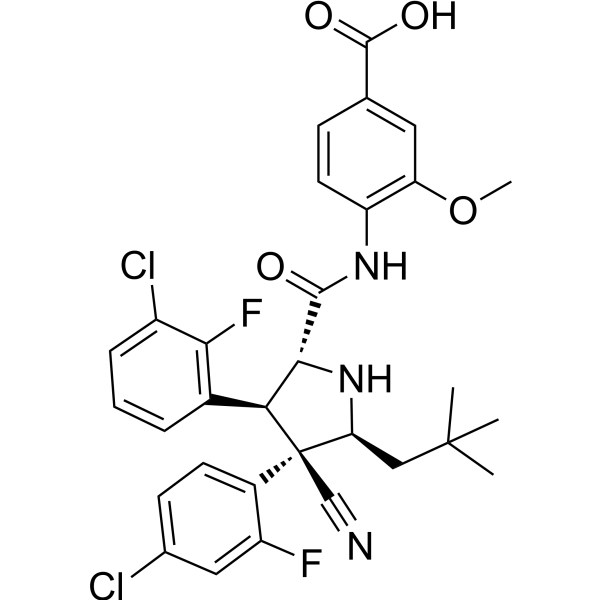
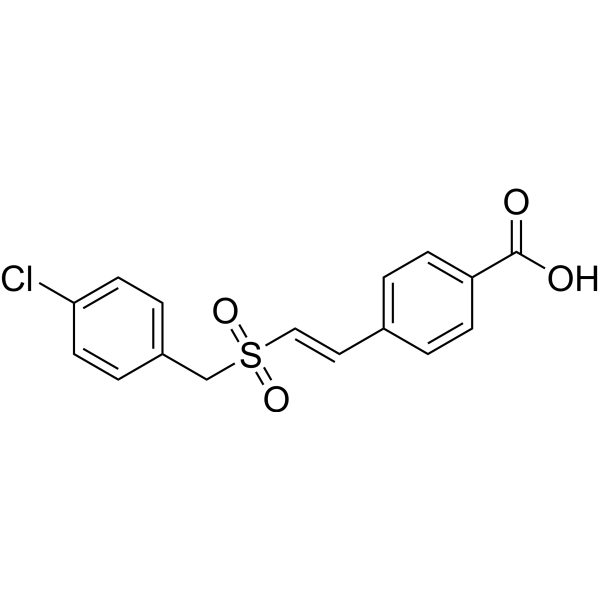
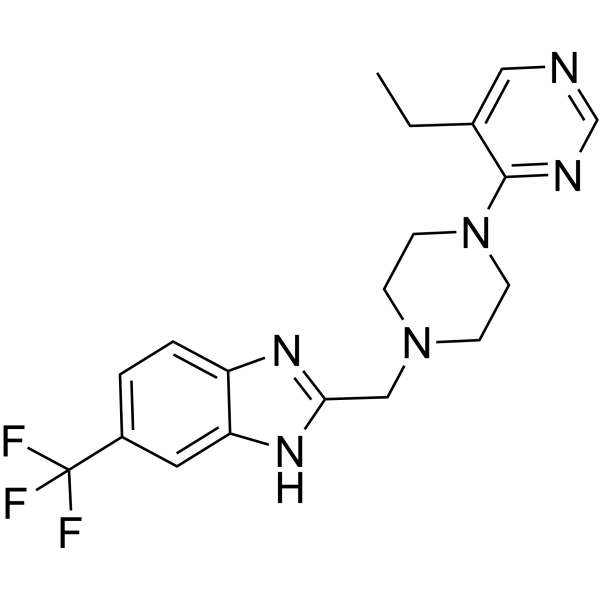
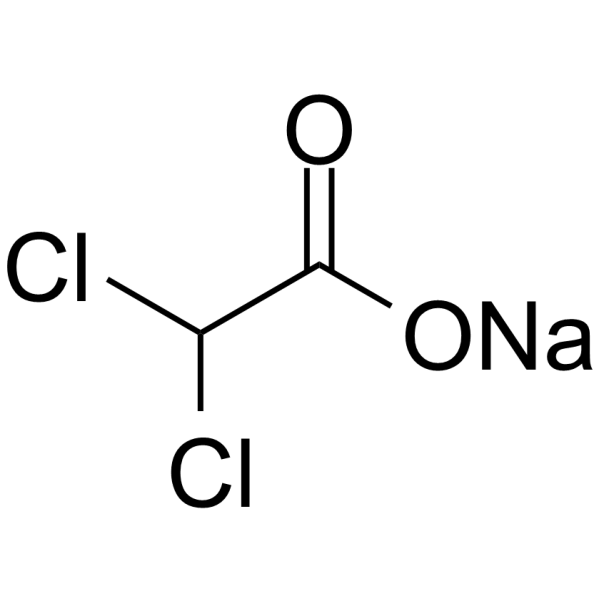
1. Search Result
Search Result
Results for "

K cell

" in MedChemExpress (MCE) Product Catalog:

1315

Inhibitors & Agonists

10

Screening Libraries

24

Fluorescent Dyes

17

Biochemical Assay Reagents

76

Peptides

4

MCE Kits

22

Inhibitory Antibodies

249

Natural
Products

25

Recombinant Proteins

58

Isotope-Labeled Compounds

10

Antibodies

5

Click Chemistry

6

Oligonucleotides

5

GMP Molecules

Cat. No. Product Name Target Research Areas Chemical Structure
  • HY-B1508

    Acetomenaphthone

    Endogenous Metabolite Apoptosis Cardiovascular Disease Cancer
    Vitamin K4 is a chemically synthesized Vitamin K which plays an important role in the normal blood coagulation system. Vitamin K4 arrests the cells in S phase and induces apoptosis. Vitamin K4 can be used for the research of cancer, such as prostate cancer and osteosarcoma .
    Vitamin K4
  • HY-119293
    K777
    3 Publications Verification

    Cathepsin Cytochrome P450 Parasite SARS-CoV Filovirus Infection Inflammation/Immunology Cancer
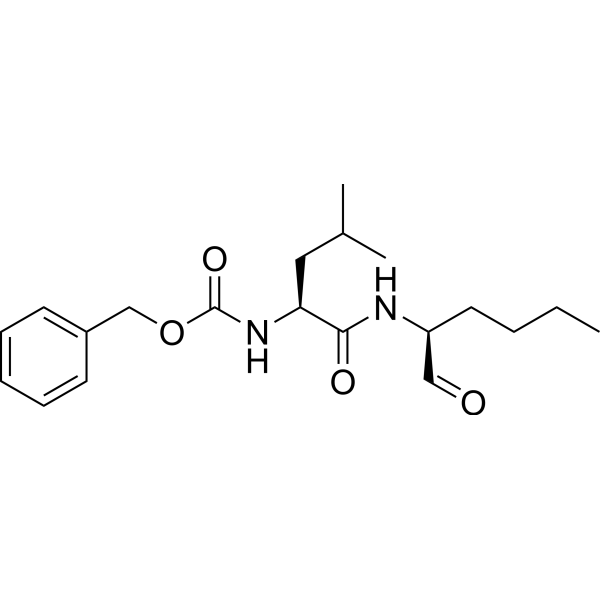
    K777 is a potent, orally active and irreversible cysteine protease inhibitor. K777 is also a potent CYP3A4 inhibitor with an IC50 of 60 nM. K777 irreversibly inhibits Cruzain, the major cysteine protease of Trypansoma cruzi, and cathepsins B and L. K777 is a broad-spectrum antiviral by targeting cathepsin-mediated cell entry. K777 inhibits SARS-CoV and EBOV pseudovirus entry with IC50 values of 0.68 nM and 0.87 nM, respectively .
    K777
  • HY-P990534

    K1-70

    TSH Receptor Endocrinology Cancer
    Anti-TSHR Antibody (K1-70) is an anti-TSHR monoclonal antibody. Anti-TSHR Antibody (K1-70) incorporates a single-chain variable fragment into a chimeric antigen receptor to redirect T cells to TSHR-expressing cells. Anti-TSHR Antibody (K1-70) shows antitumor activity with no apparent toxicity. Anti-TSHR Antibody (K1-70) can be used for the research of differentiated thyroid cancer (DTC) .
    Anti-TSHR Antibody (K1-70)
  • HY-P5307

    INF7-A5K-TAT

    Biochemical Assay Reagents Others
    Peptide A5K (INF7-A5K-TAT) is an amphiphilic peptide derived from the HA2-TAT fusion scaffold. Peptide A5K can non-covalently bind to CRISPR ribonucleoproteins and efficiently deliver them to cells, such as primary human T cells, B cells, and NK cells. Peptide A5K enables low-toxicity, precise, and multiplex genome editing, holding great application potential in the field of cell therapy .
    Peptide A5K
  • HY-N6961
    Lapachol
    3 Publications Verification

    Dihydroorotate Dehydrogenase DNA/RNA Synthesis Parasite Infection Inflammation/Immunology Cancer
    Lapachol, a natural naphthoquinone, is an orally active, potent DHODH inhibitor. Lapachol has immunosuppressive activity on lymphocytes through its direct ability to block DHODH activity and inhibit pyrimidine synthesis. Lapachol is a vitamin K antagonist with antitumor activity and can inhibit DNA and RNA synthesis in neoplastic cells. Lapachol has anti-Leishmania activity .
    Lapachol
  • HY-12743
    K-7174
    10+ Cited Publications

    Proteasome Apoptosis Inflammation/Immunology Cancer
    K-7174 is an orally active proteasome and GATA inhibitor. K-7174 is a cell adhesion inhibitor. K-7174 induces cell apoptosis. K-7174 shows antitumor activities, it can be used for the research of cancer .
    K-7174
  • HY-163944

    DNA/RNA Synthesis Molecular Glues CDK Apoptosis RAD51 ATM/ATR PARP Cancer
    LL-K12-18 is a CDK12 kinase inhibitor and a dual-site molecular glue. LL-K12-18 inhibits human CDK12 with an IC50 value of 283.9 nM, and selectively degrades cyclin K via the ubiquitin-proteasome system by stabilizing the CDK12-DDB1 complex. LL-K12-18 downregulates DNA damage response genes, reduces the phosphorylation level of CTD Ser2 in RNA polymerase II, and modulates biomarkers such as ATM, RAD51, γ-H2AX and cleaved PARP, thereby effectively inducing apoptosis and inhibiting proliferation of breast cancer cells. LL-K12-18 exhibits high target selectivity and serves as a research tool for studies on triple-negative breast cancer .
    LL-K12-18
  • HY-12743A
    K-7174 dihydrochloride
    10+ Cited Publications

    Proteasome Apoptosis Inflammation/Immunology Cancer
    K-7174 dihydrochloride is an orally active proteasome and GATA inhibitor. K-7174 dihydrochloride is a cell adhesion inhibitor. K-7174 dihydrochloride induces cell apoptosis. K-7174 dihydrochloride shows antitumor activities, it can be used for the research of cancer .
    K-7174 dihydrochloride
  • HY-18707

    Ras Apoptosis Cancer
    K-Ras(G12C) inhibitor 12 is an irreversible inhibitor of K-Ras(G12C). K-Ras(G12C) inhibitor 12 can alter the nucleotide-binding preference of K-Ras and block its interaction with effector proteins. K-Ras(G12C) inhibitor 12 can reduce cell viability and induce apoptosis in lung cancer cell lines with G12C mutations. K-Ras(G12C) inhibitor 12 has anti-tumor activity .
    K-Ras(G12C) inhibitor 12
  • HY-15779A
    K145 hydrochloride
    5+ Cited Publications

    SphK Apoptosis Cancer
    K145 hydrochloride is a selective, substrate-competitive and orally active SphK2 inhibitor with an IC50 of 4.3 μM and a Ki of 6.4 μM. K145 hydrochloride is inactive against SphK1 and other protein kinases. K145 hydrochloride induces cell apoptosis and has potently antitumor activity .
    K145 hydrochloride
  • HY-125012
    MAP4K4-IN-3
    1 Publications Verification

    MAP4K Metabolic Disease
    MAP4K4-IN-3 (Compound 17) is a potent and selective MAP4K4 inhibitor with an IC50 of 14.9 nM in kinase assay, an IC50 of 470 nM in cell assay. Antidiabetic agent .
    MAP4K4-IN-3
  • HY-129523
    PROTAC K-Ras Degrader-1
    2 Publications Verification

    PROTACs Ras Cancer
    PROTAC K-Ras Degrader-1 (Compound 518) is a PROTAC. PROTAC K-Ras Degrader-1 can effectively degrades K-Ras based on Cereblon E3 ligand, exhibits ≥70% degradation efficacy in SW1573 cells .
    PROTAC K-Ras Degrader-1
  • HY-168054

    PROTACs Ras Cancer
    PROTAC K-Ras Degrader-3 (compound 40) is a PROTAC degrader of K-Ras with a DC50 of ≤ 1 nM against SW620 KRAS G12D, and a GI50 of ≤ 10 nM against SW620 3D cell growth. PROTAC K-Ras Degrader-3 can be utilized in cancer research, such as non-small-cell lung cancer (NSCLC) .
    PROTAC K-Ras Degrader-3
  • HY-168669

    PROTACs Ras Caspase ERK Cancer
    PROTAC K-Ras Degrader-5 is a cereblon-based K-Ras PROTAC degrader with a DC50 of <100 nM for KRAS G12D. PROTAC K-Ras Degrader-5 recruits KRAS G12D to the cereblon E3 ubiquitin ligase complex for ubiquitination and subsequent proteasomal degradation. PROTAC K-Ras Degrader-5 suppresses pERK levels downstream of KRAS G12D degradation in cancer cells. PROTAC K-Ras Degrader-5 reduces proliferation of cancer cells. PROTAC K-Ras Degrader-5 induces caspase 3/7 activity and cPARP, markers of apoptosis, in pancreatic cancer spheroids and tumors. PROTAC K-Ras Degrader-5 can be used for the research of pancreatic cancer and colorectal cancer .
    PROTAC K-Ras Degrader-5
  • HY-N6688

    Potassium Channel Bacterial Infection Neurological Disease
    Verruculogen is a tremorgenic mycotoxin and inhibitor of the M phase of the mammalian cell cycle. Verruculogen is produced by Penicillium and Aspergillus species. Verruculogen enhances the binding of ChTX to maxi-k channels with a K1/2 value of 170 nM. Verruculogen inhibits the amplitude of Ca 2+-activated K + currents. Verruculogen induces severe tremors in infected animals .
    Verruculogen
  • HY-U00458
    K-80003
    1 Publications Verification

    TX-803

    Akt Cancer
    K-80003 is a potent inhibitor of tRXRα-dependent Akt activation and cancer cell growth.
    K-80003
  • HY-109569

    Autophagy Apoptosis Interleukin Related Metabolic Disease Inflammation/Immunology Cancer
    Vitamin K2 is an orally active proliferation inhibitor. Vitamin K2 induces Autophagy and Apoptosis. Vitamin K2 reduces the levels of proinflammatory cytokines (such as IL-1β, TNF-α, and IL-6). Vitamin K2 inhibits cell growth in leukemia cells. Vitamin K2 can be used for the research of involutional osteoporosis, non-alcoholic fatty liver disease, ulcerative colitis, acute myeloid leukemia, myelodysplastic syndromes, and hepatocellular carcinoma .
    Vitamin K2
  • HY-146324

    PROTACs Apoptosis CaMK Cancer
    PROTAC eEF2K degrader-1 (Compound 11l) is an eEF2K-Targeting PROTAC small molecule that induces apoptosis in MDA-MB-231 cells. PROTAC eEF2K degrader-1 mediates eEF2K degradation .
    PROTAC eEF2K degrader-1
  • HY-116392D

    Glucosylceramide Synthase (GCS) Apoptosis Cancer
    PDMP hydrochloride is a glucosylceramide synthase (GCS) inhibitor. PDMP hydrochloride induces apoptosis in K562/A02 cells. PDMP hydrochloride can be used in cancer (such as leukemia) research .
    PDMP hydrochloride
  • HY-123141

    Pim Cancer
    K00135 is a potent and selective inhibitor of PIM kinases. K00135 inhibits survival and clonogenic growth of acute leukemia cells. K00135 inhibits the phosphorylation of PIM downstream targets .
    K00135
  • HY-126193

    NO Synthase Apoptosis Autophagy Reactive Oxygen Species (ROS) Cancer
    JS-K is a NO donor that reacts with glutathione to generate NO at physiological pH. JS-K induces reactive oxygen species (ROS) to mediate apoptosis. JS-K induces autophagy. JS-K inhibits invasion. JS-K has a broad spectrum anti-proliferative activity in cancer cells. JS-K reduces tumor volume and causes necrosis of implanted tumors in mice .
    JS-K
  • HY-N10678

    Others Cancer
    R-30-Hydroxygambogic acid is polyprenylated xanthone epimer that can be isolated from gamboges of Garcinia hanburyi. R-30-Hydroxygambogic acid shows cytotoxicities to Human Leukemia K562 cell lines of IC50 values of 2.89 and 1.27 μM for K562/R and K562/S, respectively. R-30-Hydroxygambogic acid can be used for the research of cancer .
    R-30-Hydroxygambogic acid
  • HY-130991

    Target Protein Ligand-Linker Conjugates Cancer
    K-Ras ligand-Linker Conjugate 6 incorporates a ligand for K-Ras recruiting moiety, and a PROTAC linker, which recruit E3 ligases (such as VHL, CRBN, MDM2, and IAP). K-Ras ligand-Linker Conjugate 6 can be used in the synthesis of PROTAC K-Ras Degrader-1 (HY-129523), which is potent PROTAC K-Ras degrader that exhibits ≥70% degradation efficacy in SW1573 cells .
    K-Ras ligand-Linker Conjugate 6
  • HY-N6736

    Beta-lactamase PKC Bacterial Apoptosis Infection Cancer
    K-252c, a staurosporine analog isolated from Nocardiopsis sp., is a cell-permeable PKC inhibitor, with an IC50 of 2.45 µM. K-252c induces apoptosis in human chronic myelogenous leukemia cancer cells. K-252c also inhibits β-lactamase, chymotrypsin, and malate dehydrogenase .
    K-252c
  • HY-P11452

    LDLR Endocrinology
    (KKEEE)3K is a kidney-targeting peptide. (KKEEE)3K enters renal tubular cells via megalin receptor-mediated endocytosis. (KKEEE)3K can be used in the research of renal drug delivery .
    (KKEEE)3K
  • HY-150638

    PI3K Apoptosis Cancer
    PI3Kδ/γ-IN-3 (Compound 58) is a potent and orally active PI3Kδ and PI3Kγ dual inhibitor with IC50s of 1 nM and 16 nM, respectively. PI3Kδ/γ-IN-3 induces tumor cell apoptosis and can be used for B-cell malignancies research .
    PI3Kδ/γ-IN-3
  • HY-110104

    Transmembrane Glycoprotein Others
    8MDP is a potent equilibrative nucleoside transporter 1 (ENT1) inhibitor with an IC50 of 0.43 nM. 8MDP inhibits hENT1 and hENT2 uptake of [H 3] uridine by K562 cells and K15NTD cells .
    8MDP
  • HY-156523

    MAP4K Cancer
    TNIK&MAP4K4-IN-1 (compound A-39) is a dual inhibitor of TNIK and MAP4K4/HGK with IC50s of 1.29 nM and <10 nM,respectively,in human hepaticstellate cell LX-2. TNIK&MAP4K4-IN-1 can be used for cancer and fibrosis inhibition .
    TNIK&MAP4K4-IN-1
  • HY-P3277

    Ras Cancer
    KRpep-2d is a potent K-Ras inhibitor and inhibits proliferation of K-Ras-driven cancer cells. KRpep-2d can be used for cancer research .
    KRpep-2d
  • HY-161622

    Checkpoint Kinase (Chk) Cancer
    K1586 is an amidine derivative that efficiently targets Chk1. K1586 enhances the degradation of Chk1 that sensitizes colorectal cancer cells to ionizing radiation. K1586 shows anticancer effects .
    K1586
  • HY-15779

    SphK Apoptosis Cancer
    K145 is a selective, substrate-competitive and orally active SphK2 inhibitor with an IC50 of 4.3 µM and a Ki of 6.4 µM. K145 is inactive against SphK1 and other protein kinases. K145 induces cell apoptosis and has potently antitumor activity .
    K145
  • HY-109633

    mTOR PI3K Cancer
    PI3K/mTOR-IN-23 is a dual inhibitor of PI3K and mTOR with IC50 values of 49 and 41 nM. PI3K/mTOR-IN-23 inhibits cancer cells proliferation .
    PI3K/mTOR-IN-23
  • HY-157491

    PROTACs Androgen Receptor Epigenetic Reader Domain Cancer
    K2-B4-5e is a E3 ligase KLHDC2-based BRD4 and androgen receptor (AR) degradation PROTAC. K2-B4-5e is capable of inducing rapid and robust degradation of BET-family and AR proteins in cells .
    K2-B4-5e
  • HY-150641

    CDK Apoptosis DNA/RNA Synthesis Molecular Glues Cancer
    CDK-IN-9 (compound 24) is a potent CDK inhibitor, also as a molecular glue inducing an interaction between CDK12 and DDB1, with an IC50 values of 4 nM for CDK2/E. CDK-IN-9 leads to polyubiquitination of cyclin K and its subsequent degradation. CDK-IN-9 induce apoptosis through dephosphorylation of retinoblastoma protein and RNA polymerase II .
    CDK-IN-9
  • HY-119293A

    Cathepsin Cytochrome P450 Parasite SARS-CoV Filovirus Infection Inflammation/Immunology Cancer
    K777 tosylate is a potent, orally active and irreversible cysteine protease inhibitor. K777 tosylate is also a potent CYP3A4 inhibitor with an IC50 of 60 nM. K777 tosylate irreversibly inhibits Cruzain, the major cysteine protease of Trypansoma cruzi, and cathepsins B and L. K777 tosylate is a broad-spectrum antiviral by targeting cathepsin-mediated cell entry. K777 tosylate inhibits SARS-CoV and EBOV pseudovirus entry with IC50 values of 0.68 nM and 0.87 nM, respectively .
    K777 tosylate
  • HY-N6961R

    Reference Standards Dihydroorotate Dehydrogenase DNA/RNA Synthesis Parasite Infection Inflammation/Immunology Cancer
    Lapachol (Standard) is the analytical standard of Lapachol. This product is intended for research and analytical applications. Lapachol, a natural naphthoquinone, is an orally active, potent DHODH inhibitor. Lapachol has immunosuppressive activity on lymphocytes through its direct ability to block DHODH activity and inhibit pyrimidine synthesis. Lapachol is a vitamin K antagonist with antitumor activity and can inhibit DNA and RNA synthesis in neoplastic cells. Lapachol has anti-Leishmania activity .
    Lapachol (Standard)
  • HY-115906

    FLT3 MNK Apoptosis Cancer
    K783-0308 is a potent and selective dual inhibitor of FLT3 and MNK2 with IC50 values of 680 and 406 nM, respectively. K783-0308 inhibits the growth of MOLM-13 (IC50=10.5 µM) and MV-4-11 (IC50=10.4 µM) cells. K783-0308 promotes acute myeloid leukemia (AML) cell apoptosis and cell cycle arrests in the G0/G1 phase .
    K783-0308
  • HY-P5307A

    INF7-A5K-TAT acetate

    Biochemical Assay Reagents Others
    Peptide A5K (INF7-A5K-TAT) acetate is an amphiphilic peptide derived from the HA2-TAT fusion scaffold. Peptide A5K acetate can non-covalently bind to CRISPR ribonucleoproteins and efficiently deliver them to cells, such as primary human T cells, B cells, and NK cells. Peptide A5K acetate enables low-toxicity, precise, and multiplex genome editing, holding great application potential in the field of cell therapy .
    Peptide A5K acetate
  • HY-P10556

    Bacterial Infection
    (KFF)3K is a cell penetrating peptide that can promote the absorption of other antibiotics by disrupting the outer membrane of bacteria. (KFF)3K can be introduced into a hydrocarbon scaffold to induce its antibacterial properties, making it an effective antimicrobial peptide. (KFF)3K can be used in the development of new antimicrobial agents .
    (KFF)3K
  • HY-163594

    Ras Cancer
    K-Ras-IN-58 is a K-RAS inhibitor and shows inhibitory activity against KRASG12D, KRASG12C and KRAS WT. K-Ras-IN-58 inhibits proliferation of cancer cells .
    KRAS-IN-59
  • HY-178485

    PI3K HDAC Akt Histone Methyltransferase Cancer
    SJY26 is a PI3K/HDAC dual-target inhibitor with IC50s of 0.59 nM (PI3Kα and PI3Kδ), 2.02 nM (PI3Kγ), 12.69 nM (PI3Kβ) and 114 nM (HDAC1). SJY26 exhibits potent broad-spectrum anti-proliferative activity, and is particularly sensitive to Jurkat and PC9R cells. SJY26 inhibited the migration of PC9R cells, arrested the cell cycle and induced cell apoptosis. SJY26 reduces AKT phosphorylation, and decreases histone H3 deacetylation (Ac-H3). SJY26 can be used for the studies of non-small cell lung cancer and leukemia .
    SJY26
  • HY-175369

    PI3K Akt PD-1/PD-L1 Interleukin Related CD3 Inflammation/Immunology Cancer
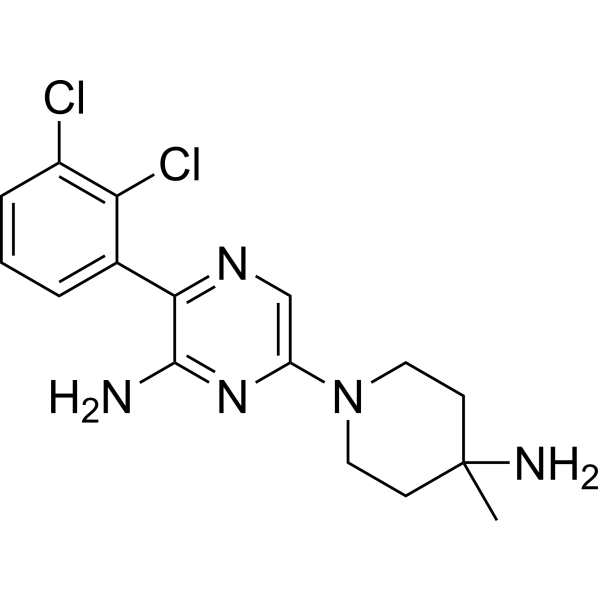
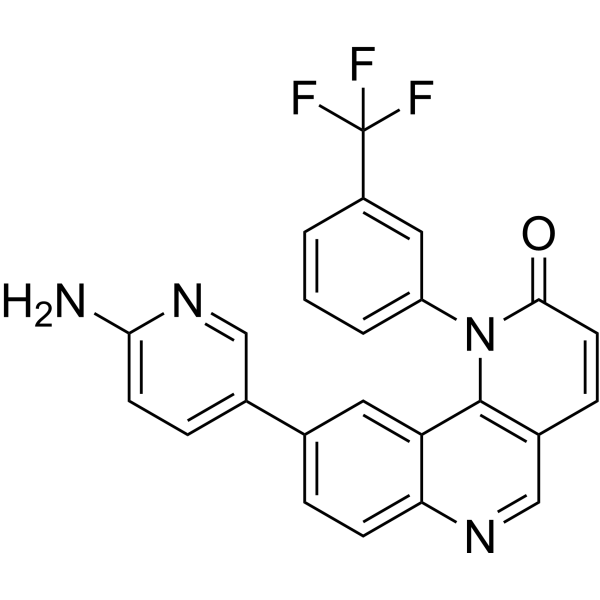
    PI3Kδ-IN-25 is an orally active selective PI3Kδ inhibitor (IC50 = 2.1 nM). PI3Kδ-IN-25 has IC50s of 272, 285, and 1171 nM for PI3Kα, PI3Kγ, and PI3Kβ, respectively. PI3Kδ-IN-25 inhibits AKT Ser473 phosphorylation, suppresses Treg cell proliferation, and downregulates PD-L1 expression in B16F10 cells. PI3Kδ-IN-25 exhibits anticancer effects in B16F10 melanoma and Lewis lung cancer mouse models by reducing tumor-infiltrating Treg cells and enhancing immune responses. PI3Kδ-IN-25 is potentially useful in the study of melanoma, lung cancer, and other cancers .
    PI3Kδ-IN-25
  • HY-125376

    PI3K Cancer
    PI3Kδ-IN-3 (Compound 11) is a PI3Kδ inhibitor (IC50: 9 nM). PI3Kδ-IN-3 inhibits B cell function. PI3Kδ-IN-3 has good pharmacokinetic properties .
    PI3Kδ-IN-3
  • HY-109633A

    mTOR PI3K Cancer
    PI3K/mTOR-IN-23 dihydrochloride is a dual inhibitor of PI3K and mTOR with IC50 values of 49 and 41 nM. PI3K/mTOR-IN-23 dihydrochloride inhibits cancer cells proliferation .
    PI3K/mTOR-IN-23 dihydrochloride
  • HY-N6734

    PKC Infection
    K-252b, an indolocarbazole isolated from the actinomycete Nocardiopsis, is a PKC inhibitor. K-252b can be used to inhibit extracellular kinases of cells in culture because it can’t pass through cell membrane freely .
    K-252b
  • HY-N14886

    Antibiotic Bacterial Infection
    Pyridindolol K2 is an alkaloid antibiotic found in Str. Sp. K93-0711. Pyridindolol K2 can inhibit the adhesion of HL-60 cells .
    Pyridindolol K2
  • HY-P10843

    Estrogen Receptor/ERR Cancer
    R4K1 is a cell-permeable stapled peptide. R4K1 binds to the estrogen receptor (ER) α with high affinity and inhibits its interaction with coactivators. R4K1 can enter breast cancer cells to regulate gene transcription and inhibit cell proliferation. R4K1 can be used in the study of cancer .
    R4K1
  • HY-175002

    PI3K Akt Apoptosis Cancer
    PI3Kδ-IN-24 is a selective PI3Kδ inhibitor (IC50 = 0.1 nM). PI3Kδ-IN-24 exhibits significant antiproliferative effects against PI3Kδ-overexpressing cancer cell lines. PI3Kδ-IN-24 reduces p-AKT levels and induces cell cycle arrest and apoptosis in tumor cells. PI3Kδ-IN-24 is useful in cancer research, such as diffuse large B-cell lymphoma (DLBCL) .
    PI3Kδ-IN-24
  • HY-N14609

    Antibiotic Bacterial Infection Cancer
    Respinomycin A2 is an anthracycline antibiotic that causes the differentiation of leukemic K-562 cells .
    Respinomycin A2
  • HY-U00326

    PI3K mTOR Cancer
    PI3Kα/mTOR-IN-1 is a potent PI3Kα/mTOR dual inhibitor, with an IC50 of 7 nM for PI3Kα in a cell assay, and Kis of 10.6 nM and 12.5 nM for mTOR and PI3Kα in a cell free assay , respectively.
    PI3Kα/mTOR-IN-1

Inquiry Online

Your information is safe with us. * Required Fields.

Salutation


Country or Region *

Applicant Name *


Organization Name *

Department *


Email Address *


Product Name *

Cat. No.


Requested quantity *

Phone Number *


Remarks

Inquiry Online

Inquiry Information

Product Name:
Cat. No.:
Quantity:
MCE Japan Authorized Agent:

