26 Results for "

L-Cystine

" in MedChemExpress (MCE) Product Catalog:
Products (26)

26 Results for "L-Cystine" in MCE Product Catalog:

5
5 Cited Publications
Cat. No.: HY-N0394
CAS No.: 56-89-3
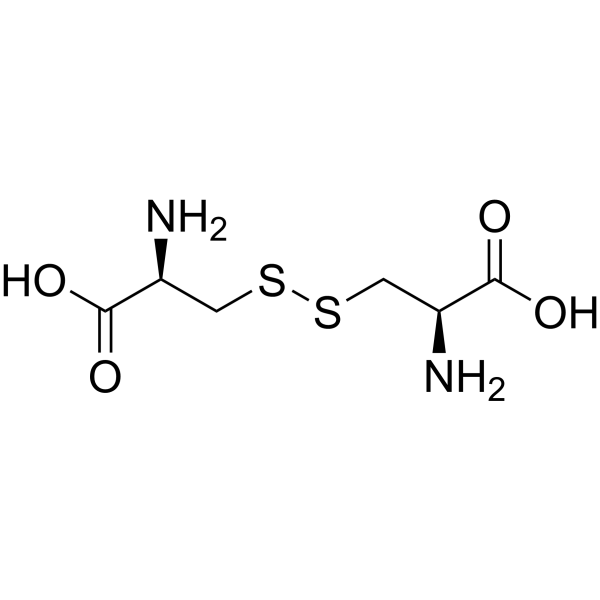
L-Cystine is an orally active extracellular form of L-Cysteine (HY-Y0337), occurring in proteins of plants and animals. L-Cystine elevates Nrf2 protein expression and activates Nrf2 transcription factor. L-cystine reduces ROS generation and protects against oxidant- or Doxorubicin (HY-15142A)-induced apoptosis. L-Cystine combined with L-theanine (HY-15121) enhances the production of antigen-specific IgG by increasing glutathione (GSH) levels and T helper 2 (Th2) mediated responses in mice. L-Cystine is promising for research of cystinuria and kidney stones
loading...
    loading...
5
5 Cited Publications
Cat. No.: HY-W009203
CAS No.: 30925-07-6
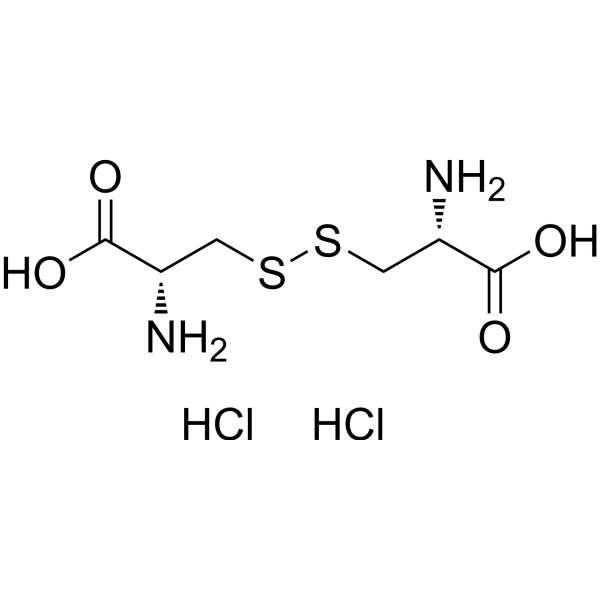
L-Cystine dihydrochloride is the dihydrochloride salt form of L-Cystine (HY-N0394). L-Cystine dihydrochloride elevates Nrf2 protein expression and activates Nrf2 transcription factor. L-cystine dihydrochloride reduces ROS generation and protects against oxidant- or Doxorubicin (HY-15142A)-induced apoptosis. L-Cystine dihydrochloride combined with L-theanine (HY-15121) enhances the production of antigen-specific IgG by increasing glutathione (GSH) levels and T helper 2 (Th2) mediated responses in mice. L-Cystine dihydrochloride is promising for research of cystinuria and kidney stones
loading...
    loading...
1
1 Cited Publications
Cat. No.: HY-D1605
CAS No.: 1180490-57-6
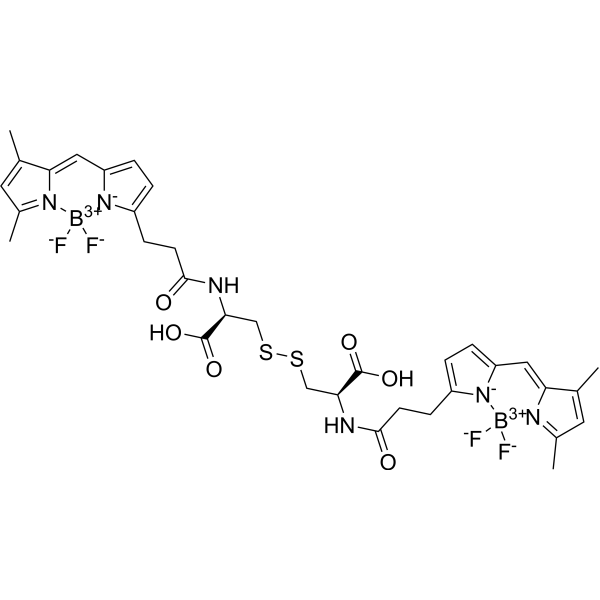
BODIPY FL L-Cystine is a thiol-reactive, green-fluorescent dye. BODIPY FL L-Cystine can be the labeling of membrane proteins, proteins with hydrophobic binding sites, or hydrophobic ligands. (λex=504 nm, λem=511 nm) .
loading...
    loading...
1
1 Cited Publications
Cat. No.: HY-N0394S1
CAS No.: 1192736-38-1
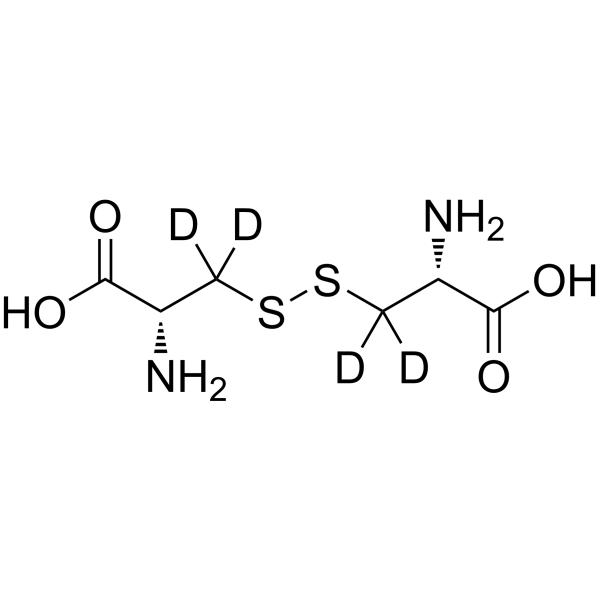
L-Cystine-d4 is the deuterium labeled L-Cystine. L-Cystine is an amino acid and intracellular thiol, which plays a critical role in the regulation of cellular processes.
loading...
    loading...
1
1 Cited Publications
Cat. No.: HY-N0394S4
CAS No.: 2483736-13-4
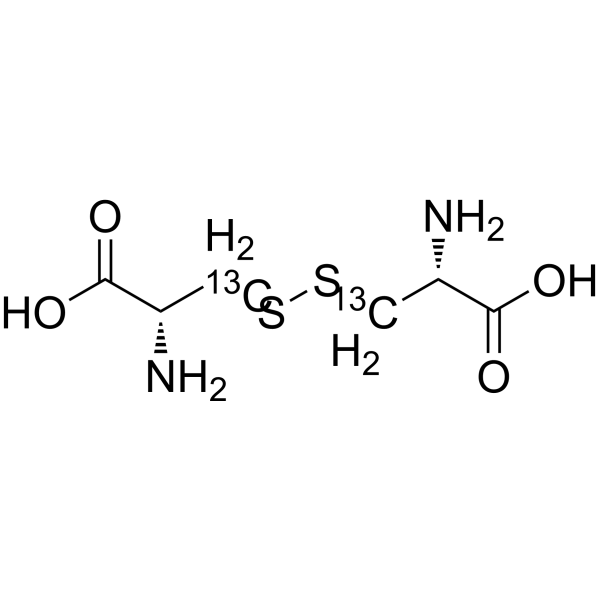
L-Cystine-3,3'- 13C2 is the 13C labeled L-Cystine . L-Cystine is an amino acid and intracellular thiol, which plays a critical role in the regulation of cellular processes .
loading...
    loading...
1
1 Cited Publications
Cat. No.: HY-135235
CAS No.: 1947408-74-3
Purity:  98.14%
Target:  

Fluorescent Dye

Research Areas:  

Others

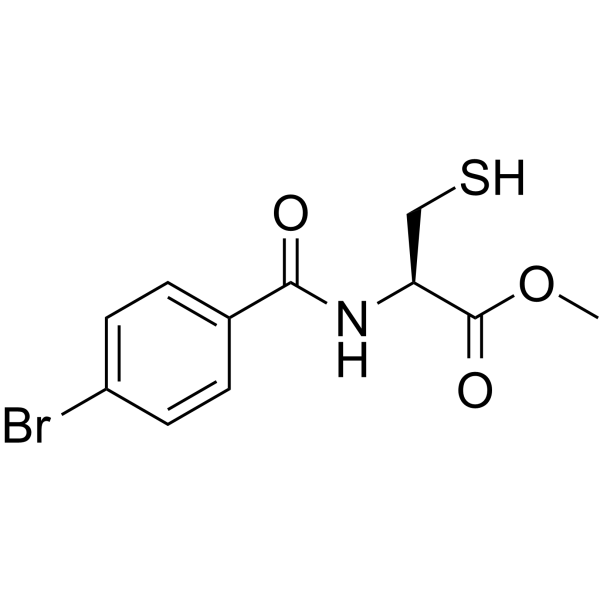
Cysteine Thiol Probe is a thiol-based probe designed to label electrophilic natural products. Cysteine Thiol Probe possesses each of the characteristics of an ideal pharmacophore probe, and has a chromophore. Cysteine Thiol Probe is capable of engaging enone-, β-lactam-, and β-lactone-based electrophilic metabolites .
loading...
    loading...
Cat. No.: HY-114348
CAS No.: 5545-17-5
Purity:  98.92%
Synonyms: DiNAC; (Ac-Cys-OH)2
Research Areas:  

Cardiovascular Disease

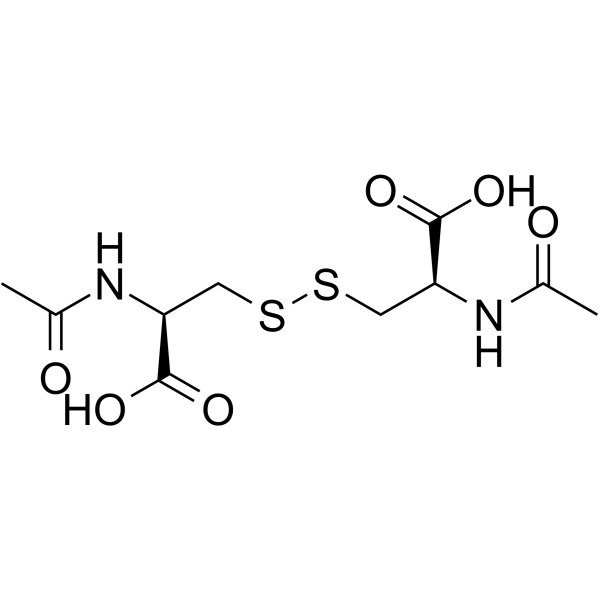
N,N'-diacetyl-L-cystine (DiNAC) is the disulphide dimer of N-acetylcysteine with immunomodulating properties. N,N'-diacetyl-L-cystine is a potent, orally active modulator of contact sensitivity/delayed type hypersensitivity reactions in rodents. N,N'-diacetyl-L-cystine also has antiatherosclerotic effects in Watanabe-heritable hyperlipidemic rabbit (WHHL) rabbits .
loading...
    loading...
Cat. No.: HY-W009356
CAS No.: 34760-60-6
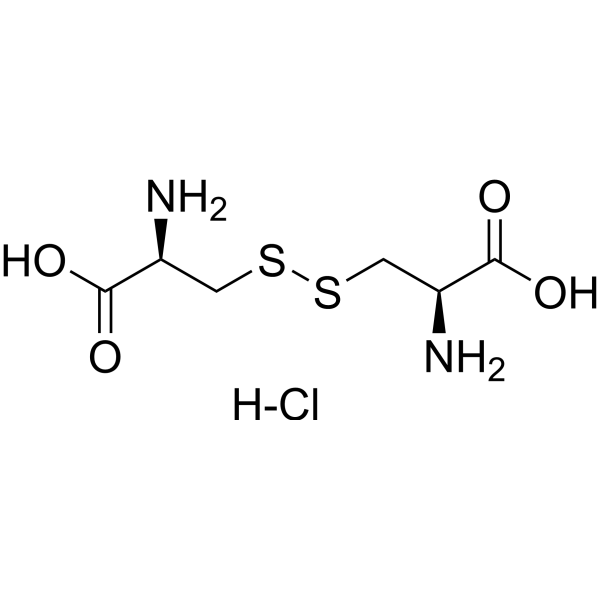
L-Cystine hydrochloride is an orally active extracellular form of L-Cysteine (HY-Y0337), occurring in proteins of plants and animals. L-Cystine hydrochloride elevates Nrf2 protein expression and activates Nrf2 transcription factor. L-Cystine hydrochloride reduces ROS generation and protects against oxidant- or Doxorubicin (HY-15142A)-induced apoptosis. L-Cystine hydrochloride combined with L-theanine (HY-15121) enhances the production of antigen-specific IgG by increasing glutathione (GSH) levels and T helper 2 (Th2) mediated responses in mice. L-Cystine hydrochloride is promising for research of cystinuria and kidney stones
loading...
    loading...
Cat. No.: HY-N0394R
CAS No.: 56-89-3
L-Cystine (Standard) is the analytical standard of L-Cystine. This product is intended for research and analytical applications. L-Cystine, the extracellular form of L-Cysteine (HY-Y0337), is a nutritionally dispensable semiessential sulfur-containing amino acid, occurring in proteins of plants and animals. L-Cystine induces Nrf2 protein elevation in a Keap1 (HY-P75897)-dependent manner and activates Nrf2 transcription factor. L-cystine can elicit cytoprotection by reducing ROS generation and protecting against oxidant- or doxorubicin-induced apoptosis. The reduced reabsorption of L-Cystine in renal tubules and its poor solubility in urine are the important causes of cystine precipitation and cystine crystal formation eventually leading to kidney stones. L-Cystine combined with L-theanine (HY-15121) enhances the production of antigen-specific IgG by increasing glutathione (GSH) levels and T helper 2 (Th2) mediated responses in mice. L-Cystine is promising for research of cystinuria and cystinosis
loading...
    loading...
Cat. No.: HY-W001941
CAS No.: 349-46-2
Category:  

Microorganisms

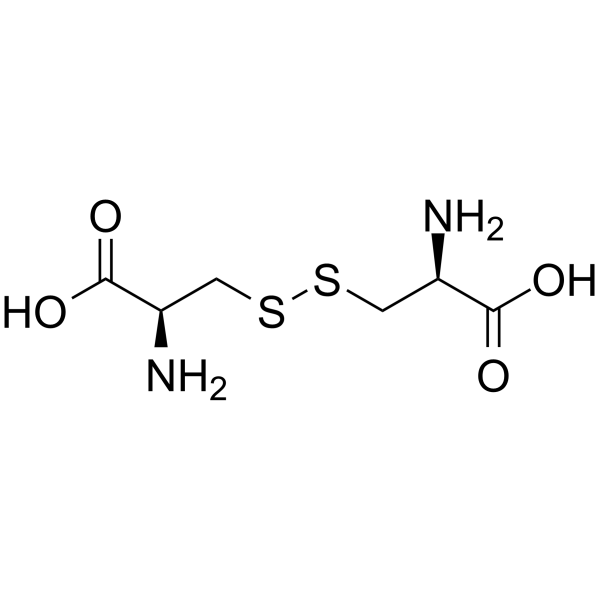
D-Cystine is the D-enantiomer of L-Cystine. D-Cystine inhibits L-aspartate-β-semialdehyde dehydrogenase (ASADH) from Escherichia coli .
loading...
    loading...
Cat. No.: HY-N0394S2
CAS No.: 952407-61-3
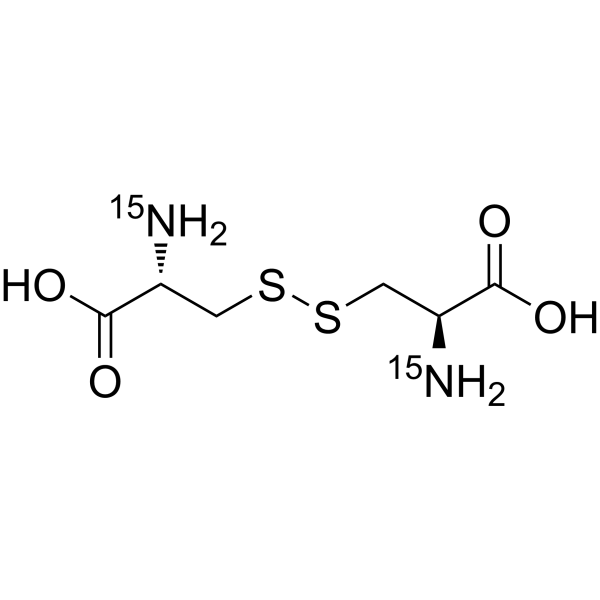
L-Cystine- 15N2 is the 15N-labeled L-Cystine. L-Cystine is an amino acid and intracellular thiol, which plays a critical role in the regulation of cellular processes.
loading...
    loading...
Cat. No.: HY-W170255
CAS No.: 10255-67-1
Sodium mercaptopyruvate serves as a substrate for Lactate dehydrogenase and Sulfurtransferase. Sodium mercaptopyruvate forms through enzymatic transamination and oxidative deamination of L-cysteine (HY-Y0337). Sodium mercaptopyruvate abolishes lactate dehydrogenase reaction activity. It increases urinary thiosulfate excretion, fails to sustain rat growth by replacing L-cystine (HY-N0394), and does not induce morbidity or mortality in mice. Sodium mercaptopyruvate is applicable to research related to 3-mercaptopyruvate disulfiduria and 3-mercaptolactate disulfiduria .
loading...
    loading...
Cat. No.: HY-44680
CAS No.: 51507-96-1
Target:  

Drug Intermediate

Research Areas:  

Cancer

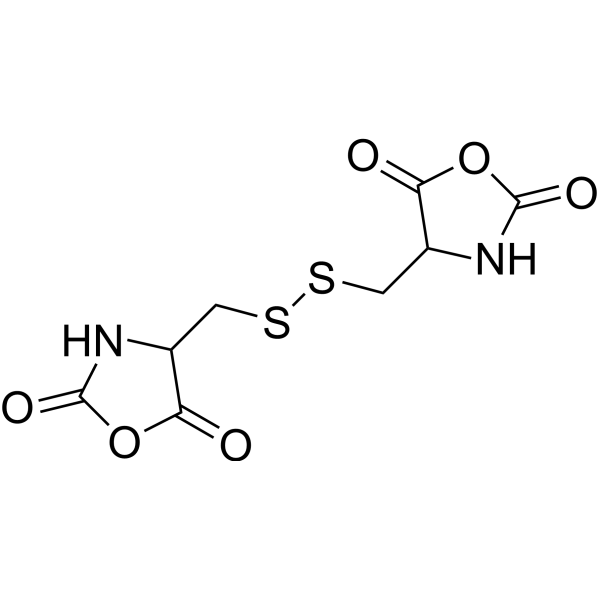
L-Cystine N-carboxyanhydride can be used for synthesis of polyamino acid carrier for anti-tumor agent delivery .
loading...
    loading...
Cat. No.: HY-124009
CAS No.: 498-40-8
Purity:  ≥98.0%
L-Cysteic acid is the oxidation product of L-cystine. L-Cysteic acid is a substrate of GADCase/CADCaseII. L-Cysteic acid has high affinity with CADCase I (Km = 0.22 mM). L-Cysteic acid is taken up by the synaptosome through a high affinity, Na +-dependent transport system .
loading...
    loading...
Cat. No.: HY-W013734
CAS No.: 10389-65-8
Research Areas:  

Others

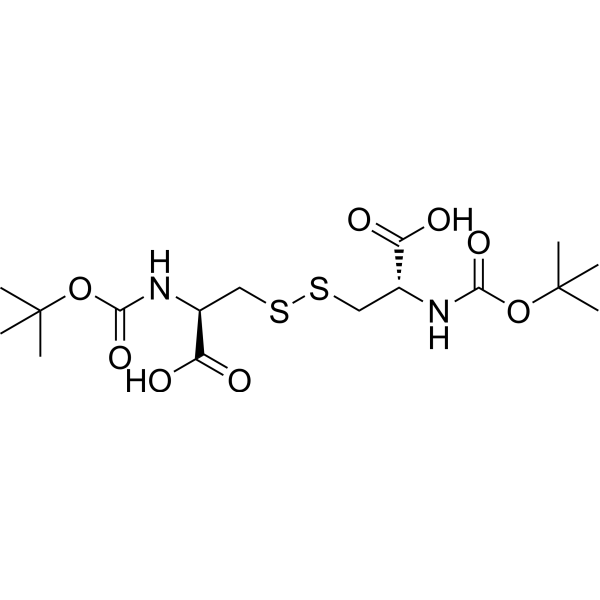
N,N'-Di-BOC-L-cystine is a cysteine derivative .
loading...
    loading...
Cat. No.: HY-W772717
CAS No.: 199329-53-8
L-Cystine disodium monohydrate is an orally active extracellular form of L-Cysteine (HY-Y0337), occurring in proteins of plants and animals. L-Cystine disodium monohydrate elevates Nrf2 protein expression and activates Nrf2 transcription factor. L-Cystine disodium monohydrate reduces ROS generation and protects against oxidant- or Doxorubicin (HY-15142A)-induced apoptosis. L-Cystine disodium monohydrate combined with L-theanine (HY-15121) enhances the production of antigen-specific IgG by increasing glutathione (GSH) levels and T helper 2 (Th2) mediated responses in mice. L-Cystine disodium monohydrate is promising for research of cystinuria and kidney stones .
loading...
    loading...
Cat. No.: HY-W009356A
CAS No.: 438633-05-7
L-Cystine monohydrochloride is an amino acid. L-Cystine is converted to L-Cysteine in the body. Moreover, L-Cystine/L-Cysteine conversion system is a channel on the cell membrane, which can maintain the internal REDOX homeostasis of E. coli .
loading...
    loading...
Cat. No.: HY-W009203R
CAS No.: 30925-07-6
L-Cystine (dihydrochloride) (Standard) is the analytical standard of L-Cystine (dihydrochloride) (HY-W009203). This product is intended for research and analytical applications. L-Cystine dihydrochloride is the dihydrochloride salt form of L-Cystine (HY-N0394). L-Cystine dihydrochloride elevates Nrf2 protein expression and activates Nrf2 transcription factor. L-cystine dihydrochloride reduces ROS generation and protects against oxidant- or Doxorubicin (HY-15142A)-induced apoptosis. L-Cystine dihydrochloride combined with L-theanine (HY-15121) enhances the production of antigen-specific IgG by increasing glutathione (GSH) levels and T helper 2 (Th2) mediated responses in mice. L-Cystine dihydrochloride is promising for research of cystinuria and kidney stones
loading...
    loading...
Cat. No.: HY-124009A
CAS No.: 23537-25-9
Purity:  99.91%
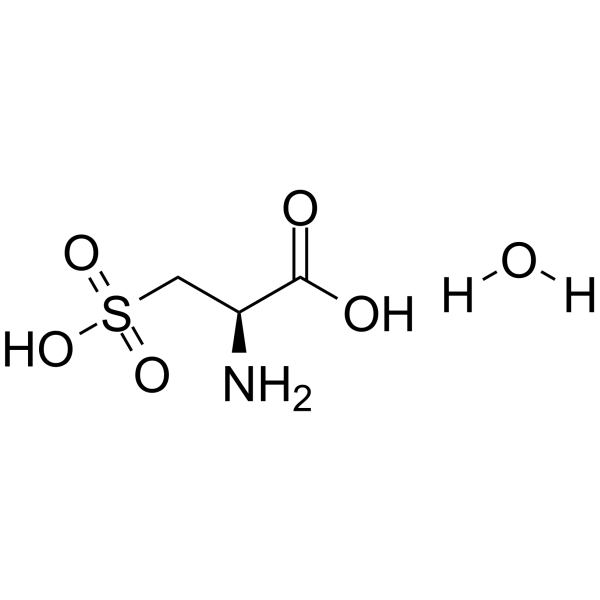
L-Cysteic acid monohydrate is the oxidation product of L-cystine. L-Cysteic acid monohydrate is a substrate of GADCase/CADCaseII .
loading...
    loading...
Cat. No.: HY-161715
CAS No.: 1616757-93-7
Target:  

Others

Research Areas:  

Others

LH708 is an orally active L-cystine crystallization inhibitor with an EC50 of 59.8 nM. LH708 can be used for Cystinuria research .
loading...
    loading...

