1. Search Result
Search Result
Results for "

LPL

" in MedChemExpress (MCE) Product Catalog:

15

Inhibitors & Agonists

1

Peptides

2

Natural
Products

2

Recombinant Proteins

1

Isotope-Labeled Compounds

5

Antibodies

5

Oligonucleotides

Targets Recommended:
Cat. No. Product Name Target Research Areas Chemical Structure
  • HY-P4153

    MK-0616 chloride

    PCSK9 Cardiovascular Disease
    Enlicitide chloride is an orally active inhibitor for PCSK9 that blocks the interaction between LPL receptor and PSCK9, with an IC50 of 2.5 nM. Enlicitide chloride can be used in the study of cardiovascular diseases such as atherosclerosis, hypercholesterolemia, coronary heart disease, metabolic syndrome, acute coronary syndrome or related cardiovascular and cardiometabolic disorders .
    Enlicitide chloride
  • HY-P2752

    LPL

    Endogenous Metabolite Metabolic Disease Cancer
    Lipoprotein lipase, Pseudomonas sp (LPL) is a multifunctional enzyme from adipose tissue, heart and skeletal muscle, islets and macrophages. Lipoprotein lipase promotes normal lipoprotein metabolism, delivery and utilization of tissue-specific substrates. Lipoprotein lipase catalyzes the rate-limiting step of lipids in blood circulation .
    Lipoprotein lipase, Pseudomonas sp
  • HY-N5015
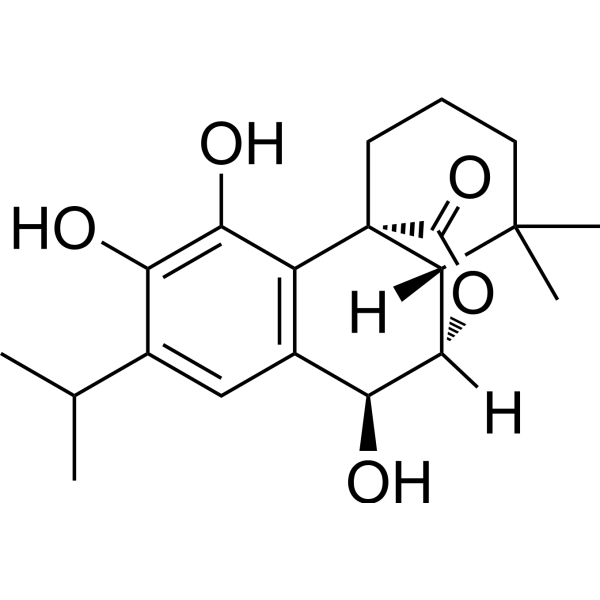
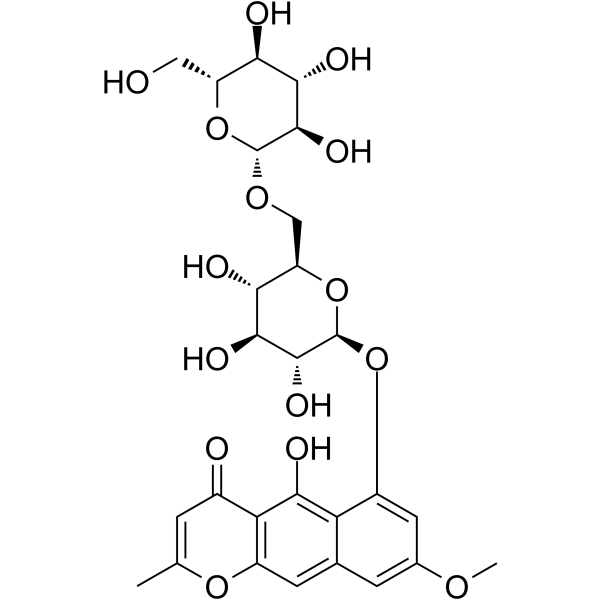
    Rosmanol
    1 Publications Verification

    COX Inflammation/Immunology Cancer
    Rosmanol could inhibit the oxidation of low density lipoprotein (LPL) and significantly inhibit lipopolysaccharide induced iNOS and COX-2 expression, with anti-inflammatory effect.
    Rosmanol
  • HY-128671

    6TI; 6-Mercaptopurine riboside

    PPAR LXR JNK NO Synthase Metabolic Disease
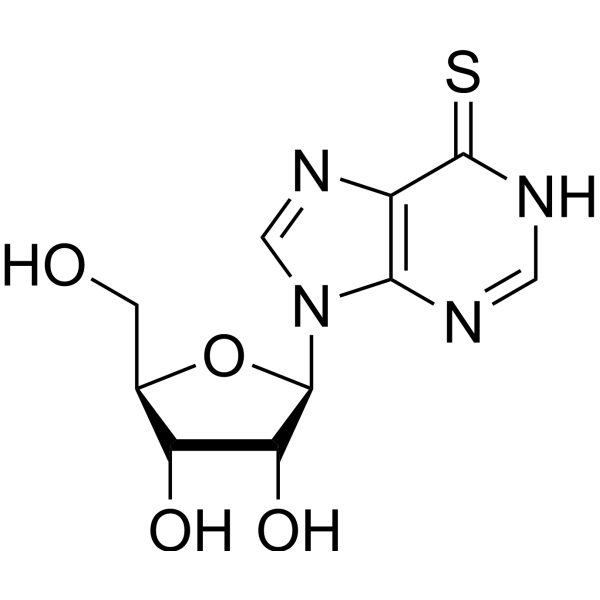
    6-Thioinosine (6TI) is a purine antimetabolite and an anti-adipogenic agent. 6-Thioinosine reduces the mRNA levels of PPARγ and C/EBPα and downregulates the mRNA levels of PPARγ target genes (LPL, CD36, aP2, and LXRα). 6-Thioinosine exerts its anti-adipogenic effects by downregulating PPARγ through JNK-dependent iNOS upregulation. 6-Thioinosine can be used to study adipocyte dysfunction .
    6-​Thioinosine
  • HY-117549

    NO-1886

    Lipase Cardiovascular Disease
    Ibrolipim (NO-1886) is an orally active lipoprotein lipase (LPL)-promoting agent. Ibrolipim decreases plasma triglycerides, increases high-density lipoprotein cholesterol levels. Ibrolipim has renoprotective and hypolipidemic effects .
    Ibrolipim
  • HY-116538
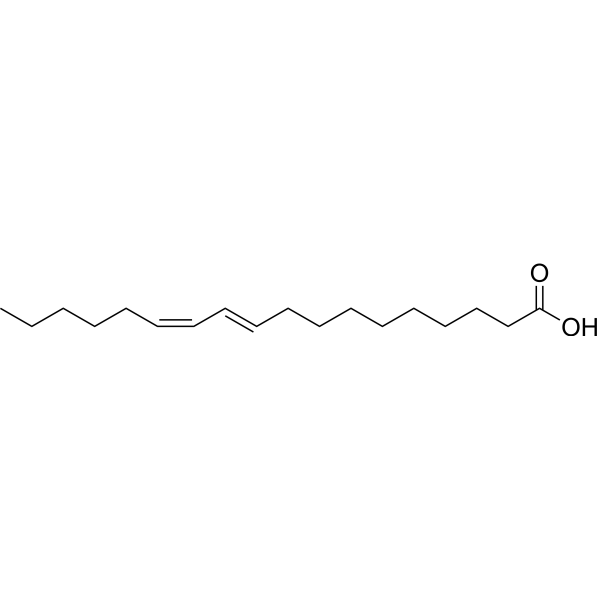
    (10E,12Z)-Octadeca-10,12-dienoic acid
    1 Publications Verification

    trans-10,cis-12 CLA2

    Endogenous Metabolite PPAR NF-κB Stearoyl-CoA Desaturase (SCD) Lipase Metabolic Disease Inflammation/Immunology Cancer
    (10E,12Z)-Octadeca-10,12-dienoic acid (trans-10,cis-12 CLA2) is an orally active PPARα activator and inhibits adipocyte differentiation. (10E,12Z)-Octadeca-10,12-dienoic acid and its downstream metabolites have various antioxidant and antitumor activities. (10E,12Z)-Octadeca-10,12-dienoic acid can induce proinflammatory cytokines and chemokines, which would lead to decreased adipogenesis and insulin resistance in adipose tissue. (10E,12Z)-Octadeca-10,12-dienoic acid can affect many aspects of milk fat synthesis. (10E,12Z)-Octadeca-10,12-dienoic acid reduces expression of lipogenic enzymes and inhibits the desaturation of fatty acids. (10E,12Z)-Octadeca-10,12-dienoic acid can reduce lipoprotein lipase (LPL) activity in cultured 3T3-L1 adipocytes and enhance triacylglycerol release from these cells. (10E,12Z)-Octadeca-10,12-dienoic acid decreases the expression of hepatic stearoyl-CoA desatyrase mRNA in mice. (10E,12Z)-Octadeca-10,12-dienoic acid is associated with changes in mucosal NF-κB and Cyclin D1 protein levels in mice .
    (10E,12Z)-Octadeca-10,12-dienoic acid
  • HY-165607S

    Piezo Channel Isotope-Labeled Compounds ERK CaMK Metabolic Disease
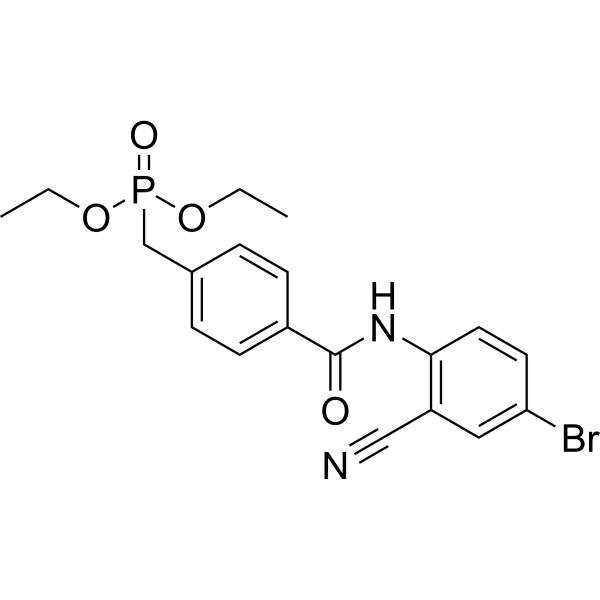
    MCB-22-174 is a deuterated Piezo1 agonist, with an EC50 value of 6.28 μM. MCB-22-174 remarkably activates the CaMKII/ERK signaling pathway and initiates Ca 2+ influx in rMSCs. MCB-22-174 significantly decreases the expression of chondrogenesis markers (Comp, Acan) and adipogenesis markers (Lpl, Fabp4) in MSCs. MCB-22-174 can effectively improve bone quality in hind-limb unloading (HU) model rats. MCB-22-174 can be used for the study of disuse osteoporosis (OP) .
    MCB-22-174
  • HY-101395A
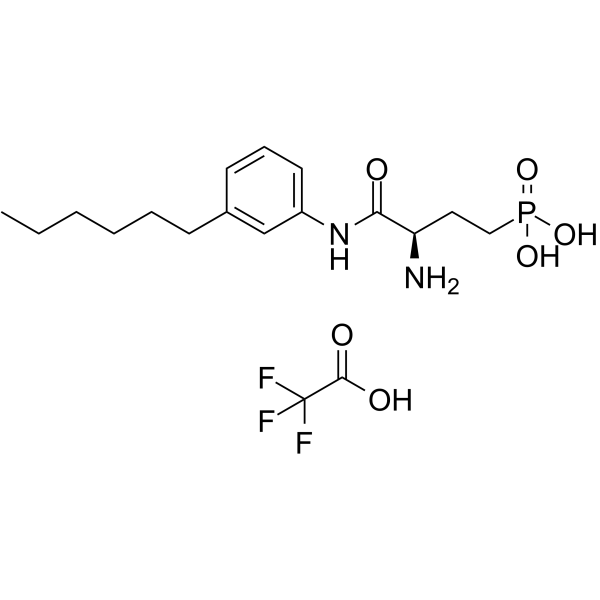
    W146 TFA
    5 Publications Verification

    LPL Receptor Apoptosis Metabolic Disease Cancer
    W146 TFA is a selective antagonist of sphingosine-1-phosphate receptor 1 (S1PR1) with an EC50 value of 398 nM.
    W146 TFA
  • HY-RS07772

    Small Interfering RNA (siRNA) Others

    LPL Human Pre-designed siRNA Set A contains three designed siRNAs for LPL gene (Human), as well as a negative control, a positive control, and a FAM-labeled negative control.

    LPL Human Pre-designed siRNA Set A
    LPL Human Pre-designed siRNA Set A
  • HY-RS23635

    Small Interfering RNA (siRNA) Others

    Lpl Rat Pre-designed siRNA Set A contains three designed siRNAs for Lpl gene (Rat), as well as a negative control, a positive control, and a FAM-labeled negative control.

    Lpl Rat Pre-designed siRNA Set A
    Lpl Rat Pre-designed siRNA Set A
  • HY-RS07563

    Small Interfering RNA (siRNA) Others

    LCP1 Human Pre-designed siRNA Set A contains three designed siRNAs for LCP1 gene (Human), as well as a negative control, a positive control, and a FAM-labeled negative control.

    LCP1 Human Pre-designed siRNA Set A
    LCP1 Human Pre-designed siRNA Set A
  • HY-N5015R

    Reference Standards COX Inflammation/Immunology Cancer
    Rosmanol (Standard) is the analytical standard of Rosmanol. This product is intended for research and analytical applications. Rosmanol could inhibit the oxidation of low density lipoprotein (LPL) and significantly inhibit lipopolysaccharide induced iNOS and COX-2 expression, with anti-inflammatory effect.
    Rosmanol (Standard)
  • HY-RS17184

    Small Interfering RNA (siRNA) Others

    Lpl Mouse Pre-designed siRNA Set A contains three designed siRNAs for Lpl gene (Mouse), as well as a negative control, a positive control, and a FAM-labeled negative control.

    Lpl Mouse Pre-designed siRNA Set A
    Lpl Mouse Pre-designed siRNA Set A
  • HY-101395AR

    LPL Receptor Reference Standards Apoptosis Metabolic Disease Cancer
    W146 (TFA) (Standard) is the analytical standard of W146 (TFA) (HY-101395A). This product is intended for research and analytical applications. W146 TFA is a selective antagonist of sphingosine-1-phosphate receptor 1 (S1PR1) with an EC50 value of 398 nM.
    W146 TFA (Standard)
  • HY-119601

    Phosphodiesterase (PDE) Cancer
    GRI918013 (compound 1) is a selective and competitive autotaxin (ATX/NPP2) inhibitor with anti-invasive and anti-metastatic activity. GRI918013 competitively binds to ATX, blocking lipid substrates such as lysophosphatidylcholine (LPC) from entering the ATX active site, thereby inhibiting ATX-mediated hydrolysis of LPC to lysophosphatidic acid (LPA), and consequently inhibiting ATX-LPA axis-related tumor cell invasion and metastasis. GRI918013 inhibits ATX-mediated hydrolysis of the LPL substrate FS-3 (IC50=31.42 nM, Ki=12.98 nM). GRI918013 can be used in research on cancer invasion and metastasis, such as melanoma, and can also serve as a tool compound for ATX-LPA axis-related diseases such as fibrotic diseases, neuropathic pain, and cholestatic pruritus .
    GRI918013

Inquiry Online

Your information is safe with us. * Required Fields.

Salutation


Country or Region *

Applicant Name *


Organization Name *

Department *


Email Address *


Product Name *

Cat. No.


Requested quantity *

Phone Number *


Remarks

Inquiry Online

Inquiry Information

Product Name:
Cat. No.:
Quantity:
MCE Japan Authorized Agent:

