Search Result
Results for "
Lactams
" in MedChemExpress (MCE) Product Catalog:
2
Biochemical Assay Reagents
18
Isotope-Labeled Compounds
| Cat. No. |
Product Name |
Target |
Research Areas |
Chemical Structure |
-
- HY-B0522
-
|
D-(-)-α-Aminobenzylpenicillin
|
Bacterial
Antibiotic
|
Infection
|
|
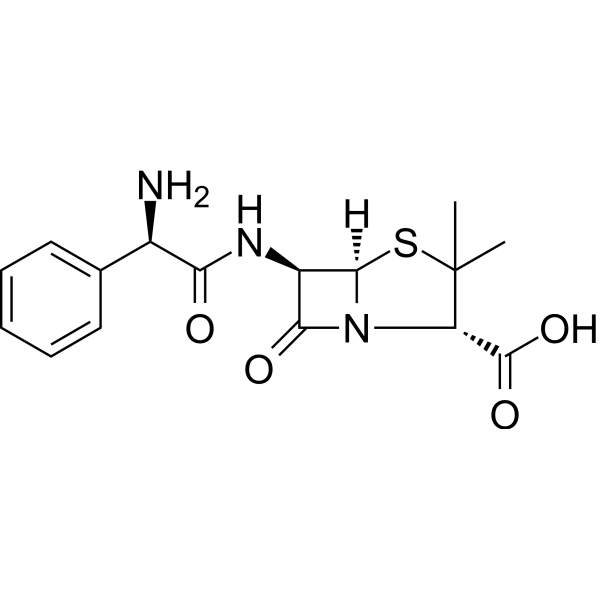
Ampicillin is a broad-spectrum beta-lactam antibiotic against a variety of gram-positive and gram-negative bacteria.
|
-
-
- HY-B0522A
-
|
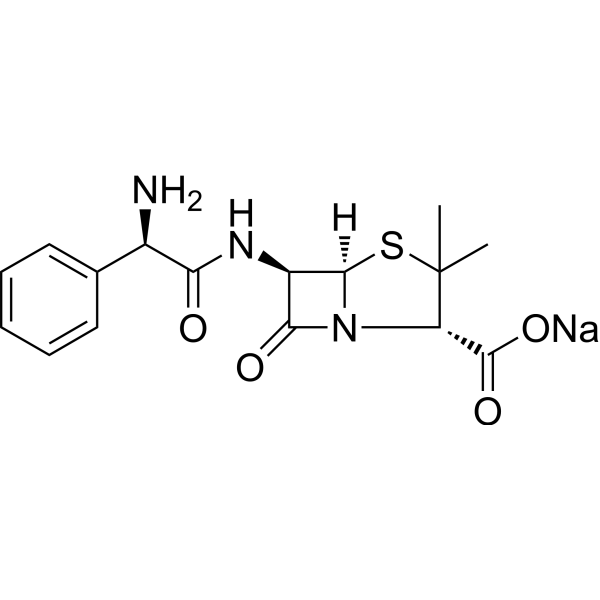
D-(-)-α-Aminobenzylpenicillin sodium salt
|
Bacterial
Antibiotic
|
Infection
|
|
Ampicillin sodium (D-(-)-α-Aminobenzylpenicillin sodium salt) is a broad-spectrum beta-lactam antibiotic against a variety of gram-positive and gram-negative bacteria .
|
-
-
- HY-14879A
-
|
NXL-104
|
Beta-lactamase
Bacterial
Antibiotic
|
Infection
|
|
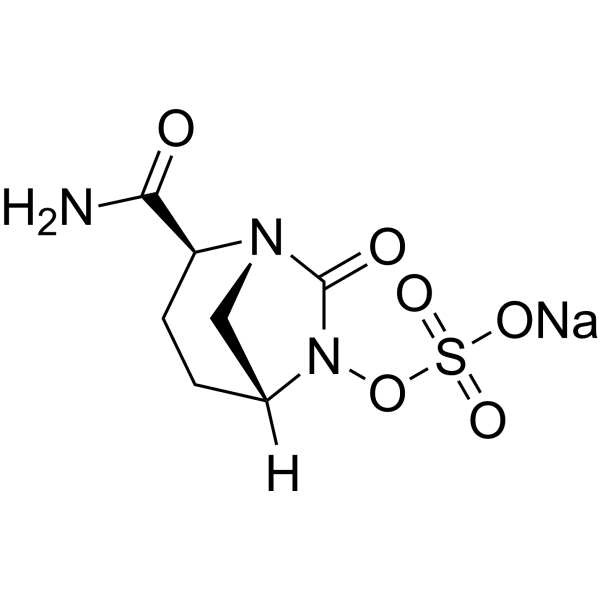
Avibactam sodium (NXL-104) is a covalent and reversible non-β-lactam β-lactamase inhibitor which inhibits β-lactamase TEM-1 and CTX-M-15 with IC50s of 8 nM and 5 nM, respectively .
|
-
-
- HY-B1463
-
-
-
- HY-B0129
-
-
-
- HY-A0269
-
|
Amdinocillin; FL 1060
|
Bacterial
Antibiotic
|
Infection
|
|
Mecillinam (Amdinocillin), the β-lactam antibiotic, has a broad spectrum of activity against gram-negative organisms .
|
-
-
- HY-B0522B
-
|
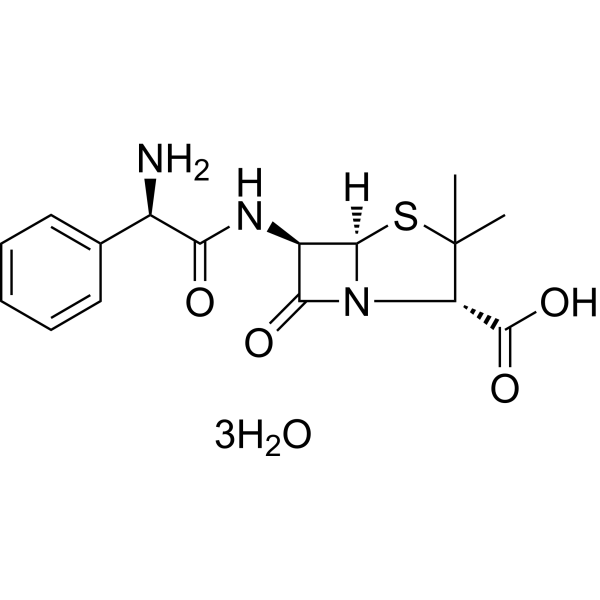
D-(-)-α-Aminobenzylpenicillin trihydrate
|
Bacterial
Antibiotic
|
Infection
|
|
Ampicillin trihydrate (D-(-)-α-Aminobenzylpenicillin trihydrate) is a broad-spectrum beta-lactam antibiotic against a variety of gram-positive and gram-negative bacteria.
|
-
-
- HY-109008
-
|
OP0595 free acid
|
Beta-lactamase
Bacterial
|
Infection
|
|
Nacubactam (OP0595 free acid) is a potent non-β-lactam-β-lactamase inhibitor with activity against class A and C β-lactamases. Nacubactam acts as a penicillin binding protein (PBP) 2-active antibacterial, and gives β-lactamase-independent potentiation of β-lactams targeting other PBPs. Nacubactam potentiates the antimicrobial activities of Piperacillin (HY-B1923), Cefepime (HY-B0692), and Meropenem (HY-13678) against CTX-M-15-positive Escherichia coli and KPC-positive Klebsiella pneumoniae .
|
-
-
- HY-B0977
-
|
Dicloxacillin sodium salt monohydrate
|
Bacterial
Antibiotic
|
Infection
Inflammation/Immunology
|
|
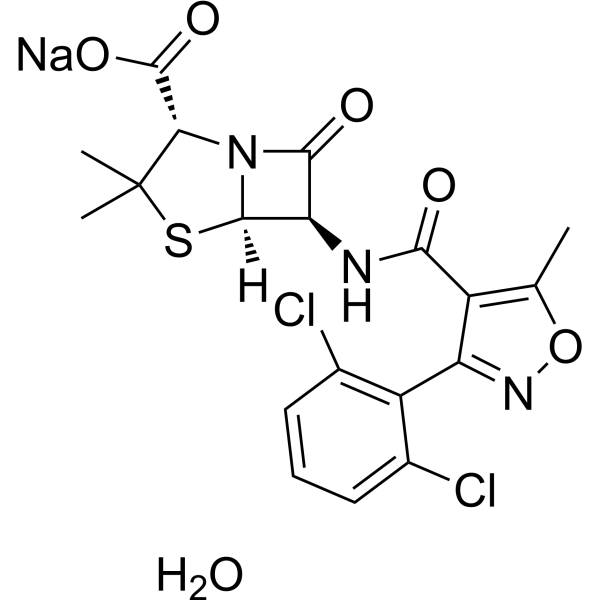
Dicloxacillin Sodium hydrate (Dicloxacillin sodium salt monohydrate) is a narrow-spectrum β-Lactam antibiotic of the penicillin class, is used to treat infections caused by susceptible Gram-positive bacteria, active against beta-lactamase-producing organisms such as Staphylococcus aureus .
|
-
-
- HY-B0529A
-
|
Sodium azlocillin
|
Bacterial
Parasite
Antibiotic
|
Infection
|
|
Azlocillin sodium salt (Sodium azlocillin), a semisynthetic penicillin, is a broad spectrum β-lactam antibiotic. Azlocillin sodium salt shows antipseudomonal activity, and also potent against the malarial parasite Plasmodium falciparum .
|
-
-
- HY-B0522R
-
|
D-(-)-α-Aminobenzylpenicillin (Standard)
|
Reference Standards
Bacterial
Antibiotic
|
Infection
|
|
Ampicillin (Standard) is the analytical standard of Ampicillin. This product is intended for research and analytical applications. Ampicillin is a broad-spectrum beta-lactam antibiotic against a variety of gram-positive and gram-negative bacteria.
|
-
-
- HY-B1484
-
|
Latamoxef sodium; Lamoxactam sodium; LY-127935 sodium
|
Beta-lactamase
Bacterial
Antibiotic
|
Infection
|
|
Moxalactam (Latamoxef) sodium salt is a synthetic oxa-β-lactam antibiotic. Moxalactam sodium salt has a broad spectrum of activity against Gram-positive and Gram-negative aerobic and anaerobic bacteria. Moxalactam sodium salt inhibits production of β-lactamases .
|
-
-
- HY-B1252
-
-
-
- HY-B1459
-
|
|
Beta-lactamase
Bacterial
Antibiotic
|
Infection
|
|
Dicloxacillin sodium is a β-lactam antibiotic of the penicillin family. Dicloxacillin sodium against Gram-positive bacteria. Dicloxacillin sodium is active against β-lactamase-producing organisms such as Staphylococcus aureus .
|
-
-
- HY-B0522S
-
|
|
Bacterial
Antibiotic
|
Infection
|
|
Ampicillin-d5 is the deuterium labeled Ampicillin. Ampicillin is a broad-spectrum beta-lactam antibiotic against a variety of gram-positive and gram-negative bacteria .
|
-
-
- HY-B1466
-
|
BAY-f 1353 sodium
|
Bacterial
Antibiotic
|
Infection
|
|
Mezlocillin (BAY-f 1353) sodium is a β-lactam antibiotic, a semisynthetic and extended-spectrum antibiotic. Mezlocillin sodium is active against both gram-negative and gram-positive bacteria. Mezlocillin sodium can be used in bacterial infection research .
|
-
-
- HY-103645
-
|
|
Bacterial
Aurora Kinase
Apoptosis
|
Infection
Cancer
|
|
GW779439X is a pyrazolopyridazine identified in an inhibitor of the S. aureus PASTA kinase Stk1. GW779439X potentiates the activity of β-lactam antibiotics against various MRSA and MSSA isolates, some even crossing the breakpoint from resistant to sensitive. GW779439X is an AURKA inhibitor and induces apoptosis by the caspases 3/7 pathway . MRSA:methicillin-resistant S. aureus; MSSA: methicillin-sensitive S. aureus
|
-
-
- HY-P3519
-
|
|
Drug Intermediate
|
Infection
|
|
ACV Tripeptide, a tripeptide, is the first dedicated intermediate in the biosynthetic pathway leading to the penicillin and cephalosporin classes of β-lactam natural products in bacteria and fungi. ACV Tripeptide is is synthesized nonribosomally by the ACV synthetase (ACVS) enzyme, which is encoded by the 11 kb The pchAB gene encodes this enzyme. ACV Tripeptide can be used for the biosynthesis of β-lactam antibiotics .
|
-
-
- HY-W005223
-
-
-
- HY-B0129S
-
-
-
- HY-14879B
-
|
NXL-104 hydrate
|
Beta-lactamase
Bacterial
Antibiotic
|
Infection
|
|
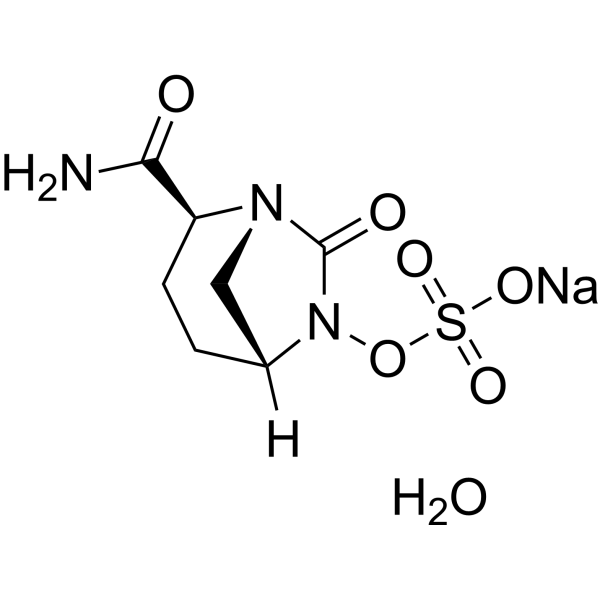
Avibactam sodium (NXL-104) hydrate is a covalent and reversible non-β-lactam β-lactamase inhibitor which inhibits β-lactamase TEM-1 and CTX-M-15 with IC50s of 8 nM and 5 nM, respectively .
|
-
-
- HY-16251A
-
|
|
Bacterial
|
Infection
|
|
Hetacillin is a beta-lactam antibiotic that is part of the aminopenicillin family.
|
-
-
- HY-137927
-
|
|
Antibiotic
|
Others
|
|
Benapenem is a carbapenem-type agent that belongs to the broad-spectrum β-lactam antibiotic class.
|
-
-
- HY-156009
-
|
|
Bacterial
|
Infection
|
|
CDFI is an inhibitor of the lipid II flippase MurJ. CDFI potentiates the activity of β-lactams against MRSA .
|
-
-
- HY-B1682A
-
|
|
Antibiotic
Bacterial
|
Infection
|
|
Loracarbef hydrate, a cephalosporin antibiotic, is an orally active second-generation synthetic beta-lactam antibiotic of the carbacephem class .
|
-
-
- HY-P1195
-
|
|
iGluR
|
Neurological Disease
|
|
PDZ1 Domain inhibitor peptide, a cyclic peptide, incorporates a β-Ala lactam side chain linker and targets the PDZ1 domains of the postsynaptic density protein 95 (PSD-95). PDZ1 Domain inhibitor peptide disrupts the GluR6/PSD-95 interaction and is very efficient in competing against the C terminus of GluR6 for the PDZ1 domain .
|
-
-
- HY-E70137
-
|
|
Drug Intermediate
|
Others
|
|
AMG 118 Immobilized cephalosporin C acylase is an enzyme that catalyzes in immobilized form and is generally used in industrial catalytic production of the important pharmaceutical intermediate 7-aminocephalosporanic acid (7-ACA). It contains CPC acylase, a highly specialized beta-lactam acylase or peptidase that cleaves the amide bonds between beta-lactams .
|
-
-
- HY-139628
-
|
|
Bacterial
|
Infection
Cancer
|
|
JPD447, a MAC-0547630 derivative, is a novel class of UppS inhibitor to potentiate β-lactam antibiotics.
|
-
-
- HY-B0925S
-
-
-
- HY-W764182
-
|
|
Bacterial
|
Infection
|
|
Cephalosporinase, bacillus are enzymes produced by bacillus, inactivated and degrade the ability of the cephalosporin class of antibiotics. Cephalosporins are a class of β-lactam antibiotics that are widely used to study bacterial infections .
|
-
-
- HY-B1459A
-
|
|
Beta-lactamase
Bacterial
Antibiotic
|
Infection
|
|
Dicloxacillin is a β-lactam antibiotic of the penicillin family. Dicloxacillin against Gram-positive bacteria. Dicloxacillin is active against β-lactamase-producing organisms such as Staphylococcus aureus .
|
-
-
- HY-B1466A
-
|
BAY-f 1353
|
Antibiotic
Bacterial
|
Infection
|
|
Mezlocillin (BAY-f 1353) is a β-lactam antibiotic, a semisynthetic and extended-spectrum antibiotic. Mezlocillin is active against both gram-negative and gram-positive bacteria. Mezlocillin can be used in bacterial infection research .
|
-
-
- HY-16137
-
|
Cephaloglycin
|
Bacterial
|
Infection
|
|
Cefaloglycin (Cephaloglycin) is an orally active nephrotoxic β-lactam cephalosporin antibiotic with antibacterial activity. Cefaloglycin is activity against Gram-Positive cocci other than enterococci. Cefaloglycin is toxic to mitochondrial substrate uptake and respiration .
|
-
-
- HY-P1209A
-
|
|
Melanocortin Receptor
|
Metabolic Disease
|
|
PG106 TFA is a potent and selective human melanocortin 3 (hMC3) receptor antagonist (IC50= 210 nM) and has noactivity at hMC4 receptors (EC50=9900 nM) and hMC5 receptor .
|
-
-
- HY-W038877
-
-
-
- HY-W003592A
-
|
|
Drug Intermediate
|
Others
|
|
L-Orinithine lactam hydrochloride is a synthetic intermediate. L-Orinithine lactam (hydrochloride) can be used in the synthesis of dipeptidyl peptidase 4 (DPP-4) inhibitors, as well as signaling peptides .
|
-
-
- HY-W054223
-
|
|
Parasite
|
Others
|
|
N-Methyl lactam (Compound 3b), a peramiue analogue, has feeding-deterrent activity against adult weevils .
|
-
-
- HY-B1682
-
|
|
Antibiotic
Bacterial
|
Infection
|
|
Loracarbef, a cephalosporin antibiotic, is an orally active second-generation synthetic beta-lactam antibiotic of the carbacephem class .
|
-
-
- HY-141808
-
|
|
Beta-lactamase
|
Cancer
|
|
AZD-CO-Ph-PEG4-Ph-CO-AZD is a bis-β-lactam linker can be used for antibody-siRNA conjugate synthesis .
|
-
-
- HY-B1484A
-
|
Latamoxef; Lamoxactam; LY-127935
|
Beta-lactamase
Bacterial
Antibiotic
|
Infection
|
|
Moxalactam (Latamoxef) is a synthetic oxa-β-lactam antibiotic. Moxalactam has a broad spectrum of activity against Gram-positive and Gram-negative aerobic and anaerobic bacteria. Moxalactam inhibits production of β-lactamases .
|
-
-
- HY-P1209
-
-
-
- HY-114780
-
|
|
Penicillin-binding protein (PBP)
Bacterial
|
Infection
|
|
Lactivicin is a non-beta-lactam antibiotic showing beta-lactam action through binding to penicillin-binding protein (PBP). Lactivicin is moderately active against a wide range of Gram-negative bacteria and highly active against Gram-positive bacteria .
|
-
-
- HY-W002950
-
-
-
- HY-W004412
-
-
-
- HY-P2998
-
-
-
- HY-128889
-
-
-
- HY-A0269S
-
-
-
- HY-B1252A
-
-
-
- HY-136502
-
|
SQ-28429
|
Antibiotic
Bacterial
|
Infection
|
|
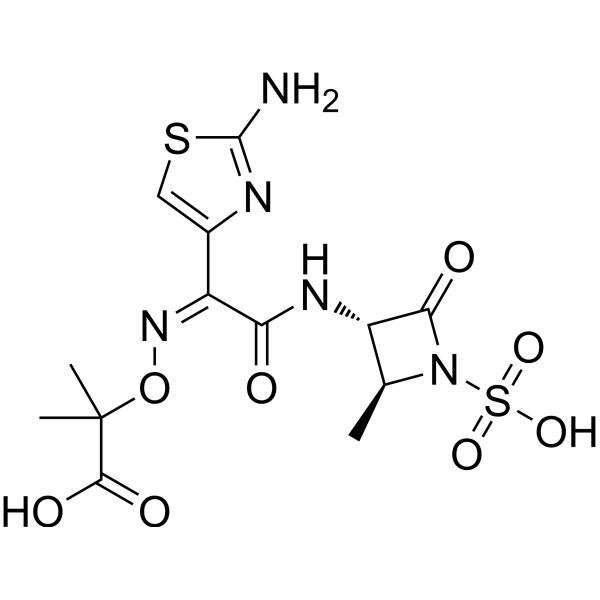
(E)-Aztreonam (SQ-28429) is a monocyclic beta-lactam antibiotic. (E)-Aztreonam has the potential for the research of infections caused by gram-negative pathogens .
|
-
-
- HY-129949
-
|
|
Antibiotic
Bacterial
|
Infection
Cancer
|
|
Aztreonam (lysine) is a monocyclic beta-lactam antibiotic, and has a very high affinity for penicillin-binding protein 3 (PBP-3). Aztreonam (lysine) is active against Gram-negative aerobic bacteria .
|
-
- HY-B0522AR
-
|
D-(-)-α-Aminobenzylpenicillin sodium salt (Standard)
|
Reference Standards
Bacterial
Antibiotic
|
Infection
|
|
Ampicillin (sodium) (Standard) is the analytical standard of Ampicillin (sodium). This product is intended for research and analytical applications. Ampicillin sodium (D-(-)-α-Aminobenzylpenicillin sodium salt) is a broad-spectrum beta-lactam antibiotic against a variety of gram-positive and gram-negative bacteria .
|
-
- HY-B0186
-
|
|
Bacterial
Antibiotic
|
Infection
|
|
Cefoselis, the fourth gen-eration of cephalosporin, is a β-lactam antibiotic. Cefoselis exhibits good activity against a wide range of Gram-positive and Gram-negative organisms. Cefoselis penetrates the blood-brain barrier .
|
-
- HY-117108
-
|
|
Antibiotic
Bacterial
|
Infection
|
|
Nocardicin A is a beta-lactam antibiotic with selective antibacterial activity. Nocardicin A has moderate antibacterial activity against a broad spectrum of Gram-negative bacteria including Proteus and Pseudomonas; it has no inhibitory effect on Staphylococcus, Mycobacterium, fungi, and yeast .
|
-
- HY-B0522C
-
|
L-(+)-α-Aminobenzylpenicillin
|
Antibiotic
|
Infection
|
|
L-(+)-Ampicillin (L-(2S) ampicillin) is the L-isomer of Ampicillin (HY-B0522). Ampicillin is a broad-spectrum beta-lactam antibiotic against a variety of gram-positive and gram-negative bacteria .
|
-
- HY-B0522BR
-
|
D-(-)-α-Aminobenzylpenicillin trihydrate (Standard)
|
Reference Standards
Bacterial
Antibiotic
|
Infection
|
|
Ampicillin (trihydrate) (Standard) is the analytical standard of Ampicillin (trihydrate). This product is intended for research and analytical applications. Ampicillin trihydrate (D-(-)-α-Aminobenzylpenicillin trihydrate) is a broad-spectrum beta-lactam antibiotic against a variety of gram-positive and gram-negative bacteria.
|
-
- HY-W140760
-
|
|
Antibiotic
|
Infection
Inflammation/Immunology
Cancer
|
|
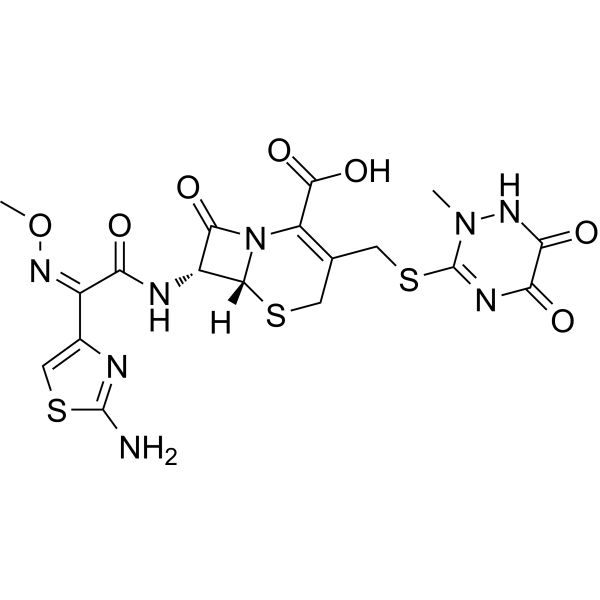
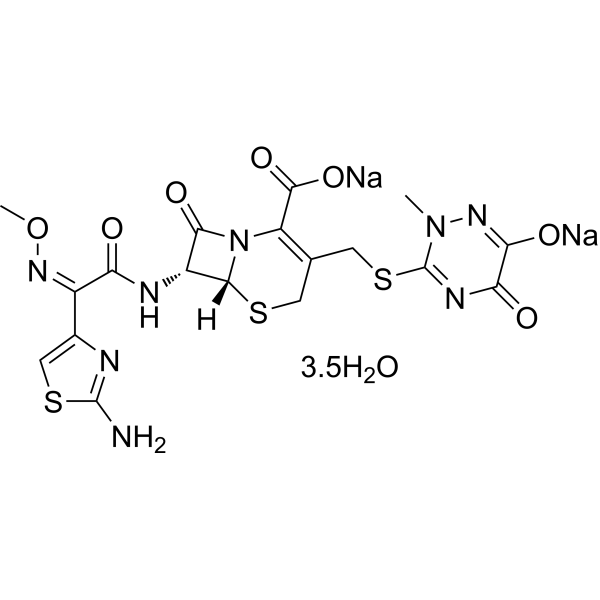
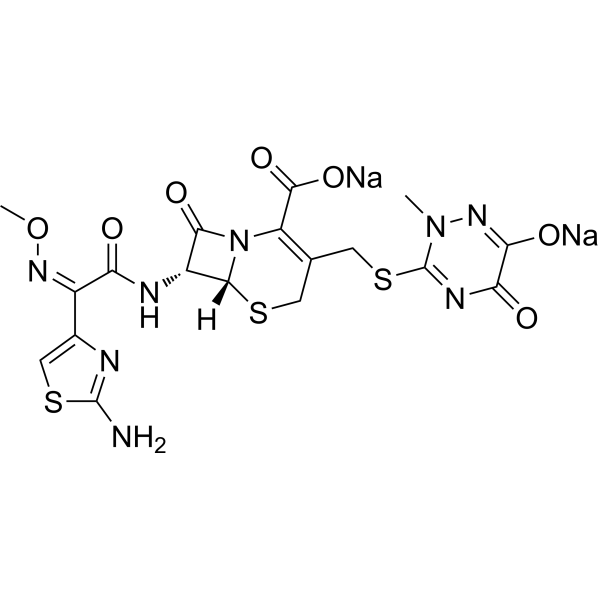
Ceftriaxone sodium is a versatile broad-spectrum β-lactam tertiary cephalosporin antibiotic that exhibits anti-inflammatory, antitumor, antibacterial, and antioxidant properties, and functions as a covalent inhibitor of GSK3β and Aurora B, making it valuable in research related to sepsis and infective endocarditis.
|
-
- HY-P1195A
-
|
|
iGluR
|
Neurological Disease
|
|
PDZ1 Domain inhibitor peptide TFA, a cyclic peptide, incorporates a β-Ala lactam side chain linker and targets the PDZ1 domains of the postsynaptic density protein 95 (PSD-95). PDZ1 Domain inhibitor peptide TFA disrupts the GluR6/PSD-95 interaction and is very efficient in competing against the C terminus of GluR6 for the PDZ1 domain .
|
-
- HY-W038877R
-
|
(S)-Pregabalin lactam (Standard)
|
Drug Intermediate
Reference Standards
|
Others
|
|
Pregabalin lactam (Standard) is an analytical standard for Pregabalin lactam. This product is used for research and analytical applications. Pregabalin lactam is a degradation product and is a common impurity with no mutagenicity .
|
-
- HY-W004412R
-
|
LY301664 (Standard)
|
Drug Metabolite
Reference Standards
|
Others
|
|
Olanzapine-lactam (Standard) is the analytical standard of Olanzapine-lactam. This product is intended for research and analytical applications. Olanzapine-lactam (LY301664) is a metabolite of Olanzapine (HY-14541) .
|
-
- HY-W003592R
-
|
|
Reference Standards
Drug Intermediate
|
Others
|
|
L-Orinithine lactam (Standard) is the analytical standard of L-Orinithine lactam. This product is intended for research and analytical applications. L-Orinithine lactam is a synthetic intermediate. L-Orinithine lactam can be used in the synthesis of dipeptidyl peptidase 4 (DPP-4) inhibitors, as well as signaling peptides .
|
-
- HY-173594
-
|
|
Bacterial
|
Infection
|
|
TarO-IN-1 (Compound 18a) is a TarO inhibitor and has antibacterial activity. TarO-IN-1 has β-lactam sensitizing and anti-biofilm activities against MRSA. TarO-IN-1 can be used for research of β-lactam resistance .
|
-
- HY-105113
-
-
- HY-129814
-
-
- HY-133148
-
|
|
Phospholipase
|
Inflammation/Immunology
|
|
Lp-PLA2-IN-2 is a potent and selective lipoprotein-associated phospholipase A2 (Lp-PLA2) inhibitor, with an IC50 0f 120 nM for recombinant human Lp-PLA2 .
|
-
- HY-13320
-
-
- HY-N14895
-
-
- HY-N14896
-
-
- HY-171456
-
-
- HY-117074
-
-
- HY-P3519A
-
|
|
Drug Intermediate
|
Infection
|
|
ACV Tripeptide TFA, a tripeptide, is the first dedicated intermediate in the biosynthetic pathway leading to the penicillin and cephalosporin classes of β-lactam natural products in bacteria and fungi. ACV Tripeptide TFA is is synthesized nonribosomally by the ACV synthetase (ACVS) enzyme, which is encoded by the 11 kb The pchAB gene encodes this enzyme. ACV Tripeptide TFA can be used for the biosynthesis of β-lactam antibiotics .
|
-
- HY-121120
-
|
|
Antibiotic
|
Infection
|
|
Isosulfazecin (iSZ) is a novel β-lactam antibiotic produced by Pseudomonas acidophilus sp., synthesized in a nutrient solution supplemented with glycerol and sodium thiosulfate under aerobic conditions in parallel with bacterial growth. It is purified by chromatography and crystallization from aqueous methanol. Physicochemical analysis determined its molecular formula to be C12H20N4O9S, showing a structure with a β-lactam ring, methoxyl and sulfonate groups. Acid hydrolysis yields L-alanine and D-glutamic acid. iSZ is a diastereomer of sulfadiazine and exhibits moderate activity against both gram-positive and gram-negative bacteria, but potent activity against bacteria resistant to β-lactam antibiotics .
|
-
- HY-N15062
-
|
|
Antibiotic
Fungal
|
Infection
|
|
2-Hydroxymethylclavam is a β-lactam antibiotic. 2-Hydroxymethylclavam has antifungal activity, especially for plant pathogenic fungi .
|
-
- HY-B1463R
-
|
Benzylpenicillin sodium salt (Standard)
|
Beta-lactamase
Reference Standards
Bacterial
Antibiotic
|
Infection
|
|
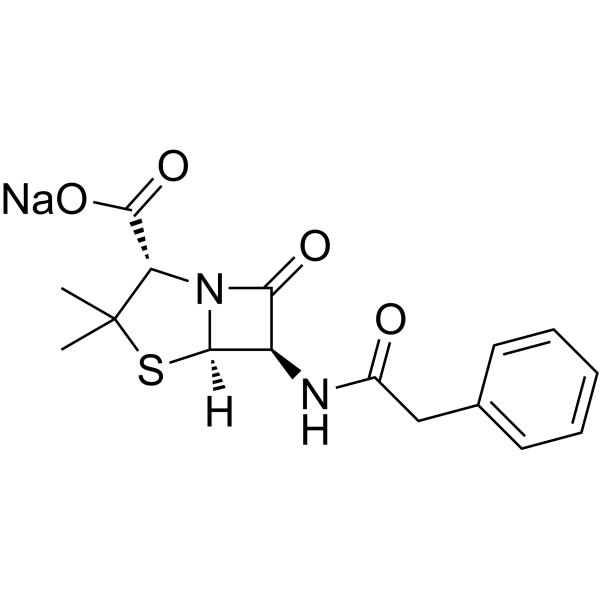
Penicillin G sodium salt (Standard) is the analytical standard of Penicillin G sodium salt. This product is intended for research and analytical applications. Penicillin G sodium salt is a typical β-lactam antibiotic.
|
-
- HY-105549
-
|
|
Antibiotic
|
Infection
|
|
Quinacillin is a compound that undergoes hydrolysis catalyzed by penicillinase. Quinacillin is irreversibly covalently bound to proteins via its β-lactam carboxyl group .
|
-
- HY-120658
-
|
|
Antibiotic
Bacterial
|
Infection
|
|
(Rac)-LY193239 is a racemic modification of LY193239 (HY-120658A). LY193239 is a higher-lactam pyrazolidinone antibacterial agent .
|
-
- HY-167644
-
|
|
Antibiotic
Bacterial
|
Infection
|
|
Cefoxazole is a β-lactam antibiotic containing an isoxazole moiety and exhibits antibacterial activity. Cefoxazole can be used in studies related to infectious diseases .
|
-
- HY-158977
-
|
|
Beta-lactamase
Bacterial
|
Infection
|
|
β-Lactamase-IN-9 (compound 2) is a β-lactamase inhibitor that can restore the sensitivity of pathogens to β-lactam antibiotics .
|
-
- HY-113557
-
-
- HY-N14919
-
|
|
Beta-lactamase
Antibiotic
Bacterial
|
Infection
|
|
Olivanic acid is a β -lactam antibiotic. Olivanic acid has the effect of anti -Gram-positive bacteria and anti-Gram-negative bacteria. Olivanic acid inhibits β-lactamase .
|
-
- HY-W749146
-
|
|
Antibiotic
Bacterial
|
Infection
|
|
Raja 42 is a gamma lactam antibiotic. Raja 42 is effective against a variety of different bacterias, including Gram-positive and Gram-negative bacteria, such as C. difficile strains .
|
-
- HY-111019A
-
|
|
Antibiotic
Bacterial
|
Infection
|
|
SCH 34343 sodium is a potent β-lactam Antibiotic with bactericidal activity against Streptococcus pneumoniae, viridans streptococci, streptococci of groups A, B, C and G, and Str. bovis .
|
-
- HY-165272
-
|
|
Bacterial
Antibiotic
|
Infection
|
|
Antibiotic SF-2132 is a peptide antibiotic identified in Nocardiopsis sp., which exhibits inhibitory activity against β-lactam antibiotic-resistant strains, such as Pseudomonas and Escherichia .
|
-
- HY-24470B
-
-
- HY-120876
-
-
- HY-107330
-
|
|
Antibiotic
|
Others
|
|
(6R,7S)-Cefminox sodium heptahydrate is an isomer of Cefminox sodium heptahydrate. Cefminox sodium heptahydrate is a β-lactam cephalosporin antibiotic, which exhibits a broad spectrum of antibacterial activity .
|
-
- HY-149327
-
|
|
Others
|
Cancer
|
|
HCT-116-IN-1, a γ-lactam-fused pyridone derivative, has anticancer activity and displayed high cytotoxicity against HCT116 cells with an IC50 of 5.59 μM .
|
-
- HY-124218
-
|
|
Antibiotic
|
Others
|
|
S 863390 is a compound with the ability to inhibit the intestinal uptake system, which can interact with the intestinal uptake system to inhibit the uptake of β-lactam antibiotics and small peptides while also being transported itself.
|
-
- HY-116571
-
|
|
Antibiotic
Bacterial
|
Infection
|
|
RU44790 is a monocyclic beta-lactam antibiotic that exerts potent activity against gram-negative bacteria and is highly resistant to hydrolysis by various beta-lactamases. RU44790 can be utilized in anti-bacteria research .
|
-
- HY-B0186A
-
|
|
Bacterial
Antibiotic
|
Infection
|
|
Cefoselis hydrochloride, the fourth gen-eration of cephalosporin, is a β-lactam antibiotic. Cefoselis hydrochloride exhibits good activity against a wide range of Gram-positive and Gram-negative organisms. Cefoselis hydrochloride penetrates the blood-brain barrier .
|
-
- HY-113698
-
|
|
Bacterial
|
Infection
|
|
L 652813 is a quaternary ammonium heterocyclic amino β-lactam compound. L 652813 exhibits inhibitory activity against a broad spectrum of aerobic and anaerobic bacteria in vitro. L 652813 also exhibits good antibacterial activity in a mouse experimental bacteremia model .
|
-
- HY-103645R
-
|
|
Reference Standards
Bacterial
Aurora Kinase
Apoptosis
|
Infection
Cancer
|
|
GW779439X (Standard) is the analytical standard of GW779439X (HY-103645). This product is intended for research and analytical applications. GW779439X is a pyrazolopyridazine identified in an inhibitor of the S. aureus PASTA kinase Stk1. GW779439X potentiates the activity of β-lactam antibiotics against various MRSA and MSSA isolates, some even crossing the breakpoint from resistant to sensitive. GW779439X is an AURKA inhibitor and induces apoptosis by the caspases 3/7 pathway . MRSA:methicillin-resistant S. aureus; MSSA: methicillin-sensitive S. aureus
|
-
- HY-P2998B
-
|
|
Beta-lactamase
|
Infection
|
|
β-Lactamase Blend (EC 3.5.2.6) inactivates β-lactam antibiotics by breaking open the β-lactam ring.
|
-
- HY-P2998A
-
|
|
Beta-lactamase
|
Infection
|
|
β-Lactamase, Pseudomonas aeruginosa (EC 3.5.2.6) inactivates β-lactam antibiotics by breaking open the β-lactam ring.
|
-
- HY-P2998C
-
-
- HY-W585835
-
|
Atorvastatin Lactam impurity sodium
|
Drug Intermediate
|
Others
|
|
Atorvastatin impurity 6 sodium (Atorvastatin Lactam impurity sodium) is an impurity of Atorvastatin sodium.
|
-
- HY-N14108
-
|
|
Bacterial
|
Infection
|
|
Chlorocardicin is a monocyclic beta-lactam. Chlorocardicin has moderate in vitro activity against Enterobacteriaceae and Pseudomonas aeruginosa .
|
-
- HY-N19827
-
|
|
Biochemical Assay Reagents
|
Inflammation/Immunology
|
|
Monodesmoside saponin C is an absorption enhancer. Monodesmoside saponin C promotes the absorption of poorly absorbable β-lactam antibiotics in the small intestine and rectum of rats. Monodesmoside saponin C has the ability to chelate Ca 2+. The absorption-enhancing activity of Monodesmoside saponin C is inhibited by coexisting Ca 2+ ions. Monodesmoside saponin C can be used in studies on absorption enhancement of β-lactam antibiotics .
|
-
- HY-W141589
-
|
D-Ornithine lactam
|
Drug Intermediate
|
Infection
|
|
(R)-3-Aminopiperidin-2-one (D-Ornithine lactam) is the building block, that could be used as for synthesis of antibacterial agent or various modulators, such as allosteric HCV NS5B inhibitors .
|
-
- HY-183611
-
|
|
Bacterial
Interleukin Related
TNF Receptor
|
Infection
|
|
LPZ-51 is a Vibrio β-lactam resistance sensor kinase (VbrK) inhibitor with a Ki value of 1.09 μM. LPZ-51 inhibits blaA gene expression at the transcriptional level by blocking the kinase activity of VbrK, reduces β-lactamase synthesis, and does not affect bacterial growth. LPZ-51 acts synergistically with β-lactam antibiotics. LPZ-51 decreases bacterial load, alleviates intestinal inflammation, and improves survival rate in zebrafish infection models. LPZ-51 can be used in studies related to Vibrio parahaemolyticus infection .
|
-
- HY-177949
-
|
|
Beta-lactamase
Bacterial
|
Infection
|
|
ETX1317 is a β-lactamase inhibitor that restores the antibacterial activity of several classes of β-lactam antibiotics, including third-generation cephalosporins such as Cefpodoxime (HY-A0251). ETX1317 can be used for research on bacterial infection .
|
-
- HY-121544
-
|
|
Penicillin-binding protein (PBP)
Bacterial
Antibiotic
Histamine Receptor
|
Infection
|
|
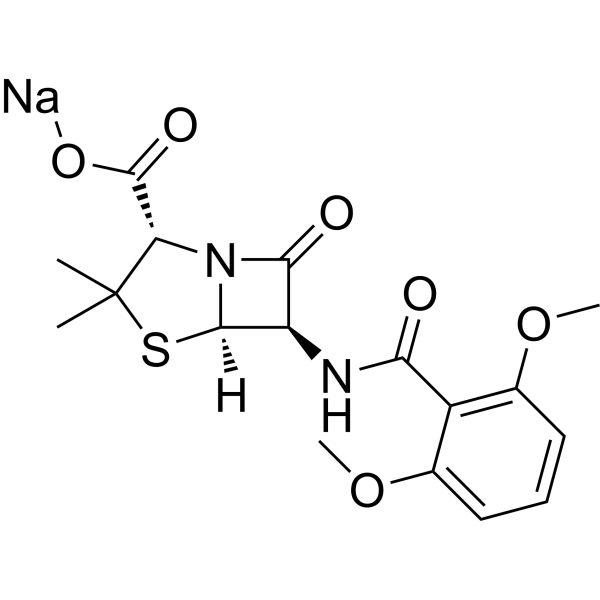
Methicillin is a narrow-spectrum β-lactam antibiotic, acts by inhibiting penicillin-binding proteins (PBPs). Methicillin is active against Staphylococcus aureus and Staphylococcus epidermidis that are resistant to other penicillins.Methicillin can be used for the research of skin infections, osteomyelitis, and endocarditis .
|
-
- HY-B1252R
-
|
|
Reference Standards
Antibiotic
Bacterial
|
Infection
Inflammation/Immunology
|
|
Cefalonium (Standard) is the analytical standard of Cefalonium. This product is intended for research and analytical applications. Cefalonium is the first-generation β-lactam cephalosporin antibiotic that is widely used to research bovine mastitis caused by Gram-positive bacteria including staphylococci .
|
-
- HY-N7120R
-
|
PGP hydrate (Standard)
|
Reference Standards
Bacterial
Antibiotic
|
Infection
|
|
Penicillin G procaine (hydrate) (Standard) is the analytical standard of Penicillin G procaine (hydrate). This product is intended for research and analytical applications. Penicillin G Procaine hydrate (PGP hydrate), a β-lactam antibiotic, is a crystalline complex produced by chemically combining penicillin G with procaine .
|
-
- HY-121544A
-
|
|
Penicillin-binding protein (PBP)
Bacterial
Antibiotic
Histamine Receptor
|
Infection
|
|
Methicillin sodium hydrate is a narrow-spectrum β-lactam antibiotic, acts by inhibiting penicillin-binding proteins (PBPs). Methicillin sodium hydrate is active against Staphylococcus aureus and Staphylococcus epidermidis that are resistant to other penicillins. Methicillin sodium hydrate can be used for the research of skin infections, osteomyelitis, and endocarditis .
|
-
- HY-W140346
-
|
|
Environmental Pollutants
Beta-lactamase
|
Infection
Cancer
|
|
Copper (II) pyrithione is a New Delhi metallo-β-lactamase 1 inhibitor. Copper (II) pyrithione inhibits New Delhi metallo-β-lactamase 1 via transmetallation of its zinc (II) cofactor with copper (II). Copper (II) pyrithione exerts cytotoxic effects on pancreatic cancer cells and osteosarcoma cells. Copper (II) pyrithione exhibits antibacterial activity against Gram-positive bacteria and some Gram-negative bacteria. Copper (II) pyrithione can synergistically enhance the activity of β-lactam antibiotics against β-lactam-resistant bacteria. Copper (II) pyrithione can be used in studies related to pancreatic cancer, osteosarcoma and bacterial infections .
|
-
- HY-14879C
-
|
NXL-104 dihydrate
|
Beta-lactamase
Bacterial
Antibiotic
|
Infection
|
|
Avibactam sodium (NXL-104) dihydrate is a covalent and reversible non-β-lactam β-lactamase inhibitor which inhibits β-lactamase TEM-1 and CTX-M-15 with IC50s of 8 nM and 5 nM, respectively .
|
-
- HY-126732
-
|
|
Antibiotic
Bacterial
|
Infection
|
|
L-640876 is a broad-spectrum and orally active lactam antimicrobial agent. L-640876 showa MIC90 of 0.125 pg/mL for the E. coli strains, 2 /mg/mL for the S.choleraerai strains and 4 pg/mL for the S. typhinwrium strains .
|
-
- HY-B0129R
-
-
- HY-34588
-
|
D-(-)-4-Hydroxyphenylglycine; 4-Hydroxy-D-phenylglycine
|
Antibiotic
|
Others
|
|
D-4-Hydroxyphenylglycine (D-(-)-4-Hydroxyphenylglycine) is one of the most important raw materials used in the production of semisynthetic β-lactam antibiotics, such as Amoxicillin (HY-B0467A) and Cefadroxil (HY-B1190) .
|
-
- HY-14879
-
|
NXL-104 free acid
|
Beta-lactamase
Bacterial
Antibiotic
|
Infection
|
|
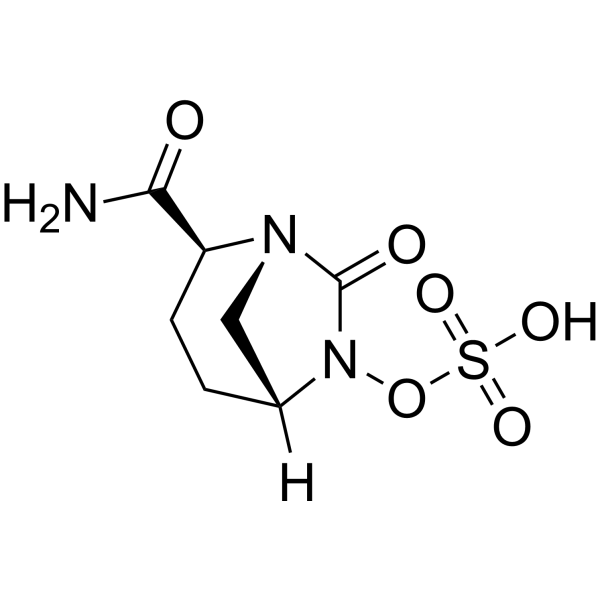
Avibactam (NXL-104) free acid is a covalent and reversible non-β-lactam β-lactamase inhibitor which inhibits β-lactamase TEM-1 and CTX-M-15 with IC50s of 8 nM and 5 nM, respectively .
|
-
- HY-B1459AR
-
|
|
Beta-lactamase
Reference Standards
Bacterial
Antibiotic
|
Infection
|
|
Dicloxacillin (Standard) is the analytical standard of Dicloxacillin. This product is intended for research and analytical applications. Dicloxacillin is a β-lactam antibiotic of the penicillin family. Dicloxacillin against Gram-positive bacteria. Dicloxacillin is active against β-lactamase-producing organisms such as Staphylococcus aureus .
|
-
- HY-N7120
-
|
PGP hydrate
|
Bacterial
Antibiotic
|
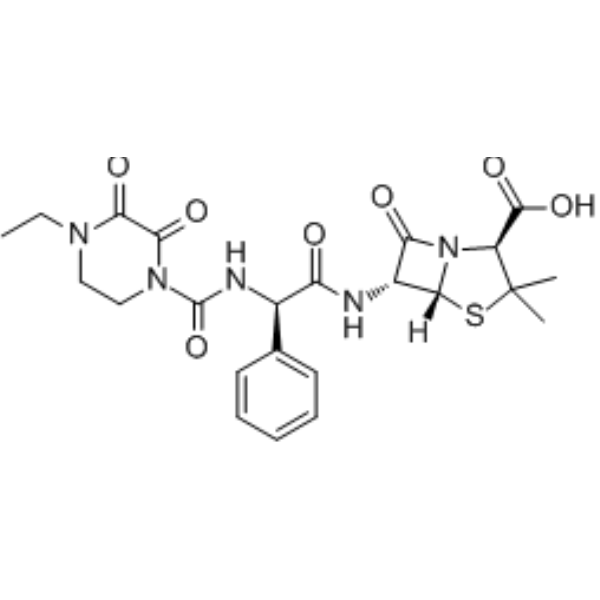
Infection
|
|
Penicillin G Procaine hydrate (PGP hydrate) is a β-lactam antibiotic and sustained-release formulation. Penicillin G procaine (hydrate) hydrolyzes in vivo to release penicillin G and Procaine (HY-B0546), thereby delaying the absorption of penicillin G .
|
-
- HY-B1252AS
-
|
|
Isotope-Labeled Compounds
|
Infection
|
|
Cefalonium-d4 (hydrate) is the deuterium labeled Cefalonium (hydrate)(HY-B1252A).Cefalonium hydrate is the first-generation β-lactam cephalosporin antibiotic that is widely used to research bovine mastitis caused by Gram-positive bacteria including staphylococci .
|
-
- HY-B0529AR
-
|
Sodium azlocillin (Standard)
|
Reference Standards
Bacterial
Parasite
Antibiotic
|
Infection
|
|
Azlocillin (sodium salt) (Standard) is the analytical standard of Azlocillin (sodium salt). This product is intended for research and analytical applications. Azlocillin sodium salt (Sodium azlocillin), a semisynthetic penicillin, is a broad spectrum β-lactam antibiotic. Azlocillin sodium salt shows antipseudomonal activity, and also potent against the malarial parasite Plasmodium falciparum .
|
-
- HY-B0186B
-
|
FK-037
|
Bacterial
Antibiotic
|
Infection
|
|
Cefoselis sulfate (FK-037), the fourth gen-eration of cephalosporin, is a β-lactam antibiotic. Cefoselis sulfate exhibits good activity against a wide range of Gram-positive and Gram-negative organisms. Cefoselis sulfate penetrates the blood-brain barrier .
|
-
- HY-B0974
-
|
Meticillin sodium
|
Penicillin-binding protein (PBP)
Bacterial
Antibiotic
|
Infection
|
|
Methicillin sodium salt (Meticillin sodium) is a β-lactam, semi-synthetic antibiotic related to penicillin antibiotic. Methicillin sodium salt inhibits penicillin-binding proteins involved in the synthesis of peptidoglycan. Methicillin sodium salt inhibits S. aureus with a MIC value of 2.1 μg/mL. Methicillin sodium salt can be used for the research of inflammation .
|
-
- HY-19882
-
|
|
Bacterial
|
Infection
|
|
BAL-30072, a siderophore sulfactam, is a monocyclic beta-lactam antibiotic, with activity against multiresistant gram-negative bacilli. BAL30072 shows MIC90 values of 4 μg/mL for MDR Acinetobacter spp. and 8 μg/mL for MDR P. aeruginosa, respectively .
|
-
- HY-108080
-
|
|
Bacterial
Beta-lactamase
|
Infection
|
|
BAL-0019764 is an iron carrier monocyclic β-lactam with broad-spectrum β-lactase inhibition ability. BAL-0019764 has inhibitory activity against various Gram negative bacteria. BAL-0019764 is commonly used in the study of bacterial infections .
|
-
- HY-W750848
-
|
|
Isotope-Labeled Compounds
Bacterial
Antibiotic
|
Infection
|
|
Raja 42-d10 is the deuterium labeled Raja 42 (HY-W749146). Raja 42 is a gamma lactam antibiotic. Raja 42 is effective against a variety of different bacterias, including Gram-positive and Gram-negative bacteria, such as C. difficile strains .
|
-
- HY-109008R
-
|
OP0595 free acid (Standard)
|
Beta-lactamase
Reference Standards
Bacterial
|
Infection
|
|
Nacubactam (Standard) is the analytical standard of Nacubactam (HY-109008). This product is intended for research and analytical applications. Nacubactam (OP0595 free acid) is a potent non-β-lactam-β-lactamase inhibitor with activity against class A and C β-lactamases. Nacubactam acts as a penicillin binding protein (PBP) 2-active antibacterial, and gives β-lactamase-independent potentiation of β-lactams targeting other PBPs. Nacubactam potentiates the antimicrobial activities of Piperacillin (HY-B1923), Cefepime (HY-B0692), and Meropenem (HY-13678) against CTX-M-15-positive Escherichia coli and KPC-positive Klebsiella pneumoniae .
|
-
- HY-D2988
-
|
|
Fluorescent Dye
Bacterial
|
Infection
|
|
BIN-3 is a novel near-infrared fluorescent probe. BIN-3 has excellent biocompatibility, no cytotoxicity, and no hemolysis. BIN-3 can be used for highly sensitive and selective imaging of drug-resistant bacterial infections expressing β-lactam enzymes in live mice .
|
-
- HY-120366
-
-
- HY-B1459AS
-
|
|
Bacterial
Antibiotic
|
Infection
|
|
Dicloxacillin- 13C4 is the 13C labeled Dicloxacillin (HY-B1459A) . Dicloxacillin is a β-lactam antibiotic of the penicillin family. Dicloxacillin against Gram-positive bacteria. Dicloxacillin is active against β-lactamase-producing organisms such as Staphylococcus aureus .
|
-
- HY-B0425A
-
|
Albamycin sodium; Cathomycin sodium
|
Bacterial
Antibiotic
Orthopoxvirus
Apoptosis
DNA/RNA Synthesis
HSP
|
Infection
Cancer
|
|
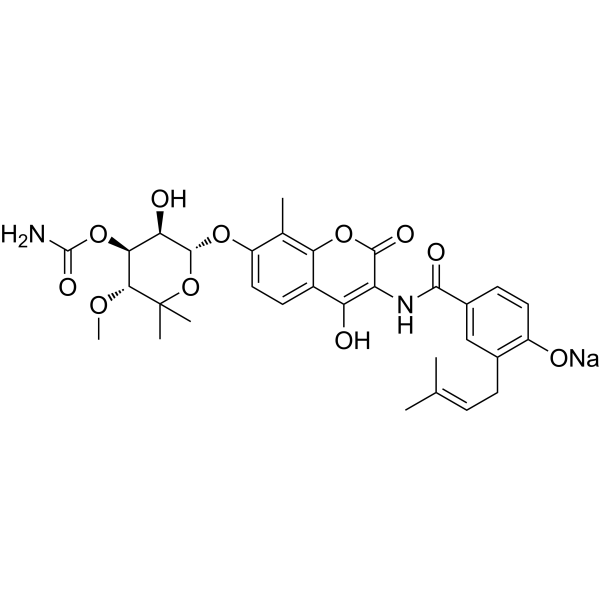
Novobiocin (Albamycin) sodium is a potent and orally active antibiotic. Novobiocin sodium also is a DNA gyrase inhibitor and a heat shock protein 90 (Hsp90) antagonist. Novobiocin sodium has the potential for the research of highly beta-lactam-resistant pneumococcal infections. Novobiocin sodium shows anti-orthopoxvirus activity .
|
-
- HY-W744271
-
|
Gabapentin lactam-d6
|
Isotope-Labeled Compounds
|
Others
|
|
2-Azaspiro[4.5]decan-3-one-d6 (Gabapentin lactam-d6) is the deuterium labeled 2-Azaspiro[4.5]decan-3-one (HY-W039179).
|
-
- HY-100500
-
|
KBT 1585 hydrochloride
|
Penicillin-binding protein (PBP)
Bacterial
|
Infection
Cancer
|
|
Lenampicillin hydrochloride (KBT 1585 hydrochloride) is an orally active proagent of Ampicillin and is an effective beta-lactam antibacterial agent that inhibits bacterial penicillin-binding proteins (transpeptidase). Lenampicillin hydrochloride has improved absorption and decreased side effects compares to Ampicillin and is applied in the investigation of the suppurative skin and soft tissue infection .
|
-
- HY-P2064
-
|
|
Bacterial
|
Infection
|
|
Lariatins is a novel anti-mycobacterial peptides with a lasso structure produced by Rhodococcus jostii K01-B0171 .
|
-
- HY-P10135
-
|
|
Endothelin Receptor
|
Cardiovascular Disease
|
|
RES-701-1 is a cyclic peptide composed of 16 common L-amino acids, acting as a specific antagonist for the ETB receptor. RES-701-1 can inhibit the binding of 125I-ET-1 (125I-labeled Endothelin (ET)-1) to the ETB receptor, with an IC50 value of 10 nM .
|
-
- HY-B0425
-
|
Albamycin; Cathomycin
|
Antibiotic
DNA/RNA Synthesis
HSP
Apoptosis
Bacterial
Orthopoxvirus
|
Infection
Cancer
|
|
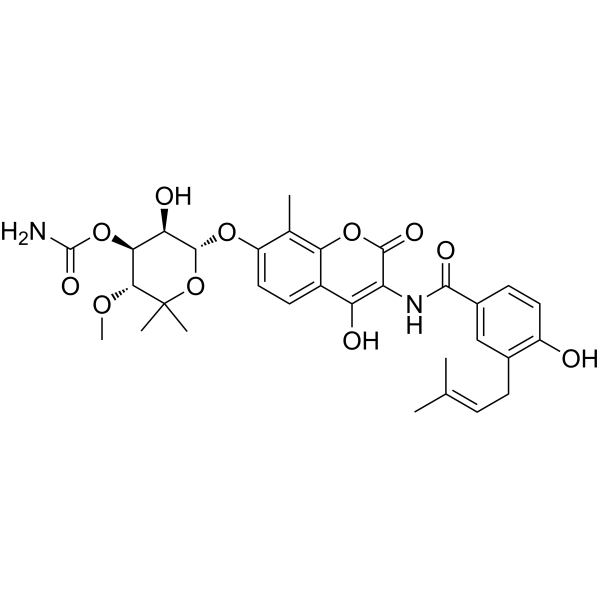
Novobiocin (Albamycin) is a potent and orally active antibiotic. Novobiocin also is a DNA gyrase inhibitor and a heat shock protein 90 (Hsp90) antagonist. Novobiocin has the potential for the research of highly beta-lactam-resistant pneumococcal infections. Novobiocin shows anti-orthopoxvirus activity .
|
-
- HY-B1286
-
|
Sodium piperacillin
|
Bacterial
Antibiotic
Penicillin-binding protein (PBP)
|
Infection
Cancer
|
|
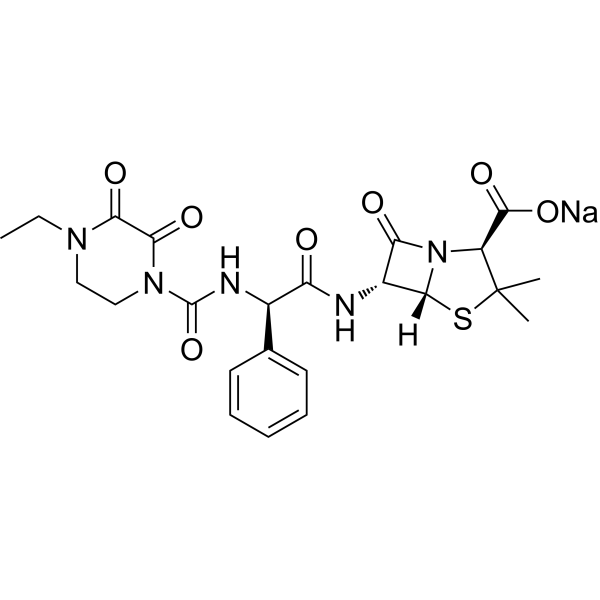
Piperacillin sodium is a semisynthetic broad-spectrum β-lactam antibiotic which exhibits potent bactericidal activity against Gram-negative bacteria as well as select Gram-positive strains through penicillin-binding proteins. Piperacillin is most commonly used in combination with the β-lactamase inhibitor Tazobactam .
|
-
- HY-130613
-
|
|
Bacterial
|
Infection
|
|
MAC-545496 is a nanomolar inhibitor of glycopeptide-resistance-associated protein R (GraR). MAC-545496 displays strong binding affinity to the full-length GraR protein (Kd ≤ 0.1 nM). MAC-545496 is an antivirulence agent that reverses β-lactam resistance in Methicillin-resistant strains (MRSA) .
|
-
- HY-B1923
-
|
Pipracil
|
Antibiotic
Bacterial
Beta-lactamase
Penicillin-binding protein (PBP)
|
Infection
Cancer
|
|
Piperacillin is a semisynthetic broad-spectrum β-lactam antibiotic which exhibits potent bactericidal activity against Gram-negative bacteria as well as select Gram-positive strains through penicillin-binding proteins. Piperacillin is most commonly used in combination with the β-lactamase inhibitor Tazobactam .
|
-
- HY-135235
-
|
|
Fluorescent Dye
|
Others
|
|
Cysteine Thiol Probe is a thiol-based probe designed to label electrophilic natural products. Cysteine Thiol Probe possesses each of the characteristics of an ideal pharmacophore probe, and has a chromophore. Cysteine Thiol Probe is capable of engaging enone-, β-lactam-, and β-lactone-based electrophilic metabolites .
|
-
- HY-B1466R
-
|
BAY-f 1353 sodium (Standard)
|
Reference Standards
Bacterial
Antibiotic
|
Infection
|
|
Mezlocillin (sodium) (Standard) is the analytical standard of Mezlocillin (sodium). This product is intended for research and analytical applications. Mezlocillin (BAY-f 1353) sodium is a β-lactam antibiotic, a semisynthetic and extended-spectrum antibiotic. Mezlocillin sodium is active against both gram-negative and gram-positive bacteria. Mezlocillin sodium can be used in bacterial infection research[1][2].
|
-
- HY-B0977R
-
|
Dicloxacillin sodium salt monohydrate (Standard)
|
Reference Standards
Bacterial
Antibiotic
|
Infection
Inflammation/Immunology
|
|
Dicloxacillin (Sodium hydrate) (Standard) is the analytical standard of Dicloxacillin (Sodium hydrate). This product is intended for research and analytical applications. Dicloxacillin Sodium hydrate (Dicloxacillin sodium salt monohydrate) is a narrow-spectrum β-Lactam antibiotic of the penicillin class, is used to treat infections caused by susceptible Gram-positive bacteria, active against beta-lactamase-producing organisms such as Staphylococcus aureus .
|
-
- HY-119033
-
|
|
MAGL
|
Inflammation/Immunology
|
|
MGL-IN-1 is a potent and selective irreversible MGL (β-lactam-based monoacylglycerol lipase) inhibitor. MGL-IN-1 alleviates symptoms in a MS model in vivo and exhibits analgesic effects in an acute inflammatory pain model in vivo. MGL-IN-1 displays high membrane permeability and brain penetrant .
|
-
- HY-16752A
-
|
MK-7655 sodium
|
Beta-lactamase
Bacterial
|
Infection
|
|
Relebactam sodium (MK-7655 sodium) is a potent and selective β-lactamase inhibitor with the activity of delaying the development of bacterial resistance to antibiotics. Relebactam sodium can bind to a variety of β-lactamases, thereby improving the efficacy of β-lactam antibiotics. Relebactam sodium shows good application potential in inhibiting complicated bacterial infections .
|
-
- HY-118051
-
|
|
Antibiotic
|
Infection
|
|
LY 186826 is a γ-lactam antibiotic containing an aminothioazole methoxyacetic acid side chain at the C-7 position. LY186826 exhibits potent antibacterial activity against a wide range of Gram-positive and Gram-negative bacteria. LY186826 is inactivated by β-lactamases and Enterobacterases, showing stronger activity against Enterobacter strains.
|
-
- HY-14879BR
-
|
NXL-104 hydrate (Standard)
|
Beta-lactamase
Reference Standards
Bacterial
Antibiotic
|
Infection
|
|
Avibactam (sodium hydrate) (Standard) is the analytical standard of Avibactam (sodium hydrate). This product is intended for research and analytical applications. Avibactam sodium (NXL-104) hydrate is a covalent and reversible non-β-lactam β-lactamase inhibitor which inhibits β-lactamase TEM-1 and CTX-M-15 with IC50s of 8 nM and 5 nM, respectively[1].
|
-
- HY-A0294
-
|
MK-0826
|
Antibiotic
Bacterial
|
Infection
Cancer
|
|
Ertapenem (MK-0826) is a broad spectrum and long acting β-lactam antibiotic. Ertapenem has a broad-spectrum anti-anaerobic activity against a variety of anaerobes with a mode MIC of 0.12 μg/mL. Ertapenem can be used for the research of severe infections caused by bacteria in the skin, lungs, stomach, pelvis, and urinary tract .
|
-
- HY-W654157
-
|
|
Antibiotic
Isotope-Labeled Compounds
Bacterial
|
Infection
|
|
Dicloxacillin- 13C4 sodium hydrate is the 13C-labeled Dicloxacillin Sodium hydrate (HY-B0977). Dicloxacillin Sodium hydrate (Dicloxacillin sodium salt monohydrate) is a narrow-spectrum β-Lactam antibiotic of the penicillin class, is used to study infections caused by susceptible Gram-positive bacteria, active against beta-lactamase-producing organisms such as Staphylococcus aureus .
|
-
- HY-13625
-
|
L-749345; MK-826
|
Bacterial
Antibiotic
|
Infection
Cancer
|
|
Ertapenem sodium (L-749345) is a broad spectrum and long acting β-lactam antibiotic. Ertapenem sodium has a broad-spectrum anti-anaerobic activity against a variety of anaerobes with a mode MIC of 0.12 μg/mL. Ertapenem sodium can be used for the research of severe infections caused by bacteria in the skin, lungs, stomach, pelvis, and urinary tract .
|
-
- HY-121544AR
-
|
|
Penicillin-binding protein (PBP)
Reference Standards
Bacterial
Antibiotic
Histamine Receptor
|
Infection
|
|
Methicillin (sodium hydrate) (Standard) is the analytical standard of Methicillin (sodium hydrate). This product is intended for research and analytical applications. Methicillin sodium hydrate is a narrow-spectrum β-lactam antibiotic, acts by inhibiting penicillin-binding proteins (PBPs). Methicillin sodium hydrate is active against Staphylococcus aureus and Staphylococcus epidermidis that are resistant to other penicillins. Methicillin sodium hydrate can be used for the research of skin infections, osteomyelitis, and endocarditis .
|
-
- HY-14879AR
-
|
NXL-104 (Standard)
|
Beta-lactamase
Reference Standards
Bacterial
Antibiotic
|
Infection
|
|
Avibactam (sodium) (Standard) is the analytical standard of Avibactam (sodium). This product is intended for research and analytical applications. Avibactam sodium (NXL-104) is a covalent and reversible non-β-lactam β-lactamase inhibitor which inhibits β-lactamase TEM-1 and CTX-M-15 with IC50s of 8 nM and 5 nM, respectively .
|
-
- HY-B1923A
-
|
Pipracil hydrate
|
Antibiotic
Bacterial
Beta-lactamase
Penicillin-binding protein (PBP)
|
Infection
Cancer
|
|
Piperacillin hydrate is a semisynthetic broad-spectrum β-lactam antibiotic which exhibits potent bactericidal activity against Gram-negative bacteria as well as select Gram-positive strains through penicillin-binding proteins. Piperacillin hydrate is most commonly used in combination with the β-lactamase inhibitor Tazobactam (HY-B1418) .
|
-
- HY-18719ER
-
|
|
Cytochrome P450
Reference Standards
Estrogen Receptor/ERR
Drug Metabolite
Parasite
|
Cancer
|
|
Methicillin (sodium hydrate) (Standard) is the analytical standard of Methicillin (sodium hydrate). This product is intended for research and analytical applications. Methicillin sodium hydrate is a narrow-spectrum β-lactam antibiotic, acts by inhibiting penicillin-binding proteins (PBPs). Methicillin sodium hydrate is active against Staphylococcus aureus and Staphylococcus epidermidis that are resistant to other penicillins. Methicillin sodium hydrate can be used for the research of skin infections, osteomyelitis, and endocarditis .
|
-
- HY-P0007
-
|
Carbocalcitonin
|
Drug Intermediate
|
Metabolic Disease
|
|
Elcatonin (Carbocalcitonin) is a synthetic analog of eel calcitonin. Elcatonin increases bone mineral density, inhibits bone resorption and processes a central analgesic effect .
|
-
- HY-W128159
-
|
|
Hemoglobin
|
Cancer
|
|
N-Acetyl-2-pyrrolidone (No.20) is an N-acetylated amide. N-Acetyl-2-pyrrolidone can induce the differentiation of mouse erythroleukemia cells and has the activity of stimulating proliferation. N-Acetyl-2-pyrrolidone can be used in the research of leukemia differentiation therapy .
|
-
- HY-121329
-
|
AMA-1080; Ro 17-2301
|
Penicillin-binding protein (PBP)
Antibiotic
Bacterial
|
Infection
|
|
Carumonam (AMA-1080; Ro 17-2301) is a sulfonated monocyclic β-Lactam Antibiotic, targeting to penicillin-binding protein (PBP). Carumonam exerts highly activity against Enterobacteriaceae, Pseudomonas aeruginosa, and Haemophilus influenzae, while it weakly and even inactively inhibits Streptococcus pneumoniae and Staphylococcus aureus. Carumonam is resistant to beta-lactamase-mediated hydrolysis .
|
-
- HY-E70077
-
|
|
Endogenous Metabolite
|
Infection
Metabolic Disease
|
|
Penicillinase (from calf stomach) is an enzyme that degrades penicillin by hydrolyzing the cyclic amide bonds in the lactam ring of penicillin, which can inactivate penicillin. Penicillinase (from calf stomach) can be isolated from penicillin resistant strains. Penicillinase (from calf stomach) has potential application as a marker for steroid hormone enzyme linked immunosorbent assay .
|
-
- HY-147349
-
|
ANT3310 sodium
|
Beta-lactamase
Bacterial
|
Infection
|
|
Pilabactam (ANT3310) sodium is a broad-spectrum covalent Serine β-Lactamase inhibitor, with IC50 values ranging from 1 nM to 175 nM (a panel of Serine β-Lactamase). Pilabactam sodium potentiates activity of β-lactam antibiotics against Carbapenem-Resistant Enterobacterales (CRE) and Acinetobacter baumannii (CRAB). Pilabactam sodium can be used in the research of bacterial infection .
|
-
- HY-B0974R
-
|
Meticillin sodium (Standard)
|
Penicillin-binding protein (PBP)
Reference Standards
Bacterial
Antibiotic
|
Infection
|
|
Methicillin (sodium salt) (Standard) is the analytical standard of Methicillin (sodium salt). This product is intended for research and analytical applications. Methicillin sodium salt (Meticillin sodium) is a β-lactam, semi-synthetic antibiotic related to penicillin antibiotic. Methicillin sodium salt inhibits penicillin-binding proteins involved in the synthesis of peptidoglycan. Methicillin sodium salt inhibits S. aureus with a MIC value of 2.1 μg/mL. Methicillin sodium salt can be used for the research of inflammation .
|
-
- HY-10004
-
|
Faropenem medoxil
|
Antibiotic
Bacterial
|
Infection
|
|
Faropenem daloxate (Faropenem medoxil) is an orally active beta-lactam antibiotic. Faropenem daloxate has excellent in vitro activity against Streptococcus pneumonia, Haemophilus influenza, and other key pathogens implicated in acute bacterial rhino sinusitis. Faropenem daloxate can be studied in research for respiratory pathogens and acute bacterial sinusitis .
|
-
- HY-147349A
-
|
ANT3310
|
Bacterial
Beta-lactamase
|
Infection
|
|
Pilabactam (ANT3310) is a broad-spectrum covalent Serine β-Lactamase inhibitor, with IC50 values ranging from 1 nM to 175 nM (a panel of Serine β-Lactamase). Pilabactam potentiates activity of β-lactam antibiotics against Carbapenem-Resistant Enterobacterales (CRE) and Acinetobacter baumannii (CRAB). Pilabactam can be used in the research of bacterial infection .
|
-
- HY-14879S2
-
|
NXL-104-13C5
|
Isotope-Labeled Compounds
Antibiotic
Beta-lactamase
Bacterial
|
Infection
|
|
Avibactam sodium salt- 13C5 (NXL-104- 13C5) is 13C labeled Avibactam (sodium). Avibactam sodium (NXL-104) is a covalent and reversible non-β-lactam β-lactamase inhibitor which inhibits β-lactamase TEM-1 and CTX-M-15 with IC50s of 8 nM and 5 nM, respectively .
|
-
- HY-148493
-
|
|
Bacterial
|
Infection
|
|
MK-3402 (Compound303) is a metallo-beta-lactamase inhibitor, with IC50 values of 0.53, 0.25 and 0.169 nM against IMP-1, NDM-1, and VIM-1, respectively. MK-3402 can be used in bacterial research and shows a synergistic effect when used in combination with beta-lactam antibiotics .
|
-
- HY-108913
-
|
|
Beta-lactamase
Antibiotic
Bacterial
|
Infection
|
|
Nitrocefin is a highly activated, chromogenic cephalosporin derivative. Nitrocefin is a chromogenic β-lactamase substrate. Nitrocefin undergoes a distinctive color change from yellow to red as the amide bond in the β-lactam ring is hydrolyzed by β-lactamase. Nitrocefin is used in competitive inhibition studies in developmental work on β-lactamase-resistant antibiotics .
|
-
- HY-A0294A
-
|
MK-0826 disodium
|
Bacterial
Antibiotic
|
Infection
Cancer
|
|
Ertapenem (MK-0826) disodium is a broad spectrum and long acting β-lactam antibiotic. Ertapenem disodium has a broad-spectrum anti-anaerobic activity against a variety of anaerobes with a mode MIC of 0.12 μg/mL. Ertapenem disodium can be used for the research of severe infections caused by bacteria in the skin, lungs, stomach, pelvis, and urinary tract .
|
-
- HY-14879R
-
|
NXL-104 free acid (Standard)
|
Beta-lactamase
Reference Standards
Bacterial
Antibiotic
|
Infection
|
|
Avibactam (free acid) (Standard) is the analytical standard of Avibactam (free acid). This product is intended for research and analytical applications. Avibactam (NXL-104) free acid is a covalent and reversible non-β-lactam β-lactamase inhibitor which inhibits β-lactamase TEM-1 and CTX-M-15 with IC50s of 8 nM and 5 nM, respectively[1].
|
-
- HY-18678A
-
|
PT-141 Acetate
|
Melanocortin Receptor
|
Metabolic Disease
|
|
Bremelanotide (PT-141) Acetate is a melanocortin receptor agonist. Bremelanotide Acetate can activate MC4R and increases dopamine release. Bremelanotide Acetate induces appetitive sexual behaviors, female mounting behavior, and repetitive self-grooming. Bremelanotide Acetate can be used for the research of hypoactive sexual desire disorders .
|
-
- HY-13588
-
|
SCE-129 sodium
|
Bacterial
Antibiotic
|
Infection
|
|
Cefsulodin (SCE-129) sodium is a third generation β lactam antibiotic and member of the cephems subgroup of antibiotics. Cefsulodin sodium inhibits cell wall synthesis by competitively inhibiting penicillin binding protein (PBP) cross-linking and transpeptidation of peptidogly. Cefsulodin sodium is a potent tyrosine phosphatase inhibitor against mPTPB, a virulent phosphatase from Mycobacterium tuberculosis, with an IC50 value of 16 μM .
|
-
- HY-13588B
-
|
SCE-129 sodium hydrate
|
Antibiotic
Bacterial
|
Infection
|
|
Cefsulodin (SCE-129) sodium is a third generation β lactam antibiotic and member of the cephems subgroup of antibiotics. Cefsulodin sodium inhibits cell wall synthesis by competitively inhibiting penicillin binding protein (PBP) cross-linking and transpeptidation of peptidogly. Cefsulodin sodium is a potent tyrosine phosphatase inhibitor against mPTPB, a virulent phosphatase from Mycobacterium tuberculosis, with an IC50 value of 16 μM .
|
-
- HY-W005223R
-
|
(R)-(+)-Tetrahydrofuran-2-carboxylic acid (Standard)
|
Reference Standards
Biochemical Assay Reagents
Drug Intermediate
|
Infection
|
|
(R)-Tetrahydrofuran-2-carboxylic acid (Standard) is an analytical standard for (R)-Tetrahydrofuran-2-carboxylic acid (HY-W005223). This product is intended for research and analytical applications. (R)-Tetrahydrofuran-2-carboxylic acid is a chiral building block for Faropenem (HY-A0035). Faropenem is a clinically effective non-natural β-lactam antibiotic .
|
-
- HY-B1286R
-
|
Sodium piperacillin (Standard)
|
Reference Standards
Bacterial
Antibiotic
Penicillin-binding protein (PBP)
|
Infection
|
|
Piperacillin (sodium) (Standard) is the analytical standard of Piperacillin (sodium). This product is intended for research and analytical applications. Piperacillin sodium is a semisynthetic broad-spectrum β-lactam antibiotic which exhibits potent bactericidal activity against Gram-negative bacteria as well as select Gram-positive strains through penicillin-binding proteins. Piperacillin is most commonly used in combination with the β-lactamase inhibitor Tazobactam .
|
-
- HY-B0425R
-
|
Albamycin (Standard); Cathomycin (Standard)
|
Antibiotic
DNA/RNA Synthesis
HSP
Apoptosis
Bacterial
Orthopoxvirus
Reference Standards
|
Infection
Cancer
|
|
Novobiocin (Standard) is the analytical standard of Novobiocin. This product is intended for research and analytical applications. Novobiocin (Albamycin) is a potent and orally active antibiotic. Novobiocin also is a DNA gyrase inhibitor and a heat shock protein 90 (Hsp90) antagonist. Novobiocin has the potential for the research of highly beta-lactam-resistant pneumococcal infections. Novobiocin shows anti-orthopoxvirus activity .
|
-
- HY-B1923R
-
|
Pipracil (Standard)
|
Bacterial
Reference Standards
Antibiotic
Beta-lactamase
Penicillin-binding protein (PBP)
|
Infection
Cancer
|
|
Piperacillin (Standard) is the analytical standard of Piperacillin. This product is intended for research and analytical applications. Piperacillin is a semisynthetic broad-spectrum β-lactam antibiotic which exhibits potent bactericidal activity against Gram-negative bacteria as well as select Gram-positive strains through penicillin-binding proteins. Piperacillin is most commonly used in combination with the β-lactamase inhibitor Tazobactam .
|
-
- HY-108913R
-
|
|
Beta-lactamase
Reference Standards
Antibiotic
|
Infection
|
|
Nitrocefin (Standard) is the analytical standard of Nitrocefin. This product is intended for research and analytical applications. Nitrocefin is a chromogenic β-lactamase substrate that undergoes a distinctive color change from yellow to red as the amide bond in the β-lactam ring is hydrolyzed by β-lactamase. Nitrocefin is used in competitive inhibition studies in developmental work on β-lactamase-resistant antibiotics .
|
-
- HY-159969
-
|
|
Bacterial
Antibiotic
|
Infection
|
|
MLEB-22043 is a synthetic siderophore-monobactam conjugate that is taken up into bacteria via its synthetic siderophore component by TonB-dependent transporters. Once inside the bacteria, it exerts antibacterial activity through its β-lactam component. MLEB-22043 is a broad-spectrum antibiotic with significant inhibitory activity against Klebsiella pneumoniae, Escherichia coli, Acinetobacter baumannii, and Pseudomonas aeruginosa .
|
-
- HY-B0186BR
-
|
FK-037 (Standard)
|
Reference Standards
Bacterial
Antibiotic
|
Infection
|
|
Cefoselis (sulfate) (Standard) is the analytical standard of Cefoselis (sulfate). This product is intended for research and analytical applications. Cefoselis sulfate (FK-037), the fourth gen-eration of cephalosporin, is a β-lactam antibiotic. Cefoselis sulfate exhibits good activity against a wide range of Gram-positive and Gram-negative organisms. Cefoselis sulfate penetrates the blood-brain barrier[1][2][3].
|
-
- HY-34588R
-
|
D-(-)-4-Hydroxyphenylglycine (Standard); 4-Hydroxy-D-phenylglycine (Standard)
|
Drug Intermediate
Reference Standards
|
Others
|
|
D-4-Hydroxyphenylglycine (Standard) is the analytical standard of D-4-Hydroxyphenylglycine. This product is intended for research and analytical applications. D-4-Hydroxyphenylglycine (D-(-)-4-Hydroxyphenylglycine) is one of the most important raw materials used in the production of semisynthetic β-lactam antibiotics, such as Amoxicillin (HY-B0467A) and Cefadroxil (HY-B1190) .
|
-
- HY-P10768
-
|
|
PACAP Receptor
|
Inflammation/Immunology
|
|
Ro 25-1553 is a selective VIP2 receptor (VPAC2 receptor) agonist. Ro 25-1553 exhibits bronchodilatory effects on tracheal smooth muscle contractions induced by nerve stimulation or Carbachol (HY-B1208). Ro 25-1553 produces a superimposed effect when combined with Formoterol and Salmeterol (HY-14302). Ro 25-1553 can be used for the study of bronchoconstriction .
|
-
- HY-P10768B
-
|
|
PACAP Receptor
|
Inflammation/Immunology
|
|
Ro 25-1553 acetate is a selective VIP2 receptor (VPAC2 receptor) agonist. Ro 25-1553 acetate exhibits bronchodilatory effects on tracheal smooth muscle contractions induced by nerve stimulation or Carbachol (HY-B1208). Ro 25-1553 acetate produces a superimposed effect when combined with Formoterol and Salmeterol (HY-14302). Ro 25-1553 acetate can be used for the study of bronchoconstriction .
|
-
- HY-P10768A
-
|
|
PACAP Receptor
|
Inflammation/Immunology
|
|
Ro 25-1553 TFA is a 31 amino acid vasoactive intestinal peptide (VIP) analog, that acts as an agonist for VIP2 receptor (VPAC2 receptor). Ro 25-1553 TFA exhibits a bronchodilator effect in nerve-induced or Carbachol (HY-B1208)-induced tracheal smooth muscle contraction in guinea pig model .
|
-
- HY-W746564
-
|
L-(+)-α-Aminobenzylpenicillin-d5
|
Isotope-Labeled Compounds
Antibiotic
|
Infection
|
|
L-(+)-Ampicillin-d5 (L-(+)-α-Aminobenzylpenicillin-d5) is the deuterium labeled L-(+)-Ampicillin (HY-B0522C). L-(+)-Ampicillin (L-(2S) ampicillin) is the L-isomer of Ampicillin (HY-B0522). Ampicillin is a broad-spectrum beta-lactam antibiotic against a variety of gram-positive and gram-negative bacteria .
|
-
- HY-107330R
-
|
|
Reference Standards
Antibiotic
|
Others
|
|
(6R,7S)-Cefminox (sodium heptahydrate) (Standard) is the analytical standard of (6R,7S)-Cefminox (sodium heptahydrate). This product is intended for research and analytical applications. (6R,7S)-Cefminox sodium heptahydrate is an isomer of Cefminox sodium heptahydrate. Cefminox sodium heptahydrate is a β-lactam cephalosporin antibiotic, which exhibits a broad spectrum of antibacterial activity[1].
|
-
- HY-A0035
-
|
|
Antibiotic
Bacterial
|
Infection
|
|
Faropenem is a potent and orally active beta-lactam antibiotic. Faropenem demonstrates broad-spectrum in vitro antimicrobial activity against many gram-positive and -negative aerobes and anaerobes. Faropenem is resistant to hydrolysis by nearly all beta-lactamases, including extended-spectrum beta-lactamases and AmpC beta-lactamases. Faropenem is developed as an oral proagent, faropenem medoxomil, for the research of respiratory tract infections .
|
-
- HY-E70012
-
|
|
Bacterial
|
Infection
Neurological Disease
|
|
Penicillinase is an enzyme capable of hydrolyzing penicillin. Penicillinase converts penicillin into penicilloic acid, which has no antigenicity, and destroys the antibacterial, antigenic and epileptogenic properties of penicillin. Penicillinase shortens the duration of penicillin-induced seizures and neutralizes the ability of penicillin to form epileptogenic foci. Penicillinase can be used in research related to penicillin hypersensitivity and penicillin-induced encephalopathy .
|
-
- HY-107869
-
|
|
Fluorescent Dye
|
Cancer
|
|
Isoindigo acts as the acceptor unit in donor-acceptor (D-A) conjugated polymers and belongs to the indigo dye family. Isoindigo contains two lactam rings and exhibits strong electron-withdrawing properties. Isoindigo can be used in dyeing and pigment preparation. Isoindigo shows high mobility and excellent environmental stability in field-effect transistors (FETs). Isoindigo possesses the activity to inhibit tumor cell proliferation and has certain anti-tumor activity .
|
-
- HY-162174
-
|
|
Beta-lactamase
Bacterial
|
Infection
|
|
MBL-IN-2 ((2R, 2R')-5αC) is an inhibitor of Metallo-β-lactamase (MBL) that can inhibit New Delhi Metallo-β-lactamase-1 (NDM-1) with an IC50 of 0.3 μM. MBL-IN-2 ((2R, 2R')-5αC) can be used for the study of resistance to β-lactam antibiotics .
|
-
- HY-179709
-
|
|
Beta-lactamase
Bacterial
|
Infection
|
|
NDM-1-IN-12 (Compound 10c) is an inhibitor of NDM-1 metallo-β-lactamase, with an IC50 value of 9 nM. NDM-1-IN-12 effectively reverses bacterial resistance to β-lactam antibiotics and shows an additive effect when used in combination with antibiotics and SBL inhibitors. NDM-1-IN-12 can be used in the research of anti-multi-drug resistant bacteria .
|
-
- HY-W013549
-
|
6-APA
|
Drug Metabolite
Bacterial
|
Infection
Inflammation/Immunology
|
|
6-Aminopenicillanic acid (6-APA) is a parent amine, an important precursor for the synthesis of β-lactam antibiotics and an antibacterial agent. 6-Aminopenicillanic acid interferes with cell wall synthesis during bacterial division in a manner similar to penicillin. 6-Aminopenicillanic acid has antibacterial activity against Gram-negative bacteria. 6-Aminopenicillanic acid is mainly used in the study of Penicillin-associated immune responses .
|
-
- HY-N1136
-
|
|
Bacterial
|
Infection
|
|
(+)-Totarol is a diterpenoid membrane-disrupting agent and membrane structure regulator found in plants of the genus Podocarpus spp. (+)-Totarol inserts into phospholipid model membranes, disrupts phospholipid packing, and impairs the functional integrity of membranes. (+)-Totarol exhibits antibacterial activity against a variety of bacterial species and β-lactam-resistant strains, and its action is associated with changes in membrane physical properties. (+)-Totarol can be used in studies related to bacterial infections .
|
-
- HY-13625R
-
|
L-749345 (Standard); MK-826 (Standard)
|
Reference Standards
Bacterial
Antibiotic
|
Infection
Cancer
|
|
Ertapenem sodium (Standard) is the analytical standard of Ertapenem sodium. This product is intended for research and analytical applications. Ertapenem sodium (L-749345) is a broad spectrum and long acting β-lactam antibiotic. Ertapenem sodium has a broad-spectrum anti-anaerobic activity against a variety of anaerobes with a mode MIC of 0.12 μg/mL. Ertapenem sodium can be used for the research of severe infections caused by bacteria in the skin, lungs, stomach, pelvis, and urinary tract[1][2].
|
-
- HY-150766
-
|
|
Bacterial
|
Infection
|
|
KPC-2-IN-1, boronic acid derivative, is a potent KPC-2 inhibitor with Ki of 0.032 μM. KPC-2-IN-1 enhances the activity of cefotaxime in KPC-2 expressing E. coli. KPC-2-IN-1 exhibits well tolerated in human HEK-293 cells, which can be used for the study of E. coli resistance to β-lactam antibiotics .
|
-
- HY-P0267
-
-
- HY-P3100
-
|
|
Parasite
|
Infection
|
|
Orfamide A is a major metabolite of insecticidal biosurfactant in Pseudomonas sp. F6 and has aphidicidal activity. Orfamide A can be used for aphid control in organic agriculture. Orfamide A exhibits dose-dependent mortality against aphids with an LC50 value of 34.5 μg/mL .
|
-
- HY-P0267A
-
|
|
Melanocortin Receptor
|
Neurological Disease
Metabolic Disease
Endocrinology
|
|
Melanotan (MT)-II acetate is a melanocortin receptor agonist that crosses the blood-brain barrier. Melanotan (MT)-II acetate activates melanocortin receptor 3 and melanocortin receptor 4, and stimulates the release of central endogenous oxytocin. Melanotan (MT)-II acetate reverses recognition memory impairment, increased anxiety levels and reduced exploratory tendency in zebrafish exposed to short-term high-fat diet. Melanotan (MT)-II acetate improves impaired social behavior indicators in mouse models of autism spectrum disorder. Melanotan (MT)-II acetate induces weight loss, reduces food intake and exerts anorectic effects. Melanotan (MT)-II acetate increases intracavernous pressure and erectile activity in brown rats. Melanotan (MT)-II acetate can be used in studies related to memory impairment, anxiety, reduced exploratory behavior, autism spectrum disorder, obesity and erectile dysfunction .
|
-
- HY-A0294S
-
|
MK-0826-d4
|
Isotope-Labeled Compounds
Bacterial
Antibiotic
|
Infection
Cancer
|
|
Ertapenem-d4 (MK-0826-d4) is deuterium labeled Ertapenem. Ertapenem (MK-0826) is a broad spectrum and long acting β-lactam antibiotic. Ertapenem has a broad-spectrum anti-anaerobic activity against a variety of anaerobes with a mode MIC of 0.12 μg/mL. Ertapenem can be used for the research of severe infections caused by bacteria in the skin, lungs, stomach, pelvis, and urinary tract .
|
-
- HY-B1275
-
|
Cefalotin sodium
|
Beta-lactamase
Bacterial
Antibiotic
|
Infection
|
|
Cephalothin (Cephalotin) sodium is a semi-synthetic cephalosporin antibiotic and beta-lactam antibiotic. Cephalothin inhibits class C β-lactamase AmpC, with an Ki of 0.32 µM. Cephalothin sodium binds to penicillin-binding proteins, interfering with the cross-linking of peptidoglycan in the cell wall and thus hindering the normal synthesis of the bacterial cell wall. Cephalothin sodium shows antibacterial activity against a variety of bacteria. Cephalothin sodium can be used in hematological and nephrotoxicity studies .
|
-
- HY-A0294AR
-
|
MK-0826 disodium (Standard)
|
Reference Standards
Bacterial
Antibiotic
|
Infection
Cancer
|
|
Ertapenem (disodium) (Standard) is the analytical standard of Ertapenem (disodium). This product is intended for research and analytical applications. Ertapenem (MK-0826) disodium is a broad spectrum and long acting β-lactam antibiotic. Ertapenem disodium has a broad-spectrum anti-anaerobic activity against a variety of anaerobes with a mode MIC of 0.12 μg/mL. Ertapenem disodium can be used for the research of severe infections caused by bacteria in the skin, lungs, stomach, pelvis, and urinary tract[1][2].
|
-
- HY-W013376
-
|
1-(Diphenylmethyl)piperazine; 1-Benzhydrylpiperazine
|
Antibiotic
Bacterial
Penicillin-binding protein (PBP)
|
Infection
Cancer
|
|
Norcyclizine is a piperazine compound that can be used for the synthesis of antimicrobial agents. 1-Benzhydrylpiperazine derivatives have been found to enhance the antibacterial activity of β-lactam antibiotics (Oxacillin, HY-B0925A) against Methicillin (HY-121544)-resistant Staphylococcus aureus (MRSA). This enhancement is likely achieved by inhibiting the allosteric site of PBP2a. Additionally, 1-Benzhydrylpiperazine can also serve as a pharmacological scaffold for the synthesis of anticancer agents .
|
-
- HY-E70318
-
|
|
Endogenous Metabolite
|
Others
|
|
Penicillin G acylase (Immobilized) is an immobilized penicillin acylase with improved temperature and pH stability. Penicillin G acylase (Immobilized) has reusable performance and high recovery rates, retaining much of its original activity after 12 cycles. Among them, Penicillin G acylase (Immobilized) can catalyze penicillin G (PG) to generate 6-aminopenicillanic acid (6-APA) and 7-aminodeacetoxycephalosporanic acid, which are key intermediates for β-lactam antibiotics .
|
-
- HY-10004R
-
|
Faropenem medoxil (Standard)
|
Reference Standards
Antibiotic
Bacterial
|
Infection
|
|
Faropenem daloxate (Faropenem medoxil) (Standard) is the analytical standard of Faropenem daloxate (Faropenem medoxil). This product is intended for research and analytical applications. Faropenem daloxate is an orally active beta-lactam antibiotic. Faropenem daloxate has excellent in vitro activity against Streptococcus pneumonia, Haemophilus influenza, and other key pathogens implicated in acute bacterial rhino sinusitis. Faropenem daloxate can be studied in research for respiratory pathogens and acute bacterial sinusitis .
|
-
- HY-162094
-
|
|
Acyltransferase
Bacterial
|
Infection
|
|
CMX410 is an orally active and selective Mycobacterium tuberculosis Pks13 acyltransferase domain inhibitor and anti-bacterial agent. CMX410 reacts with the catalytic serine of the Pks13-AT domain to form a stable β-lactam ring, disables the enzyme’s active site, reduces trehalose monomycolate and trehalose dimycolate levels, triggers cell lysis, and reduces intracellular bacterial burden. CMX410 can be used for the research of tuberculosis .
|
-
- HY-13588R
-
|
SCE-129 sodium (Standard)
|
Reference Standards
Bacterial
Antibiotic
|
Infection
|
|
Cefsulodin (sodium) (Standard) is the analytical standard of Cefsulodin (sodium). This product is intended for research and analytical applications. Cefsulodin (SCE-129) sodium is a third generation β lactam antibiotic and member of the cephems subgroup of antibiotics. Cefsulodin sodium inhibits cell wall synthesis by competitively inhibiting penicillin binding protein (PBP) cross-linking and transpeptidation of peptidogly. Cefsulodin sodium is a potent tyrosine phosphatase inhibitor against mPTPB, a virulent phosphatase from Mycobacterium tuberculosis, with an IC50 value of 16 μM .
|
-
- HY-B1275A
-
|
Cephalotin
|
Beta-lactamase
Bacterial
Antibiotic
|
Infection
Cardiovascular Disease
|
|
Cephalothin (Cephalotin) is a semi-synthetic cephalosporin antibiotic and beta-lactam antibiotic. Cephalothin inhibits class C β-lactamase AmpC, with an Ki of 0.32 µM. Cephalothin binds to penicillin-binding proteins, interfering with the cross-linking of peptidoglycan in the cell wall and thus hindering the normal synthesis of the bacterial cell wall. Cephalothin shows antibacterial activity against a variety of bacteria. Cephalothin can be used in hematological and nephrotoxicity studies .
|
-
- HY-P1193
-
|
|
Neurokinin Receptor
|
Neurological Disease
|
|
GR 82334 is a potent and specific reversible tachykinin NK1 receptor antagonist . GR 82334 inhibits substance P-induced sensitization by blocking SP NK1 receptors in naked mole-rats .
|
-
- HY-P2123A
-
|
|
Bacterial
Antibiotic
|
Infection
|
|
Colistin A sulfate hydrate is a major component of Colistin. Colistin is a polymyxin antibiotic and can be used to combat infections caused by problematic gram-negative bacteria .
|
-
- HY-106178
-
PMX-53
Maximum Cited Publications
8 Publications Verification
3D53
|
Complement System
|
Cardiovascular Disease
Inflammation/Immunology
Cancer
|
|
PMX-53 (3D53) is a synthetic peptidic and a potent and orally active complement C5a receptor (CD88) antagonist with an IC50 of 20 nM. PMX-53 is also a low-affinity MrgX2 agonist that stimulates MrgX2-mediated mast cell degranulation. PMX-53 specifically binds to C5aR1 and does not bind to the second C5aR (C5L2) and C3aR. PMX-53 has anti-inflammatory, anticancer and antiatherosclerotic effects .
|
-
- HY-P1208A
-
|
|
Melanocortin Receptor
|
Inflammation/Immunology
|
|
PG-931 TFA, an analog of SHU 9119 (HY-P0227), is a potent melanocortin 4 (MC4) receptor (IC50=0.58 nM) agonist and is more selective than for the hMC3R (IC50=55 nM) or the hMC5R(IC50=2.4 nM). PG-931 TFA can reverse haemorrhagic shock and prevent multiple organ damage in vivo .
|
-
- HY-B0712A
-
|
Ro 13-9904 sodium hydrate
|
Bacterial
Antibiotic
GSK-3
Aurora Kinase
|
Infection
Cancer
|
|
Ceftriaxone sodium hydrate (Ro 13-9904 sodium hydrate) is a broad spectrum β-lactam third-generation cephalosporin antibiotic, which has good antibacterial activity against a variety of gram-negative and positive bacteria. Ceftriaxone sodium hydrate is a covalent inhibitor of GSK3β with IC50 value of 0.78 μM. Ceftriaxone sodium hydrate is an inhibitor of Aurora B. Ceftriaxone sodium hydrate has anti-inflammatory, antitumor and antioxidant activities. Ceftriaxone sodium hydrate can be used in the study of bacterial infections and meningitis .
|
-
- HY-B0712
-
|
Ro 13-9904 free acid
|
Bacterial
Antibiotic
GSK-3
Aurora Kinase
|
Infection
Neurological Disease
Metabolic Disease
Inflammation/Immunology
Cancer
|
|
Ceftriaxone (Ro 13-9904 free acid) is a broad spectrum β-lactam third-generation cephalosporin antibiotic, which has good antibacterial activity against a variety of gram-negative and positive bacteria. Ceftriaxone is a covalent inhibitor of GSK3β with IC50 value of 0.78 μM. Ceftriaxone is an inhibitor of Aurora B. Ceftriaxone has anti-inflammatory, antitumor and antioxidant activities. Ceftriaxone can be used in the study of bacterial infections and meningitis .
|
-
- HY-W752893
-
|
D-(-)-4-Hydroxyphenylglycine-d5-1; 4-Hydroxy-D-phenylglycine-d5-1
|
Isotope-Labeled Compounds
Antibiotic
|
Others
|
|
D-4-Hydroxyphenylglycine-d5-1 (D-(-)-4-Hydroxyphenylglycine-d5-1) is the deuterium labeled D-4-Hydroxyphenylglycine (HY-34588). D-4-Hydroxyphenylglycine (D-(-)-4-Hydroxyphenylglycine) is one of the most important raw materials used in the production of semisynthetic β-lactam antibiotics, such as Amoxicillin (HY-B0467A) and Cefadroxil (HY-B1190) .
|
-
- HY-B0712B
-
|
Ro 13-9904
|
Antibiotic
GSK-3
Bacterial
Aurora Kinase
|
Infection
Inflammation/Immunology
Cancer
|
|
Ceftriaxone sodium salt (Ro 13-9904) is a broad spectrum β-lactam third-generation cephalosporin antibiotic, which has good antibacterial activity against a variety of gram-negative and positive bacteria. Ceftriaxone sodium salt is a covalent inhibitor of GSK3β with IC50 value of 0.78 μM. Ceftriaxone sodium salt is an inhibitor of Aurora B. Ceftriaxone sodium salt has anti-inflammatory, antitumor and antioxidant activities. Ceftriaxone sodium salt can be used in the study of bacterial infections and meningitis .
|
-
- HY-14879S7
-
|
NXL-104-13C5,15N sodium
|
Isotope-Labeled Compounds
Antibiotic
Beta-lactamase
Bacterial
|
Infection
|
|
Avibactam- 13C5,15N sodium (NXL-104- 13C5, 15N sodium) is the 13C- and 15N-labeled Avibactam (HY-14879). Avibactam (NXL-104) free acid is a covalent and reversible non-β-lactam β-lactamase inhibitor which inhibits β-lactamase TEM-1 and CTX-M-15 with IC50s of 8 nM and 5 nM, respectively .
|
-
- HY-P2123S
-
-
- HY-P0227
-
|
|
Melanocortin Receptor
|
Metabolic Disease
|
|
SHU 9119 is a potent human melanocortin 3 and 4 receptors (MC3/4R) antagonist and a partial MC5R agonist; with IC50 values of 0.23, 0.06, and 0.09 nM for human MC3R, MC4R and MC5R, respectively.
|
-
- HY-P1208
-
|
|
Melanocortin Receptor
|
Inflammation/Immunology
|
|
PG-931, an analog of SHU 9119 (HY-P0227), is a potent melanocortin 4 (MC4) receptor (IC50=0.58 nM) agonist and is more selective than for the hMC3R (IC50=55 nM) or the hMC5R (IC50=2.4 nM). PG-931 can reverse haemorrhagic shock and prevent multiple organ damage in vivo .
|
-
- HY-173197
-
|
|
Bacterial
|
Infection
|
|
PBP4-IN-1 (Compound 1) is an inhibitor of penicillin-binding protein 4 (PBP4) of Staphylococcus aureus. PBP4-IN-1 enhances the inhibitory activity of antibiotics against PBP2a-mediated methicillin-resistant Staphylococcus aureus (MRSA) by inhibiting the function of PBP4. PBP4-IN-1 can be used for the study of osteomyelitis caused by Staphylococcus aureus and for the study of reversing PBP4-mediated resistance to β-lactam antibiotics.
|
-
- HY-W013549R
-
|
6-APA (Standard)
|
Drug Metabolite
Reference Standards
Bacterial
|
Infection
|
|
6-Aminopenicillanic acid (Standard) is the analytical standard of 6-Aminopenicillanic acid. This product is intended for research and analytical applications. 6-Aminopenicillanic acid (6-APA) is a parent amine, an important precursor for the synthesis of β-lactam antibiotics and an antibacterial agent. 6-Aminopenicillanic acid interferes with cell wall synthesis during bacterial division in a manner similar to penicillin. 6-Aminopenicillanic acid has antibacterial activity against Gram-negative bacteria. 6-Aminopenicillanic acid is mainly used in the study of Penicillin-associated immune responses.
|
-
- HY-E71077
-
|
|
Biochemical Assay Reagents
|
Others
|
|
(5R)-Carbapenem-3-carboxylate synthase (EC 1.14.20.3) requires Fe2+. The enzyme is involved in the biosynthesis of the carbapenem β-lactam antibiotic (5R)-carbapen-2-em-3-carboxylate in the bacterium Pectobacterium carotovorum. (5R)-Carbapenem-3-carboxylate synthase (EC 1.14.20.3) catalyses a stereoinversion at C-5 and introduces a double bond between C-2 and C-3.
|
-
- HY-P5568
-
|
RP 71955
|
HIV
|
Infection
|
|
RP 71955 is an antimicrobial peptide against HIV-1 .
|
-
- HY-B0712AR
-
|
Ro 13-9904 sodium hydrate (Standard)
|
Reference Standards
Bacterial
Antibiotic
GSK-3
Aurora Kinase
|
Infection
Cancer
|
|
Ceftriaxone (sodium hydrate) (Standard) is the analytical standard of Ceftriaxone (sodium hydrate). This product is intended for research and analytical applications. Ceftriaxone sodium hydrate (Ro 13-9904 sodium hydrate) is a broad spectrum β-lactam third-generation cephalosporin antibiotic, which has good antibacterial activity against a variety of gram-negative and positive bacteria. Ceftriaxone sodium hydrate is a covalent inhibitor of GSK3β with IC50 value of 0.78 μM. Ceftriaxone sodium hydrate is an inhibitor of Aurora B. Ceftriaxone sodium hydrate has anti-inflammatory, antitumor and antioxidant activities. Ceftriaxone sodium hydrate can be used in the study of bacterial infections and meningitis .
|
-
- HY-183530
-
|
|
p38 MAPK
PKC
Bacterial
|
Infection
Inflammation/Immunology
|
|
p38 MAPK-IN-11 is a CSBP (p38 MAPK) kinase inhibitor with IC50 values of 0.15 μM (binding activity) and 0.21 μM (inhibitory activity). p38 MAPK-IN-11 shows weak inhibitory activity against PKCα kinase, with an IC50 of 7.6 μM. p38 MAPK-IN-11 inhibits the production of IL-1. p38 MAPK-IN-11 also acts as a β-lactam antibiotic potentiator, but has no antibacterial activity itself .
|
-
- HY-B1127
-
|
N-Benzoyl-β-alanine
|
Antibiotic
Bacterial
|
Infection
Endocrinology
|
|
Betamipron (N-benzoyl-β-alanine) is a carbapenem β-lactam antibiotic with antibacterial activity against most Gram-positive and Gram-negative aerobic and anaerobic bacteria. Betamipron can target and inhibit renal organic anion transporters, alleviate renal injury caused by Cisplatin (HY-17394), without interfering with the biological activity of cisplatin. Betamipron is often used in combination with panipenem, which can attenuate the renal effects induced by panipenem and slightly promote the proliferation of Clostridium difficile in the cecum. Betamipron can be used in studies related to renal injury and bacterial infection .
|
-
- HY-107869R
-
|
|
Reference Standards
Fluorescent Dye
|
Cancer
|
|
Isoindigo (Standard) is the analytical standard of Isoindigo (HY-107869). This product is intended for research and analytical applications. Isoindigo acts as the acceptor unit in donor-acceptor (D-A) conjugated polymers and belongs to the indigo dye family. Isoindigo contains two lactam rings and exhibits strong electron-withdrawing properties. Isoindigo can be used in dyeing and pigment preparation. Isoindigo shows high mobility and excellent environmental stability in field-effect transistors (FETs). Isoindigo possesses the activity to inhibit tumor cell proliferation and has certain anti-tumor activity .
|
-
- HY-34611
-
|
N-Boc-L-2,4-diaminobutyric acid; Boc-Dab-OH
|
Drug Intermediate
ASCT
|
Neurological Disease
Cancer
|
|
Boc-L-2,4-Diaminobutyric acid (N-Boc-L-2,4-diaminobutyric acid; Boc-Dab-OH) is a versatile synthetic starting material with a cleavable protecting group. Boc-L-2,4-Diaminobutyric acid not only reduces the backbone cleavage rate by protecting the side-chain γ-amino group, but also triggers intramolecular cyclization of self-immolative linkers under acidic cleavage conditions, thus constructing stimuli-responsive materials. Boc-L-2,4-Diaminobutyric acid is also an important building block for bioactive molecules. It can be used in the synthesis of ASCT2 (SLC1A5) inhibitors and carboxynorspermine, and can also serve as an internal standard to support the quantitative detection of specific intracellular amino acids by UPLC-QQQ-MS .
|
-
- HY-B1275AR
-
|
Cephalotin (Standard)
|
Beta-lactamase
Reference Standards
Bacterial
Antibiotic
|
Cardiovascular Disease
Infection
|
|
Cephalothin (Cephalotin) (Standard) is the analytical standard of Cephalothin (HY-B1275A). This product is intended for research and analytical applications. Cephalothin is a semi-synthetic cephalosporin antibiotic and beta-lactam antibiotic. Cephalothin inhibits class C β-lactamase AmpC, with an Ki of 0.32 µM. Cephalothin binds to penicillin-binding proteins, interfering with the cross-linking of peptidoglycan in the cell wall and thus hindering the normal synthesis of the bacterial cell wall. Cephalothin shows antibacterial activity against a variety of bacteria. Cephalothin can be used in hematological and nephrotoxicity studies .
|
-
- HY-B1275R
-
|
Cefalotin sodium (Standard)
|
Reference Standards
Bacterial
Antibiotic
|
Cardiovascular Disease
Infection
|
|
Cephalothin (Cephalotin) sodium (Standard) is the analytical standard of Cephalothin sodium (HY-B1275). This product is intended for research and analytical applications. Cephalothin sodium is a semi-synthetic cephalosporin antibiotic and beta-lactam antibiotic. Cephalothin inhibits class C β-lactamase AmpC, with an Ki of 0.32 µM. Cephalothin sodium binds to penicillin-binding proteins, interfering with the cross-linking of peptidoglycan in the cell wall and thus hindering the normal synthesis of the bacterial cell wall. Cephalothin sodium shows antibacterial activity against a variety of bacteria. Cephalothin sodium can be used in hematological and nephrotoxicity studies .
|
-
- HY-B2091
-
|
|
Antibiotic
Bacterial
|
Infection
|
|
Azidocillin, a semi-synthetic Penicillin, is an orally active β-lactam antibiotic. Azidocillin bears an azide functionality and retains on-target activity within bacteria. Azidocillin can be used to research osteitis caused by dental surgery, otitis media, enterococcal septicemia and other bacterial infectious diseases . Azidocillin is a click chemistry reagent, it contains an Azide group and can undergo copper-catalyzed azide-alkyne cycloaddition reaction (CuAAc) with molecules containing Alkyne groups. It can also undergo strain-promoted alkyne-azide cycloaddition (SPAAC) reactions with molecules containing DBCO or BCN groups.
|
-
- HY-B0712R
-
|
Ro 13-9904 free acid (Standard)
|
Reference Standards
Bacterial
Antibiotic
GSK-3
Aurora Kinase
|
Infection
Inflammation/Immunology
Cancer
|
|
Ceftriaxone (Standard) is the analytical standard of Ceftriaxone. This product is intended for research and analytical applications. Ceftriaxone (Ro 13-9904 free acid) is a broad spectrum β-lactam third-generation cephalosporin antibiotic, which has good antibacterial activity against a variety of gram-negative and positive bacteria. Ceftriaxone is a covalent inhibitor of GSK3β with IC50 value of 0.78 μM. Ceftriaxone is an inhibitor of Aurora B. Ceftriaxone has anti-inflammatory, antitumor and antioxidant activities. Ceftriaxone can be used in the study of bacterial infections and meningitis[1][2][3][4][5][6][7].
|
-
- HY-B2091A
-
|
|
Bacterial
Antibiotic
|
Infection
|
|
Azidocillin sodium, a semi-synthetic Penicillin, is an orally active β-lactam antibiotic. Azidocillin sodium bears an azide functionality and retains on-target activity within bacteria. Azidocillin sodium can be used to research osteitis caused by dental surgery, otitis media, enterococcal septicemia and other bacterial infectious diseases . Azidocillin sodium is a click chemistry reagent, it contains an Azide group and can undergo copper-catalyzed azide-alkyne cycloaddition reaction (CuAAc) with molecules containing Alkyne groups. It can also undergo strain-promoted alkyne-azide cycloaddition (SPAAC) reactions with molecules containing DBCO or BCN groups.
|
-
- HY-P11596
-
|
|
Integrin
|
Cancer
|
|
NOTA-Asp2-αvβ6L is an integrin αvβ6 binder with selective accumulation in αvβ6-positive pancreatic cancer cells and tumors. NOTA-Asp2-αvβ6L can be used as a PET/CT tracer for imaging pancreatic ductal adenocarcinoma (PDAC) .
|
-
- HY-P2202
-
|
|
Bacterial
|
Others
|
|
Desferriferribactin is a cyclic peptide containing a thirteen-membered ring. Desferriferribactin is a precursor of pyoverdins .
|
-
- HY-B0712S1
-
|
Ro 13-9904-13C2,d32 triethylammonium salt
|
Antibiotic
Aurora Kinase
GSK-3
Bacterial
Isotope-Labeled Compounds
|
Infection
Inflammation/Immunology
Cancer
|
|
Ceftriaxone-13C2,d3 triethylammonium salt is 13C and deuterated labeled Ceftriaxone (HY-B0712). Ceftriaxone (Ro 13-9904 free acid) is a broad spectrum β-lactam third-generation cephalosporin antibiotic, which has good antibacterial activity against a variety of gram-negative and positive bacteria. Ceftriaxone is a covalent inhibitor of GSK3β with IC50 value of 0.78 mM. Ceftriaxone is an inhibitor of Aurora B. Ceftriaxone has anti-inflammatory, antitumor and antioxidant activities. Ceftriaxone can be used in the study of bacterial infections and meningitis .
|
-
- HY-P2834
-
|
PGA
|
Biochemical Assay Reagents
|
Others
|
|
Penicillin amidase, E. coli (Immobilized) (PGA) is an amidohydrolase commonly used in industrial biocatalysis. Penicillin amidase, E. coli (Immobilized) serves as a starting material in the synthesis of semi-synthetic penicillins. Penicillin amidase, E. coli (Immobilized) promotes the production of semi-synthetic β-lactam antibiotics, participates in peptide synthesis, and catalyzes the formation of chiral compounds. Penicillin amidase, E. coli (Immobilized) is regulated by temperature and phenylacetic acid in E. coli. In free E. coli, it participates in the assimilation of aromatic compounds as a carbon source. Penicillin amidase, E. coli (Immobilized) is hypothesized to act as a scavenging enzyme for phenylacetyl-containing compounds in microbial metabolism and is associated with bacterial quorum sensing .
|
-
- HY-129200
-
|
|
Endogenous Metabolite
|
Others
|
|
Aspergillomarasmine A is a natural aminopolycarboxylic acid with potent inhibitory activity against class B metallo-β-lactamases (MBLs). Aspergillomarasmine A inactivates MBLs by removing a catalytic Zn2+ cofactor. Aspergillomarasmine A acts as a selective Zn2+ scavenger, promoting the dissociation of the metal cofactor, thereby indirectly inactivating NDM-1. Aspergillomarasmine A causes the loss of Zn2+ ions from the low-affinity binding site of NDM-1. The action of Aspergillomarasmine A results in the rapid degradation of Zn2+-deficient NDM-1, thereby enhancing its potency as a β-lactam enhancer. The mechanism of Aspergillomarasmine A has broad applicability among different Zn2+ chelators .
|
-
- HY-B1127R
-
|
N-Benzoyl-β-alanine (Standard)
|
Reference Standards
Bacterial
Antibiotic
|
Infection
Endocrinology
|
|
Betamipron (Standard) is the analytical standard of Betamipron (HY-B1127). This product is intended for research and analytical applications. Betamipron (N-benzoyl-β-alanine) is a carbapenem β-lactam antibiotic with antibacterial activity against most Gram-positive and Gram-negative aerobic and anaerobic bacteria. Betamipron can target and inhibit renal organic anion transporters, alleviate renal injury caused by Cisplatin (HY-17394), without interfering with the biological activity of cisplatin. Betamipron is often used in combination with panipenem, which can attenuate the renal effects induced by panipenem and slightly promote the proliferation of Clostridium difficile in the cecum. Betamipron can be used in studies related to renal injury and bacterial infection .
|
-
- HY-P11232
-
|
|
Toll-like Receptor (TLR)
Bacterial
|
Infection
|
|
NAB815 is a specific inhibitor of the Stx2a (Kd = 0.01 μM)/TLR4 interaction. NAB815 inhibits the neutrophil/Stx2a interaction (IC50 = 0.057 μg/mL). NAB815 inhibits the formation of Stx2-containing extracellular vesicles (EVs) produced by leukocytes and platelets and reduces their toxic effects in cellular (Vero cells) and animal models (CD-1 mice). NAB815 reduces bacterial loads in the kidneys, urine, and bladders of Escherichia coli-infected mice. NAB815 is useful in the study of hemolytic uremic syndrome (HUS) .
|
-
- HY-P11290
-
-
- HY-185351
-
|
Ampicillin/Sulbactam combination
|
Bacterial
Antibiotic
|
Infection
|
|
Ampicillin sodium and Sulbactam sodium are formed by mixing HY-B0522A Ampicillin sodium with HY-B0334A Sulbactam sodium (each 1.5 g of this product contains 1 g amoxicillin sodium and 0.5 g sulbactam sodium). Ampicillin is a β-lactam antimicrobial, whereas sulbactam is a β-lactamase inhibitor. Ampicillin has a broad spectrum of bactericidal activity against many gram-positive and gram-negative aerobic and anaerobic bacteria. However, ampicillin is degraded by beta-lactamases. The combination of ampicillin and sulbactam demonstrates synergy in addressing bacterial strains resistant to ampicillin, thus providing broader coverage. Bacteria susceptible to ampicillin/sulbactam include Haemophilus influenzae, Escherichia coli, Acinetobacter, Klebsiella, Staphylococcus aureus, Enterobacter, and anaerobes.
|
-
- HY-P11676
-
|
BRII-693; QPX9003
|
Antibiotic
Bacterial
|
Infection
|
|
Soralimixin (BRII-693), a Polymyxin derivative, is a next-generation intravenous (IV)-administered synthetic macrocyclic peptide antibiotic. Soralimixin can be used for the study of infections caused by drug-resistant Gram-negative pathogens .
|
-
- HY-P2120
-
|
|
Bacterial
|
Others
|
|
Pseudobactin A is a non-fluorescent extracellular iron carrier produced by the plant growth-promoting bacterium Pseudomonas B10 .
|
-
- HY-P11607
-
|
|
Bacterial
|
Infection
|
|
CyLip-10 is a microbial-derived cyclic-lipid antimicrobial peptide. CyLip-10 has broad-spectrum antimicrobial efficacy, low hemolytic activity, and excellent stability. CyLip-10 can disrupt membrane integrity, inhibit biofilm formation and induce membrane permeabilization and bacterial cell death. CyLip-10 reduces bacterial load, promotes wound healing, and alleviates inflammatory responses in a mouse Methicillin (HY-121544)-resistant Staphylococcus aureus skin wound infection model. CyLip-10 can be used for the bacterial infection .
|
-
- HY-P2209
-
|
Daechuine S27; N-Demethylamphibine H
|
Parasite
Phosphodiesterase (PDE)
|
Infection
|
|
Nummularine B (Daechuine S27; N-Demethylamphibine H) is an anti-parasite agent. Nummularine B inhibits calmodulin-dependent phosphodiesterase activity with an IC50 of 16.8 μM. Nummularine B inhibits the growth of Plasmodium and Leishmania donovani in vitro. Nummularine B inhibits the calmodulin-dependent activity of actomyosin Ca 2+-ATPase. Nummularine B is applicable to research related to malaria and visceral leishmaniasis .
|
-
- HY-145632
-
|
ALT-801
|
GLP Receptor
GCGR
|
Metabolic Disease
|
|
Pemvidutide (ALT-801) is a GLP-1R/GCGR dual agonist, shows striking reductions in body weight, liver fat and serum lipids. Pemvidutide can be used in non-alcoholic steatohepatitis (NASH) and obesity research .
|
-
- HY-P5439
-
|
|
PKC
MARCKS
|
Others
|
|
Epsilon-V1-2, Cys-conjugated is a biological active peptide. (This peptide is the εPKC specific inhibitor. Its inhibitory activity is based on εPKC translocation and MARCKS phosphorylation. This peptide interferes with εPKC interaction with the anchoring protein εRACK. This peptide contains a cysteine residue added to the C-terminus for potential S-S bond formation with a carrier protein.Pyroglutamyl (pGlu) peptides may spontaneously form when either Glutamine (Q) or Glutamic acid (E) is located at the sequence N-terminus. The conversion of Q or E to pGlu is a natural occurrence and in general it is believed that the hydrophobic γ-lactam ring of pGlu may play a role in peptide stability against gastrointestinal proteases. Pyroglutamyl peptides are therefore considered a normal subset of such peptides and are included as part of the peptide purity during HPLC analysis.)
|
-
- HY-A0248AS1
-
|
|
Isotope-Labeled Compounds
Bacterial
|
Infection
|
|
Polymyxin B1-D-Leu-d7 TFA is the deuterium labeled Polymyxin B1 (HY-A0248A). Polymyxin B1 is a potent antimicrobial lipopeptide first derived from Bacilus polymyxa. Polymyxin B1 is the major component in Polymyxin B (HY-A0248). Polymyxin B1 can induce lysis of bacterial cells through interaction with their membranes. Polymyxin B1 has the potential for multidrug-resistant Gram-negative bacterial infections treatment .
|
-
- HY-A0248A
-
|
|
Bacterial
|
Infection
|
|
Polymyxin B1 is a potent antimicrobial lipopeptide first derived from Bacilus polymyxa. Polymyxin B1 is the major component in Polymyxin B (HY-A0248). Polymyxin B1 can induce lysis of bacterial cells through interaction with their membranes. Polymyxin B1 has the potential for multidrug-resistant Gram-negative bacterial infections treatment .
|
-
- HY-A0248AS
-
|
|
Isotope-Labeled Compounds
Bacterial
|
Infection
|
|
Polymyxin B1-d7 TFA is the deuterium labeled Polymyxin B1 TFA (HY-A0248A). Polymyxin B1 is a potent antimicrobial lipopeptide first derived from Bacilus polymyxa. Polymyxin B1 is the major component in Polymyxin B (HY-A0248). Polymyxin B1 can induce lysis of bacterial cells through interaction with their membranes. Polymyxin B1 has the potential for multidrug-resistant Gram-negative bacterial infections treatment .
|
-
- HY-P10447
-
|
Fengycin IX; SNA-60-367-3
|
Phospholipase
Fungal
|
Infection
|
|
Plipastatin A1 (Fengycin IX; SNA-60-367-3) is a lipopeptide with phospholipase A2 inhibitory activity. Plipastatin A1 inhibits conidial germination of Botrytis cinerea in vitro and reduces the incidence of gray mold on tomato leaves. Plipastatin A1 is applicable to research related to gray mold [1][2].
|
-
- HY-145632A
-
|
ALT-801 TFA
|
GLP Receptor
GCGR
|
Metabolic Disease
|
|
Pemvidutide (ALT-801) TFA is a GLP-1R/GCGR dual agonist, shows striking reductions in body weight, liver fat and serum lipids. Pemvidutide TFA can be used in non-alcoholic steatohepatitis (NASH) and obesity research .
|
-
- HY-P5325
-
|
|
Bcl-2 Family
|
Others
|
|
Bid BH3 (80-99) is a biological active peptide. (BID is a pro-apoptotic member of the 'BH3-only' (BOPS) subset of the BCL-2 family of proteins that constitute a critical control point in apoptosis. Bid is the first of the BOPs reported to bind and activate Bcl-2, Bax, and Bak. Bid serves as a death-inducing ligand that moves from the cytosol to the mitochondrial membrane to inactivate Bcl-2 or to activate Bax.Pyroglutamyl (pGlu) peptides may spontaneously form when either Glutamine (Q) or Glutamic acid (E) is located at the sequence N-terminus. The conversion of Q or E to pGlu is a natural occurrence and in general it is believed that the hydrophobic γ-lactam ring of pGlu may play a role in peptide stability against gastrointestinal proteases. Pyroglutamyl peptides are therefore considered a normal subset of such peptides and are included as part of the peptide purity during HPLC analysis.)
|
-
- HY-P5325A
-
|
|
Bcl-2 Family
|
Others
|
|
Bid BH3 (80-99) acetate is a biological active peptide. (BID is a pro-apoptotic member of the 'BH3-only' (BOPS) subset of the BCL-2 family of proteins that constitute a critical control point in apoptosis. Bid is the first of the BOPs reported to bind and activate Bcl-2, Bax, and Bak. Bid serves as a death-inducing ligand that moves from the cytosol to the mitochondrial membrane to inactivate Bcl-2 or to activate Bax.Pyroglutamyl (pGlu) peptides may spontaneously form when either Glutamine (Q) or Glutamic acid (E) is located at the sequence N-terminus. The conversion of Q or E to pGlu is a natural occurrence and in general it is believed that the hydrophobic γ-lactam ring of pGlu may play a role in peptide stability against gastrointestinal proteases. Pyroglutamyl peptides are therefore considered a normal subset of such peptides and are included as part of the peptide purity during HPLC analysis.)
|
-
- HY-B1325
-
|
|
Bacterial
Antibiotic
|
Infection
Inflammation/Immunology
|
|
Cefuroxime axetil is an orally effective broad-spectrum β-lactam antibiotic that targets bacterial penicillin-binding proteins (PBPs, such as PBP3 and PBP1). Cefuroxime axetil inhibits cell wall synthesis, leading to bacterial lysis and death, with a minimum inhibitory concentration (MIC) of 0.12-4 mg/L for non-typeable Haemophilus influenzae (NTHi). Cefuroxime axetil is hydrolyzed by esterase to the active ingredient Cefuroxime (HY-B1256A) after oral absorption. Topical administration of Cefuroxime via bioadhesive nanoparticles (BNPs) can prolong the drug's retention time in the middle ear (≥7 days). Cefuroxime axetil can be used in the study of otitis media (especially NTHi infection). Cefuroxime axetil can achieve precise antibacterial effects through oral or topical nano-delivery systems, reducing systemic exposure and the risk of antibiotic resistance .
|
-
-
-
HY-L914
-
|
|
3,208 compounds
|
|
In the research of covalent inhibitors targeting serine and threonine, scientists have found that the nucleophilicity of these hydroxyl groups is significantly enhanced due to the influence of their surrounding environment. This results in higher activity during catalytic reactions. Aspirin, which targets the non-catalytic domain serine (Ser529 in human COX1) of cyclooxygenase, exerts its anti-inflammatory effect through covalent binding. β-lactam antibiotics, which targets the catalytic domain serine of penicillin-binding proteins, interferes with bacterial cell wall synthesis.
Through careful selection, we constructed a structural filter containing over 110 electrophilic groups. By analyzing the electrophilic fragments selected by the structural filter, we removed any molecules with trivial or undesirable structural features. Ultimately, we obtained 3,300 fragment molecules which can target serine and threonine residues and can be used for fragment-based covalent drug discovery.
|
| Cat. No. |
Product Name |
Type |
-
- HY-D2988
-
|
|
Fluorescent Dyes
|
|
BIN-3 is a novel near-infrared fluorescent probe. BIN-3 has excellent biocompatibility, no cytotoxicity, and no hemolysis. BIN-3 can be used for highly sensitive and selective imaging of drug-resistant bacterial infections expressing β-lactam enzymes in live mice .
|
| Cat. No. |
Product Name |
Type |
-
- HY-W005223
-
|
(R)-(+)-Tetrahydrofuran-2-carboxylic acid
|
Biochemical Assay Reagents
|
|
(R)-Tetrahydrofuran-2-carboxylic acid is a chiral building block for Faropenem (HY-A0035). Faropenem is a clinically effective non-natural β-lactam antibiotic .
|
-
- HY-W005223R
-
|
(R)-(+)-Tetrahydrofuran-2-carboxylic acid (Standard)
|
Biochemical Assay Reagents
|
|
(R)-Tetrahydrofuran-2-carboxylic acid (Standard) is an analytical standard for (R)-Tetrahydrofuran-2-carboxylic acid (HY-W005223). This product is intended for research and analytical applications. (R)-Tetrahydrofuran-2-carboxylic acid is a chiral building block for Faropenem (HY-A0035). Faropenem is a clinically effective non-natural β-lactam antibiotic .
|
| Cat. No. |
Product Name |
Target |
Research Area |
-
- HY-P0267
-
-
- HY-106178
-
PMX-53
Maximum Cited Publications
8 Publications Verification
3D53
|
Complement System
|
Cardiovascular Disease
Inflammation/Immunology
Cancer
|
|
PMX-53 (3D53) is a synthetic peptidic and a potent and orally active complement C5a receptor (CD88) antagonist with an IC50 of 20 nM. PMX-53 is also a low-affinity MrgX2 agonist that stimulates MrgX2-mediated mast cell degranulation. PMX-53 specifically binds to C5aR1 and does not bind to the second C5aR (C5L2) and C3aR. PMX-53 has anti-inflammatory, anticancer and antiatherosclerotic effects .
|
-
- HY-18678A
-
|
PT-141 Acetate
|
Melanocortin Receptor
|
Metabolic Disease
|
|
Bremelanotide (PT-141) Acetate is a melanocortin receptor agonist. Bremelanotide Acetate can activate MC4R and increases dopamine release. Bremelanotide Acetate induces appetitive sexual behaviors, female mounting behavior, and repetitive self-grooming. Bremelanotide Acetate can be used for the research of hypoactive sexual desire disorders .
|
-
- HY-P0227
-
|
|
Melanocortin Receptor
|
Metabolic Disease
|
|
SHU 9119 is a potent human melanocortin 3 and 4 receptors (MC3/4R) antagonist and a partial MC5R agonist; with IC50 values of 0.23, 0.06, and 0.09 nM for human MC3R, MC4R and MC5R, respectively.
|
-
- HY-145632
-
|
ALT-801
|
GLP Receptor
GCGR
|
Metabolic Disease
|
|
Pemvidutide (ALT-801) is a GLP-1R/GCGR dual agonist, shows striking reductions in body weight, liver fat and serum lipids. Pemvidutide can be used in non-alcoholic steatohepatitis (NASH) and obesity research .
|
-
- HY-A0248A
-
|
|
Bacterial
|
Infection
|
|
Polymyxin B1 is a potent antimicrobial lipopeptide first derived from Bacilus polymyxa. Polymyxin B1 is the major component in Polymyxin B (HY-A0248). Polymyxin B1 can induce lysis of bacterial cells through interaction with their membranes. Polymyxin B1 has the potential for multidrug-resistant Gram-negative bacterial infections treatment .
|
-
- HY-P3519
-
|
|
Drug Intermediate
|
Infection
|
|
ACV Tripeptide, a tripeptide, is the first dedicated intermediate in the biosynthetic pathway leading to the penicillin and cephalosporin classes of β-lactam natural products in bacteria and fungi. ACV Tripeptide is is synthesized nonribosomally by the ACV synthetase (ACVS) enzyme, which is encoded by the 11 kb The pchAB gene encodes this enzyme. ACV Tripeptide can be used for the biosynthesis of β-lactam antibiotics .
|
-
- HY-P11290
-
-
- HY-P10447
-
|
Fengycin IX; SNA-60-367-3
|
Phospholipase
Fungal
|
Infection
|
|
Plipastatin A1 (Fengycin IX; SNA-60-367-3) is a lipopeptide with phospholipase A2 inhibitory activity. Plipastatin A1 inhibits conidial germination of Botrytis cinerea in vitro and reduces the incidence of gray mold on tomato leaves. Plipastatin A1 is applicable to research related to gray mold [1][2].
|
-
- HY-P1208
-
|
|
Melanocortin Receptor
|
Inflammation/Immunology
|
|
PG-931, an analog of SHU 9119 (HY-P0227), is a potent melanocortin 4 (MC4) receptor (IC50=0.58 nM) agonist and is more selective than for the hMC3R (IC50=55 nM) or the hMC5R (IC50=2.4 nM). PG-931 can reverse haemorrhagic shock and prevent multiple organ damage in vivo .
|
-
- HY-34611
-
|
N-Boc-L-2,4-diaminobutyric acid; Boc-Dab-OH
|
Drug Intermediate
ASCT
|
Neurological Disease
Cancer
|
|
Boc-L-2,4-Diaminobutyric acid (N-Boc-L-2,4-diaminobutyric acid; Boc-Dab-OH) is a versatile synthetic starting material with a cleavable protecting group. Boc-L-2,4-Diaminobutyric acid not only reduces the backbone cleavage rate by protecting the side-chain γ-amino group, but also triggers intramolecular cyclization of self-immolative linkers under acidic cleavage conditions, thus constructing stimuli-responsive materials. Boc-L-2,4-Diaminobutyric acid is also an important building block for bioactive molecules. It can be used in the synthesis of ASCT2 (SLC1A5) inhibitors and carboxynorspermine, and can also serve as an internal standard to support the quantitative detection of specific intracellular amino acids by UPLC-QQQ-MS .
|
-
- HY-A0248AS
-
|
|
Isotope-Labeled Compounds
Bacterial
|
Infection
|
|
Polymyxin B1-d7 TFA is the deuterium labeled Polymyxin B1 TFA (HY-A0248A). Polymyxin B1 is a potent antimicrobial lipopeptide first derived from Bacilus polymyxa. Polymyxin B1 is the major component in Polymyxin B (HY-A0248). Polymyxin B1 can induce lysis of bacterial cells through interaction with their membranes. Polymyxin B1 has the potential for multidrug-resistant Gram-negative bacterial infections treatment .
|
-
- HY-145632A
-
|
ALT-801 TFA
|
GLP Receptor
GCGR
|
Metabolic Disease
|
|
Pemvidutide (ALT-801) TFA is a GLP-1R/GCGR dual agonist, shows striking reductions in body weight, liver fat and serum lipids. Pemvidutide TFA can be used in non-alcoholic steatohepatitis (NASH) and obesity research .
|
-
- HY-P1195
-
|
|
iGluR
|
Neurological Disease
|
|
PDZ1 Domain inhibitor peptide, a cyclic peptide, incorporates a β-Ala lactam side chain linker and targets the PDZ1 domains of the postsynaptic density protein 95 (PSD-95). PDZ1 Domain inhibitor peptide disrupts the GluR6/PSD-95 interaction and is very efficient in competing against the C terminus of GluR6 for the PDZ1 domain .
|
-
- HY-P5429
-
|
|
Peptides
|
Others
|
|
DNA-PK Substrate is a biological active peptide. (A substrate for DNA-dependent protein kinase (DNA-PK), phosphorylation. DNA-PK is essential for the repair of DNA double-strand breaks. This peptide corresponding to 11–24 amino acids of human p53 with threonine 18 and serine 20 changed to alanine is used as a substrate for the assay of DNA-PK activityPyroglutamyl (pGlu) peptides may spontaneously form when either Glutamine (Q) or Glutamic acid (E) is located at the sequence N-terminus. The conversion of Q or E to pGlu is a natural occurrence and in general it is believed that the hydrophobic γ-lactam ring of pGlu may play a role in peptide stability against gastrointestinal proteases. Pyroglutamyl peptides are therefore considered a normal subset of such peptides and are included as part of the peptide purity during HPLC analysis.)
|
-
- HY-P1209A
-
|
|
Melanocortin Receptor
|
Metabolic Disease
|
|
PG106 TFA is a potent and selective human melanocortin 3 (hMC3) receptor antagonist (IC50= 210 nM) and has noactivity at hMC4 receptors (EC50=9900 nM) and hMC5 receptor .
|
-
- HY-P10278
-
|
|
Peptides
|
Endocrinology
|
|
Anantin binds competitively to the receptor of atrial natriuretic factor (ANF) from bovine adrenal cortex (Kd = 0.6 μM) and acts as natriuretic peptide receptor A antagonist .
|
-
- HY-P10768A
-
|
|
PACAP Receptor
|
Inflammation/Immunology
|
|
Ro 25-1553 TFA is a 31 amino acid vasoactive intestinal peptide (VIP) analog, that acts as an agonist for VIP2 receptor (VPAC2 receptor). Ro 25-1553 TFA exhibits a bronchodilator effect in nerve-induced or Carbachol (HY-B1208)-induced tracheal smooth muscle contraction in guinea pig model .
|
-
- HY-P3100
-
|
|
Parasite
|
Infection
|
|
Orfamide A is a major metabolite of insecticidal biosurfactant in Pseudomonas sp. F6 and has aphidicidal activity. Orfamide A can be used for aphid control in organic agriculture. Orfamide A exhibits dose-dependent mortality against aphids with an LC50 value of 34.5 μg/mL .
|
-
- HY-P5325A
-
|
|
Bcl-2 Family
|
Others
|
|
Bid BH3 (80-99) acetate is a biological active peptide. (BID is a pro-apoptotic member of the 'BH3-only' (BOPS) subset of the BCL-2 family of proteins that constitute a critical control point in apoptosis. Bid is the first of the BOPs reported to bind and activate Bcl-2, Bax, and Bak. Bid serves as a death-inducing ligand that moves from the cytosol to the mitochondrial membrane to inactivate Bcl-2 or to activate Bax.Pyroglutamyl (pGlu) peptides may spontaneously form when either Glutamine (Q) or Glutamic acid (E) is located at the sequence N-terminus. The conversion of Q or E to pGlu is a natural occurrence and in general it is believed that the hydrophobic γ-lactam ring of pGlu may play a role in peptide stability against gastrointestinal proteases. Pyroglutamyl peptides are therefore considered a normal subset of such peptides and are included as part of the peptide purity during HPLC analysis.)
|
-
- HY-P5325
-
|
|
Bcl-2 Family
|
Others
|
|
Bid BH3 (80-99) is a biological active peptide. (BID is a pro-apoptotic member of the 'BH3-only' (BOPS) subset of the BCL-2 family of proteins that constitute a critical control point in apoptosis. Bid is the first of the BOPs reported to bind and activate Bcl-2, Bax, and Bak. Bid serves as a death-inducing ligand that moves from the cytosol to the mitochondrial membrane to inactivate Bcl-2 or to activate Bax.Pyroglutamyl (pGlu) peptides may spontaneously form when either Glutamine (Q) or Glutamic acid (E) is located at the sequence N-terminus. The conversion of Q or E to pGlu is a natural occurrence and in general it is believed that the hydrophobic γ-lactam ring of pGlu may play a role in peptide stability against gastrointestinal proteases. Pyroglutamyl peptides are therefore considered a normal subset of such peptides and are included as part of the peptide purity during HPLC analysis.)
|
-
- HY-P1209
-
-
- HY-P2064
-
|
|
Bacterial
|
Infection
|
|
Lariatins is a novel anti-mycobacterial peptides with a lasso structure produced by Rhodococcus jostii K01-B0171 .
|
-
- HY-P0007
-
|
Carbocalcitonin
|
Drug Intermediate
|
Metabolic Disease
|
|
Elcatonin (Carbocalcitonin) is a synthetic analog of eel calcitonin. Elcatonin increases bone mineral density, inhibits bone resorption and processes a central analgesic effect .
|
-
- HY-P10768
-
|
|
PACAP Receptor
|
Inflammation/Immunology
|
|
Ro 25-1553 is a selective VIP2 receptor (VPAC2 receptor) agonist. Ro 25-1553 exhibits bronchodilatory effects on tracheal smooth muscle contractions induced by nerve stimulation or Carbachol (HY-B1208). Ro 25-1553 produces a superimposed effect when combined with Formoterol and Salmeterol (HY-14302). Ro 25-1553 can be used for the study of bronchoconstriction .
|
-
- HY-P1193
-
|
|
Neurokinin Receptor
|
Neurological Disease
|
|
GR 82334 is a potent and specific reversible tachykinin NK1 receptor antagonist . GR 82334 inhibits substance P-induced sensitization by blocking SP NK1 receptors in naked mole-rats .
|
-
- HY-P2123A
-
|
|
Bacterial
Antibiotic
|
Infection
|
|
Colistin A sulfate hydrate is a major component of Colistin. Colistin is a polymyxin antibiotic and can be used to combat infections caused by problematic gram-negative bacteria .
|
-
- HY-P2120
-
|
|
Bacterial
|
Others
|
|
Pseudobactin A is a non-fluorescent extracellular iron carrier produced by the plant growth-promoting bacterium Pseudomonas B10 .
|
-
- HY-P1195A
-
|
|
iGluR
|
Neurological Disease
|
|
PDZ1 Domain inhibitor peptide TFA, a cyclic peptide, incorporates a β-Ala lactam side chain linker and targets the PDZ1 domains of the postsynaptic density protein 95 (PSD-95). PDZ1 Domain inhibitor peptide TFA disrupts the GluR6/PSD-95 interaction and is very efficient in competing against the C terminus of GluR6 for the PDZ1 domain .
|
-
- HY-P3519A
-
|
|
Drug Intermediate
|
Infection
|
|
ACV Tripeptide TFA, a tripeptide, is the first dedicated intermediate in the biosynthetic pathway leading to the penicillin and cephalosporin classes of β-lactam natural products in bacteria and fungi. ACV Tripeptide TFA is is synthesized nonribosomally by the ACV synthetase (ACVS) enzyme, which is encoded by the 11 kb The pchAB gene encodes this enzyme. ACV Tripeptide TFA can be used for the biosynthesis of β-lactam antibiotics .
|
-
- HY-P10135
-
|
|
Endothelin Receptor
|
Cardiovascular Disease
|
|
RES-701-1 is a cyclic peptide composed of 16 common L-amino acids, acting as a specific antagonist for the ETB receptor. RES-701-1 can inhibit the binding of 125I-ET-1 (125I-labeled Endothelin (ET)-1) to the ETB receptor, with an IC50 value of 10 nM .
|
-
- HY-P1208A
-
|
|
Melanocortin Receptor
|
Inflammation/Immunology
|
|
PG-931 TFA, an analog of SHU 9119 (HY-P0227), is a potent melanocortin 4 (MC4) receptor (IC50=0.58 nM) agonist and is more selective than for the hMC3R (IC50=55 nM) or the hMC5R(IC50=2.4 nM). PG-931 TFA can reverse haemorrhagic shock and prevent multiple organ damage in vivo .
|
-
- HY-P5568
-
|
RP 71955
|
HIV
|
Infection
|
|
RP 71955 is an antimicrobial peptide against HIV-1 .
|
-
- HY-P5479
-
|
|
Peptides
|
Others
|
|
EE epitope is a biological active peptide. (This peptide is a 314 to 319 amino acids fragment of the middle T antigen of mouse polymavirus. Glu-Glu epitope peptide is widely used as an epitope tag.Pyroglutamyl (pGlu) peptides may spontaneously form when either Glutamine (Q) or Glutamic acid (E) is located at the sequence N-terminus. The conversion of Q or E to pGlu is a natural occurrence and in general it is believed that the hydrophobic γ-lactam ring of pGlu may play a role in peptide stability against gastrointestinal proteases. Pyroglutamyl peptides are therefore considered a normal subset of such peptides and are included as part of the peptide purity during HPLC analysis.)
|
-
- HY-P2202
-
|
|
Bacterial
|
Others
|
|
Desferriferribactin is a cyclic peptide containing a thirteen-membered ring. Desferriferribactin is a precursor of pyoverdins .
|
-
- HY-P11232
-
|
|
Toll-like Receptor (TLR)
Bacterial
|
Infection
|
|
NAB815 is a specific inhibitor of the Stx2a (Kd = 0.01 μM)/TLR4 interaction. NAB815 inhibits the neutrophil/Stx2a interaction (IC50 = 0.057 μg/mL). NAB815 inhibits the formation of Stx2-containing extracellular vesicles (EVs) produced by leukocytes and platelets and reduces their toxic effects in cellular (Vero cells) and animal models (CD-1 mice). NAB815 reduces bacterial loads in the kidneys, urine, and bladders of Escherichia coli-infected mice. NAB815 is useful in the study of hemolytic uremic syndrome (HUS) .
|
-
- HY-P5471
-
|
[Leu27]-Melan-A, MART-1 (26-35)
|
Peptides
|
Others
|
|
Melan-A/MART-1 analog ([Leu27]-Melan-A, MART-1 (26-35)) is a biological active peptide. (This Melan-A (26-35) analog, Leu substituted for Ala at position 27, shows better HLA-A*0201 binding properties as well as better immunogenicity and antigenicity than the natural Melan-A (26-35).Pyroglutamyl (pGlu) peptides may spontaneously form when either Glutamine (Q) or Glutamic acid (E) is located at the sequence N-terminus. The conversion of Q or E to pGlu is a natural occurrence and in general it is believed that the hydrophobic γ-lactam ring of pGlu may play a role in peptide stability against gastrointestinal proteases. Pyroglutamyl peptides are therefore considered a normal subset of such peptides and are included as part of the peptide purity during HPLC analysis.)
|
-
- HY-P5439
-
|
|
PKC
MARCKS
|
Others
|
|
Epsilon-V1-2, Cys-conjugated is a biological active peptide. (This peptide is the εPKC specific inhibitor. Its inhibitory activity is based on εPKC translocation and MARCKS phosphorylation. This peptide interferes with εPKC interaction with the anchoring protein εRACK. This peptide contains a cysteine residue added to the C-terminus for potential S-S bond formation with a carrier protein.Pyroglutamyl (pGlu) peptides may spontaneously form when either Glutamine (Q) or Glutamic acid (E) is located at the sequence N-terminus. The conversion of Q or E to pGlu is a natural occurrence and in general it is believed that the hydrophobic γ-lactam ring of pGlu may play a role in peptide stability against gastrointestinal proteases. Pyroglutamyl peptides are therefore considered a normal subset of such peptides and are included as part of the peptide purity during HPLC analysis.)
|
-
- HY-P10768B
-
|
|
PACAP Receptor
|
Inflammation/Immunology
|
|
Ro 25-1553 acetate is a selective VIP2 receptor (VPAC2 receptor) agonist. Ro 25-1553 acetate exhibits bronchodilatory effects on tracheal smooth muscle contractions induced by nerve stimulation or Carbachol (HY-B1208). Ro 25-1553 acetate produces a superimposed effect when combined with Formoterol and Salmeterol (HY-14302). Ro 25-1553 acetate can be used for the study of bronchoconstriction .
|
-
- HY-P0267A
-
|
|
Melanocortin Receptor
|
Neurological Disease
Metabolic Disease
Endocrinology
|
|
Melanotan (MT)-II acetate is a melanocortin receptor agonist that crosses the blood-brain barrier. Melanotan (MT)-II acetate activates melanocortin receptor 3 and melanocortin receptor 4, and stimulates the release of central endogenous oxytocin. Melanotan (MT)-II acetate reverses recognition memory impairment, increased anxiety levels and reduced exploratory tendency in zebrafish exposed to short-term high-fat diet. Melanotan (MT)-II acetate improves impaired social behavior indicators in mouse models of autism spectrum disorder. Melanotan (MT)-II acetate induces weight loss, reduces food intake and exerts anorectic effects. Melanotan (MT)-II acetate increases intracavernous pressure and erectile activity in brown rats. Melanotan (MT)-II acetate can be used in studies related to memory impairment, anxiety, reduced exploratory behavior, autism spectrum disorder, obesity and erectile dysfunction .
|
-
- HY-P2123S
-
-
- HY-P11596
-
|
|
Integrin
|
Cancer
|
|
NOTA-Asp2-αvβ6L is an integrin αvβ6 binder with selective accumulation in αvβ6-positive pancreatic cancer cells and tumors. NOTA-Asp2-αvβ6L can be used as a PET/CT tracer for imaging pancreatic ductal adenocarcinoma (PDAC) .
|
-
- HY-P11676
-
|
BRII-693; QPX9003
|
Antibiotic
Bacterial
|
Infection
|
|
Soralimixin (BRII-693), a Polymyxin derivative, is a next-generation intravenous (IV)-administered synthetic macrocyclic peptide antibiotic. Soralimixin can be used for the study of infections caused by drug-resistant Gram-negative pathogens .
|
-
- HY-P11607
-
|
|
Bacterial
|
Infection
|
|
CyLip-10 is a microbial-derived cyclic-lipid antimicrobial peptide. CyLip-10 has broad-spectrum antimicrobial efficacy, low hemolytic activity, and excellent stability. CyLip-10 can disrupt membrane integrity, inhibit biofilm formation and induce membrane permeabilization and bacterial cell death. CyLip-10 reduces bacterial load, promotes wound healing, and alleviates inflammatory responses in a mouse Methicillin (HY-121544)-resistant Staphylococcus aureus skin wound infection model. CyLip-10 can be used for the bacterial infection .
|
-
- HY-P2209
-
|
Daechuine S27; N-Demethylamphibine H
|
Parasite
Phosphodiesterase (PDE)
|
Infection
|
|
Nummularine B (Daechuine S27; N-Demethylamphibine H) is an anti-parasite agent. Nummularine B inhibits calmodulin-dependent phosphodiesterase activity with an IC50 of 16.8 μM. Nummularine B inhibits the growth of Plasmodium and Leishmania donovani in vitro. Nummularine B inhibits the calmodulin-dependent activity of actomyosin Ca 2+-ATPase. Nummularine B is applicable to research related to malaria and visceral leishmaniasis .
|
-
- HY-A0248AS1
-
|
|
Isotope-Labeled Compounds
Bacterial
|
Infection
|
|
Polymyxin B1-D-Leu-d7 TFA is the deuterium labeled Polymyxin B1 (HY-A0248A). Polymyxin B1 is a potent antimicrobial lipopeptide first derived from Bacilus polymyxa. Polymyxin B1 is the major component in Polymyxin B (HY-A0248). Polymyxin B1 can induce lysis of bacterial cells through interaction with their membranes. Polymyxin B1 has the potential for multidrug-resistant Gram-negative bacterial infections treatment .
|
| Cat. No. |
Product Name |
Category |
Target |
Chemical Structure |
-
- HY-B1463
-
-
-
- HY-B0425A
-
-
-
- HY-A0248A
-
-
-
- HY-W013549
-
|
6-APA
|
Human Gut Microbiota Metabolites
Endogenous metabolite
Source Classification
|
Drug Metabolite
Bacterial
|
|
6-Aminopenicillanic acid (6-APA) is a parent amine, an important precursor for the synthesis of β-lactam antibiotics and an antibacterial agent. 6-Aminopenicillanic acid interferes with cell wall synthesis during bacterial division in a manner similar to penicillin. 6-Aminopenicillanic acid has antibacterial activity against Gram-negative bacteria. 6-Aminopenicillanic acid is mainly used in the study of Penicillin-associated immune responses .
|
-
-
- HY-N1136
-
|
|
Infection
Animals
Classification of Application Fields
Terpenoids
Diterpenoids
Disease Research Fields
Source Classification
|
Bacterial
|
|
(+)-Totarol is a diterpenoid membrane-disrupting agent and membrane structure regulator found in plants of the genus Podocarpus spp. (+)-Totarol inserts into phospholipid model membranes, disrupts phospholipid packing, and impairs the functional integrity of membranes. (+)-Totarol exhibits antibacterial activity against a variety of bacterial species and β-lactam-resistant strains, and its action is associated with changes in membrane physical properties. (+)-Totarol can be used in studies related to bacterial infections .
|
-
-
- HY-A0248AS
-
-
-
- HY-117108
-
-
-
- HY-W013549R
-
|
6-APA (Standard)
|
Human Gut Microbiota Metabolites
Microorganisms
Endogenous metabolite
Source Classification
|
Drug Metabolite
Reference Standards
Bacterial
|
|
6-Aminopenicillanic acid (Standard) is the analytical standard of 6-Aminopenicillanic acid. This product is intended for research and analytical applications. 6-Aminopenicillanic acid (6-APA) is a parent amine, an important precursor for the synthesis of β-lactam antibiotics and an antibacterial agent. 6-Aminopenicillanic acid interferes with cell wall synthesis during bacterial division in a manner similar to penicillin. 6-Aminopenicillanic acid has antibacterial activity against Gram-negative bacteria. 6-Aminopenicillanic acid is mainly used in the study of Penicillin-associated immune responses.
|
-
-
- HY-N14895
-
-
-
- HY-N14896
-
-
-
- HY-121120
-
|
|
Structural Classification
Microorganisms
Antibiotics
Beta-lactam Antibiotics
Source Classification
|
Antibiotic
|
|
Isosulfazecin (iSZ) is a novel β-lactam antibiotic produced by Pseudomonas acidophilus sp., synthesized in a nutrient solution supplemented with glycerol and sodium thiosulfate under aerobic conditions in parallel with bacterial growth. It is purified by chromatography and crystallization from aqueous methanol. Physicochemical analysis determined its molecular formula to be C12H20N4O9S, showing a structure with a β-lactam ring, methoxyl and sulfonate groups. Acid hydrolysis yields L-alanine and D-glutamic acid. iSZ is a diastereomer of sulfadiazine and exhibits moderate activity against both gram-positive and gram-negative bacteria, but potent activity against bacteria resistant to β-lactam antibiotics .
|
-
-
- HY-N15062
-
-
-
- HY-B1463R
-
-
-
- HY-N14919
-
-
-
- HY-165272
-
-
-
- HY-129200
-
|
|
Human Gut Microbiota Metabolites
Microorganisms
Endogenous metabolite
Source Classification
|
Endogenous Metabolite
|
|
Aspergillomarasmine A is a natural aminopolycarboxylic acid with potent inhibitory activity against class B metallo-β-lactamases (MBLs). Aspergillomarasmine A inactivates MBLs by removing a catalytic Zn2+ cofactor. Aspergillomarasmine A acts as a selective Zn2+ scavenger, promoting the dissociation of the metal cofactor, thereby indirectly inactivating NDM-1. Aspergillomarasmine A causes the loss of Zn2+ ions from the low-affinity binding site of NDM-1. The action of Aspergillomarasmine A results in the rapid degradation of Zn2+-deficient NDM-1, thereby enhancing its potency as a β-lactam enhancer. The mechanism of Aspergillomarasmine A has broad applicability among different Zn2+ chelators .
|
-
-
- HY-N14108
-
-
-
- HY-N19827
-
-
-
- HY-P2209
-
-
-
- HY-A0248AS1
-
-
| Cat. No. |
Product Name |
Chemical Structure |
-
- HY-B0522S
-
|
|
|
Ampicillin-d5 is the deuterium labeled Ampicillin. Ampicillin is a broad-spectrum beta-lactam antibiotic against a variety of gram-positive and gram-negative bacteria .
|
-
-
- HY-B0129S
-
|
|
|
Aztreonam-d6 is deuterium labeled Aztreonam. Aztreonam (SQ-26,776) is a synthetic monocyclic beta-lactam antibiotic, which has a very high affinity for penicillin-binding protein 3 (PBP-3).
|
-
-
- HY-14879S2
-
|
|
|
Avibactam sodium salt- 13C5 (NXL-104- 13C5) is 13C labeled Avibactam (sodium). Avibactam sodium (NXL-104) is a covalent and reversible non-β-lactam β-lactamase inhibitor which inhibits β-lactamase TEM-1 and CTX-M-15 with IC50s of 8 nM and 5 nM, respectively .
|
-
-
- HY-A0248AS
-
|
|
|
Polymyxin B1-d7 TFA is the deuterium labeled Polymyxin B1 TFA (HY-A0248A). Polymyxin B1 is a potent antimicrobial lipopeptide first derived from Bacilus polymyxa. Polymyxin B1 is the major component in Polymyxin B (HY-A0248). Polymyxin B1 can induce lysis of bacterial cells through interaction with their membranes. Polymyxin B1 has the potential for multidrug-resistant Gram-negative bacterial infections treatment .
|
-
-
- HY-B0925S
-
|
|
|
Oxacillin- 13C6 (sodium) is the 13C6 labeled Oxacillin (sodium). Oxacillin sodium salt is a narrow-spectrum β-lactam antibiotic of the penicillin class.
|
-
-
- HY-W654157
-
|
|
|
Dicloxacillin- 13C4 sodium hydrate is the 13C-labeled Dicloxacillin Sodium hydrate (HY-B0977). Dicloxacillin Sodium hydrate (Dicloxacillin sodium salt monohydrate) is a narrow-spectrum β-Lactam antibiotic of the penicillin class, is used to study infections caused by susceptible Gram-positive bacteria, active against beta-lactamase-producing organisms such as Staphylococcus aureus .
|
-
-
- HY-A0269S
-
|
|
|
Mecillinam-d12 is deuterium labeled Mecillinam. Mecillinam (Amdinocillin), the β-lactam antibiotic, has a broad spectrum of activity against gram-negative organisms .
|
-
-
- HY-B0712S1
-
|
|
|
Ceftriaxone-13C2,d3 triethylammonium salt is 13C and deuterated labeled Ceftriaxone (HY-B0712). Ceftriaxone (Ro 13-9904 free acid) is a broad spectrum β-lactam third-generation cephalosporin antibiotic, which has good antibacterial activity against a variety of gram-negative and positive bacteria. Ceftriaxone is a covalent inhibitor of GSK3β with IC50 value of 0.78 mM. Ceftriaxone is an inhibitor of Aurora B. Ceftriaxone has anti-inflammatory, antitumor and antioxidant activities. Ceftriaxone can be used in the study of bacterial infections and meningitis .
|
-
-
- HY-B1252AS
-
|
|
|
Cefalonium-d4 (hydrate) is the deuterium labeled Cefalonium (hydrate)(HY-B1252A).Cefalonium hydrate is the first-generation β-lactam cephalosporin antibiotic that is widely used to research bovine mastitis caused by Gram-positive bacteria including staphylococci .
|
-
-
- HY-W750848
-
|
|
|
Raja 42-d10 is the deuterium labeled Raja 42 (HY-W749146). Raja 42 is a gamma lactam antibiotic. Raja 42 is effective against a variety of different bacterias, including Gram-positive and Gram-negative bacteria, such as C. difficile strains .
|
-
-
- HY-B1459AS
-
|
|
|
Dicloxacillin- 13C4 is the 13C labeled Dicloxacillin (HY-B1459A) . Dicloxacillin is a β-lactam antibiotic of the penicillin family. Dicloxacillin against Gram-positive bacteria. Dicloxacillin is active against β-lactamase-producing organisms such as Staphylococcus aureus .
|
-
-
- HY-W744271
-
|
|
|
2-Azaspiro[4.5]decan-3-one-d6 (Gabapentin lactam-d6) is the deuterium labeled 2-Azaspiro[4.5]decan-3-one (HY-W039179).
|
-
-
- HY-W746564
-
|
|
|
L-(+)-Ampicillin-d5 (L-(+)-α-Aminobenzylpenicillin-d5) is the deuterium labeled L-(+)-Ampicillin (HY-B0522C). L-(+)-Ampicillin (L-(2S) ampicillin) is the L-isomer of Ampicillin (HY-B0522). Ampicillin is a broad-spectrum beta-lactam antibiotic against a variety of gram-positive and gram-negative bacteria .
|
-
-
- HY-A0294S
-
|
|
|
Ertapenem-d4 (MK-0826-d4) is deuterium labeled Ertapenem. Ertapenem (MK-0826) is a broad spectrum and long acting β-lactam antibiotic. Ertapenem has a broad-spectrum anti-anaerobic activity against a variety of anaerobes with a mode MIC of 0.12 μg/mL. Ertapenem can be used for the research of severe infections caused by bacteria in the skin, lungs, stomach, pelvis, and urinary tract .
|
-
-
- HY-W752893
-
|
|
|
D-4-Hydroxyphenylglycine-d5-1 (D-(-)-4-Hydroxyphenylglycine-d5-1) is the deuterium labeled D-4-Hydroxyphenylglycine (HY-34588). D-4-Hydroxyphenylglycine (D-(-)-4-Hydroxyphenylglycine) is one of the most important raw materials used in the production of semisynthetic β-lactam antibiotics, such as Amoxicillin (HY-B0467A) and Cefadroxil (HY-B1190) .
|
-
-
- HY-14879S7
-
|
|
|
Avibactam- 13C5,15N sodium (NXL-104- 13C5, 15N sodium) is the 13C- and 15N-labeled Avibactam (HY-14879). Avibactam (NXL-104) free acid is a covalent and reversible non-β-lactam β-lactamase inhibitor which inhibits β-lactamase TEM-1 and CTX-M-15 with IC50s of 8 nM and 5 nM, respectively .
|
-
-
- HY-P2123S
-
-
-
- HY-A0248AS1
-
|
|
|
Polymyxin B1-D-Leu-d7 TFA is the deuterium labeled Polymyxin B1 (HY-A0248A). Polymyxin B1 is a potent antimicrobial lipopeptide first derived from Bacilus polymyxa. Polymyxin B1 is the major component in Polymyxin B (HY-A0248). Polymyxin B1 can induce lysis of bacterial cells through interaction with their membranes. Polymyxin B1 has the potential for multidrug-resistant Gram-negative bacterial infections treatment .
|
-
| Cat. No. |
Product Name |
|
Classification |
-
- HY-B2091
-
|
|
|
Azide
|
|
Azidocillin, a semi-synthetic Penicillin, is an orally active β-lactam antibiotic. Azidocillin bears an azide functionality and retains on-target activity within bacteria. Azidocillin can be used to research osteitis caused by dental surgery, otitis media, enterococcal septicemia and other bacterial infectious diseases . Azidocillin is a click chemistry reagent, it contains an Azide group and can undergo copper-catalyzed azide-alkyne cycloaddition reaction (CuAAc) with molecules containing Alkyne groups. It can also undergo strain-promoted alkyne-azide cycloaddition (SPAAC) reactions with molecules containing DBCO or BCN groups.
|
Your information is safe with us. * Required Fields.
Inquiry Information
- Product Name:
- Cat. No.:
- Quantity:
- MCE Japan Authorized Agent:

