Search Result
Results for "
Linoleoyl
" in MedChemExpress (MCE) Product Catalog:
11
Biochemical Assay Reagents
19
Isotope-Labeled Compounds
| Cat. No. |
Product Name |
Target |
Research Areas |
Chemical Structure |
-
- HY-N9410
-
|
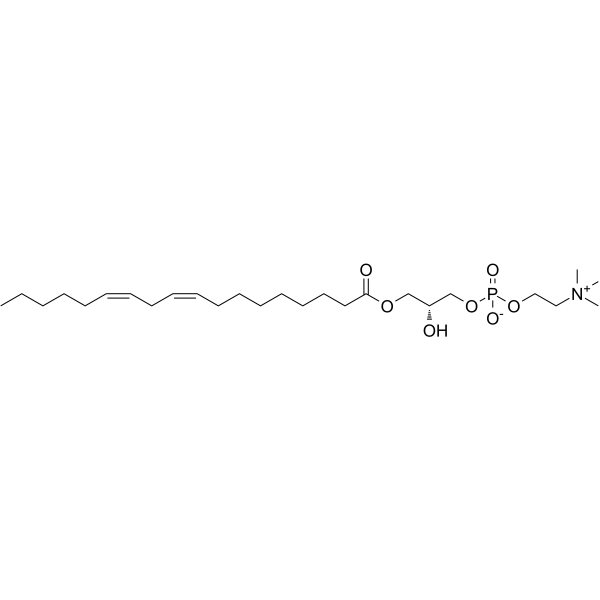
1-Linoleoyl-2-Hydroxy-sn-glycero-3-PC; LPC(18:2/0:0); LysoPC(18:2)
|
Endogenous Metabolite
|
Metabolic Disease
|
|
Lysophosphatidylcholine 18:2 (1-Linoleoyl-2-Hydroxy-sn-glycero-3-PC), a lysophospholipid, is a potential biomarker identified from insulin resistance (IR) polycystic ovary syndrome (PCOS). Low plasma Lysophosphatidylcholine 18:2 also has been shown to predict impaired glucose tolerance, insulin resistance, type 2 diabetes, coronary artery disease, and memory impairment .
|
-
-
- HY-111346
-
-
-
- HY-120991
-
|
1-Palmitoyl-2-Linoleoyl PE; (1-Palmitoyl, 2-Linoleoyl)-phosphatidylethanolamine; (1-Palmitoyl, 2-Linoleoyl)-phosphoethanolamine
|
Liposome
|
Others
|
|
1-Palmitoyl-2-linoleoyl-sn-glycero-3-PE (1-Palmitoyl-2-linoleoyl PE) is a lipid, which promotes nucleic acid such as sRNA to absorb and enter the target cell .
|
-
-
- HY-130311
-
|
2-Monolinolein; 2-MonoLinoleoylglycerol
|
Cannabinoid Receptor
|
Neurological Disease
|
|
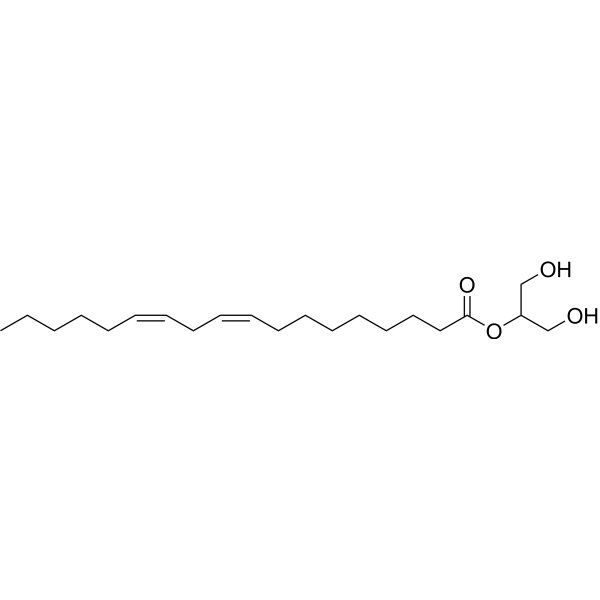
2-Linoleoyl glycerol (2-Monolinolein) is a partial CB1 receptor agonist with a pEC50 of 4.781. 2-Linoleoyl glycerol activates the hCB1 receptor. 2-Linoleoyl glycerol does not induce an increase in intracellular free Ca 2+. 2-Linoleoyl glycerol can be used in the research of neurological disorders .
|
-
-
- HY-126359
-
|
SLPC; 18:0-18:2 PC
|
Endogenous Metabolite
|
Cardiovascular Disease
Metabolic Disease
|
|
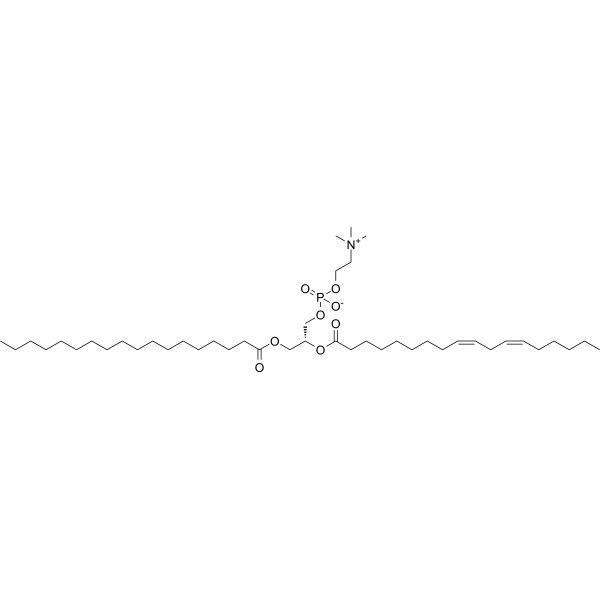
1-Stearoyl-2-linoleoyl-sn-glycero-3-phosphocholine (SLPC; 18:0-18:2 PC) is an endogenous phospholipid marker molecule in the glycerophospholipid metabolic pathway. 1-Stearoyl-2-linoleoyl-sn-glycero-3-phosphocholine is a core component of the phospholipid bilayer of biological membranes and a key responsive lipid for radiation injury and cardiometabolic diseases. 1-Stearoyl-2-linoleoyl-sn-glycero-3-phosphocholine constitutes the phospholipid bilayers of cell membranes and high-density lipoprotein (HDL), and regulates the core activity of lipoprotein functional homeostasis. The content of 1-Stearoyl-2-linoleoyl-sn-glycero-3-phosphocholine in mouse serum shows a significant dose-dependent decrease with increasing ionizing radiation dose, and its level in human HDL also decreases significantly in metabolic syndrome. 1-Stearoyl-2-linoleoyl-sn-glycero-3-phosphocholine can serve as a biological dosimeter marker for ionizing radiation injury, and is used for rapid and accurate assessment of radiation absorbed dose in exposed individuals. 1-Stearoyl-2-linoleoyl-sn-glycero-3-phosphocholine can also act as a lipidomics research target for cardiometabolic diseases such as lipid metabolic syndrome and early-onset coronary heart disease .
|
-
-
- HY-147072
-
|
18:0 -18:2 PS
|
Liposome
|
Others
|
|
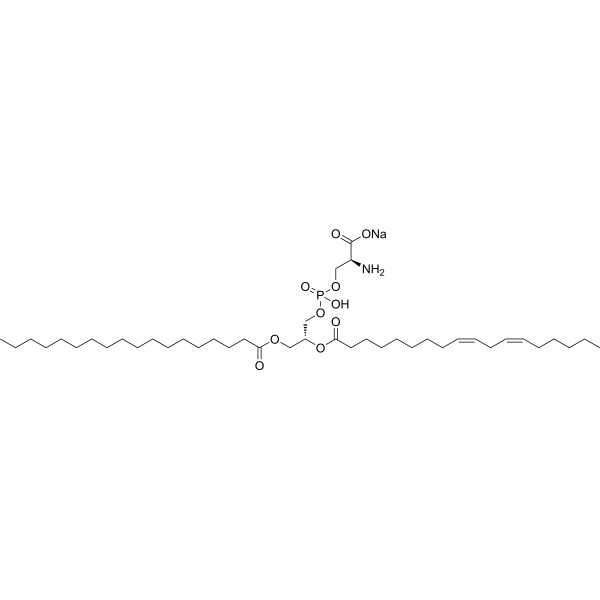
1-Stearoyl-2-linoleoyl-sn-glycero-3-phospho-L-serine sodium is a glycerophospholipid .
|
-
-
- HY-165029
-
|
PLPC
|
Liposome
|
Others
|
|
1-Palmitoyl-2-linoleoyl-sn-glycero-3-PC (PLPC) is a phospholipid used as a major component in lipid bilayer system models. 1-Palmitoyl-2-linoleoyl-sn-glycero-3-PC can serve as an untreated control, mixed with oxidized lipids such as 1-palmitoyl-2-(13-hydroxy-9,11-octadecanedienoyl)-lecithin (OHPLPC) and 1-palmitoyl-2-(13-hydroperoxy-9,11-octadecanedienoyl)-lecithin (HpPLPC), to study the effects of oxidation on membrane properties .
|
-
-
- HY-172340
-
-
-
- HY-113421
-
|
Linoleic acid monoethanolamide
|
Cannabinoid Receptor
|
Neurological Disease
|
|
Linoleoyl ethanolamide (Linoleic acid monoethanolamide) is classified as a fatty acid ethanolamide. Linoleoyl ethanolamide only weakly binds G-protein-coupled cannabinoid receptors of type-1(CB1)and CB2 receptors, and inhibits the binding of [3H]CP-55,940 with Kis of 10 and 25 μM, respectively. Linoleoyl ethanolamide is 4-fold less potent than anandamide at causing catalepsy in mice and it does not prolong sleep time .
|
-
-
- HY-143203
-
|
1-Stearoyl-2-Linoleoyl-sn-glycero-3-phosphoethanolamine
|
Liposome
|
Cancer
|
|
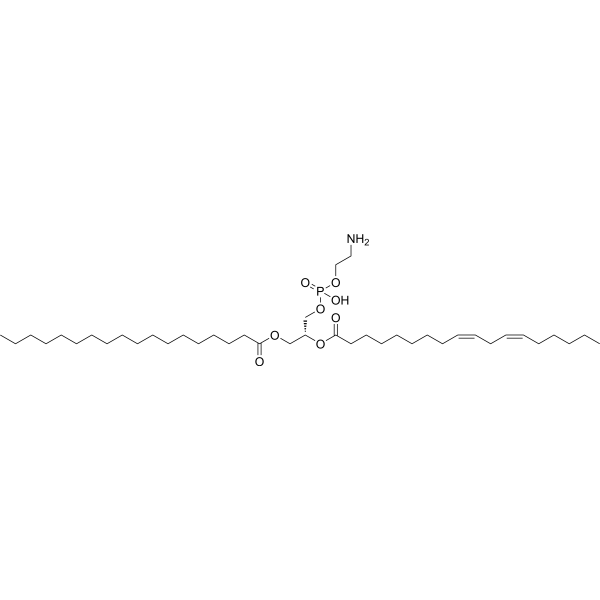
18:0-18:2 PE is an important component of phosphatidylethanolamine (PE), involved in phospholipid metabolism and associated with diseases such as ovarian cancer. 18:0-18:2 PE in the hot processing process, its unsaturated fatty acids will degrade to form a variety of odor active compounds. 18:0-18:2 PE is mainly used in the field of food science to improve the flavor of aquatic products, as well as medical research on diseases related to phospholipid metabolism .
|
-
-
- HY-114932
-
-
-
- HY-113421S
-
|
|
Isotope-Labeled Compounds
Cannabinoid Receptor
|
Neurological Disease
|
|
Linoleoyl ethanolamide-d4 is a deuterated labeled Linoleoyl ethanolamide . Linoleoyl ethanolamide (Linoleic acid monoethanolamide) is classified as a fatty acid ethanolamide. Linoleoyl ethanolamide only weakly binds G-protein-coupled cannabinoid receptors of type-1(CB1)and CB2 receptors, and inhibits the binding of [3H]CP-55,940 with Kis of 10 and 25 μM, respectively. Linoleoyl ethanolamide is 4-fold less potent than anandamide at causing catalepsy in mice and it does not prolong sleep time .
|
-
-
- HY-W127574
-
|
Linoleic acid chloride
|
Biochemical Assay Reagents
|
Others
|
|
Linoleoyl Chloride is a biochemical reagent that can be used as a biological material or organic compound for life science related research.
|
-
-
- HY-157586
-
|
Lysophosphatidylethanolamine C18:2; LysoPE(0:0/18:2)
|
Biochemical Assay Reagents
|
Others
|
|
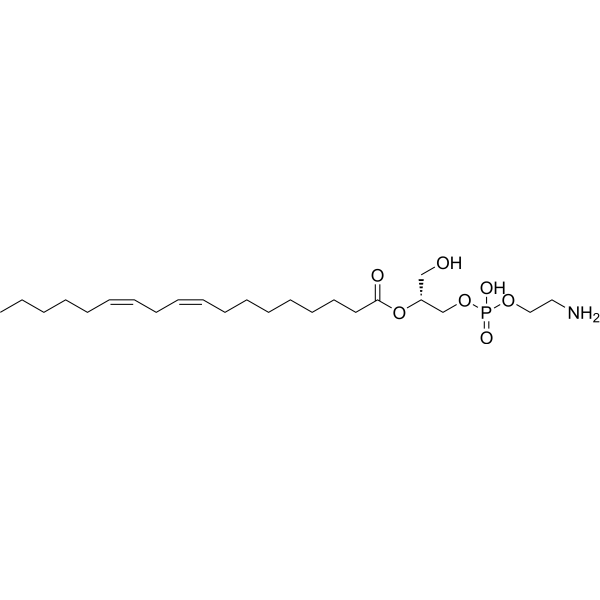
2-Linoleoyl-sn-glycero-3-phosphoethanolamine (Lysophosphatidylethanolamine C18:2) is a kind of lipid metabolite, that can be used as biomarkers. 2-Linoleoyl-sn-glycero-3-phosphoethanolamine can also serve as a model for aminophospholipids .
|
-
-
- HY-N9410S
-
|
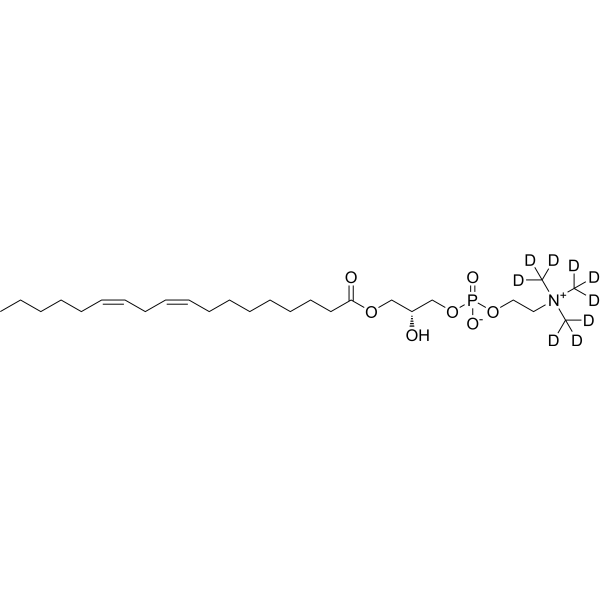
1-Linoleoyl-2-Hydroxy-sn-glycero-3-PC-d9
|
Isotope-Labeled Compounds
Endogenous Metabolite
|
Metabolic Disease
|
|
Lysophosphatidylcholine 18:2-d9 is deuterium labeled Lysophosphatidylcholine 18:2. Lysophosphatidylcholine 18:2 (1-Linoleoyl-2-Hydroxy-sn-glycero-3-PC), a lysophospholipid, is a potential biomarker identified from insulin resistance (IR) polycystic ovary
|
-
-
- HY-146955S
-
-
-
- HY-145525
-
|
CAR 18:2; C18:2 Carnitine; L-Carnitine Linoleoyl ester
|
Endogenous Metabolite
|
Others
|
|
Linoleoyl-L-carnitine is a naturally occurring long-chain acylcarnitine. Hepatic levels of linoleoyl-L-carnitine are increased following high-dose (200 mg/kg) administration of Isoniazid (Item No. 20378) in mice.
|
-
-
- HY-157622
-
|
|
Biochemical Assay Reagents
|
|
|
1-Palmitoyl-2-linoleoyl-sn-glycero-3-phosphocholine is a glycerophospholipid with activity for studying the effects of phosphatidylcholine (PC) on the lubrication of damaged mesothelial cells. 1-Palmitoyl-2-linoleoyl-sn-glycero-3-phosphocholine can be used to explore the function and repair mechanism of cell membranes. 1-Palmitoyl-2-linoleoyl-sn-glycero-3-phosphocholine has important application potential in biomedical research.
|
-
-
- HY-W588315
-
-
-
- HY-N7953
-
|
|
Endogenous Metabolite
|
Metabolic Disease
|
|
1,2-Dioleoyl-3-linoleoyl-rac-glycerol (OOL) is a triacylglycerol containing oleic acid at the sn-1 and sn-2 positions and linoleic acid at the sn-3 position. It is found in a variety of seed and vegetable oils, including pumpkin seed, olive, and sesame oils.
|
-
-
- HY-166119
-
|
Linoleoyl Coenzyme A; 9(Z),12(Z)-Octadecadienoyl Coenzyme A; 9Z,12Z-Octadecadienoyl-CoA; 9Z,12Z-Octadecadienoyl-coenzyme A
|
Biochemical Assay Reagents
|
Metabolic Disease
|
|
9(Z),12(Z)-Octadecadienoyl coenzyme ((Z,Z)-9,12-Octadecadienoyl-COA) is an ester product.
|
-
-
- HY-W778692
-
|
1-Linoleoyl-rac-glycerol-d5; 1-Monolinolein-d5
|
Isotope-Labeled Compounds
Interleukin Related
Phospholipase
Apolipoprotein
|
Metabolic Disease
|
|
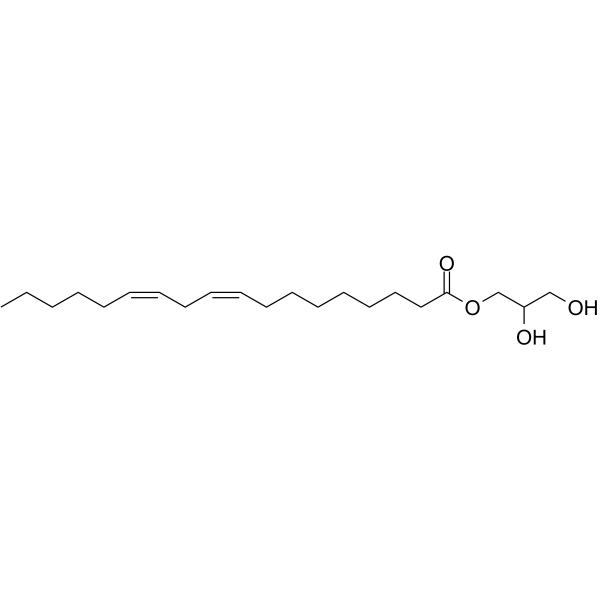
1-Linoleoyl Glycerol-d5 (1-Linoleoyl-rac-glycerol-d5; 1-Monolinolein-d5) is the deuterium labeled 1-Linoleoyl Glycerol (HY-111346). 1-Linoleoyl glycerol is a LpPLA2 inhibitor. 1-Linoleoyl glycerol acts as a precursor for synthesizing various functional lipids, such as phospholipids. 1-Linoleoyl glycerol mitigates inflammation induced by Apolipoprotein CIII (reduction of IL-6) .
|
-
-
- HY-122504
-
|
|
Potassium Channel
|
Neurological Disease
|
|
Linoleoyl glycine is a modified polyunsaturated fatty acid. Linoleoyl glycine has activating effects on human KCNQ1/KCNE1 (hKCNQ1/hKCNE1) channels expressed in Xenopus oocytes .
|
-
-
- HY-W780153
-
-
-
- HY-N9444
-
|
Triglyceride PLP,sn
|
Endogenous Metabolite
|
Metabolic Disease
|
|
1,3-Dipalmitoyl-2-linoleoyl glycerol is a triacylglycerol that contains Palmitic acid at the sn-1 and sn-3 positions and Linoleic acid.
|
-
-
- HY-W777865
-
-
-
- HY-111346R
-
|
1-Linoleoyl-rac-glycerol (Standard); 1-Monolinolein (Standard)
|
Phospholipase
Apolipoprotein
Interleukin Related
Reference Standards
|
Metabolic Disease
Inflammation/Immunology
|
|
1-Linoleoyl Glycerol (Standard) is the analytical standard of 1-Linoleoyl Glycerol. This product is intended for research and analytical applications. 1-Linoleoyl glycerol is a LpPLA2 inhibitor. 1-Linoleoyl glycerol acts as a precursor for synthesizing various functional lipids, such as phospholipids. 1-Linoleoyl glycerol mitigates inflammation induced by Apolipoprotein CIII (reduction of IL-6) .
|
-
-
- HY-W766801
-
|
Rac-1-Linoleoyl-3-chloropropanediol-d5
|
Isotope-Labeled Compounds
|
Metabolic Disease
|
|
1-Linoleoyl-3-chloropropanediol-d5 (Rac-1-Linoleoyl-3-chloropropanediol-d5) is deuterium labeled 1-Linoleoyl-3-chloropropanediol (HY-W777865). 1-Linoleoyl-3-chloropropanediol is a lipid product .
|
-
-
- HY-W767222
-
-
-
- HY-W777870
-
-
-
- HY-165759
-
-
-
- HY-165746
-
-
-
- HY-W777893
-
-
-
- HY-W777894
-
-
-
- HY-W777871
-
-
-
- HY-W777682
-
-
-
- HY-W739652
-
-
-
- HY-W127368
-
|
L-α-Phosphatidylethanolamine, β-Linoleoyl-γ-palmitoyl
|
Biochemical Assay Reagents
|
Others
|
|
2-Linoleoyl-1-palmitoyl-sn-glycero-3-phosphoethanolamine is a biochemical reagent that can be used as a biological material or organic compound for life science related research.
|
-
-
- HY-N15340
-
|
|
PKC
|
Cancer
|
|
1-Oleoyl-2-linoleoyl-sn-glycerol is a diacylglycerol (DG). 1-Oleoyl-2-linoleoyl-sn-glycerol can activate protein kinase C (PKC), thus triggering downstream signaling cascades and promoting tumor growth. 1-Oleoyl-2-linoleoyl-sn-glycerol is promising for research of breast cancer .
|
-
-
- HY-W751066
-
-
-
- HY-W751064
-
-
-
- HY-137411
-
|
(E/Z)-Linoleoyl Coenzyme A; (E/Z)-9,12-Octadecadienoyl Coenzyme A
|
Endogenous Metabolite
|
Others
|
|
(E/Z)-Linoleoyl-CoA is a substrate used to study the specificity and kinetics of acyl-CoA. (E/Z)-Linoleoyl-CoA has the ability to replace substrates, and its specificity can be changed by amino acid substitution, thereby affecting the reaction with different desaturases. The study of (E/Z)-Linoleoyl-CoA helps to understand the substrate specificity of mammalian front-end fatty acid desaturases and provides support for the efficient production of value-added fatty acids .
|
-
-
- HY-W777866
-
|
|
Biochemical Assay Reagents
|
Others
|
|
(Rac)-1-Linoleoyl-2-stearoyl-3-chloropropanediol is a diacylglycerol that contains Linoleic acid at the sn-1 position and stearic acid group at the sn-2 position. The chlorine is a good leaving group and can undergo substitution reactions.
|
-
-
- HY-W777103
-
-
-
- HY-W770198
-
|
2-Monolinolein-d5; 2-MonoLinoleoylglycerol-d5
|
Isotope-Labeled Compounds
Cannabinoid Receptor
|
Neurological Disease
|
|
2-Linoleoyl glycerol-d5 (2-Monolinolein-d5; 2-Monolinoleoylglycerol-d5) is the deuterium labeled 2-Linoleoyl glycerol (HY-130311). 2-Linoleoyl glycerol (2-Monolinolein; 2-Monolinoleoylglycerol) is a monoacylglycerol that is an antagonist and partial agonist at the type 1 cannabinoid CB1 receptor. The potency of 2-Linoleoyl glycerol can be enhanced by JZL195 (HY-15250), an inhibitor of FAAH and MAGL, and inhibited by the CB1 antagonist AM251 (HY-15443) and Cannabidiol. As a CB1 antagonist, 2-Linoleoyl glycerol does not enhance, but only attenuates, the activity of the CB1/CB2 receptor ligands cannabinoids (AEA) and 2-arachidonoylglycerol (2-AG) .
|
-
-
- HY-W740434
-
-
-
- HY-170634
-
|
|
Biochemical Assay Reagents
|
Metabolic Disease
|
|
1-Stearoyl-2-linoleoyl-3-oleoyl-rac-glycerol is a triacylglycerol that contains Stearic acid (HY-B2219), Linoleic acid (HY-N0729), and Oleic acid (HY-N1446) at the sn-1, sn-2, and sn--3 positions, respectively.
|
-
-
- HY-W127456
-
|
|
Biochemical Assay Reagents
|
Others
|
|
1-Stearoyl-2-linoleoyl-sn-glycerol is a biochemical reagent that can be used as a biological material or organic compound for life science related research.
|
-
-
- HY-169031
-
-
-
- HY-165048
-
-
- HY-N15353
-
|
|
Bacterial
|
Infection
|
|
1-Palmitoyl-2-linoleoyl-sn-glycerol is a diacylglycerol (DAG)-type lipid signaling molecule found in the coralloid roots of Cycas revoluta, and serves as a major active component of the plant-secreted hormogonium-inducing factor (HIF). At a concentration of 1 nmol/disc (approximately 0.6 µg), 1-palmitoyl-2-linoleoyl-sn-glycerol can significantly induce the differentiation of filamentous aggregates of Nostoc into motile hormogonia, thereby promoting chemotaxis toward host roots and the establishment of symbiosis. This compound holds significant research and application potential in areas such as plant–microbe interactions, rhizosphere signaling pathways, and nitrogen-fixing symbiosis .
|
-
- HY-W770203
-
|
DG(18:1/0:0/18:2)-d5
|
Isotope-Labeled Compounds
Endogenous Metabolite
|
Others
|
|
1-Oleoyl-2-linoleoyl-rac-glycerol-d5 (DG(18:1/0:0/18:2)-d5) is the deuterium labeled 1-Oleoyl-2-linoleoyl-rac-glycerol (HY-W777107). 1-Oleoyl-2-linoleoyl-rac-glycerol (DG(18:1/0:0/18:2)) is a diacylglycerol, which is composed of a linoleic acid and an oleic acid. 1-Oleoyl-2-linoleoyl-rac-glycerol can be found in dry-cured ham, and acts as the food additive .
|
-
- HY-168372
-
|
|
Phospholipase
|
Metabolic Disease
|
|
1-Myristoyl-2-Linoleoyl-sn-glycero-3-PC is a phospholipid that contains Myristic acid (HY-N2041) and Linoleic acid (HY-N0729) at the sn-1 and sn-2 positions, respectively, which is found in human plasma .
|
-
- HY-152922
-
|
C16(plasm)-18:2-PC; 1-1(Z)-Hexadecenyl-2-Linoleoyl-sn-glycero-3-PC; PC(P-16:0/18:2)
|
Biochemical Assay Reagents
|
Others
|
|
1-(1(Z)-Hexadecenyl)-2-linoleoyl-sn-glycero-3-phosphocholine (C16(plasm)-18:2-PC; 1-1(Z)-Hexadecenyl-2-Linoleoyl-sn-glycero-3-PC; PC(P-16:0/18:2)) is a phosphatidylcholine, which can be used in lipid preparations and as a marker in metabolomic research .
|
-
- HY-W778471
-
|
DG(18:2/0:0/18:3); 1-Linolein-3-α-Linolenin; 1-Linolein-3-Linolenin
|
Endogenous Metabolite
|
Metabolic Disease
|
|
1-Linoleoyl-3-α-linolenoyl-rac-glycerol is a diacylglycerol that contains linoleic acid (HY-N0729) at the sn-1 position and α-linolenic acid (HY-N0728) at the sn-3 position. It has been found in olive oil subjected to lipase-catalyzed glycerolysis with immobilized lipase B from C. antarctica.
|
-
- HY-142971
-
|
1-Myristin-2-Linolein-3-Olein; TG(14:0/18:2/18:1)
|
Endogenous Metabolite
|
Metabolic Disease
|
|
1-Myristoyl-2-linoleoyl-3-oleoyl-rac-glycerol is a triacylglycerol that contains myristic acid (HY-N2041), linoleic acid (HY-N0729), and oleic acid (HY-N1446) at the sn-1, sn-2, and sn-3 positions, respectively. It has been found in mature human milk, infant formula fats, and butterfat.
|
-
- HY-171008
-
|
|
Drug Intermediate
|
Metabolic Disease
|
|
Linoleoyl ethanolamide phosphate is an intermediate in the biosynthesis of Linoleoyl ethanolamide (HY-113421). Linoleoyl ethanolamide phosphate combined with other endogenous N-acylethanolamines plays a role in the regulation of food intake by selective prolongation of feeding latency and post-meal interval .
|
-
- HY-167585S
-
|
1-Palmitoyl-2-Linoleoyl(-d5)-sn-glycero-3-phosphocholine
|
Isotope-Labeled Compounds
|
Others
|
|
16:0-18:2 PC-d5 (1-Palmitoyl-2-linoleoyl(d5)-sn-glycero-3-phosphocholine) is deuterium labeled 16:0-18:2 PC .
|
-
- HY-170458
-
|
1-Stearoyl-2-Linoleoyl-sn-glycero-3-phospho-(1'-rac-glycerol) sodium
|
Biochemical Assay Reagents
|
Others
|
|
18:0-18:2 PG (1-Stearoyl-2-linoleoyl-sn-glycero-3-phospho-(1'-rac-glycerol)) sodium is a glycerophospholipid contains Stearic acid (HY-B2219), Linolenic acid (HY-N0728) and phospho-rac-(1-glycerol) .
|
-
- HY-165049
-
|
1-Stearin-2-olein-3-linolein; TG(18:0/18:1/18:2)
|
Lipoxygenase
|
Others
|
|
1-Stearoyl-2-oleoyl-3-linoleoyl-rac-glycerol (1-Stearin-2-olein-3-linolein), a compound in the triglyceride composition of ostrich oil, was analyzed and identified by specific chromatography-mass spectrometry techniques.
|
-
- HY-165055
-
|
1-Olein-2-palmitin-3-linolein; TG(18:1/16:0/18:2); 18:1/16:0/18:2-TG
|
Others
|
Others
|
|
1-Oleoyl-2-palmitoyl-3-linoleoyl-rac-glycerol (1-Olein-2-palmitin-3-linolein) is a compound mentioned in the chemical analysis of triglycerides and diacylglycerols in bovine milk fat. It was identified by a specific chromatography-mass spectrometry technique, which is environmentally friendly and efficient.
|
-
- HY-W778189
-
|
2-Linoleoyl-3-chloropropanediol-d5
|
Isotope-Labeled Compounds
|
Others
|
|
rac-2-Linoleoyl-3-chloropropanediol-d5,95% (2-Linoleoyl-3-chloropropanediol-d5) is deuterium labeled rac-2-Linoleoyl-3-chloropropanediol,95% .
|
-
- HY-W742484
-
|
|
Biochemical Assay Reagents
|
Others
|
|
1-Linoleoyl-(2S)-glycerol is a lipid with a structure similar to that of linoleic acid. The hydroxyl group enables further derivatization or replacement with other reactive functional groups.
|
-
- HY-W766802
-
|
|
Isotope-Labeled Compounds
|
Others
|
|
rac-1-Linoleoyl-2-linolenoyl-3-chloropropanediol-d5 is the deuterium labeled rac-1-Linoleoyl-2-linolenoyl-3-chloropropanediol.
|
-
- HY-W777870S
-
-
- HY-W770204
-
-
- HY-W766831
-
|
1-Oleoyl-2-Linoleyl-3-chloropropanediol-d5
|
Isotope-Labeled Compounds
|
Others
|
|
rac 1-oleoyl-2-linoleoyl-3-chloropropanediol-d5 (1-Oleoyl-2-Linoleyl-3-chloropropanediol-d5) is deuterium labeled rac 1-oleoyl-2-linoleoyl-3-chloropropanediol .
|
-
- HY-W777107
-
|
DG(18:1/0:0/18:2)
|
Endogenous Metabolite
|
Others
|
|
1-Oleoyl-2-linoleoyl-rac-glycerol (DG(18:1/0:0/18:2)) is a diacylglycerol, which is composed of a linoleic acid and an oleic acid. 1-Oleoyl-2-linoleoyl-rac-glycerol can be found in dry-cured ham, and acts as the food additive .
|
-
- HY-W654252
-
|
|
Isotope-Labeled Compounds
|
Metabolic Disease
|
|
Linoleoyl Carnitine (N-methyl-d3) is the deuterium labeled Linoleyl carnitine (HY-113256). Linoleyl carnitine is an acylcarnitine used to study long-chain 3-hydroxyacyl-CoA dehydrogenase deficiency and fatty acid oxidation disorders in fibroblasts .
|
-
- HY-165006
-
-
- HY-165094
-
|
1-Myristin-2-linolein-3-palmitin; TG(14:0/18:2/16:0)
|
Endogenous Metabolite
|
Others
|
|
1-Myristoyl-2-linoleoyl-3-palmitoyl-rac-glycerol (1-Myristin-2-linolein-3-palmitin) is a triglyceride with specific structural and distribution characteristics identified by specific analytical methods in human milk, infant formula, other mammalian milk, and vegetable oils.
|
-
- HY-165047
-
|
1-Palmitin-2-linolein-3-stearin; 16:0/18:2/18:0-TG; TG(16:0/18:2/18:0)
|
Others
|
Others
|
|
1-Palmitoyl-2-linoleoyl-3-stearoyl-rac-glycerol (1-Palmitin-2-linolein-3-stearin) is a compound that is being studied for lipid properties in human milk and infant formula. Although human milk has larger fat globules, it has a higher rate of gastrointestinal lipolysis, which may be related to the milk fat globule membrane (MFGM).
|
-
- HY-165056
-
|
1,2-Palmitin-3-linolein; TG(16:0/16:0/18:2)
|
Others
|
Others
|
|
1,2-Dipalmitoyl-3-linoleoyl-rac-glycerol (1,2-Palmitin-3-linolein), a compound mentioned in the chemical analysis of triglycerides and diacylglycerols in bovine milk fat, was identified by a specific chromatography-mass spectrometry technique, which is environmentally friendly and efficient.
|
-
- HY-158946
-
|
1,2-Dielaidin-3-linolein; 1,2-Elaidin-3-linolein; TG(18:1/18:1/18:2)
|
Biochemical Assay Reagents
|
Metabolic Disease
|
|
1,2-Dielaidoyl-3-linoleoyl-rac-glycerol (1,2-Dielaidin-3-linolein) is a triacylglycerol that contains Elaidic acid (HY-113016) and Linoleic acid (HY-N0729).
|
-
- HY-165663S
-
|
1-Myistoyl-d7-2-Lioleoyl-s-glyceo-3-Phosphatidylcholie; 1-Myistoyl-d7-2-Lioleoyl-s-glyceo-3-Phosphocholie; PC(14:0-d7/18:2); 14:0-d7/18:2-PC
|
Isotope-Labeled Compounds
|
Others
|
|
1-Myristoyl-d7-2-Linoleoyl-sn-glycero-3-PC (1-Myistoyl-d7-2-Lioleoyl-s-glyceo-3-Phosphatidylcholie, 1-Myistoyl-d7-2-Lioleoyl-s-glyceo-3-Phosphocholie, PC(14:0-d7/18:2), 14:0-d7/18:2-PC) is deuterium labeled 1-Myristoyl-2-Linoleoyl-sn-glycero-3-PC .
|
-
- HY-157279
-
|
1-Palmitoyl-2-Linoleoyl-sn-glycero-3-phospho-L-serine sodium
|
Others
|
Metabolic Disease
|
|
16:0-18:2 PS (sodium) is a phosphatidylserine.
|
-
| Cat. No. |
Product Name |
Type |
-
- HY-143203
-
|
1-Stearoyl-2-Linoleoyl-sn-glycero-3-phosphoethanolamine
|
Biochemical Assay Reagents
|
|
18:0-18:2 PE is an important component of phosphatidylethanolamine (PE), involved in phospholipid metabolism and associated with diseases such as ovarian cancer. 18:0-18:2 PE in the hot processing process, its unsaturated fatty acids will degrade to form a variety of odor active compounds. 18:0-18:2 PE is mainly used in the field of food science to improve the flavor of aquatic products, as well as medical research on diseases related to phospholipid metabolism .
|
-
- HY-157622
-
|
|
Biochemical Assay Reagents
|
|
1-Palmitoyl-2-linoleoyl-sn-glycero-3-phosphocholine is a glycerophospholipid with activity for studying the effects of phosphatidylcholine (PC) on the lubrication of damaged mesothelial cells. 1-Palmitoyl-2-linoleoyl-sn-glycero-3-phosphocholine can be used to explore the function and repair mechanism of cell membranes. 1-Palmitoyl-2-linoleoyl-sn-glycero-3-phosphocholine has important application potential in biomedical research.
|
-
- HY-W588315
-
-
- HY-W777682
-
-
- HY-W739652
-
|
|
Biochemical Assay Reagents
|
|
1-Linoleoyl-2-oleoyl-rac-glycerol is a diglyceride contains Oleic acid (HY-N1446) and Linoleic acid (HY-N0729) .
|
-
- HY-W127368
-
|
L-α-Phosphatidylethanolamine, β-Linoleoyl-γ-palmitoyl
|
Biochemical Assay Reagents
|
|
2-Linoleoyl-1-palmitoyl-sn-glycero-3-phosphoethanolamine is a biochemical reagent that can be used as a biological material or organic compound for life science related research.
|
-
- HY-W777103
-
-
- HY-W740434
-
-
- HY-W127456
-
|
|
Biochemical Assay Reagents
|
|
1-Stearoyl-2-linoleoyl-sn-glycerol is a biochemical reagent that can be used as a biological material or organic compound for life science related research.
|
-
- HY-170458
-
|
1-Stearoyl-2-Linoleoyl-sn-glycero-3-phospho-(1'-rac-glycerol) sodium
|
Biochemical Assay Reagents
|
|
18:0-18:2 PG (1-Stearoyl-2-linoleoyl-sn-glycero-3-phospho-(1'-rac-glycerol)) sodium is a glycerophospholipid contains Stearic acid (HY-B2219), Linolenic acid (HY-N0728) and phospho-rac-(1-glycerol) .
|
-
- HY-W739644
-
|
|
Biochemical Assay Reagents
|
|
1-Linoleoyl-2-oleoyl-3-stearoyl-rac-glycerol is a triacylglycerol molecule with biological activity that promotes lipid droplet formation. The fatty acid combination of 1-Linoleoyl-2-oleoyl-3-stearoyl-rac-glycerol makes it an important tool for studying the effects of fatty acids. 1-Linoleoyl-2-oleoyl-3-stearoyl-rac-glycerol has a wide range of applications in cell biology and metabolic research.
|
| Cat. No. |
Product Name |
Target |
Research Area |
| Cat. No. |
Product Name |
Category |
Target |
Chemical Structure |
-
- HY-N9410
-
-
-
- HY-111346
-
-
-
- HY-126359
-
|
SLPC; 18:0-18:2 PC
|
Structural Classification
Classification of Application Fields
Metabolic Disease
Endogenous metabolite
Disease Research Fields
Lipid
Source Classification
|
Endogenous Metabolite
|
|
1-Stearoyl-2-linoleoyl-sn-glycero-3-phosphocholine (SLPC; 18:0-18:2 PC) is an endogenous phospholipid marker molecule in the glycerophospholipid metabolic pathway. 1-Stearoyl-2-linoleoyl-sn-glycero-3-phosphocholine is a core component of the phospholipid bilayer of biological membranes and a key responsive lipid for radiation injury and cardiometabolic diseases. 1-Stearoyl-2-linoleoyl-sn-glycero-3-phosphocholine constitutes the phospholipid bilayers of cell membranes and high-density lipoprotein (HDL), and regulates the core activity of lipoprotein functional homeostasis. The content of 1-Stearoyl-2-linoleoyl-sn-glycero-3-phosphocholine in mouse serum shows a significant dose-dependent decrease with increasing ionizing radiation dose, and its level in human HDL also decreases significantly in metabolic syndrome. 1-Stearoyl-2-linoleoyl-sn-glycero-3-phosphocholine can serve as a biological dosimeter marker for ionizing radiation injury, and is used for rapid and accurate assessment of radiation absorbed dose in exposed individuals. 1-Stearoyl-2-linoleoyl-sn-glycero-3-phosphocholine can also act as a lipidomics research target for cardiometabolic diseases such as lipid metabolic syndrome and early-onset coronary heart disease .
|
-
-
- HY-113421
-
|
Linoleic acid monoethanolamide
|
Human Gut Microbiota Metabolites
Microorganisms
Endogenous metabolite
Source Classification
|
Cannabinoid Receptor
|
|
Linoleoyl ethanolamide (Linoleic acid monoethanolamide) is classified as a fatty acid ethanolamide. Linoleoyl ethanolamide only weakly binds G-protein-coupled cannabinoid receptors of type-1(CB1)and CB2 receptors, and inhibits the binding of [3H]CP-55,940 with Kis of 10 and 25 μM, respectively. Linoleoyl ethanolamide is 4-fold less potent than anandamide at causing catalepsy in mice and it does not prolong sleep time .
|
-
-
- HY-N9444
-
-
-
- HY-111346R
-
-
-
- HY-N15340
-
|
|
Natural Products
Endogenous metabolite
Source Classification
|
PKC
|
|
1-Oleoyl-2-linoleoyl-sn-glycerol is a diacylglycerol (DG). 1-Oleoyl-2-linoleoyl-sn-glycerol can activate protein kinase C (PKC), thus triggering downstream signaling cascades and promoting tumor growth. 1-Oleoyl-2-linoleoyl-sn-glycerol is promising for research of breast cancer .
|
-
-
- HY-N15353
-
|
|
Structural Classification
Plants
Cycadaceae
Cycas revoluta Thunb.
Lipid
Source Classification
|
Bacterial
|
|
1-Palmitoyl-2-linoleoyl-sn-glycerol is a diacylglycerol (DAG)-type lipid signaling molecule found in the coralloid roots of Cycas revoluta, and serves as a major active component of the plant-secreted hormogonium-inducing factor (HIF). At a concentration of 1 nmol/disc (approximately 0.6 µg), 1-palmitoyl-2-linoleoyl-sn-glycerol can significantly induce the differentiation of filamentous aggregates of Nostoc into motile hormogonia, thereby promoting chemotaxis toward host roots and the establishment of symbiosis. This compound holds significant research and application potential in areas such as plant–microbe interactions, rhizosphere signaling pathways, and nitrogen-fixing symbiosis .
|
-
| Cat. No. |
Product Name |
Chemical Structure |
-
- HY-113421S
-
|
|
|
Linoleoyl ethanolamide-d4 is a deuterated labeled Linoleoyl ethanolamide . Linoleoyl ethanolamide (Linoleic acid monoethanolamide) is classified as a fatty acid ethanolamide. Linoleoyl ethanolamide only weakly binds G-protein-coupled cannabinoid receptors of type-1(CB1)and CB2 receptors, and inhibits the binding of [3H]CP-55,940 with Kis of 10 and 25 μM, respectively. Linoleoyl ethanolamide is 4-fold less potent than anandamide at causing catalepsy in mice and it does not prolong sleep time .
|
-
-
- HY-N9410S
-
|
|
|
Lysophosphatidylcholine 18:2-d9 is deuterium labeled Lysophosphatidylcholine 18:2. Lysophosphatidylcholine 18:2 (1-Linoleoyl-2-Hydroxy-sn-glycero-3-PC), a lysophospholipid, is a potential biomarker identified from insulin resistance (IR) polycystic ovary
|
-
-
- HY-146955S
-
|
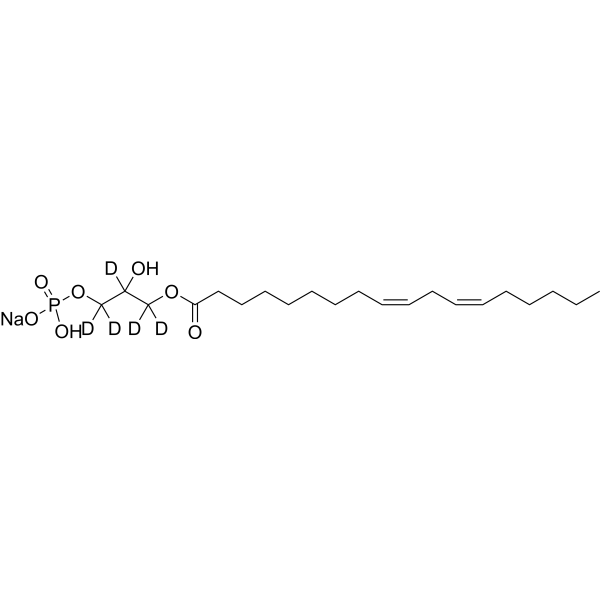
|
|
Linoleoyl LPA-d5 is deuterium labeled Linoleoyl LPA.
|
-
-
- HY-W778692
-
|
|
|
1-Linoleoyl Glycerol-d5 (1-Linoleoyl-rac-glycerol-d5; 1-Monolinolein-d5) is the deuterium labeled 1-Linoleoyl Glycerol (HY-111346). 1-Linoleoyl glycerol is a LpPLA2 inhibitor. 1-Linoleoyl glycerol acts as a precursor for synthesizing various functional lipids, such as phospholipids. 1-Linoleoyl glycerol mitigates inflammation induced by Apolipoprotein CIII (reduction of IL-6) .
|
-
-
- HY-W766801
-
|
|
|
1-Linoleoyl-3-chloropropanediol-d5 (Rac-1-Linoleoyl-3-chloropropanediol-d5) is deuterium labeled 1-Linoleoyl-3-chloropropanediol (HY-W777865). 1-Linoleoyl-3-chloropropanediol is a lipid product .
|
-
-
- HY-W767222
-
|
|
|
rac-1-Linoleoyl-2-chloropropanediol-d5 is the deuterium labeled rac-1-Linoleoyl-2-chloropropanediol.
|
-
-
- HY-W777871
-
|
|
|
rac-1-Palmitoyl-2-linoleoyl-3-chloropropanediol-d5 is the deuterium labeled 1-Palmitoyl-2-linoleoyl-3-chloropropanediol (HY-W777870). 1-Palmitoyl-2-linoleoyl-3-chloropropanediol is an ester product.
|
-
-
- HY-W751066
-
|
|
|
2-Linoleoyl-rac-glycerol-O-TIPS-d5 is the deuterium labeled 2-Linoleoyl-rac-glycerol-O-TIPS.
|
-
-
- HY-W751064
-
|
|
|
2-Linoleoyl-rac-glycerol-O-TBS-d5 is the deuterium labeled 2-Linoleoyl-rac-glycerol-O-TBS.
|
-
-
- HY-W770198
-
|
|
|
2-Linoleoyl glycerol-d5 (2-Monolinolein-d5; 2-Monolinoleoylglycerol-d5) is the deuterium labeled 2-Linoleoyl glycerol (HY-130311). 2-Linoleoyl glycerol (2-Monolinolein; 2-Monolinoleoylglycerol) is a monoacylglycerol that is an antagonist and partial agonist at the type 1 cannabinoid CB1 receptor. The potency of 2-Linoleoyl glycerol can be enhanced by JZL195 (HY-15250), an inhibitor of FAAH and MAGL, and inhibited by the CB1 antagonist AM251 (HY-15443) and Cannabidiol. As a CB1 antagonist, 2-Linoleoyl glycerol does not enhance, but only attenuates, the activity of the CB1/CB2 receptor ligands cannabinoids (AEA) and 2-arachidonoylglycerol (2-AG) .
|
-
-
- HY-W770203
-
|
|
|
1-Oleoyl-2-linoleoyl-rac-glycerol-d5 (DG(18:1/0:0/18:2)-d5) is the deuterium labeled 1-Oleoyl-2-linoleoyl-rac-glycerol (HY-W777107). 1-Oleoyl-2-linoleoyl-rac-glycerol (DG(18:1/0:0/18:2)) is a diacylglycerol, which is composed of a linoleic acid and an oleic acid. 1-Oleoyl-2-linoleoyl-rac-glycerol can be found in dry-cured ham, and acts as the food additive .
|
-
-
- HY-167585S
-
|
|
|
16:0-18:2 PC-d5 (1-Palmitoyl-2-linoleoyl(d5)-sn-glycero-3-phosphocholine) is deuterium labeled 16:0-18:2 PC .
|
-
-
- HY-W778189
-
|
|
|
rac-2-Linoleoyl-3-chloropropanediol-d5,95% (2-Linoleoyl-3-chloropropanediol-d5) is deuterium labeled rac-2-Linoleoyl-3-chloropropanediol,95% .
|
-
-
- HY-W766802
-
|
|
|
rac-1-Linoleoyl-2-linolenoyl-3-chloropropanediol-d5 is the deuterium labeled rac-1-Linoleoyl-2-linolenoyl-3-chloropropanediol.
|
-
-
- HY-W777870S
-
|
|
|
1-Palmitoyl-2-linoleoyl-3-chloropropanediol-d5 is a deuterated 3-monochloropropanediol (3-MCPD) glycidyl ester.
|
-
-
- HY-W770204
-
|
|
|
1-Palmitoyl-2-linoleoyl-rac-glycerol-d5 is the deuterium labeled 1-Palmitoyl-2-linoleoyl-rac-glycerol (HY-W740434). 1-Palmitoyl-2-linoleoyl-rac-glycerol is a diacylglycerol that contains Palmitic acid (HY-N0830) .
|
-
-
- HY-W766831
-
|
|
|
rac 1-oleoyl-2-linoleoyl-3-chloropropanediol-d5 (1-Oleoyl-2-Linoleyl-3-chloropropanediol-d5) is deuterium labeled rac 1-oleoyl-2-linoleoyl-3-chloropropanediol .
|
-
-
- HY-W654252
-
|
|
|
Linoleoyl Carnitine (N-methyl-d3) is the deuterium labeled Linoleyl carnitine (HY-113256). Linoleyl carnitine is an acylcarnitine used to study long-chain 3-hydroxyacyl-CoA dehydrogenase deficiency and fatty acid oxidation disorders in fibroblasts .
|
-
-
- HY-165663S
-
|
|
|
1-Myristoyl-d7-2-Linoleoyl-sn-glycero-3-PC (1-Myistoyl-d7-2-Lioleoyl-s-glyceo-3-Phosphatidylcholie, 1-Myistoyl-d7-2-Lioleoyl-s-glyceo-3-Phosphocholie, PC(14:0-d7/18:2), 14:0-d7/18:2-PC) is deuterium labeled 1-Myristoyl-2-Linoleoyl-sn-glycero-3-PC .
|
-
| Cat. No. |
Product Name |
|
Classification |
-
- HY-N9410
-
|
1-Linoleoyl-2-Hydroxy-sn-glycero-3-PC; LPC(18:2/0:0); LysoPC(18:2)
|
|
Phospholipids
|
|
Lysophosphatidylcholine 18:2 (1-Linoleoyl-2-Hydroxy-sn-glycero-3-PC), a lysophospholipid, is a potential biomarker identified from insulin resistance (IR) polycystic ovary syndrome (PCOS). Low plasma Lysophosphatidylcholine 18:2 also has been shown to predict impaired glucose tolerance, insulin resistance, type 2 diabetes, coronary artery disease, and memory impairment .
|
-
- HY-120991
-
|
1-Palmitoyl-2-Linoleoyl PE; (1-Palmitoyl, 2-Linoleoyl)-phosphatidylethanolamine; (1-Palmitoyl, 2-Linoleoyl)-phosphoethanolamine
|
|
Phospholipids
|
|
1-Palmitoyl-2-linoleoyl-sn-glycero-3-PE (1-Palmitoyl-2-linoleoyl PE) is a lipid, which promotes nucleic acid such as sRNA to absorb and enter the target cell .
|
-
- HY-147072
-
|
18:0 -18:2 PS
|
|
Phospholipids
|
|
1-Stearoyl-2-linoleoyl-sn-glycero-3-phospho-L-serine sodium is a glycerophospholipid .
|
-
- HY-165029
-
|
PLPC
|
|
Cationic Lipids
|
|
1-Palmitoyl-2-linoleoyl-sn-glycero-3-PC (PLPC) is a phospholipid used as a major component in lipid bilayer system models. 1-Palmitoyl-2-linoleoyl-sn-glycero-3-PC can serve as an untreated control, mixed with oxidized lipids such as 1-palmitoyl-2-(13-hydroxy-9,11-octadecanedienoyl)-lecithin (OHPLPC) and 1-palmitoyl-2-(13-hydroperoxy-9,11-octadecanedienoyl)-lecithin (HpPLPC), to study the effects of oxidation on membrane properties .
|
-
- HY-143203
-
|
1-Stearoyl-2-Linoleoyl-sn-glycero-3-phosphoethanolamine
|
|
Phospholipids
|
|
18:0-18:2 PE is an important component of phosphatidylethanolamine (PE), involved in phospholipid metabolism and associated with diseases such as ovarian cancer. 18:0-18:2 PE in the hot processing process, its unsaturated fatty acids will degrade to form a variety of odor active compounds. 18:0-18:2 PE is mainly used in the field of food science to improve the flavor of aquatic products, as well as medical research on diseases related to phospholipid metabolism .
|
-
- HY-157622
-
|
|
|
Phospholipids
|
|
1-Palmitoyl-2-linoleoyl-sn-glycero-3-phosphocholine is a glycerophospholipid with activity for studying the effects of phosphatidylcholine (PC) on the lubrication of damaged mesothelial cells. 1-Palmitoyl-2-linoleoyl-sn-glycero-3-phosphocholine can be used to explore the function and repair mechanism of cell membranes. 1-Palmitoyl-2-linoleoyl-sn-glycero-3-phosphocholine has important application potential in biomedical research.
|
Your information is safe with us. * Required Fields.
Inquiry Information
- Product Name:
- Cat. No.:
- Quantity:
- MCE Japan Authorized Agent:

