1. Search Result
Search Result
Results for "

MMP2-IN-2

" in MedChemExpress (MCE) Product Catalog:

10

Inhibitors & Agonists

2

Biochemical Assay Reagents

4

Peptides

2

Natural
Products

1

Oligonucleotides

Cat. No. Product Name Target Research Areas Chemical Structure
  • HY-W068119A

    2-MaleimidoethylamINe hydrochloride

    Biochemical Assay Reagents Cancer
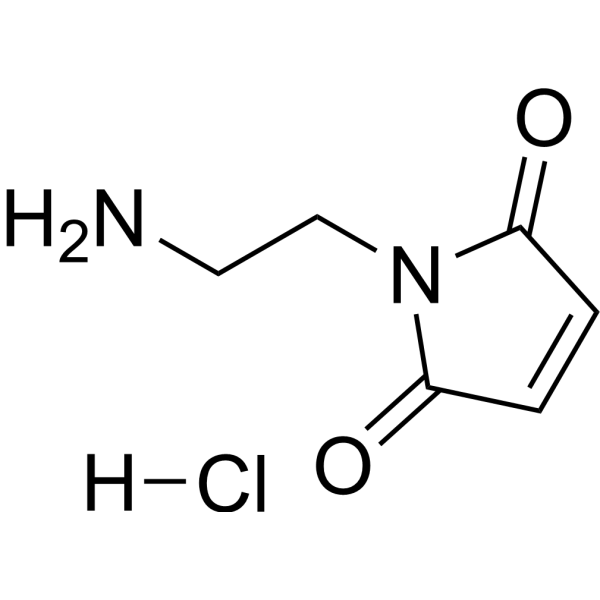
    N-(2-Aminoethyl)maleimide (2-Maleimidoethylamine) hydrochloride is a selective covalent binding agent for thiol groups (RSGs), covalently binding to thiols via an irreversible thioether bond to prepare MMP-2-sensitive nanosystems. Under near-neutral conditions, the maleimide group in N-(2-Aminoethyl)maleimide hydrochloride binds to thiol groups via a nucleophilic addition reaction, and can be used to modify polymers or biological interfaces, enhancing mucosal adhesion and regulating the surface charge of biological interfaces. N-(2-Aminoethyl)maleimide hydrochloride can optimize the adhesion performance of drug delivery carriers and cell interactions with biological interfaces, and is applied in transmucosal drug delivery systems (such as drug carriers for oral and bladder sites) and biomaterial surface engineering research, providing support for tissue implantation, regeneration, and related drug delivery .
    N-(2-Aminoethyl)maleimide hydrochloride
  • HY-P2213

    MMP Apoptosis Cancer
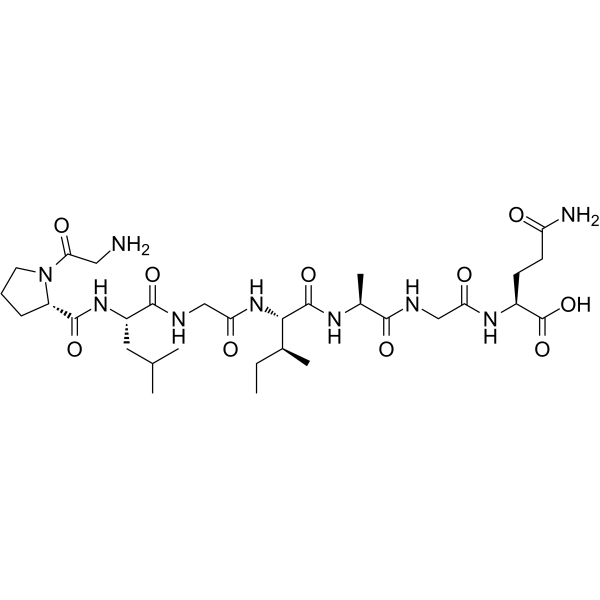
    GPLGIAGQ, a MMP2-cleavable polypeptide, is used as a stimulus-sensitive linker in both liposomal and micellar nanocarriers for MMP2-triggered tumor targeting. GPLGIAGQ can be used to synthesis unique MMP2-targeted photosensitizer in photodynamic therapy (PDT) .
    GPLGIAGQ
  • HY-W591424

    mPEG2000-SC; mPEG2000-SuccINimidyl ester

    Biochemical Assay Reagents MMP Cancer
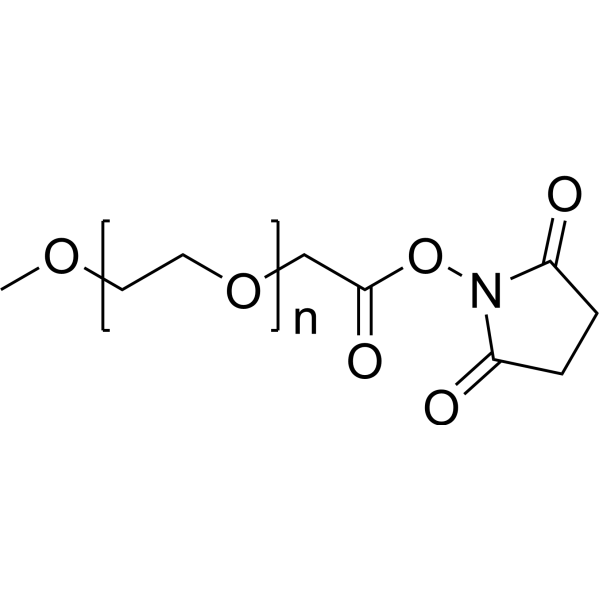
    m-PEG2000-NHS ester (mPEG2000-SC) is a reagent with both cell adhesion inhibition and peptide conjugation functions. The NHS ester group of m-PEG2000-NHS ester forms stable amide bonds with primary amine-containing molecules (e.g., the N-terminus of MMP-2-cleavable octapeptide) to generate mPEG-peptide intermediates for liposome surface modification. When m-PEG2000-NHS ester is immobilized on a cystamine-modified gold surface, it can construct an in vitro model for cell adhesion kinetic studies, and higher PEG density and thicker layers correlate with lower cell adhesion rates. m-PEG2000-NHS ester can synthesize MMP-2-responsive PEGylated lipid conjugates to achieve MMP-triggered dePEGylation in the tumor microenvironment. m-PEG2000-NHS ester can be used in studies related to colon cancer and other conditions .
    m-PEG2000-NHS ester
  • HY-147745

    MMP Cancer
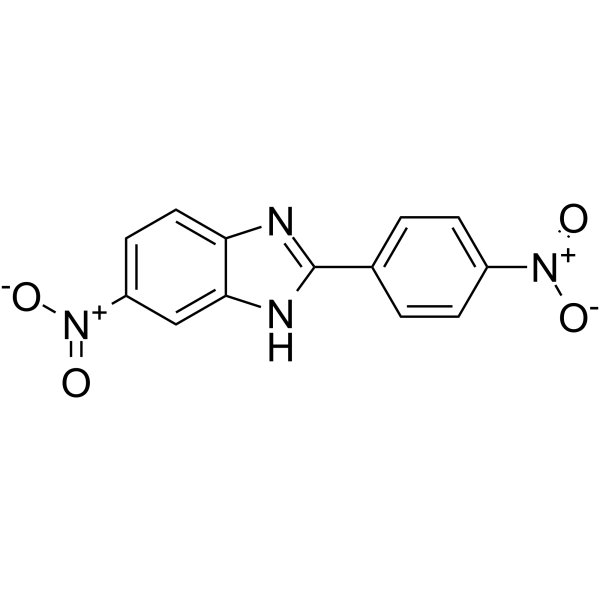
    MMP2-IN-2 (compound 42) is a potent and selective MMP-2 (matrix metalloproteinases) inhibitor, with an IC50 of 4.2 μM. MMP2-IN-2 also shows inhibitory activity against MMP-13, MMP-9 and MMP-8, with IC50 values of 12, 23.3, and 25 μM, respectively .
    MMP2-IN-2
  • HY-N16129

    Nymphaeol A; PropolIN C

    COX Reactive Oxygen Species (ROS) Calcium Channel Ferroptosis Mitochondrial Metabolism MMP Inflammation/Immunology Cancer
    Diplacone is an orally active geranyl flavanone. It is isolated from the fruits of Paulownia tomentosa. Diplacone reduces COX-2 levels and increases the pro-MMP2/MMP2 ratio. It induces ferroptosis-mediated cell death. Diplacone enhances mitochondrial Ca 2+ influx and ROS production. It possesses anti-inflammatory and free radical-scavenging activities. Diplacone can be used in research related to ulcerative colitis and non-small cell lung cancer .
    Diplacone
  • HY-N7385

    MMP Apoptosis Cancer
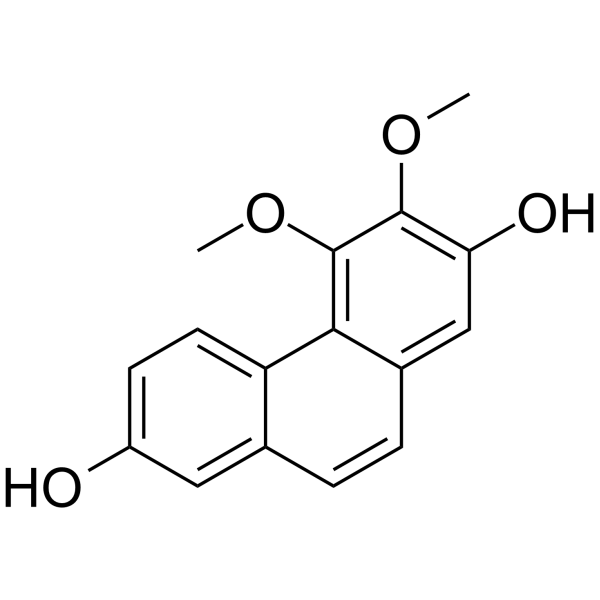
    Nudol is a phenanthrene compound that has anti-cancer activity. Nudol inhibits cell proliferation, induces cell apoptosis. Nudol inhibits MMP-2M and MMP-9 activity (Ki: 988.9 nM, 1.76 μM, respectively). Nudol can be used in the research of cancers, such as osteosarcoma .
    Nudol
  • HY-P2213A

    MMP Apoptosis Cancer
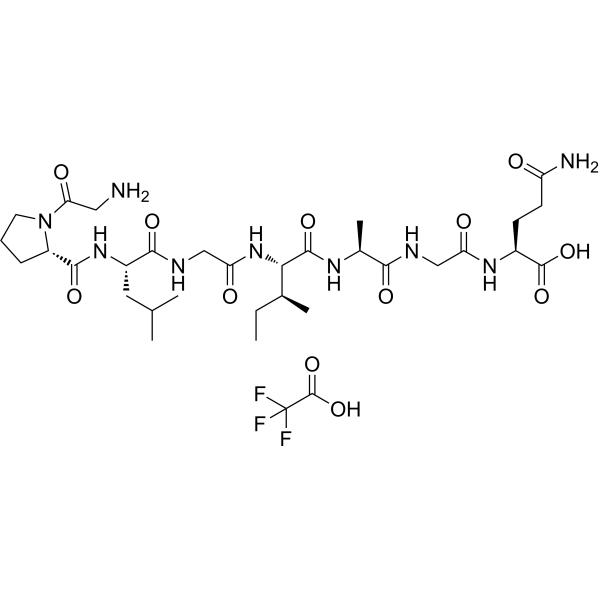
    GPLGIAGQ TFA, a MMP2-cleavable polypeptide, is used as a stimulus-sensitive linker in both liposomal and micellar nanocarriers for MMP2-triggered tumor targeting. GPLGIAGQ TFA can be used to synthesis unique MMP2-targeted photosensitizer in photodynamic therapy (PDT) .
    GPLGIAGQ TFA
  • HY-165386

    Toll-like Receptor (TLR) NF-κB STAT MMP COX VEGFR Cancer
    TU-100 is a Japanese herbal medicine. TU-100 exhibits anti-cancer effects by regulating cancer-associated fibroblasts (CAFs) in the TME. TU-100 can antagonize the M2 polarization phenotype of macrophages in the tumor microenvironment by suppressing the TLR4/NF-κB/STAT3 axis. TU-100 can inhibit the high expression of MMP-2, COX-2, and VEGF in TAMs .
    TU-100
  • HY-P5764

    Protease Activated Receptor (PAR) Integrin MMP Cardiovascular Disease
    TRAP-14 amide, a proteinase activated receptor (PAR)-activating peptide, is a PAR agonist with an EC50 of 24 μM. TRAP-14 amide significantly induces platelet aggregation through ADP- and MMP-2-dependent pathways with Aspirin (HY-14654)-insensitivity. TRAP-14 amide also effectively increases glycoprotein (GP) Ib and GPIIb/IIIa surface expression and ADP release .
    TRAP-14 amide
  • HY-P11746

    MMP Cancer
    GPLGIAGQC is an MMP2-cleavable peptide . In nanoparticle-drug conjugation systems, GPLGIAGQC is cleaved by MMP2 between the glycine and isoleucine residues. After MMP2-mediated hydrolysis of GPLGIAGQC, the Fc fragment is exposed on the surface of nanoparticles .
    GPLGIAGQC

Inquiry Online

Your information is safe with us. * Required Fields.

Salutation


Country or Region *

Applicant Name *


Organization Name *

Department *


Email Address *


Product Name *

Cat. No.


Requested quantity *

Phone Number *


Remarks

Inquiry Online

Inquiry Information

Product Name:
Cat. No.:
Quantity:
MCE Japan Authorized Agent:

