16 Results for "

Male attractant

" in MedChemExpress (MCE) Product Catalog:
Products (16)

16 Results for "Male attractant" in MCE Product Catalog:

Cat. No.: HY-122485
CAS No.: 3856-25-5
Purity:  97.10%
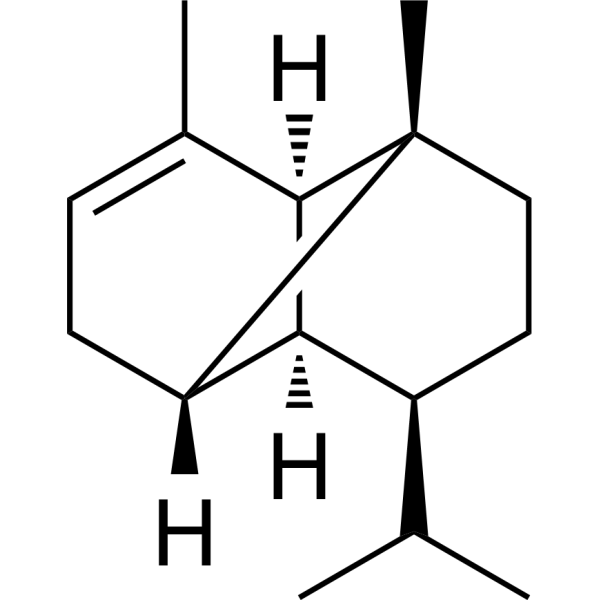
α-Copaene is a potent attractant for male Mediterranean fruit flies Ceratitis capitata.α-Copaene can be found as a minor component in the essential oils of various plant species. α-Copaene can inhibit bacterial growth with a minimum inhibitory concentration of 0.5-1 μL/mL. α-Copaene suppresses biofilm formation by decreasing the hydrophobicity of the cell surface. α-Copaene can be used as an oviposition promoter of Bactrocera oleae .
loading...
    loading...
Cat. No.: HY-N6974
CAS No.: 946524-24-9
Synonyms: Ascaroside C6
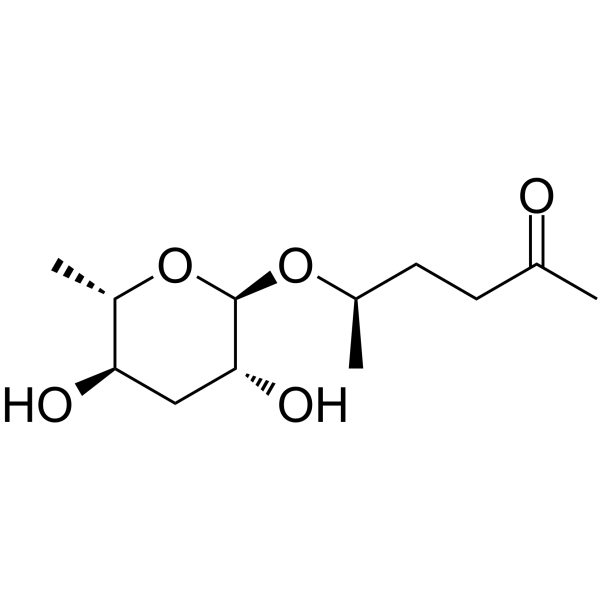
Ascr#2 (Ascaroside C6) is an ascaroside isolated from Caenorhabditis elegans, potently promotes dauer formation, and also acts as a potent male attractant combined with Ascr#3 (HY-N6977) at low concentration .
loading...
    loading...
Cat. No.: HY-N6977
CAS No.: 946524-26-1
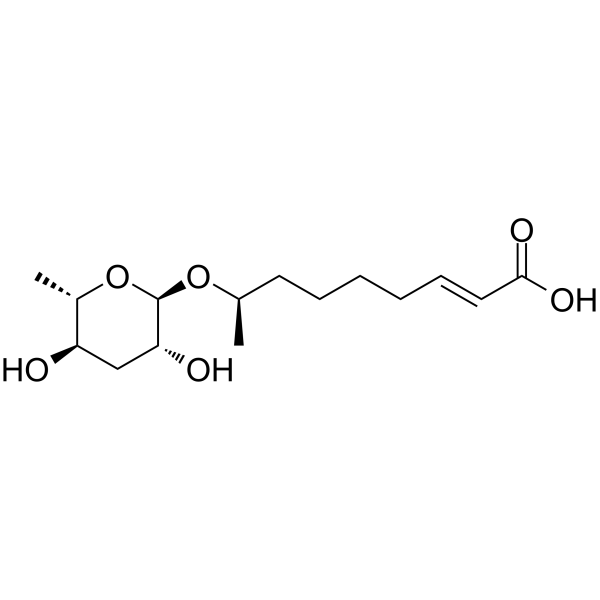
Ascr#3 is a type of pheromone found in the beautiful nematode, and when mixed with ascr#2, it can act as a male attractant and also induce the formation of dauer (the dormant larval stage). Ascr#3 can counteract the effects caused by male-enriched Ascr#10 .
loading...
    loading...
Cat. No.: HY-116047
CAS No.: 104-20-1
Purity:  99.40%
Synonyms: p-Methoxybenzylacetone
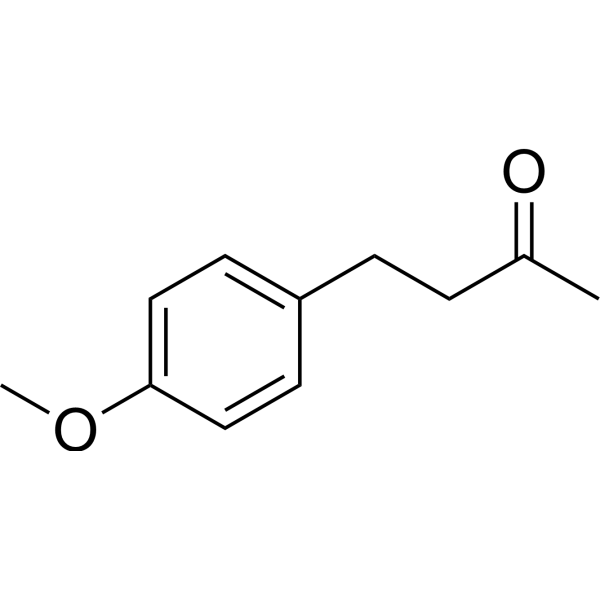
Anisylacetone (p-Methoxybenzylacetone) is a male fruit fly attractant .
loading...
    loading...
Cat. No.: HY-N7099
CAS No.: 3572-06-3
Synonyms: Q-lure
Research Areas:  

Others

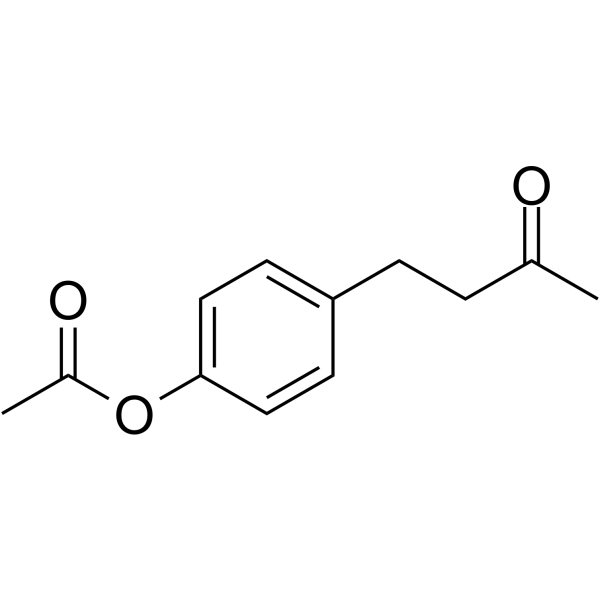
Cue-lure (Q-lure) is a melon fly attractant. Cue-lure provides a short-term mating advantage to male Bactrocera cucurbitae .
loading...
    loading...
Cat. No.: HY-N7927
CAS No.: 20126-76-5
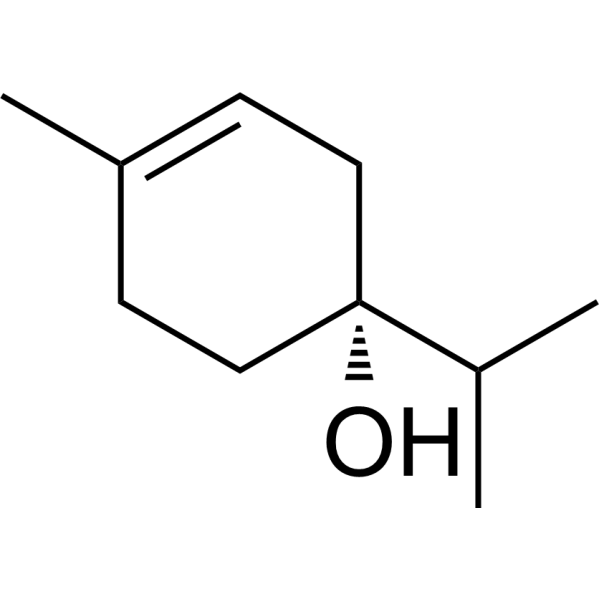
(-)-Terpinen-4-ol is a terpene alcohol and male-specific aggregating pheromone found in the scolytid bark beetle Polygraphus poligraphus. (-)-Terpinen-4-ol functions as an attractant for Polygraphus poligraphus beetles .
loading...
    loading...
Cat. No.: HY-W108418
CAS No.: 40642-40-8
Synonyms: cis-8-Dodecen-1-ol
(Z)-8-Dodecen-1-ol (cis-8-Dodecen-1-ol) is an insect pheromone agonist and attractant active substance. (Z)-8-Dodecen-1-ol serves as the main component of the sex pheromone gland in female Cryptophlebia horii, exhibits stable attractant activity towards male moths, and induces significant electroantennogram signals. (Z)-8-Dodecen-1-ol can be used in studies related to male moth trapping and pest control .
loading...
    loading...
Cat. No.: HY-N7099R
CAS No.: 3572-06-3
Synonyms: Q-lure (Standard)
Research Areas:  

Others

Cue-lure (Standard) is the analytical standard of Cue-lure (HY-N7099). This product is intended for research and analytical applications. Cue-lure (Q-lure) is a melon fly attractant. Cue-lure provides a short-term mating advantage to male Bactrocera cucurbitae .
loading...
    loading...
Cat. No.: HY-N7927R
CAS No.: 20126-76-5
(-)-Terpinen-4-ol (Standard) is the analytical standard of (-)-Terpinen-4-ol (HY-N7927). This product is intended for research and analytical applications. (-)-Terpinen-4-ol is a terpene alcohol and male-specific aggregating pheromone found in the scolytid bark beetle Polygraphus poligraphus. (-)-Terpinen-4-ol functions as an attractant for Polygraphus poligraphus beetles .
loading...
    loading...
Cat. No.: HY-N6977R
CAS No.: 946524-26-1
Ascr#3 (Standard) is the analytical standard of Ascr#3 (HY-N6977). This product is intended for research and analytical applications. Ascr#3 is a type of pheromone found in the beautiful nematode, and when mixed with ascr#2, it can act as a male attractant and also induce the formation of dauer (the dormant larval stage). Ascr#3 can counteract the effects caused by male-enriched Ascr#10 .
loading...
    loading...
Cat. No.: HY-116047R
CAS No.: 104-20-1
Synonyms: p-Methoxybenzylacetone (Standard)
Anisylacetone (Standard) is the analytical standard of Anisylacetone. This product is intended for research and analytical applications. Anisylacetone (p-Methoxybenzylacetone) is a male fruit fly attractant .
loading...
    loading...
Cat. No.: HY-116047S
CAS No.: 2676886-20-5
Synonyms: p-Methoxybenzylacetone-d5
Anisylacetone-d5 (p-Methoxybenzylacetone-d5) is deuterium labeled Anisylacetone. Anisylacetone (p-Methoxybenzylacetone) is a male fruit fly attractant .
loading...
    loading...
Cat. No.: HY-W108424
CAS No.: 20711-10-8
Target:  

Insecticide

Research Areas:  

Infection

(Z)-11-Tetradecenyl acetate is a sex pheromone component and male attractant. (Z)-11-Tetradecenyl acetate triggers strong and stable electrophysiological responses in the antennal sensilla of male Euhyponomeutoides albithoracellus. (Z)-11-Tetradecenyl acetate, when used in combination with (E)-11-tetradecenyl acetate (HY-W1067200), attracts male Euhyponomeutoides albithoracellus. (Z)-11-Tetradecenyl acetate contributes to the development of sustainable pest control strategies including monitoring and mating disruption .
loading...
    loading...
Cat. No.: HY-165096
CAS No.: 72269-48-8
(E)-4-Tridecenyl acetate is a sex pheromone produced by female Keiferia lycopersicella and an attractant for male Keiferia lycopersicella moths. (E)-4-Tridecenyl acetate can be used in field traps for monitoring Keiferia lycopersicella presence and spread. (E)-4-Tridecenyl acetate can be used for the research of Keiferia lycopersicella infestation [1] [2].
loading...
    loading...
Cat. No.: HY-N6974R
CAS No.: 946524-24-9
Synonyms: Ascaroside C6 (Standard)
Ascr#2 (Standard) (Ascaroside C6 (Standard)) is the analytical standard of Ascr#2 (HY-N6974). This product is intended for research and analytical applications. Ascr#2 (Ascaroside C6) is an ascaroside isolated from Caenorhabditis elegans, potently promotes dauer formation, and also acts as a potent male attractant combined with Ascr#3 (HY-N6977) at low concentration .
loading...
    loading...
Cat. No.: HY-W673672
CAS No.: 4144-54-1
Synonyms: 4-Ketocapric acid; 4-ODA
Target:  

Sex Pheromone

Research Areas:  

Infection

4-Oxodecanoic acid (4-Ketocapric acid) is a Sex pheromone component. 4-Oxodecanoic acid can be isolated from the sternal glands on the sixth abdominal segment of unmated female Vespa velutina. When mixed with 4-oxooctanoic acid at the natural secretion ratio of 0.78 in female wasps, 4-Oxodecanoic acid exhibits an attractive effect on male Vespa velutina. 4-Oxodecanoic acid can be used in population monitoring and control research on the invasive species Vespa velutina .
loading...
    loading...
  • 1

