
1. Search Result
Search Result
Results for "

NCTC

" in MedChemExpress (MCE) Product Catalog:

15

Inhibitors & Agonists

1

Biochemical Assay Reagents

1

Peptides

2

Natural
Products

7

Recombinant Proteins

Cat. No. Product Name Target Research Areas Chemical Structure
  • HY-128780B
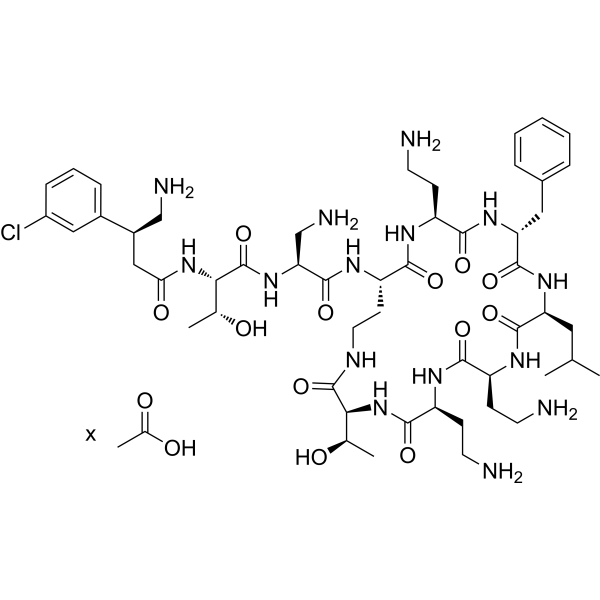
    SPR206 acetate
    1 Publications Verification

    Bacterial Antibiotic Infection
    SPR206 acetate is a polymyxin analog with antibiotic activity against Gram-negative pathogens, including multidrug-resistant (MDR) variants. SPR206 acetate has an anti-bacterial infection effect by interacting with the bacterium’s outer membrane. The MIC values of SPR206 acetate against Pseudomonas aeruginosa Pa14 and Acinetobacter baumannii NCTC13301 are both 0.125 mg/L .
    SPR206 acetate
  • HY-W012669

    Phthaldialdehyde

    Environmental Pollutants Biochemical Assay Reagents Infection
    Phthalaldehyde reacts with proteins containing primary amines and blocked amino-terminal peptides of amino acids. Phthalaldehyde stabilizes bacterial outer membranes and cell walls, increases the optical density of bacterial cell suspensions, and inhibits bacterial lysis induced by ethylenediaminetetraacetic acid and sodium dodecyl sulfate. Phthalaldehyde exhibits bactericidal activity against Gram-negative vegetative bacteria .
    Phthalaldehyde
  • HY-128780

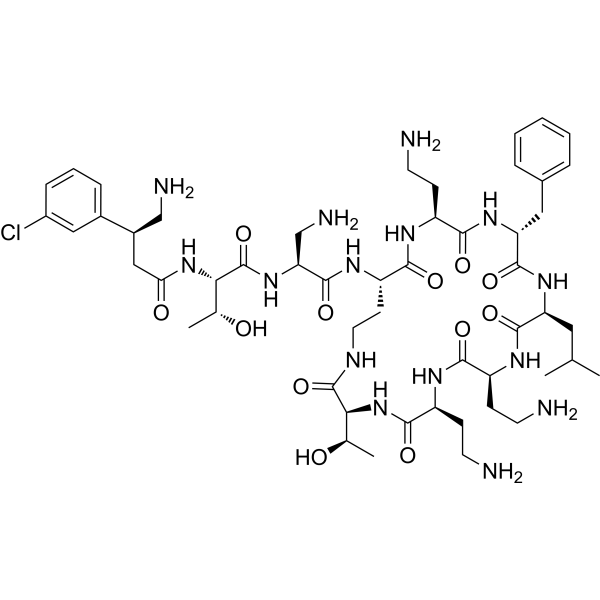
    SPR206

    Bacterial Infection Cancer
    Upleganan (SPR206), a polymyxin analogue, and shows antibiotic activity against multidrug resistant Gram-negative pathogen. The MIC values of Upleganan against Pseudomonas aeruginosa Pa14 and Acinetobacter baumannii NCTC13301 are both 0.125 mg/L .
    Upleganan
  • HY-N3142

    Bacterial Infection
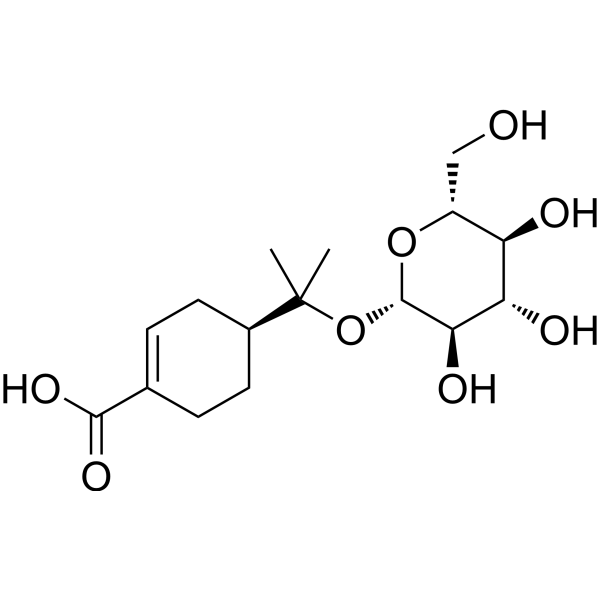
    Oleuropeic acid 8-O-glucoside is a terpenic compound, that can be isolated from twigs with leaves of Juniperus communis var. depressa. Oleuropeic acid 8-O-glucoside shows antibacterial activity against three strains of Helicobacter pylori (NCTC11637, NCTC11916, and OCO1), with MIC of 100 μg/mL all .
    Oleuropeic acid 8-O-glucoside
  • HY-P10681

    Bacterial Infection
    Crabrolin is a tridecapeptide that can be extracted from the venom of the European hornet (Vespa crabro). Crabrolin shows MIC/MBC of 2/2, 16/64, 4/8 μM, for S. aureus (NCTC 10788), MRSA (NCTC 12493) and E. faecium (NTCC 12697), respectively .
    Crabrolin
  • HY-139767

    Bacterial Infection
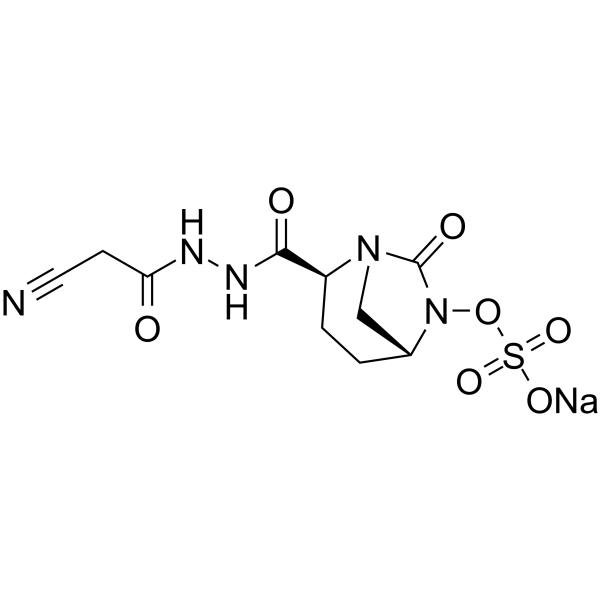
    Antibacterial agent 50 (example 47) is an antibacterial agent with MIC values of 32 mcg/mL, 64 mcg/mL, and 128 mcg/mL against E. coli strains NCTC 13351, M 50 and 7 MP, respectively (WO2013030733A1) .
    Antibacterial agent 50
  • HY-139747

    Bacterial Infection
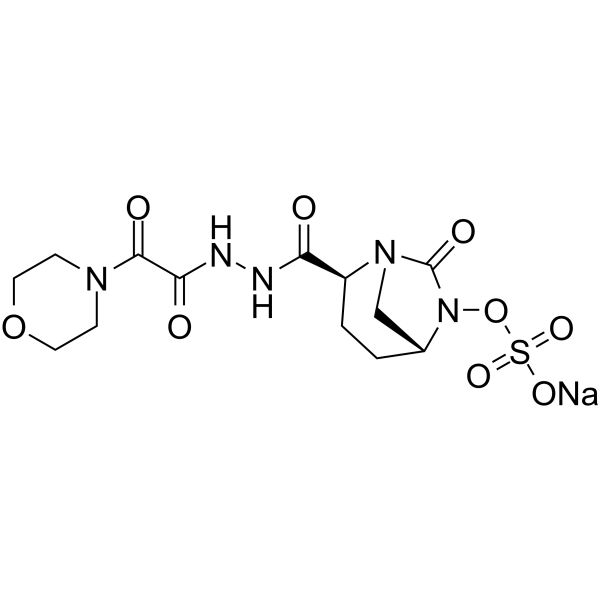
    Antibacterial agent 32 (example 43) is an antibacterial agent with MIC values of 1 mcg/mL, 2 mcg/mL, and 8 mcg/mL against E. coli strains NCTC 13351, M 50 and 7 MP, respectively (WO2013030733A1) .
    Antibacterial agent 32
  • HY-139768

    Bacterial Infection
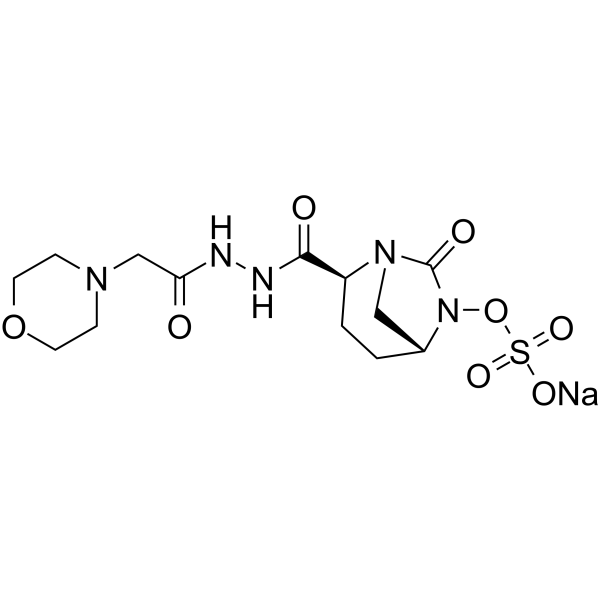
    Antibacterial agent 51 (example 45) is an antibacterial agent with MIC values of 4 mcg/mL, 8 mcg/mL, and 8 mcg/mL against E. coli strains NCTC 13351, M 50 and 7 MP, respectively (WO2013030733A1) .
    Antibacterial agent 51
  • HY-149698

    Tyrosinase Cancer
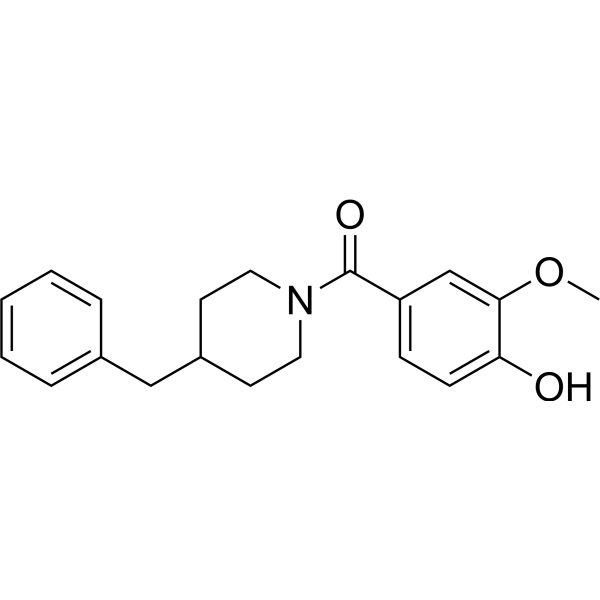
    Tyrosinase-IN-17 (Compound 5b) is a lipophilic, skin-permeable, and non-cytotoxic Tyrosinase inhibitor (pIC50=4.99). Tyrosinase-IN-17 can be used for research on melanin-related diseases, such as melanoma, melanogenesis, etc .
    Tyrosinase-IN-17
  • HY-N2214

    Bacterial Inflammation/Immunology
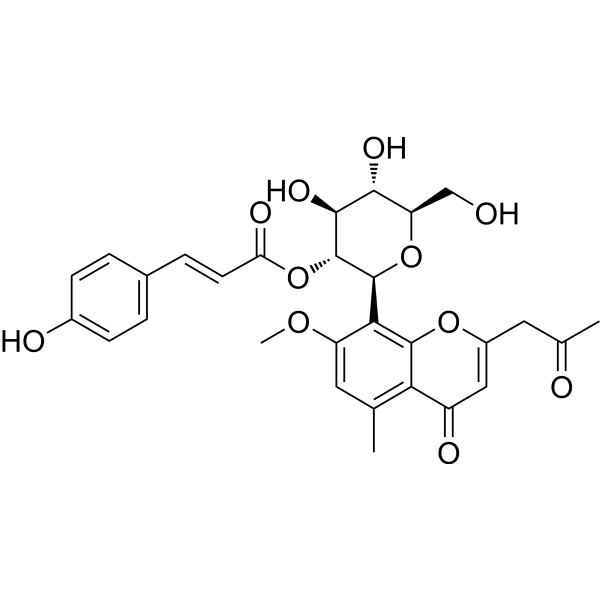
    7-O-Methylaloeresin A is 5-methylchromone glycoside isolated from Commiphora socotrana (Burseraceae). 7-O-Methylaloeresin A exhibits good activity against multiple agent resistant Staphylococcus aureus (NCTC 11994) and Salmonella typhimurium (ATCC 1255) with MIC values of 0.72 and 0.18 mM, respectively. 7-O-Methylaloeresin A has antioxidant activities, gives IC50 values of 0.026 mM and 0.021 mM for DPPH and 2-deoxyribose degradation assay, respectively.
    7-O-Methylaloeresin A
  • HY-130743

    Bis-eugenol; Dehydrodieugenol

    Parasite Infection
    Dieugenol is a neolignan that has been found in N. leucantha and has antioxidative and antiprotozoal activities. It inhibits the formation of thiobarbituric acid reactive substances (TBARS) and scavenges superoxide anions, but not hydroxyl radicals, in cell-free assays. It has anti-trypanosomal activity against T. cruzi amastigotes and trypomastigotes (IC50s=15.1 and 11.5 μM, respectively) but is cytotoxic to NCTC L-929 fibroblasts with a 50% cytotoxic concentration (CC50) value of 58.2 μM.2 Dieugenol (15 μM) disrupts the integrity of the T. cruzi trypomastigote plasma membrane but does not induce the production of reactive oxygen species (ROS) in trypomastigotes or LPS-stimulated and unstimulated isolated mouse peritoneal macrophages.
    Dieugenol
  • HY-W012880

    Hexane-1,2-diol

    Environmental Pollutants Bacterial Fungal Infection
    1,2-Hexanediol (Hexane-1,2-diol) is a broad-spectrum antibacterial agent. 1,2-Hexanediol exhibits bactericidal activity against Gram-positive and Gram-negative bacteria, as well as antifungal activity against fungal organisms. 1,2-Hexanediol disrupts the cytoplasmic membrane potential of bacteria. 1,2-Hexanediol can be used in research on bacterial and fungal infections, as well as cosmetic preservation .
    1,2-Hexanediol
  • HY-181939

    Bacterial Infection
    Antibacterial agent 329 (Compound 9c) is an antibacterial agent. Antibacterial agent 329 inhibits the activity of MraY. Antibacterial agent 329 exhibits antibacterial activity against Escherichia coli K12 and Bacillus subtilis W23 with a MIC of 16 μg/mL, but shows no activity against Pseudomonas fluorescens Pf-5. Antibacterial agent 329 exerts antibacterial activity against Acinetobacter baumannii 19606, Staphylococcus aureus MRSA USA300 JE2, Enterobacter cloacae 19434, Klebsiella pneumoniae 700603 and Enterococcus faecium 19434, with MIC values of 8, 8, 16-32, 16-32 and 16 μg/mL, respectively, while it shows no activity against Pseudomonas aeruginosa NCTC 13437 .
    Antibacterial agent 329
  • HY-W705093

    Bacterial Infection Cancer
    Dimethoxane is an antibacterial agent and an orally active oncogen. Dimethoxane exerts slow bactericidal action against various bacteria, rapid bacteriostatic action that halts bacterial growth, and does not induce bacterial lysis. Dimethoxane induces multiple tumor formation in rats. Dimethoxane functions as a low-toxicity preservative in cosmetic formulations and controls spoilage microorganisms in aqueous systems, emulsions, and suspensions .
    Dimethoxane
  • HY-W039699

    2-(4-Methylphenyl)propionic acid

    COX Bacterial Drug Intermediate Infection
    2-(p-Tolyl) propanoic acid (2-(4-methylphenyl) propionic acid) acts as an Antimicrobial agent intermediate. 2-(p-Tolyl) propanoic acid inhibits COX-1 and COX-2 enzymes, with IC50 values of 38.23 μM and 64.30 μM, respectively. 2-(p-Tolyl) propanoic acid is applicable to research on E. coli, Enterococcus faecalis, Listeria monocytogenes, and Staphylococcus aureus .
    2-(p-Tolyl)propanoic acid

Inquiry Online

Your information is safe with us. * Required Fields.

Salutation


Country or Region *

Applicant Name *


Organization Name *

Department *


Email Address *


Product Name *

Cat. No.


Requested quantity *

Phone Number *


Remarks

Inquiry Online

Inquiry Information

Product Name:
Cat. No.:
Quantity:
MCE Japan Authorized Agent:

