Search Result
Results for "
Nitrogen cycle
" in MedChemExpress (MCE) Product Catalog:
4
Biochemical Assay Reagents
13
Isotope-Labeled Compounds
| Cat. No. |
Product Name |
Target |
Research Areas |
Chemical Structure |
-
- HY-W013636
-
|
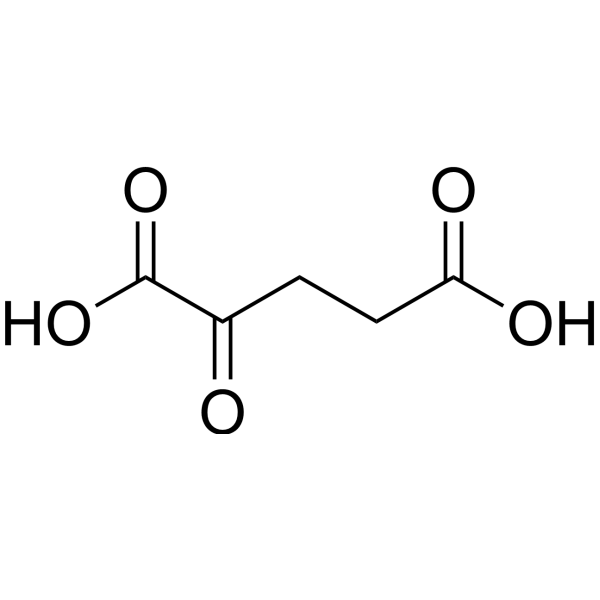
Alpha-Ketoglutaric acid; 2-Oxoglutaric acid
|
Tyrosinase
Endogenous Metabolite
|
Neurological Disease
Metabolic Disease
|
|
2-Ketoglutaric acid (Alpha-Ketoglutaric acid) is an intermediate in the production of ATP or GTP in the Krebs cycle. 2-Ketoglutaric acid also acts as the major carbon skeleton for nitrogen-assimilatory reactions. 2-Ketoglutaric acid is a reversible inhibitor of tyrosinase (IC50=15 mM) .
|
-
-
- HY-B1352
-
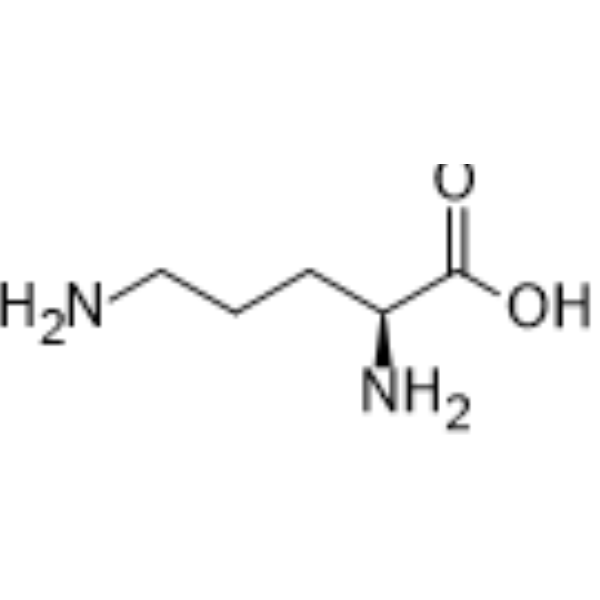
L-Ornithine
Maximum Cited Publications
9 Publications Verification
(S)-2,5-Diaminopentanoic acid
|
Arginase
Endogenous Metabolite
|
Metabolic Disease
|
|
L-Ornithine ((S)-2,5-Diaminopentanoic acid) is a non-proteinogenic amino acid, is mainly used in urea cycle removing excess nitrogen in vivo. L-Ornithine shows nephroprotective .
|
-
-
- HY-Y0882
-
|
|
Monoamine Oxidase
|
Cardiovascular Disease
|
|
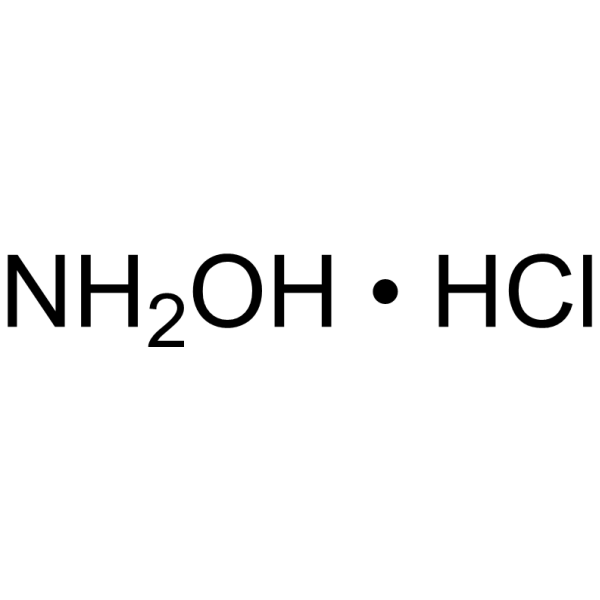
Hydroxylamine hydrochloride is a selective Monoamine oxidase (MAO) inhibitor used for inhibiting of platelet aggregation. Hydroxylamine hydrochloride is an intermediate of nitrogen cycle in aerobic ammonium oxidizers microorganisms, such as ammonium oxidizing bacteria (AOB), ammonium oxidizing archaea (AOA) and complete ammonium oxidizing bacteria (comammox). Hydroxylamine hydrochloride impacts NO and N2O emissions by aerobic ammonium oxidizers microorganisms and inhibits nitrite oxidizing bacteria (NOB) activity .
|
-
-
- HY-W017018
-
|
|
Endogenous Metabolite
|
Metabolic Disease
|
|
L-Ornithine hydrochloride is a non-proteinogenic amino acid, is mainly used in urea cycle removing excess nitrogen in vivo. L-Ornithine hydrochloride shows nephroprotective .
|
-
-
- HY-W013636S
-
|
Alpha-Ketoglutaric acid-13C5
|
Isotope-Labeled Compounds
Tyrosinase
Endogenous Metabolite
|
Neurological Disease
Metabolic Disease
|
|
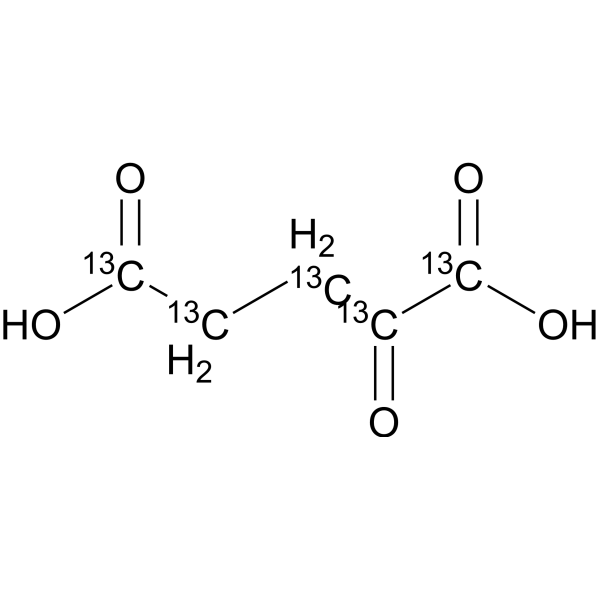
2-Ketoglutaric acid- 13C5 (Alpha-Ketoglutaric acid- 13C5) is a 13C labeled 2-Ketoglutaric acid (HY-W013636) . 2-Ketoglutaric acid (Alpha-Ketoglutaric acid) is an intermediate in the production of ATP or GTP in the Krebs cycle. 2-Ketoglutaric acid also acts as the major carbon skeleton for nitrogen-assimilatory reactions. 2-Ketoglutaric acid is a reversible inhibitor of tyrosinase (IC50=15 mM) .
|
-
-
- HY-W013636A
-
|
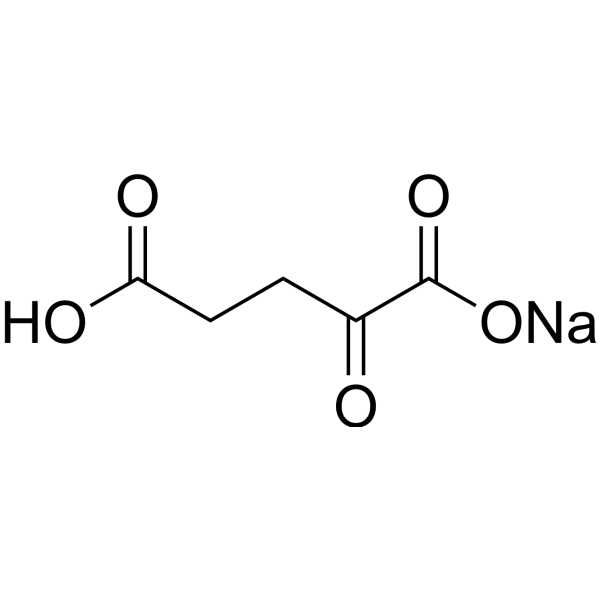
Alpha-Ketoglutaric acid Sodium
|
Tyrosinase
Endogenous Metabolite
|
Neurological Disease
Metabolic Disease
|
|
2-Ketoglutaric acid Sodium (Alpha-Ketoglutaric acid Sodium) is an intermediate in the production of ATP or GTP in the Krebs cycle. 2-Ketoglutaric acid Sodium also acts as the major carbon skeleton for nitrogen-assimilatory reactions. 2-Ketoglutaric acid Sodium is a reversible inhibitor of tyrosinase (IC50=15 mM) .
|
-
-
- HY-Y1055A
-
|
|
Endogenous Metabolite
DNA/RNA Synthesis
|
Infection
Neurological Disease
Cancer
|
|
Guanine hydrochloride is one of the fundamental components of nucleic acids (DNA and RNA). Guanine hydrochloride is a purine derivative, consisting of a fused pyrimidine-imidazole ring system with conjugated double bonds. Guanine hydrochloride has the potential to serve as a large-capacity N pool. Guanine hydrochloride has cytotoxic, antinociceptive and neuroprotective effects .
|
-
-
- HY-Y0882S1
-
|
|
Monoamine Oxidase
|
Cardiovascular Disease
|
|
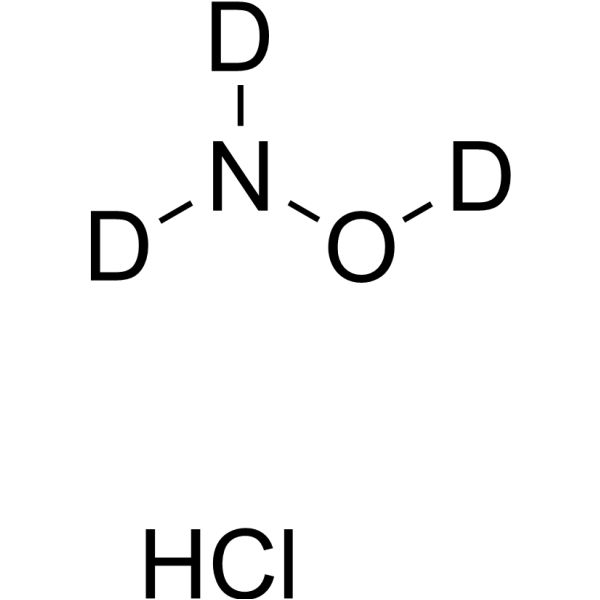
Hydroxylamine-d3 (hydrochloride) is the deuterium labeled Hydroxyamine hydrochloride. Hydroxylamine hydrochloride is a selective Monoamine oxidase (MAO) inhibitor used for inhibiting of platelet aggregation. Hydroxylamine hydrochloride is an intermediate of nitrogen cycle in aerobic ammonium oxidizers microorganisms, such as ammonium oxidizing bacteria (AOB), ammonium oxidizing archaea (AOA) and complete ammonium oxidizing bacteria (comammox). Hydroxylamine hydrochloride impacts NO and N2O emissions by aerobic ammonium oxidizers microorganisms and inhibits nitrite oxidizing bacteria (NOB) activity .
|
-
-
- HY-W017018S2
-
-
-
- HY-W013636B
-
|
|
Tyrosinase
Endogenous Metabolite
|
Metabolic Disease
|
|
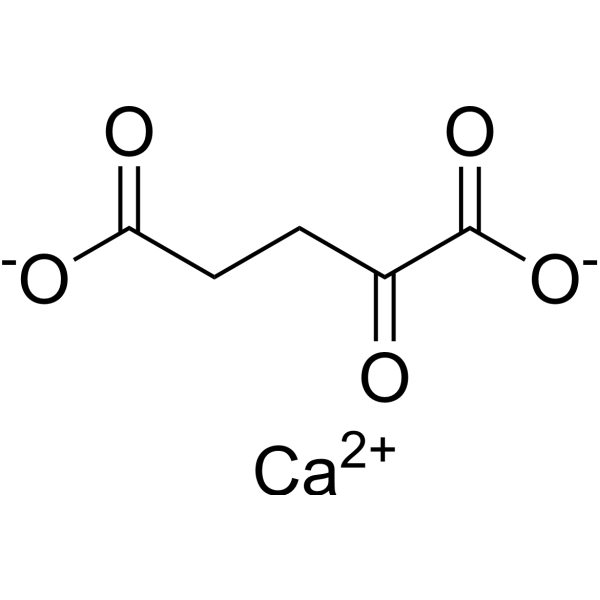
Calcium 2-oxoglutarate is an intermediate in the production of ATP or GTP in the Krebs cycle. Calcium 2-oxoglutarate also acts as the major carbon skeleton for nitrogen-assimilatory reactions. Calcium 2-oxoglutarate is a reversible inhibitor of tyrosinase (IC50=15 mM) .
|
-
-
- HY-W013636S1
-
|
Alpha-Ketoglutaric acid-d4
|
Isotope-Labeled Compounds
Tyrosinase
Endogenous Metabolite
|
Neurological Disease
Metabolic Disease
|
|
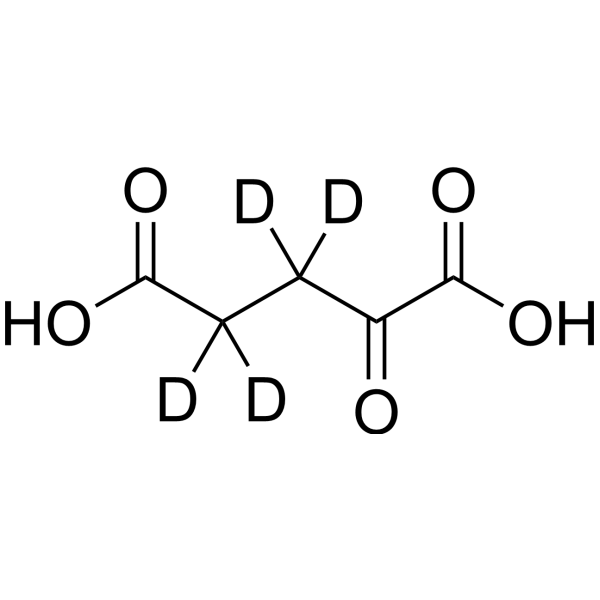
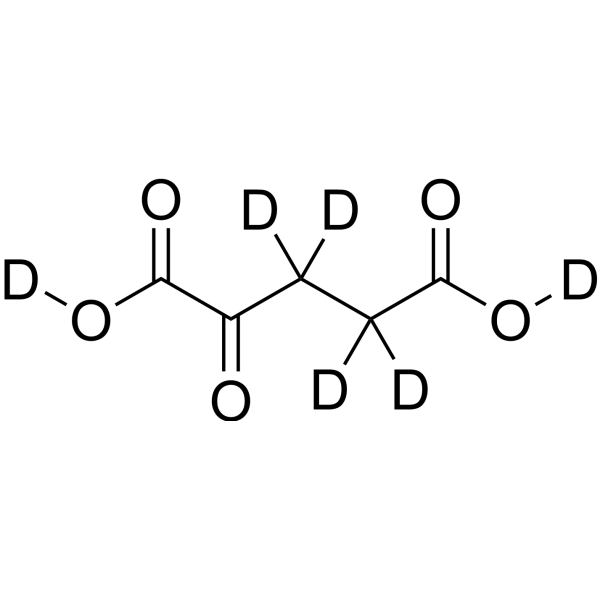
2-Ketoglutaric acid-d4 (Alpha-Ketoglutaric acid-d4) is the deuterium labeled 2-Ketoglutaric acid (HY-W013636) . 2-Ketoglutaric acid Sodium is an intermediate in the production of ATP or GTP in the Krebs cycle. 2-Ketoglutaric acid Sodium also acts as the major carbon skeleton for nitrogen-assimilatory reactions. 2-Ketoglutaric acid Sodium is a reversible inhibitor of tyrosinase (IC50=15 mM) .
|
-
-
- HY-W013636C
-
|
Alpha-Ketoglutaric acid potassium
|
Tyrosinase
Endogenous Metabolite
TNF Receptor
|
Neurological Disease
Metabolic Disease
|
|
2-Ketoglutaric acid (Alpha-Ketoglutaric acid) (potassium) is an intermediate in the production of ATP or GTP in the Krebs cycle. 2-Ketoglutaric acid potassium is a reversible and orally active inhibitor of tyrosinase with an IC50 value of 15 mM. 2-Ketoglutaric acid potassium also acts as the major carbon skeleton for nitrogen-assimilatory reactions. 2-Ketoglutaric acid potassium significantly suppresses abnormal intestinal permeability, delocalization of tight junction proteins from the intestinal cells, expression of TNFα in vitro and in vivo. 2-Ketoglutaric acid potassium directly binds to TAK1, and inhibits the TRAF6-TAK1 interaction. 2-Ketoglutaric acid potassium also alleviates inflammatory bowel disease (IBD) symptoms and gut microbiota dysbiosis, evident by the improvements in the intestine length .
|
-
-
- HY-W017018S
-
|
|
Endogenous Metabolite
|
Metabolic Disease
|
|
L-Ornithine-d6 (hydrochloride) is the deuterium labeled L-Ornithine hydrochloride. L-Ornithine hydrochloride is a free amino acid that plays a central role in the urea cycle and is also important for the disposal of excess nitrogen.
|
-
-
- HY-W017018S4
-
-
-
- HY-W017018B
-
|
|
Biochemical Assay Reagents
|
Others
|
|
L-Ornithine monohydrochloride, suitable for cell culture is a non-proteinogenic amino acid that is mainly used in the urea cycle to remove excess nitrogen from the body and can be used for cell culture .
|
-
-
- HY-B1713A
-
|
DL-(±)-Ornithine hydrochloride
|
Endogenous Metabolite
|
Metabolic Disease
|
|
DL-Ornithine (DL-(±)-Ornithine) hydrochloride is an amino acid and also a urea cycle promoter. DL-Ornithine hydrochloride has the characteristics of low metabolic rate and rapid excretion, and only the L-enantiomer undergoes decarboxylation. In mice inoculated with L-1210 leukemia cells, DL-Ornithine hydrochloride is excreted in urine in its original form, and its conversion to carbon dioxide within 24 h is negligible. DL-Ornithine hydrochloride is mainly used in the urea cycle to eliminate excess nitrogen in the body and protect the kidneys .
|
-
-
- HY-W017018S5
-
|
|
Endogenous Metabolite
|
Metabolic Disease
|
|
L-Ornithine- 15N2 (hydrochloride) is the 15N-labeled L-Ornithine hydrochloride. L-Ornithine hydrochloride is a free amino acid that plays a central role in the urea cycle and is also important for the disposal of excess nitrogen.
|
-
-
- HY-W013636S2
-
|
Alpha-Ketoglutaric acid-d6
|
Tyrosinase
Endogenous Metabolite
Isotope-Labeled Compounds
|
Neurological Disease
Metabolic Disease
|
|
2-Ketoglutaric acid-d6 (Alpha-Ketoglutaric acid-d6) is the deuterium labeled 2-Ketoglutaric acid (HY-W013636) . 2-Ketoglutaric acid is an intermediate in the production of ATP or GTP in the Krebs cycle. 2-Ketoglutaric acid also acts as the major carbon skeleton for nitrogen-assimilatory reactions. 2-Ketoglutaric acid is a reversible inhibitor of tyrosinase (IC50=15 mM) .
|
-
-
- HY-W013636R
-
|
Alpha-Ketoglutaric acid (Standard); 2-Oxoglutaric acid (Standard)
|
Reference Standards
Tyrosinase
Endogenous Metabolite
|
Neurological Disease
Metabolic Disease
|
|
2-Ketoglutaric acid (Standard) (Alpha-Ketoglutaric acid (Standard)) is the analytical standard of 2-Ketoglutaric acid (HY-W013636). This product is intended for research and analytical applications. 2-Ketoglutaric acid (Alpha-Ketoglutaric acid) is an intermediate in the production of ATP or GTP in the Krebs cycle. 2-Ketoglutaric acid also acts as the major carbon skeleton for nitrogen-assimilatory reactions. 2-Ketoglutaric acid is a reversible inhibitor of tyrosinase (IC50=15 mM) .
|
-
-
- HY-W013636S3
-
|
Alpha-Ketoglutaric acid-13C
|
Isotope-Labeled Compounds
Endogenous Metabolite
Tyrosinase
|
Neurological Disease
Metabolic Disease
|
|
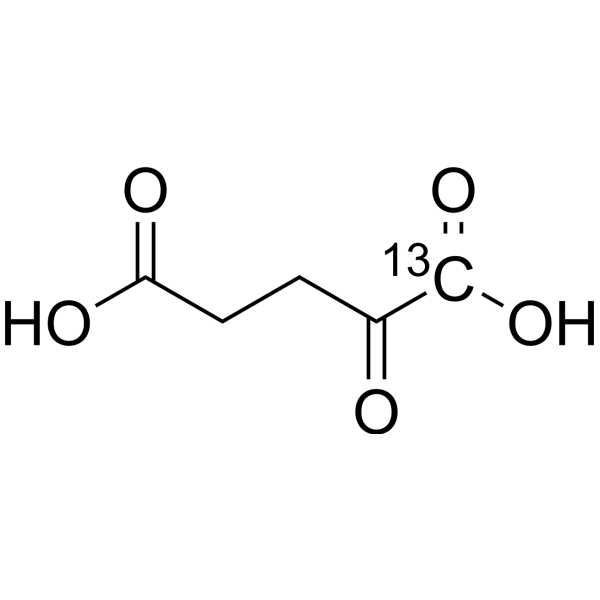
2-Ketoglutaric acid- 13C (Alpha-Ketoglutaric acid- 13C) is a 13C labeled 2-Ketoglutaric acid (HY-W013636) . 2-Ketoglutaric acid (Alpha-Ketoglutaric acid) is an intermediate in the production of ATP or GTP in the Krebs cycle. 2-Ketoglutaric acid also acts as the major carbon skeleton for nitrogen-assimilatory reactions. 2-Ketoglutaric acid is a reversible inhibitor of tyrosinase (IC50=15 mM) .
|
-
-
- HY-W017018R
-
|
|
Reference Standards
Endogenous Metabolite
|
Metabolic Disease
|
|
L-Ornithine (hydrochloride) (Standard) is the analytical standard of L-Ornithine (hydrochloride). This product is intended for research and analytical applications. L-Ornithine hydrochloride is a non-proteinogenic amino acid, is mainly used in urea cycle removing excess nitrogen in vivo. L-Ornithine hydrochloride shows nephroprotective .
|
-
-
- HY-W017018S3
-
|
|
Endogenous Metabolite
|
Metabolic Disease
|
|
L-Ornithine-d2 (hydrochloride) is the deuterium labeled L-Ornithine hydrochloride. L-Ornithine hydrochloride is a free amino acid that plays a central role in the urea cycle and is also important for the disposal of excess nitrogen.
|
-
-
- HY-W013636S4
-
|
Alpha-Ketoglutaric acid-13C2
|
Isotope-Labeled Compounds
Tyrosinase
Endogenous Metabolite
|
Neurological Disease
Metabolic Disease
|
|
2-Ketoglutaric acid- 13C2 (Alpha-Ketoglutaric acid- 13C2) is a 13C labeled 2-Ketoglutaric acid (HY-W013636) . 2-Ketoglutaric acid (Alpha-Ketoglutaric acid) is an intermediate in the production of ATP or GTP in the Krebs cycle. 2-Ketoglutaric acid also acts as the major carbon skeleton for nitrogen-assimilatory reactions. 2-Ketoglutaric acid is a reversible inhibitor of tyrosinase (IC50=15 mM) .
|
-
-
- HY-113289R
-
-
-
- HY-W017018S1
-
|
|
Endogenous Metabolite
|
Metabolic Disease
|
|
L-Ornithine-1,2- 13C2 (hydrochloride) is the 13C-labeled L-Ornithine hydrochloride. L-Ornithine hydrochloride is a free amino acid that plays a central role in the urea cycle and is also important for the disposal of excess nitrogen.
|
-
-
- HY-W013636AR
-
|
Alpha-Ketoglutaric acid Sodium (Standard)
|
Reference Standards
Tyrosinase
Endogenous Metabolite
|
Neurological Disease
Metabolic Disease
|
|
2-Ketoglutaric acid (Sodium) (Standard) is the analytical standard of 2-Ketoglutaric acid Sodium (HY-W013636A). This product is intended for research and analytical applications. 2-Ketoglutaric acid (Alpha-Ketoglutaric acid) Sodium (Standard) is an intermediate in the production of ATP or GTP in the Krebs cycle. 2-Ketoglutaric acid Sodium also acts as the major carbon skeleton for nitrogen-assimilatory reactions. 2-Ketoglutaric acid Sodium is a reversible inhibitor of tyrosinase (IC50=15 mM) .
|
-
-
- HY-W013636AG
-
|
Alpha-Ketoglutaric acid Sodium
|
Tyrosinase
Endogenous Metabolite
|
Neurological Disease
Metabolic Disease
|
|
2-Ketoglutaric acid (Alpha-Ketoglutaric acid) Sodium (GMP) is 2-Ketoglutaric acid Sodium (HY-W013636A) produced by using GMP guidelines. GMP small molecules work appropriately as an auxiliary reagent for cell therapy manufacture. 2-Ketoglutaric acid Sodium is an intermediate in the production of ATP or GTP in the Krebs cycle. 2-Ketoglutaric acid Sodium also acts as the major carbon skeleton for nitrogen-assimilatory reactions. 2-Ketoglutaric acid Sodium is a reversible inhibitor of tyrosinase (IC50=15 mM) .
|
-
-
- HY-W013636BR
-
|
|
Tyrosinase
Reference Standards
Endogenous Metabolite
|
Metabolic Disease
|
|
Calcium 2-oxoglutarate (Standard) is the analytical standard of Calcium 2-oxoglutarate (HY-W013636B). This product is intended for research and analytical applications. Calcium 2-oxoglutarate is an intermediate in the production of ATP or GTP in the Krebs cycle. Calcium 2-oxoglutarate also acts as the major carbon skeleton for nitrogen-assimilatory reactions. Calcium 2-oxoglutarate is a reversible inhibitor of tyrosinase (IC50=15 mM) .
|
-
-
- HY-Y0882S
-
|
|
Isotope-Labeled Compounds
Monoamine Oxidase
|
Cardiovascular Disease
|
|
Hydroxylamine- 15N hydrochloride is the 15N-labeled Hydroxylamine hydrochloride (HY-Y0882). Hydroxylamine hydrochloride is a selective Monoamine oxidase (MAO) inhibitor used for inhibiting of platelet aggregation. Hydroxylamine hydrochloride is an intermediate of nitrogen cycle in aerobic ammonium oxidizers microorganisms, such as ammonium oxidizing bacteria (AOB), ammonium oxidizing archaea (AOA) and complete ammonium oxidizing bacteria (comammox). Hydroxylamine hydrochloride impacts NO and N2O emissions by aerobic ammonium oxidizers microorganisms and inhibits nitrite oxidizing bacteria (NOB) activity .
|
-
| Cat. No. |
Product Name |
Type |
-
- HY-W013636AG
-
|
Alpha-Ketoglutaric acid Sodium
|
Fluorescent Dyes
|
|
2-Ketoglutaric acid (Alpha-Ketoglutaric acid) Sodium (GMP) is 2-Ketoglutaric acid Sodium (HY-W013636A) produced by using GMP guidelines. GMP small molecules work appropriately as an auxiliary reagent for cell therapy manufacture. 2-Ketoglutaric acid Sodium is an intermediate in the production of ATP or GTP in the Krebs cycle. 2-Ketoglutaric acid Sodium also acts as the major carbon skeleton for nitrogen-assimilatory reactions. 2-Ketoglutaric acid Sodium is a reversible inhibitor of tyrosinase (IC50=15 mM) .
|
| Cat. No. |
Product Name |
Type |
-
- HY-W013636C
-
|
Alpha-Ketoglutaric acid potassium
|
Biochemical Assay Reagents
|
|
2-Ketoglutaric acid (Alpha-Ketoglutaric acid) (potassium) is an intermediate in the production of ATP or GTP in the Krebs cycle. 2-Ketoglutaric acid potassium is a reversible and orally active inhibitor of tyrosinase with an IC50 value of 15 mM. 2-Ketoglutaric acid potassium also acts as the major carbon skeleton for nitrogen-assimilatory reactions. 2-Ketoglutaric acid potassium significantly suppresses abnormal intestinal permeability, delocalization of tight junction proteins from the intestinal cells, expression of TNFα in vitro and in vivo. 2-Ketoglutaric acid potassium directly binds to TAK1, and inhibits the TRAF6-TAK1 interaction. 2-Ketoglutaric acid potassium also alleviates inflammatory bowel disease (IBD) symptoms and gut microbiota dysbiosis, evident by the improvements in the intestine length .
|
-
- HY-W017018B
-
|
|
Biochemical Assay Reagents
|
|
L-Ornithine monohydrochloride, suitable for cell culture is a non-proteinogenic amino acid that is mainly used in the urea cycle to remove excess nitrogen from the body and can be used for cell culture .
|
-
- HY-B1713A
-
|
DL-(±)-Ornithine hydrochloride
|
Biochemical Assay Reagents
|
|
DL-Ornithine (DL-(±)-Ornithine) hydrochloride is an amino acid and also a urea cycle promoter. DL-Ornithine hydrochloride has the characteristics of low metabolic rate and rapid excretion, and only the L-enantiomer undergoes decarboxylation. In mice inoculated with L-1210 leukemia cells, DL-Ornithine hydrochloride is excreted in urine in its original form, and its conversion to carbon dioxide within 24 h is negligible. DL-Ornithine hydrochloride is mainly used in the urea cycle to eliminate excess nitrogen in the body and protect the kidneys .
|
-
- HY-W013636AG
-
|
Alpha-Ketoglutaric acid Sodium
|
Biochemical Assay Reagents
|
|
2-Ketoglutaric acid (Alpha-Ketoglutaric acid) Sodium (GMP) is 2-Ketoglutaric acid Sodium (HY-W013636A) produced by using GMP guidelines. GMP small molecules work appropriately as an auxiliary reagent for cell therapy manufacture. 2-Ketoglutaric acid Sodium is an intermediate in the production of ATP or GTP in the Krebs cycle. 2-Ketoglutaric acid Sodium also acts as the major carbon skeleton for nitrogen-assimilatory reactions. 2-Ketoglutaric acid Sodium is a reversible inhibitor of tyrosinase (IC50=15 mM) .
|
| Cat. No. |
Product Name |
Category |
Target |
Chemical Structure |
| Cat. No. |
Product Name |
Chemical Structure |
-
- HY-W013636S
-
|
|
|
2-Ketoglutaric acid- 13C5 (Alpha-Ketoglutaric acid- 13C5) is a 13C labeled 2-Ketoglutaric acid (HY-W013636) . 2-Ketoglutaric acid (Alpha-Ketoglutaric acid) is an intermediate in the production of ATP or GTP in the Krebs cycle. 2-Ketoglutaric acid also acts as the major carbon skeleton for nitrogen-assimilatory reactions. 2-Ketoglutaric acid is a reversible inhibitor of tyrosinase (IC50=15 mM) .
|
-
-
- HY-Y0882S1
-
|
|
|
Hydroxylamine-d3 (hydrochloride) is the deuterium labeled Hydroxyamine hydrochloride. Hydroxylamine hydrochloride is a selective Monoamine oxidase (MAO) inhibitor used for inhibiting of platelet aggregation. Hydroxylamine hydrochloride is an intermediate of nitrogen cycle in aerobic ammonium oxidizers microorganisms, such as ammonium oxidizing bacteria (AOB), ammonium oxidizing archaea (AOA) and complete ammonium oxidizing bacteria (comammox). Hydroxylamine hydrochloride impacts NO and N2O emissions by aerobic ammonium oxidizers microorganisms and inhibits nitrite oxidizing bacteria (NOB) activity .
|
-
-
- HY-W017018S2
-
|
|
|
L-Ornithine-1,2,3,4,5- 13C5 (hydrochloride) is the 13C-labeled L-Ornithine hydrochloride. L-Ornithine hydrochloride is a free amino acid that plays a central role in the urea cycle and is also important for the disposal of excess nitrogen.
|
-
-
- HY-W013636S1
-
|
|
|
2-Ketoglutaric acid-d4 (Alpha-Ketoglutaric acid-d4) is the deuterium labeled 2-Ketoglutaric acid (HY-W013636) . 2-Ketoglutaric acid Sodium is an intermediate in the production of ATP or GTP in the Krebs cycle. 2-Ketoglutaric acid Sodium also acts as the major carbon skeleton for nitrogen-assimilatory reactions. 2-Ketoglutaric acid Sodium is a reversible inhibitor of tyrosinase (IC50=15 mM) .
|
-
-
- HY-W017018S
-
|
|
|
L-Ornithine-d6 (hydrochloride) is the deuterium labeled L-Ornithine hydrochloride. L-Ornithine hydrochloride is a free amino acid that plays a central role in the urea cycle and is also important for the disposal of excess nitrogen.
|
-
-
- HY-W017018S4
-
|
|
|
L-Ornithine-d7 (hydrochloride) is the deuterium labeled L-Ornithine hydrochloride. L-Ornithine hydrochloride is a free amino acid that plays a central role in the urea cycle and is also important for the disposal of excess nitrogen.
|
-
-
- HY-W017018S5
-
|
|
|
L-Ornithine- 15N2 (hydrochloride) is the 15N-labeled L-Ornithine hydrochloride. L-Ornithine hydrochloride is a free amino acid that plays a central role in the urea cycle and is also important for the disposal of excess nitrogen.
|
-
-
- HY-W013636S2
-
|
|
|
2-Ketoglutaric acid-d6 (Alpha-Ketoglutaric acid-d6) is the deuterium labeled 2-Ketoglutaric acid (HY-W013636) . 2-Ketoglutaric acid is an intermediate in the production of ATP or GTP in the Krebs cycle. 2-Ketoglutaric acid also acts as the major carbon skeleton for nitrogen-assimilatory reactions. 2-Ketoglutaric acid is a reversible inhibitor of tyrosinase (IC50=15 mM) .
|
-
-
- HY-W013636S3
-
|
|
|
2-Ketoglutaric acid- 13C (Alpha-Ketoglutaric acid- 13C) is a 13C labeled 2-Ketoglutaric acid (HY-W013636) . 2-Ketoglutaric acid (Alpha-Ketoglutaric acid) is an intermediate in the production of ATP or GTP in the Krebs cycle. 2-Ketoglutaric acid also acts as the major carbon skeleton for nitrogen-assimilatory reactions. 2-Ketoglutaric acid is a reversible inhibitor of tyrosinase (IC50=15 mM) .
|
-
-
- HY-W017018S3
-
|
|
|
L-Ornithine-d2 (hydrochloride) is the deuterium labeled L-Ornithine hydrochloride. L-Ornithine hydrochloride is a free amino acid that plays a central role in the urea cycle and is also important for the disposal of excess nitrogen.
|
-
-
- HY-W013636S4
-
|
|
|
2-Ketoglutaric acid- 13C2 (Alpha-Ketoglutaric acid- 13C2) is a 13C labeled 2-Ketoglutaric acid (HY-W013636) . 2-Ketoglutaric acid (Alpha-Ketoglutaric acid) is an intermediate in the production of ATP or GTP in the Krebs cycle. 2-Ketoglutaric acid also acts as the major carbon skeleton for nitrogen-assimilatory reactions. 2-Ketoglutaric acid is a reversible inhibitor of tyrosinase (IC50=15 mM) .
|
-
-
- HY-W017018S1
-
|
|
|
L-Ornithine-1,2- 13C2 (hydrochloride) is the 13C-labeled L-Ornithine hydrochloride. L-Ornithine hydrochloride is a free amino acid that plays a central role in the urea cycle and is also important for the disposal of excess nitrogen.
|
-
-
- HY-Y0882S
-
|
|
|
Hydroxylamine- 15N hydrochloride is the 15N-labeled Hydroxylamine hydrochloride (HY-Y0882). Hydroxylamine hydrochloride is a selective Monoamine oxidase (MAO) inhibitor used for inhibiting of platelet aggregation. Hydroxylamine hydrochloride is an intermediate of nitrogen cycle in aerobic ammonium oxidizers microorganisms, such as ammonium oxidizing bacteria (AOB), ammonium oxidizing archaea (AOA) and complete ammonium oxidizing bacteria (comammox). Hydroxylamine hydrochloride impacts NO and N2O emissions by aerobic ammonium oxidizers microorganisms and inhibits nitrite oxidizing bacteria (NOB) activity .
|
-
| Cat. No. |
Product Name |
Target |
Research Areas |
Chemical Structure |
-
- HY-W013636AG
-
|
Alpha-Ketoglutaric acid Sodium
|
Tyrosinase
Endogenous Metabolite
|
Neurological Disease
Metabolic Disease
|
|
2-Ketoglutaric acid (Alpha-Ketoglutaric acid) Sodium (GMP) is 2-Ketoglutaric acid Sodium (HY-W013636A) produced by using GMP guidelines. GMP small molecules work appropriately as an auxiliary reagent for cell therapy manufacture. 2-Ketoglutaric acid Sodium is an intermediate in the production of ATP or GTP in the Krebs cycle. 2-Ketoglutaric acid Sodium also acts as the major carbon skeleton for nitrogen-assimilatory reactions. 2-Ketoglutaric acid Sodium is a reversible inhibitor of tyrosinase (IC50=15 mM) .
|
-
Your information is safe with us. * Required Fields.
Inquiry Information
- Product Name:
- Cat. No.:
- Quantity:
- MCE Japan Authorized Agent:

