



L-Ornithine
Based on 10 publication(s) in Google Scholar
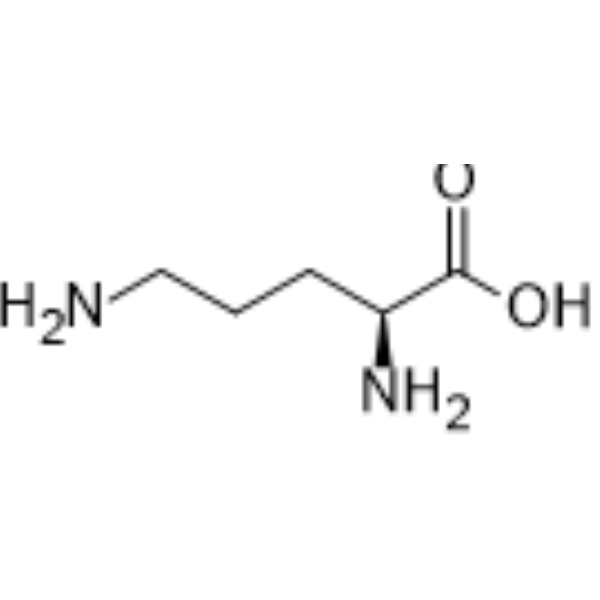
L-Ornithine ((S)-2,5-Diaminopentanoic acid) is a non-proteinogenic amino acid, is mainly used in urea cycle removing excess nitrogen in vivo. L-Ornithine shows nephroprotective.
Nur für Forschungszwecke. Wir verkaufen nicht an Patienten.
- Reinheit : 99.87%
- CAS. Nr.: 70-26-8
- Formel: C5H12N2O2
- Molecular Weight:132.16
-
Speicherung:
4°C, sealed storage, away from moisture and light
* In solvent : -80°C, 6 months; -20°C, 1 month (sealed storage, away from moisture and light)

To place orders, for customer services and technical support, please contact: MedChemExpress USA
Tel: 609-228-6898 E-mail: [email protected] [email protected]


-
 Biologische Aktivität
-
Chemical Information
-
Lösungsmittel & Löslichkeit
- Reinheit & Dokumentation
- Verweise
-
 Help & FAQs


-
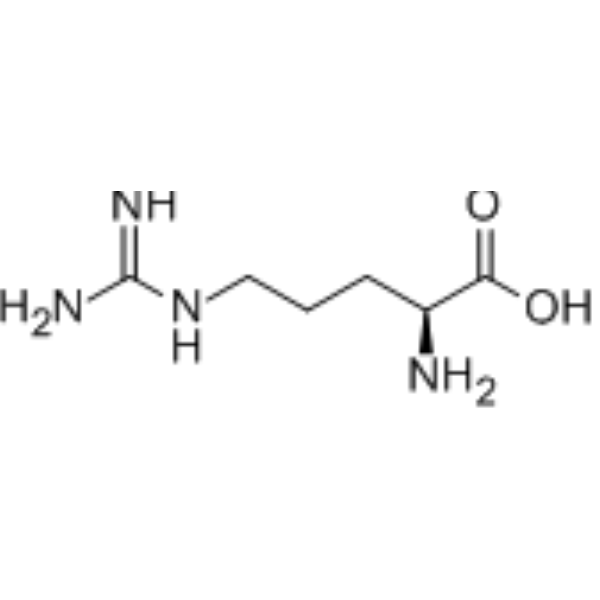
HY-N0455
L-ArginineeNOS Substrate -
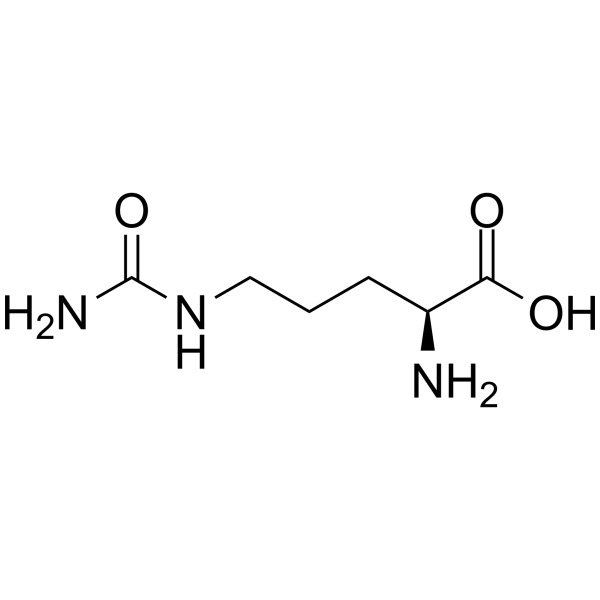
HY-N0391
L-CitrullineEndogenous Metabolite -
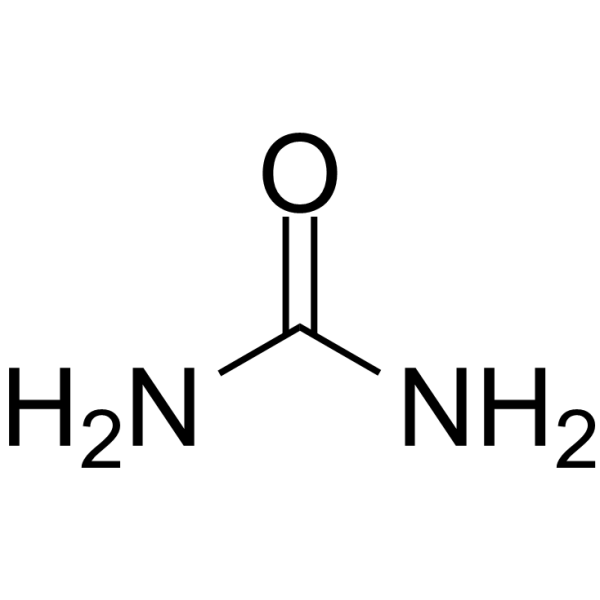
HY-Y0271
UreaProtein Denaturant -
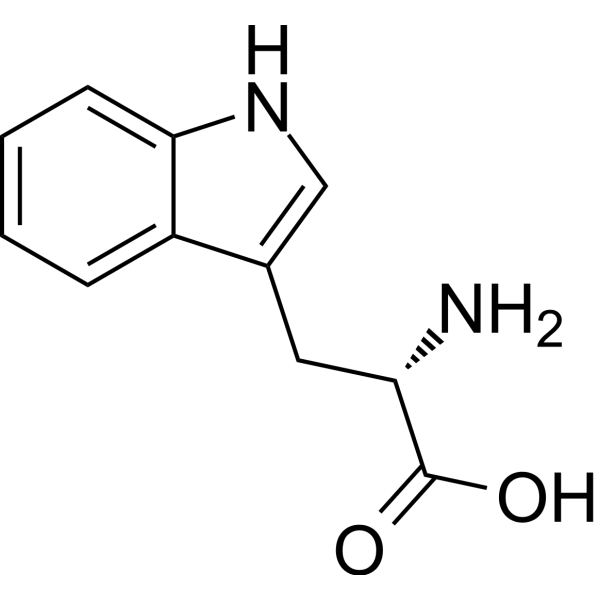
HY-N0623
L-TryptophanEssential Amino Acid -
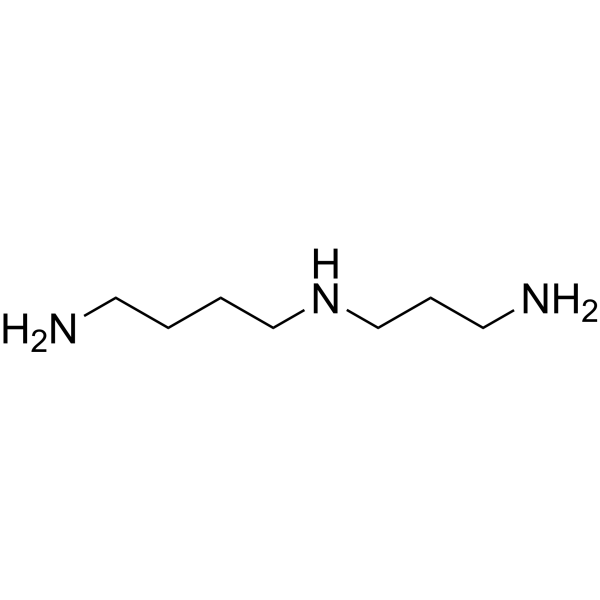
HY-B1776
SpermidinePolyamine Compound -
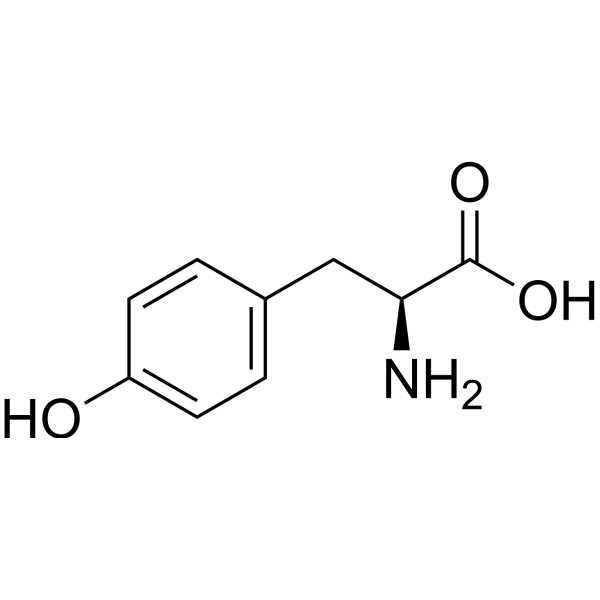
HY-N0473
L-TyrosineCitrate Synthase Inhibitor -
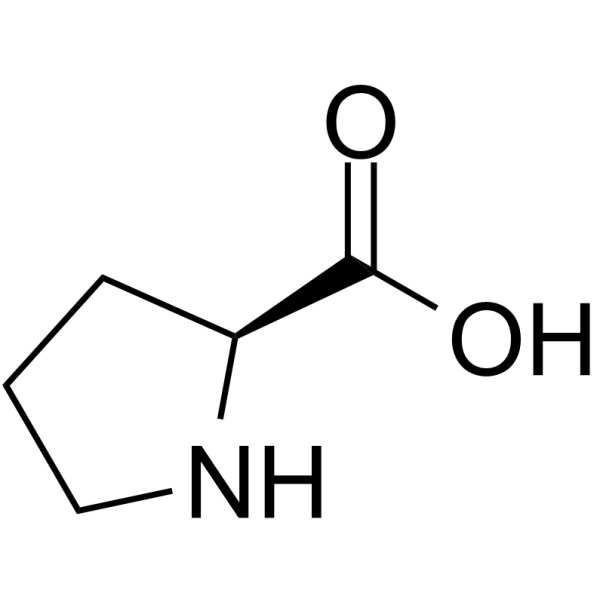
HY-Y0252
L-Proline -
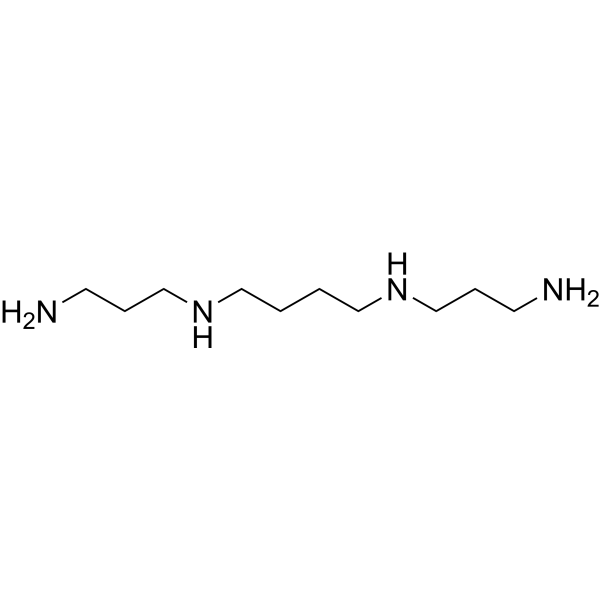
HY-B1777
SpermineEndogenous Metabolite -
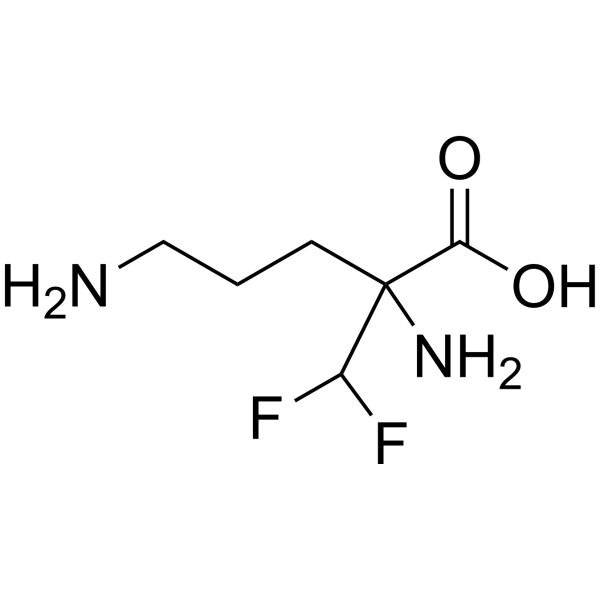
HY-B0744
EflornithineOrnithine Decarboxylase Inhibitor -
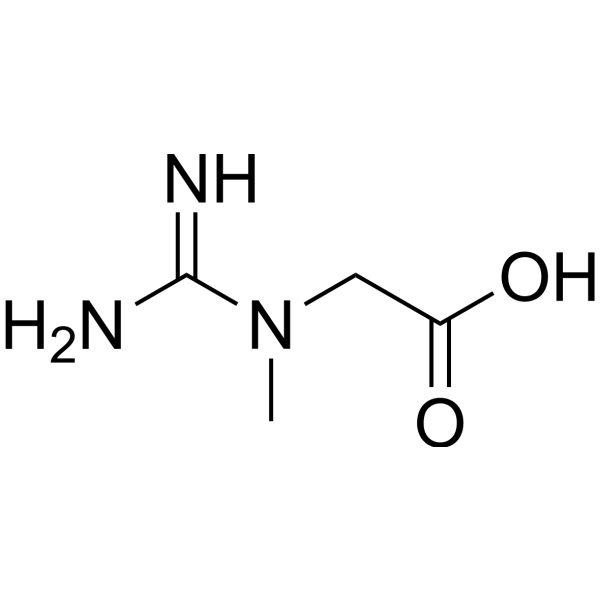
HY-W010388
CreatineEndogenous Metabolite -
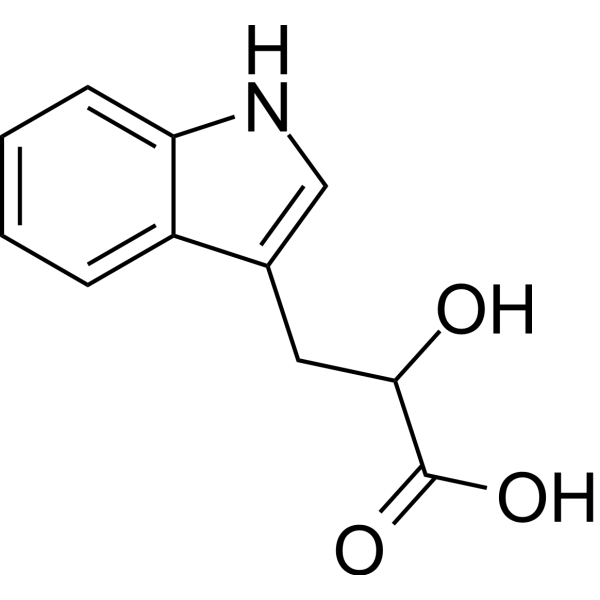
HY-113099
Indolelactic acidTryptophan Catabolite
Publications Citing Use of MedChemExpress (MCE) L-Ornithine
More- Nature. 2025 Jul;643(8070):192-200. [Abstract]
- Information Processing in Agriculture. 2026 Mar 3.
- PLoS Biol. 2024 Jun 27;22(6):e3002672. [Abstract]
- Molecules. 2025 Mar 9;30(6):1224. [Abstract]
- Molecules. 2023 Apr 11;28(8):3375. [Abstract]
- FASEB J. 2026 Jul 15;40(13):e72108.
- Amino Acids. 2024 Sep 18;56(1):56. [Abstract]
- J Cardiovasc Transl Res. 2025 Jun;18(3):459-470. [Abstract]
- ChemistrySelect. 2023 Jan 12.
- bioRxiv. 2024 Apr 3:2023.06.02.542933. [Abstract]
 Customer Validation & Images

-
ELISA
-
WB
Alle Endogenous Metabolite Isoform-spezifische Produkte anzeigen
More

Biologische Aktivität
Beschreibung
IC50 & Target
|
Human Endogenous Metabolite |
Microbial Metabolite |
In Vitro
L-Ornithine (0-10 mM) activates the CaSR in a concentration-dependent manner and exerts effects on Ca2+ signaling in HK-2 cells[2].
L-Ornithine (10 mM) activates TRPC channels mediated Ca2+ entry pathway in HK-2 cells[2].
L-Ornithine (100 or 300 μM; 24 h) shows the protection against ROS generation in HK-2 cells via ROCE pathway[2].
L-Ornithine (10 μM) can protect the ROS and oxidative damage in HK-2 cells exposed to H2O2[2].
MedChemExpress (MCE) has not independently confirmed the accuracy of these methods. They are for reference only.


Chemical Information
-
CAS. Nr. 70-26-8
-
Appearance Solid
-
Molecular Weight 132.16
-
Formel C5H12N2O2
-
Color White to off-white
-
SMILES
N[C@@H](CCCN)C(O)=O
-
Synonyms
(S)-2,5-Diaminopentanoic acid
-
Structure Classification
-
Versand
Room temperature in continental US; may vary elsewhere.
-
Speicherung
4°C, sealed storage, away from moisture and light
* In solvent : -80°C, 6 months; -20°C, 1 month (sealed storage, away from moisture and light)


Publications (10)
-
Journal Impact Factor
-
Most Recent
-
Nature
2025 Jul;643(8070):192-200. PMID: 39695227 -
-
PLoS Biol
2024 Jun 27;22(6):e3002672. PMID: 38935621 -
Molecules
Seeking Correlation Among Porin Permeabilities and Minimum Inhibitory Concentrations Through Machine Learning: A Promising Route to the Essential Molecular Descriptors. [Abstract]2025 Mar 9;30(6):1224. PMID: 40142001 -
Molecules
Untargeted Metabolomics Using UHPLC-HRMS Reveals Metabolic Changes of Fresh-Cut Potato during Browning Process. [Abstract]2023 Apr 11;28(8):3375. PMID: 37110608 -
-
Amino Acids
Identification of amino acids metabolomic profiling in human plasma distinguishes lupus nephritis from systemic lupus erythematosus. [Abstract]2024 Sep 18;56(1):56. PMID: 39292313 -
J Cardiovasc Transl Res
LACC1 Enhances Polyamine Immunometabolism in Inflammatory Macrophages to Inhibit Atherosclerosis Progression. [Abstract]2025 Jun;18(3):459-470. PMID: 40293654
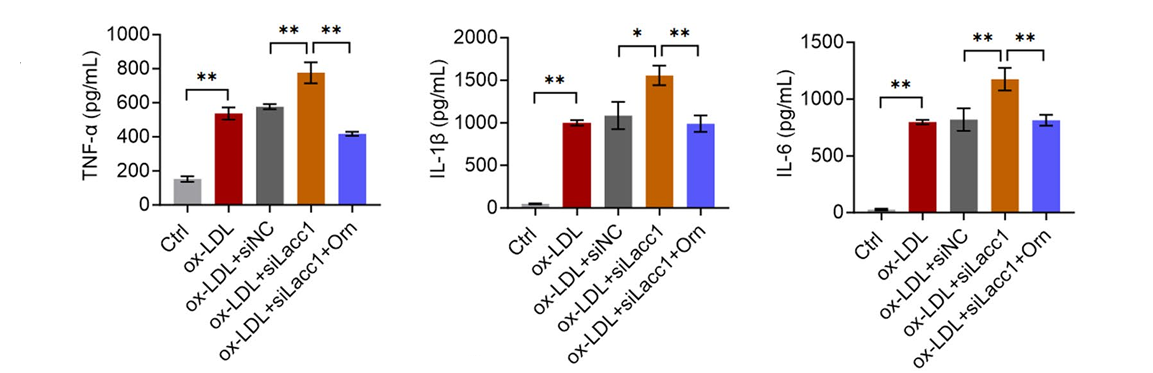
L-Ornithine purchased from MedChemExpress. Usage Cited in: J Cardiovasc Transl Res. 2025 Jun;18(3):459-470. [Abstract]
After treating macrophages with siLACC1 and L-ornithine (Orn, 1 nM, 48 h), ELISA was utilized to detect proinflammatory factors in macrophages.
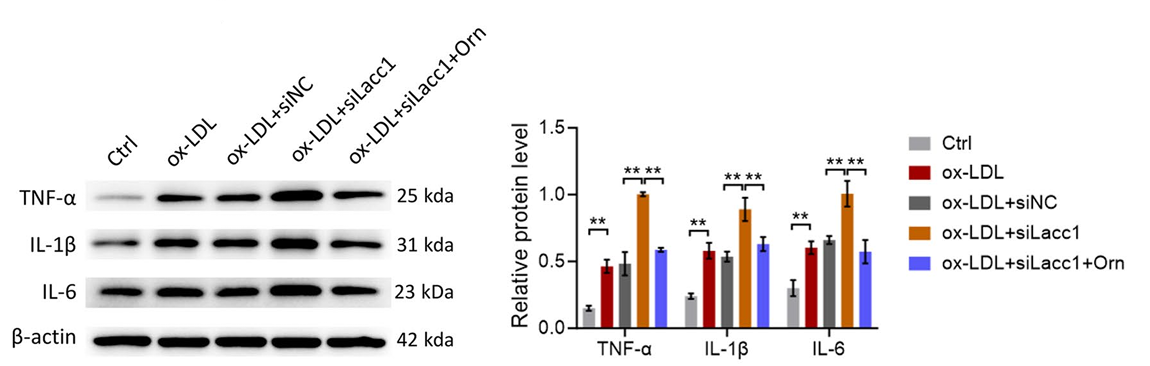
L-Ornithine purchased from MedChemExpress. Usage Cited in: J Cardiovasc Transl Res. 2025 Jun;18(3):459-470. [Abstract]
After treating macrophages with siLACC1 and L-ornithine (Orn, 1 nM, 48 h), Western blot was utilized to measure the expression of proinflammatory factors in macrophages.
-
-
bioRxiv
An efficient behavioral screening platform classifies natural products and other chemical cues according to their chemosensory valence in C. elegans. [Abstract]2024 Apr 3:2023.06.02.542933. PMID: 37333363


Lösungsmittel & Löslichkeit
In Vitro:
H2O : 50 mg/mL (378.33 mM; Need ultrasonic)
DMSO : < 1 mg/mL (insoluble or slightly soluble)
Please refer to the solubility information to select the appropriate solvent. Once prepared, please aliquot and store the solution to prevent product inactivation from repeated freeze-thaw cycles.
Storage method and period of stock solution: -80°C, 6 months; -20°C, 1 month (sealed storage, away from moisture and light). When stored at -80°C, please use it within 6 months. When stored at -20°C, please use it within 1 month.
* Note: If you choose water as the stock solution, please dilute it to the working solution, then filter and sterilize it with a 0.22 μm filter before use.
Please refer to the solubility information to select the appropriate solvent. Once prepared, please aliquot and store the solution to prevent product inactivation from repeated freeze-thaw cycles.
Storage method and period of stock solution: -80°C, 6 months; -20°C, 1 month (sealed storage, away from moisture and light). When stored at -80°C, please use it within 6 months. When stored at -20°C, please use it within 1 month.
* Note: If you choose water as the stock solution, please dilute it to the working solution, then filter and sterilize it with a 0.22 μm filter before use.
Konzentration (Stammlösung) × Volumen (Stammlösung) = Konzentration (Ziellösung) × Volumen (Ziellösung)


Reinheit & Dokumentation
-
Data Sheet (270 KB)
-
SDS (393 KB)
- English - EN (393 KB)
- Français - FR (393 KB)
- Deutsch - DE (393 KB)
- Norwegian - NO (393 KB)
- Español - ES (393 KB)
- Swedish - SV (393 KB)
- Italian - IT (393 KB)
- Korean - KR (393 KB)
- Portuguese - PT (393 KB)
-
Handling Instructions (2659 KB)
Verweise
[1]. Demura S, et al. Effect of L-ornithine hydrochloride ingestion on intermittent maximal anaerobic cycle ergometer performance and fatigue recovery after exercise. Eur J Appl Physiol. 2011 Nov;111(11):2837-43. [Content Brief]
[2]. Shin S, et al. l-ornithine activates Ca2+ signaling to exert its protective function on human proximal tubular cells. Cell Signal. 2020 Mar;67:109484. [Content Brief]


Complete Stock Solution Preparation Table
Please refer to the solubility information to select the appropriate solvent. Once prepared, please aliquot and store the solution to prevent product inactivation from repeated freeze-thaw cycles.
Storage method and period of stock solution: -80°C, 6 months; -20°C, 1 month (sealed storage, away from moisture and light). When stored at -80°C, please use it within 6 months. When stored at -20°C, please use it within 1 month.
| Optional Solvent | Concentration Solvent Mass | 1 mg | 5 mg | 10 mg | 25 mg |
|---|---|---|---|---|---|
| H2O | 1 mM | 7.5666 mL | 37.8329 mL | 75.6659 mL | 189.1646 mL |
| 5 mM | 1.5133 mL | 7.5666 mL | 15.1332 mL | 37.8329 mL | |
| 10 mM | 0.7567 mL | 3.7833 mL | 7.5666 mL | 18.9165 mL | |
| 15 mM | 0.5044 mL | 2.5222 mL | 5.0444 mL | 12.6110 mL | |
| 20 mM | 0.3783 mL | 1.8916 mL | 3.7833 mL | 9.4582 mL | |
| 25 mM | 0.3027 mL | 1.5133 mL | 3.0266 mL | 7.5666 mL | |
| 30 mM | 0.2522 mL | 1.2611 mL | 2.5222 mL | 6.3055 mL | |
| 40 mM | 0.1892 mL | 0.9458 mL | 1.8916 mL | 4.7291 mL | |
| 50 mM | 0.1513 mL | 0.7567 mL | 1.5133 mL | 3.7833 mL | |
| 60 mM | 0.1261 mL | 0.6305 mL | 1.2611 mL | 3.1527 mL | |
| 80 mM | 0.0946 mL | 0.4729 mL | 0.9458 mL | 2.3646 mL | |
| 100 mM | 0.0757 mL | 0.3783 mL | 0.7567 mL | 1.8916 mL |
* Note: If you choose water as the stock solution, please dilute it to the working solution, then filter and sterilize it with a 0.22 μm filter before use.


L-Ornithine Related Classifications
HY-B1352 Related Classifications
 Powered by Bioz