1. Search Result
Search Result
Results for "

OCTs

" in MedChemExpress (MCE) Product Catalog:

50

Inhibitors & Agonists

1

Screening Libraries

1

Fluorescent Dye

3

Biochemical Assay Reagents

1

Peptides

1

MCE Kits

14

Natural
Products

4

Isotope-Labeled Compounds

2

Antibodies

Cat. No. Product Name Target Research Areas Chemical Structure
  • HY-N0750
    Monocrotaline
    Maximum Cited Publications
    44 Publications Verification

    Crotaline

    Others Infection Metabolic Disease Cancer
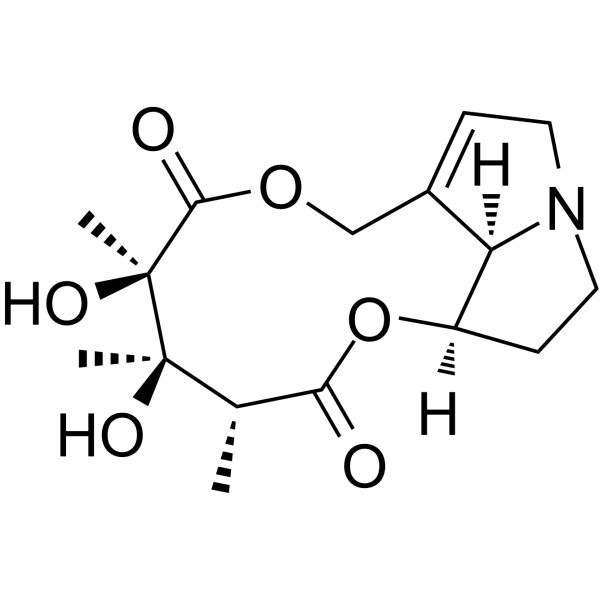
    Monocrotaline is an 11-membered macrocyclic pyrrolizidine alkaloid. Monocrotaline inhibits OCT-1 and OCT-2 with IC50s of 36.8 µM and 1.8 mM, respectively. Monocrotaline has antitumor activity and is cytotoxic to hepatocellular carcinoma cells. Monocrotaline is used to induce a model of pulmonary hypertension in rodents. [2][6][8].
    Monocrotaline
  • HY-B0193A
    Prazosin hydrochloride
    15+ Cited Publications

    Adrenergic Receptor Autophagy Cardiovascular Disease Endocrinology Cancer
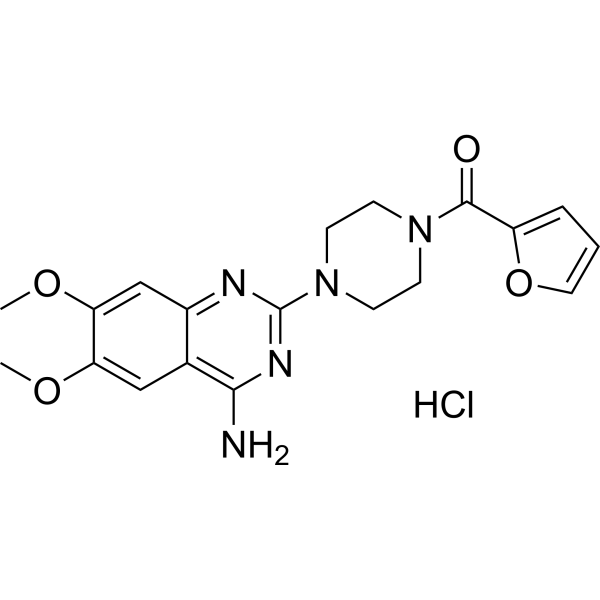
    Prazosin hydrochloride is a well-tolerated, CNS-active α1-adrenergic receptor antagonist for the research of high blood pressure and alcohol use disorders . Prazosin hydrochloride potently inhibits Norepinephrine (NE)-stimulated 45Ca efflux with an IC50 of 0.15 nM .Prazosin hydrochloride inhibits organic cation transporters OCT-1 and OCT-3 with IC50s of 1.8, and 13 μM, respectively .
    Prazosin hydrochloride
  • HY-12303
    OAC1
    1 Publications Verification

    Oct3/4 TET Protein Cancer
    OAC1 is a potent Oct4 activator. OAC1 activates Oct4 and Nanog promoters and enhances induced pluripotent stem cells (iPSC) formation. OAC1 activates OCT4 through upregulation of HOXB4 expression. OAC1 increases transcription of the Oct4-Nanog-Sox2 triad and TET1. OAC1 facilitates the reprogramming of cells by enhancing efficiency and shortening the reprogramming time .
    OAC1
  • HY-107740

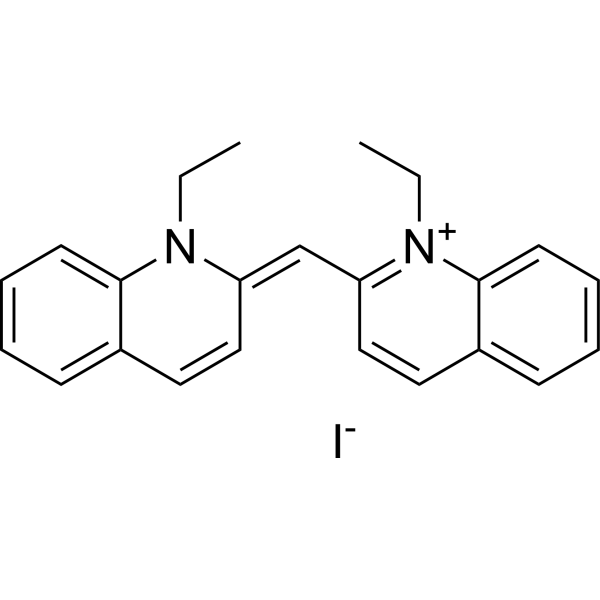
    1,1'-Diethyl-2,2'-cyanine iodide; Decynium 22; Diethylcyanine iodide; Eastman 7851

    Monoamine Transporter Serotonin Transporter Neurological Disease
    Pseudoisocyanine iodide (1,1'-Diethyl-2,2'-cyanine iodide) is an inhibitor of organic cation transporters (OCT1, OCT2, OCT3) and plasma membrane monoamine transporter (PMAT). Pseudoisocyanine iodide has antidepressant activity .
    Pseudoisocyanine iodide
  • HY-18772

    Oct3/4 Others
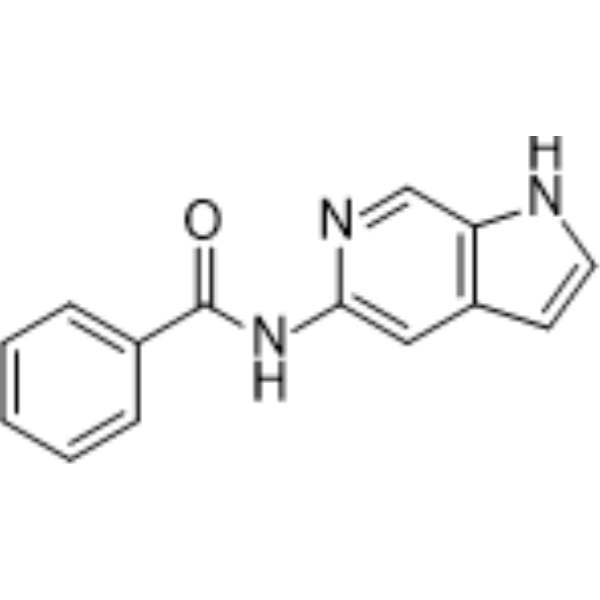
    O4I2 is a potent Oct3/4 inducer. O4I2 induces the expression of pluripotent-associated genes Lin28, Sox2 and Nanog, and suppresses Rex1 .
    O4I2
  • HY-W615153

    Amino Acid Derivatives Others
    Fmoc-L-Lys[Oct-(OtBu)-Glu-(OtBu)-AEEA-AEEA]-OH is an L-Lys (an amino acid) derivative. Fmoc protects amino acids, ensuring their accurate peptide synthesis .
    Fmoc-L-Lys[Oct-(OtBu)-Glu-(OtBu)-AEEA-AEEA]-OH
  • HY-B0306

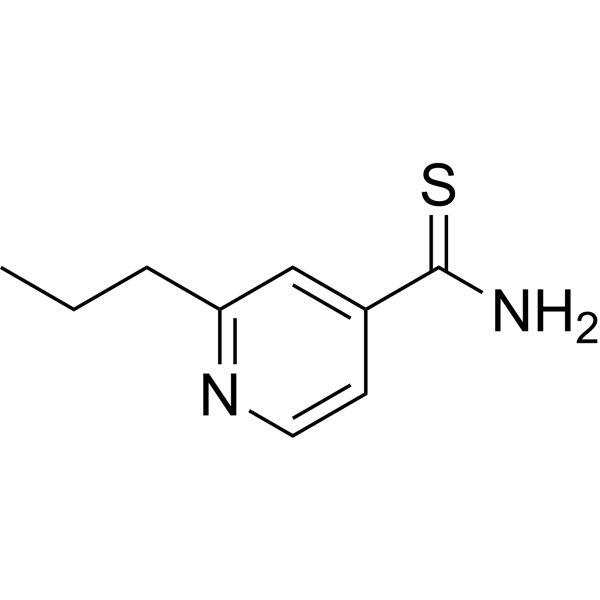
    Protionamide

    Bacterial Infection
    Prothionamide is an orally active thioamide antibacterial agent. Prothionamide is a substrate of OCT1 with a Km value of 805.8 μM. Prothionamide reacts with NAD to form a covalent adduct, with the adduct being a tight-binding inhibitor of Mycobacterium tuberculosis and Mycobacterium leprae InhA. Prothionamide can effectively inhibit the growth of Mycobacterium tuberculosis (MIC = ~0.5 µg/mL) and Mycobacterium leprae. Prothionamide is used in the research of tuberculosis and leprosy .
    Prothionamide
  • HY-B0927

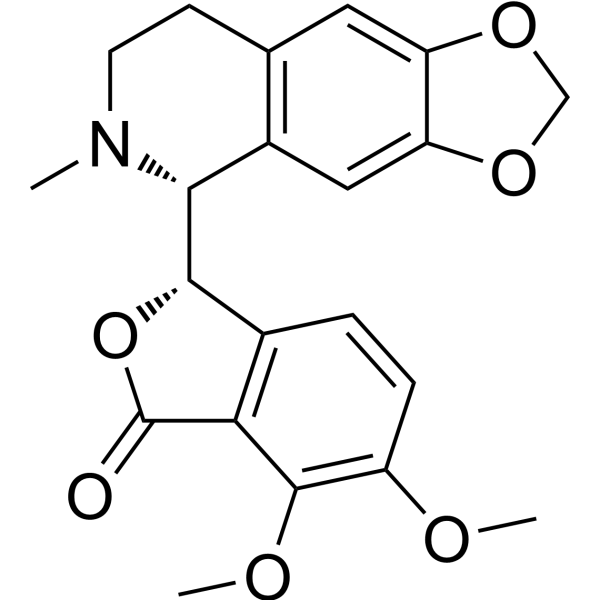
    (-)-β-Hydrastine; (1R,9S)-β-Hydrastine

    Tyrosine Hydroxylase Dopamine Receptor OAT Neurological Disease
    Hydrastine ((-)-β-Hydrastine; (1R,9S)-β-Hydrastine) is a selective competitive inhibitor of tyrosine hydroxylase (TH), inhibiting dopamine biosynthesis (IC50=20.7 μM, PC12 cells). Hydrastine also inhibits the organic cation transporter OCT1 (IC50=6.6 μM). Hydrastine may cause neuronal toxicity through mitochondrial dysfunction rather than oxidative stress damage, and can aggravate cell apoptosis when combined with L-DOPA. Hydrastine can be used to study Parkinson's disease-related dopaminergic neuronal damage .
    Hydrastine
  • HY-N0248
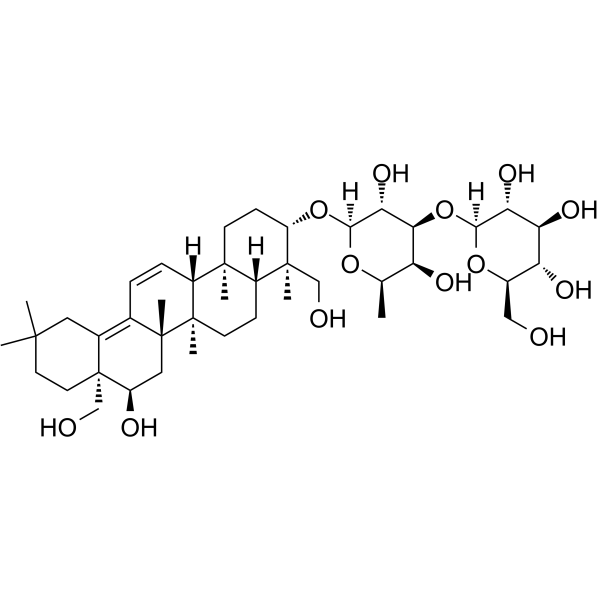
    Saikosaponin B2
    2 Publications Verification

    HCV P-glycoprotein Infection Cancer
    Saikosaponin B2 is an antiviral and anticancer agent that regulates multiple transporters (such as various solute carriers and ATP-binding cassette transporters including MRP1, MRP2, and OCT2). Saikosaponin B2 is isolated from the plant glycoside component of the roots of Bupleurum scorzonerifolium. Saikosaponin B2 enhances the liver targeting of anticancer drugs via vinegar-baked Radix Bupleuri. Saikosaponin B2 inhibits HCV entry, replication, and translation, is effective against Daclatasvir (HY-10466)-resistant strains, and exerts a synergistic effect when used in combination with Daclatasvir. Saikosaponin B2 is commonly used in studies related to hepatocellular carcinoma and HCV infection .
    Saikosaponin B2
  • HY-12884
    OAC2
    1 Publications Verification

    Oct3/4 Others
    OAC2 is an Oct4-activating compound which activates expression through the Oct4 gene promoter.
    OAC2
  • HY-W046906

    Endogenous Metabolite Metabolic Disease
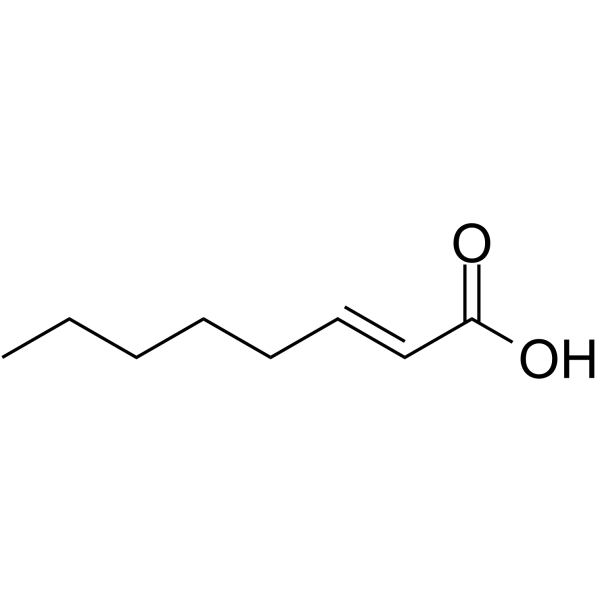
    (E)-Oct-2-enoic acid is an endogenous metabolite.
    (E)-Oct-2-enoic acid
  • HY-N2003
    D-Tetrahydropalmatine
    1 Publications Verification

    Dopamine Receptor Metabolic Disease
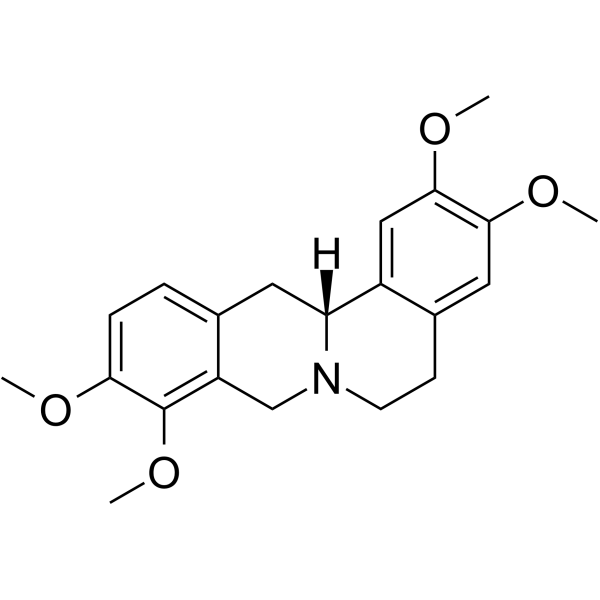
    D-Tetrahydropalmatine is an isoquinoline alkaloid, mainly in the genus Corydalis . D-Tetrahydropalmatine is a dopamine (DA) receptor antagonist with preferential affinity toward the D1 receptors . D-Tetrahydropalmatine is a potent organic cation transporter 1 (OCT1) inhibitor .
    D-Tetrahydropalmatine
  • HY-W010410

    Environmental Pollutants Neurological Disease Metabolic Disease
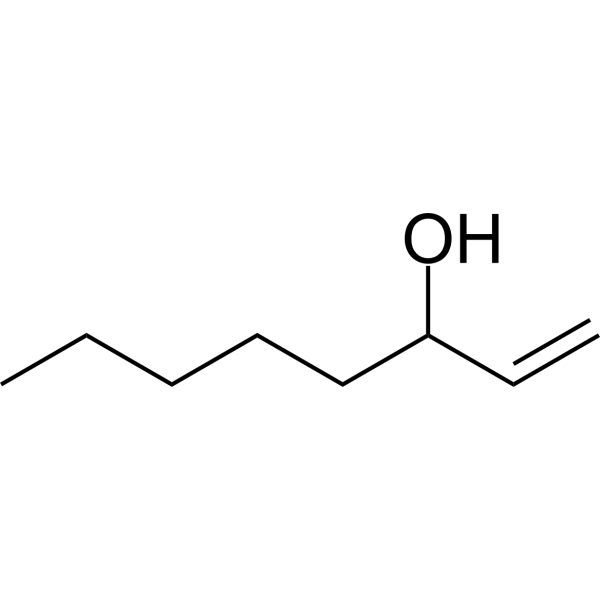
    Oct-1-en-3-ol, a fatty acid fragrant, is a self-stimulating oxylipin messenger. Oct-1-en-3-ol serves as a signaling molecule in plant cellular responses, plant-herbivore interactions, and plant-plant interactions. Oct-1-en-3-ol causes dopamine neuron degeneration through disruption of dopamine handling .
    Oct-1-en-3-ol
  • HY-155528

    Others Others
    O4I4 (compound 23) is a OCT4-inducing compound with metabolical stability. O4I4 extends lifespan in Caenorhabditis elegans and Drosophila. O4I4 can be used for regenerative medicine and rejuvenation research .
    O4I4
  • HY-DY3004

    Biochemical Assay Reagents Others
    Frozen Section Embedding Medium is a water-soluble mixture of polyethylene glycol and polyvinyl alcohol, widely used in immunohistochemistry experiments. Frozen Section Embedding Medium supports tissue during frozen sectioning, increasing tissue continuity and reducing wrinkling and fragmentation.
    Frozen Section Embedding Medium
  • HY-W781133

    cis-[Pt(NH3)2N1-pyridineCl]Cl

    DNA Alkylator/Crosslinker Cancer
    cDPCP (cis-[Pt(NH3)2(N1-pyridine)Cl]Cl) is a DNA crosslinking agent and also a substrate for OCT1 and OCT2. DPCP exhibits anticancer activity and can improve the survival rate of sarcoma-180 mice. cDPCP is suitable for the research of colorectal cancer and cancers with appropriate cation transporters .
    cDPCP
  • HY-133825

    IKF-916

    Environmental Pollutants OAT Oct3/4 Infection
    Cyazofamid exerts its bactericidal effect by impairing ATP production. Cyazofamid inhibits organic cation transporter 3 (OCT3) and OAT1, with IC50 values ​​of 1.54 and 17.3 μM, respectively .
    Cyazofamid
  • HY-18771

    Oct3/4 Others
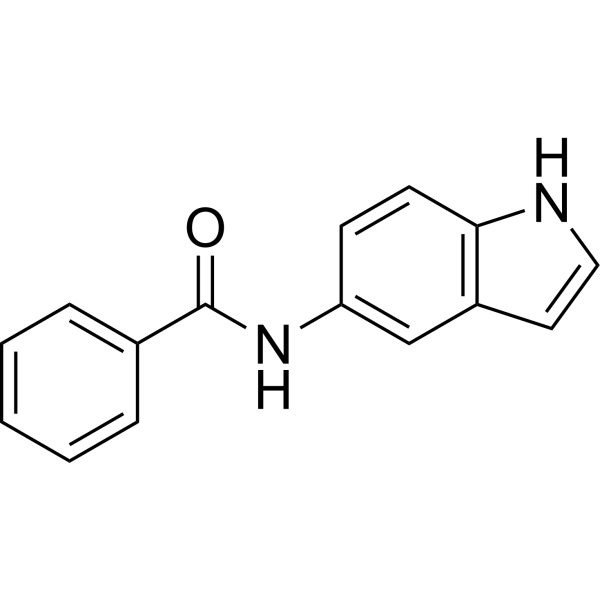
    O4I1 is as a potent Oct3/4 inducer.
    O4I1
  • HY-W575291

    N-Boc-oct-7-yn-1-amine

    Biochemical Assay Reagents Others
    tert-Butyl oct-7-yn-1-ylcarbamate (N-Boc-oct-7-yn-1-amine) is crosslinker consisting of a propargyl group and a t-Boc protected amine group. The propargyl group reacts with azide-bearing compounds or biomolecules via copper catalyzed Click Chemistry reactions. The t-Boc protected amine can be deprotected under mild acidic conditions.
    tert-Butyl oct-7-yn-1-ylcarbamate
  • HY-W039379

    trans-2-Octenoic acid methyl ester

    Biochemical Assay Reagents Others
    Methyl (E)-oct-2-enoate is commonly used as an ingredient in perfume, cologne, and food flavor in the perfume and fragrance industry. Its pleasant fragrance and low volatility make it a good choice for adding fruit to various products. A popular choice for incense, in addition to its application in the fragrance and fragrance industry, Methyl (E)-oct-2-enoate is also used as a raw material for the synthesis of other organic compounds, it can be oxidized to form methyl 3-oxobutyrate, Used in the production of pharmaceuticals and agrochemicals. Overall, Methyl (E)-oct-2-enoate is a versatile compound that is used in various industries for its pleasant aroma and reactivity, its fruity and floral notes in fragrances and essences Industry is highly sought after, and its ability to serve as a starting material for other compounds makes it useful in organic synthesis.
    Methyl (E)-oct-2-enoate
  • HY-18773

    Oct3/4 Inflammation/Immunology
    Oct3/4-inducer-1 (compound 2) is a potent Oct3/4 inducer. Oct3/4-inducer-1 promotes expression and stabilization of Oct3/4, and enhances its transcriptional activity in diverse human somatic cells .
    Oct3/4-inducer-1
  • HY-119672

    Oct3/4 Others
    Oct4 inducer-1 (compound OAC-3) is a potent Oct4 activator. Oct4 inducer-1 activates Oct4 and Nanog promoters and enhances induced pluripotent stem cells (iPSC) formation. Oct4 inducer-1 facilitates the reprogramming of cells by enhancing efficiency and shortening the reprogramming time .
    Oct4 inducer-1
  • HY-W106629

    Biochemical Assay Reagents Others
    Oct-3-enoic acid is a biochemical reagent that can be used as a biological material or organic compound for life science related research.
    3-Octenoic acid
  • HY-W046907

    trans-2-Octenoic acid ethyl ester

    Biochemical Assay Reagents Others
    Ethyl (E)-oct-2-enoate is a biochemical reagent that can be used as a biological material or organic compound for life science related research.
    Ethyl (E)-oct-2-enoate
  • HY-N15201

    STAT Cancer
    Betavulgarin is an anticancer agent. Betavulgarin can be isolated from Sugar Beet (Beta vulgaris). Betavulgarin suppresses the proliferation, migration, colony formation, and mammosphere formation of breast cancer cells, and reduces the size of the CD44 +/CD24 subpopulation and the expression of the self-renewal- related genes C-Myc, Nanog and Oct4. Betavulgarin promotes BCSCs death through the regulation of Stat3/Sox2 signaling .
    Betavulgarin
  • HY-165606

    Oct3/4 c-Myc Apoptosis Cancer
    SB-T-1214 (SBT) is a taxane. SB-T-1214 efficiently inhibits expression of stem cell-related genes (Oct4, Sox2, and c-Myc) and induces apoptosis of colon cancer spheroids with drug resistant tumorigenic CD133 +/CD44 + cells. SB-T-1214 strongly represses tumor growth in Pgp+ DLD-1 human colon tumor xenografts mice model. SB-T-1214 can be used for antitumor research, especially against tumors with drug resistance, such as colon, pancreatic and renal cancers .
    SB-T-1214
  • HY-129108

    (9Z)-UAB-30

    Oct3/4 Microtubule/Tubulin E1/E2/E3 Enzyme Proteasome Neurological Disease Cancer
    9-cis-UAB30 is a rexinoid agonist. 9-cis-UAB30 significantly decreases the proliferation, viability, and motility of both patient-derived xenografts (PDXs). 9-cis-UAB30 induced cell-cycle arrest as demonstrated by the significant increase in the percentage of cells in G1 and a decrease in the percentage of cells in S phase by downregulating SKP2 and/or 20S proteasome activity, which leads to increased p27kip1 protein stability. 9-cis-UAB30 downregulates the abundance of stem cell marker mRNAs (Oct4, Nanog, Sox2, nestin) and upregulates the abundance of differentiation marker mRNAs (β3-tubulin, NSE, HOXC9, GAP43). 9-cis-UAB30 has no adverse effects on the central nervous system and cardiovascular system at the tested dose. 9-cis-UAB30 can be used for the study of neuroblastoma, cutaneous T-cell lymphomas, and breast cancer .
    9-cis-UAB30
  • HY-154951

    Oct3/4 Others
    Oct4 inducer-2 is an OCT4 inducer, which can maintain the formation of hiPSCs by promoting the expression of endogenous OCT4, which can be used in anti-aging research .
    Oct4 inducer-2
  • HY-N0750R

    Crotaline (Standard)

    Reference Standards Others Metabolic Disease Cancer
    Monocrotaline is an 11-membered macrocyclic pyrrolizidine alkaloid. Monocrotaline inhibits OCT-1 and OCT-2 with IC50s of 36.8 µM and 1.8 mM, respectively. Monocrotaline has antitumor activity and is cytotoxic to hepatocellular carcinoma cells. Monocrotaline is used to induce a model of pulmonary hypertension in rodents. .
    Monocrotaline (Standard)
  • HY-B0193AR

    Reference Standards Adrenergic Receptor Autophagy Cardiovascular Disease Endocrinology Cancer
    Prazosin (hydrochloride) (Standard) is the analytical standard of Prazosin (hydrochloride). This product is intended for research and analytical applications. Prazosin hydrochloride is a well-tolerated, CNS-active α1-adrenergic receptor antagonist for the research of high blood pressure and alcohol use disorders . Prazosin hydrochloride potently inhibits Norepinephrine (NE)-stimulated 45Ca efflux with an IC50 of 0.15 nM .Prazosin hydrochloride inhibits organic cation transporters OCT-1 and OCT-3 with IC50s of 1.8, and 13 μM, respectively .
    Prazosin hydrochloride (Standard)
  • HY-N9071

    Others Others
    5-Allyl-3-methoxy-6-methyl-7-(3,4,5-trimethoxyphenyl)bicyclo[3.2.1]oct-3-ene-2,8-dione is a Lignans product that can be isolated from the herbs of Cassia fistula .
    5-Allyl-3-methoxy-6-methyl-7-(3,4,5-trimethoxyphenyl)bicyclo[3.2.1]oct-3-ene-2,8-dione
  • HY-100057

    6-Hydroxybuspirone; 6'-Hydroxybuspirone; BMS 528215

    5-HT Receptor Drug Metabolite Dopamine Receptor Neurological Disease
    BMY 28674 (6-Hydroxybuspirone) is the active metabolite of the anxiolytic buspirone (HY-B1115A) and is metabolized by CYP3A4.4. BMY 28674 binds to the serotonin (5-HT) receptor subtype 5-HT1A in the rat hippocampus and dorsal raphe (EC50s are 4 and 1 μM, respectively) and is an antagonist of dopamine D2, D3, and D4 receptors (IC50s are 3.1, 4.9, and 0.85 μM, respectively). BMY 28674 also inhibits organic cation transporter 1 (OCT1), OCT2, and OCT3 expressing human transporters in S2 proximal tubule cells in a concentration-dependent manner.
    BMY 28674
  • HY-W010410S

    Isotope-Labeled Compounds Metabolic Disease
    Oct-1-en-3-ol-d3 is deuterated labeled Linalool (HY-N0368). Linalool is a natural monoterpene which is a competitive NMDA receptor antagonist. Linalool is orally active and crosses the blood-brain barrier. Linalool has anticancer, antibacterial, anti-inflammatory, neuroprotective, anxiolytic, antidepressant, anti-stress, cardioprotective, hepatoprotective, nephroprotective and pulmonary protective activities .
    Oct-1-en-3-ol-d3
  • HY-118132

    Antibiotic Infection
    LL-Z1220 is a novel antibiotic with the structure of 2-(3,8-dioxopentacyclo[5.1.0.0^~^~]oct-5-en-5-yl)-4H-pyran-4-one. This appears to be the first reported natural product containing a benzene dioxide group. This antibiotic readily undergoes valence isomerization to form 1,4-dioxopentacyclo. The chemical and spectroscopic properties of the antibiotic suggest that the benzene dioxide has a cis configuration.
    LL-Z1220
  • HY-119063

    Carbonic Anhydrase Others
    L-645151 is a carbonic anhydrase inhibitor with ocular penetration and hypotensive activity. L-645151 lowers the elevated intraocular pressure (IOP) of o-chymotripsinized (o-CT) rabbit eyes. L-645151 is promising for research of an ocular hypotensive agent .
    L-645151
  • HY-W777329

    (E)-Oct-4-ene-1,8-dioic acid-13C2

    Isotope-Labeled Compounds Others
    (4E)-4-Octenedioic acid- 13C2 ((E)-Oct-4-ene-1,8-dioic acid- 13C2) is the 13C-labeled (4E)-4-Octenedioic acid (HY-W151203).
    (4E)-4-Octenedioic acid-13C2
  • HY-119666

    Apoptosis Reactive Oxygen Species (ROS) MDM-2/p53 Oct3/4 Inflammation/Immunology Cancer
    Rooperol is a norlignan analog with antitumor, anti-inflammatory, and antioxidant activities. Rooperol induces apoptosis in CSCs through a mitochondrial-induced increase in ROS and a p53-dependent pathway, while also downregulating the expression of key stem cell regulatory factors, such as Oct4, Nanog, and Sox2, ultimately exerting its anticancer effects .
    Rooperol
  • HY-B0306S

    Protionamide-d5

    Isotope-Labeled Compounds Bacterial Infection
    Prothionamide-d5 is deuterium labeled Prothionamide (HY-B0306). Prothionamide is an orally active thioamide antibacterial agent. Prothionamide is a substrate of OCT1 with a Km value of 805.8 μM. Prothionamide reacts with NAD to form a covalent adduct, with the adduct being a tight-binding inhibitor of Mycobacterium tuberculosis and Mycobacterium leprae InhA. Prothionamide can effectively inhibit the growth of Mycobacterium tuberculosis (MIC = ~0.5 µg/mL) and Mycobacterium leprae. Prothionamide is used in the research of tuberculosis and leprosy .
    Prothionamide-d5
  • HY-B0306R

    Protionamide (Standard)

    Reference Standards Bacterial Infection
    Prothionamide (Standard) is the analytical standard of Prothionamide (HY-B0306). This product is intended for research and analytical applications. Prothionamide is an orally active thioamide antibacterial agent. Prothionamide is a substrate of OCT1 with a Km value of 805.8 μM. Prothionamide reacts with NAD to form a covalent adduct, with the adduct being a tight-binding inhibitor of Mycobacterium tuberculosis and Mycobacterium leprae InhA. Prothionamide can effectively inhibit the growth of Mycobacterium tuberculosis (MIC = ~0.5 µg/mL) and Mycobacterium leprae. Prothionamide is used in the research of tuberculosis and leprosy .
    Prothionamide (Standard)
  • HY-103216A

    Adrenergic Receptor Neurological Disease
    RWJ-52353 hydrochloride is an orally potent, highly selective α2D adrenergic receptor agonist (Ki: 1.5 nM) with potential analgesic effects. RWJ-52353 hydrochloride demonstrated analgesic activity in abdominal tests in rats and mice, and improved agitation in mice in the hot plate test and tail flick test. RWJ-52353 hydrochloride also regulates the organic cation transporter (OCT) subtype, inhibiting rOCT1 and rOCT2 with IC50s of 100 μM and 20 μM respectively; it also activates rOCT3, affecting [3H]-1- in cells. Methyl-4-phenylpyridinium ([3H]MPP) transport .
    RWJ52353 hydrochloride
  • HY-B0927R

    (-)-β-Hydrastine (Standard); (1R,9S)-β-Hydrastine (Standard)

    Reference Standards Tyrosine Hydroxylase Dopamine Receptor OAT Others
    Hydrastine (Standard) is the analytical standard of Hydrastine (HY-B0927). This product is intended for research and analytical applications. Hydrastine ((-)-β-Hydrastine; (1R,9S)-β-Hydrastine) is a selective competitive inhibitor of tyrosine hydroxylase (TH), inhibiting dopamine biosynthesis (IC50=20.7 μM, PC12 cells). Hydrastine also inhibits the organic cation transporter OCT1 (IC50=6.6 μM). Hydrastine may cause neuronal toxicity through mitochondrial dysfunction rather than oxidative stress damage, and can aggravate cell apoptosis when combined with L-DOPA. Hydrastine can be used to study Parkinson's disease-related dopaminergic neuronal damage .
    Hydrastine (Standard)
  • HY-N0248R

    Reference Standards P-glycoprotein HCV Infection Cancer
    Saikosaponin B2 (Standard) is the analytical standard of Saikosaponin B2. This product is intended for research and analytical applications. Saikosaponin B2 is an antiviral and anticancer agent that regulates multiple transporters (such as various solute carriers and ATP-binding cassette transporters including MRP1, MRP2, and OCT2). Saikosaponin B2 is isolated from the plant glycoside component of the roots of Bupleurum scorzonerifolium. Saikosaponin B2 enhances the liver targeting of anticancer drugs via vinegar-baked Radix Bupleuri. Saikosaponin B2 inhibits HCV entry, replication, and translation, is effective against Daclatasvir (HY-10466)-resistant strains, and exerts a synergistic effect when used in combination with Daclatasvir. Saikosaponin B2 is commonly used in studies related to hepatocellular carcinoma and HCV infection .
    Saikosaponin B2 (Standard)
  • HY-107740R

    1,1'-Diethyl-2,2'-cyanine iodide (Standard); Decynium 22 (Standard); Diethylcyanine iodide (Standard); Eastman 7851 (Standard)

    Reference Standards Monoamine Transporter Serotonin Transporter Neurological Disease
    Pseudoisocyanine iodide (Standard) is the analytical standard of Pseudoisocyanine (iodide) (HY-107740). This product is intended for research and analytical applications. Pseudoisocyanine iodide (1,1'-Diethyl-2,2'-cyanine iodide) is an inhibitor of organic cation transporters (OCT1, OCT2, OCT3) and plasma membrane monoamine transporter (PMAT). Pseudoisocyanine iodide has antidepressant activity .
    Pseudoisocyanine iodide (Standard)
  • HY-W641595

    Others Others
    Oct-7-en-4-ol is a compound that can be isolated from Eucommia ulmoides Oliver .
    Oct-7-en-4-ol
  • HY-W877039

    PROTAC Linkers Cancer
    Oct-7-yn-1-yl 4-methylbenzenesulfonate is a PROTAC linker that can be used in the synthesis of PROTACs.
    Oct-7-yn-1-yl 4-methylbenzenesulfonate
  • HY-180396

    Others Metabolic Disease
    Ikarisoside B is a potent and selective Organic cation transporter 1 (OCT1) inhibitor with an IC50 of 11.18 μM. Ikarisoside B shows selectivity over OCT2 (IC50 = 56.54 μM). Ikarisoside B can be used for the research of metabolic disease .
    Ikarisoside B
  • HY-139456S

    Isotope-Labeled Compounds Others
    1-(4-Aza-8-hydroxy-6-oxo)oct-2-en-1-oylimidazole-d3 is the deuterium labeled 1-(4-Aza-8-hydroxy-6-oxo)oct-2-en-1-oylimidazole .
    1-(4-Aza-8-hydroxy-6-oxo)oct-2-en-1-oylimidazole-d3
  • HY-170993

    Antibiotic Bacterial Infection Inflammation/Immunology
    Antimicrobial agent-39 (Compound 8i) is an antibiotic that targets 50S ribosomal subunit and inhibits bacterial protein synthesis. Antimicrobial agent-39 disrupts bacterial cell membranes, leads to leakage of cell contents, thereby exhibiting board-spectrum actibacterial activity. Antimicrobial agent-39 targets organic cation transporters (OCTs), accumulates in infected kidneys, thereby ameliorating pyelonephritis in mouse models .
    Antimicrobial agent-39
  • HY-183202

    Histone Demethylase Apoptosis Cancer
    NCD38 is a Lysine-specific demethylase 1 (LSD1) inhibitor with a target IC50 of 0.59 μM. NCD38 selectively disrupts LSD1-GFI1B interactions, dissociates LSD1 and CoREST from the ERG super-enhancer. NCD38 increases apoptosis-related protein levels, induces apoptosis and reduces SOX2 and Oct4 levels. NCD38 can be used for the research of acute myeloid leukemia .
    NCD38
  • HY-N19791

    NF-κB Fungal Interleukin Related Infection Cancer
    6-Methoxymellein, a phytoalexin, is a NF-κB inhibitor. 6-Methoxymellein reduces nuclear localization and DNA binding activity of NF-κB p65 and p50 subunits. 6-Methoxymellein decreases mRNA transcription and secretion of IL-6 and IL-8. 6-Methoxymellein reduces the proportion of CD44 +/CD24 breast cancer cells, decreases expression of c-Myc, Sox-2 and Oct4, inhibits proliferation and migration of breast cancer cells, and reduces mammosphere growth. 6-Methoxymellein inhibits fungal growth of Trichophyton rubrum and Botrytis cinerea, and inhibits Trichophyton rubrum biofilm formation via hyphal disintegration. 6-Methoxymellein can be used for the research of breast cancer, tinea corporis, and carrot post-harvest storage rot .
    6-Methoxymellein

Inquiry Online

Your information is safe with us. * Required Fields.

Salutation


Country or Region *

Applicant Name *


Organization Name *

Department *


Email Address *


Product Name *

Cat. No.


Requested quantity *

Phone Number *


Remarks

Inquiry Online

Inquiry Information

Product Name:
Cat. No.:
Quantity:
MCE Japan Authorized Agent: