



Pseudoisocyanine iodide
Based on 1 publication(s) in Google Scholar
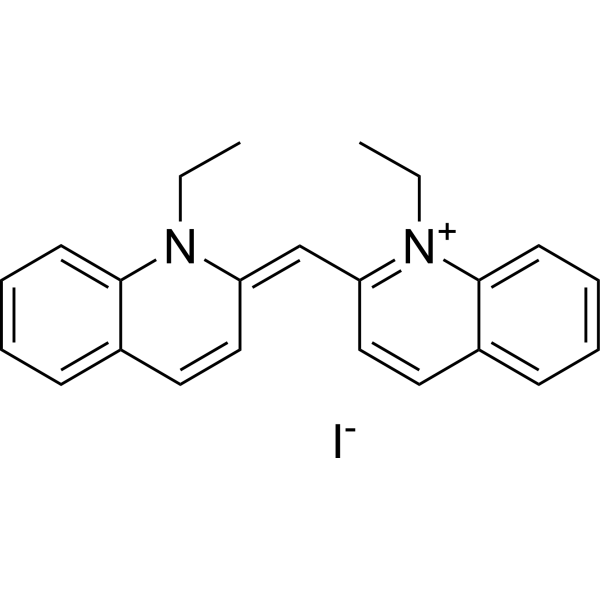
Pseudoisocyanine iodide (1,1'-Diethyl-2,2'-cyanine iodide) is an inhibitor of organic cation transporters (OCT1, OCT2, OCT3) and plasma membrane monoamine transporter (PMAT). Pseudoisocyanine iodide has antidepressant activity.
For research use only. We do not sell to patients.
- Purity : 99.97%
- CAS No.: 977-96-8
- Formula: C23H23IN2
- Molecular Weight:454.35
-
Storage:
4°C, sealed storage, away from moisture
* In solvent : -80°C, 6 months; -20°C, 1 month (sealed storage, away from moisture)

To place orders, for customer services and technical support, please contact: MedChemExpress USA
Tel: 609-228-6898 E-mail: [email protected] [email protected]


-
 Biological Activity
-
Chemical Information
-
Solvent & Solubility
- Protocols
- Purity & Documentation
- References
-
 Help & FAQs


-
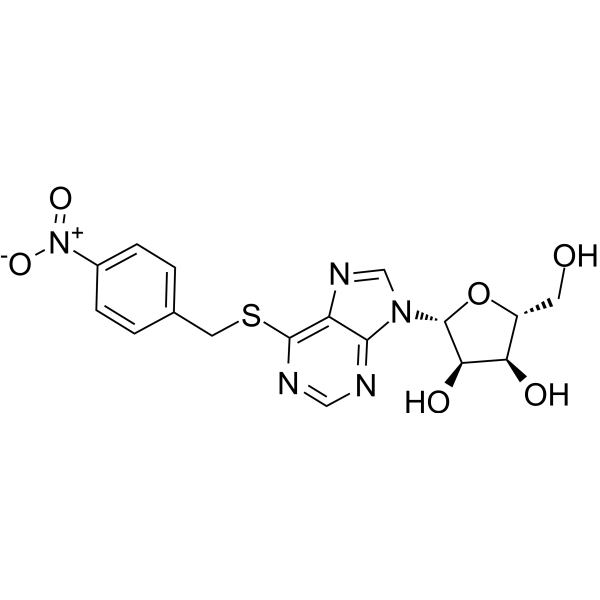
HY-W010936
NitrobenzylthioinosineENT1 Transporter Inhibitor -
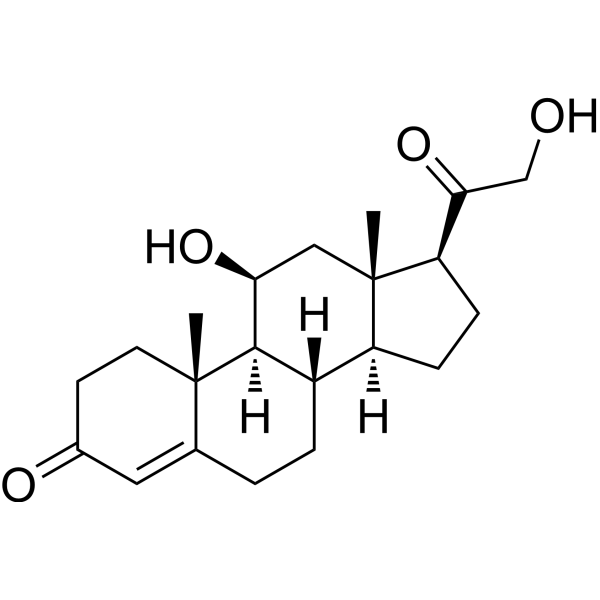
HY-B1618
CorticosteroneEndogenous Glucocorticoids -
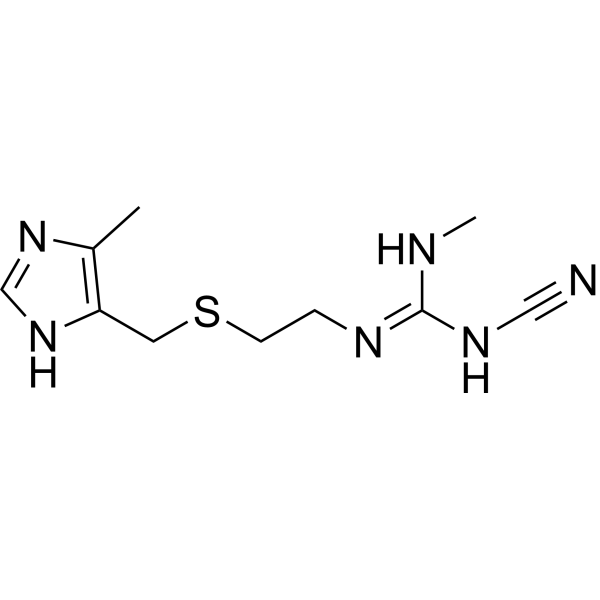
HY-14289
CimetidineHistamine H2 Receptor Antagonist -
HY-B0176A
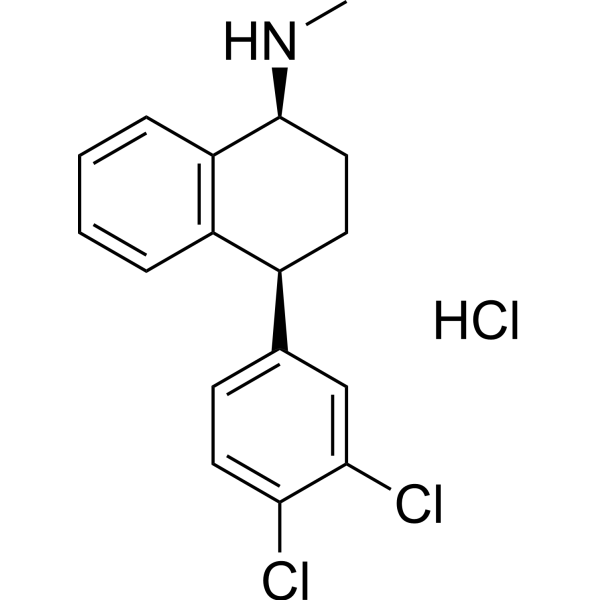
Sertraline hydrochlorideSSRI -
HY-W094758A
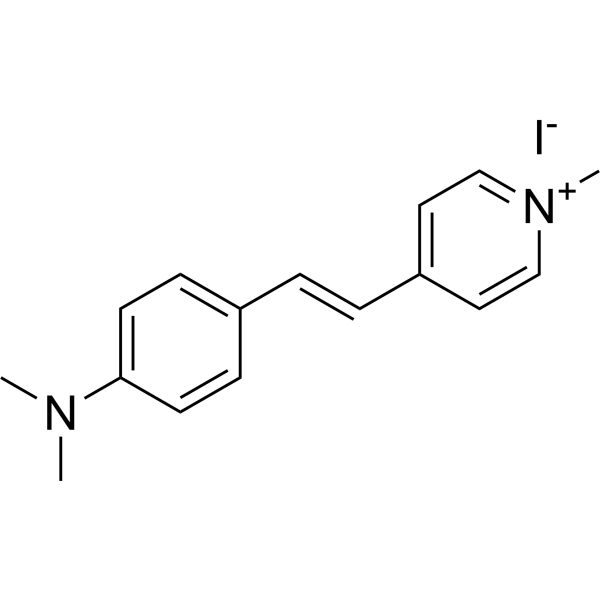
4-Di-1-ASPFluorescent Dye -
HY-100957
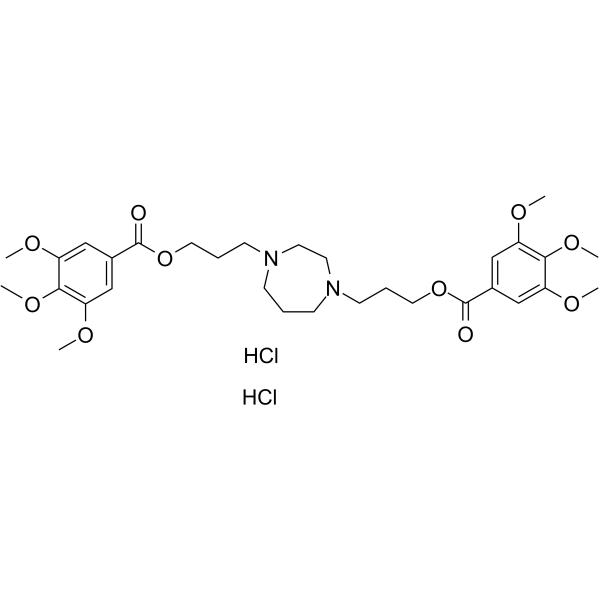
Dilazep dihydrochlorideAdenosine Uptake Inhibitor -

HY-107740R
Pseudoisocyanine iodide (Standard)Reference Standard -

HY-100957R
Dilazep dihydrochloride (Standard)Adenosine Uptake Inhibitor -
HY-110165
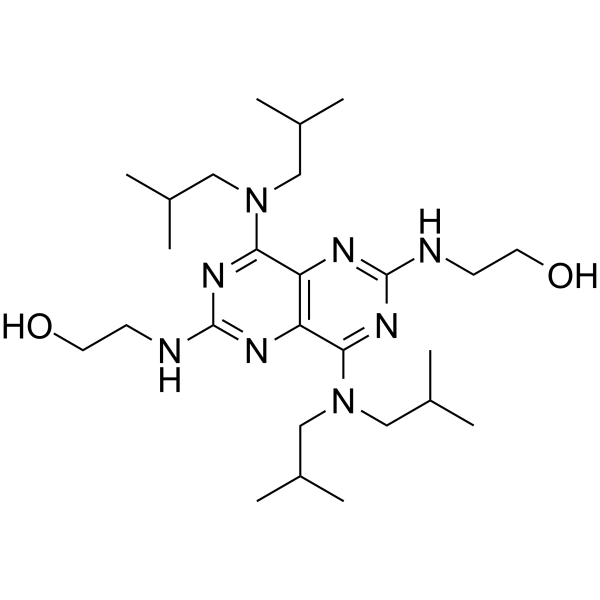
hENT4-IN-1human ENT4 inhibitor -
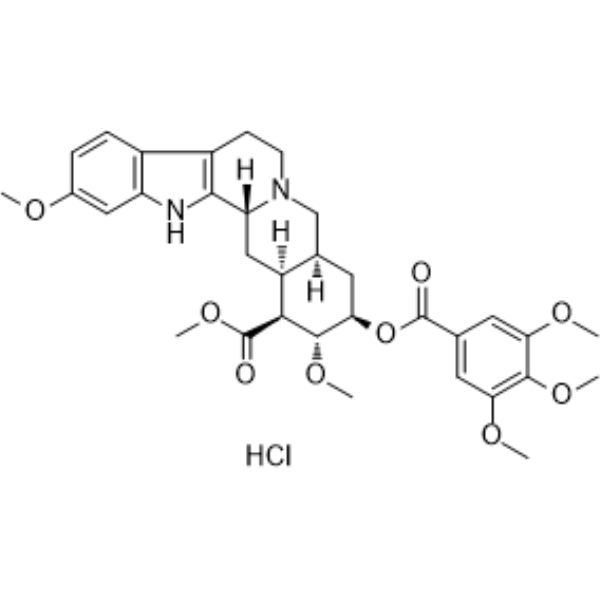
HY-N0480A
Reserpine hydrochlorideVMAT2 Inhibitor -
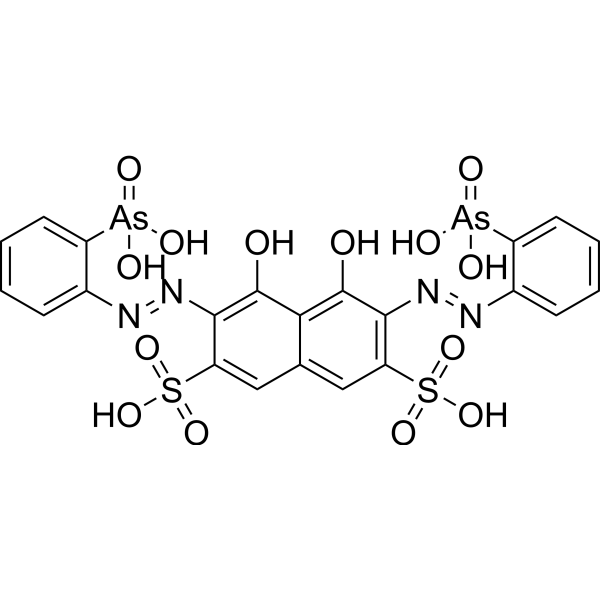
HY-D0202
Arsenazo IIIMetallochromic dye -
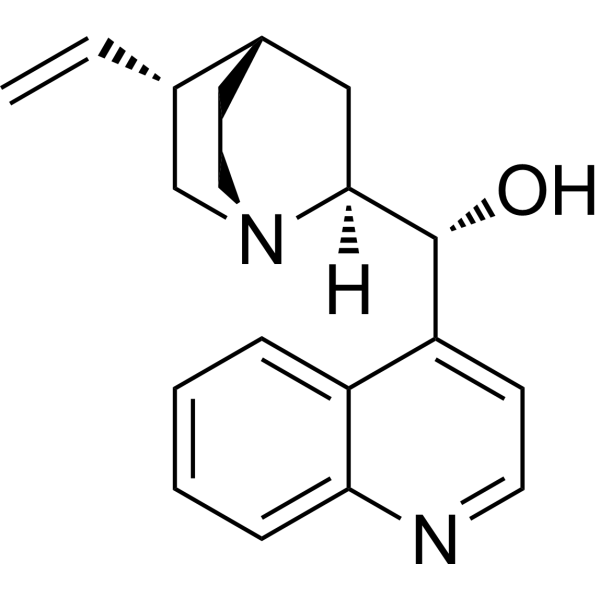
HY-N0173
CinchonidineSerotonin Transporter Inhibitor
Publications Citing Use of MedChemExpress (MCE) Pseudoisocyanine iodide
More

Biological Activity
Description
Cellular Effect
|
Cell Line

|
Type | Value | Description | References |
|---|---|---|---|---|
| HEK293 | IC50 |
0.4 μM
Compound: decynium-22
|
Inhibition of the Organic Cation Transporter 3 (OCT3, SLC22A3) as assessed by a phenotypic impedance-based assay detecting changes in cell morphology by MPP+ uptake in HEK-293 JumpIN-SLC22A3 cells
Inhibition of the Organic Cation Transporter 3 (OCT3, SLC22A3) as assessed by a phenotypic impedance-based assay detecting changes in cell morphology by MPP+ uptake in HEK-293 JumpIN-SLC22A3 cells
|
[PMID: 35163125] |
| HEK293 | IC50 |
0.4 μM
Compound: decynium-22
|
Inhibition of the Organic Cation Transporter 3 (OCT3, SLC22A3) as assessed by a phenotypic impedance-based assay detecting changes in cell morphology by MPP+ uptake in HEK-293 JumpIN-SLC22A3 cells (PubChem AID: 1745861)
Inhibition of the Organic Cation Transporter 3 (OCT3, SLC22A3) as assessed by a phenotypic impedance-based assay detecting changes in cell morphology by MPP+ uptake in HEK-293 JumpIN-SLC22A3 cells (PubChem AID: 1745861)
|
[PMID: 35163125] |
In Vivo
MedChemExpress (MCE) has not independently confirmed the accuracy of these methods. They are for reference only.
-
Animal Model:Adult male C57BL/6 mice (25-30 g)[2]
-
Dosage:0.1 and 0.32 mg/kg
-
Administration:Intraperitoneal injection; single dose
-
Result:Enhanced Fluvoxamine (HY-B0103)-induced inhibition of 5-HT clearance in the CA3 region of the hippocampus and reduced immobility time in the tail suspension test, indicating antidepressant-like effects.


Chemical Information
-
CAS No. 977-96-8
-
Appearance Solid
-
Molecular Weight 454.35
-
Formula C23H23IN2
-
SMILES
CCN1C2=CC=CC=C2C=C/C1=C\C3=[N+](C4=CC=CC=C4C=C3)CC.[I-]
-
Synonyms
1,1'-Diethyl-2,2'-cyanine iodide; Decynium 22; Diethylcyanine iodide; Eastman 7851
-
Shipping
Room temperature in continental US; may vary elsewhere.
-
Storage
4°C, sealed storage, away from moisture
* In solvent : -80°C, 6 months; -20°C, 1 month (sealed storage, away from moisture)


Publications (1)
-
Journal Impact Factor
-
Most Recent
-
Cell Discov
TGM2-mediated serotonylation of GPX4 confers ferroptosis resistance to promote gastric tumorigenesis. [Abstract]2026 Apr 28;12(1):30. PMID: 42049702


Solvent & Solubility
In Vitro:
DMSO : 25 mg/mL (55.02 mM; Need ultrasonic; Hygroscopic DMSO has a significant impact on the solubility of product, please use newly opened DMSO)
Please refer to the solubility information to select the appropriate solvent. Once prepared, please aliquot and store the solution to prevent product inactivation from repeated freeze-thaw cycles.
Storage method and period of stock solution: -80°C, 6 months; -20°C, 1 month (sealed storage, away from moisture). When stored at -80°C, please use it within 6 months. When stored at -20°C, please use it within 1 month.
Please refer to the solubility information to select the appropriate solvent. Once prepared, please aliquot and store the solution to prevent product inactivation from repeated freeze-thaw cycles.
Storage method and period of stock solution: -80°C, 6 months; -20°C, 1 month (sealed storage, away from moisture). When stored at -80°C, please use it within 6 months. When stored at -20°C, please use it within 1 month.
Concentration (start) × Volume (start) = Concentration (final) × Volume (final)
In Vivo:
Select the appropriate dissolution method based on your experimental animal and administration route.
- For the following dissolution methods, please ensure to first prepare a clear stock solution using an In Vitro approach and then sequentially add co-solvents:
- To ensure reliable experimental results, the clarified stock solution can be appropriately stored based on storage conditions. As for the working solution for In Vivo experiments, it is recommended to prepare freshly and use it on the same day.
- The percentages shown for the solvents indicate their volumetric ratio in the final prepared solution. If precipitation or phase separation occurs during preparation, heat and/or sonication can be used to aid dissolution.
Add each solvent one by one: 10% DMSO 40% PEG300 5% Tween-80 45% Saline
Solubility: ≥ 2.5 mg/mL (5.50 mM); Clear solution
This protocol yields a clear solution of ≥ 2.5 mg/mL (saturation unknown).
Taking 1 mL working solution as an example, add 100 μL DMSO stock solution (25.0 mg/mL) to 400 μL PEG300, and mix evenly; then add 50 μL Tween-80 and mix evenly; then add 450 μL Saline to adjust the volume to 1 mL.
Preparation of Saline: Dissolve 0.9 g sodium chloride in ddH₂O and dilute to 100 mL to obtain a clear Saline solution.
In Vivo Dissolution Calculator
Please enter the basic information of animal experiments:
-
-
-
-
Recommended: Prepare an additional quantity of animals to account for potential losses during experiments.
Please enter your animal formula composition:
-
%DMSO +
Recommended: Keep the proportion of DMSO in working solution below 2% if your animal is weak.
-
%+
-
+%Tween-80 + +
-
%Saline +
The co-solvents required include: DMSO, . All of co-solvents are available by MedChemExpress (MCE). , Tween 80. All of co-solvents are available by MedChemExpress (MCE).
Working solution concentration: 0.22 mg/mL
Method for preparing stock solution: mg drug dissolved in μL DMSO. Stock solution concentration: mg/mL. * In solvent : -80°C, 6 months; -20°C, 1 month (sealed storage, away from moisture)
1. Take μL DMSO stock solution;
2. Add μL .
μL , mix evenly;
3. Then add μL Tween 80, mix evenly;
4. Then add μL
Please ensure that the stock solution in the first step is dissolved to a clear state, and add co-solvents in sequence. You can use ultrasonic heating (ultrasonic cleaner, recommended frequency 20-40 kHz), vortexing, etc. to assist dissolution.

Protocols
-
Protocol for Tail Suspension Test (TST)
The Tail Suspension Test is a mouse behavioral assay in which an animal is suspended by the tail in an inescapable position, causing alternating escape-directed activity and immobility; the main readout is immobility time, and antidepressant-like treatments generally reduce immobility compared with vehicle controls. The assay detects behavioral response to acute inescapable stress rather than a molecular event; immobility is interpreted as passive stress-coping behavior, while reduced immobility is used as a predictive screen for antidepressant-like activity, with important limitations related to strain, locomotor activity, and tail-climbing behavior.
-
Protocol for Forced Swim Test (FST)
The Forced Swim Test is a rodent behavioral assay in which a mouse or rat is placed in an inescapable cylinder of water, and the main readout is the time spent immobile versus active escape-related behaviors such as swimming or climbing. Reduced immobility after treatment has historically been interpreted as antidepressant-like activity, but the assay should be interpreted as a behavioral response to acute inescapable stress rather than a complete model of human depression.


Purity & Documentation
-
Data Sheet (273 KB)
-
SDS (480 KB)
- English - EN (480 KB)
- Français - FR (480 KB)
- Deutsch - DE (480 KB)
- Norwegian - NO (480 KB)
- Español - ES (480 KB)
- Swedish - SV (480 KB)
- Italian - IT (480 KB)
- Korean - KR (480 KB)
- Portuguese - PT (480 KB)
-
Handling Instructions (2659 KB)
References
[1]. Fraser-Spears R, et al. Comparative analysis of novel decynium-22 analogs to inhibit transport by the low-affinity, high-capacity monoamine transporters, organic cation transporters 2 and 3, and plasma membrane monoamine transporter. Eur J Pharmacol. 2019 Jan 5;842:351-364. [Content Brief]
[2]. Horton RE, et al. Decynium-22 enhances SSRI-induced antidepressant-like effects in mice: uncovering novel targets to treat depression. J Neurosci. 2013 Jun 19;33(25):10534-43. [Content Brief]


Complete Stock Solution Preparation Table
Please refer to the solubility information to select the appropriate solvent. Once prepared, please aliquot and store the solution to prevent product inactivation from repeated freeze-thaw cycles.
Storage method and period of stock solution: -80°C, 6 months; -20°C, 1 month (sealed storage, away from moisture). When stored at -80°C, please use it within 6 months. When stored at -20°C, please use it within 1 month.
| Optional Solvent | Concentration Solvent Mass | 1 mg | 5 mg | 10 mg | 25 mg |
|---|---|---|---|---|---|
| DMSO | 1 mM | 2.2009 mL | 11.0047 mL | 22.0095 mL | 55.0237 mL |
| 5 mM | 0.4402 mL | 2.2009 mL | 4.4019 mL | 11.0047 mL | |
| 10 mM | 0.2201 mL | 1.1005 mL | 2.2009 mL | 5.5024 mL | |
| 15 mM | 0.1467 mL | 0.7336 mL | 1.4673 mL | 3.6682 mL | |
| 20 mM | 0.1100 mL | 0.5502 mL | 1.1005 mL | 2.7512 mL | |
| 25 mM | 0.0880 mL | 0.4402 mL | 0.8804 mL | 2.2009 mL | |
| 30 mM | 0.0734 mL | 0.3668 mL | 0.7336 mL | 1.8341 mL | |
| 40 mM | 0.0550 mL | 0.2751 mL | 0.5502 mL | 1.3756 mL | |
| 50 mM | 0.0440 mL | 0.2201 mL | 0.4402 mL | 1.1005 mL |


Pseudoisocyanine iodide Related Classifications
HY-107740 Related Classifications
 Powered by Bioz