

471 Results for "

R-3

" in MedChemExpress (MCE) Product Catalog:
Products (471)

471 Results for "R-3" in MCE Product Catalog:

45
45 Publications Verification
Cat. No.: HY-15917
CAS No.: 3483-12-3
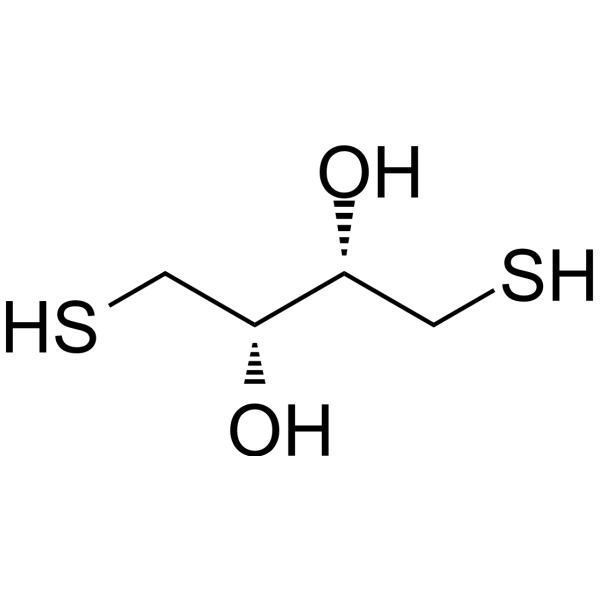
Synonyms: DTT; rel-(2R,3R)-1,4-Dimercapto-2,3-butanediol
DL-Dithiothreitol (DTT) is a strong reductant with anti-disulfidptosis activity. When DL-Dithiothreitol is oxidized, it forms a stable six-membered ring with an internal disulfide bond .
loading...
    loading...
7
7 Cited Publications
Cat. No.: HY-W015851
CAS No.: 13613-65-5
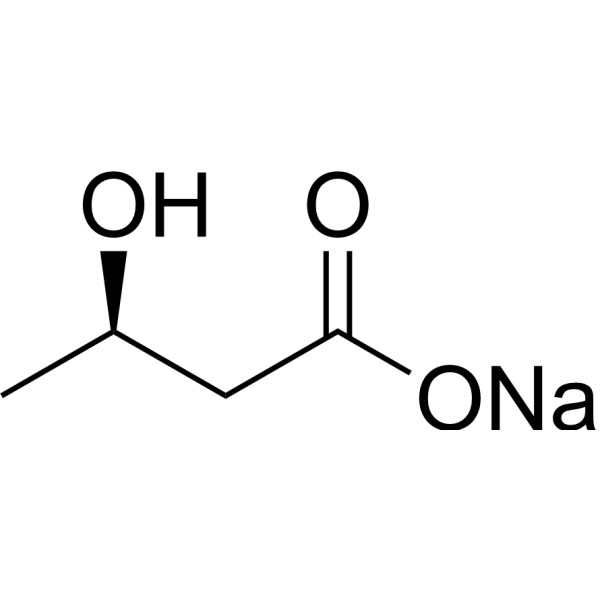
Synonyms: (R)-(-)-3-Hydroxybutanoic acid sodium; (R)-3-Hydroxybutyric acid sodium
(R)-3-Hydroxybutanoic acid ((R)-3-Hydroxybutyric acid) sodium is a metabolite converted from acetoacetic acid catalyzed by 3-hydroxybutyrate dehydrogenase. (R)-3-Hydroxybutanoic acid sodium can function as a nutrition source, and as a precursor for vitamins, antibiotics and pheromones .
loading...
    loading...
7
7 Cited Publications
Cat. No.: HY-W051723
CAS No.: 625-72-9
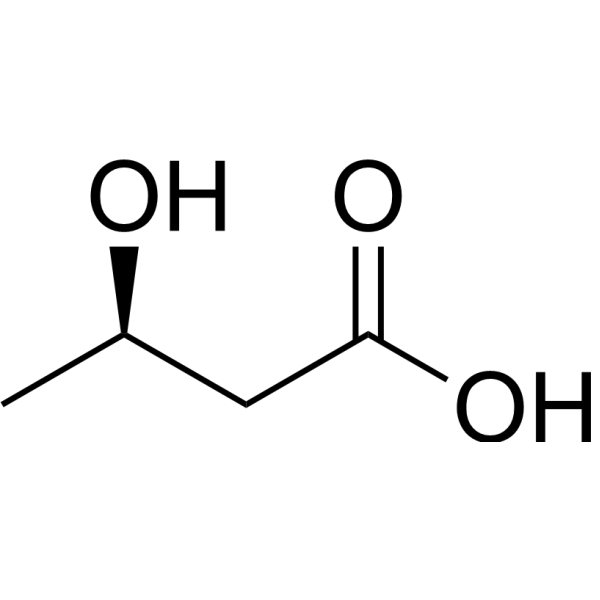
Synonyms: (R)-(-)-3-Hydroxybutanoic acid; (R)-3-Hydroxybutyric acid
(R)-3-Hydroxybutanoic acid is a metabolite, and converted from acetoacetic acid catalyzed by 3-hydroxybutyrate dehydrogenase. (R)-3-Hydroxybutanoic acid has applications as a nutrition source and as a precursor for vitamins, antibiotics and pheromones .
loading...
    loading...
6
6 Cited Publications
Cat. No.: HY-D1056A1
Synonyms: LPS, from Escherichia coli (O111:B4)
Lipopolysaccharides, from E. coli O111:B4 (LPS, from Escherichia coli (O111:B4)) are endotoxins and TLR4 activators extracted from Escherichia coli (E. coli O111:B4) and are classified as S (smooth) type LPS. Lipopolysaccharides (LPS), from E. coli O111:B4 possess the typical three-part structure: O-antigen, R3-type core oligosaccharide, and lipid A. Lipopolysaccharides (LPS), from E. coli O111:B4 activate TLR-4 in immune cells and can cause significant gastric diseases. Lipopolysaccharides (LPS), from E. coli O111:B4 can be used to induce cellular inflammation and establish animal models related to inflammation [3] .
It is recommended to prepare a solution with concentration ≥2 mg/mL. Vortex thoroughly for more than 10 minutes. Due to the adsorption characteristics of LPS, silanized container or low adsorption centrifuge tubes should be used for aliquoting and storage, and mix thoroughly before use.
loading...
    loading...
3
3 Cited Publications
Cat. No.: HY-100218C
CAS No.: 1219810-15-7
Purity:  99.52%
Target:  

Drug Isomer Ferroptosis

Research Areas:  

Cancer

(1R,3R)-RSL3 is an isomer of RSL3 (HY-100218A). RSL3 ((1S,3R)-RSL3) is an inhibitor of glutathione peroxidase 4 (GPX4) (ferroptosis activator), reduces the expression of GPX4 protein, and induces ferroptotic death of head and neck cancer cell. RSL3 increases the expression of p62 and Nrf2 and inactivates Keap1 in HN3-rslR cells .
loading...
    loading...
3
3 Cited Publications
Cat. No.: HY-W030796A
CAS No.: 150436-68-3
Target:  

Taste Receptor

Research Areas:  

Metabolic Disease

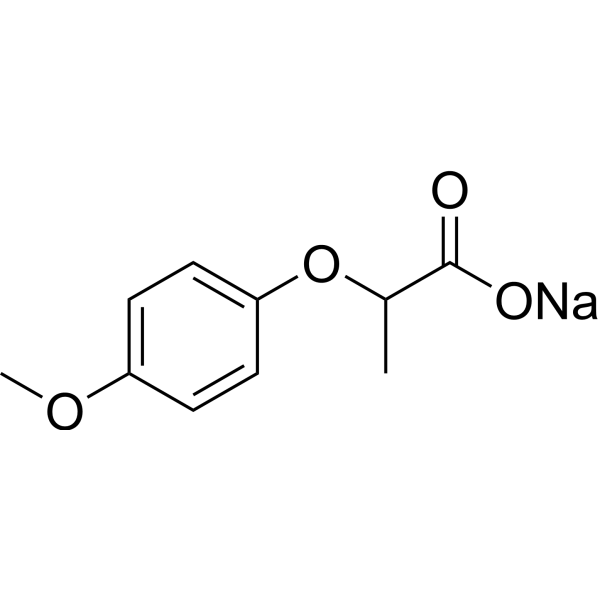
Lactisole is a canonical antagonist of sweet taste receptor, selectively targeting to T1R3 subunit, a glucose-sensing receptor. Lactisole inhibits insulin secretion induced by glucose in mouse islets .
loading...
    loading...
3
3 Cited Publications
Cat. No.: HY-W030796
CAS No.: 13794-15-5
Target:  

Taste Receptor

Research Areas:  

Metabolic Disease

Lactisole free acid is a canonical antagonist of sweet taste receptor, selectively targeting to T1R3 subunit, a glucose-sensing receptor. Lactisole free acid inhibits insulin secretion induced by glucose in mouse islets .
loading...
    loading...
3
3 Cited Publications
Cat. No.: HY-P0227
CAS No.: 168482-23-3
Target:  

Melanocortin Receptor

Research Areas:  

Metabolic Disease

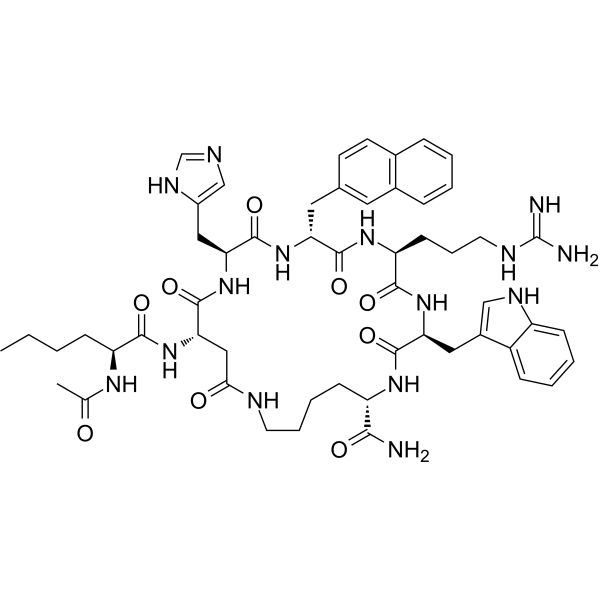
SHU 9119 is a potent human melanocortin 3 and 4 receptors (MC3/4R) antagonist and a partial MC5R agonist; with IC50 values of 0.23, 0.06, and 0.09 nM for human MC3R, MC4R and MC5R, respectively.
loading...
    loading...
3
3 Cited Publications
Cat. No.: HY-16567
CAS No.: 1412458-61-7
Synonyms: Org 5222 hydrochloride
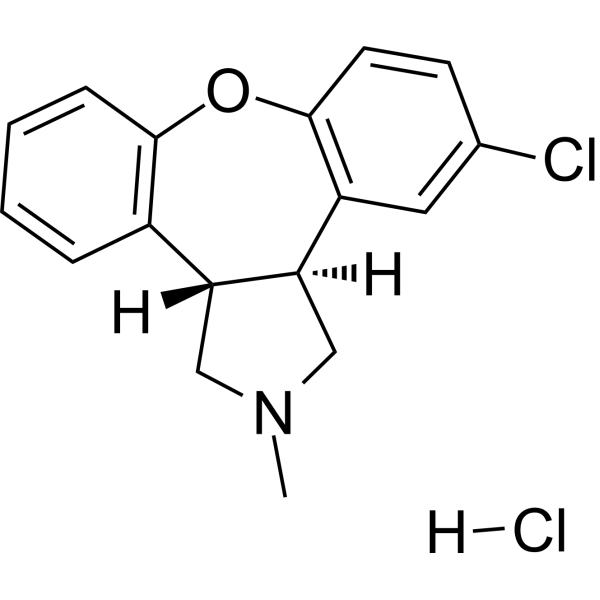
Asenapine (Org 5222) hydrochloride, an atypical antipsychotic, is an antagonist of serotonin receptors (pKi: 8.4-10.5), adrenoceptors (pKi: 8.9-9.5), dopamine receptors (pKi: 8.9-9.4) and histamine receptors (pKi: 8.2-9.0). Asenapine hydrochloride can be used in the research of schizophrenia and bipolar disorder [2]r .
loading...
    loading...
2
2 Cited Publications
Cat. No.: HY-P70783
Purity:  ≥ 95%, as determined by reducing SDS-PAGE.
Synonyms: Long R3 IGF-I; Insulin-like growth factor I; MGF; Somatomedin-C; IBP1
Species:  
Source:  
loading...
    loading...
1
1 Cited Publications
Cat. No.: HY-D1056F
Synonyms: Biotin-LPS, from Escherichia coli (O111:B4)
Biotin-Lipopolysaccharide, from E.coli O111:B4 (Biotin-LPS, from Escherichia coli (O111:B4)) is a biotin-conjugated Lipopolysaccharide (LPS) (HY-D1056A1) that can be coupled with streptavidin protein. Biotin-Lipopolysaccharide, from E.coli O111:B4 can be used to identify Lipopolysaccharide ligands. Lipopolysaccharides, from E. coli O111:B4 (LPS, from Escherichia coli (O111:B4)) are endotoxins and TLR4 activators extracted from Escherichia coli (E. coli O111:B4) and are classified as S (smooth) type LPS. Lipopolysaccharides, from E. coli O111:B4 possess the typical three-part structure: O-antigen, R3-type core oligosaccharide, and lipid A. Lipopolysaccharides, from E. coli O111:B4 activate TLR-4 in immune cells and can cause significant gastric diseases. Lipopolysaccharides, from E. coli O111:B4 can also induce M1-type polarization in mouse macrophages [3] .
It is recommended to prepare a solution with concentration ≥2 mg/mL. Vortex thoroughly for more than 10 minutes. Due to the adsorption characteristics of LPS, silanized container or low adsorption centrifuge tubes should be used for aliquoting and storage, and mix thoroughly before use.
loading...
    loading...
1
1 Cited Publications
Cat. No.: HY-P9968
CAS No.: 780758-10-3
Synonyms: h-R3

Target:  

EGFR

Research Areas:  

Cancer

Nimotuzumab is a humanized IgG1 monoclonal antibody targeting EGFR with a KD of 0.21 nM. Nimotuzumab is directed against the extracellular domain of the EGFR blocking the binding to its ligands. Nimotuzumab, a strong antitumor agent, is cytolytic on target tumors by its capacity to cause antibody dependent cell mediated cytotoxicity (ADCC) and complement dependent cytotoxicity (CDC) .
loading...
    loading...
1
1 Cited Publications
Cat. No.: HY-P2282
Target:  

STAT

Research Areas:  

Cancer

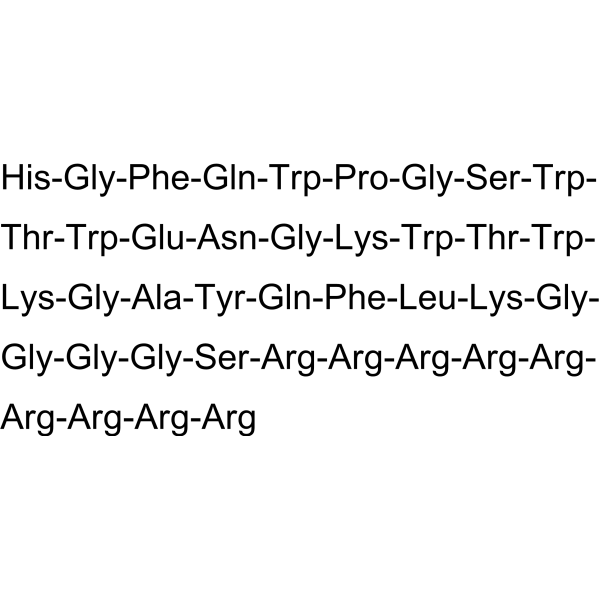
APTSTAT3-9R, a specific STAT3-binding peptide, inhibits STAT3 activation and downstream signaling by specifically blocking STAT3 phosphorylation. APTSTAT3-9R exerts antiproliferative effects and antitumor activity .
loading...
    loading...
1
1 Cited Publications
Cat. No.: HY-P1531
CAS No.: 72629-65-3
γ-1-Melanocyte Stimulating Hormone (MSH), amide is a 11-amino acid peptide. γ-1-Melanocyte Stimulating Hormone (MSH) regulates sodium (Na +) balance and blood pressure through activation of the melanocortin receptor 3 (MC3-R).
loading...
    loading...
1
1 Cited Publications
Cat. No.: HY-132182
CAS No.: 383418-30-2
Purity:  99.4%
Research Areas:  

Neurological Disease Cancer

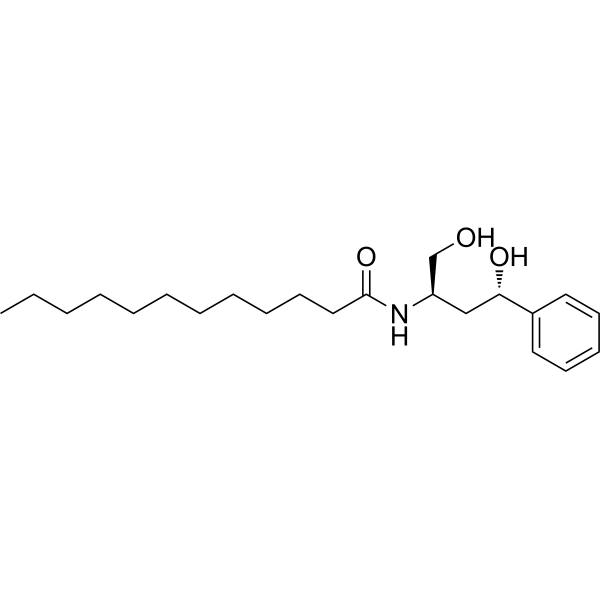
HPA-12 is a blood-brain barrier-permeable small-molecule inhibitor of ceramide transfer protein (CERT) with four stereoisomers (the (1R,3R)-stereoisomer exhibits the highest activity). HPA-12 blocks the transport of ceramide from the endoplasmic reticulum to the Golgi apparatus by binding to the START domain of CERT, leading to intracellular ceramide accumulation and inhibition of sphingomyelin (SM) synthesis. HPA-12 induces endoplasmic reticulum stress via the GRP78/ATF6/CHOP axis and activates mitochondrial autophagy, thereby inhibiting cell growth and inducing apoptosis. In in vivo experiments, HPA-12 significantly reduces the leukemia burden and splenomegaly in mouse models of acute myeloid leukemia (AML) and prolongs survival. HPA-12 is applicable for the research of lipid metabolism in acute myeloid leukemia and Alzheimer's disease [3].
loading...
    loading...
1
1 Cited Publications
Cat. No.: HY-N2541
CAS No.: 122168-40-5
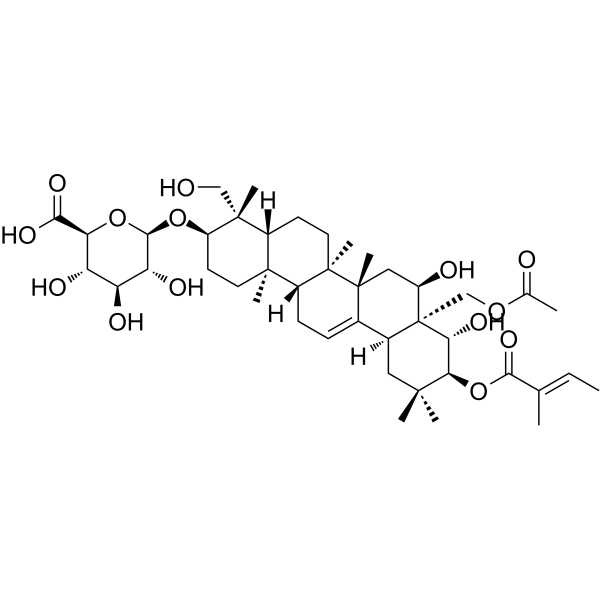
Gymnemic acid I is a bioactive triterpene saponin found in Gymnema sylvestre. Gymnemic acid I is an antisweetness inhibitor via human sweet receptor type 1 receptor 2 (T1R2) and T1R3. Gymnemic acid I is a ribosomal protein biosynthesis inhibitor. Gymnemic acid I has antidiabetic effects. Gymnema acid I induces autophagy-protected MIN-6 cells from apoptosis under high glucose stress by inhibiting the phosphorylation activity of mTOR .
loading...
    loading...
1
1 Cited Publications
Cat. No.: HY-P701744
Purity:  ≥ 90%, as determined by reducing SDS-PAGE.
Synonyms: PIK3R3; Phosphatidylinositol 3-kinase regulatory subunit gamma; PI3-kinase regulatory subunit gamma; PI3K regulatory subunit gamma; PtdIns-3-kinase regulatory subunit gamma; Phosphatidylinositol 3-kinase 55 kDa regulatory subunit gamma; PI3-kinase subunit p55-gamma; PtdIns-3-kinase regulatory subunit p55-gamma; p55PIK
Species:  
Source:  
loading...
    loading...
1
1 Cited Publications
Cat. No.: HY-P77684
Purity:  ≥ 95%, as determined by Bis-Tris PAGE.
Synonyms: AGE-R3; CBP35; GAL3; Gal-3; galactin-3; GALBPCBP35; Galectin3; GALIG; L29; L31; Lectin L-29; LGALS2; LGALS3; Mac-2; MAC2GAL3
Species:  
Source:  
loading...
    loading...
Cat. No.: HY-Y1131
CAS No.: 24915-95-5
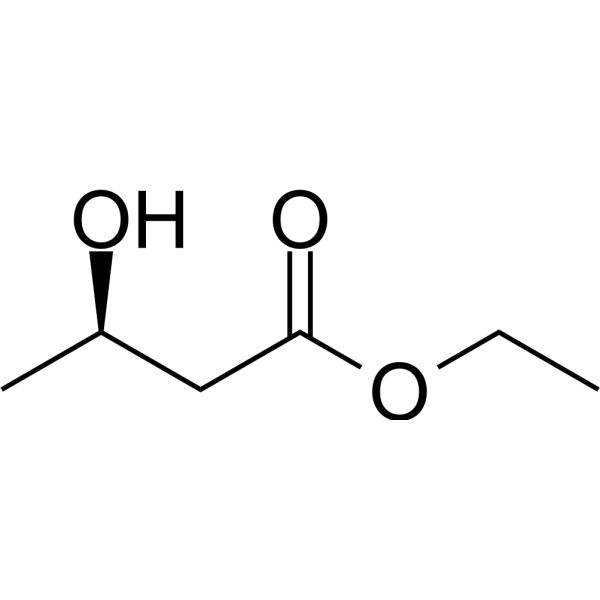
Synonyms: Ethyl (R)-3-hydroxybutanoate
Ethyl (R)-3-hydroxybutyrate is an organic compound commonly used as a starting material for chiral chemical synthesis. It can be used in the preparation of medicines, spices, fine chemicals and food additives, etc., and is widely used in medicine, cosmetics and food industries. In addition, this compound is also used as a substrate or intermediate in some biochemical reactions
loading...
    loading...
Cat. No.: HY-W002421
CAS No.: 122536-77-0
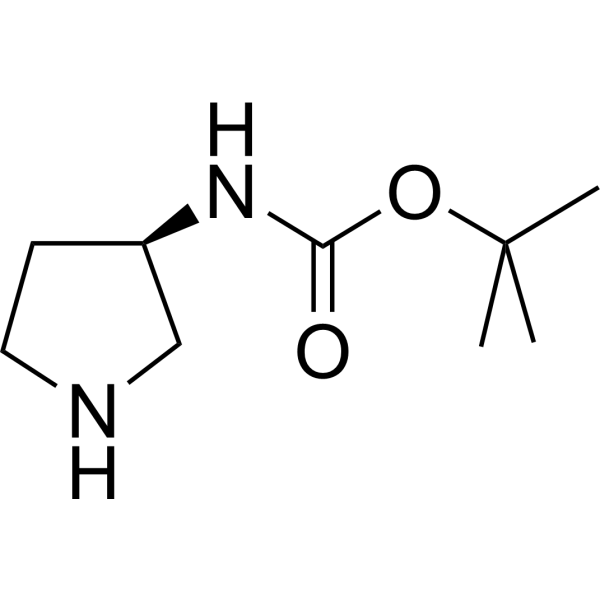
tert-butyl N-[(3R)-pyrrolidin-3-yl]carbamate is a biochemical reagent that can be used as a biological material or organic compound for life science related research.
loading...
    loading...

