1. Search Result
Search Result
Results for "

RKO

" in MedChemExpress (MCE) Product Catalog:

34

Inhibitors & Agonists

1

Fluorescent Dye

2

Peptides

1

Natural
Products

1

Click Chemistry

Cat. No. Product Name Target Research Areas Chemical Structure
  • HY-18964
    MG-101
    Maximum Cited Publications
    13 Publications Verification

    Calpain inhibitor I; Ac-LLnL-CHO; ALLN

    Proteasome Apoptosis Cancer
    MG-101 (ALLN) is an inhibitor of cysteine proteases which inhibits calpain I, calpain II, cathepsin B and cathepsin L with Kis of 190, 220, 150 and 500 pM, respectively. MG-101 induces apoptosis and inhibits tumor growth, it can be used for the research of colon cancer .
    MG-101
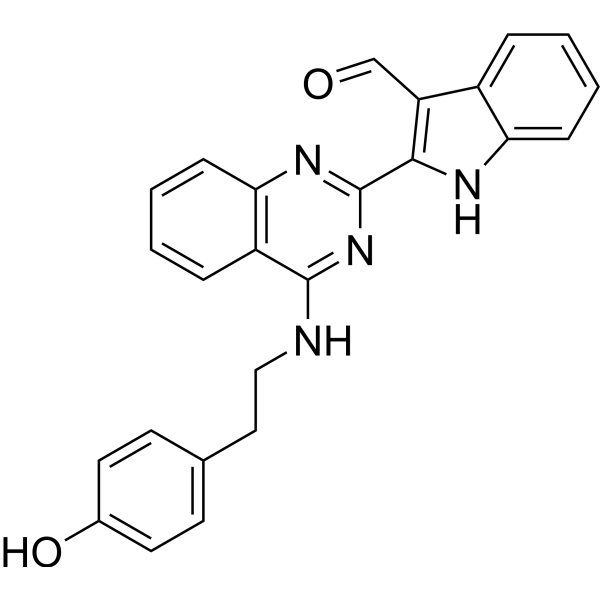
  • HY-100685
    MS-444
    2 Publications Verification

    BE-34776

    HuR Apoptosis COX Neurological Disease Cancer
    MS-444 (BE-34776) is a HuR (ELAVL1) inhibitor that blocks the cytoplasmic translocation of HuR and inhibits its dimerization. MS-444 reduces cytoplasmic HuR levels by preventing the binding of HuR to ARE-mRNA, without altering the total expression of HuR. MS-444 induces apoptosis, inhibits cell growth, angiogenesis and invasion, and also regulates immune function and microbiota. MS-444 effectively alters the number, size and invasiveness of tumors in various cancer models. MS-444 is tolerable to intraperitoneal injection in vivo and can be applied to research related to colorectal cancer, familial adenomatous polyposis, colitis-associated cancer and glioblastoma .
    MS-444
  • HY-B1139
    Tolperisone hydrochloride
    2 Publications Verification

    Apoptosis Neurological Disease
    Tolperisone hydrochloride is a centrally acting muscle relaxant studied in neurological disorders causing pathological rhabdomyosclerosis (pyramidal tract injury, multiple sclerosis, myelopathy, encephalomyelitis), spastic paralysis, and other muscle dystonia-related Encephalopathy. Tolperisone hydrochloride also has antiviral activity .
    Tolperisone hydrochloride
  • HY-136420

    PROTACs Raf Apoptosis Inflammation/Immunology Cancer
    SJF-0628 is a RAF PROTAC degrader. SJF-0628 induces targeted degradation of BRAF in various cancer cell lines (colorectal cancer cell lines (Colo-205, LS-411N, HT-29, RKO) and triple-negative breast cancer cell line DU-4475). SJF-0628 decreases pMEK and pErk levels in DU-4475 cells. SJF-0628 has anti-tumor activity. SJF-0628 can be used for research of colorectal cancer and triple-negative breast cancer. (Pink: RAF ligand (HY-12057), Blue: VHL Ligand ( HY-125845), Black: Linker (HY-B0912)) .
    SJF-0628
  • HY-171579

    NF-κB HCV Apoptosis Pim c-Myc Neurological Disease Metabolic Disease Inflammation/Immunology Cancer
    RS47 is a selective RelB inhibitor with a Kd value of 1.1 μM. RS47 also acts as an inhibitor of HCV replication. RS47 can block the non-canonical NF-κB signaling pathway without affecting the canonical pathway. RS47 exerts anti-tumor effects of inhibiting proliferation and promoting apoptosis on colorectal cancer, B-cell lymphoma and other related tumors both in vitro and in vivo by disrupting the binding of RelB to target DNA. RS47 can be used for the research of tumors and infectious diseases .
    RS47
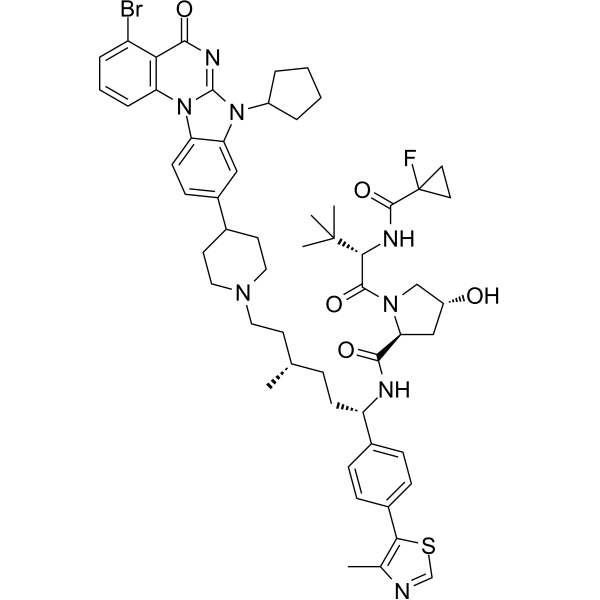
  • HY-151623
    ACBI2
    1 Publications Verification

    PROTACs Epigenetic Reader Domain Cancer
    ACBI2 is a highly potent and orally active VHL PROTAC SMARCA2 degrader (EC50: 7 nM), which selectively degrades SMARCA2 with a DC50 value of 1 nM in RKO cells. ACBI2 can be used in the research of lung cancer .
    ACBI2
  • HY-P11056

    MDM-2/p53 Others
    REF1 peptide is a PORK1 agonist with an EC50 of 0.028 nM in tomato. REF1 peptide binds to the extracellular domain of PORK1, triggers receptor autophosphorylation, and drives downstream MPK3/MPK6 activation, thereby initiating defense and regeneration signaling cascades. REF1 peptide induces callus formation, inhibits shoot regeneration upon continuous exposure, and enhances the regeneration and transformation efficiency of recalcitrant dicotyledonous and monocotyledonous crops .
    REF1 peptide
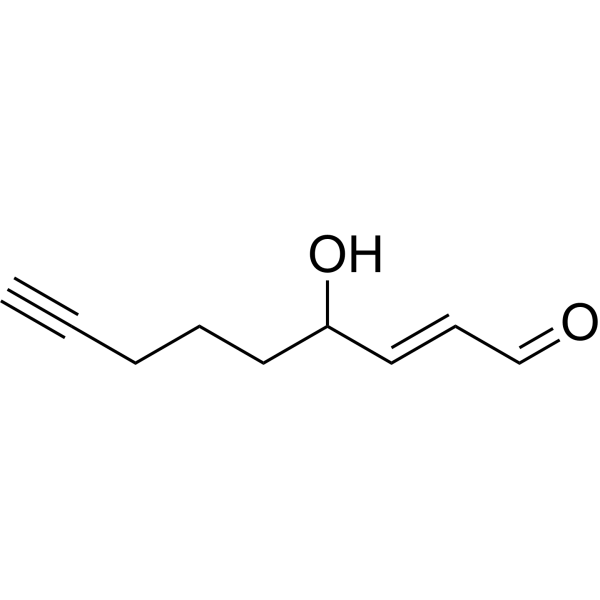
  • HY-113803

    4-HNE alkyne

    Biochemical Assay Reagents Cancer
    4-Hydroxynonenal alkyne (4-HNE alkyne) is a click chemical reagent containing alkynes. 4-Hydroxynonenal alkyne induces heme oxygenase and cell apoptosis in colon cancer (RKO) cells .
    4-Hydroxynonenal alkyne
  • HY-163767

    β-catenin Inflammation/Immunology Cancer
    Antitumor agent-171 (Compound 35) is an inhibitor for β-catenin/BCL9 interaction with IC50 of 1.61 μM. Antitumor agent-171 exhibits high affinity to β-catenin with Kd of 0.63 μM. Antitumor agent-171 inhibits the gene expression of axin2 with IC50 of 0.84 μM. Antitumor agent-171 inhibits cell viability of HCT116 with IC50 of 4.39 μM. Antitumor agent-171 activates T cells, promotes antigen presentation, and exhibits antitumor efficacy and good pharmacokinetic characteristics in mouse models .
    Antitumor agent-171
  • HY-163768

    β-catenin Inflammation/Immunology Cancer
    Antitumor agent-172 (Compound 28) is an inhibitor for β-catenin/BCL9 interaction with IC50 of 3.92 μM. Antitumor agent-172 exhibits high affinity to β-catenin with Kd of 82 nM. Antitumor agent-172 activates T cells, promotes antigen presentation, and exhibits antitumor efficacy and good pharmacokinetic characteristics in mouse models .
    Antitumor agent-172
  • HY-161027

    Carnitine Palmitoyltransferase (CPT) Apoptosis Cancer
    DHP-B is an Ecolignan-type compound and covalent, selective CPT1A inhibitor with a Kd of 1.62 μM. DHP-B can be isolated from the plant Peperomia dindygulensis. DHP-B covalently binds to Cys96 of CPT1A, blocks FAO, and disrupts the mitochondrial CPT1A-VDAC1 interaction. DHP-B triggers Apoptosis. DHP-B exhibits anti-CRC activity .
    2,6-Didehydropeperomin B
  • HY-135533

    Aburamycin A

    Autophagy Cancer
    Chromomycin A2 (Aburamycin A) has cytotoxicity and induces autophagy. Chromomycin A2 has anti-tumor activity and can be used in cancer research .
    Chromomycin A2
  • HY-122626

    Epigenetic Reader Domain Cancer
    BRPF1B/TRIM24-IN-1 (compound 34) is a potent TRIM24/BRPF1/BRPF2 inhibitor, with IC50 values of 0.43, 0.34, 1.75 μM, respectively. BRPF1B/TRIM24-IN-1 binds the TRIM24 bromodomain with a KD of 222 nM and has a KD for the BRPF1 bromodomain of 137 nM and for BRD1 of 1130 nM .
    BRPF1B/TRIM24-IN-1
  • HY-170390

    PROTACs Epigenetic Reader Domain Cancer
    AB3067 is a PROTAC degrader for BET protein, that recruits two different E3 ligase Cereblon and VHL with good affinity (IC50=559 nM for VHL in live HEK293; IC50=190 nM for CRBN in live HEK293), and degrades BRD2, BRD3, BRD4 and CRBN with DC50 of 2.1~2.3, 1.6, 15 and 75 nM, respectively. AB3067 inhibits the proliferation of RKO cell with an EC50 of 111 nM . (Pink: ligand for target protein (HY-131633A); Black: linker (HY-170391); Blue: ligand for E3 ligase VHL (HY-112078) and CRBN(HY-W998346))
    AB3067
  • HY-154973

    Oxidative Phosphorylation Mitochondrial Metabolism AMPK Metabolic Disease Cancer
    AMPK activator 11 is an AMP-activated protein kinase (AMPK) activator with nanomolelevel antiproliferation activities against several CRCs. AMPK activator 11 selectively inhibits the RKO xenograft growth along by activating AMPK and upregulating oxidative phosphorylation (OXPHOS) ( mitochondrial metabolism ) and can be used for anti-tumor and metabolic disease research .
    AMPK activator 11
  • HY-155972

    CRM1 Cancer
    CRM1-IN-1 (Compound KL1) is a noncovalent CRM1 inhibitor. CRM1-IN-1 induces nuclear CRM1 degradation (IC50: 0.27 μM). CRM1-IN-1 inhibits CRM1-mediated nuclear export and cell proliferation, and triggers apoptosis in colorectal cancer cells .
    CRM1-IN-1
  • HY-168925

    Wnt PARP β-catenin Cancer
    EXQ-2d is the inhibitor for tankyrase and inhibits TNKS1 and TNKS2 with an IC50 of 48.8 nM and 13.8 nM (pIC50=7.31 and 7.86). EXQ-2d inhibits WNT/β-catenin signaling pathway with IC50 of 515 nM. EXQ-2d exhibits anti-proliferative activity in cancer cells COLO 320DM and RKO with GI50 of 4.9 μM and 77 μM .
    EXQ-2d
  • HY-170877

    SHP2 PI3K Akt Autophagy Cancer
    SHP2-IN-35 (Compound 3f) is the inhibitor for SHP2. SHP2-IN-35 exhibits antiproliferative activity in cancer cells RKO, SW480 and CT26 with IC50 of 5.72 μM, 3.71 μM and 1.42 μM, respectively. SHP2-IN-35 inhibits the PI3K-Akt signaling pathway, regulates the cell cycle associated gene expressions, and induces mitochondrial-related autophagy. SHP2-IN-35 inhibits the expression of certain cytokines and chemokines in the tumor microenvironment (TME), thereby regulating the tumor progression .
    SHP2-IN-35
  • HY-P10914

    MDM-2/p53 Autophagy Inflammation/Immunology Cancer
    D-CopA3 is the inhibitor for MDM2 and the activator for p53 signaling pathway. D-CopA3 exhibits cytotoxicity in colorectal cancer cells HCT-116, LoVo, and RKO (IC50=15-18 μM), induces JNK/Beclin-1 mediated autophagy. D-CopA3 downregulates the expression of cell cycle inhibitory protein p21Cip1/Waf1, enhances the mucosal barrier function and reduces penetration of inflammatory mediators. D-CopA3 exhibits anti-inflammtory activity in mouse C. difficile toxin A-induced acute enteritis models and DSS (HY-116282)-induced chronic colitis models. D-CopA3 exhibits antitumor efficacy in mouse HCT-116 xenograft models .
    D-CopA3
  • HY-155073

    Microtubule/Tubulin Apoptosis Cancer
    Tubulin inhibitor 35 (compound 6b) is a dual inhibitor of topoisomerase I (IC50=~50 μM) and tubulin polymerization (IC50=5.69 μM). Tubulin inhibitor 35 inhibits migration and invasion of MGC-803 and RKO cell lines,and induces apoptosis via arresting cell cycle at G2/M phase. Tubulin inhibitor 35 exhibis potent efficacy in gastrointestinal tumor inhibiton (inhibits MGC-803 (IC50=0.09 μM) and RKO (IC50=0.2 μM) cell lines) .
    Tubulin inhibitor 35
  • HY-B1139R

    Reference Standards Apoptosis Neurological Disease
    Tolperisone (hydrochloride) (Standard) is the analytical standard of Tolperisone (hydrochloride). This product is intended for research and analytical applications. Tolperisone hydrochloride is a centrally acting muscle relaxant studied in neurological disorders causing pathological rhabdomyosclerosis (pyramidal tract injury, multiple sclerosis, myelopathy, encephalomyelitis), spastic paralysis, and other muscle dystonia-related Encephalopathy. Tolperisone hydrochloride also has antiviral activity .
    Tolperisone hydrochloride (Standard)
  • HY-155972A

    CRM1 Apoptosis Cancer
    CRM1-IN-2 (Compound KL2) is a noncovalent CRM1 inhibitor. CRM1-IN-2 localizes CRM1 in the nuclear periphery, depletes nuclear CRM1, and inhibits CRM1-mediated nuclear export. CRM1-IN-2 inhibits growth of colorectal cancer cells, and induces apoptosis .
    CRM1-IN-2
  • HY-150755

    Topoisomerase COX Apoptosis Reactive Oxygen Species (ROS) Cancer
    Topo I/COX-2-IN-2 (Compound W10) is a potent dual-target inhibitor of Topo I and COX-2 with IC50 values of 0.90 μM and 2.31 μM, respectively. Topo I/COX-2-IN-2 induces cancer cell apoptosis through the mitochondrial pathway .
    Topo I/COX-2-IN-2
  • HY-12580

    MDM-2/p53 Cancer
    RO5353 is an orally active inhibitor for p53-MDM2 with an IC50 of 7 nM for MDM2. RO5353 inhibits the proliferation of wild-type p53 cancer cells with an average IC50 of 7 nM. RO5353 exhibits antitumor efficacy and good pharmacokinetic characteristics in mice .
    RO5353
  • HY-176727

    DNA/RNA Synthesis Cancer
    WRN inhibitor 19 (Compound 40) is a WRN helicase inhibitor (IC50: 3.7 nM). WRN inhibitor 19 exhibits selective antiproliferative activity in WRN-dependent cancer cells. WRN inhibitor 19 inhibits WRN helicase function by competitively binding to the ATP site and induces DNA damage and cell cycle arrest. WRN inhibitor 19 can be used in the study of WRN-dependent cancers .
    WRN inhibitor 19
  • HY-181769

    MMP Polo-like Kinase (PLK) CDK PAK Bcl-2 Family Caspase Apoptosis Cancer
    Anticancer agent 306 is a spiro tetramic acid derivative and a inhibitor of MMP1, MMP7 and PLK1. Anticancer agent 306 exerts antiproliferative activity against H1299, RKO and MCF-7 cells with IC50 values of 19.25 μM, 3.29 μM and 102.36 μM, respectively. Anticancer agent 306 can up-regulate p21 protein and down-regulate CCND1 and CCNB1 proteins to induce cell cycle arrest, regulate the expression of Bcl-2 and Bax to induce cell apoptosis. Anticancer agent 306 can down-regulate MMP1 and MMP7 proteins to inhibit tumor invasion and metastasis. Anticancer agent 306 can be used for the research of lung cancer, colorectal cancer, breast cancer .
    Anticancer agent 306
  • HY-132001A

    (R)-KO-539

    Epigenetic Reader Domain Cancer
    (R)-Ziftomenib ((R)-KO-539) is the R-enantiomer of Ziftomenib (HY-132001). Ziftomenib (KO-539) is an orally active menin-MLL interaction inhibitor with antitumor activities .
    (R)-Ziftomenib
  • HY-177967

    Drug Derivative Cancer
    Antitumor agent-209 (Compound 10g), a quinolone derivative, is an antitumor agent. Antitumor agent-209 can inhibit proliferation of HCT-116, RKO, DLD1, HepG2, BGC-823, NCI-H1650 and SK-OV-3 cells with IC50 values of 0.37, 0.58, 0.81, 0.79, 0.89, 0.78 and 0.89 μM .
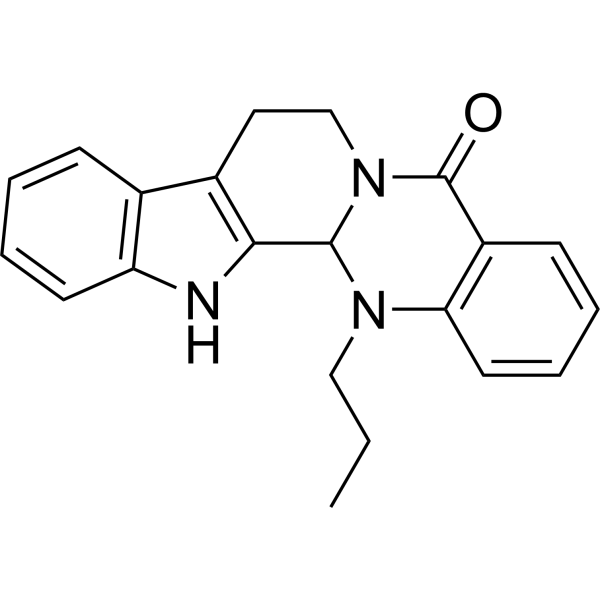
    Antitumor agent-209
  • HY-W098807

    Drug Derivative Cancer
    4-Chloro-7-ethoxyquinoline (Compound 9a), a quinolone derivative, is an anticancer agent. 4-Chloro-7-ethoxyquinoline can inhibit proliferation of HCT-116, RKO, DLD1, HepG2, BGC-823, NCI-H1650 and SK-OV-3 cells with IC50 values of 3.16, 3.87, 2.75, 2.66, 3.91, 3.34 and 3.46μM .
    4-Chloro-7-ethoxyquinoline
  • HY-181147

    PROTACs HSP Cancer
    PROTAC HSP70 Degrader-1 (compound C4) is a cytosolic HSP70 PROTAC degrader that can engage CRBN to form a ternary complex. PROTAC HSP70 Degrader-1 mediates ubiquitination and proteasomal degradation of cytosolic HSP70. PROTAC HSP70 Degrader-1 exhibits cytotoxic activity against cancer cells, suppressing tumor cell proliferation and inducing apoptosis in combination with DTHIB. PROTAC HSP70 Degrader-1 can be used for the research of colon cancer and leukemia .
    PROTAC HSP70 Degrader-1
  • HY-182239

    PD-1/PD-L1 Cancer
    PDL1 degrader-3 (comppund e24) is a PD-L1 degrader. PDL1 degrader-3 inhibits CSN5 enzymatic activity, increases PD-L1 ubiquitination, and induces PD-L1 degradation via the ubiquitin-proteasome pathway, reducing PD-L1 expression on tumor cell membranes. PDL1 degrader-3 blocks PD-1/PD-L1 interaction, activates the tumor immune microenvironment, enhances tumor-infiltrating T-cell immunity, and inhibits activation of immunosuppressive MDSCs and Tregs. PDL1 degrader-3 exerts antitumor effects in mouse tumor models. PDL1 degrader-3 can be used for the research of colorectal cancer, lung cancer .
    PDL1 degrader-3
  • HY-181907

    HyT Keap1-Nrf2 HSP Inflammation/Immunology
    NBE5 is an orally active hydrophobic tag-targeting (Hyt) degrader (HyTTD) that targets Keap1. NBE5 mimics protein misfolding and recruits the molecular chaperone Hsp90, while achieving targeted degradation of Keap1 through both the ubiquitin-proteasome system and the autophagy-lysosome system. Consequently, NBE5 relieves the inhibition of the transcription factor Nrf2 by Keap1, potently activates the Nrf2-mediated endogenous antioxidant pathway, and upregulates the expression of downstream antioxidant proteins such as HO-1 and GCLM. NBE5 effectively alleviates oxidative stress and inflammatory damage, and exhibits excellent in vivo activity in a mouse model of acute colitis induced by DSS (HY-116282C) .
    NBE5 consists of a hydrophobic tag (HY-W022007), a Keap1-Nrf2 ligand (HY-14909), and a linker (HY-W014831).
    NBE5
  • HY-D3200

    Fluorescent Dye Cuproptosis Others
    Dns-LLC is a cell-permeable Cu +-selective fluorescent probe that forms a 1:1 complex with Cu +. The thiol group of Dns-LLC plays a key binding role, while the sulfonamide and amide groups jointly contribute to the stabilization of the complex. Upon binding to Cu + in aqueous buffer solutions, Dns-LLC generates a turn-on fluorescence response, which can be used for the detection of Cu + in the Golgi apparatus .
    Dns–LLC
  • HY-165503

    Wnt β-catenin Cancer
    AZ1366 is an orally active tankyrase inhibitor. AZ1366 stabilizes Axin2, reduces NuMA levels, disrupts the interaction between tankyrase and NuMA, induces G2/M phase arrest, inhibits the Wnt pathway, and downregulates the expression of β-catenin-dependent genes. AZ1366 inhibits tumor growth in colorectal cancer xenograft models. AZ1366 synergistically inhibits the proliferation of non-small cell lung cancer cells, improves tumor control and significantly prolongs survival in orthotopic non-small cell lung cancer mouse models. AZ1366 is applicable to research related to colorectal cancer and non-small cell lung cancer .
    AZ1366

Inquiry Online

Your information is safe with us. * Required Fields.

Salutation


Country or Region *

Applicant Name *


Organization Name *

Department *


Email Address *


Product Name *

Cat. No.


Requested quantity *

Phone Number *


Remarks

Inquiry Online

Inquiry Information

Product Name:
Cat. No.:
Quantity:
MCE Japan Authorized Agent:

