9 Results for "

SMO-IN-2

" in MedChemExpress (MCE) Product Catalog:
Products (9)

9 Results for "SMO-IN-2" in MCE Product Catalog:

Cat. No.: HY-150564
CAS No.: 1822355-27-0
Purity:  98.12%
Target:  

Smo Hedgehog

Research Areas:  

Cancer

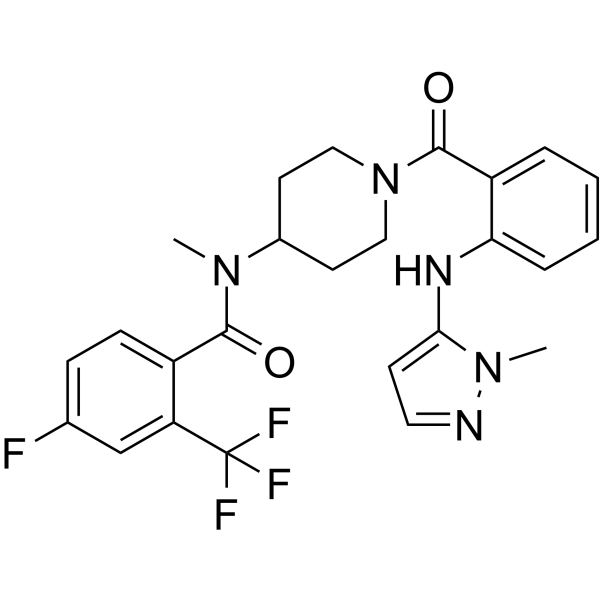
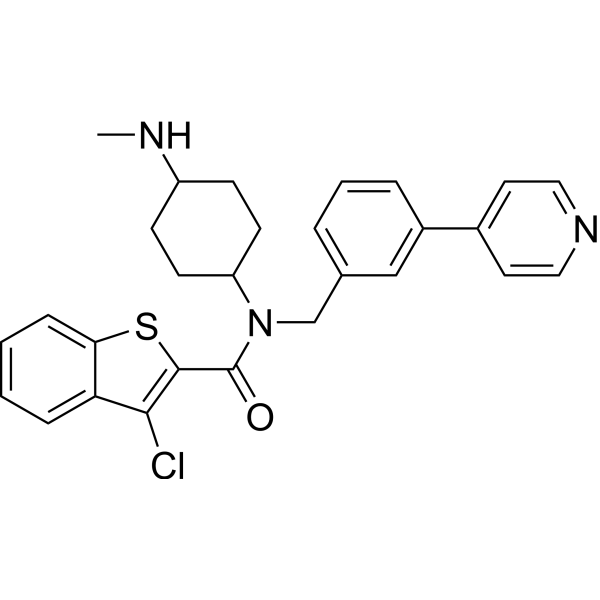
SMO-IN-2 is a potent smoothened (SMO) inhibitor with an IC50 value of 123.4 nM for hedgehog (Hh) signaling pathway. SMO-IN-2 has antiproliferative activity against human medulloblastoma cell line Daoy. Anticancer activity .
loading...
    loading...
44
44 Publications Verification
Cat. No.: HY-12848
CAS No.: 912545-86-9
Purity:  99.60%
Target:  

Smo

Research Areas:  

Cancer

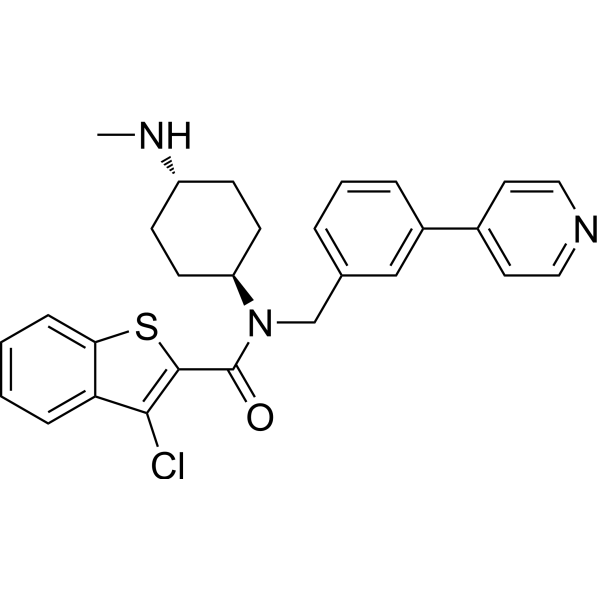
SAG is a potent Smoothened (Smo) receptor agonist (EC50=3 nM; Kd=59 nM). SAG activates the Hedgehog signaling pathway and counteracts Cyclopamine (HY-17024) inhibition of Smo .
loading...
    loading...
44
44 Publications Verification
Cat. No.: HY-12848B
CAS No.: 2095432-58-7
Purity:  99.91%
Target:  

Smo

Research Areas:  

Cancer

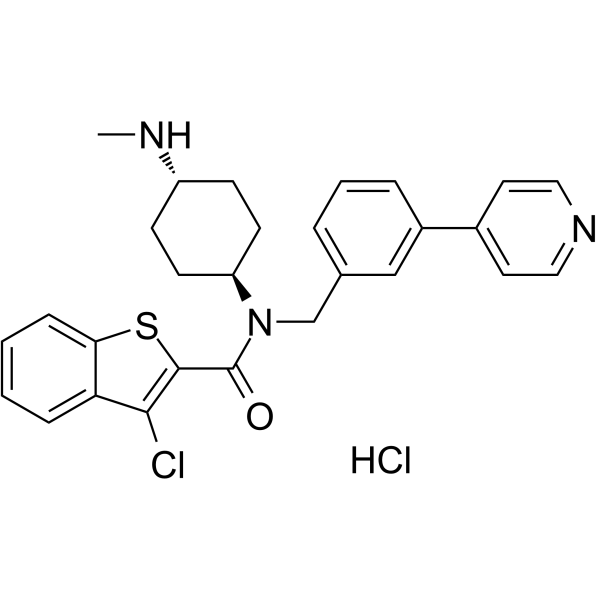
SAG hydrochloride is a potent Smoothened (Smo) receptor agonist (EC50=3 nM; Kd=59 nM). SAG hydrochloride activates the Hedgehog signaling pathway and counteracts Cyclopamine (HY-17024) inhibition of Smo .
loading...
    loading...
44
44 Publications Verification
Cat. No.: HY-12848C
CAS No.: 2702366-44-5
Purity:  99.31%
Target:  

Smo

Research Areas:  

Cancer

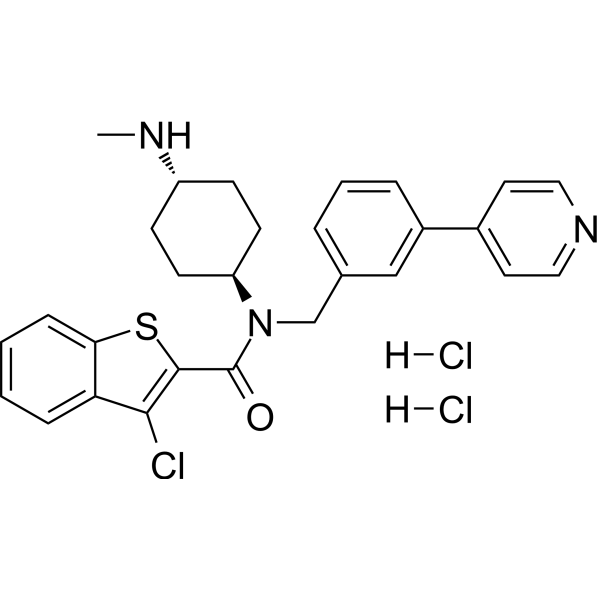
SAG dihydrochloride is a potent Smoothened (Smo) receptor agonist (EC50=3 nM; Kd=59 nM). SAG dihydrochloride activates the Hedgehog signaling pathway and counteracts Cyclopamine (HY-17024) inhibition of Smo .
loading...
    loading...
3
3 Cited Publications
Cat. No.: HY-100515
CAS No.: 1132653-79-2
Purity:  99.42%
Target:  

Hedgehog

Research Areas:  

Inflammation/Immunology

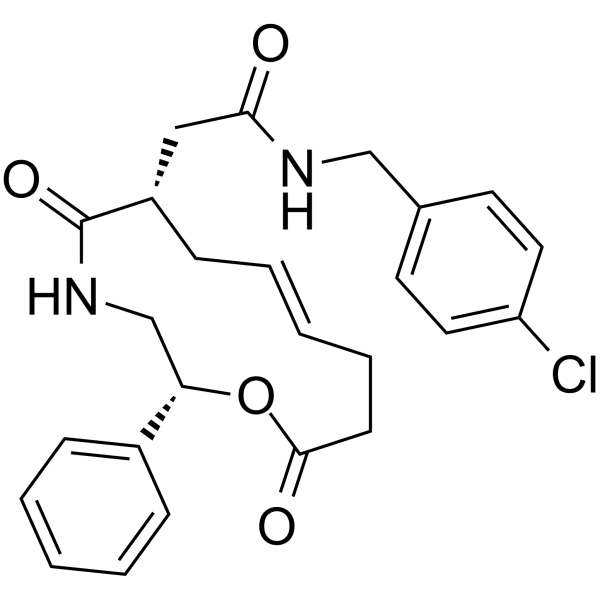
Robotnikinin is a small molecule capable of binding to and inhibiting the activity of Sonic Hedgehog (Shh) signaling up stream of Smo .
loading...
    loading...
Cat. No.: HY-12848R
CAS No.: 912545-86-9
Target:  

Smo Reference Standards

Research Areas:  

Cancer

SAG (Standard) is the analytical standard of SAG. SAG is a potent Smoothened (Smo) receptor agonist (EC50=3 nM; Kd=59 nM). SAG activates the Hedgehog signaling pathway and counteracts Cyclopamine (HY-17024) inhibition of Smo .
loading...
    loading...
Cat. No.: HY-12848G
CAS No.: 912545-86-9
SAG (GMP) is SAG (HY-12848) in GMP grade. GMP-grade small molecules can be used as auxiliary reagents in cell therapy. SAG is a potent Smoothened (Smo) receptor agonist (EC50=3 nM; Kd=59 nM). SAG activates the Hedgehog signaling pathway and counteracts Cyclopamine (HY-17024) inhibition of Smo .
loading...
    loading...
Cat. No.: HY-12848A
CAS No.: 364590-63-6
Target:  

Smo

Research Areas:  

Cancer

(Rac)-SAG is an isoform of SAG (HY-12848). SAG is a potent Smoothened (Smo) receptor agonist (EC50=3 nM; Kd=59 nM). SAG activates the Hedgehog signaling pathway and counteracts Cyclopamine (HY-17024) inhibition of Smo .
loading...
    loading...
Cat. No.: HY-184378
CAS No.: 2922221-22-3
Research Areas:  

Metabolic Disease Cancer

MDB5 is a Hedgehog pathway and Smoothened inhibitor that binds to the 7-TM domain of Smo . MDB5 reduces hepatic stellate cell activation, extracellular matrix-related gene expression, collagen deposition, hydroxyproline content and epithelial-mesenchymal transition, and prevents sinusoidal endothelial cell capillarization [2]. MDB5 induces G1 and S phase cell cycle arrest, triggers apoptosis by upregulating Bax and downregulating Bcl-2, and also decreases oxygen consumption rate, glucose uptake, transglutaminase activity and fibronectin matrix assembly [2] . MDB5 reduces the levels of liver injury markers, hepatic triglyceride deposition and hepatic steatosis, restores the tissue structure of the kidney and spleen, and inhibits pancreatic tumor growth without causing body weight loss [2] . MDB5 can be loaded into PEG-PCC-g-DC micelles, achieving high drug loading, sustained release, improved water solubility, enhanced cellular uptake and optimized hepatic distribution, with good tolerance in mice [2]. MDB5 is applicable to research related to alcohol-associated liver disease, liver fibrosis and pancreatic cancer [2] .
loading...
    loading...

