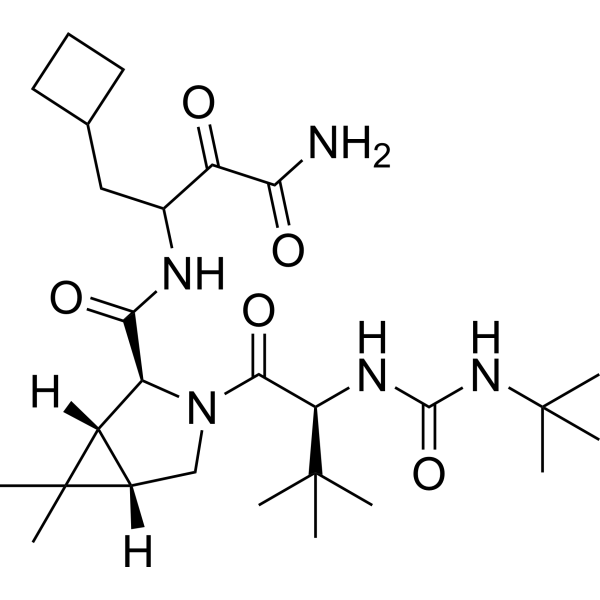
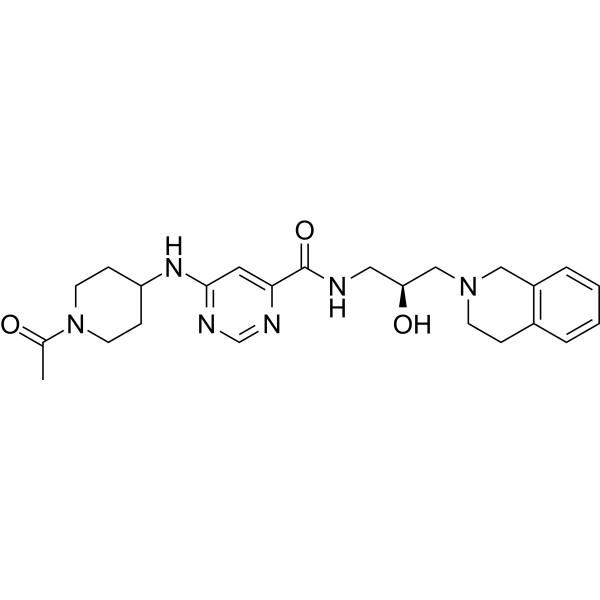
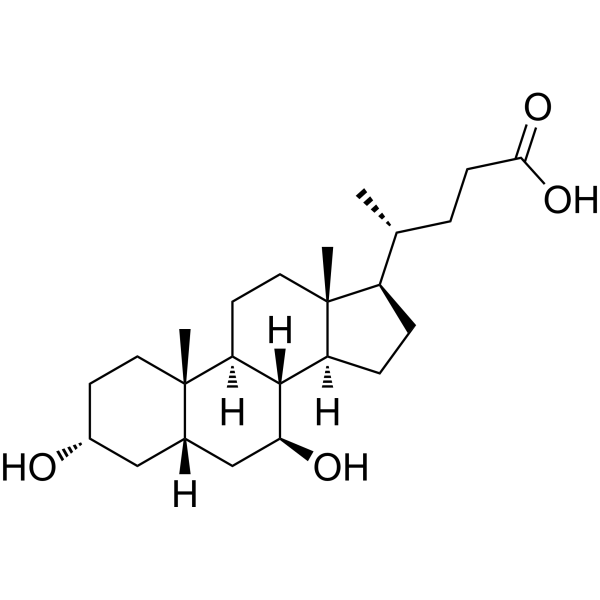
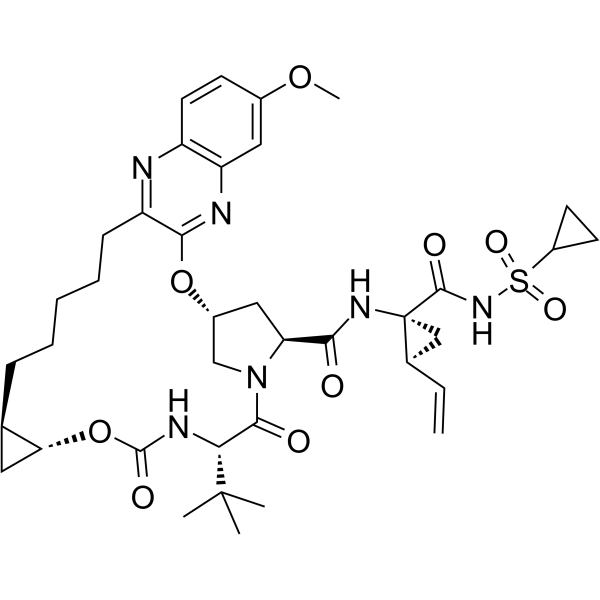
From 11:00 pm to 12:00 pm EST ( 8:00 pm to 9:00 pm PST ) on January 6th, the website will be under maintenance. We are sorry for the inconvenience. Please arrange your schedule properly.
SARS-CoV-2 3CLpro-IN-6 is a reversible covalent inhibitor of SARS-CoV-2 3CL protease. SARS-CoV-2 3CLpro-IN-6 has potent inhibitory activity for SARS-CoV-2 3CL pro with an IC50 value of 4.9 μM. SARS-CoV-2 3CLpro-IN-6 can be used for the research of coronavirus disease 2019 (COVID-19) .
SARS-CoV-2 Mpro-IN-6 is a covalent, irreversible and selective SARS-CoV-2 M pro inhibitor with an IC50 of 0.18 μM. SARS-CoV-2 Mpro-IN-6 does not inhibit human cathepsins B, F, K, and L, and caspase 3 .
SARS-CoV-2 3CLpro-IN-13 is a potent SARS-CoV-2 3CL protease inhibitor with an IC50 value of 21 nM. SARS-CoV-2 3CLpro-IN-13 shows anti-coronavirus activity .
SARS-CoV-2 nsp13-IN-1 (compound C1) is a potent nsp13 (non-structural protein 13) inhibitor. SARS-CoV-2 nsp13-IN-1 only inhibits nsp13 ssDNA + ATPase, with an IC50 of 6 μM. SARS-CoV-2 nsp13-IN-1 does not inhibit ssDNA - ATPase. SARS-CoV-2 nsp13-IN-1 can be used for COVID-19 research .
SARS-CoV-2 Mpro-IN-49 (Compound 22e) is a potent SARS-CoV-2 main protease (M pro) inhibitor (IC50=0.087 μM). SARS-CoV-2 Mpro-IN-49 is promising for research of SARS-CoV-2 and coronavirus .
SARS-CoV-2PLpro-IN-2 (Compound 12) is a highly selective SARS-CoV-2 papain-like protease (PLpro) inhibitor of (IC50=0.06 μM). SARS-CoV-2PLpro-IN-2 inhibits viral replication and immune evasion. SARS-CoV-2PLpro-IN-2 exhibits antiviral efficacy in HeLa-ACE2 cells (EC50=2.9 μM). SARS-CoV-2PLpro-IN-2 is promising for research of COVID-19 .
SARS-CoV-2 nsp3-IN-1 (Compound 15c) is a Mac1(SARS-CoV-2 nsp3 macrodomain) inhibitor with the IC50 value of 6.1 μM. SARS-CoV-2 nsp3-IN-1 can inhibit Mac1 ADP-ribosylhydrolase activity. SARS-CoV-2 nsp3-IN-1 demonstrates notable selectivity for coronavirus macrodomains, especially towards SARS-CoV-2 Mac1 .
SARS-CoV-2 3CLpro-IN-22 (Compound 17) is a cathepsin L (CTSL ) inhibitor with an IC50 value of 32.5 nM. SARS-CoV-2 3CLpro-IN-22 can be used for the study of SARS-CoV-2 virus .
SARS-CoV-2 Mpro-IN-47 is an orally active SARS-CoV-2 Mpro reversible covalent Inhibitor. SARS-CoV-2 Mpro-IN-47 shows potent antiviral activity against several clinical variants of SARS-CoV-2. SARS-CoV-2 Mpro-IN-47 can be used for the research of infection, such as SARS-CoV-2 .
SARS-CoV-2 Mpro-IN-42 (compound C5) is a potent SARS-CoV-2 Mpro inhibitor with an IC50 of 33.6 nM. SARS-CoV-2 Mpro-IN-42 can be used in the study of SARS-CoV-2 .
SARS-CoV-2 Mpro-IN-48 is a potent SARS-CoV-2 main protease inhibitor with an IC50 of 21.1 nM. SARS-CoV-2 Mpro-IN-48 exhibits potent antiviral activity against the SARS-CoV-2 JN.1 variant. SARS-CoV-2 Mpro-IN-48 can be used for the research of infection, such as COVID-19 .
SARS-CoV-2 Mpro-IN-32 (Compound 1) is a selective inhibitor of SARS-CoV-2 M Pro with an IC50 value of 230 nM. SARS-CoV-2 Mpro-IN-32 can also inhibit the replication of multiple SARS-CoV-2 variants in vitro .
SARS-CoV-2 Mpro-IN-18 (compound 84) is a potent SARS-CoV-2 Mpro inhibitor with the IC50 of 3.23 nM. SARS-CoV-2 Mpro-IN-18 can be used for study of anti-SARS-CoV-2 agent .
SARS-CoV-2 Mpro-IN-34 (Compound 26) is an inhibitor for SARS-CoV-2 Mpro with an IC50 of 6 nM. SARS-CoV-2 Mpro-IN-34 exhibits inhibitory efficacy against OC43 Mpro with an IC50 of 33 nM. SARS-CoV-2 Mpro-IN-34 exhibits antiviral activity in SARS-CoV-2 infected Vero E6 cell with an EC50 of 0.103 μM .
SARS-CoV-2 Mpro-IN-46 (Compound 12) is a SARS-CoV-2 main protease inhibitor with an IC50 of ∼25 μM. SARS-CoV-2 Mpro-IN-46 has potent antiviral activity with low cytotoxicity against SARS-CoV-2 (IC50: 7.4 μM). SARS-CoV-2 Mpro-IN-46 can be used for coronaviruses COVID-19 research .
SARS-CoV-2 3CLpro-IN-31 (Compound 13c) is a potent SARS-CoV-2 3CL protease (3CLpro) inhibitor of with an IC50 value of 37.33 nM. SARS-CoV-2 3CLpro-IN-31 blocks viral polyprotein cleavage and inhibits SARS-CoV-2 replication. SARS-CoV-2 3CLpro-IN-31 is promising for research of SARS-CoV-2 infection .
SARS-CoV-2 Mpro-IN-5 is a dual Inhibitor of Main Protease (M Pro) and Cathepsin L (CatL), with IC50s of 1800 nM and 145 nM respectively. SARS-CoV-2 Mpro-IN-5 has antiviral activity against SARS-CoV2. SARS-CoV-2 Mpro-IN-5 blocks SARS-CoV2 replication in hACE2 expressing A549 cells with IC50 value of 14.7 nM .
SARS-CoV-2 Mpro-IN-4 is a dual Inhibitor of Main Protease (M Pro) and Cathepsin L (CatL), with IC50s of 900 nM and 60 nM respectively. SARS-CoV-2 Mpro-IN-4 has antiviral activity against SARS-CoV2. SARS-CoV-2 Mpro-IN-4 blocks SARS-CoV2 replication in hACE2 expressing A549 cells with IC50 value of 8.2 nM .
SARS-CoV-2 Mpro-IN-20 (compound MPI100) is a SARS-CoV-2 main protease inhibitor. SARS-CoV-2 Mpro-IN-20 shows antiviral activity with the EC50 of 3.4 μM .
SARS-CoV-2 RdRp-IN-1 (Compound PAP-2) is a potent SARS-CoV-2 RdRp inhibitor, with an EC50 of 1.11 μM. SARS-CoV-2 RdRp-IN-1 can bind directly to SARS-CoV-2 RdRp, fully resistance to the exoribonuclease (ExoN) and exhibit broad spectrum anti-CoV activities .
SARS-CoV-2 Mpro-IN-29 (Compound 7) is an inhibitor of the SARS-CoV-2 main protease (Mpro) with an IC50 of 310 nM and an EC50 of 0.5 μM in Vero cells. SARS-CoV-2 Mpro-IN-29 binds to the active site of Mpro, blocking the cleavage of viral polyproteins, showing significant antiviral activity and enhanced metabolic function. SARS-CoV-2 Mpro-IN-29 holds potential for research on SARS-CoV-2 antiviral agents .
SARS-CoV-2 Mpro-IN-19 (compound MPI94) is a SARS-CoV-2 MPro inhibitor with the IC50 of 0.096 μM. SARS-CoV-2 Mpro-IN-19 can be used for study of COVID-19 .
SARS-CoV-2 Mpro-IN-36 (Compound 6d) is an inhibitor of SARS-CoV-2 M pro with an IC50 of 110 nM. SARS-CoV-2 Mpro-IN-36 exhibits antiviral activity with an EC50 of 1.6 μM .
SARS-CoV-2 Mpro-IN-50 (Compound 30) is a noncovalent SARS-CoV-2 Mpro inhibitor with an IC50 of 14 nM. SARS-CoV-2 Mpro-IN-50 is also a pan-CoV Mpro inhibitor with IC50 s of 20-190 nM for SARS-CoV-1 Mpro, 229E Mpro, HKU1 Mpro, MERS Mpro, NL63 Mpro and OC43 Mpro. SARS-CoV-2 Mpro-IN-50 has significant antiviral activity against the SARS-CoV-2 omicron variant (EC50 : 22 nM). SARS-CoV-2 Mpro-IN-50 can be used for coronavirus infections research .
SARS-CoV-2 Mpro-IN-25 (Compound 3a) is a SARS-CoV-2protease inhibitor with an IC50 value of 0.26 μM. SARS-CoV-2 Mpro-IN-25 exhibits antiviral activity and can be used in pneumonia-related research .
SARS-CoV-2 Mpro-IN-40 (compound 119) is an inhibitor of SARS-CoV-2 Mpro, with an IC50 value of 15.7 nM against Mpro Fret. SARS-CoV-2 Mpro-IN-40 exhibits low metabolic stability in human microsomes .
SARS-CoV-2 Mpro-IN-13 (compound 20j) is a covalent SARS-CoV-2 Protease Mpro inhibitor with an IC50 value of 19.0 nM. SARS-CoV-2 Mpro-IN-13 processes antiviral activity with an EC50 value of 138.1 nM .
SARS-CoV-2 Mpro-IN-44 (Compound 25) is a broad-spectrum coronavirus main protease (Mpro) inhibitor. SARS-CoV-2 Mpro-IN-44 has inhibitory activity against a variety of high-risk coronaviruses (including SARS-CoV-2 and PEDV, etc.) (IC50: < 0.6 μM). SARS-CoV-2 Mpro-IN-44 achieves broad-spectrum inhibition of coronaviruses by enhancing the interaction with the conserved sites of Mpro. SARS-CoV-2 Mpro-IN-44 can be used for anti-coronavirus drug development .
SARS-CoV-2 Mpro-IN-10 (27h) is a potent M pro inhibitor with IC50 value and EC50 values of 10.9 nM and 43.6 nM, respectively. SARS-CoV-2 Mpro-IN-10 can be used for the research of SARS-CoV-2 virus .
SARS-CoV-2 Mpro-IN-14 (Compound 19) is an inhibitor of SARS-CoV-2 Mpro with an IC50 of 0.044 μM. SARS-CoV-2 Mpro-IN-14 exhibits water solubility, has no cytotoxicity, and can be used in the study of COVID-19 .
SARS-CoV-2 Mpro-IN-39 (Compound 9d) is an inhibitor of the main protease (Mpro) of SARS-CoV-2, with an IC50 value of 5.94 µM, an EC50 value of 9.33 µM for inhibiting the replication of SARS-CoV-2 in Vero cells, and a cytotoxicity CC50 value of 289.63 µM. SARS-CoV-2 Mpro-IN-39 can be used in the research of the anti-COVID-19 field .
SARS-CoV-2 Mpro-IN-51 (compound 4) is a SARS-CoV-2 Mpro inhibitor (IC50 = 26 nM). SARS-CoV-2 Mpro-IN-51 has inhibitory effects on the triple mutant L50F/E166A/L167F. SARS-CoV-2 Mpro-IN-51 can be used for research on viral infections .
SARS-CoV-2 Mpro-IN-21 (compound A8) is a potent SARS-CoV-2 and OVID-19 Main Protease M Pro inhibitor. SARS-CoV-2 Mpro-IN-21 shows excellent antioxidant activity in DPPH assay with an IC50 of 0.36 mg/mL. SARS-CoV-2 Mpro-IN-21 also exhibits better antibacterial potency against Klebsiella with an IC50 of 1.19 mg/mL .
SARS-CoV-2 Mpro-IN-17 (compound S5-28) is an orally active and noncovalent SARS-CoV-2 Mpro inhibitor with the EC50 of 1.35 μM. SARS-CoV-2 Mpro-IN-17 can be used for study of COVID-19 .
SARS-CoV-2nsp14-IN-2 is a potent SARS-CoV-2 Nsp14 methyltransferase inhibitor with an IC50 value of 0.093 µM. SARS-CoV-2nsp14-IN-2 shows antiviral activity. SARS-CoV-2nsp14-IN-2 shows plasma and liver S9 stability. SARS-CoV-2nsp14-IN-2 has the potential for the research of COVID-19 .
SARS-CoV-2 Mpro-IN-41 (Compound 7e) is an orally active inhibitor of COX-2 and SARS-CoV-2 M pro (IC50 values are 9.66 μM and 13.24 μM, respectively). SARS-CoV-2 Mpro-IN-41 also has a certain inhibitory activity against COX-1 (IC50: 46.11 μM). SARS-CoV-2 Mpro-IN-41 can significantly inhibit the expression of inflammatory-related cytokines (such as TNF-α, IL-6, IL-1β) and exert anti-inflammatory effects. SARS-CoV-2 Mpro-IN-41 exerts anti-inflammatory and antiviral effects by selectively inhibiting COX-2 and SARS-CoV-2 M pro. SARS-CoV-2 Mpro-IN-41 can be used for anti-inflammatory and anti-coronavirus research .
SARS-CoV-23CLpro-IN-2 (Compound 1) is a potent inhibitor of 3CL protease. SARS-CoV-23CLpro-IN-2 has the potential for the research of SARS-CoV-2 diseases .
SARS-CoV-2 3CLpro-IN-30 (compound 29) is a potent inhibitor of SARS-CoV-2 3CL protease (SARS-CoV-2 3CLpro), with the IC50 and EC50 of 0.04 and 0.3 μM .
SARS-CoV-2 3CLpro probe-1 (Compound probe 3) is a selective and activity-based probe for the SARS-CoV-2 3CL protease. SARS-CoV-2 3CLpro probe-1 can detect endogenously expressed 3CLpro in SARS-CoV-2-infected cells .
SARS-CoV-2 3CLpro-IN-27 (Compound 9H) is an inhibitor of SARS-CoV-2 3CL pro with an IC50 value of 21 nM. SARS-CoV-2 3CLpro-IN-27 exhibits excellent anti-SARS-CoV-2 replicon activity, demonstrating an EC50 value of 5 nM .
SARS-CoV-2 Mpro-IN-31 (Compound 18) is an inhibitor of SARS-CoV-2 M Pro with an IC50 value of 11 nM. Additionally, SARS-CoV-2 Mpro-IN-31 effectively inhibits the enzymatic activity of the cysteine proteases cathepsin B and cathepsin L, with IC50 values of 24 nM and 1.8 nM, respectively .
SARS-CoV-2 Mpro-IN-45 (compound 28f) is an orally active Mpro inhibitor with IC50 values of 0.12 and 0.16 μM for HCoV-OC43 Mpro and SARS-CoV-2 Mpro, respectively. SARS-CoV-2 Mpro-IN-45 exhibits antiviral activity .
SARS-CoV-2 main protease is a main protease (Mpro) of SARS-CoV-2, which plays a central role in viral replication and transcription and represents an attractive drug target for fighting COVID-19 .
SARS-CoV-2 nsp13-IN-7 (Compound 6r) is a SARS-CoV-2 nsp13 inhibitor (IC50: 0.28 μM). SARS-CoV-2 nsp13-IN-7 interferes with the helicase function of nsp13 by binding to the 5' RNA site and ATP binding site of nsp13. SARS-CoV-2 nsp13-IN-7 can be used as a lead compound for the development of antiviral drugs targeting SARS-CoV-2 nsp13 .
SARS-CoV-2 nsp14-IN-4 (Compound 12q) is an inhibitor of SARS-CoV-2 nsp14 methyltransferase (IC50=19 nM). SARS-CoV-2 nsp14-IN-4 is non-cytotoxic and cell-permeable. SARS-CoV-2 nsp14-IN-4 is used in COVID-19 research .
SARS-CoV-2 3CLpro-IN-15 (compound a) is a beta-nitrostyrene coronavirus SARS-CoV-2 inhibitor that targets the SARS-CoV-2 3CL protease (3CLpro). SARS-CoV-2 3CLpro-IN-15 inhibits viral replication and transcription and plays a key role in the discovery of anti-COVID-19 lead compounds .
SARS-CoV-2 Mpro-IN-23 (Compound 2) is an inhibitor for SARS-CoV-2 main protease (Mpro), which inhibits wildtype Mpro and mutant Mpro variants, with IC50 of 0.057-0.92 μM. SARS-CoV-2 Mpro-IN-23 inhibits the post-entry viral processes of wild-type SARS-CoV-2 single-round infectious particles (SRIPs), suppresses the viral replication of Mpro wildtype and Mpro mutants with EC50 of 0.02-0.52 μM .
SARS-CoV-2 3CLpro-IN-33 (Compound 16) is an orally active SARS-CoV-2 3CL protease inhibitor, with an IC50 value of 1.5 nM. SARS-CoV-2 3CLpro-IN-33 shows excellent anti-SARS-CoV-2 viral activity in the HEK293T-AT cell model with an EC50 of 0.017 μM. SARS-CoV-2 3CLpro-IN-33 can be used for the study of COVID-19 infetction .
SARS-CoV-2 Mpro-IN-43 (Compound 1) is a coronavirus main protease (Mpro) inhibitor (IC50: 72 μM). SARS-CoV-2 Mpro-IN-43 interacts with key residues in the active site of Mpro via non-covalent binding, exerting its anti-coronavirus effect. SARS-CoV-2 Mpro-IN-43 exhibits moderate to low cytotoxicity, with CC50 values of 13.24, 41.02, and 42.26 µM in HaCaT, HEK293T, and HepG2 cells, respectively. SARS-CoV-2 Mpro-IN-43 can be used in anti-SARS-CoV-2 research .
SARS-CoV-2 3CLpro-IN-16 (Compound 3a) is a covalent SARS-CoV-2 3CLpro inhibitor (IC50: 2.124 μM). SARS-CoV-2 3CLpro-IN-16 binds to the active site and forms a covalent bond with Cys145 of 3CLpro .
SARS-CoV-2 3CLpro-IN-23 (Compound Cd3) is a compound that can be isolated from Citrus depressa. SARS-CoV-2 3CLpro-IN-23 has good inhibitory activity to the SARS-CoV-2 spike protein, with KD of 0.79 μM. SARS-CoV-2 3CLpro-IN-23 can bind to key amino acid residue, disrupting the formation of the spike protein and h-ACE2 complex .
SARS-CoV-2 Mpro-IN-9 (compound c7) is a nonpeptidic, noncovalent SARS-CoV-2 M pro inhibitor (IC50=0.085 μM), with improved physicochemical and drug metabolism and pharmacokinetics (DMPK) properties. SARS-CoV-2 Mpro-IN-9 inhibits viral replication (EC50=1.10 μM) in SARS-CoV-2-infected Vero E6 cells, while exhibits low cytotoxic effects (CC50>50 μM) .
SARS-CoV-2 nsp13-IN-5 (compound C6) is a potent SARS-CoV-2 nsp13 inhibitor with IC50 values of 50 and 55 μM for ssDNA + ATPase and ssDNA - ATPase. SARS-CoV-2 nsp13-IN-5 can be used for researching anti-COVID-19 .
SARS-CoV-2 nsp13-IN-6 (compound C5) is a potent SARS-CoV-2 non-structural protein 13 (nsp13) inhibitor with IC50 values of 27 and 33 μM for ssDNA + ATPase and ssDNA - ATPase. SARS-CoV-2 nsp13-IN-6 can be used for researching anti-COVID-19 .
SARS-CoV-2 3CLpro-IN-21 (Compound D6) irreversibly and covalently inhibits SARS-CoV-23CL pro with an IC50 of 0.03 μM. SARS-CoV-2 3CLpro-IN-21 also inhibits SARS-CoV-13CL pro with an IC50 of 0.12μM .
SARS-CoV-2 3CLpro-IN-1 (Compound 14c) is a potent inhibitor of SARS-CoV-2 3CL pro. 3CL pro (main coronaviruses cysteine-protease) has been identified as a promising target for the development of antiviral agents. SARS-CoV-2 3CLpro-IN-1 has the potential for the research of infection diseases .
SARS-CoV-2 3CLpro-IN-5 is a covalent inhibitor of 3C-like protease (3CL pro). SARS-CoV-2 3CLpro-IN-5 has inhibitory activity for 3CL pro with an IC50 value of 3.8 nM. SARS-CoV-2 3CLpro-IN-5 has 9.0% oral bioavailability (BA). SARS-CoV-2 3CLpro-IN-5 can be used for the research of coronavirus disease 2019 (COVID-19) .
SARS-CoV-2 Mpro-IN-54 is a SARS-CoV-2 main protease (Mpro) inhibitor with an IC50 of 12.5 nM against SARS-CoV-2 Mpro. SARS-CoV-2 Mpro-IN-54 functionally inhibits SARS-CoV-2 main protease activity. SARS-CoV-2 Mpro-IN-54 can be used for the research of COVID-19 .
SARS-CoV-2 PLpro-IN-7 (Compound 18) is a selective SARS-CoV-2 PLpro inhibitor with an IC50 of 13.3 μM. SARS-CoV-2 PLpro-IN-7 exerts antiviral activity against SARS-CoV-2 (with an EC50 of 11 μM for SARS-CoV-2 in Huh7.5 cells). SARS-CoV-2 PLpro-IN-7 is applicable to research related to COVID-19 .
SARS-CoV-2 Mpro-IN-55 is a SARS-CoV-2 M pro inhibitor with a IC50 value of 7.20 nM. SARS-CoV-2 Mpro-IN-55 shows limited inhibitory activity against SARS-CoV-2. SARS-CoV-2 Mpro-IN-55 can be used in research related to COVID-19 .
SARS-CoV-2 PLpro-IN-3 (Compound 15) is a covalent inhibitor of the SARS-CoV-2 papain-like protease (PLpro), with an IC50 of 25 nM. SARS-CoV-2 PLpro-IN-3 has similar inhibitory activity against SARS-CoV PLpro (IC50 = 59 nM), but shows no inhibitory effect on human ubiquitin-specific protease 7 (USP7). The EC50 of SARS-CoV-2 PLpro-IN-3 in inhibiting SARS-CoV-2 replication in cells is 96 nM, significantly reducing the viral titer and viral RNA levels. SARS-CoV-2 PLpro-IN-3 can be used for studying SARS-CoV-2 drug resistance mutations .
SARS-CoV-2 PLpro-IN-4 is a SARS-CoV-2 papain-like protease (PL Pro) inhibitor with an IC50 of 0.4 μM. SARS-CoV-2 PLpro-IN-4 binds to the S3 and S4 pockets of SARS-CoV-2 PL Pro, thereby functionally inhibiting its activity. SARS-CoV-2 PLpro-IN-4 exhibits antiviral activity and can be used in research on COVID-19 .
SARS-CoV-2 Mpro-IN-57 is an irreversible SARS-CoV-2 main protease inhibitor with an IC50 of 0.41 μM and a Kd of 247.37 nM. SARS-CoV-2 Mpro-IN-57 forms a covalent bond with the key amino acid residue Cys145 in SARS-CoV-2 main protease via its -CN group. SARS-CoV-2 Mpro-IN-57 can be used for the research of COVID-19 .
SARS-CoV-2 Mpro-IN-56 is an orally active SARS-CoV-2 Mpro inhibitor with an IC50 of 0.026 μM. SARS-CoV-2 Mpro-IN-56 can be used for the research of COVID-19 .
SARS-CoV-2 3CLpro-IN-35 is a SARS-CoV-2 3CLpro inhibitor with an IC50 of 0.15 μM. SARS-CoV-2 3CLpro-IN-35 inhibits the proliferation of bladder cancer cells, exerts anti-SARS-CoV-2 activity, and exhibits low cytotoxicity in fibroblasts. SARS-CoV-2 3CLpro-IN-35 is applicable to research related to SARS-CoV-2 infection and bladder cancer .
SARS-CoV-2 nsp14-IN-10 is a highly potent and selective NSP14 (IC50 = 0.34 µM) S-adenosylmethionine (SAM) binding pocket inhibitor. SARS-CoV-2 nsp14-IN-10 demonstrates robust antiviral activity against SARS-CoV-2. SARS-CoV-2 nsp14-IN-10 exhibits broad-spectrum activity against other betacoronaviruses and inhibits SARS-CoV-2 at the replication stage. SARS-CoV-2 nsp14-IN-10 suppresses viral translation and exhibits immunostimulatory effects. SARS-CoV-2 nsp14-IN-10 specifically reverses NSP14-mediated alterations inhost transcriptome. SARS-CoV-2 nsp14-IN-10 can be used for the study of SARS-CoV-2 .
SARS-CoV-2 nsp14-IN-6 (Compound 35) is a SARS-CoV-2Nsp14 MTase inhibitor with an IC50 of 0.24 μM. SARS-CoV-2 nsp14-IN-6 has potent antiviral activity against SARS-CoV-2 replication. SARS-CoV-2 nsp14-IN-6 increases lipophilicity, further improving cell permeability. SARS-CoV-2 nsp14-IN-6 can be used for human coronaviruses research .
SARS-CoV-2 3CLpro-IN-36 is a SARS-CoV-2 3CLpro inhibitor and antiviral agent with a human sub-micromolar IC50 against SARS-CoV-23CLpro.SARS-CoV-2 3CLpro-IN-36 forms a covalent bond with catalytic Cys145 of SARS-CoV-2 3CLpro; its tetrazole core occupies the S1 pocket and interacts with His163, while its chloroacetamide carbonyl forms hydrogen bonds with the backbone amides of Gly143 and Ser144 in the oxyanion hole.SARS-CoV-2 3CLpro-IN-36 reduces SARS-CoV-2 replication in infected cells.SARS-CoV-2 3CLpro-IN-36 can be used for the research of SARS-CoV-2 infection .
SARS-CoV-2 PLpro-IN-6 is an irreversible SARS-CoV-2 papain-like protease inhibitor with an IC50 value of 0.059 μM. SARS-CoV-2 PLpro-IN-6 exhibits antiviral activity and can be used in studies related to COVID-19 .
SARS-CoV-2 Mpro ligand 2 (Compound 24) is a ligand for the target protein for PROTAC(SARS-CoV-2 Mpro). SARS-CoV-2 Mpro ligand 2 can be used to synthesize PROTAC SARS-CoV-2 Mpro degrader-8 (HY-181870) .
SARS-CoV-2 PLpro-IN-1 (Compound 85) is a non-covalent and competitive inhibitor of SARS-CoV-2 PLpro with an IC50 of 15.06 μM and a Ki of 22.93 μM. SARS-CoV-2 PLpro-IN-1 inhibits the proliferation of Vero cell with an IC50 of 7.47 μM .
SARS-CoV-2 3CLpro-IN-37 is a non-covalent SARS-CoV-2 3CLpro inhibitor with an IC50 of 3.2 nM. SARS-CoV-2 3CLpro-IN-37 blocks the cleavage and replication of viral polyproteins. SARS-CoV-2 3CLpro-IN-37 is applicable to research related to COVID-19 .
SARS-CoV-2 nsp14-IN-11 (Compound 13) is a NSP14 exonuclease inhibitor (pIC50 = 4.4). SARS-CoV-2 nsp14-IN-11 shows robust and complete NSP14 exonuclease inhibition. SARS-CoV-2 nsp14-IN-11 can be used in the research of SARS-CoV-2 infection .
SARS-CoV-2 3CLpro-IN-34 (Compound 55) is a highly efficient non-covalent inhibitor of the SARS-CoV-2 3CL pro protease (b. SARS-CoV-2 3CL pro protease) with an IC50 of 1.9 μM. SARS-CoV-2 3CLpro-IN-34 can inhibit the 3CL pro protein of SARS-CoV-1, with its IC50 being 3.2 μM, and it shows high selectivity towards host cysteine proteases (such as cathepsins L/K and calpain). SARS-CoV-2 3CLpro-IN-34 exhibits antiviral activity in cells infected with SARS-CoV-2, with its EC50 being 25 μM, and it is not affected by P-gp inhibitors and shows no significant cytotoxicity. SARS-CoV-2 3CLpro-IN-34 can be used for research on SARS-CoV-2 infection .
SARS-CoV-2 Mpro-IN-52 (compound 47) is a potent SARS-CoV-2 main protease (MPro) inhibitor (EC50 = 0.0099 µM) with antiviral activity. SARS-CoV-2 Mpro-IN-52 exhibits potent and broad-spectrum activity against MERS, OC43, 229E with EC50s of 0.00961, 0.138, and 0.117 µM. SARS-CoV-2 Mpro-IN-52 can be used for COVID-19 research .
SARS-CoV-2 nsp14-IN-6 (Compound 35) ammonium is a SARS-CoV-2Nsp14 MTase inhibitor with an IC50 of 0.24 μM. SARS-CoV-2 nsp14-IN-6 ammonium has potent antiviral activity against SARS-CoV-2 replication. SARS-CoV-2 nsp14-IN-6 ammonium increases lipophilicity, further improving cell permeability. SARS-CoV-2 nsp14-IN-6 ammonium can be used for human coronaviruses research .
SARS-CoV-2 Mpro-IN-37 (compound 8r) is a SARS-CoV-2 main protease (M pro) inhibitor, with an IC50 of 0.0199 μM. SARS-CoV-2 Mpro-IN-37 inhibits SARS-CoV-1 M pro and MERS-CoV M pro with IC50s of 0.00945 and 0.111 μM, respectively. SARS-CoV-2 Mpro-IN-37 displays high antiviral activity in the nanomolar range without showing cellular toxicity .
SARS-CoV-2 nsp14-IN-9 (Compound 4P) is a selective nsp14 inhibitor with an IC50 of 0.20 μM. SARS-CoV-2 nsp14-IN-9 inhibits both mouse hepatitis virus and SARS-CoV-2 replication .
SARS-CoV-2 Spike receptor binding domain, RBD (371-394) is a peptide from SARS-CoV-2 spike receptor-binding domain. SARS-CoV-2 spike protein receptor-binding domain binds to ACE2. SARS-CoV-2 Spike receptor binding domain, RBD (371-394) can be used in the research of SARS-CoV-2 infection .
SARS-CoV-2 nsp14-IN-8 (Compound 26) is a SARS-CoV-2 nsp14 inhibitor, with an IC50 of 53 nM. SARS-CoV-2 nsp14-IN-8 shows IC50 values of 170 nM, 8 nM, 21 nM against SARS-CoV-1 nsp14, HCoV-NL63 nsp14, HCoV-229E nsp14, respectively. SARS-CoV-2 nsp14-IN-8 can be used in the research of Coronavirus infection .
SARS-CoV-2 3CLpro-IN-25 (compound 56) inhibits the SARS-CoV-2 3CLpro with the IC50 of 70 nM and displays antiviral activity in cells with the EC50 of 3.1 μM .
SARS-CoV-2Mpro-IN-2 (compound GC-14) is a selective, low cytotoxic and non-covalent M pro inhibitor (IC50=0.40 μM) with good anti-SARS-CoV-2 activity (EC50=1.1 μM). SARS-CoV-2Mpro-IN-2 can be used in COVID-19 studies .
SARS-CoV-2 3CLpro-IN-26 (Compound (S,R)-4y) is an allosteric inhibitor for SARS-CoV-2 3CLpro with an IC50 of 0.43 μM. SARS-CoV-2 3CLpro-IN-26 exhibits good cell permeability and is able to effectively cross the cell membrane, after co-incubation with Vero-E6 cells .
SARS-CoV-2 nsp14-IN-1 (Compound 3) is a prototypic bisubstrate inhibitor of SARS-CoV-2Nsp14 MTase with an IC50 value of 0.061 μM. SARS-CoV-2 nsp14-IN-1 (Compound 3) has an excellent selectivity profile over a panel of human methyltransferases, can against apanel of 10 human MTases including histone lysine, proteinarginine, and DNA and RNA MTases .
SARS-CoV-2 nsp13-IN-3 (Compound C3) is a SARS-CoV-2 non-structural protein 13 (nsp13) small-molecule inhibitor with an IC50 of 32 μM against nsp13 ssDNA + ATPase .
SARS-CoV-2nsp13-IN-2 (Compound C2) is a SARS-CoV-2 non-structural protein 13 (nsp13) small-molecule inhibitor with an IC50 of 42 μM against nsp13 ssDNA + ATPase .
SARS-CoV-2nsp3-IN-2 is a macrodomain (Mac1) inhibitor with IC50 value of 180 μM. SARS-CoV-2nsp3-IN-2 is a small molecule chemical probe and can be used for the research of viral .
SARS-CoV-2 3CLpro-IN-19 (Compound C5a) is a non-covalent, non-peptide SARS-CoV-2 3CLpro inhibitor (IC50s: 0.7 μM). SARS-CoV-2 3CLpro-IN-19 has broad-spectrum activity against Omicron subvariants (BA.5, BQ.1.1, and XBB.1.5) infection in human cells, with EC50 values between 30-69 nM .
SARS-CoV-2-IN-24 (compound 7) is a potent papain-like protease (PL pro) inhibitor. SARS-CoV-2-IN-24 induces conformational changes in SARS-COV-2 papain-like protease, inhibiting SARS-CoV-2 replication. SARS-CoV-2-IN-24 can be used for SARS-CoV-2 research .
SARS-CoV-2 nsp13-IN-4 (C4 (d)) is a potent and selective nsp13 helicase small-molecule inhibitor and inhibit the ssDNA+ ATPase activity of nsp13 with an IC50 value of 57 μM. SARS-CoV-2 nsp13-IN-4 is agentlike molecule with molecular weight of less than 450Da and can provide a broad-spectrum antiviral effect .
SARS-CoV-2-IN-111 (compound 77) is a potent SARS-CoV-2 inhibitor with an IC50 of 0.67 μM. SARS-CoV-2-IN-111 significantly reduces SARS-CoV-2 within Vero cells .
SARS-CoV-2-IN-54 (Compound 2) is a SARS-CoV-2 inhibitor. SARS-CoV-2-IN-54 has antiviral activity. SARS-CoV-2-IN-54 inhibits SARS-CoV-2 in Vero E6 cells, with an IC50 of 21.4 μM .
SARS-CoV-2-IN-56 (Compound 63) is a SARS-CoV-2 inhibitor. SARS-CoV-2-IN-56 has antiviral activity. SARS-CoV-2-IN-56 inhibits SARS-CoV-2 in Vero E6 cells, with an IC50 of 0.7 μM .
SARS-CoV-2-IN-39 (compound 21) is a SARS-CoV-2 inhibitor with an EC50 of 1 μM. SARS-CoV-2-IN-39 against SARS-CoV-2 by inhibiting of SKP2 protein and stabilizing BECN1 .
SARS-CoV-2-IN-110 (compound Bb1) is a SARS-CoV-2 inhibitor. SARS-CoV-2-IN-110 exhibits antiviral efficacy against SARS-CoV-2 with an EC50 of 1.10 μM and significantly lower toxicity compared to Lapatinib (HY-50898). SARS-CoV-2-IN-110 inhibits SARS-CoV-2 with a CC50 of > 100 μM, with a selectivity index (SI) of >91 .
SARS-CoV-2-IN-58 (Compound 21H) is an antiviral agent against SARS-CoV-2 (EC50: 18 μM). SARS-CoV-2-IN-58 inhibits SARS-CoV-2M pro with an IC50 of 0.35 μM .
SARS-CoV-2-IN-113 (Compound 24) is a sulfonohydrazide derivative against SARS-CoV-2 infection with an IC50 of 8.320 μM. SARS-CoV-2-IN-113 exerts potent antiviral effects by inhibiting the entry and replication of SARS-CoV-2, and downregulating the expression of genes and proteins such as Spike, ACE-2, and RdRp. SARS-CoV-2-IN-113 has high selectivity and low cytotoxicity, and can be used in the research of SARS-CoV-2 .
SARS-CoV-2-IN-75 (compound 13) is a SARS-CoV-2 inhibitor based on chloroacetamide inhibition. SARS-CoV-2-IN-75 inhibits cellular SARS-CoV-2 replication with an EC68 (half-log reduction in viral titer) of 3 μM .
SARS-CoV-2-IN-45 (Compound 8p) is a SARS-CoV-2 inhibitor. SARS-CoV-2-IN-45 inhibits SARS-CoV-2 replication in Calu-3 cell with an EC50 of 0.5 μM, and has no evident cytotoxic effect .
SARS-CoV-2-IN-100 (Compound 172) is an inhibitor of SARS-CoV-2, demonstrating broad-spectrum antiviral activity against various SARS-CoV-2 variants. SARS-CoV-2-IN-100 exhibits synergistic effects with Nirmatrelvir, which can reduce the risk of antiviral drug resistance .
SARS-CoV-2-IN-40 (Compound 19) is a SARS-CoV-2 inhibitor. SARS-CoV-2-IN-40 inhibits SARS-CoV-2 BA.1 and BA.5 variant infection of Calu3 lung cells, with IC50s of 100 nM and 160 nM respectively .
SARS-CoV-2-IN-69 (Compound 7E) is a non-covalent SARS-CoV-2 inhibitor with an EC50 value of 7.4 μM. SARS-CoV-2-IN-69 is a potent inhibitor of SARS-CoV-2 main protease (M pro) and a non-covalent inhibitor of papain (PL pro) .
SARS-CoV-2-IN-117 (Compound C19) is a SARS-CoV-2 E protein inhibitor. SARS-CoV-2-IN-117 significantly inhibits SARS-CoV-2 E protein interaction with host ZO-1 PDZ2 domain. SARS-CoV-2-IN-117 has potent antiviral activity and significantly reduces viral replication. SARS-CoV-2-IN-117 can be used for COVID-19 research .
SARS-CoV-2-IN-19 (Compound 6g) is a potent inhibitor of SARS-CoV-2 with an EC50 of 8.8 μM. SARS-CoV-2-IN-19 shows potent activity against SARS-CoV-2 helicase (nsp13), a highly conserved enzyme, highlighting a potentiality against emerging HCoVs outbreaks. SARS-CoV-2-IN-19 has the potential for the research of infection diseases .
SARS-CoV-2-IN-122 is a SARS-CoV-2 inhibitor by targeting the S2 subunit of the spike protein. SARS-CoV-2-IN-122 interacts with residues linked to membrane fusion-associated conformational rearrangements, interfering with viral entry events. SARS-CoV-2-IN-122 inhibits SARS-CoV-2 replication, lacks direct virucidal activity, and does not impair viral-host cell attachment. SARS-CoV-2-IN-122 exhibits activity against SARS-CoV-2 variants including B.1 and Omicron (BA.2.86.1). SARS-CoV-2-IN-122 can be used for the research of coronavirus disease 2019 (COVID-19) .
SARS-CoV-2-IN-114 (Compound 36) is an antiviral agent. SARS-CoV-2-IN-114 exhibits significant antiviral activity against both the SARS-CoV-2 original strain and the Delta variant. SARS-CoV-2-IN-114 has an EC50 of 0.29 μM for inhibiting CPE of the SARS-CoV-2 original strain, and that for the Delta variant is 5.77 μM. SARS-CoV-2-IN-114 has low cytotoxicity and can be used in coronavirus research .
SARS-CoV-2-IN-121 (Compound 74) is a SARS-CoV-2 virus inhibitor. SARS-CoV-2-IN-121 exhibits IC50 values in the pseudovirus and live virus systems of 1.6 and 0.45 μM respectively. SARS-CoV-2-IN-121 effectively inhibits the replication or protein expression of the virus within cells and has almost no toxicity to host cells. SARS-CoV-2-IN-121 can be used for SARS-CoV-2 virus infection research .
SARS-CoV-2-IN-107 (Compound A7) is the inhibitor for SARS-CoV-2 3CLpro with an IC50 of 261.3 nM. SARS-CoV-2-IN-107 inhibits the SARS-CoV-2 replication with an EC50 of 11.7 μM. SARS-CoV-2-IN-107 exhibits anti-inflammatory activity with a NO inhibition rate of 68.6% in LPS (HY-D1056)-stimulated RAW264.7 macrophages .
SARS-CoV-2-IN-10 is a potent and nontoxic inhibitor of SARS-CoV-2 3CL protease (3CLpro) with an IC50 and EC50 of 0.13 and 1.03 nM, respectively. SARS-CoV-2 3C-like protease (3CLpro), an enzyme essential for viral replication, is an attractive target for intervention. SARS-CoV-2-IN-11 may lead to the emergence of effective SARS-CoV-2-specific antivirals .
SARS-CoV-2-IN-11 is a potent and nontoxic inhibitor of SARS-CoV-2 3CL protease (3CLpro) with an IC50 and EC50 of 0.17 and 1.45 nM, respectively. SARS-CoV-2 3C-like protease (3CLpro), an enzyme essential for viral replication, is an attractive target for intervention. SARS-CoV-2-IN-11 may lead to the emergence of effective SARS-CoV-2-specific antivirals .
SARS-CoV-2-IN-36 is a potent SARS-CoV-2 Mpro(SARS-CoV) inhibitor with an IC50 of 2.37 μM and a Kd of 1.19 μM in enzymatic assays. SARS-CoV-2-IN-36 shows antiviral activity against UC-1074, RG2674, and NVDBB-2220 SARS-CoV-2 variants in Vero cells .
SARS-CoV-2-IN-95 (Compound 10) is an inhibitor for SARS-CoV-2 PLpro with an IC50 of 0.39 μM. SARS-CoV-2-IN-95 exhibits antiviral activity in mouse SARS-CoV-2-infected model .
SARS-CoV-2-IN-119 (Compound A28) is a SARS-CoV-2 fusion inhibitor. SARS-CoV-2-IN-119 strongly inhibits Omicron entry with an EC50s of 1.95 and 1.08 μM for pOmicron (BA.2.86.1) and wild Omicron. SARS-CoV-2-IN-119 also has antiviral activities against wild SARS-CoV-2 and other variants, such as pseudotyped Delta SARS-CoV-2, pOmicron (BA.4) and (KP.3). SARS-CoV-2-IN-119 directly interferes with Omicron S2-mediated viral membrane fusion to block Omicron virus into host cells. SARS-CoV-2-IN-119 can be used for COVID-19 research .
SARS-CoV-2-IN-115 (Compound 3e) is a SARS-CoV-2 inhibitor. SARS-CoV-2-IN-115 has potent antiviral activity against SARS-CoV-2 in infected Calu-3 cells (EC50: 1.7 μM). SARS-CoV-2-IN-115 effectively inhibits the activity of human dihydroorotate dehydrogenase (HsDHODH) (IC50: 1.5 μM). SARS-CoV-2-IN-115 preserves immune response without antiproliferative effects on CD4 T cells .
SARS-CoV-2-IN-20 (Compound 1a) is a potent inhibitor of SARS-CoV-2 with an EC50 of 6.5 μM. SARS-CoV-2-IN-20 has the potential for the research of infection diseases .
SARS-CoV-2-IN-34 (S-20-1) is a blood brain barrier penetrable pan-coronavirus (CoV) fusion inhibitor with broad-spectrum inhibitory activity. SARS-CoV-2-IN-34 effectively inhibits infection by pseudotyped and authentic SARS-CoV-2, and pseudotyped variants of concern (VOCs). SARS-CoV-2-IN-34 shows high affinity to RBD in S1 and HR1 domain in S2 of SARS-CoV-2 S protein. SARS-CoV-2-IN-34 can be used for the research of infection .
SARS-CoV-2-IN-81 (compound 12e) is a potent AAK1 inhibitor with an IC50 value of 9.38 nM. SARS-CoV-2-IN-81 shows anti-viral property against SARS-CoV-2. SARS-CoV-2-IN-81 attenuates AAK1-induced phosphorylation of AP2M1 threonine 156 and disrupts the direct interaction between AP2M1 and ACE2, ultimately inhibiting SARS-CoV-2 infection .
SARS-CoV-2-IN-35 is a potent and orally active SARS-CoV-2 M pro inhibitor with a Ki value of 12.1 nM. SARS-CoV-2-IN-35 can be used in research of COVID-19 .
SARS-CoV-2-IN-42 (Compound 8q) is a potent inhibitor of SARS-CoV-2 replication (EC50: 0.4 μM). SARS-CoV-2-IN-42 has no obvious damage to the host cell .
SARS-CoV-2-IN-68 (compound 6C) is a covalent SARS-CoV-2 PLpro/Mpro inhibitor with potent antiviral activities. SARS-CoV-2-IN-68 binds to Zn-finger domain of PLpro .
SARS-CoV-2-IN-25 (Compound CP026) is a potent SARS-CoV-2 spike pseudoparticle transduction inhibitor with an IC50 of 1.6 μM. SARS-CoV-2-IN-25 inhibits enveloped viruses and liposomes .
SARS-CoV-2-IN-74 (compound 30) is a epoxide inhibitor, which inhibits cellular SARS-CoV-2 replication with an EC68 of 5 μM. SARS-CoV-2-IN-74 can be used for the research of coronavirus .
SARS-CoV-2-IN-50 (Compound X77C) is a SARS-CoV-2 main protease (M Pro) inhibitor.. SARS-CoV-2-IN-50 has a high affinity to the catalytic site of M Pro .
SARS-CoV-2-IN-71 (compound 8h) is a potent inhibitor of SARS-CoV-2. SARS-CoV-2-IN-71 inhibits coronavirus replication at multiple stages. SARS-CoV-2-IN-71 displays anti-coronaviral effect by simultaneously acting on 3CL pro and TMPRSS2 .
SARS-CoV-2-IN-120 (Compound S22) is a SARS-CoV-2-specific entry inhibitor. SARS-CoV-2-IN-120 binds and trimerizes within the apex cavity of the SARS2 spike trimer. SARS-CoV-2-IN-120 blocks RBD-ACE2 interaction. SARS-CoV-2-IN-120 neutralizes BA.2 and subsequent Omicron variants. SARS-CoV-2-IN-120 inhibits SARS-CoV-2 replication in mice .
3CLPro-IN-3 (Compound A36) is an inhibitor for SARS-CoV-2 3CLpro with IC50 of 51.3 nM. 3CLPro-IN-3 exhibits antiviral activity against human coronavirus 229E, OC43 and mouse hepatitis virus MHV .
SARS-CoV-2-IN-109 (compound 50) is an inhibitor targeting SARS-CoV with in vivo anti-infection activity. SARS-CoV-2-IN-109 targets the interaction between the SARS-CoV-2 Spike receptor-binding domain (RBD) and the human receptor angiotensin-converting enzyme 2 (ACE2) (EC50=26.5 μM), blocking the entry of SARS-CoV-2 into VeroE6 cells (EC50=17.0 μM). The CC50 of SARS-CoV-2-IN-109 for VeroE6 cells is >100 μM .
SARS-CoV-2-IN-72 (compound 12) is a potent allosteric inhibitor of the SARS-COV-2 papain-like protease domain that can trigger the degradation of NSP3 .
SARS-CoV-2-IN-17 (Compound 16) is a potent SARS-CoV-2 nucleocapsid protein (NPro) inhibitor. SARS-CoV-2-IN-17 exhibits potent anti-viral activity with the EC50 of 2.18 μM. SARS-CoV-2-IN-17 binds to NPro with the low KD value of 7.82 μM, suggesting that SARS-CoV-2-IN-17 is a potent NPro ligand .
SARS-CoV-2-IN-16 (Compound 12) is a potent SARS-CoV-2 nucleocapsid protein (NPro) inhibitor. SARS-CoV-2-IN-16 exhibits potent anti-viral activity with the EC50 of 3.69 μM. SARS-CoV-2-IN-16 binds to NPro with the low KD value of 7.82 μM, suggesting that SARS-CoV-2-IN-16 is a potent NPro ligand .
SARS-CoV-2-IN-44, a inhibitor of SARS-CoV-2, inhibits viral replication, with an EC50 of 0.6μM. SARS-CoV-2-IN-44 has no evident cytotoxic effect in Calu-3 cells and can be used for antiviral research .
SARS-CoV-2-IN-47 (Compound 13) is a SARS-CoV-2 inhibitor (IC50: 0.77 μM against Omicron BA.1, 0.93 μM against Delta strain). SARS-CoV-2-IN-47 can be used for antiviral research .
SARS-CoV-2-IN-21 (compound 10), a penicillin sulfone benzyl C6 derivative, is a potent SARS-CoV-2 main protease inhibitor, with an IC50 of 5.3 μM. SARS-CoV-2-IN-21 can be used for COVID-19 research .
SARS-CoV-2-IN-25 (Compound CP026) disodium is a potent SARS-CoV-2 spike pseudoparticle transduction inhibitor with an IC50 of 1.6 μM. SARS-CoV-2-IN-25 disodium inhibits enveloped viruses and liposomes .
SARS-CoV-2-IN-55(compound 65) is a low cytotoxicity inhibtor of SARS-CoV-2 with an IC50 value of 0.3 μM, by the direct interaction with VSV-S pseudoparticles .
SARS-CoV-2-IN-77 (compound 11e) is a cathepsin L and cathepsin S inhibitor with Ki values of 111 nM and 103 nM, respectively. SARS-CoV-2-IN-77 inhibits SARS-CoV-2 with an EC50 value of 38.4 nM in Calu-3 cells without showing cytotoxicity .
SARS-CoV-2-IN-1 is a potent Mpro inhibitor. SARS-CoV-2-IN-1 inhibits the purified recombinant SARS-CoV-2 Mpro, SARS-CoV Mpro and MERS-CoV Mpro with IC50s of 0.67, 0.90 and 0.58 μM, respectively .
SARS-CoV-2-IN-12 (Compound 27) is a potent SARS-CoV-2-related 3C-like protease inhibitor (Ki=32.1 pM) for preventing SARS-CoV-2 viral replication and that could be useful in the research of COVID-19 .
SARS-CoV-2-IN-46 is a novel coronavirus (SARS-CoV-2) replication inhibitor with an EC50 of 0.9 μM in Calu-3 cells. SARS-CoV-2-IN-46 has antiviral activity and can be used in novel coronavirus (COVID-19) research .
SARS-CoV-2-IN-97 (Compound CO-01) is an inhibitor for SARS-CoV-2 Nsp15 endoribonuclease with an IC50 of 53.5 μM. SARS-CoV-2-IN-97 exhibits low cytotoxicity in A549-AT cell with IC50 of 134 μM .
SARS-CoV-2-IN-92 (compound 11) inhibits SARS-CoV-2 variants (EC50 = 0.48 μM), as well as SARS-CoV and MERS-CoV. SARS-CoV-2-IN-92 (compound 11) potently and selectively blocks ERα-Glu II .
SARS-CoV-2-IN-51 (S-10) is a potent lead compound of Omicron fusion inhibitor. SARS-CoV-2-IN-51 inhibits Omicron and other variants with EC50s of 0.82-5.45 μM. SARS-CoV-2-IN-51 inhibits SARS-CoV-2 virus entry, by the direct interaction with S in the prefusion state .
SARS-CoV-2-IN-86 (Compound 2734589) is SARS-CoV-2 methyltransferases nsp14 and nsp16 inhibitor, Andrographolide (HY-N0191) derivative. SARS-CoV-2-IN-86 has low toxicity, and according to toxicity analysis, the predicted LD50 is 700 mg/kg .
SARS-CoV-2-IN-57 (compound (+)-R-26) is a potent inhibitor of SARS-CoV-2 (IC50: 80 nM). SARS-CoV-2-IN-57 has high affinity for Sigma Receptor with Kis of 13.6 nM (S1R) and 14.4 nM (S2R) respectively .
SARS-CoV-2-IN-101 (compound 10O) is a potent and orally active SARS-CoV-2 inhibitor with an EC50 value of 0.64 µM for HCoV-229E. SARS-CoV-2-IN-101 shows cyotoxicity. SARS-CoV-2-IN-101 decreases the expression of HCoV-229E N protein and RNA level. SARS-CoV-2-IN-101 shows broad-spectrum anti-coronaviral effect .
SARS-CoV-2-IN-79 (Compound 5) is a SARS-CoV-2 inhibitor, with IC50 and CC50 values of 55 μg/mL and 311.6 μg/mL. SARS-CoV-2-IN-79 has the highest antiviral activity against (hCoV-19/Egypt/NRC-03/2020). SARS-CoV-2-IN-79 can be used for the research of COVID-19 .
SARS-CoV-2-IN-15 (compound 11) is a potent inhibitor of SARS-CoV-2 with an IC50 of 0.49 μM. SARS-CoV-2-IN-15 is a niclosamide analogue. SARS-CoV-2-IN-15 contains higher stability in human plasma and liver S9 enzymes assay than niclosamide, which can improve bioavailability and half-life when administered orally .
SARS-CoV-2-IN-116 (Compound (S,S)-4) is a highly selective angiotensin-converting enzyme 2(ACE2) inhibitor (pIC50=7.61). SARS-CoV-2-IN-116 blocks the interaction between SARS-CoV-2 spike protein and ACE2. SARS-CoV-2-IN-116 is promising for research of COVID-19 .
SARS-CoV-2-IN-13 (compound 5) is a potent inhibitor of SARS-CoV-2 with an IC50 of 0.057 μM. SARS-CoV-2-IN-13 is a niclosamide analogue. SARS-CoV-2-IN-13 contains higher stability in human plasma and liver S9 enzymes assay than niclosamide, which can improve bioavailability and half-life when administered orally .
SARS-CoV-2-IN-14 (compound 6) is a potent inhibitor of SARS-CoV-2 with an IC50 of 0.39 μM. SARS-CoV-2-IN-14 is a niclosamide analogue. SARS-CoV-2-IN-14 contains higher stability in human plasma and liver S9 enzymes assay than niclosamide, which can improve bioavailability and half-life when administered orally .
SARS-CoV-2-IN-106 (compound 19) is a SARS-CoV-2 papain-like protease inhibitor with the IC50 values of 0.44 μM and 0.18 μM for PLpro enzymatic and viral replication ,respectively .
SARS-CoV-2-IN-30 is a two-armed diphosphate ester with benzene system and molecular tweezers. SARS-CoV-2-IN-30 exhibits antiviral activity with IC50s of 0.6 μM and 6.9 μM against SARS-CoV-2 activity and the spike pseudoparticle transduction, respectively. SARS-CoV-2-IN-30 induces liposomal membrane disruption with an EC50 value of 6.9 μM .
SARS-CoV-2-IN-23 is a two-armed diphosphate ester and medium length molecular tweezers. SARS-CoV-2-IN-23 exhibits antiviral activity with IC50s of 8.2 μM and 2.6 μM against SARS-CoV-2 activity and the spike pseudoparticle transduction, respectively. SARS-CoV-2-IN-23 induces liposomal membrane disruption with an EC50 value of 4.4 μM .
SARS-CoV-2-IN-29 is a two-armed diphosphate ester with benzene system and molecular tweezers. SARS-CoV-2-IN-29 exhibits antiviral activity with IC50s of 1.5 μM and 1.6 μM against SARS-CoV-2 activity and the spike pseudoparticle transduction, respectively. SARS-CoV-2-IN-29 induces liposomal membrane disruption with an EC50 value of 3.0 μM .
SARS-CoV-2-IN-112 (Compound 6f) is an orally active and non-peptidic SARS-CoV-2 main protease inhibitor with an IC50 of 6.48 μM. SARS-CoV-2-IN-11 has potent antiviral activity with low cytotoxicity against WI-38 cells (IC50: 53.81 μM). SARS-CoV-2-IN-112 can be used for coronaviruses COVID-19 research .
SARS-CoV-2-IN-59 (compound E07), an imidazoline derivative, is a non-peptide small molecule inhibitor of SARS-CoV-2 that targets the main protease (Mpro) of the coronavirus. SARS-CoV-2-IN-59 has a strong interaction with residues on Mpro (Met 165, Gln 166, Met 165, His 41, Gln 189) .
SARS-CoV-2-IN-62 (Compound R3b) is an inhibitor of SARS-CoV-2 replication and has low cytotoxicity. SARS-CoV-2-IN-62 inhibits viral replication in Vero E6 cells and Calu-3 cells, with EC50 values of 2.97 μM and 3.82 μM, respectively .
SARS-CoV-2-IN-63 (Compound R3e) is an inhibitor of SARS-CoV-2 replication and has low cytotoxicity. SARS-CoV-2-IN-63 inhibits viral replication in Vero E6 cells and Calu-3 cells, with EC50 values of 1.99 μM and 1.92 μM, respectively .
SARS-CoV-2-IN-96 (compound 12b) is an inhibitor of HCoV-OC43 (EC50= 97 nM) and SARS-CoV-2 (EC50= 45 nM) and low cytotoxicity (CC50> 10 μM) in Huh7 cells .
SARS-CoV-2-IN-108 (Compound 29) is an inhibitor for SARSCoV-2 papain-like protease with an IC50 of 0.14 µM. SARS-CoV-2-IN-108 inhibits the virus replication with an EC50 of 0.21 µM .
SARS-CoV-2-IN-28 is a two-armed diphosphate ester with C7 alkyl and molecular tweezers with extended length. SARS-CoV-2-IN-28 exhibits antiviral activity with IC50s of 0.4 μM and 1.0 μM against SARS-CoV-2 activity and the spike pseudoparticle transduction, respectively. SARS-CoV-2-IN-28 induces liposomal membrane disruption with an EC50 value of 4.4 μM .
SARS-CoV-2-IN-27 is a two-armed diphosphate ester with C6 alkyl and molecular tweezers with extended length. SARS-CoV-2-IN-27 exhibits antiviral activity with IC50s of 1.0 μM and 1.7 μM against SARS-CoV-2 activity and the spike pseudoparticle transduction, respectively. SARS-CoV-2-IN-27 induces liposomal membrane disruption with an EC50 value of 6.5 μM .
SARS-CoV-2-IN-60 (compound 5a) is an S-adenosylmethionine (SAM)-competitive and irreversible SARS-CoV-2 nsp16-nsp10 methyltransferase activity inhibitor with an IC50 of 9 μM and a Ki of 26 μM. SARS-CoV-2-IN-60 can specifically occupy a newly identified pocket adjacent to the SAM-binding site on nsp16. SARS-CoV-2-IN-60 has the potential for pan-coronavirus therapeutics .
SARS-CoV-2-IN-65 (compound 2f (81)) is a potent,orally active and reversible SARS-CoV-2 entry inhibitor. SARS-CoV-2-IN-65 inhibits the pseudovirus entry in a ACE2-dependent pathway, via mainly inhibiting RBD:ACE2 interaction and TMPRSS2 activity in Calu-3 cells .
SARS-CoV-2-IN-23 disodium is a two-armed diphosphate ester and medium length molecular tweezers. SARS-CoV-2-IN-23 disodium exhibits antiviral activity with IC50s of 8.2 μM and 2.6 μM against SARS-CoV-2 activity and the spike pseudoparticle transduction, respectively. SARS-CoV-2-IN-23 disodium induces liposomal membrane disruption with an EC50 value of 4.4 μM .
SARS-CoV-2-IN-29 disodium is a two-armed diphosphate ester with benzene system and molecular tweezers. SARS-CoV-2-IN-29 disodium exhibits antiviral activity with IC50s of 1.5 μM and 1.6 μM against SARS-CoV-2 activity and the spike pseudoparticle transduction, respectively. SARS-CoV-2-IN-29 disodium induces liposomal membrane disruption with an EC50 value of 3.0 μM .
SARS-CoV-2-IN-28 disodium is a two-armed diphosphate ester with C7 alkyl and molecular tweezers with extended length. SARS-CoV-2-IN-28 disodium exhibits antiviral activity with IC50s of 0.4 μM and 1.0 μM against SARS-CoV-2 activity and the spike pseudoparticle transduction, respectively. SARS-CoV-2-IN-28 disodium induces liposomal membrane disruption with an EC50 value of 4.4 μM .
SARS-CoV-2-IN-27 disodium is a two-armed diphosphate ester with C6 alkyl and molecular tweezers with extended length. SARS-CoV-2-IN-27 disodium exhibits antiviral activity with IC50s of 1.0 μM and 1.7 μM against SARS-CoV-2 activity and the spike pseudoparticle transduction, respectively. SARS-CoV-2-IN-27 disodium induces liposomal membrane disruption with an EC50 value of 6.5 μM .
SARS-CoV-2-IN-30 disodium is a two-armed diphosphate ester with benzene system and molecular tweezers. SARS-CoV-2-IN-30 disodium exhibits antiviral activity with IC50s of 0.6 μM and 6.9 μM against SARS-CoV-2 activity and the spike pseudoparticle transduction, respectively. SARS-CoV-2-IN-30 disodium induces liposomal membrane disruption with an EC50 value of 6.9 μM .
Anti-Spike-RBD mAb is a CHO cell derived human monoclonal IgG1 antibody. Blocking the interaction of Spike protein and ACE2. Anti-Spike-RBD mAb is a potential therapeutic approach for SARS-CoV-2 treatment .
SARS-CoV-2-IN-76 (compound 1) is a nsp14-viral cap N7 methyltranferase and PLpro inhibitor of severe acute respiratory syndrome corona virus (SARS-CoV-2) .
Anti-SARS-CoV-2 Spike mAb (CR3022) is a a CHO cell derived human monoclonal IgG1 antibody. It binds to both S1 domain of SARS-CoV/SARS-CoV-2 Spike protein [2].
SARS-CoV-2-IN-91 (Compound 194) is an inhibitor for SARS-CoV 2 with an EC50 of 28.92 μM. SARS-CoV-2-IN-91 inhibits the viral -1 programmed ribosome frame shift (-1PRF) element, and thereby inhibits the replication of SARS-CoV 2 .
ARS-CoV-2-IN-53 (Compd 5d) can inhibit the replication of SARS-CoV-2 with an EC50 value of 14.3 μM. ARS-CoV-2-IN-5 shows significant antiviral activity against human coronavirus 229E (HCoV-229E) .
SARS-CoV-2-IN-32 (compound 3g) is a COVID-19 inhibitor. SARS-CoV-2-IN-32 shows anti-proliferative activity against cancer cells. SARS-CoV-2-IN-32 exhibits comparatively high binding affinity (-8.8 Kcal/mole) to COVID-19 main protease (M pro) (PDB ID: 6LU7). SARS-CoV-2-IN-32 can be used in studies of cancer and COVID-19 .
SARS-CoV-2-IN-33 (compound 3m) is a COVID-19 inhibitor. SARS-CoV-2-IN-33 shows anti-proliferative activity against cancer cells. SARS-CoV-2-IN-33 exhibits comparatively good binding affinity (-8.0 Kcal/mole) to COVID-19 main protease (M pro) (PDB ID: 6LU7). SARS-CoV-2-IN-33 can be used in studies of cancer and COVID-19 .
SARS-CoV-2-IN-31 is an effective COVID-19 inhibitor. SARS-CoV-2-IN-31 exhibits excellent to mild activity against various cancer cell lines with IC50 values range from 28.84 to 38.36 μM. SARS-CoV-2-IN-31 can be used for the research of cancer .
PROTAC SARS-CoV-2 RdRp Degrader-1 (PROTAC 10) is a SARS-CoV-2 RdRp PROTAC degrader, with a DC50 of 1.97 μM (in infected cells). PROTAC SARS-CoV-2 RdRp Degrader-1 promotes the ubiquitination and degradation of SARS-CoV-2 RdRp. PROTAC SARS-CoV-2 RdRp Degrader-1 can be used in the research of SARS-CoV-2 infection .
PROTAC SARS-CoV-2 Mpro degrader-5 is a SARS-CoV-2 main protease (Mpro) PROTAC. PROTAC SARS-CoV-2 Mpro degrader-5 engages CRBN E3 ubiquitin ligase to form a ternary complex with SARS-CoV-2 Mpro, induces K48-linked polyubiquitination of SARS-CoV-2 Mpro, and drives proteasome-dependent turnover of SARS-CoV-2 Mpro with a high selectivity index (CC50/DC50 > 10) in human embryonic kidney cells.PROTAC SARS-CoV-2 Mpro degrader-5 can be used for the research of COVID-19 .
PROTAC SARS-CoV-2 Mpro degrader-7 is a SARS-CoV-2 main protease (Mpro) PROTAC degrader with a DC50 of 0.985 μM. PROTAC SARS-CoV-2 Mpro degrader-7 promotes K48-linked polyubiquitination of SARS-CoV-2 Mpro, leading to proteasome-dependent degradation via the ubiquitin-proteasome system.PROTAC SARS-CoV-2 Mpro degrader-7 forms a ternary complex with SARS-CoV-2 Mpro and CRBN E3 ubiquitin ligase to enable viral protease ubiquitination.PROTAC SARS-CoV-2 Mpro degrader-7 exhibits a high selectivity index, and induces dose-dependent degradation of SARS-CoV-2 Mpro in stable cells expressing the viral protease.PROTAC SARS-CoV-2 Mpro degrader-7 can be used for the research of COVID-19 .
PROTAC SARS-CoV-2 Mpro degrader-2 (Compound 6) is a potent PROTAC degrader of SARS-CoV-2 M pro. PROTAC SARS-CoV-2 Mpro degrader-2 has broad-spectrum antiviral activity against CoVs, including SARS-CoV-2 (EC50 = 10.8 μM), HCoV-OC43 (EC50 = 1.6 μM) and HCoV-229E (EC50 = 6.5 μM). PROTAC SARS-CoV-2 Mpro degrader-2 exhibits potent activity against SARS-CoV-2 in Calu-3 cells, with an EC50 of 0.89 μM .
PROTAC SARS-CoV-2 Mpro degrader-8 is an antiviral PROTAC degrader targeting the SARS-CoV-2 main protease (Mpro), with weak direct binding affinity to Mpro (Kd=80.5 μM). PROTAC SARS-CoV-2 Mpro degrader-8 exhibits broad-spectrum antiviral activity against SARS-CoV-2 and the human endemic coronavirus HCoV-OC43. It can be used for research on coronavirus infections .
PROTAC SARS-CoV-2 Mpro degrader-6 is a PROTACs degrader targeting the SARS-CoV-2 main protease (M pro). PROTAC SARS-CoV-2 Mpro degrader-6 effectively induces the degradation of M pro and increases K48-linked polyubiquitination of M pro in HEK293 cells. PROTAC SARS-CoV-2 Mpro degrader-6 can be used in studies related to coronavirus disease 2019 (COVID-19) .
PROTAC SARS-CoV-2 Mpro degrader-4 (Compound LLP019) is a SARS-CoV-2 M ProPROTAC degrader with a DC50 value of 4.7 μM. PROTAC SARS-CoV-2 Mpro degrader-4 induces M Pro ubiquitination and proteasomal degradation to inhibit SARS-CoV-2 replication. PROTAC SARS-CoV-2 Mpro degrader-4 is promising for research of COVID-19 and related coronavirus infections. (Pink: DH03 (HY-32717); Black: linker (HY-42149); Blue: Thalidomide-4-O-CH2-COO(t-Bu) (HY-42771) .
Bamlanivimab (Anti-Human SARS-CoV-2) is the first COVID-19 monoclonal antibody (mAb) to be granted Emergency Use Authorization (EUA) in November 2020 by the U.S. Food and agent Administration (FDA). However, Bamlanivimab is withdrawn in April 2021 following the rise of SARS-CoV-2 virus variants resistant to Bamlanivimab .
PROTAC SARS-CoV-2 Mpro degrader-3 (Compound P2) exhibits antiviral activity through the degradation of the main protease (Mpro) of human coronaviruses (HCoVs) (DC50=27 μM). PROTAC SARS-CoV-2 Mpro degrader-3 inhibits the viral replication, with EC50 of 4.6 μM, 4.6 μM, and 0.71 μM, for human coronaviruses HCoV-229E, HCoV-OC43 and SARS-CoV-2, respectively. (Pink: ligand for target protein Mpro ligand 2 (HY-161791); Black: linker (HY-161792); Blue: ligand for E3 ligase (S,R,S)-AHPC (HY-125845)) .
PROTAC KRAS G12D degrader 2 is a peptidomimetic PROTAC specifically targeting the dimeric SARS-CoV-2 3CL Pro protein. PROTAC KRAS G12D degrader 2 inhibits SARS-CoV-2 3CLPro with an IC50 of 21.2 μM. PROTAC KRAS G12D degrader 2 specifically binds to the active site of SARS-CoV-2 3CL Pro. PROTAC KRAS G12D degrader 2 reduces protein levels of SARS-CoV-2 3CL Pro without affecting cell viability. PROTAC KRAS G12D degrader 2 can be used for the study of viral infections in Coronavirus genera .
Anti-SARS-CoV-2 S protein Antibody (NTD, SARS2-29) is a mouse-derived IgG1 κ type antibody inhibitor, targeting to SARS-CoV-2 S protein. Anti-SARS-CoV-2 S protein Antibody (NTD, SARS2-29) reacts with the N-terminal domain (NTD) in the spike (S) protein of SARS-CoV-2 (Severe Acute Respiratory Syndrome Coronavirus 2). Anti-SARS-CoV-2 S protein Antibody (NTD, SARS2-29) can be used for the detections of flow cytometry and ELISA in SARS-CoV-2 infection .
Anti-SARS-CoV-2 S protein Antibody (RBD epitope A, SARS2-01) is a mouse-derived IgG1 κ type antibody inhibitor, targeting to SARS-CoV-2 S protein. Anti-SARS-CoV-2 S protein Antibody (RBD epitope A, SARS2-01) reacts with the receptor binding domain (RBD) epitope A in the spike (S) protein of SARS-CoV-2 (Severe Acute Respiratory Syndrome Coronavirus 2). Anti-SARS-CoV-2 S protein Antibody (RBD epitope A, SARS2-01) can block the binding of the SARS-CoV-2 S protein to angiotensin-converting enzyme 2 (ACE2). Anti-SARS-CoV-2 S protein Antibody (RBD epitope A, SARS2-01) can be used for the research of SARS-CoV-2 infection .
Anti-SARS-CoV-2 S protein Antibody (RBD epitope B, SARS2-34) is a mouse-derived IgG1 κ type antibody inhibitor, targeting to SARS-CoV-2 S protein. Anti-SARS-CoV-2 S protein Antibody (RBD epitope B, SARS2-34) reacts with the receptor binding domain (RBD) epitope B in the spike (S) protein of SARS-CoV-2 (Severe Acute Respiratory Syndrome Coronavirus 2). Anti-SARS-CoV-2 S protein Antibody (RBD epitope B, SARS2-34) can block the binding of the SARS-CoV-2 S protein to angiotensin-converting enzyme 2 (ACE2). Anti-SARS-CoV-2 S protein Antibody (RBD epitope B, SARS2-34) can be used for the research of SARS-CoV-2 infection .
Anti-SARS-CoV-2 S protein (RBD) Antibody (SARS2-38) reacts with many variants of SARS-CoV-2 that binds a conserved epitope on the RBD (amino acids K444 and G446). Anti-SARS-CoV-2 S protein (RBD) Antibody (SARS2-38) does not cross-react with the SARS-CoV-1 spike protein. Recommend Isotype Controls: Mouse IgG1 kappa, Isotype Control (HY-P99977) [2].
X77 is a potent non-covalent inhibitor of the main protease of SARS-CoV-2(SARS-CoV-2 M pro) . X77 binds to SARS-CoV-2 M pro with a Kd value of 0.057 μM [2].
Spike Glycoprotein (1147-1162) is a linear and broadly neutralizing peptide in the S2 protein of SARS-CoV-2. Spike Glycoprotein (1147-1162) is conserved across SARS-CoV, BatCoV RaTG13, SARS-CoV-2, and SARS-CoV-2 variants. Spike Glycoprotein (1147-1162)-targeting mAbs can neutralize both SARS-CoV-2 and SARS-CoV by preventing fusion between the virus and cell membrane. Spike Glycoprotein (1147-1162) can be used for universal vaccines against SARS-CoV-2 mutants research .
ATPase-IN-6 is a H +/K +- ATPase inhibitor and a prazole derivative. ATPase-IN-6 has significant antiviral activity against multiple viruses, such as HIV-1 and SARS-COV2. ATPase-IN-6 can be used for antiviral infections research .
(Rac)-X77?is a racemate of X77. X77 is a potent non-covalent inhibitor of the main protease of SARS-CoV-2(SARS-CoV-2 M pro) . X77 binds to SARS-CoV-2 M pro with a Kd value of 0.057 μM [2].
CG-0988 is a selective SARS-CoV-2 3C-like protease (3CL pro) inhibitor with an IC50 of 8.5 nM. CG-0988 functionally inhibits SARS-CoV-2 3CL pro, blocks SARS-CoV-2 replication, and exerts antiviral activity against SARS-CoV-2 variants. CG-0988 can be used in research related to coronavirus disease 2019 (COVID-19) .
UAWJ248 is a SARS-CoV-2 main protease (M pro) inhibitor with an IC50 of 0.012 μM. UAWJ248 inhibits activity via initial reversible binding followed by irreversible inactivation. UAWJ248 inhibits SARS-CoV-2 replication and can be used for the research of SARS-CoV-2 infection .
Teicoplanin sodium is a glycopeptide antibiotic indicated for use in serious infections caused by Gram-positive bacteria, including Methicillin-resistant Staphylococcus aureus and Enterococcus aureus.Teicoplanin sodium shows antiviral activity for HIV-1, SARS-CoV1 and SARS-CoV2. Teicoplanin sodium shows anti-MRSA activity [2].
PF-07957472 (Compound 4) is an orally active and selective SARS-CoV-2 papain-like protease (PLpro) inhibitor, with a Ki of 2 nM against SARS-CoV-2PLpro. PF-07957472 reduces SARS-CoV-2 viral titers in the lungs of infected mice and inhibits SARS-CoV-2-induced cytopathic effects in cells. PF-07957472 can be used for the research of COVID-19 .
Antiviral agent 25 (compound 6g) is a new non-peptide analog covalent inhibitor of SARS-CoV-2 3CL pro. Antiviral agent 25 has a strong inhibitory effect on SARS-CoV-2 3CL pro and SARS-CoV-2 PL pro with IC50 values of 0.118 µM, 0.448 µM, respectively. Antiviral agent 25 has antiviral effect on SARS-CoV-2 with an EC50 value of 7.249 µM .
Covidcil-19 (compound C5) avidly binds to the revised attenuator hairpin structure of the SARS-CoV-2 frameshifting element (FSE) with a Kd of 11 nM. Covidcil-19 stabilizes the hairpin’s folded state and impairs frameshifting in cells. Covidcil-19 reduces frameshifting efficiency of the SARS-CoV-2 FSE and does not affect SARS-CoV-2 FSE RNA levels. Covidcil-19 inhibits a process essential for SARS-CoV-2 viral propagation .
Jun13728 is a potent and covalent SARS-CoV-2 papain-like protease inhibitor, with an IC50 of 0.1 μM. Jun13728 can be used for SARS-CoV-2 antiviral research .
PLP_Snyder530 is a potent papain-like protease (PL pro) inhibitor with an IC50 value of 6.4 μM. PLP_Snyder530 induces conformational changes in SARS-COV-2 papain-like protease, inhibiting SARS-CoV-2 replication. PLP_Snyder530 can be used for SARS-CoV-2 research .
XR8-89 is a potent papain-like protease (PL pro) inhibitor with an IC50 value of 0.1 μM. XR8-89 induces conformational changes in SARS-COV-2 papain-like protease, inhibiting SARS-CoV-2 replication. XR8-89 can be used for SARS-CoV-2 research .
CIM-834 is an orally effective inhibitor ofSARS-CoV-2 membrane protein. CIM-834 can prevent the assembly of infectious virus particles without inhibiting the synthesis of viral RNA. CIM-834 can reduce the viral titer in the lungs of SCID mice infected nasally with SARS-CoV-2, block the spread of SARS-CoV-2 among Syrian hamsters, and inhibit the replication of SARS-CoV-2 (including variants) and SARS-CoV. CIM-834 can be used in related research on COVID-19 .
Secutrelvir is an oral SARS-CoV-2 3C-like protease (3CLpro) inhibitor and antiviral agent, with IC50 values of 0.655 nM and 0.697 nM against SARS-CoV-2 3CLpro, respectively. Secutrelvir forms a reversible covalent bond with the catalytic cysteine C145 of SARS-CoV-2 3CLpro, thereby inhibiting viral replication. Secutrelvir exhibits activity against multiple SARS-CoV-2 variants and can be used in research related to coronavirus disease 2019 (COVID-19) [2] .
Isomitomycin A is a potential inhibitor against SARS-CoV-2. Isomitomycin A targets to the hACE2 binding site of the modelled surface glycoprotein of SARS-CoV-2. Isomitomycin A can be used in studies of COVID-19 .
E3 Ligase Ligand-linker Conjugate 216 is a conjugate of an E3 ligase CRBN ligand and a linker. E3 Ligase Ligand-linker Conjugate 216 can be used to synthesize PROTAC SARS-CoV-2 RdRp Degrader-1 (HY-179283). PROTAC SARS-CoV-2 RdRp Degrader-1 is a SARS-CoV-2 RdRp PROTAC degrader .
UAWJ246 is a covalent reversible inhibitor of the SARS-CoV-2 main protease (Mpro), with an IC50 of 0.045 μM and a Ki of 0.036 μM. UAWJ246 exhibits potent antiviral activity by inhibiting SARS-CoV-2 viral replication and shows low cytotoxicity. UAWJ246 can be used in research related to SARS-CoV-2 infection, such as studies on COVID-19 [1][2].
Obeldesivir (ATV006) is a potent, orally active antiviral agent and ester proagents of GS-441524. Obeldesivir inhibits the replication of SARS-CoV-2 and its variants. Obeldesivir can be used for SARS-CoV-2 research .
MPI60 is a potent SARS-CoV-2 M Pro inhibitor with high antiviral potency, low cellular cytotoxicity, and high in vitro metabolic stability. MPI60 can be used for SARS-CoV-2 research .
PAV-104 inhibits SARS-CoV-2 replication, with the MOI of 0.01. PAV-104 can interact with SARS-CoV-2 nucleocapsid (N) and interfered with its oligomerization, blocking particle assembly .
Jun11165 is a SARS-CoV-2 PL pro inhibitor (IC50 ≤ 0.6 μM), which inhibits SARS-CoV-2 with an EC50 value of ≤ 6 μM. Jun11165 can be used in the research of viral infections .
SIMR-2418 is an effective inhibitor of the main protease (M pro) of SARS-CoV-2, with an IC50 value of 20.7 μM. SIMR-2418 can be used for research on SARS-CoV-2 virus infection .
Jun13296 is an orally active quinoline SARS-CoV-2 papain-like protease inhibitor (IC50 = 0.13 µM, Ki = 8.8 nM). Jun13296 exhibits potent inhibition against SARS-CoV-2 variants and Nirmatrelvir (HY-138687)-resistant mutants. Jun13296 improves lung viral titers, and prevents lung tissue damage in a SARS-CoV-2 infection model .
SCHEMBL12616233 is a SARS-CoV-2 main protease (MPro) inhibitor. SCHEMBL12616233 binds to the active cavity of SARS-CoV-2MPro and forms a stable complex. SCHEMBL12616233 can be used for the research of covid-19 .
MDOLL-0229 (compound 27) is an antiviral agent that targets SARS-CoV-2 Mac1 and repress coronavirus replication. MDOLL-0229 inhibits SARS-CoV-2 Mac1 with an IC50 of 2.1 µM .
RdRP-IN-10 is a SARS-CoV-2 RNA-dependent RNA polymerase (RdRp) inhibitor with an IC50 value of 5.78 μM. RdRP-IN-10 forms covalent binds with SARS-CoV-2 nsp8 Cys114, disrupts nsp8-nsp12 stabilizing interactions. RdRP-IN-10 inhibits SARS-CoV-2 RdRp-mediated RNA polymerization without interfering with RNA-RdRp complex binding. RdRP-IN-10 exerts antiviral effects in cellular models. RdRP-IN-10 can be used for the research of SARS-CoV-2 infection .
SARS-CoV-IN-6 (Compound 17) is an inhibitor of SARS-CoV-1 and SARS-CoV-2RdRp, with an IC50 value of 7.8 μM against SARS-CoV-2 RdRp. SARS-CoV-IN-6 reduces cytopathic effects in cells infected with SARS-CoV-1 and SARS-CoV-2 replicon-based single-round infectious particles (SRIPs), and inhibits SARS-CoV N protein expression, with EC50 values of 0.12 µM for SARS-CoV-1 replicon-based SRIPs and 1.47 µM for SARS-CoV-2 replicon-based SRIPs .
SPR41 is a potent SARS-CoV-2 main protease inhibitor with Ki values of 0.184, 0.252, 14.4 µM for SARS-CoV-2 M pro, hCatL, hCatB, respectively. SPR41 shows antiviral and cytotoxicity .
SPR39 is a potent SARS-CoV-2 main protease inhibitor with Ki values of 0.252, 3.38, 7.88 µM for SARS-CoV-2 M pro, hCatL, hCatB, respectively. SPR39 shows antiviral and cytotoxicity .
1"-α-Azido-RDPr (Compound 11) is an analog of adenosine diphosphate ribose, and exhibits inhibitory efficacy against the SARS-CoV-2 nonstructural protein macodomain SARS-CoV-2 NSP3 Mac1 with an IC50 of 30 nM .
SB-140 is a selective, covalent PLpro inhibitor with an IC50 of ≤2.5 nM against SARS-CoV-2 PLpro. SB-140 has antiviral activity against SARS-CoV-2, MERS-CoV and SARS-CoV-1 .
Pomotrelvir is a selective, competitive, orally active covalent inhibitor of the SARS-CoV-2 main protease (M pro), with an IC50 of 24 nM for wild-type SARS-CoV-2 M pro. Pomotrelvir inhibits viral polyprotein processing, thereby preventing viral replication. Pomotrelvir has shown broad antiviral activity against multiple SARS-CoV-2 variants (including Omicron) in cell-based experiments, and has an additive effect when combined with nucleoside analogs that target viral RNA synthesis. Pomotrelvir is primarily used for the research and development of COVID-19 antiviral drugs, especially for infections caused by SARS-CoV-2 and its variants [2].
TMP1 is an orally active bispecific inhibitor of M pro (IC50 = 312.5 nM)/TMPRSS2 (IC50 = 1.28 μM, KD = 10.10 μM). TMP1 exhibits broad protection against different SARS-CoV-2 variants in vitro. TMP1 cross-protects against highly pathogenic coronaviruses (SARS-CoV-1, SARS-CoV-2, and MERS-CoV) in vivo and effectively blocks the transmission of SARS-CoV-2. TMP1 can inhibit infection by SARS-CoV-2 escape mutants that are resistant to Nivolumab (HY-P9903). TMP1 can be used in coronavirus research .
Coronastat is a potent inhibitor of the SARS-CoV-2 3CL protease. The SARS-CoV-2 3CL protease is a critical agent target for small molecule COVID-19, given its likely agentgability and essentiality in the viral maturation and replication cycle .
FLDKFNHEAEDLFYQSSL is an 18-residue peptide that binds to SARS-CoV-2 receptor-binding domain (RBD). FLDKFNHEAEDLFYQSSL inhibits the entry of SARS-Cov-2. FLDKFNHEAEDLFYQSSL also interacts with binding residues (Leu455, Phe456, Ala475 and Gln493) .
FWM-1 is a potent SARS-COV-2 NSP13 helicase enzyme inhibitor with binding free energy equals -328.6 kcal/mol. FWM-1 effectively disrupts the binding of ATP to the SARS-COV2 helicase enzyme .
Tixagevimab (AZD8895) is a human monoclonal antibody that targets the SARS-CoV-2 receptor binding domain (RBD). It exhibits neutralizing activity against SARS-CoV-2 by binding to the RBD and the S-glycoprotein ectodomain and blocking S-glycoprotein-mediated binding to the receptor .
F594-1001 (compound 6) hydrochloride is a potent and highly selective SARS-CoV-2 Mac1-ADP-ribose inhibitor with IC50s of 8.5 μM, 68 μM and 45 μM for SARS-CoV-2 in AS, FP, and FRET assays, respectively. F594-1001 hydrochloride directly binds to SARS-CoV-2 Mac1 and exhibits a dose-dependent inhibition of Mac1 ADP-ribosylhydrolase activity .
F594-1001 (compound 6) is a potent and highly selective SARS-CoV-2 Mac1-ADP-ribose inhibitor with IC50s of 8.5 μM, 68 μM and 45 μM for SARS-CoV-2 in AS, FP, and FRET assays, respectively. F594-1001 directly binds to SARS-CoV-2 Mac1 and exhibits a dose-dependent inhibition of Mac1 ADP-ribosylhydrolase activity .
Bebtelovimab a human IgG1-λ2 antibody targeting to SARS-CoV-2, especially COVID-19 ((the IC50 value for SARS-CoV-2/MT020880.1 virus is 9-22.1 ng/mL)). Bebtelovimab potently neutralizes SARS-CoV-2 variants, and inhibits COVID-19 with mild-to-moderate efficacy [2].
Anti-Nucleocapsid Antibody (N-P10) is a highly specific SARS-CoV-2 Nucleocapsid (N) protein-targeted recombinant monoclonal antibody. Anti-Nucleocapsid Antibody (N-P10) can be used for research on SARS-CoV-2 infection .
(±)-Tuaimenal A ((+)-1) is a secondary metabolite and a derivative of Sesamol (HY-N1417). (±)-Tuaimenal A has potent inhibitory activity against SARS-CoV-2 3CLpro with an IC50 of 33.3 μM. (±)-Tuaimenal A can be used for SARS-CoV-2 infection research .
Anti-Nucleocapsid Antibody (N-P11) is a highly specific SARS-CoV-2 Nucleocapsid (N) protein-targeted recombinant monoclonal antibody. Anti-Nucleocapsid Antibody (N-P11) can be used for research on SARS-CoV-2 infection .
TPG-20A is a SARS-CoV-2 main protease inhibitor with an IC50 of 27.8 nM. TPG-20A also inhibits MERS-CoV main protease. TPG-20A can be used for the research of infection, such as SARS-CoV-2 .
LRH-0003 is an inhibitor of the Macrodomain 1 (Mac1) of nonstructural protein 3 (NSP3) from SARS-CoV-2, with an IC50 value of 1.7 μM. LRH-0003 can be used for the research antiviral infection targeting SARS-CoV-2 .
Jobosic acid, a saturated fatty acid, is a selective SARS-CoV-2 inhibitor. Jobosic acid inhibits Mpro and spike-RBD/ACE-2 interaction with IC50 values of 7.5 μg/mL and 3 μg/mL, respectively. Jobosic acid shows viral entry inhibition for the omicron SARS-CoV-2 variant .
PLpro-IN-9 (Compound 14e) is a SARS-CoV-2 PLpro inhibitor with an IC50 of 12.0 μM and a KD of 1.86 μM. PLpro-IN-9 has low cytotoxicity but poor metabolic stability. PLpro-IN-9 can be used in the research of SARS-CoV-2 .
MI-30 is an orally active SARS-CoV-2 3CLpro inhibitor (IC50 = 17.2 nM). MI-30 reduces viral load and lung lesions in a mouse model of SARS-CoV-2 infection. MI-30 may be used in coronavirus infection research .
AVI-4206 is a selective Mac1 inhibitor with an lC50 of 64 nM. AVI-4206 reduces viral replication, restores an interferon response, and leads to a survival benefit in an animal model of SARS-CoV-2 infection. AVI-4206 can be used the study of SARS-CoV-2 infection .
CMX990 is a SARS-CoV-2 3CL protease inhibitor. The EC90s for inhibiting SARS-CoV-2 were 9.6 nM and 101 nM in human bronchial epithelial cells (HBECs) and HeLa-ACE2 cells, respectively. CMX990 has good ADME and pharmacokinetic properties .
MPD2 is a Cereblon-binding ligand-based PROTAC that degrades MPro, the main protease of SARS-CoV-2. MPD2 effectively reduced MPro protein levels in 293T cells in a time-dependent manner (DC50=296 nM). MPD2 exhibited potent antiviral activity against multiple SARS-CoV-2 strains and had enhanced potency against Nirmatrelvir (HY-138687) resistant strains. MPD2 provides a new direction for antiviral drug development against SARS-CoV-2 and other emerging coronavirus pathogens (Sturcture Note:(Blue: Cereblon ligand (HY-14658), Black: linker (HY-W275882);Red: SARS-CoV-2 MPro Inhibitor MP18 (HY-158763)) .
YL1004 is a potent, selective and orally active noncovalent inhibitor of SARS-CoV-2 papain-like protease (PL pro). YL1004 shows an IC50 of 17.5 nM and a Ki of 2.3 nM against PL pro, with an in vitro anti-SARS-CoV-2EC50 of 0.08 μM-1.37 μM. YL1004 suppresses the proteolytic activity of PL pro and blocks its deubiquitinating and deISGylating effects to restore host innate antiviral immune signaling. YL1004 inhibits the replication of wild-type, Delta, Omicron variants and nirmatrelvir-resistant strains of SARS-CoV-2. YL1004 can be used for the research of COVID-19 (SARS-CoV-2 infection) .
Iscartrelvir (WU-04) is a non-covalent inhibitor of SARS-CoV-2, targeting the 3CLpro protein. Iscartrelvir has high inhibitory effect on the 3CLpro protein of 6 SARS-CoV-2 variants (Alpha, Beta, Gamma, Delta, Lambda and Omicron) and 2 coronaviruses (SARS-CoV and MERS-CoV) .
(M)-AVI-4773 is an orally active, blood-brain barrier permeable coronaviruses M Pro inhibitor with an IC50 of 2.5 nM aginst SARS-CoV-2 M Pro. (M)-AVI-4773 produces a rapid onset antiviral effect in mouse models of MERS-CoV and SARS-CoV-2 infection .
MolPort-010-778-422 is a high-affinity inhibitor targeting the ACE2 receptor of SARS-CoV-2 virus. MolPort-010-778-422 demonstrates excellent antiviral activity (IC50=8.9 nM). MolPort-010-778-422 is promising for research of SARS-CoV-2 .
DMA-155 is an antiviral agent with binding activity against SARS-CoV-2 5'-terminal stem-loop RNAs, with affinities of 51.1 μM (SL1), 61.1 μM (SL4), 54.5 μM (SL5a), 66.9 μM (SL5b) and 48.6 μM (SL6), respectively. DMA-155 inhibits SARS-CoV-2 viral replication and reduces SARS-CoV-2 viral RNA levels. DMA-155 is applicable to the research of COVID-19 .
UNI418 is a dual inhibitor of PIKfyve and PIP5K1C with antiviral activity against SARS-CoV-2 (EC50=1.4 μM). UNI418 blocks ACE2-mediatedSARS-CoV-2 viral endocytosis by inhibiting PIP5K1C (IC50=60.1 nM; Kd=61 nM). In addition, UNI418 inhibits the proteolytic activation of proteases regulated by PIKfyve (Kd=0.78 nM) to prevent SARS-CoV-2 from entering host cells .
MR1-114 is an orally active SARS-CoV-2 papain-like protease (PLpro) inhibitor with an IC50 of 0.037 μM. As a broad-spectrum inhibitor, MR1-114 maintains submicromolar activity against SARS-CoV-2 Delta, Omicron B.1.1.529 and Omicron BA.5 variants, with EC50 values of 0.18 μM, 0.39 μM and 0.20 μM, respectively. MR1-114 can be used for the research of coronavirus disease 2019 (SARS-CoV-2 infection) .
Lomtegovimab (BI 767551) is a human anti-SARS-COV-2 spike glycoprotein monoclonal antibody. Lomtegovimab binds and neutralizes SARS-CoV-2. Lomtegovimab shows antiviral efficacy. Lomtegovimab has the potential for the research of COVID-19 [2].
MPI8 (TG0205221) is an inhibitor of the major protease of SARS-CoV-2 (MPro) with high antiviral activity. MPI8 exerts its antiviral effect by dual and selective inhibition of SARS-CoV-2MPro and host cell cysteine protease L (cathepsin L). MPI8 can be used in clinical studies of COVID-19 [2].
MC12 is a thiazole-based derivative and a SARS-CoV-2 main protease inhibitor (IC50: 77.7 nM). MC12 exhibits inhibitory effects on both SARS-CoV and SARS-CoV-2 main proteases, with low cytotoxicity and good stability. MC12 can be used in the research of anti-COVID-19 drugs .
Naldemedine (S-297995) tosylate is an orally active μ-opioid receptor antagonist (PAMORA) . Naldemedine tosylate shows potent binding affinities (Ki=0.34, 0.43, 0.94 nM, respectively) and antagonist activities (IC50=25.57, 7.09, 16.1 nM, respectively) for recombinant human μ-, δ-, and κ- opioid receptors [2]. Naldemedine can be used in opioid-induced constipation (OIC) research [2]. Naldemedine tosylate is predicted to bind to 3CL pro encoded by SARS-CoV2 genome .
Naldemedine (S-297995) is an orally active μ-opioid receptor antagonist (PAMORA) . Naldemedine shows potent binding affinities (Ki=0.34, 0.43, 0.94 nM, respectively) and antagonist activities (IC50=25.57, 7.09, 16.1 nM, respectively) for recombinant human μ-, δ-, and κ- opioid receptors [2]. Naldemedine can be used in opioid-induced constipation (OIC) research [2]. Naldemedine is predicted to bind to 3CL pro encoded by SARS-CoV2 genome .
GS-621763 is an orally available precursor to GS-441524 that exhibits anti-SARS-CoV-2 viral activity in mice. GS-621763 reduces viral load to undetectable levels in ferrets infected with SARS-CoV-2[2].
Nsp12-IN-2 (Compound 8), the triphosphate metabolite of 4'-thiouridine (HY-W113081), is a SARS-CoV-2 Nsp12 inhibitor. Nsp12-IN-2 inhibits the RNA-dependent RNA polymerase (RdRp) activity of the SARS-CoV-2 Nsp12-Nsp7-Nsp8 complex, terminates RNA synthesis and also blocks the RNAylation and NMPylation of Nsp9. Nsp12-IN-2 is promising for research of infections caused by SARS-CoV-2, other coronaviruses, and other RNA viruses .
D-4-77 is a potent inhibitor of SARS-CoV-2 Mpro with an IC50 value of 0.95 μM. D-4-77 has antiviral active with an EC50 value of 0.49 μM. D-4-77 suppresses SARS-CoV-2 Mpro -induced antagonism of the host NF-κB innate immune response .
AB-343 is a selective covalent inhibitor of SARS-CoV-2 Mpro, with an IC50 of 8 nM and a Ki of 2.8 nM. AB-343 can effectively inhibit the main proteases of SARS-CoV-2 and many other coronaviruses, and is also active against some resistant variants. AB-343 can be used in the research of treating coronavirus infection-related diseases [2].
Cathepsin L-IN-5 (D6-3) is a potent Cathepsin L (CatL) inhibitor with an IC50 of 0.27 nM. Cathepsin L-IN-5 effectively blocks the CatL function and substantially hinders the entry of the SARS-CoV-2 pseudovirus to cells by inhibiting the cleavage of the spike protein. Cathepsin L-IN-5 can be utilized in SARS-CoV-2 research .
MePT-S-N-Pme is an inhibitor of SARS-CoV-2 RdRp activity. MePT-S-N-Pme demonstrates a significant reduced reporter activity with an IC50 of 7 μM in HEK 293 cells. MePT-S-N-Pme has a slight inhibitory effect on nucleotidyltransferase activity. MePT-S-N-Pme significantly inhibits SARS-CoV-2 replication in vitro .
S1b3inL1 is a SARS-CoV-2spike protein macrocyclic peptide inhibitor. S1b3inL1 can bind the conserved site of spike protein with high affinity and inhibit the infection of various SARS-CoV-2 variant strains. S1b3inL1 has antiviral activity .
MPI8 (TG0205221) TFA is an inhibitor of the major protease of SARS-CoV-2 (MPro) with high antiviral activity. MPI8 TFA exerts its antiviral effect by dual and selective inhibition of SARS-CoV-2MPro and host cell cysteine protease L (cathepsin L). MPI8 TFA can be used in clinical studies of COVID-19 [2].
PLpro-IN-8 (compound 1) is a SARS-CoV papain-like protease (PLpro) inhibitor with IC50 values of 5.9 μM and 0.46 μM for SARS-CoV-2 PLpro and SARS -CoV-1 PLpro, respectively. PLpro-IN-8 inhibits Wuhan strain WK-521 of SARS-CoV-2 with an EC50 of 2.7 μM .
DH03 (6-Amino-4-[(3-chloro-4-fluorophenyl)amino]-7-ethoxyquinoline-3-carbonitrile) is a SARS-CoV-2 M Pro ligand. DH03 can be used as a Ligand for Target Protein for PROTAC synthesis, such as PROTAC SARS-CoV-2 Degrader-1 (HY-174233) .
Lufotrelvir (PF-07304814), a phosphate proagent of PF-00835231, acts as a potent 3CLpro protease (Mpro) inhibitor with SARS-CoV-2 antiviral activity. Lufotrelvir binds and inhibits SARS-CoV-2 3CLpro activity with a Ki of 174nM. Lufotrelvir is promising single antiviral agent and also can be used for the research of combination with other antivirals that target other critical stages of the coronavirus life cycle.
(+)-Adlumidine (Adlumidine) is an isoquinoline alkaloid. (+)-Adlumidine efficiently binds to two key targets of SARS-CoV-2, Mpro and RBD, with IC50 values of 953.86 nM and 9.48 μM, respectively. (+)-Adlumidine exerts significant positive inotropic effects and certain positive chronotropic effects on cultured mouse embryonic cardiomyocytes. (+)-Adlumidine can be used for research on cardiovascular-related diseases and SARS-CoV-2 infection.
ALG-097558 is an orally active 3CLpro inhibitor. ALG-097558 demonstrates pan-coronavirus activity against various SARS-CoV-2 variants as well as other human coronaviruses (HCoVs) such as SARS-CoV-1, α-HCoV 229E, and β-HCoV OC43. ALG-097558 demonstrates potent inhibition with IC50s of 2 nM (SARS-CoV-2 3CLpro) and 6 nM (229E 3CLpro). ALG-097558 demonstrates antiviral activity in the SARS-CoV-2 hamster infection model. ALG-097558 can be used for the study of viral infections[1].
NZ-804 is an orally active inhibitor for SARS-CoV-2 main protease Mpro with an IC50 of 8.9 nM. NZ-804 inhibits the SARS-CoV-2 replication in HeLa-hACE2 cell with an EC50 of 14 nM. NZ-804 exhibits board-spectrum antiviral activity aganst multiple CoVs. NZ-804 diminishes virus replication in mouse and hamster model .
Bofutrelvir (FB2001) is a SARS-CoV-2 main protease M pro inhibitor with an IC50 value of 53 nM and an EC50 value of 0.53 μM. Bofutrelvir exhibits potent antiviral efficacy against several current SARS-CoV-2 variants with EC50 values of 0.26-0.42 μM. Bofutrelvir has an additive antiviral effect when combined with Remdesivir (HY-104077) [2].
ML2006a4 is an orally active inhibitor for SARS-CoV-2 main protease (M pro) with IC50 in picomolare value. ML2006a4 is cell permeable and antiviral active, that inhibits replication in SARS-CoV-2 in cells Huh7.5.1-ACE2-TMPRSS2 (Huh7.5.1++) in picomolare level
TKB272 is an orally active and selective antiviral agent targeting the main protease (Mpro) of SARS-CoV-2. It effectively blocks the infection and replication of various SARS-CoV-2 strains, including Omicron variants such as XBB.1.5 and EG.5.1. The enzymatic inhibitory activity of TKB272 shows an IC50 of 0.7 µM (against SARS-CoV-2WK-521 Mpro), and its antiviral activity at the cellular level reaches an EC50 as low as 2.6 nM (against BQ.1.1 strain in HeLahACE2-TMPRSS2 cells), with a cytotoxicity CC50 of 98 µM, indicating no apparent toxicity. In addition, TKB272 significantly suppresses the replication of SARS-CoV-2XBB.1.5 in B6.Cg-Tg(K18-hACE2)2-Prlmn/J transgenic mouse models. TKB272 holds promise for research in the field of SARS-CoV-2 infection .
MH44 is an efficient inhibitor targeting the SARS-CoV-2 nsp14 N7-methyltransferase (N7-MTase) with an IC50 of 19 nM. MH44 exhibits moderate antiviral effects in SARS-CoV-2-infectedA549-hACE2 cells and shows certain cytotoxicity at higher concentrations. MH44 can be used in the research on anti-SARS-CoV-2 .
Diniprofylline, a bronchodilator, is a phosphodiesterase inhibitor. Diniprofylline possesses the potential to interact with human ACE2 and prevent its recognition by SARS-CoV-2 .
D1N8 is a potent SARS-CoV-2 3CL pro inhibitor with an IC50 and CC50 values of 0.44 μM and >20 μM, respectively. D1N8 has the potential for the research of anti-SARS-CoV-2 agents targeting 3CL pro .
Cilgavimab (AZD-1061; COV2-2130) is a human SARS-CoV-2-neutralizing monoclonal antibody, can compose monoclonal-antibody combination AZD7442 with Tixagevimab (HY-P99556). Cilgavimab shows protective action on mouse models of SARS-CoV-2 infection .
13-TP prodrug (compound 15) is a potent and orally active anti-SARS-CoV-2 agent. 13-TP prodrug shows cytotoxicity. 13-TP prodrug decreases the SARS-CoV-2 N protein expression. 13-TP prodrug shows antiviral activity .
9-Aminominocycline (9-AMN) is the inhibitor for SARS-CoV-2 papain-like protease(SARS-CoV-2 PLpro), inhibits its deubiquitination (DUB) activity and protease activity with IC50 of 4.55 µM and 4.15 µM. 9-Aminominocycline inhibits the SARS-CoV variants Delta and Omicron replication in Calu-3 cell with IC50 of 1.04 µM and 2.35 µM .
DNDI-6510 (Compound (S)-x38) is a non-covalent SARS-CoV-2 MPro inhibitor with a IC50 of 0.04 μM. DNDI-6510 has a potent antiviral activity across SARS-CoV-2 and its variants as well as a weak efficacy to SARS-CoV-1. DNDI-6510 significantly improves drug exposure in metabolically humanized mice model (8HUM) .
AXT-914 is a Calcium-sensing receptor (CaSR) inhibitor. AXT-914 has antiviral activity against the coronavirus HCoV 229E and SARS-CoV2. AXT914 reduces cytosolic calcium signalling activity of CaSR mutations. AXT-914 can be used for Bartter syndrome type 5 and autosomal dominant hypocalcemia (ADH) and coronavirus infections research [2].
GRL-190-21 (compound 5e) is an inhibitor for SARS-Cov-2-Mpro with a Ki of 0.04 nM and exhibits antiviral activity in VeroE6 cells with EC50 of 0.26 μM. GRL-190-21 reduces the infectivity, replication, and cytopathic effect of SARS-CoV-2 without significant toxicity .
Artecanin is a SARS-CoV-2 main protease (M pro) inhibitor with predicted high gastrointestinal absorption and oral bioavailability, and no predicted hepatotoxicity, carcinogenicity, mutagenicity or cytotoxicity. Artecanin interacts with His41 and Cys145, the key amino acid residues in the active site of M pro, blocks the cleavage and maturation of viral precursor proteins, and forms a stable complex with M pro. Artecanin blocks the invasion of SARS-CoV-2. Artecanin is applicable to the research of COVID-19 .
M56-S2 iodide is a SARS-CoV-2 M pro inhibitor (IC50=4.0 μM). M56-S2 iodide showed good oral bioavailability and low toxicity in ADMET prediction. M56-S2 iodide has good drug potential and can be used in antiviral (such as SARS-CoV-2) research .
13-TP is an inhibitor of SARS-CoV-2. 13-TP effectively inhibits the SARS-CoV-2 central replication transcription complex (C-RTC, nsp12-nsp7-nsp82) catalyzed in vitro RNA synthesis. 13-TP completely inhibits the RdRp polymerization activity. 13-TP blocks the full extension of some of the primer RNA .
YH-53 is a potent 3CL pro inhibitor with Ki values of 6.3 nM, 34.7 nM for SARS-CoV-1 3CL pro and SARS-CoV-2 3CL pro, respectively. YH-53 strongly blocks the SARS-CoV-2 replication. YH-53 is a peptidomimetic compound with a unique benzothiazolyl ketone. YH-53 has the potential for COVID-19 research [2].
Casirivimab (REGN10933) is a human monoclonal antibody that targets the SARS-CoV-2 virus, which causes COVID-19. Casirivimab is ineffective against COVID-19 variants. Casirivimab can be used in combination with Imdevimab (HY-P99342), which alters the lung response of K18-hACE2 mice to the SARS-CoV-2 δ variant, effectively reducing viral load and improving symptoms [2].
Lamivudine triphosphate (3TCTP) is a phosphorylated Lamivudine (HY-B0250) (a nucleoside analogue). Lamivudine triphosphate inhibits the reverse transcriptase of HIV or HBV viruses to block viral replication by chain termination. Lamivudine triphosphate is also an inhibitor of the RdRp activity of the NS5B subunit of the HCV. Lamivudine triphosphate can be incorporated into the nascent RNA by the SARS-CoV-2 RdRp, thus halting mutations in the nascent SARS-CoV-2 RNA .
SARS-CoVMPro-IN-2 (compound 15) is a potent inhibitor of SARS-CoV-2 M pro with an IC50 value of 72.07 nM. The main protease (M pro) of the virus as the major enzyme processing viral polyproteins contributes to the replication and transcription of SARS-CoV-2 in host cells, and has been characterized as an attractive target in agent discovery. SARS-CoVMPro-IN-2 has the potential for the research of COVID-19 .
SP inhibitor 1 (compound 34) is a selective SARS-CoV-2 spike protein (SP) inhibitor with an IC50 of 3.26 μM, >25 μM, >25 μM for SP, M pro and PL pro protein, respectively. SP inhibitor 1 is a vitro SARS-CoV-2 replication inhibitor at non-toxic concentrations (0.3250<5.98 μM). SP inhibitor 1 shows cellular antiviral activity .
Hydroxyethylamine (Compd VII) is a SARS-CoV-2 3CLpro inhibitor with an IC50 of ~10 μM in the spread assay. Hydroxyethylamine has potent antiviral activities .
Virapinib is a macropinocytosis inhibitor with antiviral activity. Virapinib exhibits broad-spectrum antiviral activity against SARS-CoV-2, monkeypox virus, tick-borne encephalitis virus, and Ebola pseudotyped vesicular stomatitis virus, and it enhances Dengue Virus infection. Virapinib blocks viral entry by inhibiting macropinocytosis, reduces syncytium formation in SARS-CoV-2-infected cells, and impairs cellular entry of SARS-CoV-2 variants. Virapinib upregulates the expression of genes related to sterol biosynthesis. Virapinib can be used in studies related to COVID-19, monkeypox, tick-borne encephalitis, and Ebola virus infection [2] .
WEHI-P8 is an orally active SARS-CoV-2 papain-like protease (PLpro) inhibitor with an IC50 of 12 nM and a Kd of 9.0 nM. WEHI-P8 reduces viral load, body weight loss, pulmonary inflammation, immune cell infiltration and pro-inflammatory mediator levels in SARS-CoV-2-infected mice. WEHI-P8 prevents pulmonary hemorrhage, immune cell infiltration, fibrotic remodeling and neuroinflammation, and improves cognitive function in a mouse model of post-acute sequelae of SARS-CoV-2 infection (PASC). WEHI-P8 is applicable for the research of COVID-19 and PASC .
Ivermectin B1b is the minor component of Ivermectin. Ivermectin, a potent anti-parasitic agent, inhibits the replication of SARS-CoV-2 in cell culture [2].
Ezurpimtrostat hydrochloride (GNS561 hydrochloride) is an orally active PPT1 inhibitor, autophagy inhibitor, immunomodulator, anti-inflammatory agent, and anticancer agent. Ezurpimtrostat hydrochloride inhibits PPT1, dysregulates lysosomal function, redistributes mTOR, and induces apoptosis. Ezurpimtrostat hydrochloride reduces IFN‑α, CRP, immune complex deposition, and SARS‑CoV‑2 viral load. Ezurpimtrostat hydrochloride can be used for the study of systemic lupus erythematosus, SARS‑CoV‑2, hepatocellular carcinoma, fibrosis, and related disorders [2] .
MMT5-14 is a remdesivir analogue with a higher antiviral activity in four variants of SARS-CoV-2 than Remdesivir (HY-104077). MMT5-14 inhibits SARS-CoV-2, α, β, γ and δ variants with EC50s of 0.4, 2.5, 15.9, 1.7 and 5.6 μM, respectively. MMT5-14 can be used for the research of COVID-19 .
Ezurpimtrostat (GNS561) is an orally active PPT1 inhibitor, autophagy inhibitor, immunomodulator, anti-inflammatory agent, and anticancer agent. Ezurpimtrostat inhibits PPT1, dysregulates lysosomal function, redistributes mTOR, and induces apoptosis. Ezurpimtrostat reduces IFN‑α, CRP, immune complex deposition, and SARS‑CoV‑2 viral load. Ezurpimtrostat can be used for the study of systemic lupus erythematosus, SARS‑CoV‑2, hepatocellular carcinoma, fibrosis, and related disorders [2] .
Lamivudine triphosphate (3TCTP) TEA is a phosphorylated Lamivudine (HY-B0250) (a nucleoside analogue). Lamivudine triphosphate TEA inhibits the reverse transcriptase of HIV or HBV viruses to block viral replication by chain termination. Lamivudine triphosphate TEA is also an inhibitor of the RdRp activity of the NS5B subunit of the HCV. Lamivudine triphosphate TEA can be incorporated into the nascent RNA by the SARS-CoV-2 RdRp, thus halting mutations in the nascent SARS-CoV-2 RNA .
Simeprevir (TMC435; TMC435350) is an oral, potent and highly specific hepatitis C virus (HCV) NS3/4A protease inhibitor with a Ki of 0.36 nM. Simeprevir inhibits HCV replication with an EC50 of 7.8 nM. Simeprevir also potently suppresses SARS-CoV-2 replication and synergizes with Remdesivir. Simeprevir inhibits the main protease (M pro) and the RNA-dependent RNA polymerase (RdRp) of SARS-CoV-2, and also modulates host immune responses .
Mpro/RdRp-IN-1 (Compound 1) is a dual-target inhibitor against SARS-CoV-2, targeting RdRp (EC50 = 25.45) and Mpro (IC50 = 125.4 μM). Mpro/RdRp-IN-1 exhibits EC₅₀ for HCoV-OC43 of 4.79 μM, and the selectivity index (SI) is 10.89. Mpro/RdRp-IN-1 can be used for studying SARS-CoV-2 and HCoV-OC43 infections .
MWAC-3429 is a potent SARS-CoV-2 Nsp13 helicase inhibitor. MWAC-3429 inhibits SARS-CoV-2 and SARS-CoV1 with EC50s of 5.39 (nLuc assay) and 17.00 μM (CPE assay), respectively, while showing low cytotoxicity in A549-hACE2 cells (CC50 > 50 μM). MWAC-3429 can be used for SARS-CoV-infection research .
HP211206 is a SARS-CoV-2 main protease (M pro) PROTAC degrader. HP211206 effectively degrades SARS-CoV-2 M pro and its drug-resistant mutants. HP211206 has an IC50 of 181.9 nM and a DC50 of 621 nM for M pro. HP211206 has antiviral activity. (Pink: H117 (HY-170599); Black: linker (HY-B0236); Blue: E3 ligase ligand (HY-41547)) .
Simeprevir (TMC435; TMC435350) sodium is an oral, potent and highly specific hepatitis C virus (HCV) NS3/4A protease inhibitor with a Ki of 0.36 nM. Simeprevir sodium inhibits HCV replication with an EC50 of 7.8 nM. Simeprevir sodium also potently suppresses SARS-CoV-2 replication and synergizes with Remdesivir. Simeprevir sodium inhibits the main protease (M pro) and the RNA-dependent RNA polymerase (RdRp) of SARS-CoV-2, and also modulates host immune responses .
Mpro/PLPro-IN-2 (Compound 22l) is a non-covalent competitive dual inhibitor of the papain-like protease and main protease of SARS-CoV-2, with a Ki of 0.2 μM for the papain-like protease and a Ki of 1.1 μM for the main protease . Mpro/PLPro-IN-2 can be used in the research field of anti-SARS-CoV-2 .
Cnicin is an orally bioavailable sesquiterpene lactone. Cnicin has antibacterial and antiproliferative properties and induces apoptosis in primary myeloma cells. Cnicin also exhibits activity against SARS-CoV-2. Cnicin inhibits the viral replication of SARS CoV-2 with an IC50 of 1.18 μg/mL. Cnicin can promote functional nerve regeneration [2] .
DB12055 (MK-0767 analog) is a covalent SARS-CoV-2 3CL protease inhibitor. DB12055 has the potential for the study of dyslipidemia and diabetes mellitus .
MTDB-Alkyne is an alkyne-containing click chemistry reagent. MTDB-Alkyne can be used to synthesize Proximity-Induced Nucleic Acid Degrader (PINAD) for the degradation of SARS-CoV-2 RNA .
SARS-CoV MPro-IN-1 is a SARS-CoV-2 3CLpro covalent inhibitor, with an IC50 of 40 nM. SARS-CoV MPro-IN-1 shows good anti-SARS-CoV-2-infection activity in cell culture with an EC50 of 0.33 μM. SARS-CoV MPro-IN-1 has the potential for COVID-19 research .
Mpro inhibitor N3 hemihydrate is a potent inhibitor of SARS-CoV-2 Mpro with an EC50 of 16.77 μM for SARS-CoV-2. Mpro inhibitor N3 hemihydrate specifically inhibits Mpro from multiple coronaviruses, including SARS-CoV and MERS-CoV. Mpro inhibitor N3 hemihydrate displays inhibition against HCoV-229E, FIPV, and MHV-A59 with individual IC50 of 4.0 μM, 8.8 μM, and 2.7 μM, respectively [2].
BZ-30 is an orally active broad-spectrum SARS-CoV-2 inhibitor. BZ-30 acts on the early stage of the viral life cycle, can partially inhibit the endosomal entry process and reduce viral replication levels. BZ-30 reduces viral load, improves pulmonary pathological conditions, and decreases the lung-to-body weight ratio in hamster models challenged with SARS-CoV-2. BZ-30 can be used for research related to COVID-19 .
Z-LVG-CHN2 is a cell-permeable and irreversible inhibitor of cysteine proteinase. Z-LVG-CHN2 is a tripeptide derivative and mimics part of the human cysteine proteinase-binding center. Z-LVG-CHN2 displays an inhibition on HSV whereas no significant effect on poliovirus replication. Z-LVG-CHN2 effectively blocks SARS-COV-2 replication (EC50=190 nM) via inhibition of SARS-COV-2 3CL pro protease .
Mp-4D7-pF2, a cell-penetrating bicyclic peptide, is a noncovalent SARS-CoV-2 main protease inhibitor with an IC50 of 4.51 μM. Mp-4D7-pF2 has an antiviral activity against SARS-CoV-2 with no cytotoxicity. Mp-4D7-pF2 can used for COVID-19 infections research .
Methisazone (Marboran) is an antiviral agent that works by inhibiting mRNA and protein synthesis. Methisazone is also a SARS-CoV-2 (COVID-19) inhibitor. Methisazone is mainly used in pox viruses .
Dexamethasone metasulfobenzoate (sodium) (Standard) is the analytical standard of Dexamethasone metasulfobenzoate (sodium). This product is intended for research and analytical applications. Dexamethasone metasulfobenzoate sodium is a SARS-CoV-2 exonuclease (ExoN) inhibitor that binds to the catalytic site of ExoN .
Aranotin strongly binds to Nsp15 viral protein. Aranotin can be used as promising SARS-CoV-2 replication strong inhibitor. Aranotin has the potential for COVID-19 research .
Rimteravimab (XVR011) is a bivalent VHH-Fc antibody with potent neutralizing activity with high stability, broad coverage and silenced Fc effector functions against the disease caused by SARS-CoV-2 .
Romlusevimab (BRII-198) is a neutralizing recombinant human IgG1 monoclonal antibody against the spike protein of severe acute respiratory syndrome coronavirus 2 (SARS-CoV-2) [2].
Azelastine, an antihistamine, is a potent and selective histamine 1 (H1) antagonist. Azelastine can be used for the research of allergic rhinitis, asthma, diabetic hyperlipidemic and SARS-CoV-2[2] .
Adintrevimab (ADG 20) is a human IgG1 monoclonal SARS-CoV(SARS-CoV) antibody. Adintrevimab inhibits SARS-CoV-2 variants and other SARS-like coronaviruses with pandemic potential .
Cistinexine is a new expectorant agent. Cistinexine interacts with the complex form of RdRp. Cistinexine can be used in the study of chronic bronchitis. RdRp is involved in the replication and transcription of the SARS-CoV-2 genome [2].
Bisoxatin is a laxative drug used for constipation. Bisoxatin binds substantially at the S-protein-ACE2 interface. Bisoxatin has the potential for inhibiting SARS-CoV-2 entry into the host research .
Anti-Nucleocapsid Antibody (N-18) is an antibody targeting Nucleocapsid, a structural protein of coronaviruses. Anti-Nucleocapsid Antibody (N-18) is applicable to studies on SARS-CoV-2 infection .
(±)-Alliin (Standard) is the analytical standard of (±)-Alliin. This product is intended for research and analytical applications. (±)-Alliin is the main active component of garlic. (±)-Alliin is a putative inhibitor of the main protease of SARS-CoV-2 (Mpro) .
Jun13698 is a SARS-CoV-2 main protease (M pro) inhibitor with Ki values of 65.6 nM, 510.0 nM, and 117.5 nM against the wild-type, E166V, and E166A mutants, respectively. Jun13698 forms stable complexes with wild-type and mutant M pro to mediate enzyme inhibition. Jun13698 exhibits antiviral activity against SARS-CoV-2 variants carrying the E166V/A mutation. Jun13698 is applicable to COVID-19-related research .
Antcin B is a SARS-CoV-2 3-chymotrypsin-like protease (3CL Pro) inhibitor. Antcin B binds to multiple key amino acid residues of 3CL Pro(such as Leu141, Asn142, Glu166, His163, etc.) through hydrogen bonds, salt bridges, and hydrophobic interactions, thereby inhibiting the activity of 3CL Pro, blocking the cleavage process of viral polyproteins, and suppressing the replication of the SARS-CoV-2 virus in host cells. Antcin B is promising for research of COVID-19 .
Jun12682 is an orally active SARS-CoV-2 papain-like protease (PL pro) inhibitor, with a Ki value of 37.7 nM and an EC50 value of 1.1 μM in the FlipGFP PL pro assay. Jun12682 has efficacy in hindering PL pro both deubiquitination and deISGylation, with Ki values of 63.5 and 38.5 nM, respectively. Jun12682 exhibits resistance in multiple PL pro mutant strains, and its enzymatic activity is comparable to that of the wild-type. Jun12682 can be used for the study of the SARS-CoV-2[2] .
HNC-1664 is the orally active inhibitor for RNA-dependent RNA polymerase (RdRP). HNC-1664 exhibits broad-spectrum antiviral activity against coronavirus (SARS-CoV-2 wildtype and its mutants XBB.1.18, HK.3.1, BF.7.14, BA.1HCoV-229E, HCoV-OC43) and arenavirus. HNC-1664 exhibits anti-infectious activity in SARS-CoV-2 Delta infected mouse models .
Simeprevir- 13C,d3 is the 13C- and deuterium labeled Simeprevir. Simeprevir is an oral, potent and highly specific hepatitis C virus (HCV) NS3/4A protease inhibitor with a Ki of 0.36 nM. Simeprevir inhibits HCV replication with an EC50 of 7.8 nM. Simeprevir also potently suppresses SARS-CoV-2 replication and synergizes with Remdesivir. Simeprevir inhibits the main protease (Mpro) and the RNA-dependent RNA polymerase (RdRp) of SARS-CoV-2, and also modulates host immune responses [2] .
BPR3P0128 is an orally active, non-nucleoside RNA-dependent RNA polymerase (RdRp) inhibitor that has been shown to inhibit the activity of various SARS-CoV-2 variants. The EC50 for SARS-CoV-2 and HCoV-229E are 0.62 μM and 0.14 μM. BPR3P0128 demonstrates effective anti-pancoronavirus activity within the submicromolar range. PR3P0128 shows synergistic antiviral activity when combined with Remdesivir (HY-104077) .
Arcapillin is a flavonoid that can be isolated from Artemisia capillaris Thunb. Arcapillin induces dose-dependent relaxation of ileum and pulmonary artery smooth muscle, causes slight urinary bladder smooth muscle contraction at highest tested concentrations. Arcapillin binds to the active site of SARS-CoV-2 Mpro via interactions with Gln139, His163, and His164, exhibits antiviral activity against SARS-CoV-2 and MERS-CoV. Arcapillin can be used for the research of gastrointestinal disorders, COVID-19, and Middle East respiratory syndrome (MERS) [2].
Ogalvibart (C-135-LS) is a human anti-SARS-CoV-2 monoclonal antibody (IgG1 type). Ogalvibart binds to the spike (S) glycoprotein receptor-binding domain (RBD) of SARS-CoV-2. Ogalvibart in combination with C144LS (1:1 ratio) shows good preventive activity and can effectively block the development of COVID19 in a rhesus monkey disease model .
FOY 251, an anti-proteolytic active metabolite Camostate (HY-13512), acts as a proteinase inhibitor [2]. FOY 251 inhibits SARS-CoV-2 infection in cells assay .
Artefenomel (OZ439) is an orally active, synthetic anti-malarial compound containing an artemisinin pharmacophore with a mechanism of action similar to that of artemisinin. Artefenomel has antiviral activity against SARS-CoV-2[2].
(H)S(OMe)-DFR-kbt (compound 9) is a potent and selective TMPRSS2 inhibitor with a Ki of 0.13 nM. (H)S(OMe)-DFR-kbt can be used in the study of SARS-CoV-2 .
NVP-EGT710 (EGT710) is an orally active non-peptidomimetic covalent SARS-CoV-2 Mpro inhibitor. NVP-EGT710 can be used for coronavirus infection research .
AT-9010, a triphosphate active metabolite of AT-527, is a potent inhibitor of NiRAN (a function essential for viral replication). AT-9010 can inhibit SARS-CoV-2 replication .
Azelastine hydrochloridem, an antihistamine, is a potent and selective histamine 1 (H1) antagonist. Azelastine hydrochloride can be used for the research of allergic rhinitis, asthma, diabetic hyperlipidemic and SARS-CoV-2[2] .
Simpinicline (OC-02), a highly selective nicotinic acetylcholine receptor (nAChR) agonist, shows potent antiviral activity against the SARS-CoV-2 variants in cell culture with an IC50 of 0.04 µM .
SPR38 is a potent SARS-CoV-2 main protease inhibitor, with a Ki of 0.260 μM. SPR38 also inhibits hCatL and hCatB, with Ki values of 1.92 μM and 11.1 μM, respectively .
(S)-Azelastine hydrochloride, an antihistamine, is a potent and selective histamine 1 (H1) antagonist. (S)-Azelastine hydrochloride can be used for the research of allergic rhinitis, asthma, diabetic hyperlipidemic and SARS-CoV-2[2] .
CTSLCTSB-IN-1 (compound 212-148) is a bispecific inhibitor of host viral spike cleaver proteins CTSL/CTSB and TMPRSS2 with IC50s of 2.13/64.07 nM and 1.38 μM, respectively. CTSLCTSB-IN-1 blocks two relevant SARS-CoV-2 viral entry pathways by inhibiting the viral spike cleavage and can be applied to anti-SARS-CoV-2 research .
Thymohydroquinone is a COX-2 inhibitor and anti-SARS-CoV-2 agent that induces cytotoxicity, antiproliferative effects and inhibits tumor growth. Thymohydroquinone cannot scavenge superoxide radicals via σ (hydrogen atom transfer) and π-π attacks with superoxide anions. Thymohydroquinone can be used in research related to squamous cell carcinoma, fibrosarcoma and coronavirus disease 2019 (SARS-CoV-2 infection) [2] .
Simeprevir (Standard) is the analytical standard of Simeprevir (HY-10241). This product is intended for research and analytical applications. Simeprevir (TMC435; TMC435350) is an oral, potent and highly specific hepatitis C virus (HCV) NS3/4A protease inhibitor with a Ki of 0.36 nM. Simeprevir inhibits HCV replication with an EC50 of 7.8 nM. Simeprevir also potently suppresses SARS-CoV-2 replication and synergizes with Remdesivir. Simeprevir inhibits the main protease (Mpro) and the RNA-dependent RNA polymerase (RdRp) of SARS-CoV-2, and also modulates host immune responses .
AT-9010 tetrasodium, a triphosphate active metabolite of AT-527, is a potent inhibitor of NiRAN (a function essential for viral replication). AT-9010 tetrasodium can inhibit SARS-CoV-2 replication .
MCA-AVLQSGFR-Lys(Dnp)-Lys-NH2 is a fluorescent substrate used for fluorescence resonance energy transfer (FRET) protease assays. This substrate is employed to measure the activity of SARS-CoV-2 3CLpro .
Setomimycin is a potent antibiotic. Setomimycin inhibits the SARS-CoV-2 Mpro enzyme with an IC50 value of 12.02 µM. Setomimycin shows anti-inflammatory and antioxidant properties. Setomimycin shows antiproliferative and antitumor activity [2].
Pamaqueside (CP148623) is a cholesterol absorption inhibitor and a potent binder of the SARS-CoV-2 receptor-binding domain (RBD), which may inhibit viral cellular entry. Pamaqueside can be utilized in metabolic and antiviral research .
FASN-IN-4 is a potent inhibitor of fatty acid synthase (FASN) with an IC50 of 10 nM (WO2012064642A1, compound 29) . FASN-IN-4 also inhibits SARS-CoV-2 with an EC50 of 18.6 nM [2].
AT-9010 triethylamine,a triphosphate active metabolite of AT-527,is a potent inhibitor of NiRAN (a function essential for viral replication). AT-9010 triethylamine can inhibit SARS-CoV-2 replication .
PLpro-IN-5 (compound 21) is a PLPro protease inhibitor with an IC50 value of 91.14 nM. PLpro-IN-5 shows broad-spectrum antivirus, especially for SARS-CoV, MERS-CoV, SARS-CoV-2 .
Koenine is a carbazole alkaloid. It is predicted that Koenine has strong binding affinity and inhibitory ability to SARS-CoV-2 main protease (M pro), which can be used in the research of anti-novel coronavirus drugs [2].
MDI-403 is a retinoic acid receptor (RAR) agonist with an EC50 value of less than 1 μM. MDI-403 exhibits significant antiviral activity against SARS-CoV-2, and can dose-dependently inhibit the expression of viral nucleoprotein (NP) and reduce the proportion of infected cells. MDI-403 mainly acts during the virus invasion stage. MDI-403 can be used in research on anti-SARS-CoV-2 .
FASN-IN-4 tosylate is a potent inhibitor of fatty acid synthase (FASN) with an IC50 of 10 nM (WO2012064642A1, compound 29) . FASN-IN-4 tosylate also inhibits SARS-CoV-2 with an EC50 of 18.6?nM [2].
GC-78-HCl is an orally and nonpeptidic SARS-CoV-2 M pro inhibitor, with an IC50 of 0.19 μM for enzyme. GC-78-HCl has excellent antiviral activity and favorable pharmacokinetic properties .
(S)-GS-621763 is the S-enantiomer of GS-621763 (HY-145119). GS-621763 is an orally active prodrug form of GS-443902 (HY-126303) that inhibits SARS-CoV-2 .
Maniwamycin E is a maniwamycin derivative isolated from the culture extract of thermotolerant Streptomyces sp. JA74. Maniwamycin E shows antiviral activity against SARS-CoV-2 and influenza (H1N1) virus .
Remdesivir O-desphosphate acetonide impurity is an impurity of Remdesivir. Remdesivir (GS-5734), a nucleoside analogue with effective antiviral activity and is highly effective in the control of SARS-CoV-2 (COVID-19) infection in vitro [2].
Mpro ligand 1 is the ligand for target protein for PROTAC SARS-CoV-2 Mpro degrader-3 (HY-161789). Mpro ligand 1 is the active form of Mpro ligand 2 (HY-161791) .
Debrisoquin (Isocaramidine) is a TMPRSS2 inhibitors that inhibits SARS-CoV-2 entry into human lung cell line by a TMPRSS2-depedent manner, with an IC50 of 22μM. Debrisoquin can be used for antiviral research .
TO-195 hydrochlorid is a protease inhibitor targeting severe acute respiratory syndrome coronavirus 2(SARS-CoV-2). TO-195 hydrochlorid is promising for research of coronavirus disease 2019 (COVID-19) .
DHODH-IN-31 is a human dihydroorotate dehydrogenase (DHODH) inhibitor with an IC50 of 0.59 μM. DHODH-IN-31 exhibits antiviral activity. DHODH-IN-31 can be used for the research of infection, such as SARS-CoV-2 .
UAWJ-247 is a potent and reversible SARS-CoV-2 main protease (Mpro) inhibitor with an IC50 of 0.042 μM and a Ki of 0.035 μM. UAWJ-247 can be used for the research of covid-19 .
Crepidiaside B is a plant-derived active component that can be found in Cichorium intybus. Crepidiaside B acts as a SARS-CoV-2 spike glycoprotein inhibitor and is used in research related to coronavirus disease 2019 (COVID-19) .
FOY 251 free base, an anti-proteolytic active metabolite of Camostate (HY-13512), acts as a proteinase inhibitor [2]. FOY 25 free base inhibits SARS-CoV-2 infection in cells assay .
PLpro inhibitor is a potent inhibitor of papain-like protease (PLpro) with an IC50 of 2.6 µM . PLpro inhibitor inhibits SARS-CoV-2 PLpro with an IC50 of 5.0 µM and an EC50 of 21.0 µM [2].
SCR005 is a synthetic carbohydrate receptor (SCR) with broad-spectrum antiviral activity. SCR005 inhibits the entry of enveloped viruses across multiple families (Coronaviridae: SARS-CoV-1, SARS-CoV-2, MERS-CoV; Filoviridae: EBOV, MARV; Paramyxoviridae: NiV, HeV) and the glycosylated nonenveloped rotavirus. SCR005 binds viral envelope N-glycans, blocking viral binding to host cells or both binding and membrane fusion. SCR005 exerts prophylactic effects in hACE2 mice infected with SARS-CoV-2. SCR005 can be used for the study and prevention of enveloped virus pandemics .
GK730 is a potent and selective SARS-CoV-2 main protease inhibitor with an IC50 of 5.75 nM. GK730 does not inhibit cathepsin B, while exhibits weak inhibition of cathepsin L (IC50 = 11 μM). GK730 can simultaneously block the replication of the virus and the entry pathways for variants such as Omicron into cells. GK730 demonstrates an EC50 value of 5.70 μM against a wild-type SARS-CoV-2 strain in Vero E6 cells and CC50 value greater than 100 μM. GK730 can be used for the research of COVID-19 .
SCR007 is a synthetic carbohydrate receptor (SCR) with broad-spectrum antiviral activity. SCR007 inhibits the entry of enveloped viruses across multiple families (Coronaviridae: SARS-CoV-1, SARS-CoV-2, MERS-CoV; Filoviridae: EBOV, MARV; Paramyxoviridae: NiV, HeV) and the glycosylated nonenveloped rotavirus. SCR007 binds viral envelope N-glycans, blocking viral binding to host cells or both binding and membrane fusion. SCR007 exerts prophylactic effects in hACE2 mice infected with SARS-CoV-2. SCR007 can be used for the study and prevention of enveloped virus pandemics .
Licoisoflavone A is an orally active isoflavone. Licoisoflavone A inhibits proliferation, induces apoptosis, and causes G1/S phase arrest in colorectal cancer (CRC) cells. Licoisoflavone A inhibits the CDK2-CyclinE1 axis. Licoisoflavone A inhibits lipid peroxidation with an IC50 of 7.2 μM. Licoisoflavone A shows a dose-dependent inhibition effect on SARS-CoV-2 infection. Licoisoflavone A exhibits significant anti-tumor efficacy in mice bearing CT26 cell subcutaneous xenografts. Licoisoflavone A can be used for the study of colorectal cancer and SARS-CoV-2 infection [2] .
AVI-6451 is a novel orally effective SARS-CoV-2 Mac1 (IC50 = 28 nM) inhibitor. AVI-6451 can reduce viral load. AVI-6451 can be used for research on viral infections .
WYFA-15 is a sphingomyelin synthase 1 (SMS1) inhibitor that protects mice against lethal SFTSV infection and reduce SARS-CoV-2 replication and pathogenesis. WYFA-15 can be utilized in anti-virus research .
FWM-5 is a potent NSP13 helicase inhibitor. SARS-COV-2 NSP13 helicase enzyme plays crucial role in the virus life cycle. FWM-5 has the potential for the research of infection diseases .
Amubarvimab (BRII-196) is a human IgG1 mAb that bind to non-competing epitopes on the receptor binding domain (RBD) of spike protein, with a KD of 5.88 nM. Amubarvimab can effectively neutralize SARS-CoV-2 variants [2].
Oberadilol (CID-3047798) is an ACE2 receptor binding agent. Oberadilol binds to the human ACE2 receptor and SARS-CoV proteins (Spike S glycoprotein, protease) with a Kd of 23.18 mM for the SARS-CoV-2 main protease .
XJ5 is a non-nucleoside covalent inhibitor of Nsp12 (IC50=0.12 μM), which is the non-structural protein 12 of the virus. XJ5 has the potential to be an antiviral inhibitor of SARS-CoV-2 .
Demexiptiline is a tricyclic antidepressant. Demexiptiline is a norepinephrine reuptake inhibitor. Demexiptiline has a binding affinity with SARS-CoV-2 3CL protease of 8.14 kcal/mol. Demexiptiline can also be studied in research on melancholic states [2].
MI-1851 is a potent furin inhibitor. MI-1851 prevents the proteolytic processing of the S protein of SARS-CoV-2 by endogenous flavoprotease in HEK293 cells. MI-185 has antiviral activity [2].
ZHAWOC25153 (Compound 17o) is aSARS-CoV-2 papain-like cysteine protease (PLpro) inhibitor, with an IC50 of 7 μM. ZHAWOC25153 exhibits antiviral activity and can be used in research within the field of anti-infection .
Regdanvimab (CT-P59) is a human monoclonal antibody that targets the receptor-binding domain of SARS-CoV-2 spike protein, blocking interaction with ACE2 for viral entry. Regdanvimab can be used for the research of COVID-19 .
Leupeptin is a broad-spectrum, membrane-permeable protease inhibitor. Leupeptin potently inhibits serine, cysteine and threonine proteases. Leupeptin inhibits M pro (the main protease of SARS-CoV-2) and also has anti-inflammatory activity [2] .
Beludavimab (BMS 4182137; VIR 7832) is a monoclonal antibody targeting the spike glycoprotein of SARS-CoV-2. Beludavimab binds to recombinant spike protein receptor-binding domain (S-RBD) with an EC50 value of 14.9 ng/mL and a Kd of 0.21 nM .
NSC89641 inhibits MERS-CoV M pro, with an IC50 value < 3.5 μM. NSC89641 exhibits the high inhibitory potency against SARS-CoV-2 M pro enzymatic activity, with an IC50 of 3.05 μM .
Zevotrelvir (EDP-235) is a coronavirus inhibitor that can inhibit 229E hCoV and the SARS-CoV-2 3C-like (3CL) protease (IC50 <0.1 mM). Zevotrelvir can be used in research on coronavirus infections .
Debrisoquin (Isocaramidine) hemisulfate is a TMPRSS2 inhibitors that inhibits SARS-CoV-2 entry into human lung cell line by a TMPRSS2-depedent manner, with an IC50 of 22μM. Debrisoquin hemisulfate can be used for antiviral research .
ACE2-SP PPI-IN-1 is an inhibitor of the interaction between the SARS-CoV-2 spike protein and ACE2, with an IC50 of 2162.77 nM. ACE2-SP PPI-IN-1 exhibits low cytotoxicity in human fibroblasts. ACE2-SP PPI-IN-1 binds to the interface region between the spike protein RBD and ACE2, reducing the flexibility of the critical receptor-binding loop and maintaining the structural compactness of the spike protein. ACE2-SP PPI-IN-1 can be used for research related to SARS-CoV-2 .
Z-L(D-Val)G-CHN2 is the isoform of Z-LVG-CHN2 (HY-108137). Z-LVG-CHN2 is a cell-permeable and irreversible inhibitor of cysteine proteinase. Z-LVG-CHN2 is a tripeptide derivative and mimics part of the human cysteine proteinase-binding center. Z-LVG-CHN2 displays an inhibition on HSV whereas no significant effect on poliovirus replication. Z-LVG-CHN2 effectively blocks SARS-COV-2 replication (EC50=190 nM) via inhibition of SARS-COV-2 3CL pro protease .
GZNL-P36 is an orally active inhibitor for SARS-CoV-2 papain-like protease (PL pro), with an IC50 of 6.45 nM. GZNL-P36 inhibits SARS-CoV and its variants with EC50 range from 58.2 nM to 2.66 μM. GZNL-P36 exhibits a peak plasma concentration Cmax of 549 ng/mL, a half-life T1/2 of 1.45 h and a bioavailability of 74.7% in CD-1 mouse. GZNL-P36 exhibits antiviral activity in SARS-CoV-2 XXB.1 infection in mouse .
(E),(Z)-RNF5 agonist 1 (Compound Analog-1) is a RNF5 agonist that can enhance the ubiquitination and degradation of SARS-CoV-2 E protein by RNF5. (E),(Z)-RNF5 agonist 1 effectively inhibits the replication of SARS-CoV-2 and significantly alleviates pulmonary pathological damage and systemic inflammatory response in mouse infection models. (E),(Z)-RNF5 agonist 1 has a strong cytotoxic effect on neuroblastoma and melanoma. (E),(Z)-RNF5 agonist 1 can be used for research on anti-cancer and anti-viral purposes .
Camostat mesylate (Camostat mesilate) is an orally active, synthetic serine protease inhibitor for chronic pancreatitis. Camostat mesylate, an inhibitor of TMPRSS2, shows antiviral activity against SARS-CoV-2. Camostat mesylate also inhibits the activity of prostasin, trypsin, and matriptase [2] .
Walrycin B, an analogue of toxoflavin, is a potent SARS-CoV-2 3CL pro inhibitor with an IC50 of 0.26 μM. Walrycin B is a WalR response regulator inhibitor. Walrycin B has potent activity of inhibiting bacteria growth [2].
WIN 62577 is a species-selective tachykinin NK1 receptor antagonist. WIN 62577 is also an allosteric enhancer with micromolar potency at M3 receptors. WIN 62577 exhibits potent antiviral activity against SARS-CoV-2[2] .
RdRP-IN-2 is a RNA dependent RNA polymerase (RdRp) inhibitor. RdRP-IN-2 significantly inhibits SARS-CoV-2 RdRp with an IC50 of 41.2μM.RdRP-IN-2 also inhibits Feline coronavirus (FIPV) replication .
Antiviral agent 15 (Compound 15f) is a Clofazimine derivative with antiviral effects. Antiviral agent 15 inhibits both rabies virus and pseudo-typed SARS-CoV-2 with EC50 values of 1.45 μM and 14.6 μM, respectively .
Isojacareubin can be isolated from Hypericum japonicum. Isojacareubin covalently inhibits SARS-CoV-2 3CLpro. Isojacareubin also has anti-helicobacter activity. Isojacareubin inhibits PKC, and suppresses hepatocellular carcinoma metastasis and induces apoptosis[2] .
(S)-Hydroxychloroquine ((S)-HCQ) is the enantiomer of Hydroxychloroquine . Hydroxychloroquine, a synthetic antimalarial agent, inhibits Toll-like receptor 7/9 (TLR7/9) signaling, and shows efficiently inhibits SARS-CoV-2 infection in vitro [2] .
PLpro-IN-3 (compound 26R) is a potent Papain-like protease (PLpro) inhibitor with a IC50 of 1.0μM. PLpro-IN-3 exhibits antiviral activity against SARS-CoV-2 with a EC50 of 4.3 μM .
MM3122 is a selective type II transmembrane serine protease (TMPRSS2) inhibitor with an IC50 value of 0.34 nM. MM3122 effectively blocks TMPRSS2, thereby inhibiting the entry of SARS-CoV-2 and MERS-CoV into human cells .
Asunaprevir (BMS-650032) is a potent and orally bioavailable hepatitis C virus (HCV) NS3 protease inhibitor, with IC50 of 0.2 nM-3.5 nM . Asunaprevir inhibits SARS-CoV-2 3CL pro activity .
Hydroxychloroquine sulfate (HCQ sulfate) is a synthetic antimalarial agent which can also inhibit Toll-like receptor 7/9 (TLR7/9) signaling. Hydroxychloroquine sulfate is efficiently inhibits SARS-CoV-2 infection in vitro [2] .
(R)-Hydroxychloroquine is the enantiomer of Hydroxychloroquine . Hydroxychloroquine is a synthetic antimalarial agent which can also inhibit Toll-like receptor 7/9 (TLR7/9) signaling. Hydroxychloroquine is efficiently inhibits SARS-CoV-2 infection in vitro [2] .
H117 is a PROTAC target protein ligand that can be used to synthesize PROTAC HP211206 (HY-170598). H117 has competitive binding and inhibition ability on SARS-CoV-2 main protease (M pro) with an IC50 of 151.3 nM .
Conofurin-Delta is a potent α7 nAChR inhibitor with an IC50 of 177 nM. Conofurin-Delta also inhibits α9α10 nAChR with an IC50 of 98.1 nM. Conofurin-Delta may be used in SARS-CoV-2 infection research .
Masavibart (ZRC3308-A7) is an anti-SARS-CoV-2 monoclonal antibody (IgG1 type). Masavibart shows good binding affinity to a non-competing epitope on the RBD of the SARS-CoV-2 spike protein. Masavibart can be used in combination with ZRC3308-B10 (HY-145643) at a ratio of 1:1, which is effective for the prevention of COVID-19 and the early stage of COVID-19 before the development of severe disease .
Nepuvibart (ZRC3308-B10) is an anti-SARS-CoV-2 monoclonal antibody (IgG1 type). Nepuvibart shows good binding affinity to a non-competing epitope on the RBD of the SARS-CoV-2 spike protein. Nepuvibart can be used in combination with ZRC3308-A7 (HY-145642) at a ratio of 1:1, which is effective for the prevention of COVID-19 and the early stage of COVID-19 before the development of severe disease .
Z-LVG-CHN2 (Standard) is the analytical standard of Z-LVG-CHN2 (HY-108137). This product is intended for research and analytical applications. Z-LVG-CHN2 is a cell-permeable and irreversible inhibitor of cysteine proteinase. Z-LVG-CHN2 is a tripeptide derivative and mimics part of the human cysteine proteinase-binding center. Z-LVG-CHN2 displays an inhibition on HSV whereas no significant effect on poliovirus replication. Z-LVG-CHN2 effectively blocks SARS-COV-2 replication (EC50=190 nM) via inhibition of SARS-COV-2 3CL pro protease .
UAWJ9-36-3 is a M pro and cathepsin L (IC50: 1.81 μM) inhibitor. UAWJ9-36-3 shows potent binding and enzymatic inhibition against the M pros from SARS-CoV-2, SARS-CoV, MERS-CoV, HCoV-OC43, HCoV-NL63, HCoV-229E, and HCoV-HKU1. UAWJ9-36-3 demonstrates broad-spectrum antiviral activity against not only SARS-CoV-2, but also the common human coronaviruses HCoV-OC43, HCoV-NL63, and HCoV-229E .
Neocryptomerin, a biflavonoid, shows inhibitory activity against U251, MCF-7, HeLa cell. Neocryptomerin has favorable binding affinities in the active pocket of SARS-CoV-2. Neocryptomerin is the leading compound of rational compounds against COVID-19 [2].
Direct Violet 1, an azo dye, is a textile dye. Direct Violet 1 is also the protein-protein interaction (PPI) between the SARS-CoV-2 spike protein and ACE2 inhibitor with IC50s of 1.47-2.63 μM [2].
Gallinamide A TFA is a linearly depositing peptide and a potent inhibitor of cathepsin L (CatL) (IC50: 17.6 pM). Gallinamide A TFA inhibits SARS-CoV-2 infection by inhibiting CatL (EC50: 28 nM). Gallinamide A TFA also inhibits Plasmodium falciparum (IC50: 50 nM) [2].
Leupeptin hemisulfate is a broad-spectrum, membrane-permeable protease inhibitor. Leupeptin hemisulfate potently inhibits serine, cysteine and threonine proteases. Leupeptin hemisulfate inhibits M pro (the main protease of SARS-CoV-2) and also has anti-inflammatory activity [2] .
Hydroxychloroquine Impurity E is the impurity of Hydroxychloroquine. Hydroxychloroquine is a synthetic antimalarial agent which can also inhibit Toll-like receptor 7/9 (TLR7/9) signaling. Hydroxychloroquine is efficiently inhibits SARS-CoV-2 infection in vitro [2] .
Debrisoquine (Ro 5-3307/1) hydrobromide is a TMPRSS2 inhibitors that inhibits SARS-CoV-2 entry into human lung cell line by a TMPRSS2-depedent manner, with an IC50 of 22μM. Debrisoquine hydrobromide can be used for antiviral research .
Hydroxychloroquine Impurity F is the impurity of Hydroxychloroquine. Hydroxychloroquine is a synthetic antimalarial agent which can also inhibit Toll-like receptor 7/9 (TLR7/9) signaling. Hydroxychloroquine is efficiently inhibits SARS-CoV-2 infection in vitro [2] .
Narsoplimab (OMS 721) is a high-affinity fully human immunoglobulin gamma 4 (IgG4) monoclonal antibody that binds MASP-2 and blocks lectin pathway activation. Narsoplimab can be used in research of hematopoietic stem-cell transplantation and SARS-CoV-2 .
Nirmatrelvir (PF-07321332) is a potent and orally active SARS-CoV 3C-like protease (3CL PRO) inhibitor. Nirmatrelvir (PF-07321332) targets to the SARS-CoV-2 virus and can be used for COVID-19 research .
Jaceidin triacetate(compound 54) is a natural compound isolated formmarulabark.Jaceidin triacetatecan inhibitSARS-CoV-2 Mpro, with theIC50of 11.9μM.Jaceidin triacetateinhibits the replication of Sars-Cov-2 Viral in Vero-E6 cells [2].
CDD-1845 is a non-covalent and non-peptide potent SARS-CoV-2 Mpro inhibitor with a Ki of 3 nM. CDD-1845 also inhibits ΔP168, A173V, and ΔP168/A173V Mpro variants .
Bisoxatin (Standard) is the analytical standard of Bisoxatin. This product is intended for research and analytical applications. Bisoxatin is a laxative drug used for constipation. Bisoxatin binds substantially at the S-protein-ACE2 interface. Bisoxatin has the potential for inhibiting SARS-CoV-2 entry into the host research .
GS-621763-d1 is the deuterium labeled GS-621763 (HY-145119) . GS-621763, an orally bioavailable proagent of GS-441524, shows antiviral activity against SARS-CoV-2 pathogenesis in mice [2].
Bromhexine hydrochloride is a potent and specific TMPRSS2 protease inhibitor with an IC50 of 0.75 μM. Bromhexine hydrochloride can prevent and manage SARS-CoV-2 infection. Bromhexine hydrochloride is an autophagy agonist. Bromhexine hydrochloride is a mucolytic cough suppressant and has the potential for a range of respiratory conditions [2] .
Azelastine- 13C,d3 is deuterium labeled Azelastine. Azelastine, an antihistamine, is a potent and selective histamine 1 (H1) antagonist. Azelastine can be used for the research of allergic rhinitis, asthma, diabetic hyperlipidemic and SARS-CoV-2[2] .
CDD-1819 is a non-covalent and non-peptide potent SARS-CoV-2 Mpro inhibitor with a Ki of 5 nM. CDD-1819 also inhibits ΔP168, A173V, and ΔP168/A173V Mpro variants .
CDD-1733 is a non-covalent and non-peptide potent SARS-CoV-2 Mpro inhibitor with a Ki of 12 nM. CDD-1733 also inhibits ΔP168, A173V, and ΔP168/A173V Mpro variants .
Thapsigargin, an endoplasmic reticulum (ER) stress inducer, is an inhibitor of microsomal Ca 2+-ATPase. Thapsigargin efficiently inhibits coronavirus (HCoV-229E, MERS-CoV, SARS-CoV-2) replication in different cell types [2] .
Bardoxolone (Standard) is the analytical standard of Bardoxolone (HY-14909). This product is intended for research and analytical applications. Bardoxolone is an orally active activator of nuclear regulatory factor (NRf-2) and an inhibitor of SARS-CoV-2 3CL protease. Bardoxolone inhibits SARS-CoV-2 3CL protease with an EC50 value of 0.43 μM in vero cells. Bardoxolone also inhibits necroptosis in HT-29 cells with an EC50 value of 1.30 μM by blocking necrosome formation through inhibiting phosphorylation of RIPK1 and RIPK3. Bardoxolone can be used in research on COVID-19, TNF-induced systemic inflammatory response syndrome (SIRS), and cerebral ischemia-reperfusion injury [2].
KZR-8445 TFA, a cyclic depsipeptide, is a client-selective Sec61 inhibitor. KZR-8445 TFA binds to the fully opened Sec61 lateral gate, blocks lumenal plug domain access, stabilizes lateral gate helices, traps select signal peptides, and disrupts secretory and membrane protein biogenesis. KZR-8445 TFA inhibits pro-inflammatory cytokine secretion in primary immune cells. KZR-8445 TFA inhibits SARS-CoV-2 replication, virus-induced cytotoxicity, and spike protein biogenesis. KZR-8445 TFA blocks disease progression in a mouse model of rheumatoid arthritis. KZR-8445 TFA can be used for the researches of rheumatoid arthritis and SARS-CoV-2 infection .
KZR-8445, a cyclic depsipeptide, is a client-selective Sec61 inhibitor. KZR-8445 binds to the fully opened Sec61 lateral gate, blocks lumenal plug domain access, stabilizes lateral gate helices, traps select signal peptides, and disrupts secretory and membrane protein biogenesis. KZR-8445 inhibits pro-inflammatory cytokine secretion in primary immune cells. KZR-8445 inhibits SARS-CoV-2 replication, virus-induced cytotoxicity, and spike protein biogenesis. KZR-8445 blocks disease progression in a mouse model of rheumatoid arthritis. KZR-8445 can be used for the researches of rheumatoid arthritis and SARS-CoV-2 infection .
Bardoxolone (CDDO; RTA 401) methyl is an orally active and blood-brain-barrier-penetrant activator of Nrf2 and an inhibitor of SARS-CoV-2 3CL protease. Bardoxolone methyl inhibits SARS-CoV-2 replication in Vero cells with an EC50 value of 0.29 μM. Bardoxolone methyl increases levels of pNrf2 and HO-1, inhibits inflammatory mediators like pNFκB and MCP-1. Bardoxolone methyl activates the Nrf2 pathway to enhance antioxidant and anti-inflammatory responses, inhibits viral replication, and improves mitochondrial function. Bardoxolone methyl can be used in research on chemotherapy-induced neuropathic pain (CINP), COVID-19, and chronic kidney disease (CKD) [2] .
Azelastine-d3 is the deuterium labeled Azelastine (HY-B0462A). Azelastine, an antihistamine, is a potent and selective histamine 1 (H1) antagonist. Azelastine can be used for the research of allergic rhinitis, asthma, diabetic hyperlipidemic and SARS-CoV-2[2] .
Azelastine (hydrochloride) (Standard) is the analytical standard of Azelastine (hydrochloride). This product is intended for research and analytical applications. Azelastine hydrochloridem, an antihistamine, is a potent and selective histamine 1 (H1) antagonist. Azelastine hydrochloride can be used for the research of allergic rhinitis, asthma, diabetic hyperlipidemic and SARS-CoV-2[2] .
Artefenomel (Standard) is the analytical standard of Artefenomel. This product is intended for research and analytical applications. Artefenomel (OZ439) is an orally active, synthetic anti-malarial compound containing an artemisinin pharmacophore with a mechanism of action similar to that of artemisinin. Artefenomel has antiviral activity against SARS-CoV-2[2].
VD5123 is a serine protease inhibitor. VD5123 inhibits TMPRS2, HGFA, matriptase, hepsin with IC50s of 15, 3980, 140, 37 nM respectively. VD5123 can be used for antiviral research, such as SARS-CoV-2 and broad panel of coronaviruses and influenza viruses .
AAK1/HDACs-IN-1 (Compound 12) is the dual inhibitor for AAK1 and HDAC, that inhibits AAK1, HDAC1, and HDAC6 with IC50s of 15.9, 148.6, and 5.2 nM, respectively. AAK1/HDACs-IN-1 inhibits SARS-CoV-2 infection, suppresses the endocytosis of ACE2-SARS-CoV-2 complex, as well as AP2M1-ACE2 interaction .
Hydroxychloroquine-d5 is the deuterium labeled Hydroxychloroquine . Hydroxychloroquine is a synthetic antimalarial agent which can also inhibit Toll-like receptor 7/9 (TLR7/9) signaling. Hydroxychloroquine is efficiently inhibits SARS-CoV-2 infection in vitro [2] .
Bemnifosbuvir (AT-511) is a potent and orally active HCV viral replication inhibitor. Bemnifosbuvir is highly effective in the control of SARS-CoV-2 (COVID-19) infection in vitro (EC90=0.47 μM). Bemnifosbuvir has pangenotypic antiviral activity [2] .
Nafamostat formate salt- 13C6 is the 13C labeled Nafamostat. Nafamostat, a synthetic serine protease inhibitor, is an anticoagulant. Nafamostat supresses T cell auto-reactivity by decreasing granzyme activity and CTL cytolysis. Nafamostat blocks activation of SARS-CoV-2[2] .
RdRP-IN-7 is a RNA-dependent RNA polymerase (RdRp) inhibitor that shows the inhibition of SARS-CoV-2 infection with an IC50 of 8.2 μM, an IC90 of 14.1 μM and an CC90 of 79.1 μM. RdRP-IN-7 can be used for antiviral research .
Chebulagic acid is a COX-LOX dual inhibitor isolated from the fruits of Terminalia chebula Retz, on angiogenesis. Chebulagic acid is a M2 serine to asparagine 31 mutation (S31N) inhibitor and influenza antiviral. Chebulagic acid also against SARS-CoV-2 viral replication with an EC50 of 9.76 μM.
Mpro inhibitor N3 is a potent SARS-CoV-2 MPro inhibitor with an EC50 value of 16.77 µM. Mpro inhibitor N3 shows antiviral activities against HCoV-229E, FIPV, IBV and MHV-A59 [2] .
FOY 251 (Standard) is the analytical standard of FOY 251. This product is intended for research and analytical applications. FOY 251, an anti-proteolytic active metabolite Camostate (HY-13512), acts as a proteinase inhibitor [2]. FOY 251 inhibits SARS-CoV-2 infection in cells assay .
Hydroxychloroquine-d4-1 (sulfate) is the deuterium labeled Hydroxychloroquine. Hydroxychloroquine is a synthetic antimalarial agent which can also inhibit Toll-like receptor 7/9 (TLR7/9) signaling. Hydroxychloroquine is efficiently inhibits SARS-CoV-2 infection in vitro [2] .
Antioxidant agent-9 is a peptide with the sequence Asp-Trp. Antioxidant agent-9 shows antioxidant activity. Antioxidant agent-9 also is potential as SARS-CoV-2 antiviral, with an affinity strength equal to Chloroquine (HY-17589A) and Favipiravir (HY-14768) [2].
CKP-25 is an inhibitor for the interaction between Spike RBD-ACE2, that prevents the virus from entering the host cell, thereby reducing the replication and virus infection. CKP-25 inhibits SARS-CoV-2 with IC50 of 3.5 μM in Vero E6 cell .
VK13 (Compound 6) is a potent inhibitor of human cathepsin L (hCatL) with a Ki value of 0.55 nM and SARS-CoV-2 3CL pro (3CL-PR) with a Ki value of 2.6 nM. VK13 exhibits anti-CoV-2 activity with an EC50 of 1.25 μM .
Aviptadil acetate is an analog vasoactive intestinal polypeptide (VIP) with potent vasodilatory effects. Aviptadil acetate induces pulmonary vasodilation and inhibits vascular SMCs proliferation, platelet aggregation. Aviptadil acetate can be used for the research of pulmonary fibrosis, pulmonary arterial hypertension (PAH) and SARS-CoV-2 caused respiratory failure, et al .
ZK-806450 is a compound with antiviral activity. ZK-806450 has a high binding potential to the allosteric binding site of the SARS-CoV-2 3CL protease. ZK-806450 can also specifically and stably bind to the GAG site of the dengue virus envelope protein[2].
Clazakizumab is a monoclonal antibody with high affinity and specificity for the IL-6 (interleukin-6) cytokine. Clazakizumab may be helpful in inhibiting the cytokine response to SARS-CoV-2 in COVID-19. Clazakizumab can be used for the research of psoriatic arthritis (PsA) and renal antibody-mediated rejection [2].
HeE1-2Tyr, a pyridobenzothiazole compound, is a flavivirus RNA dependent RNA polymerases (RdRp) inhibitor. HeE1-2Tyr significantly inhibits West Nile, Dengue and SARS-CoV-2 RdRps (IC50 of 27.6 μM) activity in vitro [2].
Lipid 14 is an ionizable amino lipid. Lipid 14 delivers mRNA into target cells, significantly enhancing the in vivo expression efficiency and immunogenicity of mRNA. Lipid 14 can be used to synthesize lipid nanoparticles (LNPs). Lipid 14 can be used for studies of SARS-CoV-2 and Yersinia pestis[2].
JFD00244 (Standard) is the analytical standard of JFD00244 (HY-108986). This product is intended for research and analytical applications. JFD00244 is a sirtuin 2 (SIRT2) inhibitor, with anti-tumor effect. JFD00244 is also a Nsp-16 inhibitor against SARS-CoV-2[2].
UCI-1 is a SARS-CoV-2 main protease (M pro) cyclic peptide inhibitor with an IC50 of 160 μM. UCI-1 shows no obvious cytotoxicity at the concentration of inhibiting M pro. UCI-1 can be used in the study of anti-COVID-19 drugs .
Chloroquine phosphate is an antimalarial and anti-inflammatory agent widely used to treat malaria and rheumatoid arthritis. Chloroquine phosphate is an autophagy and toll-like receptors (TLRs) inhibitor. Chloroquine phosphate is highly effective in the control of SARS-CoV-2 (COVID-19) infection in vitro (EC50=1.13 μM) [2] .
TLR7 agonist 24 (Compound 21) is an agonist for TLR7 with EC50 of 3.72 μM. TLR7 agonist 24 can be used as a vaccine adjuvant when combined with Aluminum Hydroxide (HY-B1521), that enhances the immune response against SARS-CoV-2 and hepatitis B antigens .
hACE2/SP-IN-1 (compound 7a) is a dual inhibitor of hACE2 and coronavirus spike protein. hACE2/SP-IN-1 can bind to the spike protein and block cell entry, preventing SARS-CoV-2 from infecting human cells .
Sipavibart (AZD3152) is a human IgG1 λ2 monoclonal antibody against SARS-CoV-2. Sipavibart is applicable to research related to COVID-19. The isotype control product for Sipavibart is Human IgG1 lambda2, Isotype Control (HY-P990096) .
TH1217 (ZINC1775962367) is a potent and selective dCTPase pyrophosphatase 1 (dCTPase) inhibitor, with an IC50 of 47 nM. TH1217 enhances the cytotoxic effect of cytidine analogues in leukemia cells. TH1217 also could modulate SARS-Cov-2 interactors, so it shows activity of against COVID-19 [2].
Boceprevir (EBP 520) is a potent, highly selective, orally bioavailable HCV NS3 protease inhibitor with a Ki of 14 nM in both enzyme assay and an EC90 of 350 nM in cell-based replicon assay [2] . Boceprevir inhibits SARS-CoV-2 3CL pro activity .
2'-RIBOTAC-U is a ribonuclease (RNase) targeting chimeras (RIBOTACs) and SARS-CoV-2 replication inhibitor. 2'-RIBOTAC-U is composed of a metabolic
handle (Blue), a linker (Black) and a
RNase L recruiter (Pink). RIBOTACs recruits cellular RNases to specific RNA targets, thereby leading to the degradation of these RNAs .
FOY 251-d4 is the deuterium labeled FOY 251 (HY-19727A). FOY 251, an anti-proteolytic active metabolite Camostate (HY-13512), acts as a proteinase inhibitor [2]. FOY 251 inhibits SARS-CoV-2 infection in cells assay .
Polycarpine hydrochloride (1a) is a broad-spectrum Mpro inhibitor (IC50 = 30 nM) that can be isolated from the Polycarpa aurata and also serves as an anti-coronaviral agent. Polycarpine hydrochloride possesses antiviral and antifungal activities, with IC50 values of 30.0 nM and 0.12 μM against SARS-CoV-2 Mpro and PEDV Mpro, respectively .
TDI-014925 (Compound 58) is a SARS-CoV-2 methyltransferase nonstructural protein 14 (NSP14) inhibitor with an IC50 of 0.2 nM. TDI-014925 has an antiviral activity with significant microsomal stability and no CYP inhibitory activity. TDI-014925 can be used for COVID-19 research .
Ruzotolimod (RO7020531) is an orally active TLR7 agonist. Ruzotolimod inhibits WHV viral replication and, in combination with RO-7049389 (HY-145579), inhibits AAV-HBV viral load. Ruzotolimod can be used to study infection with COVID-19 or SARS-CoV-2[2] .
FGA146 is a dual, selective inhibitor for M pro and human Cathepsin L, with Kis of 2.19 μM, 0.96 μM and 0.87 μM, for Mal-M pro, pET21-M pro and Cathepsin L, respectively. FGA146 reveals an antiviral activity against SARS-CoV-2 .
Chloroquine dihydrochloride is an antimalarial and anti-inflammatory agent widely used to treat malaria and rheumatoid arthritis. Chloroquine dihydrochloride is an autophagy and toll-like receptors (TLRs) inhibitor. Chloroquine dihydrochloride is highly effective in the control of SARS-CoV-2 (COVID-19) infection in vitro (EC50=1.13 μM) [2] .
Teicoplanin is a glycopeptide antibiotic indicated for use in serious infections caused by Gram-positive bacteria, including Methicillin-resistant Staphylococcus aureus and Enterococcus aureus.Teicoplanin shows antiviral activity for HIV-1, SARS-CoV1 and SARS-CoV2. Teicoplanin sodium shows anti-MRSA activity [2].
Chloroquine is an antimalarial and anti-inflammatory agent widely used to treat malaria and rheumatoid arthritis. Chloroquine is an autophagy and toll-like receptors (TLRs) inhibitor. Chloroquine is highly effective in the control of SARS-CoV-2 (COVID-19) infection in vitro (EC50=1.13 μM) [2] .
ASF-006 sodium, a tetrapodal tryptophan derivative, is a potent viral invasion inhibitor. ASF-006 sodium shows potent antiviral activity against different SARS-CoV-2 Omicron variants but not against the ancestral SARS-CoV.2 strain (Wuhan-Hu-1). ASF-006 sodium competitively inhibits receptor-binding domain (RBD)-ACE2 binding via an allosteric mechanism. ASF-006 sodium inhibits Omicron BA.1, Omicron XBB.1.5, respiratory syncytial virus (RSV) and Ebola virus infection with IC50s of 0.02 μM, 0.3 μM, 1.52 μM and 0.2 μM, respectively. ASF-006 sodium inhibits cell entry of both HIV and enterovirus A71[1].
TDI-015051 is a highly selective, orally active antiviral agent that targets the coronavirus NSP14guanine-N7 methyltransferase. TDI-015051 binds to substrates in a non-competitive manner and forms a stable ternary complex, precisely blocking the capping and methylation processes of viral mRNA. TDI-015051 potently inhibits a variety of coronaviruses (including SARS-CoV-2 and MERS). By impairing viral replication and translation and inducing a moderate type I interferon-mediated immune response, it significantly reduces pulmonary viral load and exhibits a synergistic effect with Nirmatrelvir (HY-138687). In addition, TDI-015051 does not inhibit non-coronavirus methyltransferases, and the drug-resistant mutations it induces impair viral fitness, demonstrating excellent antiviral properties and safety. TDI-015051 can be used for research on COVID-19 and the replication mechanism of coronaviruses .The IC50 values of TDI-015051 against SARS-CoV-2, α-hCoV-NL63, α-hCoV-229E, β-hCoV-MERS are 0.15 nM, 1.7 nM, 2.6 nM and 3.6 nM, respectively, and the Ka value against SARS-CoV-2 is 0.061 nM .
3CPLro-IN-1 (compound A17) is a potent and orally active inhibitor of SARS-CoV-2 3CLpro with an IC50 of 5.65 μM. 3-Chymotrypsin-like cysteine protease (3CLpro) is an indispensable protein in viral replication and represents an attractive agent target for fighting COVID-19 .
N-0920 is a potent TMPRSS2 inhibitor with an IC50 of 0.35 nM. N-0920 effectively inhibits SARS-CoV-2 variants EG.5.1 and JN.1 entry in Calu-3 cells, with picomolar EC50s values of 300 pM and 90 pM, respectively .
RU-0415529 is an orally active inhibitor for SARS-CoV-2 nonstructural protein 14 (NSP14) with an IC50 of 356 nM. RU-0415529 binds to the SAH-stabilized cap binding pocket, inhibits viral RNA methylation and the viral replication. RU-0415529 exhibits anti-infectious activity in mouse models .
Bromhexine-d3 (hydrochloride) is deuterium labeled Bromhexine (hydrochloride). Bromhexine hydrochloride is a potent and specific TMPRSS2 protease inhibitor with an IC50 of 0.75 μM. Bromhexine hydrochloride can prevent and manage SARS-CoV-2 infection. Bromhexine hydrochloride is an autophagy agonist. Bromhexine hydrochloride is a mucolytic cough suppressant and has the potential for a range of respiratory conditions [2] .
C12-113 is a lipidoid delivery agent that can be used to transfect siRNA into cells. C12-113 can also be combined with other lipids to form lipid nanoparticles (LNPs) for the delivery of mRNA encoding the spike glycoprotein of severe acute respiratory syndrome coronavirus 2 (SARS-CoV-2) in mice [2].
Bepridil ((±)-Bepridil) is a calcium channel blocking agent used as antiarrhythmic agent. Bepridil inhibits both calcium and sodium currents, has research potential in certain ischemia-induced ventricular arrhythmias. Bepridil also has strong inhibition of SARS-CoV-2 from entry and replication inside Vero E6 and A549 cells [2].
SIMR3030 is a potent SARS-CoV-2 PLpro inhibitor with an IC50 value of 0.0399 µg/mL. SIMR3030 shows antiviral activity. SIMR3030 decreases SARS-CoV spike, ORF1b, IFN-α, IL-6 mRNA expression. SIMR3030 exhibits a satisfactory safety profile in mice .
Olgotrelvir (STI-1558) sodium is an orally active dual inhibitor of coronavirus main protease (Mpro) and human cell cathepsin (Cathepsin L). Olgotrelvir sodium is readily converted to its active form, AC1115, in full blood and/or plasma. Olgotrelvir sodium can effectively inhibit both SARS-CoV-2 replication and entry into host cells [2].
Camostat (mesylate) (Standard) is the analytical standard of Camostat (mesylate). This product is intended for research and analytical applications. Camostat mesylate (Camostat mesilate) is an orally active, synthetic serine protease inhibitor for chronic pancreatitis. Camostat mesylate, an inhibitor of TMPRSS2, shows antiviral activity against SARS-CoV-2. Camostat mesylate also inhibits the activity of prostasin, trypsin, and matriptase [2] .
Umifenovir hydrochloride is a potent, orally active broad-spectrum antiviral with activity against a number of enveloped and non-enveloped viruses. Umifenovir hydrochloride is used as an anti-influenza virus agent. Umifenovir hydrochloride could effectively inhibit the fusion of virus with host cells [2]. Umifenovir hydrochloride is an efficient inhibitor of SARS-CoV-2 in vitro. Anti-inflammatory activity .
RORγ/DHODH-IN-1 (compound 1404), a deuterium labeled compound, is a dual RORγ and DHODH inhibitor with IC50 values of 9.7 nM and 100 nM, repaectively. RORγ/DHODH-IN-1 blocks the replication of SARS-CoV-2, HCMV, and non-enveloped DNA virus (HAdV5) .
Aviptadil is an analog vasoactive intestinal polypeptide (VIP) with potent vasodilatory effects. Aviptadil induces pulmonary vasodilation and inhibits vascular SMCs proliferation, platelet aggregation. Aviptadil can be used for the research of pulmonary fibrosis, pulmonary arterial hypertension (PAH) and SARS-CoV-2 caused respiratory failure, et al [2] .
Olgotrelvir (STI-1558) is an orally active dual inhibitor of coronavirus main protease (Mpro) and human cell cathepsin (Cathepsin L). Olgotrelvir is readily converted to its active form, AC1115, in full blood and/or plasma. Olgotrelvir can effectively inhibit both SARS-CoV-2 replication and entry into host cells [2].
Plitidepsin (Aplidine) is a potent anti-cancer agent by targeting eEF1A2 ( KD=80 nM) . Plitidepsin possesses antiviral activity and is against SARS-CoV-2 with an IC90 of 0.88 nM. Plitidepsin is usually used for multiple myeloma and advanced cancer research, and has the potential for COVID-19 research [2].
E3 ligase Ligand 66 is an E3 ligase ligand that can be used to recruit IAP proteins. E3 ligase Ligand 66 can be linked to SARS-CoV-2 Mpro ligand 1 (HY-176442) through a linker to form PROTAC BP-198 (HY-176440) .
Hydroxychloroquine-d4 (sulfate) is the deuterium labeled Hydroxychloroquine sulfate. Hydroxychloroquine sulfate (HCQ sulfate) is a synthetic antimalarial agent which can also inhibit Toll-like receptor 7/9 (TLR7/9) signaling. Hydroxychloroquine sulfate is efficiently inhibits SARS-CoV-2 infection in vitro [2] .
MAC-5576 is a SARS-CoV-2 3CL protease inhibitor, with an IC50 of 81 nM. MAC-5576 also inhibits 3CLpro (IC50=0.5 μM), HAV 3Cpro (IC50=0.5 μM), and thrombin (IC50=13 μM) [2].
STING agonist-30 is a potent STING agonist. STING agonist-30 exhibits STING-dependent immune activation. STING agonist-30 has extensive inhibitory effects on various viruses, including the herpes simplex virus (HSV), rotavirus, and severe acute respiratory syndrome coronavirus 2 (SARS-CoV-2) .
Molnupiravir (EIDD-2801) is an orally bioavailable proagent of the ribonucleoside analog EIDD-1931. Molnupiravir has broad spectrum antiviral activity against influenza virus and multiple coronaviruses, such as SARS-CoV-2, MERS-CoV, SARS-CoV. Molnupiravir has the potential for the research of COVID-19, and seasonal and pandemic influenza [2].
Asunaprevir (Standard) is the analytical standard of Asunaprevir. This product is intended for research and analytical applications. Asunaprevir (BMS-650032) is a potent and orally bioavailable hepatitis C virus (HCV) NS3 protease inhibitor, with IC50 of 0.2 nM-3.5 nM . Asunaprevir inhibits SARS-CoV-2 3CLpro activity .
Baimaside (Quercetin 3-O-sophoroside) is a flavonoid cholinergic function modulator that binds to SARS-CoV-2-related targets. Baimaside regulates the expression of cholinergic system-related proteins and acetylcholine levels, improves scopolamine-induced learning and memory impairment, protects hippocampal neurons, inhibits pollen protein fluorescence, and protects pollen DNA. Its biosynthesis is regulated by multiple enzymes. Baimaside is completely absorbed in rats, undergoes phase Ⅱ metabolism and gut microbiota decomposition, and inhibits the invasion and proliferation of SARS-CoV-2 and its variants, making it suitable for research related to Alzheimer's disease and COVID-19[2].
Walrycin B (Standard) is the analytical standard of Walrycin B. This product is intended for research and analytical applications. Walrycin B, an analogue of toxoflavin, is a potent SARS-CoV-2 3CLpro inhibitor with an IC50 of 0.26 μM. Walrycin B is a WalR response regulator inhibitor. Walrycin B has potent activity of inhibiting bacteria growth[1][2].
MTI013 is a selective SARS-CoV-2 nsp14 Mtase inhibitor (IC50: 2.98 μM) and an antiviral agent (IC50: 10.33 μM in HCoV-229E-infected Huh7 cells). MTI013 also shows a synergistic antiviral effect with the RdRp inhibitor SHEN26 (HY-155488) .
GS-704277 is an alanine metabolite of Remdesivir (HY-104077). GS-704277 is further hydrolyzed to GA-441524 (HY-103586) with antiviral activity. Remdesivir, a nucleoside analogue with effective antiviral activity, is highly effective in the control of SARS-CoV-2 (COVID-19) infection [2] .
Merbromin is a mixed inhibitor of the 3-chymotrypsin-like protease (3CLpro) of SARS-CoV-2, with an IC50 of 2.7 μM. Merbromin effectively inhibits the replication of the Zika virus (ZIKV) and shows anti-ZIKV activity by inhibiting ZIKVpro. Merbromin can also be used as a topical disinfectant for cuts and scrapes, and it serves as a biological dye [2].
Mpro/Cathepsin L-IN-2 (Compound 1) is a dual irreversible inhibitor of SARS-CoV-2 main protease (M pro, pIC50=8.61) and human cathepsin L (hCTSL, pIC50=7.64). Mpro/Cathepsin L-IN-2 is promising for research of COVID-19 and other coronavirus infections .
SR-A-174 is a SARS-CoV-2M Pro inhibitor with an IC50 of 0.060 μM. SR-A-174 has limited cell permeability and exhibits low activity in cells expressing M Pro-eGFP, with a cellular IC50 > 10 μM. SR-A-174 can be used in COVID-19-related research .
Silymarin is an extract of the milk thistle (Silybum marianum). Silymarin is an effective SARS-CoV-2 main protease (M pro) inhibitor. Silymarin can significantly reduce tumor cell proliferation, angiogenesis as well as insulin resistance. Silymarin has the chemopreventive effect on hepatocellular carcinoma (HCC). Silymarin has the potential for COVID-19 research [2] .
MERS-CoV-IN-2 (compound 3c) is a MERS-CoV 3CLpro inhibitor (IC50=17nM). MERS-CoV-IN-2 inhibits the activity of the 3CLpro enzyme by binding to the active site of the enzyme, specifically the S4 subsite, thereby exhibiting antiviral activity against SARS-CoV-2 and MERS-CoV .
Gedunin is a limonoid with anti-cancer, anti-viral, anti-inflammatory and insecticidal activities. Gedunin acts as a potent Hsp90 inhibitor and induces the degradation of Hsp90-dependent client proteins. Geduni may obstructs the entry of SARS-CoV-2 virus into human host cells and can be used for COVID-19 research .
Mpro/PLpro-IN-1 (Compound 29) is a potent inhibitor of M pro/PL pro. Mpro/PLpro-IN-1 is a dual acting SARS-CoV-2 proteases inhibitor featuring micromolar inhibitory potency versus M pro (IC50 = 1.72 μM) and submicromolar potency versus PL pro (IC50 = 0.67 μM) .
RNA recruiter 1 is the RNA ligand of RNAse L RIBOTAC (HY-168456), an RNA-degrading chimera which binds to a four-way RNA helix called SL5 in the 5’ UTR of the SARS-CoV-2 RNA genome and inhibits the virus replication in lung epithelial carcinoma cells. RNA recruiter 1 can be utilized in the synthesis of RIBOTAC .
INSCoV-614(1B) is a potent inhibitor of M pro (3CL pro). Proteases (PL pro and 3CL pro) are involved with transcription and replication of the virus. INSCoV-614(1B) has the potential for the research of SARS-CoV-2 infection (extracted from patent WO2021219089A1) .
Tipranavir (PNU-140690) inhibits the enzymatic activity and dimerization of HIV-1 protease, exerts potent activity against multi-protease inhibitor (PI)-resistant HIV-1 isolates with IC50s of 66-410 nM [2]. Tipranavir inhibits SARS-CoV-2 3CL pro activity .
INI-4001 is a TLR7/8 agonist and vaccine adjuvant. INI-4001 regulates innate and adaptive immune responses by activating murine TLR7 and human TLR7/TLR8. INI-4001 enhances IgG and neutralizing antibody responses against Powassan virus (POWV), reduces viral loads in the brain, liver and spleen, provides complete protection against lethal POWV challenge, and skews immune responses toward a Th1 phenotype. When INI-4001 is used in combination with Al (OH)3 and SARS-CoV-2 RBD antigen, it efficiently adsorbs to Al (OH)3, promotes Th1 immunity and enhances SARS-CoV-2 neutralizing antibody responses. INI-4001 is applicable to research related to Powassan virus infection and COVID-19 [2].
SARS-CoV-IN-5 (compound 49) is a highly selective, nonpeptidic and noncovalent 3CL pro inhibitor with IC50s of 38 nM, 21.1 nM and 86 nM for 3CL pro of SARS-CoV-1, SARS-CoV-2, Bat coronavirus WIV1, respectively. SARS-CoV-IN-5 inhibits the replication of the SARS-CoV-2 delta variant with an EC50 of 0.272 μM. SARS-CoV-IN-5 significantly reduces the lung viral copies in a K18-hACE2 transgenic mouse model. SARS-CoV-IN-5 has good target-specific and potential broad-spectrum anticoronavirus activities against SARS-CoV-1, WIV1, MERS, HCoV-OC43, HCoV-229E, and HKU9 .
Izumerogant (IMU-935) is an orally active RORγ/DHODH dual inhibitor with IC50s of 10 and 98 nM against RORγ and DHODH. Izumerogant efficiently blocks the replication of SARS-CoV-2, HCMV and HAdV5 with EC50 values between 3.6 and 17 nM. Izumerogant can be used for researching antiviral properties [2].
Nirmatrelvir (Standard) is the analytical standard of Nirmatrelvir. This product is intended for research and analytical applications. Nirmatrelvir (PF-07321332) is a potent and orally active SARS-CoV 3C-like protease (3CL PRO) inhibitor. Nirmatrelvir (PF-07321332) targets to the SARS-CoV-2 virus and can be used for COVID-19 research .
Bromhexine (hydrochloride) (Standard) is the analytical standard of Bromhexine (hydrochloride). This product is intended for research and analytical applications. Bromhexine hydrochloride is a potent and specific TMPRSS2 protease inhibitor with an IC50 of 0.75 μM. Bromhexine hydrochloride can prevent and manage SARS-CoV-2 infection. Bromhexine hydrochloride is an autophagy agonist. Bromhexine hydrochloride is a mucolytic cough suppressant and has the potential for a range of respiratory conditions [2] .
Boceprevir-d9 is the deuterium labeled Boceprevir. Boceprevir (EBP 520) is a potent, highly selective, orally bioavailable HCV NS3 protease inhibitor with a Ki of 14 nM in both enzyme assay and an EC90 of 350 nM in cell-based replicon assay [2] . Boceprevir inhibits SARS-CoV-2 3CLpro activity .
CCF0058981 (CCF981), 3-chlorophenyl analogue, is a noncovalent SARS-CoV-2 3CL pro(SC2) inhibitor with an IC50 of 68 nM. CCF0058981 inhibits SC1 (SARS-CoV-1 3CL pro) with an IC50 of 19 nM. CCF0058981 has antiviral efficacy and has the potential for COVID-19 research .
Kobophenol A, an oligomeric stilbene, blocks the interaction between the ACE2 receptor and S1-RBD with an IC50 of 1.81 μM and inhibits SARS-CoV-2 viral infection in cells with an EC50 of 71.6 μM. Kobophenol A inhibits the activity of partially purified rat brain protein kinase C (PKC) with an IC50 of 52 µM [2].
Umifenovir is a potent, orally active broad-spectrum antiviral agent with activity against a number of enveloped and non-enveloped viruses. Umifenovir is used as an anti-influenza virus agent. Umifenovir could effectively inhibit the fusion of virus with host cells [2]. Umifenovir is an efficient inhibitor of SARS-CoV-2 in vitro [2]. Umifenovir shows anti-inflammatory activity .
INSCoV-601I(1) is a potent inhibitor of M pro (3CL pro). Proteases (PL pro and 3CL pro) are involved with transcription and replication of the virus. INSCoV-601I(1) has the potential for the research of SARS-CoV-2 infection (extracted from patent WO2021219089A1) .
Hydroxychloroquine (sulfate) (Standard) is the analytical standard of Hydroxychloroquine (sulfate). This product is intended for research and analytical applications. Hydroxychloroquine sulfate (HCQ sulfate) is a synthetic antimalarial agent which can also inhibit Toll-like receptor 7/9 (TLR7/9) signaling. Hydroxychloroquine sulfate is efficiently inhibits SARS-CoV-2 infection in vitro [2] .
INSCoV-600K(1) is a potent inhibitor of M pro (3CL pro). Proteases (PL pro and 3CL pro) are involved with transcription and replication of the virus. INSCoV-600K(1) has the potential for the research of SARS-CoV-2 infection (extracted from patent WO2021219089A1) .
Leupeptin (hemisulfate) (Standard) is the analytical standard of Leupeptin (hemisulfate). This product is intended for research and analytical applications. Leupeptin hemisulfate is a broad-spectrum, membrane-permeable protease inhibitor. Leupeptin hemisulfate potently inhibits serine, cysteine and threonine proteases. Leupeptin hemisulfate inhibits Mpro (the main protease of SARS-CoV-2) and also has anti-inflammatory activity[1][2][3].
Setrobuvir (ANA598) is an orally active non-nucleosidic HCV NS5B polymerase inhibitor. ANA-598 inhibits both de novo RNA synthesis and primer extension, with IC50s between 4 and 5 nM. Setrobuvir also shows excellent binding affinity to SARS-CoV-2RdRp and induces RdRp inhibition [2].
1-Pyrenebutyric acid N-hydroxysuccinimide ester (PANHS) is a linker and interface coupling agent that can be used to prepare electrochemical biosensors. 1-Pyrenebutyric acid N-hydroxysuccinimide ester immobilizes SARS-CoV-2 spike antibodies on graphene sheets. 1-Pyrenebutyric acid N-hydroxysuccinimide ester is often used as an activation reagent for carboxylic acids in organic chemistry or biochemistry [2] .
3CPLro-IN-2 (compound C1) is a potent and orally active inhibitor of SARS-CoV-2 3CLpro with an IC50 and Ki of 1.55 and 6.09 μM, respectively. 3-Chymotrypsin-like cysteine protease (3CLpro) is an indispensable protein in viral replication and represents an attractive agent target for fighting COVID-19 .
DNJ-20 is an α-glucosidase inhibitor (IC50: 55.3 μg/mL). DNJ-20 has broad-spectrum anti-SARS-CoV-2 activity. DNJ-20 inhibits the correct processing of viral glycoproteins by interfering with the endoplasmic reticulum-associated glycoprotein folding process (ERQC), thereby blocking the formation and infection of viral particles. DNJ-20 has IC50 values up to 1.49 uM against several SARS-CoV-2 variants, as well as HCoV-229E and HCoV-0C43。DNJ-20 can be used for pan-coronavirus research .
COB-187 is a potent, ATP-competitive and selective inhibitor of GSK-3β. COB-187 inhibits GSK-3 through a reversible and Cysteine (Cys)-199-dependent mechanism. COB-187 inhibits LPS induced cytokine production and SARS-CoV-2 spike protein-induced CXCL10 production .
Verbenalin is an orally active terpenoid glycoside that can be extracted from the medicinal plant Verbena officinalis. Verbenalin has anti-inflammatory, antiviral, and neuroprotective effects. Verbenalin has a strong binding affinity to the nsp-12 protein of the SARS-CoV-2 virus. Verbenalin can be used in the research of inflammatory and nervous system diseases such as hepatitis and Alzheimer's disease [2] .
Chebulagic acid (Standard) is the analytical standard of Chebulagic acid. This product is intended for research and analytical applications. Chebulagic acid is a COX-LOX dual inhibitor isolated from the fruits of Terminalia chebula Retz, on angiogenesis. Chebulagic acid is a M2 serine to asparagine 31 mutation (S31N) inhibitor and influenza antiviral. Chebulagic acid also against SARS-CoV-2 viral replication with an EC50 of 9.76 μM.
Punicalagin is a polyphenol ingredient isolated from Pomegranate (Punica granatum L.) or the leaves of Terminalia catappa L.. Punicalagin is a reversible and non-competitive 3CL pro inhibitor and inhibits SARS-CoV-2 replication in vitro. Punicalagin is an anti-hepatitis B virus (HBV) agent and has antioxidant, anti-inflammatory, and anticancer effects. Punicalagin has the potential for the research of COVID-19 [2] .
Carmofur (HCFU) is a rat recombinant acid ceramidase inhibitor with an IC50 of 29 nM. Carmofur is also a protease inhibitor of SARS-CoV-2 main protease (Mpro), fatty acid amide hydrolase (FAAH) and N-acylethanolamine acid amidase (NAAA). Carmofur has anti-cancer, anti-inflammatory and anti-virus activities, and can be used for the study of COVID-19 and acute lung injury (ALI) [2] .
TMPyP4 tosylate (TMP 1363) is a quadruplex-specific ligand. TMPyP4 tosylate inhibits the interaction between G-quadruplexes and IGF-1. TMPyP4 tosylate is a telomerase inhibitor and inhibits cancer cells proliferation. TMPyP4 tosylate is also a stabilizer of nucleic acid secondary structure and an acetylcholinesterase inhibitor. Besides, TMPyP4 tosylate has antiviral activity against SARS-CoV-2[2] .
Hydroxychloroquine (HCQ) is a synthetic oral antimalarial drug that can be used in the study of malaria and autoimmune diseases such as systemic lupus erythematosus and rheumatoid arthritis. Hydroxychloroquine is a potent autophagic flux inhibitor with antiviral activity (such as SARS-CoV-2 virus) that inhibits Toll-like receptor 7/9 (TLR7/9) signaling [2] .
Umifenovir-d6 (hydrochloride) is the deuterium labeled Umifenovir hydrochloride. Umifenovir hydrochloride is a potent, orally active broad-spectrum antiviral with activity against a number of enveloped and non-enveloped viruses. Umifenovir hydrochloride is used as an anti-influenza virus agent. Umifenovir hydrochloride could effectively inhibit the fusion of virus with host cells [2]. Umifenovir hydrochloride is an efficient inhibitor of SARS-CoV-2 in vitro. Anti-inflammatory activity .
GSK3326595 is a protein arginine methyltransferase 5 (PRMT5) inhibitor. GSK3326595 decreases SARS-CoV-2 infection, inhibits cancer cell proliferation and induces pro-inflammatory macrophage polarization and increases hepatic triglyceride levels without affecting atherosclerosis. GSK3326595 can be used for research of relapsed/refractory mantle cell lymphoma [2] .
Remdesivir de(ethylbutyl 2-aminopropanoate) is an impurity of Remdesivir. Remdesivir, a nucleoside analogue with effective antiviral activity, has EC50s of 74 nM for SARS-CoV and MERS-CoV in HAE cells, and 30 nM for murine hepatitis virus in delayed brain tumor cells. Remdesivir is highly effective in the control of SARS-CoV-2 (COVID-19) infection in vitro [2].
RNase L ligand 2 (compound 6) is the Rnase L ligand part of RNAse L RIBOTAC (HY-168455), an RNA-degrading chimera which binds to a four-way RNA helix called SL5 in the 5’ UTR of the SARS-CoV-2 RNA genome and inhibits the virus replication in lung epithelial carcinoma cells. RNase L ligand 2 can be used in the synthesis of RIBOTAC .
TLP-3, Temporin L (HY-P2523) analogue, is a SARS-CoV-2 main protease (Mpro) inhibitor with an IC50 of 7.0 μM. TLP-3 inhibits protease activity through stabilizing hydrogen bonding and hydrophobic interactions with key enzyme residues. TLP-3 can be used for the research of ARS-CoV‑2 infection .
Chloroquine-d5 (diphosphate) is the deuterium labeled Chloroquine (phosphate). Chloroquine phosphate is an antimalarial and anti-inflammatory agent widely used to treat malaria and rheumatoid arthritis. Chloroquine phosphate is an autophagy and toll-like receptors (TLRs) inhibitor. Chloroquine phosphate is highly effective in the control of SARS-CoV-2 (COVID-19) infection in vitro (EC50=1.13 μM) [2] .
Chloroquine-d4 (phosphate) is the deuterium labeled Chloroquine phosphate. Chloroquine phosphate is an antimalarial and anti-inflammatory agent widely used to treat malaria and rheumatoid arthritis. Chloroquine phosphate is an autophagy and toll-like receptors (TLRs) inhibitor. Chloroquine phosphate is highly effective in the control of SARS-CoV-2 (COVID-19) infection in vitro (EC50=1.13 μM) [2] .
Hydroxychloroquine (HCQ) is a synthetic oral antimalarial drug that can be used in the study of malaria and autoimmune diseases such as systemic lupus erythematosus and rheumatoid arthritis. Hydroxychloroquine is a potent autophagic flux inhibitor with antiviral activity (such as SARS-CoV-2 virus) that inhibits Toll-like receptor 7/9 (TLR7/9) signaling [2] .
Viral polymerase-IN-1 hydrochloride, a Gemcitabine (HY-17026) derivative, potently inhibits influenza A and B viruses infection with IC90 values of 11.4-15.9 μM. Viral polymerase-IN-1 hydrochloride is active against SARS-CoV-2 infection. Viral polymerase-IN-1 hydrochloride suppresses influenza virus infection by affecting viral RNA replication/transcription in cells .
Nirmatrelvir-d6 (PF-07321332-d6) is deuterium labeled Nirmatrelvir. Nirmatrelvir (PF-07321332) is a potent and orally active SARS-CoV 3C-like protease (3CL PRO) inhibitor. Nirmatrelvir (PF-07321332) targets to the SARS-CoV-2 virus and can be used for COVID-19 research .
RNA recruiter-linker 1 is the RNA ligand-linker part of RNAse L RIBOTAC (HY-168455), an RNA-degrading chimera which binds to a four-way RNA helix called SL5 in the 5’ UTR of the SARS-CoV-2 RNA genome and inhibits the virus replication in lung epithelial carcinoma cells. RNA recruiter-linker 1 can be utilized in the synthesis of RIBOTAC .
Proglumetacin is an orally active and potent cyclo-oxygenase inhibitor. Proglumetacin can inhibits SARS-CoV Mpro (main protease of the SARS-CoV-2), with an AC50 of 8.9 μM (activity concentration at half maximal activity). Proglumetacin has anti-inflammatory activity, can be used for inflammation (such as Rheumatoid arthritis, and Allergic air pouch inflammation) research[1][2][3].
Bemnifosbuvir hemisulfate (AT-527), a hemisulfate salt of AT-511, a guanosine nucleotide proagent, is a potent and orally active HCV viral replication inhibitor. Bemnifosbuvir hemisulfate is highly effective in the control of SARS-CoV-2 (COVID-19) infection in vitro (EC90=0.47 μM). Bemnifosbuvir hemisulfate has pangenotypic antiviral activity [2] .
Baimaside (Standard) is the analytical standard of Baimaside. This product is intended for research and analytical applications. Baimaside (Quercetin 3-O-sophoroside) is a flavonoid cholinergic function modulator that binds to SARS-CoV-2-related targets. Baimaside regulates the expression of cholinergic system-related proteins and acetylcholine levels, improves scopolamine-induced learning and memory impairment, protects hippocampal neurons, inhibits pollen protein fluorescence, and protects pollen DNA. Its biosynthesis is regulated by multiple enzymes. Baimaside is completely absorbed in rats, undergoes phase Ⅱ metabolism and gut microbiota decomposition, and inhibits the invasion and proliferation of SARS-CoV-2 and its variants, making it suitable for research related to Alzheimer's disease and COVID-19[2] .
SHEN26 (ATY014) is a potent and orally active RdRp inhibitor, with an IC50 for SARS-CoV-2 is 1.36 μM. SHEN26 is a 5’-cyclohexanecarboxylate derivative of GS-441524 (HY-103586). SHEN26 inhibits viral nucleic acid synthesis to achieve antiviral effects. SHEN26 can be used for the research of
coronavirus disease 2019 (COVID-19)[2].
Chloroquine (Standard) is the analytical standard of Chloroquine. This product is intended for research and analytical applications. Chloroquine is an antimalarial and anti-inflammatory agent widely used to treat malaria and rheumatoid arthritis. Chloroquine is an autophagy and toll-like receptors (TLRs) inhibitor. Chloroquine is highly effective in the control of SARS-CoV-2 (COVID-19) infection in vitro (EC50=1.13 μM) [2] .
Boceprevir (Standard) is the analytical standard of Boceprevir. This product is intended for research and analytical applications. Boceprevir (EBP 520) is a potent, highly selective, orally bioavailable HCV NS3 protease inhibitor with a Ki of 14 nM in both enzyme assay and an EC90 of 350 nM in cell-based replicon assay [2] . Boceprevir inhibits SARS-CoV-2 3CL pro activity .
RNAse L RIBOTAC (compound C64) is an RNA-degrading chimera which binds to a four-way RNA helix called SL5 in the 5’ UTR of the SARS-CoV-2 RNA genome and inhibits the virus replication in lung epithelial carcinoma cells. (Blue: RNA ligand (HY-168456); Black: linker (HY-130591); Pink: Rnase L ligand (HY-168457))
(Z)-Guggulsterone, a constituent of Indian Ayurvedic medicinal plant Commiphora mukul, inhibits the growth of human prostate cancer cells by causing apoptosis. (Z)-Guggulsterone inhibits angiogenesis by suppressing the VEGF–VEGF-R2–Akt signaling axis . (Z)-Guggulsterone is also a potent FXR antagonist. (Z)-Guggulsterone reduces ACE2 expression and SARS-CoV-2 infection [2].
N-Acetylserine-d3 is the deuterium labeled N-Acetylserine (HY-134222A). N-Acetylserine (N-Acetyl-L-serine) is a physiological inducer of cysteine biosynthesis and activator of CysB. N-Acetylserine can bind to the CysB apoprotein. N-Acetylserine stimulates cysJIH transcription in vitro. N-Acetylserine can be used in the research of SARS-CoV-2 infection [2] .
JNJ-9676 is an orally active Coronavirus M protein inhibitor and selective Sarbecovirus inhibitor. JNJ-9676 binds to the M protein dimer and forces the protein into an alternative conformational state with a compound-induced binding pocket. JNJ-9676 demonstrates in vitro nanomolar antiviral activity against SARS-CoV-2, SARS-CoV and Sarbecovirus strains from bat and pangolin zoonotic origin .
Telaprevir (VX-950) is a highly selective, reversible, and potent peptidomimetic inhibitor of the HCV NS3-4A protease, the steady-state inhibitory constant (Ki) of Telaprevir is 7 nM against a genotype 1 (H strain) NS3 protease domain plus a NS4A cofactor peptide [2] . Telaprevir inhibits SARS-CoV-2 3CL pro activity .
Chloroquine (phosphate) (Standard) is the analytical standard of Chloroquine (phosphate). This product is intended for research and analytical applications. Chloroquine phosphate is an antimalarial and anti-inflammatory agent widely used to treat malaria and rheumatoid arthritis. Chloroquine phosphate is an autophagy and toll-like receptors (TLRs) inhibitor. Chloroquine phosphate is highly effective in the control of SARS-CoV-2 (COVID-19) infection in vitro (EC50=1.13 μM) [2] .
Chloroquine-d5 is deuterium labeled Chloroquine (HY-17589A). Chloroquine is an antimalarial and anti-inflammatory agent widely used to treat malaria and rheumatoid arthritis. Chloroquine is an autophagy and toll-like receptors (TLRs) inhibitor. Chloroquine is highly effective in the control of SARS-CoV-2 (COVID-19) infection in vitro (EC50=1.13 μM) [2] .
Azelastine- 13C,d3 (hydrochloride) is the 13C- and deuterium labeled Azelastine hydrochloride. Azelastine- 13C,d3 (hydrochloride), an antihistamine, is a potent and selective histamine 1 (H1) antagonist. Azelastine- 13C,d3 (hydrochloride) can be used for the research of allergic rhinitis, asthma, diabetic hyperlipidemic and SARS-CoV-2[2] .
RORγ/DHODH-IN-2 (Compound 1311) is an orally active dual inhibitor of RORγ/DHODH with IC50 values of 11.9 nM and 90 nM, respectively. RORγ/DHODH-IN-2 exhibits antiviral activity by inhibiting the activity of SARS-CoV-2, HCMV, HAdV5, and MPXV, with IC50 values of 27 nM, 20 nM, 9.1 nM, and 1.8 nM, respectively .
(S,R,S)-AHPC-Me-C2-piperazine is an E3 ligase ligand-linker conjugate containing an E3 ligase ligand (HY-112078) and a PROTAC linker. (S,R,S)-AHPC-Me-C2-piperazine can be used in the PROTAC SARS-CoV-2 Mpro degrader-8 (HY-181870) .
Molnupiravir-d7 is the deuterium labeled Molnupiravir. Molnupiravir (EIDD-2801) is an orally bioavailable prodrug of the ribonucleoside analog EIDD-1931. Molnupiravir has broad spectrum antiviral activity against influenza virus and multiple coronaviruses, such as SARS-CoV-2, MERS-CoV, SARS-CoV. Molnupiravir has the potential for the research of COVID-19, and seasonal and pandemic influenza [2].
Tectoquinone (2-Methylanthraquinone) is an inhibitor for SARS CoV-2 major protease(SARS CoV-2 Mpro). Tectoquinone exhibits anti-termite and antiviral activities [2].
Sibeprenlimab (VIS649) is a humanized IgG2 monoclonal antibody which inhibits a proliferation-inducing ligand (APRIL). Sibeprenlimab suppresses pathogenic immunoglobulins (IgA and IgM), while preserving antibody responses to mRNA-based vaccines against SARS-COV-2. Sibeprenlimab reduces urinary protein-to-creatinine ratio (UPCR) and glomerular filtration rate (GFR). Sibeprenlimab is promising for the research of IgA nephropathy (IgAN) [2] .
DEMAMP is an antioxidant. DEMAMP exhibits scavenging effects on DPPH and H2O2free radicals, with IC50 values of 0.60 and 0.48 mg/mL, respectively. Molecular docking simulations show that DEMAMP potently inhibits NADPH oxidase and the Mpro and RdRp proteins of SARS-CoV-2, and ADMET analysis confirms that it has favorable oral bioavailability. DEMAMP can be used in studies related to COVID-19 .
Umifenovir (hydrochloride) (Standard) is the analytical standard of Umifenovir (hydrochloride). This product is intended for research and analytical applications. Umifenovir hydrochloride is a potent, orally active broad-spectrum antiviral with activity against a number of enveloped and non-enveloped viruses. Umifenovir hydrochloride is used as an anti-influenza virus agent. Umifenovir hydrochloride could effectively inhibit the fusion of virus with host cells [2]. Umifenovir hydrochloride is an efficient inhibitor of SARS-CoV-2 in vitro. Anti-inflammatory activity .
Plitidepsin (Standard) is the analytical standard of Plitidepsin. This product is intended for research and analytical applications. Plitidepsin (Aplidine) is a potent anti-cancer agent by targeting eEF1A2 ( KD=80 nM) . Plitidepsin possesses antiviral activity and is against SARS-CoV-2 with an IC90 of 0.88 nM. Plitidepsin is usually used for multiple myeloma and advanced cancer research, and has the potential for COVID-19 research [2].
EIDD-2749 (4'-Fluorouridine) is an orally active RdRp inhibitor. EIDD-2749 effectively blocks the replication of RSV and SARS-CoV-2. EIDD-2749 also exhibits activity against HCV and lymphocytic choriomeningitis virus (LCMV). EIDD-2749 is a promising oral therapeutic candidate for COVID-19 and is also suitable for research on other RNA viruses [2] .
Ketotifen (HC 20-511) is an orally active second-generation noncompetitive histamine 1 (H1) receptor blocker and mast cell stabilizer. Ketotifen can block 6-phosphogluconate dehydrogenase (PGD) in vitro. Ketotifen also has antiviral activity against SARS-CoV-2 and Influenza virus. Ketotifen can be used to the research of autoimmune encephalomyelitis (EAE) and asthma attack prevention [2] .
Molnupiravir (Standard) is the analytical standard of Molnupiravir. This product is intended for research and analytical applications. Molnupiravir (EIDD-2801) is an orally bioavailable proagent of the ribonucleoside analog EIDD-1931. Molnupiravir has broad spectrum antiviral activity against influenza virus and multiple coronaviruses, such as SARS-CoV-2, MERS-CoV, SARS-CoV. Molnupiravir has the potential for the research of COVID-19, and seasonal and pandemic influenza [2].
Riamilovir is an antiviral drug whose activity is primarily directed against RNA viruses. Riamilovir acts directly on the virus's RNA-dependent RNA polymerase, thereby preventing the virus from replicating. This mechanism allows Riamilovir to effectively reduce the amount of virus, accelerate the relief of symptoms, and help reduce the severity of the disease. Riamilovir can be used in the study of acute respiratory viral infections caused by new variants of SARS-CoV-2 .
Desmethylazelastine is a main active metabolite of Azelastine that is oxidatively metabolized by the cytochrome P450 enzyme system with a protein binding rate of 97% and an elimination half-life of 54 hours. Azelastine is an orally active, selective and high-affinity histamine H1-receptor antagonist. Azelastine can be used in studies of allergic rhinitis, asthma, diabetic hyperlipidemic and SARS-CoV-2[2] .
Chloroquine (dihydrochloride) (Standard) is the analytical standard of Chloroquine (dihydrochloride). This product is intended for research and analytical applications. Chloroquine dihydrochloride is an antimalarial and anti-inflammatory agent widely used to treat malaria and rheumatoid arthritis. Chloroquine dihydrochloride is an autophagy and toll-like receptors (TLRs) inhibitor. Chloroquine dihydrochloride is highly effective in the control of SARS-CoV-2 (COVID-19) infection in vitro (EC50=1.13 μM)[1][2][3][4].
Catechin-5-O-gallate is a bioactive substance. Catechin-5-O-gallate can be isolated from bioactive Himalayan plants. Catechin-5-O-gallate is predicted to be a P-glycoprotein inhibitor, and binds to SARS-CoV-2 3CLpro, PLpro and RdRp. Catechin-5-O-gallate can be used in studies related to COVID-19 .
N-Acetylserine (Standard) is the analytical standard of N-Acetylserine (HY-134222A). This product is intended for research and analytical applications. N-Acetylserine (N-Acetyl-L-serine) is a physiological inducer of cysteine biosynthesis and activator of CysB. N-Acetylserine can bind to the CysB apoprotein. N-Acetylserine stimulates cysJIH transcription in vitro. N-Acetylserine can be used in the research of SARS-CoV-2 infection [2] .
Mindeudesivir (JT001; VV116; GS-621763-d1) hydrobromide is a deuterated version of Remdesivir (HY-104077), a highly orally active nucleoside antiviral against SARS-CoV-2 and respiratory syncytial virus (RSV). Mindeudesivir hydrobromide retains the antiviral activity of Remdesivir against COVID-19, and is the first domestically produced deuterium targeting the COVID-19 [2].
Ipomoeassin F is a potent and selective endoplasmic reticulum (ER) protein-translocation inhibitor by targeting the pore-forming subunit of the Sec61 complex (Sec61α) at the ER membrane. Ipomoeassin F selectively inhibits the ER membrane translocation of SARS-CoV-2 proteins. Ipomoeassin F block the ER translocation of secretory proteins and type I transmembrane proteins (TMPs), but not type III TMPs [2] .
VPC285785 is an orally active SARS-CoV-2 main protease inhibitor with an IC50 of 0.8 μM and a Kd of 2.7 μM. VPC285785 functionally inhibits the viral main protease-mediated processing of viral polyprotein precursors required for viral replication. VPC285785 reduces viral loads in the liver, brain and spleen tissues of MHV-infected mice. VPC285785 is applicable to the research of coronavirus infections .
Ketotifen (HC 20-511) fumarate is an orally active second-generation noncompetitive histamine 1 (H1) receptor blocker and mast cell stabilizer. Ketotifen fumarate can block 6-phosphogluconate dehydrogenase (PGD) in vitro. Ketotifen fumarate also has antiviral activity against SARS-CoV-2 and Influenza virus. Ketotifen fumarate can be used to the research of autoimmune encephalomyelitis (EAE) and asthma attack prevention [2] .
TFMU-ADPr triethylamine is a selective reporter substrate ofSARS-CoV-2 Macro1 (IC50=0.59 μM), with an excitation wavelength (λEx) of 385 nm, and an emission wavelength (λEm) of 502 nm (or 495 nm). TFMU-ADPr triethylamine can also undergo enzymatic hydrolysis with Poly(ADP-ribose) Glycohydrolase (PARG) sourced from human, Tetrahymena thermophila and ADP-ribosylhydrolase 3 from human to release fluorophores, thereby directly reporting total poly (ADP-ribose) hydrolase activity. TFMU-ADPr triethylamine binds to the ADPr-binding site of SARS-CoV-2 Macro1, and its TFMU moiety inserts into the narrow hydrophobic groove of this protein. TFMU-ADPr triethylamine can thus be used to evaluate small-molecule inhibitors targeting PAR hydrolases under in vitro conditions, to investigate the regulatory mechanisms of ADP-ribosyl catabolic enzymes, or to detect PAR hydrolase activity in whole-cell lysate assays. TFMU-ADPr triethylamine is also applicable to COVID-19-related research [2] .
TFMU-ADPr diammonium is a selective reporter substrate ofSARS-CoV-2 Macro1 (IC50=0.59 μM), with an excitation wavelength (λEx) of 385 nm, and an emission wavelength (λEm) of 502 nm (or 495 nm). TFMU-ADPr diammonium can also undergo enzymatic hydrolysis with Poly(ADP-ribose) Glycohydrolase (PARG) sourced from human, Tetrahymena thermophila and ADP-ribosylhydrolase 3 from human to release fluorophores, thereby directly reporting total poly (ADP-ribose) hydrolase activity. TFMU-ADPr diammonium binds to the ADPr-binding site of SARS-CoV-2 Macro1, and its TFMU moiety inserts into the narrow hydrophobic groove of this protein. TFMU-ADPr diammonium can thus be used to evaluate small-molecule inhibitors targeting PAR hydrolases under in vitro conditions, to investigate the regulatory mechanisms of ADP-ribosyl catabolic enzymes, or to detect PAR hydrolase activity in whole-cell lysate assays. TFMU-ADPr diammonium is also applicable to COVID-19-related research [2] .
TriDAP (L-Ala-γ-D-Glu-meso-diaminopimelic acid) is a NOD1 agonist with a Kd value of 34.5 μM. TriDAP enhances the binding of NOD1-RICK, promotes RICK phosphorylation, and activates the NF-κB, TAK1, MEK/ERK, p38 and interferon response pathways. TriDAP downregulates Runx2 via increasing ubiquitination and reduces trabecular bone parameters. TriDAP decreases IκBα levels and increases p65 levels. TriDAP induces the secretion of proinflammatory mediators IL-8 and prostaglandins, triggers tissue inflammation and innate immune activation, and inhibits SARS-CoV-2 replication in lung epithelial cells. TriDAP increases the RANKL/OPG ratio in mice, reduces bone mass and enhances osteoclast activity, and inhibits new bone formation by decreasing the mineralization deposition rate in mice. TriDAP can be used in research related to pulpitis, chronic ulcerative colitis, Crohn's disease and SARS-CoV-2 infection [2] .
TFMU-ADPr is a selective reporter substrate ofSARS-CoV-2 Macro1 (IC50=0.59 μM), with an excitation wavelength (λEx) of 385 nm, and an emission wavelength (λEm) of 502 nm (or 495 nm). TFMU-ADPr can also undergo enzymatic hydrolysis with Poly(ADP-ribose) Glycohydrolase (PARG) sourced from human, Tetrahymena thermophila and ADP-ribosylhydrolase 3 from human to release fluorophores, thereby directly reporting total poly (ADP-ribose) hydrolase activity. TFMU-ADPr binds to the ADPr-binding site of SARS-CoV-2 Macro1, and its TFMU moiety inserts into the narrow hydrophobic groove of this protein. TFMU-ADPr can thus be used to evaluate small-molecule inhibitors targeting PAR hydrolases under in vitro conditions, to investigate the regulatory mechanisms of ADP-ribosyl catabolic enzymes, or to detect PAR hydrolase activity in whole-cell lysate assays. TFMU-ADPr is also applicable to COVID-19-related research [2] .
TriDAP dihydrochloride (L-Ala-γ-D-Glu-meso-diaminopimelic acid dihydrochloride) is a NOD1 agonist with a Kd value of 34.5 μM. TriDAP dihydrochloride enhances the binding of NOD1-RICK, promotes RICK phosphorylation, and activates the NF-κB, TAK1, MEK/ERK, p38 and interferon response pathways. TriDAP dihydrochloride downregulates Runx2 via increasing ubiquitination and reduces trabecular bone parameters. TriDAP dihydrochloride decreases IκBα levels and increases p65 levels. TriDAP dihydrochloride induces the secretion of proinflammatory mediators IL-8 and prostaglandins, triggers tissue inflammation and innate immune activation, and inhibits SARS-CoV-2 replication in lung epithelial cells. TriDAP dihydrochloride increases the RANKL/OPG ratio in mice, reduces bone mass and enhances osteoclast activity, and inhibits new bone formation by decreasing the mineralization deposition rate in mice. TriDAP dihydrochloride can be used in research related to pulpitis, chronic ulcerative colitis, Crohn's disease and SARS-CoV-2 infection [2] .
Tipranavir-d7 is deuterated labeled Tipranavir (HY-15148). Tipranavir (PNU-140690) inhibits the enzymatic activity and dimerization of HIV-1 protease, exerts potent activity against multi-protease inhibitor (PI)-resistant HIV-1 isolates with IC50s of 66-410 nM [2]. Tipranavir inhibits SARS-CoV-2 3CL pro activity .
MRT 68601 is a potent TBK1 inhibitor with the activity of inhibiting autophagosome formation in lung cancer cells. MRT 68601 may have potential effects against targets associated with host-dependent factors identified in SARS-CoV-2 infection. The drug targets involved in MRT 68601 are related to existing FDA-approved drugs and compounds in clinical trials, which can provide support for the development of broad-spectrum antiviral therapies .
Tipranavir (Standard) is the analytical standard of Tipranavir. This product is intended for research and analytical applications. Tipranavir (PNU-140690) inhibits the enzymatic activity and dimerization of HIV-1 protease, exerts potent activity against multi-protease inhibitor (PI)-resistant HIV-1 isolates with IC50s of 66-410 nM [2]. Tipranavir inhibits SARS-CoV-2 3CL pro activity .
Sotrovimab (VIR 7831) is a human IgG1κ pan-sarbecovirus monoclonal antibody (mAb), neutralizes SARS-CoV-2, SARS-CoV-1, and multiple other sarbecoviruses. Sotrovimab is developed based on S309, exhibits a long half-life and great bioavailability in the respiratory mucosa. Sotrovimab could result in immune-mediated viral clearance and prevent progression of Covid-19 early in the course of disease [2].
Ferrocin A is a lipopeptide compound that targets the SARS-CoV-2 RNA-dependent RNA polymerase (nsp12). Ferrocin A can stably bind to nsp12, and as an iron-chelating peptide, it reduces the concentration of free iron in the environment via complexation, thereby inhibiting bacterial growth by repressing the acquisition of essential metal cations. As an iron-chelating antiviral molecule, Ferrocin A may be used in studies related to COVID-19 and bacterial infections .
Antiviral agent 58 (Compound J1) is an orally active antiviral agent with broad-spectrum antiviral activity against enveloped viruses, including influenza A virus (IAV), respiratory syncytial virus (RSV), severe acute respiratory syndrome coronavirus 2 (SARS-CoV-2), human coronavirus OC43 (HCoV-OC43), herpes simplex virus type 1 (HSV-1), and HSV-2 .
SRX3177 is a triple inhibitor of CDK4/6, PI3K, and BRD4, with IC50s of <2.5 nM (CDK4), 3.3 nM (CDK6), 33 nM (BRD4 BD1), 89 nM (BRD4 BD2), 79 nM (PI3Kα), 83 nM (PI3Kδ), 3.18 μM (PI3Kγ) , respectively. SRX3177 blocks the interaction between the SARS-CoV-2E protein and the BRD2/4 BD1 domain, restores E protein-attenuated NF-κB activity. SRX3177 exerts broad cytotoxic activity against cancer cells. SRX3177 can be used for the study of anti-SARS-CoV-2 and cancer [2].
(S,R,S)-AHPC-NHCO-C-O-C5-N3 is a conjugate of ligand for E3 ligase (HY-125845) and linker (HY-161792). (S,R,S)-AHPC-NHCO-C-O-C5-N3 can be utilized for synthesis of PROTAC SARS-CoV-2 Mpro degrader-3 (HY-161789) .
Quipazine is a 5-HT agonist with a Ki value of 1.4 nM for displaces [3H]GR65630 from 5-HT3R in rat. Quipazine shows antiviral activity against SARS-CoV-2 with an EC50 of 31.64 μM. Quipazine behaves as a 5-HT3R agonist in peripheral models. Quipazine can be used for neurological disease research [2] .
Grazoprevir sodium salt (MK-5172 sodium salt) is a selective inhibitor of Hepatitis C virus NS3/4a protease with broad activity across genotypes and resistant variants, with Kis of 0.01 nM (gt1b), 0.01 nM (gt1a), 0.08 nM (gt2a), 0.15 nM (gt2b), 0.90 nM (gt3a), respectively [2]. Grazoprevir sodium salt inhibits SARS-CoV-2 3CL pro activity .
4-[(7-Chloro-4-quinolinyl)amino]-1-pentanol-d4 is the deuterium labeled Hydroxychloroquine Impurity E (HY-131262). Hydroxychloroquine Impurity E is the impurity of Hydroxychloroquine. Hydroxychloroquine is a synthetic antimalarial agent which can also inhibit Toll-like receptor 7/9 (TLR7/9) signaling. Hydroxychloroquine is efficiently inhibits SARS-CoV-2 infection in vitro [2] .
Grazoprevir hydrate (MK-5172 hydrate) is a selective inhibitor of Hepatitis C virus NS3/4a protease with broad activity across genotypes and resistant variants, with Kis of 0.01 nM (gt1b), 0.01 nM (gt1a), 0.08 nM (gt2a), 0.15 nM (gt2b), 0.90 nM (gt3a), respectively [2]. Grazoprevir hydrate inhibits SARS-CoV-2 3CL pro activity .
BC-11 hydrobromide is a selective TMPRSS2 inhibitor (TMPRSS2 is a key host cellular factor for viral entry and SARS-CoV-2 pathogenesis), and a selective urokinase (uPA) inhibitor (IC50=8.2 μM). BC-11 hydrobromide is cytotoxic to triple-negative MDA-MB231 breast cancer cells. BC-11 hydrobromide is used in research on viral infections and cancer [2] .
Punicalagin (Standard) is the analytical standard of Punicalagin. This product is intended for research and analytical applications. Punicalagin is a polyphenol ingredient isolated from Pomegranate (Punica granatum L.) or the leaves of Terminalia catappa L.. Punicalagin is a reversible and non-competitive 3CLpro inhibitor and inhibits SARS-CoV-2 replication in vitro. Punicalagin is an anti-hepatitis B virus (HBV) agent and has antioxidant, anti-inflammatory, and anticancer effects. Punicalagin has the potential for the research of COVID-19 [2] .
Vps34-IN-2 is a novel, potent and selective inhibitor of Vps34 with IC50s of 2 and 82 nM on the Vps34 enzymatic assay and the GFP-FYVE cellular assay, respectively . Vps34-IN-2 shows antiviral activity against SARS-CoV-2 (IC50 of 3.1 μM), HCoV-229E (IC50 of 0.7 μM) and HCoV-OC43[2].
Galidesivir (BCX4430) hydrochloride, an adenosine analog and a direct-acting antiviral agent, disrupts viral RNA-dependent RNA polymerase (RdRp) activity. Galidesivir hydrochloride is active in vitro against many RNA viral pathogens, including the filoviruses and emerging infectious agents such as MERS-CoV, SARS-CoV, and SARS-CoV-2. Galidesivir hydrochloride inhibits some negative-sense RNA viruses with EC50s ranging from ~3 to ~68 μM [2] .
Chymostatin is a SARS-CoV-2 M pro inhibitor. Chymostatin up-regulates endocan and inhibits NF-κBp65 activity. Chymostatin reduces proinflammatory cytokines (IL-1β and IL-6) and HMGB1. Chymostatin shows protective effects against Paraquat-induced acute lung injury. Chymostatin exhibits anticancer activity against lung cancer [2] .
EK1 is a peptide-based fusion inhibitor of coronaviruses (CoVs) with broad spectrum inhibition to a number of CoV species. EK1 shows substantially improved pan-CoV fusion inhibitory activity. EK1 potently inhibits SARS-CoV-2. EK1 can form a stable six-helix bundle (6HB) structure with both short α-hCoV and long β-hCoV N-terminal heptad repeats .
Galidesivir (BCX4430), an adenosine analog and a direct-acting antiviral agent, disrupts viral RNA-dependent RNA polymerase (RdRp) activity. Galidesivir is active in vitro against many RNA viral pathogens, including the filoviruses and emerging infectious agents such as MERS-CoV, SARS-CoV, and SARS-CoV-2. Galidesivir inhibits some negative-sense RNA viruses with EC50s ranging from ~3 to ~68 μM [2] .
Quipazine is a 5-HT agonist with a Ki value of 1.4 nM for displaces [3H]GR65630 from 5-HT3R in rat. Quipazine shows antiviral activity against SARS-CoV-2 with an EC50 of 31.64 μM. Quipazine behaves as a 5-HT3R agonist in peripheral models. Quipazine can be used for neurological disease research [2] .
VIR-7229 is a human IgG1 monoclonal antibody (mAb) targeting Receptor-Binding Domain, RBD, Spike glycoprotein. VIR-7229 exerts antiviral activity by competing with ACE2 for binding and inducing S1 protein shedding. VIR-7229 can be used in SARS-CoV-2 infection research. Recommended isotype control: Human IgG1 kappa, Isotype Control (HY-P99001) .
Umifenovir (Standard) is the analytical standard of Umifenovir. This product is intended for research and analytical applications. Umifenovir is a potent, orally active broad-spectrum antiviral agent with activity against a number of enveloped and non-enveloped viruses. Umifenovir is used as an anti-influenza virus agent. Umifenovir could effectively inhibit the fusion of virus with host cells [2]. Umifenovir is an efficient inhibitor of SARS-CoV-2 in vitro [2]. Umifenovir shows anti-inflammatory activity .
C12-TLRa is an ionized adjuvant lipid. C12-TLRa targets TLR7/8 receptors in endosomes. C12-TLRa enhances mRNA delivery as a structural component of LNPs. C12-TLRa enhances innate immune responses. C12-TLRa can be used for the research of SARS-CoV-2 mRNA vaccine [2].
Verbenalin (Standard) is the analytical standard of Verbenalin. This product is intended for research and analytical applications. Verbenalin is an orally active terpenoid glycoside that can be extracted from the medicinal plant Verbena officinalis. Verbenalin has anti-inflammatory, antiviral, and neuroprotective effects. Verbenalin has a strong binding affinity to the nsp-12 protein of the SARS-CoV-2 virus. Verbenalin can be used in the research of inflammatory and nervous system diseases such as hepatitis and Alzheimer's disease [2].
Grazoprevir (MK-5172) is a selective inhibitor of Hepatitis C virus NS3/4a protease with broad activity across genotypes and resistant variants, with Kis of 0.01 nM (gt1b), 0.01 nM (gt1a), 0.08 nM (gt2a), 0.15 nM (gt2b), 0.90 nM (gt3a), respectively [2]. Grazoprevir inhibits SARS-CoV-2 3CL pro activity .
Telaprevir-d4 is the deuterium labeled Telaprevir. Telaprevir (VX-950) is a highly selective, reversible, and potent peptidomimetic inhibitor of the HCV NS3-4A protease, the steady-state inhibitory constant (Ki) of Telaprevir is 7 nM against a genotype 1 (H strain) NS3 protease domain plus a NS4A cofactor peptide [2] . Telaprevir inhibits SARS-CoV-2 3CLpro activity .
P315V3 is an pan inhibitor for coronavirus, that inhibits SARS-CoV-2 prototypePT, Delta, BA.1 and BA.4 strain with IC50s of 10.9, 8.9, 8.6, and 2.7 nM. P315V3 exhibits cytotoxicity in Vero cell with CC50 of 4.3 μM. P315V3 exhibits anti-infectious efficacy in mouse models .
Carmofur (Standard) is the analytical standard of Carmofur. This product is intended for research and analytical applications. Carmofur (HCFU) is a rat recombinant acid ceramidase inhibitor with an IC50 of 29 nM. Carmofur is also a protease inhibitor of SARS-CoV-2 main protease (Mpro), fatty acid amide hydrolase (FAAH) and N-acylethanolamine acid amidase (NAAA). Carmofur has anti-cancer, anti-inflammatory and anti-virus activities, and can be used for the study of COVID-19 and acute lung injury (ALI) [2] .
αGalCer-RBD is a self-adjuvanting lipoprotein conjugate. αGalCer-RBD induces potent immunity against SARS-CoV-2 and its variants of concern. αGalCer-RBD conjugate induces RBD-specific, cytokine-producing T cell development. αGalCer-RBD has great potential to be an effective COVID-19 vaccine candidate. α-Galactosylceramide (αGalCer) is a potent invariant natural killer T cell (iNKT) agonist . RBD: receptor-binding domain
Pyrrothiogatain is a transcription factor GATA3 inhibitor with an IC50 of 54.7 μM. Pyrrothiogatain inhibits the DNA-binding activity of GATA3 and inhibits the T helper 2 (Th2) cell differentiation and expression of Th2 cytokines. Pyrrothiogatain shows anti-infection effect by inhibiting ACE2 expression. Pyrrothiogatain can be used for the researches of inflammation, immunology, infection and cancer, such as colon cancer and SARS-CoV-2 infection [2] .
Imdevimab (REGN10987) is a human monoclonal antibody that targets SARS-CoV-2 virus. Imdevimab can be used in combination with Casirivimab (HY-P99341) to reduce viral load and transiently increases anti-receptor-binding domain IgG titers. Imdevimab maintains most of its neutralization activity against viruses with B.1.1.7, B.1.351 and mink cluster 5 spike proteins [2].
Grazoprevir potassium salt (MK-5172 potassium salt) is a selective inhibitor of Hepatitis C virus NS3/4a protease with broad activity across genotypes and resistant variants, with Kis of 0.01 nM (gt1b), 0.01 nM (gt1a), 0.08 nM (gt2a), 0.15 nM (gt2b), 0.90 nM (gt3a), respectively [2]. Grazoprevir potassium salt inhibits SARS-CoV-2 3CL pro activity .
Amb929 (ZINC000002782982), a nsp3 ligand, is an anti-SARS-CoV-2 agent. Amb929 inhibits SARS-CoV2-mNG replication in VeroE6 cells with an EC50 of 34.7 µM. Amb929 has limited and moderate cytotoxicity for VeroE6 cells (CC50: 281 µM). Amb929 also inhibits SARS-CoV-2-mNG replication in Human Airway Epithelium (HAE) .
Fluphenazine dihydrochloride is a potent, orally active phenothiazine-based dopamine receptor antagonist. Fluphenazine dihydrochloride blocks neuronal voltage-gated sodium channels. Fluphenazine dihydrochloride acts primarily through antagonism of postsynaptic dopamine-2 receptors in mesolimbic, nigrostriatal, and tuberoinfundibular neural pathways. Fluphenazine dihydrochloride can antagonize Methylphenidate-induced stereotyped gnawing and inhibit climbing behaviour in mice. Fluphenazine dihydrochloride can be used for researching psychosis and painful peripheral neuropathy associated with diabetes and has potential to inhibit SARS-CoV-2[2] .
Telaprevir (Standard) is the analytical standard of Telaprevir. This product is intended for research and analytical applications. Telaprevir (VX-950) is a highly selective, reversible, and potent peptidomimetic inhibitor of the HCV NS3-4A protease, the steady-state inhibitory constant (Ki) of Telaprevir is 7 nM against a genotype 1 (H strain) NS3 protease domain plus a NS4A cofactor peptide [2] . Telaprevir inhibits SARS-CoV-2 3CLpro activity .
HeE1-2Tyr (Standard) is the analytical standard of HeE1-2Tyr (HY-100749). This product is intended for research and analytical applications. HeE1-2Tyr, a pyridobenzothiazole compound, is a flavivirus RNA dependent RNA polymerases (RdRp) inhibitor. HeE1-2Tyr significantly inhibits West Nile, Dengue and SARS-CoV-2 RdRps (IC50 of 27.6 μM) activity in vitro [2].
MAT-POS-e194df51-1 is an orally active, non-covalent and non-peptide SARS-CoV-2 main protease (M pro) inhibitor with an IC50 value of 37nM. MAT-POS-e194df51-1 is cytotoxic with EC50 values of 64 nM and 126 nM in A549-ACE2-TMPRSS2 cells and HeLa -ACE2 cells, respectively .
Quipazine dimaleate is a 5-HT agonist with a Ki value of 1.4 nM for displaces [3H]GR65630 from 5-HT3R in rat. Quipazine dimaleate shows antiviral activity against SARS-CoV-2 with an EC50 of 31.64 μM. Quipazine dimaleate behaves as a 5-HT3R antagonist in peripheral models. Quipazine dimaleate can be used for neurological disease research [2] .
Cbz-QFR-kbt is a ketone-based benzothiazole ketone inhibitor of TMPRSS2, with an IC50 value of 0.42 nM. Cbz-QFR-kbt also has inhibitory activity against Matriptase, Hepsin, HGFA, and Factor Xa, with IC50 values of 1, 1.3, 85, and 85 nM respectively. Cbz-QFR-kbt shows significant inhibitory effects against SARS-CoV-2 and H1N1 (IC50 = 60 nM). Cbz-QFR-kbt can be used in antiviral research .
Zotatifin (eFT226) is a potent, selective, and well-tolerated eIF4A inhibitor. Zotatifin promotes eIF4A binding to specific mRNA sequences with recognition motifs in the 5’-UTRs (IC50=2 nM) and interferes with the assembly of the eIF4F initiation complex . Zotatifin shows robust antiviral effects, it effectively reduces viral infectivity by inhibiting SARS-CoV-2 NP protein biogenesis (IC90=37 nM) [2]. Zotatifin induces cell apoptosis .
STING agonist-22 (CF501) is a potent non-nucleotide STING agonist. STING agonist-22 is a adjuvant by activating STING to induce the type I interferon (IFN-I) response and proinflammatory cytokine production. STING agonist-22 can be used as an adjuvant to boost the original protein vaccine, producing potent, broad, and long-term immune protection. STING agonist-22 can be used for SARS-CoV-2 variants and sarbecovirus diseases research .
Ibuzatrelvir (PF-07817883), a second-generation, orally bioavailable, is SARS-CoV-2 main protease (M pro and 3CL pro) inhibitor with improved metabolic stability. Ibuzatrelvir has demonstrated pan-human coronavirus antiviral activity and off-target selectivity profile in vitro and in preclinical animal studies. Ibuzatrelvir is well tolerated with a safety profile similar to placebo and prevents viral infection and transmission. Ibuzatrelvir can be used to inhibit COVID-19 [2] .
GSK3326595 (Standard) is the analytical standard of GSK3326595 (HY-101563). This product is intended for research and analytical applications. GSK3326595 is a protein arginine methyltransferase 5 (PRMT5) inhibitor. GSK3326595 decreases SARS-CoV-2 infection, inhibits cancer cell proliferation and induces pro-inflammatory macrophage polarization and increases hepatic triglyceride levels without affecting atherosclerosis. GSK3326595 can be used for research of relapsed/refractory mantle cell lymphoma [2] .
Thalidomide-OCH2-amide-PEG2-C2-Boc is an E3 ligase ligand-linker conjugate containing a cereblon (CRBN) ligand for E3 ubiquitin ligase and a linker. Thalidomide-OCH2-amide-PEG2-C2-Boc can be used to synthesize PROTAC SARS-CoV-2 Degrader-1 (HY-174233) .
Fluphenazine is a potent, orally active phenothiazine-based dopamine receptor antagonist. Fluphenazine blocks neuronal voltage-gated sodium channels. Fluphenazine acts primarily through antagonism of postsynaptic dopamine-2 receptors in mesolimbic, nigrostriatal, and tuberoinfundibular neural pathways. Fluphenazine can antagonize Methylphenidate-induced stereotyped gnawing and inhibit climbing behaviour in mice. Fluphenazine can be used for researching psychosis and painful peripheral neuropathy associated with diabetes and has potential to inhibit SARS-CoV-2[2] .
RH12 is a dual inhibitor for SARS-CoV-2 related RNA-dependent RNA polymerase (RdRp, IC50 is 4.42 nM) and human transmembrane serine protease 2(TMPRSS2,IC50 is 4.2 nM). RH12 exhibits antiviral efficacy. RH12 inhibits viral replication and absorption, and exhibits a 90.5% virucidal effects on Vero-E6 cells. RH12 inhibits cell viability of Calu-3 with an IC50 of 17.5 nM .
Fluphenazine hydrochloride is a potent, orally active phenothiazine-based dopamine receptor antagonist. Fluphenazine hydrochloride blocks neuronal voltage-gated sodium channels. Fluphenazine hydrochloride acts primarily through antagonism of postsynaptic dopamine-2 receptors in mesolimbic, nigrostriatal, and tuberoinfundibular neural pathways. Fluphenazine hydrochloride can antagonize Methylphenidate-induced stereotyped gnawing and inhibit climbing behaviour in mice. Fluphenazine hydrochloride can be used for researching psychosis and painful peripheral neuropathy associated with diabetes and has potential to inhibit SARS-CoV-2[2] .
Ketotifen (Standard) is the analytical standard of Ketotifen. This product is intended for research and analytical applications. Ketotifen (HC 20-511) is an orally active second-generation noncompetitive histamine 1 (H1) receptor blocker and mast cell stabilizer. Ketotifen can block 6-phosphogluconate dehydrogenase (PGD) in vitro. Ketotifen also has antiviral activity against SARS-CoV-2 and Influenza virus. Ketotifen can be used to the research of autoimmune encephalomyelitis (EAE) and asthma attack prevention [2] .
(Z)-Guggulsterone (Standard) is the analytical standard of (Z)-Guggulsterone. This product is intended for research and analytical applications. (Z)-Guggulsterone, a constituent of Indian Ayurvedic medicinal plant Commiphora mukul, inhibits the growth of human prostate cancer cells by causing apoptosis. (Z)-Guggulsterone inhibits angiogenesis by suppressing the VEGF–VEGF-R2–Akt signaling axis . (Z)-Guggulsterone is also a potent FXR antagonist. (Z)-Guggulsterone reduces ACE2 expression and SARS-CoV-2 infection [2].
Ketotifen (fumarate) (Standard) is the analytical standard of Ketotifen (fumarate). This product is intended for research and analytical applications. Ketotifen (HC 20-511) fumarate is an orally active second-generation noncompetitive histamine 1 (H1) receptor blocker and mast cell stabilizer. Ketotifen fumarate can block 6-phosphogluconate dehydrogenase (PGD) in vitro. Ketotifen fumarate also has antiviral activity against SARS-CoV-2 and Influenza virus. Ketotifen fumarate can be used to the research of autoimmune encephalomyelitis (EAE) and asthma attack prevention [2] .
Tectoquinone (Standard) is the analytical standard of Tectoquinone. This product is intended for research and analytical applications. Tectoquinone (2-Methylanthraquinone) is an inhibitor for SARS CoV-2 major protease(SARS CoV-2 Mpro). Tectoquinone exhibits anti-termite and antiviral activities [2].
LP-935509 is an orally active, potent, selective, ATP-competitive and brain-penetrant inhibitor of adaptor protein-2 associated kinase 1 (AAK1) with an IC50 of 3.3 nM and a Ki of 0.9 nM, respectively. LP-935509 is also a potent inhibitor of BIKE (IC50=14 nM) and a modest inhibitor of GAK (IC50=320 nM). LP-935509 shows antinociceptive activity. LP-935509 can be used for neuropathic pain and SARS-CoV-2 research .
CK2-IN-15 (Compound Biv5) is a selective and potent bivalent protein kinase CK2 inhibitor with an IC50 value of 51 pM. CK2-IN-15 significantly reduces the replication of SARS-CoV-2 in HEK-ACE2-TMPRSS2 and Vero cells, and also reduces viral replication in an ex vivo model of human nasal epithelial cells. CK2-IN-15 is promising for research of β-coronavirus infection-related diseases .
BP-198 is an Mpro PROTAC degrader. BP-198 promotes the ubiquitination and degradation of Mpro. BP-198 has antiviral effects against SARS-CoV-2 (IC50: 11.8 μM) and has stronger activity against drug-resistant viruses. (Pink: target protein ligand (HY-176442); blue: E3 ligase ligand (HY-176441); black: linker (HY-W457968); E3 ligase-linker conjugate (HY-176443)) .
N6,N6-Dimethyladenosine, a modified ribonucleoside, is an endogenous A3 adenosine receptor ligand. N6,N6-Dimethyladenosine is an AKT inhibitor with antitumor effects. N6, N6-Dimethyladenosine targets SARS-CoV-2 entry protein ADAM17. N6, N6-Dimethyladenosine robustly inhibits AKT signaling in a variety of non-small cell lung cancer cell lines [2].
Glycosyltransferase-IN-2 (Compound 20) is a Glycosyltransferase inhibitor. Glycosyltransferase-IN-2 has a broad-spectrum anticoronavirus activity with IC50s of 11.3, 5.5 and ~16.2 μM for MHV, HCoV-NL63 and SARS-CoV-2, respectively. Glycosyltransferase-IN-2 interferes with the coronavirus infectivity, alters viral protein glycosylation with inhibition of interaction with the ACE2 receptor or SC-VLP secretion, and inhibits RNA replication. Glycosyltransferase-IN-2 can be used for coronavirus infections research .
LY1 is a potent, selective and covalent inhibitor against both SARS-CoV-2 PL pro and M pro with Kd values of 1.5 μM and 2.3 μM for M pro C145A protein and PL pro C111A protein, respectively. LY1 potent against the viral proteases, with IC50s of 0.12 μM and 0.99 μM against M pro and PL pro. LY1 shows high selectivity over other kinases, human proteases and metalloenzyme .
SMU-CX1 is a specific TLR3 inhibitor (IC50: 0.11 μM) with IC50 ranging from 0.14-0.33 μM against multiple influenza A virus subtypes. SMU-CX1 inhibits the viral PB2 and NP proteins with an IC50 of 0.43 μM for SARS-CoV-2 activity. SMU-CX1 also inhibits inflammatory factors in host cells, including IFN-β, IP-10, and CCL-5 .
Ketotifen-d3 (HC 20-511-d3) is deuterium labeled Ketotifen. Ketotifen (HC 20-511) is an orally active second-generation noncompetitive histamine 1 (H1) receptor blocker and mast cell stabilizer. Ketotifen can block 6-phosphogluconate dehydrogenase (PGD) in vitro. Ketotifen also has antiviral activity against SARS-CoV-2 and Influenza virus. Ketotifen can be used to the research of autoimmune encephalomyelitis (EAE) and asthma attack prevention [2] .
GPSVFPLAPSSK- 13C6, 15N2 is the 13C- and 15N-labeled GPSVFPLAPSSK. GPSVFPLAPSSK is an IgG1 signature peptide of anti-SARS-CoV-2 antibodies. GPSVFPLAPSSK can be used for the quantification of the specific isolation of anti-SARS-CoV-2 antibodies [2].
GPSVFPLAPSSK- 13C6, 15N2 TFA is the 13C- and 15N-labeled GPSVFPLAPSSK. GPSVFPLAPSSK is an IgG1 signature peptide of anti-SARS-CoV-2 antibodies. GPSVFPLAPSSK can be used for the quantification of the specific isolation of anti-SARS-CoV-2 antibodies [2].
MS102 is an orally active ubiquitin specific peptidase 2(USP2) inhibitor with an IC50 of 5.46 μM. MS102 has viable antiviral activity against ACE2-dependent coronaviruses. MS102 significantly reduces V-domain Ig suppressor of T cell activation (VISTA) protein abundance in vitro and in vivo. MS102 can be used for the study of SARS-CoV-2. MS102 can be used in combination with anti-PD-1 immunotherapy to enhance the anti-tumor immune response [2].
SppIP (Sakacin P inducer peptide) is a peptide consisting of 19 amino acids . SppIP is an essential inducer for sakacin P production . SppIP can induce the expression of PRRSV GP5 and SARS-CoV-2 spike protein in recombinant Lactobacillus plantarum. SppIP can activate the transcription of the sakacin P promoter to drive the expression of downstream heterologous capsid proteins, increasing the proportion of PCV2d capsid proteins displayed on the cell surface of Lactobacillus plantarum. SppIP can be used in studies related to sakacin P induction [2] .
Retrocyclin-101 (RC-101) is a synthetic cyclic θ-defensin, a broad-spectrum antimicrobial peptide with anti-pathogen (covering viruses, bacteria and fungi) activity and anti-inflammatory activity. Retrocyclin-101 exhibits significant inhibitory activity against HIV, SARS-CoV-2, flaviviruses, influenza viruses, HSV-1/2, Staphylococcus aureus and others. Retrocyclin-101 inhibits TLR4 and TLR2-mediated signal transduction and reduces pro-inflammatory cytokine expression [2] .
Diosmetin-7-O-β-D-glucopyranoside is a natural product that can be isolated from the flowers of Chrysanthemum morifolium. Diosmetin-7-O-β-D-glucopyranoside has potent antiviral and anti-inflammatory activities against SARS-CoV-2 both in vitro (IC50 = 0.74 μM) and in vivo. Diosmetin-7-O-β-D-glucopyranoside has significant anti-thrombotic activity when combined with Pae and 5-HMF at a ratio of 3:4:3 in a zebrafish model [2] .
α-Cyclodextrin (α-CD) is a soluble fiber derived from corn. α-Cyclodextrin can deplete sphingolipids and phospholipids from cell membranes. α-Cyclodextrin interacts with tubulin. α-Cyclodextrin improves defenses against SARS-CoV-2 infection. α-Cyclodextrin enhances the anticancer efficacy of Crcumin (HY-N0005) against breast, lung and cervical cancer. α-Cyclodextrin has beneficial effects on body weight and blood lipids [2] .
Fluphenazine-d6 (hydrochloride) is deuterium labeled Fluphenazine (hydrochloride). Fluphenazine hydrochloride is a potent, orally active phenothiazine-based dopamine receptor antagonist. Fluphenazine hydrochloride blocks neuronal voltage-gated sodium channels. Fluphenazine hydrochloride acts primarily through antagonism of postsynaptic dopamine-2 receptors in mesolimbic, nigrostriatal, and tuberoinfundibular neural pathways. Fluphenazine hydrochloride can antagonize Methylphenidate-induced stereotyped gnawing and inhibit climbing behaviour in mice. Fluphenazine hydrochloride can be used for researching psychosis and painful peripheral neuropathy associated with diabetes and has potential to inhibit SARS-CoV-2[2] .
Acriflavine (Acriflavinium chloride) hydrochloride is a fluorescent acridine dye that can be used to label nucleic acid. Acriflavine hydrochloride is an antiseptic agent. Acriflavine hydrochloride is a potent HIF-1 inhibitor that prevents the dimerization of HIF-1α and HIF-1β subunits. Acriflavine hydrochloride inhibits the interaction between monocarboxylate transporter 4 (MCT4) and Basigin. Acriflavine hydrochloride is used in cancer research, such as breast cancer, brain tumor and chronic myeloid leukemia. Acriflavine hydrochloride is a potent papain-like protease (PLpro) inhibitor, which inhibits SARS-CoV-2[2] .
Fluphenazine dimaleate is a potent, orally active phenothiazine-based dopamine receptor antagonist. Fluphenazine dimaleate blocks neuronal voltage-gated sodium channels. Fluphenazine dimaleate acts primarily through antagonism of postsynaptic dopamine-2 receptors in mesolimbic, nigrostriatal, and tuberoinfundibular neural pathways. Fluphenazine dimaleate can antagonize Methylphenidate-induced stereotyped gnawing and inhibit climbing behaviour in mice. Fluphenazine dimaleate can be used for researching psychosis and painful peripheral neuropathy associated with diabetes and has potential to inhibit SARS-CoV-2[2] .
Fluphenazine-d8 is the deuterium labeled Fluphenazine. Fluphenazine is a potent, orally active phenothiazine-based dopamine receptor antagonist. Fluphenazine blocks neuronal voltage-gated sodium channels. Fluphenazine acts primarily through antagonism of postsynaptic dopamine-2 receptors in mesolimbic, nigrostriatal, and tuberoinfundibular neural pathways. Fluphenazine can antagonize Methylphenidate-induced stereotyped gnawing and inhibit climbing behaviour in mice. Fluphenazine can be used for researching psychosis and painful peripheral neuropathy associated with diabetes and has potential to inhibit SARS-CoV-2[2] .
Acriflavine (Acriflavinium chloride) is a fluorescent acridine dye that can be used to label nucleic acid. Acriflavine is an antiseptic agent. Acriflavine is a potent HIF-1 inhibitor that prevents the dimerization of HIF-1α and HIF-1β subunits. Acriflavine inhibits the interaction between monocarboxylate transporter 4 (MCT4) and Basigin. Acriflavine is used in cancer research, such as breast cancer, brain tumor and chronic myeloid leukemia. Acriflavine is a potent papain-like protease (PLpro) inhibitor, which inhibits SARS-CoV-2[2] .
ddhCTP is an endogenously produced pyrimidine base analog with a Kd of 17.0 nM for LLDH and an IC50 of 55.8 μM for GAPDH. By inhibiting key metabolic enzymes such as GAPDH, ddhCTP reduces glycolytic flux and shifts metabolic flow toward the pentose phosphate pathway, thereby regulating the redox balance of cells. As a competitive CTP analog, ddhCTP terminates RNA synthesis by flavivirus RdRps and SARS-CoV-2 RdRp, and inhibits Zika virus replication in vivo. ddhCTP can be used in studies related to viral infections, COVID-19 and Zika virus infections. [2]
NVP-DFV890 is an orally administered, selective NLRP3 inhibitor. NVP-DFV890 directly binds to NLRP3, blocks maturation of pro-inflammatory cytokines IL-1β and IL-18, and inhibits pyroptotic cell death. NVP-DFV890 acts as an inducer of viral clearance, promoting earlier clearance of SARS-CoV-2. NVP-DFV890 can be used for the research of COVID-19 pneumonia and coronavirus-associated acute respiratory distress syndrome (CARDS) .
Methyl rosmarinate is an orally active hydroxycinnamic acid. Methyl rosmarinate exhibits an IC50 of 24.70 μM and a Ki of 15.29 μM against PTP1B, an IC50 of 41.46 μg/mL against BChE, a Ki of 0.61 mM against mushroom tyrosinase, and an IC50 of 2.50 μM against SARS-CoV-23CLpro. Methyl rosmarinate downregulates the phosphorylation levels of ERK, JNK, p38, Smad2 and Smad3. Methyl rosmarinate activates erythrocyte BPGM and promotes the production of 2,3-BPG. Methyl rosmarinate induces apoptosis of fibroblasts. Methyl rosmarinate prolongs the survival time of hypoxic mice. Methyl rosmarinate improves insulin sensitivity. Methyl rosmarinate binds to SARS-CoV-2 3CLpro and inhibits viral replication. Methyl rosmarinate induces glioblastoma cell death. Methyl rosmarinate activates the TGR5/AMPK axis and reduces the levels of ROS and MDA. Methyl rosmarinate shows inhibitory activity against MMP-1. Methyl rosmarinate can be used in research related to pulmonary fibrosis, hypoxia-induced injury, type 2 diabetes, Alzheimer's disease, hyperpigmentation disorders, COVID-19, glioblastoma and myocardial ischemia-reperfusion injury [2] .
Panduratin A is an orally active natural compound with multiple pharmacological activities. By specifically inhibiting the NF-κB signaling pathway, Panduratin A exerts potent anti-inflammatory and antioxidant effects in intestinal and vascular inflammation models. Panduratin A exerts a definite protective effect against Colistin (HY-113678)-induced nephrotoxicity by alleviating oxidative stress, improving mitochondrial dysfunction and inhibiting cell apoptosis. Panduratin A activates autophagy via an AMPK-dependent pathway and exhibits anti-tuberculosis activity. Panduratin A exerts antiviral effects by inhibiting the methyltransferase (DNA Methyltransferase) of SARS-CoV-2[2] .
COVID-19 Spike Protein mRNA-LNP is a lipid nanoparticle (LNP) containing mRNA encoding COVID-19 Spike Protein. COVID-19 Spike Protein undertakes the functions of virus binding with host cell receptors, thereby mediating the entry of COVID-19 virus into cells. COVID-19 Spike Protein is an important site of action for host neutralizing antibodies and a key target for vaccine design. COVID-19 Spike Protein mRNA-LNP can be used for RNA delivery, vaccine formulation and design targeting SARS-CoV-2 .
Danshensu (Dan shen suan A), an orally active phenolic compound, can induce Nrf2/HO-1 activation and inhibition of NF-κB pathway. Danshensu reduces reactive oxygen species (ROS) production, upregulates antioxidant defense mechanism and inhibits intrinsic apoptotic pathway. Danshensu displays a potent antiviral activity against SARS-CoV-2 with EC50 of 0.97 μM. Danshensu has anti-oxidation, anti-apoptosis, anti-lung inflammatory and has the potential for COVID-19, cardiovascular and cerebrovascular diseases research [2] .
Fluphenazine (dihydrochloride) (Standard) is the analytical standard of Fluphenazine (dihydrochloride). This product is intended for research and analytical applications. Fluphenazine dihydrochloride is a potent, orally active phenothiazine-based dopamine receptor antagonist. Fluphenazine dihydrochloride blocks neuronal voltage-gated sodium channels. Fluphenazine dihydrochloride acts primarily through antagonism of postsynaptic dopamine-2 receptors in mesolimbic, nigrostriatal, and tuberoinfundibular neural pathways. Fluphenazine dihydrochloride can antagonize Methylphenidate-induced stereotyped gnawing and inhibit climbing behaviour in mice. Fluphenazine dihydrochloride can be used for researching psychosis and painful peripheral neuropathy associated with diabetes and has potential to inhibit SARS-CoV-2[2] .
Ursodeoxycholic acid (Ursodeoxycholate) is a secondary bile acid issued from the transformation of (cheno)deoxycholic acid by intestinal bacteria, acting as a key regulator of the intestinal barrier integrity and essential for lipid metabolism. Ursodeoxycholic acid acts as signaling molecule, exerting its effects by interacting with bile acid activated receptors, including G-protein coupled bile acid receptor 5 (TGR5, GPCR19) and the farnesoid X receptor (FXR). Ursodeoxycholic acid can be used for the research of a variety of hepatic and gastrointestinal diseases. Ursodeoxycholic acid also reduces ACE2 expression and is beneficial for reducing SARS-CoV-2 infection. Orally active [2] .
ddhCTP trisodium solution (100 mM) is an endogenously produced pyrimidine base analog with a Kd of 17.0 nM for LLDH and an IC50 of 55.8 μM for GAPDH. By inhibiting key metabolic enzymes such as GAPDH, ddhCTP trisodium reduces glycolytic flux and shifts metabolic flow toward the pentose phosphate pathway, thereby regulating the redox balance of cells. As a competitive CTP analog, ddhCTP trisodium terminates RNA synthesis by flavivirus RdRps and SARS-CoV-2 RdRp, and inhibits Zika virus replication in vivo. ddhCTP trisodium can be used in studies related to viral infections, COVID-19 and Zika virus infections [2].
Danshensu (Dan shen suan A) sodium, an orally active phenolic compound, can induce Nrf2/HO-1 activation and inhibition of NF-κB pathway. Danshensu sodium reduces reactive oxygen species (ROS) production, upregulates antioxidant defense mechanism and inhibits intrinsic apoptotic pathway. Danshensu sodium displays a potent antiviral activity against SARS-CoV-2 with EC50 of 0.97 μM. Danshensu sodium has anti-oxidation, anti-apoptosis, anti-lung inflammatory and has the potential for COVID-19, cardiovascular and cerebrovascular diseases research [2] .
CSNK2-IN-1 is a potent and selective CSNK2 inhibitor with IC50 of 1.7 nM and 0.66 nM for CSNK2A1 and CSNK2A2, respectively. CSNK2-IN-1 has antiviral activity against beta-coronaviruses such as SARS-CoV-2 and MHV. CSNK2-IN-1 has good solubility, metabolic stability, and low cytotoxicity, but its plasma concentration in vivo decreases rapidly and is insufficient to achieve pharmacological effects. CSNK2-IN-1 can be used in the research of antiviral drug development .
Suramin is a reversible and competitive protein-tyrosine phosphatases (PTPases) inhibitor . Suramin is a potent inhibitor of sirtuins: SirT1 (IC50=297 nM), SirT2 (IC50=1.15 μM), and SirT5 (IC50=22 μM) [2]. Suramin is a competitive inhibitor of reverse transcriptase (DNA topoisomerase II: IC50=5 μM) . Suramin is a potent SARS-CoV-2 RNA-dependent RNA polymerase (RdRp) inhibitor .Suramin efficiently inhibits IP5K and is an antiparasitic, anti-neoplastic and anti-angiogenic agent .
Aloin B (Isobarbaloin) is an orally active SARS-CoV-2 papain-like protease (PLpro) inhibitor with an IC50 of 16.08 μM (hydrolytic activity) and 17.51 μM (deubiquitinase activity). Aloin B is metabolized by rat intestinal flora into aloe-emodin-9-anthrone to exert laxative effects. Aloin B inhibits TPA (HY-18739)-induced ear edema, putrescine elevation, and tumor promotion in mouse skin. Aloin B can be used in research related to anti-inflammation, tumor promotion inhibition, coronavirus disease 2019 (COVID-19) and constipation [2] .
BACE-1/Mpro-IN-1 is a high brain-penetrant BACE-1 (IC50 = 0.26 μM) and SARS-CoV-2 Mpro (IC50 = 0.91 μM) dual inhibitor. BACE-1/Mpro-IN-1 binds to the aspartyl protease and cysteine protease as a mixed-type inhibitor. BACE-1/Mpro-IN-1 exhibits the most favorable docking score and a strong interaction profile. BACE-1/Mpro-IN-1 can be used for the study of COVID-19 exacerbated Neuroinflammation and Alzheimer’s disease .
JG26 is an ADAM inhibitor with IC50 values of 12 nM, 1.9 nM, and 150 nM for ADAM8, ADAM17, and ADAM10, respectively. JG26 inhibits MMP-12 with an IC50 value of 9.4 nM. JG26 inhibits AngII (HY-13948)-induced EGFR transactivation and ERK activation. JG26 increases the expression of ACE2, inhibits the cleavage of CD23, reduces the infection of SARS-CoV-2. JG26 inhibits colorectal cancer metastasis. JG26 can be used for research on Hodgkin lymphoma and vascular diseases [2] .
Suramin sodium salt (Suramin hexasodium salt) is a reversible and competitive protein-tyrosine phosphatases (PTPases) inhibitor . Suramin sodium salt is a potent inhibitor of sirtuins: SirT1 (IC50=297 nM), SirT2 (IC50=1.15 μM), and SirT5 (IC50=22 μM) [2]. Suramin sodium salt is a competitive inhibitor of reverse transcriptase (DNA topoisomerase II: IC50=5 μM) . Suramin sodium salt is a potent SARS-CoV-2 RNA-dependent RNA polymerase (RdRp) inhibitor . Suramin sodium salt efficiently inhibits IP5K and is an antiparasitic, anti-neoplastic and anti-angiogenic agent .
Antiviral agent 86 is an anti-coronavirus agent. Antiviral agent 86 acts as a binder of coronavirus non-structural protein 15 (nsp15), with a Ka value of 67 μM against human targets. Antiviral agent 86 inhibits the replication of HCoV-229E and SARS-CoV-2. Antiviral agent 86 exerts inhibitory effects at the post-entry lifecycle stage of coronaviruses in host cells and inhibits the formation of viral double-stranded RNA (dsRNA). Antiviral agent 86 exhibits an additive antiviral effect when used in combination with GS-441524. Antiviral agent 86 can be used in studies related to coronavirus infections .
Ursodeoxycholic acid (Standard) is the analytical standard of Ursodeoxycholic acid. This product is intended for research and analytical applications. Ursodeoxycholic acid (Ursodeoxycholate) is a secondary bile acid issued from the transformation of (cheno)deoxycholic acid by intestinal bacteria, acting as a key regulator of the intestinal barrier integrity and essential for lipid metabolism. Ursodeoxycholic acid acts as signaling molecule, exerting its effects by interacting with bile acid activated receptors, including G-protein coupled bile acid receptor 5 (TGR5, GPCR19) and the farnesoid X receptor (FXR). Ursodeoxycholic acid can be used for the research of a variety of hepatic and gastrointestinal diseases. Ursodeoxycholic acid also reduces ACE2 expression and is beneficial for reducing SARS-CoV-2 infection. Orally active [2] .
(Rac)-Z-FA-FMK is the racemate of Z-FA-FMK. (Rac)-Z-FA-FMK is an inhibitor of cathepsin B with a Ki of 1.5 μM. (Rac)-Z-FA-FMK inhibits caspase-2, -3, -6, -7, and -9 with IC50s of 6.147, 15.41, 32.45, 9.077, and 110.7 μM. (Rac)-Z-FA-FMK inhibits the main protease of SARS-CoV-2 replication with an IC50 of 11.39 μM. (Rac)-Z-FA-FMK inhibits the increased IL-1β level induced by LPS and NF-κB transactivation in macrophages [2] .
SLC-391 is an orally active AXL kinase inhibitor with an IC50 of 9.6 nM against AXL kinase. SLC-391 inhibits Gas6-induced AXL-dependent phosphorylation of Akt. SLC-391 inhibits SARS-CoV-2 infection, entry and replication in cells. SLC-391 suppresses cancer cell proliferation. SLC-391 inhibits tumor growth in mouse solid tumor xenograft models. SLC-391 can be used for the research of COVID-19, influenza virus infection, triple-negative breast cancer, chronic myeloid leukemia and non-small cell lung cancer .
SB2960 is a receptor for activated protein C kinase 1 (RACK1) binder with a human KD of 5.65 μM. SB2960 can promote stress granule (SG) formation and exhibit potent antiviral activity across diverse viral species. SB2960 suppresses viral replication with minimal cytotoxicity by modulating host antiviral immune responses. SB2960 increases the thermal stability of RACK1 and reduces SARS-CoV-2 N protein levels. SB2960 enhances type I interferon (IFN-β) expression and inhibits RIG-I, ISG56, and RANTES expression. SB2960 can be used for the research of virus infection .
Imidazole (Glyoxaline; 1,3-Diaza-2,4-cyclopentadiene) is a heterocyclic aromatic compound. Imidazole bearing molecules have been used as corrosion, acetylcholinesterase (AChEI) and xanthine oxidase (XO) inhibitors, performing biological activities such as antifungal, antituberculosis, anti-inflammatory, antioxidant, and analgesic, amongst many others. Imidazole inhibits the enzymatic conversion of the endoperoxides (PGG2 and PGH2) to thromboxane A2 by platelet microsomes. Imidazole derivatives exhibits inhibition on SARS-CoV-2 3CL Pro enzyme, which is promising for research in the field of Alzheimer’s disease, gout, COVID-19 and thrombo-embolic disease [2] .
Acriflavine (Standard) is the analytical standard of Acriflavine (HY-100575). This product is intended for research and analytical applications. Acriflavine (Acriflavinium chloride) is a fluorescent acridine dye that can be used to label nucleic acid. Acriflavine is an antiseptic agent. Acriflavine is a potent HIF-1 inhibitor that prevents the dimerization of HIF-1α and HIF-1β subunits. Acriflavine inhibits the interaction between monocarboxylate transporter 4 (MCT4) and Basigin. Acriflavine is used in cancer research, such as breast cancer, brain tumor and chronic myeloid leukemia. Acriflavine is a potent papain-like protease (PLpro) inhibitor, which inhibits SARS-CoV-2[2] .
N‑Desmethyl imatinib (Norimatinib) is an active metabolite of Imatinib (HY-15463), a selective c‑Abl inhibitor, and a substrate of P‑glycoprotein. N-Desmethyl imatinib binds to the c-Abl catalytic domain to prevent substrate phosphorylation, inhibits c-Abl-mediated α-synuclein activation and downstream inflammatory signaling pathways. N-Desmethyl imatinib induces apoptosis in K562 human leukemia cells. N-Desmethyl imatinib shows significantly elevated plasma levels in gastrointestinal stromal tumor (GIST) models with mild SARS-CoV-2 infection. N-Desmethyl imatinib can be used for the research of Parkinson’s disease, gastrointestinal stromal tumor, and chronic myeloid leukemia [2] .
2,5-Dimethylcyclohexanol, a volatile organic compound, is a fatty acid that can be isolated from Amphora sp.. 2,5-Dimethylcyclohexanol has significant antineoplastic and antiviral activities with inhibition of SARS-CoV-2 Mpro. 2,5-Dimethylcyclohexanol also has potent antifungal activity against Pseudogymnoascus destructans. 2,5-Dimethylcyclohexanol compromises cell wall and membrane integrity while perturbing energy metabolism, increases the levels of ROS, ATP, Superoxide anion and GSH, and decreases CAT and SOD activities. And 2,5-Dimethylcyclohexanol alters virulence ribosomal genes expression, and disrupts the MAPK signaling pathways, inducing fungal cell apoptosis[2] .
PF-00835231 is a CoV-2cysteine 3C-like protease (3CL pro) inhibitor, with IC50s of 0.27 nM and 4 nM for SARS CoV-2 and SARS CoV-1 3CL pro, respectively. PF-00835231 is developed for the research of anti-SARS-CoV-2/COVID-19. PF-00835231 can inhibit cell infections and also suppress infections in animal models [2] .
Ursodeoxycholic acid-2,2,4,4-d4 is the deuterium labeled Ursodeoxycholic acid (HY-13771). Ursodeoxycholic acid is a secondary bile acid issued from the transformation of (cheno)deoxycholic acid by intestinal bacteria, acting as a key regulator of the intestinal barrier integrity and essential for lipid metabolism. Ursodeoxycholic acid acts as signaling molecule, exerting its effects by interacting with bile acid activated receptors, including G-protein coupled bile acid receptor 5 (TGR5, GPCR19) and the farnesoid X receptor (FXR). Ursodeoxycholic acid can be used for the research of a variety of hepatic and gastrointestinal diseases. Ursodeoxycholic acid also reduces ACE2 expression and is beneficial for reducing SARS-CoV-2 infection [2] .
N6,N6-Dimethyladenosine (Standard) is the analytical standard of N6,N6-Dimethyladenosine (HY-101984). This product is intended for research and analytical applications. N6,N6-Dimethyladenosine, a modified ribonucleoside, is an endogenous A3 adenosine receptor ligand. N6,N6-Dimethyladenosine is an AKT inhibitor with antitumor effects. N6, N6-Dimethyladenosine targets SARS-CoV-2 entry protein ADAM17. N6, N6-Dimethyladenosine robustly inhibits AKT signaling in a variety of non-small cell lung cancer cell lines.
Imidazole- 15N2 (Glyoxaline- 15N2) is 15N labeled Imidazole. Imidazole (Glyoxaline; 1,3-Diaza-2,4-cyclopentadiene) is a heterocyclic aromatic compound. Imidazole bearing molecules have been used as corrosion, acetylcholinesterase (AChEI) and xanthine oxidase (XO) inhibitors, performing biological activities such as antifungal, antituberculosis, anti-inflammatory, antioxidant, and analgesic, amongst many others. Imidazole inhibits the enzymatic conversion of the endoperoxides (PGG2 and PGH2) to thromboxane A2 by platelet microsomes. Imidazole derivatives exhibits inhibition on SARS-CoV-2 3CL Pro enzyme, which is promising for research in the field of Alzheimer’s disease, gout, COVID-19 and thrombo-embolic disease [2] .
Imidazole (Standard) is the analytical standard of Imidazole. This product is intended for research and analytical applications. Imidazole (Glyoxaline; 1,3-Diaza-2,4-cyclopentadiene) is a heterocyclic aromatic compound. Imidazole bearing molecules have been used as corrosion, acetylcholinesterase (AChEI) and xanthine oxidase (XO) inhibitors, performing biological activities such as antifungal, antituberculosis, anti-inflammatory, antioxidant, and analgesic, amongst many others. Imidazole inhibits the enzymatic conversion of the endoperoxides (PGG2 and PGH2) to thromboxane A2 by platelet microsomes. Imidazole derivatives exhibits inhibition on SARS-CoV-2 3CLPro enzyme, which is promising for research in the field of Alzheimer’s disease, gout, COVID-19 and thrombo-embolic disease [2] .
Withanoside V is a blood-brain barrier-permeable withanolide derivative . Withanoside V binds strongly to Sudlow I (domain IIA) of human serum albumin (HSA) to form a stable complex and alter the secondary structure of albumin, thereby increasing helix content and reducing β-sheet and random coil. Withanoside V binds to Aβ (1-42) to block the interaction between monomers and subsequent aggregation. Withanoside V inhibits the viability of neuroblastoma cells, reduces the number of apoptotic cells induced by Aβ (1-42), and decreases ROS production. Withanoside V inhibits SARS-CoV-2Mpro. Withanoside V can be used for research on Alzheimer's disease and coronavirus disease 2019 [2] .
Suramin (sodium salt) (Standard) is the analytical standard of Suramin (sodium salt). This product is intended for research and analytical applications. Suramin sodium salt (Suramin hexasodium salt) is a reversible and competitive protein-tyrosine phosphatases (PTPases) inhibitor . Suramin sodium salt is a potent inhibitor of sirtuins: SirT1 (IC50=297 nM), SirT2 (IC50=1.15 μM), and SirT5 (IC50=22 μM) [2]. Suramin sodium salt is a competitive inhibitor of reverse transcriptase (DNA topoisomerase II: IC50=5 μM) . Suramin sodium salt is a potent SARS-CoV-2 RNA-dependent RNA polymerase (RdRp) inhibitor . Suramin sodium salt efficiently inhibits IP5K and is an antiparasitic, anti-neoplastic and anti-angiogenic agent .
Aloin B (Isobarbaloin) (Standard) is the analytical standard of Aloin B. This product is intended for research and analytical applications. Aloin B is an orally active SARS-CoV-2 papain-like protease (PLpro) inhibitor with an IC50 of 16.08 μM (hydrolytic activity) and 17.51 μM (deubiquitinase activity). Aloin B is metabolized by rat intestinal flora into aloe-emodin-9-anthrone to exert laxative effects. Aloin B inhibits TPA (HY-18739)-induced ear edema, putrescine elevation, and tumor promotion in mouse skin. Aloin B can be used in research related to anti-inflammation, tumor promotion inhibition, coronavirus disease 2019 (COVID-19) and constipation [2] .
P9R is an antiviral peptide. P9R has broad-spectrum antiviral activities against the coronaviruses (SARS-CoV-2,MERS-CoV and SARS-CoV), A(H1N1)pdm09, A(H7N9) virus, and rhinovirus. P9R directly binds to viruses and inhibits virus-host endosomal acidification. P9R significantly protects mice from A(H1N1)pdm09 infection without generating drug-resistant virus. P9R can be used for pH-dependent respiratory viruses research .
Retrocyclin-101 (RC-101) TFA is an artificially synthesized, cyclic-structured θ-defensin, a broad-spectrum agent with antimicrobial (covering viruses, bacteria, and fungi) activity and anti-inflammatory activity. Retrocyclin-101 TFA can inhibit the serine protease activity of ZIKV NS2B-NS3, with an IC50 of 7.20 μM. Retrocyclin-101 TFA has significant inhibitory activity against HIV, SARS-CoV-2, flaviviruses, influenza viruses, HSV-1/2, Staphylococcus aureus, etc. Retrocyclin-101 TFA inhibits the signal transduction mediated by TLR4 and TLR2, reducing the expression of pro-inflammatory cytokines [2] .
Efonidipine (NZ-105) hydrochloride is an orally active dual L-type and T-type calcium channel blocker (CCB) with IC50 values of 1.8 and 350 nM, respectively. Efonidipine hydrochloride inhibits SARS-CoV-2 main protease. Efonidipine hydrochloride modulates adrenal steroidogenesis by increasing the expression of steroidogenic acute regulatory protein (StAR), dbcAMP-or angiotensin II-induced StAR mRNA expression and DHEA-S production, while suppressing the biosynthesis of aldosterone and cortisol. Efonidipine hydrochloride reduces plasma aldosterone levels in vivo. Efonidipine hydrochloride improves cardiac function in heart failure models by inhibiting T-type calcium channels (via both tonic and use-dependent blockade), independently of blood pressure reduction. Efonidipine hydrochloride can be used for research in hypertension, heart failure, and disorders involving dysregulated steroid hormone synthesis [2] .
Efonidipine (NZ-105) is an orally active dual L-type and T-type calcium channel blocker (CCB) with IC50 values of 1.8 and 350 nM, respectively. Efonidipine inhibits SARS-CoV-2 main protease. Efonidipine modulates adrenal steroidogenesis by increasing the expression of steroidogenic acute regulatory protein (StAR), dbcAMP-or angiotensin II-induced StAR mRNA expression and DHEA-S production, while suppressing the biosynthesis of aldosterone and cortisol. Efonidipine reduces plasma aldosterone levels in vivo. Efonidipine improves cardiac function in heart failure models by inhibiting T-type calcium channels (via both tonic and use-dependent blockade), independently of blood pressure reduction. Efonidipine can be used for research in hypertension, heart failure, and disorders involving dysregulated steroid hormone synthesis [2] .
diABZI-4 is a STING activator and broad-spectrum antiviral agent with immunostimulatory activity. diABZI-4 triggers the TBK1-IRF3 and NF-κB signaling cascades by inducing STING oligomerization, thereby promoting the production of type I/III interferons and various proinflammatory cytokines. diABZI-4 exhibits broad-spectrum antiviral activity and effectively inhibits the replication of influenza A virus, SARS-CoV-2, herpes simplex virus, and other viruses. diABZI-4 also activates lymphocytes and macrophages to provide significant pre- and post-exposure protection in viral disease models. diABZI-4 can be used to study COVID-19, respiratory viral infections, and related immunopathological mechanisms [2] .
Cichoriin is an orally active coumarin glycoside with broad biological activities. Cichoriin exhibits inhibitory activities against α-amylase, α-glucosidase, pancreatic lipase and DPP-IV, with IC50 values of 5.76, 2.94, 16.83 and 9.16 μg/mL, respectively. Cichoriin significantly improves metabolic dysfunction-associated steatohepatitis (MASH) in mice by activating the AMPK signaling pathway. Cichoriin upregulates PPAR-γ in adipose tissue and alleviates obesity and associated cardiorenal injury in rats. Cichoriin blocks monosodium urate crystal-induced activation of the NLRP3 inflammasome and cell pyroptosis by inhibiting P2Y14R (IC50 = 8.47 nM). In silico virtual screening reveals that Cichoriin has a strong binding affinity for SARS-CoV-2[2] .
3'OMe-m7GpppAmpG (Tris) is a trinucleotide Cap1 analog with the structure m7 (3'OMeG)(5') ppp (5')(2'OMeA) pG, and also functions as a cis-acting ligase ribozyme inhibitor. 3'OMe-m7GpppAmpG (Tris) effectively reduces free 5'-triphosphate groups on RNA transcripts, thereby enabling efficient co-transcriptional capping of in vitro transcribed mRNA. 3'OMe-m7GpppAmpG (Tris) is not only widely used in the preparation of modified mRNA including trivalent influenza vaccine candidates, but also applicable to studies related to SARS-CoV-2 infection and other relevant research [2] .
XL177A is a covalent USP7 inhibitor that blocks the deubiquitinase activity of USP7. XL177A destabilizes non-canonical PRC1 complexes or KDM6A and reduces chromatin deposition of H2AK119Ub, thereby relieving the repression of neuronal differentiation programs. Meanwhile, XL177A also regulates the ELOF1-UVSSA-USP7-nuclear β-catenin axis, decreasing the transcription levels of related proteins and the accumulation of nuclear β-catenin. XL177A exerts antiviral effects by reducing the expression levels of coronavirus receptors, and exhibits inhibitory activity against APC-mutated colorectal cancer cells, neuroblastoma, and coronaviruses including SARS-CoV-2 variants. XL177A is mainly used in studies related to colorectal cancer, neuroblastoma, and coronavirus infections [2] .
Tubeimoside II is an orally active triterpenoid saponin and antiviral agent that binds to PACT/PRKRA with Kd values of 5.37 μM and 133.1 μM, respectively. Tubeimoside II inhibits oxidase-dependent EGFR activation and reduces TGF-β1-induced oxidative stress. Tubeimoside II activates the RIG-I signaling pathway and increases IFN-β secretion. Tubeimoside II suppresses TPA-induced ear edema, mouse sarcoma 180 growth, and TPA-induced skin tumor formation. Tubeimoside II exerts broad-spectrum antiviral activity against SARS-CoV-2, HCoV-OC43, and IAV-H1N1/FM1. Tubeimoside II can be used in research related to retinoblastoma, respiratory viral infections, skin tumors, and sarcoma 180 [2] .
COVID-19 Spike Protein mRNA (N1-Me-Pseudo UTP) is an mRNA encoding the SARS-CoV-2 spike protein with enhanced performance via chemical modification. COVID-19 Spike Protein mRNA (N1-Me-Pseudo UTP) replaces natural uridine (UTP) with N1-Me-Pseudo UTP, which effectively reduces immunogenicity and improves stability and translation efficiency. The 3' UTR of COVID-19 Spike Protein mRNA (N1-Me-Pseudo UTP) optimizes AU-rich elements through HuR anchor sites, exhibiting higher translation efficiency. COVID-19 Spike Protein mRNA is widely used in COVID-19-related scientific research and vaccine development [2] .
BOC-(1R,3S)-3-aminocyclopentane carboxylic acid ((1S,3S)-3-[(tert-Butoxycarbonyl)amino]cyclopentanecarboxylic acid) is a conformationally constrained peptide building block and a key component of SARS-CoV-2 main protease (Mpro) inhibitors. When incorporated into macrocyclic peptides, BOC-(1R,3S)-3-aminocyclopentane carboxylic acid not only helps generate high-affinity Mpro inhibitors by preorganizing the secondary structure of peptides, but also exerts sequence-dependent functional inhibition on the hydrolytic activity of Mpro. BOC-(1R,3S)-3-aminocyclopentane carboxylic is widely used in COVID-19-related research .
Efonidipine (NZ-105) hydrochloride monoethanolate is an orally active dual L-type and T-type calcium channel blocker (CCB) with IC50 values of 1.8 and 350 nM, respectively. Efonidipine hydrochloride monoethanolate inhibits SARS-CoV-2 main protease. Efonidipine hydrochloride monoethanolate modulates adrenal steroidogenesis by increasing the expression of steroidogenic acute regulatory protein (StAR), dbcAMP-or angiotensin II-induced StAR mRNA expression and DHEA-S production, while suppressing the biosynthesis of aldosterone and cortisol. Efonidipine hydrochloride monoethanolate reduces plasma aldosterone levels in vivo. Efonidipine hydrochloride monoethanolate improves cardiac function in heart failure models by inhibiting T-type calcium channels (via both tonic and use-dependent blockade), independently of blood pressure reduction. Efonidipine hydrochloride monoethanolate can be used for research in hypertension, heart failure, and disorders involving dysregulated steroid hormone synthesis [2] .
SBP1 peptide is a chemically synthesized 23-mer peptide fragment of the ACE2 PD α1 helix. SBP1 peptide associates with micromolar affinity to insect-derived SARS-CoV-2-RBD protein .
RMC-113 is a PIP4K2C and PIKfyve inhibitor with the Ki vaules of 46 nM and 370 nM. RMC-113 reverses SARS-CoV-2-induced impairment of autophagic flux. RMC-113 shows antiviral activity .
Paquinimod (ABR 215757) is a specific and orally active inhibitor of S100A8/S100A9. Paquinimod rescues the pneumonia with substantial reduction of viral loads in SARS-CoV-2-infected mice [2] .
ZG-10 (JNK-IN-2) is a JNK inhibitor, with IC50 values of 809 nM, 1140 nM and 709 nM for JNK1, JNK2, and JNK3, respectively. ZG-10 (JNK-IN-2) is a potential anti-SARS-CoV-2 agent [2].
(Rac)-XL177A is the racemic isomer of XL177A (HY-138794). XL177A is a covalent USP7 inhibitor that blocks the deubiquitinase activity of USP7. XL177A destabilizes non-canonical PRC1 complexes or KDM6A and reduces chromatin deposition of H2AK119Ub, thereby relieving the repression of neuronal differentiation programs. Meanwhile, XL177A also regulates the ELOF1-UVSSA-USP7-nuclear β-catenin axis, decreasing the transcription levels of related proteins and the accumulation of nuclear β-catenin. XL177A exerts antiviral effects by reducing the expression levels of coronavirus receptors, and exhibits inhibitory activity against APC-mutated colorectal cancer cells, neuroblastoma, and coronaviruses including SARS-CoV-2 variants. XL177A is mainly used in studies related to colorectal cancer, neuroblastoma, and coronavirus infections [2] .
Mefloquine hydrochloride (Mefloquin hydrochloride), a quinoline antimalarial agent, is an anti-SARS-CoV-2 entry inhibitor. Mefloquine hydrochloride is also a K + channel (KvQT1/minK) antagonist with an IC50 of ~1 μM. Mefloquine hydrochloride can be used for malaria, systemic lupus erythematosus and cancer research [2] .
Debrisoquin (hydroiodide) is the hydrochloride form of Debrisoquin (HY-B1624). Debrisoquin is a TMPRSS2 inhibitors that inhibits SARS-CoV-2 entry into human lung cell line by a TMPRSS2-depedent manner. Debrisoquin can be used for antiviral research .
TAPI-2 (TNF Protease Inhibitor 2) is a broad-spectrum inhibitor of matrix metalloprotease (MMP), tumour necrosis factorα-converting enzyme (TACE) and a disintegrin and metalloproteinase (ADAM), with an IC50 of 20 μM for MMP . TAPI-2 blocks the entry of infectious SARS-CoV .
Ivermectin B1a, a derivative of Avermectin B1a (HY-15308), is a main component of Ivermectin (HY-15310) . Ivermectin (MK-933) is a broad-spectrum anti-parasite agent. Ivermectin is a candidate therapeutic against SARS-CoV-2/COVID-19[2].
Cleistanthin B (Diphyllin O-glucoside) is an orally active arylnaphthalene lignan lactone glycoside. Cleistanthin B exhibits anti-SARS-CoV-2 effects in Vero cells, with EC50 of 6.51 µM. Cleistanthin B also exhibits antitumor, diuretic and antihypertensive effects in vivo [2] .
Mefloquine (Mefloquin), an orally active and potent quinoline antimalarial agent, is an anti-SARS-CoV-2 entry inhibitor. Mefloquine is also a K + channel (KvQT1/minK) antagonist with an IC50 of ~1 μM. Mefloquine can be used for malaria, systemic lupus erythematosus and cancer research [2] .
Efonidipine (NZ-105) hydrochloride monoethanolate (Standard) is the analytical standard of Efonidipine hydrochloride monoethanolate (HY-12502AR). This product is intended for research and analytical applications. Efonidipine (NZ-105) hydrochloride monoethanolate is an orally active dual L-type and T-type calcium channel blocker (CCB) with IC50 values of 1.8 and 350 nM, respectively. Efonidipine hydrochloride monoethanolate inhibits SARS-CoV-2 main protease. Efonidipine hydrochloride monoethanolate modulates adrenal steroidogenesis by increasing the expression of steroidogenic acute regulatory protein (StAR), dbcAMP-or angiotensin II-induced StAR mRNA expression and DHEA-S production, while suppressing the biosynthesis of aldosterone and cortisol. Efonidipine hydrochloride monoethanolate reduces plasma aldosterone levels in vivo. Efonidipine hydrochloride monoethanolate improves cardiac function in heart failure models by inhibiting T-type calcium channels (via both tonic and use-dependent blockade), independently of blood pressure reduction. Efonidipine hydrochloride monoethanolate can be used for research in hypertension, heart failure, and disorders involving dysregulated steroid hormone synthesis [2] .
Denifanstat (TVB-2640) is an orally active and potent Fatty Acid Synthase (FASN) inhibitor with an IC50 of 0.052 μM and an EC50 of 0.072 μM. Denifanstat has the potential for fatty liver disease and cancer research [2].
NSC-624871 (JD-87), an analog of Miltefosine (HY-13685), is natural killer T-2(NKT-2) activator. NSC-624871 activates type II NKT cells. NSC-624871 can be used for the study of SARS-CoV-2-mediated inflammatory conditions .
Paquinimod-d5 is a deuterated analog of Paquinimod (HY-100442). Paquinimod (ABR 215757) is a specific and orally active inhibitor of S100A8/S100A9. Paquinimod rescues the pneumonia with substantial reduction of viral loads in SARS-CoV-2-infected mice [2] .
Paquinimod (Standard) is the analytical standard of Paquinimod. This product is intended for research and analytical applications. Paquinimod (ABR 215757) is a specific and orally active inhibitor of S100A8/S100A9. Paquinimod rescues the pneumonia with substantial reduction of viral loads in SARS-CoV-2-infected mice [2] .
Withanoside IV is an orally active, blood-brain barrier-permeable withanolide derivative. Withanoside IV specifically binds to the Sudlow I site of HSA, induces secondary structural changes in HSA, and forms stable HSA complexes. Withanoside IV inhibits the enzymatic activity of COX-2. Withanoside IV induces axonal regeneration, peripheral nervous system myelination and increased axonal density in spinal cord tissue, reduces reactive gliosis-related changes, and improves hindlimb motor function. Withanoside IV binds to amyloid-β 1-42 to inhibit its aggregation, induces neurite outgrowth and synapse reconstruction, repairs damaged axons and dendrites, enhances mitochondrial biogenesis, exerts neuroprotective effects via the BDNF and SIRT1 signaling pathways, reduces ROS production and neuronal apoptosis, and ameliorates memory deficits. Withanoside IV inhibits the activity of the SARS-CoV-2 main protease. Withanoside IV can be used in research related to spinal cord injury, Alzheimer's disease, and coronavirus disease 2019 (COVID-19) [2] .
Mefloquine (hydrochloride) (Standard) is the analytical standard of Mefloquine (hydrochloride). This product is intended for research and analytical applications. Mefloquine hydrochloride (Mefloquin hydrochloride), a quinoline antimalarial agent, is an anti-SARS-CoV-2 entry inhibitor. Mefloquine hydrochloride is also a K+ channel (KvQT1/minK) antagonist with an IC50 of ~1 μM. Mefloquine hydrochloride can be used for malaria, systemic lupus erythematosus and cancer research [2] .
Paquinimod-d5-1 is a deuterated analog of Paquinimod (HY-100442). Paquinimod (ABR 215757) is a specific and orally active inhibitor of S100A8/S100A9. Paquinimod rescues the pneumonia with substantial reduction of viral loads in SARS-CoV-2-infected mice [2] .
PI3Kδ-IN-27 is an PI3Kδ inhibitor with an IC50 of 355.3 nM. PI3Kδ-IN-27 exhibits anti-SARS-CoV-2 activity. PI3Kδ-IN-27 can be used for the research of infection, such as COVID-19 .
(R)-TAPI-2 is the isomer of TAPI-2 (HY-100211A). TAPI-2 (TNF Protease Inhibitor 2) is a broad-spectrum inhibitor of matrix metalloprotease (MMP), tumour necrosis factorα-converting enzyme (TACE) and a disintegrin and metalloproteinase (ADAM), with an IC50 of 20 μM for MMP . TAPI-2 blocks the entry of infectious SARS-CoV .
Kumatakenin is an orally active apoptosis inducer and autophagy inhibitor, with a Kd value of 2.94 μM for mouse ATG5. Kumatakenin increases the activities of caspase-3, caspase-8 and caspase-9, thereby inducing caspase-dependent apoptosis in ovarian cancer cells. Kumatakenin reduces the expression of chemokines and pro-oncogenic factors in ovarian cancer cells, and inhibits M2 macrophage polarization. Kumatakenin inactivates TRIM65 function, reduces the expression and stability of FASN, and thus inhibits the proliferation, migration, invasion and tumor progression of esophageal cancer cells. Kumatakenin interacts with ATG5 to reduce its protein level, decrease LC3 level, and reduce the number of autophagosomes in the hippocampus. Kumatakenin binds to Eno3 to upregulate its expression, reduce the stability and expression level of IRP1 mRNA, inhibit ferroptosis, alleviate intestinal inflammation, and restore epithelial barrier function. Kumatakenin enhances the efficacy of antibiotics against pathogenic bacteria, inhibits SARS-CoV-2 replication, and reduces cytokine production. Kumatakenin is applicable to research related to ovarian cancer, esophageal cancer, depression and colitis [2] .
Pinokalant is a broad-spectrum and non-selectivecation channel inhibitor. Pinokalant significantly reduces cortical infarct volume. Pinokalant o improves the metabolic and electrophysiologic status of the ischemic penumbra. Pinokalant reduces lesion size on magnetic resonance images in the acute phase following middle cerebral artery occlusion in rats. Pinokalant has the potential for the research of stroke. Pinokalant also shows anti-SARS-CoV-2 activity .
ONO-5334 is a potent, selective and orally active cathepsin K inhibitor with Ki values of 0.10 nM, 0.049 nM and 0.85 nM for human, rabbit and rat cathepsin K, respectively. ONO 5334 is an effective antiviral compound against SAR-COV-2 virus activity with an EC50 value of 500 nM. ONO-5334 has the potential for the study of osteoporosis and COVID-19 disease .
Mefloquine (Standard) is the analytical standard of Mefloquine. This product is intended for research and analytical applications. Mefloquine (Mefloquin), an orally active and potent quinoline antimalarial agent, is an anti-SARS-CoV-2 entry inhibitor. Mefloquine is also a K+ channel (KvQT1/minK) antagonist with an IC50 of ~1 μM. Mefloquine can be used for malaria, systemic lupus erythematosus and cancer research [2] .
AA3-DLin is an ionizable cationic lipid with a pKa value of 5.8. AA3-DLin is used to delivery mRNA combined with lipid nanoparticles (LNPs). AA3-DLin LNP COVID-19 vaccines encapsulating SARS CoV-2 spike mRNAs successfully induces strong immunogenicity in a BALB/c mouse model .
TAPI-2 (Standard) is the analytical standard of TAPI-2 (HY-100211). This product is intended for research and analytical applications. TAPI-2 (TNF Protease Inhibitor 2) is a broad-spectrum inhibitor of matrix metalloprotease (MMP), tumour necrosis factorα-converting enzyme (TACE) and a disintegrin and metalloproteinase (ADAM), with an IC50 of 20 μM for MMP . TAPI-2 blocks the entry of infectious SARS-CoV .
Tirilazad (U 74006F free base) is a neuroprotective agent. Tirilazad can also bind tightly to the main protease of the COVID-19 virus and exert anti-SARS-CoV-2 activity. Tirilazad scavenges hydroxyl and lipid peroxyl free radicals and maintains the levels of endogenous antioxidants. Tirilazad reduces cerebral infarct volume and improves neurobehavioral scores in animal models of focal ischemia. Tirilazad can be used in research related to ischemic stroke and subarachnoid hemorrhage .
2'-RIBOTAC-U recruiter-linker (Compound 9) consists of RNase L recruiter and linker. 2'-RIBOTAC-U recruiter-linker is reacted separately with 2’-azido-uridine or 5’-azidomethyl-uridine via copper-catalyzed click chemistry, resulting in the formation of 2’-RIBOTAC-U and 5’-RIBOTAC-U, respectively. 2’-RIBOTAC-U has anti-SARS-CoV-2 activity .
Ivermectin B1a-d2-1 is the deuterium labeled Ivermectin B1a (HY-126937). Ivermectin B1a, a derivative of Avermectin B1a (HY-15308), is a main component of Ivermectin (HY-15310) . Ivermectin (MK-933) is a broad-spectrum anti-parasite agent. Ivermectin is a candidate therapeutic against SARS-CoV-2/COVID-19[2].
GSK-LSD1, a chemical probe, is a LSD1 inhibitor. GSK-LSD1 reduces food intake and body weight, and improves insulin sensitivity and glycemic control in mouse models of obesity. GSK-LSD1 also ameliorates NAFLD. GSK-LSD1 inhibits SARS-CoV-2-triggered cytokine release in COVID-19 PBMCs. GSK-LSD1 also inhibits cancer growth and metastasis [2] .
Fluoroneplanocin A-8N (Compound 3a) is an inhibitor targeting SAH hydrolase (IC50 = 1.51 μM) and viral RNA polymerase. Fluoroneplanocin A-8N exhibits broad-spectrum anti-SARS-CoV-2 and dengue virus activity, with EC50 values of 12.2 and 37.4 μM respectively. Fluoroneplanocin A-8N has no cytotoxicity. Fluoroneplanocin A-8N can be used for anti-positive-strand viruses .
ONO-5334 (Standard) is the analytical standard of ONO-5334 (HY-108044). This product is intended for research and analytical applications. ONO-5334 is a potent, selective and orally active cathepsin K inhibitor with Ki values of 0.10 nM, 0.049 nM and 0.85 nM for human, rabbit and rat cathepsin K, respectively. ONO 5334 is an effective antiviral compound against SAR-COV-2 virus activity with an EC50 value of 500 nM. ONO-5334 has the potential for the study of osteoporosis and COVID-19 disease .
Diiodohydroxyquinoline (Iodoquinol, 5,7-Diiodo-8-hydroxyquinoline, 5,7-Diiodo-8-quinolinol) has an orally active and satisfactory antiparasitic properties. Diiodohydroxyquinoline exhibits mutagenic potential in mice and potent anti-SARS-CoV-2 activity with an EC50 value of 1.38 μM in VeroE6 cells. Diiodohydroxyquinoline's antimutagen is ascorbic acid. Diiodohydroxyquinoline is promising for research in inflammationin, testinal amebiasis, amebic liver abscess and chronic nonspecific diarrheas [2] .
1,7-Bis(4-hydroxyphenyl)-1,4,6-heptatrien-3-one is a potent nucleocapsid (N) protein inhibitor can be isolated from Curcuma kwangsiensis. 1,7-Bis(4-hydroxyphenyl)-1,4,6-heptatrien-3-one exhibits excellent antiviral activity against HCoV-OC43 and SARS-CoV-2,withEC50 values of 0.16 μM and 0.17 μM, respectively .
Meplazumab (HcHAb18) is a humanized anti-CD147 IgG1 antibody a Kd of 0.47 nM. Meplazumab shows anti-SARS-CoV-2 and antitumor activity. Meplazumab conjugated with DM1 can form an antibody-conjugated drug ( HcHAb18-DM1), which induces G2/M phase cell cycle arrest and exerts antiproliferative activity in cancer cells. Meplazumab can be used for the researches of COVID-19 pneumonia and non-small cell lung cancer [2] .
Ginkgolic acid C17:1 is a fatty acid synthase (FAS) inhibitor with an IC50 of 10.5 µM. Ginkgolic acid C17:1 shows anti-tumor activity by inhibiting the phosphorylation of STAT3 and inducing apoptosis. Ginkgolic acid C17:1 can block the interaction between S-RBD and ACE2, and has anti-SARS-CoV-2-S pseudovirus activity. Ginkgolic acid C17:1 inhibits the biofilm formation of enterohemorrhagic Escherichia coli and Staphylococcus aureus[2] .
Bardoxolone (CDDO; RTA 401) is a Nrf2 activator. Bardoxolone shows anti-SARS-CoV-2 3CLpro with IC50 of 27.99 μM. Bardoxolone activates the Nrf2 pathway and inhibits the NF-κB pathway. Bardoxolone can induce cells differentiation, apoptosis and shows antiproliferative activity against cancer cells. Bardoxolone can increase ROS and decrease intracellular GSH levels.Bardoxolone inhibits Z-VAD-FMK (HY-16658B)-induced necroptosis. Bardoxolone can be used for the research of cancer, inflammation and infection, such as SARS-CoV infection and glioblastoma [2] .
Diiodohydroxyquinoline (Standard) is the analytical standard of Diiodohydroxyquinoline. This product is intended for research and analytical applications. Diiodohydroxyquinoline (Iodoquinol, 5,7-Diiodo-8-hydroxyquinoline, 5,7-Diiodo-8-quinolinol) has an orally active and satisfactory antiparasitic properties. Diiodohydroxyquinoline exhibits mutagenic potential in mice and potent anti-SARS-CoV-2 activity with an EC50 value of 1.38 μM in VeroE6 cells. Diiodohydroxyquinoline's antimutagen is ascorbic acid. Diiodohydroxyquinoline is promising for research in inflammationin, testinal amebiasis, amebic liver abscess and chronic nonspecific diarrheas [2] .
PB28 is a cyclohexylpiperazine derivative and a high affinity and selective sigma 2 (σ2) receptor agonist with a Ki of 0.68 nM. PB28 is also a σ1 antagonist with a Ki of 0.38 nM. PB28 is less affinity for other receptors. PB28 inhibits electrically evoked twitch in guinea pig bladder and ileum with EC50 values of 2.62 μM and 3.96 μM, respectively. PB28 can modulate SARS-CoV-2-human protein-protein interaction. PB28 induces caspase-independent apoptosis and has antitumor activity [2] .
PB28 dihydrochloride, a cyclohexylpiperazine derivative, is a high affinity and selective sigma 2 (σ2) receptor agonist with a Ki of 0.68 nM. PB28 dihydrochloride is also a σ1 antagonist with a Ki of 0.38 nM. PB28 dihydrochloride is less affinity for other receptors. PB28 dihydrochloride inhibits electrically evoked twitch in guinea pig bladder and ileum with EC50 values of 2.62 μM and 3.96 μM, respectively. PB28 dihydrochloride can modulate SARS-CoV-2-human protein-protein interaction. PB28 dihydrochloride induces caspase-independent apoptosis and has antitumor activity [2] .
Tirilazad (U 74006F free base) Standard is the analytical standard of Tirilazad (HY-132280). This product is intended for research and analytical applications. Tirilazad (U 74006F free base) is a neuroprotective agent. Tirilazad can also bind tightly to the main protease of the COVID-19 virus and exert anti-SARS-CoV-2 activity. Tirilazad scavenges hydroxyl and lipid peroxyl free radicals and maintains the levels of endogenous antioxidants. Tirilazad reduces cerebral infarct volume and improves neurobehavioral scores in animal models of focal ischemia. Tirilazad can be used in research related to ischemic stroke and subarachnoid hemorrhage .
Ginkgolic acid C17:1 (Standard) is the analytical standard of Ginkgolic acid C17:1. This product is intended for research and analytical applications. Ginkgolic acid C17:1 is a fatty acid synthase (FAS) inhibitor with an IC50 of 10.5 µM. Ginkgolic acid C17:1 shows anti-tumor activity by inhibiting the phosphorylation of STAT3 and inducing apoptosis. Ginkgolic acid C17:1 can block the interaction between S-RBD and ACE2, and has anti-SARS-CoV-2-S pseudovirus activity. Ginkgolic acid C17:1 inhibits the biofilm formation of enterohemorrhagic Escherichia coli and Staphylococcus aureus .
Ranitidine bismuth citrate is a potent, selective and orally active histamine H2-receptor antagonist that inhibits gastric secretion. Ranitidine bismuth citrate antagonizes Histamine (HY-B1204)-induced increases of the guinea-pig isolated rat atrium and Histamine-induced relaxations of the rat isolated uterine horn, with pA2 values of 7.2 and 6.95, respectively. Ranitidine bismuth citrate has selectivity for SARS-CoV-2-infected cells. Ranitidine bismuth citrate also has anti-Helicobacter pylori infection. Ranitidine bismuth citrate inhibits breast tumor development and spread in mice [2] .
N-Desmethyl imatinib mesylate (Norimatinib mesylate) is an active metabolite of Imatinib (HY-15463), a selective c‑Abl inhibitor, and a substrate of P‑glycoprotein. N-Desmethyl imatinib mesylate binds to the c-Abl catalytic domain to prevent substrate phosphorylation, inhibits c-Abl-mediated α-synuclein activation and downstream inflammatory signaling pathways. N-Desmethyl imatinib mesylate induces apoptosis in K562 human leukemia cells. N-Desmethyl imatinib mesylate exhibits significantly elevated plasma levels in gastrointestinal stromal tumor (GIST) settings following mild SARS CoV 2 infection. N-Desmethyl imatinib mesylate can be used for the research of Parkinson’s disease, gastrointestinal stromal tumor, and chronic myeloid leukemia [2] .
Ivermectin (MK-933) is a broad-spectrum anti-parasite agent. Ivermectin (MK-933) is a specific inhibitor of Impα/β1-mediated nuclear import and has potent antiviral activity towards both HIV-1 and dengue virus. It is a positive allosteric effector of P2X4 and the α7 neuronal nicotinic acetylcholine receptor (nAChRs). Ivermectin also inhibits bovine herpesvirus1 (BoHV-1) replication and inhibits BoHV-1 DNA polymerase nuclear import [2] . Ivermectin is a candidate therapeutic against SARS-CoV-2/COVID-19 .
PB28 dihydrochloride (Standard) is the analytical standard of PB28 (dihydrochloride) (HY-108511). This product is intended for research and analytical applications. PB28 dihydrochloride, a cyclohexylpiperazine derivative, is a high affinity and selective sigma 2 (σ2) receptor agonist with a Ki of 0.68 nM. PB28 dihydrochloride is also a σ1 antagonist with a Ki of 0.38 nM. PB28 dihydrochloride is less affinity for other receptors. PB28 dihydrochloride inhibits electrically evoked twitch in guinea pig bladder and ileum with EC50 values of 2.62 μM and 3.96 μM, respectively. PB28 dihydrochloride can modulate SARS-CoV-2-human protein-protein interaction. PB28 dihydrochloride induces caspase-independent apoptosis and has antitumor activity [2] .
TL-895 is a potent, orally active, ATP-competitive, and highly selective irreversible BTK inhibitor. TL-895 is active against recombinant BTK (average IC50: 1.5 nM) and inhibits only three additional kinases BLK, BMX (IC50 = 1.6 nM) and TXK with IC50 within tenfold of BTK activity. TL-895 inhibits BTK auto-phosphorylation at the Y223 phosphorylation site (IC50: 1-10 nM). The TL-895 effectively inhibits the production of inflammatory factors such as IL-8, IL-1β, MCP-1 and TNF-α by monocytes or macrophages, and reduces the chemotactic migration of MF cells towards SDF-1. TL-895 is used be for studies of chronic lymphocytic leukemia (CLL), myelofibrosis (MF), and B-cell malignancies [2] .
N-Desmethyl imatinib-d4 is the deuterium-labeled N-Desmethyl imatinib (HY-G0017). N‑Desmethyl imatinib (Norimatinib) is an active metabolite of Imatinib (HY-15463), a selective c‑Abl inhibitor, and a substrate of P‑glycoprotein. N-Desmethyl imatinib binds to the c-Abl catalytic domain to prevent substrate phosphorylation, inhibits c-Abl-mediated α-synuclein activation and downstream inflammatory signaling pathways. N-Desmethyl imatinib induces apoptosis in K562 human leukemia cells. N-Desmethyl imatinib exhibits significantly elevated plasma levels in gastrointestinal stromal tumor (GIST) settings following mild SARS CoV 2 infection. N-Desmethyl imatinib can be used for the research of Parkinson’s disease, gastrointestinal stromal tumor, and chronic myeloid leukemia [2] .
Tectoquinone (Standard) is the analytical standard of Tectoquinone. This product is intended for research and analytical applications. Tectoquinone (2-Methylanthraquinone) is a SARSCoV-2 main protease inhibitor against COVID-19. Tectoquinone exhibits strong mosquito larvicidal activity with the LC50 values of 3.3 and 5.4 μg/ml against A. aegypti and A. albopictus in 24 h, respectively [2].
N-Desmethyl imatinib-d8 is a deuterium labeled Imatinib metabolite N-Desmethyl Imatinib (HY-G0017). N‑Desmethyl imatinib (Norimatinib) is an active metabolite of Imatinib (HY-15463), a selective c‑Abl inhibitor, and a substrate of P‑glycoprotein. N-Desmethyl imatinib binds to the c-Abl catalytic domain to prevent substrate phosphorylation, inhibits c-Abl-mediated α-synuclein activation and downstream inflammatory signaling pathways. N-Desmethyl imatinib induces apoptosis in K562 human leukemia cells. N-Desmethyl imatinib exhibits significantly elevated plasma levels in gastrointestinal stromal tumor (GIST) settings following mild SARS CoV 2 infection. N-Desmethyl imatinib can be used for the research of Parkinson’s disease, gastrointestinal stromal tumor, and chronic myeloid leukemia [2] .
Cepharanthine is a natural product that can be isolated from the plant Stephania cephalantha Hayata. Cepharanthine has anti-severe acute respiratory syndrome coronavirus 2 (anti-SARS-CoV-2) activities. Cepharanthine has good effective in suppressing viral proliferation (half maximal (50%) inhibitory concentration (IC50) and 90% inhibitory concentration (IC90) values of 1.90 and 4.46 μM . Cepharanthine can also effectively reverses P-gp-mediated multidrug resistance in K562 cells and increase enhances the sensitivity of anticancer agents in xenograft mice model [2] . Cepharanthine shows inhibitory effects of human liver cytochrome P450 enzymes CYP3A4, CYP2E1 and CYP2C9. Cepharanthine has antitumor, anti-inflammatory and antinociceptive effects .
N‑Desmethyl imatinib (Standard) is the analytical standard of N‑Desmethyl imatinib (Norimatinib) (HY-G0017R). This product is intended for research and analytical applications. N‑Desmethyl imatinib (Norimatinib) is an active metabolite of Imatinib (HY-15463), a selective c‑Abl inhibitor, and a substrate of P‑glycoprotein. N-Desmethyl imatinib binds to the c-Abl catalytic domain to prevent substrate phosphorylation, inhibits c-Abl-mediated α-synuclein activation and downstream inflammatory signaling pathways. N-Desmethyl imatinib induces apoptosis in K562 human leukemia cells. N-Desmethyl imatinib exhibits significantly elevated plasma levels in gastrointestinal stromal tumor (GIST) settings following mild SARS CoV 2 infection. N-Desmethyl imatinib can be used for the research of Parkinson’s disease, gastrointestinal stromal tumor, and chronic myeloid leukemia [2] .
Cepharanthine (Standard) is the analytical standard of Cepharanthine. This product is intended for research and analytical applications. Cepharanthine is a natural product that can be isolated from the plant Stephania?cephalantha?Hayata. Cepharanthine has anti-severe acute respiratory syndrome coronavirus 2 (anti-SARS-CoV-2) activities. Cepharanthine has good effective in suppressing viral proliferation (half maximal (50%) inhibitory concentration (IC50) and 90% inhibitory concentration (IC90) values of 1.90 and 4.46?μM . Cepharanthine can also effectively reverses P-gp-mediated multidrug resistance in K562 cells and increase enhances the sensitivity of anticancer agents in xenograft mice model [2] . Cepharanthine shows inhibitory effects of human liver cytochrome P450 enzymes CYP3A4, CYP2E1 and CYP2C9. Cepharanthine has antitumor, anti-inflammatory and antinociceptive effects .
Acriflavine (Acriflavinium chloride) is a fluorescent acridine dye that can be used to label nucleic acid. Acriflavine is an antiseptic agent. Acriflavine is a potent HIF-1 inhibitor that prevents the dimerization of HIF-1α and HIF-1β subunits. Acriflavine inhibits the interaction between monocarboxylate transporter 4 (MCT4) and Basigin. Acriflavine is used in cancer research, such as breast cancer, brain tumor and chronic myeloid leukemia. Acriflavine is a potent papain-like protease (PLpro) inhibitor, which inhibits SARS-CoV-2[2] .
Merbromin is a mixed inhibitor of the 3-chymotrypsin-like protease (3CLpro) of SARS-CoV-2, with an IC50 of 2.7 μM. Merbromin effectively inhibits the replication of the Zika virus (ZIKV) and shows anti-ZIKV activity by inhibiting ZIKVpro. Merbromin can also be used as a topical disinfectant for cuts and scrapes, and it serves as a biological dye [2].
TFMU-ADPr is a selective reporter substrate ofSARS-CoV-2 Macro1 (IC50=0.59 μM), with an excitation wavelength (λEx) of 385 nm, and an emission wavelength (λEm) of 502 nm (or 495 nm). TFMU-ADPr can also undergo enzymatic hydrolysis with Poly(ADP-ribose) Glycohydrolase (PARG) sourced from human, Tetrahymena thermophila and ADP-ribosylhydrolase 3 from human to release fluorophores, thereby directly reporting total poly (ADP-ribose) hydrolase activity. TFMU-ADPr binds to the ADPr-binding site of SARS-CoV-2 Macro1, and its TFMU moiety inserts into the narrow hydrophobic groove of this protein. TFMU-ADPr can thus be used to evaluate small-molecule inhibitors targeting PAR hydrolases under in vitro conditions, to investigate the regulatory mechanisms of ADP-ribosyl catabolic enzymes, or to detect PAR hydrolase activity in whole-cell lysate assays. TFMU-ADPr is also applicable to COVID-19-related research [2] .
Direct Violet 1, an azo dye, is a textile dye. Direct Violet 1 is also the protein-protein interaction (PPI) between the SARS-CoV-2 spike protein and ACE2 inhibitor with IC50s of 1.47-2.63 μM [2].
SARS-CoV-2 3CLpro probe-1 (Compound probe 3) is a selective and activity-based probe for the SARS-CoV-2 3CL protease. SARS-CoV-2 3CLpro probe-1 can detect endogenously expressed 3CLpro in SARS-CoV-2-infected cells .
Acriflavine (Standard) is the analytical standard of Acriflavine (HY-100575). This product is intended for research and analytical applications. Acriflavine (Acriflavinium chloride) is a fluorescent acridine dye that can be used to label nucleic acid. Acriflavine is an antiseptic agent. Acriflavine is a potent HIF-1 inhibitor that prevents the dimerization of HIF-1α and HIF-1β subunits. Acriflavine inhibits the interaction between monocarboxylate transporter 4 (MCT4) and Basigin. Acriflavine is used in cancer research, such as breast cancer, brain tumor and chronic myeloid leukemia. Acriflavine is a potent papain-like protease (PLpro) inhibitor, which inhibits SARS-CoV-2[2] .
Imidazole (Glyoxaline; 1,3-Diaza-2,4-cyclopentadiene) is a heterocyclic aromatic compound. Imidazole bearing molecules have been used as corrosion, acetylcholinesterase (AChEI) and xanthine oxidase (XO) inhibitors, performing biological activities such as antifungal, antituberculosis, anti-inflammatory, antioxidant, and analgesic, amongst many others. Imidazole inhibits the enzymatic conversion of the endoperoxides (PGG2 and PGH2) to thromboxane A2 by platelet microsomes. Imidazole derivatives exhibits inhibition on SARS-CoV-2 3CL Pro enzyme, which is promising for research in the field of Alzheimer’s disease, gout, COVID-19 and thrombo-embolic disease [2] .
COVID-19 Spike Protein mRNA-LNP is a lipid nanoparticle (LNP) containing mRNA encoding COVID-19 Spike Protein. COVID-19 Spike Protein undertakes the functions of virus binding with host cell receptors, thereby mediating the entry of COVID-19 virus into cells. COVID-19 Spike Protein is an important site of action for host neutralizing antibodies and a key target for vaccine design. COVID-19 Spike Protein mRNA-LNP can be used for RNA delivery, vaccine formulation and design targeting SARS-CoV-2 .
Lipid 14 is an ionizable amino lipid. Lipid 14 delivers mRNA into target cells, significantly enhancing the in vivo expression efficiency and immunogenicity of mRNA. Lipid 14 can be used to synthesize lipid nanoparticles (LNPs). Lipid 14 can be used for studies of SARS-CoV-2 and Yersinia pestis[2].
Imidazole (Standard) is the analytical standard of Imidazole. This product is intended for research and analytical applications. Imidazole (Glyoxaline; 1,3-Diaza-2,4-cyclopentadiene) is a heterocyclic aromatic compound. Imidazole bearing molecules have been used as corrosion, acetylcholinesterase (AChEI) and xanthine oxidase (XO) inhibitors, performing biological activities such as antifungal, antituberculosis, anti-inflammatory, antioxidant, and analgesic, amongst many others. Imidazole inhibits the enzymatic conversion of the endoperoxides (PGG2 and PGH2) to thromboxane A2 by platelet microsomes. Imidazole derivatives exhibits inhibition on SARS-CoV-2 3CLPro enzyme, which is promising for research in the field of Alzheimer’s disease, gout, COVID-19 and thrombo-embolic disease [2] .
Plitidepsin (Aplidine) is a potent anti-cancer agent by targeting eEF1A2 ( KD=80 nM) . Plitidepsin possesses antiviral activity and is against SARS-CoV-2 with an IC90 of 0.88 nM. Plitidepsin is usually used for multiple myeloma and advanced cancer research, and has the potential for COVID-19 research [2].
Aviptadil is an analog vasoactive intestinal polypeptide (VIP) with potent vasodilatory effects. Aviptadil induces pulmonary vasodilation and inhibits vascular SMCs proliferation, platelet aggregation. Aviptadil can be used for the research of pulmonary fibrosis, pulmonary arterial hypertension (PAH) and SARS-CoV-2 caused respiratory failure, et al [2] .
Chymostatin is a SARS-CoV-2 M pro inhibitor. Chymostatin up-regulates endocan and inhibits NF-κBp65 activity. Chymostatin reduces proinflammatory cytokines (IL-1β and IL-6) and HMGB1. Chymostatin shows protective effects against Paraquat-induced acute lung injury. Chymostatin exhibits anticancer activity against lung cancer [2] .
Leupeptin is a broad-spectrum, membrane-permeable protease inhibitor. Leupeptin potently inhibits serine, cysteine and threonine proteases. Leupeptin inhibits M pro (the main protease of SARS-CoV-2) and also has anti-inflammatory activity [2] .
SppIP (Sakacin P inducer peptide) is a peptide consisting of 19 amino acids . SppIP is an essential inducer for sakacin P production . SppIP can induce the expression of PRRSV GP5 and SARS-CoV-2 spike protein in recombinant Lactobacillus plantarum. SppIP can activate the transcription of the sakacin P promoter to drive the expression of downstream heterologous capsid proteins, increasing the proportion of PCV2d capsid proteins displayed on the cell surface of Lactobacillus plantarum. SppIP can be used in studies related to sakacin P induction [2] .
Aviptadil acetate is an analog vasoactive intestinal polypeptide (VIP) with potent vasodilatory effects. Aviptadil acetate induces pulmonary vasodilation and inhibits vascular SMCs proliferation, platelet aggregation. Aviptadil acetate can be used for the research of pulmonary fibrosis, pulmonary arterial hypertension (PAH) and SARS-CoV-2 caused respiratory failure, et al .
TriDAP dihydrochloride (L-Ala-γ-D-Glu-meso-diaminopimelic acid dihydrochloride) is a NOD1 agonist with a Kd value of 34.5 μM. TriDAP dihydrochloride enhances the binding of NOD1-RICK, promotes RICK phosphorylation, and activates the NF-κB, TAK1, MEK/ERK, p38 and interferon response pathways. TriDAP dihydrochloride downregulates Runx2 via increasing ubiquitination and reduces trabecular bone parameters. TriDAP dihydrochloride decreases IκBα levels and increases p65 levels. TriDAP dihydrochloride induces the secretion of proinflammatory mediators IL-8 and prostaglandins, triggers tissue inflammation and innate immune activation, and inhibits SARS-CoV-2 replication in lung epithelial cells. TriDAP dihydrochloride increases the RANKL/OPG ratio in mice, reduces bone mass and enhances osteoclast activity, and inhibits new bone formation by decreasing the mineralization deposition rate in mice. TriDAP dihydrochloride can be used in research related to pulpitis, chronic ulcerative colitis, Crohn's disease and SARS-CoV-2 infection [2] .
Mp-4D7-pF2, a cell-penetrating bicyclic peptide, is a noncovalent SARS-CoV-2 main protease inhibitor with an IC50 of 4.51 μM. Mp-4D7-pF2 has an antiviral activity against SARS-CoV-2 with no cytotoxicity. Mp-4D7-pF2 can used for COVID-19 infections research .
SARS-CoV-2-IN-86 (Compound 2734589) is SARS-CoV-2 methyltransferases nsp14 and nsp16 inhibitor, Andrographolide (HY-N0191) derivative. SARS-CoV-2-IN-86 has low toxicity, and according to toxicity analysis, the predicted LD50 is 700 mg/kg .
TriDAP (L-Ala-γ-D-Glu-meso-diaminopimelic acid) is a NOD1 agonist with a Kd value of 34.5 μM. TriDAP enhances the binding of NOD1-RICK, promotes RICK phosphorylation, and activates the NF-κB, TAK1, MEK/ERK, p38 and interferon response pathways. TriDAP downregulates Runx2 via increasing ubiquitination and reduces trabecular bone parameters. TriDAP decreases IκBα levels and increases p65 levels. TriDAP induces the secretion of proinflammatory mediators IL-8 and prostaglandins, triggers tissue inflammation and innate immune activation, and inhibits SARS-CoV-2 replication in lung epithelial cells. TriDAP increases the RANKL/OPG ratio in mice, reduces bone mass and enhances osteoclast activity, and inhibits new bone formation by decreasing the mineralization deposition rate in mice. TriDAP can be used in research related to pulpitis, chronic ulcerative colitis, Crohn's disease and SARS-CoV-2 infection [2] .
EK1 is a peptide-based fusion inhibitor of coronaviruses (CoVs) with broad spectrum inhibition to a number of CoV species. EK1 shows substantially improved pan-CoV fusion inhibitory activity. EK1 potently inhibits SARS-CoV-2. EK1 can form a stable six-helix bundle (6HB) structure with both short α-hCoV and long β-hCoV N-terminal heptad repeats .
SARS-CoV-2-IN-34 (S-20-1) is a blood brain barrier penetrable pan-coronavirus (CoV) fusion inhibitor with broad-spectrum inhibitory activity. SARS-CoV-2-IN-34 effectively inhibits infection by pseudotyped and authentic SARS-CoV-2, and pseudotyped variants of concern (VOCs). SARS-CoV-2-IN-34 shows high affinity to RBD in S1 and HR1 domain in S2 of SARS-CoV-2 S protein. SARS-CoV-2-IN-34 can be used for the research of infection .
MCA-AVLQSGFR-Lys(Dnp)-Lys-NH2 is a fluorescent substrate used for fluorescence resonance energy transfer (FRET) protease assays. This substrate is employed to measure the activity of SARS-CoV-2 3CLpro .
Plitidepsin (Standard) is the analytical standard of Plitidepsin. This product is intended for research and analytical applications. Plitidepsin (Aplidine) is a potent anti-cancer agent by targeting eEF1A2 ( KD=80 nM) . Plitidepsin possesses antiviral activity and is against SARS-CoV-2 with an IC90 of 0.88 nM. Plitidepsin is usually used for multiple myeloma and advanced cancer research, and has the potential for COVID-19 research [2].
GPSVFPLAPSSK- 13C6, 15N2 is the 13C- and 15N-labeled GPSVFPLAPSSK. GPSVFPLAPSSK is an IgG1 signature peptide of anti-SARS-CoV-2 antibodies. GPSVFPLAPSSK can be used for the quantification of the specific isolation of anti-SARS-CoV-2 antibodies [2].
Retrocyclin-101 (RC-101) is a synthetic cyclic θ-defensin, a broad-spectrum antimicrobial peptide with anti-pathogen (covering viruses, bacteria and fungi) activity and anti-inflammatory activity. Retrocyclin-101 exhibits significant inhibitory activity against HIV, SARS-CoV-2, flaviviruses, influenza viruses, HSV-1/2, Staphylococcus aureus and others. Retrocyclin-101 inhibits TLR4 and TLR2-mediated signal transduction and reduces pro-inflammatory cytokine expression [2] .
P9R is an antiviral peptide. P9R has broad-spectrum antiviral activities against the coronaviruses (SARS-CoV-2,MERS-CoV and SARS-CoV), A(H1N1)pdm09, A(H7N9) virus, and rhinovirus. P9R directly binds to viruses and inhibits virus-host endosomal acidification. P9R significantly protects mice from A(H1N1)pdm09 infection without generating drug-resistant virus. P9R can be used for pH-dependent respiratory viruses research .
SARS-CoV-2 Spike receptor binding domain, RBD (371-394) is a peptide from SARS-CoV-2 spike receptor-binding domain. SARS-CoV-2 spike protein receptor-binding domain binds to ACE2. SARS-CoV-2 Spike receptor binding domain, RBD (371-394) can be used in the research of SARS-CoV-2 infection .
Spike Glycoprotein (1147-1162) is a linear and broadly neutralizing peptide in the S2 protein of SARS-CoV-2. Spike Glycoprotein (1147-1162) is conserved across SARS-CoV, BatCoV RaTG13, SARS-CoV-2, and SARS-CoV-2 variants. Spike Glycoprotein (1147-1162)-targeting mAbs can neutralize both SARS-CoV-2 and SARS-CoV by preventing fusion between the virus and cell membrane. Spike Glycoprotein (1147-1162) can be used for universal vaccines against SARS-CoV-2 mutants research .
FLDKFNHEAEDLFYQSSL is an 18-residue peptide that binds to SARS-CoV-2 receptor-binding domain (RBD). FLDKFNHEAEDLFYQSSL inhibits the entry of SARS-Cov-2. FLDKFNHEAEDLFYQSSL also interacts with binding residues (Leu455, Phe456, Ala475 and Gln493) .
S1b3inL1 is a SARS-CoV-2spike protein macrocyclic peptide inhibitor. S1b3inL1 can bind the conserved site of spike protein with high affinity and inhibit the infection of various SARS-CoV-2 variant strains. S1b3inL1 has antiviral activity .
Antioxidant agent-9 is a peptide with the sequence Asp-Trp. Antioxidant agent-9 shows antioxidant activity. Antioxidant agent-9 also is potential as SARS-CoV-2 antiviral, with an affinity strength equal to Chloroquine (HY-17589A) and Favipiravir (HY-14768) [2].
UCI-1 is a SARS-CoV-2 main protease (M pro) cyclic peptide inhibitor with an IC50 of 160 μM. UCI-1 shows no obvious cytotoxicity at the concentration of inhibiting M pro. UCI-1 can be used in the study of anti-COVID-19 drugs .
N-0920 is a potent TMPRSS2 inhibitor with an IC50 of 0.35 nM. N-0920 effectively inhibits SARS-CoV-2 variants EG.5.1 and JN.1 entry in Calu-3 cells, with picomolar EC50s values of 300 pM and 90 pM, respectively .
P315V3 is an pan inhibitor for coronavirus, that inhibits SARS-CoV-2 prototypePT, Delta, BA.1 and BA.4 strain with IC50s of 10.9, 8.9, 8.6, and 2.7 nM. P315V3 exhibits cytotoxicity in Vero cell with CC50 of 4.3 μM. P315V3 exhibits anti-infectious efficacy in mouse models .
GPSVFPLAPSSK- 13C6, 15N2 TFA is the 13C- and 15N-labeled GPSVFPLAPSSK. GPSVFPLAPSSK is an IgG1 signature peptide of anti-SARS-CoV-2 antibodies. GPSVFPLAPSSK can be used for the quantification of the specific isolation of anti-SARS-CoV-2 antibodies [2].
SBP1 peptide is a chemically synthesized 23-mer peptide fragment of the ACE2 PD α1 helix. SBP1 peptide associates with micromolar affinity to insect-derived SARS-CoV-2-RBD protein .
Conofurin-Delta is a potent α7 nAChR inhibitor with an IC50 of 177 nM. Conofurin-Delta also inhibits α9α10 nAChR with an IC50 of 98.1 nM. Conofurin-Delta may be used in SARS-CoV-2 infection research .
KZR-8445 TFA, a cyclic depsipeptide, is a client-selective Sec61 inhibitor. KZR-8445 TFA binds to the fully opened Sec61 lateral gate, blocks lumenal plug domain access, stabilizes lateral gate helices, traps select signal peptides, and disrupts secretory and membrane protein biogenesis. KZR-8445 TFA inhibits pro-inflammatory cytokine secretion in primary immune cells. KZR-8445 TFA inhibits SARS-CoV-2 replication, virus-induced cytotoxicity, and spike protein biogenesis. KZR-8445 TFA blocks disease progression in a mouse model of rheumatoid arthritis. KZR-8445 TFA can be used for the researches of rheumatoid arthritis and SARS-CoV-2 infection .
KZR-8445, a cyclic depsipeptide, is a client-selective Sec61 inhibitor. KZR-8445 binds to the fully opened Sec61 lateral gate, blocks lumenal plug domain access, stabilizes lateral gate helices, traps select signal peptides, and disrupts secretory and membrane protein biogenesis. KZR-8445 inhibits pro-inflammatory cytokine secretion in primary immune cells. KZR-8445 inhibits SARS-CoV-2 replication, virus-induced cytotoxicity, and spike protein biogenesis. KZR-8445 blocks disease progression in a mouse model of rheumatoid arthritis. KZR-8445 can be used for the researches of rheumatoid arthritis and SARS-CoV-2 infection .
TLP-3, Temporin L (HY-P2523) analogue, is a SARS-CoV-2 main protease (Mpro) inhibitor with an IC50 of 7.0 μM. TLP-3 inhibits protease activity through stabilizing hydrogen bonding and hydrophobic interactions with key enzyme residues. TLP-3 can be used for the research of ARS-CoV‑2 infection .
Retrocyclin-101 (RC-101) TFA is an artificially synthesized, cyclic-structured θ-defensin, a broad-spectrum agent with antimicrobial (covering viruses, bacteria, and fungi) activity and anti-inflammatory activity. Retrocyclin-101 TFA can inhibit the serine protease activity of ZIKV NS2B-NS3, with an IC50 of 7.20 μM. Retrocyclin-101 TFA has significant inhibitory activity against HIV, SARS-CoV-2, flaviviruses, influenza viruses, HSV-1/2, Staphylococcus aureus, etc. Retrocyclin-101 TFA inhibits the signal transduction mediated by TLR4 and TLR2, reducing the expression of pro-inflammatory cytokines [2] .
Sibeprenlimab (VIS649) is a humanized IgG2 monoclonal antibody which inhibits a proliferation-inducing ligand (APRIL). Sibeprenlimab suppresses pathogenic immunoglobulins (IgA and IgM), while preserving antibody responses to mRNA-based vaccines against SARS-COV-2. Sibeprenlimab reduces urinary protein-to-creatinine ratio (UPCR) and glomerular filtration rate (GFR). Sibeprenlimab is promising for the research of IgA nephropathy (IgAN) [2] .
Narsoplimab (OMS 721) is a high-affinity fully human immunoglobulin gamma 4 (IgG4) monoclonal antibody that binds MASP-2 and blocks lectin pathway activation. Narsoplimab can be used in research of hematopoietic stem-cell transplantation and SARS-CoV-2 .
Sotrovimab (VIR 7831) is a human IgG1κ pan-sarbecovirus monoclonal antibody (mAb), neutralizes SARS-CoV-2, SARS-CoV-1, and multiple other sarbecoviruses. Sotrovimab is developed based on S309, exhibits a long half-life and great bioavailability in the respiratory mucosa. Sotrovimab could result in immune-mediated viral clearance and prevent progression of Covid-19 early in the course of disease [2].
Cilgavimab (AZD-1061; COV2-2130) is a human SARS-CoV-2-neutralizing monoclonal antibody, can compose monoclonal-antibody combination AZD7442 with Tixagevimab (HY-P99556). Cilgavimab shows protective action on mouse models of SARS-CoV-2 infection .
Rimteravimab (XVR011) is a bivalent VHH-Fc antibody with potent neutralizing activity with high stability, broad coverage and silenced Fc effector functions against the disease caused by SARS-CoV-2 .
Meplazumab (HcHAb18) is a humanized anti-CD147 IgG1 antibody a Kd of 0.47 nM. Meplazumab shows anti-SARS-CoV-2 and antitumor activity. Meplazumab conjugated with DM1 can form an antibody-conjugated drug ( HcHAb18-DM1), which induces G2/M phase cell cycle arrest and exerts antiproliferative activity in cancer cells. Meplazumab can be used for the researches of COVID-19 pneumonia and non-small cell lung cancer [2] .
Bamlanivimab (Anti-Human SARS-CoV-2) is the first COVID-19 monoclonal antibody (mAb) to be granted Emergency Use Authorization (EUA) in November 2020 by the U.S. Food and agent Administration (FDA). However, Bamlanivimab is withdrawn in April 2021 following the rise of SARS-CoV-2 virus variants resistant to Bamlanivimab .
Tixagevimab (AZD8895) is a human monoclonal antibody that targets the SARS-CoV-2 receptor binding domain (RBD). It exhibits neutralizing activity against SARS-CoV-2 by binding to the RBD and the S-glycoprotein ectodomain and blocking S-glycoprotein-mediated binding to the receptor .
Adintrevimab (ADG 20) is a human IgG1 monoclonal SARS-CoV(SARS-CoV) antibody. Adintrevimab inhibits SARS-CoV-2 variants and other SARS-like coronaviruses with pandemic potential .
Sipavibart (AZD3152) is a human IgG1 λ2 monoclonal antibody against SARS-CoV-2. Sipavibart is applicable to research related to COVID-19. The isotype control product for Sipavibart is Human IgG1 lambda2, Isotype Control (HY-P990096) .
Imdevimab (REGN10987) is a human monoclonal antibody that targets SARS-CoV-2 virus. Imdevimab can be used in combination with Casirivimab (HY-P99341) to reduce viral load and transiently increases anti-receptor-binding domain IgG titers. Imdevimab maintains most of its neutralization activity against viruses with B.1.1.7, B.1.351 and mink cluster 5 spike proteins [2].
Bebtelovimab a human IgG1-λ2 antibody targeting to SARS-CoV-2, especially COVID-19 ((the IC50 value for SARS-CoV-2/MT020880.1 virus is 9-22.1 ng/mL)). Bebtelovimab potently neutralizes SARS-CoV-2 variants, and inhibits COVID-19 with mild-to-moderate efficacy [2].
Casirivimab (REGN10933) is a human monoclonal antibody that targets the SARS-CoV-2 virus, which causes COVID-19. Casirivimab is ineffective against COVID-19 variants. Casirivimab can be used in combination with Imdevimab (HY-P99342), which alters the lung response of K18-hACE2 mice to the SARS-CoV-2 δ variant, effectively reducing viral load and improving symptoms [2].
Clazakizumab is a monoclonal antibody with high affinity and specificity for the IL-6 (interleukin-6) cytokine. Clazakizumab may be helpful in inhibiting the cytokine response to SARS-CoV-2 in COVID-19. Clazakizumab can be used for the research of psoriatic arthritis (PsA) and renal antibody-mediated rejection [2].
Regdanvimab (CT-P59) is a human monoclonal antibody that targets the receptor-binding domain of SARS-CoV-2 spike protein, blocking interaction with ACE2 for viral entry. Regdanvimab can be used for the research of COVID-19 .
Amubarvimab (BRII-196) is a human IgG1 mAb that bind to non-competing epitopes on the receptor binding domain (RBD) of spike protein, with a KD of 5.88 nM. Amubarvimab can effectively neutralize SARS-CoV-2 variants [2].
Anti-Spike-RBD mAb is a CHO cell derived human monoclonal IgG1 antibody. Blocking the interaction of Spike protein and ACE2. Anti-Spike-RBD mAb is a potential therapeutic approach for SARS-CoV-2 treatment .
Beludavimab (BMS 4182137; VIR 7832) is a monoclonal antibody targeting the spike glycoprotein of SARS-CoV-2. Beludavimab binds to recombinant spike protein receptor-binding domain (S-RBD) with an EC50 value of 14.9 ng/mL and a Kd of 0.21 nM .
Anti-SARS-CoV-2 Spike mAb (CR3022) is a a CHO cell derived human monoclonal IgG1 antibody. It binds to both S1 domain of SARS-CoV/SARS-CoV-2 Spike protein [2].
Romlusevimab (BRII-198) is a neutralizing recombinant human IgG1 monoclonal antibody against the spike protein of severe acute respiratory syndrome coronavirus 2 (SARS-CoV-2) [2].
Anti-SARS-CoV-2 S protein Antibody (NTD, SARS2-29) is a mouse-derived IgG1 κ type antibody inhibitor, targeting to SARS-CoV-2 S protein. Anti-SARS-CoV-2 S protein Antibody (NTD, SARS2-29) reacts with the N-terminal domain (NTD) in the spike (S) protein of SARS-CoV-2 (Severe Acute Respiratory Syndrome Coronavirus 2). Anti-SARS-CoV-2 S protein Antibody (NTD, SARS2-29) can be used for the detections of flow cytometry and ELISA in SARS-CoV-2 infection .
Anti-SARS-CoV-2 S protein Antibody (RBD epitope A, SARS2-01) is a mouse-derived IgG1 κ type antibody inhibitor, targeting to SARS-CoV-2 S protein. Anti-SARS-CoV-2 S protein Antibody (RBD epitope A, SARS2-01) reacts with the receptor binding domain (RBD) epitope A in the spike (S) protein of SARS-CoV-2 (Severe Acute Respiratory Syndrome Coronavirus 2). Anti-SARS-CoV-2 S protein Antibody (RBD epitope A, SARS2-01) can block the binding of the SARS-CoV-2 S protein to angiotensin-converting enzyme 2 (ACE2). Anti-SARS-CoV-2 S protein Antibody (RBD epitope A, SARS2-01) can be used for the research of SARS-CoV-2 infection .
Anti-SARS-CoV-2 S protein Antibody (RBD epitope B, SARS2-34) is a mouse-derived IgG1 κ type antibody inhibitor, targeting to SARS-CoV-2 S protein. Anti-SARS-CoV-2 S protein Antibody (RBD epitope B, SARS2-34) reacts with the receptor binding domain (RBD) epitope B in the spike (S) protein of SARS-CoV-2 (Severe Acute Respiratory Syndrome Coronavirus 2). Anti-SARS-CoV-2 S protein Antibody (RBD epitope B, SARS2-34) can block the binding of the SARS-CoV-2 S protein to angiotensin-converting enzyme 2 (ACE2). Anti-SARS-CoV-2 S protein Antibody (RBD epitope B, SARS2-34) can be used for the research of SARS-CoV-2 infection .
Lomtegovimab (BI 767551) is a human anti-SARS-COV-2 spike glycoprotein monoclonal antibody. Lomtegovimab binds and neutralizes SARS-CoV-2. Lomtegovimab shows antiviral efficacy. Lomtegovimab has the potential for the research of COVID-19 [2].
Ogalvibart (C-135-LS) is a human anti-SARS-CoV-2 monoclonal antibody (IgG1 type). Ogalvibart binds to the spike (S) glycoprotein receptor-binding domain (RBD) of SARS-CoV-2. Ogalvibart in combination with C144LS (1:1 ratio) shows good preventive activity and can effectively block the development of COVID19 in a rhesus monkey disease model .
Masavibart (ZRC3308-A7) is an anti-SARS-CoV-2 monoclonal antibody (IgG1 type). Masavibart shows good binding affinity to a non-competing epitope on the RBD of the SARS-CoV-2 spike protein. Masavibart can be used in combination with ZRC3308-B10 (HY-145643) at a ratio of 1:1, which is effective for the prevention of COVID-19 and the early stage of COVID-19 before the development of severe disease .
Nepuvibart (ZRC3308-B10) is an anti-SARS-CoV-2 monoclonal antibody (IgG1 type). Nepuvibart shows good binding affinity to a non-competing epitope on the RBD of the SARS-CoV-2 spike protein. Nepuvibart can be used in combination with ZRC3308-A7 (HY-145642) at a ratio of 1:1, which is effective for the prevention of COVID-19 and the early stage of COVID-19 before the development of severe disease .
VIR-7229 is a human IgG1 monoclonal antibody (mAb) targeting Receptor-Binding Domain, RBD, Spike glycoprotein. VIR-7229 exerts antiviral activity by competing with ACE2 for binding and inducing S1 protein shedding. VIR-7229 can be used in SARS-CoV-2 infection research. Recommended isotype control: Human IgG1 kappa, Isotype Control (HY-P99001) .
Anti-SARS-CoV-2 S protein (RBD) Antibody (SARS2-38) reacts with many variants of SARS-CoV-2 that binds a conserved epitope on the RBD (amino acids K444 and G446). Anti-SARS-CoV-2 S protein (RBD) Antibody (SARS2-38) does not cross-react with the SARS-CoV-1 spike protein. Recommend Isotype Controls: Mouse IgG1 kappa, Isotype Control (HY-P99977) [2].
Anti-Nucleocapsid Antibody (N-P10) is a highly specific SARS-CoV-2 Nucleocapsid (N) protein-targeted recombinant monoclonal antibody. Anti-Nucleocapsid Antibody (N-P10) can be used for research on SARS-CoV-2 infection .
Anti-Nucleocapsid Antibody (N-P11) is a highly specific SARS-CoV-2 Nucleocapsid (N) protein-targeted recombinant monoclonal antibody. Anti-Nucleocapsid Antibody (N-P11) can be used for research on SARS-CoV-2 infection .
Anti-Nucleocapsid Antibody (N-18) is an antibody targeting Nucleocapsid, a structural protein of coronaviruses. Anti-Nucleocapsid Antibody (N-18) is applicable to studies on SARS-CoV-2 infection .
Thapsigargin, an endoplasmic reticulum (ER) stress inducer, is an inhibitor of microsomal Ca 2+-ATPase. Thapsigargin efficiently inhibits coronavirus (HCoV-229E, MERS-CoV, SARS-CoV-2) replication in different cell types [2] .
Leupeptin hemisulfate is a broad-spectrum, membrane-permeable protease inhibitor. Leupeptin hemisulfate potently inhibits serine, cysteine and threonine proteases. Leupeptin hemisulfate inhibits M pro (the main protease of SARS-CoV-2) and also has anti-inflammatory activity [2] .
Ursodeoxycholic acid (Ursodeoxycholate) is a secondary bile acid issued from the transformation of (cheno)deoxycholic acid by intestinal bacteria, acting as a key regulator of the intestinal barrier integrity and essential for lipid metabolism. Ursodeoxycholic acid acts as signaling molecule, exerting its effects by interacting with bile acid activated receptors, including G-protein coupled bile acid receptor 5 (TGR5, GPCR19) and the farnesoid X receptor (FXR). Ursodeoxycholic acid can be used for the research of a variety of hepatic and gastrointestinal diseases. Ursodeoxycholic acid also reduces ACE2 expression and is beneficial for reducing SARS-CoV-2 infection. Orally active [2] .
Ivermectin (MK-933) is a broad-spectrum anti-parasite agent. Ivermectin (MK-933) is a specific inhibitor of Impα/β1-mediated nuclear import and has potent antiviral activity towards both HIV-1 and dengue virus. It is a positive allosteric effector of P2X4 and the α7 neuronal nicotinic acetylcholine receptor (nAChRs). Ivermectin also inhibits bovine herpesvirus1 (BoHV-1) replication and inhibits BoHV-1 DNA polymerase nuclear import [2] . Ivermectin is a candidate therapeutic against SARS-CoV-2/COVID-19 .
Silymarin is an extract of the milk thistle (Silybum marianum). Silymarin is an effective SARS-CoV-2 main protease (M pro) inhibitor. Silymarin can significantly reduce tumor cell proliferation, angiogenesis as well as insulin resistance. Silymarin has the chemopreventive effect on hepatocellular carcinoma (HCC). Silymarin has the potential for COVID-19 research [2] .
Cepharanthine is a natural product that can be isolated from the plant Stephania cephalantha Hayata. Cepharanthine has anti-severe acute respiratory syndrome coronavirus 2 (anti-SARS-CoV-2) activities. Cepharanthine has good effective in suppressing viral proliferation (half maximal (50%) inhibitory concentration (IC50) and 90% inhibitory concentration (IC90) values of 1.90 and 4.46 μM . Cepharanthine can also effectively reverses P-gp-mediated multidrug resistance in K562 cells and increase enhances the sensitivity of anticancer agents in xenograft mice model [2] . Cepharanthine shows inhibitory effects of human liver cytochrome P450 enzymes CYP3A4, CYP2E1 and CYP2C9. Cepharanthine has antitumor, anti-inflammatory and antinociceptive effects .
Plitidepsin (Aplidine) is a potent anti-cancer agent by targeting eEF1A2 ( KD=80 nM) . Plitidepsin possesses antiviral activity and is against SARS-CoV-2 with an IC90 of 0.88 nM. Plitidepsin is usually used for multiple myeloma and advanced cancer research, and has the potential for COVID-19 research [2].
Punicalagin is a polyphenol ingredient isolated from Pomegranate (Punica granatum L.) or the leaves of Terminalia catappa L.. Punicalagin is a reversible and non-competitive 3CL pro inhibitor and inhibits SARS-CoV-2 replication in vitro. Punicalagin is an anti-hepatitis B virus (HBV) agent and has antioxidant, anti-inflammatory, and anticancer effects. Punicalagin has the potential for the research of COVID-19 [2] .
(Z)-Guggulsterone, a constituent of Indian Ayurvedic medicinal plant Commiphora mukul, inhibits the growth of human prostate cancer cells by causing apoptosis. (Z)-Guggulsterone inhibits angiogenesis by suppressing the VEGF–VEGF-R2–Akt signaling axis . (Z)-Guggulsterone is also a potent FXR antagonist. (Z)-Guggulsterone reduces ACE2 expression and SARS-CoV-2 infection [2].
Chebulagic acid is a COX-LOX dual inhibitor isolated from the fruits of Terminalia chebula Retz, on angiogenesis. Chebulagic acid is a M2 serine to asparagine 31 mutation (S31N) inhibitor and influenza antiviral. Chebulagic acid also against SARS-CoV-2 viral replication with an EC50 of 9.76 μM.
Teicoplanin is a glycopeptide antibiotic indicated for use in serious infections caused by Gram-positive bacteria, including Methicillin-resistant Staphylococcus aureus and Enterococcus aureus.Teicoplanin shows antiviral activity for HIV-1, SARS-CoV1 and SARS-CoV2. Teicoplanin sodium shows anti-MRSA activity [2].
Camostat mesylate (Camostat mesilate) is an orally active, synthetic serine protease inhibitor for chronic pancreatitis. Camostat mesylate, an inhibitor of TMPRSS2, shows antiviral activity against SARS-CoV-2. Camostat mesylate also inhibits the activity of prostasin, trypsin, and matriptase [2] .
Ketotifen (HC 20-511) is an orally active second-generation noncompetitive histamine 1 (H1) receptor blocker and mast cell stabilizer. Ketotifen can block 6-phosphogluconate dehydrogenase (PGD) in vitro. Ketotifen also has antiviral activity against SARS-CoV-2 and Influenza virus. Ketotifen can be used to the research of autoimmune encephalomyelitis (EAE) and asthma attack prevention [2] .
Danshensu (Dan shen suan A), an orally active phenolic compound, can induce Nrf2/HO-1 activation and inhibition of NF-κB pathway. Danshensu reduces reactive oxygen species (ROS) production, upregulates antioxidant defense mechanism and inhibits intrinsic apoptotic pathway. Danshensu displays a potent antiviral activity against SARS-CoV-2 with EC50 of 0.97 μM. Danshensu has anti-oxidation, anti-apoptosis, anti-lung inflammatory and has the potential for COVID-19, cardiovascular and cerebrovascular diseases research [2] .
Baimaside (Quercetin 3-O-sophoroside) is a flavonoid cholinergic function modulator that binds to SARS-CoV-2-related targets. Baimaside regulates the expression of cholinergic system-related proteins and acetylcholine levels, improves scopolamine-induced learning and memory impairment, protects hippocampal neurons, inhibits pollen protein fluorescence, and protects pollen DNA. Its biosynthesis is regulated by multiple enzymes. Baimaside is completely absorbed in rats, undergoes phase Ⅱ metabolism and gut microbiota decomposition, and inhibits the invasion and proliferation of SARS-CoV-2 and its variants, making it suitable for research related to Alzheimer's disease and COVID-19[2].
Ketotifen (HC 20-511) fumarate is an orally active second-generation noncompetitive histamine 1 (H1) receptor blocker and mast cell stabilizer. Ketotifen fumarate can block 6-phosphogluconate dehydrogenase (PGD) in vitro. Ketotifen fumarate also has antiviral activity against SARS-CoV-2 and Influenza virus. Ketotifen fumarate can be used to the research of autoimmune encephalomyelitis (EAE) and asthma attack prevention [2] .
N6,N6-Dimethyladenosine, a modified ribonucleoside, is an endogenous A3 adenosine receptor ligand. N6,N6-Dimethyladenosine is an AKT inhibitor with antitumor effects. N6, N6-Dimethyladenosine targets SARS-CoV-2 entry protein ADAM17. N6, N6-Dimethyladenosine robustly inhibits AKT signaling in a variety of non-small cell lung cancer cell lines [2].
α-Cyclodextrin (α-CD) is a soluble fiber derived from corn. α-Cyclodextrin can deplete sphingolipids and phospholipids from cell membranes. α-Cyclodextrin interacts with tubulin. α-Cyclodextrin improves defenses against SARS-CoV-2 infection. α-Cyclodextrin enhances the anticancer efficacy of Crcumin (HY-N0005) against breast, lung and cervical cancer. α-Cyclodextrin has beneficial effects on body weight and blood lipids [2] .
Gedunin is a limonoid with anti-cancer, anti-viral, anti-inflammatory and insecticidal activities. Gedunin acts as a potent Hsp90 inhibitor and induces the degradation of Hsp90-dependent client proteins. Geduni may obstructs the entry of SARS-CoV-2 virus into human host cells and can be used for COVID-19 research .
Verbenalin is an orally active terpenoid glycoside that can be extracted from the medicinal plant Verbena officinalis. Verbenalin has anti-inflammatory, antiviral, and neuroprotective effects. Verbenalin has a strong binding affinity to the nsp-12 protein of the SARS-CoV-2 virus. Verbenalin can be used in the research of inflammatory and nervous system diseases such as hepatitis and Alzheimer's disease [2] .
Tectoquinone (2-Methylanthraquinone) is an inhibitor for SARS CoV-2 major protease(SARS CoV-2 Mpro). Tectoquinone exhibits anti-termite and antiviral activities [2].
Diosmetin-7-O-β-D-glucopyranoside is a natural product that can be isolated from the flowers of Chrysanthemum morifolium. Diosmetin-7-O-β-D-glucopyranoside has potent antiviral and anti-inflammatory activities against SARS-CoV-2 both in vitro (IC50 = 0.74 μM) and in vivo. Diosmetin-7-O-β-D-glucopyranoside has significant anti-thrombotic activity when combined with Pae and 5-HMF at a ratio of 3:4:3 in a zebrafish model [2] .
Aloin B (Isobarbaloin) is an orally active SARS-CoV-2 papain-like protease (PLpro) inhibitor with an IC50 of 16.08 μM (hydrolytic activity) and 17.51 μM (deubiquitinase activity). Aloin B is metabolized by rat intestinal flora into aloe-emodin-9-anthrone to exert laxative effects. Aloin B inhibits TPA (HY-18739)-induced ear edema, putrescine elevation, and tumor promotion in mouse skin. Aloin B can be used in research related to anti-inflammation, tumor promotion inhibition, coronavirus disease 2019 (COVID-19) and constipation [2] .
Kumatakenin is an orally active apoptosis inducer and autophagy inhibitor, with a Kd value of 2.94 μM for mouse ATG5. Kumatakenin increases the activities of caspase-3, caspase-8 and caspase-9, thereby inducing caspase-dependent apoptosis in ovarian cancer cells. Kumatakenin reduces the expression of chemokines and pro-oncogenic factors in ovarian cancer cells, and inhibits M2 macrophage polarization. Kumatakenin inactivates TRIM65 function, reduces the expression and stability of FASN, and thus inhibits the proliferation, migration, invasion and tumor progression of esophageal cancer cells. Kumatakenin interacts with ATG5 to reduce its protein level, decrease LC3 level, and reduce the number of autophagosomes in the hippocampus. Kumatakenin binds to Eno3 to upregulate its expression, reduce the stability and expression level of IRP1 mRNA, inhibit ferroptosis, alleviate intestinal inflammation, and restore epithelial barrier function. Kumatakenin enhances the efficacy of antibiotics against pathogenic bacteria, inhibits SARS-CoV-2 replication, and reduces cytokine production. Kumatakenin is applicable to research related to ovarian cancer, esophageal cancer, depression and colitis [2] .
Ginkgolic acid C17:1 is a fatty acid synthase (FAS) inhibitor with an IC50 of 10.5 µM. Ginkgolic acid C17:1 shows anti-tumor activity by inhibiting the phosphorylation of STAT3 and inducing apoptosis. Ginkgolic acid C17:1 can block the interaction between S-RBD and ACE2, and has anti-SARS-CoV-2-S pseudovirus activity. Ginkgolic acid C17:1 inhibits the biofilm formation of enterohemorrhagic Escherichia coli and Staphylococcus aureus[2] .
Ipomoeassin F is a potent and selective endoplasmic reticulum (ER) protein-translocation inhibitor by targeting the pore-forming subunit of the Sec61 complex (Sec61α) at the ER membrane. Ipomoeassin F selectively inhibits the ER membrane translocation of SARS-CoV-2 proteins. Ipomoeassin F block the ER translocation of secretory proteins and type I transmembrane proteins (TMPs), but not type III TMPs [2] .
Methyl rosmarinate is an orally active hydroxycinnamic acid. Methyl rosmarinate exhibits an IC50 of 24.70 μM and a Ki of 15.29 μM against PTP1B, an IC50 of 41.46 μg/mL against BChE, a Ki of 0.61 mM against mushroom tyrosinase, and an IC50 of 2.50 μM against SARS-CoV-23CLpro. Methyl rosmarinate downregulates the phosphorylation levels of ERK, JNK, p38, Smad2 and Smad3. Methyl rosmarinate activates erythrocyte BPGM and promotes the production of 2,3-BPG. Methyl rosmarinate induces apoptosis of fibroblasts. Methyl rosmarinate prolongs the survival time of hypoxic mice. Methyl rosmarinate improves insulin sensitivity. Methyl rosmarinate binds to SARS-CoV-2 3CLpro and inhibits viral replication. Methyl rosmarinate induces glioblastoma cell death. Methyl rosmarinate activates the TGR5/AMPK axis and reduces the levels of ROS and MDA. Methyl rosmarinate shows inhibitory activity against MMP-1. Methyl rosmarinate can be used in research related to pulmonary fibrosis, hypoxia-induced injury, type 2 diabetes, Alzheimer's disease, hyperpigmentation disorders, COVID-19, glioblastoma and myocardial ischemia-reperfusion injury [2] .
Cichoriin is an orally active coumarin glycoside with broad biological activities. Cichoriin exhibits inhibitory activities against α-amylase, α-glucosidase, pancreatic lipase and DPP-IV, with IC50 values of 5.76, 2.94, 16.83 and 9.16 μg/mL, respectively. Cichoriin significantly improves metabolic dysfunction-associated steatohepatitis (MASH) in mice by activating the AMPK signaling pathway. Cichoriin upregulates PPAR-γ in adipose tissue and alleviates obesity and associated cardiorenal injury in rats. Cichoriin blocks monosodium urate crystal-induced activation of the NLRP3 inflammasome and cell pyroptosis by inhibiting P2Y14R (IC50 = 8.47 nM). In silico virtual screening reveals that Cichoriin has a strong binding affinity for SARS-CoV-2[2] .
Tubeimoside II is an orally active triterpenoid saponin and antiviral agent that binds to PACT/PRKRA with Kd values of 5.37 μM and 133.1 μM, respectively. Tubeimoside II inhibits oxidase-dependent EGFR activation and reduces TGF-β1-induced oxidative stress. Tubeimoside II activates the RIG-I signaling pathway and increases IFN-β secretion. Tubeimoside II suppresses TPA-induced ear edema, mouse sarcoma 180 growth, and TPA-induced skin tumor formation. Tubeimoside II exerts broad-spectrum antiviral activity against SARS-CoV-2, HCoV-OC43, and IAV-H1N1/FM1. Tubeimoside II can be used in research related to retinoblastoma, respiratory viral infections, skin tumors, and sarcoma 180 [2] .
Cnicin is an orally bioavailable sesquiterpene lactone. Cnicin has antibacterial and antiproliferative properties and induces apoptosis in primary myeloma cells. Cnicin also exhibits activity against SARS-CoV-2. Cnicin inhibits the viral replication of SARS CoV-2 with an IC50 of 1.18 μg/mL. Cnicin can promote functional nerve regeneration [2] .
Thymohydroquinone is a COX-2 inhibitor and anti-SARS-CoV-2 agent that induces cytotoxicity, antiproliferative effects and inhibits tumor growth. Thymohydroquinone cannot scavenge superoxide radicals via σ (hydrogen atom transfer) and π-π attacks with superoxide anions. Thymohydroquinone can be used in research related to squamous cell carcinoma, fibrosarcoma and coronavirus disease 2019 (SARS-CoV-2 infection) [2] .
Licoisoflavone A is an orally active isoflavone. Licoisoflavone A inhibits proliferation, induces apoptosis, and causes G1/S phase arrest in colorectal cancer (CRC) cells. Licoisoflavone A inhibits the CDK2-CyclinE1 axis. Licoisoflavone A inhibits lipid peroxidation with an IC50 of 7.2 μM. Licoisoflavone A shows a dose-dependent inhibition effect on SARS-CoV-2 infection. Licoisoflavone A exhibits significant anti-tumor efficacy in mice bearing CT26 cell subcutaneous xenografts. Licoisoflavone A can be used for the study of colorectal cancer and SARS-CoV-2 infection [2] .
Punicalagin (Standard) is the analytical standard of Punicalagin. This product is intended for research and analytical applications. Punicalagin is a polyphenol ingredient isolated from Pomegranate (Punica granatum L.) or the leaves of Terminalia catappa L.. Punicalagin is a reversible and non-competitive 3CLpro inhibitor and inhibits SARS-CoV-2 replication in vitro. Punicalagin is an anti-hepatitis B virus (HBV) agent and has antioxidant, anti-inflammatory, and anticancer effects. Punicalagin has the potential for the research of COVID-19 [2] .
Danshensu (Dan shen suan A) sodium, an orally active phenolic compound, can induce Nrf2/HO-1 activation and inhibition of NF-κB pathway. Danshensu sodium reduces reactive oxygen species (ROS) production, upregulates antioxidant defense mechanism and inhibits intrinsic apoptotic pathway. Danshensu sodium displays a potent antiviral activity against SARS-CoV-2 with EC50 of 0.97 μM. Danshensu sodium has anti-oxidation, anti-apoptosis, anti-lung inflammatory and has the potential for COVID-19, cardiovascular and cerebrovascular diseases research [2] .
Panduratin A is an orally active natural compound with multiple pharmacological activities. By specifically inhibiting the NF-κB signaling pathway, Panduratin A exerts potent anti-inflammatory and antioxidant effects in intestinal and vascular inflammation models. Panduratin A exerts a definite protective effect against Colistin (HY-113678)-induced nephrotoxicity by alleviating oxidative stress, improving mitochondrial dysfunction and inhibiting cell apoptosis. Panduratin A activates autophagy via an AMPK-dependent pathway and exhibits anti-tuberculosis activity. Panduratin A exerts antiviral effects by inhibiting the methyltransferase (DNA Methyltransferase) of SARS-CoV-2[2] .
Ursodeoxycholic acid (Standard) is the analytical standard of Ursodeoxycholic acid. This product is intended for research and analytical applications. Ursodeoxycholic acid (Ursodeoxycholate) is a secondary bile acid issued from the transformation of (cheno)deoxycholic acid by intestinal bacteria, acting as a key regulator of the intestinal barrier integrity and essential for lipid metabolism. Ursodeoxycholic acid acts as signaling molecule, exerting its effects by interacting with bile acid activated receptors, including G-protein coupled bile acid receptor 5 (TGR5, GPCR19) and the farnesoid X receptor (FXR). Ursodeoxycholic acid can be used for the research of a variety of hepatic and gastrointestinal diseases. Ursodeoxycholic acid also reduces ACE2 expression and is beneficial for reducing SARS-CoV-2 infection. Orally active [2] .
Debrisoquin (Isocaramidine) hemisulfate is a TMPRSS2 inhibitors that inhibits SARS-CoV-2 entry into human lung cell line by a TMPRSS2-depedent manner, with an IC50 of 22μM. Debrisoquin hemisulfate can be used for antiviral research .
Withanoside V is a blood-brain barrier-permeable withanolide derivative . Withanoside V binds strongly to Sudlow I (domain IIA) of human serum albumin (HSA) to form a stable complex and alter the secondary structure of albumin, thereby increasing helix content and reducing β-sheet and random coil. Withanoside V binds to Aβ (1-42) to block the interaction between monomers and subsequent aggregation. Withanoside V inhibits the viability of neuroblastoma cells, reduces the number of apoptotic cells induced by Aβ (1-42), and decreases ROS production. Withanoside V inhibits SARS-CoV-2Mpro. Withanoside V can be used for research on Alzheimer's disease and coronavirus disease 2019 [2] .
Cleistanthin B (Diphyllin O-glucoside) is an orally active arylnaphthalene lignan lactone glycoside. Cleistanthin B exhibits anti-SARS-CoV-2 effects in Vero cells, with EC50 of 6.51 µM. Cleistanthin B also exhibits antitumor, diuretic and antihypertensive effects in vivo [2] .
Isojacareubin can be isolated from Hypericum japonicum. Isojacareubin covalently inhibits SARS-CoV-2 3CLpro. Isojacareubin also has anti-helicobacter activity. Isojacareubin inhibits PKC, and suppresses hepatocellular carcinoma metastasis and induces apoptosis[2] .
Polycarpine hydrochloride (1a) is a broad-spectrum Mpro inhibitor (IC50 = 30 nM) that can be isolated from the Polycarpa aurata and also serves as an anti-coronaviral agent. Polycarpine hydrochloride possesses antiviral and antifungal activities, with IC50 values of 30.0 nM and 0.12 μM against SARS-CoV-2 Mpro and PEDV Mpro, respectively .
Camostat (mesylate) (Standard) is the analytical standard of Camostat (mesylate). This product is intended for research and analytical applications. Camostat mesylate (Camostat mesilate) is an orally active, synthetic serine protease inhibitor for chronic pancreatitis. Camostat mesylate, an inhibitor of TMPRSS2, shows antiviral activity against SARS-CoV-2. Camostat mesylate also inhibits the activity of prostasin, trypsin, and matriptase [2] .
SMU-CX1 is a specific TLR3 inhibitor (IC50: 0.11 μM) with IC50 ranging from 0.14-0.33 μM against multiple influenza A virus subtypes. SMU-CX1 inhibits the viral PB2 and NP proteins with an IC50 of 0.43 μM for SARS-CoV-2 activity. SMU-CX1 also inhibits inflammatory factors in host cells, including IFN-β, IP-10, and CCL-5 .
N6,N6-Dimethyladenosine (Standard) is the analytical standard of N6,N6-Dimethyladenosine (HY-101984). This product is intended for research and analytical applications. N6,N6-Dimethyladenosine, a modified ribonucleoside, is an endogenous A3 adenosine receptor ligand. N6,N6-Dimethyladenosine is an AKT inhibitor with antitumor effects. N6, N6-Dimethyladenosine targets SARS-CoV-2 entry protein ADAM17. N6, N6-Dimethyladenosine robustly inhibits AKT signaling in a variety of non-small cell lung cancer cell lines.
Neocryptomerin, a biflavonoid, shows inhibitory activity against U251, MCF-7, HeLa cell. Neocryptomerin has favorable binding affinities in the active pocket of SARS-CoV-2. Neocryptomerin is the leading compound of rational compounds against COVID-19 [2].
Kobophenol A, an oligomeric stilbene, blocks the interaction between the ACE2 receptor and S1-RBD with an IC50 of 1.81 μM and inhibits SARS-CoV-2 viral infection in cells with an EC50 of 71.6 μM. Kobophenol A inhibits the activity of partially purified rat brain protein kinase C (PKC) with an IC50 of 52 µM [2].
1,7-Bis(4-hydroxyphenyl)-1,4,6-heptatrien-3-one is a potent nucleocapsid (N) protein inhibitor can be isolated from Curcuma kwangsiensis. 1,7-Bis(4-hydroxyphenyl)-1,4,6-heptatrien-3-one exhibits excellent antiviral activity against HCoV-OC43 and SARS-CoV-2,withEC50 values of 0.16 μM and 0.17 μM, respectively .
Teicoplanin sodium is a glycopeptide antibiotic indicated for use in serious infections caused by Gram-positive bacteria, including Methicillin-resistant Staphylococcus aureus and Enterococcus aureus.Teicoplanin sodium shows antiviral activity for HIV-1, SARS-CoV1 and SARS-CoV2. Teicoplanin sodium shows anti-MRSA activity [2].
Arcapillin is a flavonoid that can be isolated from Artemisia capillaris Thunb. Arcapillin induces dose-dependent relaxation of ileum and pulmonary artery smooth muscle, causes slight urinary bladder smooth muscle contraction at highest tested concentrations. Arcapillin binds to the active site of SARS-CoV-2 Mpro via interactions with Gln139, His163, and His164, exhibits antiviral activity against SARS-CoV-2 and MERS-CoV. Arcapillin can be used for the research of gastrointestinal disorders, COVID-19, and Middle East respiratory syndrome (MERS) [2].
Leupeptin (hemisulfate) (Standard) is the analytical standard of Leupeptin (hemisulfate). This product is intended for research and analytical applications. Leupeptin hemisulfate is a broad-spectrum, membrane-permeable protease inhibitor. Leupeptin hemisulfate potently inhibits serine, cysteine and threonine proteases. Leupeptin hemisulfate inhibits Mpro (the main protease of SARS-CoV-2) and also has anti-inflammatory activity[1][2][3].
Chebulagic acid (Standard) is the analytical standard of Chebulagic acid. This product is intended for research and analytical applications. Chebulagic acid is a COX-LOX dual inhibitor isolated from the fruits of Terminalia chebula Retz, on angiogenesis. Chebulagic acid is a M2 serine to asparagine 31 mutation (S31N) inhibitor and influenza antiviral. Chebulagic acid also against SARS-CoV-2 viral replication with an EC50 of 9.76 μM.
Plitidepsin (Standard) is the analytical standard of Plitidepsin. This product is intended for research and analytical applications. Plitidepsin (Aplidine) is a potent anti-cancer agent by targeting eEF1A2 ( KD=80 nM) . Plitidepsin possesses antiviral activity and is against SARS-CoV-2 with an IC90 of 0.88 nM. Plitidepsin is usually used for multiple myeloma and advanced cancer research, and has the potential for COVID-19 research [2].
Verbenalin (Standard) is the analytical standard of Verbenalin. This product is intended for research and analytical applications. Verbenalin is an orally active terpenoid glycoside that can be extracted from the medicinal plant Verbena officinalis. Verbenalin has anti-inflammatory, antiviral, and neuroprotective effects. Verbenalin has a strong binding affinity to the nsp-12 protein of the SARS-CoV-2 virus. Verbenalin can be used in the research of inflammatory and nervous system diseases such as hepatitis and Alzheimer's disease [2].
(Z)-Guggulsterone (Standard) is the analytical standard of (Z)-Guggulsterone. This product is intended for research and analytical applications. (Z)-Guggulsterone, a constituent of Indian Ayurvedic medicinal plant Commiphora mukul, inhibits the growth of human prostate cancer cells by causing apoptosis. (Z)-Guggulsterone inhibits angiogenesis by suppressing the VEGF–VEGF-R2–Akt signaling axis . (Z)-Guggulsterone is also a potent FXR antagonist. (Z)-Guggulsterone reduces ACE2 expression and SARS-CoV-2 infection [2].
Ketotifen (fumarate) (Standard) is the analytical standard of Ketotifen (fumarate). This product is intended for research and analytical applications. Ketotifen (HC 20-511) fumarate is an orally active second-generation noncompetitive histamine 1 (H1) receptor blocker and mast cell stabilizer. Ketotifen fumarate can block 6-phosphogluconate dehydrogenase (PGD) in vitro. Ketotifen fumarate also has antiviral activity against SARS-CoV-2 and Influenza virus. Ketotifen fumarate can be used to the research of autoimmune encephalomyelitis (EAE) and asthma attack prevention [2] .
Tectoquinone (Standard) is the analytical standard of Tectoquinone. This product is intended for research and analytical applications. Tectoquinone (2-Methylanthraquinone) is an inhibitor for SARS CoV-2 major protease(SARS CoV-2 Mpro). Tectoquinone exhibits anti-termite and antiviral activities [2].
Withanoside IV is an orally active, blood-brain barrier-permeable withanolide derivative. Withanoside IV specifically binds to the Sudlow I site of HSA, induces secondary structural changes in HSA, and forms stable HSA complexes. Withanoside IV inhibits the enzymatic activity of COX-2. Withanoside IV induces axonal regeneration, peripheral nervous system myelination and increased axonal density in spinal cord tissue, reduces reactive gliosis-related changes, and improves hindlimb motor function. Withanoside IV binds to amyloid-β 1-42 to inhibit its aggregation, induces neurite outgrowth and synapse reconstruction, repairs damaged axons and dendrites, enhances mitochondrial biogenesis, exerts neuroprotective effects via the BDNF and SIRT1 signaling pathways, reduces ROS production and neuronal apoptosis, and ameliorates memory deficits. Withanoside IV inhibits the activity of the SARS-CoV-2 main protease. Withanoside IV can be used in research related to spinal cord injury, Alzheimer's disease, and coronavirus disease 2019 (COVID-19) [2] .
Cepharanthine (Standard) is the analytical standard of Cepharanthine. This product is intended for research and analytical applications. Cepharanthine is a natural product that can be isolated from the plant Stephania?cephalantha?Hayata. Cepharanthine has anti-severe acute respiratory syndrome coronavirus 2 (anti-SARS-CoV-2) activities. Cepharanthine has good effective in suppressing viral proliferation (half maximal (50%) inhibitory concentration (IC50) and 90% inhibitory concentration (IC90) values of 1.90 and 4.46?μM . Cepharanthine can also effectively reverses P-gp-mediated multidrug resistance in K562 cells and increase enhances the sensitivity of anticancer agents in xenograft mice model [2] . Cepharanthine shows inhibitory effects of human liver cytochrome P450 enzymes CYP3A4, CYP2E1 and CYP2C9. Cepharanthine has antitumor, anti-inflammatory and antinociceptive effects .
SARS-CoVMPro-IN-2 (compound 15) is a potent inhibitor of SARS-CoV-2 M pro with an IC50 value of 72.07 nM. The main protease (M pro) of the virus as the major enzyme processing viral polyproteins contributes to the replication and transcription of SARS-CoV-2 in host cells, and has been characterized as an attractive target in agent discovery. SARS-CoVMPro-IN-2 has the potential for the research of COVID-19 .
(±)-Alliin (Standard) is the analytical standard of (±)-Alliin. This product is intended for research and analytical applications. (±)-Alliin is the main active component of garlic. (±)-Alliin is a putative inhibitor of the main protease of SARS-CoV-2 (Mpro) .
Antcin B is a SARS-CoV-2 3-chymotrypsin-like protease (3CL Pro) inhibitor. Antcin B binds to multiple key amino acid residues of 3CL Pro(such as Leu141, Asn142, Glu166, His163, etc.) through hydrogen bonds, salt bridges, and hydrophobic interactions, thereby inhibiting the activity of 3CL Pro, blocking the cleavage process of viral polyproteins, and suppressing the replication of the SARS-CoV-2 virus in host cells. Antcin B is promising for research of COVID-19 .
Koenine is a carbazole alkaloid. It is predicted that Koenine has strong binding affinity and inhibitory ability to SARS-CoV-2 main protease (M pro), which can be used in the research of anti-novel coronavirus drugs [2].
Maniwamycin E is a maniwamycin derivative isolated from the culture extract of thermotolerant Streptomyces sp. JA74. Maniwamycin E shows antiviral activity against SARS-CoV-2 and influenza (H1N1) virus .
Gallinamide A TFA is a linearly depositing peptide and a potent inhibitor of cathepsin L (CatL) (IC50: 17.6 pM). Gallinamide A TFA inhibits SARS-CoV-2 infection by inhibiting CatL (EC50: 28 nM). Gallinamide A TFA also inhibits Plasmodium falciparum (IC50: 50 nM) [2].
Jaceidin triacetate(compound 54) is a natural compound isolated formmarulabark.Jaceidin triacetatecan inhibitSARS-CoV-2 Mpro, with theIC50of 11.9μM.Jaceidin triacetateinhibits the replication of Sars-Cov-2 Viral in Vero-E6 cells [2].
Baimaside (Standard) is the analytical standard of Baimaside. This product is intended for research and analytical applications. Baimaside (Quercetin 3-O-sophoroside) is a flavonoid cholinergic function modulator that binds to SARS-CoV-2-related targets. Baimaside regulates the expression of cholinergic system-related proteins and acetylcholine levels, improves scopolamine-induced learning and memory impairment, protects hippocampal neurons, inhibits pollen protein fluorescence, and protects pollen DNA. Its biosynthesis is regulated by multiple enzymes. Baimaside is completely absorbed in rats, undergoes phase Ⅱ metabolism and gut microbiota decomposition, and inhibits the invasion and proliferation of SARS-CoV-2 and its variants, making it suitable for research related to Alzheimer's disease and COVID-19[2] .
Ferrocin A is a lipopeptide compound that targets the SARS-CoV-2 RNA-dependent RNA polymerase (nsp12). Ferrocin A can stably bind to nsp12, and as an iron-chelating peptide, it reduces the concentration of free iron in the environment via complexation, thereby inhibiting bacterial growth by repressing the acquisition of essential metal cations. As an iron-chelating antiviral molecule, Ferrocin A may be used in studies related to COVID-19 and bacterial infections .
Ketotifen (Standard) is the analytical standard of Ketotifen. This product is intended for research and analytical applications. Ketotifen (HC 20-511) is an orally active second-generation noncompetitive histamine 1 (H1) receptor blocker and mast cell stabilizer. Ketotifen can block 6-phosphogluconate dehydrogenase (PGD) in vitro. Ketotifen also has antiviral activity against SARS-CoV-2 and Influenza virus. Ketotifen can be used to the research of autoimmune encephalomyelitis (EAE) and asthma attack prevention [2] .
2,5-Dimethylcyclohexanol, a volatile organic compound, is a fatty acid that can be isolated from Amphora sp.. 2,5-Dimethylcyclohexanol has significant antineoplastic and antiviral activities with inhibition of SARS-CoV-2 Mpro. 2,5-Dimethylcyclohexanol also has potent antifungal activity against Pseudogymnoascus destructans. 2,5-Dimethylcyclohexanol compromises cell wall and membrane integrity while perturbing energy metabolism, increases the levels of ROS, ATP, Superoxide anion and GSH, and decreases CAT and SOD activities. And 2,5-Dimethylcyclohexanol alters virulence ribosomal genes expression, and disrupts the MAPK signaling pathways, inducing fungal cell apoptosis[2] .
Aloin B (Isobarbaloin) (Standard) is the analytical standard of Aloin B. This product is intended for research and analytical applications. Aloin B is an orally active SARS-CoV-2 papain-like protease (PLpro) inhibitor with an IC50 of 16.08 μM (hydrolytic activity) and 17.51 μM (deubiquitinase activity). Aloin B is metabolized by rat intestinal flora into aloe-emodin-9-anthrone to exert laxative effects. Aloin B inhibits TPA (HY-18739)-induced ear edema, putrescine elevation, and tumor promotion in mouse skin. Aloin B can be used in research related to anti-inflammation, tumor promotion inhibition, coronavirus disease 2019 (COVID-19) and constipation [2] .
Ginkgolic acid C17:1 (Standard) is the analytical standard of Ginkgolic acid C17:1. This product is intended for research and analytical applications. Ginkgolic acid C17:1 is a fatty acid synthase (FAS) inhibitor with an IC50 of 10.5 µM. Ginkgolic acid C17:1 shows anti-tumor activity by inhibiting the phosphorylation of STAT3 and inducing apoptosis. Ginkgolic acid C17:1 can block the interaction between S-RBD and ACE2, and has anti-SARS-CoV-2-S pseudovirus activity. Ginkgolic acid C17:1 inhibits the biofilm formation of enterohemorrhagic Escherichia coli and Staphylococcus aureus .
(+)-Adlumidine (Adlumidine) is an isoquinoline alkaloid. (+)-Adlumidine efficiently binds to two key targets of SARS-CoV-2, Mpro and RBD, with IC50 values of 953.86 nM and 9.48 μM, respectively. (+)-Adlumidine exerts significant positive inotropic effects and certain positive chronotropic effects on cultured mouse embryonic cardiomyocytes. (+)-Adlumidine can be used for research on cardiovascular-related diseases and SARS-CoV-2 infection.
Artecanin is a SARS-CoV-2 main protease (M pro) inhibitor with predicted high gastrointestinal absorption and oral bioavailability, and no predicted hepatotoxicity, carcinogenicity, mutagenicity or cytotoxicity. Artecanin interacts with His41 and Cys145, the key amino acid residues in the active site of M pro, blocks the cleavage and maturation of viral precursor proteins, and forms a stable complex with M pro. Artecanin blocks the invasion of SARS-CoV-2. Artecanin is applicable to the research of COVID-19 .
Crepidiaside B is a plant-derived active component that can be found in Cichorium intybus. Crepidiaside B acts as a SARS-CoV-2 spike glycoprotein inhibitor and is used in research related to coronavirus disease 2019 (COVID-19) .
N-Acetylserine (Standard) is the analytical standard of N-Acetylserine (HY-134222A). This product is intended for research and analytical applications. N-Acetylserine (N-Acetyl-L-serine) is a physiological inducer of cysteine biosynthesis and activator of CysB. N-Acetylserine can bind to the CysB apoprotein. N-Acetylserine stimulates cysJIH transcription in vitro. N-Acetylserine can be used in the research of SARS-CoV-2 infection [2] .
The ORF1ab gene is a specifically expressed gene of SARS-CoV-2 and can be quickly and sensitively detected to indirectly indicate the level of SARS-CoV-2. The ORF1ab protein is associated with viral replication and transcription, inhibition of host translation machinery, and suppression of host immune responses. SARS-CoV-2 NSP10 Protein (His) is the recombinant Virus-derived SARS-CoV-2 NSP10 protein, expressed by E. coli , with N-6*His labeled tag.
The ORF1ab gene is a specifically expressed gene of SARS-CoV-2 and can be quickly and sensitively detected to indirectly indicate the level of SARS-CoV-2. The ORF1ab protein is associated with viral replication and transcription, inhibition of host translation machinery, and suppression of host immune responses. SARS-CoV-2 NSP1 Protein (His) is the recombinant Virus-derived SARS-CoV-2 NSP1 protein, expressed by E. coli , with C-6*His labeled tag.
The ORF1ab gene is a specifically expressed gene of SARS-CoV-2 and can be quickly and sensitively detected to indirectly indicate the level of SARS-CoV-2. The ORF1ab protein is associated with viral replication and transcription, inhibition of host translation machinery, and suppression of host immune responses. SARS-CoV-2 NSP2 Protein (His) is the recombinant Virus-derived SARS-CoV-2 NSP2 protein, expressed by E. coli , with C-6*His labeled tag.
The SARS-Cov-2 S glycoprotein is a SARS-Cov-2 S glycoprotein. The amino acid sequence 1261-1267a.a of the SARS-Cov-2 S glycoprotein is transmembrane. The SARS-Cov-2 S glycoprotein is a highly glycosylated trimer, each of which consists of 1260 amino acids (residues 14-1273), divided into four structural domains: the n-terminal domain (NTD), the c-terminal domain (CTD, also known as the receptor-binding domain, RBD), and two subdomains (SD1 and SD2). SARS-CoV-2 S2 Protein (sf9, Fc) is the recombinant Virus-derived SARS-CoV-2 S2 protein, expressed by Sf9 insect cells , with C-mFc labeled tag.
The SARS-Cov-2 S glycoprotein is a SARS-Cov-2 S glycoprotein. The amino acid sequence 1261-1267a.a of the SARS-Cov-2 S glycoprotein is transmembrane. The SARS-Cov-2 S glycoprotein is a highly glycosylated trimer, each of which consists of 1260 amino acids (residues 14-1273), divided into four structural domains: the n-terminal domain (NTD), the c-terminal domain (CTD, also known as the receptor-binding domain, RBD), and two subdomains (SD1 and SD2). SARS-CoV-2 S1 Protein (N234Q, HEK293, His) is the recombinant Virus-derived SARS-CoV-2 S1 protein, expressed by HEK293 , with C-His labeled tag.
The multifunctional SARS-CoV-2 PP1ab protein is essential for viral RNA transcription and replication, utilizing proteases for multi-protein cleavage. It inhibits host translation by binding to the 40S subunit and blocks ribosomal mRNA entry channels, thereby hindering the antiviral response. SARS-CoV-2 PP1ab Protein (His-MBP) is the recombinant Virus-derived SARS-CoV-2 PP1ab protein, expressed by E. coli , with C-6*His labeled tag.
The SARS-Cov-2 S glycoprotein is a SARS-Cov-2 S glycoprotein. The amino acid sequence 1261-1267a.a of the SARS-Cov-2 S glycoprotein is transmembrane. The SARS-Cov-2 S glycoprotein is a highly glycosylated trimer, each of which consists of 1260 amino acids (residues 14-1273), divided into four structural domains: the n-terminal domain (NTD), the c-terminal domain (CTD, also known as the receptor-binding domain, RBD), and two subdomains (SD1 and SD2). SARS-CoV-2 S Protein RBD (Omicron, B.1.1.529, HEK293, His) is the recombinant Virus-derived SARS-CoV-2 S protein RBD, expressed by HEK293 , with C-His labeled tag.
The SARS-Cov-2 S glycoprotein is a SARS-Cov-2 S glycoprotein. The amino acid sequence 1261-1267a.a of the SARS-Cov-2 S glycoprotein is transmembrane. The SARS-Cov-2 S glycoprotein is a highly glycosylated trimer, each of which consists of 1260 amino acids (residues 14-1273), divided into four structural domains: the n-terminal domain (NTD), the c-terminal domain (CTD, also known as the receptor-binding domain, RBD), and two subdomains (SD1 and SD2). SARS-CoV-2 S Protein (Omicron, B.1.1.529, HEK293, His) is the recombinant Virus-derived SARS-CoV-2 S protein, expressed by HEK293 , with C-His labeled tag. SARS-CoV-2 S Protein (Omicron, B.1.1.529, His), has molecular weight of ~136.67 kDa.
The ORF1ab gene is a specifically expressed gene of SARS-CoV-2 and can be quickly and sensitively detected to indirectly indicate the level of SARS-CoV-2. The ORF1ab protein is associated with viral replication and transcription, inhibition of host translation machinery, and suppression of host immune responses. SARS-CoV-2 Guanine-N7 methyltransferase Protein (His) is the recombinant Virus-derived SARS-CoV-2 Guanine-N7 methyltransferase protein, expressed by E. coli , with N-6*His labeled tag.
The SARS-Cov-2 S glycoprotein is a SARS-Cov-2 S glycoprotein. The amino acid sequence 1261-1267a.a of the SARS-Cov-2 S glycoprotein is transmembrane. The SARS-Cov-2 S glycoprotein is a highly glycosylated trimer, each of which consists of 1260 amino acids (residues 14-1273), divided into four structural domains: the n-terminal domain (NTD), the c-terminal domain (CTD, also known as the receptor-binding domain, RBD), and two subdomains (SD1 and SD2). SARS-CoV-2 S Protein RBD (Biotinylated, Omicron, B.1.1.529, HEK293, His-Avi) is the recombinant Virus-derived SARS-CoV-2 S protein RBD, expressed by HEK293 , with C-Avi, C-His labeled tag.
The ORF1ab gene is a specifically expressed gene of SARS-CoV-2 and can be quickly and sensitively detected to indirectly indicate the level of SARS-CoV-2. The ORF1ab protein is associated with viral replication and transcription, inhibition of host translation machinery, and suppression of host immune responses. SARS-CoV-2 NSP7 Protein (His) is the recombinant Virus-derived SARS-CoV-2 NSP7 protein, expressed by E. coli , with C-6*His labeled tag.
The ORF1ab gene is a specifically expressed gene of SARS-CoV-2 and can be quickly and sensitively detected to indirectly indicate the level of SARS-CoV-2. The ORF1ab protein is associated with viral replication and transcription, inhibition of host translation machinery, and suppression of host immune responses. SARS-CoV-2 NSP8 Protein (His) is the recombinant Virus-derived SARS-CoV-2 NSP8 protein, expressed by E. coli , with C-6*His labeled tag.
The SARS-Cov-2 S glycoprotein is a SARS-Cov-2 S glycoprotein. The amino acid sequence 1261-1267a.a of the SARS-Cov-2 S glycoprotein is transmembrane. The SARS-Cov-2 S glycoprotein is a highly glycosylated trimer, each of which consists of 1260 amino acids (residues 14-1273), divided into four structural domains: the n-terminal domain (NTD), the c-terminal domain (CTD, also known as the receptor-binding domain, RBD), and two subdomains (SD1 and SD2). SARS-CoV-2 S1 Protein (Omicron, B.1.1.529, HEK293, His, solution) is the recombinant Virus-derived SARS-CoV-2 S1 protein, expressed by HEK293 , with C-His labeled tag.
The SARS-Cov-2 S glycoprotein is a SARS-Cov-2 S glycoprotein. The amino acid sequence 1261-1267a.a of the SARS-Cov-2 S glycoprotein is transmembrane. The SARS-Cov-2 S glycoprotein is a highly glycosylated trimer, each of which consists of 1260 amino acids (residues 14-1273), divided into four structural domains: the n-terminal domain (NTD), the c-terminal domain (CTD, also known as the receptor-binding domain, RBD), and two subdomains (SD1 and SD2). SARS-CoV-2 S1 Protein (Omicron, B.1.1.529, HEK293, C-His) is the recombinant Virus-derived SARS-CoV-2 S1 protein, expressed by HEK293 , with C-10*His labeled tag.
SARS-CoV-2 NSP3 (NSP3) is one of non-structure protein that binds to viral RNA, nucleocapsid protein, as well as other viral proteins, and contributes in polyprotein processing. NSP3 has also an important role in innate immune response antagonism and is responsible for release of NSP1, NSP2, and NSP3 from the N-terminal region of pp1a and pp1ab. SARS-CoV-2 NSP3 Protein (sf9, His) is the recombinant Virus-derived SARS-CoV-2 NSP3 protein, expressed by Sf9 insect cells , with N-His labeled tag.
The SARS-Cov-2 S glycoprotein is a SARS-Cov-2 S glycoprotein. The amino acid sequence 1261-1267a.a of the SARS-Cov-2 S glycoprotein is transmembrane. The SARS-Cov-2 S glycoprotein is a highly glycosylated trimer, each of which consists of 1260 amino acids (residues 14-1273), divided into four structural domains: the n-terminal domain (NTD), the c-terminal domain (CTD, also known as the receptor-binding domain, RBD), and two subdomains (SD1 and SD2). SARS-CoV-2 S2 Protein (HEK293, His) is the recombinant Virus-derived SARS-CoV-2 S2 protein, expressed by HEK293 , with C-His labeled tag.
The function of viral RNA transcription and replication is performed by a specific RNA dependent RNA polymerase (RdRp) region present in ORF1ab, including non-structure proteins NSP12 with nucleotidyltransferase activity and NSP13 with a Zinc-binding domain involved in replication and transcription. The catalytic subunit (Nsp12) RdRp enzyme is the core component of multisubunit replication and transcription complex of NSPs. SARS-CoV-2 RDRP Protein (sf9, His) is the recombinant Virus-derived SARS-CoV-2 RDRP protein, expressed by Sf9 insect cells , with C-His labeled tag.
The SARS-Cov-2 S glycoprotein is a SARS-Cov-2 S glycoprotein. The amino acid sequence 1261-1267a.a of the SARS-Cov-2 S glycoprotein is transmembrane. The SARS-Cov-2 S glycoprotein is a highly glycosylated trimer, each of which consists of 1260 amino acids (residues 14-1273), divided into four structural domains: the n-terminal domain (NTD), the c-terminal domain (CTD, also known as the receptor-binding domain, RBD), and two subdomains (SD1 and SD2). SARS-CoV-2 S2 Protein (Biotinylated, sf9, His) is the recombinant Virus-derived SARS-CoV-2 S2 protein, expressed by Sf9 insect cells , with C-His labeled tag.
The SARS-Cov-2 S glycoprotein is a SARS-Cov-2 S glycoprotein. The amino acid sequence 1261-1267a.a of the SARS-Cov-2 S glycoprotein is transmembrane. The SARS-Cov-2 S glycoprotein is a highly glycosylated trimer, each of which consists of 1260 amino acids (residues 14-1273), divided into four structural domains: the n-terminal domain (NTD), the c-terminal domain (CTD, also known as the receptor-binding domain, RBD), and two subdomains (SD1 and SD2). SARS-CoV-2 S1 Protein (HEK293, His-Avi) is the recombinant Virus-derived SARS-CoV-2 S1 protein, expressed by HEK293 , with C-Avi, C-His labeled tag.
The SARS-Cov-2 S glycoprotein is a SARS-Cov-2 S glycoprotein. The amino acid sequence 1261-1267a.a of the SARS-Cov-2 S glycoprotein is transmembrane. The SARS-Cov-2 S glycoprotein is a highly glycosylated trimer, each of which consists of 1260 amino acids (residues 14-1273), divided into four structural domains: the n-terminal domain (NTD), the c-terminal domain (CTD, also known as the receptor-binding domain, RBD), and two subdomains (SD1 and SD2). SARS-CoV-2 S1 Protein (Biotinylated, HEK293, His) is the recombinant Virus-derived SARS-CoV-2 S1 protein, expressed by HEK293 , with C-His labeled tag.
SARS-CoV-2 NSP3 (NSP3) is one of non-structure protein that binds to viral RNA, nucleocapsid protein, as well as other viral proteins, and contributes in polyprotein processing. NSP3 has also an important role in innate immune response antagonism and is responsible for release of NSP1, NSP2, and NSP3 from the N-terminal region of pp1a and pp1ab. SARS-CoV-2 Plpro/Papain-like protease Protein (His) is the recombinant Virus-derived SARS-CoV-2 Plpro/Papain-like protease protein, expressed by E. coli , with N-His labeled tag.
The SARS-Cov-2 S glycoprotein is a SARS-Cov-2 S glycoprotein. The amino acid sequence 1261-1267a.a of the SARS-Cov-2 S glycoprotein is transmembrane. The SARS-Cov-2 S glycoprotein is a highly glycosylated trimer, each of which consists of 1260 amino acids (residues 14-1273), divided into four structural domains: the n-terminal domain (NTD), the c-terminal domain (CTD, also known as the receptor-binding domain, RBD), and two subdomains (SD1 and SD2). SARS-CoV-2 S Protein (Biotinylated, sf9, His) is the recombinant Virus-derived SARS-CoV-2 S protein, expressed by Sf9 insect cells , with C-His labeled tag.
The SARS-Cov-2 S glycoprotein is a SARS-Cov-2 S glycoprotein. The amino acid sequence 1261-1267a.a of the SARS-Cov-2 S glycoprotein is transmembrane. The SARS-Cov-2 S glycoprotein is a highly glycosylated trimer, each of which consists of 1260 amino acids (residues 14-1273), divided into four structural domains: the n-terminal domain (NTD), the c-terminal domain (CTD, also known as the receptor-binding domain, RBD), and two subdomains (SD1 and SD2). SARS-CoV-2 S2 Protein (HEK293, Fc) is the recombinant Virus-derived SARS-CoV-2 S2 protein, expressed by HEK293 , with C-hFc labeled tag.
The SARS-Cov-2 S glycoprotein is a SARS-Cov-2 S glycoprotein. The amino acid sequence 1261-1267a.a of the SARS-Cov-2 S glycoprotein is transmembrane. The SARS-Cov-2 S glycoprotein is a highly glycosylated trimer, each of which consists of 1260 amino acids (residues 14-1273), divided into four structural domains: the n-terminal domain (NTD), the c-terminal domain (CTD, also known as the receptor-binding domain, RBD), and two subdomains (SD1 and SD2). SARS-CoV-2 S Protein (Mutated, HEK293, His) is the recombinant Virus-derived SARS-CoV-2 S protein, expressed by HEK293 , with C-His labeled tag.
The SARS-CoV-2 nucleocapsid protein plays a crucial role in assembling the virion, forming the helical ribonucleocapsid (RNP), and interacting with the viral genome and membrane protein M. In addition to its structural function, it also enhances subgenomic viral RNA transcription and overall replication. SARS-CoV-2 Nucleocapsid Protein (His) is the recombinant SARS-CoV-2 Nucleocapsid protein, expressed by E. coli , with N-6*His labeled tag.
The SARS-Cov-2 S glycoprotein is a SARS-Cov-2 S glycoprotein. The amino acid sequence 1261-1267a.a of the SARS-Cov-2 S glycoprotein is transmembrane. The SARS-Cov-2 S glycoprotein is a highly glycosylated trimer, each of which consists of 1260 amino acids (residues 14-1273), divided into four structural domains: the n-terminal domain (NTD), the c-terminal domain (CTD, also known as the receptor-binding domain, RBD), and two subdomains (SD1 and SD2). SARS-CoV-2 S1 Protein (D614G, HEK293, Fc) is the recombinant Virus-derived SARS-CoV-2 S1 protein, expressed by HEK293 , with C-hFc labeled tag.
The SARS-Cov-2 S glycoprotein is a SARS-Cov-2 S glycoprotein. The amino acid sequence 1261-1267a.a of the SARS-Cov-2 S glycoprotein is transmembrane. The SARS-Cov-2 S glycoprotein is a highly glycosylated trimer, each of which consists of 1260 amino acids (residues 14-1273), divided into four structural domains: the n-terminal domain (NTD), the c-terminal domain (CTD, also known as the receptor-binding domain, RBD), and two subdomains (SD1 and SD2). SARS-CoV-2 S1 Protein NTD (Biotinylated, HEK293, Fc-Avi) is the recombinant Virus-derived SARS-CoV-2 S1 protein NTD, expressed by HEK293 , with C-Avi, C-hFc labeled tag.
The SARS-Cov-2 S glycoprotein is a SARS-Cov-2 S glycoprotein. The amino acid sequence 1261-1267a.a of the SARS-Cov-2 S glycoprotein is transmembrane. The SARS-Cov-2 S glycoprotein is a highly glycosylated trimer, each of which consists of 1260 amino acids (residues 14-1273), divided into four structural domains: the n-terminal domain (NTD), the c-terminal domain (CTD, also known as the receptor-binding domain, RBD), and two subdomains (SD1 and SD2). SARS-CoV-2 S Protein (D614G, sf9, His) is the recombinant Virus-derived SARS-CoV-2 S protein, expressed by Sf9 insect cells , with C-His labeled tag.
The SARS-Cov-2 S glycoprotein is a SARS-Cov-2 S glycoprotein. The amino acid sequence 1261-1267a.a of the SARS-Cov-2 S glycoprotein is transmembrane. The SARS-Cov-2 S glycoprotein is a highly glycosylated trimer, each of which consists of 1260 amino acids (residues 14-1273), divided into four structural domains: the n-terminal domain (NTD), the c-terminal domain (CTD, also known as the receptor-binding domain, RBD), and two subdomains (SD1 and SD2). SARS-CoV-2 S Protein (Biotinylated, sf9, Avi-His) is the recombinant Virus-derived SARS-CoV-2 S protein, expressed by Sf9 insect cells , with C-Avi, C-His labeled tag.
The SARS-Cov-2 S glycoprotein is a SARS-Cov-2 S glycoprotein. The amino acid sequence 1261-1267a.a of the SARS-Cov-2 S glycoprotein is transmembrane. The SARS-Cov-2 S glycoprotein is a highly glycosylated trimer, each of which consists of 1260 amino acids (residues 14-1273), divided into four structural domains: the n-terminal domain (NTD), the c-terminal domain (CTD, also known as the receptor-binding domain, RBD), and two subdomains (SD1 and SD2). SARS-CoV-2 S1 Protein (D614G, HEK293, His) is the recombinant Virus-derived SARS-CoV-2 S1 protein, expressed by HEK293 , with C-His labeled tag.
The SARS-Cov-2 S glycoprotein is a SARS-Cov-2 S glycoprotein. The amino acid sequence 1261-1267a.a of the SARS-Cov-2 S glycoprotein is transmembrane. The SARS-Cov-2 S glycoprotein is a highly glycosylated trimer, each of which consists of 1260 amino acids (residues 14-1273), divided into four structural domains: the n-terminal domain (NTD), the c-terminal domain (CTD, also known as the receptor-binding domain, RBD), and two subdomains (SD1 and SD2). SARS-CoV-2 S1 Protein (305a.a, HEK293, Fc-Avi) is the recombinant Virus-derived SARS-CoV-2 S1 protein, expressed by HEK293 , with C-Avi, C-hFc labeled tag.
The SARS-Cov-2 S glycoprotein is a SARS-Cov-2 S glycoprotein. The amino acid sequence 1261-1267a.a of the SARS-Cov-2 S glycoprotein is transmembrane. The SARS-Cov-2 S glycoprotein is a highly glycosylated trimer, each of which consists of 1260 amino acids (residues 14-1273), divided into four structural domains: the n-terminal domain (NTD), the c-terminal domain (CTD, also known as the receptor-binding domain, RBD), and two subdomains (SD1 and SD2). SARS-CoV-2 S2 Protein (sf9, His) is the recombinant Virus-derived SARS-CoV-2 S2 protein, expressed by Sf9 insect cells , with C-His labeled tag.
The SARS-Cov-2 S glycoprotein is a SARS-Cov-2 S glycoprotein. The amino acid sequence 1261-1267a.a of the SARS-Cov-2 S glycoprotein is transmembrane. The SARS-Cov-2 S glycoprotein is a highly glycosylated trimer, each of which consists of 1260 amino acids (residues 14-1273), divided into four structural domains: the n-terminal domain (NTD), the c-terminal domain (CTD, also known as the receptor-binding domain, RBD), and two subdomains (SD1 and SD2). SARS-CoV-2 S1 Protein NTD (Biotinylated, HEK293, His-Avi) is the recombinant Virus-derived SARS-CoV-2 S1 protein NTD, expressed by HEK293 , with C-Avi, C-His labeled tag.
The SARS-Cov-2 S glycoprotein is a SARS-Cov-2 S glycoprotein. The amino acid sequence 1261-1267a.a of the SARS-Cov-2 S glycoprotein is transmembrane. The SARS-Cov-2 S glycoprotein is a highly glycosylated trimer, each of which consists of 1260 amino acids (residues 14-1273), divided into four structural domains: the n-terminal domain (NTD), the c-terminal domain (CTD, also known as the receptor-binding domain, RBD), and two subdomains (SD1 and SD2). SARS-CoV-2 S Protein (sf9, His) is the recombinant Virus-derived SARS-CoV-2 S protein, expressed by Sf9 insect cells , with C-His labeled tag.
The SARS-Cov-2 S glycoprotein is a SARS-Cov-2 S glycoprotein. The amino acid sequence 1261-1267a.a of the SARS-Cov-2 S glycoprotein is transmembrane. The SARS-Cov-2 S glycoprotein is a highly glycosylated trimer, each of which consists of 1260 amino acids (residues 14-1273), divided into four structural domains: the n-terminal domain (NTD), the c-terminal domain (CTD, also known as the receptor-binding domain, RBD), and two subdomains (SD1 and SD2). SARS-CoV-2 S Protein RBD (G485S, HEK293, His) is the recombinant Virus-derived SARS-CoV-2 S protein RBD, expressed by HEK293 , with C-His labeled tag.
The SARS-Cov-2 S glycoprotein is a SARS-Cov-2 S glycoprotein. The amino acid sequence 1261-1267a.a of the SARS-Cov-2 S glycoprotein is transmembrane. The SARS-Cov-2 S glycoprotein is a highly glycosylated trimer, each of which consists of 1260 amino acids (residues 14-1273), divided into four structural domains: the n-terminal domain (NTD), the c-terminal domain (CTD, also known as the receptor-binding domain, RBD), and two subdomains (SD1 and SD2). SARS-CoV-2 S Protein RBD (N481D, HEK293, His) is the recombinant Virus-derived SARS-CoV-2 S protein RBD, expressed by HEK293 , with C-His labeled tag.
The SARS-Cov-2 S glycoprotein is a SARS-Cov-2 S glycoprotein. The amino acid sequence 1261-1267a.a of the SARS-Cov-2 S glycoprotein is transmembrane. The SARS-Cov-2 S glycoprotein is a highly glycosylated trimer, each of which consists of 1260 amino acids (residues 14-1273), divided into four structural domains: the n-terminal domain (NTD), the c-terminal domain (CTD, also known as the receptor-binding domain, RBD), and two subdomains (SD1 and SD2). SARS-CoV-2 S Protein RBD (P499R, HEK293, His) is the recombinant Virus-derived SARS-CoV-2 S protein RBD, expressed by HEK293 , with C-His labeled tag.
The SARS-CoV-2 nucleocapsid protein plays a crucial role in assembling the virion, forming the helical ribonucleocapsid (RNP), and interacting with the viral genome and membrane protein M. In addition to its structural function, it also enhances subgenomic viral RNA transcription and overall replication. SARS-COV-2 Nucleocapsid Protein (His-Avi) is the recombinant Virus-derived SARS-COV-2 Nucleocapsid protein, expressed by E. coli , with N-His, N-Avi labeled tag.
The SARS-CoV-2 S glycoprotein is critical in infection, binding to the ACE2 receptor and allowing viral particles to attach to the host cell membrane. Cleavage of S2/S2′ triggers cell membrane fusion or internalization via endocytosis. SARS-CoV-2 S glycoprotein (P.pastoris, His, SUMO) is the recombinant Virus-derived SARS-CoV-2 S glycoprotein, expressed by P. pastoris , with N-6*His, N-SUMO labeled tag.
The SARS-CoV-2 nucleocapsid protein plays a crucial role in assembling the virion, forming the helical ribonucleocapsid (RNP), and interacting with the viral genome and membrane protein M. In addition to its structural function, it also enhances subgenomic viral RNA transcription and overall replication. SARS-COV-2 Nucleocapsid Protein (Bioytinylated, His-Avi) is the recombinant Virus-derived SARS-COV-2 Nucleocapsid protein, expressed by E. coli , with N-His, N-Avi labeled tag.
SARS-CoV-2 S1 Protein, in its Spike protein S1 form, initiates infection by attaching the virion to the cell membrane through host receptor interaction. Simultaneously, Spike protein S2' acts as a viral fusion peptide, revealing itself after S2 cleavage during virus endocytosis. SARS-CoV-2 Nucleocapsid Protein NTD domain (His-Avi) is the recombinant Virus-derived SARS-CoV-2 Nucleocapsid protein NTD domain, expressed by E. coli , with N-His, N-Avi labeled tag.
The SARS-Cov-2 S glycoprotein is a SARS-Cov-2 S glycoprotein. The amino acid sequence 1261-1267a.a of the SARS-Cov-2 S glycoprotein is transmembrane. The SARS-Cov-2 S glycoprotein is a highly glycosylated trimer, each of which consists of 1260 amino acids (residues 14-1273), divided into four structural domains: the n-terminal domain (NTD), the c-terminal domain (CTD, also known as the receptor-binding domain, RBD), and two subdomains (SD1 and SD2). SARS-CoV-2 S Protein RBD (HEK293) is the recombinant Virus-derived SARS-CoV-2 S protein RBD, expressed by HEK293 , with tag free.
The SARS-Cov-2 S glycoprotein is a SARS-Cov-2 S glycoprotein. The amino acid sequence 1261-1267a.a of the SARS-Cov-2 S glycoprotein is transmembrane. The SARS-Cov-2 S glycoprotein is a highly glycosylated trimer, each of which consists of 1260 amino acids (residues 14-1273), divided into four structural domains: the n-terminal domain (NTD), the c-terminal domain (CTD, also known as the receptor-binding domain, RBD), and two subdomains (SD1 and SD2). SARS-CoV-2 S Protein (R683A, R685A, K986P, V987P, HEK293, His) is the recombinant Virus-derived SARS-CoV-2 S protein, expressed by HEK293 , with C-His labeled tag.
The SARS-CoV-2 S glycoprotein is critical in infection, binding to the ACE2 receptor and allowing viral particles to attach to the host cell membrane. Cleavage of S2/S2′ triggers cell membrane fusion or internalization via endocytosis. SARS-CoV-2 S glycoprotein (HEK293, His, Flag) is the recombinant Virus-derived SARS-CoV-2 S glycoprotein, expressed by HEK293 , with N-10*His, C-Flag labeled tag.
The SARS-Cov-2 S glycoprotein is a SARS-Cov-2 S glycoprotein. The amino acid sequence 1261-1267a.a of the SARS-Cov-2 S glycoprotein is transmembrane. The SARS-Cov-2 S glycoprotein is a highly glycosylated trimer, each of which consists of 1260 amino acids (residues 14-1273), divided into four structural domains: the n-terminal domain (NTD), the c-terminal domain (CTD, also known as the receptor-binding domain, RBD), and two subdomains (SD1 and SD2). SARS-CoV-2 S Protein RBD (HEK293, Fc) is the recombinant Virus-derived SARS-CoV-2 S protein RBD, expressed by HEK293 , with C-hFc labeled tag.
The SARS-Cov-2 S glycoprotein is a SARS-Cov-2 S glycoprotein. The amino acid sequence 1261-1267a.a of the SARS-Cov-2 S glycoprotein is transmembrane. The SARS-Cov-2 S glycoprotein is a highly glycosylated trimer, each of which consists of 1260 amino acids (residues 14-1273), divided into four structural domains: the n-terminal domain (NTD), the c-terminal domain (CTD, also known as the receptor-binding domain, RBD), and two subdomains (SD1 and SD2). SARS-CoV-2 S1 Protein (HEK293, His) is the recombinant Virus-derived SARS-CoV-2 S1 protein, expressed by HEK293 , with C-His labeled tag.
The SARS-Cov-2 S glycoprotein is a SARS-Cov-2 S glycoprotein. The amino acid sequence 1261-1267a.a of the SARS-Cov-2 S glycoprotein is transmembrane. The SARS-Cov-2 S glycoprotein is a highly glycosylated trimer, each of which consists of 1260 amino acids (residues 14-1273), divided into four structural domains: the n-terminal domain (NTD), the c-terminal domain (CTD, also known as the receptor-binding domain, RBD), and two subdomains (SD1 and SD2). SARS-CoV-2 S Protein RBD (sf9, His) is the recombinant Virus-derived SARS-CoV-2 S protein RBD, expressed by Sf9 insect cells , with C-His labeled tag.
The SARS-Cov-2 S glycoprotein is a SARS-Cov-2 S glycoprotein. The amino acid sequence 1261-1267a.a of the SARS-Cov-2 S glycoprotein is transmembrane. The SARS-Cov-2 S glycoprotein is a highly glycosylated trimer, each of which consists of 1260 amino acids (residues 14-1273), divided into four structural domains: the n-terminal domain (NTD), the c-terminal domain (CTD, also known as the receptor-binding domain, RBD), and two subdomains (SD1 and SD2). SARS-CoV-2 S Protein RBD (HEK293, rFc) is the recombinant Virus-derived SARS-CoV-2 S protein RBD, expressed by HEK293 , with C-rFc labeled tag.
The SARS-Cov-2 S glycoprotein is a SARS-Cov-2 S glycoprotein. The amino acid sequence 1261-1267a.a of the SARS-Cov-2 S glycoprotein is transmembrane. The SARS-Cov-2 S glycoprotein is a highly glycosylated trimer, each of which consists of 1260 amino acids (residues 14-1273), divided into four structural domains: the n-terminal domain (NTD), the c-terminal domain (CTD, also known as the receptor-binding domain, RBD), and two subdomains (SD1 and SD2). SARS-CoV-2 S1 Protein (sf9, His) is the recombinant Virus-derived SARS-CoV-2 S1 protein, expressed by Sf9 insect cells , with C-His labeled tag.
The SARS-Cov-2 S glycoprotein is a SARS-Cov-2 S glycoprotein. The amino acid sequence 1261-1267a.a of the SARS-Cov-2 S glycoprotein is transmembrane. The SARS-Cov-2 S glycoprotein is a highly glycosylated trimer, each of which consists of 1260 amino acids (residues 14-1273), divided into four structural domains: the n-terminal domain (NTD), the c-terminal domain (CTD, also known as the receptor-binding domain, RBD), and two subdomains (SD1 and SD2). SARS-CoV-2 S Protein RBD (HEK293, mFc) is the recombinant Virus-derived SARS-CoV-2 S protein RBD, expressed by HEK293 , with C-mFc labeled tag.
The SARS-CoV-2 S glycoprotein is critical in infection, binding to the ACE2 receptor and allowing viral particles to attach to the host cell membrane. Cleavage of S2/S2′ triggers cell membrane fusion or internalization via endocytosis. SARS-CoV-2 S glycoprotein (HEK293, His-mFc) is the recombinant Virus-derived SARS-CoV-2 S glycoprotein, expressed by HEK293 , with C-mFc, C-6*His labeled tag.
The SARS-Cov-2 S glycoprotein is a SARS-Cov-2 S glycoprotein. The amino acid sequence 1261-1267a.a of the SARS-Cov-2 S glycoprotein is transmembrane. The SARS-Cov-2 S glycoprotein is a highly glycosylated trimer, each of which consists of 1260 amino acids (residues 14-1273), divided into four structural domains: the n-terminal domain (NTD), the c-terminal domain (CTD, also known as the receptor-binding domain, RBD), and two subdomains (SD1 and SD2). SARS-CoV-2 S1 Protein (Biotinylated, HEK293, Avi-His) is the recombinant Virus-derived SARS-CoV-2 S1 protein, expressed by HEK293 , with C-Avi, C-His labeled tag.
The SARS-Cov-2 S glycoprotein is a SARS-Cov-2 S glycoprotein. The amino acid sequence 1261-1267a.a of the SARS-Cov-2 S glycoprotein is transmembrane. The SARS-Cov-2 S glycoprotein is a highly glycosylated trimer, each of which consists of 1260 amino acids (residues 14-1273), divided into four structural domains: the n-terminal domain (NTD), the c-terminal domain (CTD, also known as the receptor-binding domain, RBD), and two subdomains (SD1 and SD2). SARS-CoV-2 S Protein RBD (A435S, HEK293, His) is the recombinant Virus-derived SARS-CoV-2 S protein RBD, expressed by HEK293 , with C-His labeled tag.
The SARS-Cov-2 S glycoprotein is a SARS-Cov-2 S glycoprotein. The amino acid sequence 1261-1267a.a of the SARS-Cov-2 S glycoprotein is transmembrane. The SARS-Cov-2 S glycoprotein is a highly glycosylated trimer, each of which consists of 1260 amino acids (residues 14-1273), divided into four structural domains: the n-terminal domain (NTD), the c-terminal domain (CTD, also known as the receptor-binding domain, RBD), and two subdomains (SD1 and SD2). SARS-CoV-2 S Protein RBD (F342L, HEK293, His) is the recombinant Virus-derived SARS-CoV-2 S protein RBD, expressed by HEK293 , with C-His labeled tag.
The SARS-Cov-2 S glycoprotein is a SARS-Cov-2 S glycoprotein. The amino acid sequence 1261-1267a.a of the SARS-Cov-2 S glycoprotein is transmembrane. The SARS-Cov-2 S glycoprotein is a highly glycosylated trimer, each of which consists of 1260 amino acids (residues 14-1273), divided into four structural domains: the n-terminal domain (NTD), the c-terminal domain (CTD, also known as the receptor-binding domain, RBD), and two subdomains (SD1 and SD2). SARS-CoV-2 S Protein RBD (K458R, HEK293, His) is the recombinant Virus-derived SARS-CoV-2 S protein RBD, expressed by HEK293 , with C-His labeled tag.
The SARS-Cov-2 S glycoprotein is a SARS-Cov-2 S glycoprotein. The amino acid sequence 1261-1267a.a of the SARS-Cov-2 S glycoprotein is transmembrane. The SARS-Cov-2 S glycoprotein is a highly glycosylated trimer, each of which consists of 1260 amino acids (residues 14-1273), divided into four structural domains: the n-terminal domain (NTD), the c-terminal domain (CTD, also known as the receptor-binding domain, RBD), and two subdomains (SD1 and SD2). SARS-CoV-2 S Protein RBD (V483A, HEK293, His) is the recombinant Virus-derived SARS-CoV-2 S protein RBD, expressed by HEK293 , with C-His labeled tag.
The SARS-Cov-2 S glycoprotein is a SARS-Cov-2 S glycoprotein. The amino acid sequence 1261-1267a.a of the SARS-Cov-2 S glycoprotein is transmembrane. The SARS-Cov-2 S glycoprotein is a highly glycosylated trimer, each of which consists of 1260 amino acids (residues 14-1273), divided into four structural domains: the n-terminal domain (NTD), the c-terminal domain (CTD, also known as the receptor-binding domain, RBD), and two subdomains (SD1 and SD2). SARS-CoV-2 S Protein RBD (223a.a, HEK293, His) is the recombinant Virus-derived SARS-CoV-2 S protein RBD, expressed by HEK293 , with C-His labeled tag.
The SARS-Cov-2 S glycoprotein is a SARS-Cov-2 S glycoprotein. The amino acid sequence 1261-1267a.a of the SARS-Cov-2 S glycoprotein is transmembrane. The SARS-Cov-2 S glycoprotein is a highly glycosylated trimer, each of which consists of 1260 amino acids (residues 14-1273), divided into four structural domains: the n-terminal domain (NTD), the c-terminal domain (CTD, also known as the receptor-binding domain, RBD), and two subdomains (SD1 and SD2). SARS-CoV-2 S Protein RBD (V367F, HEK293, Fc) is the recombinant Virus-derived SARS-CoV-2 S protein RBD, expressed by HEK293 , with C-mFc labeled tag.
The SARS-Cov-2 S glycoprotein is a SARS-Cov-2 S glycoprotein. The amino acid sequence 1261-1267a.a of the SARS-Cov-2 S glycoprotein is transmembrane. The SARS-Cov-2 S glycoprotein is a highly glycosylated trimer, each of which consists of 1260 amino acids (residues 14-1273), divided into four structural domains: the n-terminal domain (NTD), the c-terminal domain (CTD, also known as the receptor-binding domain, RBD), and two subdomains (SD1 and SD2). SARS-CoV-2 S Protein RBD (N354D, HEK293, His) is the recombinant Virus-derived SARS-CoV-2 S protein RBD, expressed by HEK293 , with C-His labeled tag.
The SARS-Cov-2 S glycoprotein is a SARS-Cov-2 S glycoprotein. The amino acid sequence 1261-1267a.a of the SARS-Cov-2 S glycoprotein is transmembrane. The SARS-Cov-2 S glycoprotein is a highly glycosylated trimer, each of which consists of 1260 amino acids (residues 14-1273), divided into four structural domains: the n-terminal domain (NTD), the c-terminal domain (CTD, also known as the receptor-binding domain, RBD), and two subdomains (SD1 and SD2). SARS-CoV-2 S Protein RBD (G476S, HEK293, His) is the recombinant Virus-derived SARS-CoV-2 S protein RBD, expressed by HEK293 , with C-His labeled tag.
The SARS-Cov-2 S glycoprotein is a SARS-Cov-2 S glycoprotein. The amino acid sequence 1261-1267a.a of the SARS-Cov-2 S glycoprotein is transmembrane. The SARS-Cov-2 S glycoprotein is a highly glycosylated trimer, each of which consists of 1260 amino acids (residues 14-1273), divided into four structural domains: the n-terminal domain (NTD), the c-terminal domain (CTD, also known as the receptor-binding domain, RBD), and two subdomains (SD1 and SD2). SARS-CoV-2 S Protein RBD (N370S, HEK293, His) is the recombinant Virus-derived SARS-CoV-2 S protein RBD, expressed by HEK293 , with C-His labeled tag.
The SARS-Cov-2 S glycoprotein is a SARS-Cov-2 S glycoprotein. The amino acid sequence 1261-1267a.a of the SARS-Cov-2 S glycoprotein is transmembrane. The SARS-Cov-2 S glycoprotein is a highly glycosylated trimer, each of which consists of 1260 amino acids (residues 14-1273), divided into four structural domains: the n-terminal domain (NTD), the c-terminal domain (CTD, also known as the receptor-binding domain, RBD), and two subdomains (SD1 and SD2). SARS-CoV-2 S Protein RBD (S477N, HEK293, His) is the recombinant Virus-derived SARS-CoV-2 S protein RBD, expressed by HEK293 , with C-His labeled tag.
The SARS-Cov-2 S glycoprotein is a SARS-Cov-2 S glycoprotein. The amino acid sequence 1261-1267a.a of the SARS-Cov-2 S glycoprotein is transmembrane. The SARS-Cov-2 S glycoprotein is a highly glycosylated trimer, each of which consists of 1260 amino acids (residues 14-1273), divided into four structural domains: the n-terminal domain (NTD), the c-terminal domain (CTD, also known as the receptor-binding domain, RBD), and two subdomains (SD1 and SD2). SARS-CoV-2 S Protein RBD (Y453F, HEK293, His) is the recombinant Virus-derived SARS-CoV-2 S protein RBD, expressed by HEK293 , with C-His labeled tag.
The SARS-Cov-2 S glycoprotein is a SARS-Cov-2 S glycoprotein. The amino acid sequence 1261-1267a.a of the SARS-Cov-2 S glycoprotein is transmembrane. The SARS-Cov-2 S glycoprotein is a highly glycosylated trimer, each of which consists of 1260 amino acids (residues 14-1273), divided into four structural domains: the n-terminal domain (NTD), the c-terminal domain (CTD, also known as the receptor-binding domain, RBD), and two subdomains (SD1 and SD2). SARS-CoV-2 S Protein RBD (Y505C, HEK293, His) is the recombinant Virus-derived SARS-CoV-2 S protein RBD, expressed by HEK293 , with C-His labeled tag.
The SARS-Cov-2 S glycoprotein is a SARS-Cov-2 S glycoprotein. The amino acid sequence 1261-1267a.a of the SARS-Cov-2 S glycoprotein is transmembrane. The SARS-Cov-2 S glycoprotein is a highly glycosylated trimer, each of which consists of 1260 amino acids (residues 14-1273), divided into four structural domains: the n-terminal domain (NTD), the c-terminal domain (CTD, also known as the receptor-binding domain, RBD), and two subdomains (SD1 and SD2). SARS-CoV-2 S Protein RBD (V367F, HEK293, His) is the recombinant Virus-derived SARS-CoV-2 S protein RBD, expressed by HEK293 , with C-His labeled tag.
The SARS-Cov-2 S glycoprotein is a SARS-Cov-2 S glycoprotein. The amino acid sequence 1261-1267a.a of the SARS-Cov-2 S glycoprotein is transmembrane. The SARS-Cov-2 S glycoprotein is a highly glycosylated trimer, each of which consists of 1260 amino acids (residues 14-1273), divided into four structural domains: the n-terminal domain (NTD), the c-terminal domain (CTD, also known as the receptor-binding domain, RBD), and two subdomains (SD1 and SD2). SARS-CoV-2 S Protein RBD (W436R, HEK293,His) is the recombinant Virus-derived SARS-CoV-2 S protein RBD, expressed by HEK293 , with C-His labeled tag.
Nucleoprotein/NP Protein is essential for viral replication and transcription. Nucleoprotein/NP Protein binds to viral RNA to form a ribonucleoprotein complex required for genome replication. Nucleoprotein/NP Protein promotes NLRP3 inflammasome activation to induce excessive inflammation. SARS-CoV-2 Nucleocapsid Protein (Omicron, B.1.1.529, His) is the recombinant Virus-derived SARS-CoV-2 Nucleocapsid protein, expressed by E. coli , with N-His labeled tag.
SARS-CoV-2 S glycoprotein (D614G, HEK 293, His) is a SARS-CoV-2 S glycoprotein D614G protein with a His-flag. SARS-CoV-2 S glycoprotein (D614G) is a SARS-CoV-2 variant carrying the S protein amino acid (aa) change D614G, this variant has become the most prevalent form and has been associated with greater infectivity.
The SARS-CoV-2 S glycoprotein is critical in infection, binding to the ACE2 receptor and allowing viral particles to attach to the host cell membrane. Cleavage of S2/S2′ triggers cell membrane fusion or internalization via endocytosis. SARS-CoV-2 S glycoprotein (HEK293, His-Myc) is the recombinant Virus-derived SARS-CoV-2 S glycoprotein, expressed by HEK293 , with N-10*His, C-Myc labeled tag.
SARS-CoV-2 S glycoprotein (V367F, HEK 293, His) is a SARS-CoV-2 S glycoprotein V367F protein with a His-flag. SARS-CoV-2 S glycoprotein (V367F) is a SARS-CoV-2 variant carrying the S protein amino acid (aa) change V367F. The mutant type V367F continuously circulating worldwide displays higher binding affinity to human ACE2 .
SARS-CoV-2 S glycoprotein (G476S, HEK 293, His) is a SARS-CoV-2 S glycoprotein G476S protein with a His-flag. Variations at G476S alters the ACE2 binding affinity. G476S variants display reduced affinity to ACE2 in comparison to the Wuhan SARS-CoV2 spike protein.
SARS-CoV-2 S glycoprotein (V483A, HEK 293, His) is a recombinant protein expressed in HEK 293 cells with a His tag. S glycoprotein plays an important role in the evolution and transmission of SARS-CoV-2.
Nucleoprotein/NP Protein is essential for viral replication and transcription. Nucleoprotein/NP Protein binds to viral RNA to form a ribonucleoprotein complex required for genome replication. Nucleoprotein/NP Protein promotes NLRP3 inflammasome activation to induce excessive inflammation. SARS-CoV-2 Nucleocapsid Protein (Omicron, B.1.1.529, His) is the recombinant Virus-derived SARS-CoV-2 Nucleocapsid protein, expressed by E. coli , with N-His labeled tag.
SARS-CoV-2 S1 Protein, in its Spike protein S1 form, initiates infection by attaching the virion to the cell membrane through host receptor interaction. Simultaneously, Spike protein S2' acts as a viral fusion peptide, revealing itself after S2 cleavage during virus endocytosis. SARS-COV-2 S Trimer Protein (HEK293, Fc) is the recombinant Virus-derived SARS-COV-2 S Trimer protein, expressed by HEK293 , with C-hFc labeled tag.
The ORF1ab gene is a specifically expressed gene of SARS-CoV-2 and can be quickly and sensitively detected to indirectly indicate the level of SARS-CoV-2. The ORF1ab protein is associated with viral replication and transcription, inhibition of host translation machinery, and suppression of host immune responses. SARS-CoV-2 NSP7-NSP8 Heterodimer Protein (His) is a recombinant protein dimer complex containing Virus-derived SARS-CoV-2 NSP7-NSP8 Heterodimer protein, expressed by E. coli , with C-His labeled tag. SARS-CoV-2 NSP7-NSP8 Heterodimer Protein (His), has molecular weight of ~32.8 kDa.
SARS-CoV-2 S1 Protein, in its Spike protein S1 form, initiates infection by attaching the virion to the cell membrane through host receptor interaction. Simultaneously, Spike protein S2' acts as a viral fusion peptide, revealing itself after S2 cleavage during virus endocytosis. SARS-COV-2 S Trimer Protein (HEK293, His-Avi) is the recombinant Virus-derived SARS-COV-2 S Trimer protein, expressed by HEK293 , with C-Avi, C-His labeled tag.
The multifunctional PL-PRO protein plays a critical role in viral RNA transcription and replication, providing the necessary proteases for multiprotein cleavage. It strategically blocks host translation by binding to the open head conformation of the 40S subunit, impeding ribosomal mRNA entry into the tunnel. SARS-CoV-2 PL-PRO Protein (His) is the recombinant Virus-derived PL-PRO protein, expressed by E. coli , with N-6*His labeled tag.
SARS-CoV-2 S1 Protein, in its Spike protein S1 form, initiates infection by attaching the virion to the cell membrane through host receptor interaction. Simultaneously, Spike protein S2' acts as a viral fusion peptide, revealing itself after S2 cleavage during virus endocytosis. SARS-COV-2 S Protein RBD (HEK293, His-Avi) is the recombinant Virus-derived SARS-COV-2 S protein RBD, expressed by HEK293 , with C-Avi, C-His labeled tag.
SARS-CoV-2 3C-like Proteinase (His), His, expressed in E.coli, mediates viral polyprotein maturation and multiple cleavages of host proteins to modulate viral translation and transcription with a His tag at the N-terminus.
SARS-CoV-2 S1 Protein, in its Spike protein S1 form, initiates infection by attaching the virion to the cell membrane through host receptor interaction. Simultaneously, Spike protein S2' acts as a viral fusion peptide, revealing itself after S2 cleavage during virus endocytosis. SARS-CoV-2 S Trimer Protein (Biotinylated, HEK293, His-Avi) is the recombinant Virus-derived SARS-CoV-2 S Trimer protein, expressed by HEK293 , with C-Avi, C-His labeled tag.
SARS-CoV-2 S1 Protein, in its Spike protein S1 form, initiates infection by attaching the virion to the cell membrane through host receptor interaction. Simultaneously, Spike protein S2' acts as a viral fusion peptide, revealing itself after S2 cleavage during virus endocytosis. SARS-CoV-2 S Protein RBD (Biotinylated, HEK293, Fc-Avi) is the recombinant Virus-derived SARS-CoV-2 S protein RBD, expressed by HEK293 , with C-Avi, C-hFc labeled tag.
SARS-CoV-2 3C-like Proteinase (His), His, expressed in E.coli, mediates viral polyprotein maturation and multiple cleavages of host proteins to modulate viral translation and transcription with a His tag at the N-terminus.
The SARS-CoV-2 S glycoprotein is critical in infection, binding to the ACE2 receptor and allowing viral particles to attach to the host cell membrane. Cleavage of S2/S2′ triggers cell membrane fusion or internalization via endocytosis. SARS-COV-2 S trimer Protein (BA.2, HEK293, His) is the recombinant virus-derived SARS-COV-2 S trimer protein, expressed by HEK293, with C-His labeled tag, mutations, and furin cleavage site mutants.
SARS-CoV-2 S1 Protein, in its Spike protein S1 form, initiates infection by attaching the virion to the cell membrane through host receptor interaction. Simultaneously, Spike protein S2' acts as a viral fusion peptide, revealing itself after S2 cleavage during virus endocytosis. SARS-COV-2 S Trimer Protein (D614G, HEK293, His-Avi) is the recombinant Virus-derived SARS-COV-2 S Trimer protein, expressed by HEK293 , with C-Avi, C-His labeled tag.
The SARS-Cov-2 S glycoprotein is a SARS-Cov-2 S glycoprotein. The amino acid sequence 1261-1267a.a of the SARS-Cov-2 S glycoprotein is transmembrane. The SARS-Cov-2 S glycoprotein is a highly glycosylated trimer, each of which consists of 1260 amino acids (residues 14-1273), divided into four structural domains: the n-terminal domain (NTD), the c-terminal domain (CTD, also known as the receptor-binding domain, RBD), and two subdomains (SD1 and SD2). SARS-CoV-2 S1 Protein (Delta, B.1.617.2, His) is the recombinant virus-derived SARS-CoV-2 S1, expressed by HEK293, with C-10*His labeled tag.
The SARS-Cov-2 S glycoprotein is a SARS-Cov-2 S glycoprotein. The amino acid sequence 1261-1267a.a of the SARS-Cov-2 S glycoprotein is transmembrane. The SARS-Cov-2 S glycoprotein is a highly glycosylated trimer, each of which consists of 1260 amino acids (residues 14-1273), divided into four structural domains: the n-terminal domain (NTD), the c-terminal domain (CTD, also known as the receptor-binding domain, RBD), and two subdomains (SD1 and SD2). SARS-COV-2 S trimer Protein (XBB.1.16, HEK293, His) is the recombinant virus-derived SARS-COV-2 S trimer, expressed by HEK293, with C-His labeled tag.
SARS-CoV-2 S1 Protein, in its Spike protein S1 form, initiates infection by attaching the virion to the cell membrane through host receptor interaction. Simultaneously, Spike protein S2' acts as a viral fusion peptide, revealing itself after S2 cleavage during virus endocytosis. SARS-CoV-2 S1 Protein (Biotinylated, HEK293, Fc-Avi) is the recombinant Virus-derived SARS-CoV-2 S1 protein, expressed by HEK293 , with C-Avi, C-hFc labeled tag.
The SARS-CoV-2 S glycoprotein is critical in infection, binding to the ACE2 receptor and allowing viral particles to attach to the host cell membrane. Cleavage of S2/S2′ triggers cell membrane fusion or internalization via endocytosis. Spike glycoprotein, SARS-CoV-2 (Sf9, His) is the recombinant virus-derived Spike glycoprotein, expressed by Sf9 insect cells, with His labeled tag.
The multifunctional SARS-CoV-2 PP1ab protein is essential for viral RNA transcription and replication, utilizing proteases for multi-protein cleavage. It inhibits host translation by binding to the 40S subunit and blocks ribosomal mRNA entry channels, thereby hindering the antiviral response. SARS-CoV-2 PLpro Protein is the recombinant Virus-derived SARS-CoV-2 PLpro protein, expressed by E. coli , with tag free.
The SARS-Cov-2 S glycoprotein is a SARS-Cov-2 S glycoprotein. The amino acid sequence 1261-1267a.a of the SARS-Cov-2 S glycoprotein is transmembrane. The SARS-Cov-2 S glycoprotein is a highly glycosylated trimer, each of which consists of 1260 amino acids (residues 14-1273), divided into four structural domains: the n-terminal domain (NTD), the c-terminal domain (CTD, also known as the receptor-binding domain, RBD), and two subdomains (SD1 and SD2). SARS-CoV-2 S Protein RBD (Biotinylated, sf9, His) is the recombinant Virus-derived SARS-CoV-2 S protein RBD, expressed by Sf9 insect cells , with C-His labeled tag.
The SARS-Cov-2 S glycoprotein is a SARS-Cov-2 S glycoprotein. The amino acid sequence 1261-1267a.a of the SARS-Cov-2 S glycoprotein is transmembrane. The SARS-Cov-2 S glycoprotein is a highly glycosylated trimer, each of which consists of 1260 amino acids (residues 14-1273), divided into four structural domains: the n-terminal domain (NTD), the c-terminal domain (CTD, also known as the receptor-binding domain, RBD), and two subdomains (SD1 and SD2). SARS-CoV-2 S Protein RBD (Biotinylated, HEK293, His) is the recombinant Virus-derived SARS-CoV-2 S protein RBD, expressed by HEK293 , with C-His labeled tag.
SARS-CoV-2 S1 Protein, in its Spike protein S1 form, initiates infection by attaching the virion to the cell membrane through host receptor interaction. Simultaneously, Spike protein S2' acts as a viral fusion peptide, revealing itself after S2 cleavage during virus endocytosis. SARS-CoV-2 S Protein RBD (N501Y, K417N, E484K, HEK293, His) is the recombinant Virus-derived SARS-CoV-2 S protein RBD, expressed by HEK293 , with C-His labeled tag.
The SARS-Cov-2 S glycoprotein is a SARS-Cov-2 S glycoprotein. The amino acid sequence 1261-1267a.a of the SARS-Cov-2 S glycoprotein is transmembrane. The SARS-Cov-2 S glycoprotein is a highly glycosylated trimer, each of which consists of 1260 amino acids (residues 14-1273), divided into four structural domains: the n-terminal domain (NTD), the c-terminal domain (CTD, also known as the receptor-binding domain, RBD), and two subdomains (SD1 and SD2). SARS-COV-2 S1 Protein (N501Y, HEK293, His) is the recombinant Virus-derived SARS-COV-2 S1 protein, expressed by HEK293 , with C-His labeled tag.
SARS-CoV-2 S protein RBD-SD1 (HEK293, mFc) produced in HEK293 cells is a recombinant 2019-nCoV S protein receptor-binding domain (RBD) to conserved subdomains SD1 fragment with C-mFc tag.
SARS-CoV-2 S protein RBD-SD1 (HEK293, His) produced in HEK293 cells is a recombinant 2019-nCoV S protein receptor-binding domain (RBD) to conserved subdomains SD1 fragment with His tag.
The SARS-Cov-2 S glycoprotein is a SARS-Cov-2 S glycoprotein. The amino acid sequence 1261-1267a.a of the SARS-Cov-2 S glycoprotein is transmembrane. The SARS-Cov-2 S glycoprotein is a highly glycosylated trimer, each of which consists of 1260 amino acids (residues 14-1273), divided into four structural domains: the n-terminal domain (NTD), the c-terminal domain (CTD, also known as the receptor-binding domain, RBD), and two subdomains (SD1 and SD2). SARS-CoV-2 S Protein RBD (Biotinylated, HEK293, Avi-His) is the recombinant Virus-derived SARS-CoV-2 S protein RBD, expressed by HEK293 , with C-Avi, C-His labeled tag.
The SARS-Cov-2 S glycoprotein is a SARS-Cov-2 S glycoprotein. The amino acid sequence 1261-1267a.a of the SARS-Cov-2 S glycoprotein is transmembrane. The SARS-Cov-2 S glycoprotein is a highly glycosylated trimer, each of which consists of 1260 amino acids (residues 14-1273), divided into four structural domains: the n-terminal domain (NTD), the c-terminal domain (CTD, also known as the receptor-binding domain, RBD), and two subdomains (SD1 and SD2). SARS-CoV-2 S Protein RBD (Biotinylated, sf9, Avi-His) is the recombinant Virus-derived SARS-CoV-2 S protein RBD, expressed by Sf9 insect cells , with C-Avi, C-His labeled tag.
SARS-CoV-2 3CLpro/3C-like protease is a viral cysteine protease that plays a crucial role in the co-translational proteolytic processing of coronavirus polyproteins. Since no homologous proteins with similar cleavage sites exist in the human body, SARS-CoV-2 3CLpro/3C-like protease is a high-quality target for the development of drugs related to COVID-19. SARS-CoV-2 3CLpro/3C-like protease protein is a recombinant, untagged SARS-CoV-2 3CLpro/3C-like protease protein expressed by E.coli.
SARS-CoV-2 S1 Protein, in its Spike protein S1 form, initiates infection by attaching the virion to the cell membrane through host receptor interaction. Simultaneously, Spike protein S2' acts as a viral fusion peptide, revealing itself after S2 cleavage during virus endocytosis. SARS-COV-2 S1 Protein (D614G, HEK293, His-Avi) is the recombinant Virus-derived SARS-COV-2 S1 protein, expressed by HEK293 , with C-Avi, C-His labeled tag.
SARS-CoV-2 S1 Protein, in its Spike protein S1 form, initiates infection by attaching the virion to the cell membrane through host receptor interaction. Simultaneously, Spike protein S2' acts as a viral fusion peptide, revealing itself after S2 cleavage during virus endocytosis. SARS-COV-2 S1 Protein (670a.a, HEK293, Fc-Avi) is the recombinant Virus-derived SARS-COV-2 S1 protein, expressed by HEK293 , with C-Avi, C-hFc labeled tag.
The SARS-Cov-2 S glycoprotein is a SARS-Cov-2 S glycoprotein. The amino acid sequence 1261-1267a.a of the SARS-Cov-2 S glycoprotein is transmembrane. The SARS-Cov-2 S glycoprotein is a highly glycosylated trimer, each of which consists of 1260 amino acids (residues 14-1273), divided into four structural domains: the n-terminal domain (NTD), the c-terminal domain (CTD, also known as the receptor-binding domain, RBD), and two subdomains (SD1 and SD2). SARS-CoV-2 S Protein RBD (A344S, HEK293, His) is the recombinant Virus-derived SARS-CoV-2 S protein RBD, expressed by HEK293 , with C-His labeled tag.
The SARS-Cov-2 S glycoprotein is a SARS-Cov-2 S glycoprotein. The amino acid sequence 1261-1267a.a of the SARS-Cov-2 S glycoprotein is transmembrane. The SARS-Cov-2 S glycoprotein is a highly glycosylated trimer, each of which consists of 1260 amino acids (residues 14-1273), divided into four structural domains: the n-terminal domain (NTD), the c-terminal domain (CTD, also known as the receptor-binding domain, RBD), and two subdomains (SD1 and SD2). SARS-CoV-2 S Protein RBD (A352S, HEK293, His) is the recombinant Virus-derived SARS-CoV-2 S protein RBD, expressed by HEK293 , with C-His labeled tag.
The SARS-Cov-2 S glycoprotein is a SARS-Cov-2 S glycoprotein. The amino acid sequence 1261-1267a.a of the SARS-Cov-2 S glycoprotein is transmembrane. The SARS-Cov-2 S glycoprotein is a highly glycosylated trimer, each of which consists of 1260 amino acids (residues 14-1273), divided into four structural domains: the n-terminal domain (NTD), the c-terminal domain (CTD, also known as the receptor-binding domain, RBD), and two subdomains (SD1 and SD2). SARS-CoV-2 S Protein RBD (A372T, HEK293, His) is the recombinant Virus-derived SARS-CoV-2 S protein RBD, expressed by HEK293 , with C-His labeled tag.
The SARS-Cov-2 S glycoprotein is a SARS-Cov-2 S glycoprotein. The amino acid sequence 1261-1267a.a of the SARS-Cov-2 S glycoprotein is transmembrane. The SARS-Cov-2 S glycoprotein is a highly glycosylated trimer, each of which consists of 1260 amino acids (residues 14-1273), divided into four structural domains: the n-terminal domain (NTD), the c-terminal domain (CTD, also known as the receptor-binding domain, RBD), and two subdomains (SD1 and SD2). SARS-CoV-2 S Protein RBD (F377L, HEK293, His) is the recombinant Virus-derived SARS-CoV-2 S protein RBD, expressed by HEK293 , with C-His labeled tag.
The SARS-Cov-2 S glycoprotein is a SARS-Cov-2 S glycoprotein. The amino acid sequence 1261-1267a.a of the SARS-Cov-2 S glycoprotein is transmembrane. The SARS-Cov-2 S glycoprotein is a highly glycosylated trimer, each of which consists of 1260 amino acids (residues 14-1273), divided into four structural domains: the n-terminal domain (NTD), the c-terminal domain (CTD, also known as the receptor-binding domain, RBD), and two subdomains (SD1 and SD2). SARS-CoV-2 S Protein RBD (I472V, HEK293, His) is the recombinant Virus-derived SARS-CoV-2 S protein RBD, expressed by HEK293 , with C-His labeled tag.
The SARS-Cov-2 S glycoprotein is a SARS-Cov-2 S glycoprotein. The amino acid sequence 1261-1267a.a of the SARS-Cov-2 S glycoprotein is transmembrane. The SARS-Cov-2 S glycoprotein is a highly glycosylated trimer, each of which consists of 1260 amino acids (residues 14-1273), divided into four structural domains: the n-terminal domain (NTD), the c-terminal domain (CTD, also known as the receptor-binding domain, RBD), and two subdomains (SD1 and SD2). SARS-CoV-2 S Protein RBD (K417N, HEK293, His) is the recombinant Virus-derived SARS-CoV-2 S protein RBD, expressed by HEK293 , with C-His labeled tag.
The SARS-Cov-2 S glycoprotein is a SARS-Cov-2 S glycoprotein. The amino acid sequence 1261-1267a.a of the SARS-Cov-2 S glycoprotein is transmembrane. The SARS-Cov-2 S glycoprotein is a highly glycosylated trimer, each of which consists of 1260 amino acids (residues 14-1273), divided into four structural domains: the n-terminal domain (NTD), the c-terminal domain (CTD, also known as the receptor-binding domain, RBD), and two subdomains (SD1 and SD2). SARS-CoV-2 S Protein RBD (K444R, HEK293, His) is the recombinant Virus-derived SARS-CoV-2 S protein RBD, expressed by HEK293 , with C-His labeled tag.
The SARS-Cov-2 S glycoprotein is a SARS-Cov-2 S glycoprotein. The amino acid sequence 1261-1267a.a of the SARS-Cov-2 S glycoprotein is transmembrane. The SARS-Cov-2 S glycoprotein is a highly glycosylated trimer, each of which consists of 1260 amino acids (residues 14-1273), divided into four structural domains: the n-terminal domain (NTD), the c-terminal domain (CTD, also known as the receptor-binding domain, RBD), and two subdomains (SD1 and SD2). SARS-CoV-2 S Protein RBD (K458Q, HEK293, His) is the recombinant Virus-derived SARS-CoV-2 S protein RBD, expressed by HEK293 , with C-His labeled tag.
The SARS-Cov-2 S glycoprotein is a SARS-Cov-2 S glycoprotein. The amino acid sequence 1261-1267a.a of the SARS-Cov-2 S glycoprotein is transmembrane. The SARS-Cov-2 S glycoprotein is a highly glycosylated trimer, each of which consists of 1260 amino acids (residues 14-1273), divided into four structural domains: the n-terminal domain (NTD), the c-terminal domain (CTD, also known as the receptor-binding domain, RBD), and two subdomains (SD1 and SD2). SARS-CoV-2 S Protein RBD (L452R, HEK293, His) is the recombinant Virus-derived SARS-CoV-2 S protein RBD, expressed by HEK293 , with C-His labeled tag.
The SARS-Cov-2 S glycoprotein is a SARS-Cov-2 S glycoprotein. The amino acid sequence 1261-1267a.a of the SARS-Cov-2 S glycoprotein is transmembrane. The SARS-Cov-2 S glycoprotein is a highly glycosylated trimer, each of which consists of 1260 amino acids (residues 14-1273), divided into four structural domains: the n-terminal domain (NTD), the c-terminal domain (CTD, also known as the receptor-binding domain, RBD), and two subdomains (SD1 and SD2). SARS-CoV-2 S Protein RBD (N439K, HEK293, His) is the recombinant Virus-derived SARS-CoV-2 S protein RBD, expressed by HEK293 , with C-His labeled tag.
The SARS-Cov-2 S glycoprotein is a SARS-Cov-2 S glycoprotein. The amino acid sequence 1261-1267a.a of the SARS-Cov-2 S glycoprotein is transmembrane. The SARS-Cov-2 S glycoprotein is a highly glycosylated trimer, each of which consists of 1260 amino acids (residues 14-1273), divided into four structural domains: the n-terminal domain (NTD), the c-terminal domain (CTD, also known as the receptor-binding domain, RBD), and two subdomains (SD1 and SD2). SARS-CoV-2 S Protein RBD (N440K, HEK293, His) is the recombinant Virus-derived SARS-CoV-2 S protein RBD, expressed by HEK293 , with C-His labeled tag.
The SARS-Cov-2 S glycoprotein is a SARS-Cov-2 S glycoprotein. The amino acid sequence 1261-1267a.a of the SARS-Cov-2 S glycoprotein is transmembrane. The SARS-Cov-2 S glycoprotein is a highly glycosylated trimer, each of which consists of 1260 amino acids (residues 14-1273), divided into four structural domains: the n-terminal domain (NTD), the c-terminal domain (CTD, also known as the receptor-binding domain, RBD), and two subdomains (SD1 and SD2). SARS-CoV-2 S Protein RBD (N501Y, HEK293, His) is the recombinant Virus-derived SARS-CoV-2 S protein RBD, expressed by HEK293 , with C-His labeled tag.
The SARS-Cov-2 S glycoprotein is a SARS-Cov-2 S glycoprotein. The amino acid sequence 1261-1267a.a of the SARS-Cov-2 S glycoprotein is transmembrane. The SARS-Cov-2 S glycoprotein is a highly glycosylated trimer, each of which consists of 1260 amino acids (residues 14-1273), divided into four structural domains: the n-terminal domain (NTD), the c-terminal domain (CTD, also known as the receptor-binding domain, RBD), and two subdomains (SD1 and SD2). SARS-CoV-2 S Protein RBD (P521R, HEK293, His) is the recombinant Virus-derived SARS-CoV-2 S protein RBD, expressed by HEK293 , with C-His labeled tag.
The SARS-Cov-2 S glycoprotein is a SARS-Cov-2 S glycoprotein. The amino acid sequence 1261-1267a.a of the SARS-Cov-2 S glycoprotein is transmembrane. The SARS-Cov-2 S glycoprotein is a highly glycosylated trimer, each of which consists of 1260 amino acids (residues 14-1273), divided into four structural domains: the n-terminal domain (NTD), the c-terminal domain (CTD, also known as the receptor-binding domain, RBD), and two subdomains (SD1 and SD2). SARS-CoV-2 S Protein RBD (Q414E, HEK293, His) is the recombinant Virus-derived SARS-CoV-2 S protein RBD, expressed by HEK293 , with C-His labeled tag.
The SARS-Cov-2 S glycoprotein is a SARS-Cov-2 S glycoprotein. The amino acid sequence 1261-1267a.a of the SARS-Cov-2 S glycoprotein is transmembrane. The SARS-Cov-2 S glycoprotein is a highly glycosylated trimer, each of which consists of 1260 amino acids (residues 14-1273), divided into four structural domains: the n-terminal domain (NTD), the c-terminal domain (CTD, also known as the receptor-binding domain, RBD), and two subdomains (SD1 and SD2). SARS-CoV-2 S Protein RBD (Q414R, HEK293, His) is the recombinant Virus-derived SARS-CoV-2 S protein RBD, expressed by HEK293 , with C-His labeled tag.
The SARS-Cov-2 S glycoprotein is a SARS-Cov-2 S glycoprotein. The amino acid sequence 1261-1267a.a of the SARS-Cov-2 S glycoprotein is transmembrane. The SARS-Cov-2 S glycoprotein is a highly glycosylated trimer, each of which consists of 1260 amino acids (residues 14-1273), divided into four structural domains: the n-terminal domain (NTD), the c-terminal domain (CTD, also known as the receptor-binding domain, RBD), and two subdomains (SD1 and SD2). SARS-CoV-2 S Protein RBD (S359N, HEK293, His) is the recombinant Virus-derived SARS-CoV-2 S protein RBD, expressed by HEK293 , with C-His labeled tag.
The SARS-Cov-2 S glycoprotein is a SARS-Cov-2 S glycoprotein. The amino acid sequence 1261-1267a.a of the SARS-Cov-2 S glycoprotein is transmembrane. The SARS-Cov-2 S glycoprotein is a highly glycosylated trimer, each of which consists of 1260 amino acids (residues 14-1273), divided into four structural domains: the n-terminal domain (NTD), the c-terminal domain (CTD, also known as the receptor-binding domain, RBD), and two subdomains (SD1 and SD2). SARS-CoV-2 S Protein RBD (T393P, HEK293, His) is the recombinant Virus-derived SARS-CoV-2 S protein RBD, expressed by HEK293 , with C-His labeled tag.
The SARS-Cov-2 S glycoprotein is a SARS-Cov-2 S glycoprotein. The amino acid sequence 1261-1267a.a of the SARS-Cov-2 S glycoprotein is transmembrane. The SARS-Cov-2 S glycoprotein is a highly glycosylated trimer, each of which consists of 1260 amino acids (residues 14-1273), divided into four structural domains: the n-terminal domain (NTD), the c-terminal domain (CTD, also known as the receptor-binding domain, RBD), and two subdomains (SD1 and SD2). SARS-CoV-2 S Protein RBD (V341I, HEK293, His) is the recombinant Virus-derived SARS-CoV-2 S protein RBD, expressed by HEK293 , with C-His labeled tag.
The SARS-Cov-2 S glycoprotein is a SARS-Cov-2 S glycoprotein. The amino acid sequence 1261-1267a.a of the SARS-Cov-2 S glycoprotein is transmembrane. The SARS-Cov-2 S glycoprotein is a highly glycosylated trimer, each of which consists of 1260 amino acids (residues 14-1273), divided into four structural domains: the n-terminal domain (NTD), the c-terminal domain (CTD, also known as the receptor-binding domain, RBD), and two subdomains (SD1 and SD2). SARS-CoV-2 S Protein RBD (V445F, HEK293, His) is the recombinant Virus-derived SARS-CoV-2 S protein RBD, expressed by HEK293 , with C-His labeled tag.
The SARS-Cov-2 S glycoprotein is a SARS-Cov-2 S glycoprotein. The amino acid sequence 1261-1267a.a of the SARS-Cov-2 S glycoprotein is transmembrane. The SARS-Cov-2 S glycoprotein is a highly glycosylated trimer, each of which consists of 1260 amino acids (residues 14-1273), divided into four structural domains: the n-terminal domain (NTD), the c-terminal domain (CTD, also known as the receptor-binding domain, RBD), and two subdomains (SD1 and SD2). SARS-CoV-2 S Protein RBD (V483I, HEK293, His) is the recombinant Virus-derived SARS-CoV-2 S protein RBD, expressed by HEK293 , with C-His labeled tag.
The SARS-Cov-2 S glycoprotein is a SARS-Cov-2 S glycoprotein. The amino acid sequence 1261-1267a.a of the SARS-Cov-2 S glycoprotein is transmembrane. The SARS-Cov-2 S glycoprotein is a highly glycosylated trimer, each of which consists of 1260 amino acids (residues 14-1273), divided into four structural domains: the n-terminal domain (NTD), the c-terminal domain (CTD, also known as the receptor-binding domain, RBD), and two subdomains (SD1 and SD2). SARS-CoV-2 S Protein RBD (Y508H, HEK293, His) is the recombinant Virus-derived SARS-CoV-2 S protein RBD, expressed by HEK293 , with C-His labeled tag.
The SARS-Cov-2 S glycoprotein is a SARS-Cov-2 S glycoprotein. The amino acid sequence 1261-1267a.a of the SARS-Cov-2 S glycoprotein is transmembrane. The SARS-Cov-2 S glycoprotein is a highly glycosylated trimer, each of which consists of 1260 amino acids (residues 14-1273), divided into four structural domains: the n-terminal domain (NTD), the c-terminal domain (CTD, also known as the receptor-binding domain, RBD), and two subdomains (SD1 and SD2). SARS-CoV-2 S protein RBD (A348S, HEK293, His) is the recombinant Virus-derived SARS-CoV-2 S protein RBD, expressed by HEK293 , with C-His labeled tag.
The SARS-Cov-2 S glycoprotein is a SARS-Cov-2 S glycoprotein. The amino acid sequence 1261-1267a.a of the SARS-Cov-2 S glycoprotein is transmembrane. The SARS-Cov-2 S glycoprotein is a highly glycosylated trimer, each of which consists of 1260 amino acids (residues 14-1273), divided into four structural domains: the n-terminal domain (NTD), the c-terminal domain (CTD, also known as the receptor-binding domain, RBD), and two subdomains (SD1 and SD2). SARS-CoV-2 S protein RBD (A372S, HEK293, His) is the recombinant Virus-derived SARS-CoV-2 S protein RBD, expressed by HEK293 , with C-His labeled tag.
The SARS-Cov-2 S glycoprotein is a SARS-Cov-2 S glycoprotein. The amino acid sequence 1261-1267a.a of the SARS-Cov-2 S glycoprotein is transmembrane. The SARS-Cov-2 S glycoprotein is a highly glycosylated trimer, each of which consists of 1260 amino acids (residues 14-1273), divided into four structural domains: the n-terminal domain (NTD), the c-terminal domain (CTD, also known as the receptor-binding domain, RBD), and two subdomains (SD1 and SD2). SARS-CoV-2 S protein RBD (A475V, HEK293, His) is the recombinant Virus-derived SARS-CoV-2 S protein RBD, expressed by HEK293 , with C-His labeled tag.
The SARS-Cov-2 S glycoprotein is a SARS-Cov-2 S glycoprotein. The amino acid sequence 1261-1267a.a of the SARS-Cov-2 S glycoprotein is transmembrane. The SARS-Cov-2 S glycoprotein is a highly glycosylated trimer, each of which consists of 1260 amino acids (residues 14-1273), divided into four structural domains: the n-terminal domain (NTD), the c-terminal domain (CTD, also known as the receptor-binding domain, RBD), and two subdomains (SD1 and SD2). SARS-CoV-2 S protein RBD (A520S, HEK293, His) is the recombinant Virus-derived SARS-CoV-2 S protein RBD, expressed by HEK293 , with C-His labeled tag.
The SARS-Cov-2 S glycoprotein is a SARS-Cov-2 S glycoprotein. The amino acid sequence 1261-1267a.a of the SARS-Cov-2 S glycoprotein is transmembrane. The SARS-Cov-2 S glycoprotein is a highly glycosylated trimer, each of which consists of 1260 amino acids (residues 14-1273), divided into four structural domains: the n-terminal domain (NTD), the c-terminal domain (CTD, also known as the receptor-binding domain, RBD), and two subdomains (SD1 and SD2). SARS-CoV-2 S protein RBD (A520V, HEK293, His) is the recombinant Virus-derived SARS-CoV-2 S protein RBD, expressed by HEK293 , with C-His labeled tag.
The SARS-Cov-2 S glycoprotein is a SARS-Cov-2 S glycoprotein. The amino acid sequence 1261-1267a.a of the SARS-Cov-2 S glycoprotein is transmembrane. The SARS-Cov-2 S glycoprotein is a highly glycosylated trimer, each of which consists of 1260 amino acids (residues 14-1273), divided into four structural domains: the n-terminal domain (NTD), the c-terminal domain (CTD, also known as the receptor-binding domain, RBD), and two subdomains (SD1 and SD2). SARS-CoV-2 S protein RBD (A522S, HEK293, His) is the recombinant Virus-derived SARS-CoV-2 S protein RBD, expressed by HEK293 , with C-His labeled tag.
The SARS-Cov-2 S glycoprotein is a SARS-Cov-2 S glycoprotein. The amino acid sequence 1261-1267a.a of the SARS-Cov-2 S glycoprotein is transmembrane. The SARS-Cov-2 S glycoprotein is a highly glycosylated trimer, each of which consists of 1260 amino acids (residues 14-1273), divided into four structural domains: the n-terminal domain (NTD), the c-terminal domain (CTD, also known as the receptor-binding domain, RBD), and two subdomains (SD1 and SD2). SARS-CoV-2 S protein RBD (A522V, HEK293, His) is the recombinant Virus-derived SARS-CoV-2 S protein RBD, expressed by HEK293 , with C-His labeled tag.
The SARS-Cov-2 S glycoprotein is a SARS-Cov-2 S glycoprotein. The amino acid sequence 1261-1267a.a of the SARS-Cov-2 S glycoprotein is transmembrane. The SARS-Cov-2 S glycoprotein is a highly glycosylated trimer, each of which consists of 1260 amino acids (residues 14-1273), divided into four structural domains: the n-terminal domain (NTD), the c-terminal domain (CTD, also known as the receptor-binding domain, RBD), and two subdomains (SD1 and SD2). SARS-CoV-2 S protein RBD (E406Q, HEK293, His) is the recombinant Virus-derived SARS-CoV-2 S protein RBD, expressed by HEK293 , with C-His labeled tag.
The SARS-Cov-2 S glycoprotein is a SARS-Cov-2 S glycoprotein. The amino acid sequence 1261-1267a.a of the SARS-Cov-2 S glycoprotein is transmembrane. The SARS-Cov-2 S glycoprotein is a highly glycosylated trimer, each of which consists of 1260 amino acids (residues 14-1273), divided into four structural domains: the n-terminal domain (NTD), the c-terminal domain (CTD, also known as the receptor-binding domain, RBD), and two subdomains (SD1 and SD2). SARS-CoV-2 S protein RBD (E471Q, HEK293, His) is the recombinant Virus-derived SARS-CoV-2 S protein RBD, expressed by HEK293 , with C-His labeled tag.
The SARS-Cov-2 S glycoprotein is a SARS-Cov-2 S glycoprotein. The amino acid sequence 1261-1267a.a of the SARS-Cov-2 S glycoprotein is transmembrane. The SARS-Cov-2 S glycoprotein is a highly glycosylated trimer, each of which consists of 1260 amino acids (residues 14-1273), divided into four structural domains: the n-terminal domain (NTD), the c-terminal domain (CTD, also known as the receptor-binding domain, RBD), and two subdomains (SD1 and SD2). SARS-CoV-2 S protein RBD (F338L, HEK293, His) is the recombinant Virus-derived SARS-CoV-2 S protein RBD, expressed by HEK293 , with C-His labeled tag.
The SARS-Cov-2 S glycoprotein is a SARS-Cov-2 S glycoprotein. The amino acid sequence 1261-1267a.a of the SARS-Cov-2 S glycoprotein is transmembrane. The SARS-Cov-2 S glycoprotein is a highly glycosylated trimer, each of which consists of 1260 amino acids (residues 14-1273), divided into four structural domains: the n-terminal domain (NTD), the c-terminal domain (CTD, also known as the receptor-binding domain, RBD), and two subdomains (SD1 and SD2). SARS-CoV-2 S protein RBD (F456E, HEK293, His) is the recombinant Virus-derived SARS-CoV-2 S protein RBD, expressed by HEK293 , with C-His labeled tag.
The SARS-Cov-2 S glycoprotein is a SARS-Cov-2 S glycoprotein. The amino acid sequence 1261-1267a.a of the SARS-Cov-2 S glycoprotein is transmembrane. The SARS-Cov-2 S glycoprotein is a highly glycosylated trimer, each of which consists of 1260 amino acids (residues 14-1273), divided into four structural domains: the n-terminal domain (NTD), the c-terminal domain (CTD, also known as the receptor-binding domain, RBD), and two subdomains (SD1 and SD2). SARS-CoV-2 S protein RBD (F456L, HEK293, His) is the recombinant Virus-derived SARS-CoV-2 S protein RBD, expressed by HEK293 , with C-His labeled tag.
The SARS-Cov-2 S glycoprotein is a SARS-Cov-2 S glycoprotein. The amino acid sequence 1261-1267a.a of the SARS-Cov-2 S glycoprotein is transmembrane. The SARS-Cov-2 S glycoprotein is a highly glycosylated trimer, each of which consists of 1260 amino acids (residues 14-1273), divided into four structural domains: the n-terminal domain (NTD), the c-terminal domain (CTD, also known as the receptor-binding domain, RBD), and two subdomains (SD1 and SD2). SARS-CoV-2 S protein RBD (F486S, HEK293, His) is the recombinant Virus-derived SARS-CoV-2 S protein RBD, expressed by HEK293 , with C-His labeled tag.
The SARS-Cov-2 S glycoprotein is a SARS-Cov-2 S glycoprotein. The amino acid sequence 1261-1267a.a of the SARS-Cov-2 S glycoprotein is transmembrane. The SARS-Cov-2 S glycoprotein is a highly glycosylated trimer, each of which consists of 1260 amino acids (residues 14-1273), divided into four structural domains: the n-terminal domain (NTD), the c-terminal domain (CTD, also known as the receptor-binding domain, RBD), and two subdomains (SD1 and SD2). SARS-CoV-2 S protein RBD (F490L, HEK293, His) is the recombinant Virus-derived SARS-CoV-2 S protein RBD, expressed by HEK293 , with C-His labeled tag.
The SARS-Cov-2 S glycoprotein is a SARS-Cov-2 S glycoprotein. The amino acid sequence 1261-1267a.a of the SARS-Cov-2 S glycoprotein is transmembrane. The SARS-Cov-2 S glycoprotein is a highly glycosylated trimer, each of which consists of 1260 amino acids (residues 14-1273), divided into four structural domains: the n-terminal domain (NTD), the c-terminal domain (CTD, also known as the receptor-binding domain, RBD), and two subdomains (SD1 and SD2). SARS-CoV-2 S protein RBD (F490S, HEK293, His) is the recombinant Virus-derived SARS-CoV-2 S protein RBD, expressed by HEK293 , with C-His labeled tag.
The SARS-Cov-2 S glycoprotein is a SARS-Cov-2 S glycoprotein. The amino acid sequence 1261-1267a.a of the SARS-Cov-2 S glycoprotein is transmembrane. The SARS-Cov-2 S glycoprotein is a highly glycosylated trimer, each of which consists of 1260 amino acids (residues 14-1273), divided into four structural domains: the n-terminal domain (NTD), the c-terminal domain (CTD, also known as the receptor-binding domain, RBD), and two subdomains (SD1 and SD2). SARS-CoV-2 S protein RBD (G446S, HEK293, His) is the recombinant Virus-derived SARS-CoV-2 S protein RBD, expressed by HEK293 , with C-His labeled tag.
The SARS-Cov-2 S glycoprotein is a SARS-Cov-2 S glycoprotein. The amino acid sequence 1261-1267a.a of the SARS-Cov-2 S glycoprotein is transmembrane. The SARS-Cov-2 S glycoprotein is a highly glycosylated trimer, each of which consists of 1260 amino acids (residues 14-1273), divided into four structural domains: the n-terminal domain (NTD), the c-terminal domain (CTD, also known as the receptor-binding domain, RBD), and two subdomains (SD1 and SD2). SARS-CoV-2 S protein RBD (G446V, HEK293, His) is the recombinant Virus-derived SARS-CoV-2 S protein RBD, expressed by HEK293 , with C-His labeled tag.
The SARS-Cov-2 S glycoprotein is a SARS-Cov-2 S glycoprotein. The amino acid sequence 1261-1267a.a of the SARS-Cov-2 S glycoprotein is transmembrane. The SARS-Cov-2 S glycoprotein is a highly glycosylated trimer, each of which consists of 1260 amino acids (residues 14-1273), divided into four structural domains: the n-terminal domain (NTD), the c-terminal domain (CTD, also known as the receptor-binding domain, RBD), and two subdomains (SD1 and SD2). SARS-CoV-2 S protein RBD (G482S, HEK293, His) is the recombinant Virus-derived SARS-CoV-2 S protein RBD, expressed by HEK293 , with C-His labeled tag.
The SARS-Cov-2 S glycoprotein is a SARS-Cov-2 S glycoprotein. The amino acid sequence 1261-1267a.a of the SARS-Cov-2 S glycoprotein is transmembrane. The SARS-Cov-2 S glycoprotein is a highly glycosylated trimer, each of which consists of 1260 amino acids (residues 14-1273), divided into four structural domains: the n-terminal domain (NTD), the c-terminal domain (CTD, also known as the receptor-binding domain, RBD), and two subdomains (SD1 and SD2). SARS-CoV-2 S protein RBD (K378N, HEK293, His) is the recombinant Virus-derived SARS-CoV-2 S protein RBD, expressed by HEK293 , with C-His labeled tag.
The SARS-Cov-2 S glycoprotein is a SARS-Cov-2 S glycoprotein. The amino acid sequence 1261-1267a.a of the SARS-Cov-2 S glycoprotein is transmembrane. The SARS-Cov-2 S glycoprotein is a highly glycosylated trimer, each of which consists of 1260 amino acids (residues 14-1273), divided into four structural domains: the n-terminal domain (NTD), the c-terminal domain (CTD, also known as the receptor-binding domain, RBD), and two subdomains (SD1 and SD2). SARS-CoV-2 S protein RBD (K378R, HEK293, His) is the recombinant Virus-derived SARS-CoV-2 S protein RBD, expressed by HEK293 , with C-His labeled tag.
The SARS-Cov-2 S glycoprotein is a SARS-Cov-2 S glycoprotein. The amino acid sequence 1261-1267a.a of the SARS-Cov-2 S glycoprotein is transmembrane. The SARS-Cov-2 S glycoprotein is a highly glycosylated trimer, each of which consists of 1260 amino acids (residues 14-1273), divided into four structural domains: the n-terminal domain (NTD), the c-terminal domain (CTD, also known as the receptor-binding domain, RBD), and two subdomains (SD1 and SD2). SARS-CoV-2 S protein RBD (L455F, HEK293, His) is the recombinant Virus-derived SARS-CoV-2 S protein RBD, expressed by HEK293 , with C-His labeled tag.
The SARS-Cov-2 S glycoprotein is a SARS-Cov-2 S glycoprotein. The amino acid sequence 1261-1267a.a of the SARS-Cov-2 S glycoprotein is transmembrane. The SARS-Cov-2 S glycoprotein is a highly glycosylated trimer, each of which consists of 1260 amino acids (residues 14-1273), divided into four structural domains: the n-terminal domain (NTD), the c-terminal domain (CTD, also known as the receptor-binding domain, RBD), and two subdomains (SD1 and SD2). SARS-CoV-2 S protein RBD (N487R, HEK293, His) is the recombinant Virus-derived SARS-CoV-2 S protein RBD, expressed by HEK293 , with C-His labeled tag.
The SARS-Cov-2 S glycoprotein is a SARS-Cov-2 S glycoprotein. The amino acid sequence 1261-1267a.a of the SARS-Cov-2 S glycoprotein is transmembrane. The SARS-Cov-2 S glycoprotein is a highly glycosylated trimer, each of which consists of 1260 amino acids (residues 14-1273), divided into four structural domains: the n-terminal domain (NTD), the c-terminal domain (CTD, also known as the receptor-binding domain, RBD), and two subdomains (SD1 and SD2). SARS-CoV-2 S protein RBD (P337S, HEK293, His) is the recombinant Virus-derived SARS-CoV-2 S protein RBD, expressed by HEK293 , with C-His labeled tag.
The SARS-Cov-2 S glycoprotein is a SARS-Cov-2 S glycoprotein. The amino acid sequence 1261-1267a.a of the SARS-Cov-2 S glycoprotein is transmembrane. The SARS-Cov-2 S glycoprotein is a highly glycosylated trimer, each of which consists of 1260 amino acids (residues 14-1273), divided into four structural domains: the n-terminal domain (NTD), the c-terminal domain (CTD, also known as the receptor-binding domain, RBD), and two subdomains (SD1 and SD2). SARS-CoV-2 S protein RBD (P384L, HEK293, His) is the recombinant Virus-derived SARS-CoV-2 S protein RBD, expressed by HEK293 , with C-His labeled tag.
The SARS-Cov-2 S glycoprotein is a SARS-Cov-2 S glycoprotein. The amino acid sequence 1261-1267a.a of the SARS-Cov-2 S glycoprotein is transmembrane. The SARS-Cov-2 S glycoprotein is a highly glycosylated trimer, each of which consists of 1260 amino acids (residues 14-1273), divided into four structural domains: the n-terminal domain (NTD), the c-terminal domain (CTD, also known as the receptor-binding domain, RBD), and two subdomains (SD1 and SD2). SARS-CoV-2 S protein RBD (P479S, HEK293, His) is the recombinant Virus-derived SARS-CoV-2 S protein RBD, expressed by HEK293 , with C-His labeled tag.
The SARS-Cov-2 S glycoprotein is a SARS-Cov-2 S glycoprotein. The amino acid sequence 1261-1267a.a of the SARS-Cov-2 S glycoprotein is transmembrane. The SARS-Cov-2 S glycoprotein is a highly glycosylated trimer, each of which consists of 1260 amino acids (residues 14-1273), divided into four structural domains: the n-terminal domain (NTD), the c-terminal domain (CTD, also known as the receptor-binding domain, RBD), and two subdomains (SD1 and SD2). SARS-CoV-2 S protein RBD (P521S, HEK293, His) is the recombinant Virus-derived SARS-CoV-2 S protein RBD, expressed by HEK293 , with C-His labeled tag.
The SARS-Cov-2 S glycoprotein is a SARS-Cov-2 S glycoprotein. The amino acid sequence 1261-1267a.a of the SARS-Cov-2 S glycoprotein is transmembrane. The SARS-Cov-2 S glycoprotein is a highly glycosylated trimer, each of which consists of 1260 amino acids (residues 14-1273), divided into four structural domains: the n-terminal domain (NTD), the c-terminal domain (CTD, also known as the receptor-binding domain, RBD), and two subdomains (SD1 and SD2). SARS-CoV-2 S protein RBD (Q409E, HEK293, His) is the recombinant Virus-derived SARS-CoV-2 S protein RBD, expressed by HEK293 , with C-His labeled tag.
The SARS-Cov-2 S glycoprotein is a SARS-Cov-2 S glycoprotein. The amino acid sequence 1261-1267a.a of the SARS-Cov-2 S glycoprotein is transmembrane. The SARS-Cov-2 S glycoprotein is a highly glycosylated trimer, each of which consists of 1260 amino acids (residues 14-1273), divided into four structural domains: the n-terminal domain (NTD), the c-terminal domain (CTD, also known as the receptor-binding domain, RBD), and two subdomains (SD1 and SD2). SARS-CoV-2 S protein RBD (R408I, HEK293, His) is the recombinant Virus-derived SARS-CoV-2 S protein RBD, expressed by HEK293 , with C-His labeled tag.
The SARS-Cov-2 S glycoprotein is a SARS-Cov-2 S glycoprotein. The amino acid sequence 1261-1267a.a of the SARS-Cov-2 S glycoprotein is transmembrane. The SARS-Cov-2 S glycoprotein is a highly glycosylated trimer, each of which consists of 1260 amino acids (residues 14-1273), divided into four structural domains: the n-terminal domain (NTD), the c-terminal domain (CTD, also known as the receptor-binding domain, RBD), and two subdomains (SD1 and SD2). SARS-CoV-2 S protein RBD (S477I, HEK293, His) is the recombinant Virus-derived SARS-CoV-2 S protein RBD, expressed by HEK293 , with C-His labeled tag and S477I mutation.
The SARS-Cov-2 S glycoprotein is a SARS-Cov-2 S glycoprotein. The amino acid sequence 1261-1267a.a of the SARS-Cov-2 S glycoprotein is transmembrane. The SARS-Cov-2 S glycoprotein is a highly glycosylated trimer, each of which consists of 1260 amino acids (residues 14-1273), divided into four structural domains: the n-terminal domain (NTD), the c-terminal domain (CTD, also known as the receptor-binding domain, RBD), and two subdomains (SD1 and SD2). SARS-CoV-2 S protein RBD (S477R, HEK293, His) is the recombinant Virus-derived SARS-CoV-2 S protein RBD, expressed by HEK293 , with C-His labeled tag.
The SARS-Cov-2 S glycoprotein is a SARS-Cov-2 S glycoprotein. The amino acid sequence 1261-1267a.a of the SARS-Cov-2 S glycoprotein is transmembrane. The SARS-Cov-2 S glycoprotein is a highly glycosylated trimer, each of which consists of 1260 amino acids (residues 14-1273), divided into four structural domains: the n-terminal domain (NTD), the c-terminal domain (CTD, also known as the receptor-binding domain, RBD), and two subdomains (SD1 and SD2). SARS-CoV-2 S protein RBD (S494P, HEK293, His) is the recombinant Virus-derived SARS-CoV-2 S protein RBD, expressed by HEK293 , with C-His labeled tag.
The SARS-Cov-2 S glycoprotein is a SARS-Cov-2 S glycoprotein. The amino acid sequence 1261-1267a.a of the SARS-Cov-2 S glycoprotein is transmembrane. The SARS-Cov-2 S glycoprotein is a highly glycosylated trimer, each of which consists of 1260 amino acids (residues 14-1273), divided into four structural domains: the n-terminal domain (NTD), the c-terminal domain (CTD, also known as the receptor-binding domain, RBD), and two subdomains (SD1 and SD2). SARS-CoV-2 S protein RBD (T385A, HEK293, His) is the recombinant Virus-derived SARS-CoV-2 S protein RBD, expressed by HEK293 , with C-His labeled tag.
The SARS-Cov-2 S glycoprotein is a SARS-Cov-2 S glycoprotein. The amino acid sequence 1261-1267a.a of the SARS-Cov-2 S glycoprotein is transmembrane. The SARS-Cov-2 S glycoprotein is a highly glycosylated trimer, each of which consists of 1260 amino acids (residues 14-1273), divided into four structural domains: the n-terminal domain (NTD), the c-terminal domain (CTD, also known as the receptor-binding domain, RBD), and two subdomains (SD1 and SD2). SARS-CoV-2 S protein RBD (T478I, HEK293, His) is the recombinant Virus-derived SARS-CoV-2 S protein RBD, expressed by HEK293 , with C-His labeled tag.
The SARS-Cov-2 S glycoprotein is a SARS-Cov-2 S glycoprotein. The amino acid sequence 1261-1267a.a of the SARS-Cov-2 S glycoprotein is transmembrane. The SARS-Cov-2 S glycoprotein is a highly glycosylated trimer, each of which consists of 1260 amino acids (residues 14-1273), divided into four structural domains: the n-terminal domain (NTD), the c-terminal domain (CTD, also known as the receptor-binding domain, RBD), and two subdomains (SD1 and SD2). SARS-CoV-2 S protein RBD (V395I, HEK293, His) is the recombinant Virus-derived SARS-CoV-2 S protein RBD, expressed by HEK293 , with C-His labeled tag.
The SARS-Cov-2 S glycoprotein is a SARS-Cov-2 S glycoprotein. The amino acid sequence 1261-1267a.a of the SARS-Cov-2 S glycoprotein is transmembrane. The SARS-Cov-2 S glycoprotein is a highly glycosylated trimer, each of which consists of 1260 amino acids (residues 14-1273), divided into four structural domains: the n-terminal domain (NTD), the c-terminal domain (CTD, also known as the receptor-binding domain, RBD), and two subdomains (SD1 and SD2). SARS-CoV-2 S protein RBD (V503F, HEK293, His) is the recombinant Virus-derived SARS-CoV-2 S protein RBD, expressed by HEK293 , with C-His labeled tag.
SARS-CoV-2 S1 Protein, in its Spike protein S1 form, initiates infection by attaching the virion to the cell membrane through host receptor interaction. Simultaneously, Spike protein S2' acts as a viral fusion peptide, revealing itself after S2 cleavage during virus endocytosis. SARS-COV-2 S1 Protein NTD (HEK293, His-Flag) is the recombinant Virus-derived SARS-COV-2 S1 protein NTD, expressed by HEK293 , with C-His, C-Flag labeled tag.
SARS-CoV-2 S1 Protein, in its Spike protein S1 form, initiates infection by attaching the virion to the cell membrane through host receptor interaction. Simultaneously, Spike protein S2' acts as a viral fusion peptide, revealing itself after S2 cleavage during virus endocytosis. SARS-CoV-2 S Protein RBD (194a.a, HEK293, C-His) is the recombinant Virus-derived SARS-CoV-2 S protein RBD, expressed by HEK293 , with C-6*His labeled tag.
SARS-CoV-2 3CLpro/3C-like protease Protein (Tag Free) is a viral cysteine protease that plays a crucial role in the co-translational proteolytic processing of coronavirus polyproteins. Since no homologous proteins with similar cleavage sites exist in the human body, SARS-CoV-2 3CLpro/3C-like protease Protein (Tag Free) is a high-quality target for the development of drugs related to COVID-19. SARS-CoV-2 3CLpro/3C-like protease Protein (Tag Free) is a recombinant, SARS-CoV-2 3CLpro/3C-like protease Protein (Tag Free) expressed by E.coli.
The SARS-CoV-2 S glycoprotein is critical in infection, binding to the ACE2 receptor and allowing viral particles to attach to the host cell membrane. Cleavage of S2/S2′ triggers cell membrane fusion or internalization via endocytosis. SARS-CoV-2 S glycoprotein (V987P, HEK293, Strep, His) is the recombinant virus-derived Spike glycoProtein, expressed by HEK293, with Strep, His labeled tag.
The SARS-Cov-2 S glycoprotein is a SARS-Cov-2 S glycoprotein. The amino acid sequence 1261-1267a.a of the SARS-Cov-2 S glycoprotein is transmembrane. The SARS-Cov-2 S glycoprotein is a highly glycosylated trimer, each of which consists of 1260 amino acids (residues 14-1273), divided into four structural domains: the n-terminal domain (NTD), the c-terminal domain (CTD, also known as the receptor-binding domain, RBD), and two subdomains (SD1 and SD2). SARS-CoV-2 S protein RBD (D405V, Q414A, HEK293, His) is the recombinant Virus-derived SARS-CoV-2 S protein RBD, expressed by HEK293 , with C-His labeled tag.
SARS-CoV-2 S1 Protein, in its Spike protein S1 form, initiates infection by attaching the virion to the cell membrane through host receptor interaction. Simultaneously, Spike protein S2' acts as a viral fusion peptide, revealing itself after S2 cleavage during virus endocytosis. SARS-CoV-2 S1 Protein (Biotinylated, Omicron, B.1.1.529, HEK293, His-Avi) is a recombinant protein dimer complex containing Virus-derived SARS-CoV-2 S1 protein, expressed by HEK293 , with C-His, C-Avi labeled tag. SARS-CoV-2 S1 Protein (Biotinylated, Omicron, B.1.1.529, HEK293, His-Avi), has molecular weight of 110-120 kDa.
The SARS-CoV-2 nucleocapsid protein plays a crucial role in assembling the virion, forming the helical ribonucleocapsid (RNP), and interacting with the viral genome and membrane protein M. In addition to its structural function, it also enhances subgenomic viral RNA transcription and overall replication. NCP N Protein, SARS-CoV-2 (N269-K369) is the recombinant virus-derived NCP N, expressed by E. coli, with tag-free.
The SARS-CoV-2 nucleocapsid protein plays a crucial role in assembling the virion, forming the helical ribonucleocapsid (RNP), and interacting with the viral genome and membrane protein M. In addition to its structural function, it also enhances subgenomic viral RNA transcription and overall replication. NCP N Protein, SARS-CoV-2 (N48-A173) is the recombinant virus-derived NCP N, expressed by E. coli, with tag-free.
SARS-CoV-2 3CLpro/3C-like protease Protein (His-Avi) is the recombinant Virus-derived SARS-CoV-2 3CLpro/3C-like protease protein, expressed by E. coli, with N-His, N-Avi labeled tag.
The SARS-Cov-2 S glycoprotein is a SARS-Cov-2 S glycoprotein. The amino acid sequence 1261-1267a.a of the SARS-Cov-2 S glycoprotein is transmembrane. The SARS-Cov-2 S glycoprotein is a highly glycosylated trimer, each of which consists of 1260 amino acids (residues 14-1273), divided into four structural domains: the n-terminal domain (NTD), the c-terminal domain (CTD, also known as the receptor-binding domain, RBD), and two subdomains (SD1 and SD2). SARS-COV-2 S1 Protein (N501Y, K417N, E484K, HEK293, His) is the recombinant Virus-derived SARS-COV-2 S1 protein, expressed by HEK293 , with C-His labeled tag.
The SARS-CoV-2 nucleocapsid protein plays a crucial role in assembling the virion, forming the helical ribonucleocapsid (RNP), and interacting with the viral genome and membrane protein M. In addition to its structural function, it also enhances subgenomic viral RNA transcription and overall replication. NCP N Protein, SARS-CoV-2 (Sf9, His, Flag) is the recombinant virus-derived NCP N, expressed by Sf9 insect cells, with His, Flag labeled tag.
SARS-CoV-2 3CLpro/3C-like protease Protein (sf9, His) is the recombinant Virus-derived SARS-CoV-2 3CLpro/3C-like protease protein, expressed by Sf9 insect cells, with N-His labeled tag.
SARS-CoV-2 3CLpro/3C-like protease Protein (sf9, His-Avi) is the recombinant Virus-derived SARS-CoV-2 3CLpro/3C-like protease protein, expressed by Sf9 insect cells, with N-His, N-Avi labeled tag.
The multifunctional PL-PRO protein plays a critical role in viral RNA transcription and replication, providing the necessary proteases for multiprotein cleavage. It strategically blocks host translation by binding to the open head conformation of the 40S subunit, impeding ribosomal mRNA entry into the tunnel. NSP3 Protein, SARS-CoV-2 (His) is the recombinant virus-derived NSP3, expressed by E. coli, with N-His labeled tag.
The multifunctional PL-PRO protein plays a critical role in viral RNA transcription and replication, providing the necessary proteases for multiprotein cleavage. It strategically blocks host translation by binding to the open head conformation of the 40S subunit, impeding ribosomal mRNA entry into the tunnel. SARS-CoV-2 NSP7 Protein (His-Avi) is the recombinant virus-derived NSP7, expressed by E. coli, with C-His-Avi labeled tag.
The multifunctional PL-PRO protein plays a critical role in viral RNA transcription and replication, providing the necessary proteases for multiprotein cleavage. It strategically blocks host translation by binding to the open head conformation of the 40S subunit, impeding ribosomal mRNA entry into the tunnel. NSP3 Protein, SARS-CoV-2 (A1-F372) is the recombinant virus-derived NSP3, expressed by E. coli, with tag-free.
The multifunctional PL-PRO protein plays a critical role in viral RNA transcription and replication, providing the necessary proteases for multiprotein cleavage. It strategically blocks host translation by binding to the open head conformation of the 40S subunit, impeding ribosomal mRNA entry into the tunnel. NSP3 Protein, SARS-CoV-2 (A1-T183) is the recombinant virus-derived NSP3, expressed by E. coli, with tag-free.
The multifunctional PL-PRO protein plays a critical role in viral RNA transcription and replication, providing the necessary proteases for multiprotein cleavage. It strategically blocks host translation by binding to the open head conformation of the 40S subunit, impeding ribosomal mRNA entry into the tunnel. NSP3 Protein, SARS-CoV-2 (I388-R745) is the recombinant virus-derived NSP3, expressed by E. coli, with tag-free.
The multifunctional PL-PRO protein plays a critical role in viral RNA transcription and replication, providing the necessary proteases for multiprotein cleavage. It strategically blocks host translation by binding to the open head conformation of the 40S subunit, impeding ribosomal mRNA entry into the tunnel. NSP3 Protein, SARS-CoV-2 (E746-K1083) is the recombinant virus-derived NSP3, expressed by E. coli, with tag-free.
The multifunctional SARS-CoV-2 PP1ab protein is essential for viral RNA transcription and replication, utilizing proteases for multi-protein cleavage. It inhibits host translation by binding to the 40S subunit and blocks ribosomal mRNA entry channels, thereby hindering the antiviral response. NSP16/NSP10 Protein, SARS-CoV-2 is the recombinant virus-derived NSP16/NSP10, expressed by E. coli, with tag-free.
The multifunctional SARS-CoV-2 PP1ab protein is essential for viral RNA transcription and replication, utilizing proteases for multi-protein cleavage. It inhibits host translation by binding to the 40S subunit and blocks ribosomal mRNA entry channels, thereby hindering the antiviral response. NSP16/NSP10 Protein, Severe acute respiratory syndrome coronavirus 2 (2019-nCoV) (SARS-CoV-2) (His) is the recombinant virus-derived NSP16/NSP10, expressed by E. coli, with His labeled tag.
The multifunctional SARS-CoV-2 PP1ab protein is essential for viral RNA transcription and replication, utilizing proteases for multi-protein cleavage. It inhibits host translation by binding to the 40S subunit and blocks ribosomal mRNA entry channels, thereby hindering the antiviral response. RdRP Protein, Severe acute respiratory syndrome coronavirus 2 (2019-nCoV) (SARS-CoV-2) (Sf9, His, Strep) is the recombinant virus-derived RdRP, expressed by Sf9 insect cells, with Strep, His labeled tag.
The SARS-CoV Spike glycoprotein (S) has three subunits S1, S2' and S2 through alternative splicing. S protein orchestrates viral entry by attaching the virion to the cell membrane through interactions with human ACE2 and CLEC4M/DC-SIGNR receptors. S protein also impairs target cell killing, cytokine production and down-regulates host tetherin (BST2), countering the antiviral activity of host. SARS-CoV S1 Protein (Biotinylated, sf9, His) is the recombinant Virus-derived SARS-CoV S1 protein, expressed by Sf9 insect cells , with C-His labeled tag.
The SARS-CoV Spike glycoprotein (S) has three subunits S1, S2' and S2 through alternative splicing. The engagement of the MERS-CoV spike protein S1 with CD26 (also known as dipeptidyl peptidase 4, DPP4) mediates viral attachment to host cells and virus鈥揷ell fusion, thereby initiating infection. S2 mediates fusion of the virion and cellular membranes by acting as a class I viral fusion protein and S2' is unmasked following S2 cleavage occurring upon virus endocytosis. MERS-CoV Spike/S1 Protein (1297a.a, sf9, His) is the recombinant Virus-derived MERS-CoV Spike/S1 protein, expressed by Sf9 insect cells , with C-His labeled tag.
The SARS-CoV Spike glycoprotein (S) has three subunits S1, S2' and S2 through alternative splicing. The engagement of the MERS-CoV spike protein S1 with CD26 (also known as dipeptidyl peptidase 4, DPP4) mediates viral attachment to host cells and virus鈥揷ell fusion, thereby initiating infection. S2 mediates fusion of the virion and cellular membranes by acting as a class I viral fusion protein and S2' is unmasked following S2 cleavage occurring upon virus endocytosis. MERS-CoV Spike/S1 Protein (725a.a, sf9, His) is the recombinant Virus-derived MERS-CoV Spike/S1 protein, expressed by Sf9 insect cells , with C-His labeled tag.
MERS-CoV Spike/S1 Proteinas, a crucial component of the Middle East Respiratory Syndrome Coronavirus (MERS-CoV), mediates viral entry into host cells by binding to the host receptor DPP4. The Spike/S1 protein initiates the infection process and is a key target for antiviral strategies. Understanding its structure and interactions is vital for developing effective interventions against MERS-CoV. MERS-CoV Spike/S1 Protein (CHO, hFc) is the recombinant Virus-derived MERS-CoV Spike/S1 protein, expressed by CHO , with C-hFc labeled tag.
SARS-CoV spike glycoprotein 2 (S2) is a subunit of SARS-CoV Spike glycoprotein, among with S1 and S2'. S2 (668-1255) mediates fusion of the virion and cellular membranes by acting as a class I viral fusion protein, during endocytosis, S2 is cleaved into S2' (798-1255). Internalization into host cell endosomes induces S glycoprotein conformational changes, potentially unmasking the fusion peptide of S2 through cathepsin CTSL proteolysis. SARS-CoV S Protein (S577A, sf9, His) is the recombinant Virus-derived SARS-CoV S protein, expressed by Sf9 insect cells , with C-His labeled tag.
The SARS-CoV Spike glycoprotein (S) has three subunits S1, S2' and S2 through alternative splicing. S protein orchestrates viral entry by attaching the virion to the cell membrane through interactions with human ACE2 and CLEC4M/DC-SIGNR receptors. S protein also impairs target cell killing, cytokine production and down-regulates host tetherin (BST2), countering the antiviral activity of host. SARS-CoV S Protein RBD (HEK293, Fc) is the recombinant Virus-derived SARS-CoV S protein RBD, expressed by HEK293 , with C-mFc labeled tag.
The SARS-CoV Spike glycoprotein (S) has three subunits S1, S2' and S2 through alternative splicing. S protein orchestrates viral entry by attaching the virion to the cell membrane through interactions with human ACE2 and CLEC4M/DC-SIGNR receptors. S protein also impairs target cell killing, cytokine production and down-regulates host tetherin (BST2), countering the antiviral activity of host. SARS-CoV S1 Protein (sf9, His) is the recombinant Virus-derived SARS-CoV S1 protein, expressed by Sf9 insect cells , with C-His labeled tag.
The SARS-CoV Spike glycoprotein (S) has three subunits S1, S2' and S2 through alternative splicing. S protein orchestrates viral entry by attaching the virion to the cell membrane through interactions with human ACE2 and CLEC4M/DC-SIGNR receptors. S protein also impairs target cell killing, cytokine production and down-regulates host tetherin (BST2), countering the antiviral activity of host. SARS-CoV S1 Protein (HEK293, Fc) is the recombinant Virus-derived SARS-CoV S1 protein, expressed by HEK293 , with C-mFc labeled tag.
SARS-CoV spike glycoprotein 2 (S2) is a subunit of SARS-CoV Spike glycoprotein, among with S1 and S2'. S2 (668-1255) mediates fusion of the virion and cellular membranes by acting as a class I viral fusion protein, during endocytosis, S2 is cleaved into S2' (798-1255). Internalization into host cell endosomes induces S glycoprotein conformational changes, potentially unmasking the fusion peptide of S2 through cathepsin CTSL proteolysis. SARS-CoV S2 Protein (sf9, His) is the recombinant Virus-derived SARS-CoV S2 protein, expressed by Sf9 insect cells , with C-His labeled tag.
The SARS-CoV Spike glycoprotein (S) has three subunits S1, S2' and S2 through alternative splicing. S protein orchestrates viral entry by attaching the virion to the cell membrane through interactions with human ACE2 and CLEC4M/DC-SIGNR receptors. S protein also impairs target cell killing, cytokine production and down-regulates host tetherin (BST2), countering the antiviral activity of host. SARS-CoV S Protein RBD (sf9, His) is the recombinant Virus-derived SARS-CoV S protein RBD, expressed by Sf9 insect cells , with C-His labeled tag.
The SARS-CoV Spike glycoprotein (S) has three subunits S1, S2' and S2 through alternative splicing. S protein orchestrates viral entry by attaching the virion to the cell membrane through interactions with human ACE2 and CLEC4M/DC-SIGNR receptors. S protein also impairs target cell killing, cytokine production and down-regulates host tetherin (BST2), countering the antiviral activity of host. SARS-CoV S Protein RBD (sf9, Fc) is the recombinant Virus-derived SARS-CoV S protein RBD, expressed by Sf9 insect cells , with C-rFc labeled tag.
Mindeudesivir (JT001; VV116; GS-621763-d1) hydrobromide is a deuterated version of Remdesivir (HY-104077), a highly orally active nucleoside antiviral against SARS-CoV-2 and respiratory syncytial virus (RSV). Mindeudesivir hydrobromide retains the antiviral activity of Remdesivir against COVID-19, and is the first domestically produced deuterium targeting the COVID-19 [2].
Ursodeoxycholic acid-2,2,4,4-d4 is the deuterium labeled Ursodeoxycholic acid (HY-13771). Ursodeoxycholic acid is a secondary bile acid issued from the transformation of (cheno)deoxycholic acid by intestinal bacteria, acting as a key regulator of the intestinal barrier integrity and essential for lipid metabolism. Ursodeoxycholic acid acts as signaling molecule, exerting its effects by interacting with bile acid activated receptors, including G-protein coupled bile acid receptor 5 (TGR5, GPCR19) and the farnesoid X receptor (FXR). Ursodeoxycholic acid can be used for the research of a variety of hepatic and gastrointestinal diseases. Ursodeoxycholic acid also reduces ACE2 expression and is beneficial for reducing SARS-CoV-2 infection [2] .
Chloroquine-d5 is deuterium labeled Chloroquine (HY-17589A). Chloroquine is an antimalarial and anti-inflammatory agent widely used to treat malaria and rheumatoid arthritis. Chloroquine is an autophagy and toll-like receptors (TLRs) inhibitor. Chloroquine is highly effective in the control of SARS-CoV-2 (COVID-19) infection in vitro (EC50=1.13 μM) [2] .
Molnupiravir-d7 is the deuterium labeled Molnupiravir. Molnupiravir (EIDD-2801) is an orally bioavailable prodrug of the ribonucleoside analog EIDD-1931. Molnupiravir has broad spectrum antiviral activity against influenza virus and multiple coronaviruses, such as SARS-CoV-2, MERS-CoV, SARS-CoV. Molnupiravir has the potential for the research of COVID-19, and seasonal and pandemic influenza [2].
N-Desmethyl imatinib-d8 is a deuterium labeled Imatinib metabolite N-Desmethyl Imatinib (HY-G0017). N‑Desmethyl imatinib (Norimatinib) is an active metabolite of Imatinib (HY-15463), a selective c‑Abl inhibitor, and a substrate of P‑glycoprotein. N-Desmethyl imatinib binds to the c-Abl catalytic domain to prevent substrate phosphorylation, inhibits c-Abl-mediated α-synuclein activation and downstream inflammatory signaling pathways. N-Desmethyl imatinib induces apoptosis in K562 human leukemia cells. N-Desmethyl imatinib exhibits significantly elevated plasma levels in gastrointestinal stromal tumor (GIST) settings following mild SARS CoV 2 infection. N-Desmethyl imatinib can be used for the research of Parkinson’s disease, gastrointestinal stromal tumor, and chronic myeloid leukemia [2] .
Chloroquine-d4 (phosphate) is the deuterium labeled Chloroquine phosphate. Chloroquine phosphate is an antimalarial and anti-inflammatory agent widely used to treat malaria and rheumatoid arthritis. Chloroquine phosphate is an autophagy and toll-like receptors (TLRs) inhibitor. Chloroquine phosphate is highly effective in the control of SARS-CoV-2 (COVID-19) infection in vitro (EC50=1.13 μM) [2] .
GS-621763-d1 is the deuterium labeled GS-621763 (HY-145119) . GS-621763, an orally bioavailable proagent of GS-441524, shows antiviral activity against SARS-CoV-2 pathogenesis in mice [2].
Hydroxychloroquine-d4-1 (sulfate) is the deuterium labeled Hydroxychloroquine. Hydroxychloroquine is a synthetic antimalarial agent which can also inhibit Toll-like receptor 7/9 (TLR7/9) signaling. Hydroxychloroquine is efficiently inhibits SARS-CoV-2 infection in vitro [2] .
Hydroxychloroquine-d4 (sulfate) is the deuterium labeled Hydroxychloroquine sulfate. Hydroxychloroquine sulfate (HCQ sulfate) is a synthetic antimalarial agent which can also inhibit Toll-like receptor 7/9 (TLR7/9) signaling. Hydroxychloroquine sulfate is efficiently inhibits SARS-CoV-2 infection in vitro [2] .
Chloroquine-d5 (diphosphate) is the deuterium labeled Chloroquine (phosphate). Chloroquine phosphate is an antimalarial and anti-inflammatory agent widely used to treat malaria and rheumatoid arthritis. Chloroquine phosphate is an autophagy and toll-like receptors (TLRs) inhibitor. Chloroquine phosphate is highly effective in the control of SARS-CoV-2 (COVID-19) infection in vitro (EC50=1.13 μM) [2] .
Fluphenazine-d8 is the deuterium labeled Fluphenazine. Fluphenazine is a potent, orally active phenothiazine-based dopamine receptor antagonist. Fluphenazine blocks neuronal voltage-gated sodium channels. Fluphenazine acts primarily through antagonism of postsynaptic dopamine-2 receptors in mesolimbic, nigrostriatal, and tuberoinfundibular neural pathways. Fluphenazine can antagonize Methylphenidate-induced stereotyped gnawing and inhibit climbing behaviour in mice. Fluphenazine can be used for researching psychosis and painful peripheral neuropathy associated with diabetes and has potential to inhibit SARS-CoV-2[2] .
Paquinimod-d5-1 is a deuterated analog of Paquinimod (HY-100442). Paquinimod (ABR 215757) is a specific and orally active inhibitor of S100A8/S100A9. Paquinimod rescues the pneumonia with substantial reduction of viral loads in SARS-CoV-2-infected mice [2] .
Simeprevir- 13C,d3 is the 13C- and deuterium labeled Simeprevir. Simeprevir is an oral, potent and highly specific hepatitis C virus (HCV) NS3/4A protease inhibitor with a Ki of 0.36 nM. Simeprevir inhibits HCV replication with an EC50 of 7.8 nM. Simeprevir also potently suppresses SARS-CoV-2 replication and synergizes with Remdesivir. Simeprevir inhibits the main protease (Mpro) and the RNA-dependent RNA polymerase (RdRp) of SARS-CoV-2, and also modulates host immune responses [2] .
Azelastine- 13C,d3 is deuterium labeled Azelastine. Azelastine, an antihistamine, is a potent and selective histamine 1 (H1) antagonist. Azelastine can be used for the research of allergic rhinitis, asthma, diabetic hyperlipidemic and SARS-CoV-2[2] .
Hydroxychloroquine-d5 is the deuterium labeled Hydroxychloroquine . Hydroxychloroquine is a synthetic antimalarial agent which can also inhibit Toll-like receptor 7/9 (TLR7/9) signaling. Hydroxychloroquine is efficiently inhibits SARS-CoV-2 infection in vitro [2] .
Bromhexine-d3 (hydrochloride) is deuterium labeled Bromhexine (hydrochloride). Bromhexine hydrochloride is a potent and specific TMPRSS2 protease inhibitor with an IC50 of 0.75 μM. Bromhexine hydrochloride can prevent and manage SARS-CoV-2 infection. Bromhexine hydrochloride is an autophagy agonist. Bromhexine hydrochloride is a mucolytic cough suppressant and has the potential for a range of respiratory conditions [2] .
Telaprevir-d4 is the deuterium labeled Telaprevir. Telaprevir (VX-950) is a highly selective, reversible, and potent peptidomimetic inhibitor of the HCV NS3-4A protease, the steady-state inhibitory constant (Ki) of Telaprevir is 7 nM against a genotype 1 (H strain) NS3 protease domain plus a NS4A cofactor peptide [2] . Telaprevir inhibits SARS-CoV-2 3CLpro activity .
GPSVFPLAPSSK- 13C6, 15N2 is the 13C- and 15N-labeled GPSVFPLAPSSK. GPSVFPLAPSSK is an IgG1 signature peptide of anti-SARS-CoV-2 antibodies. GPSVFPLAPSSK can be used for the quantification of the specific isolation of anti-SARS-CoV-2 antibodies [2].
Azelastine-d3 is the deuterium labeled Azelastine (HY-B0462A). Azelastine, an antihistamine, is a potent and selective histamine 1 (H1) antagonist. Azelastine can be used for the research of allergic rhinitis, asthma, diabetic hyperlipidemic and SARS-CoV-2[2] .
Nafamostat formate salt- 13C6 is the 13C labeled Nafamostat. Nafamostat, a synthetic serine protease inhibitor, is an anticoagulant. Nafamostat supresses T cell auto-reactivity by decreasing granzyme activity and CTL cytolysis. Nafamostat blocks activation of SARS-CoV-2[2] .
FOY 251-d4 is the deuterium labeled FOY 251 (HY-19727A). FOY 251, an anti-proteolytic active metabolite Camostate (HY-13512), acts as a proteinase inhibitor [2]. FOY 251 inhibits SARS-CoV-2 infection in cells assay .
RORγ/DHODH-IN-1 (compound 1404), a deuterium labeled compound, is a dual RORγ and DHODH inhibitor with IC50 values of 9.7 nM and 100 nM, repaectively. RORγ/DHODH-IN-1 blocks the replication of SARS-CoV-2, HCMV, and non-enveloped DNA virus (HAdV5) .
Boceprevir-d9 is the deuterium labeled Boceprevir. Boceprevir (EBP 520) is a potent, highly selective, orally bioavailable HCV NS3 protease inhibitor with a Ki of 14 nM in both enzyme assay and an EC90 of 350 nM in cell-based replicon assay [2] . Boceprevir inhibits SARS-CoV-2 3CLpro activity .
Umifenovir-d6 (hydrochloride) is the deuterium labeled Umifenovir hydrochloride. Umifenovir hydrochloride is a potent, orally active broad-spectrum antiviral with activity against a number of enveloped and non-enveloped viruses. Umifenovir hydrochloride is used as an anti-influenza virus agent. Umifenovir hydrochloride could effectively inhibit the fusion of virus with host cells [2]. Umifenovir hydrochloride is an efficient inhibitor of SARS-CoV-2 in vitro. Anti-inflammatory activity .
Nirmatrelvir-d6 (PF-07321332-d6) is deuterium labeled Nirmatrelvir. Nirmatrelvir (PF-07321332) is a potent and orally active SARS-CoV 3C-like protease (3CL PRO) inhibitor. Nirmatrelvir (PF-07321332) targets to the SARS-CoV-2 virus and can be used for COVID-19 research .
N-Acetylserine-d3 is the deuterium labeled N-Acetylserine (HY-134222A). N-Acetylserine (N-Acetyl-L-serine) is a physiological inducer of cysteine biosynthesis and activator of CysB. N-Acetylserine can bind to the CysB apoprotein. N-Acetylserine stimulates cysJIH transcription in vitro. N-Acetylserine can be used in the research of SARS-CoV-2 infection [2] .
Azelastine- 13C,d3 (hydrochloride) is the 13C- and deuterium labeled Azelastine hydrochloride. Azelastine- 13C,d3 (hydrochloride), an antihistamine, is a potent and selective histamine 1 (H1) antagonist. Azelastine- 13C,d3 (hydrochloride) can be used for the research of allergic rhinitis, asthma, diabetic hyperlipidemic and SARS-CoV-2[2] .
RORγ/DHODH-IN-2 (Compound 1311) is an orally active dual inhibitor of RORγ/DHODH with IC50 values of 11.9 nM and 90 nM, respectively. RORγ/DHODH-IN-2 exhibits antiviral activity by inhibiting the activity of SARS-CoV-2, HCMV, HAdV5, and MPXV, with IC50 values of 27 nM, 20 nM, 9.1 nM, and 1.8 nM, respectively .
Tipranavir-d7 is deuterated labeled Tipranavir (HY-15148). Tipranavir (PNU-140690) inhibits the enzymatic activity and dimerization of HIV-1 protease, exerts potent activity against multi-protease inhibitor (PI)-resistant HIV-1 isolates with IC50s of 66-410 nM [2]. Tipranavir inhibits SARS-CoV-2 3CL pro activity .
4-[(7-Chloro-4-quinolinyl)amino]-1-pentanol-d4 is the deuterium labeled Hydroxychloroquine Impurity E (HY-131262). Hydroxychloroquine Impurity E is the impurity of Hydroxychloroquine. Hydroxychloroquine is a synthetic antimalarial agent which can also inhibit Toll-like receptor 7/9 (TLR7/9) signaling. Hydroxychloroquine is efficiently inhibits SARS-CoV-2 infection in vitro [2] .
Ketotifen-d3 (HC 20-511-d3) is deuterium labeled Ketotifen. Ketotifen (HC 20-511) is an orally active second-generation noncompetitive histamine 1 (H1) receptor blocker and mast cell stabilizer. Ketotifen can block 6-phosphogluconate dehydrogenase (PGD) in vitro. Ketotifen also has antiviral activity against SARS-CoV-2 and Influenza virus. Ketotifen can be used to the research of autoimmune encephalomyelitis (EAE) and asthma attack prevention [2] .
GPSVFPLAPSSK- 13C6, 15N2 TFA is the 13C- and 15N-labeled GPSVFPLAPSSK. GPSVFPLAPSSK is an IgG1 signature peptide of anti-SARS-CoV-2 antibodies. GPSVFPLAPSSK can be used for the quantification of the specific isolation of anti-SARS-CoV-2 antibodies [2].
Fluphenazine-d6 (hydrochloride) is deuterium labeled Fluphenazine (hydrochloride). Fluphenazine hydrochloride is a potent, orally active phenothiazine-based dopamine receptor antagonist. Fluphenazine hydrochloride blocks neuronal voltage-gated sodium channels. Fluphenazine hydrochloride acts primarily through antagonism of postsynaptic dopamine-2 receptors in mesolimbic, nigrostriatal, and tuberoinfundibular neural pathways. Fluphenazine hydrochloride can antagonize Methylphenidate-induced stereotyped gnawing and inhibit climbing behaviour in mice. Fluphenazine hydrochloride can be used for researching psychosis and painful peripheral neuropathy associated with diabetes and has potential to inhibit SARS-CoV-2[2] .
Imidazole- 15N2 (Glyoxaline- 15N2) is 15N labeled Imidazole. Imidazole (Glyoxaline; 1,3-Diaza-2,4-cyclopentadiene) is a heterocyclic aromatic compound. Imidazole bearing molecules have been used as corrosion, acetylcholinesterase (AChEI) and xanthine oxidase (XO) inhibitors, performing biological activities such as antifungal, antituberculosis, anti-inflammatory, antioxidant, and analgesic, amongst many others. Imidazole inhibits the enzymatic conversion of the endoperoxides (PGG2 and PGH2) to thromboxane A2 by platelet microsomes. Imidazole derivatives exhibits inhibition on SARS-CoV-2 3CL Pro enzyme, which is promising for research in the field of Alzheimer’s disease, gout, COVID-19 and thrombo-embolic disease [2] .
Paquinimod-d5 is a deuterated analog of Paquinimod (HY-100442). Paquinimod (ABR 215757) is a specific and orally active inhibitor of S100A8/S100A9. Paquinimod rescues the pneumonia with substantial reduction of viral loads in SARS-CoV-2-infected mice [2] .
N-Desmethyl imatinib-d4 is the deuterium-labeled N-Desmethyl imatinib (HY-G0017). N‑Desmethyl imatinib (Norimatinib) is an active metabolite of Imatinib (HY-15463), a selective c‑Abl inhibitor, and a substrate of P‑glycoprotein. N-Desmethyl imatinib binds to the c-Abl catalytic domain to prevent substrate phosphorylation, inhibits c-Abl-mediated α-synuclein activation and downstream inflammatory signaling pathways. N-Desmethyl imatinib induces apoptosis in K562 human leukemia cells. N-Desmethyl imatinib exhibits significantly elevated plasma levels in gastrointestinal stromal tumor (GIST) settings following mild SARS CoV 2 infection. N-Desmethyl imatinib can be used for the research of Parkinson’s disease, gastrointestinal stromal tumor, and chronic myeloid leukemia [2] .
Ivermectin B1a-d2-1 is the deuterium labeled Ivermectin B1a (HY-126937). Ivermectin B1a, a derivative of Avermectin B1a (HY-15308), is a main component of Ivermectin (HY-15310) . Ivermectin (MK-933) is a broad-spectrum anti-parasite agent. Ivermectin is a candidate therapeutic against SARS-CoV-2/COVID-19[2].
SARS-CoV-2 3CLpro probe-1 (Compound probe 3) is a selective and activity-based probe for the SARS-CoV-2 3CL protease. SARS-CoV-2 3CLpro probe-1 can detect endogenously expressed 3CLpro in SARS-CoV-2-infected cells .
SARS-CoV-2 3CLpro-IN-26 (Compound (S,R)-4y) is an allosteric inhibitor for SARS-CoV-2 3CLpro with an IC50 of 0.43 μM. SARS-CoV-2 3CLpro-IN-26 exhibits good cell permeability and is able to effectively cross the cell membrane, after co-incubation with Vero-E6 cells .
1"-α-Azido-RDPr (Compound 11) is an analog of adenosine diphosphate ribose, and exhibits inhibitory efficacy against the SARS-CoV-2 nonstructural protein macodomain SARS-CoV-2 NSP3 Mac1 with an IC50 of 30 nM .
MTDB-Alkyne is an alkyne-containing click chemistry reagent. MTDB-Alkyne can be used to synthesize Proximity-Induced Nucleic Acid Degrader (PINAD) for the degradation of SARS-CoV-2 RNA .
RNase L ligand 2 (compound 6) is the Rnase L ligand part of RNAse L RIBOTAC (HY-168455), an RNA-degrading chimera which binds to a four-way RNA helix called SL5 in the 5’ UTR of the SARS-CoV-2 RNA genome and inhibits the virus replication in lung epithelial carcinoma cells. RNase L ligand 2 can be used in the synthesis of RIBOTAC .
RNA recruiter-linker 1 is the RNA ligand-linker part of RNAse L RIBOTAC (HY-168455), an RNA-degrading chimera which binds to a four-way RNA helix called SL5 in the 5’ UTR of the SARS-CoV-2 RNA genome and inhibits the virus replication in lung epithelial carcinoma cells. RNA recruiter-linker 1 can be utilized in the synthesis of RIBOTAC .
(S,R,S)-AHPC-NHCO-C-O-C5-N3 is a conjugate of ligand for E3 ligase (HY-125845) and linker (HY-161792). (S,R,S)-AHPC-NHCO-C-O-C5-N3 can be utilized for synthesis of PROTAC SARS-CoV-2 Mpro degrader-3 (HY-161789) .
2'-RIBOTAC-U recruiter-linker (Compound 9) consists of RNase L recruiter and linker. 2'-RIBOTAC-U recruiter-linker is reacted separately with 2’-azido-uridine or 5’-azidomethyl-uridine via copper-catalyzed click chemistry, resulting in the formation of 2’-RIBOTAC-U and 5’-RIBOTAC-U, respectively. 2’-RIBOTAC-U has anti-SARS-CoV-2 activity .
(M)-AVI-4773 is an orally active, blood-brain barrier permeable coronaviruses M Pro inhibitor with an IC50 of 2.5 nM aginst SARS-CoV-2 M Pro. (M)-AVI-4773 produces a rapid onset antiviral effect in mouse models of MERS-CoV and SARS-CoV-2 infection .
α-Cyclodextrin (α-CD) is a soluble fiber derived from corn. α-Cyclodextrin can deplete sphingolipids and phospholipids from cell membranes. α-Cyclodextrin interacts with tubulin. α-Cyclodextrin improves defenses against SARS-CoV-2 infection. α-Cyclodextrin enhances the anticancer efficacy of Crcumin (HY-N0005) against breast, lung and cervical cancer. α-Cyclodextrin has beneficial effects on body weight and blood lipids [2] .
COVID-19 Spike Protein mRNA (N1-Me-Pseudo UTP) is an mRNA encoding the SARS-CoV-2 spike protein with enhanced performance via chemical modification. COVID-19 Spike Protein mRNA (N1-Me-Pseudo UTP) replaces natural uridine (UTP) with N1-Me-Pseudo UTP, which effectively reduces immunogenicity and improves stability and translation efficiency. The 3' UTR of COVID-19 Spike Protein mRNA (N1-Me-Pseudo UTP) optimizes AU-rich elements through HuR anchor sites, exhibiting higher translation efficiency. COVID-19 Spike Protein mRNA is widely used in COVID-19-related scientific research and vaccine development [2] .
C12-TLRa is an ionized adjuvant lipid. C12-TLRa targets TLR7/8 receptors in endosomes. C12-TLRa enhances mRNA delivery as a structural component of LNPs. C12-TLRa enhances innate immune responses. C12-TLRa can be used for the research of SARS-CoV-2 mRNA vaccine [2].
COVID-19 Spike Protein mRNA-LNP is a lipid nanoparticle (LNP) containing mRNA encoding COVID-19 Spike Protein. COVID-19 Spike Protein undertakes the functions of virus binding with host cell receptors, thereby mediating the entry of COVID-19 virus into cells. COVID-19 Spike Protein is an important site of action for host neutralizing antibodies and a key target for vaccine design. COVID-19 Spike Protein mRNA-LNP can be used for RNA delivery, vaccine formulation and design targeting SARS-CoV-2 .
Lipid 14 is an ionizable amino lipid. Lipid 14 delivers mRNA into target cells, significantly enhancing the in vivo expression efficiency and immunogenicity of mRNA. Lipid 14 can be used to synthesize lipid nanoparticles (LNPs). Lipid 14 can be used for studies of SARS-CoV-2 and Yersinia pestis[2].
AA3-DLin is an ionizable cationic lipid with a pKa value of 5.8. AA3-DLin is used to delivery mRNA combined with lipid nanoparticles (LNPs). AA3-DLin LNP COVID-19 vaccines encapsulating SARS CoV-2 spike mRNAs successfully induces strong immunogenicity in a BALB/c mouse model .
C12-113 is a lipidoid delivery agent that can be used to transfect siRNA into cells. C12-113 can also be combined with other lipids to form lipid nanoparticles (LNPs) for the delivery of mRNA encoding the spike glycoprotein of severe acute respiratory syndrome coronavirus 2 (SARS-CoV-2) in mice [2].
Inquiry Online
Your information is safe with us. * Required Fields.
Western blot analysis of extracts from THP-1(lane 2(20μg), Jurkat (lane 3(20μg) and NIH3T3(lane 4(20μg) using FOXO1A (HY-P80132) Rabbit mAb. Proteins were transferred
to a PVDF membrane and blocked with 5% non-fat milk in TBST for 2 hour at room temperature. The primary antibody (1/1000) and Loading control antibody (Beta Actin, HY-P80438, 1/10000) was
used in 5% non-fat milk in TBST at 4°C overnight. Goat Anti-Mouse/Rabbit IgG-HRP Secondary Antibody (1/10000) was used for 1 hour at room temperature.
Western blot analysis of extracts from THP-1(lane 2(20μg), Jurkat (lane 3(20μg) and NIH3T3(lane 4(20μg) using FOXO1A (HY-P80132) Rabbit mAb. Proteins were transferred
to a PVDF membrane and blocked with 5% non-fat milk in TBST for 2 hour at room temperature. The primary antibody (1/1000) and Loading control antibody (Beta Actin, HY-P80438, 1/10000) was
used in 5% non-fat milk in TBST at 4°C overnight. Goat Anti-Mouse/Rabbit IgG-HRP Secondary Antibody (1/10000) was used for 1 hour at room temperature.
Western blot analysis of extracts from THP-1(lane 2(20μg), Jurkat (lane 3(20μg) and NIH3T3(lane 4(20μg) using FOXO1A (HY-P80132) Rabbit mAb. Proteins were transferred
to a PVDF membrane and blocked with 5% non-fat milk in TBST for 2 hour at room temperature. The primary antibody (1/1000) and Loading control antibody (Beta Actin, HY-P80438, 1/10000) was
used in 5% non-fat milk in TBST at 4°C overnight. Goat Anti-Mouse/Rabbit IgG-HRP Secondary Antibody (1/10000) was used for 1 hour at room temperature.
Western blot analysis of extracts from THP-1(lane 2(20μg), Jurkat (lane 3(20μg) and NIH3T3(lane 4(20μg) using FOXO1A (HY-P80132) Rabbit mAb. Proteins were transferred
to a PVDF membrane and blocked with 5% non-fat milk in TBST for 2 hour at room temperature. The primary antibody (1/1000) and Loading control antibody (Beta Actin, HY-P80438, 1/10000) was
MedchemExpress Validation 03
Western blot analysis of extracts from THP-1(lane 2(20μg), Jurkat (lane 3(20μg) and NIH3T3(lane 4(20μg) using FOXO1A (HY-P80132) Rabbit mAb. Proteins were transferred
MedchemExpress Validation 04
Western blot analysis of extracts from THP-1(lane 2(20μg), Jurkat (lane 3(20μg) and NIH3T3(lane 4(20μg) using FOXO1A (HY-P80132) Rabbit mAb. Proteins were transferred
to a PVDF membrane and blocked with 5% non-fat milk in TBST for 2 hour at room temperature. The primary antibody (1/1000) and Loading control antibody (Beta Actin, HY-P80438, 1/10000) was
used in 5% non-fat milk in TBST at 4°C overnight. Goat Anti-Mouse/Rabbit IgG-HRP Secondary Antibody (1/10000) was used for 1 hour at room temperature.
MedchemExpress Validation
Western blot analysis of extracts from THP-1(lane 2(20μg), Jurkat (lane 3(20μg) and NIH3T3(lane 4(20μg) using FOXO1A (HY-P80132) Rabbit mAb. Proteins were transferred
to a PVDF membrane and blocked with 5% non-fat milk in TBST for 2 hour at room temperature. The primary antibody (1/1000) and Loading control antibody (Beta Actin, HY-P80438, 1/10000) was
used in 5% non-fat milk in TBST at 4°C overnight. Goat Anti-Mouse/Rabbit IgG-HRP Secondary Antibody (1/10000) was used for 1 hour at room temperature.
Western blot analysis of extracts from THP-1(lane 2(20μg), Jurkat (lane 3(20μg) and NIH3T3(lane 4(20μg) using FOXO1A (HY-P80132) Rabbit mAb. Proteins were transferred
to a PVDF membrane and blocked with 5% non-fat milk in TBST for 2 hour at room temperature. The primary antibody (1/1000) and Loading control antibody (Beta Actin, HY-P80438, 1/10000) was
used in 5% non-fat milk in TBST at 4°C overnight. Goat Anti-Mouse/Rabbit IgG-HRP Secondary Antibody (1/10000) was used for 1 hour at room temperature.
MedchemExpress Validation
Western blot analysis of extracts from THP-1(lane 2(20μg), Jurkat (lane 3(20μg) and NIH3T3(lane 4(20μg) using FOXO1A (HY-P80132) Rabbit mAb. Proteins were transferred
to a PVDF membrane and blocked with 5% non-fat milk in TBST for 2 hour at room temperature. The primary antibody (1/1000) and Loading control antibody (Beta Actin, HY-P80438, 1/10000) was
used in 5% non-fat milk in TBST at 4°C overnight. Goat Anti-Mouse/Rabbit IgG-HRP Secondary Antibody (1/10000) was used for 1 hour at room temperature.
MedchemExpress Validation
Western blot analysis of extracts from THP-1(lane 2(20μg), Jurkat (lane 3(20μg) and NIH3T3(lane 4(20μg) using FOXO1A (HY-P80132) Rabbit mAb. Proteins were transferred
to a PVDF membrane and blocked with 5% non-fat milk in TBST for 2 hour at room temperature. The primary antibody (1/1000) and Loading control antibody (Beta Actin, HY-P80438, 1/10000) was
used in 5% non-fat milk in TBST at 4°C overnight. Goat Anti-Mouse/Rabbit IgG-HRP Secondary Antibody (1/10000) was used for 1 hour at room temperature.
MedchemExpress Validation
Western blot analysis of extracts from THP-1(lane 2(20μg), Jurkat (lane 3(20μg) and NIH3T3(lane 4(20μg) using FOXO1A (HY-P80132) Rabbit mAb. Proteins were transferred
to a PVDF membrane and blocked with 5% non-fat milk in TBST for 2 hour at room temperature. The primary antibody (1/1000) and Loading control antibody (Beta Actin, HY-P80438, 1/10000) was
used in 5% non-fat milk in TBST at 4°C overnight. Goat Anti-Mouse/Rabbit IgG-HRP Secondary Antibody (1/10000) was used for 1 hour at room temperature.
MedchemExpress Validation
Western blot analysis of extracts from THP-1(lane 2(20μg), Jurkat (lane 3(20μg) and NIH3T3(lane 4(20μg) using FOXO1A (HY-P80132) Rabbit mAb. Proteins were transferred
to a PVDF membrane and blocked with 5% non-fat milk in TBST for 2 hour at room temperature. The primary antibody (1/1000) and Loading control antibody (Beta Actin, HY-P80438, 1/10000) was
used in 5% non-fat milk in TBST at 4°C overnight. Goat Anti-Mouse/Rabbit IgG-HRP Secondary Antibody (1/10000) was used for 1 hour at room temperature.
MedchemExpress Validation
Western blot analysis of extracts from THP-1(lane 2(20μg), Jurkat (lane 3(20μg) and NIH3T3(lane 4(20μg) using FOXO1A (HY-P80132) Rabbit mAb. Proteins were transferred
to a PVDF membrane and blocked with 5% non-fat milk in TBST for 2 hour at room temperature. The primary antibody (1/1000) and Loading control antibody (Beta Actin, HY-P80438, 1/10000) was
used in 5% non-fat milk in TBST at 4°C overnight. Goat Anti-Mouse/Rabbit IgG-HRP Secondary Antibody (1/10000) was used for 1 hour at room temperature.
MedchemExpress Validation
Western blot analysis of extracts from THP-1(lane 2(20μg), Jurkat (lane 3(20μg) and NIH3T3(lane 4(20μg) using FOXO1A (HY-P80132) Rabbit mAb. Proteins were transferred
to a PVDF membrane and blocked with 5% non-fat milk in TBST for 2 hour at room temperature. The primary antibody (1/1000) and Loading control antibody (Beta Actin, HY-P80438, 1/10000) was
used in 5% non-fat milk in TBST at 4°C overnight. Goat Anti-Mouse/Rabbit IgG-HRP Secondary Antibody (1/10000) was used for 1 hour at room temperature.
MedChemExpress values your privacy and your trust is important to us. We use cookies to enhance your website experience. Some cookies are necessary to run the website.
Privacy and Cookie Policy

