12 Results for "

Triamcinolone acetonide

" in MedChemExpress (MCE) Product Catalog:
Products (12)

12 Results for "Triamcinolone acetonide" in MCE Product Catalog:

6
6 Cited Publications
Cat. No.: HY-B0636
CAS No.: 76-25-5
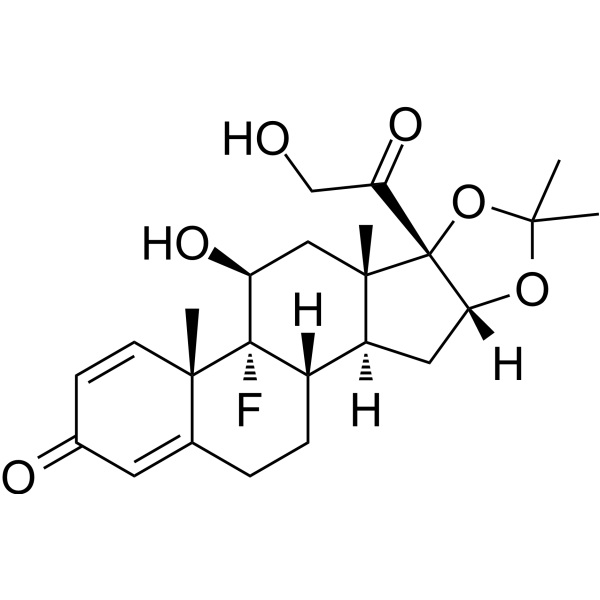
Triamcinolone acetonide inhibits basic fibroblast growth factor (bFGF) induced proliferation of retinal endothelial cells. Triamcinolone acetonide reduces chondrocyte viability and leads to cartilage destruction. Triamcinolone acetonide activates macrophage with anti-inflammatory characteristics. Triamcinolone acetonide can be used in the study of diseases such as atopic dermatitis .
loading...
    loading...
Cat. No.: HY-B0636S3
CAS No.: 352431-33-5
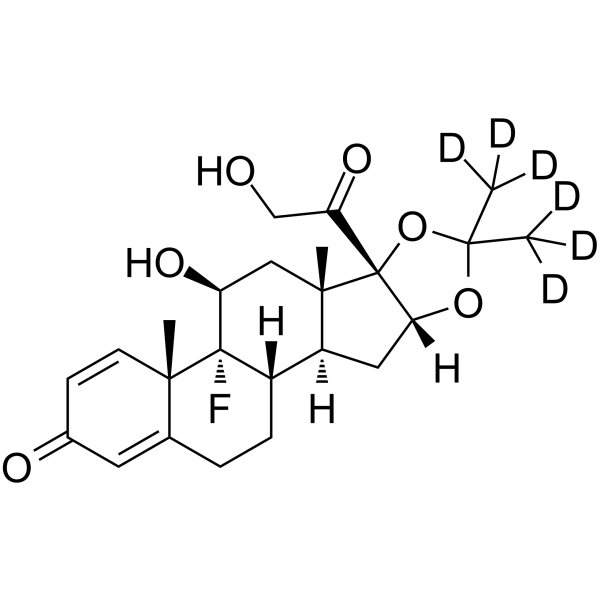
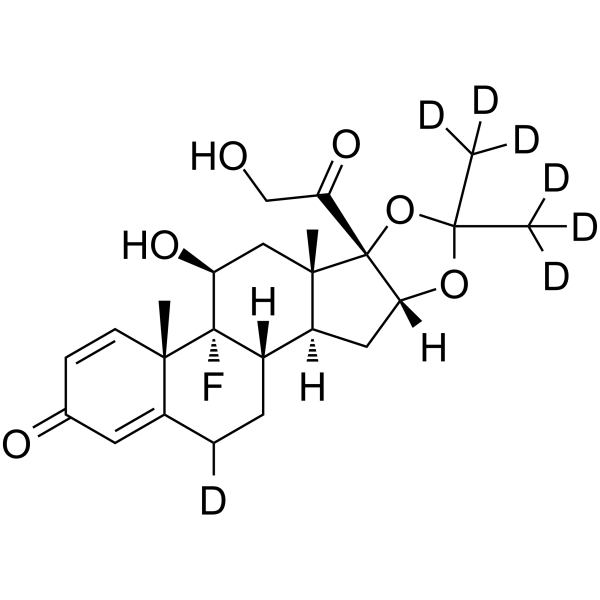
Triamcinolone acetonide-d6 is deuterium labeled Triamcinolone acetonide.
loading...
    loading...
Cat. No.: HY-W340872
CAS No.: 3870-07-3
Synonyms: Triamcinolone acetonide 21-acetate
Triamcinolone acetonide acetate (Triamcinolone acetonide 21-acetate) is a biochemical reagent that can be used as a biological material or organic compound for life science related research .
loading...
    loading...
Cat. No.: HY-B0636R
CAS No.: 76-25-5
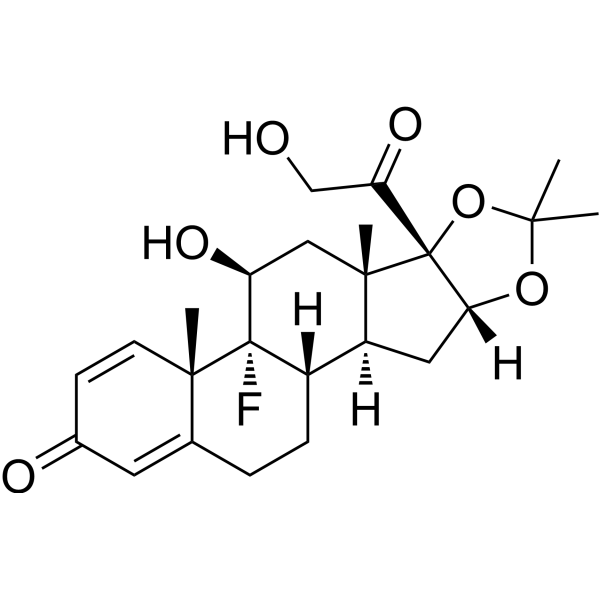
Triamcinolone acetonide (Standard) is the analytical standard of Triamcinolone acetonide. This product is intended for research and analytical applications.
loading...
    loading...
Cat. No.: HY-B0636S
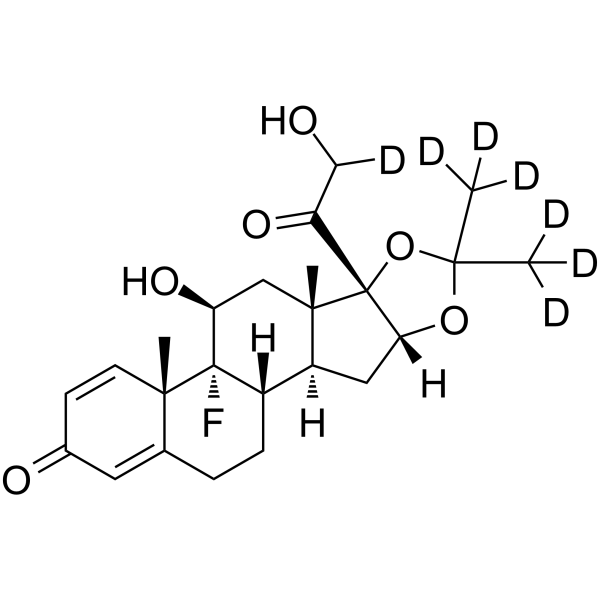
Triamcinolone acetonide-d7 is the deuterium labeled Triamcinolone acetonide. Triamcinolone acetonide is a more potent type of triamcinolone, being about 8 times as effective as prednisone.
loading...
    loading...
Cat. No.: HY-W340872R
CAS No.: 3870-07-3
Synonyms: Triamcinolone acetonide 21-acetate (Standard)
Research Areas:  

Others

Triamcinolone acetonide acetate (Standard) is the analytical standard of Triamcinolone acetonide acetate. This product is intended for research and analytical applications. Triamcinolone acetonide acetate (Triamcinolone acetonide 21-acetate) is a biochemical reagent that can be used as a biological material or organic compound for life science related research .
loading...
    loading...
Cat. No.: HY-B0636S2
Triamcinolone acetonide-d7-1 is deuterium labeled Triamcinolone acetonide.
loading...
    loading...
Cat. No.: HY-B0636S1
CAS No.: 1264131-86-3
Triamcinolone acetonide- 13C3 is the 13C-labeled Triamcinolone acetonide (HY-B0636). Triamcinolone acetonide inhibits basic fibroblast growth factor (bFGF) induced proliferation of retinal endothelial cells. Triamcinolone acetonide reduces chondrocyte viability and leads to cartilage destruction. Triamcinolone acetonide activates macrophage with anti-inflammatory characteristics. Triamcinolone acetonide can be used in the study of diseases such as atopic dermatitis .
loading...
    loading...
Cat. No.: HY-Z8648
CAS No.: 1260149-96-9
Δ14-Triamcinolone acetonide is a potential impurity. Triamcinolone acetonide inhibits basic fibroblast growth factor (bFGF) induced proliferation of retinal endothelial cells. Triamcinolone acetonide reduces chondrocyte viability and leads to cartilage destruction. Triamcinolone acetonide can be used in the study of diseases such as atopic dermatitis .
loading...
    loading...
Cat. No.: HY-W740175
CAS No.: 3869-32-7
Research Areas:  

Inflammation/Immunology

6b-Hydroxy triamcinolone acetonide is a metabolite of the synthetic corticosteroid Triamcinolone acetonide (HY-B0636). 6b-Hydroxy triamcinolone acetonide is formed from triamcinolone acetonide by the cytochrome P450 (CYP) isoforms CYP3A4, CYP3A5, and CYP3A7.
loading...
    loading...
Cat. No.: HY-W740380
CAS No.: 53962-41-7
Target:  

Drug Metabolite

Research Areas:  

Others

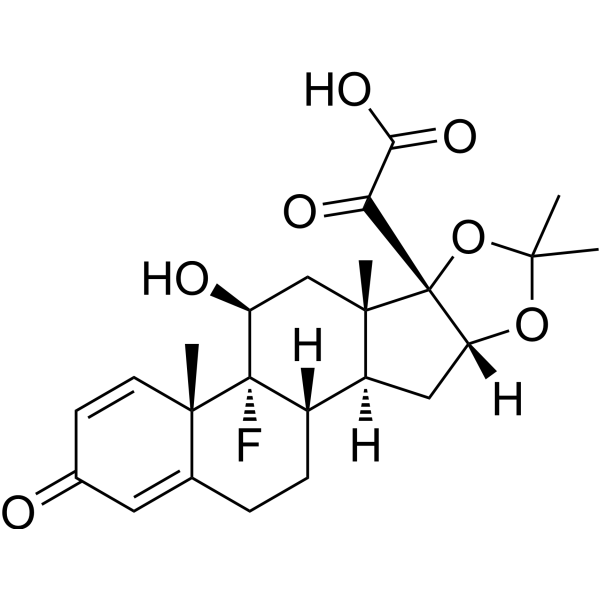
21-Carboxylic acid triamcinolone acetonide is a metabolite produced in the body after oral administration of [14C]-triamcinolone acetonide .
loading...
    loading...
Cat. No.: HY-N12561
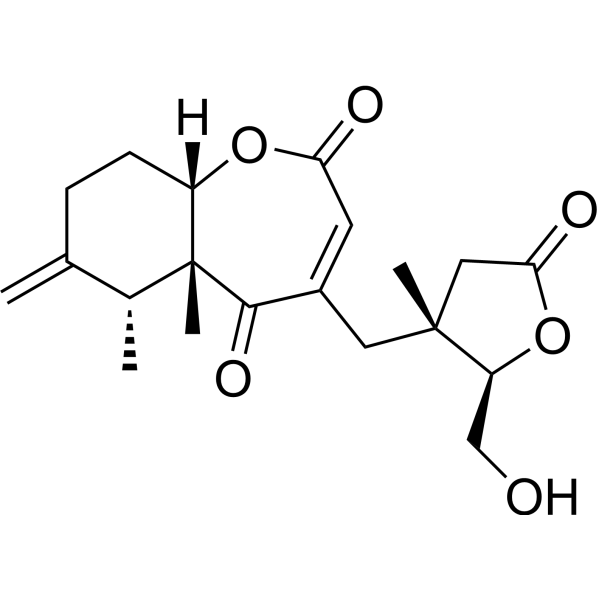
Pestanoid A is a rearranged pimarane diterpenoid osteoclastogenesis inhibitor with an IC50 of 4.2 μM. Pestanoid A can be isolated from the marine mesophotic zone chalinidae sponge-associated fungus, Pestalotiopsis sp. NBUF145. Pestanoid A inhibits the receptor activator of NF-kB ligand-induced MAPK and NF-κB signaling by suppressing the phosphorylation of ERK1/2-JNK1/2-p38 MAPKs and NF-κB nuclear translocation. Pestanoid A can be used for the study of osteoporosis .
loading...
    loading...
  • 1

