Search Result
Results for "
Triazoles
" in MedChemExpress (MCE) Product Catalog:
20
Biochemical Assay Reagents
28
Isotope-Labeled Compounds
| Cat. No. |
Product Name |
Target |
Research Areas |
Chemical Structure |
-
- HY-B0101
-
|
UK-49858
|
Environmental Pollutants
Antibiotic
Fungal
Bacterial
|
Infection
Cancer
|
|
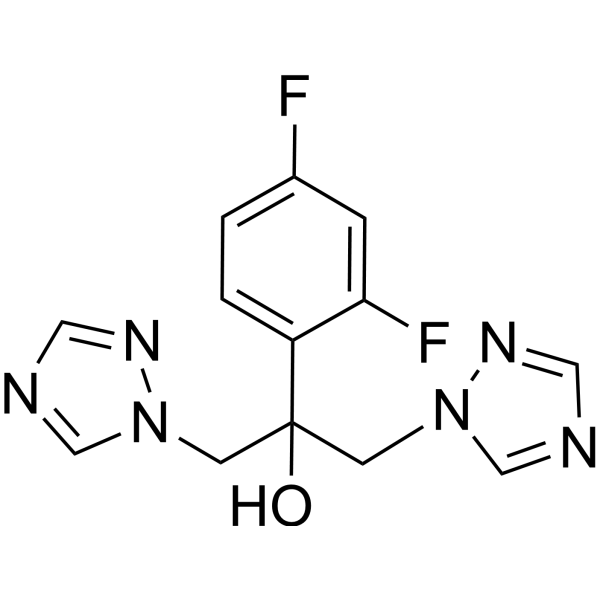
Fluconazole (UK-49858) is a triazole antifungal agent with excellent activities against a broad range of fungi, especially against Candida albicans. Fluconazole inhibits C. albicans and Candida kefyr with IC99s range from 0.20 μg/mL to 0.39 μg/mL .
|
-
-
- HY-17514
-
|
R51211
|
Fungal
Hedgehog
Cytochrome P450
Autophagy
Antibiotic
Bacterial
|
Infection
Cancer
|
|
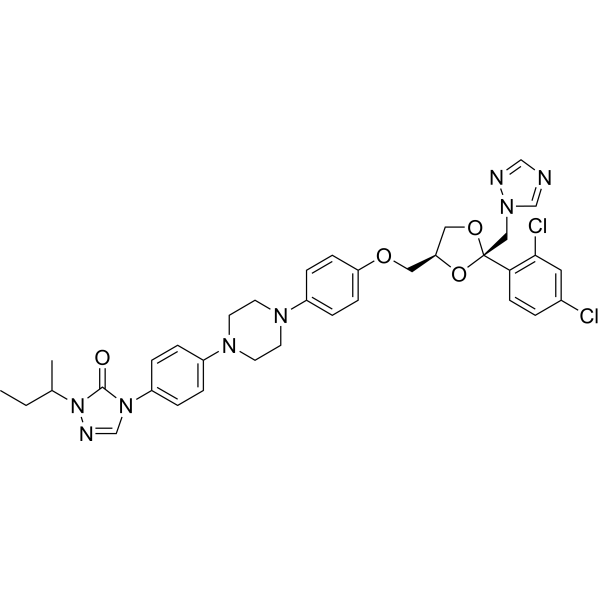
Itraconazole (R51211) is a triazole antifungal agent and a potent and orally active Hedgehog (Hh) signaling pathway antagonist with an IC50 of ~800 nM. Itraconazole potently inhibits lanosterol 14α-demethylase (cytochrome P450 enzyme), thereby inhibits the oxidative conversion of lanosterol to ergosterol. Itraconazole has anticancer and antiangiogenic effects. Itraconazole is a oxysterol-binding protein (OSBP) inhibitor .
|
-
-
- HY-76200
-
|
UK-109496
|
Fungal
Bacterial
|
Infection
Neurological Disease
Cancer
|
|
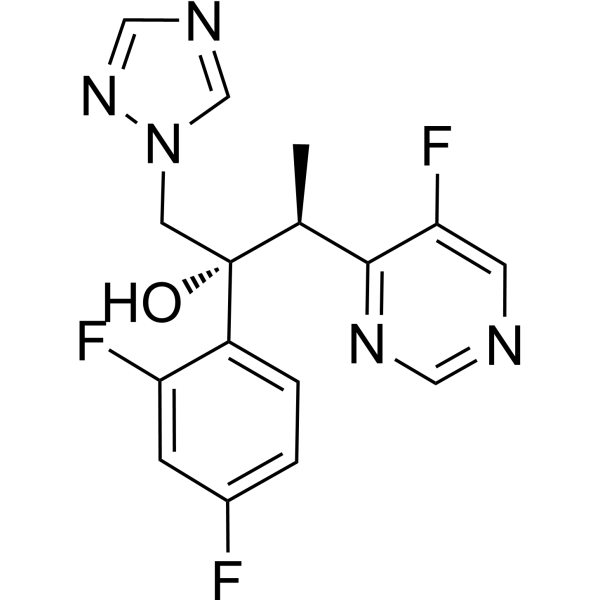
Voriconazole (UK-109496) is a second-generation, broad-spectrum triazole antifungal agent that inhibits fungal ergosterol biosynthesis. Voriconazole exerts its antifungal activity by inhibition of 14-α-lanosterol demethylation, which is mediated by fungal cytochrome P450 enzymes. Voriconazole can penetrate the blood brain barrier (BBB) .
|
-
-
- HY-17373
-
-
-
- HY-14273
-
|
BAL-4815; RO-0094815
|
Fungal
Cytochrome P450
Antibiotic
|
Infection
Cancer
|
|
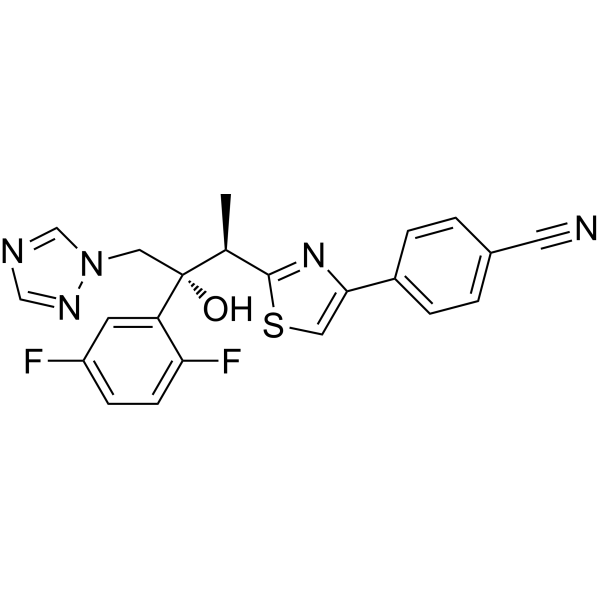
Isavuconazole (BAL-4815) is a triazole proagent with antifungal activity against yeasts, molds, and dimorphic fungi. Isavuconazole inhibits ergosterol biosynthesis and results in the disruption of fungal membrane structure and function. Isavuconazole is a moderate inhibitor of CYP3A4.
|
-
-
- HY-Y0219
-
|
s-Triazole; Pyrrodiazole
|
Biochemical Assay Reagents
|
Others
|
|
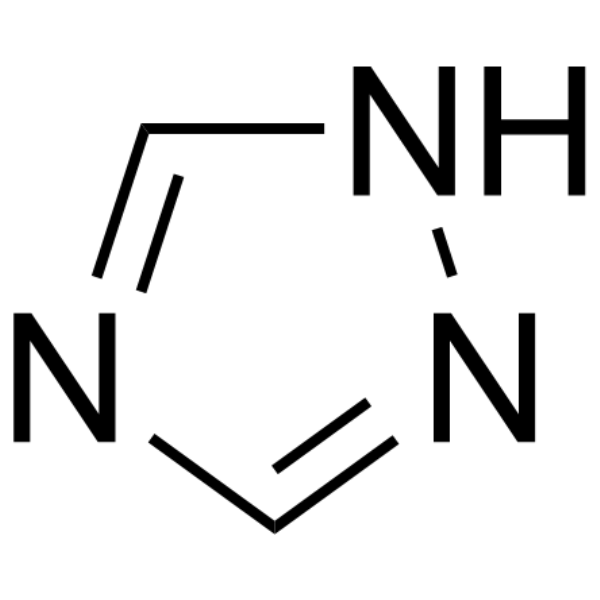
1,2,4-Triazole is a biochemical reagent that can be used as a biological material or organic compound for life science related research.
|
-
-
- HY-12772
-
|
R-63373
|
Fungal
Drug Metabolite
|
Others
|
|
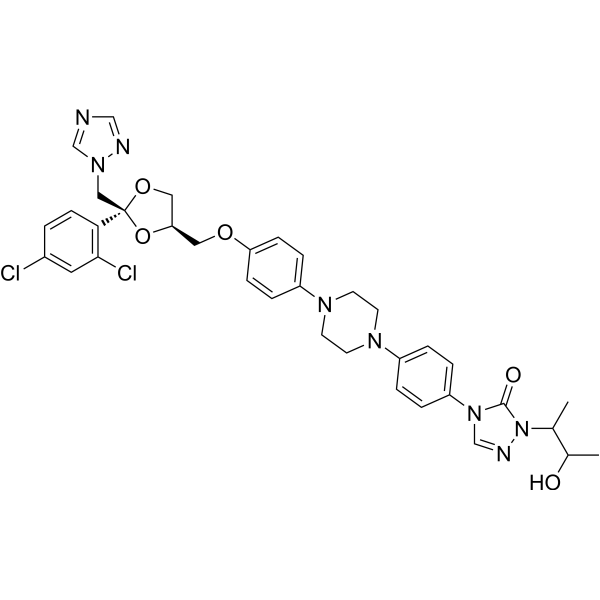
Hydroxy Itraconazole (R-63373) is an active metabolite of Itraconazole (ITZ), which is a triazole antifungal agent.
|
-
-
- HY-B0847
-
-
-
- HY-117766
-
|
|
Fungal
Cytochrome P450
|
Infection
|
|
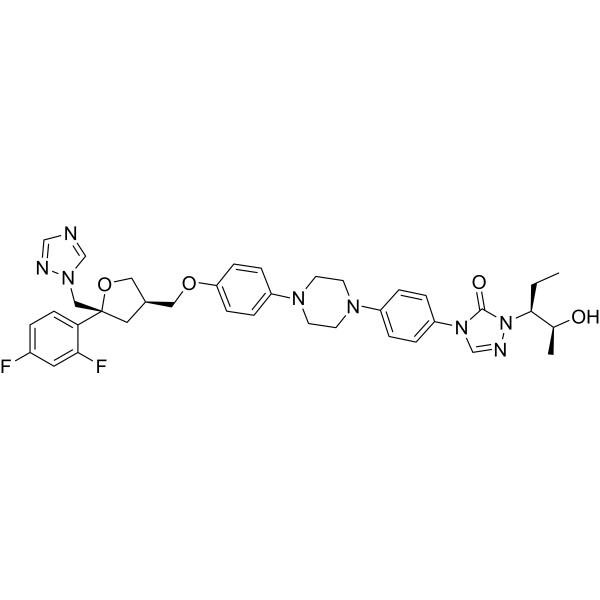
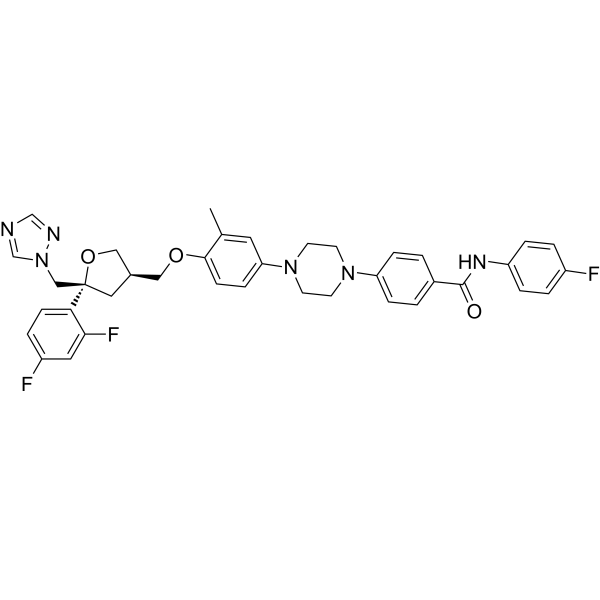
PC945, a potent, long-acting antifungal triazole, possesses activity against a broad range of both azole-susceptible and azole-resistant strains of Aspergillus fumigatus. PC945 is also a potent, tightly binding inhibitor of A. fumigatus sterol 14α-demethylase activity, CYP51A and CYP51B, with IC50s of 0.23 μM and 0.22 μM, respectively .
|
-
-
- HY-174304
-
|
|
Drug-Linker Conjugates for ADC
|
Cancer
|
|
Bis (vinylsulfonyl) piperazine-triazole-PEG3-O-diisopropylsilyl-triptolide is a drug-linker conjugates for ADC. Bis (vinylsulfonyl) piperazine-triazole-PEG3-O-diisopropylsilyl-triptolide consists of Triptolide (HY-32735) and a stable cleavable linker (Bis (vinylsulfonyl) piperazine-triazole-PEG3-O-diisopropylsilyl-Cl) (HY-174810). Bis (vinylsulfonyl) piperazine-triazole-PEG3-O-diisopropylsilyl-triptolide can be used for the synthesis of antibody-drug conjugates (ADCs) .
|
-
-
- HY-Y0688S
-
-
-
- HY-W019852
-
-
-
- HY-128147
-
|
|
MetAP
|
Metabolic Disease
Cancer
|
|
MetAP-2-IN-6 (4-(4-bromophenyl)-1H-1,2,3-triazole) is a MetAP2 inhibitor. MetAP-2-IN-6 can be used for research in conditions mediated by angiogenesis .
|
-
-
- HY-14273S
-
|
BAL-4815-d4; RO-0094815-d4
|
Fungal
Cytochrome P450
|
Infection
|
|
Isavuconazole-d4 (BAL-4815-d4) is a deuterium labeled Isavuconazole (BAL-4815). Isavuconazole is a triazole proagent with antifungal activity against yeasts, molds, and dimorphic fungi .
|
-
-
- HY-14273R
-
|
BAL-4815 (Standard); RO-0094815 (Standard)
|
Reference Standards
Fungal
Cytochrome P450
Antibiotic
|
Infection
|
|
Isavuconazole (Standard) is the analytical standard of Isavuconazole. This product is intended for research and analytical applications. Isavuconazole (BAL-4815) is a triazole proagent with antifungal activity against yeasts, molds, and dimorphic fungi. Isavuconazole inhibits ergosterol biosynthesis and results in the disruption of fungal membrane structure and function. Isavuconazole is a moderate inhibitor of CYP3A4.
|
-
-
- HY-B0101R
-
|
UK-49858 (Standard)
|
Reference Standards
Fungal
Antibiotic
Bacterial
|
Infection
Cancer
|
|
Fluconazole (Standard) is the analytical standard of Fluconazole. This product is intended for research and analytical applications. Fluconazole (UK-49858) is a triazole antifungal agent with excellent activities against a broad range of fungi, especially against Candida albicans. Fluconazole inhibits C. albicans and Candida kefyr with IC99s range from 0.20 μg/mL to 0.39 μg/mL .
|
-
-
- HY-17514R
-
|
R51211 (Standard)
|
Reference Standards
Fungal
Hedgehog
Cytochrome P450
Autophagy
Antibiotic
Bacterial
|
Infection
Cancer
|
|
Itraconazole (Standard) is the analytical standard of Itraconazole. This product is intended for research and analytical applications. Itraconazole (R51211) is a triazole antifungal agent and a potent and orally active Hedgehog (Hh) signaling pathway antagonist with an IC50 of ~800 nM. Itraconazole potently inhibits lanosterol 14α-demethylase (cytochrome P450 enzyme), thereby inhibits the oxidative conversion of lanosterol to ergosterol. Itraconazole has anticancer and antiangiogenic effects. Itraconazole is a oxysterol-binding protein (OSBP) inhibitor .
|
-
-
- HY-W113615
-
-
-
- HY-W012991
-
|
|
Biochemical Assay Reagents
|
Others
|
|
1,2-Dihydro-3H-1,2,4-triazole-3-thione is a biochemical reagent that can be used as a biological material or organic compound for life science related research.
|
-
-
- HY-B0847R
-
|
|
Reference Standards
Fungal
Reactive Oxygen Species (ROS)
|
Infection
|
|
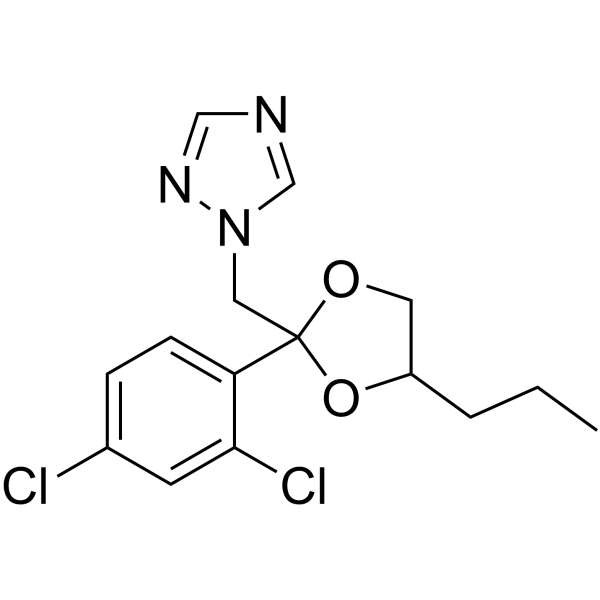
Propiconazole (Standard) is the analytical standard of Propiconazole. This product is intended for research and analytical applications. Propiconazole is an orally active N-substituted triazole used as a fungicide. Propiconazole is a mouse liver hepatotoxicant and a hepatocarcinogen that has adverse reproductive and developmental toxicities in experimental animals .
|
-
-
- HY-21058
-
|
|
MOFs
|
Others
|
|
3-(Pyridin-2-yl)-1,2,4-triazole is a metal-organic framework (MOF).
|
-
-
- HY-W007685
-
|
|
Biochemical Assay Reagents
|
Others
|
|
Methyl 1H-1,2,4-triazole-3-carboxylate is a biochemical reagent that can be used as a biological material or organic compound for life science related research.
|
-
-
- HY-B0101B
-
-
-
- HY-B0101A
-
-
-
- HY-B0851
-
-
-
- HY-168005
-
|
|
p97
ATP Synthase
|
Cancer
|
|
NSC799462 is a triazole inhibitor of p97 ATPase. NSC799462 inhibits p97 ATPase activity (IC50 = 15 nM) by binding to a specific site on p97 and causing local changes in the p97 structure .
|
-
-
- HY-76200B
-
|
UK-109496 camphorsulfonate
|
Fungal
Bacterial
|
Infection
Cancer
|
|
Voriconazole (UK-109496) camphorsulfonate is a second-generation, broad-spectrum triazole antifungal agent that inhibits fungal ergosterol biosynthesis. Voriconazole camphorsulfonate exerts its antifungal activity by inhibition of 14-α-lanosterol demethylation, which is mediated by fungal cytochrome P450 enzymes .
|
-
-
- HY-Y0219A
-
|
s-Triazole sodium; Pyrrodiazole sodium
|
Biochemical Assay Reagents
|
Infection
|
|
1,2,4-Triazole (sodium) is a biochemical reagent that can be used as a biological material or organic compound for life science related research .
|
-
-
- HY-WAA0156
-
|
|
Drug Intermediate
|
Others
|
|
1-(Pyrrolidin-3-yl)-1H-1,2,4-triazole oxalate is a drug intermediate for synthesis of various active compounds.
|
-
-
- HY-17373A
-
|
SCH56592 hydrate
|
Fungal
Parasite
|
Infection
Cancer
|
|
Posaconazole hydrate is a broad-spectrum, second generation, triazole compound with antifungal activity.
|
-
-
- HY-W089929
-
|
3-(2-Pyridyl)-5-(4-Pyridyl)-1,2,4-Triazole
|
MOFs
|
Others
|
|
2-(3-(Pyridin-4-yl)-1H-1,2,4-triazol-5-yl)pyridine (3-(2-Pyridyl)-5-(4-Pyridyl)-1,2,4-Triazole) is a metal-organic framework (MOF).
|
-
-
- HY-W331786
-
|
|
Bacterial
|
Infection
|
|
Ipconazole is a triazole fungicide that can be used for treating rice seed .
|
-
-
- HY-W331786R
-
|
|
Reference Standards
Bacterial
|
Infection
|
|
Ipconazole (Standard) is the analytical standard of Ipconazole. This product is intended for research and analytical applications. Ipconazole is a triazole fungicide that can be used for treating rice seed .
|
-
-
- HY-168006
-
|
|
p97
ATP Synthase
|
Cancer
|
|
NSC819701 is a triazole inhibitor of the p97 ATPase. NSC819701 inhibits the activity of p97 ATPase by binding to a specific site of p97 .
|
-
-
- HY-W019852R
-
|
|
Reference Standards
Fungal
|
Infection
|
|
Flutriafol (Standard) is the analytical standard of Flutriafol. This product is intended for research and analytical applications. Flutriafol is a triazole fungicide with broad spectrum fungicidal activity.
|
-
-
- HY-B2058R
-
|
|
Reference Standards
Fungal
|
Infection
|
|
Triticonazole (Standard) is the analytical standard of Triticonazole. This product is intended for research and analytical applications. Triticonazole is a triazole pesticide. Triticonazole is an azole fungicide and shows endocrine disrupting activities .
|
-
-
- HY-161812
-
|
|
Opioid Receptor
|
Others
|
|
MOR agonist-4 (2d) is a G protein signaling-biased Kappa opioid receptor (KOR) agonist with an EC50 value of 11 nM. MOR agonist-4 contains an electron withdrawing CF3 group and a bias factor of 38 based on triazole. MOR agonist-4 is used in the research of pruritis and analgesia .
|
-
-
- HY-Y0219R
-
|
s-Triazole (Standard); Pyrrodiazole (Standard)
|
Biochemical Assay Reagents
Reference Standards
|
Others
|
|
1,2,4-Triazole (Standard) is the analytical standard of 1,2,4-Triazole. This product is intended for research and analytical applications. 1,2,4-Triazole is a biochemical reagent that can be used as a biological material or organic compound for life science related research.
|
-
-
- HY-107870
-
-
-
- HY-137154
-
|
|
Drug Intermediate
|
Others
|
|
4-Azidobenzenesulfonamide (Compound 12) is a precursor for the synthesis of 1,2,3-triazoles .
|
-
-
- HY-W098127S
-
|
|
Isotope-Labeled Compounds
|
Others
|
|
Methyl 1-(2,6-difluorobenzyl)-1H-1,2,3-triazole-4-carboxylate-d2 is the deuterium labeled Methyl 1-(2,6-difluorobenzyl)-1H-1,2,3-triazole-4-carboxylate .
|
-
-
- HY-141941S
-
-
-
- HY-157532
-
-
-
- HY-46369
-
-
-
- HY-147711
-
|
|
Glycosidase
|
Metabolic Disease
|
|
α-Amylase/α-Glucosidase-IN-1 (compound 33) is a potent α-amylase/α-glucosidase inhibitor with IC50s of 2.01, 2.09 µM for α-amylase and α-glucosidase, respectively. Kinetic studies predict that α-Amylase/α-Glucosidase-IN-1 has the potential of anti hyperglycemia .
|
-
-
- HY-149367
-
|
|
Apoptosis
|
Cancer
|
Anticancer agent 136 (compound 22), a C17-triazole analogue of Geldanamycin (GDM; HY-15230), has an IC50 of 3.38 μM for HDF and a Kd of 3.86 μM for Hsp90. Anticancer agent 136 is an apoptosis-inducing agent .
|
-
-
- HY-W740506
-
-
-
- HY-144426
-
|
|
Influenza Virus
|
Infection
|
|
Neuraminidase-IN-6 (Compound 5c) is a potent inhibitor of neuraminidase with an IC50 of 0.11 μM. Neuraminidase-IN-6 is a 1,3,4-triazole-3-acetamide derivative. Neuraminidase (NA) is an ideal target for the development of anti-influenza agents .
|
-
-
- HY-W705791
-
|
|
Fungal
|
Infection
|
|
Metconazole-d6 is the deuterium labeled Metconazole. Metconazole is a triazole fungicide agent.
|
-
-
- HY-106141
-
|
UR 9825
|
Fungal
|
Infection
|
|
Albaconazole (UR 9825) is a broad-spectrum triazole and oral activity antifungal agent .
|
-
- HY-Z7147R
-
|
|
Biochemical Assay Reagents
Reference Standards
|
Others
|
|
Efinaconazole analogue-1 (Standard) is the analytical standard of Efinaconazole analogue-1. This product is intended for research and analytical applications. 1-((2-(2,4-Difluorophenyl)oxiran-2-yl)methyl)-1H-1,2,4-triazole methanesulfonate (Efinaconazole Impurity) is a biological molecule.
|
-
- HY-163789
-
|
|
ADC Linker
|
Cancer
|
|
Desthiobiotin-PEG3-triazole-DBCO-sulfo-Maleimide is an ADC linker used in the synthesis of antibody-drug conjugates (ADCs). Desthiobiotin-PEG3-triazole-DBCO-sulfo-Maleimide is a click chemistry reagent, it contains a DBCO group that can undergo strain-promoted alkyne-azide cycloaddition (SPAAC) with molecules containing Azide groups .
|
-
- HY-141652
-
|
|
Drug Intermediate
|
Cancer
|
|
N-2-Azidoethyl betulonamide is the building block, that could generate cytotoxic triazole derivative through click chemistry .
|
-
- HY-163107
-
|
|
Bacterial
|
Infection
|
|
Antimycobacterial agent-7 (compound 4) is a 1,2,4-triazole anti-tuberculosis agent (MIC: 2 μg/mL). Antimycobacterial agent-7 inhibits Mtb KatG and causes the accumulation of ROS in Mtb cells. ROS produces oxidative damage, leading to the death of Mtb .
|
-
- HY-76200C
-
|
(R,R)-UK-109496
|
Drug Isomer
|
Others
|
|
(R,R)-Voriconazole ((R,R)-UK-109496) is an enantiomer of Voriconazole (HY-76200). Voriconazole (UK-109496) is a second-generation broad-spectrum triazole antifungal compound that inhibits the biosynthesis of fungal ergosterol. Voriconazole exerts its antifungal activity by inhibiting the 14-α-lanosterol demethylation mediated by fungal cytochrome P450 enzymes. Voriconazole exhibits blood-brain barrier permeability .
|
-
- HY-W456472
-
|
3,5-Dipropyl-4H-{1,2,4}triazole
|
MOFs
|
Others
|
|
3,5-Dipropyl-4H-1,2,4-triazole (3,5-Dipropyl-4H-{1,2,4}triazole) is a metal-organic framework (MOF).
|
-
- HY-W754459
-
|
|
Herbicide
|
Others
|
|
Triazole sulcotrione is a triazole herbicide commonly used for weed control in cornfields.
|
-
- HY-W112382
-
|
4,4'-Bi(4H-1,2,4-triazole)4-(4H-1,2,4-triazol-4-yl)-4H-1,2,4-triazole
|
MOFs
|
Others
|
|
4,4'-Bi-4H-1,2,4-triazole (4,4'-Bi(4H-1,2,4-triazole)4-(4H-1,2,4-triazol-4-yl)-4H-1,2,4-triazole) is a metal-organic framework (MOF).
|
-
- HY-W040960R
-
|
|
Reference Standards
|
|
|
2H-1,2,4-Triazole-3-carboxamide (Standard) is the analytical standard of 2H-1,2,4-Triazole-3-carboxamide. This product is intended for research and analytical applications.
|
-
- HY-W249363
-
|
3,4,5-Tris(4-bromophenyl)-1,2,4-triazole
|
MOFs
|
Others
|
|
3,4,5-Tris(4-bromophenyl)-4H-1,2,4-triazole (3,4,5-Tris(4-bromophenyl)-1,2,4-triazole) is a metal-organic framework (MOF).
|
-
- HY-41749
-
|
v-Triazole-4,5-dicarboxylic acid; 1,2,3-Triazole-4,5-Dicarboxylicacid
|
MOFs
|
Others
|
|
1H-1,2,3-Triazole-4,5-dicarboxylic acid (v-Triazole-4,5-dicarboxylic acid) is a metal-organic framework (MOF).
|
-
- HY-W075242
-
|
4-Amino-3,5-bis(3-carboxyphenyl)-4H-1,2,4-triazole
|
MOFs
|
Others
|
|
3,3'-(4-Amino-4H-1,2,4-triazole-3,5-diyl)dibenzoic acid (4-Amino-3,5-bis(3-carboxyphenyl)-4H-1,2,4-triazole) is a metal-organic framework (MOF).
|
-
- HY-W103735
-
|
|
MOFs
|
Others
|
|
3,5-Diphenyl-4H-1,2,4-triazole is a metal-organic framework (MOF).
|
-
- HY-W456598
-
|
5,5',5''-((Nitrilotris(methylene))tris(1H-1,2,3-triazole-4,1-diyl))triisophthalic acid
|
MOFs
|
Others
|
|
5,5',5''-(4,4',4''-(Nitrilotris(methylene))tris(1H-1,2,3-triazole-4,1-diyl))triisophthalic acid (5,5',5''-((Nitrilotris(methylene))tris(1H-1,2,3-triazole-4,1-diyl))triisophthalic acid) is a metal-organic framework (MOF).
|
-
- HY-W1049797
-
|
|
MOFs
|
Others
|
|
(4H-1,2,4-Triazole-3,5-diyl)dimethanol is a metal-organic framework (MOF).
|
-
- HY-W388902
-
|
|
MOFs
|
Others
|
|
3,5-Bis(trifluoromethyl)-4H-1,2,4-triazole is a metal-organic framework (MOF).
|
-
- HY-173582
-
|
2’-Deoxyribavirin-5’-O-triphosphate tetrasodium
|
Nucleoside Antimetabolite/Analog
|
Others
|
|
1-β-D-2'-Deoxyribofuranosyl-1,2,4-triazole-3-carboxamide-5'-O-triphosphate (tetrasodium) is a nucleotide analog. 1-β-D-2'-Deoxyribofuranosyl-1,2,4-triazole-3-carboxamide-5'-O-triphosphate (tetrasodium) can be used in the investigation of the sequence-saturated mutagenesis (SeSaM) method .
|
-
- HY-W075608
-
|
|
MOFs
|
Others
|
|
4,4'-(1H-1,2,4-Triazole-3,5-diyl)dibenzoic acid is a metal-organic framework (MOF).
|
-
- HY-W856051
-
|
|
MOFs
|
Others
|
|
2,2'-(1H-1,2,4-Triazole-3,5-diyl)dipyridine is a metal-organic framework (MOF).
|
-
- HY-W112266
-
|
|
MOFs
|
Others
|
|
5,5'-(1H-1,2,3-triazole-1,4-diyl)diisophthalic acid is a metal-organic framework (MOF).
|
-
- HY-W543328
-
|
|
MOFs
|
Others
|
|
3,5-Bis(2-methylphenyl)-1H-1,2,4-triazole is a metal-organic framework (MOF).
|
-
- HY-141726S
-
|
|
Isotope-Labeled Compounds
|
Others
|
|
rel-(αR,βR)-β-(2,4-Difluorophenyl)-β-hydroxy-α-methyl-1H-1,2,4-triazole-1-butanoic acid-d3 is the deuterium labeled rel-(αR,βR)-β-(2,4-Difluorophenyl)-β-hydroxy-α-methyl-1H-1,2,4-triazole-1-butanoic acid .
|
-
- HY-W456459
-
|
|
MOFs
|
Others
|
|
3H,3'H-5,5'-Bibenzo[d][1,2,3]triazole is a metal-organic framework (MOF).
|
-
- HY-W112754
-
|
|
MOFs
|
Others
|
|
1,4-Bis(1H-1,2,4-triazole-1-yl)butane is a metal-organic framework (MOF).
|
-
- HY-W112861
-
|
|
MOFs
|
Others
|
|
1-(Imidazol-1-yl)-4-(1,2,4-triazole-1-yl-methyl)benzene is a metal-organic framework (MOF).
|
-
- HY-W249818
-
|
5,5',5''-[1,3,5-Benzenetriyltris(1H-1,2,3-triazole-4,1-diyl)]tris-1,3-benzenedicarboxylic acid
|
MOFs
|
Others
|
|
5,5',5''-(4,4',4''-(Benzene-1,3,5-triyl)tris(1H-1,2,3-triazole-4,1-diyl))triisophthalic acid (5,5',5''-[1,3,5-Benzenetriyltris(1H-1,2,3-triazole-4,1-diyl)]tris-1,3-benzenedicarboxylic acid) is a metal-organic framework (MOF).
|
-
- HY-W075617
-
|
|
MOFs
|
Others
|
|
4,4'-(1-Benzyl-1H-1,2,4-triazole-3,5-diyl)dipyridine is a metal-organic framework (MOF).
|
-
- HY-W456586
-
|
|
MOFs
|
Others
|
|
1-(4-Carboxyphenyl)-5-methyl-1H-1,2,3-triazole-4-carboxylic acid is a metal-organic framework (MOF).
|
-
- HY-W856168
-
|
|
MOFs
|
Others
|
|
4,4'-(5-Methyl-4H-1,2,4-triazole-3,4-diyl)bis[benzoic acid] is a metal-organic framework (MOF).
|
-
- HY-Z7147
-
|
|
Biochemical Assay Reagents
|
Others
|
|
1-((2-(2,4-Difluorophenyl)oxiran-2-yl)methyl)-1H-1,2,4-triazole methanesulfonate (Efinaconazole Impurity) is a biological molecule.
|
-
- HY-W112477
-
|
4-(4-Hydroxyphenyl)-1,2,4-triazole
|
MOFs
|
Others
|
|
4-(4H-1,2,4-Triazol-4-yl)phenol (4-(4-Hydroxyphenyl)-1,2,4-triazole) is a metal-organic framework (MOF).
|
-
- HY-W456597
-
|
|
MOFs
|
Others
|
|
5,5'-(4,4'-(1,4-Phenylene)bis(1H-1,2,3-triazole-4,1-diyl))diisophthalic acid is a metal-organic framework (MOF).
|
-
- HY-W456596
-
|
|
MOFs
|
Others
|
|
5,5'-(4,4'-(1,3-Phenylene)bis(1H-1,2,3-triazole-4,1-diyl))diisophthalic acid is a metal-organic framework (MOF).
|
-
- HY-W249362
-
|
|
MOFs
|
Others
|
|
4,4'-(1-(Pyridin-3-ylmethyl)-1H-1,2,4-triazole-3,5-diyl)dipyridine is a metal-organic framework (MOF).
|
-
- HY-W112718
-
|
|
MOFs
|
Others
|
|
1,1'-(9,9-Dimethyl-9H-fluorene-2,7-diyl)bis(1H-1,2,4-triazole) is a metal-organic framework (MOF).
|
-
- HY-169368
-
-
- HY-W456595
-
|
|
MOFs
|
Others
|
|
5,5'-(4,4'-(Pyridine-3,5-diyl)bis(1H-1,2,3-triazole-4,1-diyl))diisophthalic acid is a metal-organic framework (MOF).
|
-
- HY-W090156
-
|
4H-1,2,4-Triazole-4-acetic acid
|
MOFs
|
Others
|
|
2-(4H-1,2,4-Triazol-4-yl)acetic acid (4H-1,2,4-Triazole-4-acetic acid) is a metal-organic framework (MOF).
|
-
- HY-W075493
-
|
1-(1,2,4-Triazol-1-ylmethyl)-1,2,4-triazole
|
MOFs
|
Others
|
|
Di(1H-1,2,4-triazol-1-yl)methane (1-(1,2,4-Triazol-1-ylmethyl)-1,2,4-triazole) is a metal-organic framework (MOF).
|
-
- HY-181177
-
|
|
Bacterial
|
Infection
|
|
Antibacterial agent 320, 1,5-disubstituted 1,2,3-triazole derivative, is an antibacterial agent. Antibacterial agent 320 exerts strong antibacterial activity against Pseudomonas aeruginosa and Staphylococcus aureus. Antibacterial agent 320 can be used for the research of bacterial infection .
|
-
- HY-W075138
-
|
4,4'-(1,4-Phenylene)bis(4H-1,2,4-triazole)
|
MOFs
|
Others
|
|
1,4-Di(4H-1,2,4-triazol-4-yl)benzene (4,4'-(1,4-Phenylene)bis(4H-1,2,4-triazole)) is a metal-organic framework (MOF).
|
-
- HY-W249346
-
|
4,4'-(1,3-Phenylene)bis-4h-1,2,4-triazole
|
MOFs
|
Others
|
|
1,3-Di(4H-1,2,4-triazol-4-yl)benzene(4,4'-(1,3-Phenylene)bis-4h-1,2,4-triazole) is a metal-organic framework (MOF).
|
-
- HY-W112338
-
|
1,6-Di(1H-1,2,4-triazol-1-yl)hexane
|
MOFs
|
Others
|
|
1,1′-(1,6-Hexanediyl)bis[1H-1,2,4-triazole] (1,6-Di(1H-1,2,4-triazol-1-yl)hexane) is a metal-organic framework (MOF).
|
-
- HY-W249350
-
|
5,5'-(1,4-Phenylene)bis-1h-1,2,3-triazole
|
MOFs
|
Others
|
|
1,4-Di(1H-1,2,3-triazol-5-yl)benzene(5,5'-(1,4-Phenylene)bis-1h-1,2,3-triazole) is a metal-organic framework (MOF).
|
-
- HY-W856164
-
4,4',4'',4'''-((Ethene-1,1,2,2-tetrayltetrakis(benzene-4,1-diyl))tetrakis(1H-1,2,3-triazole-4,1-diyl))tetrabenzoic acid
|
MOFs
|
Others
|
|
4,4',4'',4'''-((Ethene-1,1,2,2-tetrayltetrakis(benzene-4,1-diyl))tetrakis(1H-1,2,3-triazole-4,1-diyl))tetrabenzoic acid is a metal-organic framework (MOF).
|
-
- HY-W075135
-
|
1-[4-(1,2,4-Triazol-1-yl)phenyl]-1,2,4-triazole
|
MOFs
|
Others
|
|
1,4-Di(1H-1,2,4-triazol-1-yl)benzene(1-[4-(1,2,4-Triazol-1-yl)phenyl]-1,2,4-triazole) is a metal-organic framework (MOF).
|
-
- HY-W021499
-
|
5-Methyl-3-(pyridin-2-yl)-1H-1,2,4-triazole
|
MOFs
|
Others
|
|
2-(3-Methyl-1H-1,2,4-triazol-5-yl)pyridine (5-Methyl-3-(pyridin-2-yl)-1H-1,2,4-triazole) is a metal-organic framework (MOF).
|
-
- HY-W456324
-
|
|
MOFs
|
Others
|
|
4,4'-(5'-(4-(4H-1,2,4-Triazol-4-yl)phenyl)-[1,1':3',1''-terphenyl]-4,4''-diyl)bis(4H-1,2,4-triazole) is a metal-organic framework (MOF).
|
-
- HY-W075324
-
|
4,4-(4-Amino-1,2,4-triazol-3,5-diyl)dibenzoic acid
|
MOFs
|
Others
|
|
4,4'-(4-Amino-4H-1,2,4-triazole-3,5-diyl)dibenzoic acid(4,4-(4-Amino-1,2,4-triazol-3,5-diyl)dibenzoic acid) is a metal-organic framework (MOF).
|
-
- HY-W112372
-
|
1,1'-(4,4'-Biphenyldiyl)bis(1H-1,2,4-triazole)
|
MOFs
|
Others
|
|
4,4'-Di(1H-1,2,4-triazol-1-yl)-1,1'-biphenyl(1,1'-(4,4'-Biphenyldiyl)bis(1H-1,2,4-triazole)) is a metal-organic framework (MOF).
|
-
- HY-121161A
-
|
|
Cytochrome P450
|
Others
|
|
Brassinazole is a selective triazole-type brassinosteroid (BR) biosynthesis inhibitor. Brassinazole is used for regulating plant growth and development .
|
-
- HY-181058
-
|
|
Drug-Linker Conjugates for ADC
|
Cancer
|
|
Cyclopamine-COO-2-ethoxy-1,3-benzodioxole-O-C-Triazole-C5-AC is a drug-linker conjugate, with Cyclopamine (HY-17024) as its drug moiety. Cyclopamine-COO-2-ethoxy-1,3-benzodioxole-O-C-Triazole-C5-AC itself exhibits no significant anti-tumor activity. Cyclopamine-COO-2-ethoxy-1,3-benzodioxole-O-C-Triazole-C5-AC can be used for the synthesis of ADC molecules .
|
-
- HY-W347315
-
|
|
Biochemical Assay Reagents
|
Others
|
|
6-(Biotinamido)hexylazide is a click chemistry biotinylation reagent that can react with alkyne molecule to form a stable triazole linkage.
|
-
- HY-W075259
-
|
4-Amino-3,5-di-2-pyridyl-4H-1,2,4-triazole
|
MOFs
|
Others
|
|
3,5-Di(pyridin-2-yl)-4H-1,2,4-triazol-4-amine (4-Amino-3,5-di-2-pyridyl-4H-1,2,4-triazole) is a metal-organic framework (MOF).
|
-
- HY-W074655
-
|
2-[4-[3,5-Bis[1-(carboxymethyl)triazol-4-yl]phenyl]triazol-1-yl]acetic acid
|
MOFs
|
Others
|
|
4,4′,4′′-(1,3,5-Benzenetriyl)tris[1H-1,2,3-triazole-1-acetic acid] (2-[4-[3,5-Bis[1-(carboxymethyl)triazol-4-yl]phenyl]triazol-1-yl]acetic acid) is a metal-organic framework (MOF).
|
-
- HY-U00249
-
|
R66905
|
Fungal
|
Infection
|
|
Saperconazole (R66905) is a broad-spectrum antifungal triazole and has potent activity against Aspergillus with an MIC90 of 0.19 mg/L.
|
-
- HY-U00249R
-
|
R66905 (Standard)
|
Reference Standards
Fungal
|
Infection
|
|
Saperconazole (R66905) is a broad-spectrum antifungal triazole and has potent activity against Aspergillus with an MIC90 of 0.19 mg/L.
|
-
- HY-163674
-
|
|
Interleukin Related
|
Inflammation/Immunology
|
|
Mincle agonist 1 (compound 1c) is a Mincle agonist. Mincle agonist 1 can promote IL-1β expression in BMDM cells. Mincle agonist 1 can be used in immune and inflammation related research .
|
-
- HY-149518
-
|
|
EGFR
Apoptosis
|
Others
|
|
EGFR/BRAFV600E-IN-3 is a EGFR, BRAFV600E and EGFRT790M inhibitor with IC50 value of 57 nM, 68 nM and 9.70 nM. EGFR/BRAFV600E-IN-3 is an apoptotic inducer and also displays promising antioxidant activity .
|
-
- HY-148037
-
|
|
Proteasome
|
Cardiovascular Disease
|
|
Thrombin inhibitor 5 (compound 385) is a thrombin inhibitor, with IC50s ranging from 0.1 μM to 1 μM. Thrombin inhibitor 5 can be used for research of venous thromboembolism .
|
-
- HY-175299
-
|
|
Hedgehog
Apoptosis
DNA Methyltransferase
|
Cancer
|
|
Hedgehog IN-11 is an orally active Hedgehog inhibitor. Hedgehog IN-11 downregulates the expression of O6-methylguanine-DNA methyltransferase (MGMT) to impair the Temozolomide (TMZ) (HY-17364) resistance by inhibiting the Hedgehog pathway. Hedgehog IN-11 shows improved inhibition of cell migration and invasion, and induced cell apoptosis in TMZ-resistant GBM cell lines. Hedgehog IN-11 is predicted by computer simulation to have good blood-brain barrier penetration. Hedgehog IN-11 can be used for the study of glioblastoma (GBM) .
|
-
- HY-W075616
-
|
4-[(3,5-Dipyridin-4-yl-1,2,4-triazol-1-yl)methyl]pyridine
|
MOFs
|
Others
|
|
4,4'-(1-(Pyridin-4-ylmethyl)-1H-1,2,4-triazole-3,5-diyl)dipyridine (4-[(3,5-Dipyridin-4-yl-1,2,4-triazol-1-yl)methyl]pyridine) is a metal-organic framework (MOF).
|
-
- HY-17373S
-
|
SCH 56592-d5
|
Isotope-Labeled Compounds
Fungal
|
Infection
|
|
Posaconazole-d5 is a deuterium-labeled form of Posaconazole. Posaconazole is a broad-spectrum, second generation, triazole compound with antifungal activity .
|
-
- HY-17373S1
-
|
SCH 56592-d4
|
Fungal
|
Infection
|
|
Posaconazole-d4 is a deuterium-labeled form of Posaconazole. Posaconazole is a broad-spectrum, second generation, triazole compound with antifungal activity .
|
-
- HY-14272
-
|
BMS-207147; ER-30346
|
Fungal
|
Infection
Cancer
|
|
Ravuconazole (BMS-207147;ER-30346) is an orally available triazole antifungle agent that potently inhibits a wide range of fungi.
|
-
- HY-W749242
-
|
|
Fungal
|
Infection
|
|
Paclobutrazol-d4 is the deuterium labeled Paclobutrazol. Paclobutrazol is a triazole-containing plant growth retardant that is known to inhibit the biosynthesis of gibberellins .
|
-
- HY-126475
-
|
|
Bacterial
|
Others
|
|
KSK213 is a 1,2,3-triazole-based Chlamydia infectivity inhibitor with high potency (EC50 ≤ 20 nM) against Chlamydia infectivity.
|
-
- HY-W727488
-
|
1,2,4-Triazole-1-acetic acid-d4
|
Isotope-Labeled Compounds
|
Others
|
|
2-(1H-1,2,4-Triazol-1-yl)acetic acid-d4 (1,2,4-Triazole-1-acetic acid-d4) is the deuterium labeled 2-(1H-1,2,4-Triazol-1-yl)acetic acid (HY-W028914).
|
-
- HY-17373R
-
|
SCH 56592 (Standard)
|
Reference Standards
Fungal
Parasite
|
Infection
Cancer
|
|
Posaconazole (Standard) is the analytical standard of Posaconazole. This product is intended for research and analytical applications. Posaconazole is a broad-spectrum, second generation, triazole compound with antifungal activity.
|
-
- HY-145864
-
|
|
VEGFR
|
Cancer
|
|
VEGFR-2-IN-12 (compound 6g), a 2-oxoquinoxalinyl-1,2,4-triazole, is a potent VEGFR-2 inhibitor with an IC50 of 0.037 µM. VEGFR-2-IN-12 shows high growth inhibition against MCF-7 cells (GI50=1.6 µM). VEGFR-2-IN-12 has antitumor activity .
|
-
- HY-121161
-
|
|
Cytochrome P450
|
Metabolic Disease
|
|
(Rac)-Brassinazole, triazole-type compound, is a brassinosteroid (BR) biosynthesis inhibitor. (Rac)-Brassinazole increases inhibition of CYP90B in BR biosynthesis
|
-
- HY-W800689
-
|
|
Biochemical Assay Reagents
|
Others
|
|
Tri(propargyl-NHCO-ethyloxyethyl)amine is a crosslinker that can react with azide compounds or biomolecules via copper catalyzed Click Chemistry to form a stable triazole linkage.
|
-
- HY-158968
-
|
|
MDM-2/p53
|
Cancer
|
|
MMs02943764 is a 1,2,4-triazole derivative with anticancer activity. MMs02943764 has significant antiproliferative effects on multiple cancer cell lines. PAC, a structural analog of MMs02943764, has significant cytotoxicity against the leukemia cell line K562 (IC50=35.264 μM), reduces the degradation of p53 by inhibiting Mdm2 and Pirh2, and induces K562 cell cycle arrest .
|
-
- HY-126677
-
|
|
ADC Linker
PROTAC Linkers
|
Cancer
|
|
Boc-NH-PEG3-C2-triazole-DBCO-PEG4-VC-PAB-DMEA is a double claevable 3-unit and 4-unit PEG linker for antibody-agent-conjugation (ADC). Boc-NH-PEG3-C2-triazole-DBCO-PEG4-VC-PAB-DMEA also is a PROTAC linker that can be used in the synthesis of PROTACs.
|
-
- HY-W456314
-
|
2,2'-{Thiene-2,5-diylbis[(1H-1,2,4-triazole-5,3-diyl)]}dipyridine
|
MOFs
|
Others
|
|
2,5-Bis(5-(pyridin-2-yl)-4H-1,2,4-triazol-3-yl)thiophene (2,2'-{Thiene-2,5-diylbis[(1H-1,2,4-triazole-5,3-diyl)]}dipyridine) is a metal-organic framework (MOF).
|
-
- HY-172001
-
|
|
Drug Derivative
|
Cancer
|
|
α-GalCer analog 8 is a triazole derivative of α-Galactosylceramide (HY-102022). α-Galactosylceramide is a synthetic glycolipid with antitumorial and immunostimulatory .
|
-
- HY-130809C
-
|
|
Biochemical Assay Reagents
|
Others
|
|
DBCO-PEG3400-Biotin is a click chemistry biotinylation that can enable copper-free click chemistry with azide molecules to form a stable triazole linkage .
|
-
- HY-130809H
-
|
|
Biochemical Assay Reagents
|
Others
|
|
DBCO-PEG40000-Biotin is a click chemistry biotinylation that can enable copper-free click chemistry with azide molecules to form a stable triazole linkage .
|
-
- HY-130809I
-
|
|
Biochemical Assay Reagents
|
Others
|
|
DBCO-PEG20000-Biotin is a click chemistry biotinylation that can enable copper-free click chemistry with azide molecules to form a stable triazole linkage .
|
-
- HY-130809D
-
|
|
Biochemical Assay Reagents
|
Others
|
|
DBCO-PEG5000-Biotin is a click chemistry biotinylation that can enable copper-free click chemistry with azide molecules to form a stable triazole linkage .
|
-
- HY-130809A
-
|
|
Biochemical Assay Reagents
|
Others
|
|
DBCO-PEG1000-Biotin is a click chemistry biotinylation that can enable copper-free click chemistry with azide molecules to form a stable triazole linkage .
|
-
- HY-130809E
-
|
|
Biochemical Assay Reagents
|
Others
|
|
DBCO-PEG10000-Biotin is a click chemistry biotinylation that can enable copper-free click chemistry with azide molecules to form a stable triazole linkage .
|
-
- HY-12772S
-
|
R-63373-d8
|
Fungal
|
Infection
|
|
Hydroxy Itraconazole-d8 is the deuterium labeled Hydroxy Itraconazole (HY-12772). Hydroxy Itraconazole is an active metabolite of Itraconazole (ITZ), which is a triazole antifungal agent.
|
-
- HY-17373S3
-
|
SCH 56592-d7
|
Isotope-Labeled Compounds
|
Infection
Cancer
|
|
Posaconazole-d7 (SCH 56592-d7) is deuterium labeled Posaconazole. Posaconazole is a broad-spectrum, second generation, triazole compound with antifungal activity.
|
-
- HY-B0851S
-
|
|
Fungal
|
Infection
|
|
Triadimenol-d4 is the deuterium labeled Triadimenol . Triadimenol is a triazole fungicide and has been widely used in agriculture. Triadimenol has certain toxicity to animals .
|
-
- HY-17373S2
-
-
- HY-130809B
-
|
|
Biochemical Assay Reagents
|
Others
|
|
DBCO-PEG2000-Biotin is a click chemistry biotinylation that can enable copper-free click chemistry with azide molecules to form a stable triazole linkage .
|
-
- HY-163005
-
|
|
Glycosidase
|
Metabolic Disease
|
|
α-Glucosidase-IN-43 (compound AS14) is an α-glucosidase inhibitor (IC50: 4.32 μM) with acute hypoglycemic activity. α-Glucosidase-IN-43 exhibits safety and in vivo efficacy, is nontoxic to normal mouse fibroblasts, and is able to rescue streptozotocin (HY-13753)-induced diabetic rats. α-Glucosidase-IN-43 can be used to study postprandial hyperglycemia in diabetic patients .
|
-
- HY-B0851R
-
|
|
Reference Standards
Fungal
|
Infection
|
|
Triadimenol (Standard) is the analytical standard of Triadimenol. This product is intended for research and analytical applications. Triadimenol is a triazole fungicide and has been widely used in agriculture. Triadimenol has certain toxicity to animals .
|
-
- HY-D2748
-
|
|
Fluorescent Dye
|
Others
|
|
5-JOE azide is a fluorescent dye with the emission in yellow region of the spectrum. The azide group can react with alkyne, BCN, DBCO via Click Chemistry to yield a stable triazole linkage.
|
-
- HY-174810
-
|
|
ADC Linker
|
Cancer
|
|
Bis(vinylsulfonyl)piperazine-triazole-PEG3-O-diisopropylsilyl-Cl is a cleavable and silyl ether-based ADC linker that can be used in the synthesis of antibody-drug conjugates (ADC) .
|
-
- HY-W800807
-
|
|
Fluorescent Dye
|
Others
|
|
R6G azide, 5-isomer is a xanthene dye with a terminal azide. The azide group can react with alkyne, BCN, DBCO via Click Chemistry to yield a stable triazole linkage.
|
-
- HY-137989A
-
|
Voriconazole oxynitride hydrochloride
|
Drug Metabolite
|
Infection
|
|
Voriconazole N-oxide (Voriconazole oxynitride) (hydrochloride) is the main metabolite of Voriconazole (HY-76200) , a widely used triazole antibiotic (fungal). Voriconazole N-oxide (hydrochloride) provides information on the patient's drug metabolism capacity .
|
-
- HY-W800671
-
|
1,5-Pentane diazide
|
Biochemical Assay Reagents
|
Others
|
|
1,5-Diazidopentane (1,5-Pentane diazide) is a linker with two azide groups which can react with alkyne, BCN, DBCO via Click Chemistry to yield a stable triazole linkage.
|
-
- HY-W440831
-
|
|
Liposome
|
Others
|
|
DSPE-PEG1000-azide is a phospholipid with covalently attached polydisperse PEG. This polymer is commonly used for the preparation of long circulating liposomes. The azide moiety is reactive with alkyne to form a stable triazole bond.
|
-
- HY-W590544
-
|
|
Biochemical Assay Reagents
|
Others
|
|
1-Azidodecane is a compound with an azide head and a 10-carbon tail. The azide (N3) group can react with alkyne, BCN, DBCO via Click Chemistry to yield a stable triazole linkage.
|
-
- HY-W586475
-
|
|
Radionuclide-Drug Conjugates (RDCs)
|
Cancer
|
|
Fluorescein-triazole-PEG5-DOTA is a radionuclide conjugate (RDC), which is capable of binding to a radionuclide. RDC has the ability to specifically target biomolecules and can be used in medical imaging or therapy .
|
-
- HY-135761
-
-
- HY-W590592
-
|
|
Biochemical Assay Reagents
|
Others
|
|
Azido-PEG12-azide is a monodisperse PEG linker containing two azide groups. The azide group can react with alkyne, BCN, or DBCO via Click Chemistry to yield a stable triazole linkage.
|
-
- HY-119683A
-
|
|
Fungal
Apoptosis
|
Infection
|
|
(Rac)-Epoxiconazole is a chiral triazole fungicide that is released into the environment as a racemate and has broad-spectrum, long-acting, and excellent fungicidal effects. (Rac)-Epoxiconazole is highly persistent in soil, with a reported half-life of more than 300 days .
|
-
- HY-14272R
-
|
BMS-207147 (Standard); ER-30346 (Standard)
|
Reference Standards
Fungal
|
Infection
Cancer
|
|
Ravuconazole (Standard) is the analytical standard of Ravuconazole. This product is intended for research and analytical applications. Ravuconazole (BMS-207147;ER-30346) is an orally available triazole antifungle agent that potently inhibits a wide range of fungi.
|
-
- HY-W590545
-
|
1-Azidooctane
|
Biochemical Assay Reagents
|
Others
|
|
Octyl azide (1-Azidooctane) is a compound with an azide head and a 8-carbon tail. The azide (N3) group can react with alkyne, BCN, DBCO via Click Chemistry to yield a stable triazole linkage.
|
-
- HY-W800808
-
|
|
Fluorescent Dye
|
Others
|
|
ROX azide, 5-isomer is a red-emitting rhodamine dye possessing high brightness and fluorescence quantum yield. The azide group can react with alkyne, BCN, DBCO via Click Chemistry to yield a stable triazole linkage.
|
-
- HY-155791
-
|
|
ADC Linker
|
Cancer
|
|
SMCC-NH-CH2-triazole-PEG8-oxydiacetamide-Lys(MTT)-PAB (Page 7, Compound C) is an ADC linker that can be used for the synthesis of antibody-conjugated active molecules (ADC) .
|
-
- HY-D2756
-
|
|
Fluorescent Dye
|
Others
|
|
OG 488 alkyne is a bright, green-fluorescent alkyne-activated probe routinely used for imaging of azide-containing biomolecules. OG 488 Alkyne reacts with azides via a copper-catalyzed click reaction (CuAAC) to form a stable triazole linker.
|
-
- HY-N7497
-
|
|
Others
|
Others
|
|
Protoescigenin is the main aglycone of horse chestnut saponin mixture known as escin. Protoescigenin is selected as substrate for exploratory chemistry towards selective protection, followed by propargyl ether formation and subsequent condensation with azido-monosaccharides, to obtain novel triazole linked conjugates of the triterpene .
|
-
- HY-W251756
-
|
|
Biochemical Assay Reagents
|
Others
|
|
3-(2-Iodoethoxy)prop-1-yne is a crosslinker that can be used in copper catalyzed azide-alkyne Click Chemistry to form a stable triazole linkage with azides. The iodine (I) acts as a good leaving group for nucleophilic substitution reactions.
|
-
- HY-138665
-
|
|
Prostaglandin Receptor
|
Endocrinology
|
|
HHS-0701, a sulfur-triazole exchange (SuTEx) ligand, is a potent tyrosine-reactive prostaglandin reductase 2 (PTGR2) inhibitor. HHS-0701 blocks PTGR2 metabolism of the lipid substrate 15-Keto-PGE2 .
|
-
- HY-W800704
-
|
|
Fluorescent Dye
|
Others
|
|
BP Fluor 594 alkyne is a bright, red-fluorescent alkyne-activated probe routinely used for imaging of azide-containing biomolecules. BP Fluor 594 alkyne reacts with azides via a copper-catalyzed click reaction (CuAAC) to form a stable triazole linker.
|
-
- HY-12772S3
-
|
R-63373-d6
|
Isotope-Labeled Compounds
Fungal
|
Others
|
|
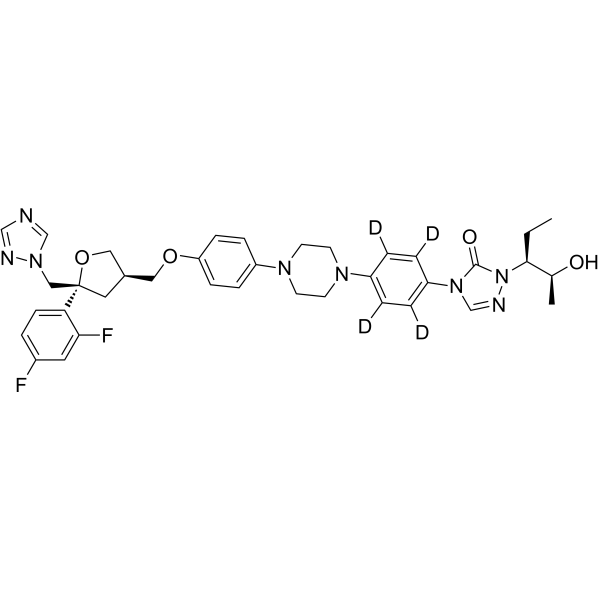
Hydroxy Itraconazole-d6 (R-63373-d6) is deuterium labeled Hydroxy Itraconazole. Hydroxy Itraconazole (Itraconazole metabolite Hydroxy Itraconazole; R-63373) is an active metabolite of Itraconazole (ITZ), which is a triazole antifungal agent.
|
-
- HY-W540023
-
|
|
ADC Linker
|
Cancer
|
|
Endo-BCN-Fmoc-L-Lysine is a linker containing the lyophilic bidentate macrocyclic ligand endo-BCN, which can further synthesize macrocyclic complexes. In click chemistry, endo-BCN can react with molecules containing azide groups to form stable triazoles in the absence of catalysts.
|
-
- HY-W096068
-
|
|
Biochemical Assay Reagents
|
Others
|
|
Propargyl-PEG5-Ms represents a bifunctional linker possessing a proparygyl group reactive towards azides in copper (I) click chemistry to form stable triazoles with the target compound as well as a mesyl group which is a good leaving group for nucleophilic reactions.
|
-
- HY-135761S
-
|
|
Fungal
Cholinesterase (ChE)
|
Infection
|
|
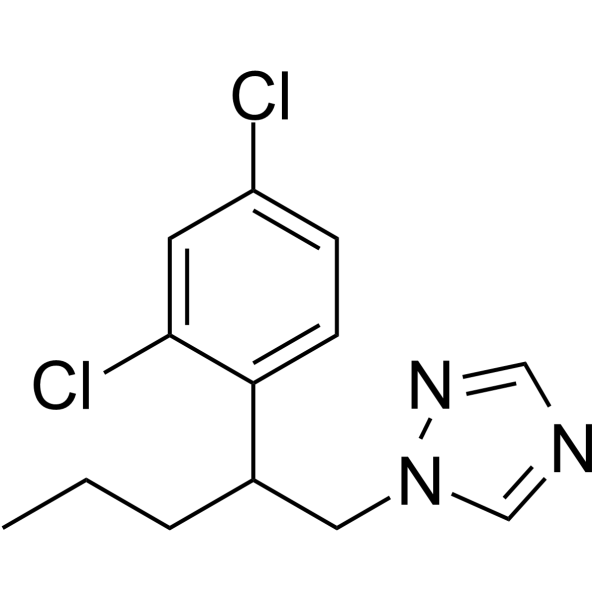
Penconazole-d7 is the deuterium labeled Penconazole . Penconazole is a typical triazole fungicide, and mainly applied on apples, grapes, and vegetables to control powdery mildew. Penconazole inhibits sterol biosynthesis in fungi. Penconazole decrease AChE activity in the cerebrum and cerebellum of rats .
|
-
- HY-W590575
-
|
|
Biochemical Assay Reagents
|
Others
|
|
Azido-PEG3-flouride is a PEG linker containing a fluorine atom and an azide group. The hydrophilic PEG spacer increases solubility in aqueous media. The azide group can react with alkyne, BCN, DBCO via Click Chemistry to yield a stable triazole linkage.
|
-
- HY-W598194
-
|
|
Biochemical Assay Reagents
|
Others
|
|
1-((4-Azidobutoxy)methyl)-4-methoxybenzene is a compound with a methyl phenol group and a butyl tail ending in a terminal azide. The azide (N3) group can react with alkyne, BCN, DBCO via Click Chemistry to yield a stable triazole linkage.
|
-
- HY-128945
-
|
|
ADC Linker
|
Inflammation/Immunology
Cancer
|
|
CL2A is a claevable complicated PEG8- and triazole-containing PABC-peptide-mc linker. CL2A is cleavable through pH sensitivity, giving rise to bystander effect, and binds the antibody at a cysteine residue via a disulfide bond. Labetuzumab govitecan used this linker .
|
-
- HY-A0277
-
|
|
Environmental Pollutants
Fungal
|
Others
|
|
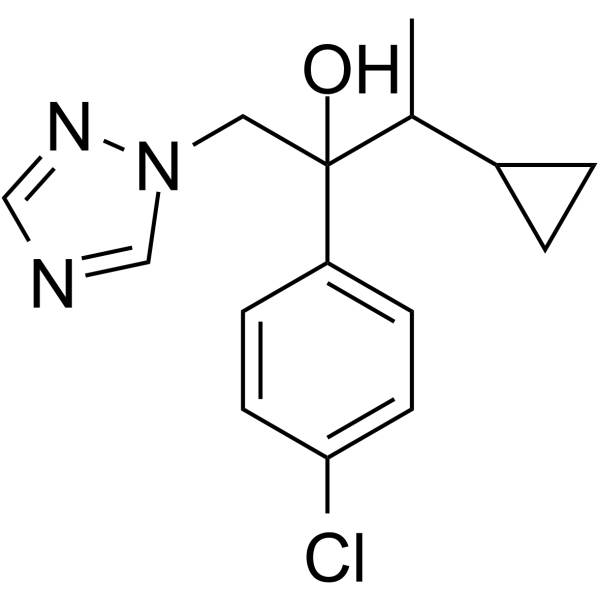
Cyproconazole is a triazole fungicide used to protect crops, fruits and vegetables against a wide range of fungal pathogens. Cyproconazole can cause hepatocellular adenomas and carcinomas in CD-1 mice. Cyproconazole also exhibits low toxicity to zebrafish embryos and affects locomotor activity .
|
-
- HY-W598199
-
|
|
Biochemical Assay Reagents
|
Others
|
|
Ethyl 4-azidobutyrate comprises an ethyl ester and a terminal azide group with a 3-carbon linker. The azide can react with alkyne, BCN, DBCO via Click Chemistry to yield a stable triazole linkage. The methyl ester groups can be hydrolyzed, reduced, or substituted under different conditions.
|
-
- HY-W282615
-
|
|
Bacterial
|
Infection
|
|
Antibacterial agent 117, triazole derivative, is an antibacterial agent. Antibacterial agent 117 has against R. prowazekii MetAP1 (RpMetAP1) activity with an IC50 value of 15 μM. Antibacterial agent 117 also inhibits rickettsial growth and can be used for the research of infection .
|
-
- HY-W197430
-
|
|
Biochemical Assay Reagents
|
Others
|
|
Ethyl 6-azidohexanoate comprises an ethyl ester and a terminal azide group with a 5-carbon linker. The azide can react with alkyne, BCN, DBCO via Click Chemistry to yield a stable triazole linkage. The methyl ester groups can be hydrolyzed, reduced, or substituted under different conditions.
|
-
- HY-W598198
-
|
|
Biochemical Assay Reagents
|
Others
|
|
Ethyl 3-azidopropanoate comprises an ethyl ester and a terminal azide group with a 2-carbon linker. The azide can react with alkyne, BCN, DBCO via Click Chemistry to yield a stable triazole linkage. The methyl ester groups can be hydrolyzed, reduced, or substituted under different conditions.
|
-
- HY-117089R
-
|
|
Reference Standards
Fungal
|
Infection
|
|
Tetraconazole (Standard) is the analytical standard of Tetraconazole. This product is intended for research and analytical applications. Tetraconazole, a chiral triazole fungicide, is widely used for the prevention of plant disease in wheat fields . Tetraconazole alters the methionine and ergosterol biosynthesis pathways in Saccharomyces yeasts promoting changes on volatile derived compounds .
|
-
- HY-100373
-
|
BAL8557-002
|
Fungal
|
Infection
|
|
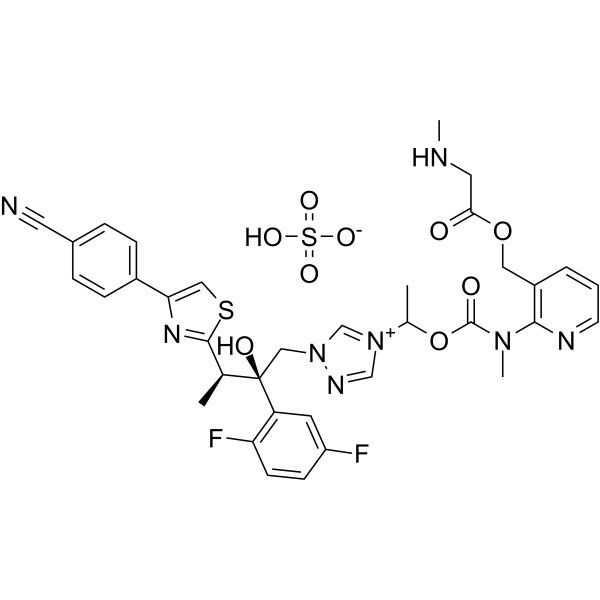
Isavuconazonium sulfate (BAL8557-002) is an orally active broad-spectrum antifungal molecule. Isavuconazonium sulfate is a precursor of the triazole antifungal active molecule Isavuconazole. Isavuconazonium sulfate can be used in the study of invasive aspergillosis, mucormycosis, blastomycosis, and Acanthamoeba keratitis .
|
-
- HY-W713147
-
|
|
Herbicide
|
Others
|
|
Thiencarbazone-methyl is a triazole herbicide and also a substrate for microbial degradation. Thiencarbazone-methyl can be degraded by specific fungi and strains. Thiencarbazone-methyl has intrinsic toxicity to the bladder and urinary function. Thiencarbazone-methyl possesses herbicidal activity and can be applied to corn, wheat, lawns and ornamental plants .
|
-
- HY-135761R
-
|
|
Reference Standards
Fungal
Cholinesterase (ChE)
|
Infection
Neurological Disease
|
|
Penconazole (Standard) is the analytical standard of Penconazole. This product is intended for research and analytical applications. Penconazole is a typical triazole fungicide, and mainly applied on apples, grapes, and vegetables to control powdery mildew. Penconazole inhibits sterol biosynthesis in fungi. Penconazole decrease AChE activity in the cerebrum and cerebellum of rats .
|
-
- HY-128945A
-
|
|
ADC Linker
|
Inflammation/Immunology
Cancer
|
|
CL2A TFA is a claevable complicated PEG8- and triazole-containing PABC-peptide-mc linker. CL2A TFA is cleavable through pH sensitivity, giving rise to bystander effect, and binds the antibody at a cysteine residue via a disulfide bond. Labetuzumab govitecan used this linker .
|
-
- HY-W800657
-
|
|
Biochemical Assay Reagents
|
Others
|
|
Azido-PEG1-hydrazide hydrochloride is a bifunctional PEG linker containing an azide group and a hydrazide group. The azide group can react with alkyne, BCN, DBCO via Click Chemistry to yield a stable triazole linkage. Hydrazine moiety reacts with an aldehyde to form semi-permanent hydrazone bonds.
|
-
- HY-155011
-
|
|
Bacterial
|
Infection
|
|
MB076 is a novel heterocyclic triazole with improved plasma stability. MB076 inhibits seven different Class C Acinetobacter-derived cephalosporinases (ADCs) β-lactamase variants with Ki values <1 μM. MB076 acts synergistically in combination with multiple cephalosporins to restore pBCSK(-) susceptibility .
|
-
- HY-W591963
-
|
Tos-pentane-azide
|
Biochemical Assay Reagents
|
Others
|
|
5-Azidopentyl 4-methylbenzenesulfonate (Tos-pentane-azide) is a linker containing an azide group and a tosyl group. The azide group can react with alkyne, BCN, DBCO via Click Chemistry to yield a stable triazole linkage. The tosyl group is a good leaving group for nucleophilic substitution reactions.
|
-
- HY-182962
-
|
7-Me-3'-OMe-GDP imidazole
|
Amino Acid Derivatives
Drug Intermediate
|
Others
|
|
7-Methylguanosine 5-disphosphoimidazolide disodium (7-Me-3'-OMe-GDP imidazole) is a guanosine diphosphate imidazolide and starting material for synthesis of alkyne-containing C-phosphonate and phosphoester clickable mononucleotide building blocks for triazole-modified mRNA cap analogues .
|
-
- HY-122225
-
|
|
MetAP
|
Cancer
|
|
JNJ-4929821 (Compound 88), a triazole derivative, is a selective Methionine aminopeptidase-2 (MetAP-2) inhibitor with an IC50 of 15 nM over MetAP-1. JNJ-4929821 can be used for cancers like liver cancer, colorectal adenocarcinoma and pancreatic cancer research .
|
-
- HY-W800691
-
|
|
Fluorescent Dye
|
Others
|
|
BP Fluor 350 Picolyl Azide is a blue-fluorescent azide-activated probe that reacts with terminal alkynes via a copper-catalyzed click reaction (CuAAC). It also reacts with strained cyclooctyne via a copper-free click chemistry reaction to form a stable triazole and does not require Cu-catalyst or elevated temperatures.
|
-
- HY-W598195
-
|
|
Biochemical Assay Reagents
|
Others
|
|
11-Azido-1-undecanol is a compound with an azide head and a undecanol tail. The azide (N3) group can react with alkyne, BCN, DBCO via Click Chemistry to yield a stable triazole linkage. The hydroxyl group enables further derivatization or replacement with other reactive functional groups.
|
-
- HY-W591964
-
|
|
Biochemical Assay Reagents
|
Others
|
|
t-Boc-Aminooxy-pentane-azide is a linker containing an azide group and Boc-protected amino group. The azide group can react with alkyne, BCN, DBCO via Click Chemistry to yield a stable triazole linkage. The Boc group can be deprotected under mild acidic conditions to form the free amine.
|
-
- HY-B0853
-
|
|
Environmental Pollutants
Fungal
|
Infection
|
|
Paclobutrazol is a triazole-containing plant growth retardant that is known to inhibit the biosynthesis of gibberellins. Paclobutrazol also has antifungal activities. Paclobutrazol, transported acropetally in plants, can also suppress the synthesis of abscisic acid and induce chilling tolerance in plants. Paclobutrazol is typically used to support research on the role of gibberellins in plant biology .
|
-
- HY-W440991
-
|
DOPE-PEG2000-NH2
|
Liposome
|
Cancer
|
|
DOPE-PEG-Amine (MW 2000) is a polydisperse PEG covalently attached to a phospholipid. The polymer is an amphiphilic molecule with hydrophobic fatty acid chains and hydrophilic PEG head which enables lipid bilayer or micelle formation in water. The phospholipid PEG can be used to prepare liposome or nanoparticles for targeted drug delivery and is reactive with alkyne to form a triazole ring.
|
-
- HY-W190917
-
|
|
Biochemical Assay Reagents
|
Others
|
|
N1, N4-Bisazidospermine bistosylate is a spermine linker containing two azide groups. The azide group can react with alkyne, BCN, DBCO via Click Chemistry to yield a stable triazole linkage. Spermidine is a polyamine that modulates various cellular activities like cellular development and differentiation, stability of DNA, and apoptosis.
|
-
- HY-15660
-
|
KP-103
|
Fungal
|
Infection
|
|
Efinaconazole (KP-103) is a triazole antifungal agent and againsts T. mentagrophytes SM-110 and C. albicans ATCC 10231 with MICs of 0.0039 μg/mL and 0.00098 μg/mL, respectively . Efinaconazole has a potent in vitro activity against fungal pathogens including dermatophytes, Candida and Malassezia species .
|
-
- HY-W190974
-
|
Perylene, 3-ethynyl-
|
Biochemical Assay Reagents
|
Others
|
|
3-Ethynylperylene (Perylene, 3-ethynyl-) is a polyaromatic hydrocarbon with five fused rings and has a terminal propargyl group. 3-Ethynyl perylene possesses intrinsic fluorescence and pyrene derivatives are known for their ability to intercalate dsDNA. The propargyl group can react with azide-bearing compounds to form stable triazole rings.
|
-
- HY-146079
-
|
|
Fungal
|
Infection
|
|
Antifungal agent 31 (compound 12) is a potent and orally active triazole antifungal agents with a pyrrolotriazinone scaffold. Antifungal agent 31 shows antifungal activity against Candida spp. and filamentous fungi. Antifungal agent 31 significantly reduced mortality rates and kidney fungal burden in two murine models of lethal systemic infections .
|
-
- HY-180854
-
|
|
Bacterial
|
Infection
|
|
Antitubercular agent-55 (Compound 2e) is an anti-tuberculous agent. Antitubercular agent-55 exhibits significant inhibitory activity against the standard strain of Mycobacterium tuberculosis H37Rv and also has moderate inhibitory activity against multidrug-resistant TB (MDR-TB). Antitubercular agent-55 has a strong affinity for the key enzyme InhA involved in the biosynthesis of mycotic acids. Antitubercular agent-55 can be used for research on tuberculosis infection caused by Mycobacterium tuberculosis.
|
-
- HY-175175
-
|
|
p38 MAPK
Bcl-2 Family
Caspase
Reactive Oxygen Species (ROS)
PARP
Apoptosis
|
Cancer
|
|
MAPK-IN-5 is a potent MAPK inhibitor with an IC50 of 1.35 μM against HeLa cells. MAPK-IN-5 inhibits HeLa cell proliferation by inducing ROS-mediated DNA damage and mitochondrial apoptosis via the MAPK pathway. MAPK-IN-5 significantly inhibits colony formation, reduces the number of live cells, suppresses cell migration, and causes cell cycle arrest in the G2/M phase in HeLa cells. MAPK-IN-5 can be used for the study of cervical cancer .
|
-
- HY-128358
-
MR-L2
1 Publications Verification
|
Phosphodiesterase (PDE)
|
Neurological Disease
|
|
MR-L2 is a reversible and noncompetitive allosteric activator of long-isoform phosphodiesterase-4 (PDE4), activates representative PDE4 long-isoform variants (PDE4A4, PDE4B1, PDE4C3, PDE4D5). MR-L2 suppresses PGE2-induced MDCK cell cyst formation with an EC50 of 1.2 μM .
|
-
- HY-W457953
-
|
|
Biochemical Assay Reagents
|
Others
|
|
tert-Butyl N-(4-azidobutyl)carbamate is N-Boc protected crosslinker. tert-Butyl N-(4-azidobutyl)carbamate can react with alkyne, BCN, DBCO via Click Chemistry to yield a stable triazole linkage. The Boc group can be deprotected under mild acidic conditions to form the free amine.
|
-
- HY-116686
-
|
|
Cytochrome P450
Fungal
|
Infection
|
|
Inz-1 is a potent and selective mitochondrial cytochrome bc1 inhibitor for yeast (IC50=8.092 μM) over humans (IC50=45.320 μM). Inz-1 reverses Fluconazole (HY-B0101) or other triazole antifungals’ resistance in the pathogenic fungus Candida albicans .
|
-
- HY-113611
-
|
|
Fungal
|
Infection
|
|
SDZ89-485 is an orally active triazole antifungal agent. The peak concentration of SDZ89-485 is lower, but it exhibits a stronger anti-sporofungus effect in the mouse model than Fluconazole (HY-B0101) with a higher peak concentration. SDZ89-485 can be used in studies on anti-sporofungus .
|
-
- HY-W440833
-
|
|
Liposome
|
Others
|
|
DSPE-PEG3400-azide is a polydisperse PEG covalently attached to a phospholipid. The polymer is an amphiphilic molecule with hydrophobic fatty acid chains and hydrophilic PEG head which enables lipid bilayer or micelles formation in water. The phospholipid PEG can be used to prepare liposome or nanoparticles for targeted drug delivery and is reactive with alkyne to form triazole bond.
|
-
- HY-N7497R
-
|
|
Reference Standards
Others
|
Others
|
|
Protoescigenin (Standard) is the analytical standard of Protoescigenin. This product is intended for research and analytical applications. Protoescigenin is the main aglycone of horse chestnut saponin mixture known as escin. Protoescigenin is selected as substrate for exploratory chemistry towards selective protection, followed by propargyl ether formation and subsequent condensation with azido-monosaccharides, to obtain novel triazole linked conjugates of the triterpene .
|
-
- HY-76200S
-
|
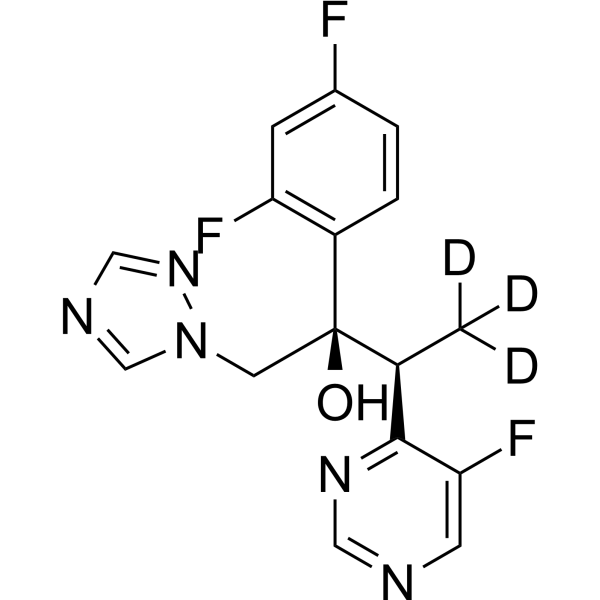
UK-109496-d3
|
Fungal
|
Infection
|
|
Voriconazole-d3 is the deuterium labeled Voriconazole. Voriconazole (UK-109496) is a second-generation, broad-spectrum triazole antifungal agent that inhibits fungal ergosterol biosynthesis. Voriconazole exerts its antifungal activity by inhibition of 14-α-lanosterol demethylation, which is mediated by fungal cytochrome P450 enzymes .
|
-
- HY-N16025
-
|
|
Liposome
Biochemical Assay Reagents
|
Others
|
|
DOPE-PEG(2000) Amine ammonium is a polydisperse PEG covalently attached to a phospholipid. The polymer is an amphiphilic molecule with hydrophobic fatty acid chains and hydrophilic PEG head which enables lipid bilayer or micelle formation in water. The phospholipid PEG can be used to prepare liposome or nanoparticles for targeted agent delivery and is reactive with alkyne to form a triazole ring .
|
-
- HY-W457950
-
|
|
E3 Ligase Ligand-Linker Conjugates
Autophagy
Apoptosis
|
Cancer
|
|
Thalidomide-5-propargyl is a propargyl-modified Thalidomide (HY-14658), that acts as a Cereblon ligand to recruit CRBN proteins. Thalidomide-5-propargyl use alkynyl group at the end to be directly used in the synthesis of triazoles in the synthesis of PROTAC molecules, and is a key intermediate in the synthesis of PROTAC molecules based on CRBN design .
|
-
- HY-B0101S
-
|
UK-49858-d4
|
Isotope-Labeled Compounds
Fungal
Antibiotic
|
Infection
|
|
Fluconazole-d4 is the deuterium labeled Fluconazole. Fluconazole (UK-49858) is a triazole antifungal agent with excellent activities against a broad range of fungi, especially against Candida albicans. Fluconazole inhibits C. albicans and Candida kefyr with IC99s range from 0.20 μg/mL to 0.39 μg/mL .
|
-
- HY-136403
-
|
|
Phytohormone
|
Others
|
|
TIS108 is a triazole-type strigolactone biosynthesis inhibitor. TIS108 inhibits Arabidopsis embryogenesis and root hair growth, and promotes shoot branching. TIS108 can also increase the gibberellin content in Gastrodia elata. TIS108 can be used in the research of plant growth and development as well as plant responses to the environment .
|
-
- HY-P10472
-
|
|
GnRH Receptor
|
Endocrinology
|
|
Azaline B is an antagonist for gonadotropin-releasing hormone (GnRH) with IC50 of 1.37 nM, Azaline B can be used in research of sex hormone-related pathological states, ovulation induction and male contraception .
|
-
- HY-A0277R
-
|
|
Reference Standards
Fungal
|
Others
|
|
Cyproconazole (Standard) is the analytical standard of Cyproconazole. This product is intended for research and analytical applications. Cyproconazole is a triazole fungicide used to protect crops, fruits and vegetables against a wide range of fungal pathogens. Cyproconazole can cause hepatocellular adenomas and carcinomas in CD-1 mice. Cyproconazole also exhibits low toxicity to zebrafish embryos and affects locomotor activity .
|
-
- HY-76200R
-
|
UK-109496 (Standard)
|
Reference Standards
Fungal
Bacterial
|
Infection
Cancer
|
|
Voriconazole (Standard) is the analytical standard of Voriconazole. This product is intended for research and analytical applications. Voriconazole (UK-109496) is a second-generation, broad-spectrum triazole antifungal agent that inhibits fungal ergosterol biosynthesis. Voriconazole exerts its antifungal activity by inhibition of 14-α-lanosterol demethylation, which is mediated by fungal cytochrome P450 enzymes .
|
-
- HY-W591962
-
|
1-Pentanol, 5-azido-
|
Biochemical Assay Reagents
|
Others
|
|
5-Azidopentan-1-ol (1-Pentanol, 5-azido-) is a linker containing an azide group and a terminal hydroxyl group. The azide group can react with alkyne, BCN, DBCO via Click Chemistry to yield a stable triazole linkage. The hydroxyl group enables further derivatization or replacement with other reactive functional groups.
|
-
- HY-W190926
-
|
|
Biochemical Assay Reagents
|
Others
|
|
2,5 -Dioxo-1-pyrrolidinyl 11-azidoundecanoate is a linker containing an azide group and an NHS ester. The azide group can react with alkyne, BCN, DBCO via Click Chemistry to yield a stable triazole linkage. The NHS ester can be used to label the primary amines (-NH2) of proteins, amine-modified oligonucleotides, and other amine-containing molecules.
|
-
- HY-156323
-
|
|
ADC Linker
|
Cancer
|
|
BCN-exo-PEG4-NHS is an ADC Linker containing 4 PEG units. BCN-exo-PEG4-NHS contains the lyophilic bidentate macrocyclic ligand BCN, which allows for further synthesis of macrocyclic complexes. In click chemistry, BCN reacts with molecules containing azide groups to form stable triazoles in the absence of catalysts.
|
-
- HY-W706180
-
|
|
Isotope-Labeled Compounds
Fungal
|
Infection
|
|
(±)-Triadimefon-d4 is deuterium labeled Triadimefon. Triadimefon is a triazole fungicide used to control powdery mildew, rusts, and other fungal pests on grains, fruit and vegetable crops, turf, shrubs, and trees. Triadimefon inhibits lanosterol 14α-demethylase, interfering with oxidative demethylation reactions in the ergosterol biosynthesis pathway of fungi, and also blocks gibberellin biosynthesis .
|
-
- HY-W591360
-
|
|
Biochemical Assay Reagents
|
Others
|
|
Iodoacetamido-PEG6-azide is an aqueous soluble PEG linker containing an azide and a terminal Iodoacetamido group. The azide group can react with alkyne, BCN, DBCO via Click Chemistry to yield a stable triazole linkage. The Iodoacetamido moiety is commonly used to bind covalently with the thiol group of cysteine so the protein cannot form disulfide bonds.
|
-
- HY-156324
-
|
|
ADC Linker
|
Cancer
|
|
BCN-exo-PEG8-NHS is an ADC Linker containing 8 PEG units. BCN-exo-PEG8-NHS contains the lyophilic bidentate macrocyclic ligand BCN, which allows for further synthesis of macrocyclic complexes. In click chemistry, BCN reacts with molecules containing azide groups to form stable triazoles in the absence of catalysts.
|
-
- HY-15660S
-
|
KP-103-d4
|
Isotope-Labeled Compounds
Fungal
|
Infection
|
|
Efinaconazole-d4 is the deuterium labeled Efinaconazole. Efinaconazole (KP-103) is a triazole antifungal agent and againsts T. mentagrophytes SM-110 and C. albicans ATCC 10231 with MICs of 0.0039 μg/mL and 0.00098 μg/mL, respectively . Efinaconazole has a potent in vitro activity against fungal pathogens including dermatophytes, Candida and Malassezia species .
|
-
- HY-W440903
-
|
|
Biochemical Assay Reagents
|
Others
|
|
DSPE-PEG5000-IA is a cyclooctyne containing phospholipid PEG polymer. The polymer can self-assemble spontaneously in water to form micelles/lipid bilayer. It can be used to prepare nanoparticles or liposomes as drug carrier in targeted drug delivery system. The DBCO can react with azide molecule via copper free click chemistry to form a stable triazole bond.
|
-
- HY-W454989
-
|
|
Biochemical Assay Reagents
|
Others
|
|
Hept-6-yn-1-yl 4-methylbenzenesulfonate is a linker containing a tosyl group and a propargyl group. The tosyl group is a very good leaving group for nucleophilic substitution reactions. The propargyl group can react with azide-bearing compounds or biomolecules via copper catalyzed azide-alkyne Click Chemistry to yield a stable triazole linkage.
|
-
- HY-W800706
-
|
|
Biochemical Assay Reagents
|
Others
|
|
Azidobutanamide-tri-(carboxyethoxymethyl)-methane is a aqueous soluble PEG linker with an azide group with three terminal carboxylic acids. The azide group can react with alkyne, BCN, DBCO via Click Chemistry to yield a stable triazole linkage. The terminal carboxylic acids can react with primary amine groups in the presence of activators (e.g. EDC, or HATU) to form a stable amide bond.
|
-
- HY-W440926
-
|
|
Liposome
|
Others
|
|
Stearic acid-PEG1000-NHS is a cyclooctyne containing phospholipid PEG polymer. The polymer can self-assemble spontaneously in water to form micelles/lipid bilayer. It can be used to prepare nanoparticles or liposomes as drug carrier in targeted drug delivery system. The DBCO can react with azide molecule via copper free click chemistry to form a stable triazole bond.
|
-
- HY-D2204
-
|
|
Phosphatase
SHP1
Fluorescent Dye
|
Cancer
|
|
SHP1-IN-1 (compound 5p) is a fluorescent probe for the protein tyrosine phosphatase SHP1 containing the Src homology 2 domain. SHP1-IN-1 has SHP1 inhibitory activity, selectivity for Fe 3+ ions and good fluorescence properties. SHP1-IN-1 exhibits aggregation post-quenching (ACQ) effect, good interference immunity and low detection limit (5.55 μM) .
|
-
- HY-B0853R
-
|
|
Reference Standards
Fungal
|
Infection
|
|
Paclobutrazol (Standard) is the analytical standard of Paclobutrazol. This product is intended for research and analytical applications. Paclobutrazol is a triazole-containing plant growth retardant that is known to inhibit the biosynthesis of gibberellins. Paclobutrazol also has antifungal activities. Paclobutrazol, transported acropetally in plants, can also suppress the synthesis of abscisic acid and induce chilling tolerance in plants. Paclobutrazol is typically used to support research on the role of gibberellins in plant biology .
|
-
- HY-17514S
-
|
R51211-d5
|
Fungal
Hedgehog
Cytochrome P450
Autophagy
Antibiotic
|
Infection
Cancer
|
|
Itraconazole-d5 is the deuterium labeled Itraconazole. Itraconazole (R51211) is a triazole antifungal agent and a potent and orally active Hedgehog (Hh) signaling pathway antagonist with an IC50 of ~800 nM. Itraconazole potently inhibits lanosterol 14α-demethylase (cytochrome P450 enzyme), thereby inhibits the oxidative conversion of lanosterol to ergosterol. Itraconazole has anticancer and antiangiogenic effects .
|
-
- HY-156317
-
|
|
ADC Linker
|
Cancer
|
|
BCN-endo-PEG7-maleimide is an ADC Linker containing 7 PEG units. BCN-endo-PEG7-maleimide contains the lyophilic bidentate macrocyclic ligand endo-BCN, which can further synthesize macrocyclic complexes. In click chemistry, endo-BCN can react with molecules containing azide groups to form stable triazoles in the absence of catalysts.
|
-
- HY-156305
-
|
|
Fluorescent Dye
|
Others
|
|
Coumarin-C2-exoBCN is a dye derivative of Coumarin (HY-N0709). Coumarin-C2-exoBCN contains the lyophilic bidentate macrocyclic ligand exo-BCN, which can further synthesize macrocyclic complexes. In click chemistry, exo-BCN can react with molecules containing azide groups to generate stable triazoles under catalyst-free conditions.
|
-
- HY-170956
-
|
|
Drug Intermediate
|
Inflammation/Immunology
|
|
BTN3A1 ligand-1 (Compound 26b) is a triazole-containing aryl/acyloxyalkyl phosphonate prodrug. BTN3A1 ligand-1 can stimulate T cell proliferation (EC50 : 0.49 nM) and interferon γ secretion. BTN3A1 ligand-1 has certain plasma stability and can be used in related immunotherapy research .
|
-
- HY-W190928
-
|
|
Biochemical Assay Reagents
|
Others
|
|
2-(Azido-PEG2-amido)-1,3-bis-(tert-butyldimethylsilanoxy)propane is a PEG linker containing a TBDMS acid labile, alcohol protecting group. The azide group is able to participate in copper-catalyzed Click Chemistry reactions with alkynes, DBCO and BCN to generate triazole linkages. The hydrophilic PEG linker increases the solubility properties of compounds in aqueous media.
|
-
- HY-156319
-
|
|
ADC Linker
|
Cancer
|
|
BCN-exo-PEG2-NH2 is an ADC Linker containing 2 PEG units. BCN-exo-PEG2-NH2 contains the lyophilic bidentate macrocyclic ligand BCN, which can further synthesize macrocyclic complexes. In click chemistry, BCN reacts with molecules containing azide groups to form stable triazoles in the absence of catalysts.
|
-
- HY-W096079
-
|
|
ADC Linker
|
Cancer
|
|
BCN-endo-PEG4-NHS is an ADC Linker containing 4 PEG units. BCN-endo-PEG4-NHS contains the lyophilic bidentate macrocyclic ligand endo-BCN, which allows for further synthesis of macrocyclic complexes. In click chemistry, endo-BCN can react with molecules containing azide groups to form stable triazoles in the absence of catalysts.
|
-
- HY-100373R
-
|
BAL8557-002 (Standard)
|
Fungal
Reference Standards
|
Infection
|
|
Isavuconazonium (sulfate) (Standard) is the analytical standard of Isavuconazonium (sulfate) (HY-100373). This product is intended for research and analytical applications. Isavuconazonium sulfate (BAL8557-002) is an orally active broad-spectrum antifungal molecule. Isavuconazonium sulfate is a precursor of the triazole antifungal active molecule Isavuconazole. Isavuconazonium sulfate can be used in the study of invasive aspergillosis, mucormycosis, blastomycosis, and Acanthamoeba keratitis .
|
-
- HY-W800670
-
|
|
Biochemical Assay Reagents
|
Others
|
|
Mal-amido-PEG5-alkyne is a PEG linker containing a maleimide group and an alkyne. The hydrophilic PEG spacer increases solubility in aqueous media. The alkyne group can react with azide-bearing compounds or biomolecules via copper catalyzed azide-alkyne Click Chemistry to yield a stable triazole linkage. The maleimide group will react with a thiol group to form a covalent bond, enabling the connection of biomolecule with a thiol.
|
-
- HY-179042
-
|
|
TGF-beta/Smad
p38 MAPK
Phosphodiesterase (PDE)
|
Inflammation/Immunology
|
|
TGF-β/Smad-IN-3 (Compound 4w) is an effective TGF-β/Smad inhibitor. TGF-β/Smad-IN-3 exerts anti-pulmonary fibrosis activity by simultaneously inhibiting the TGF-β/Smad and MAPK signaling pathways. TGF-β/Smad-IN-3 significantly inhibits collagen deposition induced by TGF-β1, with its IC50 value being 3.21 μM. TGF-β/Smad-IN-3 has an IC₅₀ of 46.77 nM for the autocrine motility factor (ATX). TGF-β/Smad-IN-3 significantly reduces the expression levels of α-SMA, COL1A1 and FN in TGF-β1-induced CCC-HPF-1 cells, and effectively inhibited TGF-β1-induced cell migration. TGF-β/Smad-IN-3 can be used for the study of pulmonary fibrosis .
|
-
- HY-W1052510
-
|
|
Biochemical Assay Reagents
|
Others
|
|
N3-PEG2-CH2CO2-NHS is a PEG derivative containing an azide group and an NHS ester. The azide group can react with alkyne, BCN, DBCO via Click Chemistry to yield a stable triazole linkage. The NHS ester can be used to label the primary amines (-NH2) of proteins, amine-modified oligonucleotides, and other amine-containing molecules.
|
-
- HY-W190881
-
|
|
Biochemical Assay Reagents
|
Others
|
|
N3-PEG11-CH2CH2Br is a PEG linker containing a bromine and an azide group. The hydrophilic PEG spacer increases solubility in aqueous media. The azide group can react with alkyne, BCN, DBCO via Click Chemistry to yield a stable triazole linkage. The bromine (Br) is a very good leaving group for nucleophilic substitution reactions.
|
-
- HY-156310
-
|
|
ADC Linker
|
Cancer
|
|
BCN-endo-PEG7-NH2 is an ADC Linker containing 7 PEG units. BCN-endo-PEG7-NH2 contains the lyophilic bidentate macrocyclic ligand endo-BCN, which can further synthesize macrocyclic complexes. In click chemistry, endo-BCN can react with molecules containing azide groups to form stable triazoles in the absence of catalysts.
|
-
- HY-W800664
-
|
|
Biochemical Assay Reagents
|
Others
|
|
5-(Azido-PEG4)-pent-2-yn-1-Ol is a PEG linker containing an azide group and a terminal hydroxyl group. The hydrophilic PEG spacer increases solubility in aqueous media. The azide group can react with alkyne, BCN, DBCO via Click Chemistry to yield a stable triazole linkage. The hydroxyl group enables further derivatization or replacement with other reactive functional groups.
|
-
- HY-W800695
-
|
|
Fluorescent Dye
|
Others
|
|
BP Fluor 405 DBCO is a blue-fluorescent dye that often used in multi-color applications, including flow cytometry and super-resolution microscopy using STORM. Its excitation is ideally suited for the 407 nm spectral line of the krypton laser or the 408 nm violet laser diode. BP Fluor 405 DBCO reacts with azides via a copper-free click chemistry reaction to form a stable triazole and does not require a Cu-catalyst or elevated temperatures.
|
-
- HY-W329835
-
|
|
Fungal
|
Infection
|
|
Fenbuconazole is a triazole fungicide that has fungicidal activity through inhibiting sterol biosynthesis. Fenbuconazole is an inhibitor of human aromatase activity in human choriocarcinoma JEG-3 cell line. Fenbuconazole can result in a significant increase in DNA damage in Allium cepa root cells. Fenbuconazole significantly increases the abnormal cell frequency in vitro. Fenbuconazole exhibits ED50 of 0.21 μg/mL with M.citri and 1.01 μg/mL with C. acutatum .
|
-
- HY-B2058
-
|
|
Fungal
Androgen Receptor
|
Infection
|
|
Triticonazole is an orally active triazole fungicide and androgen receptor antagonist. Triticonazole inhibits testosterone-induced androgen receptor activation and reduces basal testosterone secretion. Prenatal exposure to Triticonazole causes shortened anogenital distance in male rat fetuses and induces organ-specific histopathological changes in pigs. Triticonazole can be used for detoxification of seeds contaminated with fungal pathogens, but there is a risk of animal poisoning if the treated seeds are used as animal feed .
|
-
- HY-156322
-
|
|
ADC Linker
|
Cancer
|
|
BCN-exo-PEG3-maleimide is an ADC Linker containing 3 PEG units. BCN-exo-PEG3-maleimide contains the lyophilic bidentate macrocyclic ligand BCN, which enables the further synthesis of macrocyclic complexes. In click chemistry, BCN reacts with molecules containing azide groups to form stable triazoles in the absence of catalysts. Its maleimide group (-Maleimide) degrades in aqueous media and has been used in drug delivery studies.
|
-
- HY-12772S4
-
|
(2S)-R-63373-d8
|
Fungal
|
Infection
|
|
(2S)-Hydroxy Itraconazole-d8 ((2S)-R-63373-d8) is the enantiomer of Hydroxy Itraconazole-d8 (R-63373-d8) (HY-12772S). Hydroxy Itraconazole-d8 is the deuterium labeled Hydroxy Itraconazole (HY-12772). Hydroxy Itraconazole is an active metabolite of Itraconazole (ITZ), which is a triazole antifungal agent.
|
-
- HY-149620
-
|
|
Fluorescent Dye
|
Others
|
|
Cy5-PEG2-exo-BCN is a dye derivative of Cyanine 5 (Cy5) (HY-D0821) containing 2 PEG units. Cy5-PEG2-exo-BCN contains the lyophilic bidentate macrocyclic ligand BCN, which can further synthesize macrocyclic complexes. In click chemistry, BCN reacts with molecules containing azide groups to form stable triazoles in the absence of catalysts.
|
-
- HY-134734
-
|
|
ADC Linker
|
Cancer
|
|
BCN-exo-PEG7-maleimide is an ADC Linker containing 7 PEG units. BCN-exo-PEG7-maleimide contains the lyophilic bidentate macrocyclic ligand BCN, which allows for further synthesis of macrocyclic complexes. In click chemistry, BCN reacts with molecules containing azide groups to form stable triazoles in the absence of catalysts. Its maleimide group (-Maleimide) degrades in aqueous media and has been used in drug delivery studies.
|
-
- HY-W800698
-
|
|
Fluorescent Dye
|
Others
|
|
BP Fluor 430 Alkyne is a green-fluorescent alkyne-activated probe routinely used for imaging of moderate to high abundance azide-containing biomolecules. BP Fluor 430 Alkyne reacts with azides via a copper-catalyzed click reaction (CuAAC) to form a stable triazole linker.
BP Fluor 430 is a bright, photostable, green-fluorescent probe optimally excited near 430 nm. This probe is water-soluble and its fluorescence is pH independent over a wide pH range.
|
-
- HY-156320
-
|
|
ADC Linker
|
Cancer
|
|
BCN-exo-PEG2-maleimide is an ADC Linker containing 2 PEG units. BCN-exo-PEG2-maleimide contains the lyophilic bidentate macrocyclic ligand BCN, which allows for further synthesis of macrocyclic complexes. In click chemistry, BCN reacts with molecules containing azide groups to form stable triazoles in the absence of catalysts. Its maleimide group (-Maleimide) degrades in aqueous media and has been used in drug delivery studies.
|
-
- HY-17514S2
-
|
R51211-d9
|
Fungal
Hedgehog
Bacterial
Autophagy
Cytochrome P450
Antibiotic
|
Infection
|
|
Itraconazole-d9 is the deuterium labeled Itraconazole . Itraconazole (R51211) is a triazole antifungal agent and a potent and orally active Hedgehog (Hh) signaling pathway antagonist with an IC50 of ~800 nM. Itraconazole potently inhibits lanosterol 14α-demethylase (cytochrome P450 enzyme), thereby inhibits the oxidative conversion of lanosterol to ergosterol. Itraconazole has anticancer and antiangiogenic effects. Itraconazole is a oxysterol-binding protein (OSBP) inhibitor .
|
-
- HY-178106
-
|
|
Drug Intermediate
|
Cancer
|
|
SCN2 is a esterase-responsive prodrug-based amphiphile composed of SN38 (HY-13704) and di-(triazole-[12]aneN3, N) moiety through a 7‑carbon alkyl chains. SCN2 has excellent self-assembly and reversible siRNA condensation capabilities as well as anti-proliferation activity against cancer cells. SCN2 can be used for synthesis of nanoparticles for drug delivery of lung cancer .
|
-
- HY-19599
-
|
(+)-Vorozole; R83842
|
Cytochrome P450
|
Cancer
|
|
Vorozole is a potent and selective, orally active non-steroidal aromatase inhibitor . Vorozole shows antitumor activity in vivo. Vorozole has the potential for the research of mammary cancer .
|
-
- HY-D2120A
-
|
|
Fluorescent Dye
|
Others
|
|
Cy3-PEG3-exo-BCN is a dye derivative of Cyanine 3 (Cy3) (HY-D0822) containing 3 PEG units. Cy3-PEG3-exo-BCN contains the lyophilic bidentate macrocyclic ligand BCN, which can further synthesize macrocyclic complexes. In click chemistry, exo-BCN can react with molecules containing azide groups to form stable triazoles in the absence of catalysts.
|
-
- HY-D2149
-
|
|
Fluorescent Dye
|
Others
|
|
Cy5-PEG7-exo-BCN is a dye derivative of Cyanine 5 (Cy5) (HY-D0821) containing 7 PEG units. Cy5-PEG7-exo-BCN contains the lyophilic bidentate macrocyclic ligand BCN, which can further synthesize macrocyclic complexes. In click chemistry, exo-BCN can react with molecules containing azide groups to form stable triazoles in the absence of catalysts.
|
-
- HY-17514S1
-
|
R51211-d3
|
Antibiotic
Autophagy
Bacterial
Cytochrome P450
Fungal
Hedgehog
|
Infection
Cancer
|
|
Itraconazole-d3 (R51211-d3) is the deuterium labeled Itraconazole (HY-17514) . Itraconazole (R51211) is a triazole antifungal agent and a potent and orally active Hedgehog (Hh) signaling pathway antagonist with an IC50 of ~800 nM. Itraconazole potently inhibits lanosterol 14α-demethylase (cytochrome P450 enzyme), thereby inhibits the oxidative conversion of lanosterol to ergosterol. Itraconazole has anticancer and antiangiogenic effects. Itraconazole is a oxysterol-binding protein (OSBP) inhibitor.
|
-
- HY-D2121A
-
|
|
Fluorescent Dye
|
Others
|
|
Cy3-PEG7-exo-BCN is a dye derivative of Cyanine 3 (Cy3) (HY-D0822) containing 7 PEG units. Cy3-PEG7-exo-BCN contains the lyophilic bidentate macrocyclic ligand BCN, which can further synthesize macrocyclic complexes. In click chemistry, exo-BCN can react with molecules containing azide groups to form stable triazoles in the absence of catalysts.
|
-
- HY-156311
-
|
|
ADC Linker
|
Cancer
|
|
BCN-endo-PEG2-maleimide is an ADC Linker containing 4 PEG units. BCN-endo-PEG2-maleimide contains the lyophilic bidentate macrocyclic ligand endo-BCN, which can further synthesize macrocyclic complexes. In click chemistry, endo-BCN can react with molecules containing azide groups to form stable triazoles in the absence of catalysts. Its maleimide group (-Maleimide) degrades in aqueous media and has been used in drug delivery studies.
|
-
- HY-162479
-
|
|
Phosphatase
Amyloid-β
|
Metabolic Disease
|
|
PTP1B-IN-26 (Compound 7a) is a derivative of phenylthiosemicarbazide‐phenoxy‐1,2,3‐triazole‐N‐phenylacetamide. PTP1B-IN-26 is an inhibitor of protein tyrosine phosphatase 1B (PTP-1B). PTP1B-IN-26 is a competitive inhibitor. PTP1B-IN-26 can be used to research in type 2 diabetes .
|
-
- HY-D2121
-
|
|
Fluorescent Dye
|
Others
|
|
Cy3-PEG7-endo-BCN is a dye derivative of Cyanine 3 (Cy3) (HY-D0822) containing 7 PEG units. Cy3-PEG7-endo-BCN contains the lyophilic bidentate macrocyclic ligand BCN, which can further synthesize macrocyclic complexes. In click chemistry, endo-BCN can react with molecules containing azide groups to form stable triazoles in the absence of catalysts.
|
-
- HY-19377
-
|
|
Fungal
Cytochrome P450
|
Infection
|
|
SS-750 is an orally active Triazole derivative and antifungal agent. SS-750 binds to fungal cytochrome P450. SS-750 shows antifungal activities against Candida species and C. neoformans strains tested. SS750 shows MIC90 values of 0.25, 1, and 2 μg/mL against Candida parapsilosis, C. krusei, and C. glabrata, respectively. SS-750 improves systemic and pulmonary candidiasis caused by C. albicans .
|
-
- HY-149618
-
|
|
Fluorescent Dye
|
Others
|
|
Cy5-PEG3-endo-BCN is a derivative of the Cyanine 5 (Cy5) (HY-D0821) dye bearing 3 PEG units. Cy5-PEG3-endo-BCN contains the lyophilic bidentate macrocyclic ligand endo-BCN, which allows for further synthesis of macrocyclic complexes. In click chemistry, endo-BCN forms stable triazoles with azide-containing molecules under catalyst-free conditions .
|
-
- HY-W800709
-
|
|
Biochemical Assay Reagents
|
Others
|
|
N-(acid-PEG10)-N-bis(PEG10-azide) is a very popular PEG reagent containing a terminal carboxylic acid and two azide groups. The hydrophilic PEG spacer increases solubility in aqueous media. The azide groups can react with alkyne, BCN, DBCO via Click Chemistry to yield a stable triazole linkage. The terminal carboxylic acid can react with primary amine groups in the presence of activators (e.g. EDC, or HATU) to form a stable amide bond.
|
-
- HY-149619
-
|
|
Fluorescent Dye
|
Others
|
|
Cy5-PEG7-endo-BCN is a dye derivative of Cyanine 5 (Cy5) (HY-D0821) containing 7 PEG units. Cy5-PEG7-endo-BCN contains the lyophilic bidentate macrocyclic ligand endo-BCN, which can further synthesize macrocyclic complexes. In click chemistry, endo-BCN can react with molecules containing azide groups to form stable triazoles in the absence of catalysts.
|
-
- HY-155327
-
|
|
Fluorescent Dye
|
Others
|
|
Cy3-PEG2-endo-BCN is a dye derivative of Cyanine 3 (Cy3) (HY-D0822) containing 2 PEG units. Cy3-PEG2-endo-BCN contains the lyophilic bidentate macrocyclic ligand endo-BCN, which can further synthesize macrocyclic complexes. In click chemistry, endo-BCN can react with molecules containing azide groups to form stable triazoles in the absence of catalysts.
|
-
- HY-155327A
-
|
|
Fluorescent Dye
|
Others
|
|
Cy3-PEG2-exo-BCN is a dye derivative of Cyanine 3 (Cy3) (HY-D0822) containing 2 PEG units. Cy3-PEG2-exo-BCN contains the lyophilic bidentate macrocyclic ligand BCN, which can further synthesize macrocyclic complexes. In click chemistry, exo-BCN can react with molecules containing azide groups to form stable triazoles in the absence of catalysts.
|
-
- HY-D2120
-
|
|
Fluorescent Dye
|
Others
|
|
Cy3-PEG3-endo-BCN is a dye derivative of Cyanine 3 (Cy3) (HY-D0822) containing 3 PEG units. Cy3-PEG3-endo-BCN contains the lyophilic bidentate macrocyclic ligand BCN, which can further synthesize macrocyclic complexes. In click chemistry, endo-BCN can react with molecules containing azide groups to form stable triazoles in the absence of catalysts.
|
-
- HY-149709
-
|
|
ICMT
|
Cancer
|
|
ICMT-IN-35 (compound 10n) is a FTPA-triazole compound and ICMT inhibitor (IC50=0.8 μM). ICMT-IN-35 is taken up by mammalian cells and can prevent K-Ras membrane localization and induce K-Ras mislocalization. Furthermore, ICMT-IN-35 is selectively cytotoxic against ICMT +/+ MEF cells and has low micromolar activity (IC50=0.8 μM) against metastatic pancreatic cancer cell lines .
|
-
- HY-161943
-
|
|
Influenza Virus
|
Neurological Disease
|
|
NEU3-IN-1 (compound 963) is a NEU3 inhibitor (Ki: 0.12 μM; IC50: 0.31 μM) based on the 2-deoxy-2,3-didehydro-N-acetylneuraminic acid (DANA) scaffold and is a C9 biphenylcarbamate derivative. NEU is a human neuraminidase with 4 isozymes; NEU3-IN-1 is an important tool for studying the function of NEU3 isozymes; its amide and triazole linker analogs are selective for NEU1 and NEU4 isozymes, respectively .
|
-
- HY-B0101S1
-
|
UK-49858-13C2,15N
|
Isotope-Labeled Compounds
Fungal
Antibiotic
Bacterial
|
Infection
Cancer
|
|
Fluconazole-13C2,15N (UK-49858-13C2,15N) is the 13C and 15N labeled isotope of Fluconazole (HY-B0101). Fluconazole (UK-49858) is a triazole antifungal agent with excellent activities against a broad range of fungi, especially against Candida albicans. Fluconazole inhibits C. albicans and Candida kefyr with IC99s range from 0.20 μg/mL to 0.39 μg/mL .
|
-
- HY-W800694
-
|
|
Fluorescent Dye
|
Others
|
|
BP Fluor 405 alkyne triTEA is a blue-fluorescent dye that often used in multi-color applications, including flow cytometry and super-resolution microscopy using STORM. Its excitation is ideally suited for the 407 nm spectral line of the krypton laser or the 408 nm violet laser diode. BP Fluor 405 alkyne triTEA reacts with azides via a copper-catalyzed click reaction (CuAAC) to form a stable triazole linker. A probe for copper-less detection (BP Fluor 405 DBCO) is also available for application where the presence of copper is not acceptable.
|
-
- HY-W800692
-
|
|
Fluorescent Dye
|
Others
|
|
BP Fluor 350 Azide is a blue-fluorescent, azide-activated probe that reacts with terminal alkynes via a copper-catalyzed click reaction (CuAAC). It also reacts with strained cyclooctyne via a copper-free click chemistry reaction to form a stable triazole and does not require Cu-catalyst or elevated temperatures.
BP Fluor 350 is a water-soluble, moderately photostable, blue-fluorescent probe optimally excited by the 350 nm laser line. It is routinely used for generation of stable signal in imaging and flow cytometry. The brightness and photostability of blue dyes are best suited to direct imaging of high-abundance targets.
|
-
- HY-B0847S1
-
|
|
Fungal
Reactive Oxygen Species (ROS)
|
Infection
|
|
Propiconazole-d3 (nitrate) is the deuterium labeled Propiconazole nitrate. Propiconazole is a broad-spectrum triazole fungicide that inhibits the conversion of lanosterol to ergosterol, leading to fungal cell membrane disruption. Propiconazole inhibits S. cerevisiae, but not rat liver, microsomal cytochrome P450 (IC50s=0.04 and >200 µM, respectively). Propiconazole inhibits the growth of T. deformans and R. stolonifer (ED50s=0.073 and 4.6 µg/mL, respectively). Propiconazole increases production of reactive oxygen species (ROS).
|
-
- HY-B0847S
-
|
|
Isotope-Labeled Compounds
Fungal
Reactive Oxygen Species (ROS)
|
Infection
|
|
Propiconazole-d7 is the deuterium labeled Propiconazole. Propiconazole is a broad-spectrum triazole fungicide that inhibits the conversion of lanosterol to ergosterol, leading to fungal cell membrane disruption. Propiconazole inhibits S. cerevisiae, but not rat liver, microsomal cytochrome P450 (IC50s=0.04 and >200 μM, respectively). Propiconazole inhibits the growth of T. deformans and R. stolonifer (ED50s=0.073 and 4.6 μg/mL, respectively). Propiconazole increases production of reactive oxygen species (ROS) .
|
-
- HY-151647
-
|
|
Biochemical Assay Reagents
|
Others
|
|
3-Azidopropanoic acid-PFP ester is an azidopropanoic acid linker that contains an activated PFP ester. The azide group can undergo copper-catalyzed Click Chemistry reactions with alkynes, DBCO and BCN to form triazole linkages. The activated PFP ester can react with amine groups to form stable amide bonds . 3-Azidopropanoic acid-PFP ester is a click chemistry reagent, it contains an Azide group and can undergo copper-catalyzed azide-alkyne cycloaddition reaction (CuAAc) with molecules containing Alkyne groups. It can also undergo strain-promoted alkyne-azide cycloaddition (SPAAC) reactions with molecules containing DBCO or BCN groups.
|
-
- HY-W800699
-
|
|
Fluorescent Dye
|
Others
|
|
BP Fluor 430 DBCO reacts with azides via a copper-free click chemistry reaction to form a stable triazole and does not require a Cu-catalyst or elevated temperatures. In applications where the presence of copper is a concern, BP Fluor 430 DBCO is an ideal alternative to copper requiring fluorescent alkynes.
BP Fluor 430 is a bright, photostable, green-fluorescent probe optimally excited near its absorption maximum at 432 nm. Its emission peak at 539 nm is pH independent over a wide pH range.
BP Fluor DBCO reagent is not suitable for staining intracellular components of fixed and permeabilized cells due to high backgrounds.
|
-
- HY-W543267
-
|
|
MOFs
Drug Intermediate
|
Others
|
|
1,3,5-Tri (1H-1,2,3-triazol-5-yl) benzene is a tritopic triazole-bridged ligand (H3BTTri) that forms a sodalite-type metal-organic framework with coordinatively unsaturated cobalt (II) centers. This framework exhibits selective O2-binding capacity over N2. 1,3,5-Tri (1H-1,2,3-triazol-5-yl) benzene can be used for the synthesis of metal-organic framework (MOF)-related materials .
|
-
- HY-W591390
-
|
|
Biochemical Assay Reagents
|
Others
|
|
6-Azidohexanoic Acid STP Ester is an amine-reactive, water-soluble labeling reagent with an azide group and a terminal 4-Sulfo-2,3,5,6-tetrafluorophenyl (STP) group. 6-Azidohexanoic Acid STP Ester is used to modify proteins, antibodies, and other amine-containing biopolymers in aqueous media. The azide group can react with alkyne, BCN, DBCO via Click Chemistry to yield a stable triazole linkage. STP esters can react with primary amines, forming covalent amide bonds, and typically display much better stability toward hydrolysis in aqueous media, resulting in more efficiency and better reproducible labeling of biopolymers.
|
-
- HY-180121
-
|
|
Drug Intermediate
|
Others
|
|
tBu-MTX-CO-NH-C2-O-C2-N3 (Compound 4a) is an azide compound, which can be used as a drug intermediate for the construction of chemical inducers of dimerisation.
|
-
- HY-W800696
-
|
|
Fluorescent Dye
|
Others
|
|
BP Fluor 430 Azide is a water-soluble, green-fluorescent, azide-activated probe that reacts with terminal alkynes via a copper-catalyzed click reaction (CuAAC). It also reacts with strained cyclooctyne via a copper-free click chemistry reaction to form a stable triazole and does not require a Cu-catalyst or elevated temperatures.
BP Fluor 430 is a bright, photostable, green-fluorescent probe with excitation near its absorption maximum at 432 nm and emission maximum at 539 nm. This probe is water soluble and pH-insensitive from pH 4 to pH 10.
A next generation probe, BP Fluor 430 Picolyl Azide, is also available for detection of low abundance alkyne-tagged biomolecules.
|
-
- HY-186171
-
|
|
Biochemical Assay Reagents
|
Others
|
|
Mal-(1R,2S,3R,4S)-himic acid-alkyne is a trifunctional click chemistry scaffold containing complementary functionalities for copper catalyzed azide-alkyne (CuAAC), thiol-Michael addition, and inverse electron demand Diels-Alder (iEDDA) click reactions .
|
-
- HY-155327B
-
|
|
Fluorescent Dye
|
Others
|
|
Cy3-PEG2-endo-BCN bromide is the bromide salt form of Cy3-PEG2-endo-BCN (HY-155327). Cy3-PEG2-endo-BCN bromide is a dye derivative of Cyanine 3 (Cy3) (HY-D0822) containing 2 PEG units. Cy3-PEG2-endo-BCN bromide contains the lyophilic bidentate macrocyclic ligand endo-BCN, which can further synthesize macrocyclic complexes. In click chemistry, endo-BCN can react with molecules containing azide groups to form stable triazoles in the absence of catalysts .
|
-
- HY-W800702
-
|
|
Fluorescent Dye
|
Others
|
|
BP Fluor 555 Azide is a water-soluble, bright orange-fluorescent dye with excitation ideally suited for the 532 nm or 555 nm laser lines and visualized with TRITC (tetramethylrhodamine) filter sets. BP Fluor 555 conjugates of antibodies, peptides, and proteins are pH insensitive from pH 4 to pH 10. AF 555 conjugates ideally suited for detection of low abundance targets.
BP Fluor 555 Azide can be reacted with terminal alkynes via a copper-catalyzed click reaction (CuAAC). It also reacts with strained cyclooctyne via a copper-free “click chemistry” reaction to form a stable triazole and does not require Cu-catalyst or elevated temperatures. The brightness and photostability of this dye are best suited to direct imaging of low-abundance targets.
|
-
- HY-W800701
-
|
|
Biochemical Assay Reagents
|
Others
|
|
BP Fluor 546 DBCO is an azide-reactive probe that can be used for imaging azide-tagged biomolecules via a copper-free click reaction. The DBCO moiety reacts with azides to form a stable triazole and does not require a Cu-catalyst or elevated temperatures. In applications where the presence of copper is a concern, BP Fluor 546 DBCO is an ideal alternative to copper-requiring fluorescent alkynes.
BP Fluor 546 is a water-soluble, pH-insensitive (from pH 4-10), orange-fluorescent dye with absorption and emission maxima at 554 and 570 nm, respectively. It can be used with the 488 nm and 532 nm laser lines. BP Fluor 546 dye conjugates to a variety of antibodies, peptides, proteins, tracers, and amplification substrates, which are often used for generating stable signals in imaging and flow cytometry.
|
-
- HY-W027592
-
|
|
Environmental Pollutants
MOFs
|
Others
|
|
1H-1,2,4-Triazol-3-amine consists of a triazole ring system and an amino group attached to carbon atom 3. The compound has potential applications in various fields such as medicinal chemistry, agrochemicals and material science. In medicinal chemistry, 1H-1,2,4-Triazol-3-amine is used as a starting material for the synthesis of pharmaceutical compounds such as antifungal agents, anticancer agents, and enzyme inhibitors associated with cardiovascular disease. In agrochemicals, it can be used as a raw material for the synthesis of herbicides, fungicides and insecticides. Furthermore, 1H-1,2,4-Triazol-3-amine is used as a ligand in coordination chemistry and as a precursor for the production of new functional materials such as polymers and metal-organic frameworks.
|
-
- HY-W715812
-
|
|
Fungal
Apoptosis
Caspase
Reactive Oxygen Species (ROS)
MDM-2/p53
SOD
Bcl-2 Family
PERK
JNK
p38 MAPK
|
Cardiovascular Disease
Infection
Endocrinology
Cancer
|
|
Bromuconazole is a triazole fungicide with oral efficacy and blood-brain barrier permeability . Bromuconazole protects crops from various fungal contaminations. Bromuconazole exhibits cytotoxicity against a variety of cancer cells, induces G0/G1 cell cycle arrest and inhibits DNA synthesis in cancer cells, and triggers cytoskeletal structural disorder, genotoxic damage, apoptotic (apoptosis) cell death, and mitochondrial membrane depolarization. Bromuconazole activates caspase-3, induces excessive production of ROS, p53 and Bax, lipid peroxidation, increased activities of SOD and CAT, and downregulates Bcl-2. By upregulating p-ERK1/2 and p-JNK, Bromuconazole disrupts the MAPK signaling pathway, impairs the cellular stress response of human trophoblast cells and endometrial cells, and damages the implantation process . Bromuconazole is applicable to research related to glioma, colon cancer, reproductive injury (implantation dysfunction), and cardiac dysfunction .
|
-
- HY-14988
-
|
|
Bacterial
|
Infection
|
|
I-A09 and its derivatives, specifically 1,2,3-triazole-adamantylacetamide hybrids (5a–u), exhibit significant antitubercular activity. These hybrids were synthesized using copper-catalyzed click chemistry, combining bioactive fragments from antitubercular I-A09 and substituted adamantyl urea. The compound N-(1-adamantyl)-2-azido acetamide was reacted with various alkyl/aryl acetylenes to produce new analogues. Among them, N-(1-adamantan-1-yl)-2-(4-(phenanthren-2-yl)-1H-1,2,3-triazol-1-yl)acetamide (5t) showed the most promise with a minimum inhibitory concentration (MIC) of 3.12 μg/mL against Mycobacterium tuberculosis H37Rv, and a selectivity index greater than 15 .
|
-
- HY-185423
-
|
|
DNA/RNA Synthesis
Biochemical Assay Reagents
|
Cardiovascular Disease
|
|
PreQ1-DBCO is a strained cyclooctyne commonly used in click chemistry. PreQ1-DBCO undergoes TGT-catalyzed guanine base exchange in DNA oligonucleotide stem-loops to replace guanine. PreQ1-DBCO functionalizes custom DNA oligonucleotide sequences. DBCO-modified DNA oligonucleotides are conjugated with azide peptides via strain-promoted azide-alkyne click chemistry (SPAAC). PreQ1-DBCO can be used in studies of hemophilia B (Christmas disease) .
|
-
- HY-181824
-
|
|
Bacterial
|
Infection
|
|
Cholera toxin-IN-1 is a potent competitive inhibitor of cholera toxin B subunit (CTB) with an IC50 value of 11.78 μM. Cholera toxin-IN-1 forms stable hydrogen bonds and hydrophobic interactions. Cholera toxin-IN-1 competitively blocks the binding of CTB to GM1 ganglioside. Cholera toxin-IN-1 can be used for the research of cholera .
|
-
- HY-174929A
-
|
DBCO-PEG5000-NH2
|
Biochemical Assay Reagents
|
Others
|
|
DBCO-PEG5000-Amine (DBCO-PEG5000-NH2) is a polyethylene glycol derivative containing dibenzocyclooctyne. DBCO-PEG-Amine is a universal, modular "bridge molecule": it forms stable covalent linkage with target materials (e.g., MSN or polymers) via the amino group at one end, while the DBCO group at the other end enables efficient, specific, and biocompatible click chemical conjugation with any azide-bearing biological entities (e.g., bacteria, cells) in subsequent steps .
|
-
- HY-W027592R
-
|
|
Biochemical Assay Reagents
Reference Standards
|
Others
|
|
1H-1,2,4-Triazol-3-amine (Standard) is the analytical standard of 1H-1,2,4-Triazol-3-amine. This product is intended for research and analytical applications. 1H-1,2,4-Triazol-3-amine consists of a triazole ring system and an amino group attached to carbon atom 3. The compound has potential applications in various fields such as medicinal chemistry, agrochemicals and material science. In medicinal chemistry, 1H-1,2,4-Triazol-3-amine is used as a starting material for the synthesis of pharmaceutical compounds such as antifungal agents, anticancer agents, and enzyme inhibitors associated with cardiovascular disease. In agrochemicals, it can be used as a raw material for the synthesis of herbicides, fungicides and insecticides. Furthermore, 1H-1,2,4-Triazol-3-amine is used as a ligand in coordination chemistry and as a precursor for the production of new functional materials such as polymers and metal-organic frameworks.
|
-
| Cat. No. |
Product Name |
Type |
-
- HY-149618
-
|
|
Fluorescent Dye
|
|
Cy5-PEG3-endo-BCN is a derivative of the Cyanine 5 (Cy5) (HY-D0821) dye bearing 3 PEG units. Cy5-PEG3-endo-BCN contains the lyophilic bidentate macrocyclic ligand endo-BCN, which allows for further synthesis of macrocyclic complexes. In click chemistry, endo-BCN forms stable triazoles with azide-containing molecules under catalyst-free conditions .
|
-
- HY-156305
-
|
|
Fluorescent Dye
|
|
Coumarin-C2-exoBCN is a dye derivative of Coumarin (HY-N0709). Coumarin-C2-exoBCN contains the lyophilic bidentate macrocyclic ligand exo-BCN, which can further synthesize macrocyclic complexes. In click chemistry, exo-BCN can react with molecules containing azide groups to generate stable triazoles under catalyst-free conditions.
|
-
- HY-W800701
-
|
|
Fluorescent Dye
|
|
BP Fluor 546 DBCO is an azide-reactive probe that can be used for imaging azide-tagged biomolecules via a copper-free click reaction. The DBCO moiety reacts with azides to form a stable triazole and does not require a Cu-catalyst or elevated temperatures. In applications where the presence of copper is a concern, BP Fluor 546 DBCO is an ideal alternative to copper-requiring fluorescent alkynes.
BP Fluor 546 is a water-soluble, pH-insensitive (from pH 4-10), orange-fluorescent dye with absorption and emission maxima at 554 and 570 nm, respectively. It can be used with the 488 nm and 532 nm laser lines. BP Fluor 546 dye conjugates to a variety of antibodies, peptides, proteins, tracers, and amplification substrates, which are often used for generating stable signals in imaging and flow cytometry.
|
-
- HY-D2756
-
|
|
Fluorescent Dye
|
|
OG 488 alkyne is a bright, green-fluorescent alkyne-activated probe routinely used for imaging of azide-containing biomolecules. OG 488 Alkyne reacts with azides via a copper-catalyzed click reaction (CuAAC) to form a stable triazole linker.
|
-
- HY-149620
-
|
|
Fluorescent Dye
|
|
Cy5-PEG2-exo-BCN is a dye derivative of Cyanine 5 (Cy5) (HY-D0821) containing 2 PEG units. Cy5-PEG2-exo-BCN contains the lyophilic bidentate macrocyclic ligand BCN, which can further synthesize macrocyclic complexes. In click chemistry, BCN reacts with molecules containing azide groups to form stable triazoles in the absence of catalysts.
|
-
- HY-155327
-
|
|
Fluorescent Dye
|
|
Cy3-PEG2-endo-BCN is a dye derivative of Cyanine 3 (Cy3) (HY-D0822) containing 2 PEG units. Cy3-PEG2-endo-BCN contains the lyophilic bidentate macrocyclic ligand endo-BCN, which can further synthesize macrocyclic complexes. In click chemistry, endo-BCN can react with molecules containing azide groups to form stable triazoles in the absence of catalysts.
|
-
- HY-D2748
-
|
|
Fluorescent Dye
|
|
5-JOE azide is a fluorescent dye with the emission in yellow region of the spectrum. The azide group can react with alkyne, BCN, DBCO via Click Chemistry to yield a stable triazole linkage.
|
-
- HY-W800808
-
|
|
Fluorescent Dye
|
|
ROX azide, 5-isomer is a red-emitting rhodamine dye possessing high brightness and fluorescence quantum yield. The azide group can react with alkyne, BCN, DBCO via Click Chemistry to yield a stable triazole linkage.
|
-
- HY-W800704
-
|
|
Fluorescent Dye
|
|
BP Fluor 594 alkyne is a bright, red-fluorescent alkyne-activated probe routinely used for imaging of azide-containing biomolecules. BP Fluor 594 alkyne reacts with azides via a copper-catalyzed click reaction (CuAAC) to form a stable triazole linker.
|
-
- HY-D2204
-
|
|
Fluorescent Dye
|
|
SHP1-IN-1 (compound 5p) is a fluorescent probe for the protein tyrosine phosphatase SHP1 containing the Src homology 2 domain. SHP1-IN-1 has SHP1 inhibitory activity, selectivity for Fe 3+ ions and good fluorescence properties. SHP1-IN-1 exhibits aggregation post-quenching (ACQ) effect, good interference immunity and low detection limit (5.55 μM) .
|
-
- HY-W800698
-
|
|
Fluorescent Dye
|
|
BP Fluor 430 Alkyne is a green-fluorescent alkyne-activated probe routinely used for imaging of moderate to high abundance azide-containing biomolecules. BP Fluor 430 Alkyne reacts with azides via a copper-catalyzed click reaction (CuAAC) to form a stable triazole linker.
BP Fluor 430 is a bright, photostable, green-fluorescent probe optimally excited near 430 nm. This probe is water-soluble and its fluorescence is pH independent over a wide pH range.
|
-
- HY-D2120A
-
|
|
Fluorescent Dye
|
|
Cy3-PEG3-exo-BCN is a dye derivative of Cyanine 3 (Cy3) (HY-D0822) containing 3 PEG units. Cy3-PEG3-exo-BCN contains the lyophilic bidentate macrocyclic ligand BCN, which can further synthesize macrocyclic complexes. In click chemistry, exo-BCN can react with molecules containing azide groups to form stable triazoles in the absence of catalysts.
|
-
- HY-D2149
-
|
|
Fluorescent Dye
|
|
Cy5-PEG7-exo-BCN is a dye derivative of Cyanine 5 (Cy5) (HY-D0821) containing 7 PEG units. Cy5-PEG7-exo-BCN contains the lyophilic bidentate macrocyclic ligand BCN, which can further synthesize macrocyclic complexes. In click chemistry, exo-BCN can react with molecules containing azide groups to form stable triazoles in the absence of catalysts.
|
-
- HY-D2121A
-
|
|
Fluorescent Dye
|
|
Cy3-PEG7-exo-BCN is a dye derivative of Cyanine 3 (Cy3) (HY-D0822) containing 7 PEG units. Cy3-PEG7-exo-BCN contains the lyophilic bidentate macrocyclic ligand BCN, which can further synthesize macrocyclic complexes. In click chemistry, exo-BCN can react with molecules containing azide groups to form stable triazoles in the absence of catalysts.
|
-
- HY-D2121
-
|
|
Fluorescent Dye
|
|
Cy3-PEG7-endo-BCN is a dye derivative of Cyanine 3 (Cy3) (HY-D0822) containing 7 PEG units. Cy3-PEG7-endo-BCN contains the lyophilic bidentate macrocyclic ligand BCN, which can further synthesize macrocyclic complexes. In click chemistry, endo-BCN can react with molecules containing azide groups to form stable triazoles in the absence of catalysts.
|
-
- HY-149619
-
|
|
Fluorescent Dye
|
|
Cy5-PEG7-endo-BCN is a dye derivative of Cyanine 5 (Cy5) (HY-D0821) containing 7 PEG units. Cy5-PEG7-endo-BCN contains the lyophilic bidentate macrocyclic ligand endo-BCN, which can further synthesize macrocyclic complexes. In click chemistry, endo-BCN can react with molecules containing azide groups to form stable triazoles in the absence of catalysts.
|
-
- HY-155327A
-
|
|
Fluorescent Dye
|
|
Cy3-PEG2-exo-BCN is a dye derivative of Cyanine 3 (Cy3) (HY-D0822) containing 2 PEG units. Cy3-PEG2-exo-BCN contains the lyophilic bidentate macrocyclic ligand BCN, which can further synthesize macrocyclic complexes. In click chemistry, exo-BCN can react with molecules containing azide groups to form stable triazoles in the absence of catalysts.
|
-
- HY-D2120
-
|
|
Fluorescent Dye
|
|
Cy3-PEG3-endo-BCN is a dye derivative of Cyanine 3 (Cy3) (HY-D0822) containing 3 PEG units. Cy3-PEG3-endo-BCN contains the lyophilic bidentate macrocyclic ligand BCN, which can further synthesize macrocyclic complexes. In click chemistry, endo-BCN can react with molecules containing azide groups to form stable triazoles in the absence of catalysts.
|
-
- HY-W800692
-
|
|
Fluorescent Dye
|
|
BP Fluor 350 Azide is a blue-fluorescent, azide-activated probe that reacts with terminal alkynes via a copper-catalyzed click reaction (CuAAC). It also reacts with strained cyclooctyne via a copper-free click chemistry reaction to form a stable triazole and does not require Cu-catalyst or elevated temperatures.
BP Fluor 350 is a water-soluble, moderately photostable, blue-fluorescent probe optimally excited by the 350 nm laser line. It is routinely used for generation of stable signal in imaging and flow cytometry. The brightness and photostability of blue dyes are best suited to direct imaging of high-abundance targets.
|
-
- HY-W800696
-
|
|
Fluorescent Dye
|
|
BP Fluor 430 Azide is a water-soluble, green-fluorescent, azide-activated probe that reacts with terminal alkynes via a copper-catalyzed click reaction (CuAAC). It also reacts with strained cyclooctyne via a copper-free click chemistry reaction to form a stable triazole and does not require a Cu-catalyst or elevated temperatures.
BP Fluor 430 is a bright, photostable, green-fluorescent probe with excitation near its absorption maximum at 432 nm and emission maximum at 539 nm. This probe is water soluble and pH-insensitive from pH 4 to pH 10.
A next generation probe, BP Fluor 430 Picolyl Azide, is also available for detection of low abundance alkyne-tagged biomolecules.
|
-
- HY-W800702
-
|
|
Fluorescent Dye
|
|
BP Fluor 555 Azide is a water-soluble, bright orange-fluorescent dye with excitation ideally suited for the 532 nm or 555 nm laser lines and visualized with TRITC (tetramethylrhodamine) filter sets. BP Fluor 555 conjugates of antibodies, peptides, and proteins are pH insensitive from pH 4 to pH 10. AF 555 conjugates ideally suited for detection of low abundance targets.
BP Fluor 555 Azide can be reacted with terminal alkynes via a copper-catalyzed click reaction (CuAAC). It also reacts with strained cyclooctyne via a copper-free “click chemistry” reaction to form a stable triazole and does not require Cu-catalyst or elevated temperatures. The brightness and photostability of this dye are best suited to direct imaging of low-abundance targets.
|
-
- HY-W800807
-
|
|
Fluorescent Dye
|
|
R6G azide, 5-isomer is a xanthene dye with a terminal azide. The azide group can react with alkyne, BCN, DBCO via Click Chemistry to yield a stable triazole linkage.
|
-
- HY-W800695
-
|
|
Fluorescent Dye
|
|
BP Fluor 405 DBCO is a blue-fluorescent dye that often used in multi-color applications, including flow cytometry and super-resolution microscopy using STORM. Its excitation is ideally suited for the 407 nm spectral line of the krypton laser or the 408 nm violet laser diode. BP Fluor 405 DBCO reacts with azides via a copper-free click chemistry reaction to form a stable triazole and does not require a Cu-catalyst or elevated temperatures.
|
-
- HY-W800694
-
|
|
Fluorescent Dye
|
|
BP Fluor 405 alkyne triTEA is a blue-fluorescent dye that often used in multi-color applications, including flow cytometry and super-resolution microscopy using STORM. Its excitation is ideally suited for the 407 nm spectral line of the krypton laser or the 408 nm violet laser diode. BP Fluor 405 alkyne triTEA reacts with azides via a copper-catalyzed click reaction (CuAAC) to form a stable triazole linker. A probe for copper-less detection (BP Fluor 405 DBCO) is also available for application where the presence of copper is not acceptable.
|
-
- HY-W800699
-
|
|
Fluorescent Dye
|
|
BP Fluor 430 DBCO reacts with azides via a copper-free click chemistry reaction to form a stable triazole and does not require a Cu-catalyst or elevated temperatures. In applications where the presence of copper is a concern, BP Fluor 430 DBCO is an ideal alternative to copper requiring fluorescent alkynes.
BP Fluor 430 is a bright, photostable, green-fluorescent probe optimally excited near its absorption maximum at 432 nm. Its emission peak at 539 nm is pH independent over a wide pH range.
BP Fluor DBCO reagent is not suitable for staining intracellular components of fixed and permeabilized cells due to high backgrounds.
|
| Cat. No. |
Product Name |
Type |
-
- HY-Y0219
-
|
s-Triazole; Pyrrodiazole
|
Biochemical Assay Reagents
|
|
1,2,4-Triazole is a biochemical reagent that can be used as a biological material or organic compound for life science related research.
|
-
- HY-W027592
-
|
|
Biochemical Assay Reagents
|
|
1H-1,2,4-Triazol-3-amine consists of a triazole ring system and an amino group attached to carbon atom 3. The compound has potential applications in various fields such as medicinal chemistry, agrochemicals and material science. In medicinal chemistry, 1H-1,2,4-Triazol-3-amine is used as a starting material for the synthesis of pharmaceutical compounds such as antifungal agents, anticancer agents, and enzyme inhibitors associated with cardiovascular disease. In agrochemicals, it can be used as a raw material for the synthesis of herbicides, fungicides and insecticides. Furthermore, 1H-1,2,4-Triazol-3-amine is used as a ligand in coordination chemistry and as a precursor for the production of new functional materials such as polymers and metal-organic frameworks.
|
-
- HY-W012991
-
|
|
Biochemical Assay Reagents
|
|
1,2-Dihydro-3H-1,2,4-triazole-3-thione is a biochemical reagent that can be used as a biological material or organic compound for life science related research.
|
-
- HY-W440833
-
|
|
Biochemical Assay Reagents
|
|
DSPE-PEG3400-azide is a polydisperse PEG covalently attached to a phospholipid. The polymer is an amphiphilic molecule with hydrophobic fatty acid chains and hydrophilic PEG head which enables lipid bilayer or micelles formation in water. The phospholipid PEG can be used to prepare liposome or nanoparticles for targeted drug delivery and is reactive with alkyne to form triazole bond.
|
-
- HY-174929A
-
|
DBCO-PEG5000-NH2
|
Biochemical Assay Reagents
|
|
DBCO-PEG5000-Amine (DBCO-PEG5000-NH2) is a polyethylene glycol derivative containing dibenzocyclooctyne. DBCO-PEG-Amine is a universal, modular "bridge molecule": it forms stable covalent linkage with target materials (e.g., MSN or polymers) via the amino group at one end, while the DBCO group at the other end enables efficient, specific, and biocompatible click chemical conjugation with any azide-bearing biological entities (e.g., bacteria, cells) in subsequent steps .
|
-
- HY-W007685
-
|
|
Biochemical Assay Reagents
|
|
Methyl 1H-1,2,4-triazole-3-carboxylate is a biochemical reagent that can be used as a biological material or organic compound for life science related research.
|
-
- HY-130809A
-
|
|
Biochemical Assay Reagents
|
|
DBCO-PEG1000-Biotin is a click chemistry biotinylation that can enable copper-free click chemistry with azide molecules to form a stable triazole linkage .
|
-
- HY-W440926
-
|
|
Biochemical Assay Reagents
|
|
Stearic acid-PEG1000-NHS is a cyclooctyne containing phospholipid PEG polymer. The polymer can self-assemble spontaneously in water to form micelles/lipid bilayer. It can be used to prepare nanoparticles or liposomes as drug carrier in targeted drug delivery system. The DBCO can react with azide molecule via copper free click chemistry to form a stable triazole bond.
|
-
- HY-Y0219R
-
|
s-Triazole (Standard); Pyrrodiazole (Standard)
|
Biochemical Assay Reagents
|
|
1,2,4-Triazole (Standard) is the analytical standard of 1,2,4-Triazole. This product is intended for research and analytical applications. 1,2,4-Triazole is a biochemical reagent that can be used as a biological material or organic compound for life science related research.
|
-
- HY-107870
-
-
- HY-163789
-
|
|
Biochemical Assay Reagents
|
|
Desthiobiotin-PEG3-triazole-DBCO-sulfo-Maleimide is an ADC linker used in the synthesis of antibody-drug conjugates (ADCs). Desthiobiotin-PEG3-triazole-DBCO-sulfo-Maleimide is a click chemistry reagent, it contains a DBCO group that can undergo strain-promoted alkyne-azide cycloaddition (SPAAC) with molecules containing Azide groups .
|
-
- HY-130809C
-
|
|
Biochemical Assay Reagents
|
|
DBCO-PEG3400-Biotin is a click chemistry biotinylation that can enable copper-free click chemistry with azide molecules to form a stable triazole linkage .
|
-
- HY-130809H
-
|
|
Biochemical Assay Reagents
|
|
DBCO-PEG40000-Biotin is a click chemistry biotinylation that can enable copper-free click chemistry with azide molecules to form a stable triazole linkage .
|
-
- HY-130809I
-
|
|
Biochemical Assay Reagents
|
|
DBCO-PEG20000-Biotin is a click chemistry biotinylation that can enable copper-free click chemistry with azide molecules to form a stable triazole linkage .
|
-
- HY-130809D
-
|
|
Biochemical Assay Reagents
|
|
DBCO-PEG5000-Biotin is a click chemistry biotinylation that can enable copper-free click chemistry with azide molecules to form a stable triazole linkage .
|
-
- HY-130809B
-
|
|
Biochemical Assay Reagents
|
|
DBCO-PEG2000-Biotin is a click chemistry biotinylation that can enable copper-free click chemistry with azide molecules to form a stable triazole linkage .
|
-
- HY-W440831
-
|
|
Biochemical Assay Reagents
|
|
DSPE-PEG1000-azide is a phospholipid with covalently attached polydisperse PEG. This polymer is commonly used for the preparation of long circulating liposomes. The azide moiety is reactive with alkyne to form a stable triazole bond.
|
-
- HY-W440903
-
|
|
Biochemical Assay Reagents
|
|
DSPE-PEG5000-IA is a cyclooctyne containing phospholipid PEG polymer. The polymer can self-assemble spontaneously in water to form micelles/lipid bilayer. It can be used to prepare nanoparticles or liposomes as drug carrier in targeted drug delivery system. The DBCO can react with azide molecule via copper free click chemistry to form a stable triazole bond.
|
-
- HY-W027592R
-
|
|
Biochemical Assay Reagents
|
|
1H-1,2,4-Triazol-3-amine (Standard) is the analytical standard of 1H-1,2,4-Triazol-3-amine. This product is intended for research and analytical applications. 1H-1,2,4-Triazol-3-amine consists of a triazole ring system and an amino group attached to carbon atom 3. The compound has potential applications in various fields such as medicinal chemistry, agrochemicals and material science. In medicinal chemistry, 1H-1,2,4-Triazol-3-amine is used as a starting material for the synthesis of pharmaceutical compounds such as antifungal agents, anticancer agents, and enzyme inhibitors associated with cardiovascular disease. In agrochemicals, it can be used as a raw material for the synthesis of herbicides, fungicides and insecticides. Furthermore, 1H-1,2,4-Triazol-3-amine is used as a ligand in coordination chemistry and as a precursor for the production of new functional materials such as polymers and metal-organic frameworks.
|
-
- HY-130809E
-
|
|
Biochemical Assay Reagents
|
|
DBCO-PEG10000-Biotin is a click chemistry biotinylation that can enable copper-free click chemistry with azide molecules to form a stable triazole linkage .
|
| Cat. No. |
Product Name |
Target |
Research Area |
-
- HY-P10472
-
|
|
GnRH Receptor
|
Endocrinology
|
|
Azaline B is an antagonist for gonadotropin-releasing hormone (GnRH) with IC50 of 1.37 nM, Azaline B can be used in research of sex hormone-related pathological states, ovulation induction and male contraception .
|
| Cat. No. |
Product Name |
Category |
Target |
Chemical Structure |
-
- HY-B0101
-
-
-
- HY-17514
-
|
R51211
|
Microorganisms
Source Classification
|
Fungal
Hedgehog
Cytochrome P450
Autophagy
Antibiotic
Bacterial
|
|
Itraconazole (R51211) is a triazole antifungal agent and a potent and orally active Hedgehog (Hh) signaling pathway antagonist with an IC50 of ~800 nM. Itraconazole potently inhibits lanosterol 14α-demethylase (cytochrome P450 enzyme), thereby inhibits the oxidative conversion of lanosterol to ergosterol. Itraconazole has anticancer and antiangiogenic effects. Itraconazole is a oxysterol-binding protein (OSBP) inhibitor .
|
-
-
- HY-N16025
-
|
|
Structural Classification
Lipid
|
Liposome
Biochemical Assay Reagents
|
|
DOPE-PEG(2000) Amine ammonium is a polydisperse PEG covalently attached to a phospholipid. The polymer is an amphiphilic molecule with hydrophobic fatty acid chains and hydrophilic PEG head which enables lipid bilayer or micelle formation in water. The phospholipid PEG can be used to prepare liposome or nanoparticles for targeted agent delivery and is reactive with alkyne to form a triazole ring .
|
-
-
- HY-B0101R
-
|
UK-49858 (Standard)
|
Microorganisms
Source Classification
|
Reference Standards
Fungal
Antibiotic
Bacterial
|
|
Fluconazole (Standard) is the analytical standard of Fluconazole. This product is intended for research and analytical applications. Fluconazole (UK-49858) is a triazole antifungal agent with excellent activities against a broad range of fungi, especially against Candida albicans. Fluconazole inhibits C. albicans and Candida kefyr with IC99s range from 0.20 μg/mL to 0.39 μg/mL .
|
-
-
- HY-17514R
-
|
R51211 (Standard)
|
Microorganisms
Source Classification
|
Reference Standards
Fungal
Hedgehog
Cytochrome P450
Autophagy
Antibiotic
Bacterial
|
|
Itraconazole (Standard) is the analytical standard of Itraconazole. This product is intended for research and analytical applications. Itraconazole (R51211) is a triazole antifungal agent and a potent and orally active Hedgehog (Hh) signaling pathway antagonist with an IC50 of ~800 nM. Itraconazole potently inhibits lanosterol 14α-demethylase (cytochrome P450 enzyme), thereby inhibits the oxidative conversion of lanosterol to ergosterol. Itraconazole has anticancer and antiangiogenic effects. Itraconazole is a oxysterol-binding protein (OSBP) inhibitor .
|
-
-
- HY-76200R
-
|
UK-109496 (Standard)
|
Microorganisms
Source Classification
|
Reference Standards
Fungal
Bacterial
|
|
Voriconazole (Standard) is the analytical standard of Voriconazole. This product is intended for research and analytical applications. Voriconazole (UK-109496) is a second-generation, broad-spectrum triazole antifungal agent that inhibits fungal ergosterol biosynthesis. Voriconazole exerts its antifungal activity by inhibition of 14-α-lanosterol demethylation, which is mediated by fungal cytochrome P450 enzymes .
|
-
-
- HY-N7497
-
-
-
- HY-N7497R
-
|
|
Triterpenes
other families
Terpenoids
Plants
Source Classification
|
Reference Standards
Others
|
|
Protoescigenin (Standard) is the analytical standard of Protoescigenin. This product is intended for research and analytical applications. Protoescigenin is the main aglycone of horse chestnut saponin mixture known as escin. Protoescigenin is selected as substrate for exploratory chemistry towards selective protection, followed by propargyl ether formation and subsequent condensation with azido-monosaccharides, to obtain novel triazole linked conjugates of the triterpene .
|
-
| Cat. No. |
Product Name |
Chemical Structure |
-
- HY-Y0688S
-
|
|
|
1H-Benzotriazole-4,5,6,7-d4 is the deuterium labeled 1H-Benzo[d][1,2,3]triazole .
|
-
-
- HY-12772S
-
|
|
|
Hydroxy Itraconazole-d8 is the deuterium labeled Hydroxy Itraconazole (HY-12772). Hydroxy Itraconazole is an active metabolite of Itraconazole (ITZ), which is a triazole antifungal agent.
|
-
-
- HY-76200S
-
2 Publications Verification
|
|
Voriconazole-d3 is the deuterium labeled Voriconazole. Voriconazole (UK-109496) is a second-generation, broad-spectrum triazole antifungal agent that inhibits fungal ergosterol biosynthesis. Voriconazole exerts its antifungal activity by inhibition of 14-α-lanosterol demethylation, which is mediated by fungal cytochrome P450 enzymes .
|
-
-
- HY-17514S
-
|
|
|
Itraconazole-d5 is the deuterium labeled Itraconazole. Itraconazole (R51211) is a triazole antifungal agent and a potent and orally active Hedgehog (Hh) signaling pathway antagonist with an IC50 of ~800 nM. Itraconazole potently inhibits lanosterol 14α-demethylase (cytochrome P450 enzyme), thereby inhibits the oxidative conversion of lanosterol to ergosterol. Itraconazole has anticancer and antiangiogenic effects .
|
-
-
- HY-14273S
-
|
|
|
Isavuconazole-d4 (BAL-4815-d4) is a deuterium labeled Isavuconazole (BAL-4815). Isavuconazole is a triazole proagent with antifungal activity against yeasts, molds, and dimorphic fungi .
|
-
-
- HY-17373S1
-
1 Publications Verification
|
|
Posaconazole-d4 is a deuterium-labeled form of Posaconazole. Posaconazole is a broad-spectrum, second generation, triazole compound with antifungal activity .
|
-
-
- HY-B0101S
-
|
|
|
Fluconazole-d4 is the deuterium labeled Fluconazole. Fluconazole (UK-49858) is a triazole antifungal agent with excellent activities against a broad range of fungi, especially against Candida albicans. Fluconazole inhibits C. albicans and Candida kefyr with IC99s range from 0.20 μg/mL to 0.39 μg/mL .
|
-
-
- HY-17514S1
-
|
|
|
Itraconazole-d3 (R51211-d3) is the deuterium labeled Itraconazole (HY-17514) . Itraconazole (R51211) is a triazole antifungal agent and a potent and orally active Hedgehog (Hh) signaling pathway antagonist with an IC50 of ~800 nM. Itraconazole potently inhibits lanosterol 14α-demethylase (cytochrome P450 enzyme), thereby inhibits the oxidative conversion of lanosterol to ergosterol. Itraconazole has anticancer and antiangiogenic effects. Itraconazole is a oxysterol-binding protein (OSBP) inhibitor.
|
-
-
- HY-15660S
-
|
|
|
Efinaconazole-d4 is the deuterium labeled Efinaconazole. Efinaconazole (KP-103) is a triazole antifungal agent and againsts T. mentagrophytes SM-110 and C. albicans ATCC 10231 with MICs of 0.0039 μg/mL and 0.00098 μg/mL, respectively . Efinaconazole has a potent in vitro activity against fungal pathogens including dermatophytes, Candida and Malassezia species .
|
-
-
- HY-17373S
-
|
|
|
Posaconazole-d5 is a deuterium-labeled form of Posaconazole. Posaconazole is a broad-spectrum, second generation, triazole compound with antifungal activity .
|
-
-
- HY-W749242
-
|
|
|
Paclobutrazol-d4 is the deuterium labeled Paclobutrazol. Paclobutrazol is a triazole-containing plant growth retardant that is known to inhibit the biosynthesis of gibberellins .
|
-
-
- HY-W706180
-
|
|
|
(±)-Triadimefon-d4 is deuterium labeled Triadimefon. Triadimefon is a triazole fungicide used to control powdery mildew, rusts, and other fungal pests on grains, fruit and vegetable crops, turf, shrubs, and trees. Triadimefon inhibits lanosterol 14α-demethylase, interfering with oxidative demethylation reactions in the ergosterol biosynthesis pathway of fungi, and also blocks gibberellin biosynthesis .
|
-
-
- HY-17514S2
-
|
|
|
Itraconazole-d9 is the deuterium labeled Itraconazole . Itraconazole (R51211) is a triazole antifungal agent and a potent and orally active Hedgehog (Hh) signaling pathway antagonist with an IC50 of ~800 nM. Itraconazole potently inhibits lanosterol 14α-demethylase (cytochrome P450 enzyme), thereby inhibits the oxidative conversion of lanosterol to ergosterol. Itraconazole has anticancer and antiangiogenic effects. Itraconazole is a oxysterol-binding protein (OSBP) inhibitor .
|
-
-
- HY-B0101S1
-
|
|
|
Fluconazole-13C2,15N (UK-49858-13C2,15N) is the 13C and 15N labeled isotope of Fluconazole (HY-B0101). Fluconazole (UK-49858) is a triazole antifungal agent with excellent activities against a broad range of fungi, especially against Candida albicans. Fluconazole inhibits C. albicans and Candida kefyr with IC99s range from 0.20 μg/mL to 0.39 μg/mL .
|
-
-
- HY-W098127S
-
|
|
|
Methyl 1-(2,6-difluorobenzyl)-1H-1,2,3-triazole-4-carboxylate-d2 is the deuterium labeled Methyl 1-(2,6-difluorobenzyl)-1H-1,2,3-triazole-4-carboxylate .
|
-
-
- HY-141941S
-
|
|
|
Triazole Lactic Acid- 13C2, 15N3 is the 13C and 15N labeled Triazole Lactic Acid .
|
-
-
- HY-W740506
-
|
|
|
1-(2-Pyridinyl)benzotriazole- 15N3 is the 15N labeled 1-(Pyridin-2-yl)-1H-benzo[d][1,2,3]triazole (HY-W275883).
|
-
-
- HY-W705791
-
|
|
|
Metconazole-d6 is the deuterium labeled Metconazole. Metconazole is a triazole fungicide agent.
|
-
-
- HY-B0851S
-
|
|
|
Triadimenol-d4 is the deuterium labeled Triadimenol . Triadimenol is a triazole fungicide and has been widely used in agriculture. Triadimenol has certain toxicity to animals .
|
-
-
- HY-17373S3
-
|
|
|
Posaconazole-d7 (SCH 56592-d7) is deuterium labeled Posaconazole. Posaconazole is a broad-spectrum, second generation, triazole compound with antifungal activity.
|
-
-
- HY-17373S2
-
|
|
|
Posaconazole-d3 (SCH 56592-d3) is deuterium labeled Posaconazole. Posaconazole is a broad-spectrum, second generation, triazole compound with antifungal activity.
|
-
-
- HY-12772S3
-
|
|
|
Hydroxy Itraconazole-d6 (R-63373-d6) is deuterium labeled Hydroxy Itraconazole. Hydroxy Itraconazole (Itraconazole metabolite Hydroxy Itraconazole; R-63373) is an active metabolite of Itraconazole (ITZ), which is a triazole antifungal agent.
|
-
-
- HY-135761S
-
|
|
|
Penconazole-d7 is the deuterium labeled Penconazole . Penconazole is a typical triazole fungicide, and mainly applied on apples, grapes, and vegetables to control powdery mildew. Penconazole inhibits sterol biosynthesis in fungi. Penconazole decrease AChE activity in the cerebrum and cerebellum of rats .
|
-
-
- HY-12772S4
-
|
|
|
(2S)-Hydroxy Itraconazole-d8 ((2S)-R-63373-d8) is the enantiomer of Hydroxy Itraconazole-d8 (R-63373-d8) (HY-12772S). Hydroxy Itraconazole-d8 is the deuterium labeled Hydroxy Itraconazole (HY-12772). Hydroxy Itraconazole is an active metabolite of Itraconazole (ITZ), which is a triazole antifungal agent.
|
-
-
- HY-B0847S1
-
|
|
|
Propiconazole-d3 (nitrate) is the deuterium labeled Propiconazole nitrate. Propiconazole is a broad-spectrum triazole fungicide that inhibits the conversion of lanosterol to ergosterol, leading to fungal cell membrane disruption. Propiconazole inhibits S. cerevisiae, but not rat liver, microsomal cytochrome P450 (IC50s=0.04 and >200 µM, respectively). Propiconazole inhibits the growth of T. deformans and R. stolonifer (ED50s=0.073 and 4.6 µg/mL, respectively). Propiconazole increases production of reactive oxygen species (ROS).
|
-
-
- HY-B0847S
-
|
|
|
Propiconazole-d7 is the deuterium labeled Propiconazole. Propiconazole is a broad-spectrum triazole fungicide that inhibits the conversion of lanosterol to ergosterol, leading to fungal cell membrane disruption. Propiconazole inhibits S. cerevisiae, but not rat liver, microsomal cytochrome P450 (IC50s=0.04 and >200 μM, respectively). Propiconazole inhibits the growth of T. deformans and R. stolonifer (ED50s=0.073 and 4.6 μg/mL, respectively). Propiconazole increases production of reactive oxygen species (ROS) .
|
-
-
- HY-141726S
-
|
|
|
rel-(αR,βR)-β-(2,4-Difluorophenyl)-β-hydroxy-α-methyl-1H-1,2,4-triazole-1-butanoic acid-d3 is the deuterium labeled rel-(αR,βR)-β-(2,4-Difluorophenyl)-β-hydroxy-α-methyl-1H-1,2,4-triazole-1-butanoic acid .
|
-
-
- HY-W727488
-
|
|
|
2-(1H-1,2,4-Triazol-1-yl)acetic acid-d4 (1,2,4-Triazole-1-acetic acid-d4) is the deuterium labeled 2-(1H-1,2,4-Triazol-1-yl)acetic acid (HY-W028914).
|
-
| Cat. No. |
Product Name |
|
Classification |
-
- HY-W096079
-
|
|
|
ADC Synthesis
BCN
|
|
BCN-endo-PEG4-NHS is an ADC Linker containing 4 PEG units. BCN-endo-PEG4-NHS contains the lyophilic bidentate macrocyclic ligand endo-BCN, which allows for further synthesis of macrocyclic complexes. In click chemistry, endo-BCN can react with molecules containing azide groups to form stable triazoles in the absence of catalysts.
|
-
- HY-156311
-
|
|
|
BCN
ADC Synthesis
|
|
BCN-endo-PEG2-maleimide is an ADC Linker containing 4 PEG units. BCN-endo-PEG2-maleimide contains the lyophilic bidentate macrocyclic ligand endo-BCN, which can further synthesize macrocyclic complexes. In click chemistry, endo-BCN can react with molecules containing azide groups to form stable triazoles in the absence of catalysts. Its maleimide group (-Maleimide) degrades in aqueous media and has been used in drug delivery studies.
|
-
- HY-134734
-
|
|
|
BCN
|
|
BCN-exo-PEG7-maleimide is an ADC Linker containing 7 PEG units. BCN-exo-PEG7-maleimide contains the lyophilic bidentate macrocyclic ligand BCN, which allows for further synthesis of macrocyclic complexes. In click chemistry, BCN reacts with molecules containing azide groups to form stable triazoles in the absence of catalysts. Its maleimide group (-Maleimide) degrades in aqueous media and has been used in drug delivery studies.
|
-
- HY-149618
-
|
|
|
Labeling and Fluorescence Imaging
BCN
|
|
Cy5-PEG3-endo-BCN is a derivative of the Cyanine 5 (Cy5) (HY-D0821) dye bearing 3 PEG units. Cy5-PEG3-endo-BCN contains the lyophilic bidentate macrocyclic ligand endo-BCN, which allows for further synthesis of macrocyclic complexes. In click chemistry, endo-BCN forms stable triazoles with azide-containing molecules under catalyst-free conditions .
|
-
- HY-W440833
-
|
|
|
Azide
|
|
DSPE-PEG3400-azide is a polydisperse PEG covalently attached to a phospholipid. The polymer is an amphiphilic molecule with hydrophobic fatty acid chains and hydrophilic PEG head which enables lipid bilayer or micelles formation in water. The phospholipid PEG can be used to prepare liposome or nanoparticles for targeted drug delivery and is reactive with alkyne to form triazole bond.
|
-
- HY-156305
-
|
|
|
Labeling and Fluorescence Imaging
BCN
|
|
Coumarin-C2-exoBCN is a dye derivative of Coumarin (HY-N0709). Coumarin-C2-exoBCN contains the lyophilic bidentate macrocyclic ligand exo-BCN, which can further synthesize macrocyclic complexes. In click chemistry, exo-BCN can react with molecules containing azide groups to generate stable triazoles under catalyst-free conditions.
|
-
- HY-156322
-
|
|
|
BCN
|
|
BCN-exo-PEG3-maleimide is an ADC Linker containing 3 PEG units. BCN-exo-PEG3-maleimide contains the lyophilic bidentate macrocyclic ligand BCN, which enables the further synthesis of macrocyclic complexes. In click chemistry, BCN reacts with molecules containing azide groups to form stable triazoles in the absence of catalysts. Its maleimide group (-Maleimide) degrades in aqueous media and has been used in drug delivery studies.
|
-
- HY-156320
-
|
|
|
BCN
|
|
BCN-exo-PEG2-maleimide is an ADC Linker containing 2 PEG units. BCN-exo-PEG2-maleimide contains the lyophilic bidentate macrocyclic ligand BCN, which allows for further synthesis of macrocyclic complexes. In click chemistry, BCN reacts with molecules containing azide groups to form stable triazoles in the absence of catalysts. Its maleimide group (-Maleimide) degrades in aqueous media and has been used in drug delivery studies.
|
-
- HY-174929A
-
|
DBCO-PEG5000-NH2
|
|
DBCO
|
|
DBCO-PEG5000-Amine (DBCO-PEG5000-NH2) is a polyethylene glycol derivative containing dibenzocyclooctyne. DBCO-PEG-Amine is a universal, modular "bridge molecule": it forms stable covalent linkage with target materials (e.g., MSN or polymers) via the amino group at one end, while the DBCO group at the other end enables efficient, specific, and biocompatible click chemical conjugation with any azide-bearing biological entities (e.g., bacteria, cells) in subsequent steps .
|
-
- HY-156317
-
|
|
|
BCN
|
|
BCN-endo-PEG7-maleimide is an ADC Linker containing 7 PEG units. BCN-endo-PEG7-maleimide contains the lyophilic bidentate macrocyclic ligand endo-BCN, which can further synthesize macrocyclic complexes. In click chemistry, endo-BCN can react with molecules containing azide groups to form stable triazoles in the absence of catalysts.
|
-
- HY-W190881
-
|
|
|
Azide
|
|
N3-PEG11-CH2CH2Br is a PEG linker containing a bromine and an azide group. The hydrophilic PEG spacer increases solubility in aqueous media. The azide group can react with alkyne, BCN, DBCO via Click Chemistry to yield a stable triazole linkage. The bromine (Br) is a very good leaving group for nucleophilic substitution reactions.
|
-
- HY-151647
-
|
|
|
Azide
|
|
3-Azidopropanoic acid-PFP ester is an azidopropanoic acid linker that contains an activated PFP ester. The azide group can undergo copper-catalyzed Click Chemistry reactions with alkynes, DBCO and BCN to form triazole linkages. The activated PFP ester can react with amine groups to form stable amide bonds . 3-Azidopropanoic acid-PFP ester is a click chemistry reagent, it contains an Azide group and can undergo copper-catalyzed azide-alkyne cycloaddition reaction (CuAAc) with molecules containing Alkyne groups. It can also undergo strain-promoted alkyne-azide cycloaddition (SPAAC) reactions with molecules containing DBCO or BCN groups.
|
-
- HY-130809A
-
|
|
|
DBCO
|
|
DBCO-PEG1000-Biotin is a click chemistry biotinylation that can enable copper-free click chemistry with azide molecules to form a stable triazole linkage .
|
-
- HY-D2756
-
|
|
|
Alkynes
|
|
OG 488 alkyne is a bright, green-fluorescent alkyne-activated probe routinely used for imaging of azide-containing biomolecules. OG 488 Alkyne reacts with azides via a copper-catalyzed click reaction (CuAAC) to form a stable triazole linker.
|
-
- HY-156323
-
|
|
|
BCN
|
|
BCN-exo-PEG4-NHS is an ADC Linker containing 4 PEG units. BCN-exo-PEG4-NHS contains the lyophilic bidentate macrocyclic ligand BCN, which allows for further synthesis of macrocyclic complexes. In click chemistry, BCN reacts with molecules containing azide groups to form stable triazoles in the absence of catalysts.
|
-
- HY-156324
-
|
|
|
BCN
|
|
BCN-exo-PEG8-NHS is an ADC Linker containing 8 PEG units. BCN-exo-PEG8-NHS contains the lyophilic bidentate macrocyclic ligand BCN, which allows for further synthesis of macrocyclic complexes. In click chemistry, BCN reacts with molecules containing azide groups to form stable triazoles in the absence of catalysts.
|
-
- HY-156319
-
|
|
|
BCN
|
|
BCN-exo-PEG2-NH2 is an ADC Linker containing 2 PEG units. BCN-exo-PEG2-NH2 contains the lyophilic bidentate macrocyclic ligand BCN, which can further synthesize macrocyclic complexes. In click chemistry, BCN reacts with molecules containing azide groups to form stable triazoles in the absence of catalysts.
|
-
- HY-156310
-
|
|
|
BCN
|
|
BCN-endo-PEG7-NH2 is an ADC Linker containing 7 PEG units. BCN-endo-PEG7-NH2 contains the lyophilic bidentate macrocyclic ligand endo-BCN, which can further synthesize macrocyclic complexes. In click chemistry, endo-BCN can react with molecules containing azide groups to form stable triazoles in the absence of catalysts.
|
-
- HY-149620
-
|
|
|
BCN
Labeling and Fluorescence Imaging
|
|
Cy5-PEG2-exo-BCN is a dye derivative of Cyanine 5 (Cy5) (HY-D0821) containing 2 PEG units. Cy5-PEG2-exo-BCN contains the lyophilic bidentate macrocyclic ligand BCN, which can further synthesize macrocyclic complexes. In click chemistry, BCN reacts with molecules containing azide groups to form stable triazoles in the absence of catalysts.
|
-
- HY-155327
-
|
|
|
Labeling and Fluorescence Imaging
BCN
|
|
Cy3-PEG2-endo-BCN is a dye derivative of Cyanine 3 (Cy3) (HY-D0822) containing 2 PEG units. Cy3-PEG2-endo-BCN contains the lyophilic bidentate macrocyclic ligand endo-BCN, which can further synthesize macrocyclic complexes. In click chemistry, endo-BCN can react with molecules containing azide groups to form stable triazoles in the absence of catalysts.
|
-
- HY-180121
-
|
|
|
Azide
|
|
tBu-MTX-CO-NH-C2-O-C2-N3 (Compound 4a) is an azide compound, which can be used as a drug intermediate for the construction of chemical inducers of dimerisation.
|
-
- HY-163789
-
|
|
|
DBCO
|
|
Desthiobiotin-PEG3-triazole-DBCO-sulfo-Maleimide is an ADC linker used in the synthesis of antibody-drug conjugates (ADCs). Desthiobiotin-PEG3-triazole-DBCO-sulfo-Maleimide is a click chemistry reagent, it contains a DBCO group that can undergo strain-promoted alkyne-azide cycloaddition (SPAAC) with molecules containing Azide groups .
|
-
- HY-130809C
-
|
|
|
DBCO
|
|
DBCO-PEG3400-Biotin is a click chemistry biotinylation that can enable copper-free click chemistry with azide molecules to form a stable triazole linkage .
|
-
- HY-130809H
-
|
|
|
DBCO
|
|
DBCO-PEG40000-Biotin is a click chemistry biotinylation that can enable copper-free click chemistry with azide molecules to form a stable triazole linkage .
|
-
- HY-130809I
-
|
|
|
DBCO
|
|
DBCO-PEG20000-Biotin is a click chemistry biotinylation that can enable copper-free click chemistry with azide molecules to form a stable triazole linkage .
|
-
- HY-130809D
-
|
|
|
DBCO
|
|
DBCO-PEG5000-Biotin is a click chemistry biotinylation that can enable copper-free click chemistry with azide molecules to form a stable triazole linkage .
|
-
- HY-130809B
-
|
|
|
DBCO
|
|
DBCO-PEG2000-Biotin is a click chemistry biotinylation that can enable copper-free click chemistry with azide molecules to form a stable triazole linkage .
|
-
- HY-D2748
-
|
|
|
Azide
|
|
5-JOE azide is a fluorescent dye with the emission in yellow region of the spectrum. The azide group can react with alkyne, BCN, DBCO via Click Chemistry to yield a stable triazole linkage.
|
-
- HY-W440831
-
|
|
|
Azide
|
|
DSPE-PEG1000-azide is a phospholipid with covalently attached polydisperse PEG. This polymer is commonly used for the preparation of long circulating liposomes. The azide moiety is reactive with alkyne to form a stable triazole bond.
|
-
- HY-W096068
-
|
|
|
Alkynes
|
|
Propargyl-PEG5-Ms represents a bifunctional linker possessing a proparygyl group reactive towards azides in copper (I) click chemistry to form stable triazoles with the target compound as well as a mesyl group which is a good leaving group for nucleophilic reactions.
|
-
- HY-W540023
-
|
|
|
BCN
|
|
Endo-BCN-Fmoc-L-Lysine is a linker containing the lyophilic bidentate macrocyclic ligand endo-BCN, which can further synthesize macrocyclic complexes. In click chemistry, endo-BCN can react with molecules containing azide groups to form stable triazoles in the absence of catalysts.
|
-
- HY-W800657
-
|
|
|
Azide
|
|
Azido-PEG1-hydrazide hydrochloride is a bifunctional PEG linker containing an azide group and a hydrazide group. The azide group can react with alkyne, BCN, DBCO via Click Chemistry to yield a stable triazole linkage. Hydrazine moiety reacts with an aldehyde to form semi-permanent hydrazone bonds.
|
-
- HY-W457953
-
|
|
|
Azide
|
|
tert-Butyl N-(4-azidobutyl)carbamate is N-Boc protected crosslinker. tert-Butyl N-(4-azidobutyl)carbamate can react with alkyne, BCN, DBCO via Click Chemistry to yield a stable triazole linkage. The Boc group can be deprotected under mild acidic conditions to form the free amine.
|
-
- HY-W800698
-
|
|
|
Alkynes
|
|
BP Fluor 430 Alkyne is a green-fluorescent alkyne-activated probe routinely used for imaging of moderate to high abundance azide-containing biomolecules. BP Fluor 430 Alkyne reacts with azides via a copper-catalyzed click reaction (CuAAC) to form a stable triazole linker.
BP Fluor 430 is a bright, photostable, green-fluorescent probe optimally excited near 430 nm. This probe is water-soluble and its fluorescence is pH independent over a wide pH range.
|
-
- HY-D2120A
-
|
|
|
BCN
Labeling and Fluorescence Imaging
|
|
Cy3-PEG3-exo-BCN is a dye derivative of Cyanine 3 (Cy3) (HY-D0822) containing 3 PEG units. Cy3-PEG3-exo-BCN contains the lyophilic bidentate macrocyclic ligand BCN, which can further synthesize macrocyclic complexes. In click chemistry, exo-BCN can react with molecules containing azide groups to form stable triazoles in the absence of catalysts.
|
-
- HY-D2149
-
|
|
|
BCN
|
|
Cy5-PEG7-exo-BCN is a dye derivative of Cyanine 5 (Cy5) (HY-D0821) containing 7 PEG units. Cy5-PEG7-exo-BCN contains the lyophilic bidentate macrocyclic ligand BCN, which can further synthesize macrocyclic complexes. In click chemistry, exo-BCN can react with molecules containing azide groups to form stable triazoles in the absence of catalysts.
|
-
- HY-D2121A
-
|
|
|
BCN
Labeling and Fluorescence Imaging
|
|
Cy3-PEG7-exo-BCN is a dye derivative of Cyanine 3 (Cy3) (HY-D0822) containing 7 PEG units. Cy3-PEG7-exo-BCN contains the lyophilic bidentate macrocyclic ligand BCN, which can further synthesize macrocyclic complexes. In click chemistry, exo-BCN can react with molecules containing azide groups to form stable triazoles in the absence of catalysts.
|
-
- HY-D2121
-
|
|
|
BCN
Labeling and Fluorescence Imaging
|
|
Cy3-PEG7-endo-BCN is a dye derivative of Cyanine 3 (Cy3) (HY-D0822) containing 7 PEG units. Cy3-PEG7-endo-BCN contains the lyophilic bidentate macrocyclic ligand BCN, which can further synthesize macrocyclic complexes. In click chemistry, endo-BCN can react with molecules containing azide groups to form stable triazoles in the absence of catalysts.
|
-
- HY-149619
-
|
|
|
BCN
Labeling and Fluorescence Imaging
|
|
Cy5-PEG7-endo-BCN is a dye derivative of Cyanine 5 (Cy5) (HY-D0821) containing 7 PEG units. Cy5-PEG7-endo-BCN contains the lyophilic bidentate macrocyclic ligand endo-BCN, which can further synthesize macrocyclic complexes. In click chemistry, endo-BCN can react with molecules containing azide groups to form stable triazoles in the absence of catalysts.
|
-
- HY-155327A
-
|
|
|
BCN
Labeling and Fluorescence Imaging
|
|
Cy3-PEG2-exo-BCN is a dye derivative of Cyanine 3 (Cy3) (HY-D0822) containing 2 PEG units. Cy3-PEG2-exo-BCN contains the lyophilic bidentate macrocyclic ligand BCN, which can further synthesize macrocyclic complexes. In click chemistry, exo-BCN can react with molecules containing azide groups to form stable triazoles in the absence of catalysts.
|
-
- HY-D2120
-
|
|
|
Labeling and Fluorescence Imaging
BCN
|
|
Cy3-PEG3-endo-BCN is a dye derivative of Cyanine 3 (Cy3) (HY-D0822) containing 3 PEG units. Cy3-PEG3-endo-BCN contains the lyophilic bidentate macrocyclic ligand BCN, which can further synthesize macrocyclic complexes. In click chemistry, endo-BCN can react with molecules containing azide groups to form stable triazoles in the absence of catalysts.
|
-
- HY-W591390
-
|
|
|
Azide
|
|
6-Azidohexanoic Acid STP Ester is an amine-reactive, water-soluble labeling reagent with an azide group and a terminal 4-Sulfo-2,3,5,6-tetrafluorophenyl (STP) group. 6-Azidohexanoic Acid STP Ester is used to modify proteins, antibodies, and other amine-containing biopolymers in aqueous media. The azide group can react with alkyne, BCN, DBCO via Click Chemistry to yield a stable triazole linkage. STP esters can react with primary amines, forming covalent amide bonds, and typically display much better stability toward hydrolysis in aqueous media, resulting in more efficiency and better reproducible labeling of biopolymers.
|
-
- HY-141652
-
|
|
|
Azide
|
|
N-2-Azidoethyl betulonamide is the building block, that could generate cytotoxic triazole derivative through click chemistry .
|
-
- HY-130809E
-
|
|
|
DBCO
|
|
DBCO-PEG10000-Biotin is a click chemistry biotinylation that can enable copper-free click chemistry with azide molecules to form a stable triazole linkage .
|
-
- HY-W590592
-
|
|
|
Azide
|
|
Azido-PEG12-azide is a monodisperse PEG linker containing two azide groups. The azide group can react with alkyne, BCN, or DBCO via Click Chemistry to yield a stable triazole linkage.
|
-
- HY-W590575
-
|
|
|
Azide
|
|
Azido-PEG3-flouride is a PEG linker containing a fluorine atom and an azide group. The hydrophilic PEG spacer increases solubility in aqueous media. The azide group can react with alkyne, BCN, DBCO via Click Chemistry to yield a stable triazole linkage.
|
-
- HY-W591360
-
|
|
|
Azide
|
|
Iodoacetamido-PEG6-azide is an aqueous soluble PEG linker containing an azide and a terminal Iodoacetamido group. The azide group can react with alkyne, BCN, DBCO via Click Chemistry to yield a stable triazole linkage. The Iodoacetamido moiety is commonly used to bind covalently with the thiol group of cysteine so the protein cannot form disulfide bonds.
|
-
- HY-W190928
-
|
|
|
Azide
|
|
2-(Azido-PEG2-amido)-1,3-bis-(tert-butyldimethylsilanoxy)propane is a PEG linker containing a TBDMS acid labile, alcohol protecting group. The azide group is able to participate in copper-catalyzed Click Chemistry reactions with alkynes, DBCO and BCN to generate triazole linkages. The hydrophilic PEG linker increases the solubility properties of compounds in aqueous media.
|
-
- HY-W1052510
-
|
|
|
Azide
|
|
N3-PEG2-CH2CO2-NHS is a PEG derivative containing an azide group and an NHS ester. The azide group can react with alkyne, BCN, DBCO via Click Chemistry to yield a stable triazole linkage. The NHS ester can be used to label the primary amines (-NH2) of proteins, amine-modified oligonucleotides, and other amine-containing molecules.
|
-
- HY-W800664
-
|
|
|
Azide
|
|
5-(Azido-PEG4)-pent-2-yn-1-Ol is a PEG linker containing an azide group and a terminal hydroxyl group. The hydrophilic PEG spacer increases solubility in aqueous media. The azide group can react with alkyne, BCN, DBCO via Click Chemistry to yield a stable triazole linkage. The hydroxyl group enables further derivatization or replacement with other reactive functional groups.
|
- HY-W800694
-
|
|
|
Alkynes
|
|
BP Fluor 405 alkyne triTEA is a blue-fluorescent dye that often used in multi-color applications, including flow cytometry and super-resolution microscopy using STORM. Its excitation is ideally suited for the 407 nm spectral line of the krypton laser or the 408 nm violet laser diode. BP Fluor 405 alkyne triTEA reacts with azides via a copper-catalyzed click reaction (CuAAC) to form a stable triazole linker. A probe for copper-less detection (BP Fluor 405 DBCO) is also available for application where the presence of copper is not acceptable.
|
- HY-186171
-
|
|
|
Alkynes
|
|
Mal-(1R,2S,3R,4S)-himic acid-alkyne is a trifunctional click chemistry scaffold containing complementary functionalities for copper catalyzed azide-alkyne (CuAAC), thiol-Michael addition, and inverse electron demand Diels-Alder (iEDDA) click reactions .
|
| Cat. No. |
Product Name |
|
Classification |
-
- HY-W440833
-
|
|
|
Pegylated Lipids
|
|
DSPE-PEG3400-azide is a polydisperse PEG covalently attached to a phospholipid. The polymer is an amphiphilic molecule with hydrophobic fatty acid chains and hydrophilic PEG head which enables lipid bilayer or micelles formation in water. The phospholipid PEG can be used to prepare liposome or nanoparticles for targeted drug delivery and is reactive with alkyne to form triazole bond.
|
-
- HY-W440926
-
|
|
|
Pegylated Lipids
|
|
Stearic acid-PEG1000-NHS is a cyclooctyne containing phospholipid PEG polymer. The polymer can self-assemble spontaneously in water to form micelles/lipid bilayer. It can be used to prepare nanoparticles or liposomes as drug carrier in targeted drug delivery system. The DBCO can react with azide molecule via copper free click chemistry to form a stable triazole bond.
|
-
- HY-46369
-
|
|
|
Phosphoramidites
Uracil
|
|
1-p-Chlorobenzyl-1,2,3-triazole-5′-O-DMT-dU Phosphoramidite is a phosphorite monomer that can be used in the synthesis of oligonucleotides.
|
-
- HY-W440831
-
|
|
|
Pegylated Lipids
|
|
DSPE-PEG1000-azide is a phospholipid with covalently attached polydisperse PEG. This polymer is commonly used for the preparation of long circulating liposomes. The azide moiety is reactive with alkyne to form a stable triazole bond.
|
-
- HY-W440991
-
|
DOPE-PEG2000-NH2
|
|
Pegylated Lipids
|
|
DOPE-PEG-Amine (MW 2000) is a polydisperse PEG covalently attached to a phospholipid. The polymer is an amphiphilic molecule with hydrophobic fatty acid chains and hydrophilic PEG head which enables lipid bilayer or micelle formation in water. The phospholipid PEG can be used to prepare liposome or nanoparticles for targeted drug delivery and is reactive with alkyne to form a triazole ring.
|
-
- HY-W440903
-
|
|
|
Pegylated Lipids
|
|
DSPE-PEG5000-IA is a cyclooctyne containing phospholipid PEG polymer. The polymer can self-assemble spontaneously in water to form micelles/lipid bilayer. It can be used to prepare nanoparticles or liposomes as drug carrier in targeted drug delivery system. The DBCO can react with azide molecule via copper free click chemistry to form a stable triazole bond.
|
Your information is safe with us. * Required Fields.
Inquiry Information
- Product Name:
- Cat. No.:
- Quantity:
- MCE Japan Authorized Agent:

