7 Results for "

acceptor fluorophore

" in MedChemExpress (MCE) Product Catalog:
Products (7)

7 Results for "acceptor fluorophore" in MCE Product Catalog:

4
4 Cited Publications
Cat. No.: HY-D1373
CAS No.: 156840-13-0
Synonyms: HBC 530
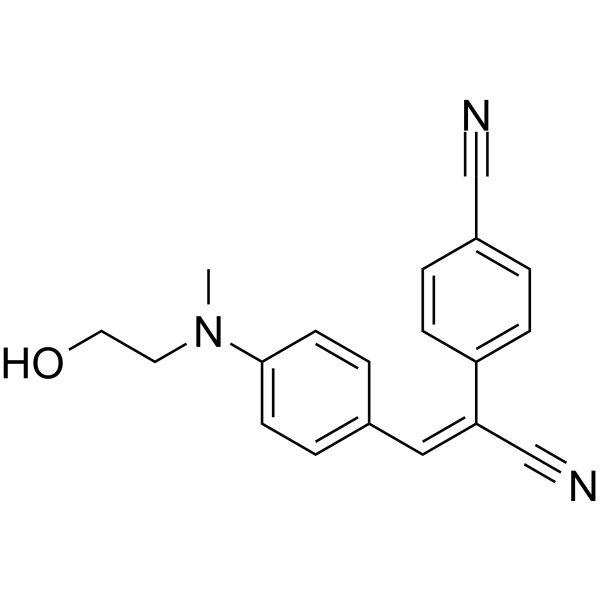
HBC (HBC 530) is a GFP fluorophore-like synthetic dye, with a structurally rigid electron acceptor and a strong electron donor. HBC has a low fluorescence background, and when combined with Pepper (RNA aptamer), HBC forms a tight complex and activates and emits bright fluorescence (Kd of ~3.5 nM). HBC emission peaks vary in different complexes and covers the spectrum from cyan to red. HBC can be used in the live cell imaging of RNA (Em/Ex = 530/485 nm) .
loading...
    loading...
Cat. No.: HY-D1090
CAS No.: 82855-40-1
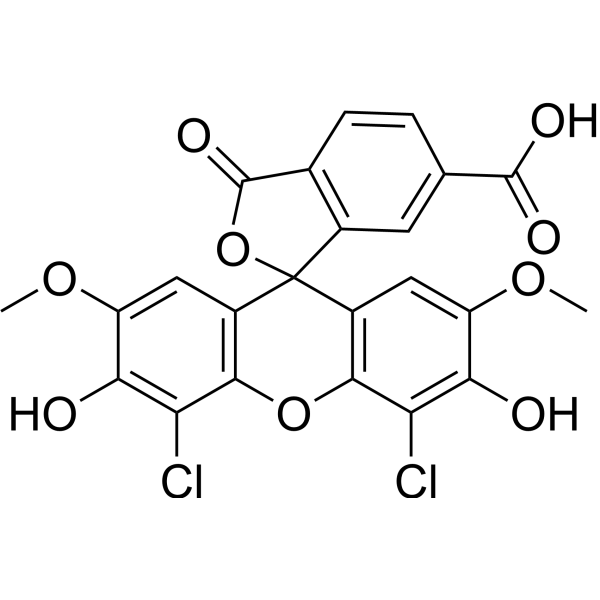
JOE is a xanthene fluorophore (i.e., 4′,5′-dichloro-2′,7′-dimethoxy-5 (6)-carboxyfluorescein; 2',7'-dimethoxy-4',5'-dichloro-6-carboxyfluorescein) with an absorption wavelength of approximately 525 nm and an emission wavelength of approximately 550 nm. The fluorescence quantum yield of JOE correlates with the rigidity of the linker arm and the distance to dG nucleoside. JOE is commonly used as a fluorescent label for oligonucleotides and molecular beacon probes, and also serves as the acceptor fluorophore in fluorescence energy transfer primers for DNA sequencing .
loading...
    loading...
Cat. No.: HY-134566
CAS No.: 145195-58-0
Purity:  ≥91.0%
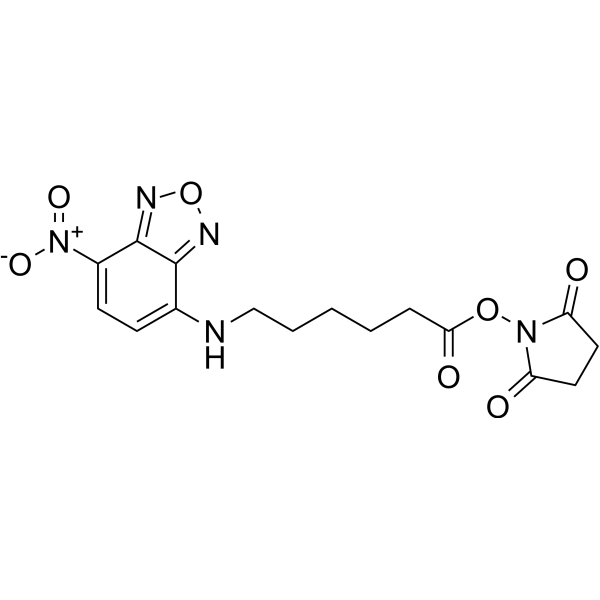
NBD-X, SE, the acceptor fluorophore, can be used to create environment sensitive bioconjugates .
loading...
    loading...
Cat. No.: HY-112526
CAS No.: 1004324-99-5
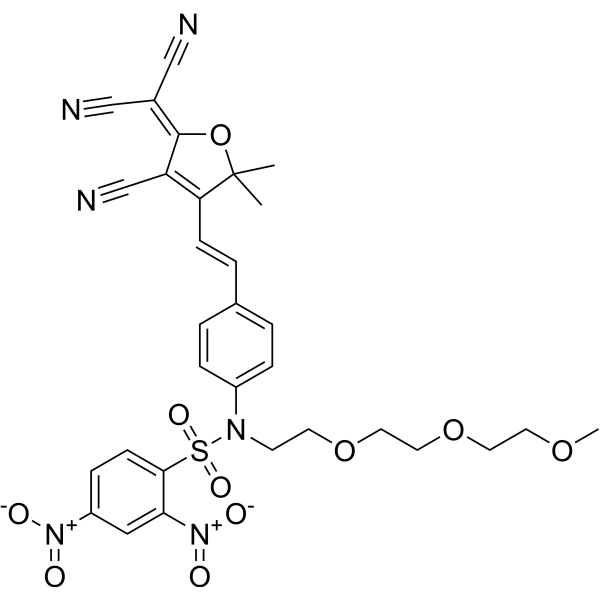
Thiofluor 623 (Compound 3) is a fluorescent turn-on probe that can be used for the selective sensing and bioimaging of thiols. Thiofluor 623 displays excellent immunity to interference from nitrogen and oxygen nucleophiles. Thiofluor 623 is essentially nonfluorescent in the absence of thiols, which cleave the probe and release the red-emissive donor-acceptor fluorophore (Ex=563 nm, Em=623 nm) .
loading...
    loading...
Cat. No.: HY-125452
CAS No.: 169211-45-4
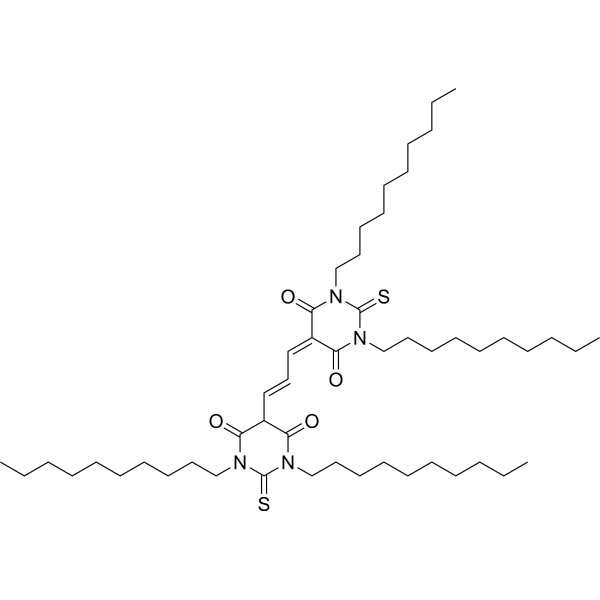
DiSBAC10 is a voltage-sensitive fluorescent probe used to study cell membrane electrical activity in FRET assays. In a resting polarized cell, DiSBAC10 resides on the outer leaflet of the membrane where it accepts photons from excited fluorescein-labeled proteins and re-emits the photons at a higher wavelength. Depolarization of the cell causes rapid translocation of DiSBAC10 to the inner leaflet of the membrane, thereby increasing the distance between fluorophores and reducing the FRET signal.
loading...
    loading...
Cat. No.: HY-D2758
CAS No.: 1911598-65-6
TAMRA DBCO, 5-isomer is a derivative of TAMRA fluorescent isomer with a DBCO functional group. TAMRA DBCO, 5-isomer undergoes strain-promoted azide-alkyne cycloaddition (SPAAC) under copper-free catalytic conditions. TAMRA DBCO, 5-isomer serves as a FRET acceptor for FAM fluorophores. TAMRA DBCO, 5-isomer can label proteins, peptides, nucleic acids and all azide-modified biomolecules, and is suitable for fluorescence imaging and flow cytometry to quantify intracellular SPAAC reactions .
loading...
    loading...
Cat. No.: HY-W008583
CAS No.: 4627-22-9
Synonyms: DBDPA
Research Areas:  

Others

Bis (4-tert-butylphenyl) amine (DBDPA) is a C4 alkyl-substituted diphenylamine-based amino antioxidant. Bis (4-tert-butylphenyl) amine serves as a polymer additive in car seats. Bis (4-tert-butylphenyl) amine acts as a synthetic precursor for donor-acceptor-donor (D-A-D) type π-conjugated fluorophores .
loading...
    loading...

