




1. Search Result
Search Result
Results for "

adrenocorticotropic

" in MedChemExpress (MCE) Product Catalog:

55

Inhibitors & Agonists

40

Peptides

3

Inhibitory Antibodies

1

Isotope-Labeled Compounds

1

Antibodies

3

Click Chemistry

Cat. No. Product Name Target Research Areas Chemical Structure
  • HY-P1211

    1-39-Corticotropin (human)

    Melanocortin Receptor Metabolic Disease
    Adrenocorticotropic Hormone (ACTH) (1-39), human is a melanocortin receptor agonist.
    Adrenocorticotropic Hormone (ACTH) (1-39), human
  • HY-106203

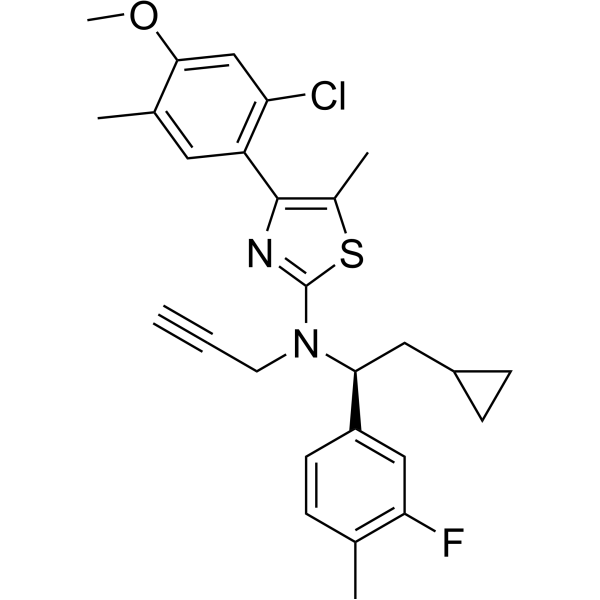
    SSR-125543

    CFTR Metabolic Disease
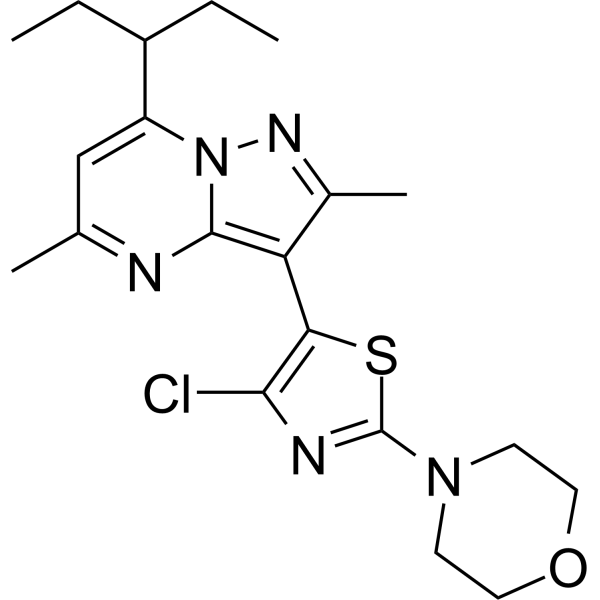
    Crinecerfont (SSR-125543) is an orally effective corticotropin-releasing factor receptor type-1 (CRF1 receptor) antagonist. Crinecerfont blocks CRF1 receptor signaling to reduce adrenocorticotropic hormone secretion. Crinecerfont improves hypothalamic-pituitary-adrenal axis negative feedback sensitivity in chronically stressed mice. Crinecerfont can be used for the research of chronic stress conditions and classic congenital adrenal hyperplasia due to 21-hydroxylase deficiency . Crinecerfont is a click chemistry reagent, it contains an Alkyne group and can undergo copper-catalyzed azide-alkyne cycloaddition (CuAAc) with molecules containing Azide groups.
    Crinecerfont
  • HY-P1146
    Semax
    1 Publications Verification

    Amyloid-β Cardiovascular Disease Neurological Disease Inflammation/Immunology
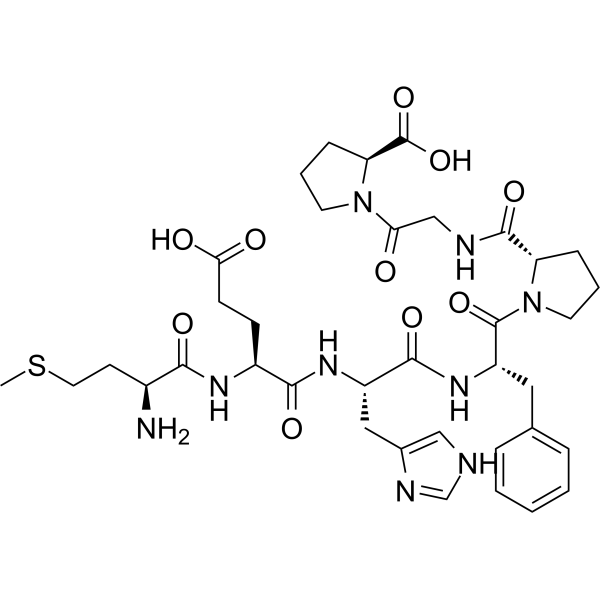
    Semax is a BBB-penetrable adrenocorticotropic hormone-like peptide and can form stable complexes with Cu 2+. Semax is a synthetic peptide analog of Adrenocorticotropic hormone (ACTH) (4-10). Semax has immunomodulatory, nootropic and neuroprotective activities. Semax can be used in the research of central nervous system diseases such as Alzheimer's disease and cerebral ischemia .
    Semax
  • HY-106373
    Adrenocorticotropic hormone
    1 Publications Verification

    ACTH; Adrenocorticotrophic hormone

    Androgen Receptor Reactive Oxygen Species (ROS) Mitochondrial Metabolism Interleukin Related TNF Receptor Metabolic Disease Inflammation/Immunology
    Adrenocorticotropic hormone (ACTH; Adrenocorticotrophic hormone) is a polypeptide tropic hormone produced by the anterior pituitary gland. Adrenocorticotropic hormone stimulates cortisol secretion from the adrenal cortex via the hypothalamic-pituitary-adrenal (HPA) axis. Adrenocorticotropic hormone regulates cortisol and androgen production. Adrenocorticotropic hormone can promote the development of spermatogenesis. Adrenocorticotropic hormone can relieve acute inflammation in gout models by inhibiting the polarization of macrophages to M1 type, inhibiting ROS and proinflammatory factor production and protecting mitochondrial function. Adrenocorticotropic hormone can be used for the researches of inflammation, endocrinology, metabolic disease, such as gout and nephrotic syndrome .
    Adrenocorticotropic hormone
  • HY-P99758

    CS1003

    PD-1/PD-L1 Cancer
    Nofazinlimab (CS1003) is a humanised IgG4 anti-PD-1 monoclonal antibody. Nofazinlimab shows antitumor activity and can be used for the research of unresectable or metastatic hepatocellular carcinoma .
    Nofazinlimab
  • HY-106203A

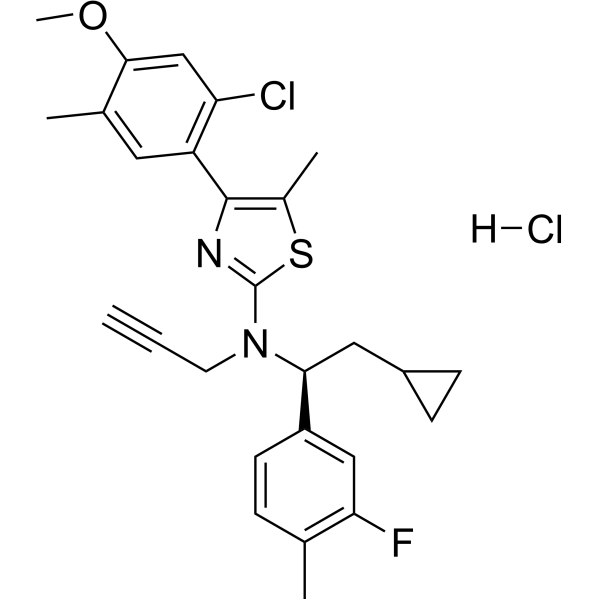
    SSR-125543 hydrochloride

    CFTR Metabolic Disease
    Crinecerfont (SSR-125543) hydrochloride is an orally effective corticotropin-releasing factor receptor type-1 (CRF1 receptor) antagonist. Crinecerfont hydrochloride blocks CRF1 receptor signaling to reduce adrenocorticotropic hormone secretion. Crinecerfont hydrochloride improves hypothalamic-pituitary-adrenal axis negative feedback sensitivity in chronically stressed mice. Crinecerfont hydrochloride can be used for the research of chronic stress conditions and classic congenital adrenal hyperplasia due to 21-hydroxylase deficiency . Crinecerfont hydrochloride is a click chemistry reagent, it contains an Alkyne group and can undergo copper-catalyzed azide-alkyne cycloaddition (CuAAc) with molecules containing Azide groups.
    Crinecerfont hydrochloride
  • HY-P1477

    ACTH(1-39), rat

    Melanocortin Receptor Metabolic Disease Endocrinology
    Adrenocorticotropic hormone (1-39), rat is a potent melanocortin 2 (MC2) receptor agonist.
    Adrenocorticotropic hormone (1-39), rat
  • HY-P3564

    Melanocortin Receptor Others
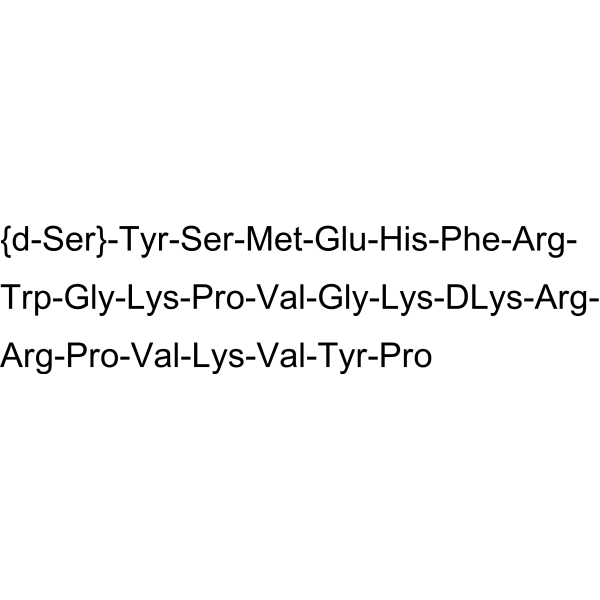
    (D-Ser1)-ACTH (1-24) (human, bovine, mouse, ovine, porcine, rabbit, rat) is an adrenocorticotropic hormone (ACTH) analogue .
    (D-Ser1)-ACTH (1-24) (human, bovine, mouse, ovine, porcine, rabbit, rat)
  • HY-P1477A

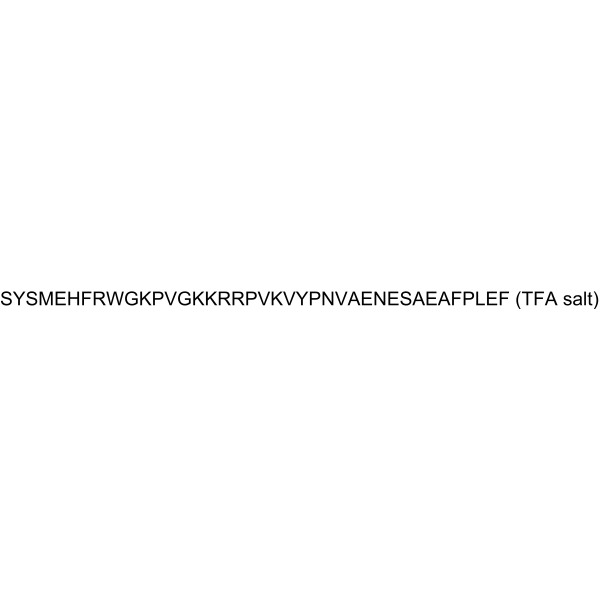
    ACTH(1-39), rat TFA

    Melanocortin Receptor Metabolic Disease Endocrinology
    Adrenocorticotropic hormone (1-39), rat (TFA) is a potent melanocortin 2 (MC2) receptor agonist.
    Adrenocorticotropic hormone (1-39), rat TFA
  • HY-P1146A
    Semax acetate
    1 Publications Verification

    Amyloid-β Cardiovascular Disease Neurological Disease Inflammation/Immunology
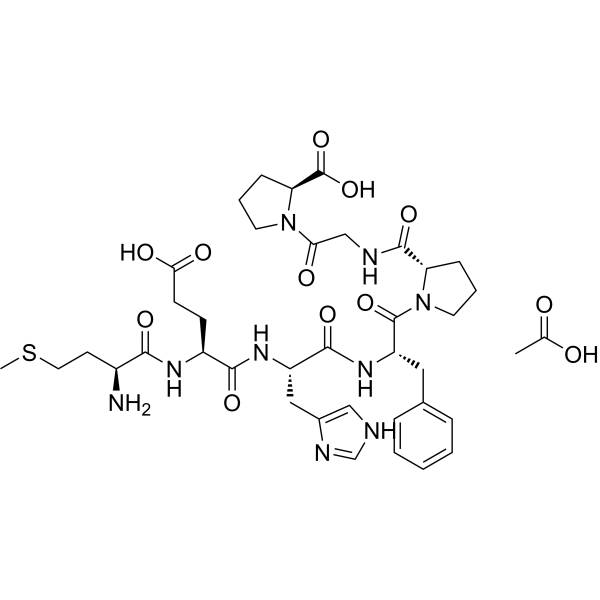
    Semax acetate is a BBB-penetrable adrenocorticotropic hormone-like peptide and can form stable complexes with Cu 2+. Semax acetate is a synthetic peptide analog of Adrenocorticotropic hormone (ACTH) (4-10). Semax acetate has immunomodulatory, nootropic and neuroprotective activities. Semax acetate can be used in the research of central nervous system diseases such as Alzheimer's disease and cerebral ischemia .
    Semax acetate
  • HY-P1603

    adrenocorticotropic Hormone (22-39)

    Melanocortin Receptor Metabolic Disease
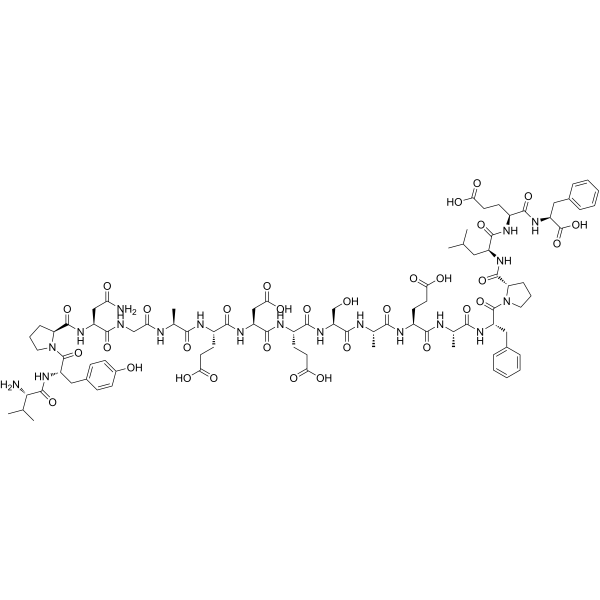
    ACTH (22-39) is an adrenocorticotropic hormone (ACTH) fragment. ACTH (22-39) is the 22-39 sequence of ACTH.
    ACTH (22-39)
  • HY-P1476A

    CLIP (human) TFA

    Endogenous Metabolite Metabolic Disease
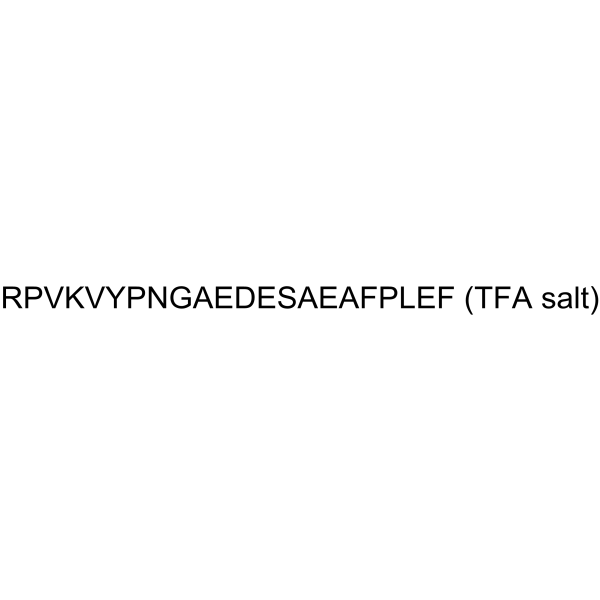
    Adrenocorticotropic Hormone (ACTH) (18-39), human TFA is a corticotropinlike intermediate lobe peptide, which is is produced in the melanotrophs of the intermediate lobe of the pituitary .
    Adrenocorticotropic Hormone (ACTH) (18-39), human TFA
  • HY-113603

    SPR001; LY2371712

    CRFR Metabolic Disease
    Tildacerfont (SPR001; LY2371712) is an orally active, blood-brain barrier-penetrant selective corticotropin-releasing factor type 1 (CRF1) receptor antagonist. Tildacerfont selectively blocks CRF1 receptors, thereby inhibiting the release of pituitary adrenocorticotropic hormone (ACTH). Tildacerfont can be used in research related to congenital adrenal hyperplasia .
    Tildacerfont
  • HY-106373A
    Adrenocorticotropic hormone TFA
    1 Publications Verification

    ACTH TFA; Adrenocorticotrophic hormone TFA

    Androgen Receptor Reactive Oxygen Species (ROS) Mitochondrial Metabolism Interleukin Related TNF Receptor Metabolic Disease Inflammation/Immunology
    Adrenocorticotropic hormone (ACTH; Adrenocorticotrophic hormone) TFA is a polypeptide tropic hormone produced by the anterior pituitary gland. Adrenocorticotropic hormone TFA stimulates cortisol secretion from the adrenal cortex via the hypothalamic-pituitary-adrenal (HPA) axis. Adrenocorticotropic hormone TFA regulates cortisol and androgen production. Adrenocorticotropic hormone TFA can promote the development of spermatogenesis. Adrenocorticotropic hormone TFA can relieve acute inflammation in gout models by inhibiting the polarization of macrophages to M1 type, inhibiting ROS and proinflammatory factor production and protecting mitochondrial function. Adrenocorticotropic hormone TFA can be used for the researches of inflammation, endocrinology, metabolic disease, such as gout and nephrotic syndrome .
    Adrenocorticotropic hormone TFA
  • HY-P1478

    Melanocortin Receptor Metabolic Disease
    Adrenocorticotropic Hormone (ACTH) (4-10), human is a melanocortin 4 (MC4R) receptor agonist.
    Adrenocorticotropic Hormone (ACTH) (4-10), human
  • HY-P3068

    adrenocorticotropic hormone (1-16)

    Melanocortin Receptor Cardiovascular Disease
    ACTH (1-16) (human) (Adrenocorticotropic hormone (1-16)) is an ACTH fragment. ACTH (1-16) (human) improves cardiovascular function and survival in experimental hemorrhagic shock .
    ACTH (1-16) (human)
  • HY-W013816

    AMPK Akt Metabolic Disease
    Dipentyl phthalate is an endocrine-disrupting phthalate plasticizer. Dipentyl phthalate increases AMPK phosphorylation and decreases AKT1 phosphorylation and SIRT1 levels. Dipentyl phthalate reduces adrenocorticotropic hormone levels. Dipentyl phthalate is a testicular toxicant .
    Dipentyl phthalate
  • HY-P1582A

    adrenocorticotropic Hormone Fragment 1-14 TFA

    Adrenergic Receptor Others
    ACTH (1-14) (TFA) is a fragment of adrenocorticotrophin, which regulates cortisol and androgen production .
    ACTH (1-14) TFA
  • HY-P1558A

    adrenocorticotropic Hormone (11-24) acetate

    Melanocortin Receptor Neurological Disease
    ACTH (11-24) (acetate) is an adrenocorticotropic hormone (ACTH) receptor antagonist. ACTH (11-24) is a fragment of adrenocorticotropic and induces cortisol release. ACTH (11-24) can be used for the research of central nervous system .
    ACTH (11-24) acetate
  • HY-P1558

    adrenocorticotropic Hormone (11-24)

    Melanocortin Receptor Neurological Disease
    ACTH (11-24) is an adrenocorticotropic hormone (ACTH) receptor antagonist. ACTH (11-24) is a fragment of adrenocorticotropic and induces cortisol release. ACTH (11-24) can be used for the research of central nervous system .
    ACTH (11-24)
  • HY-P1368
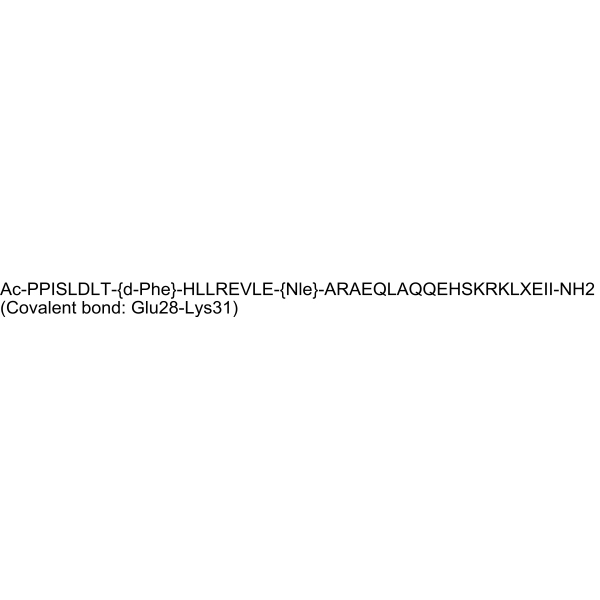
    Stressin I
    1 Publications Verification

    Cyclo(31-34)[DPhe12,Nle21,38,Glu31,Lys34]Ac-hCRF(4-41)

    CRFR Endocrinology
    Stressin I (Cyclo(31-34)[DPhe12,Nle21,38,Glu31,Lys34]Ac-hCRF(4-41)) is a potent CRF1 receptor-selective agonist with a Ki of 1.7 nM. Stressin I induces increases in adrenocorticotropic hormone (ACTH) levels in rats .
    Stressin I
  • HY-P2281A

    Atrial natriuretic peptide (1-28) TFA

    Endogenous Metabolite Cardiovascular Disease Metabolic Disease
    Atrial natriuretic factor (1-28) (human, porcine) TFA exhibits blood pressure lowering activity by increasing sodium and urine excretion. Atrial natriuretic factor (1-28) (human, porcine) TFA inhibits the release of pituitary adrenocorticotropic hormone (ACTH) and beta-endorphin through inhibition of pro-opiomelanocortin (POMC) expression. Atrial natriuretic factor (1-28) (human, porcine) TFA increases cGMP levels in RMIC cells with an IC50 of 1.2 nM .
    Atrial natriuretic factor (1-28) (human, porcine) TFA
  • HY-P1518

    Melanocortin Receptor Metabolic Disease
    Adrenocorticotropic Hormone (ACTH) (1-10), human, an adrenocorticotropin hormone fragment, possesses a weak α-melanocyte stimulating hormone (α-MSH) potency only at high doses (100 and 1000 nM).
    Adrenocorticotropic Hormone (ACTH) (1-10), human
  • HY-P1739

    Melanocortin Receptor Neurological Disease
    ACTH (34-39) is an adrenocorticotropic hormone fragment. ACTH (34-39) can be used in the study of stress-related sleep disorders .
    ACTH (34-39)
  • HY-P1245

    Neuropeptide NPFF (human)

    CRFR Others
    Neuropeptide SF human augments paraventricular corticotrophin-releasing hormone (CRH) release and increases adrenocorticotropic hormone (ACTH) and corticosterone levels in the plasma. Neuropeptide SF human play a physiologic role in the regulation of such circadian functions as the activity of motor centers and the HPA axis, through the release of CRH .
    Neuropeptide SF (human)
  • HY-P1368A
    Stressin I TFA
    1 Publications Verification

    Cyclo(31-34)[DPhe12,Nle21,38,Glu31,Lys34]Ac-hCRF(4-41) TFA

    CRFR Endocrinology
    Stressin I (Cyclo(31-34)[DPhe12,Nle21,38,Glu31,Lys34]Ac-hCRF(4-41)) TFA is a potent CRF1 receptor selective agonist, Ki is 1.7 nM. Stressin I induces an increase in adrenocorticotropic hormone (ACTH) levels in rats .
    Stressin I TFA
  • HY-P991221

    Melanocortin Receptor Metabolic Disease
    ALD1613 is a potent neutralizing monoclonal antibody against adrenocorticotropic hormone (ACTH). ALD1613 neutralizes ACTH-induced signaling and inhibits ACTH-induced cyclic AMP accumulation in a mouse adrenal cell line (Y1) via all five melanocortin receptors. ALD1613 significantly reduces plasma corticosterone levels in wild-type rats. ALD1613 can be used in the study of diseases associated with elevated ACTH levels .
    ALD1613
  • HY-113603S

    SPR001-d8; LY2371712-d8

    Isotope-Labeled Compounds CRFR Cancer
    Tildacerfont-d8 (SPR001-d8; LY2371712-d8) is a deuterium labeled Tildacerfont (HY-113603). Tildacerfont (SPR001; LY2371712) is an orally active, blood-brain barrier-penetrant selective corticotropin-releasing factor type 1 (CRF1) receptor antagonist. Tildacerfont selectively blocks CRF1 receptors, thereby inhibiting the release of pituitary adrenocorticotropic hormone (ACTH). Tildacerfont can be used in research related to congenital adrenal hyperplasia .
    Tildacerfont-d8
  • HY-P991673

    LuAG13909

    Androgen Receptor Inflammation/Immunology
    Asedebart is a CHO-expressed human antibody that targets Adrenocorticotropic hormone (ACTH). Asedebart blocks the binding of ACTH to its receptor through antagonism. Asedebart has huIgG1 heavy chain and huκ light chain, with a predicted molecular weight (MW) of 145 kDa. The isotype control for Asedebart can refer to Human IgG1 kappa, Isotype Control (HY-P99001). Asedebart can be used for inflammatory diseases such as psoriasis and ulcerative colitis research .
    Asedebart
  • HY-P1503

    adrenocorticotropic Hormone (4-11), human

    Melanocortin Receptor Metabolic Disease
    ACTH (4-11), an adrenocorticotropin hormone fragment, possesses a weak α-melanocyte stimulating hormone (α-MSH) potency only at high doses (100 and 1000 nM).
    ACTH (4-11)
  • HY-P3687

    CRFR Endocrinology
    [Tyr0] Corticotropin Releasing Factor, ovine is a corticotropin releasing factor/hormone isolated from ovine. Corticotropin releasing factor (CRF) is a hypothalamic hormone, stimulates the release of adrenocorticotropic hormone (ACTH) and of β-endorphin .
    [Tyr0] Corticotropin Releasing Factor, ovine
  • HY-P4413

    Androgen Receptor Endocrinology
    (Des-Glu5)-ACTH (1-24) (human, bovine, rat) is an analogue of Adrenocorticotropic hormone (ACTH; HY-106373). ACTH is a polypeptide tropic hormone produced by the anterior pituitary gland, regulating cortisol and androgen production .
    (Des-Glu5)-ACTH (1-24) (human, bovine, rat)
  • HY-P3977

    Melanocortin Receptor Cardiovascular Disease Inflammation/Immunology Cancer
    ACTH (3-24) (human, bovine, mouse, ovine, porcine, rabbit, rat) is the 3-24 fragment of adrenocorticotropic hormone (ACTH). ACTH (3-24) (human, bovine, mouse, ovine, porcine, rabbit, rat) can be used for research of a variety of diseases, including cancer, immune diseases, cardiovascular disease .
    ACTH (3-24) (human, bovine, mouse, ovine, porcine, rabbit, rat)
  • HY-103378

    CRFR Neurological Disease
    NBI 35965 methanesulfonate is a selective, orally active and brain-penetrant corticotropin-releasing factor receptor 1 (CRF1) antagonist with a Ki value of 4 nM and a pKi value of 8.5. NBI 35965 methanesulfonate does not inhibit CRF2. NBI 35965 methanesulfonate reduces CRF or stress-induced adrenocorticotropic hormone (ACTH) production in vivo with pIC50 values of 7.1 and 6.9, respectively. NBI 35965 methanesulfonate shows anxiolytic effects .
    NBI 35965 methanesulfonate
  • HY-P1476

    CLIP (human)

    Endogenous Metabolite Metabolic Disease
    Adrenocorticotropic Hormone (ACTH) (18-39), human is a corticotropinlike intermediate lobe peptide, which is produced in the melanotrophs of the intermediate lobe of the pituitary.
    Adrenocorticotropic Hormone (ACTH) (18-39), human
  • HY-P5950

    adrenocorticotropic hormone (6-24)

    Mineralocorticoid Receptor Cardiovascular Disease
    ACTH (6-24) (human) (Adrenocorticotropic hormone (6-24)) is an ACTH fragment. ACTH (6-24) (human) is a competitive inhibitor of steroidogenesis induced by ACTH (1-39) and ACTH (5-24) (Kd:13.4 and 3.4 nM). ACTH (6-24) (human) inhibits corticosterone production and cAMP accumulation induced by hPTH 1-34 .
    ACTH (6-24) (human)
  • HY-P1558B

    adrenocorticotropic Hormone (11-24) hexaacetate

    Endogenous Metabolite Others
    ACTH (11-24) (hexaacetate) is a type of adrenocorticotropic hormone that can trigger cortisol secretion in bovine adrenal cortex cells .
    ACTH (11-24) hexaacetate
  • HY-P1211B

    1-39-Corticotropin (human) acetate

    Biochemical Assay Reagents Others
    Adrenocorticotropic Hormone (ACTH) (1-39), human acetate is a full length human adrenocorticotropic hormone .
    Adrenocorticotropic Hormone (ACTH) (1-39), human acetate
  • HY-P3978

    Melanocortin Receptor Neurological Disease
    ACTH (4-9) is an adrenocorticotropic hormone (ACTH) fragment. ACTH (4-9) is the 4-9 sequence fragment of ACTH .
    ACTH (4-9)
  • HY-W013816R

    AMPK Akt Reference Standards Metabolic Disease
    Dipentyl phthalate (Standard) is the analytical standard of Dipentyl phthalate. This product is intended for research and analytical applications. Dipentyl phthalate is an endocrine-disrupting phthalate plasticizer. Dipentyl phthalate increases AMPK phosphorylation and decreases AKT1 phosphorylation and SIRT1 levels. Dipentyl phthalate reduces adrenocorticotropic hormone levels. Dipentyl phthalate is a testicular toxicant .
    Dipentyl phthalate (Standard)
  • HY-P3553

    Melanocortin Receptor Neurological Disease
    Alsactide, a heptadecapeptide analogue, is an adrenocorticotropic hormone (ACTH) agonist. Alsactide can be used in research of central nervous system .
    Alsactide
  • HY-P4864

    Biochemical Assay Reagents Others
    Biotinyl-ACTH (1-39) (human) is abiotinylated Adrenocorticotropic Hormone (ACTH) (1-39), human (HY-P1211).
    Biotinyl-ACTH (1-39) (human)
  • HY-P1582

    adrenocorticotropic Hormone Fragment 1-14

    Adrenergic Receptor Cancer
    ACTH (1-14) is a fragment of adrenocorticotrophin, which regulates cortisol and androgen production.
    ACTH (1-14)
  • HY-106203C

    SSR-125543 tosylate

    CFTR Metabolic Disease
    Crinecerfont (SSR-125543) tosylate is an orally effective corticotropin-releasing factor receptor type-1 (CRF1 receptor) antagonist. Crinecerfont tosylate blocks CRF1 receptor signaling to reduce adrenocorticotropic hormone secretion. Crinecerfont tosylate improves hypothalamic-pituitary-adrenal axis negative feedback sensitivity in chronically stressed mice. Crinecerfont tosylate can be used for the research of chronic stress conditions and classic congenital adrenal hyperplasia due to 21-hydroxylase deficiency . Crinecerfont tosylate is a click chemistry reagent, it contains an Alkyne group and can undergo copper-catalyzed azide-alkyne cycloaddition (CuAAc) with molecules containing Azide groups.
    Crinecerfont tosylate
  • HY-118768

    Adrenergic Receptor Neurological Disease
    FMS586 free base is a selective neuropeptide Y Y5 receptor antagonist with oral activity. FMS586 can completely block the significant increase in adrenocorticotropic hormone (ACTH) and cortisol caused by the Y(5) selective agonist hPP. FMS586 also reversed the significant upregulation of adrenocorticotropic hormone (CRF) and antidiuretic hormone (AVP) mRNA expression induced by central injection of hPP. FMS586 provides the first evidence that selective stimulation of Y(5) receptors triggers activation of the HPA axis .
    FMS586 free base
  • HY-P4456

    Adrenergic Receptor Endocrinology
    (Des-His6)-ACTH (1-24) (human, bovine, rat) is an analogue of Adrenocorticotropic hormone (ACTH; HY-106373). ACTH is a polypeptide tropic hormone produced by the anterior pituitary gland, regulating cortisol and androgen production .
    (Des-His6)-ACTH (1-24) (human, bovine, rat)
  • HY-P2113

    Melanocortin Receptor Neurological Disease
    ORG-2766 is an adrenocorticotropic hormone ACTH 4-9 analog and neurotrophic peptide. ORG-2766 affects behavioral processes such as memory and attention in animals, improving symptoms in rats with experimental allergic neuritis. ORG-2766 has a neuroprotective effect .
    ORG-2766
  • HY-P1245A

    Neuropeptide NPFF (human) acetate

    CRFR Others
    Neuropeptide SF (human) acetate augments paraventricular corticotrophin-releasing hormone (CRH) release and increases adrenocorticotropic hormone (ACTH) and corticosterone levels in the plasma. Neuropeptide SF (human) acetate play a physiologic role in the regulation of such circadian functions as the activity of motor centers and the HPA axis, through the release of CRH .
    Neuropeptide SF (human) acetate
  • HY-118821

    CRFR Metabolic Disease
    JTC-017, a specific corticotropin-releasing hormone receptor 1 antagonist, attenuates hippocampal noradrenaline release, visceral perception, adrenocorticotropic hormone release, and anxiety after acute colorectal distention in rats. JTC-017 blocks stress-induced changes in colonic motility after chronic colorectal distention in rats .
    JTC-017
  • HY-P3684

    CRFR Endocrinology
    [DPro5] Corticotropin Releasing Factor, human, rat is a selective R2 agonist of corticotropin releasing factor/hormone. Corticotropin releasing factor (CRF) is a hypothalamic hormone, stimulates the release of adrenocorticotropic hormone (ACTH) and of β-endorphin. [DPro5] Corticotropin Releasing Factor, human, rat fails to cause the typical anxiogenic effect, but modulates learning and memory processes in rat .
    [DPro5] Corticotropin Releasing Factor, human, rat

Inquiry Online

Your information is safe with us. * Required Fields.

Salutation


Country or Region *

Applicant Name *


Organization Name *

Department *


Email Address *


Product Name *

Cat. No.


Requested quantity *

Phone Number *


Remarks

Inquiry Online

Inquiry Information

Product Name:
Cat. No.:
Quantity:
MCE Japan Authorized Agent:

