1. Search Result
Search Result
Results for "

alkaline hydrolysis

" in MedChemExpress (MCE) Product Catalog:

18

Inhibitors & Agonists

2

Fluorescent Dyes

2

Peptides

3

Natural
Products

1

Isotope-Labeled Compounds

Cat. No. Product Name Target Research Areas Chemical Structure
  • HY-P2818
    Alkaline phosphatase, Bovine intestine
    1 Publications Verification

    Apase

    Endogenous Metabolite Phosphatase Glutathione Peroxidase Bacterial Infection Inflammation/Immunology
    Alkaline phosphatase, Bovine intestine (Apase) is an orally active membrane-bound glycoprotein that catalyzes the hydrolysis of phosphate monoesters at alkaline pH. Alkaline phosphatase, Bovine intestine reduces myeloperoxidase activity and bacterial translocation. Alkaline phosphatase, Bovine intestine improves survival rate of mice infected with E. coli. Alkaline phosphatase, Bovine intestine improves TNBS-induced colon inflammation .
    Alkaline phosphatase, Bovine intestine
  • HY-18569S
    3-Indoleacetic acid-d5
    2 Publications Verification

    Indole-3-acetic acid-d5; 3-IAA-d5

    Endogenous Metabolite Isotope-Labeled Compounds Metabolic Disease
    3-Indoleacetic acid-d5 is the deuterium labeled 3-Indoleacetic acid (HY-18569). 3-Indoleacetic acid-d5 can be used as internal standard for assay of IAA releases by alkaline hydrolysis of ester and amide conjugates .
    3-Indoleacetic acid-d5
  • HY-P2818E
    Alkaline Phosphatase, Calf intestinal
    1 Publications Verification

    Apase, Calf intestinal

    Endogenous Metabolite Phosphatase Glutathione Peroxidase Bacterial Infection Inflammation/Immunology
    Alkaline Phosphatase (Apase), Calf intestinal is an alkaline phosphatase from Calf intestinal, and is one of the most active alkaline phosphatases. Alkaline Phosphatase, Calf intestinal is an orally active membrane-bound glycoprotein that catalyzes the hydrolysis of phosphate monoesters at alkaline pH. Alkaline Phosphatase, Calf intestinal reduces myeloperoxidase activity and bacterial translocation. Alkaline Phosphatase, Calf intestinal improves survival rate of mice infected with E. coli. Alkaline Phosphatase, Calf intestinal improves TNBS-induced colon inflammation .
    Alkaline Phosphatase, Calf intestinal
  • HY-P2818C
    Alkaline phosphatase, microorganism
    1 Publications Verification

    Apase, microorganism

    Endogenous Metabolite Phosphatase Glutathione Peroxidase Bacterial Infection Inflammation/Immunology
    Alkaline Phosphatase (Apase), microorganism is an alkaline phosphatase from microorganism, and is one of the most active alkaline phosphatases. Alkaline phosphatase, microorganism is an orally active membrane-bound glycoprotein that catalyzes the hydrolysis of phosphate monoesters at alkaline pH. Alkaline phosphatase, microorganism reduces myeloperoxidase activity and bacterial translocation. Alkaline phosphatase, microorganism improves survival rate of mice infected with E. coli. Alkaline phosphatase, microorganism improves TNBS-induced colon inflammation .
    Alkaline phosphatase, microorganism
  • HY-P2818A
    Alkaline phosphatase, Escherichia coli
    1 Publications Verification

    Apase, Escherichia coli

    Endogenous Metabolite Phosphatase Glutathione Peroxidase Bacterial Infection Inflammation/Immunology
    Alkaline Phosphatase (Apase), Escherichia coli is an alkaline phosphatase from Escherichia coli, and is one of the most active alkaline phosphatases. Alkaline phosphatase, Escherichia coli is an orally active membrane-bound glycoprotein that catalyzes the hydrolysis of phosphate monoesters at alkaline pH. Alkaline phosphatase, Escherichia coli reduces myeloperoxidase activity and bacterial translocation. Alkaline phosphatase, Escherichia coli improves survival rate of mice infected with E. coli. Alkaline phosphatase, Escherichia coli improves TNBS-induced colon inflammation .
    Alkaline phosphatase, Escherichia coli
  • HY-P4846
    Ac-Pro-Gly-Pro-OH
    2 Publications Verification

    CXCR Apoptosis IFNAR TNF Receptor Interleukin Related Infection Inflammation/Immunology
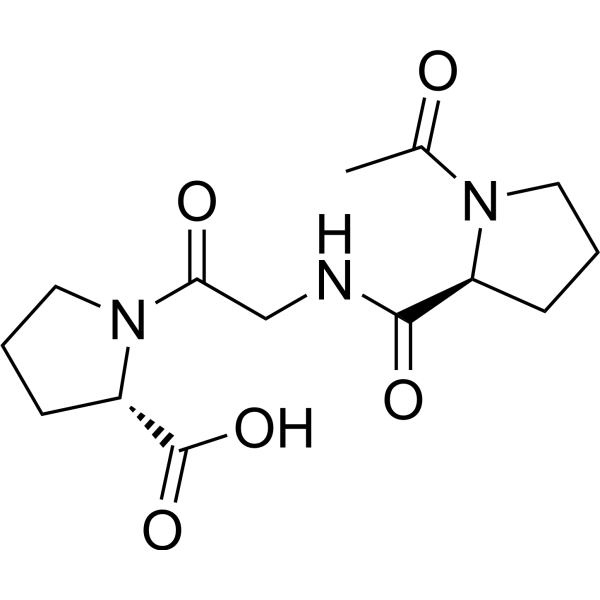
    Ac-Pro-Gly-Pro-OH is an endogenous degradation product of extracellular collagen and acts as a CXCR2 agonist . Ac-Pro-Gly-Pro-OH exerts bactericidal activity by generating hydrogen peroxide, inhibits pulmonary inflammation, and reduces immune cell apoptosis (apoptosis). Ac-Pro-Gly-Pro-OH promotes the production of IFN-γ and inhibits the production of TNF-α and IL-6 in leukocytes. Ac-Pro-Gly-Pro-OH increases the survival rate of mice in sepsis models, enhances the bactericidal activity of neutrophils, acts as a neutrophil chemoattractant, induces neutrophil polarization, and regulates inflammatory and repair processes. Ac-Pro-Gly-Pro-OH induces chronic inflammation and tissue remodeling through sustained action. Ac-Pro-Gly-Pro-OH is released via alkaline hydrolysis of corneal proteins in alkali-injured eyes, thereby driving the early infiltration of neutrophils into the cornea. Ac-Pro-Gly-Pro-OH is applicable to research related to sepsis, chronic obstructive pulmonary disease, cystic fibrosis, bronchiolitis obliterans syndrome, severe asthma, idiopathic pulmonary fibrosis, and corneal ulcer .
    Ac-Pro-Gly-Pro-OH
  • HY-P2818B
    Alkaline phosphatase, Chicken Intestine
    1 Publications Verification

    Apase, Chicken Intestine

    Endogenous Metabolite Phosphatase Glutathione Peroxidase Bacterial Infection Inflammation/Immunology
    Alkaline Phosphatase (Apase), Chicken Intestine is an alkaline phosphatase from Chicken Intestine, and is one of the most active alkaline phosphatases. Alkaline phosphatase, Chicken Intestine is an orally active membrane-bound glycoprotein that catalyzes the hydrolysis of phosphate monoesters at alkaline pH. Alkaline phosphatase, Chicken Intestine reduces myeloperoxidase activity and bacterial translocation. Alkaline phosphatase, Chicken Intestine improves survival rate of mice infected with E. coli. Alkaline phosphatase, Chicken Intestine improves TNBS-induced colon inflammation .
    Alkaline phosphatase, Chicken Intestine
  • HY-W717548

    Drug Metabolite Others
    Safinamide acid (Compound Imp-E) is the metabolite of Safinamide (HY-70057). Safinamide acid can be formed by hydrolysis of Safinamide intermediate under alkaline or acidic conditions. Safinamide acid is utilized to monitor process-related impurities and degradation products in safinamide samples .
    Safinamide acid
  • HY-156752

    Drug Metabolite Others
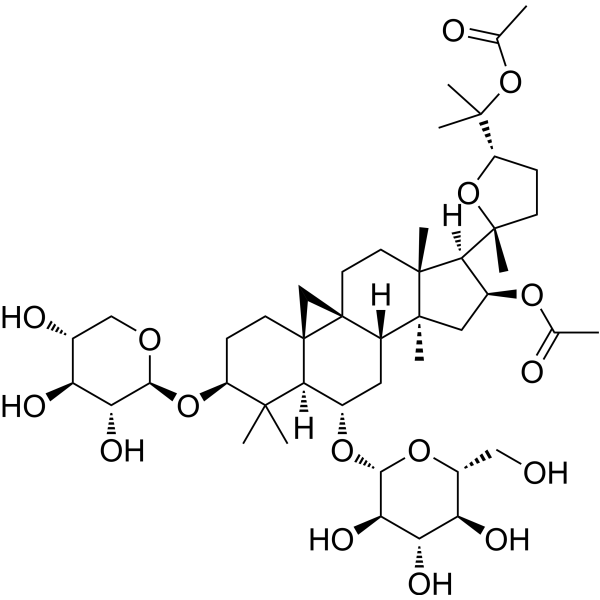
    Cyclosiversioside F 16,25-diacetate (Compound 6), a glycoside, is an alkaline hydrolysis product of Acetyl Derivative (Compound 2) .
    Cyclosiversioside F 16,25-diacetate
  • HY-D1676

    Phosphatase Others
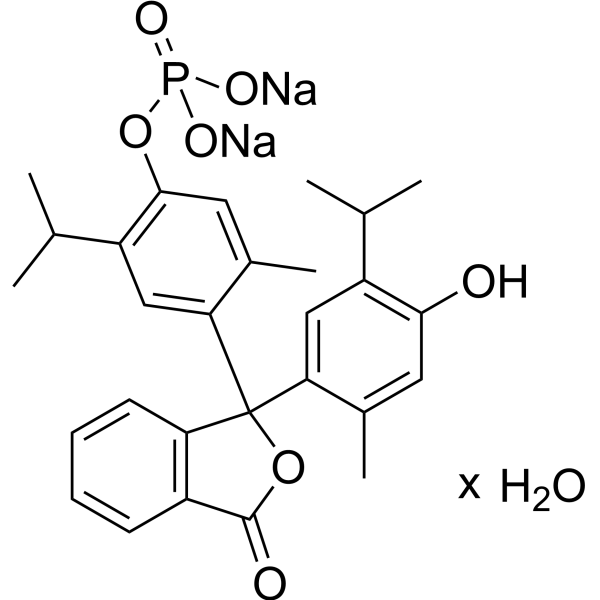
    Thymolphthalein monophosphate disodium hydrate is a chromogenic substrate for the determination of acid phosphatase and alkaline phosphatase. Thymolphthalein is released during the reaction, increases the pH of the medium for easy detection, produces color and stops hydrolysis. Thymolphthalein monophosphate disodium hydrate can be used for the specific detection of prostatic phosphatase in serum .
    Thymolphthalein monophosphate disodium hydrate
  • HY-W923640

    N-Methyltryptophan

    Drug Derivative Others
    N-Methyl-DL-tryptophan (N-Methyltryptophan) is a DL-tryptophan (HY-W012480) derivative with activity to stabilize tryptophan against degradation during acid hydrolysis of protein fibres .
    N-Methyl-DL-tryptophan
  • HY-136898

    Thrombin Others
    PS-915 dihydrochloride is a peptide substrate used in a colorimetric assay for plasma antithrombin III (ATIII). PS-915 dihydrochloride is highly specific for thrombin. By enzyme hydrolysis, PS-915 dihydrochloride liberates 3-carboxy-4-hydroxyaniline (CHA), which turns blue in color due to the complex formation with added alkaline-pentacyanoammine ferroate .
    PS-915 dihydrochloride
  • HY-138111

    p-Nitopheyl β-D-cellotetaoside

    Fluorescent Dye Others
    4-Nitrophenyl β-D-cellotetraoside (p-Nitopheyl β-D-cellotetaoside) is a small molecule cellulose mimetic consisting of a tetramer of D-glucose units linked by β-1-4 glycosidic bonds. The fragmentation pattern of 4-Nitrophenyl β-D-cellotetraoside after enzymatic hydrolysis can be analyzed by TLC or by the release of 4-nitrophenol, which has a strong absorbance at 395 nm in alkaline solutions. 4-Nitrophenyl β-D-cellotetraoside can be used in cellulose degradation studies to determine the specificity of cellulases .
    4-Nitrophenyl β-D-cellotetraoside
  • HY-P2818F

    Apase, Human (HEK293)

    Endogenous Metabolite Phosphatase Glutathione Peroxidase Bacterial Infection Inflammation/Immunology
    Alkaline phosphatase (Apase), Human (HEK293) is an orally active membrane-bound glycoprotein that catalyzes the hydrolysis of phosphate monoesters at alkaline pH. Alkaline phosphatase reduces myeloperoxidase activity and bacterial translocation. Alkaline phosphatase improves survival rate of mice infected with E. coli. Alkaline phosphatase improves TNBS-induced colon inflammation .
    Alkaline phosphatase, Human (HEK293)
  • HY-N13110

    Others Others
    23-Aldehyde-16-O-angeloybarringtogenol C (compound 7) is a tea seed saponin, an acid hydrolysis product obtained by oxidative alkaline degradation. Tea seed saponins have potential quinine oxidoreductase inducing activity .
    23-Aldehyde-16-O-angeloybarringtogenol C
  • HY-P11734

    Ser/Thr Protease Others
    Suc-AAPY-pNA is an oligptide compound and protease substrate. Suc-AAPY-pNA undergoes hydrolysis by proteases at the peptide bond between tyrosine and p-nitroaniline, releasing p-nitroaniline with an absorption peak at OD410. Suc-AAPY-pNA functions as a substrate in preclinical assays for measuring activity of acidic, neutral, and alkaline proteases .
    Suc-AAPY-pNA
  • HY-N18361

    Wujiapioside B

    Others Others
    Oplopanaxoside C (Wujiapioside B) is a lupane-triterpene glycoside found in the leaves of Acanthopanax gracilistylus .
    Oplopanaxoside C
  • HY-180169

    Photosensitizer Drug Derivative Cancer
    Photosensitizer-8 (Compound 4), 2-anthrol derivative, is an alkaline phosphatase (ALP)-activatable photosensitizer. Photosensitizer-8 undergoes a phosphate ester hydrolysis reaction in the presence of ALP, rapidly converting into the active photosensitizer 2-anthrol. Photosensitizer-8 exhibits cytotoxicity against ALP-overexpressing cancer cells (HeLa, A549, HCT116) after light exposure, with IC50 values of 14.3 μM, 21.6 μM and 17.5 μM, respectively, while showing no significant cytotoxicity against normal lung fibroblasts (WI-38) (IC50 ≥ 30 μM). Photosensitizer-8 can be used in photodynamic therapy research for ALP-overexpression-related cancers .
    Photosensitizer-8

Inquiry Online

Your information is safe with us. * Required Fields.

Salutation


Country or Region *

Applicant Name *


Organization Name *

Department *


Email Address *


Product Name *

Cat. No.


Requested quantity *

Phone Number *


Remarks

Inquiry Online

Inquiry Information

Product Name:
Cat. No.:
Quantity:
MCE Japan Authorized Agent:

