23 Results for "

antiamnesic

" in MedChemExpress (MCE) Product Catalog:
Products (23)

23 Results for "antiamnesic" in MCE Product Catalog:

3
3 Cited Publications
Cat. No.: HY-105296
CAS No.: 195615-83-9
Purity:  99.51%
Target:  

Sigma Receptor mAChR

Research Areas:  

Cancer

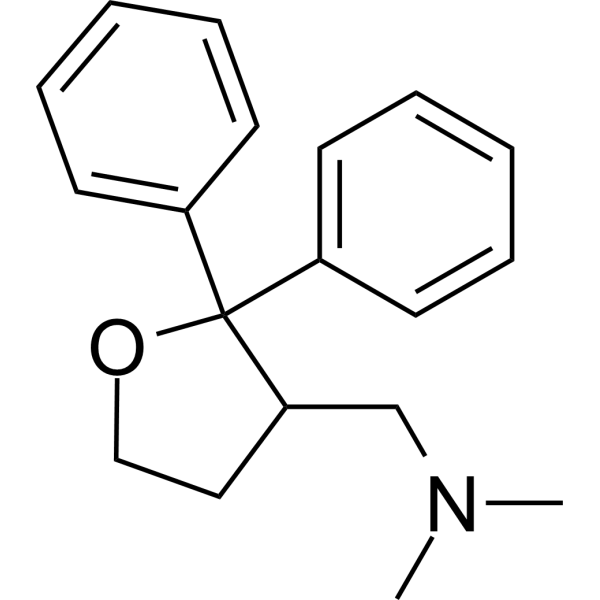
Blarcamesine is an orally bioavailable Sigma-1 receptor agonist and muscarinic receptor modulator, with anticonvulsant, anti-amnesic, neuroprotective and antidepressant properties. Blarcamesine ameliorates neurologic impairments in a mouse model of Rett syndrome .
loading...
    loading...
Cat. No.: HY-N2807
CAS No.: 7374-79-0
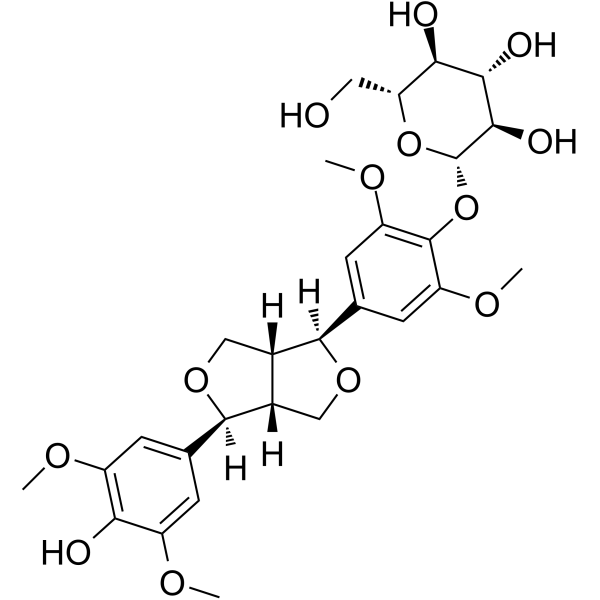
Acanthoside B is a potential bioactive lignan with anti-inflammatory and anti-amnesic activities. Acanthoside B can be used for alzheimer's disease and lung inflammation research
loading...
    loading...
Cat. No.: HY-W062171
CAS No.: 19179-12-5
Synonyms: Pyrrolopiperazine-2,5-dione
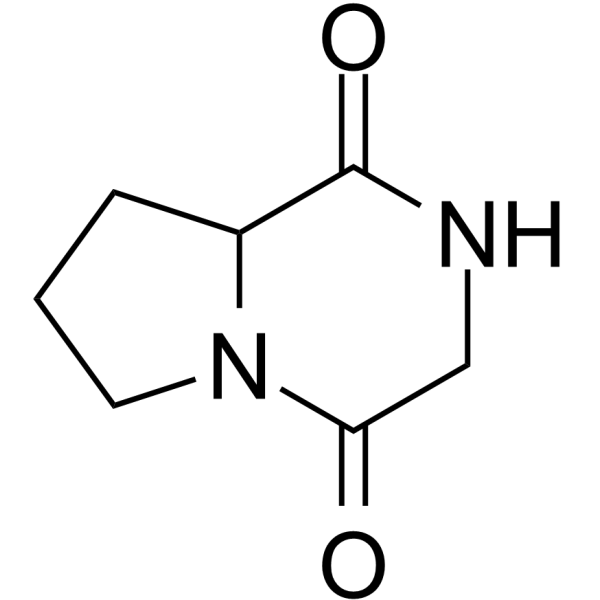
Cyclo-(Pro-Gly) (Pyrrolopiperazine-2,5-dione), an alkaloid isolated from green algae Ulva prolifera, possesses antialgal activity against the common harmful red tide microalgae . Cyclo-(Pro-Gly) (Pyrrolopiperazine-2,5-dione) possesses antiamnesic effects and neuroprotective actions .
loading...
    loading...
Cat. No.: HY-113951
CAS No.: 86925-97-5
Purity:  98.34%
Synonyms: Boc-Pro-prolinal; (Boc)-Prolyl-prolinal
Research Areas:  

Neurological Disease

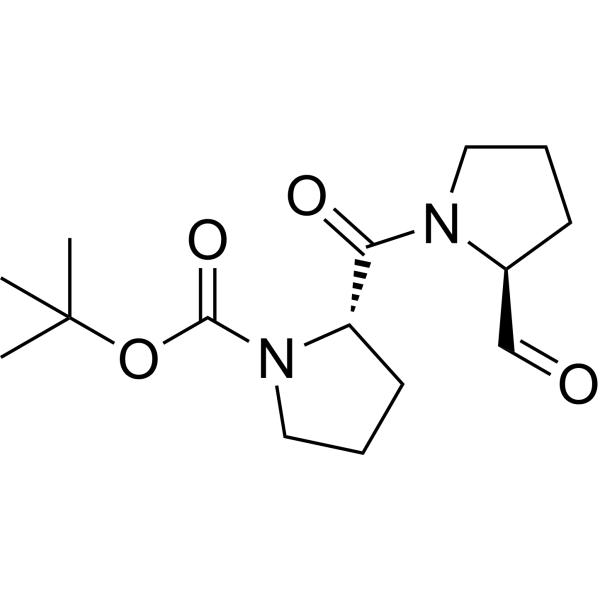
Prolyl Endopeptidase Inhibitor 1 (Boc-Pro-prolinal) is a potent prolyl endopeptidase (PEP; PE) inhibitor, with a Ki value of 15 nM. Prolyl Endopeptidase Inhibitor 1 has anti-amnesic effect .
loading...
    loading...
Cat. No.: HY-139048
CAS No.: 1639210-26-6
Purity:  ≥98.0%
Target:  

iGluR

Research Areas:  

Neurological Disease

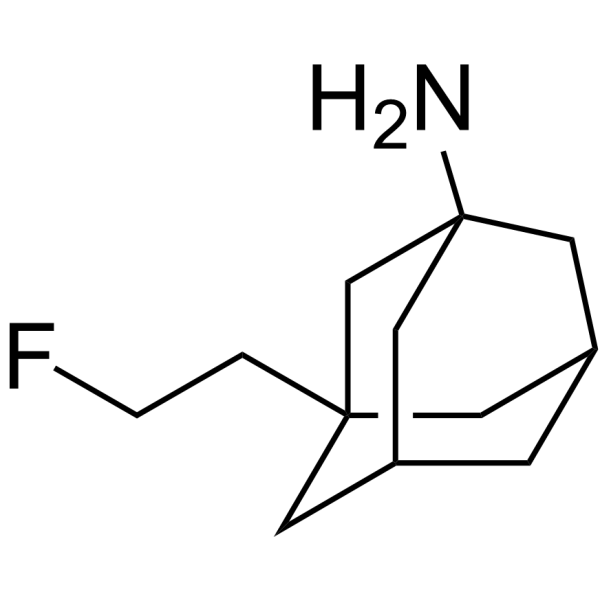
Fluoroethylnormemantine, a derivative of Memantine, is an antagonist of the N-methyl-D-aspartate (NMDA) receptor. [ 18F]-Fluoroethylnormemantine can be used as a positron emission tomography (PET) tracer. Fluoroethylnormemantine exhibits anti-amnesic, neuroprotective, antidepressant-like and fear-attenuating effects .
loading...
    loading...
Cat. No.: HY-10936
CAS No.: 175340-20-2
Purity:  99.85%
Target:  

iGluR

Research Areas:  

Neurological Disease

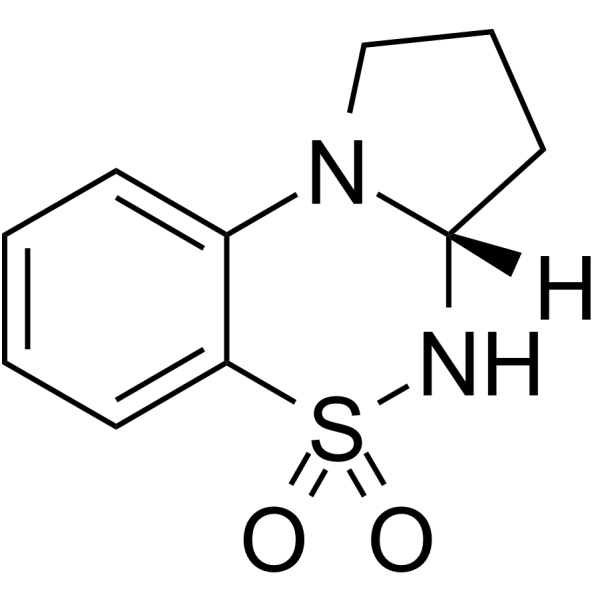
S 18986 is a selective, orally active, brain penetrant positive allosteric modulator of AMPA-type receptors. S 18986 shows cognitive enhancing properties in rodents. S 18986 activates the release of noradrenaline and acetylcholine in rat hippocampus and enhances rat memory in object-recognition tests .
loading...
    loading...
Cat. No.: HY-W068771
CAS No.: 943-89-5
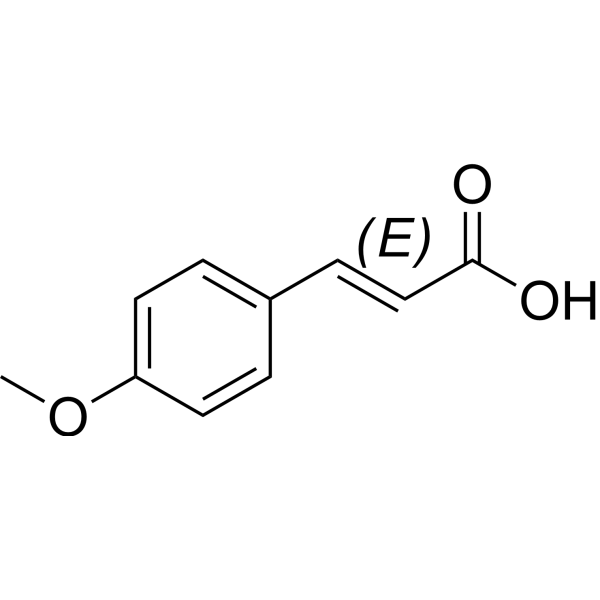
(E)-3-(4-Methoxyphenyl)acrylic acid (compound 3) is isolated from Arachis hypogaea, Scrophularia buergeriana Miquel, Aquilegia vulgaris, Anigozanthos preissii and so on. (E)-3-(4-Methoxyphenyl)acrylic acid shows significant hepatoprotective activity, anti-amnesic, cognition-enhancing activity, antihyperglycemic, and neuroprotective activities .
loading...
    loading...
Cat. No.: HY-W062171R
CAS No.: 19179-12-5
Synonyms: Pyrrolopiperazine-2,5-dione (Standard)
Cyclo-(Pro-Gly) (Pyrrolopiperazine-2,5-dione), an alkaloid isolated from green algae Ulva prolifera, possesses antialgal activity against the common harmful red tide microalgae . Cyclo-(Pro-Gly) (Pyrrolopiperazine-2,5-dione) possesses antiamnesic effects and neuroprotective actions .
loading...
    loading...
Cat. No.: HY-106412A
CAS No.: 138472-18-1
Synonyms: S 9977
Stacofylline hydrochloride (S 9977), a Xanthine (HY-W017389) derivative, is a potent AChE inhibitor with an IC50 of 5-50 nM. Stacofylline shows anti-amnesic and promnesic activities .
loading...
    loading...
Cat. No.: HY-155304
Target:  

Cholinesterase (ChE)

Research Areas:  

Neurological Disease

BuChE-IN-8 (compound 19c) is a butyrylcholinesterase (BuChE) inhibitor with an IC50 of 559 nM. BuChE-IN-8 possesses human β-secretase (BACE1) and Aβ40 aggregation inhibitory activities. BuChE-IN-8 has significant antiamnesic properties .
loading...
    loading...
Cat. No.: HY-155305
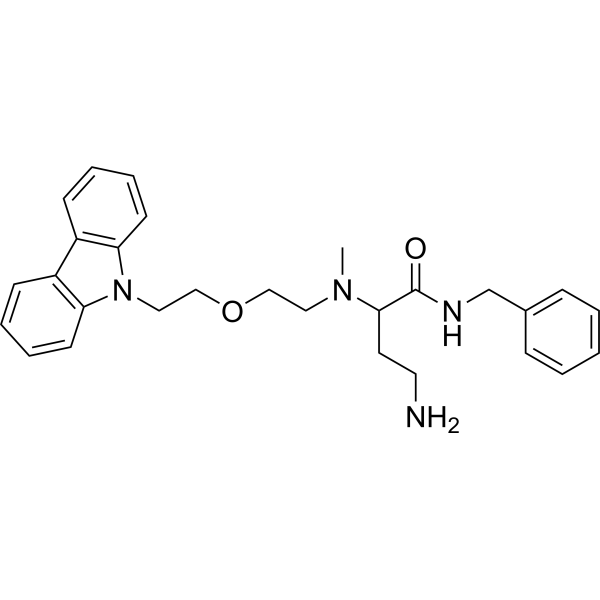
BuChE-IN-9 (compound 22a) is a potent equine serum-derived BuChE (eqBuChE) inhibitor with an IC50 of 173 nM. BuChE-IN-9 also inhibits human BACE1, Aβ aggregation, mouse GABA transporter 1 (mGAT1) and mGAT4. BuChE-IN-9 has significant antiamnesic properties .
loading...
    loading...
Cat. No.: HY-19085
CAS No.: 63233-46-5
Target:  

Cholinesterase (ChE)

Research Areas:  

Neurological Disease

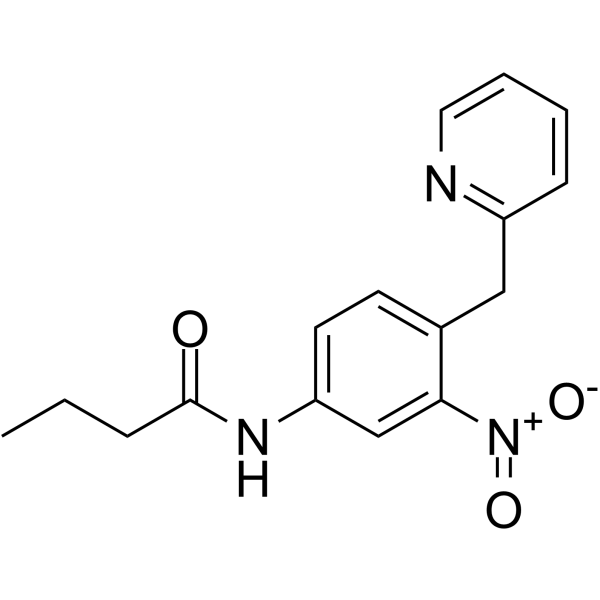
KW-6055 is a benzylpyridine derivative with anti-amnesic effects. KW-6055 can increase the level of ACh in the brain cholinergic system and stimulate cholinergic neurons.
loading...
    loading...
Cat. No.: HY-17032
CAS No.: 60929-23-9
Synonyms: (rac)-AS1069562 free base; YM-08054 free base
Target:  

Endogenous Metabolite

Research Areas:  

Neurological Disease

Indeloxazine ((rac)-AS1069562 free base) is a brain active compound with anti-amnesic activity. Indeloxazine significantly prolonged the step latency in senescence accelerated mice (SAM-P/8/Ta), indicating that it has a promoting effect on brain function. Indeloxazine has a broader pharmacology than piracetam and exhibits stronger anti-amnesic activity. Indeloxazine has also been used as an anticonvulsant compound, further supporting its potential use in neuroprotection and behavioral improvement .
loading...
    loading...
Cat. No.: HY-106412
CAS No.: 98833-92-2
Synonyms: S 9977 free base; S 9977-2 free base
Stacofylline (S 9977 free base; S 9977-2 free base), a Xanthine (HY-W017389) derivative, is a potent AChE inhibitor with an IC50 of 5-50 nM. Stacofylline shows anti-amnesic and promnesic activities .
loading...
    loading...
Cat. No.: HY-130432
CAS No.: 195211-53-1
Target:  

nAChR

Research Areas:  

Neurological Disease

DBO-83 dihydrochloride is a brain-penetrant nicotinic acetylcholine receptor (nAChR) agonist. DBO-83 dihydrochloride activates peripheral nicotinic acetylcholine receptors to evoke non-stimulated ileum contractions. DBO-83 dihydrochloride shows antinociceptive and anti-amnesic activities .
loading...
    loading...
Cat. No.: HY-139048A
CAS No.: 1639210-25-5
Purity:  ≥98.0%
Target:  

iGluR

Research Areas:  

Neurological Disease

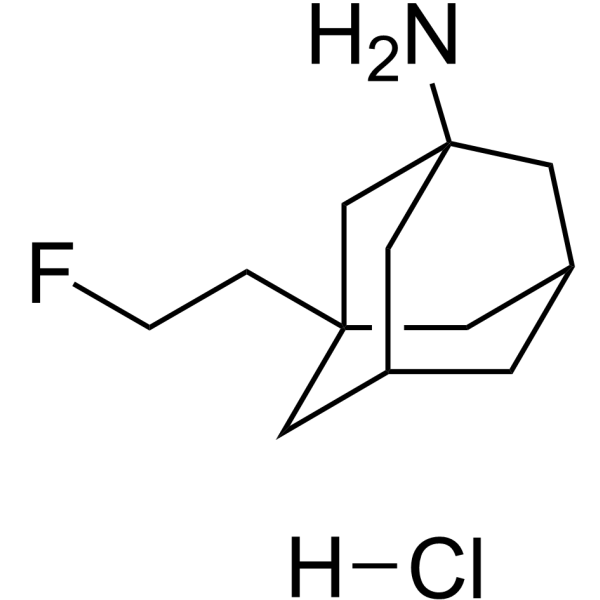
Fluoroethylnormemantine hydrochloride, a derivative of Memantine, is an antagonist of the N-methyl-D-aspartate (NMDA) receptor. [ 18F]-Fluoroethylnormemantine hydrochloride can be used as a positron emission tomography (PET) tracer. Fluoroethylnormemantine hydrochloride exhibits anti-amnesic, neuroprotective, antidepressant-like and fear-attenuating effects .
loading...
    loading...
Cat. No.: HY-123503
CAS No.: 1887055-63-1
Category:  

other families Phenols Plants

Target:  

JNK NF-κB

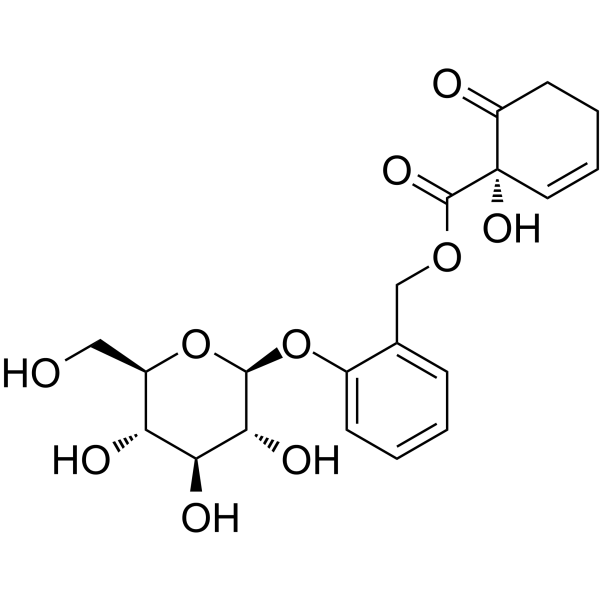
Salicortin, a phenolic glycoside, has been isolated from many plants such as Populus and Salix species. Salicortin inhibits osteoclast differentiation and bone resorption by down-regulating JNK and NF-κB/NFATc1 signaling pathways. Salicortin has anti-amnesic, anti-adipogenic, and immune-modulatory activity .
loading...
    loading...
Cat. No.: HY-W068771R
CAS No.: 943-89-5
(E)-3-(4-Methoxyphenyl)acrylic acid (compound 3) is isolated from Arachis hypogaea, Scrophularia buergeriana Miquel, Aquilegia vulgaris, Anigozanthos preissii and so on. (E)-3-(4-Methoxyphenyl)acrylic acid shows significant hepatoprotective activity, anti-amnesic, cognition-enhancing activity, antihyperglycemic, and neuroprotective activities .
loading...
    loading...
Cat. No.: HY-N11997
CAS No.: 149418-38-2
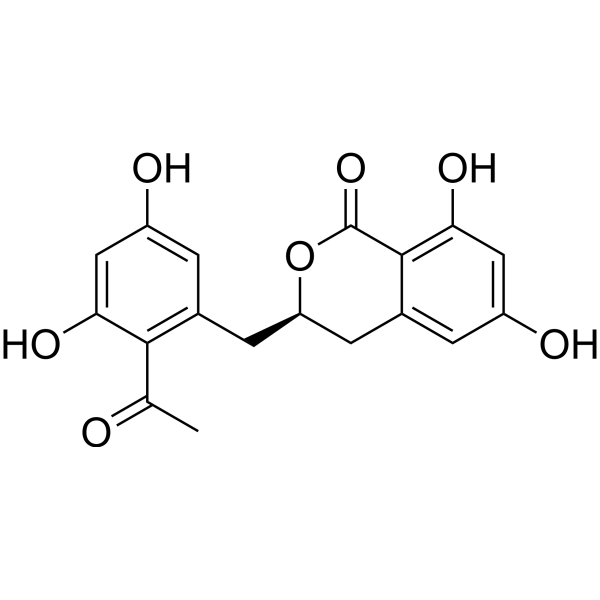
Feralolide is a dihydroisocoumarin isolated from the methanolic extract of aloe vera resin. Feralolide is also a dual inhibitor of AChE and BuChE, with IC50s of 55 μg/mL and 52 μg/mL respectively. Feralolide has antioxidant activity and inhibits 2,2-diphenyl-1-picrylhydrazyl (DPPH) and 2, 2′-azinobis-3-ethylbenzothiazoline-6-sulfonic acid (ABTS). Feralolide could be used in research into cognitive disorders such as Alzheimer's disease, potentially restoring and enhancing memory .
loading...
    loading...
Cat. No.: HY-10936R
CAS No.: 175340-20-2
Research Areas:  

Neurological Disease

S 18986 (Standard) is the analytical standard of S 18986 (HY-10936). This product is intended for research and analytical applications. S 18986 is a selective, orally active, brain penetrant positive allosteric modulator of AMPA-type receptors. S 18986 shows cognitive enhancing properties in rodents. S 18986 activates the release of noradrenaline and acetylcholine in rat hippocampus and enhances rat memory in object-recognition tests .
loading...
    loading...

