


1. Search Result
Search Result
Results for "

antithrombin

" in MedChemExpress (MCE) Product Catalog:

34

Inhibitors & Agonists

4

Biochemical Assay Reagents

4

Peptides

1

MCE Kits

2

Inhibitory Antibodies

1

Natural
Products

2

Recombinant Proteins

1

Isotope-Labeled Compounds

1

Antibodies

6

Oligonucleotides

Cat. No. Product Name Target Research Areas Chemical Structure
  • HY-17567A
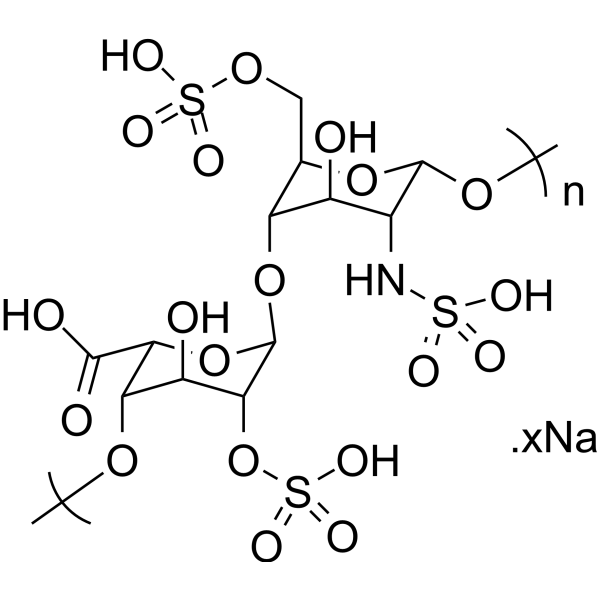
    Heparin sodium salt
    Maximum Cited Publications
    59 Publications Verification

    Sodium heparin; Sodium heparinate

    Exosomes Thrombin Factor Xa Autophagy Cardiovascular Disease Cancer
    Heparin sodium salt (Sodium heparin) is an anticoagulant which binds reversibly to antithrombin III (ATIII) and greatly accelerates the rate at which ATIII inactivates coagulation enzymes thrombin factor IIa and factor Xa. Heparin sodium salt significantly inhibits exosome-cell interactions.
    Heparin sodium salt
  • HY-17567C
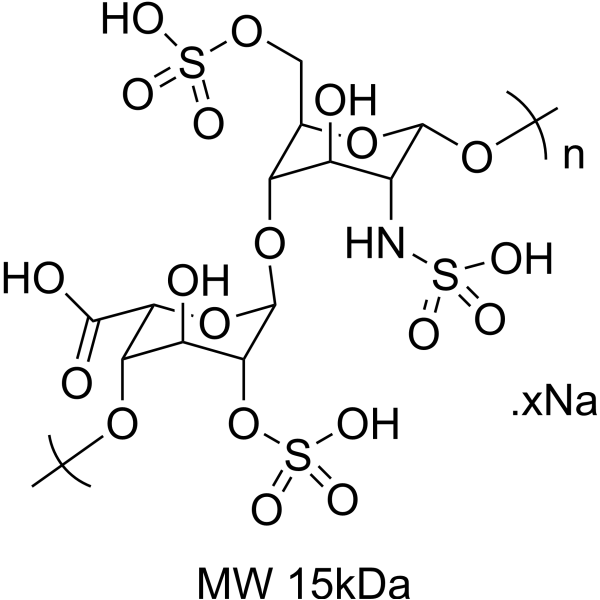
    Heparin sodium salt (MW 15kDa)
    3 Publications Verification

    Sodium heparin (MW 15kDa); Sodium heparinate (MW 15kDa)

    Thrombin Factor Xa Autophagy Cardiovascular Disease
    Heparin sodium salt (MW 15kDa) (Sodium heparin (MW 15kDa)) is a polymer of Heparin with the molecular weight of 15kDa. Heparin sodium salt is an anticoagulant which binds reversibly to antithrombin III (ATIII) and greatly accelerates the rate at which ATIII inactivates coagulation enzymes thrombin factor IIa and factor Xa .
    Heparin sodium salt (MW 15kDa)
  • HY-109509
    Enoxaparin
    1 Publications Verification

    PK 10169; Enoxaparin sodium

    Factor Xa Thrombin SARS-CoV Infection Cardiovascular Disease Neurological Disease Inflammation/Immunology Cancer
    Enoxaparin (PK 10169), a low-molecular-weight heparin (LMWH) derivative. Enoxaparin exerts anticoagulant activity through antithrombin III, an endogenous inhibitor of factor Xa and thrombin IIa. Enoxaparin protect the rat hippocampus against TBI (traumatic brain injury) via antioxidant and anti-inflammatory properties. Enoxaparin can be used for the research of deep vein thrombosis (DVT), pulmonary embolism, TBI and COVID-19 .
    Enoxaparin
  • HY-17567B
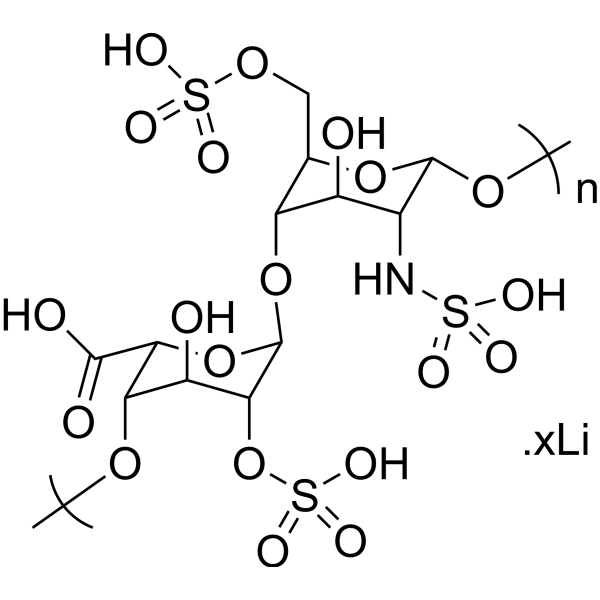
    Heparin Lithium salt
    3 Publications Verification

    Exosomes Thrombin Autophagy Bacterial Cardiovascular Disease Cancer
    Heparin Lithium salt is an anticoagulant which binds reversibly to antithrombin III (ATIII). Heparin Lithium salt significantly inhibits exosome-cell interactions.
    Heparin Lithium salt
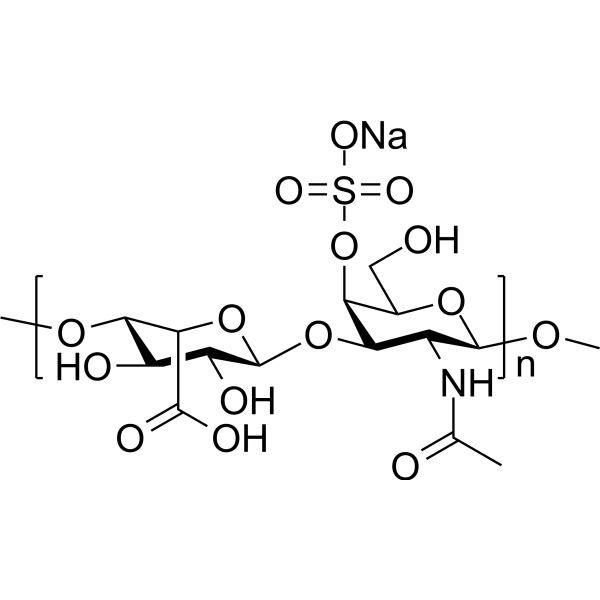
  • HY-132587

    ALN-AT3SC; SAR439774

    Factor Xa Small Interfering RNA (siRNA) Thrombin Cardiovascular Disease
    Fitusiran (ALN-AT3SC) is a siRNA strategy. Fitusiran delivers siRNA targeting the SERPINC1 gene in hepatocytes to inhibit antithrombin synthesis. Fitusiran enhances thrombin activity and increases Thrombin generation, thereby restoring hemostatic function. Fitusiran can be used in hemophilia-related research .
    Fitusiran
  • HY-122704A
    Surfen dihydrochloride
    2 Publications Verification

    Aminoquinuride dihydrochloride

    FGFR HSV Tau Protein Infection Neurological Disease Inflammation/Immunology
    Surfen dihydrochloride is a potent heparan sulfate antagonist. Surfen inhibits FGF2 binding and signal transduction. Surfen binds to glycosaminoglycans and reduces tau hyperphosphorylation. Surfen dihydrochloride inhibits the activity of recombinant uronyl 2-O-sulfotransferase with an IC50 of approximately 2 μM. Surfen dihydrochloride inhibits HSV-1 viral infection. Surfen dihydrochloride inhibits neural differentiation, delays remyelination, and alleviates EAE .
    Surfen dihydrochloride
  • HY-B0597
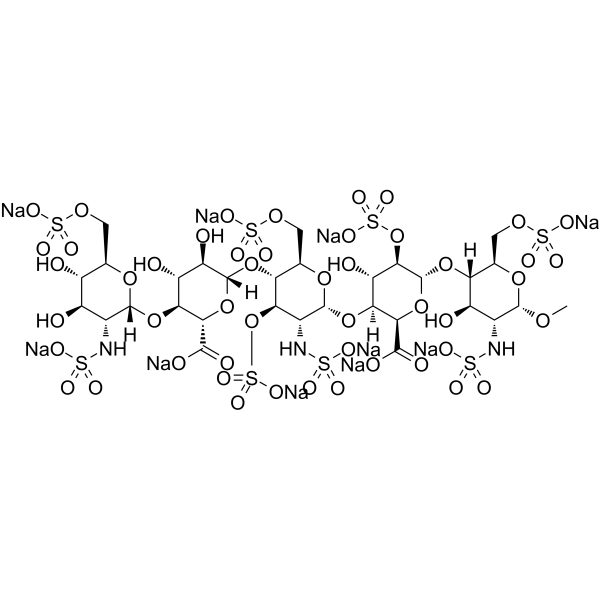
    Fondaparinux sodium
    4 Publications Verification

    Fondaparin sodium; SR-90107A

    Factor Xa Cardiovascular Disease Cancer
    Fondaparinux sodium is an antithrombin-dependent factor Xa inhibitor.
    Fondaparinux sodium
  • HY-123275A
    H-D-Phe-Pip-Arg-pNA hydrochloride
    1 Publications Verification

    S-2238 hydrochloride

    Fluorescent Dye Others
    H-D-Phe-Pip-Arg-pNA (S-2238) hydrochloride, a chromogenic substrate, is patterned after the N-terminal portion of the A alpha chain of fibrinogen, which is the natural substrate of thrombin. H-D-Phe-Pip-Arg-pNA hydrochloride is specific for thrombin and is used to measure antithrombin-heparin cofactor (AT-III). The AT-III assay using H-D-Phe-Pip-Arg-pNA hydrochloride is sensitive, accurate, and easy to perform .
    H-D-Phe-Pip-Arg-pNA hydrochloride
  • HY-123275B
    H-D-Phe-Pip-Arg-pNA acetate
    1 Publications Verification

    S-2238 acetate

    Fluorescent Dye Others
    H-D-Phe-Pip-Arg-pNA (S-2238) acetate, a chromogenic substrate, is patterned after the N-terminal portion of the A alpha chain of fibrinogen, which is the natural substrate of thrombin. H-D-Phe-Pip-Arg-pNA acetate is specific for thrombin and is used to measure antithrombin-heparin cofactor (AT-III). The AT-III assay using H-D-Phe-Pip-Arg-pNA acetate is sensitive, accurate, and easy to perform .
    H-D-Phe-Pip-Arg-pNA acetate
  • HY-N8278
    Dermatan sulphate sodium
    1 Publications Verification

    Thrombin Cardiovascular Disease Inflammation/Immunology
    Dermatan sulphate sodium is an oral active glycosaminoglycan and thrombin inactivator with antithrombotic activity. It selectively catalyzes the heparin cofactor II-mediated inactivation of thrombin without interacting with antithrombin III. Dermatan sulphate sodium promotes stem cell differentiation, exhibits high bioavailability, and alleviates pulmonary fibrosis injury induced by Bleomycin (HY-108345). Dermatan sulphate sodium can be used in research related to cardiovascular diseases, inflammation, and stem cell differentiation .
    Dermatan sulphate sodium
  • HY-100897

    Thrombin Cardiovascular Disease
    Sulodexide is a mixture of glycosaminoglycans available in soft capsule form for oral administration. It is composed of low molecular weight heparin (80%) and dermatan sulfate (20%). Sulodexide exhibits antithrombotic activity through interaction with antithrombin III (AT III) and heparin cofactor II (HC II), and inhibition of thrombin formation. Sulodexide exhibits profibrinolytic activity through release of tissue plasminogen activator (tPA). Sulodexide exhibits endothelial protective and anti-inflammatory effect, ameliorates chronic venous disease . Sulodexide is a glycosaminoglycan mixture available in soft gelatin capsule form for oral administration.
    Sulodexide
  • HY-132587A

    ALN-AT3SC sodium; SAR439774 sodium

    Factor Xa Small Interfering RNA (siRNA) Thrombin Cardiovascular Disease
    Fitusiran (ALN-AT3SC) sodium is a siRNA strategy. Fitusiran delivers siRNA targeting the SERPINC1 gene in hepatocytes to inhibit antithrombin synthesis. Fitusiran sodium enhances thrombin activity and increases Thrombin generation, thereby restoring hemostatic function. Fitusiran sodium can be used in hemophilia-related research .
    Fitusiran sodium
  • HY-100897A

    Thrombin Cardiovascular Disease
    Sulodexide solution is a mixture of glycosaminoglycans that can be administered by injection. It is composed of low molecular weight heparin (80%) and dermatan sulfate (20%). Sulodexide exhibits antithrombotic activity through interaction with antithrombin III (AT III) and heparin cofactor II (HC II), and inhibition of thrombin formation. Sulodexide exhibits profibrinolytic activity through release of tissue plasminogen activator (tPA). Sulodexide exhibits endothelial protective and anti-inflammatory effect, ameliorates chronic venous disease.
    Sulodexide solution
  • HY-150224

    Small Interfering RNA (siRNA) Factor Xa Others
    GalNAc unconjugated/naked Fitusiran (sodium), an small interfering RNA without GalNAc conjugation, specifically targets antithrombin (AT) messenger RNA to lower production of AT in the liver. Fitusiran increases thrombin generation and has the potential for the research of the hemophilia .
    GalNAc unconjugated/naked Fitusiran sodium
  • HY-P2920

    Biochemical Assay Reagents Thrombin Bacterial Infection Cardiovascular Disease
    Protamine from salmon is a biochemical agent with antioxidant, antiheparin and antimicrobial activities. Protamine from salmon neutralizes the anticoagulant effect of heparin, thereby preventing the formation of antithrombin complexes in canine samples pretreated with heparin in vitro .
    Protamine from salmon
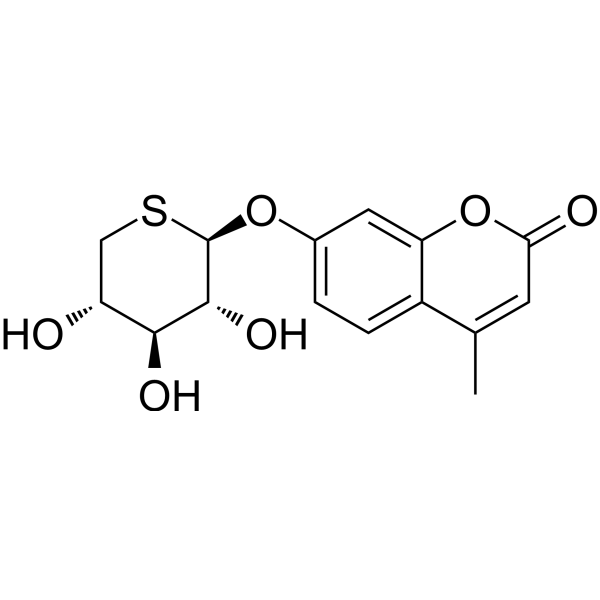
  • HY-10277

    SB-424323

    Thrombin Cardiovascular Disease Metabolic Disease
    Odiparcil (SB-424323) is an orally active β-D-xyloside derivative. Odiparcil can effectively divert the synthesis of cellular glycosaminoglycans (GAG) into secreted soluble species and reduce GAG accumulation. Odiparcil shows antithrombin and antiplatelet activity. Odiparcil can be used for the researches of metabolic and cardiovascular disease, such as mucopolysaccharidoses (MPS) and thrombosis .
    Odiparcil
  • HY-107966A

    Nadroparin calcium (MW 3600-5000)

    Thrombin Factor Xa Autophagy Bacterial Cardiovascular Disease Cancer
    Heparin (Nadroparin) calcium (MW 3600-5000) is an anticoagulant which binds reversibly to antithrombin III (ATIII) to form a heparin-antithrombin III complex. The complex binds to and irreversibly inactivates thrombin and other activated clotting factors IX, X, XI, and XII and prevents the transformation of fibrinogen to fibrin .
    Heparin calcium (MW 3600-5000)
  • HY-123275C

    S-2238 dihydrochloride

    Fluorescent Dye Others
    H-D-Phe-Pip-Arg-pNA (S-2238) dihydrochloride, a chromogenic substrate, is patterned after the N-terminal portion of the A alpha chain of fibrinogen, which is the natural substrate of thrombin. H-D-Phe-Pip-Arg-pNA dihydrochloride is specific for thrombin and is used to measure antithrombin-heparin cofactor (AT-III). The AT-III assay using H-D-Phe-Pip-Arg-pNA dihydrochloride is sensitive, accurate, and easy to perform .
    H-D-Phe-Pip-Arg-pNA dihydrochloride
  • HY-122704

    Aminoquinuride

    FGFR HSV Tau Protein Infection Neurological Disease Inflammation/Immunology
    Surfen is a potent heparan sulfate antagonist. Surfen inhibits FGF2 binding and signal transduction. Surfen binds to glycosaminoglycans and reduces tau hyperphosphorylation. Surfen inhibits the activity of recombinant uronyl 2-O-sulfotransferase with an IC50 of approximately 2 μM. Surfen inhibits HSV-1 viral infection. Surfen inhibits neural differentiation, delays remyelination, and alleviates EAE .
    Surfen
  • HY-123275

    S-2238

    Fluorescent Dye Others
    H-D-Phe-Pip-Arg-pNA (S-2238), a chromogenic substrate, is patterned after the N-terminal portion of the A alpha chain of fibrinogen, which is the natural substrate of thrombin. H-D-Phe-Pip-Arg-pNA is specific for thrombin and is used to measure antithrombin-heparin cofactor (AT-III). The AT-III assay using H-D-Phe-Pip-Arg-pNA is sensitive, accurate, and easy to perform .
    H-D-Phe-Pip-Arg-pNA
  • HY-P2728A

    Biochemical Assay Reagents Cardiovascular Disease
    Murine Antithrombin III is a blood coagulation inhibitory enzyme with high catalytic efficiency, high specificity, mild action conditions, etc., and can be used in the pharmaceutical industry, industrial production, food manufacturing, aquaculture and other industries .
    Murine Antithrombin III
  • HY-107966

    Nadroparin calcium (MW 15000-19000)

    Thrombin Factor Xa Autophagy Bacterial Cardiovascular Disease Cancer
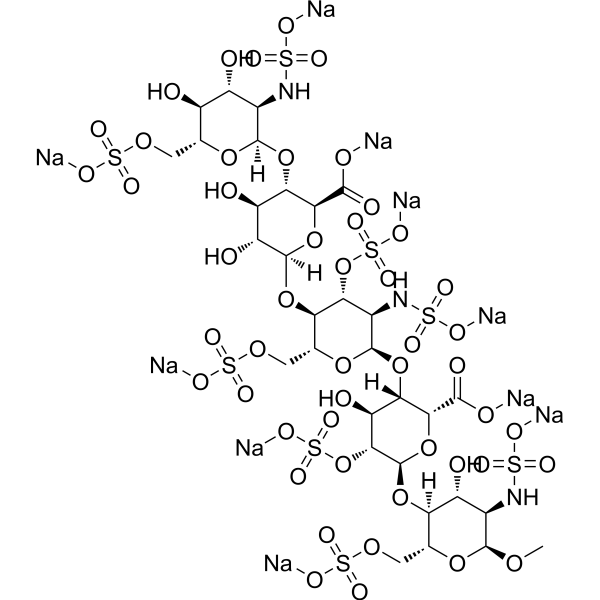
    Heparin calcium (MW 15000-19000) is an anticoagulant which binds reversibly to antithrombin III (ATIII) to form a heparin-antithrombin III complex. The complex binds to and irreversibly inactivates thrombin and other activated clotting factors IX, X, XI, and XII and prevents the transformation of fibrinogen to fibrin .
    Heparin calcium (MW 15000-19000)
  • HY-B0597R

    Fondaparin sodium (Standard); SR-90107A (Standard)

    Reference Standards Factor Xa Cardiovascular Disease Cancer
    Fondaparinux (sodium) (Standard) is the analytical standard of Fondaparinux (sodium). This product is intended for research and analytical applications. Fondaparinux sodium is an antithrombin-dependent factor Xa inhibitor.
    Fondaparinux sodium (Standard)
  • HY-136898

    Thrombin Others
    PS-915 dihydrochloride is a peptide substrate used in a colorimetric assay for plasma antithrombin III (ATIII). PS-915 dihydrochloride is highly specific for thrombin. By enzyme hydrolysis, PS-915 dihydrochloride liberates 3-carboxy-4-hydroxyaniline (CHA), which turns blue in color due to the complex formation with added alkaline-pentacyanoammine ferroate .
    PS-915 dihydrochloride
  • HY-19442A

    Thrombin Cardiovascular Disease
    Idrabiotaparinux sodium is a derivative of Idraparinux synthesized with biotin. Idraparinux is a polymethylated synthetic pentasaccharide known to interact with the antithrombin III and act as anticoagulant .
    Idrabiotaparinux sodium
  • HY-10281

    Factor Xa Cardiovascular Disease
    YM-60828 is an FXa inhibitor with antithrombotic properties. In the rat arteriovenous shunt model, YM-60828 does not prolong coagulation time but reduces the levels of thrombin-antithrombin III complex (TAT) in a dose-dependent manner. YM-60828 exhibits only anti-FXa activity and does not show anti-thrombin activity, indicating that its antithrombotic effect is independent of thrombin. Therefore, the antithrombotic effect of YM-60828 can be monitored by TAT .
    YM-60828 methanesulfonate
  • HY-W743984

    Isotope-Labeled Compounds Thrombin Cardiovascular Disease
    Melagatran-d11 is the deuterium labeled Melagatran (HY-129056). Melagatran is a direct and orally active inhibitor of thrombin, without interacting with any other enzymes in the coagulation cascade or fibrinolytic enzymes aside from thrombin. Melagatran does not require endogenous co-factors for its antithrombin effect and may help to alleviate some of the damaging effects of endotoxemia . Melagatran has the potential to provide a rational approach in the prevention of arterial occlusion .
    Melagatran-d11
  • HY-P991873

    Thrombin Cardiovascular Disease
    Anti-Antithrombin Antibody is an antibody against human Antithrombin Beta. Recommend Isotype Controls:?Human IgG1 kappa, Isotype Control (HY-P99001).
    Anti-Antithrombin Antibody
  • HY-P991987

    Thrombin Cardiovascular Disease
    Anti-Thrombin Antibody is an anti-Thrombin antibody. Recommend Isotype Controls: Human IgG4 (S228P) kappa, Isotype Control (HY-P99003).
    Anti-Thrombin Antibody
  • HY-10277R

    SB-424323 (Standard)

    Reference Standards Thrombin Cardiovascular Disease Metabolic Disease
    Odiparcil (Standard) is the analytical standard of Odiparcil (HY-10277). This product is intended for research and analytical applications. Odiparcil (SB-424323) is an orally active β-D-xyloside derivative. Odiparcil can effectively divert the synthesis of cellular glycosaminoglycans (GAG) into secreted soluble species and reduce GAG accumulation. Odiparcil shows antithrombin and antiplatelet activity. Odiparcil can be used for the researches of metabolic and cardiovascular disease, such as mucopolysaccharidoses (MPS) and thrombosis .
    Odiparcil (Standard)
  • HY-132587C

    Small Interfering RNA (siRNA) Factor Xa Thrombin Cardiovascular Disease
    Fitusiran sodium scrambled negative control is the sequence scrambled negative control of Fitusiran sodium. Fitusiran (ALN-AT3SC) sodium is a siRNA strategy. Fitusiran delivers siRNA targeting the SERPINC1 gene in hepatocytes to inhibit antithrombin synthesis. Fitusiran sodium enhances thrombin activity and increases Thrombin generation, thereby restoring hemostatic function. Fitusiran sodium can be used in hemophilia-related research .
    Fitusiran sodium scrambled negative control
  • HY-132587D

    Fluorescent Dye Factor Xa Small Interfering RNA (siRNA) Thrombin Cardiovascular Disease
    FAM labled Fitusiran sodiumis a FAM labled Fitusiran sodium (HY-132587A). Fitusiran (ALN-AT3SC) sodium is a siRNA strategy. Fitusiran delivers siRNA targeting the SERPINC1 gene in hepatocytes to inhibit antithrombin synthesis. Fitusiran sodium enhances thrombin activity and increases Thrombin generation, thereby restoring hemostatic function. Fitusiran sodium can be used in hemophilia-related research .
    FAM labled Fitusiran sodium
  • HY-132587E

    Fluorescent Dye Small Interfering RNA (siRNA) Factor Xa Thrombin Cardiovascular Disease
    Cy3 labled Fitusiran sodium is a Cy3 labled Fitusiran sodium (HY-132587A). Fitusiran (ALN-AT3SC) sodium is a siRNA strategy. Fitusiran delivers siRNA targeting the SERPINC1 gene in hepatocytes to inhibit antithrombin synthesis. Fitusiran sodium enhances thrombin activity and increases Thrombin generation, thereby restoring hemostatic function. Fitusiran sodium can be used in hemophilia-related research .
    Cy3 labled Fitusiran sodium
  • HY-107785R

    D-Glucosamine-2-N-sulfate sodium (Standard)

    Reference Standards Endogenous Metabolite Metabolic Disease
    2-Deoxy-2-sulfoamino-D-glucose (sodium) (Standard) is the analytical standard of 2-Deoxy-2-sulfoamino-D-glucose (sodium). This product is intended for research and analytical applications. 2-Deoxy-2-sulfoamino-D-glucose sodium (D-Glucosamine-2-N-sulfate sodium) is an endogenous metabolite. The main regulatory mechanism of 2-Deoxy-2-sulfoamino-D-glucose sodium involves the interaction of sulfuric acid groups with biomolecules. Sulfate groups can influence the charge density and configuration of polysaccharides, thereby regulating their ability to bind to proteins such as antithrombin. This combination can enhance the activity of antithrombin, which in turn inhibits key enzymes in the blood clotting process to achieve anti-clotting effects. 2-Deoxy-2-sulfoamino-D-glucose sodium can be used to study the selective removal of n-sulfate groups from Heparin (HY-17567) which has important implications for understanding the biological activity of heparin and developing related drugs .
    2-Deoxy-2-sulfoamino-D-glucose sodium (Standard)

Inquiry Online

Your information is safe with us. * Required Fields.

Salutation


Country or Region *

Applicant Name *


Organization Name *

Department *


Email Address *


Product Name *

Cat. No.


Requested quantity *

Phone Number *


Remarks

Inquiry Online

Inquiry Information

Product Name:
Cat. No.:
Quantity:
MCE Japan Authorized Agent:

