



Sulodexide solution

Based on 1 Customer Validation
Sulodexide solution is a mixture of glycosaminoglycans that can be administered by injection. It is composed of low molecular weight heparin (80%) and dermatan sulfate (20%). Sulodexide exhibits antithrombotic activity through interaction with antithrombin III (AT III) and heparin cofactor II (HC II), and inhibition of thrombin formation. Sulodexide exhibits profibrinolytic activity through release of tissue plasminogen activator (tPA). Sulodexide exhibits endothelial protective and anti-inflammatory effect, ameliorates chronic venous disease.
Nur für Forschungszwecke. Wir verkaufen nicht an Patienten.
- CAS. Nr.: 57821-29-1
-
Speicherung:
Please store the product under the recommended conditions in the Certificate of Analysis.


To place orders, for customer services and technical support, please contact: MedChemExpress USA
Tel: 609-228-6898 E-mail: [email protected] [email protected]


-
 Biologische Aktivität
-
Chemical Information
- Protokoll
- Reinheit & Dokumentation
- Verweise
-
 Help & FAQs


-

HY-100897
SulodexideAntithrombotic Agent -
HY-114164
Thrombin (MW 37kDa)Procoagulant/Anticoagulant -
HY-B0375
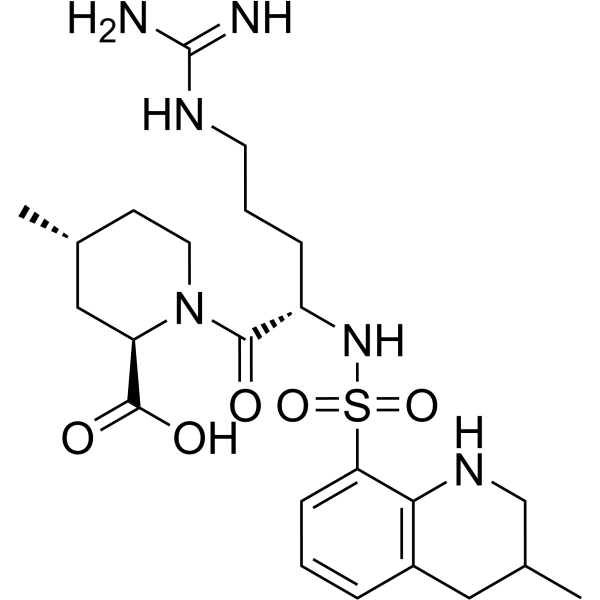
ArgatrobanThrombin Inhibitor -
HY-10163
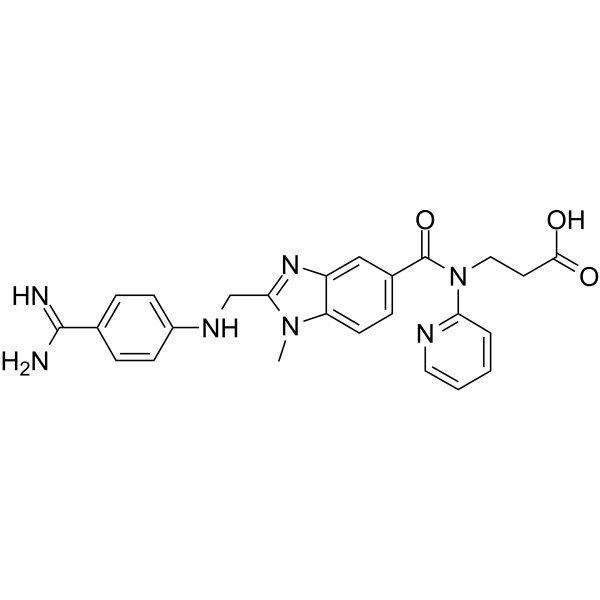
DabigatranThrombin Inhibitor -
HY-10274
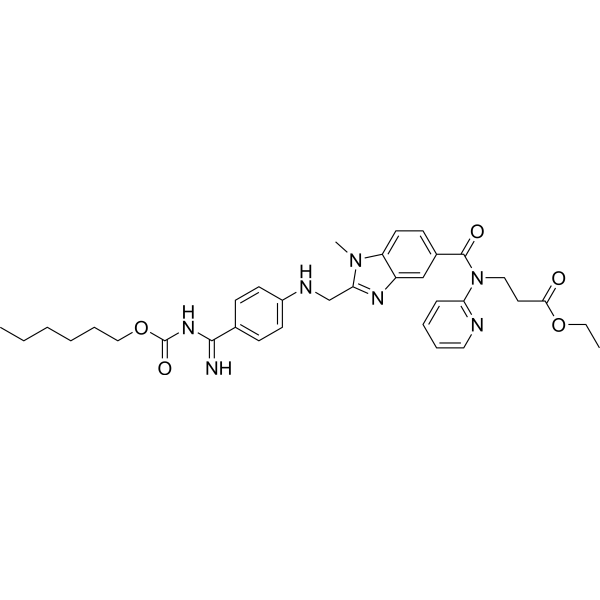
Dabigatran etexilateAntithrombotic Agent -
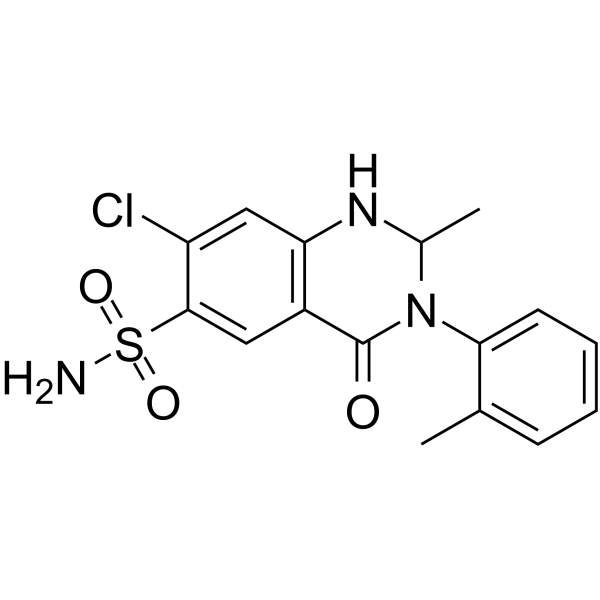
HY-B0209
MetolazoneDiuretics -

HY-10163R
Dabigatran (Standard)Thrombin Inhibitor -
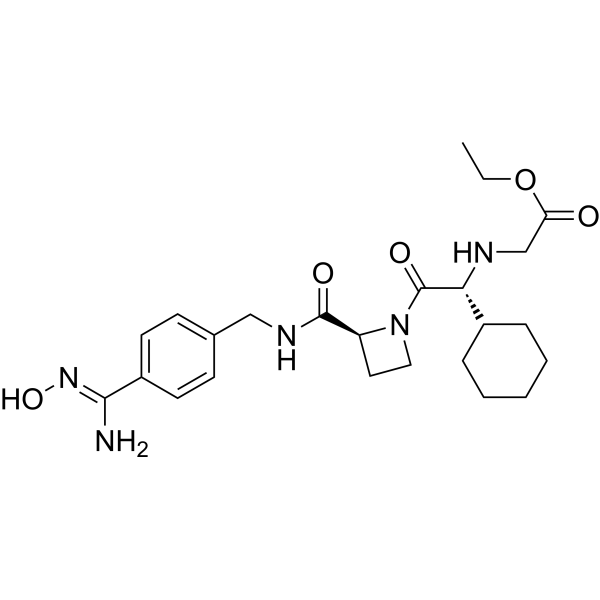
HY-10787
XimelagatranThrombin Inhibitor -
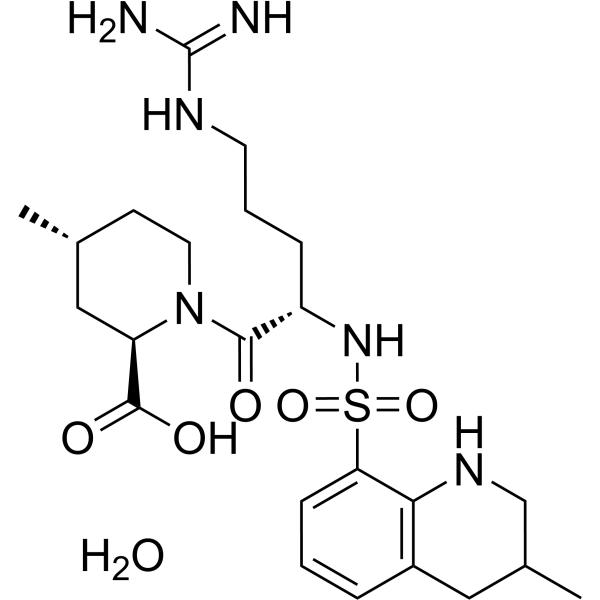
HY-B0375A
Argatroban monohydrateThrombin Inhibitor -
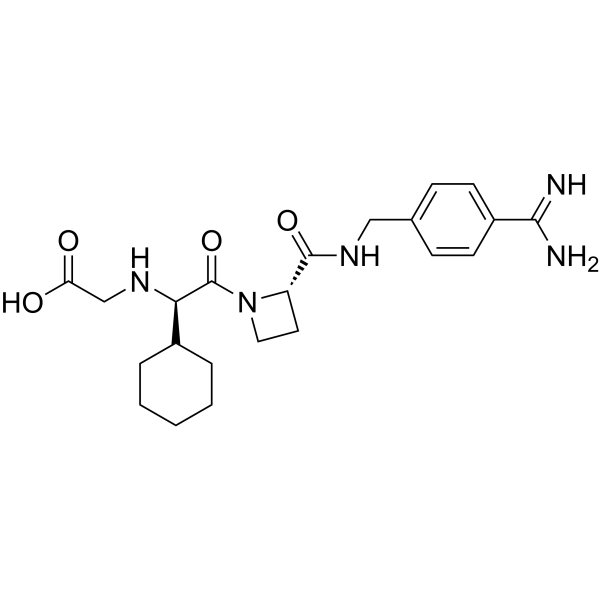
HY-129056
MelagatranThrombin Inhibitor -
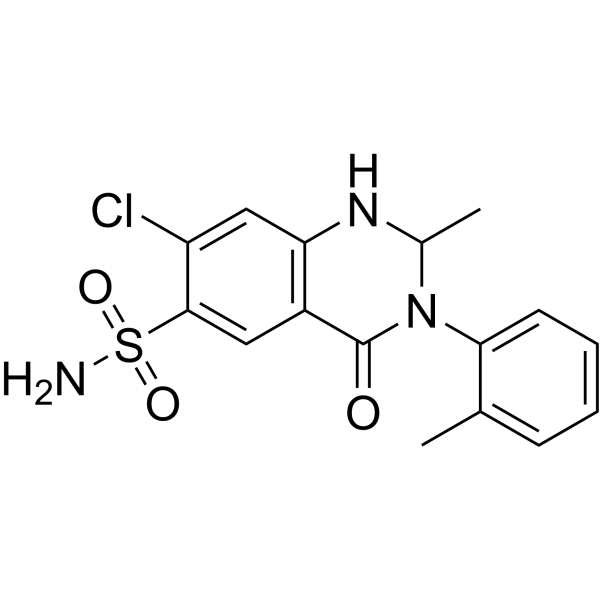
HY-B0209R
Metolazone (Standard)


Biologische Aktivität
Beschreibung
In Vitro
Sulodexide (0-200 μg/mL, 24 hours) promotes fibronectin and collagen type III synthesis in mouse mesangial cells[2]. Sulodexide (50 µg/mL, 48 hours) significantly inhibits capillarization marker expression in LSECs[4].
MedChemExpress (MCE) has not independently confirmed the accuracy of these methods. They are for reference only.
In Vivo
MedChemExpress (MCE) has not independently confirmed the accuracy of these methods. They are for reference only.
Clinical Trial
| NCT Number | Sponsor | Condition | Start Date |
Phase

|
|---|---|---|---|---|
| NCT01329991 | 2011-05 | PHASE1 |


Chemical Information
-
CAS. Nr. 57821-29-1
-
Appearance Liquid
-
Color Colorless to light yellow
-
SMILES
[Sulodexide solution]
-
Versand
Room temperature in continental US; may vary elsewhere.
-
Speicherung
Please store the product under the recommended conditions in the Certificate of Analysis.


Reinheit & Dokumentation
-
Data Sheet (292 KB)
-
SDS (252 KB)
- English - EN (252 KB)
- Français - FR (252 KB)
- Deutsch - DE (252 KB)
- Norwegian - NO (252 KB)
- Español - ES (252 KB)
- Swedish - SV (252 KB)
- Italian - IT (252 KB)
- Korean - KR (252 KB)
- Portuguese - PT (252 KB)
-
Handling Instructions (2659 KB)
Verweise
[1]. Andreozzi GM. Sulodexide in the treatment of chronic venous disease. Am J Cardiovasc Drugs. 2012 Apr 1;12(2):73-81. [Content Brief]
[2]. Yung S, et al. Sulodexide decreases albuminuria and regulates matrix protein accumulation in C57BL/6 mice with streptozotocin-induced type I diabetic nephropathy[J]. PloS one, 2013, 8(1): e54501. [Content Brief]
[3]. Jo H, et al. Sulodexide inhibits retinal neovascularization in a mouse model of oxygen-induced retinopathy[J]. BMB reports, 2014, 47(11): 637. [Content Brief]
[4]. Huang R, et al. Sulodexide attenuates liver fibrosis in mice by restoration of differentiated liver sinusoidal endothelial cell[J]. Biomedicine & Pharmacotherapy, 2023, 160: 114396. [Content Brief]
[5]. Ying J, et al. Sulodexide improves vascular permeability via glycocalyx remodelling in endothelial cells during sepsis[J]. Frontiers in immunology, 2023, 14: 1172892. [Content Brief]

Calculators
Konzentration (Stammlösung) × Volumen (Stammlösung) = Konzentration (Ziellösung) × Volumen (Ziellösung)


Sulodexide solution Related Classifications
HY-100897A Related Classifications
 Powered by Bioz