16 Results for "

biosafety

" in MedChemExpress (MCE) Product Catalog:
Products (16)

16 Results for "biosafety" in MCE Product Catalog:

Cat. No.: HY-158231
Synonyms: F127DA
Polyether F127 Diacrylate (F127DA) is an acrylated polyethylene glycol-polypropylene glycol-polyethylene glycol triblock copolymer. Polyether F127 Diacrylate rapidly crosslinks and cures into a gel under ultraviolet or visible light with the action of a photoinitiator. Polyether F127 Diacrylate exhibits excellent thermogelation properties and favorable biosafety. Polyether F127 Diacrylate can upregulate the Integrin-FAK pathway, enhance collagen production, increase the protein and gene expression levels of COL-1/SCX, and promote fibroblastic differentiation of periodontal ligament stem cells. Polyether F127 Diacrylate promotes periodontal ligament regeneration and reduces abnormal healing in a rat model of delayed replanted teeth . Polyether F127 Diacrylate promotes functional osteochondral regeneration in a rat model of osteoarthritis. Polyether F127 Diacrylate supports adipose tissue survival, rendering it suitable for breast reconstruction applications. Polyether F127 Diacrylate can be used in studies related to periodontal ligament injury, breast defect and osteoarthritis .
loading...
    loading...
Cat. No.: HY-P991271
Synonyms: NNC-114-0005; NN9828; NNC01140006
NN-8828 (NNC-114-0005; NN9828; NNC01140006) is a human IgG1 monoclonal antibody inhibitor targeting IL-21 that binds and neutralizes soluble IL-21 with a Kd of 0.19 pM. NN-8828 restores the balance between effector T cells and regulatory T cells, inhibits pathological antibody production, and alleviates IL-21-mediated inflammatory responses without inducing antibody-dependent cellular cytotoxicity. NN-8828 exhibits favorable biosafety. NN-8828 can be used in research related to rheumatoid arthritis, type 1 diabetes, and systemic lupus erythematosus .
loading...
    loading...
Cat. No.: HY-127102
CAS No.: 2080410-41-7
Purity:  98.56%
Synonyms: DDD01305143​
Target:  

Parasite Proteasome

Research Areas:  

Infection

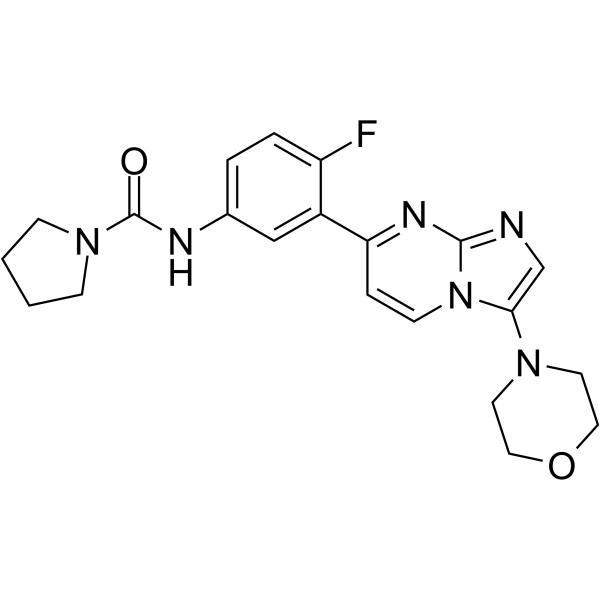
GSK3494245 (DDD01305143) is a potent, orally active, and selective inhibitor of the chymotrypsin-like activity of the parasite proteasome binding in a site sandwiched between the β4 and β5 subunits (IC50=0.16 μM for WT L. donovani proteasomes). GSK3494245 moderately inhibits chymotrypsin-like activity of human proteasome (IC50: purified 26S=13 µM; enriched THP-1 extracts IC50=40µM). GSK3494245 exhibits attractive biological and biosafety properties .
loading...
    loading...
Cat. No.: HY-178040
Insecticidal agent 26 (Compound A11), a spiro insecticidal agent, is a dual-functional inhibitor of pest Acetyl-CoA carboxylase (ACC) and Pyruvate carboxylase (PC). Insecticidal agent 26 has potent insecticidal activity against Sogatella furcifera with a LC50 of 11.0  μg/mL, with significant biosafety to bees. Insecticidal agent 26 can be used for management of white-backed planthoppers (WBPs) .
loading...
    loading...
Cat. No.: HY-163984
CAS No.: 2899202-97-0
Target:  

Bacterial

Research Areas:  

Infection

Antibacterial agent 240 (compound 62-7c) is an antibacterial agent that can target multidrug-resistant (MDR) MRSA strains. Antibacterial agent 240 showed high biosafety and potent anti-infection activity in mouse pneumonia and mouse wound models of MRSA infection .
loading...
    loading...
Cat. No.: HY-162584
CAS No.: 3047956-65-7
Target:  

TRP Channel

Research Areas:  

Others

TRPC5-IN-6 (Compound 12) is an orally effective transient receptor potential (TRPC5) inhibitor with a IC50 value of 81 nM. TRPC5-IN-6 has good biosafety and low liver and kidney toxicity, and is expected to play an important role in the treatment of chronic kidney disease (CKD) .
loading...
    loading...
Cat. No.: HY-149838
CAS No.: 3033815-24-3
Target:  

NF-κB

Research Areas:  

Cancer

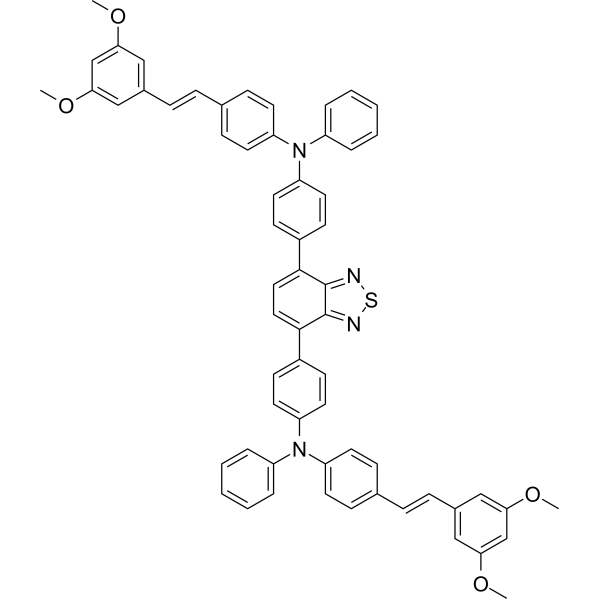
NF-κB-IN-9 is a nuclear factor kappa B (NF-κB) targeting sonosensitizer (λex/λem=489/628 nm). NF-κB-IN-9 exhibits strong inhibition on NF-κB signaling due to its two resveratrol units in one molecule. NF-κB-IN-9 has anti-tumor activity and shows remarkable sonocytotoxicity against cancer cells. NF-κB-IN-9 has biosafety in eenograft mice model.
loading...
    loading...
Cat. No.: HY-169367
Research Areas:  

Cancer

ERD-1233 is an orally active ERα PROTAC degrader with a DC50 of 0.9 nM. ERD-1233 exhibits plasma stability and microsomal stability across multiple species, and shows no significant inhibitory effect on major cytochrome P450 subtypes and hERG channels. ERD-1233 inhibits tumor growth and degrades ERα protein levels in xenograft tumor models, with favorable biosafety. ERD-1233 can be used in breast cancer-related research .
loading...
    loading...
Cat. No.: HY-161823
Target:  

Bacterial

Research Areas:  

Infection

Anti-MRSA agent 13 (Compound 9b) is an agent against methicillin-resistant Staphylococcus aureus (MRSA), exhibiting a minimum inhibitory concentration (MIC) of 0.5–2 μg/mL against clinically isolated MRSA strains. Anti-MRSA agent 13 possesses favorable biosafety, plasma tolerance stability, and a low tendency to develop resistance. Anti-MRSA agent 13 disrupts cell walls and membranes, reduces metabolic activity, causes oxidative damage, affects DNA function, and ultimately leads to MRSA death through multi-target synergies .
loading...
    loading...
Cat. No.: HY-P991261

Target:  

Interleukin Related

Research Areas:  

Inflammation/Immunology

CJM112 is a fully human IgG1/κ monoclonal antibody inhibitor targeting IL-17A, which binds to IL-17A and the IL-17AF heterodimer with high affinity, with KD values of 5.7 pM and <11 pM, respectively. CJM-112 exerts anti-inflammatory effects by neutralizing IL-17A, and reduces the Psoriasis Area and Severity Index in a time- and dose-dependent manner. CJM-112 also exhibits anti-inflammatory activity and improves disease severity in studies of hidradenitis suppurativa. CJM-112 shows favorable biosafety and tolerability. CJM-112 can be used in studies related to psoriasis and hidradenitis suppurativa .
loading...
    loading...
Cat. No.: HY-152506
Target:  

Amyloid-β

Research Areas:  

Neurological Disease

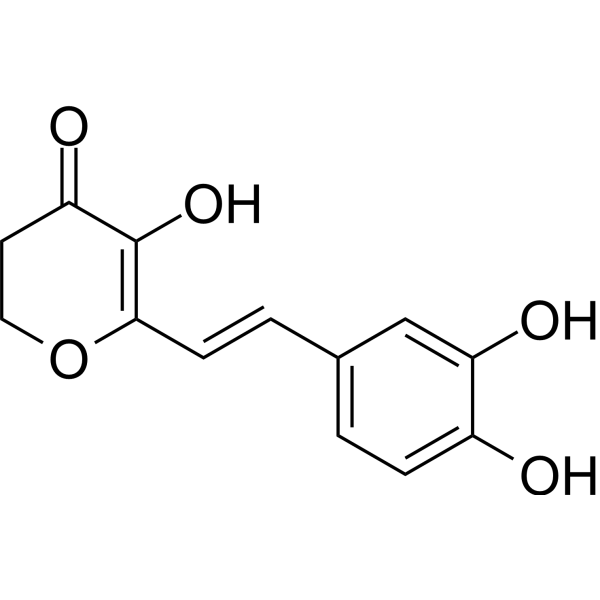
Antioxidant agent-8 is an orally active inhibitor of 1-42 deposition. Antioxidant agent-8 inhibits fibril aggregation (IC50=11.15 µM) and promotes fibril disaggregation (IC50=6.87 µM). Antioxidant agent-8 also inhibits Cu 2+-induced Aβ1-42 fibril aggregation (IC50=3.69 µM) and promotes Cu 2+-induced Aβ1-42 fibril disaggregation (IC50=3.35 µM). Antioxidant agent-8 has antioxidant activity, anti-inflammatory activity, biosafety, blood-brain barrier permeability and neuroprotective effect .
loading...
    loading...
Cat. No.: HY-N17637
CAS No.: 511-81-9
Machaeric acid is a triterpenoid and triterpene sapogenin, which serves as the aglycone of Senegaloside A; it can be isolated from the seeds of Caragana microphylla Lam. and Acacia senegal(Mimosaceae). Machaeric acid exhibits remarkable biosafety, and even at concentrations as high as 200 μM, it does not induce cytotoxicity or reduce the viability of H4IIE rat hepatoma cells .
loading...
    loading...
Cat. No.: HY-W277805
CAS No.: 549-68-8
Octaverine is a synthetic isoquinoline alkaloid with oral activity and adrenergic lytic activity. Octaverine antagonizes the pressor effect of adrenaline, elevates the toxicity threshold of adrenaline, and reduces blood pressure. Octaverine increases respiratory depth, respiratory frequency, ventilation rate, and coronary blood flow. Octaverine inhibits spontaneous uterine contractions, antagonizes induced intestinal spasms, alleviates histamine-induced bronchospasm, and exhibits favorable biosafety. Octaverine can be used in research related to intestinal spasms and bronchospasm .
loading...
    loading...
Cat. No.: HY-180261
CAS No.: 3107761-81-6
Target:  

PROTACs mTOR PI3K Apoptosis

Research Areas:  

Cancer

GP262 is a PI3K/mTOR PROTAC degrader targeting PI3Kγ, PI3Kα and mTOR with DC50 values of 42.23 nM, 227.4 nM and 45.4 nM, respectively in MDA-MB-231 cells. GP262 induces degradation of p110α and p110γ with a DC50 of 227.4 and 42.23 nM. GP262 efficient modulates the PI3K/AKT/mTOR pathway, achieving degradation through the ubiquitin-proteasome system (UPS). GP262 also exhibits robust antiproliferative activity and induces apoptosis in vitro. GP262 exhibits tumor growth suppression capability and biosafety profile. GP262 can be used for leukemia and triple-negative breast cancer (TNBC) .
loading...
    loading...
Cat. No.: HY-187035
CAS No.: 868066-26-6
Target:  

CDK STAT

Research Areas:  

Cancer

SNX631 is an orally active and selective CDK8/CDK19 inhibitor. SNX631 reduces the phosphorylation of STAT1/STAT3 S727, and upregulates miR-21-5p, miR-21-3p and miR-221 in cancer cells. SNX631 transcription-independently inhibits meiotic resumption in mouse oocytes, blocks nuclear envelope breakdown, first polar body extrusion and mitochondrial expansion and aggregation, with no cytotoxicity. SNX631, in combination with Lapatinib (HY-50898) or Trastuzumab (HY-P9907), synergistically inhibits cancer cell growth, upregulates the tumor suppressor BTG2, prevents Lapatinib-induced upregulation of oncogenic miRNAs, overcomes drug resistance, reduces the infiltration of αSMA+ stromal fibroblasts and ARG1+ M2 macrophages, and exhibits favorable biosafety. SNX631 can be used in studies related to HER2-positive breast cancer and cancer .
loading...
    loading...
Cat. No.: HY-P11935
CAS No.: 2410535-57-6
RR-171 is an amino acid polypeptide and an inhibitor of the Wnt signaling pathway. RR-171 reduces the expression levels of Wnt-1, GSK3β and β-catenin. RR-171 induces apoptosis (Apoptosis) in pancreatic cancer cells, which is characterized by an increased Bax/Bcl-2 ratio, activation of Caspase-3/7/9, and increased Cleaved-PARP; this pro-apoptotic effect can be partially reversed by Z-VAD-FMK (HY-16658B). RR-171 also induces pyroptosis (Pyroptosis) in pancreatic cancer cells, which is manifested by activation of the NLRP-3 inflammasome, activation of Caspase-1, cleavage of GSDMD, upregulation of IL-1β and IL-18, and increased LDH release; this pro-pyroptotic effect can be partially reversed by VX-765 (HY-13205). RR-171 inhibits the viability, proliferation and colony formation of pancreatic cancer cells, with low cytotoxicity against normal cells. RR-171 downregulates the expression of Ki-67 and PCNA in tumor tissues in vivo, with favorable biosafety. RR-171 can be used in studies related to pancreatic cancer .
loading...
    loading...
  • 1

