

1. Search Result
Search Result
Results for "

block polymers

" in MedChemExpress (MCE) Product Catalog:

126

Inhibitors & Agonists

68

Biochemical Assay Reagents

1

Peptides

3

Inhibitory Antibodies

13

Natural
Products

8

Isotope-Labeled Compounds

6

Oligonucleotides

Cat. No. Product Name Target Research Areas Chemical Structure
  • HY-Y0479
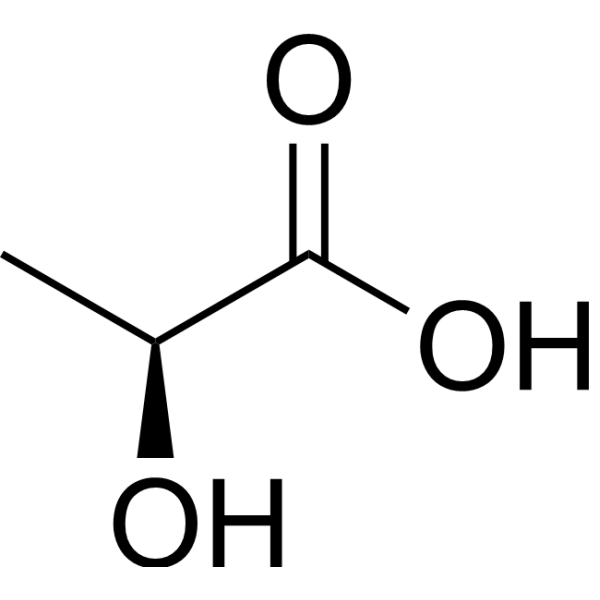
    L-Lactic acid
    10+ Cited Publications

    (S)-2-Hydroxypropanoic acid

    Environmental Pollutants Antibiotic Endogenous Metabolite Bacterial Infection Cancer
    L-Lactic acid is a buildiing block which can be used as a precursor for the production of the bioplastic polymer poly-lactic acid. L-Lactic acid has antiproliferative activity .
    L-Lactic acid
  • HY-16928
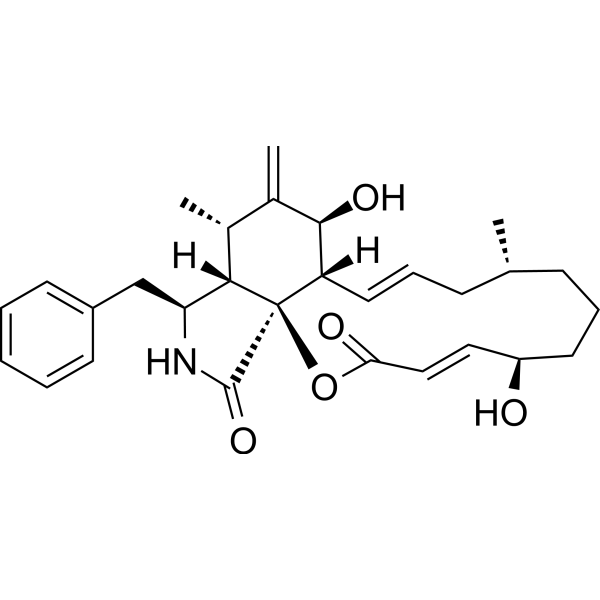
    Cytochalasin B
    Maximum Cited Publications
    45 Publications Verification

    Phomin

    Arp2/3 Complex Cancer
    Cytochalasin B is a cell-permeable mycotoxin binding to the barbed end of actin filaments, disrupting the formation of actin polymers, with Kd value of 1.4-2.2 nM for F-actin. Cytochalasin B blocks cell migration.
    Cytochalasin B
  • HY-W040233
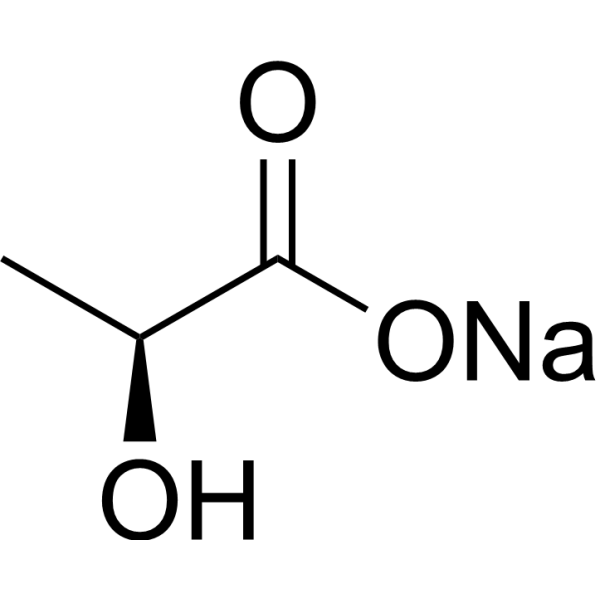
    L-Lactic acid sodium
    10+ Cited Publications

    (S)-2-Hydroxypropanoic acid sodium

    Environmental Pollutants Antibiotic Endogenous Metabolite Drug Intermediate Bacterial Infection Cancer
    L-lactate Sodium (Sodium (S)-2-hydroxypropanoate) is a buildiing block which can be used as a precursor for the production of the bioplastic polymer poly-lactic acid. L-Lactic acid Sodium has antiproliferative activity .
    L-Lactic acid sodium
  • HY-16929
    Latrunculin A
    10+ Cited Publications

    LAT-A

    Arp2/3 Complex Cancer
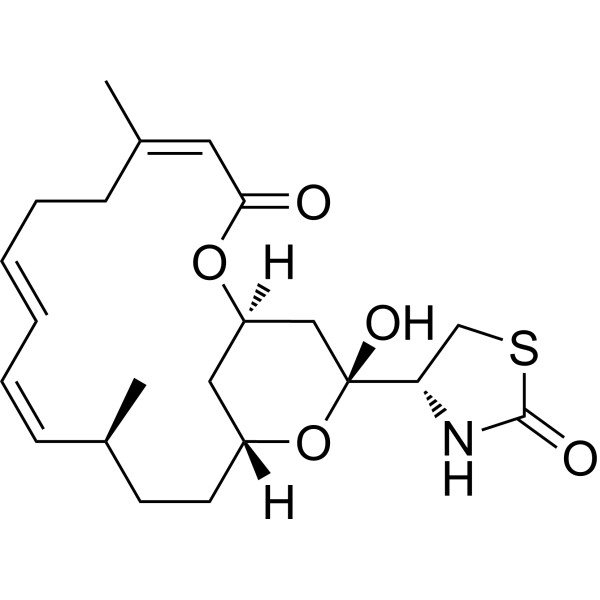
    Latrunculin A (LAT-A), found in the red sea sponge Latrunculia magnifica, is a G-actin polymerization inhibitor. Latrunculin A binds to actin monomers and inhibits polymerization of actin with Kds of 0.1, 0.4, 4.7 μM and 0.19 μM for ATP-actin, ADP-Pi-actin, ADP-actin and G-actin, respectively. Latrunculin A has effective anti-metastatic properties for cancer research. Latrunculin A blocks cell migration .
    Latrunculin A
  • HY-D1005A22

    PEG-PPG-PEG, 14600 (Average)

    Environmental Pollutants Biochemical Assay Reagents Others
    Poloxamer 338 F108 is block polymer of polyoxyethylene and polyoxypropylene with average molecular mass of 14600. Poloxamer 338 F108 reduces the aggregation of red blood cells, inhibits proliferation of human lymphocyte cell IIBR1. Poloxamer 338 F108 exhibits short-term and subchronic toxicity in rats .
    Poloxamer 338 (F108)
  • HY-15582

    Microtubule/Tubulin ADC Payload Cancer
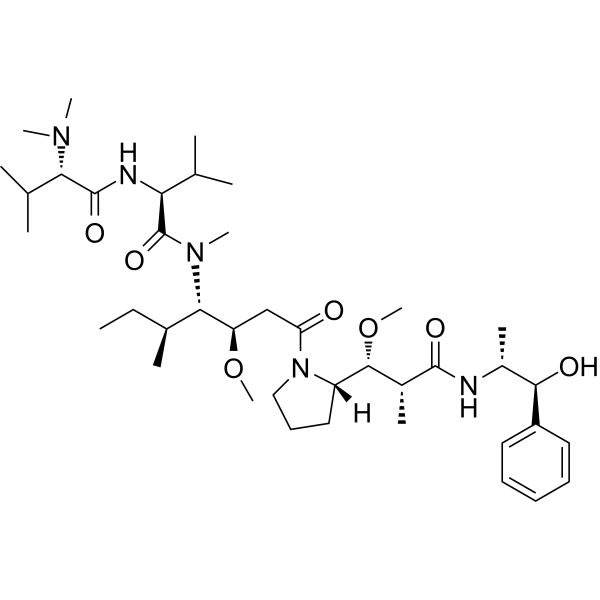
    Auristatin E is a cytotoxic microtubule polymerization inhibitor with potent and selective antitumor activity. Auristatin E is a cytotoxin in antibody-drug conjugates (ADC). Auristatin E inhibits cell division by blocking the polymerisation of tubulin, promising for research in B-cell malignancies. Auristatin E, a synthetic analogue of the Dolastatin 10 (HY-15580), is linear peptides comprised of four amino acids .
    Auristatin E
  • HY-125527
    Resolvin D1
    1 Publications Verification

    RvD1

    Endogenous Metabolite Inflammation/Immunology
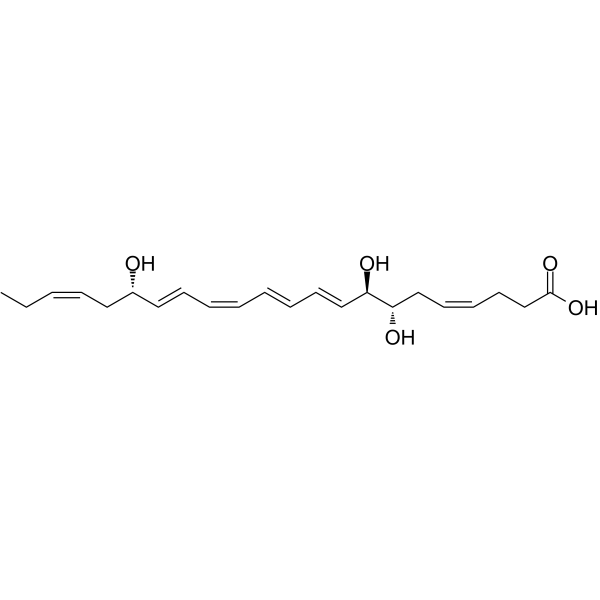
    Resolvin D1 (RvD1), an endogenous pro-resolving mediator of inflammation, is derived from omega-3 docosahexaenoic acid during the resolution phase of acute inflammation. Resolvin D1 blocks proinflammatory neutrophil migration by regulating actin polymerization, reduces TNF-α–mediated inflammation in macrophages, and enhances phagocytosis of apoptotic cells by macrophages .
    Resolvin D1
  • HY-B0294
    Flubendazole
    5+ Cited Publications

    Parasite Microtubule/Tubulin STAT MDM-2/p53 Apoptosis Autophagy Infection Cancer
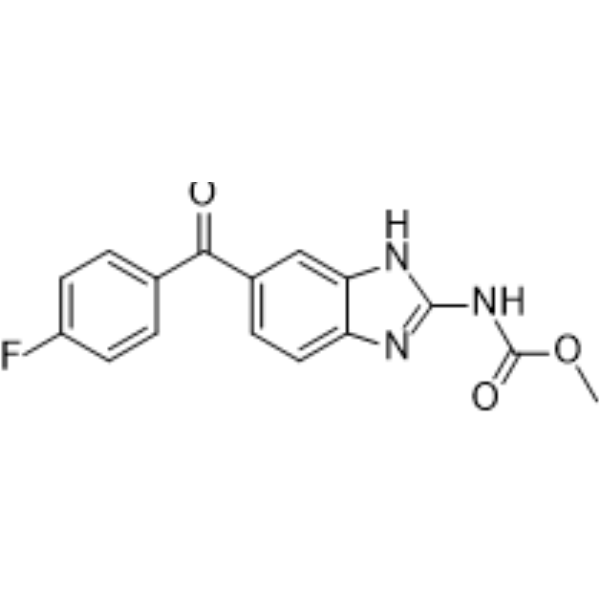
    Flubendazole is an anthelmintic drug based on altering microtubule structure, inhibition of tubulin polymerization and disruption of microtubule function. Flubendazole induces apoptosis in human colorectal cancer (CRC) by blocking the STAT3 signaling axis and activation of autophagy. Flubendazole induces P53 expression and reduced Cyclin B1 and p-cdc2 expression. Flubendazole is an antitumor agent. Flubendazole can be used for worm and intestinal parasites .
    Flubendazole
  • HY-D1005A2

    PEG-PPG-PEG, 1900 (Average)

    Environmental Pollutants Biochemical Assay Reagents Others
    Poloxamer 105 L35 is block polymer of polyoxyethylene and polyoxypropylene with average molecular mass of 1900 Da. Poloxamer 105 L35 forms thermoreversible hydrogel, that is utilized in food additives, drug delivery carriers in cosmetics, pharmaceutical ingredients and tissue engineering .
    Poloxamer 105 (L35)
  • HY-D1005A8

    PEG-PPG-PEG, 2000 (Average)

    Environmental Pollutants Biochemical Assay Reagents Bacterial P-glycoprotein Infection Cancer
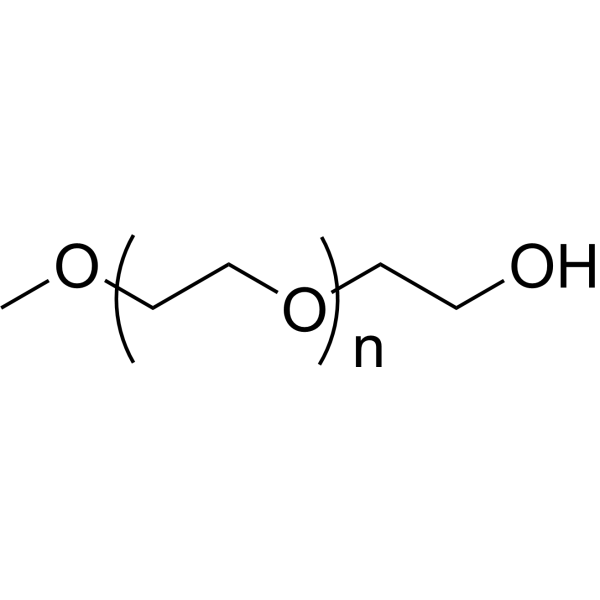
    Poloxamer 181 L61 is a block polymer of polyethylene oxide and polypropylene oxide with an average molecular weight of 2000. Poloxamer has the ability to inhibit P-gp. Poloxamer 181 has antimicrobial activity and can inhibit Mycobacterium avium. Poloxamer 181 can form a thermally reversible hydrogel and is used as a food additive, and as an agent delivery carrier in cosmetics, pharmaceuticals and tissue engineering .
    Poloxamer 181 (L61)
  • HY-158712

    Others
    3'-ONH2-dATP (sodium) solution (100 mM) is a 3'-O-blocked reversible terminator deoxynucleotide triphosphate.3'-ONH2-dATP (sodium) solution (100 mM) stops DNA polymerization after single-nucleotide addition to an initiator strand, and its 3'-ONH2 blocking group can be removed to restore a free 3'-OH for subsequent extension.3'-ONH2-dATP (sodium) solution (100 mM) incorporates into an oligonucleotide chain by engineered terminal deoxynucleotidyl transferase from Zonotrichia albicollis to enable template-free, stepwise de novo enzymatic DNA synthesis .
    3'-ONH2-dATP sodium solution (100 mM)
  • HY-140697

    mPEG5000-Hydroxy; Polyethylene glycol monomethyl ether 5000

    Environmental Pollutants PROTAC Linkers Cancer
    m-PEG5000-OH (mPEG5000-Hydroxy) is a monomethoxypolyethylene glycol and also a macroinitiator for organocatalytic ring-opening polymerization of aliphatic cyclic carbonate monomers. m-PEG1000-OH can participate in the synthesis of amphiphilic block copolymers. Amphiphilic block copolymers can be used to prepare nanoscale micelles for active drug delivery .
    m-PEG5000-OH
  • HY-140696E

    mPEG1000-Hydroxy; Polyethylene glycol monomethyl ether 1000

    Environmental Pollutants Biochemical Assay Reagents Cancer
    m-PEG1000-OH (mPEG1000-Hydroxy) is a monomethoxypolyethylene glycol and also a macroinitiator for organocatalytic ring-opening polymerization of aliphatic cyclic carbonate monomers. m-PEG1000-OH can participate in the synthesis of amphiphilic block copolymers. Amphiphilic block copolymers can be used to prepare nanoscale micelles for active drug delivery .
    m-PEG1000-OH
  • HY-15892
    CK-636
    4 Publications Verification

    CK-0944636

    Arp2/3 Complex Inflammation/Immunology Cancer
    CK-636 is a cell permeable inhibitor of Arp2/3 complex, that could inhibit actin polymerization, with IC50 values of 4 μM, 24 μM and 32 μM for human, fission yeast and bovine, respectively. CK636 blocks cell migration.
    CK-636
  • HY-W002105
    2,5-Furandicarboxylic acid
    1 Publications Verification

    Endogenous Metabolite Biochemical Assay Reagents Others
    2,5-Furandicarboxylic acid, detected in human urine, is an important renewable biotechnological building block because it serves as an environmentally friendly substitute for terephthalic acid in the production of polyesters. 2,5-Furandicarboxylic acid can be used as the raw material for various chemical intermediates to synthesize polymers, polyurethanes, thermosetting resins, plasticizers, fungicides, macrocyclic ligands and other products .
    2,5-Furandicarboxylic acid
  • HY-W014410

    Drug Intermediate Endocrinology
    Mucic acid (Galactaric acid) is a building block for polymers. Mucic acid stimulates Runx2 mRNA expression. Mucic acid can be used in polymer synthesis and bone tissue engineering research .
    Mucic acid
  • HY-W105423

    NHS-MA

    Biochemical Assay Reagents Others
    Methacrylic acid N-hydroxysuccinimide ester (NHS-MA) is a polymer that serves as a monomer to prepare degradable amphiphilic block copolymer microparticles via RAFT polymerization for low pH-triggered drug delivery. Methacrylic acid N-hydroxysuccinimide ester is used for the synthesis of nanogels .
    Methacrylic acid N-hydroxysuccinimide ester
  • HY-W013021

    Ligands for E3 Ligase Others
    Norbornene is a cycloolefin and building block for synthesis of porous organic polymeric materials via metathesis, addition, and CANAL polymerization. Norbornene can also be used as an E3 ligase ligand for the synthesis of PROTAC, such as PROTAC HyTTD Degrader-1 (HY-181895) .
    Norbornene
  • HY-B2227BS3

    L-E-270-13C-1 sodium

    Isotope-Labeled Compounds Bacterial Drug Intermediate Endogenous Metabolite Infection Cancer
    L-Lactic acid- 13C1 (L-E-270- 13C1) sodium (20% in water) is the 13C-labeled L-Lactic acid sodium (HY-W040233). L-lactate Sodium is a buildiing block which can be used as a precursor for the production of the bioplastic polymer poly-lactic acid. L-Lactic acid Sodium has antiproliferative activityy .
    L-Lactic acid-13C-1 sodium (20% w/w in water)
  • HY-155902

    Maleimide-PEG5000-Hydroxy

    Biochemical Assay Reagents Others
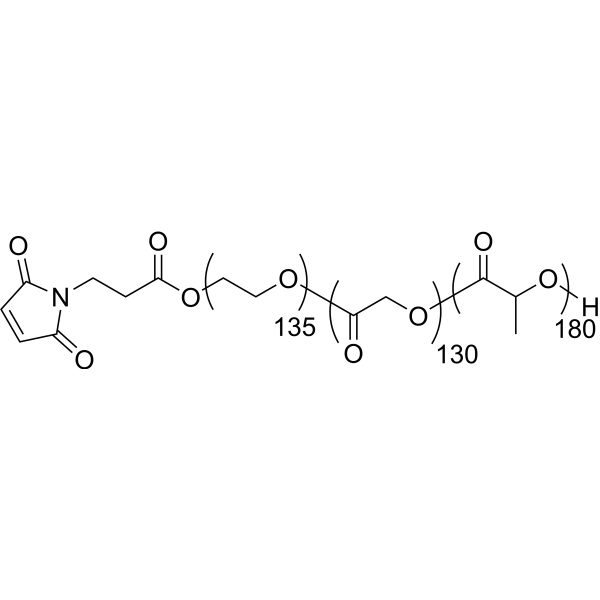
    Mal-PEG5000-OH can be used as a macroinitiator to obtain amphiphilic diblock copolymers by ring-opening polymerization of LA. Nanoparticles prepared using amphiphilic block copolymers can form active drug delivery systems. Nanoparticles encapsulate Triptolide (HY-32735), which can avoid the disadvantage of Triptolide’s poor water solubility and reduce its toxicity.
    Mal-PEG5000-OH
  • HY-128711

    Drug-Linker Conjugates for ADC Cancer
    MAL-di-EG-Val-Cit-PAB-MMAF consists the ADCs linker (MAL-di-EG-Val-Cit-PAB) and potent tubulin polymerization blocker (MMAF, Monomethyl auristatin F) .
    MAL-di-EG-Val-Cit-PAB-MMAF
  • HY-140696B

    mPEG550-Hydroxy; Polyethylene glycol monomethyl ether 550

    Environmental Pollutants Biochemical Assay Reagents Cancer
    m-PEG550-OH (mPEG550-Hydroxy) is a monomethoxypolyethylene glycol and also a macroinitiator for organocatalytic ring-opening polymerization of aliphatic cyclic carbonate monomers. m-PEG550-OH can participate in the synthesis of amphiphilic block copolymers. Amphiphilic block copolymers can be used to prepare nanoscale micelles for active drug delivery .
    m-PEG550-OH
  • HY-144012A

    16:0 PEG350 PE; 1,2-Dipalmitoyl-sn-glycero-3-phosphoethanolamine-N-[methoxy(polyethylene glycol)-350] ammonium

    Liposome CD1 Others
    DPPE-PEG350 is a CD1d-dependent lipid antagonist thus blocking the ERK phosphorylation pathway in iNKT cells . DPPE-PEG350 is a PEG lipid functional end group used in the synthesis of liposomes (LPs) for the design of conjugated polymer nanoparticles.
    DPPE-PEG350
  • HY-Y0479AS2
    L-Lactate-13C sodium (20% in water)
    1 Publications Verification

    (S)-2-Hydroxypropanoic acid-13C sodium

    Isotope-Labeled Compounds Drug Intermediate Antibiotic Bacterial Endogenous Metabolite Infection Cancer
    L-Lactate- 13C ((S)-2-Hydroxypropanoic acid- 13C) sodium is the 13C-labeled L-Lactic acid sodium (HY-W040233). L-lactate Sodium is a buildiing block which can be used as a precursor for the production of the bioplastic polymer poly-lactic acid. L-Lactic acid Sodium has antiproliferative activity .
    L-Lactate-13C sodium (20% in water)
  • HY-W040233R

    (S)-2-Hydroxypropanoic acid sodium (Standard)

    Bacterial Reference Standards Infection Cancer
    Sodium (S)-2-hydroxypropanoate (Standard) is the analytical standard of Sodium (S)-2-hydroxypropanoate. This product is intended for research and analytical applications. L-lactate Sodium (Sodium (S)-2-hydroxypropanoate) is a buildiing block which can be used as a precursor for the production of the bioplastic polymer poly-lactic acid. L-Lactic acid Sodium has antiproliferative activity .
    L-Lactic acid sodium (Standard)
  • HY-N6701

    Arp2/3 Complex DNA/RNA Synthesis Calcium Channel Inflammation/Immunology
    Dihydrocytochalasin B is an Actin disruptor. Dihydrocytochalasin B disrupts actin microfilament bundles, inhibits actin polymerization, and alters intracellular actin cytoskeletal structures. Dihydrocytochalasin B blocks the initiation of DNA synthesis. Dihydrocytochalasin B inhibits Calcium transport. Dihydrocytochalasin B inhibits cytokinesis and alters cell morphology. Dihydrocytochalasin B can be used in studies related to rickets .
    Dihydrocytochalasin B
  • HY-P99705

    RG-7599; DNIB-0600A; NaPi2b-ADC

    Antibody-Drug Conjugates (ADCs) Cancer
    Lifastuzumab vedotin (RG-7599; DNIB0600A) is an antibody-drug conjugate (ADC) that comprises a humanized IgG1 anti-NaPi2b monoclonal antibody (MNIB2126A) and a potent antimitotic agent, monomethyl auristatin E (MMAE), which inhibits cell division by blocking the polymerization of tubulin. Lifastuzumab vedotin has the potential for non-small cell lung cancer (NSCLC) and platinum-resistant ovarian cancer (PROC) research .
    Lifastuzumab vedotin
  • HY-140696H

    mPEG750-Hydroxy; Polyethylene glycol monomethyl ether 750

    Biochemical Assay Reagents Cancer
    m-PEG750-OH (mPEG750-Hydroxy) is a monomethoxypolyethylene glycol and also a macroinitiator for organocatalytic ring-opening polymerization of aliphatic cyclic carbonate monomers. m-PEG750-OH can participate in the synthesis of amphiphilic block copolymers. Amphiphilic block copolymers can be used to prepare nanoscale micelles for active drug delivery .
    m-PEG750-OH
  • HY-155902A

    Maleimide-PEG2000-Hydroxy

    Biochemical Assay Reagents Others
    Mal-PEG2000-OH can be used as a macroinitiator to obtain amphiphilic diblock copolymers by ring-opening polymerization of LA. Nanoparticles prepared using amphiphilic block copolymers can form active drug delivery systems. Nanoparticles encapsulate Triptolide (HY-32735), which can avoid the disadvantage of Triptolide’s poor water solubility and reduce its toxicity.
    Mal-PEG2000-OH
  • HY-Y1219E

    Biochemical Assay Reagents Others
    Silica gel, high-purity grade, 130-270 mesh is a high-purity inert additive with low density and large specific surface area, which can be used in the preparation of chromatographic column frits based on the sol-gel method. As a condensed-phase flame retardant, thermal stability enhancer and melt viscosity enhancer, Silica gel, high-purity grade, 130-270 mesh can restrict the mobility of polymer chains in polypropylene to improve its thermal stability, and increase the melt viscosity of polypropylene and polyethylene oxide. During gasification or combustion, Silica gel, high-purity grade, 130-270 mesh accumulates on the polymer surface to form a thermal insulation layer, and exerts flame retardant effects by reducing surface concentration and blocking the transport of degradation products .
    Silica gel, high-purity grade, 130-270 mesh
  • HY-170505

    Microtubule/Tubulin Herbicide Others
    Icafolin-methyl is a herbicide and plant β-tubulin (Microtubule/Tubulin) inhibitor. Icafolin-methyl binds to the β-tubulin region of the Colchicine (HY-16569) binding site, thereby blocking the polymerization of plant tubulin. As a non-selective herbicide, Icafolin-methyl exhibits post-emergence activity against weeds in both cool-season and warm-season cropping systems, including resistant ryegrass and darnel biotypes. Icafolin-methyl can be used for herbicide research .
    Icafolin-methyl
  • HY-W250580

    Biochemical Assay Reagents Others
    Dimethicone is an orally active biochemical assay reagents consisting of a fully methylated linear siloxane polymer whose ends are blocked by trimethylsiloxane units. Dimethicone can lubricate hair and physically block the respiratory system of lice to remove lice. Dimethicone has potential applications in cosmetics and daily cleaning products .
    Dimethicone
  • HY-D1005A7

    PEG-PPG-PEG, 2400 (Average)

    Biochemical Assay Reagents Others
    Poloxamer 125 L45 is block polymer of polyoxyethylene and polyoxypropylene with average molecular mass of 2400. Poloxamer 125 L45 forms thermoreversible hydrogel, that is utilized in food additives, drug delivery carriers in cosmetics, pharmaceutical ingredients and tissue engineering .
    Poloxamer 125 (L45)
  • HY-D1005A4

    PEG-PPG-PEG, 1630 (Average)

    Biochemical Assay Reagents Bacterial Infection
    Poloxamer 122 L42 is block polymer of polyoxyethylene and polyoxypropylene with average molecular mass of 1630. Poloxamer 122 L42 exhibits antimicrobial activity, that inihibits 56% Mycobacterium avium complex at concentration of 1 mg/mL. Poloxamer 122 L42 forms thermoreversible hydrogel, that is utilized in food additives, drug delivery carriers in cosmetics, pharmaceutical ingredients and tissue engineering .
    Poloxamer 122 (L42)
  • HY-125527S

    RvD1-d5

    Isotope-Labeled Compounds Endogenous Metabolite Inflammation/Immunology
    Resolvin D1-d5 is the deuterium labeled Resolvin D1. Resolvin D1 (RvD1), an endogenous pro-resolving mediator of inflammation, is derived from omega-3 docosahexaenoic acid during the resolution phase of acute inflammation. Resolvin D1 blocks proinflammatory neutrophil migration by regulating actin polymerization, reduces TNF-α-mediated inflammation in macrophages, and enhances phagocytosis of apoptotic cells by macrophages .
    Resolvin D1-d5
  • HY-172378

    Biochemical Assay Reagents Others
    Poly(styrene)-block-poly(acrylic acid) (PS:PAA 30000:2000) is a diblock copolymer used to prepare polymer micelles or vesicles and other encapsulation applications .
    Poly(styrene)-block-poly(acrylic acid) (PS:PAA 30000:2000)
  • HY-147768

    PI3K Akt Microtubule/Tubulin MMP Apoptosis Cancer
    PI3K/AKT-IN-2 (Compound 12c) is a PI3K and AKT inhibitor. PI3K/AKT-IN-2 blocks the epithelial-mesenchymal transition (EMT) and induces apoptosis. PI3K/AKT-IN-2 inhibits the polymerization of tubulin .
    PI3K/AKT-IN-2
  • HY-W105639
    L-Lactic acid calcium hydrate
    10+ Cited Publications

    Drug Intermediate Others
    L-Lactic acid calcium hydrate is the calcium salt of L-Lactic acid. L-Lactic acid calcium hydrate is a building block that can be used as a precursor for the production of bioplastic polymer polylactic acid .
    L-Lactic acid calcium hydrate
  • HY-155902B

    Maleimide-PEG1000-Hydroxy

    Biochemical Assay Reagents Others
    Mal-PEG1000-OH was used as a macroinitiator to obtain amphiphilic diblock copolymers by ring-opening polymerization of LA. Nanoparticles prepared using amphiphilic block copolymers can form active drug delivery systems. Nanoparticles encapsulate Triptolide (HY-32735), which can avoid the disadvantage of Triptolide’s poor water solubility and reduce its toxicity.
    Mal-PEG1000-OH
  • HY-W087964

    Biochemical Assay Reagents Others
    Dodecanedioyl dichloride, Dodecanedioyl dichloride is commonly used in organic synthesis as a general building block for the preparation of various polymers and plastics, including nylon 12 and polyester resins, it can be used to introduce acid chloride groups into other organic molecules, which can then be further reaction to form more complex compounds, moreover, it has been used in medicinal chemistry as a starting material for the synthesis of various drugs and drug candidates.
    Dodecanedioyl dichloride
  • HY-175021

    HDAC Carbonic Anhydrase Microtubule/Tubulin PARP Apoptosis Bcl-2 Family Caspase Cancer
    HDAC-IN-91 is a multiple inhibitor of HDAC (IC50 = 134.22 nM for HDAC1, 66.29 nM for HDAC2), carbonic anhydrase (CA) (Ki = 72.03 nM for CA IX, 50.76 nM for XII), and tubulin polymerization ( IC50 = 2.56 μM). HDAC-IN-91 inhibits PARP1 and increases the Bax/Bcl-2 ratio. HDAC-IN-91 blocks the cell cycle at the G2/M phase and induces apoptosis through a mitochondrial apoptosis activation mechanism. HDAC-IN-91 can exert potent cytotoxic activity through tubulin polymerization inhibition. HDAC-IN-91 can be used in breast, colorectal, cervical and lung cancer research .
    HDAC-IN-91
  • HY-155902C

    Maleimide-PEG3400-Hydroxy

    Biochemical Assay Reagents Others
    Mal-PEG3400-OH (Maleimide-PEG3400-Hydroxy) is a linear heteroterminal bifunctional PEG product with maleimide and hydroxyl groups. Mal-PEG3400-OH can be used as a macroinitiator to obtain amphiphilic diblock copolymers through ring-opening polymerization of Lactate (Lactic Acid) (HY-B2227). Nanoparticles prepared using amphiphilic block copolymers can form active drug delivery systems .
    Mal-PEG3400-OH
  • HY-161338

    Microtubule/Tubulin Apoptosis Cancer
    Tubulin polymerization-IN-61 (Compound 9a) is a tubulin polymerization inhibitor. Tubulin polymerization-IN-61 destroys the microtubule skeleton, blocks the cell cycle in G2/M phase, induces Apoptosis, and inhibits cancer cell migration and colony formation. Tubulin polymerization-IN-61 shows antitumor activity in vivo against 4T1 xenograft model .
    Tubulin polymerization-IN-61
  • HY-W014410R

    Reference Standards Biochemical Assay Reagents RUNX Endocrinology
    Mucic acid (Standard) is the analytical standard of Mucic acid (HY-W014410). This product is intended for research and analytical applications. Mucic acid (Galactaric acid) is a building block for polymers. Mucic acid stimulates Runx2 mRNA expression. Mucic acid can be used in polymer synthesis and bone tissue engineering research .
    Mucic acid (Standard)
  • HY-167357

    Biochemical Assay Reagents Others
    PLLA3000-PEG1000-PLLA3000 is an amphiphilic triblock polymer based on polylactic acid derivatives that improves the specificity and cell affinity of PLA-based biomaterials. PLLA3000-PEG1000-PLLA3000 can be used in drug delivery research .
    PLLA3000-PEG1000-PLLA3000
  • HY-167118

    Biochemical Assay Reagents Others
    PLLA5000-PEG6000-PLLA5000 is an amphiphilic triblock polymer based on polylactic acid derivatives that improves the specificity and cell affinity of PLA-based biomaterials. PLLA5000-PEG6000-PLLA5000 can be used in drug delivery research .
    PLLA5000-PEG6000-PLLA5000
  • HY-167352

    Biochemical Assay Reagents Others
    PLLA3000-PEG8000-PLLA3000 is an amphiphilic triblock polymer based on polylactic acid derivatives that improves the specificity and cell affinity of PLA-based biomaterials. PLLA3000-PEG8000-PLLA3000 can be used in drug delivery research .
    PLLA3000-PEG8000-PLLA3000
  • HY-167366

    Biochemical Assay Reagents Others
    PLLA1000-PEG4000-PLLA1000 is an amphiphilic triblock polymer based on polylactic acid derivatives that improves the specificity and cell affinity of PLA-based biomaterials. PLLA1000-PEG4000-PLLA1000 can be used in drug delivery research .
    PLLA1000-PEG4000-PLLA1000
  • HY-167346

    Biochemical Assay Reagents Others
    PLLA4000-PEG8000-PLLA4000 is an amphiphilic triblock polymer based on polylactic acid derivatives that improves the specificity and cell affinity of PLA-based biomaterials. PLLA4000-PEG8000-PLLA4000 can be used in drug delivery research .
    PLLA4000-PEG8000-PLLA4000
  • HY-167359

    Biochemical Assay Reagents Others
    PLLA2000-PEG6000-PLLA2000 is an amphiphilic triblock polymer based on polylactic acid derivatives that improves the specificity and cell affinity of PLA-based biomaterials. PLLA2000-PEG6000-PLLA2000 can be used in drug delivery research .
    PLLA2000-PEG6000-PLLA2000

Inquiry Online

Your information is safe with us. * Required Fields.

Salutation


Country or Region *

Applicant Name *


Organization Name *

Department *


Email Address *


Product Name *

Cat. No.


Requested quantity *

Phone Number *


Remarks

Inquiry Online

Inquiry Information

Product Name:
Cat. No.:
Quantity:
MCE Japan Authorized Agent:

