



m-PEG1000-OH

Based on 1 Customer Validation
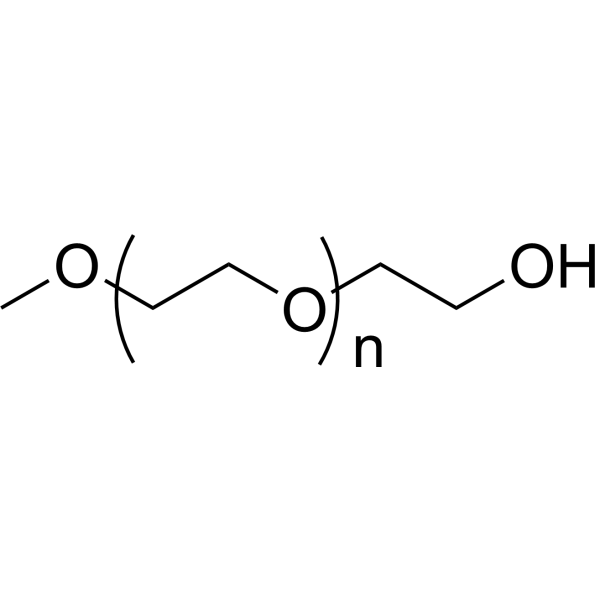
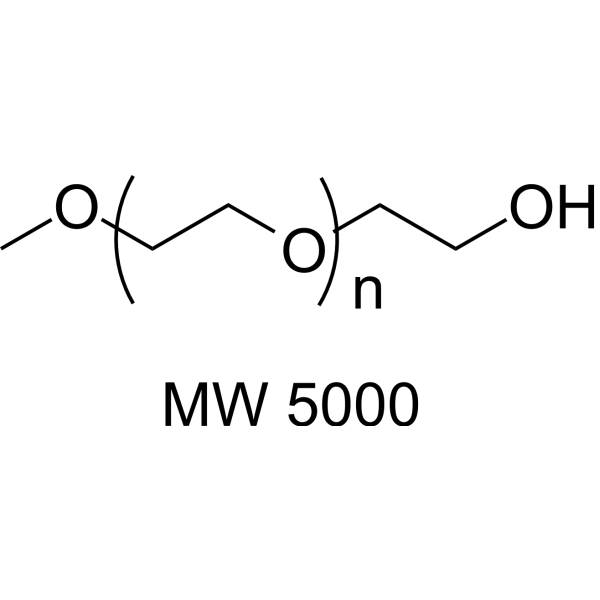
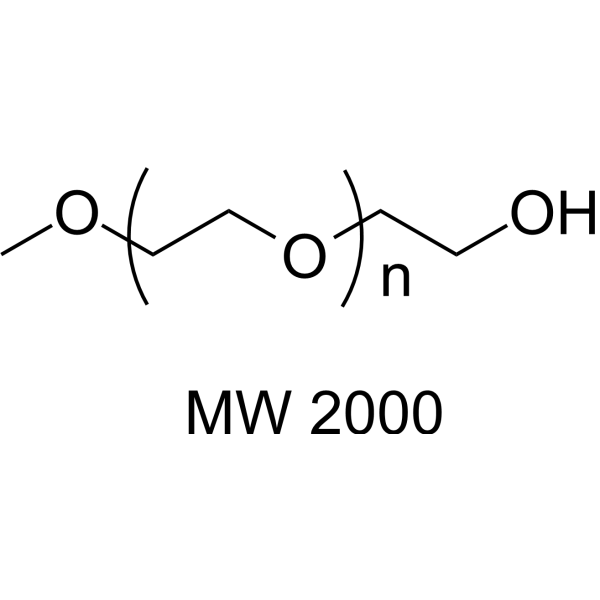
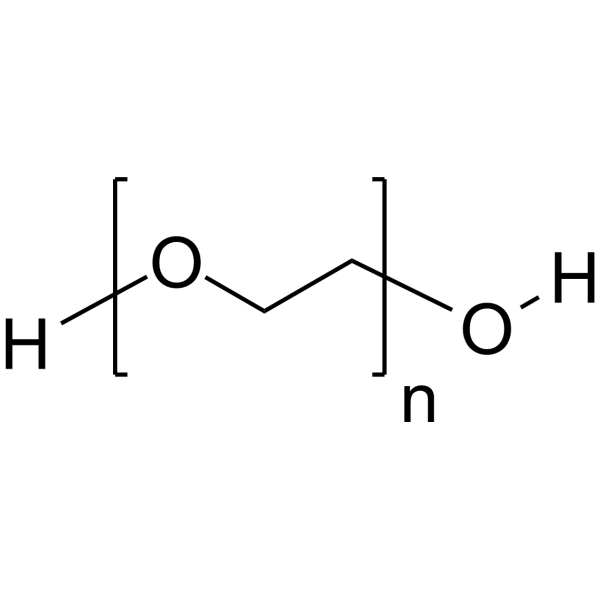
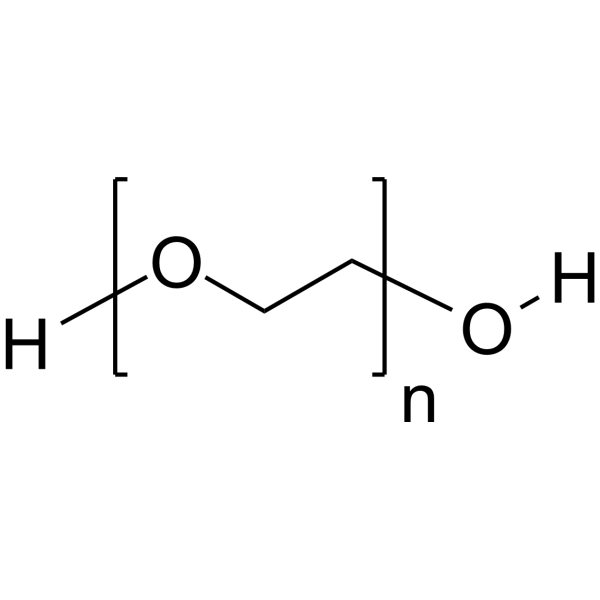
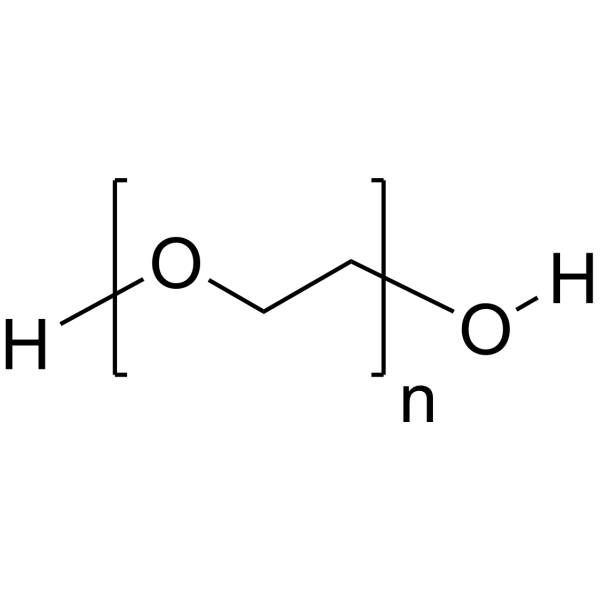
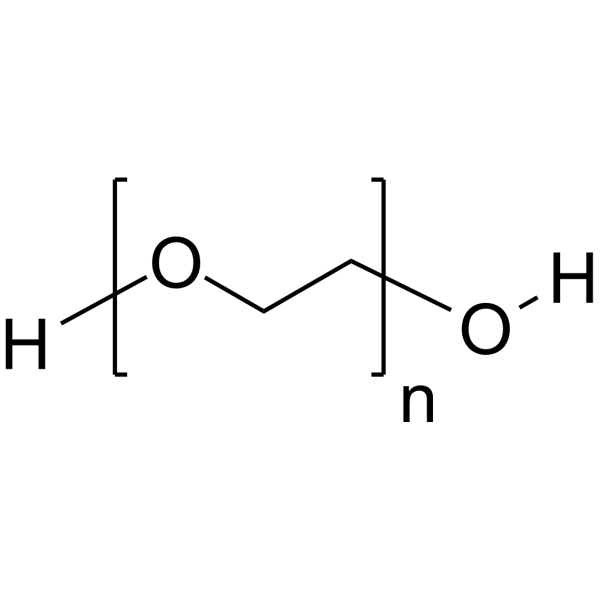
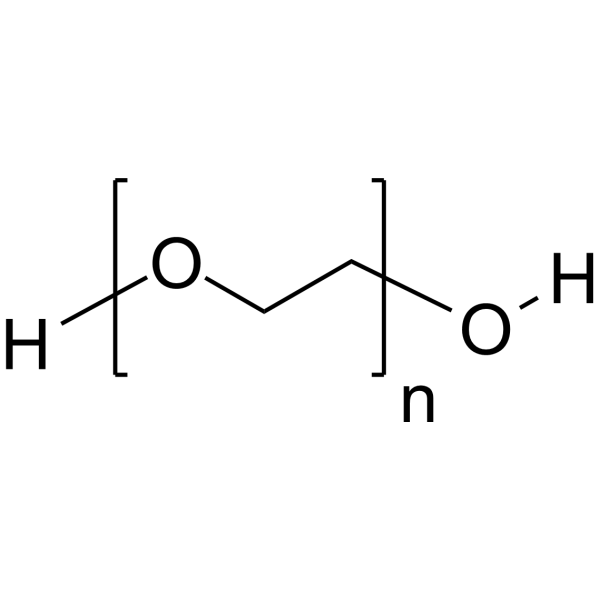
m-PEG1000-OH (mPEG1000-Hydroxy) is a monomethoxypolyethylene glycol and also a macroinitiator for organocatalytic ring-opening polymerization of aliphatic cyclic carbonate monomers. m-PEG1000-OH can participate in the synthesis of amphiphilic block copolymers. Amphiphilic block copolymers can be used to prepare nanoscale micelles for active drug delivery.
For research use only. We do not sell to patients.
- Purity : 98.0%
- CAS No.: 9004-74-4
- Molecular Weight:1000 (Average)
-
Storage:
4°C, sealed storage, away from moisture
* In solvent : -80°C, 6 months; -20°C, 1 month (sealed storage, away from moisture)

To place orders, for customer services and technical support, please contact: MedChemExpress USA
Tel: 609-228-6898 E-mail: [email protected] [email protected]


-
 Biological Activity
-
Chemical Information
-
Solvent & Solubility
- Purity & Documentation
- References
-
 Help & FAQs





Biological Activity
Description
In Vitro
m-PEG-OH can be used to encapsulate anticancer drugs. Hydrophobic anticancer agent Paclitaxel (HY-B0015) encapsulated in micelles exhibits stronger cancer cell-killing activity than free Paclitaxel. In addition, it preferentially accumulates in tumor tissues and shows only limited distribution in healthy organs[2].
MedChemExpress (MCE) has not independently confirmed the accuracy of these methods. They are for reference only.


Chemical Information
-
CAS No. 9004-74-4
-
Appearance Solid-Liquid Mixture
-
Molecular Weight 1000 (Average)
-
Color White to off-white
-
SMILES
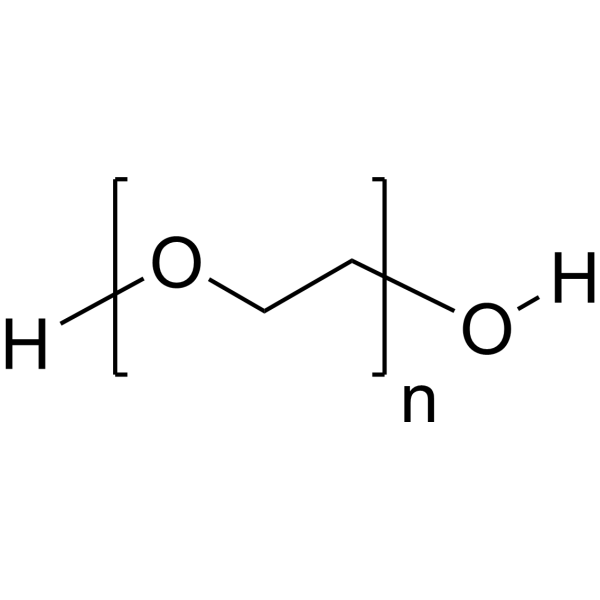
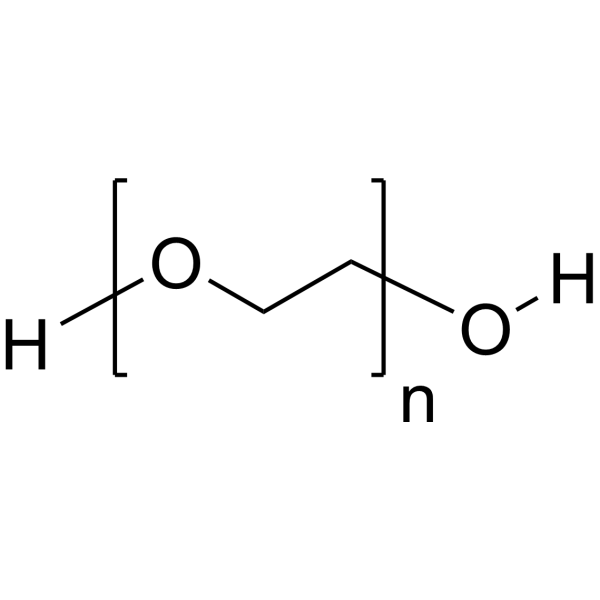
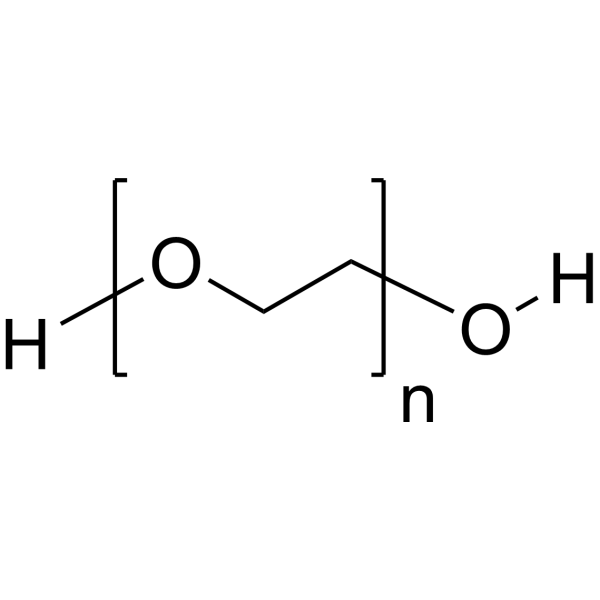
COCCOCCO.[n]
-
Synonyms
mPEG1000-Hydroxy; Polyethylene glycol monomethyl ether 1000
-
Shipping
Room temperature in continental US; may vary elsewhere.
-
Storage
4°C, sealed storage, away from moisture
* In solvent : -80°C, 6 months; -20°C, 1 month (sealed storage, away from moisture)


Solvent & Solubility
In Vitro:
H2O : 100 mg/mL (Need ultrasonic)
DMSO : 100 mg/mL (Need ultrasonic; Hygroscopic DMSO has a significant impact on the solubility of product, please use newly opened DMSO)
In Vivo:
Select the appropriate dissolution method based on your experimental animal and administration route.
- For the following dissolution methods, please ensure to first prepare a clear stock solution using an In Vitro approach and then sequentially add co-solvents:
- To ensure reliable experimental results, the clarified stock solution can be appropriately stored based on storage conditions. As for the working solution for In Vivo experiments, it is recommended to prepare freshly and use it on the same day.
- The percentages shown for the solvents indicate their volumetric ratio in the final prepared solution. If precipitation or phase separation occurs during preparation, heat and/or sonication can be used to aid dissolution.
Add each solvent one by one: 10% DMSO 40% PEG300 5% Tween-80 45% Saline
Solubility: ≥ 2.5 mg/mL; Clear solution
This protocol yields a clear solution of ≥ 2.5 mg/mL (saturation unknown).
Taking 1 mL working solution as an example, add 100 μL DMSO stock solution (25.0 mg/mL) to 400 μL PEG300, and mix evenly; then add 50 μL Tween-80 and mix evenly; then add 450 μL Saline to adjust the volume to 1 mL.
Preparation of Saline: Dissolve 0.9 g sodium chloride in ddH₂O and dilute to 100 mL to obtain a clear Saline solution.
Add each solvent one by one: 10% DMSO 90% (20% SBE-β-CD in Saline)
Solubility: ≥ 2.5 mg/mL; Clear solution
This protocol yields a clear solution of ≥ 2.5 mg/mL (saturation unknown).
Taking 1 mL working solution as an example, add 100 μL DMSO stock solution (25.0 mg/mL) to 900 μL 20% SBE-β-CD in Saline, and mix evenly.
Preparation of 20% SBE-β-CD in Saline (4°C, storage for one week): 2 g SBE-β-CD powder is dissolved in 10 mL Saline, completely dissolve until clear.
In Vivo Dissolution Calculator
Please enter the basic information of animal experiments:
-
-
-
-
Recommended: Prepare an additional quantity of animals to account for potential losses during experiments.
Working solution concentration: 0.22 mg/mL
This product has good water solubility, please refer to the measured solubility data in water/PBS/Saline for details.


Purity & Documentation
-
Data Sheet (268 KB)
-
SDS (558 KB)
- English - EN (558 KB)
- Français - FR (558 KB)
- Deutsch - DE (558 KB)
- Norwegian - NO (558 KB)
- Español - ES (558 KB)
- Swedish - SV (558 KB)
- Italian - IT (558 KB)
- Korean - KR (558 KB)
- Portuguese - PT (558 KB)
-
Handling Instructions (2659 KB)
References
[1]. Riccio G, et al. Monogalactosyldiacylglycerol and Sulfolipid Synthesis in Microalgae. Mar Drugs. 2020;18(5):237. Published 2020 May 1. [Content Brief]
[2]. Lee AL, et al. The use of cholesterol-containing biodegradable block copolymers to exploit hydrophobic interactions for the delivery of anticancer drugs. Biomaterials. 2012;33(6):1921-1928. [Content Brief]

Calculators
Concentration (start) × Volume (start) = Concentration (final) × Volume (final)


m-PEG1000-OH Related Classifications
HY-140696E Related Classifications
 Powered by Bioz
Keywords
- m-PEG1000-OH
- 9004-74-4
- mPEG1000-Hydroxy
- Polyethylene glycol monomethyl ether 1000
- Polyethylene glycol monomethyl ether1000
- Polyethylene glycol monomethyl ether 1000
- Polyethylene glycol monomethyl ether-1000
- Environmental Pollutants
- Biochemical Assay Reagents
- aliphatic cyclic carbonate monomers
- monomethoxy polyethylene glycol
- macroinitiator
- organocatalytic ring opening polymerization
- Inhibitor
- inhibitor
- inhibit